
Fluorite, Calcite, Barite
Update 4/13/18 - Unknown brown inclusions identified as nelenite per this convo https://www.facebook.com/groups/mindat/permalink/10154595717437465/
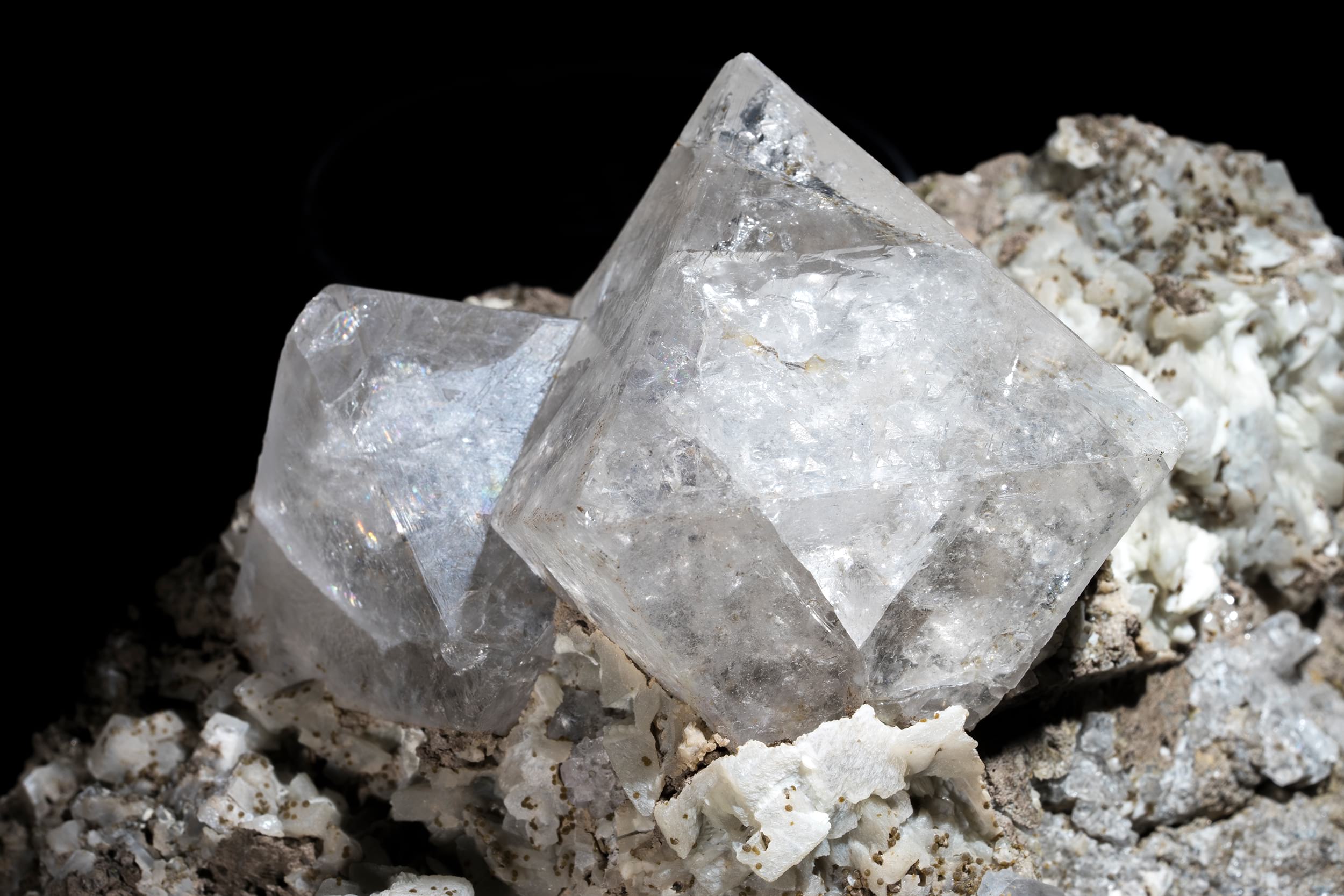
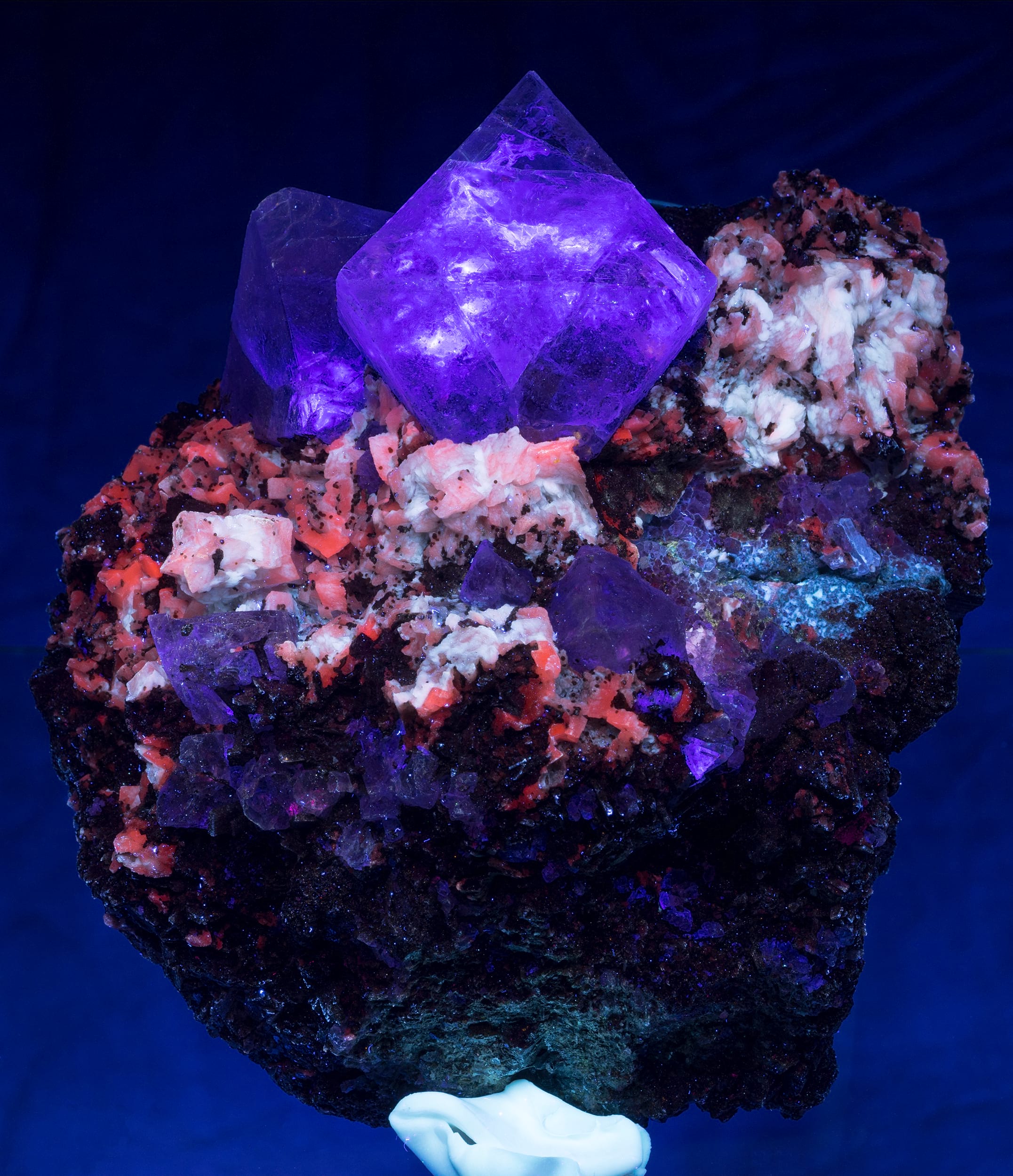
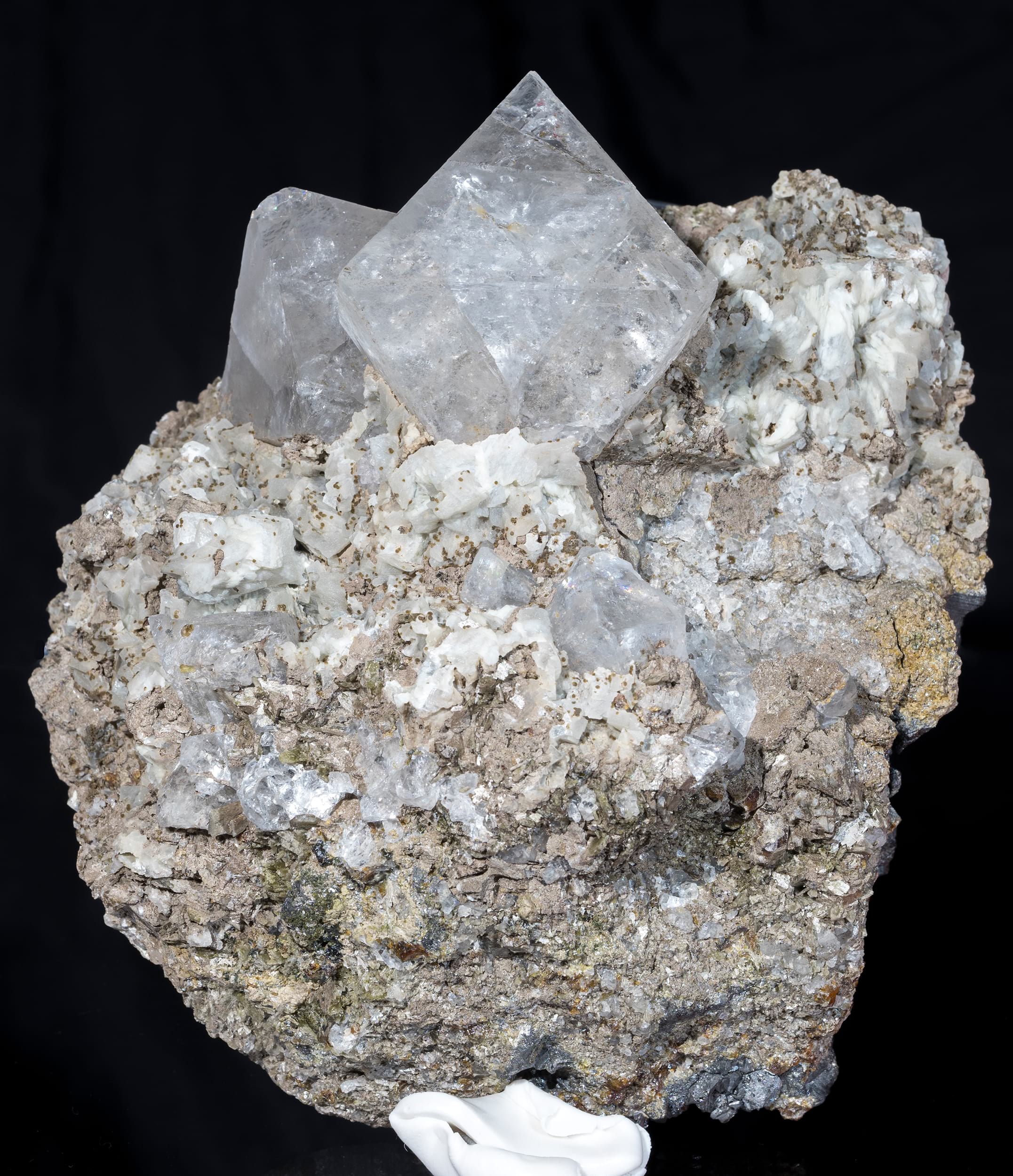
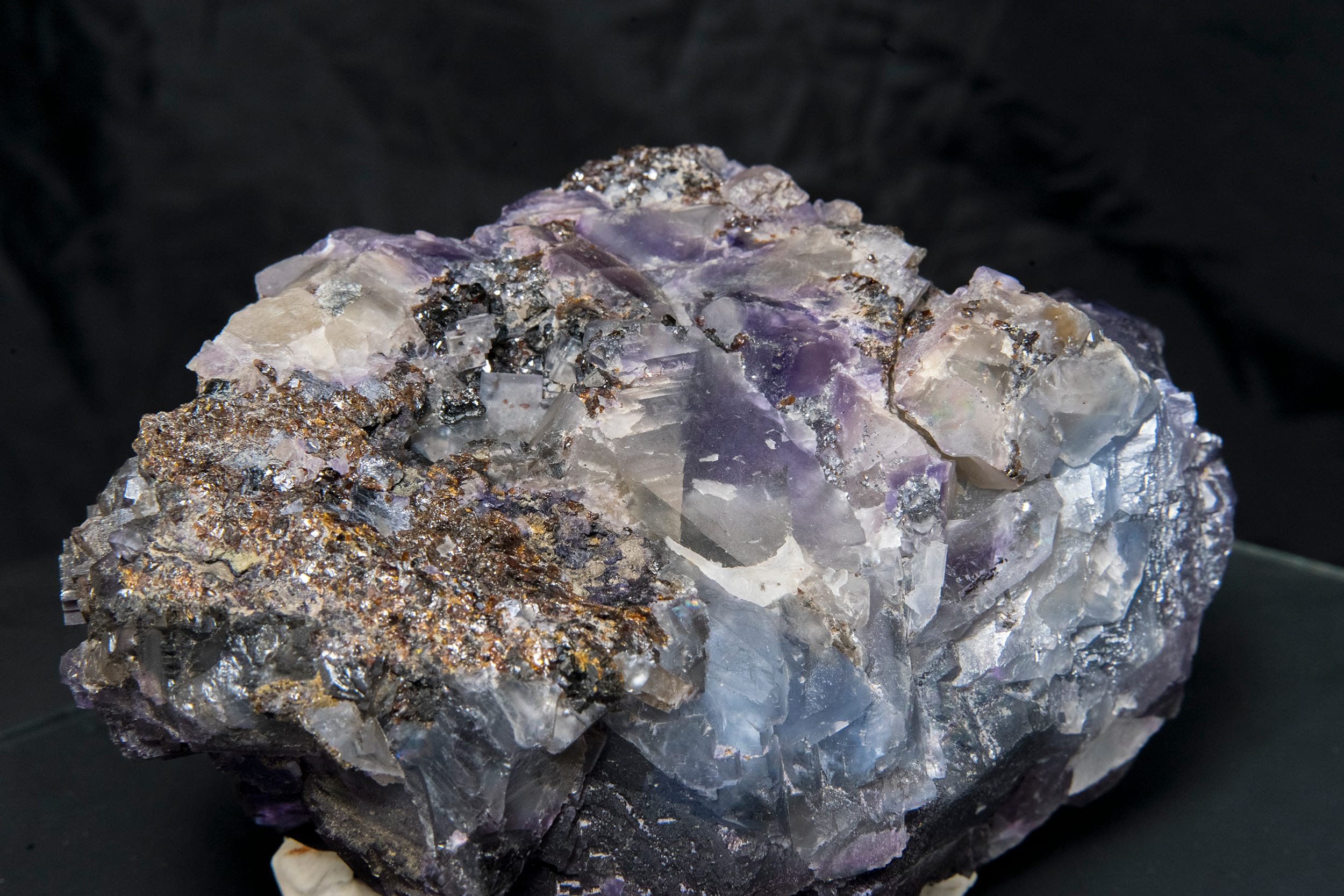
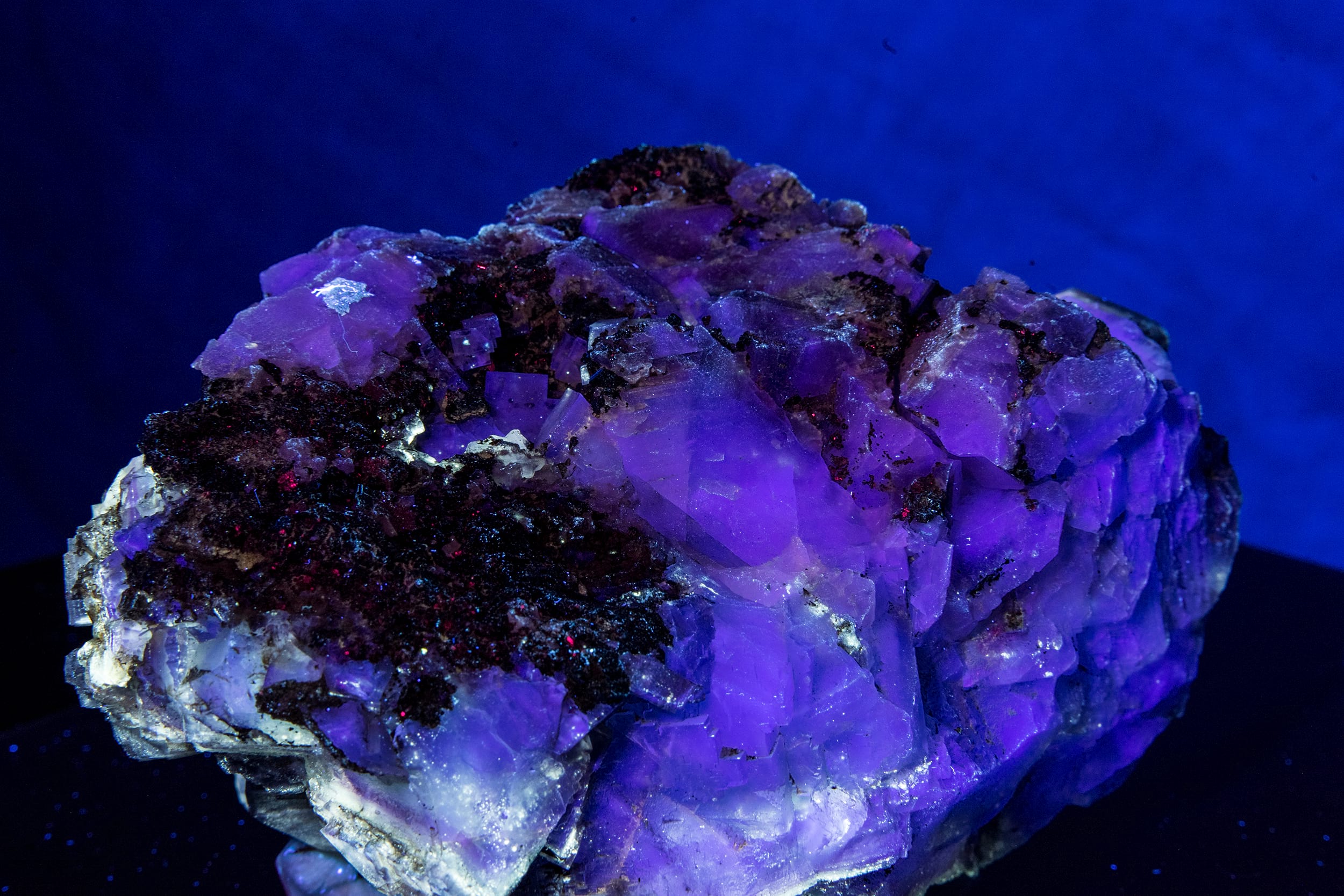
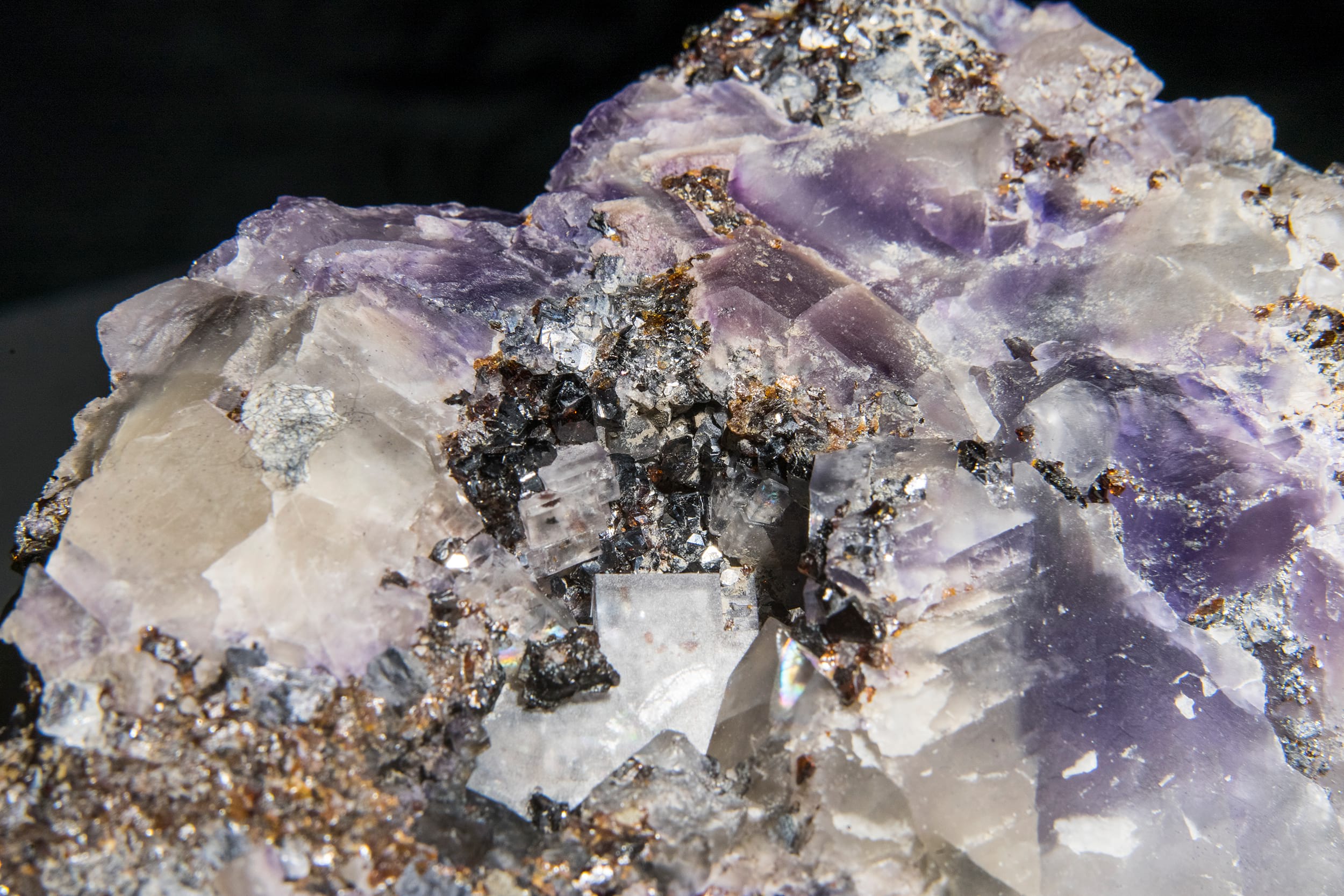
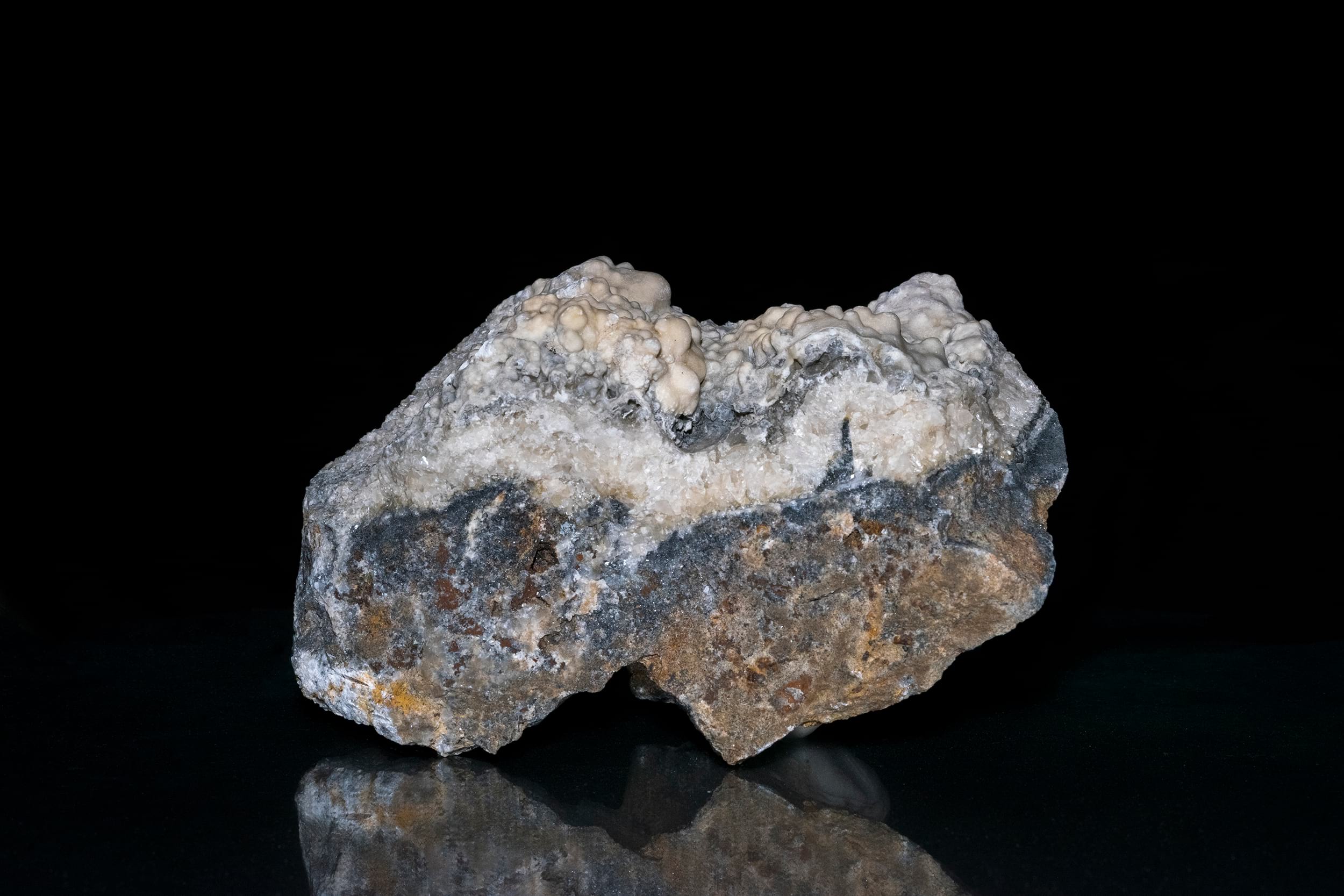
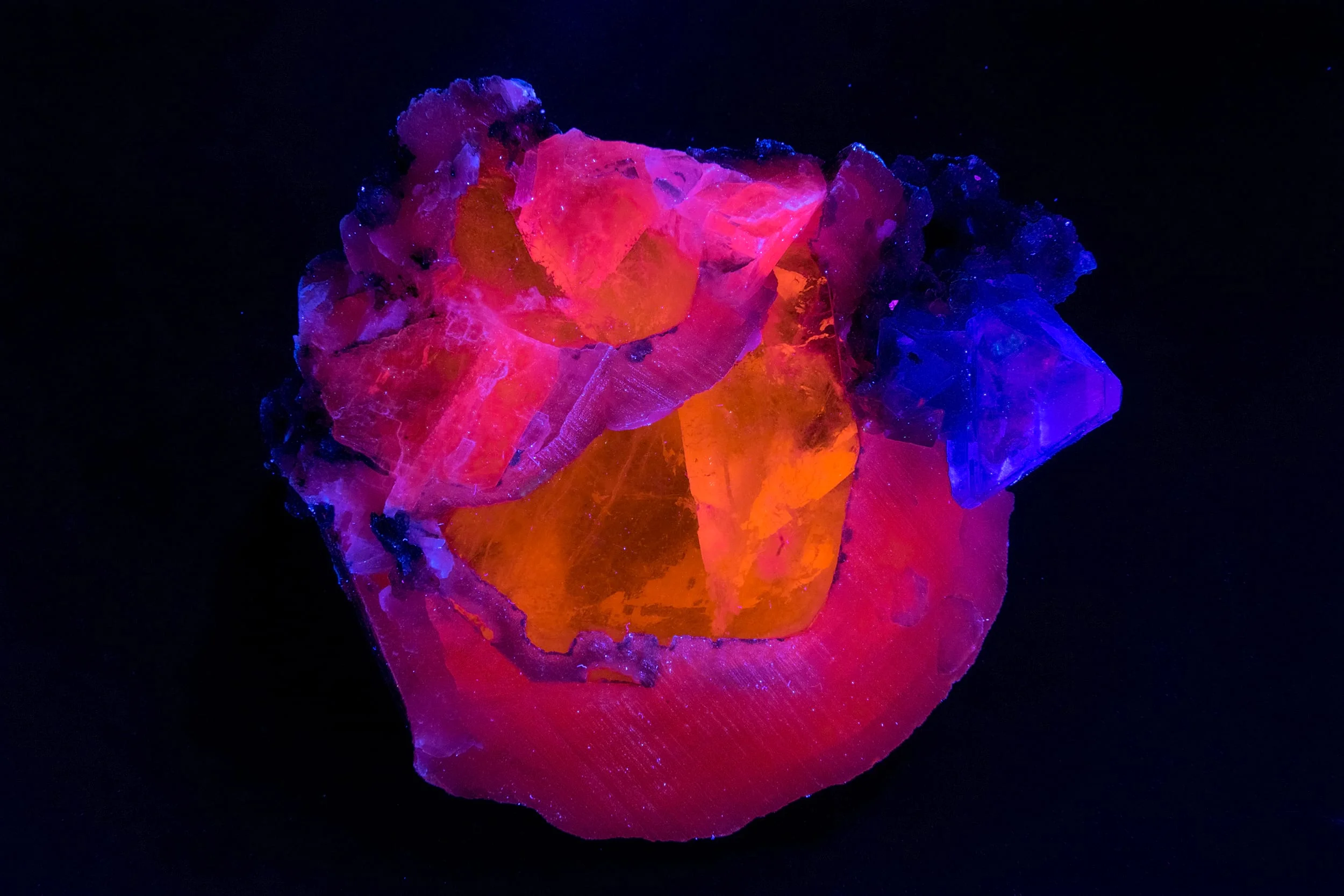
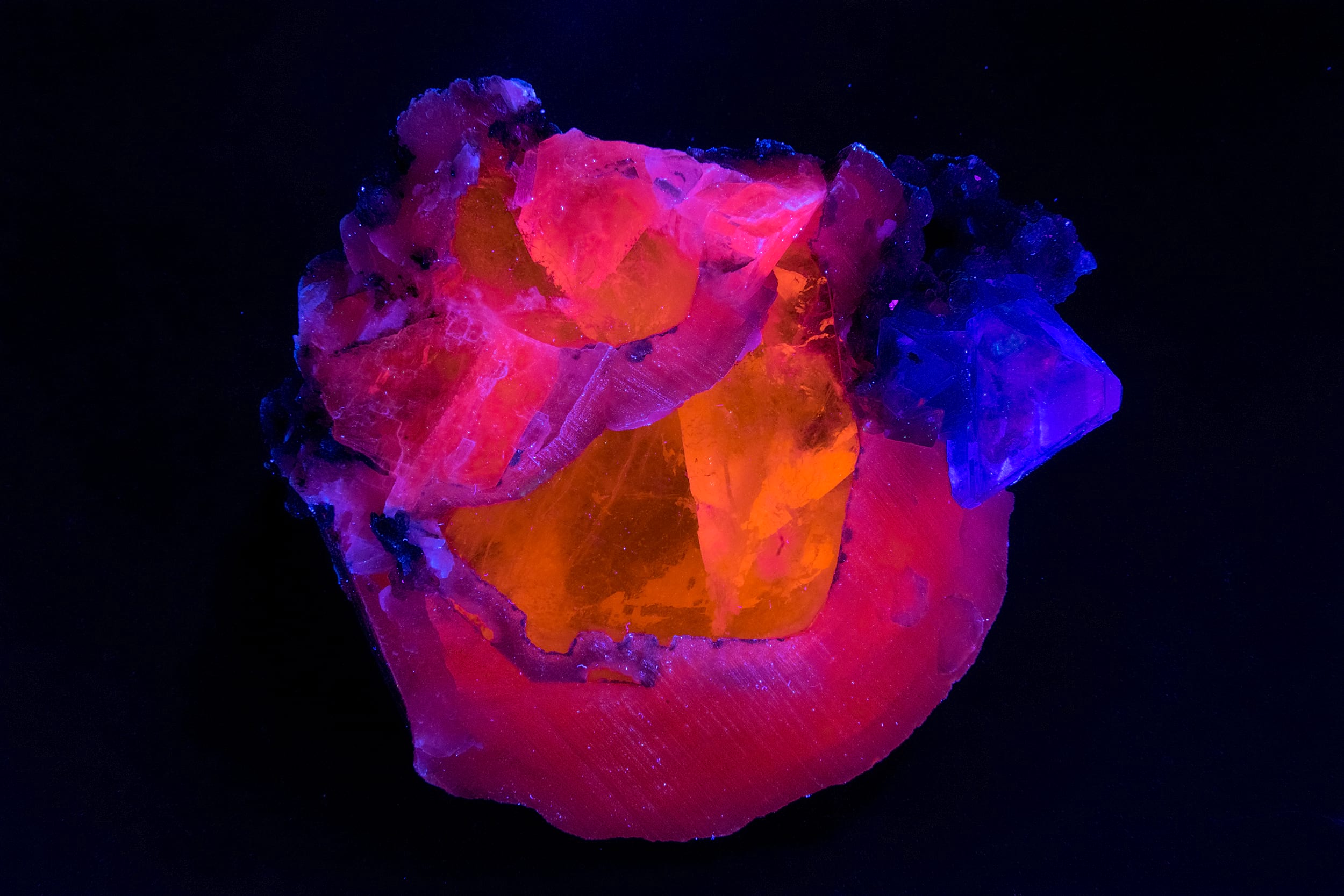
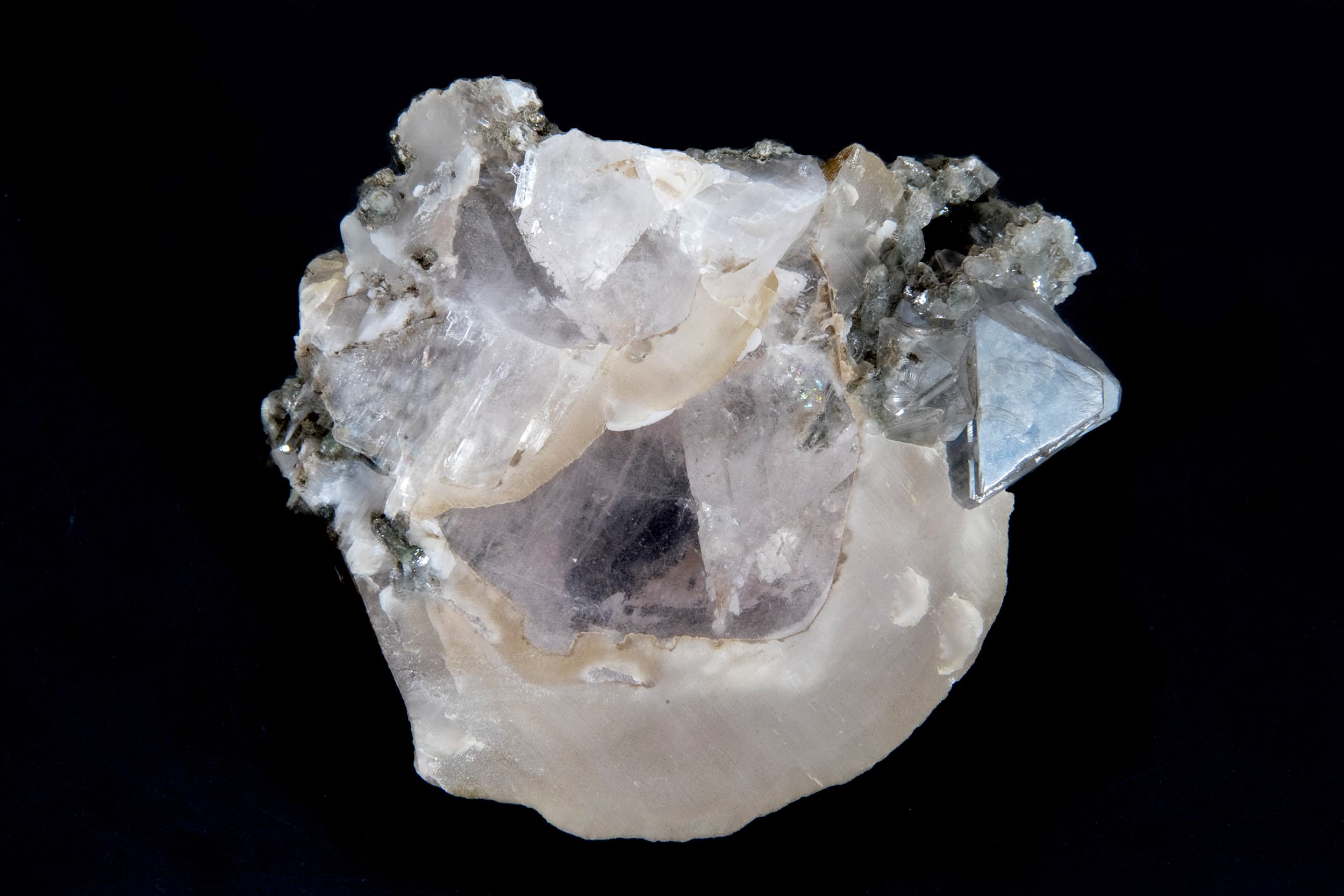
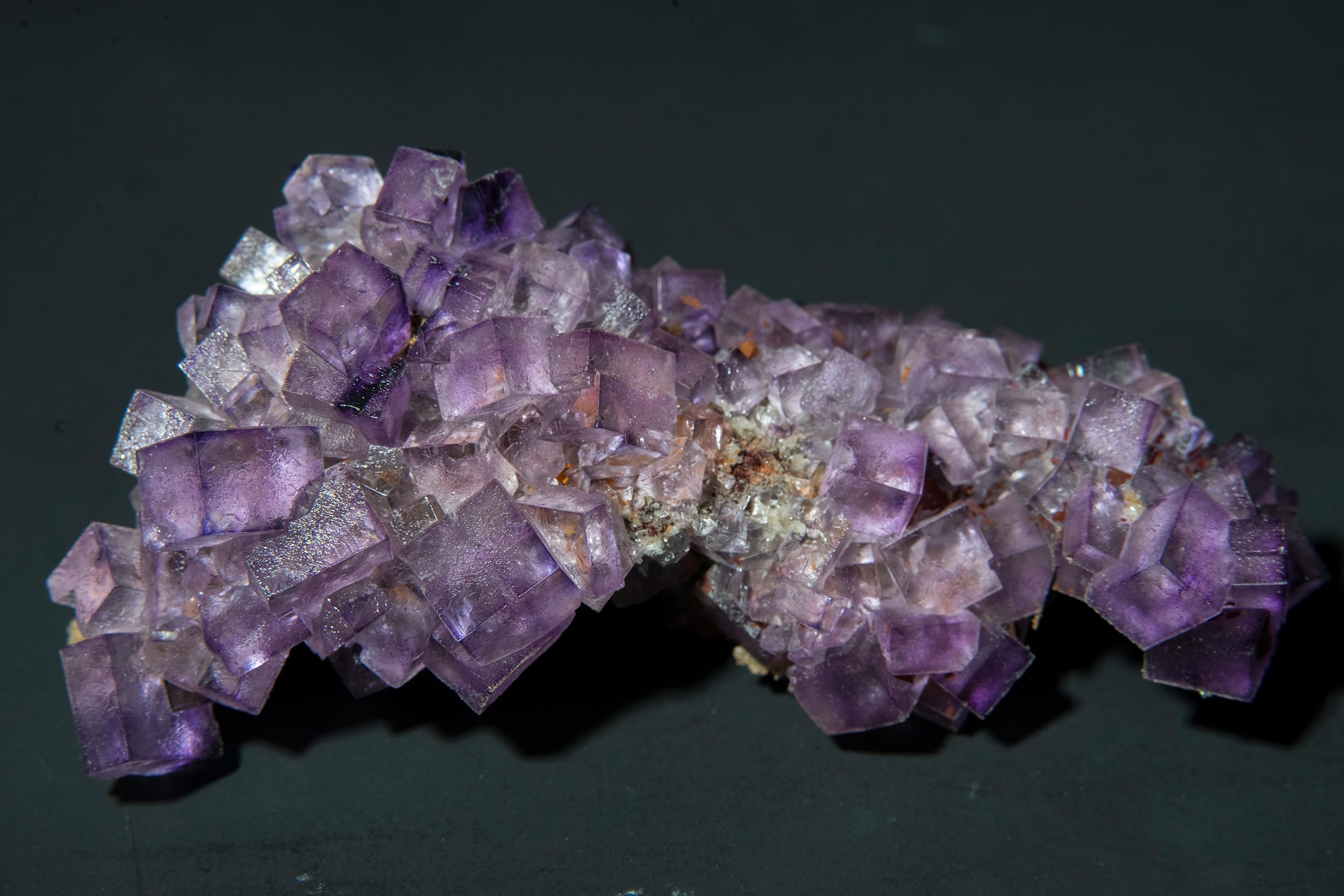
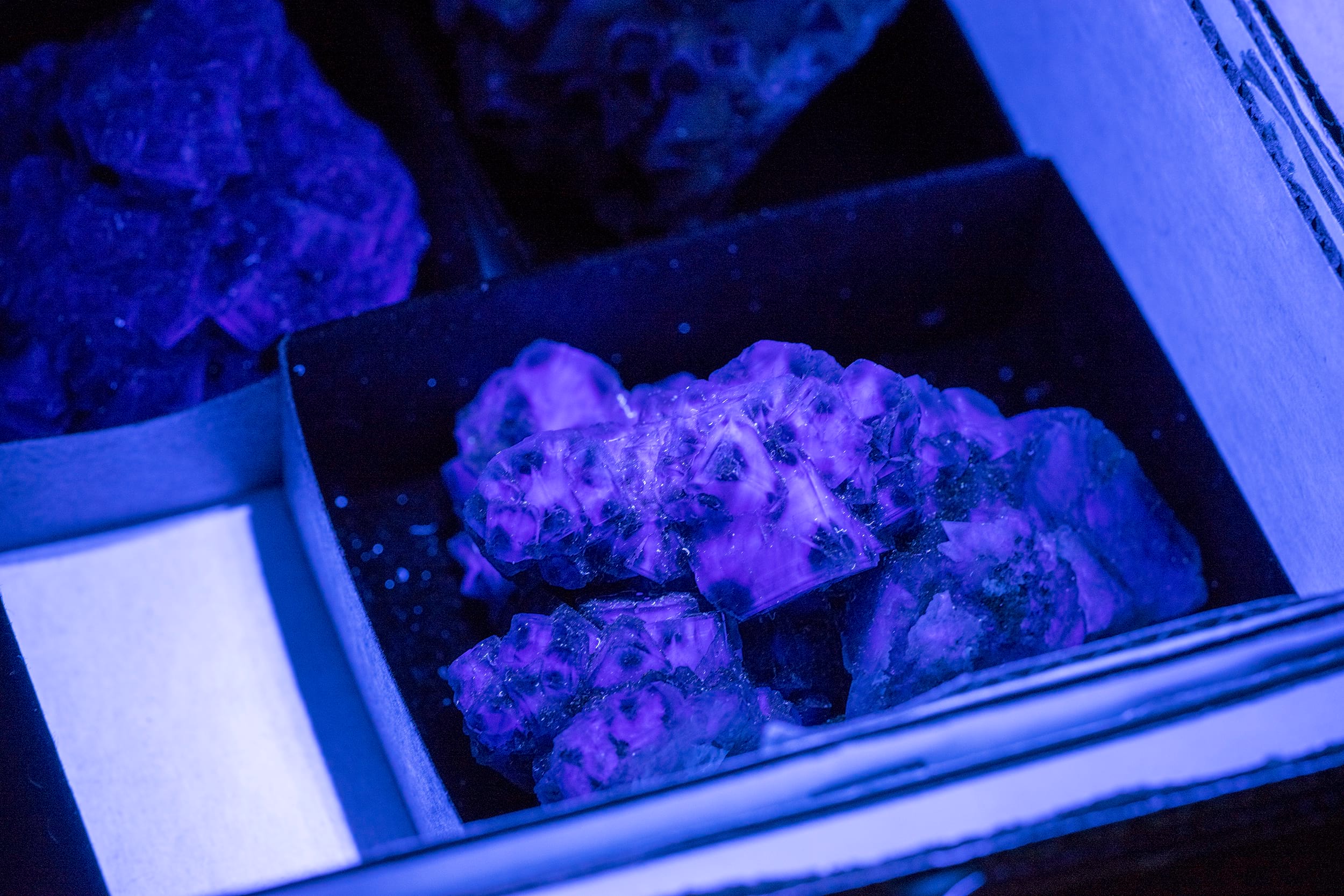
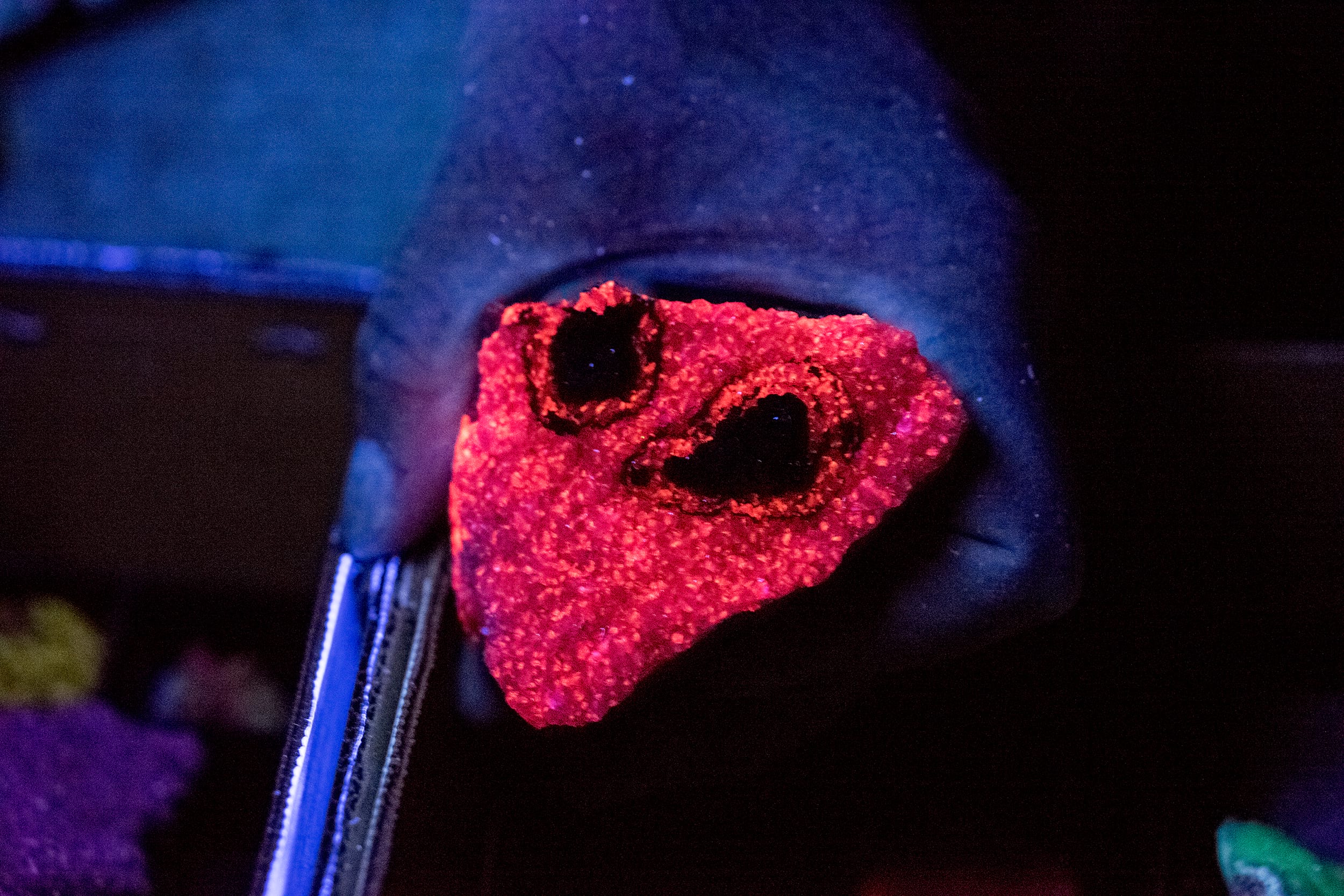
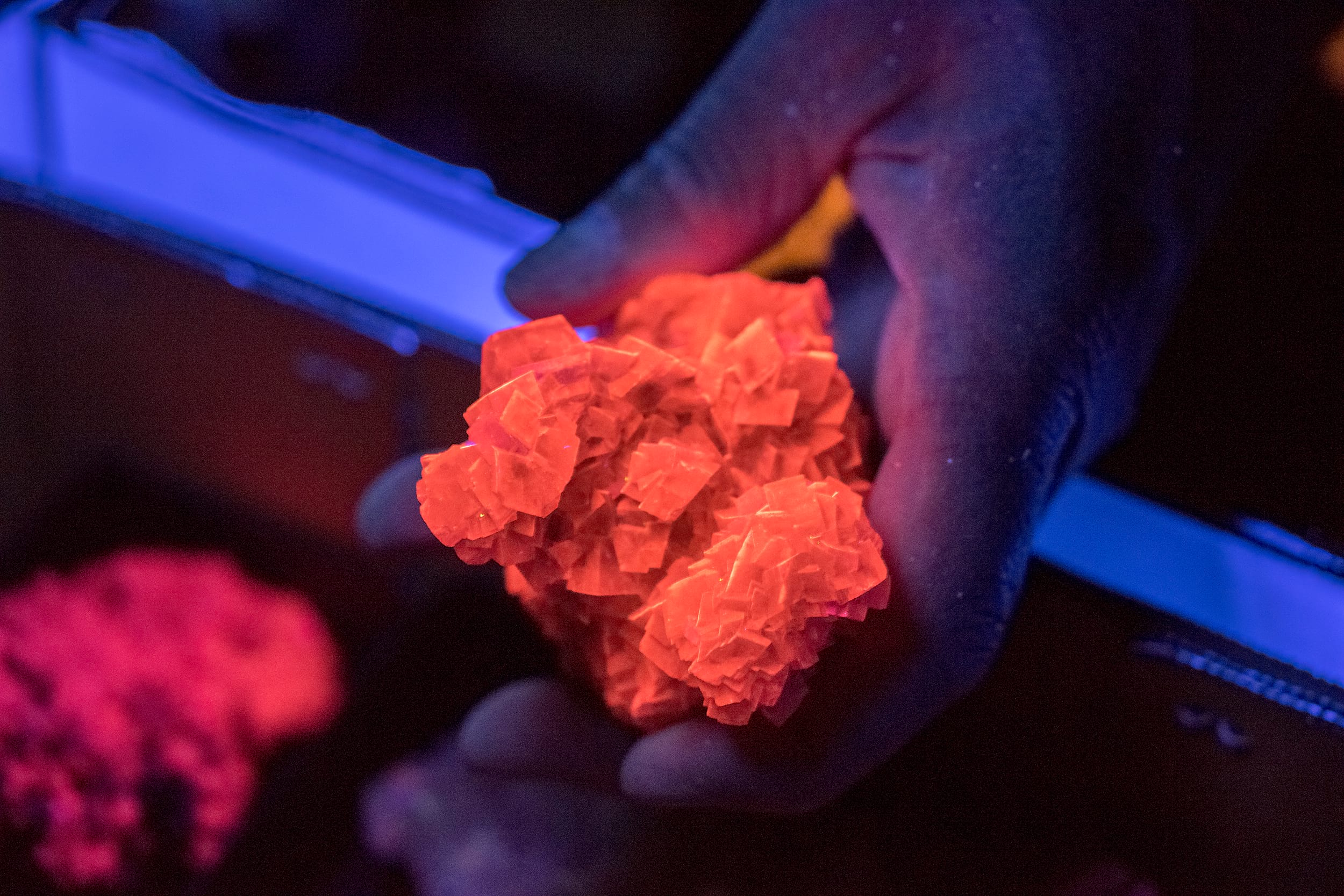
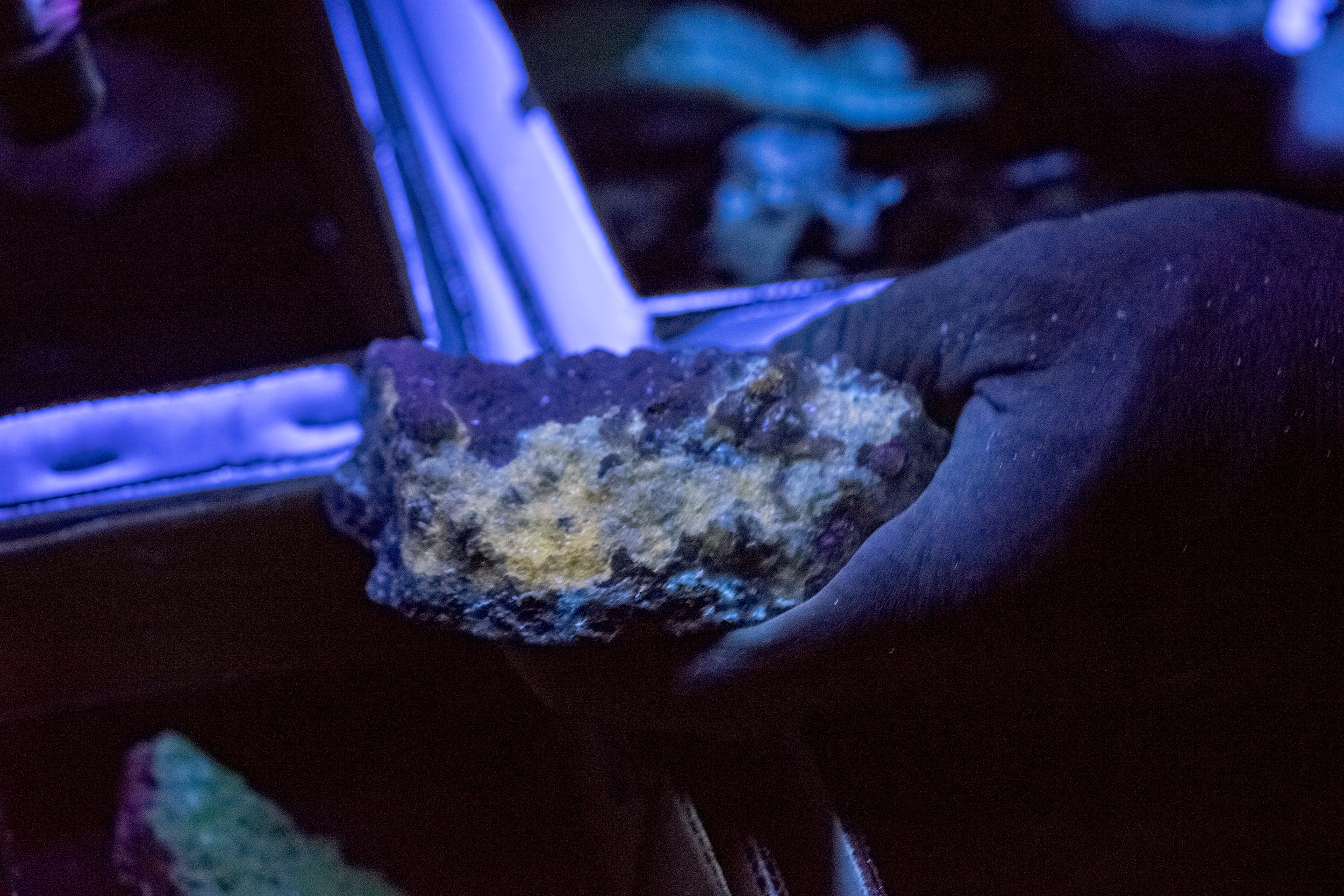
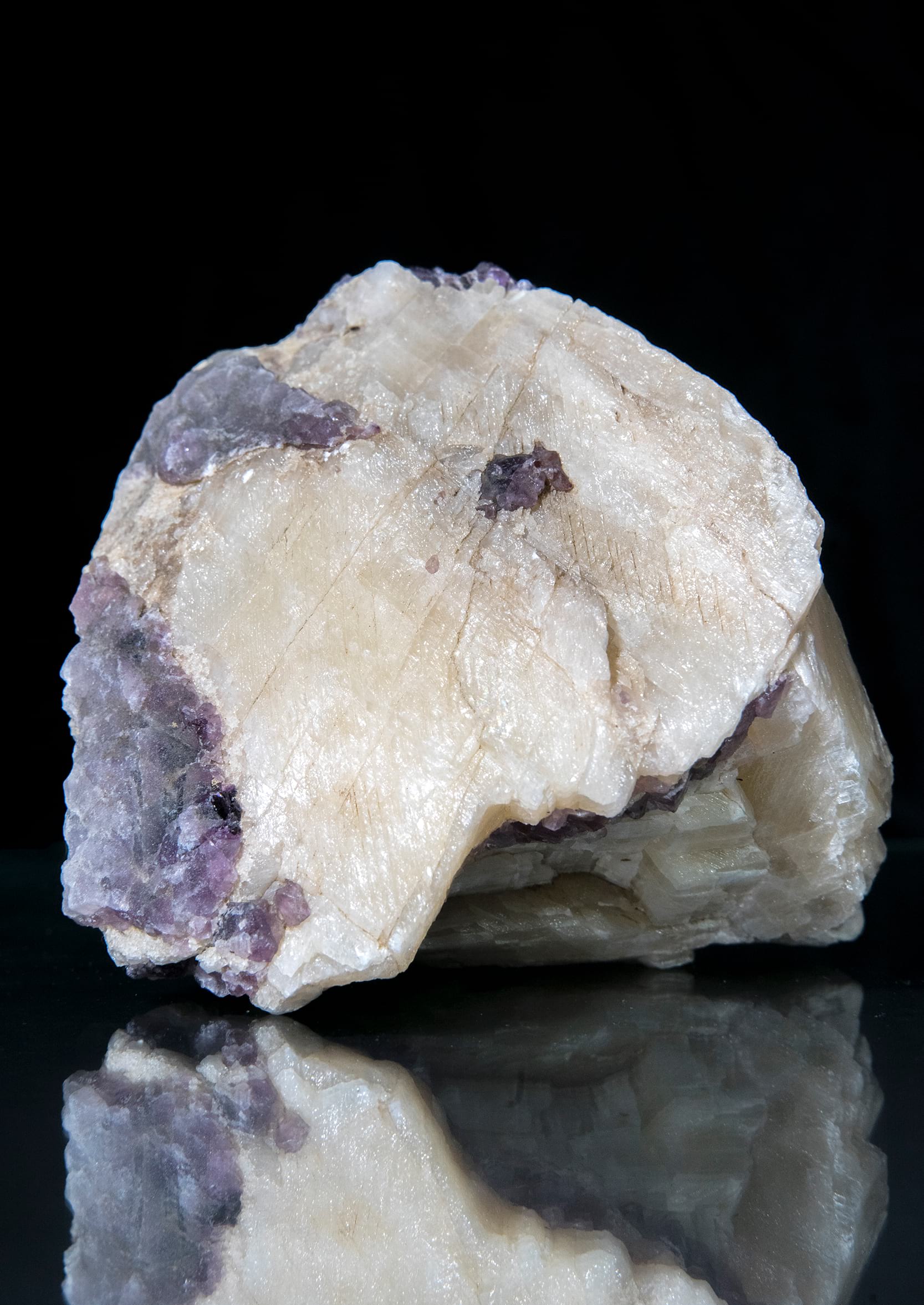
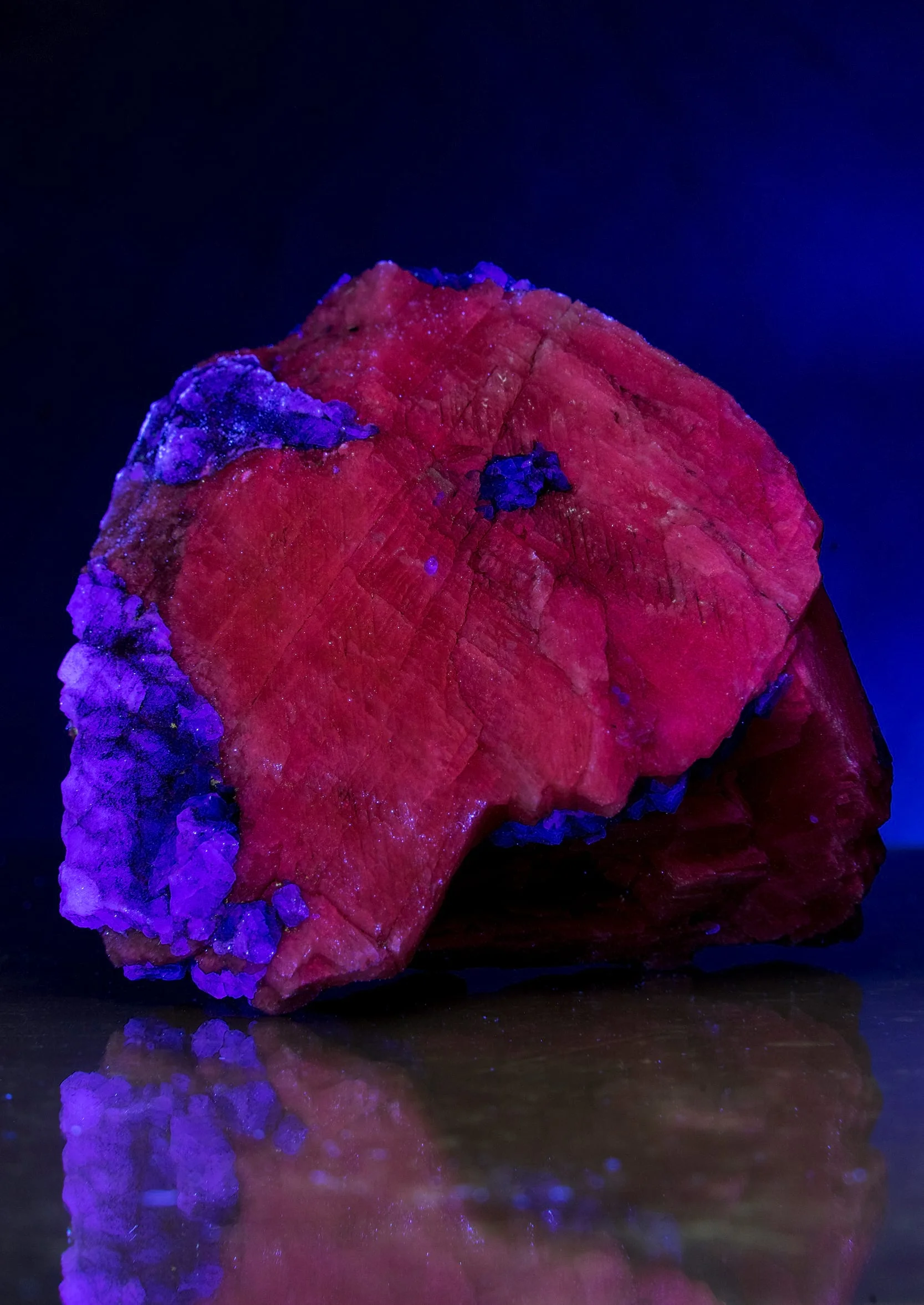
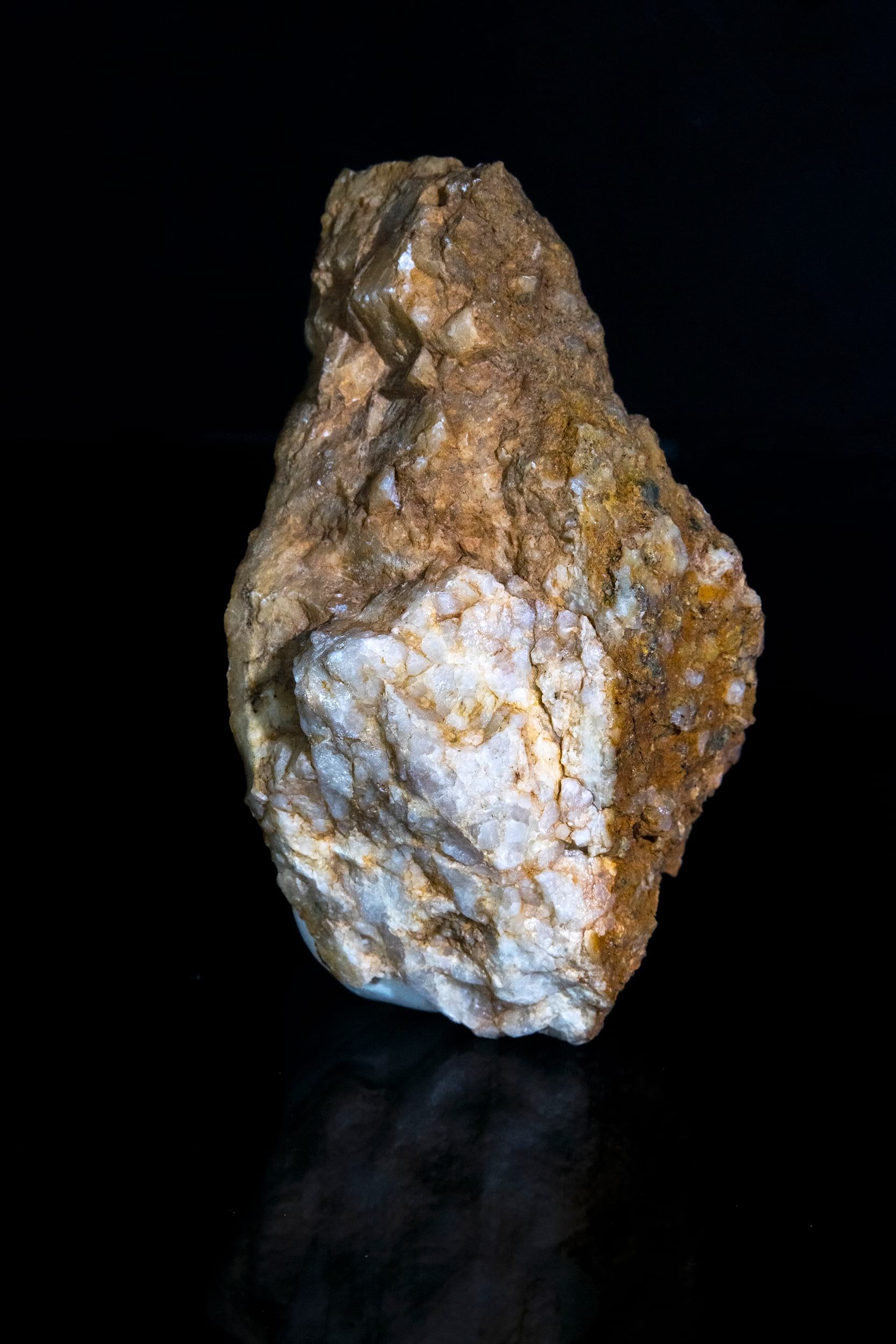
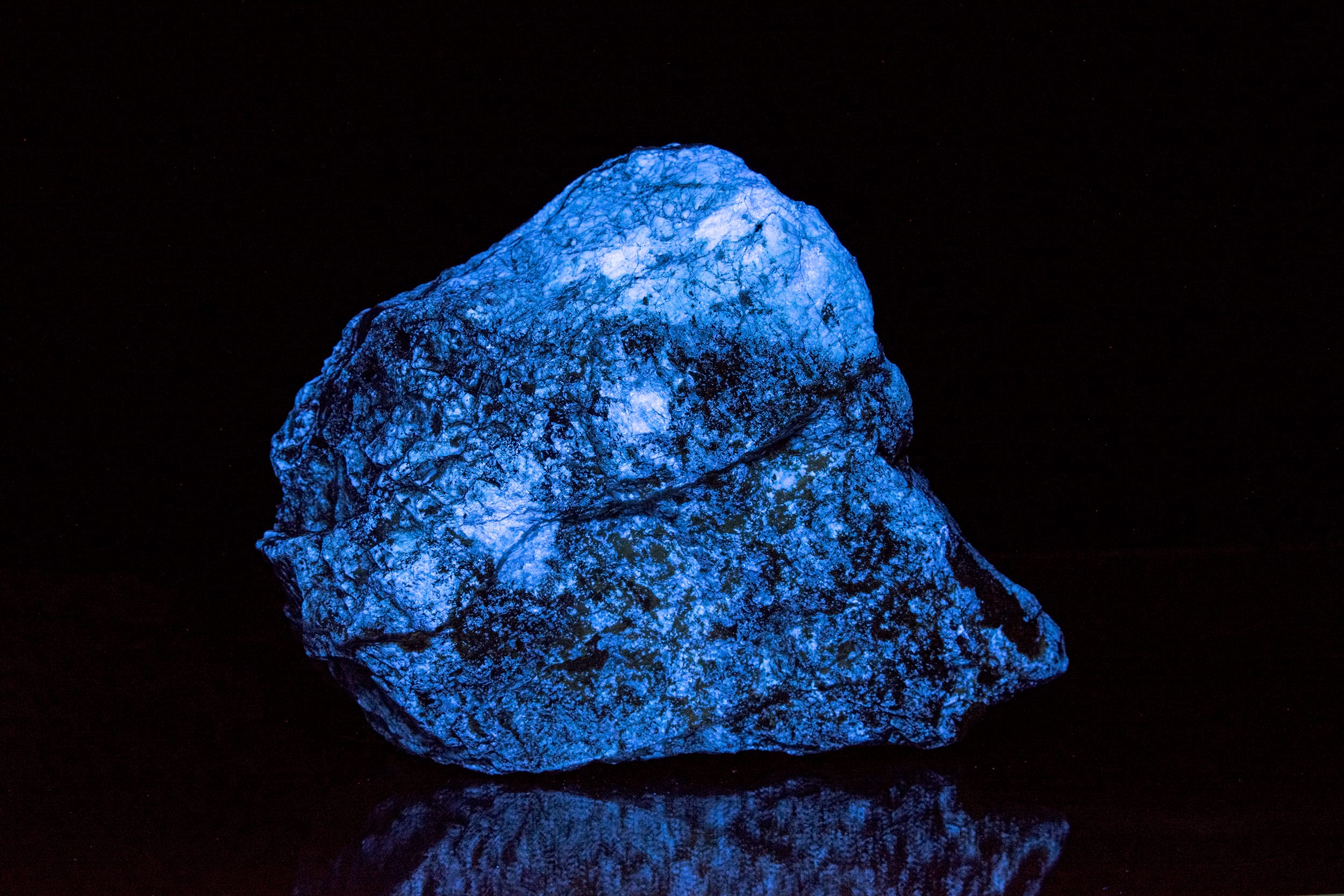
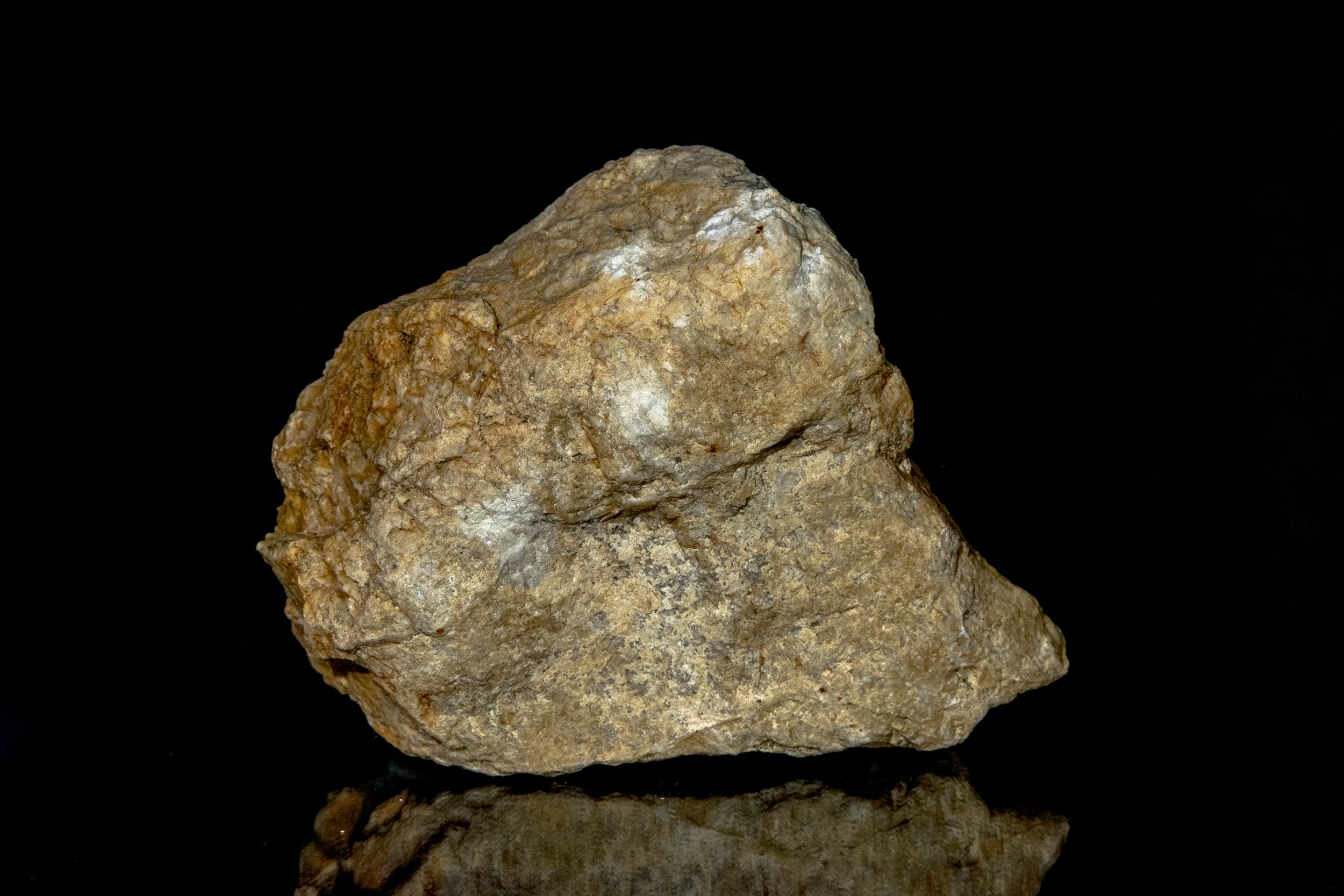
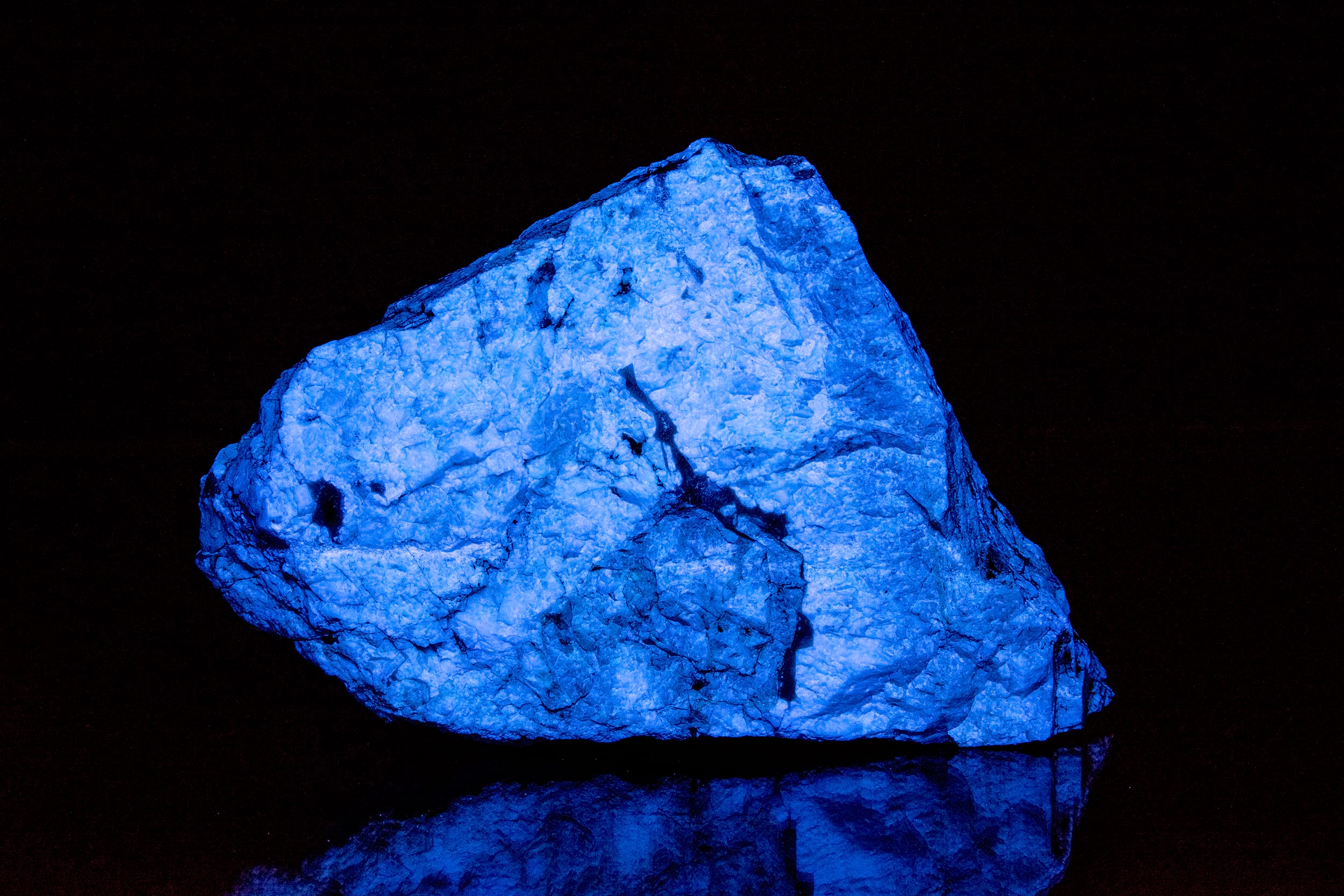
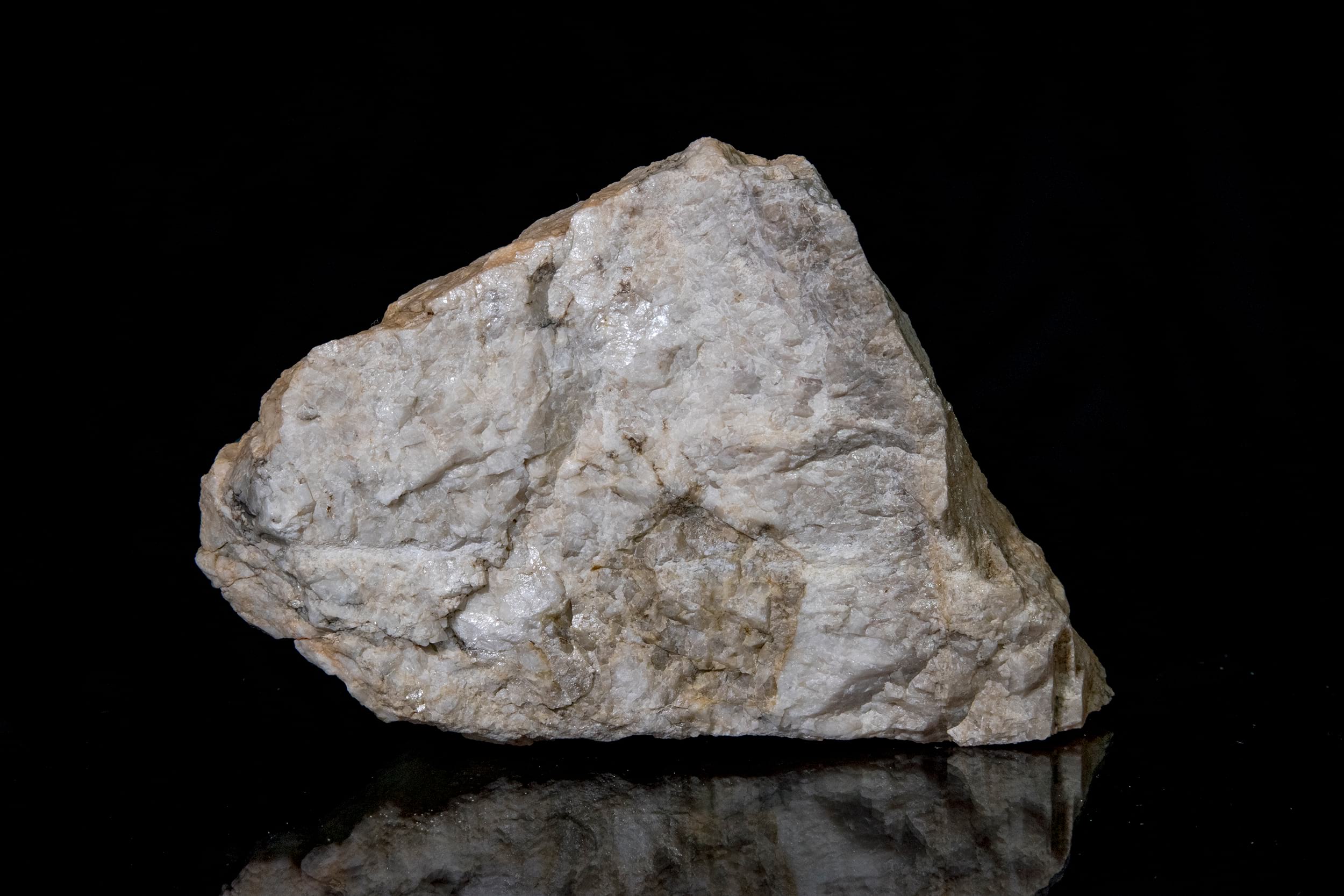
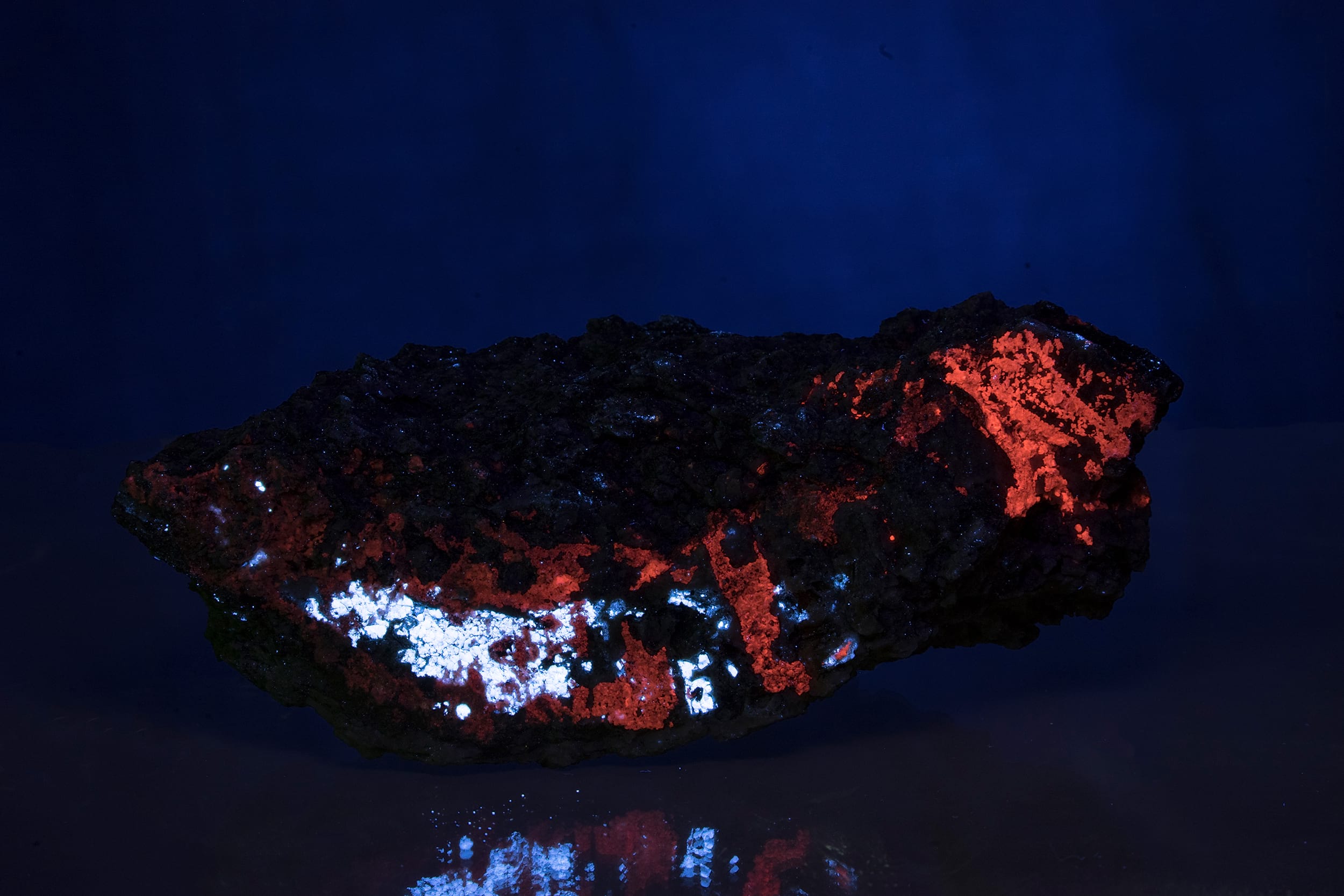
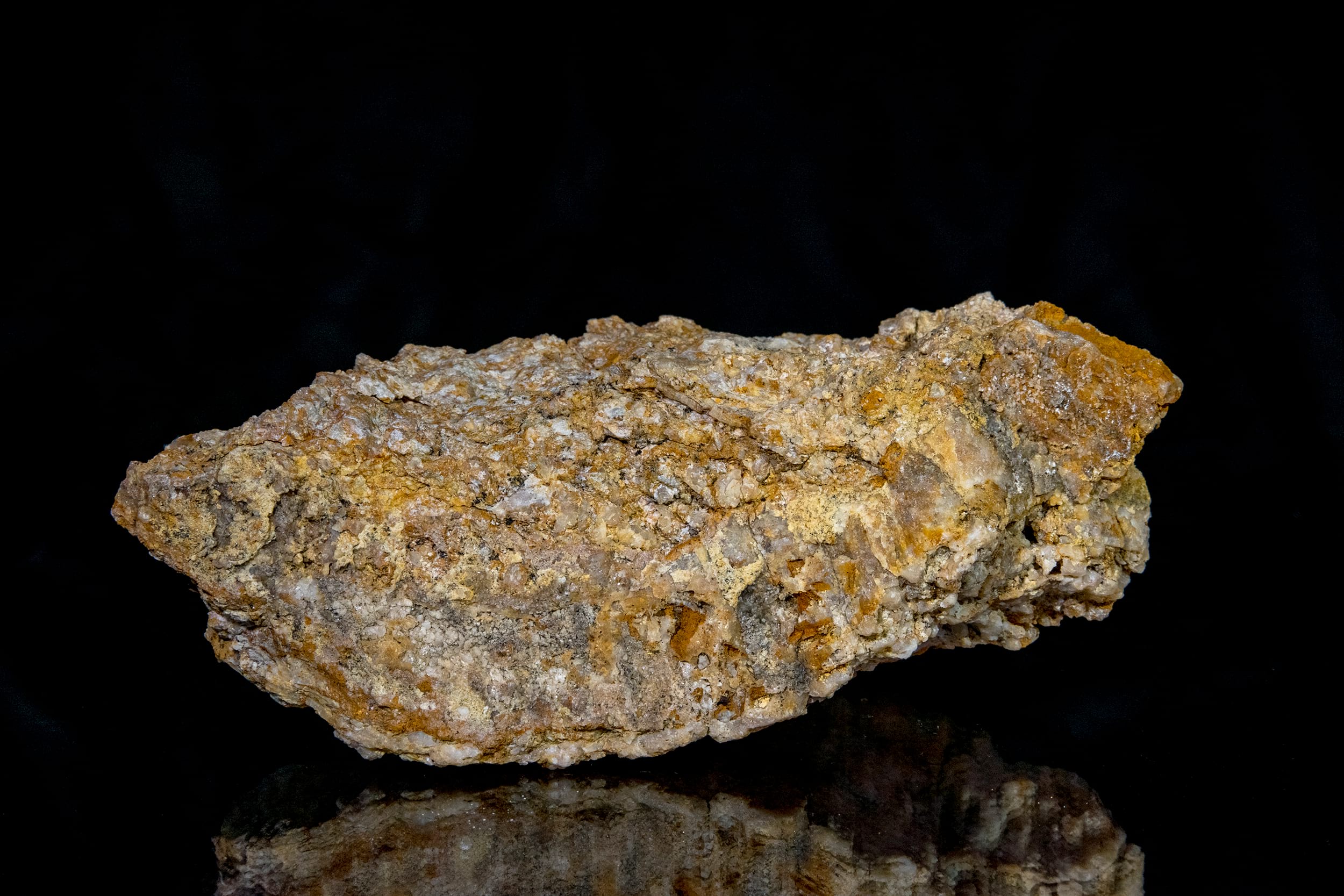
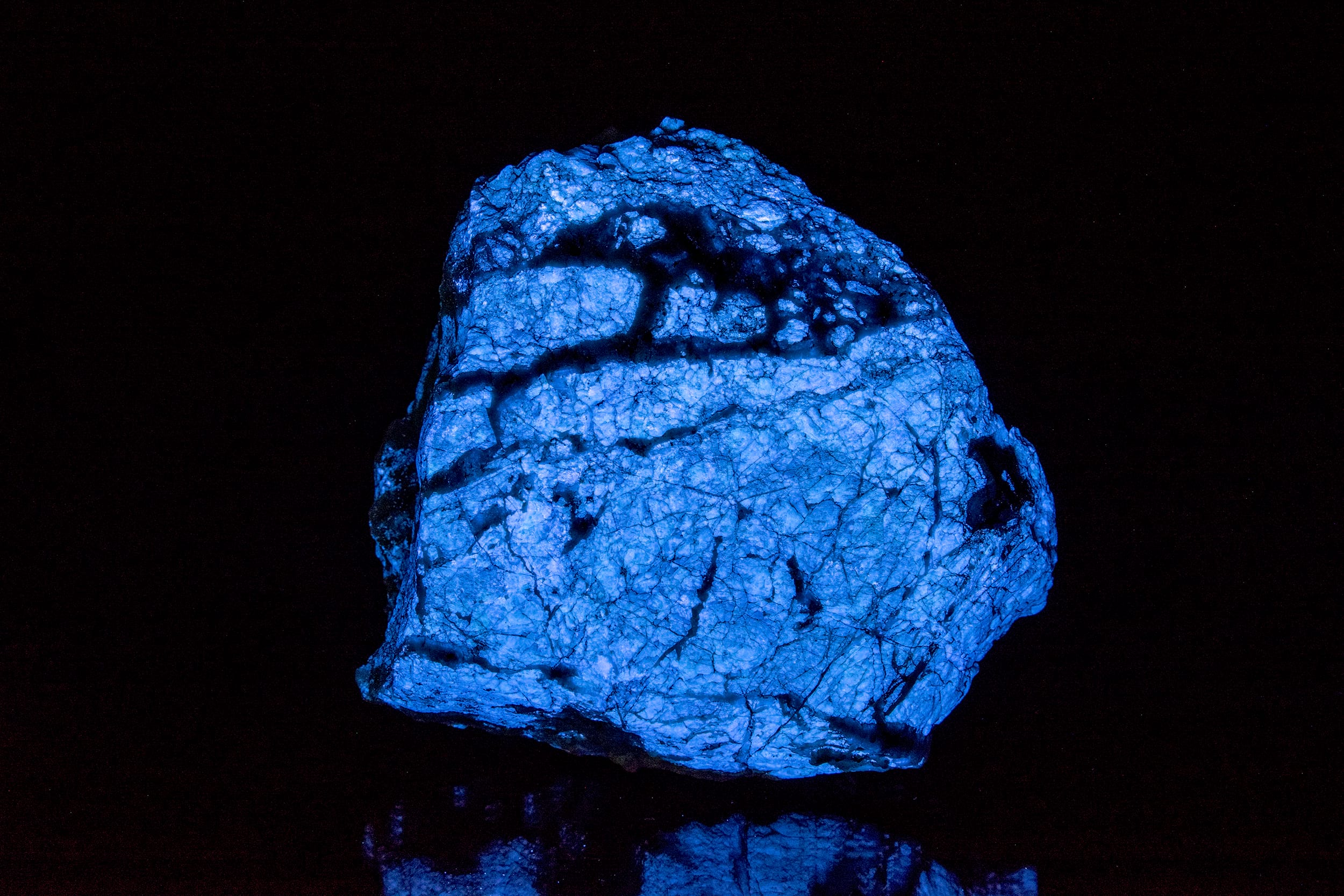
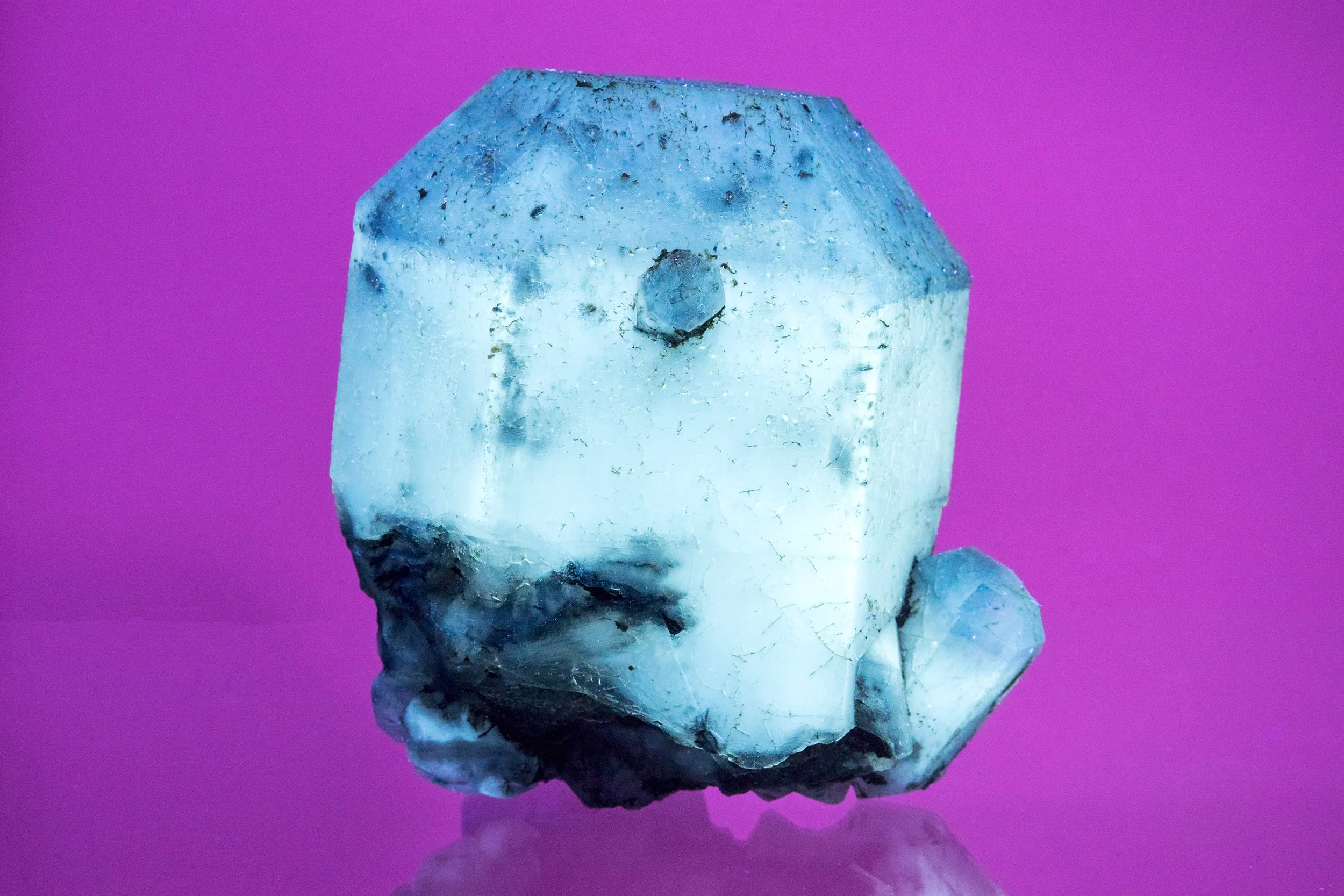
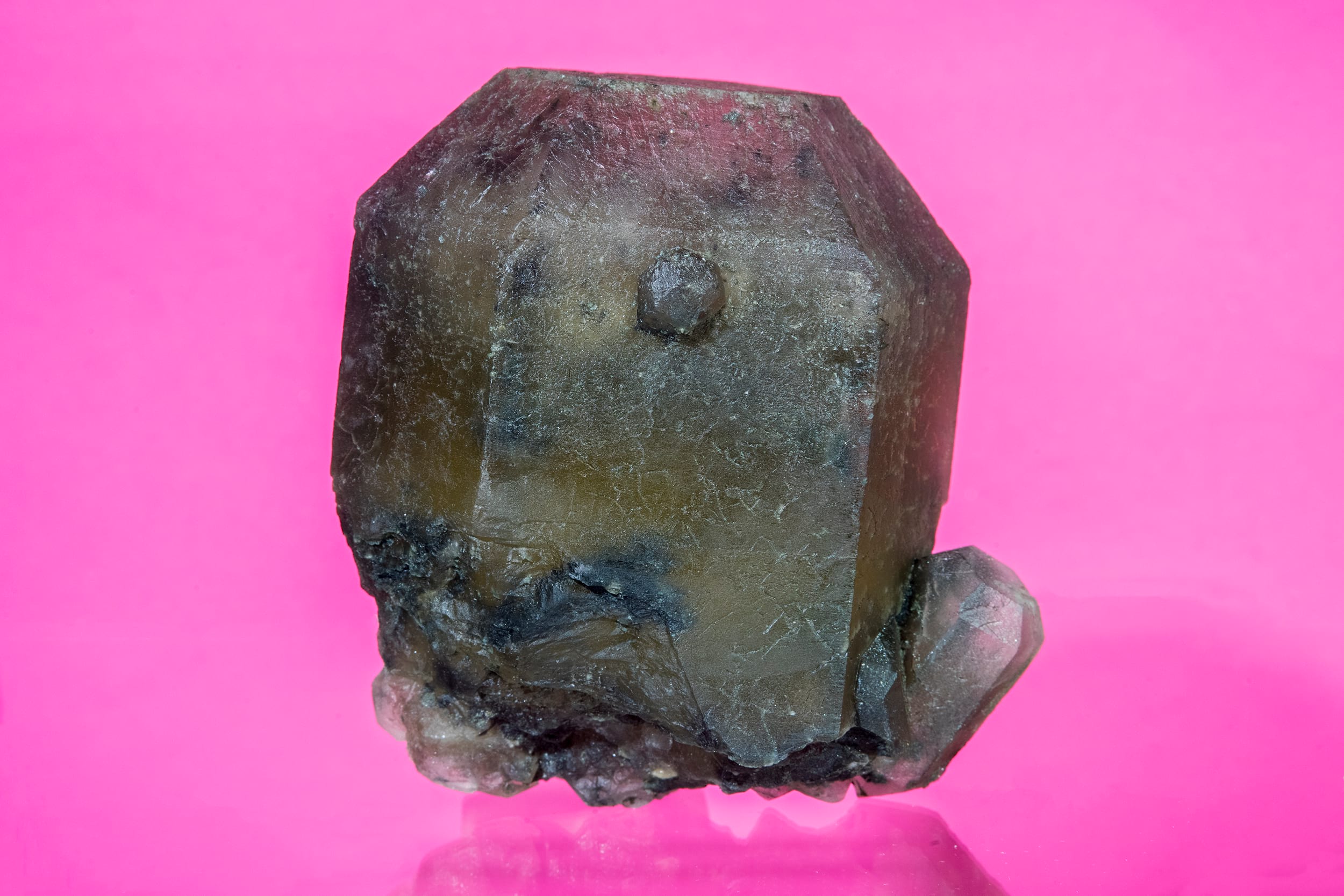
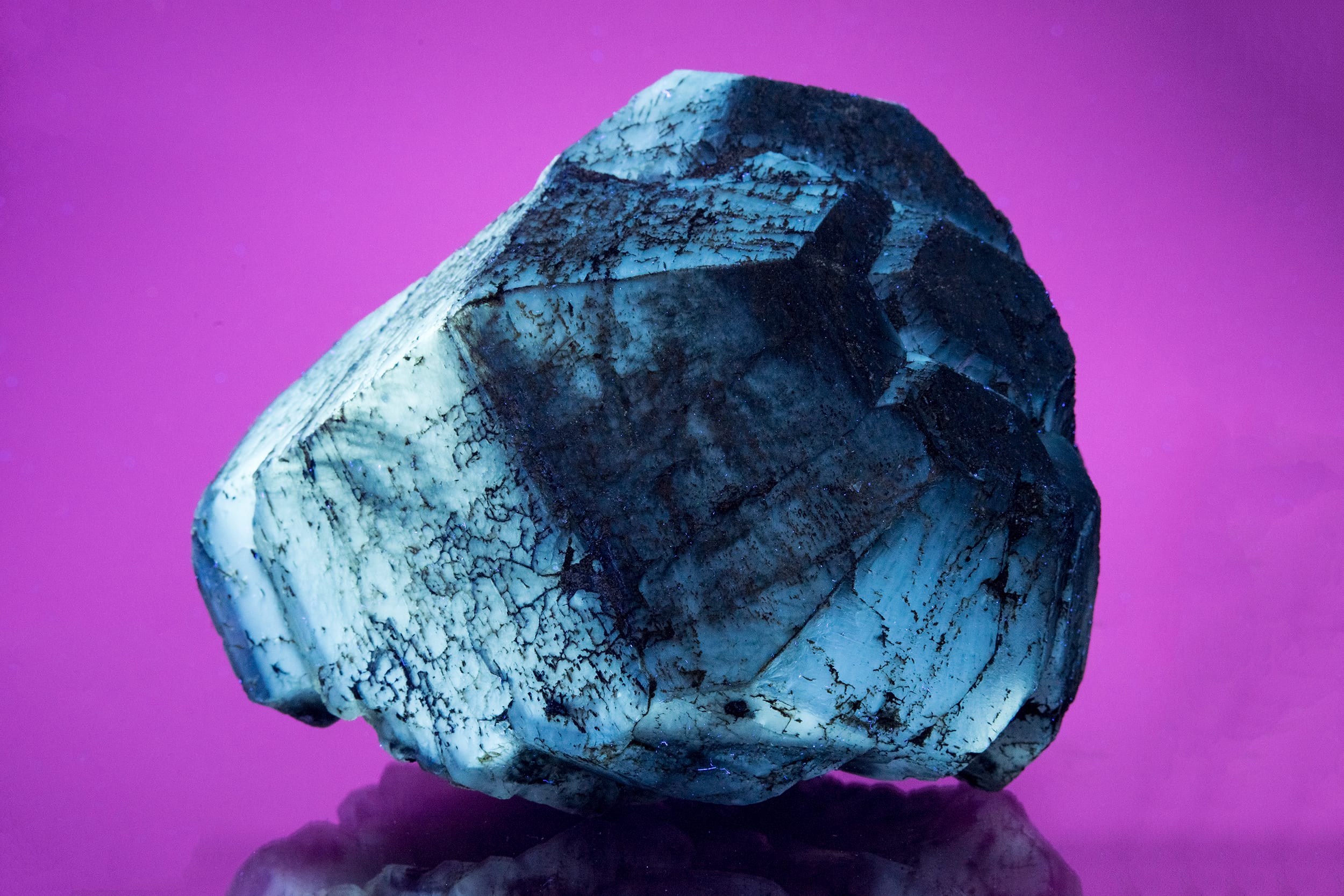
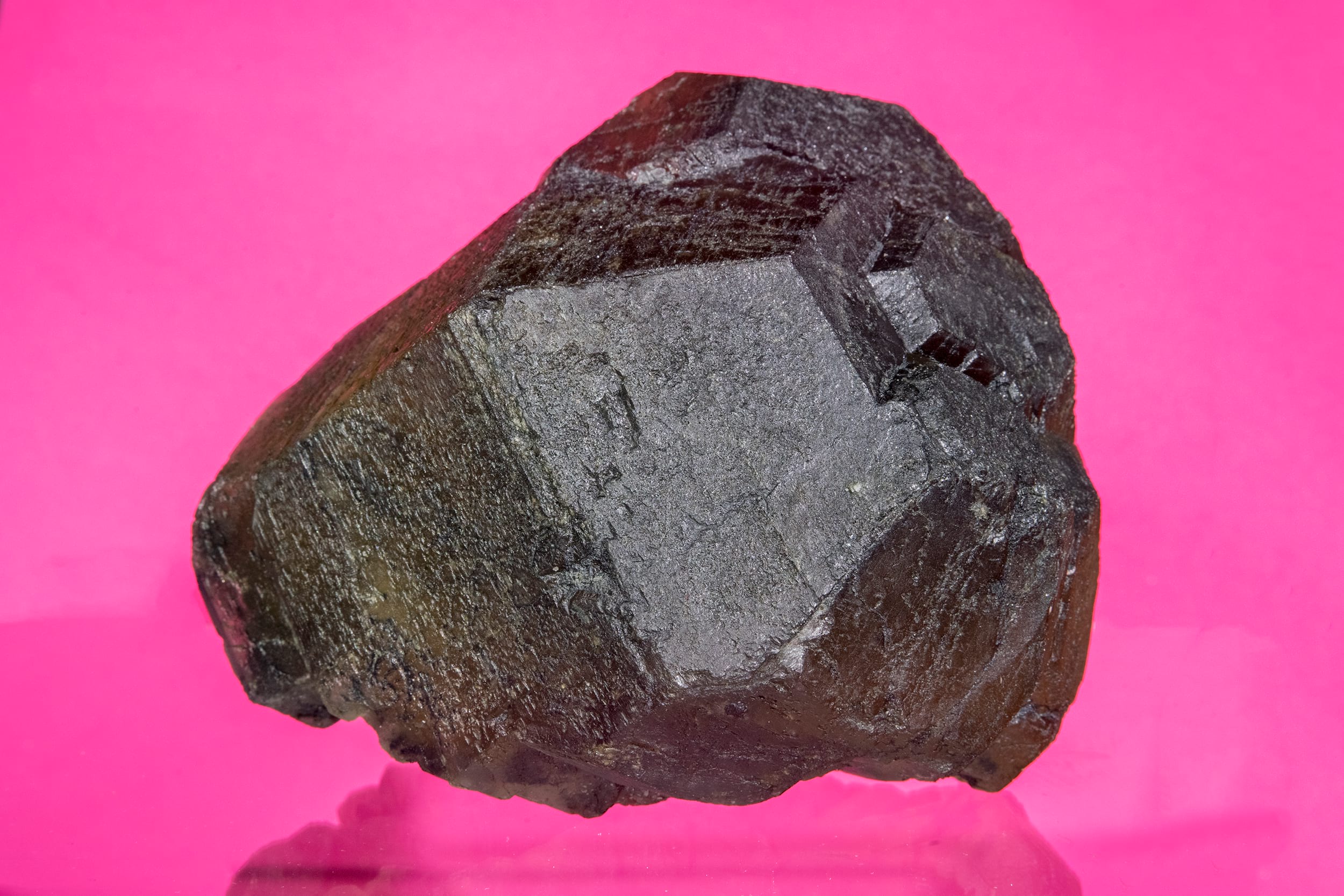
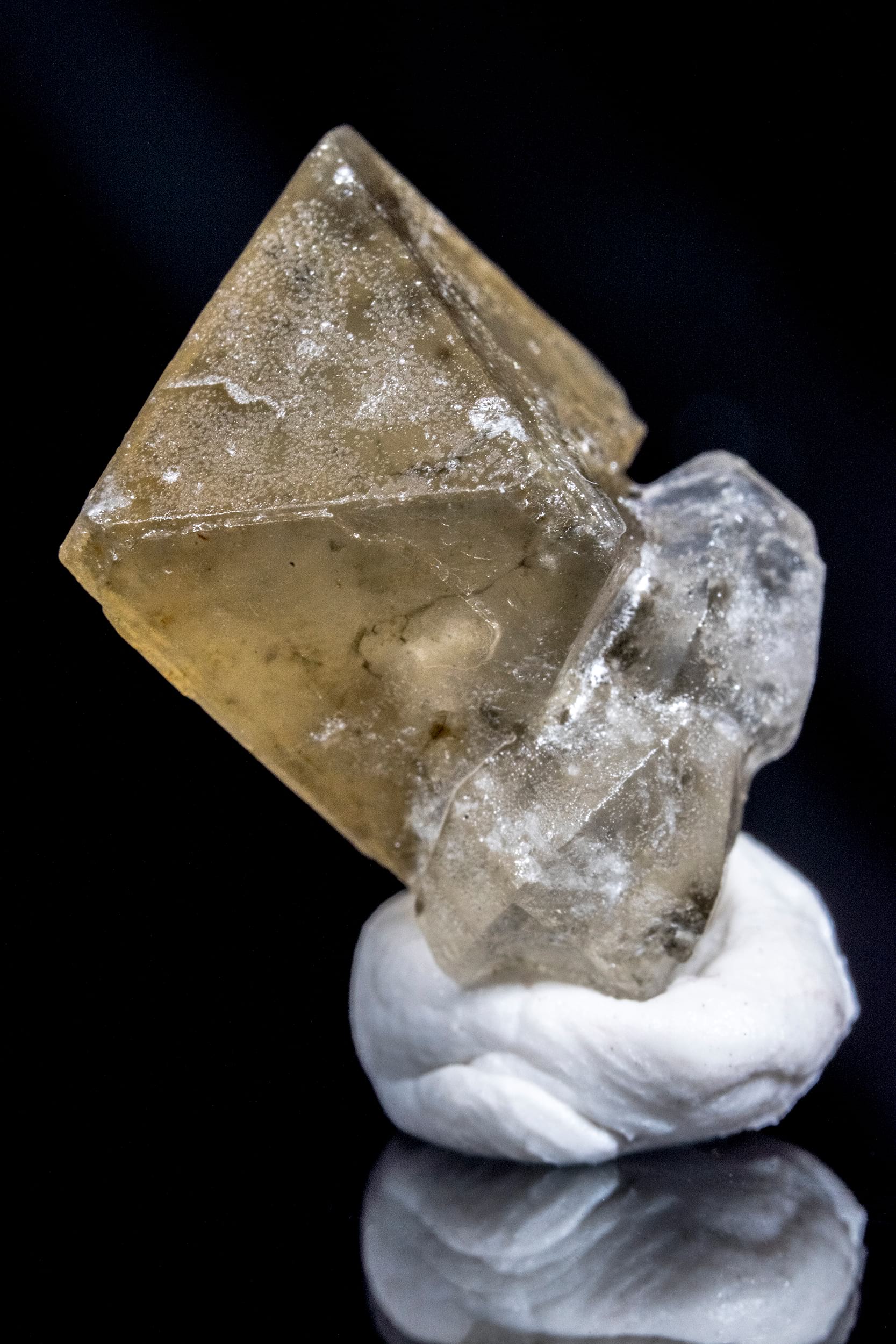
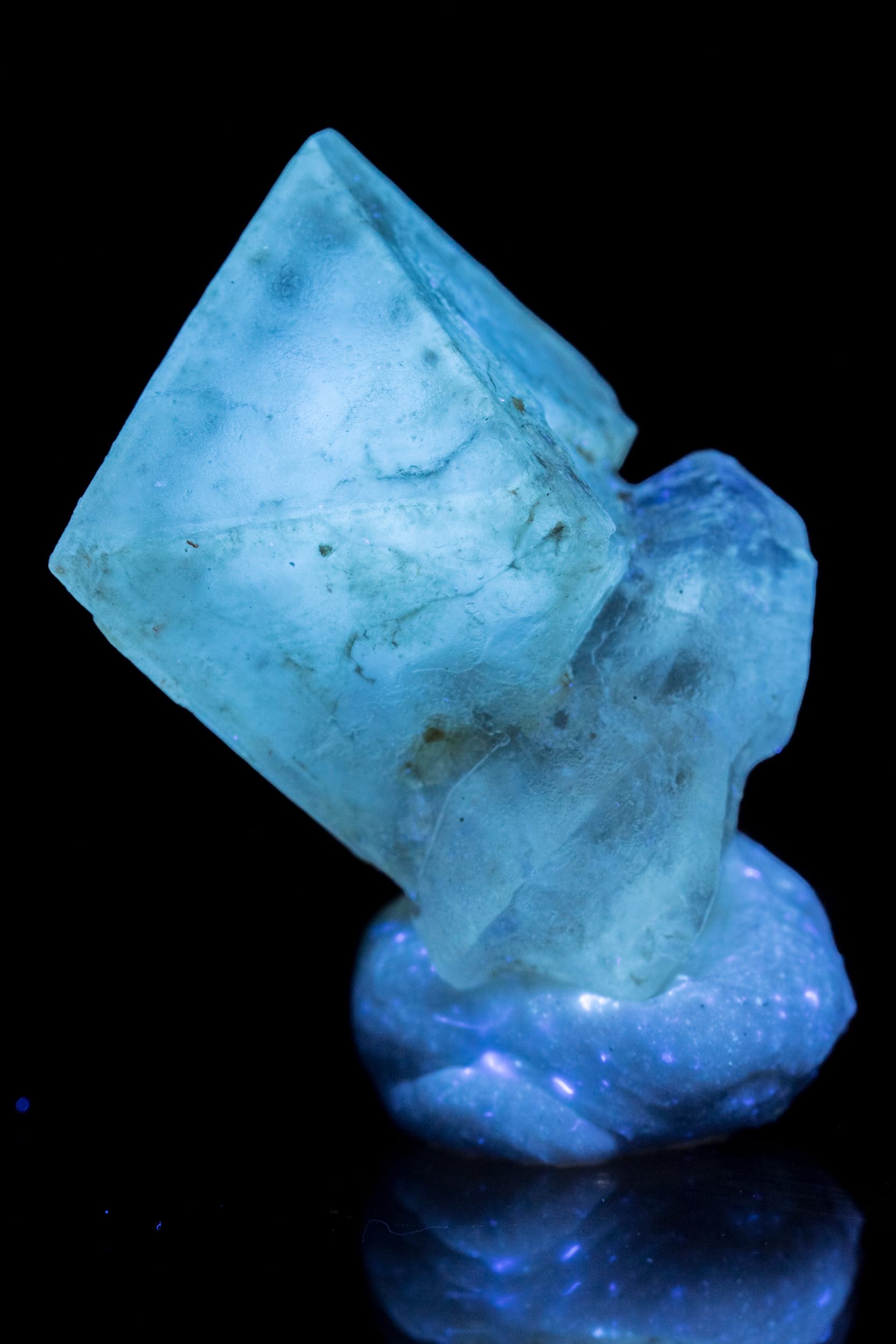
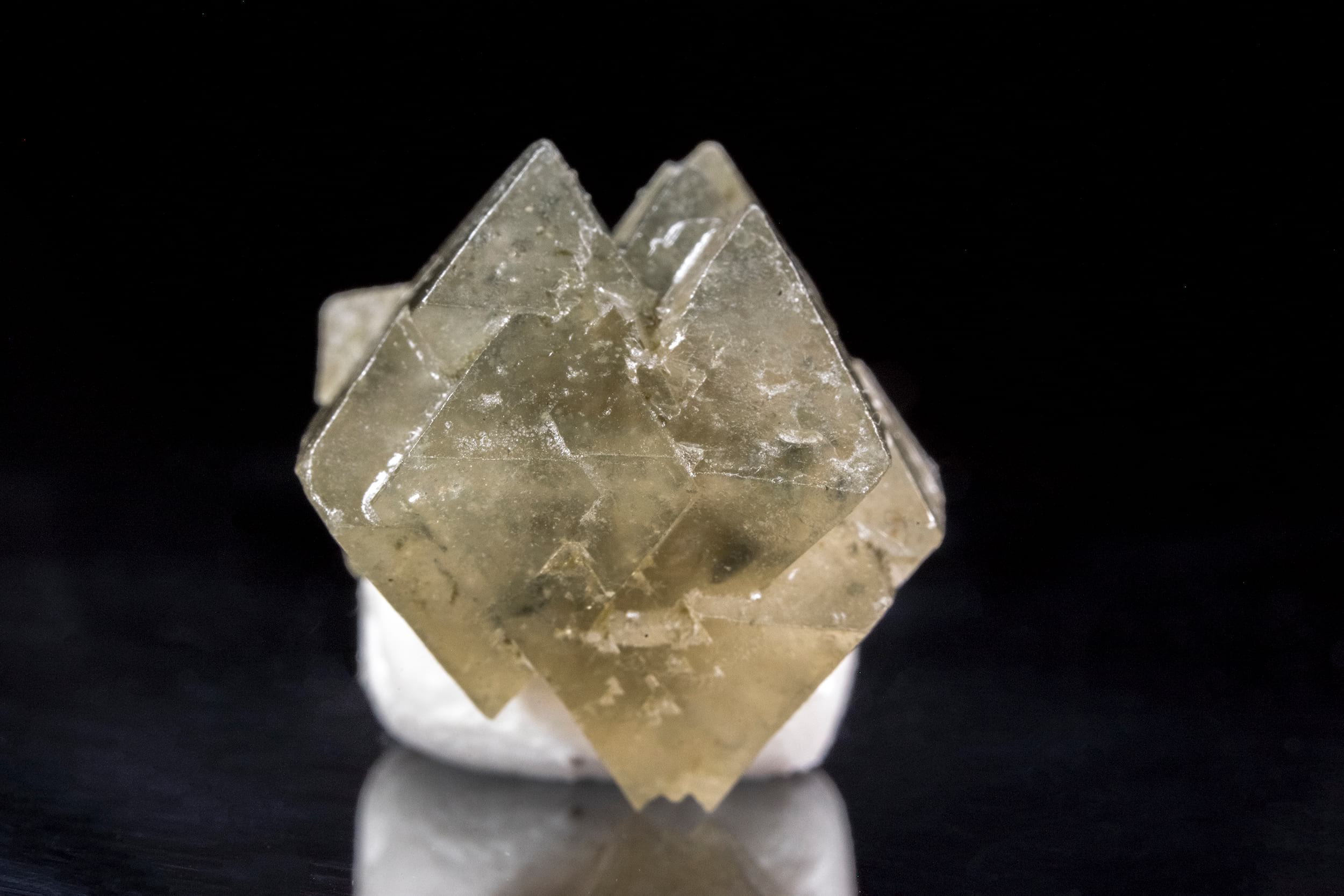
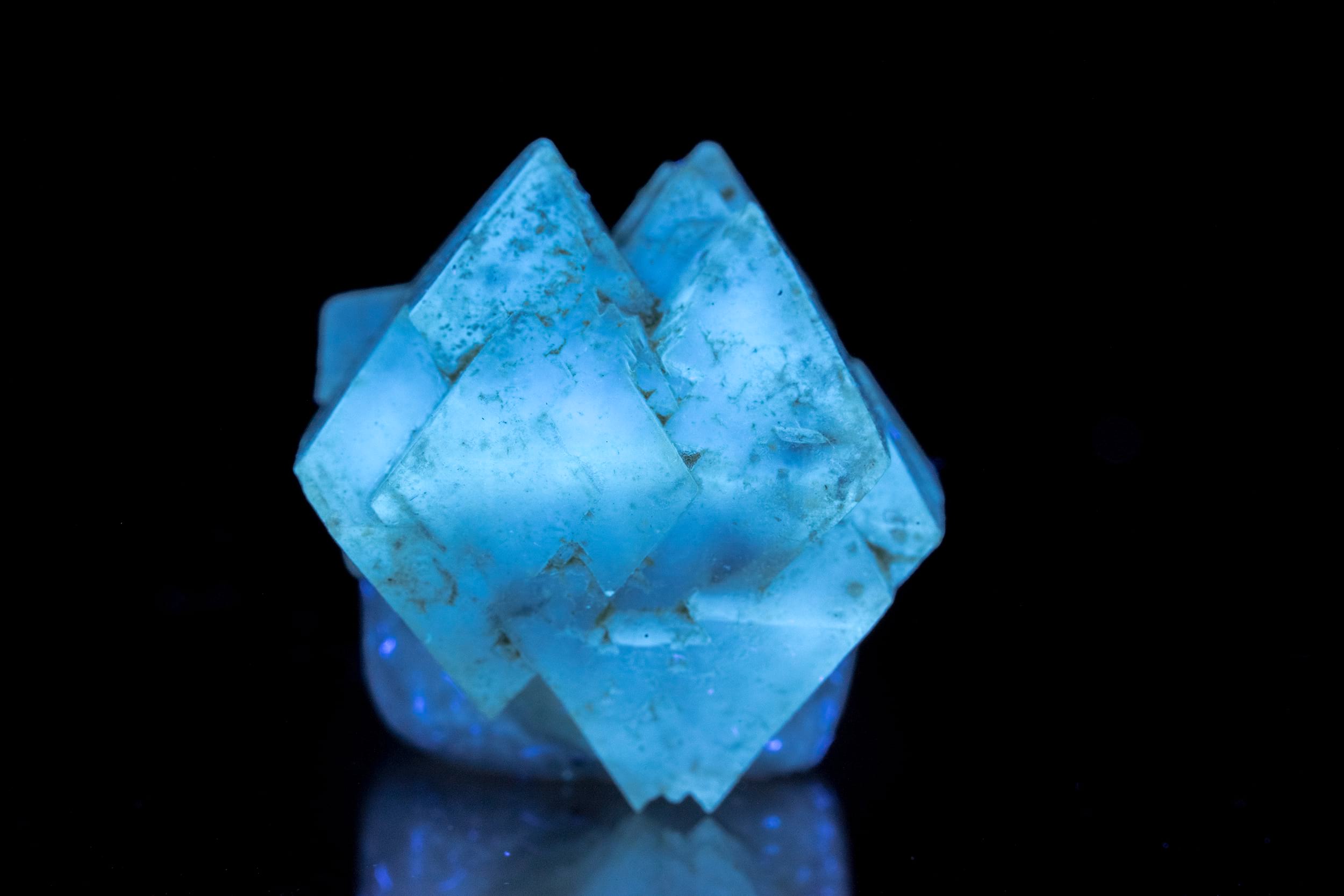
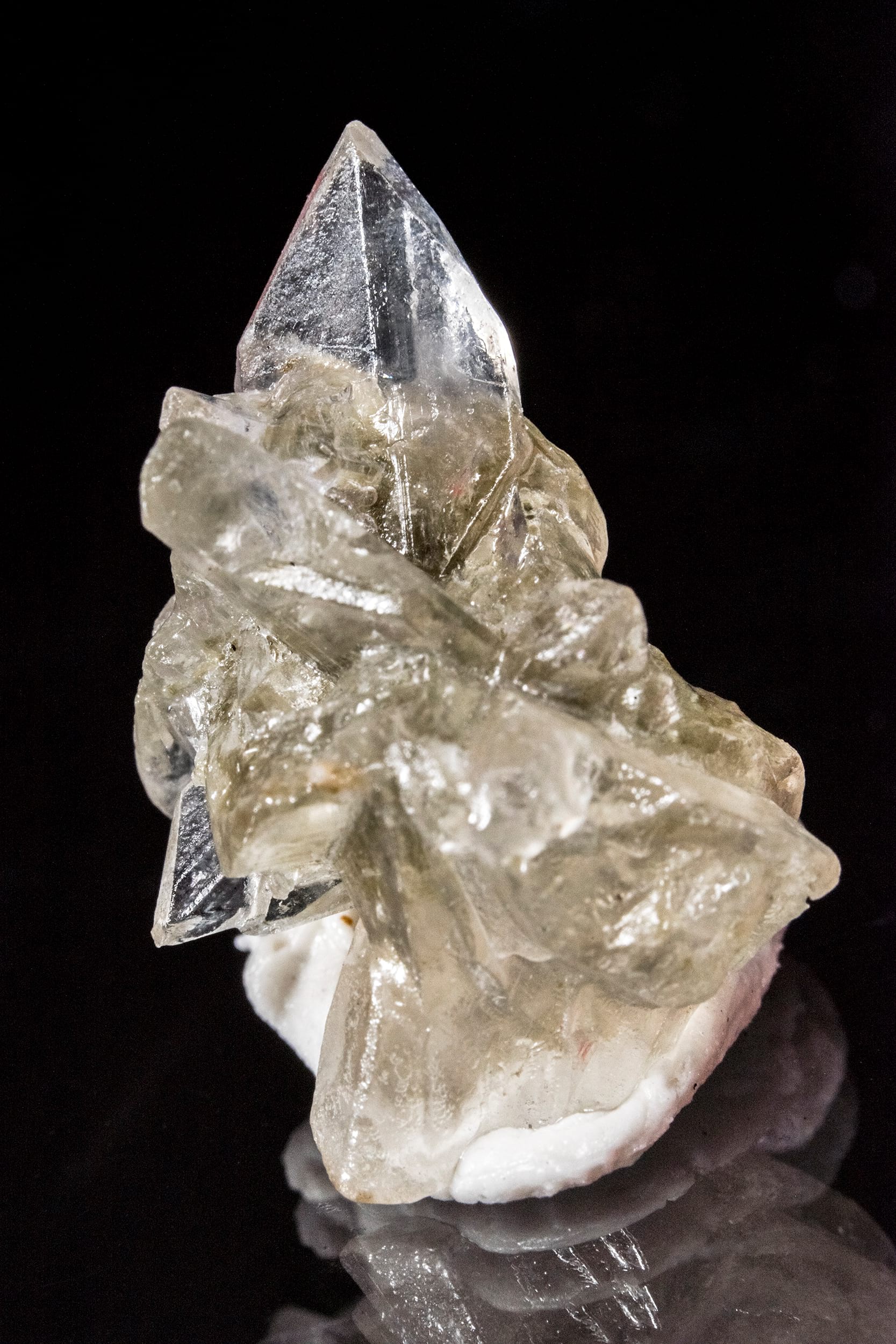
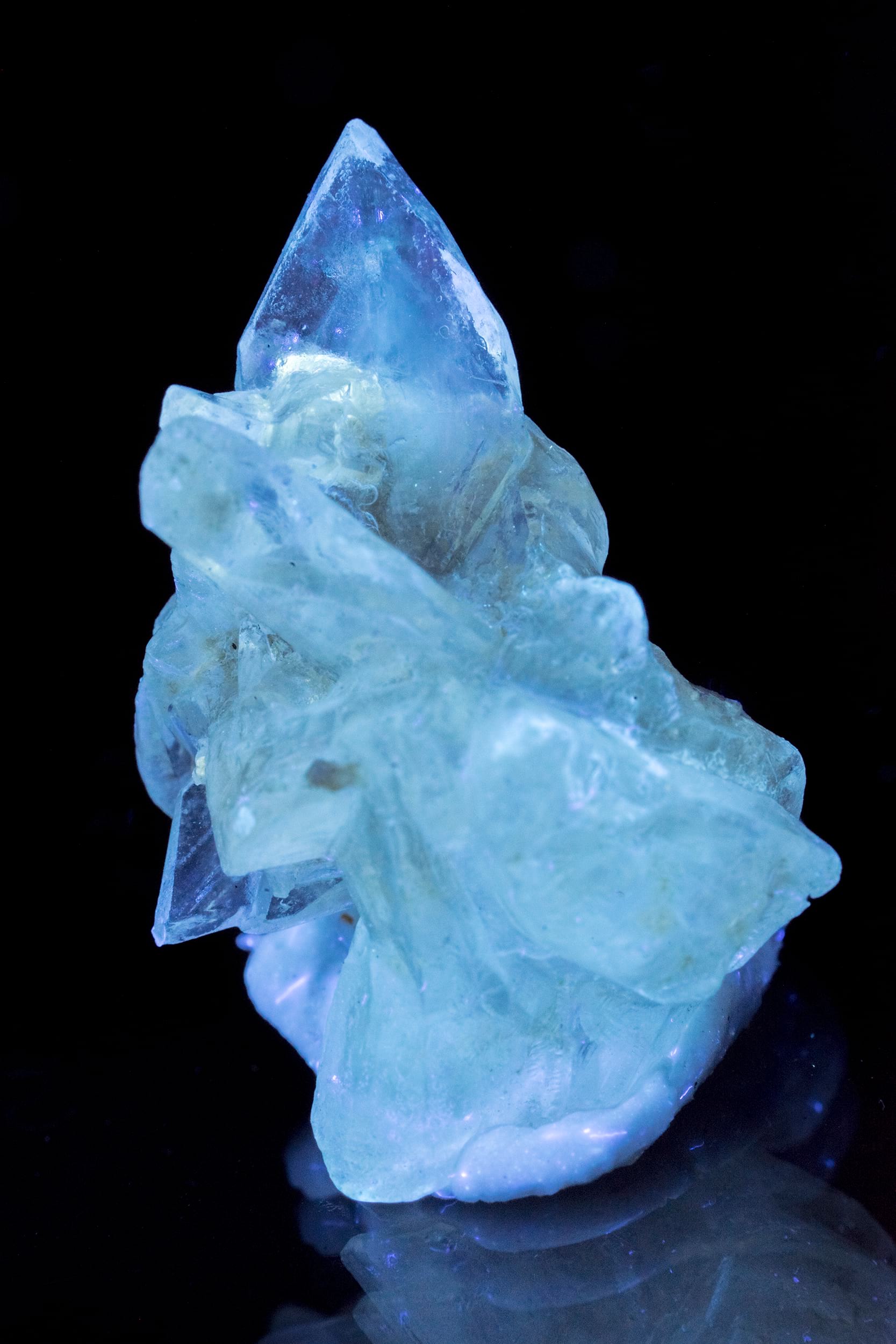
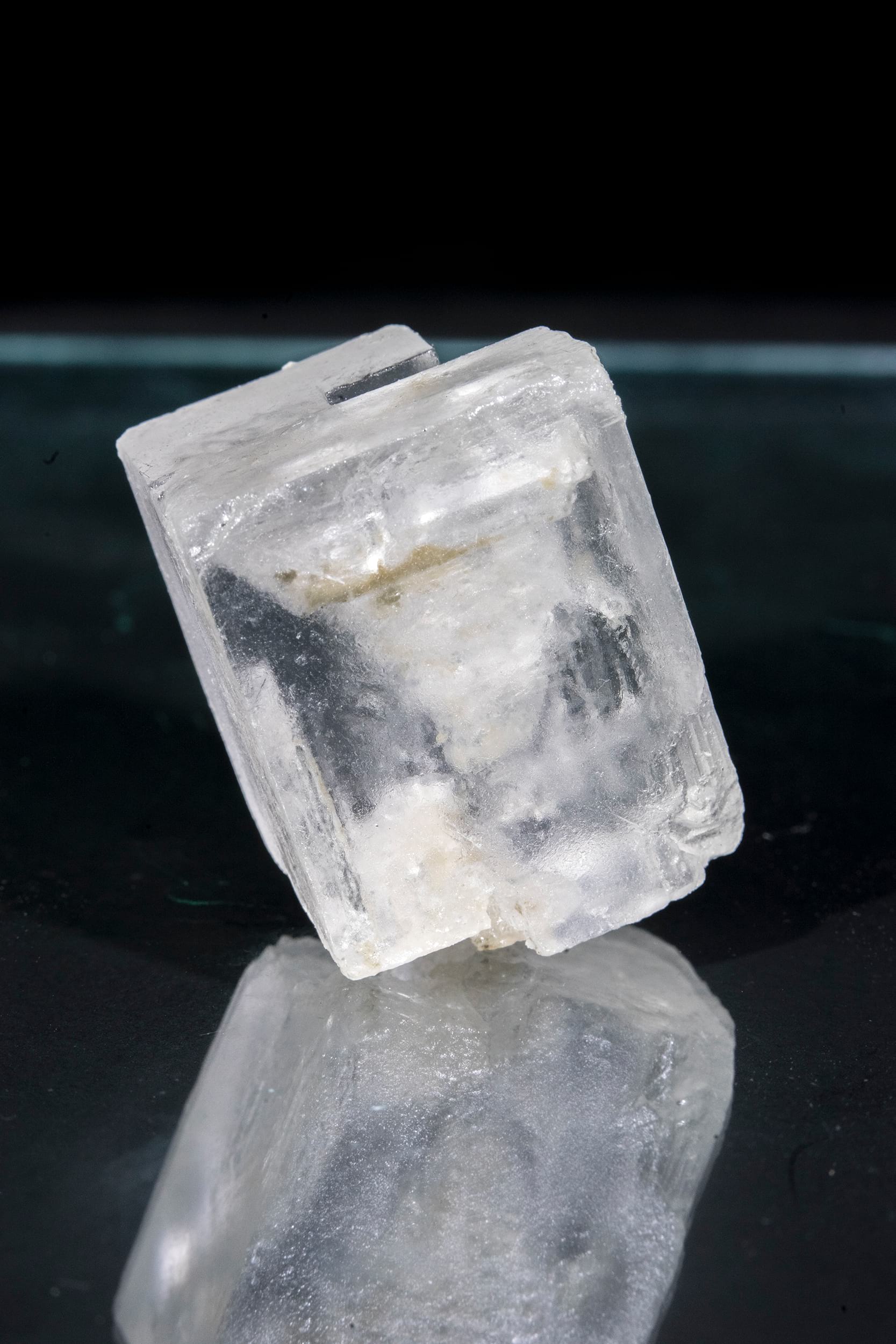
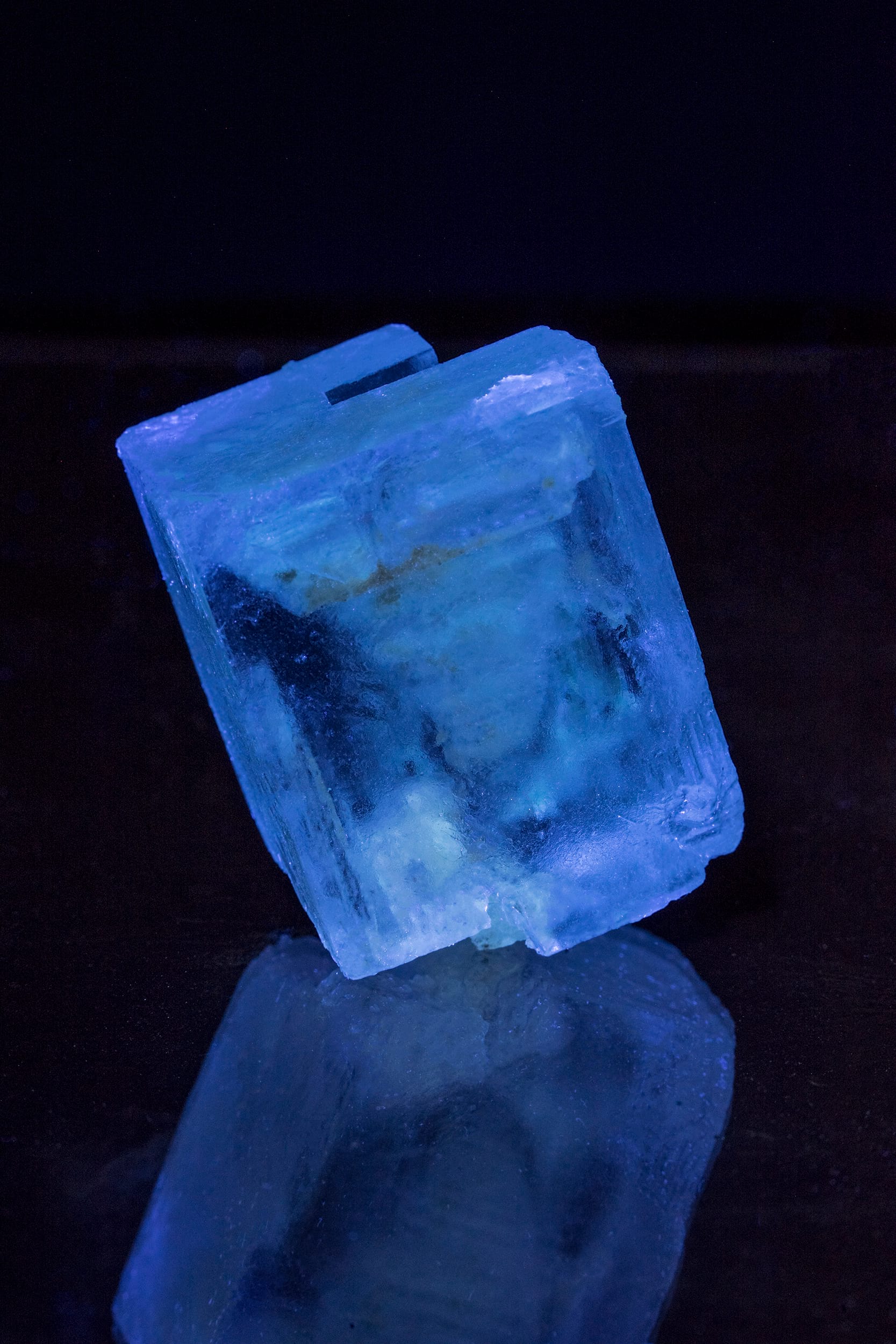
One of my favorite purchases from Tucson this year was this beautiful fluorite from Inner Mongolia. It is a wonderful fluorescent specimen accented by bladed barites and rhombohedral calcites. What makes this piece unique is the plethora of colors that are included within the fluorite octahedrons themselves. While these colors will appear under the traditional 253.7nm bulbs it can be viewed under 265nm UVC LEDs. I believe this will truly be a specimen for the future as LED technology in that space improves and we get brighter and brighter fluorescent reactions.
Locale: Inner Mongolia, China
Weight: 5lb | 2267 g
Dimensions (fluorite twin only): 3.8 x 2.5 x 2.0 in | 96 x 64 x 52 mm
Dimensions (total): 6.2 x 5.8 x 3.4 in | 157 x 146 x 86 mm

265nm SW

365nm LW
Will need to trim it eventually but I don't know how to do it without damaging the crystals!


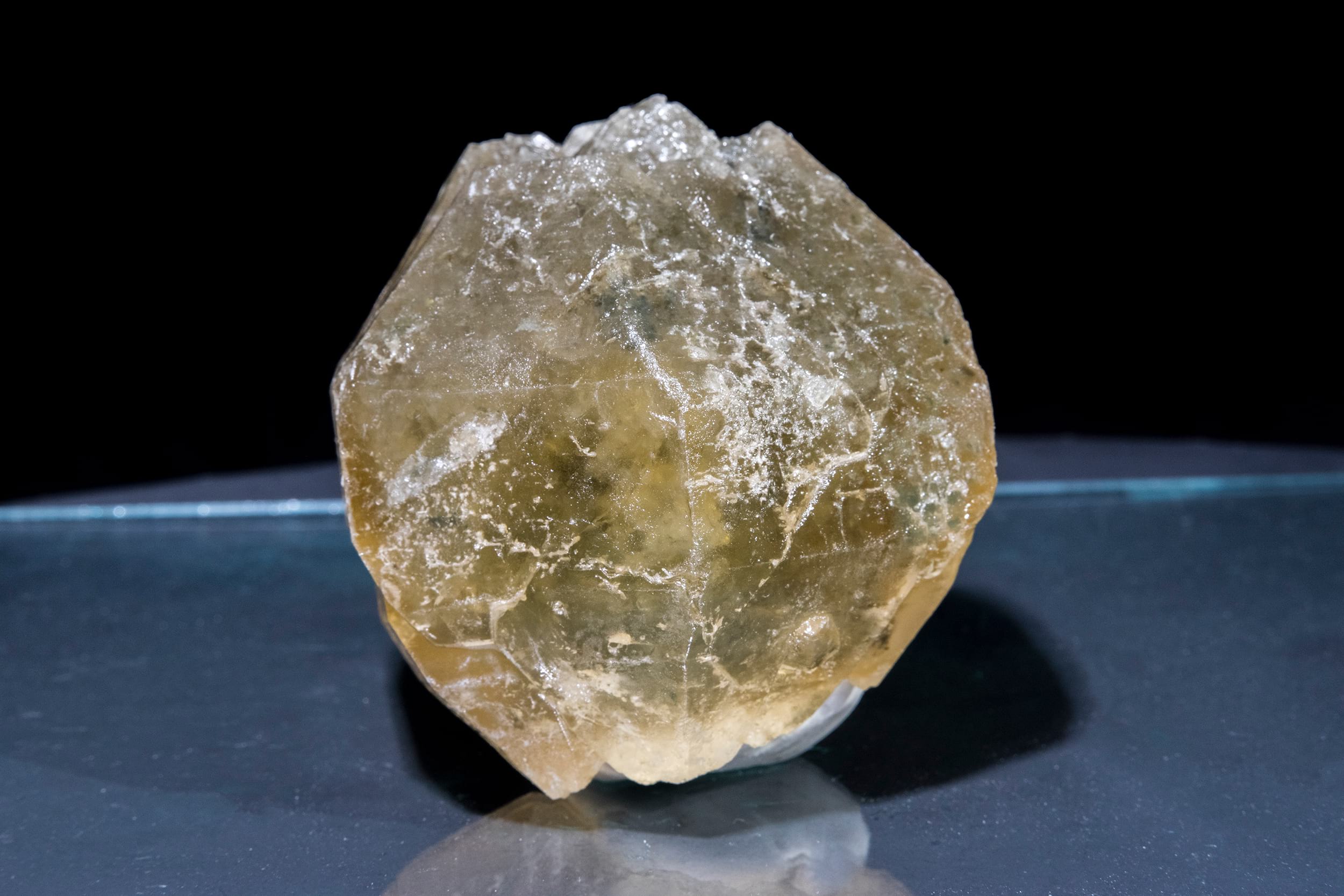
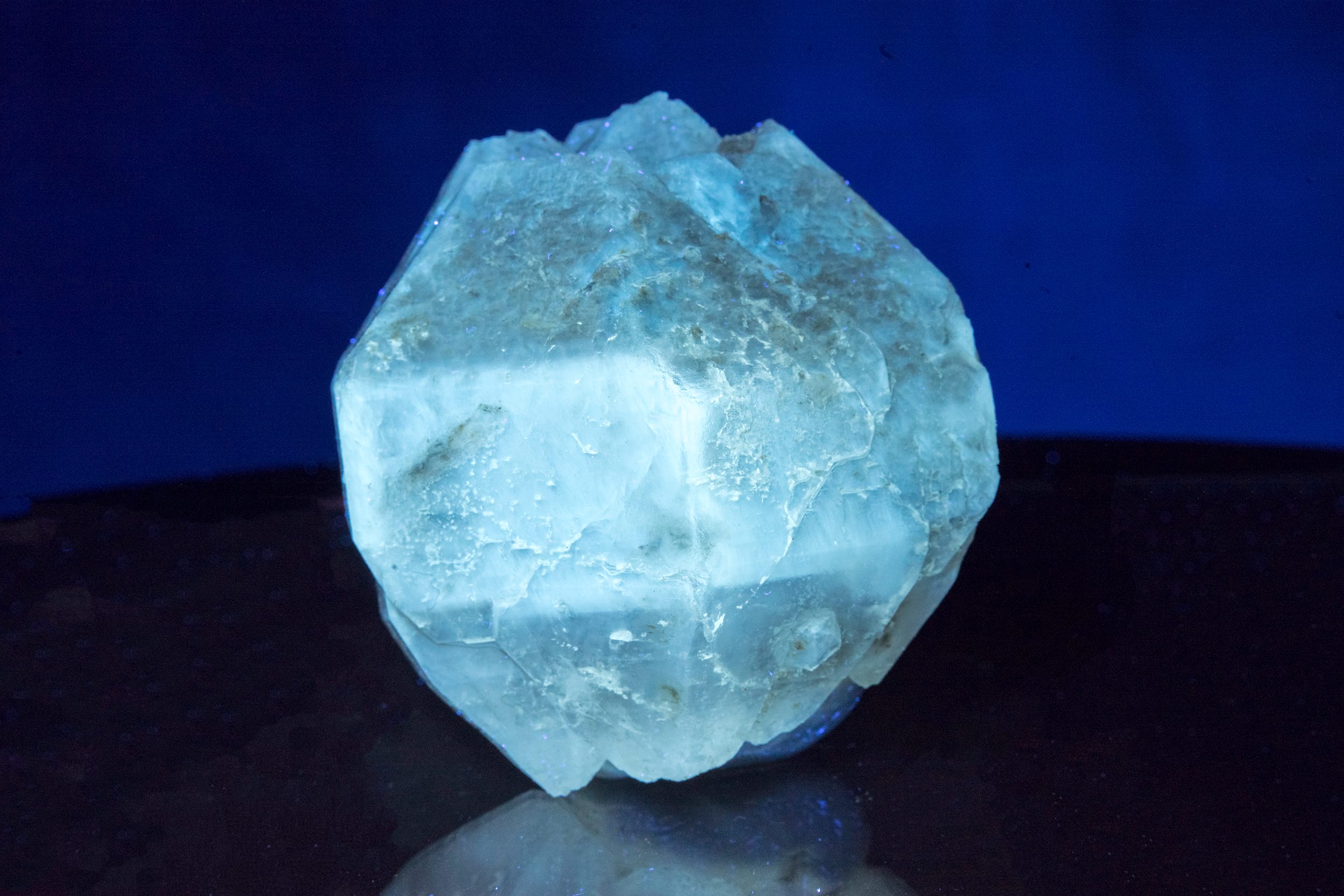
A shot of the beautiful trigonal face and nelenite inclusions within the crystal itself
Comparing specimens under different UV bands? See the Fullwave UV Light V2’s shortwave, midwave and longwave options.

Shortwave LED Flashlight - A First for the Hobby!
Update 4/5/18 Added new video showcasing 258nm, 265nm, 275nm
I recently finished making the first (as far as I know) shortwave LED flashlight. This'll make a first for the hobby and is a sign of great things to come! Will be making a production version soon after some testing.
Quick addendums:
- Yes I obviously have the 258nm LEDs. However, the company is releasing very powerful ones shortly. Expected output ~200-300mW

Possible New Franklin, NJ Mineral
From the SoCal FMS Meeting that took place on March 22 2018. A potentially brand new mineral was discovered that is primarily activated by SW ranges only available in LED form. In particular 275nm. After a second time reviewing the video it looks like there was a reaction caused by 253.7nm SW. However, the reaction is so dim that it could be easily mistaken for lamp reflection.
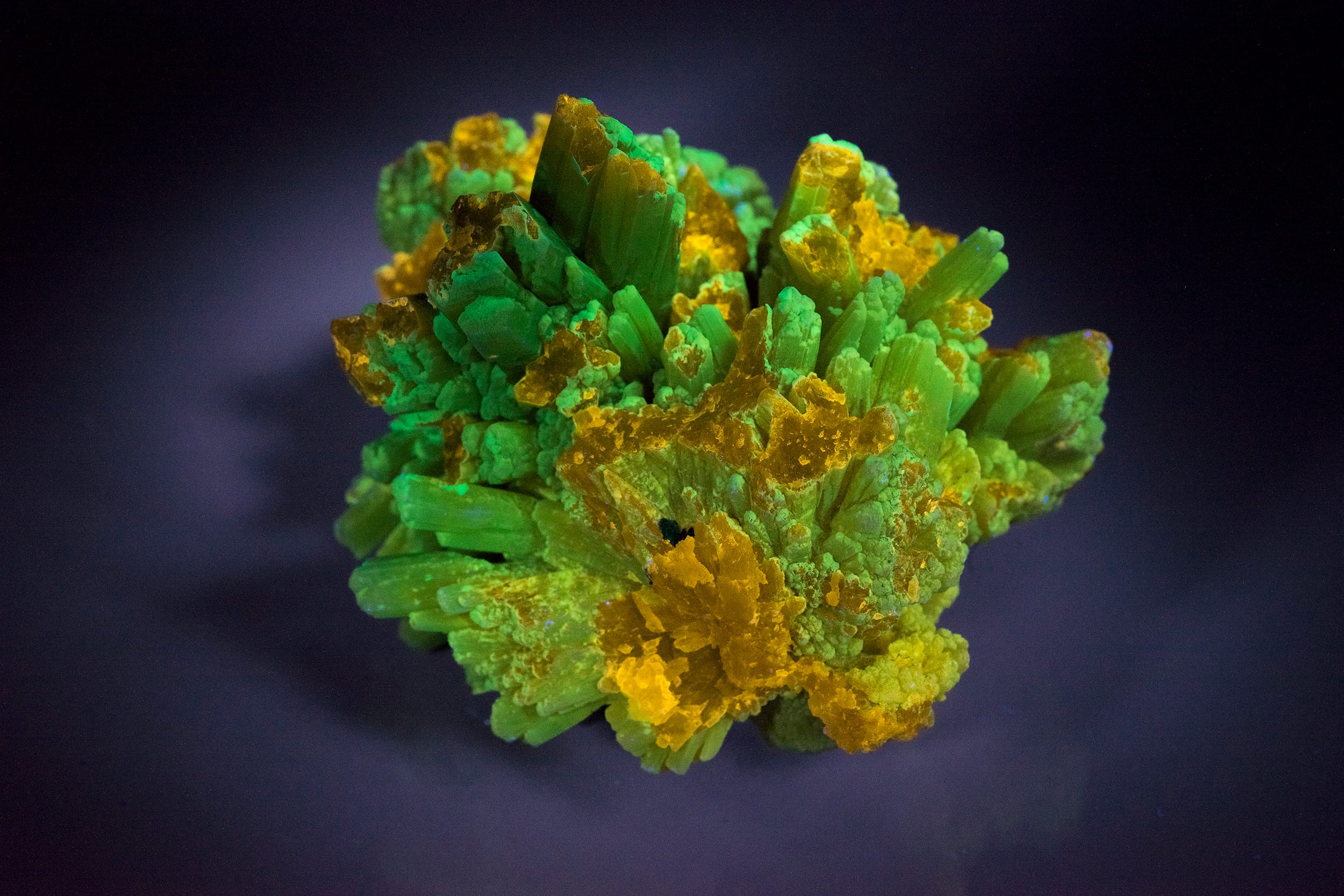
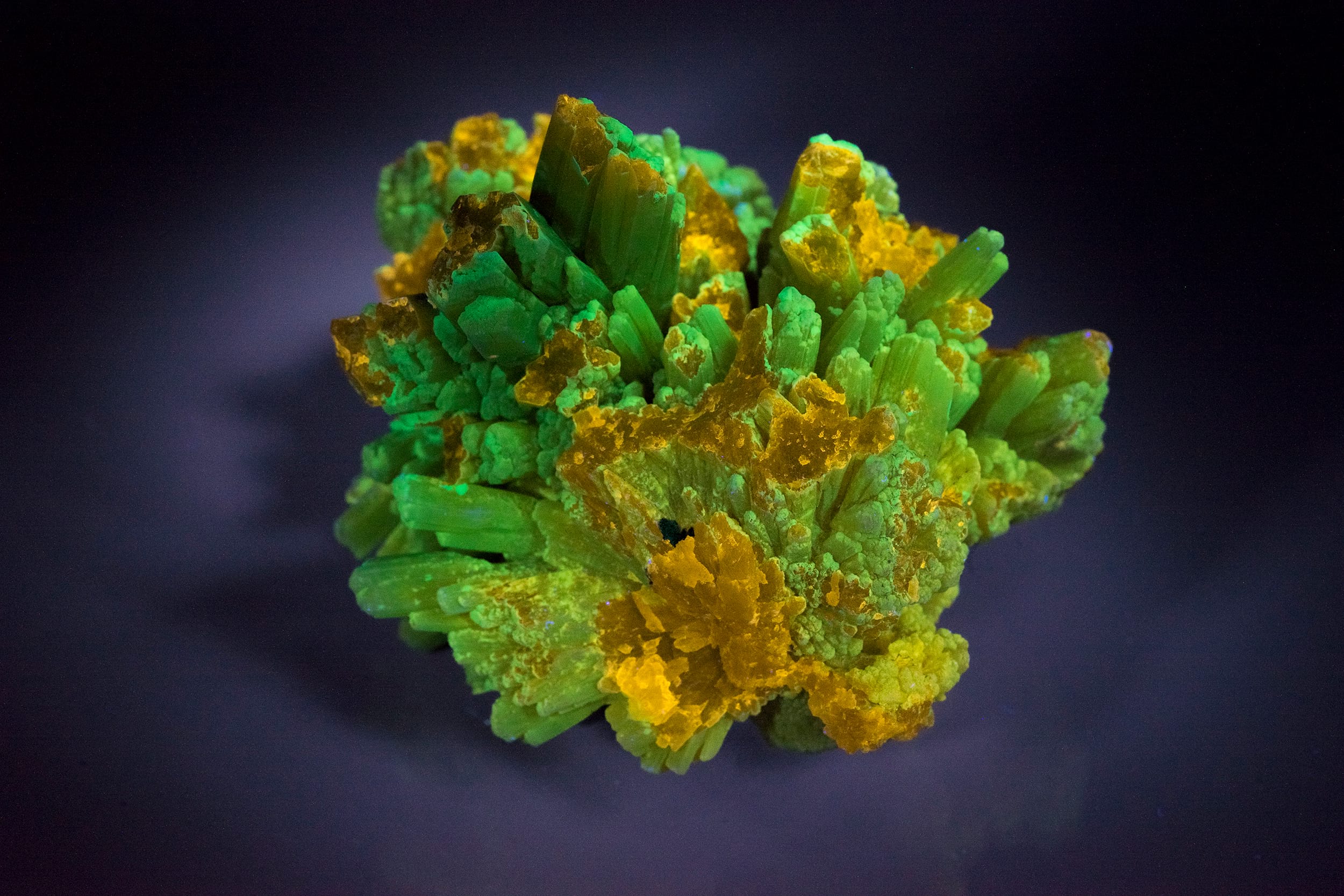
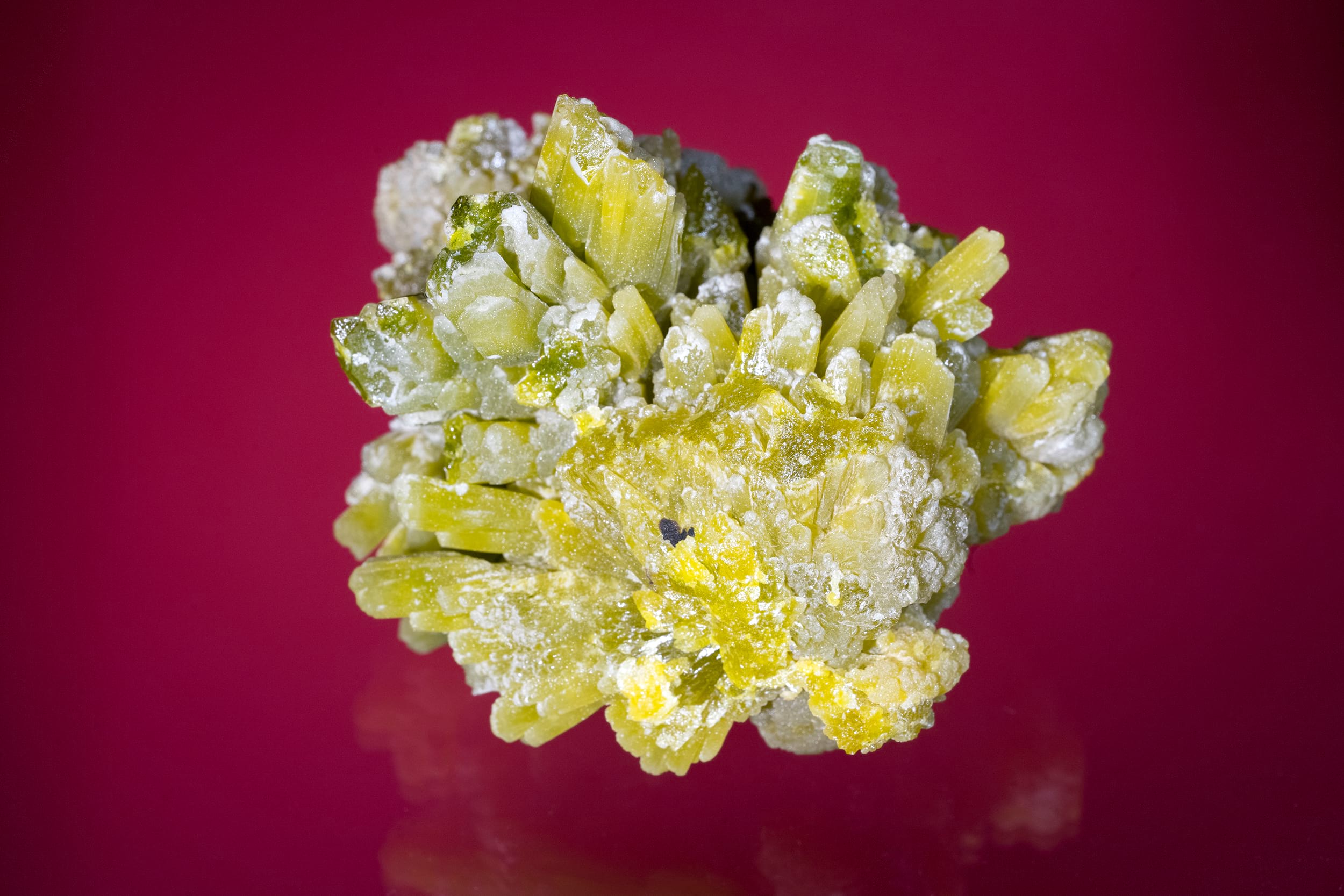
Plumbogummite ps pyromorphite
This plumbogummite pseudomorph is quite remarkable. It's an absolutely wonderful color combination with the fluorescent green plumbogummite and orange pyromorphite. What's interesting about this piece is that it shows less formation of plumbogummite. In most specimens posted online the plumbogummite shows beautiful white to light blue pseudomorphs. This piece is mostly pyromorphite. However, we can see the fluorescence of both. Unfortuantely the crystals have to be broken to reveal the fluorescent orange pyromorphite!
Locale: Yangshuo Mine, Guangxi, China
Weight: 10.7oz | 303g
Dimensions: 2.4 x 2.0 x 2.1 in | 62 x 51 x 53 mm

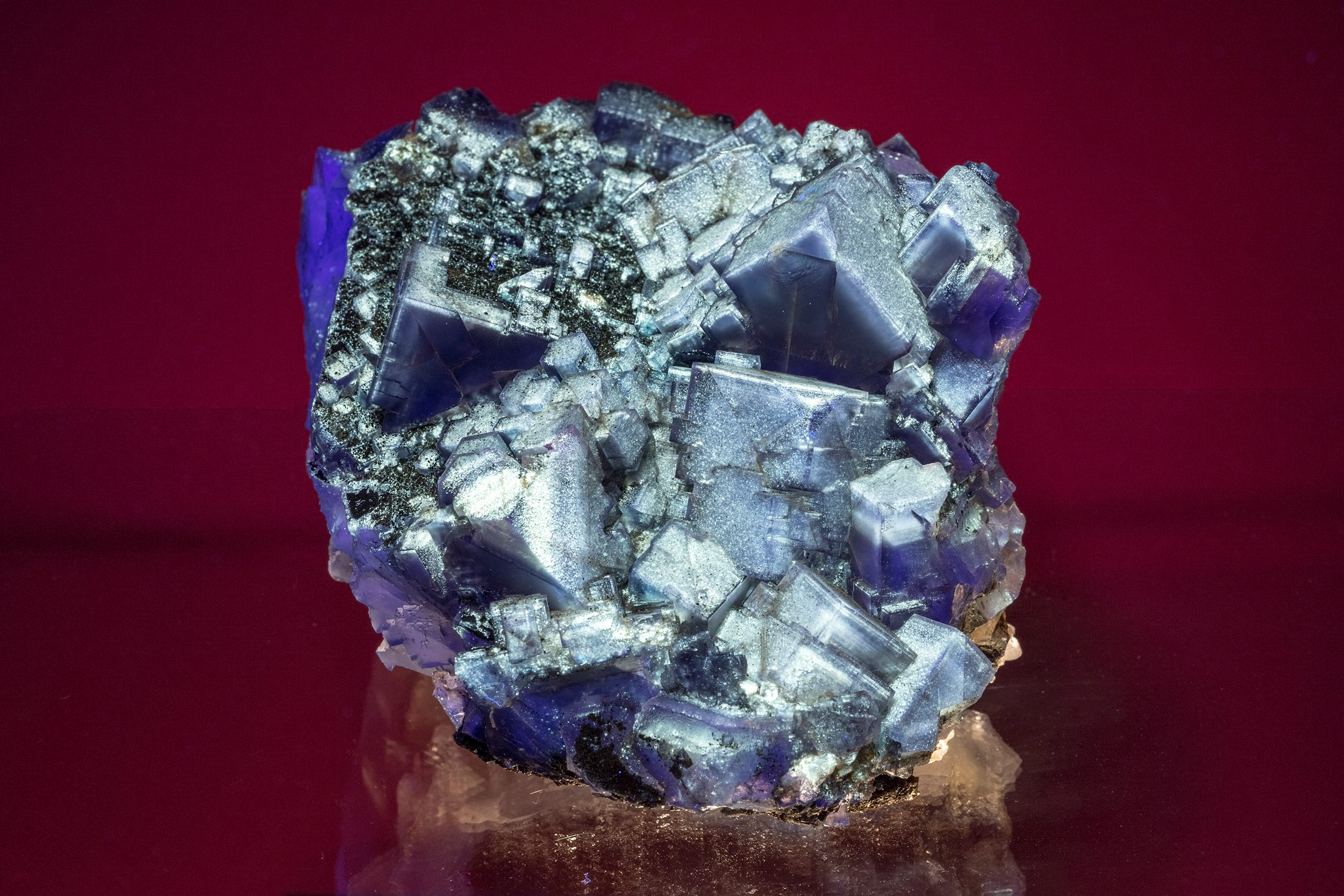
Fluorite with Petroleum Inclusions
A wonderful example of Cave-in-Rock fluorescence. Regular Eu2+ purple fluorescing fluorite with another generation of petroleum included fluorite. Interestingly the petroleum has given the fluorite a very dark purple color, almost to the point of looking black. It is only under direct light that you can see the shades of purple on this face, including the petroleum included one.
Locale: Cave-in-Rock, Illinois, USA
Weight: 4lb 2oz | 1871g
Dimensions: 6.0 x 4.0 x 3.5 in | 153 x 102 x 88 mm
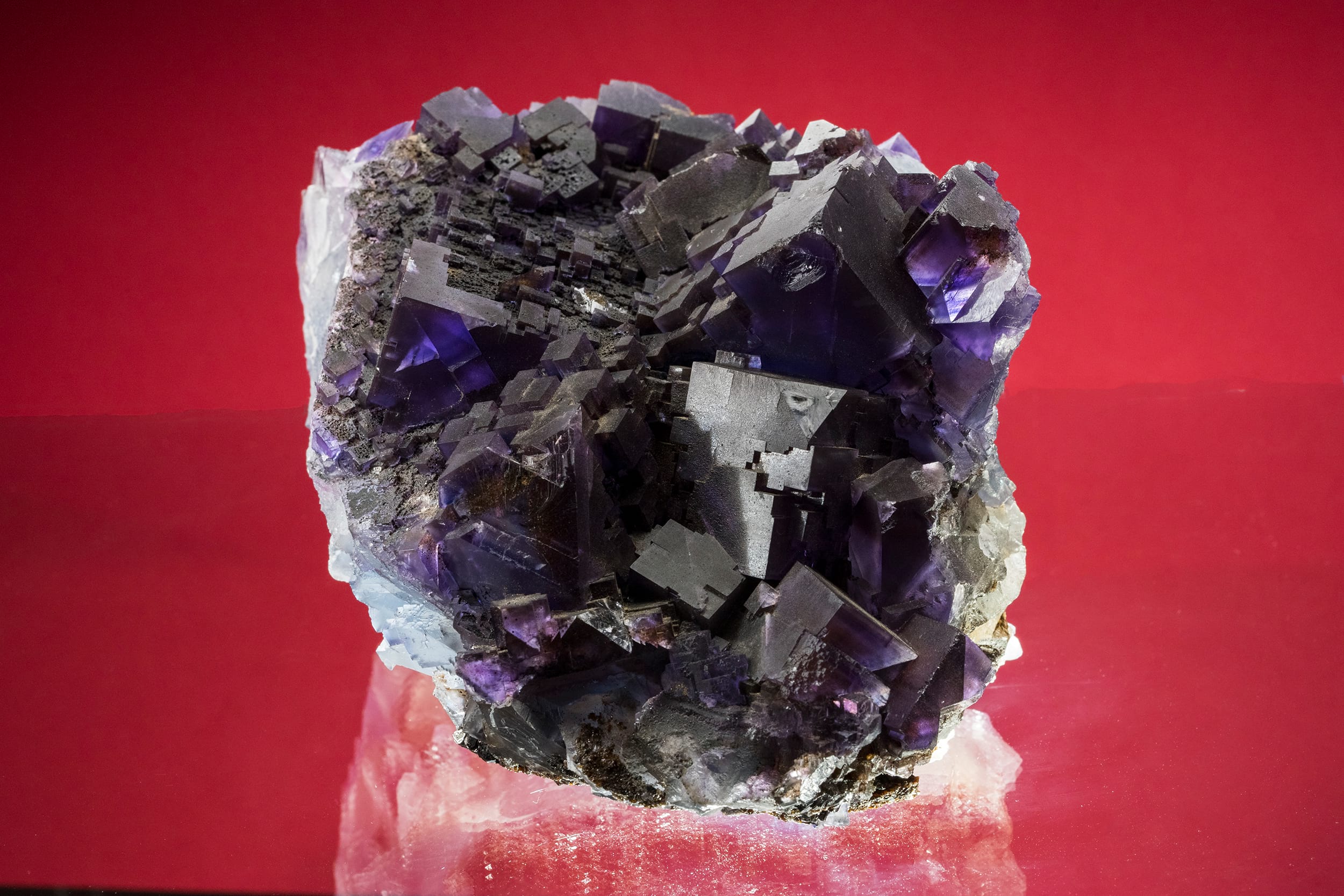
However, on the underside of this specimen we see clear and gemmy massive fluorite. This side doesn't has almost no fluorescent inclusions and thus has a much lighter color compared to the front face. Also on this face are a lot of well formed and lustrous garnets.

Tucson 2018 - Shortwave LED Debut!
3/5/18 Fixed some 360s not loading.
Another year another Tucson. It's the place where people debut their new finds, discoveries, and innovations. In my case a heavy emphasis on innovation. This would be the first place I debuted the first shortwave LED light for the hobby. If you haven't seen it yet check out my post
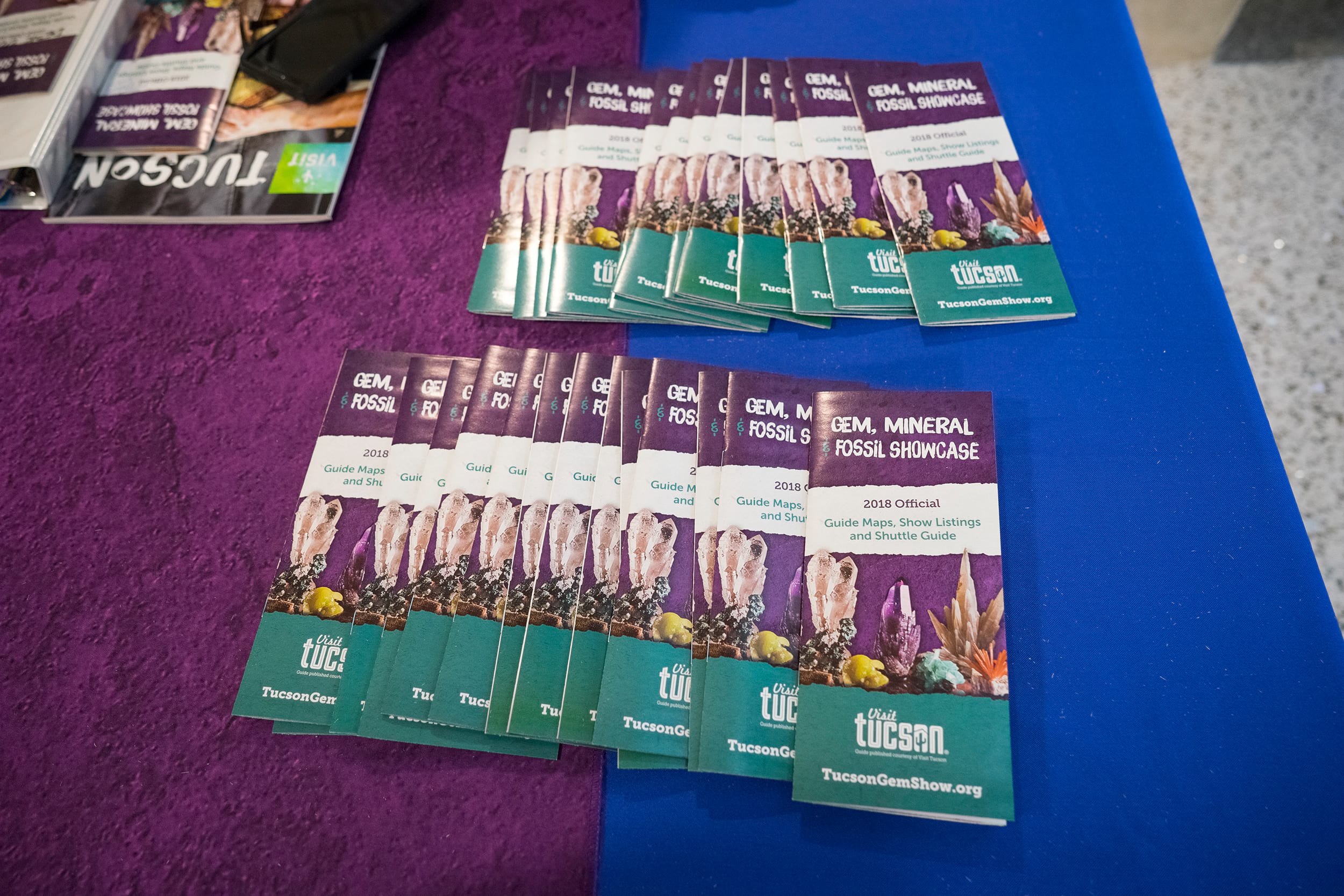
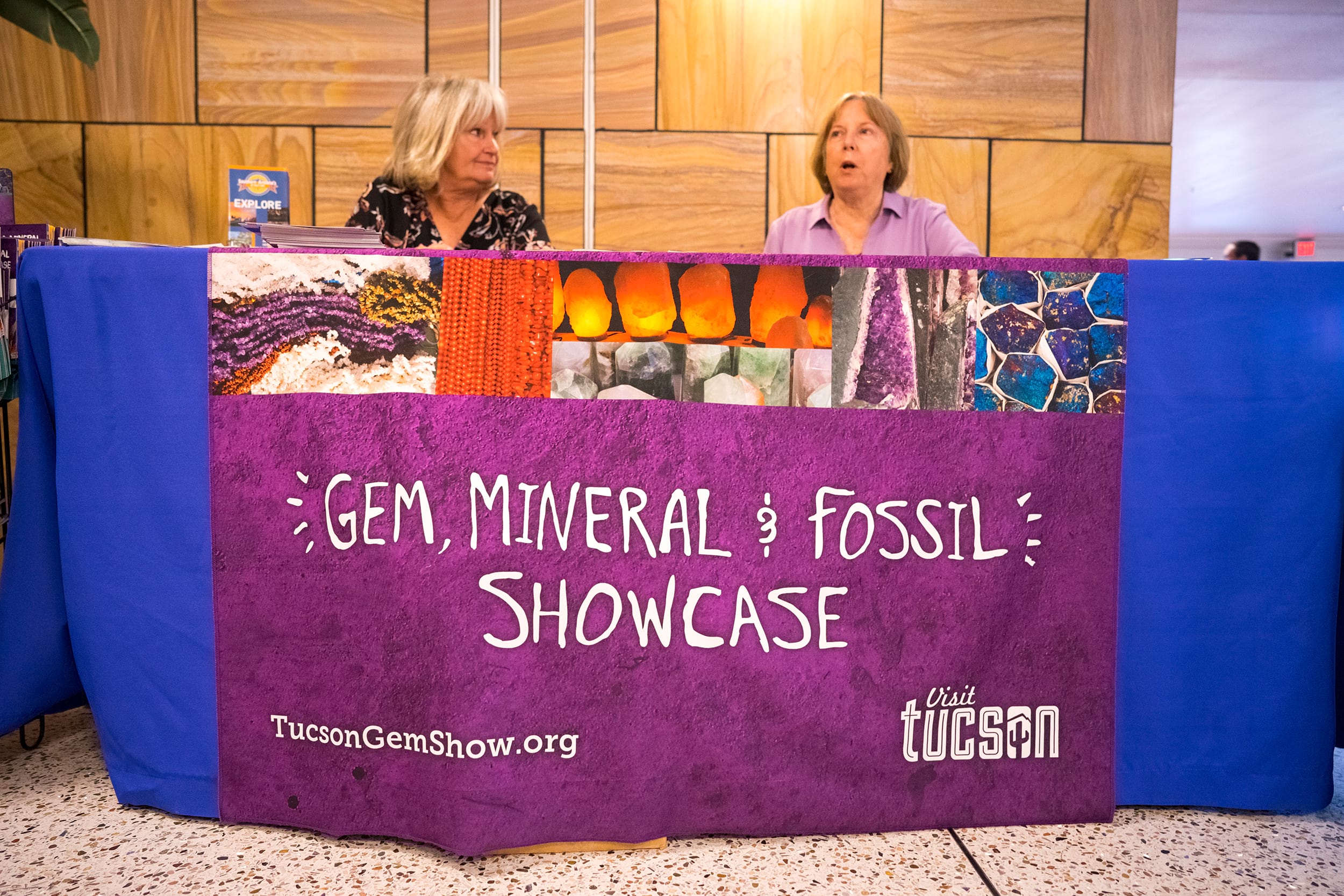
This was the first sight of good things to come. I had quite a bit of a journey getting to Tucson this year. I usually like to get to the airport 60-90 minutes ahead of time for domestic flights but this year I was close to missing my flight. Starting things off with my Uber ride to LAX, my driver missed two turns in LA traffic. Normally that'd be fine but because he missed the turns the GPS moved us onto the more congested highways. After that the security stopped me. I assumed he was looking at the 360 camera in my bag. After several minutes of taking it out, examining it, and swabbing it he called over his supervisor to get a final ruling. I was about to explain that it's a 360 camera before they finally let me go. After walk running to my terminal I made it with 10 minutes before my flight departed! Phew!
Back to the welcome banner at the airport. This wasn't here last year! Either that or I missed it last time. Either way this little booth they had setup was nice because it had show opening/closing times and shuttle location.
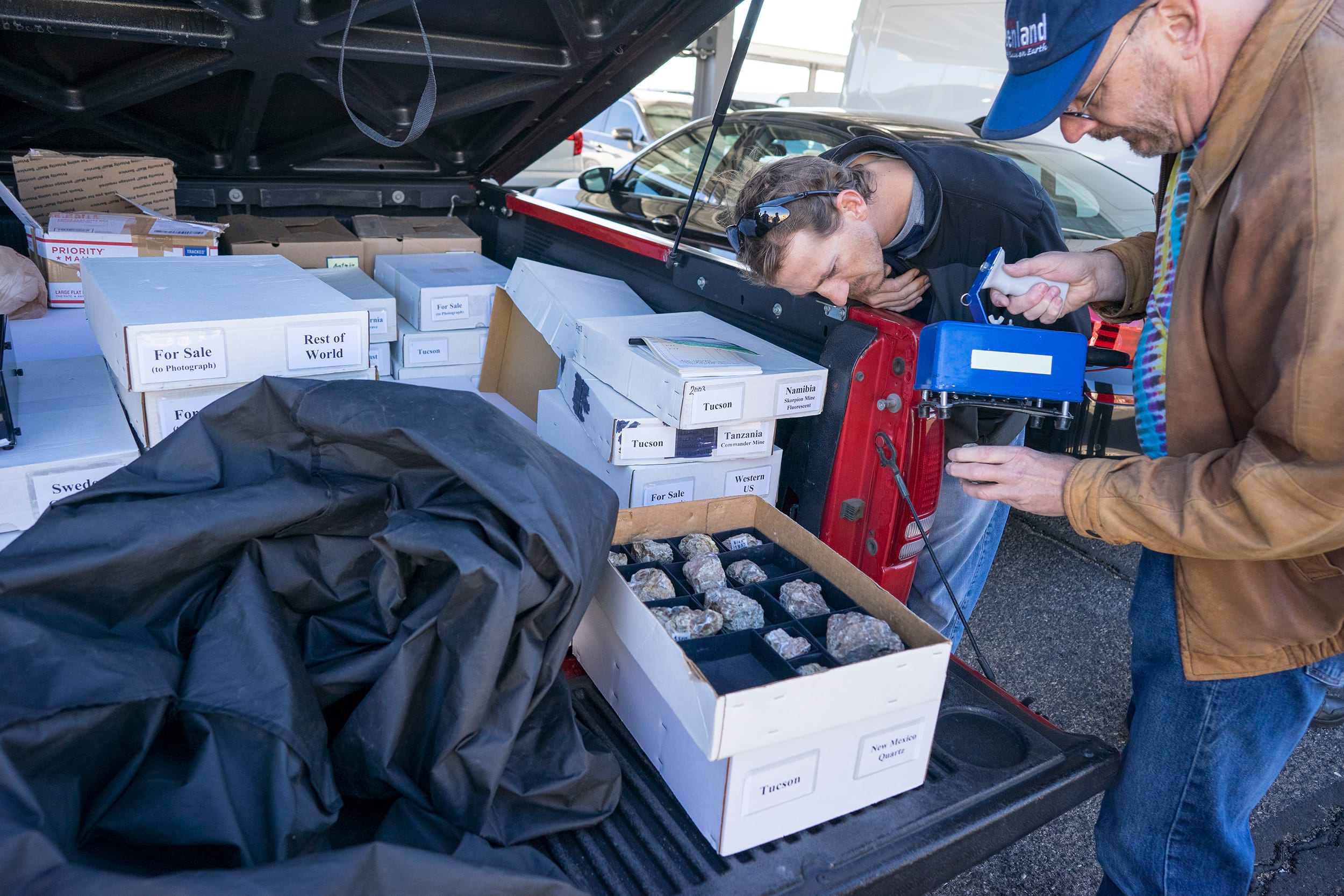
This was the start of an interesting day. The first stops we went to were Top Gem (not pictured) and then several of the Moroccan booths. We learned of a booth in Kino Sports Complex that was advertising a fluorescent party BYOL (Bring Your Own Light!) with over 50 different fluorescent species and many flats. They certainly weren't wrong but when we got there we were the only ones there! Seems like they didn't advertise it well enough or chose a bad day. They did have it on a Friday night and most people that come early tend to do so for the weekend. That danburite in the next photo was definitely the highlight of the booth for me though. A wonderful large cluster of well formed crystals and brightly fluorescent under longwave. Too bad they wanted nearly $1,000 for it though!

$890 for this beauty!
While the fluorescent party was a bit of a disappointment I did score a wonderful hemimorphite from the Ojuela Mine in Mexico. What beautiful crystals but also what an absolute pain to keep intact! So many delicate crystals!


365nm LW

265nm SW
First night's dinner! Lots of familiar faces and some new ones! I'm told I missed a very long and drawn out conversation about Greenland. This was where my light got its first litmus test in the hands of other collectors. It turns out that there are some massive heat problems, primarily because these LEDs are so new. At this point, 2018, they're barely hitting the 1% efficiency mark with the leader hitting 4% - albeit at a higher, less useful wavelength for the hobby. In other words 96-99% of the energy being generated becomes heat! I hadn't noticed it because the majority of my testing was at Yosemite in December, where it was reaching 20-30F daily. One thing I did notice was that my flashlight wasn't transferring heat efficiently. It would all stay in the head without conducting to the body. Add better thermal pathing and possibly a larger heatsink to the R&D list!


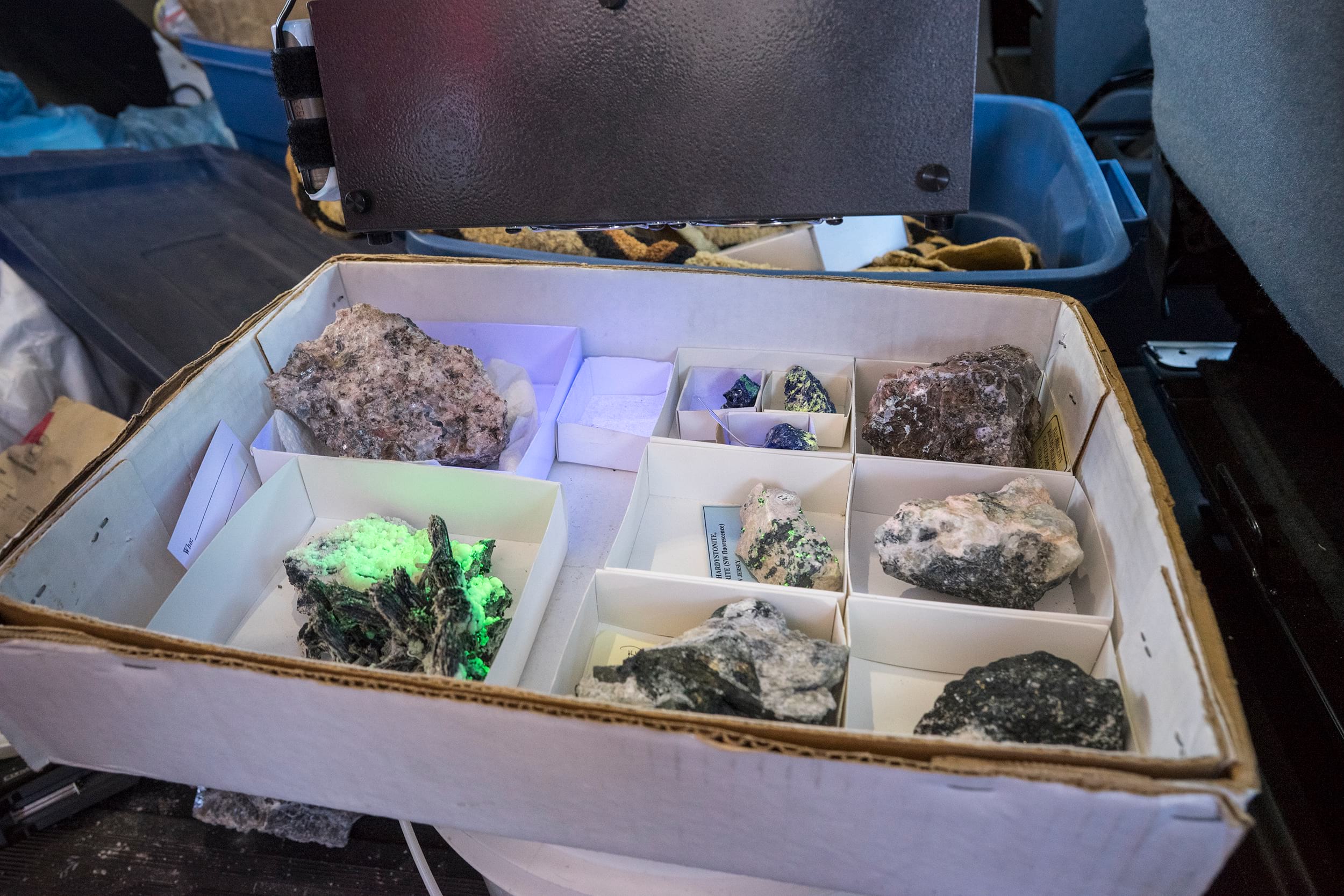
And as is tradition we show off our finds for the night. Some wonderful fluorescent minerals on display.

"It's pyromorphite. It shouldn't do anything"
- Howie Green 2018
Boy how wrong Howie was with that! When he handed a piece to me I checked it anyways. It was so easy to do with my new light. Might as well! Flashbacks to last year when I found that red fluorite because it's just a simple matter of on/off with LEDs. This led to what is easily and comfortably my second favorite purchase this year. The combination of colors combined with the wonderful crystals make it quite an aesthetic piece.

「你好煩」
trans: You're annoying
- Chinese dealer when haggling with Mark 2018

Quite interesting banded fluorite that Pat had bought. The normal purple fluorescence with the rarer red Eu3+ band

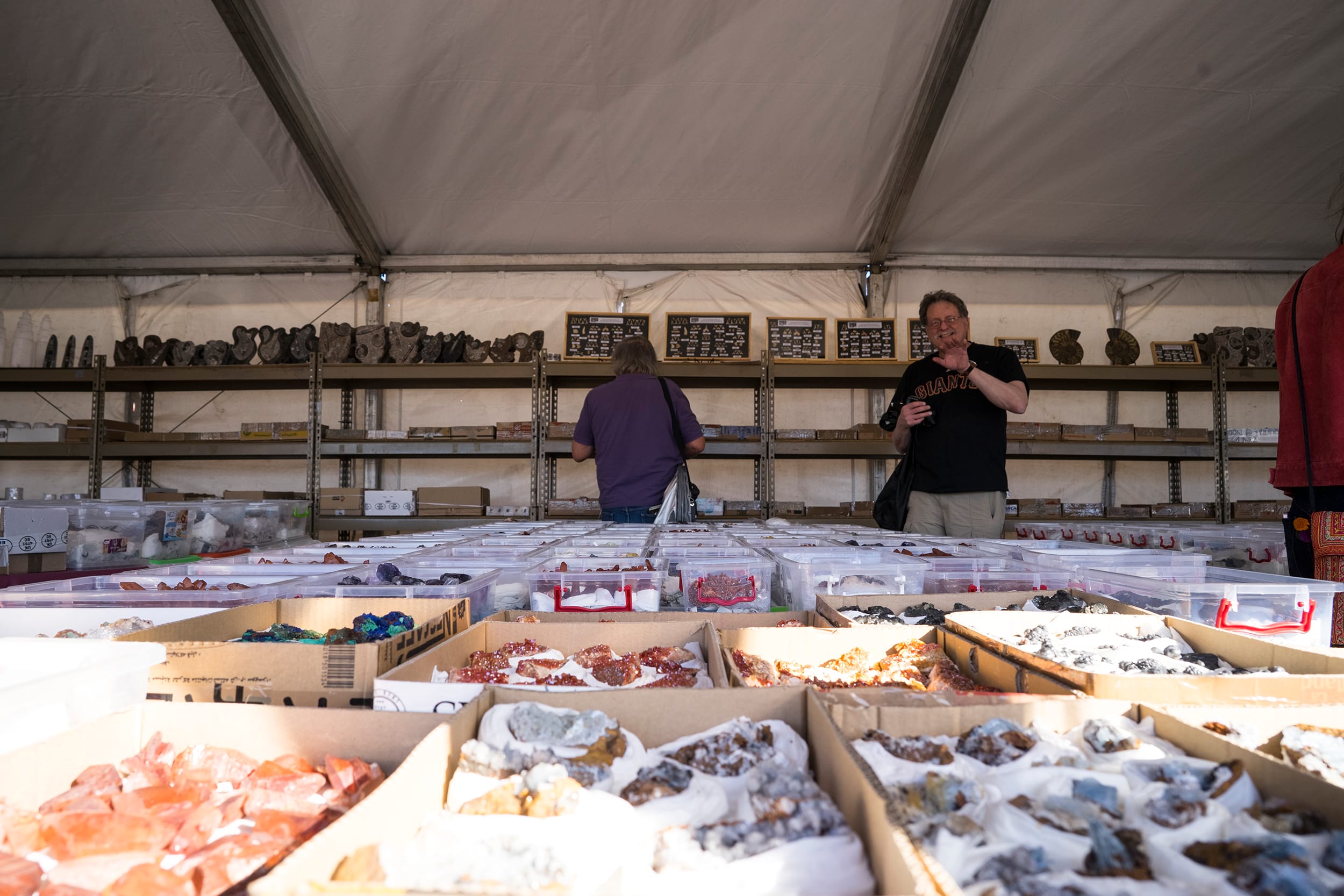
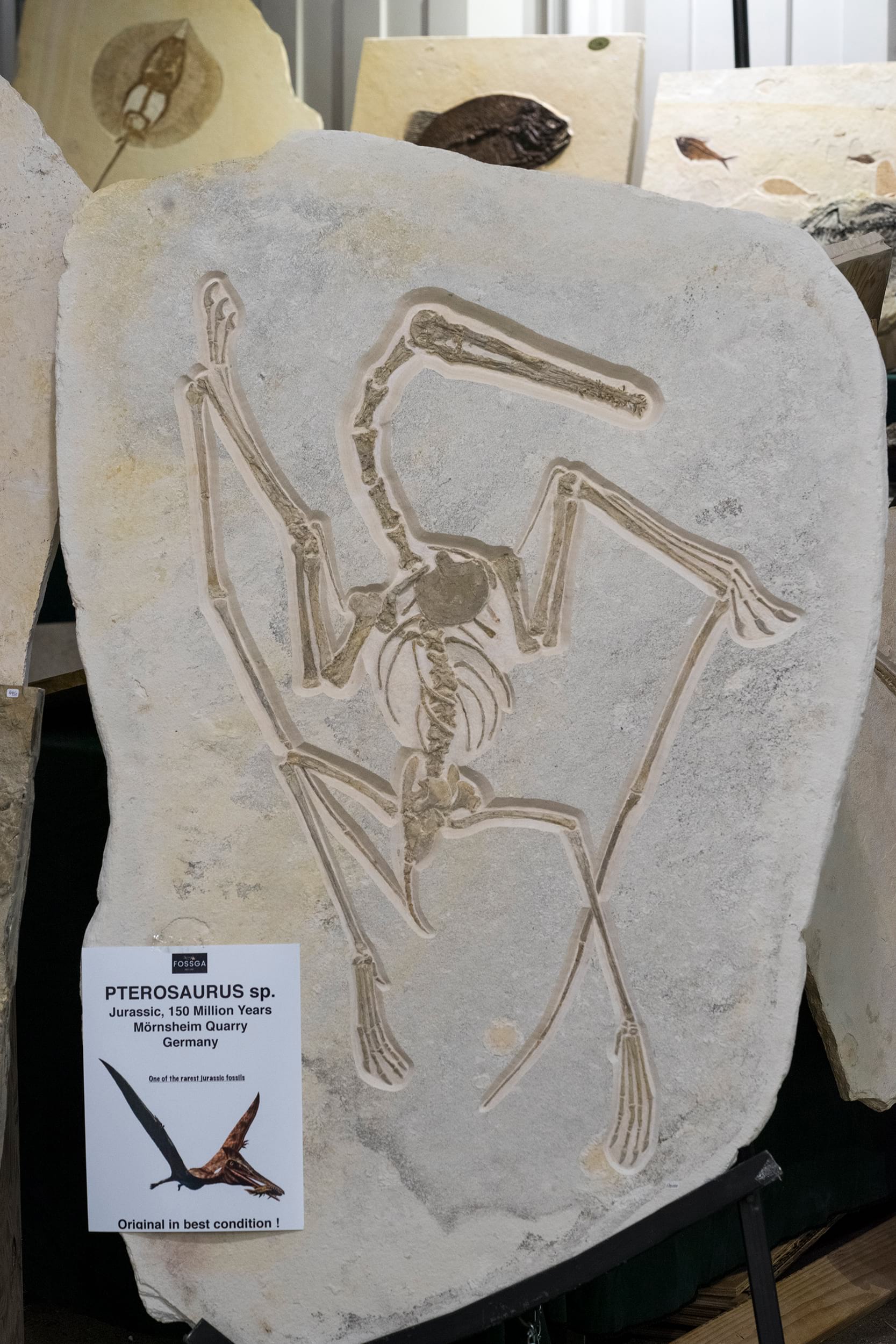
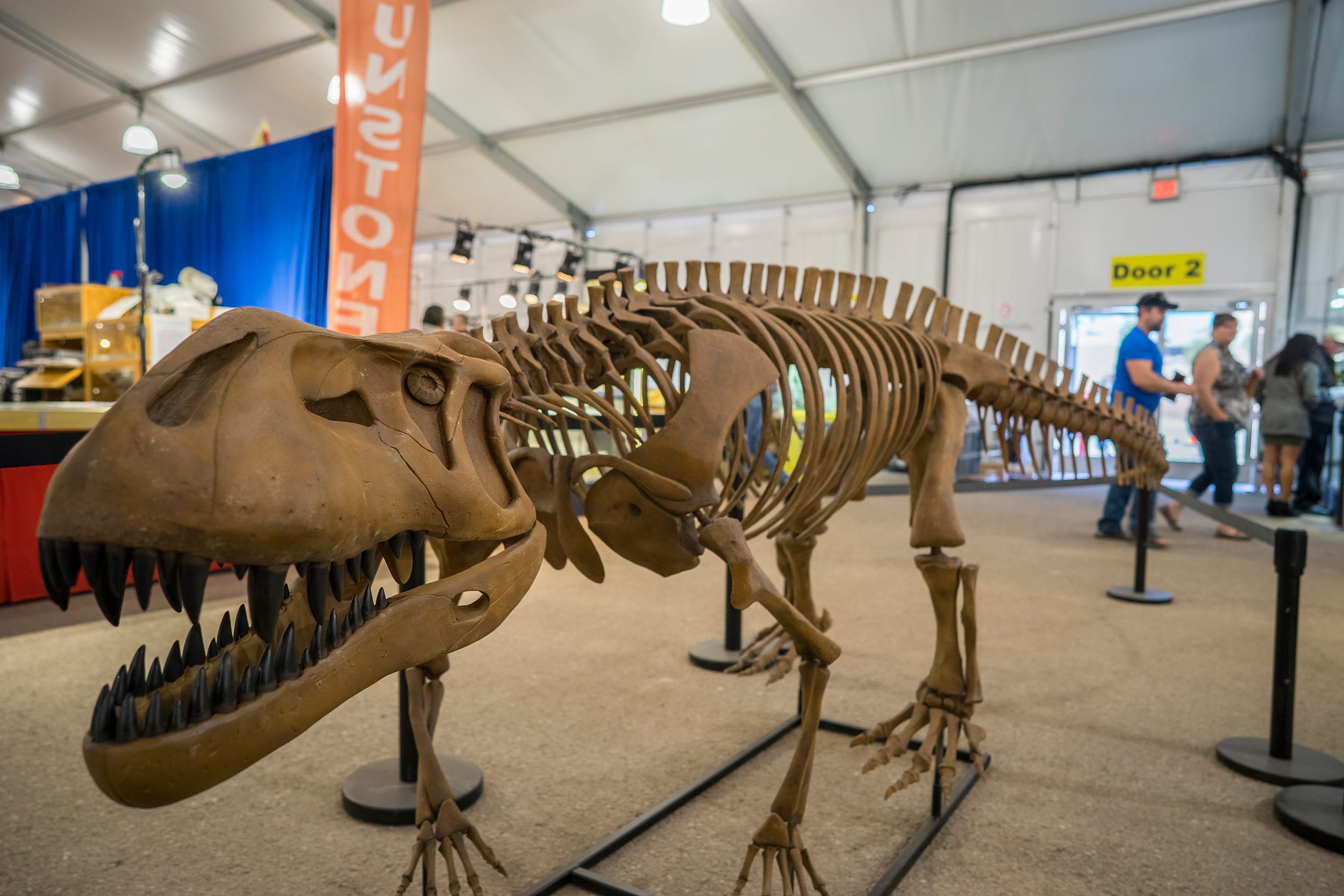
The next day started off with the 22nd street show. As always there were some wonderful fossils on display. Some cast, some real. All wonderful. As usual there are a plethora of large fossil and mineral specimens from all over the world. Germany, Morocco, Afghanistan, Pakistan, Mexico, USA. These are just some of them.
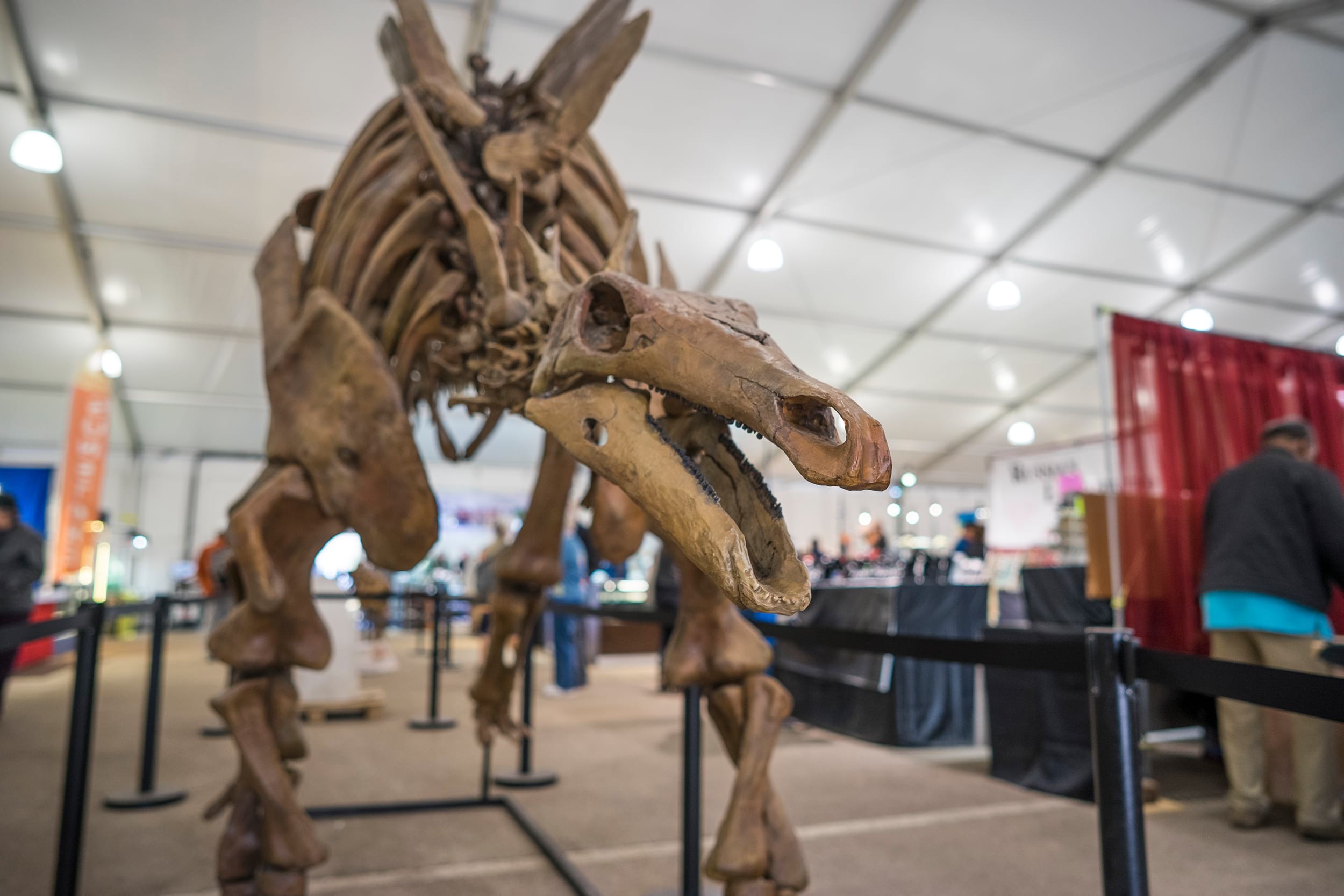
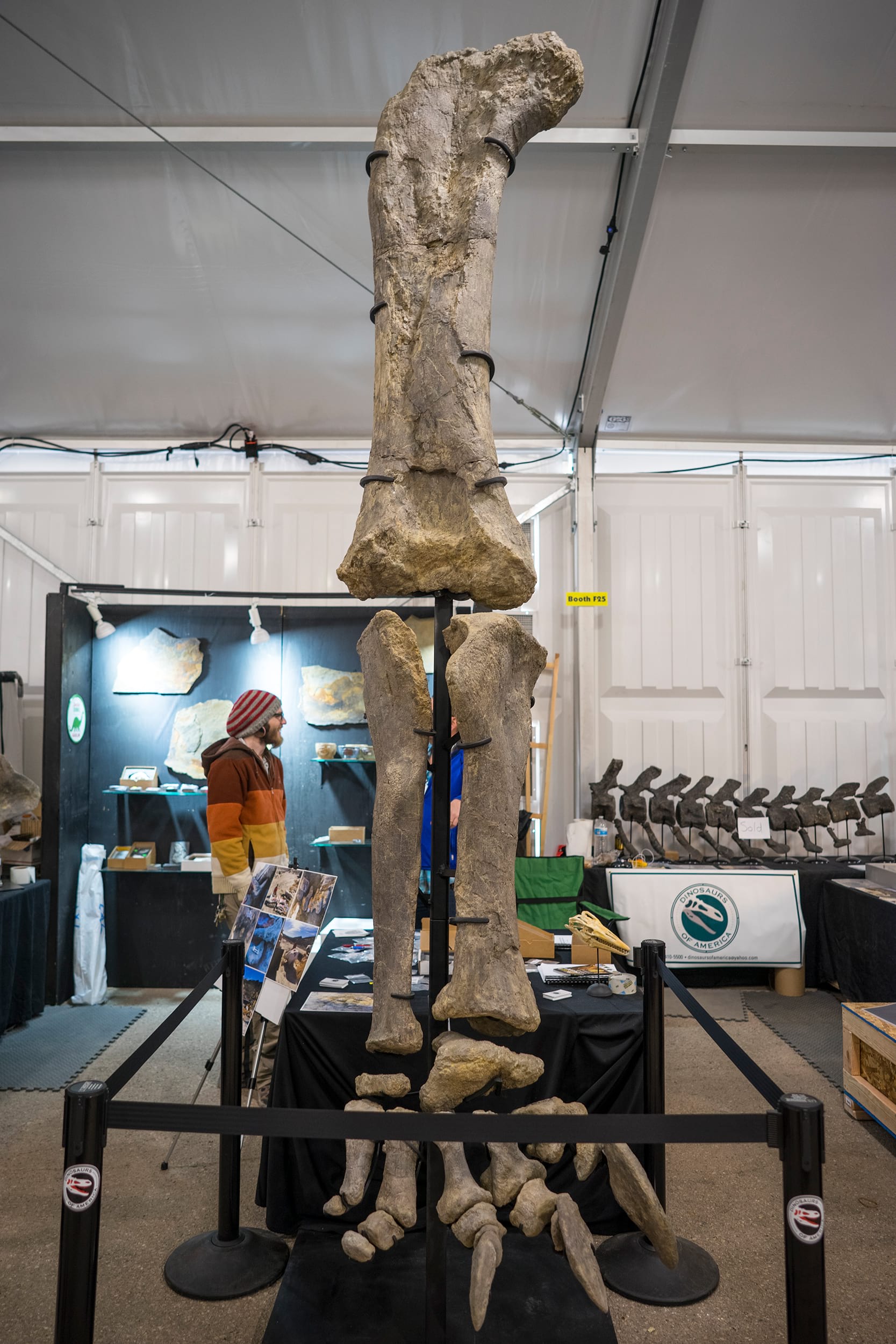
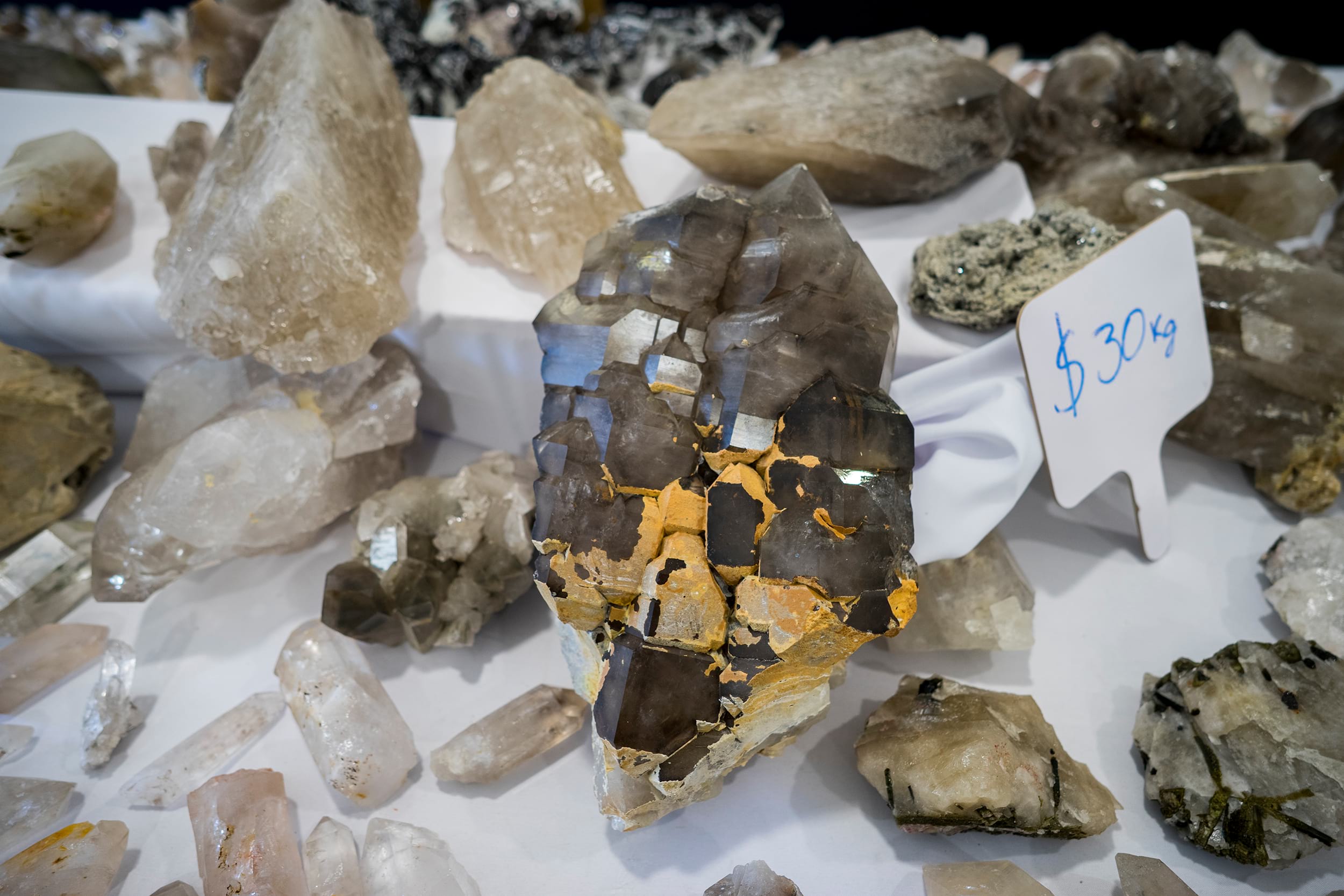


Way Too Cool, a fellow UV light maker also had a booth. This being after a very long hiatus of not going to Tucson shows. It was awesome to meet Bill Gardner and see a fluorescent mineral display. This was also the first time that I had met Rhett Peterson, another person that was making lights for the hobby.

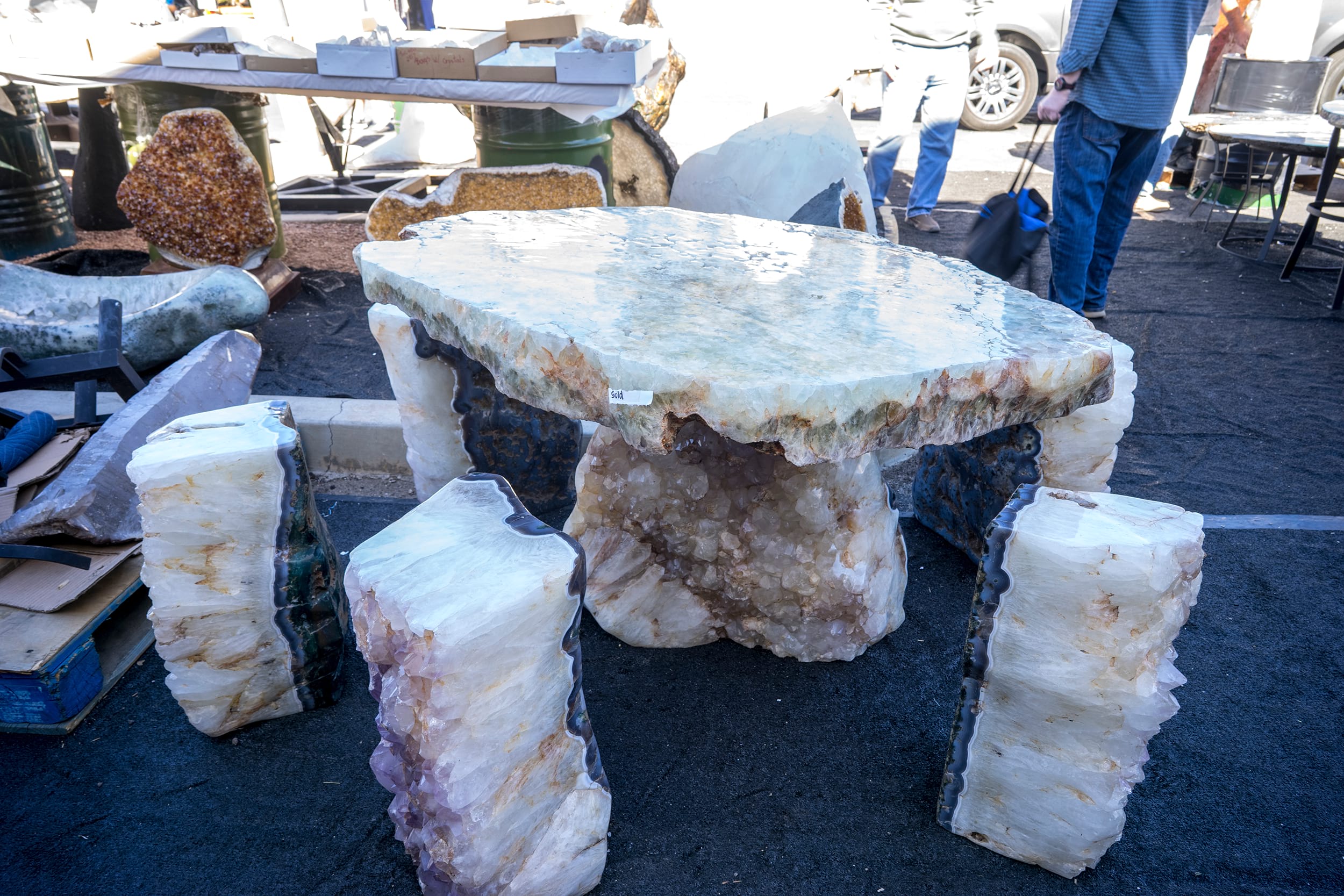
Some very interesting pieces along the way. Whoever bought that quartz tableset is going to have a very interesting conversation piece!
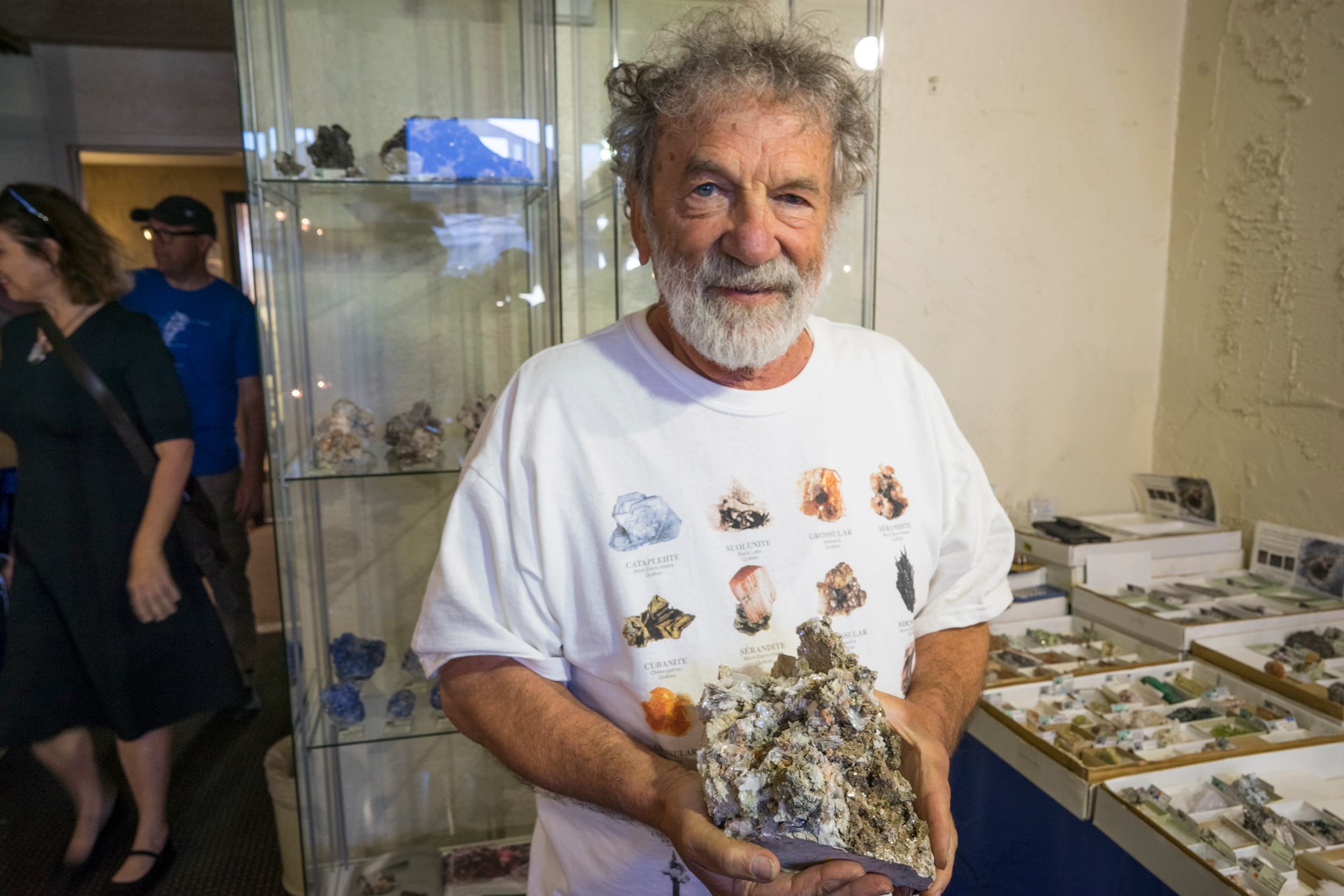

I bought a Mont Saint Hilaire piece from this gentlemen, Jonathan Levinger. He was the person that had worked the pockets in MSH and extracted many of the minerals he was selling. He even signed the book I bought from him! Admittedly I paid more than I could afford at the time but it has wonderful provenance and will be a great addition to my collection. That and he gave me a really good deal.

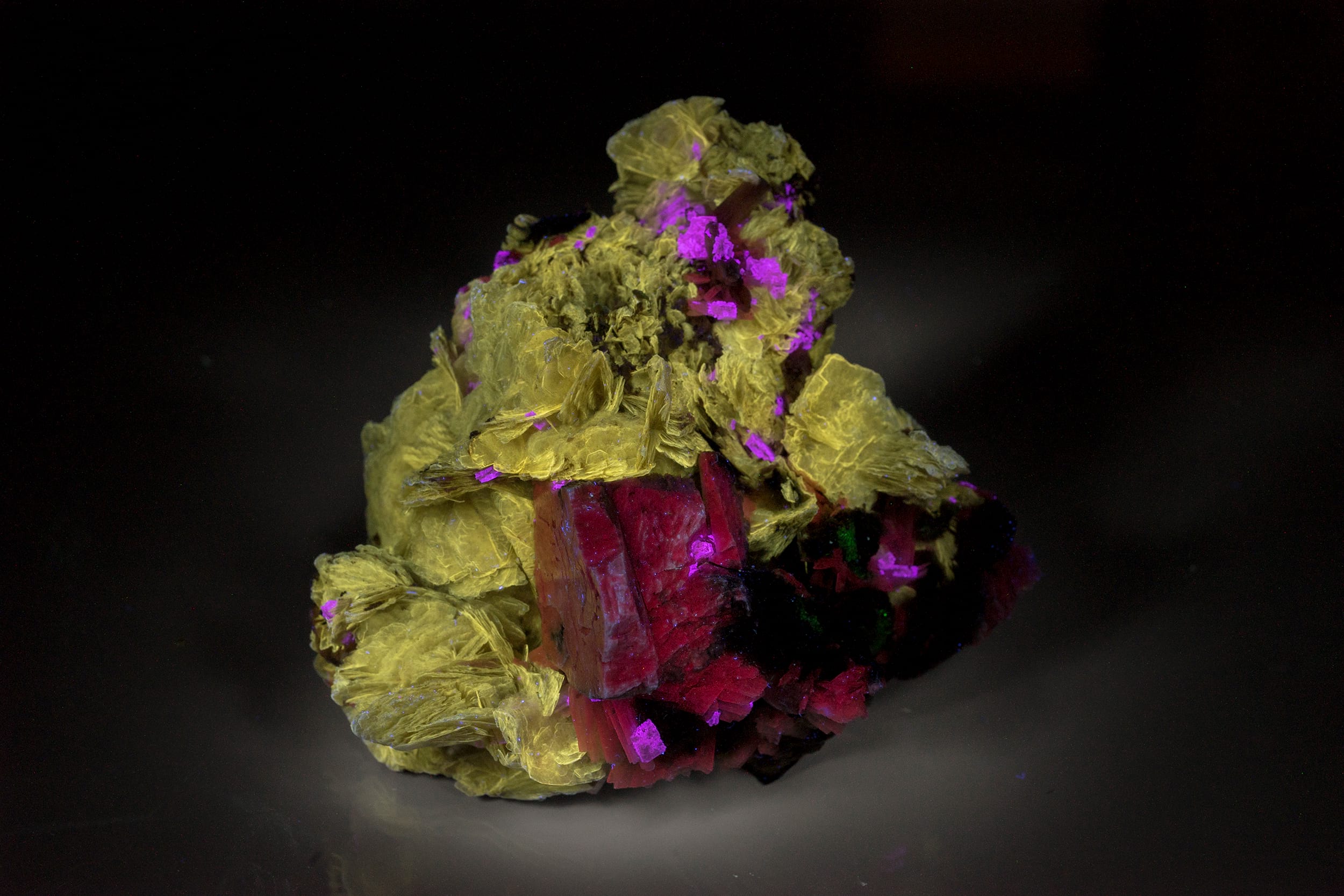
265nm SW
Off to Inn Suites! There are always world class mineral specimens here with a world class price tag. Also too bright to see fluorescence in these sorts of display unfortunately!

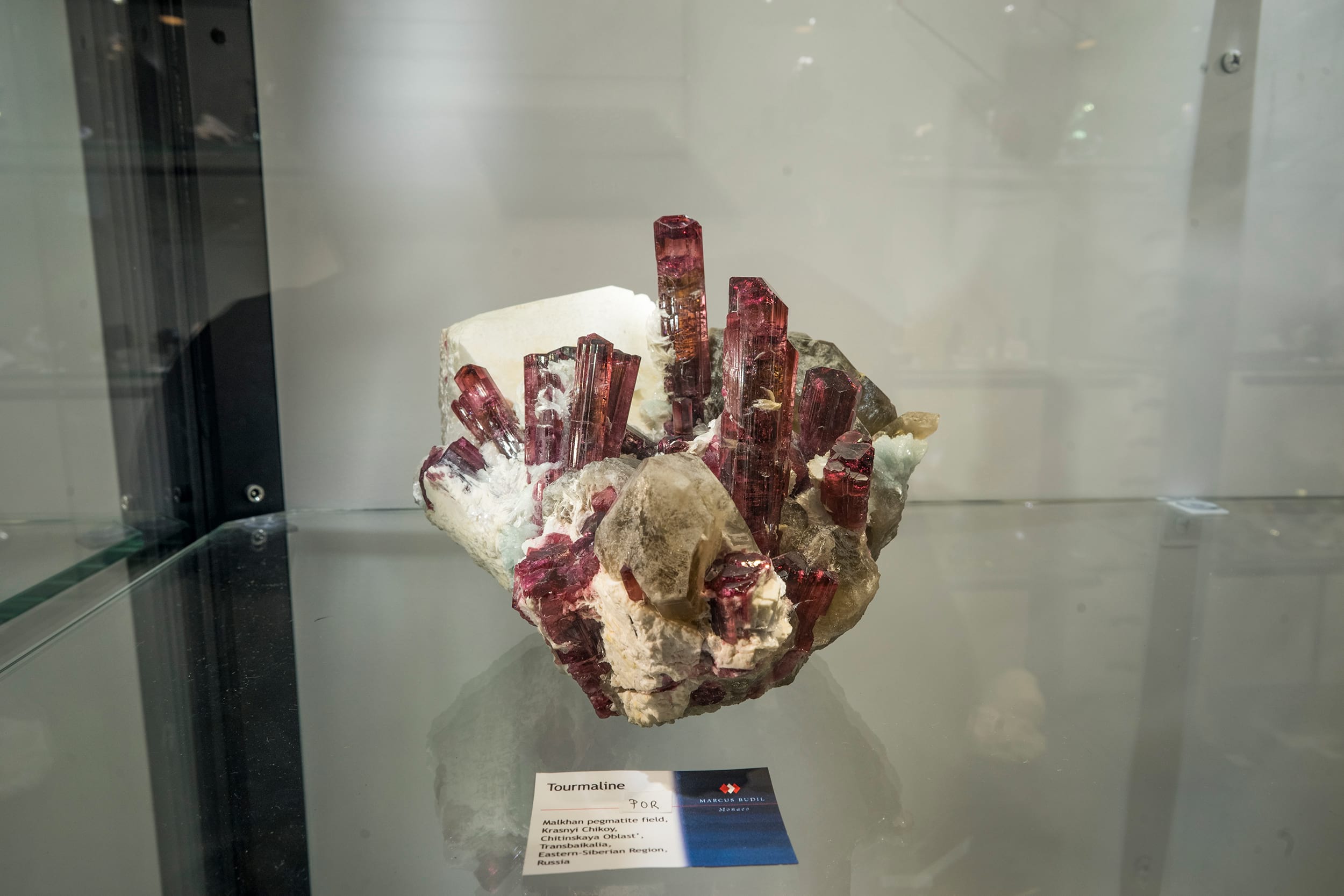
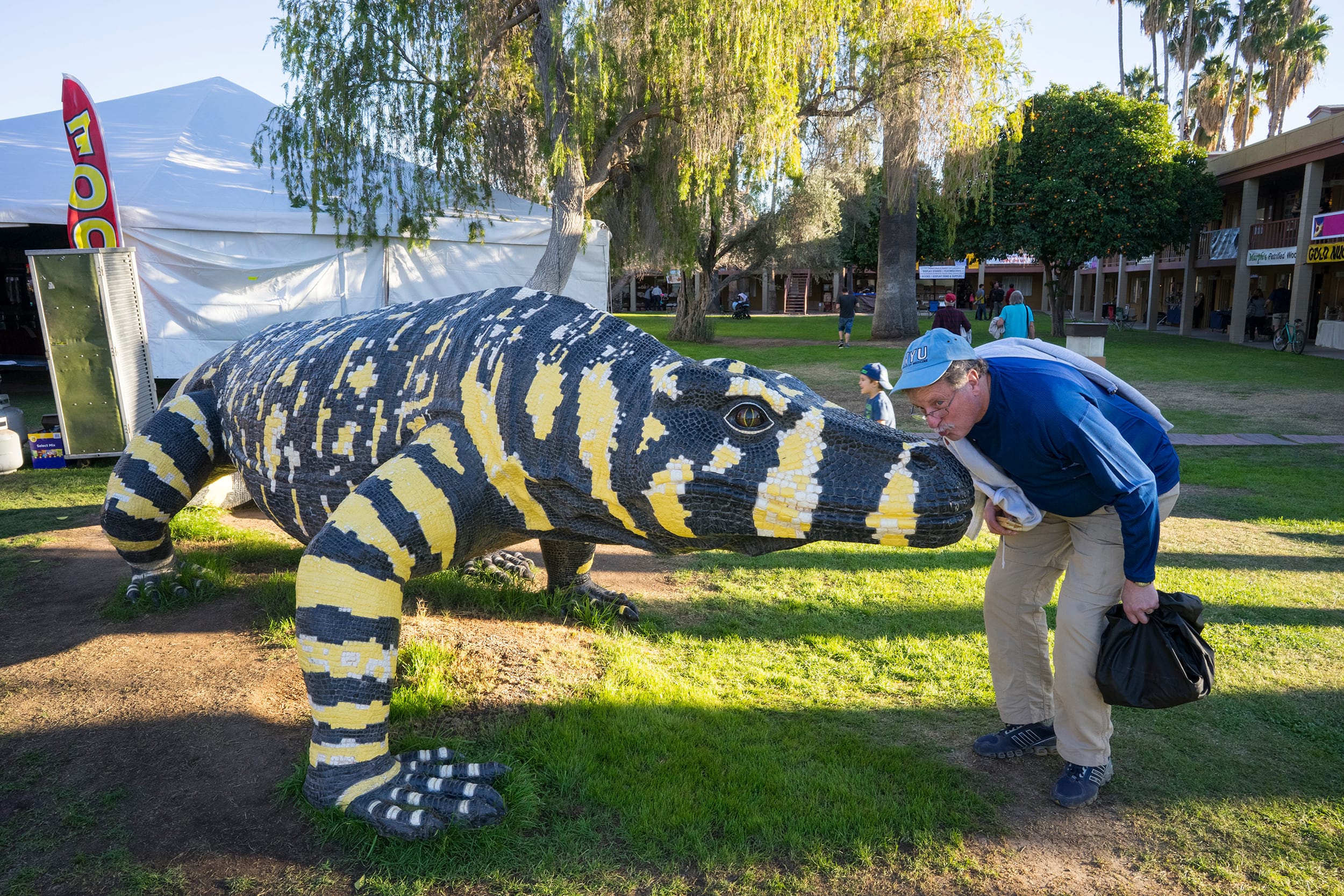
On the way
to Graham Fraser
Graham's fluorescent minerals of Australia. Almost everything he sells is self collected, sometimes from thousands of miles into the Outback!
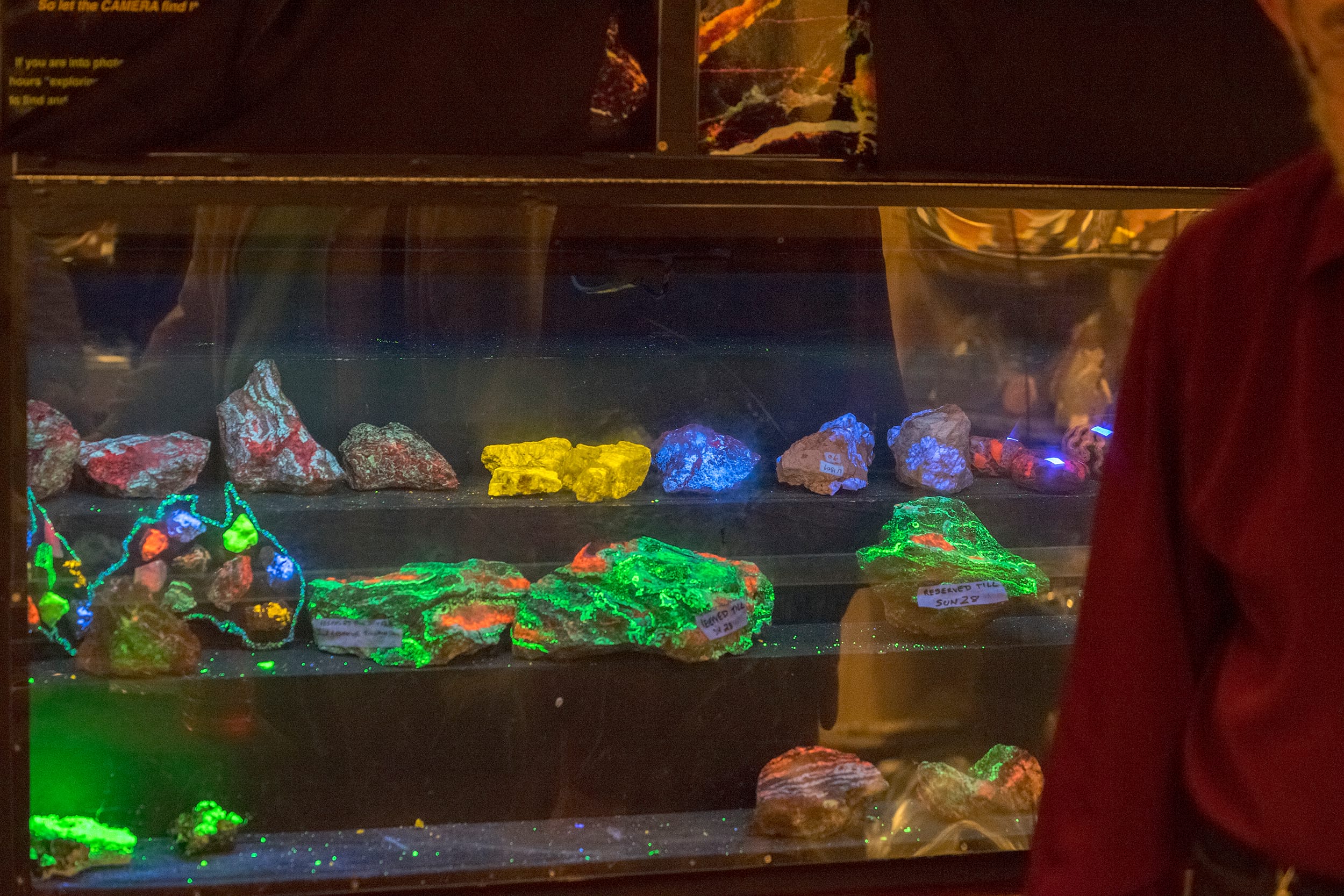

Garpenberg, Sweden material. Very pretty multi colored pieces.


A light that's seen a ton of field use!

Dinner at La Cocina

Fluorescent Mineral Society
Facebook Group Meeting
With a wonderful awe inspiring, revolutionary, dynamic, thrilling, exciting, breakthrough speech of the millenium by Fearless Leader that I missed because I couldn't find the meeting.
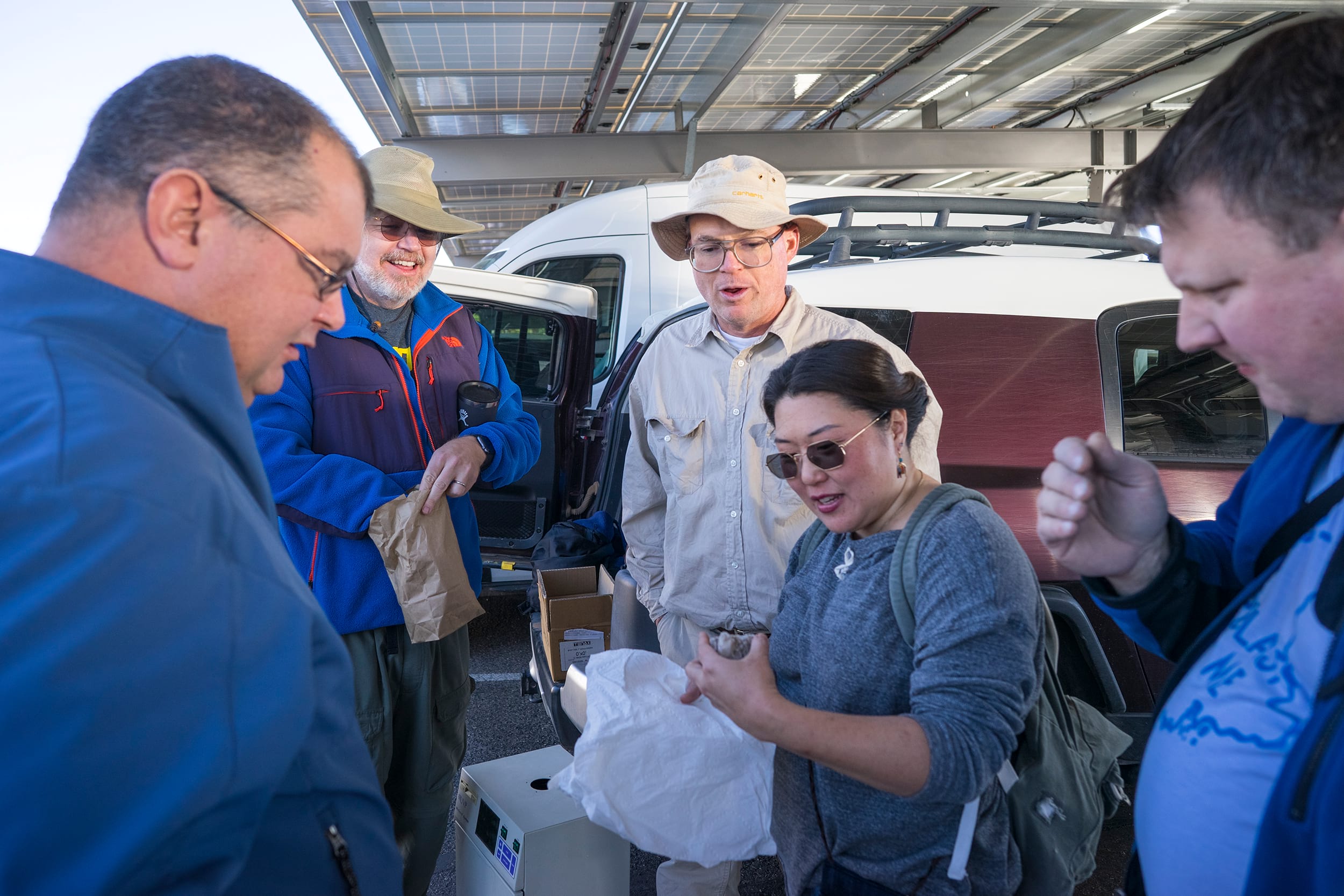
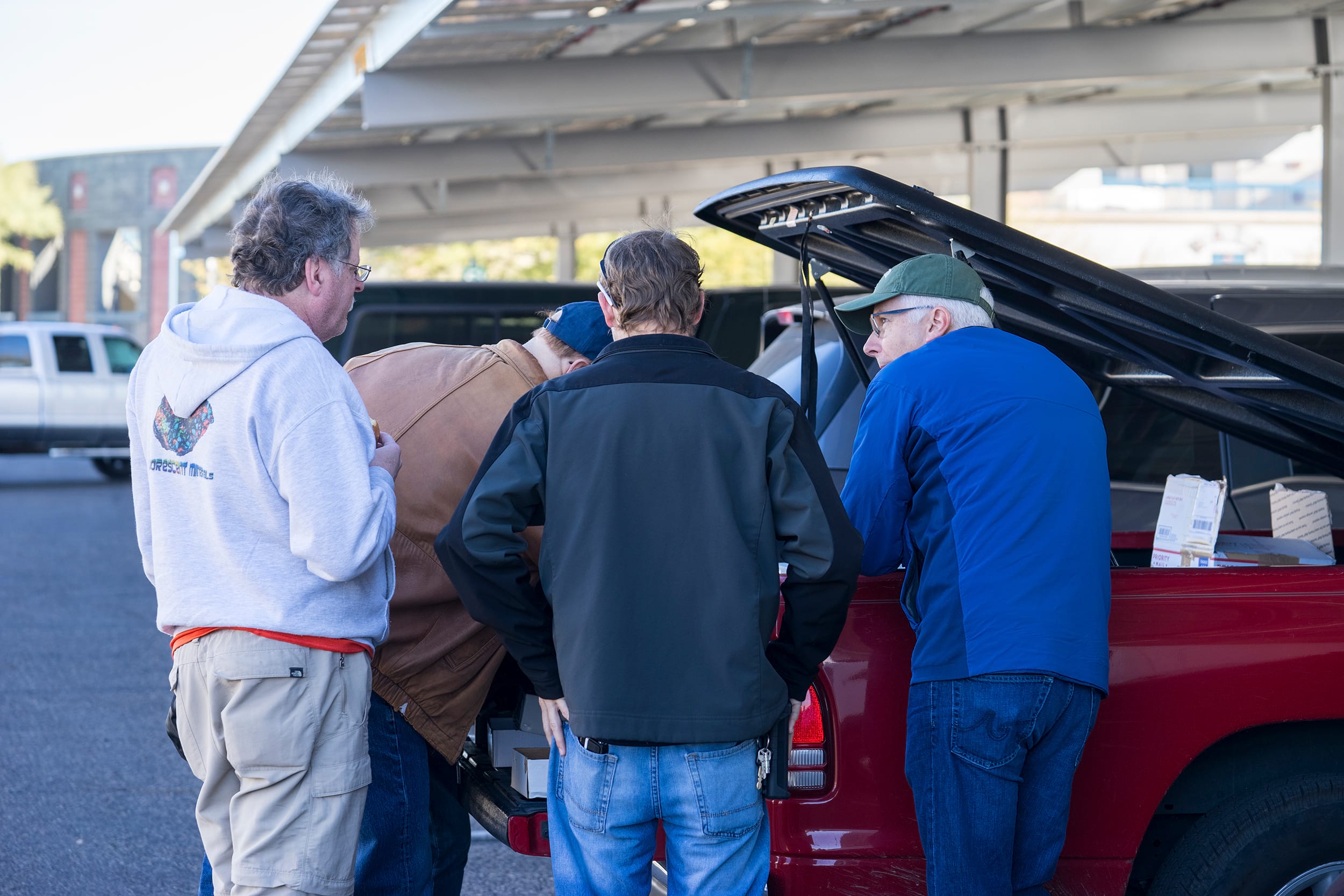
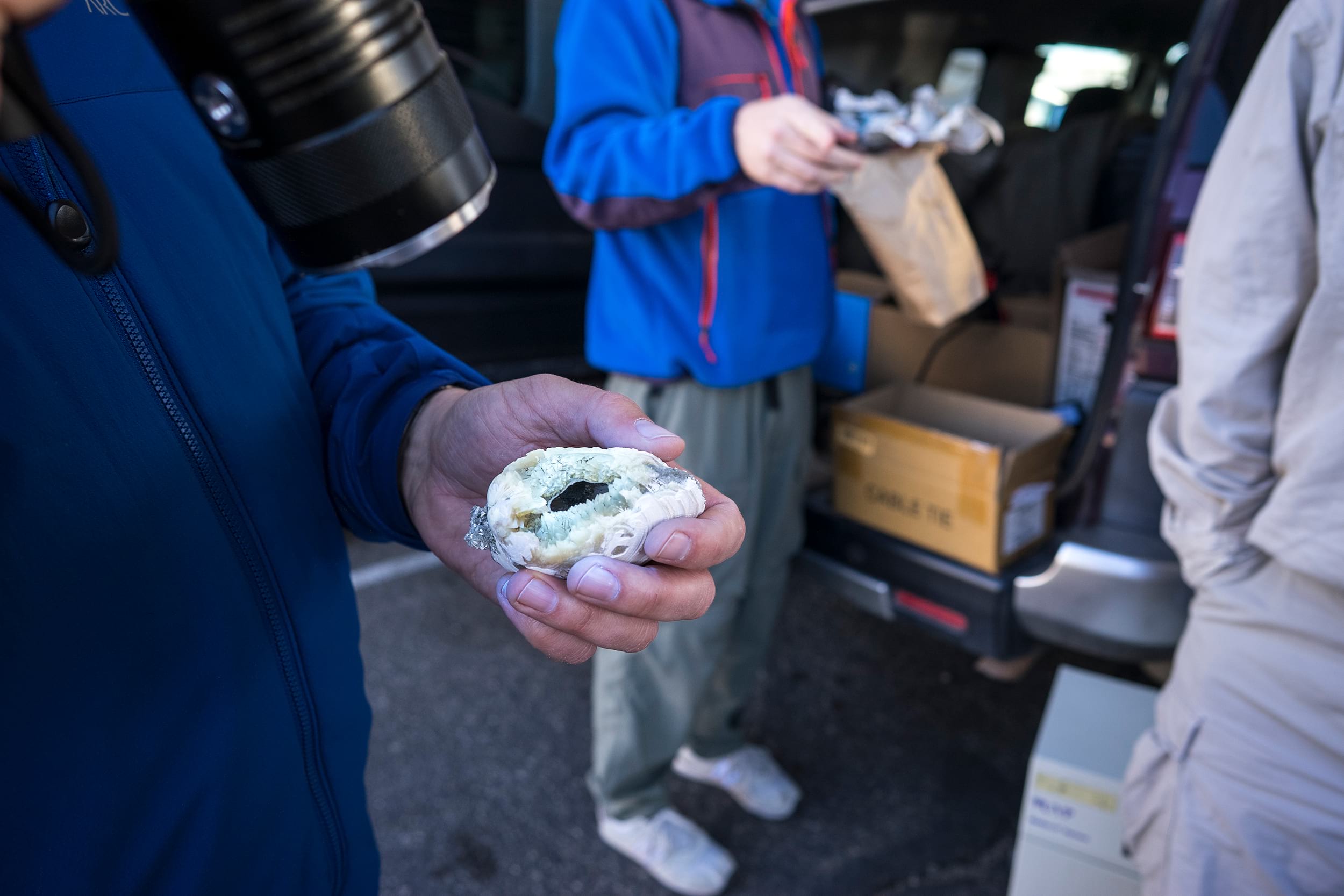
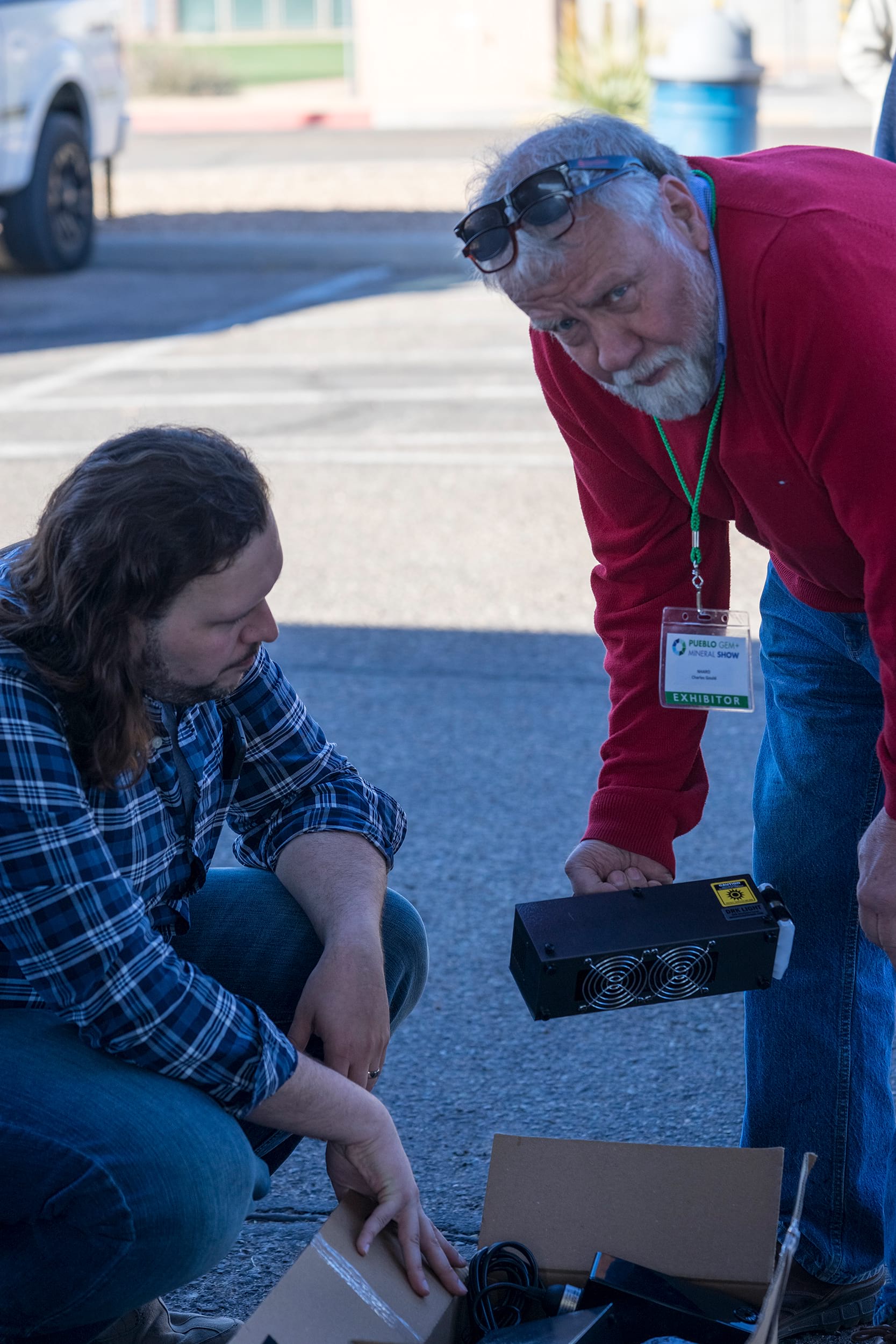
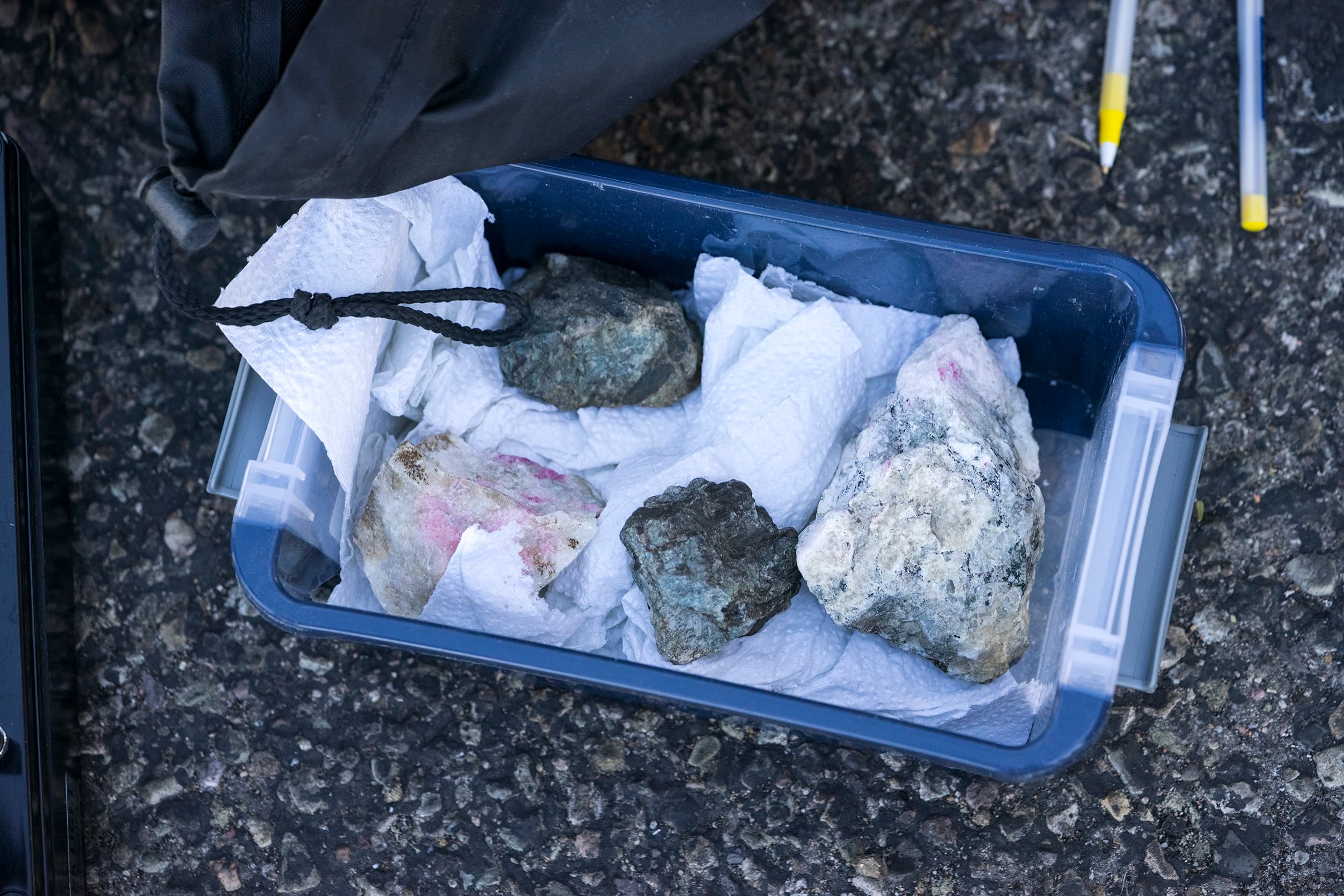
One of the booths I greatly enjoyed last year was Zee's. He makes wonderful art pieces out of raw minerals. I actually got to meet their team this year after they caught me taking some 360s. He and his team were glad to take a 360 with me! Wonderful artwork and great people. I'd love to own a piece someday https://www.zeesminerals.org/
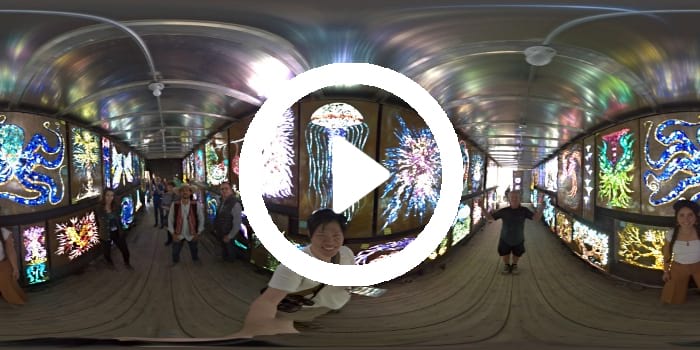

Wonderful amethyst cathedral!

A fellow FMS member at the Miner's Co-Op
This was my first year at the Miner's Co-Op show and I love the idea of it. Miners selling the minerals that they themselves collected and cutting out the dealer middleman. Everyone wins! Now it just needs to get a lot bigger. I bought a wonderful danburite from Mexico here. The miner had collected it about 4 years ago.


365nm LW

One of my favorite photos from the day. Definitely the face of an experienced miner. I believe that amazonite, smoky quartz combo was sold for $38,000

One of the favorite buying locales of fossil collectors is Ramada Inn. They've got an incredible selection of dealers peddling almost anything I could imagine. I even saw some from places I had wanted to collect in the past, namely Bakersfield. The spot welded stegosaurus photo above was taken there. They've also got several mineral dealers. In fact, this is where I purchased my favorite crystal by a country mile! A wonderfully formed large fluorite octahedron from Inner Mongolia. I've got a full photoshoot coming up in a later post but here's the main attraction. Wonderful red calcite, white barite, and incredibly bright purple inclusions inside of the octahedron under 365nm longwave. Under 265nm SW the octahedrons turn a ghostly green-white and the real stars shine. Multiple bright fluorescent inclusions of pinkish red and yellow!

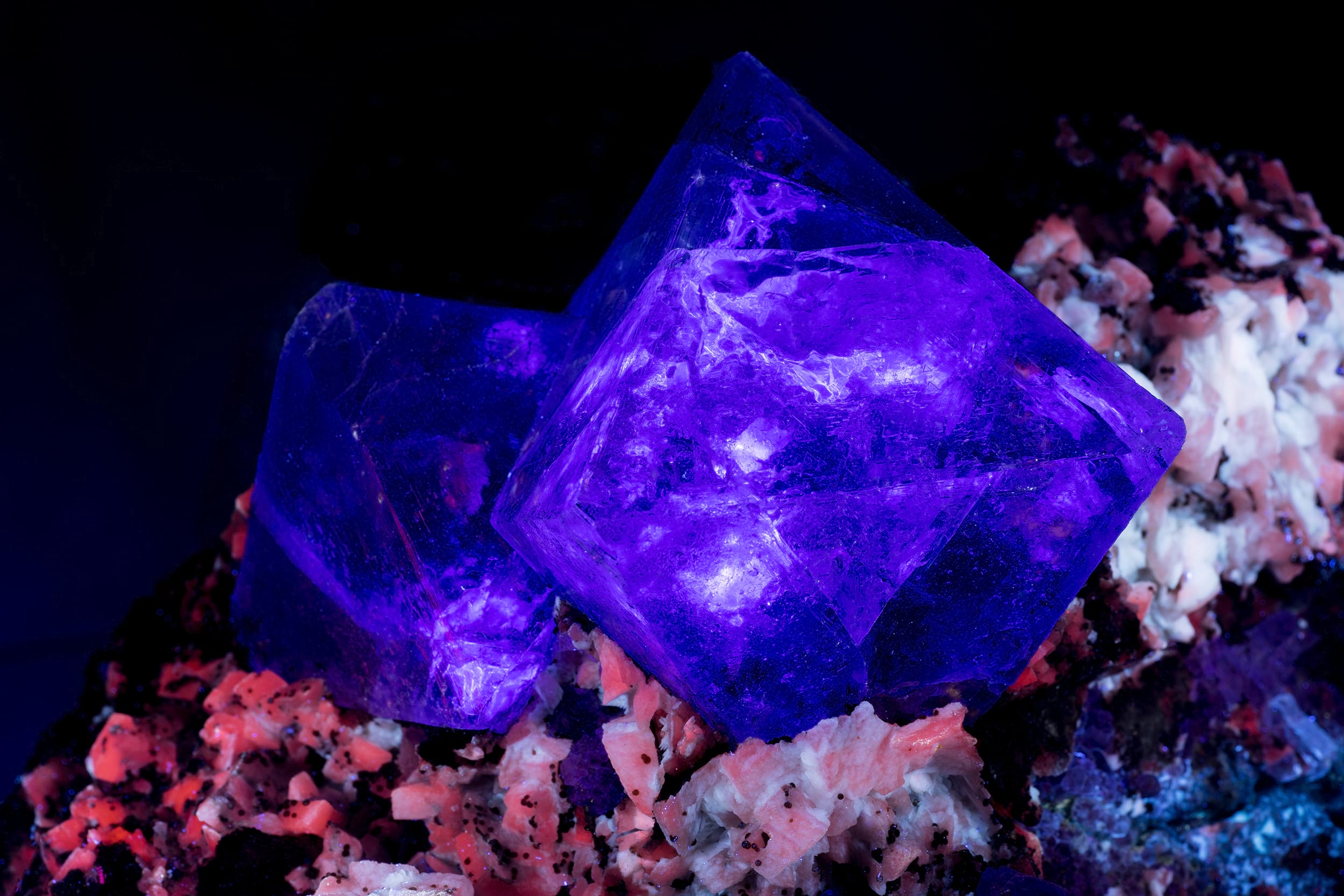
365nm LW

265nm SW
And also a Pakistani zircon that I purchased. It's not a great crystal but I recognize that crystals of this size and species are rare. The price was also much cheaper than if I were to buy it online so it was somewhat of an impulse purchase.

265nm SW

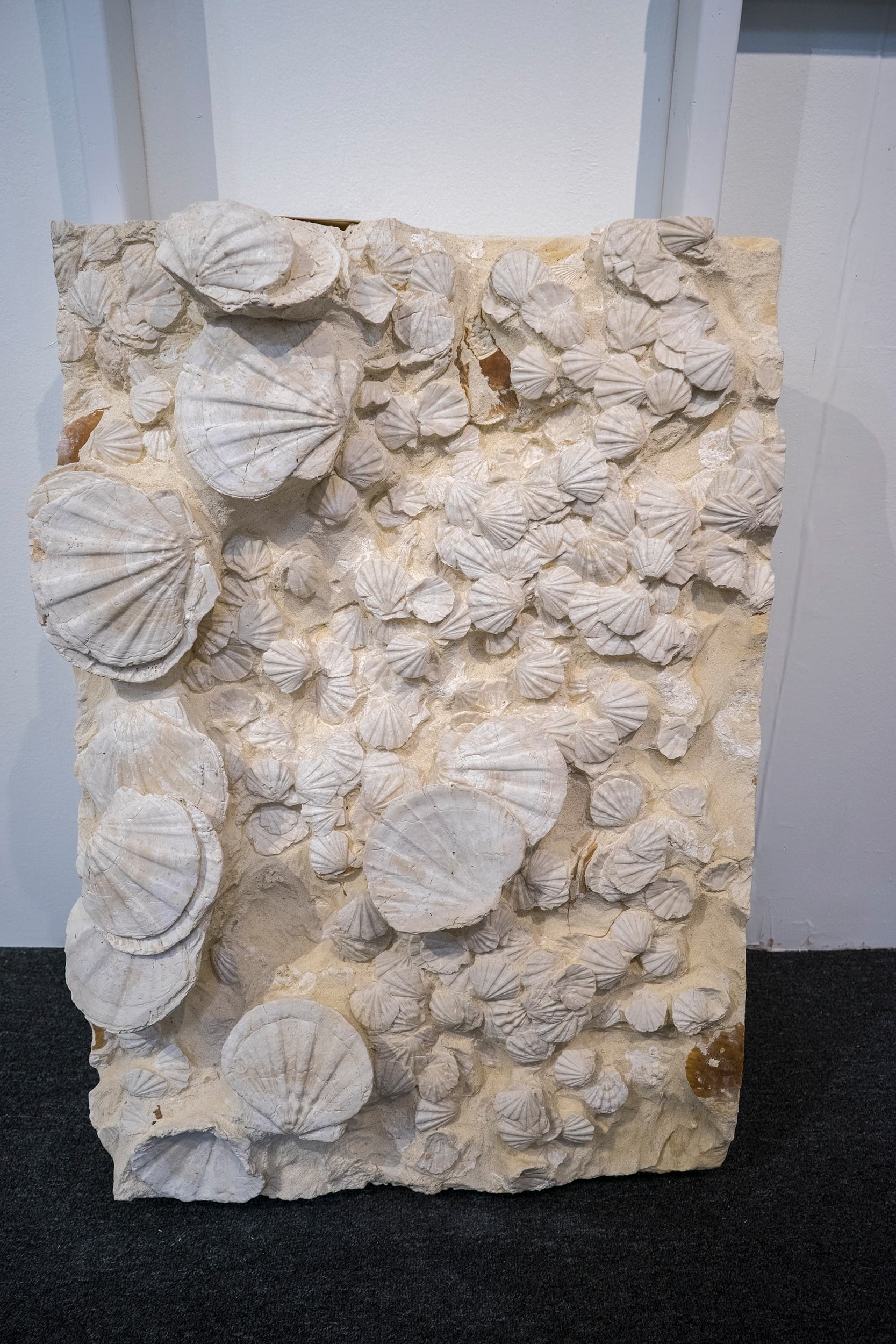
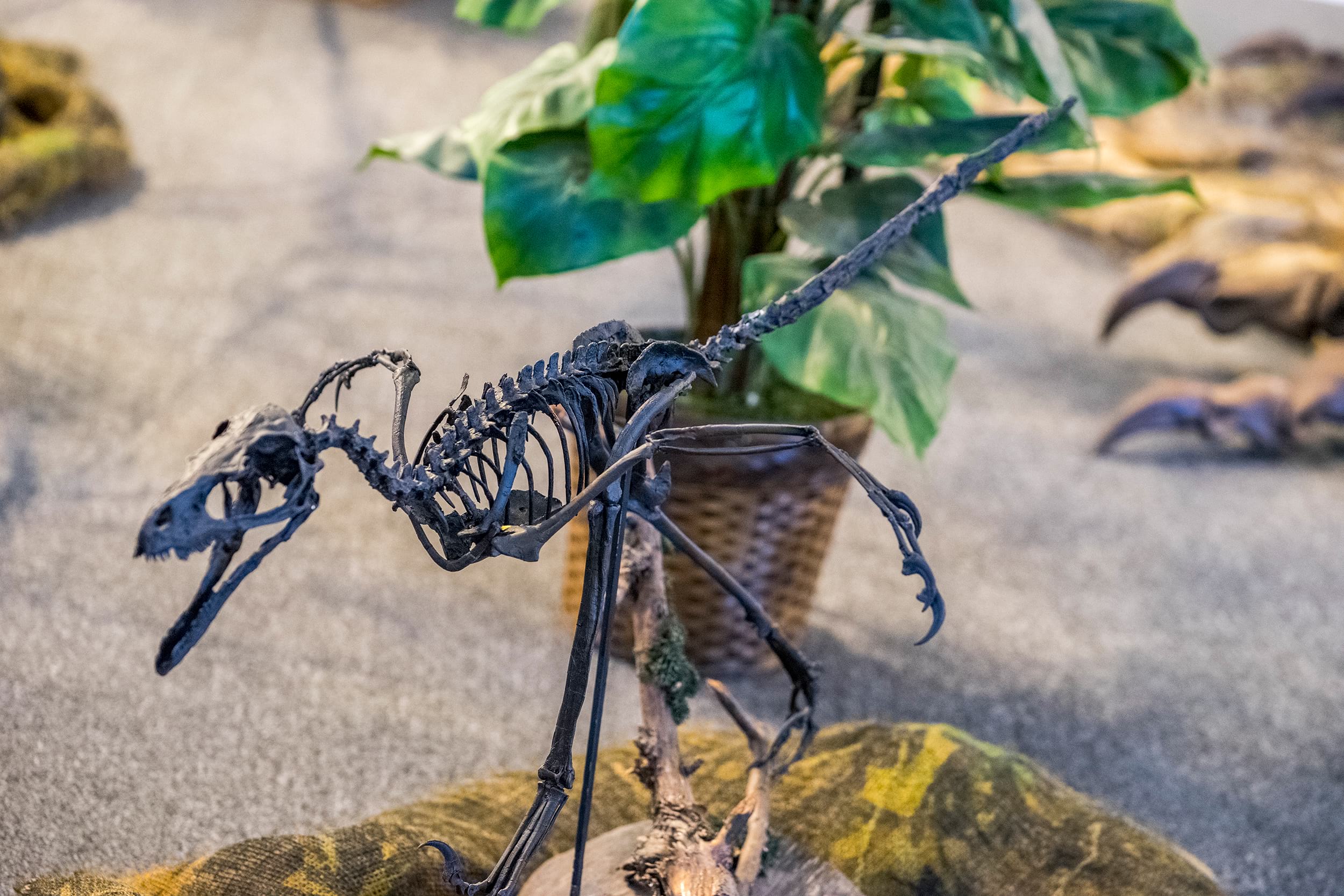
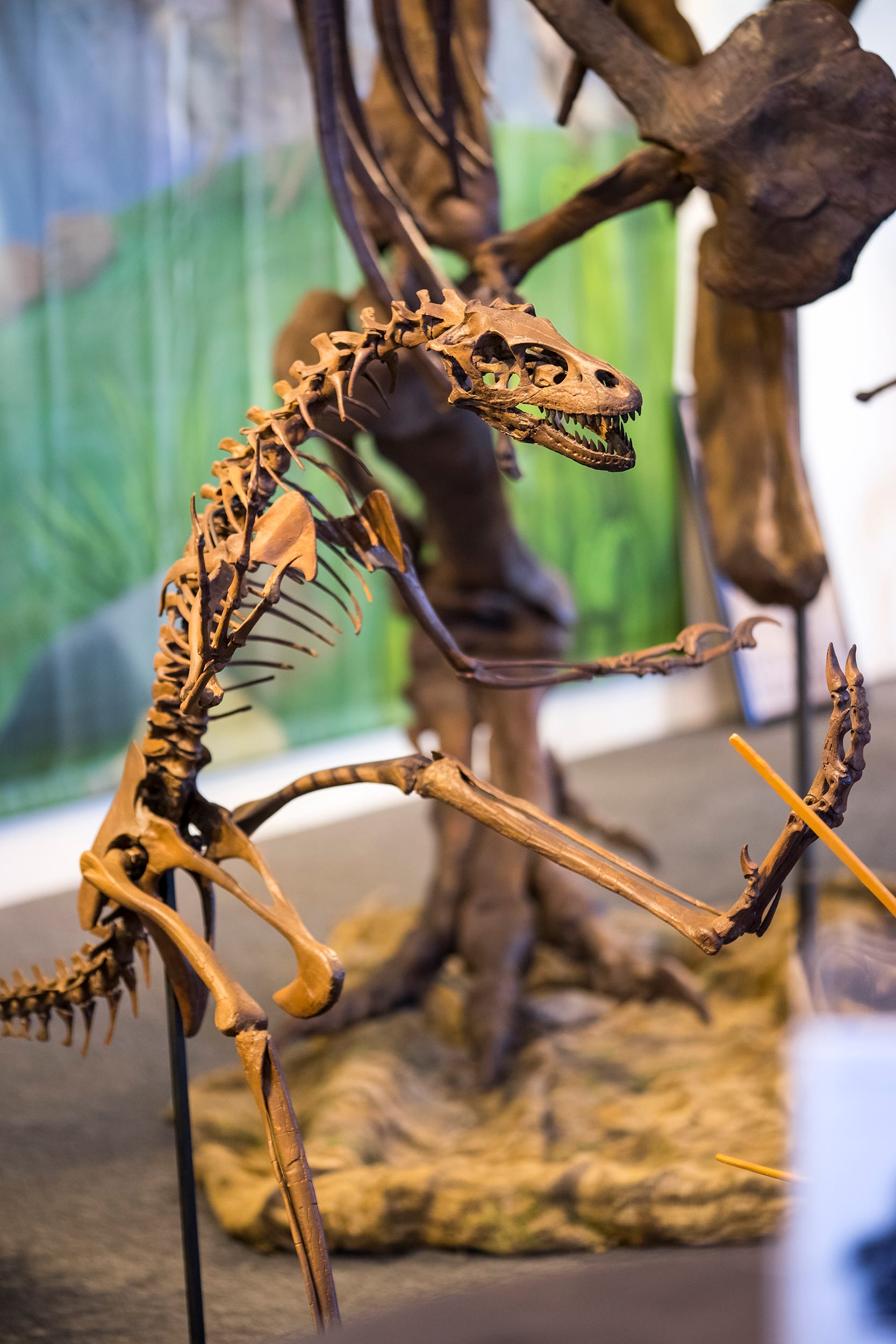
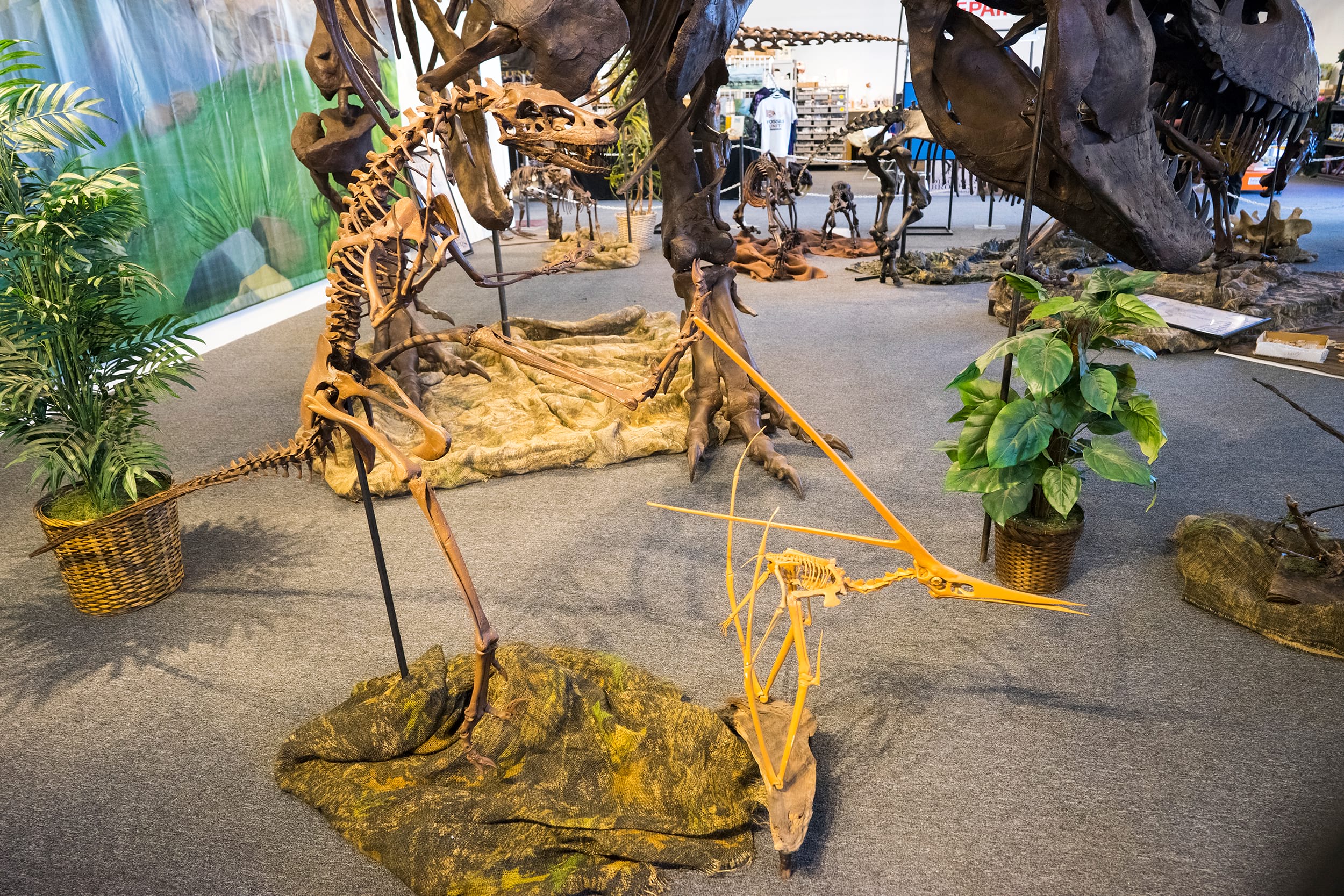
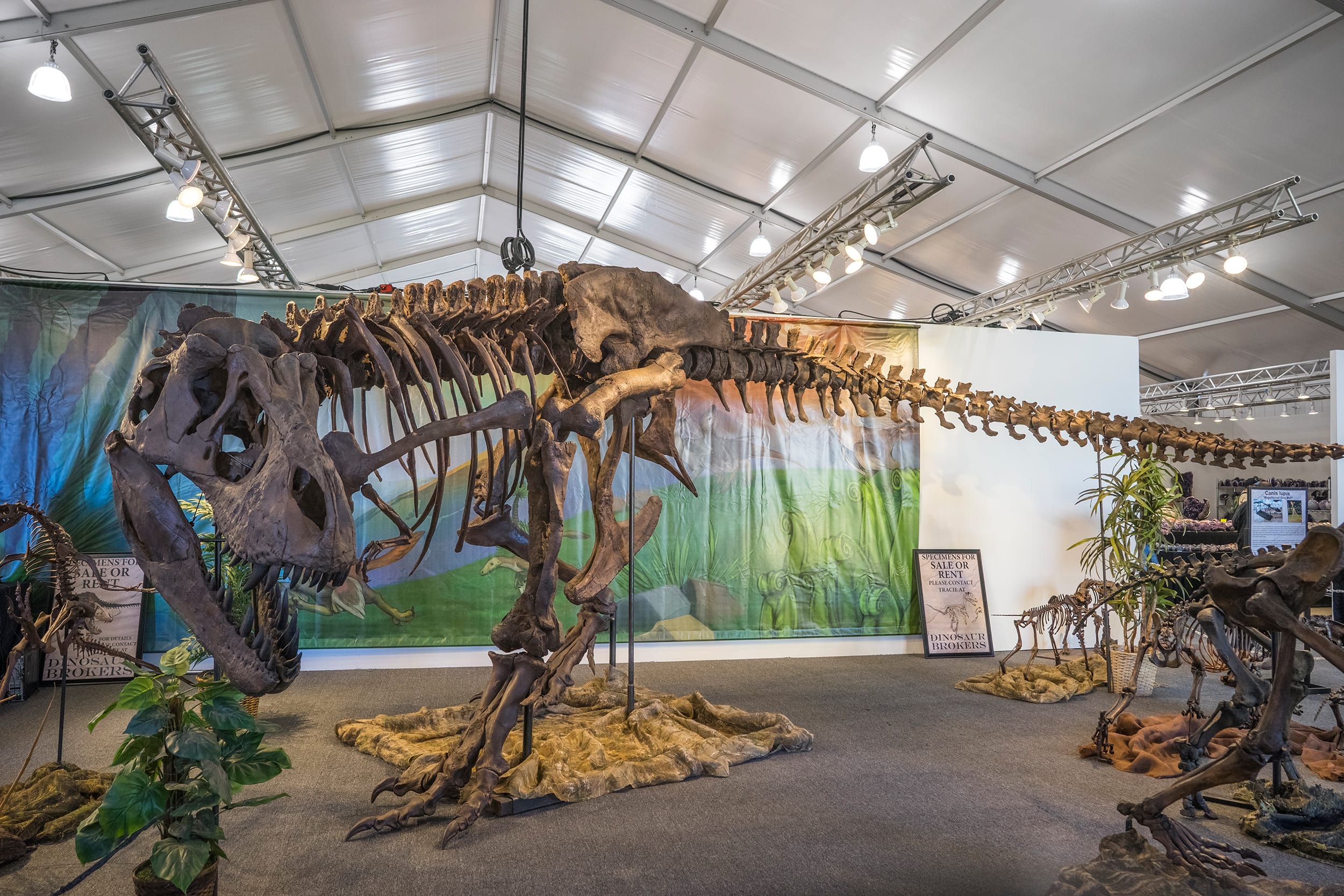
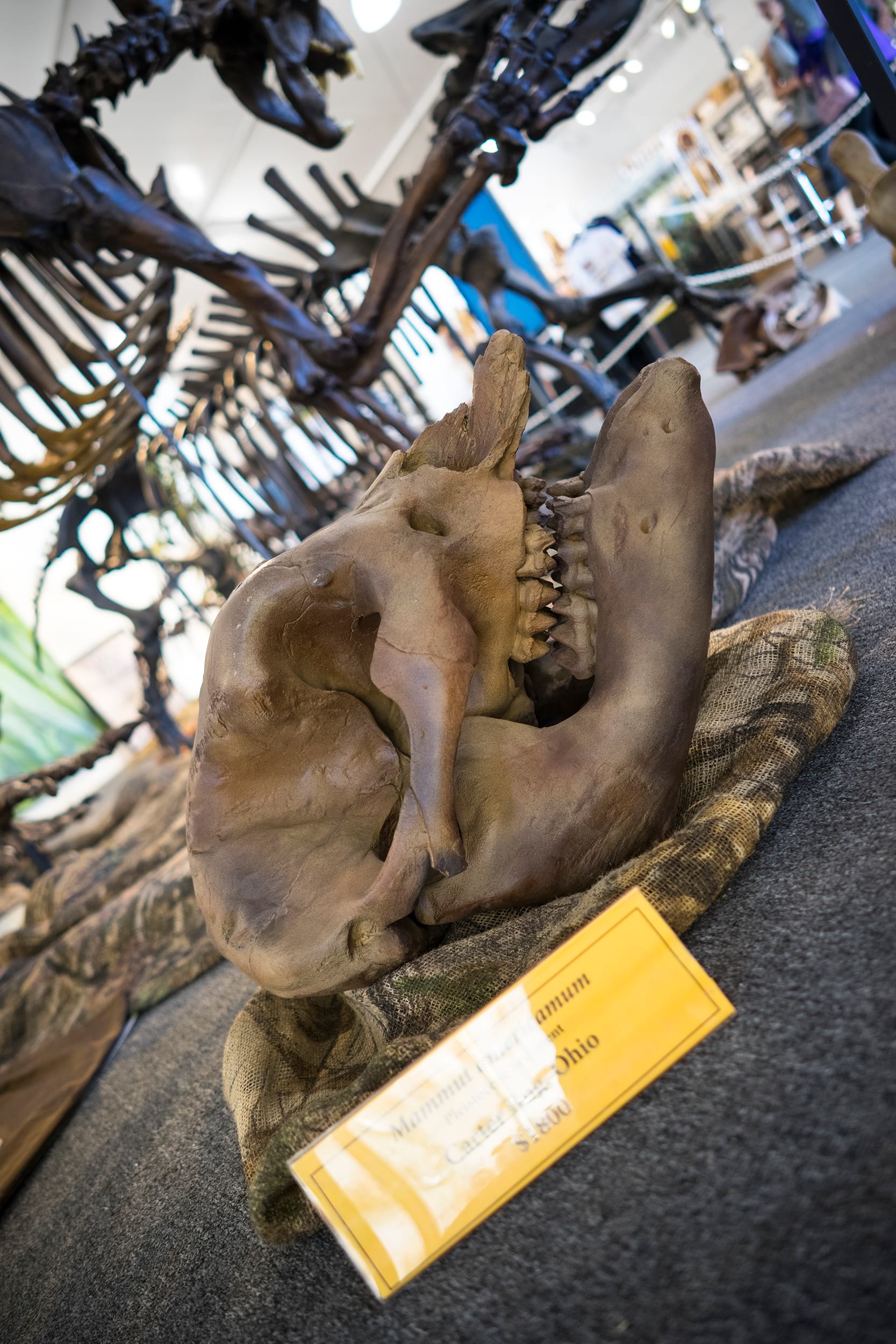
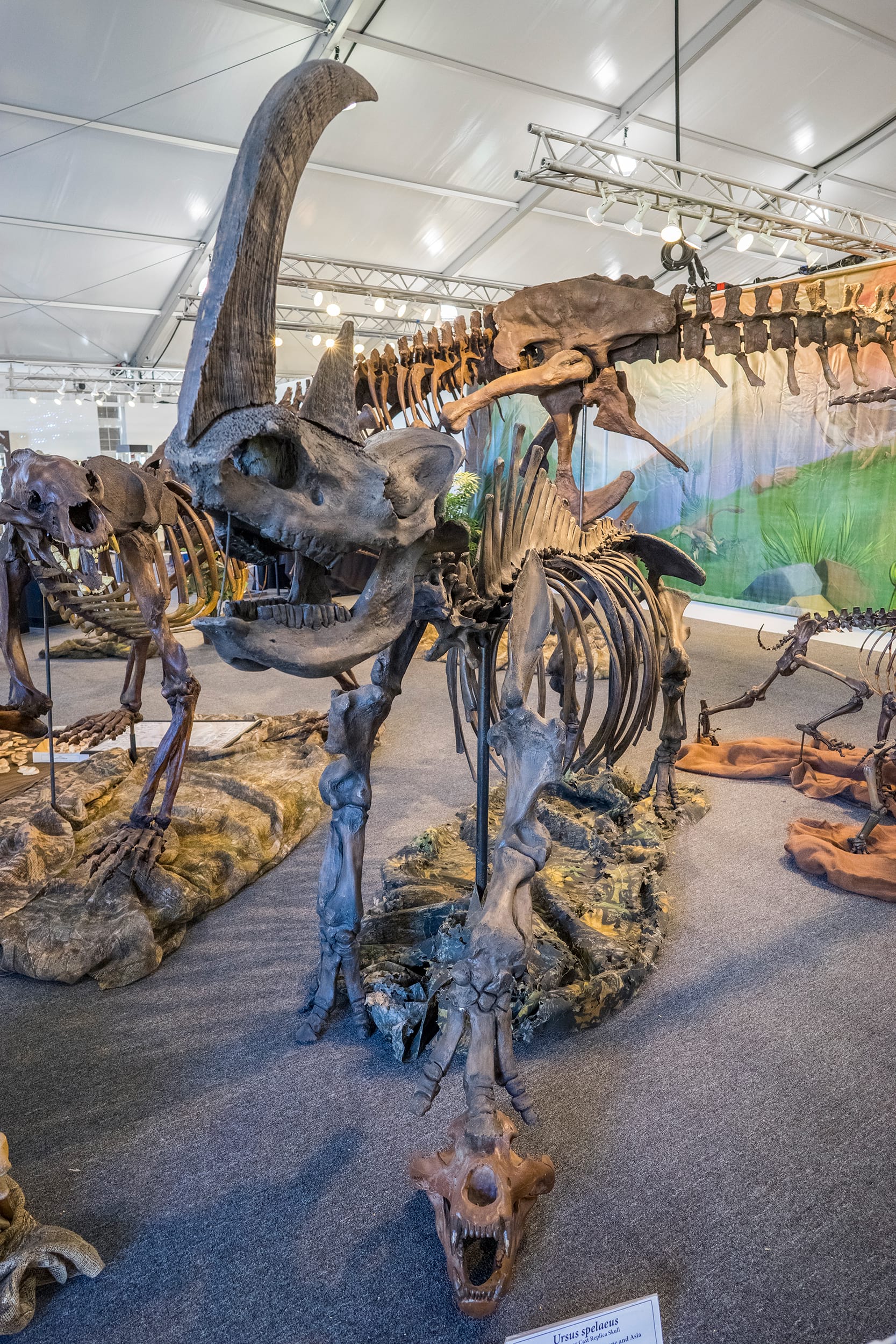
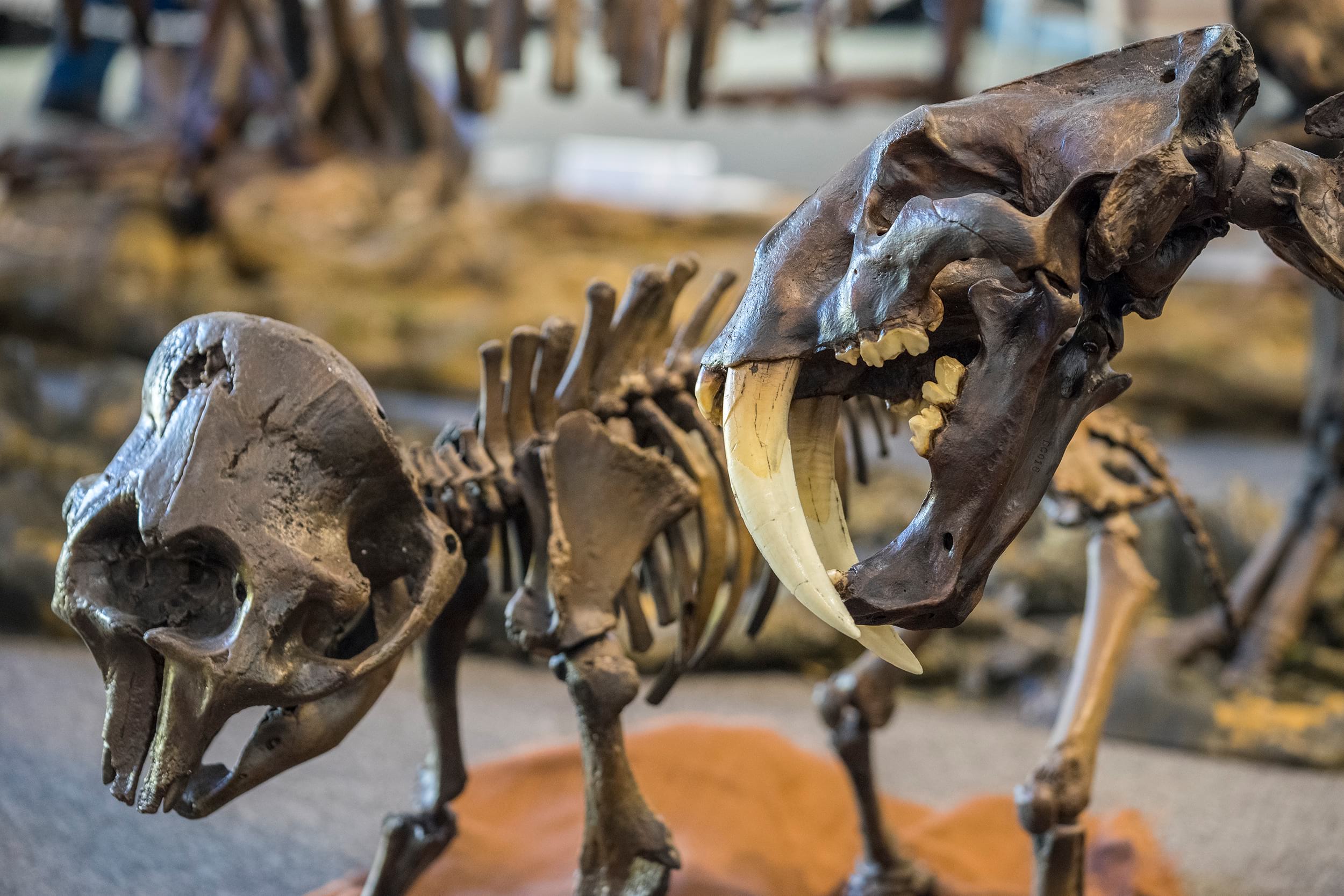
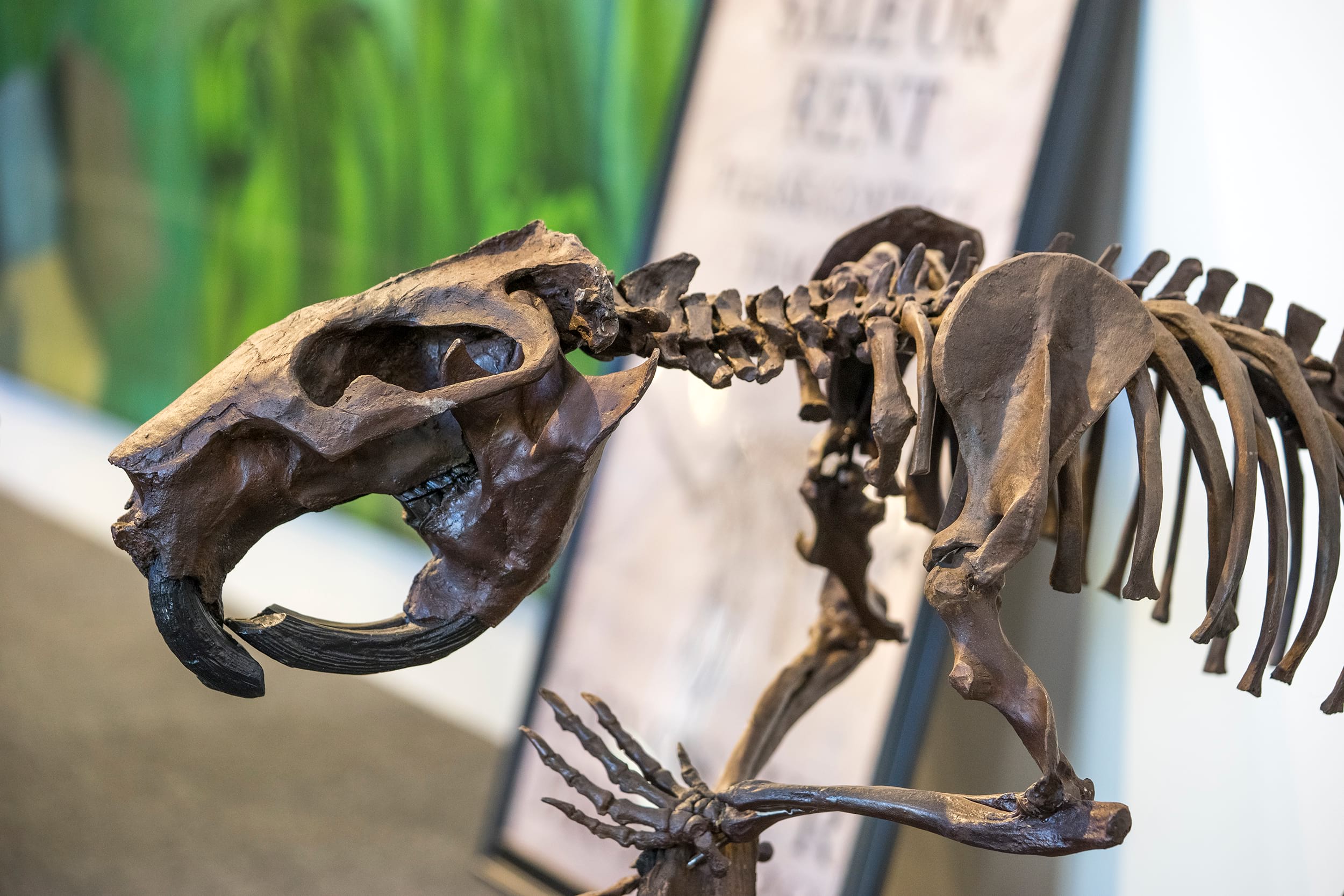
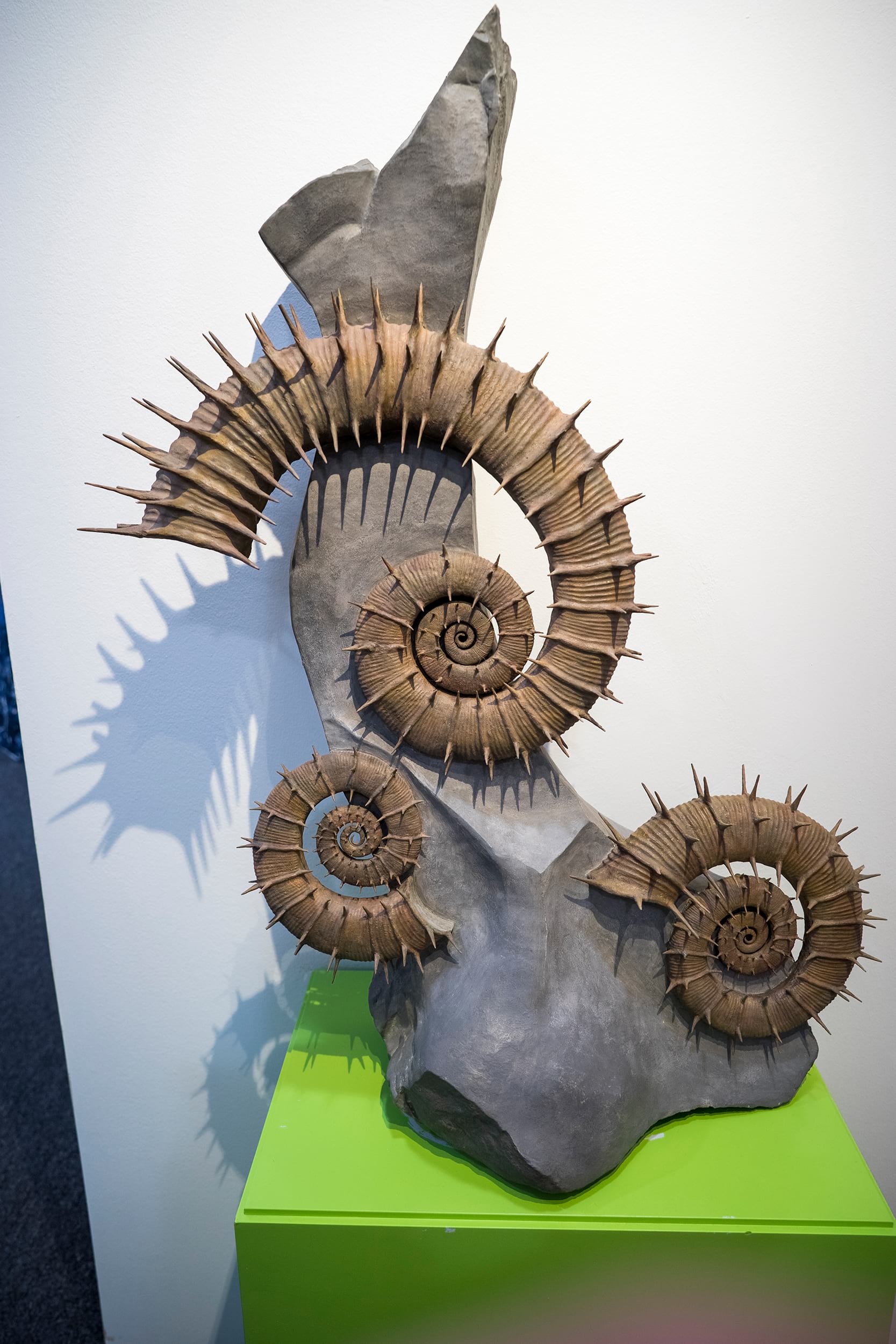
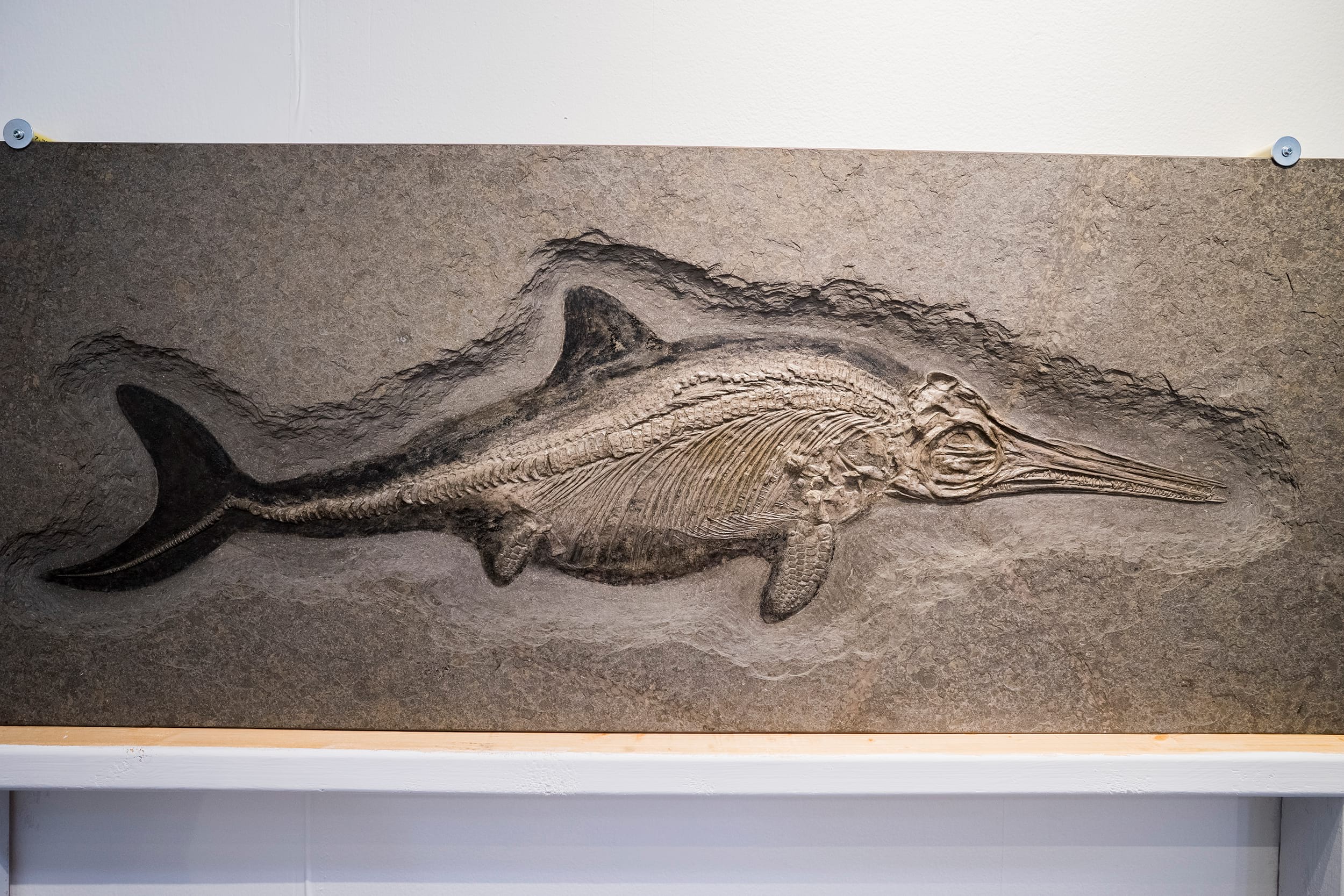
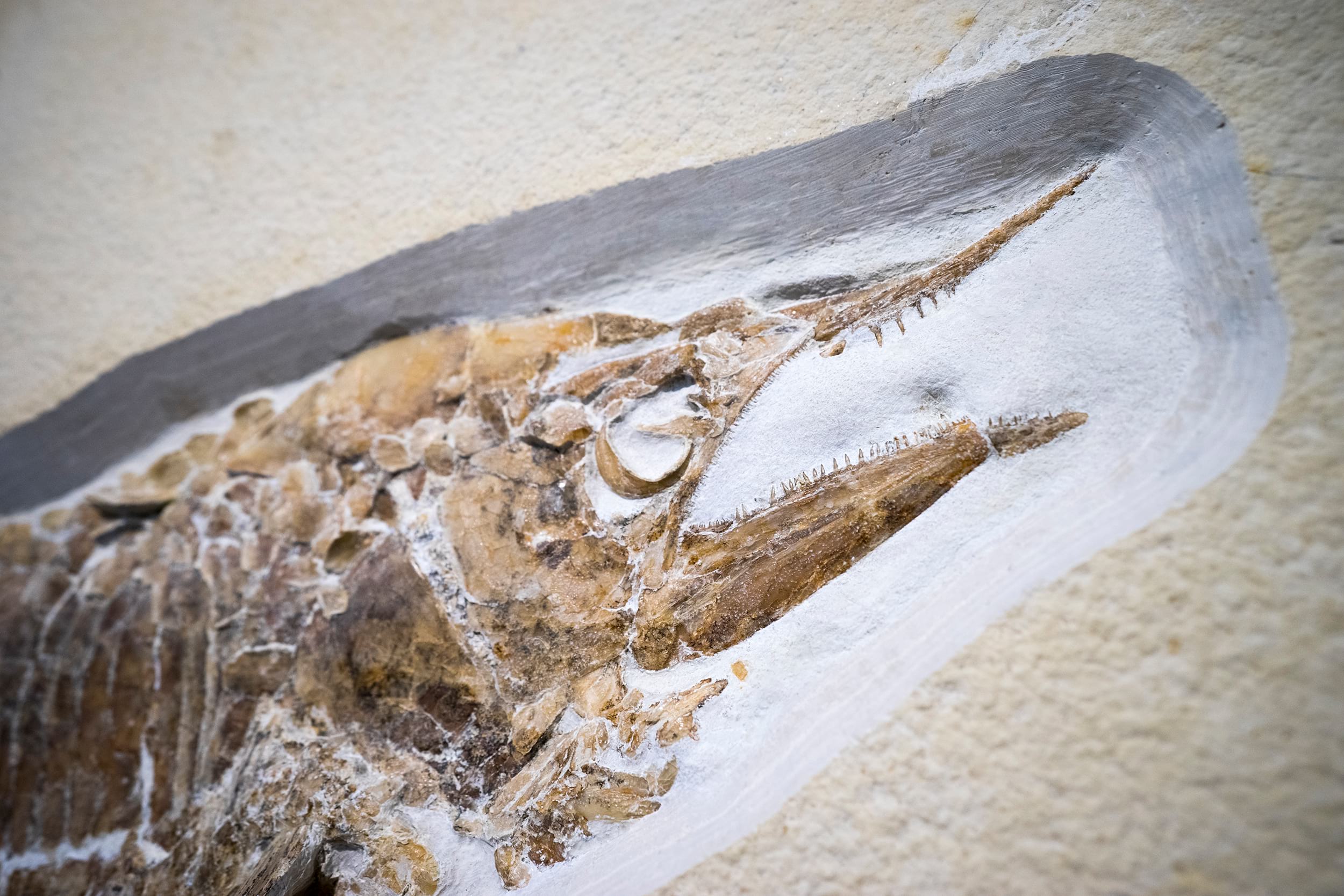
As always there are just so many wonderful fossil displays throughout the show. It's been a while since I've done any serious fossil collecting but I still enjoy seeing well prepared and presented specimens from various locales.
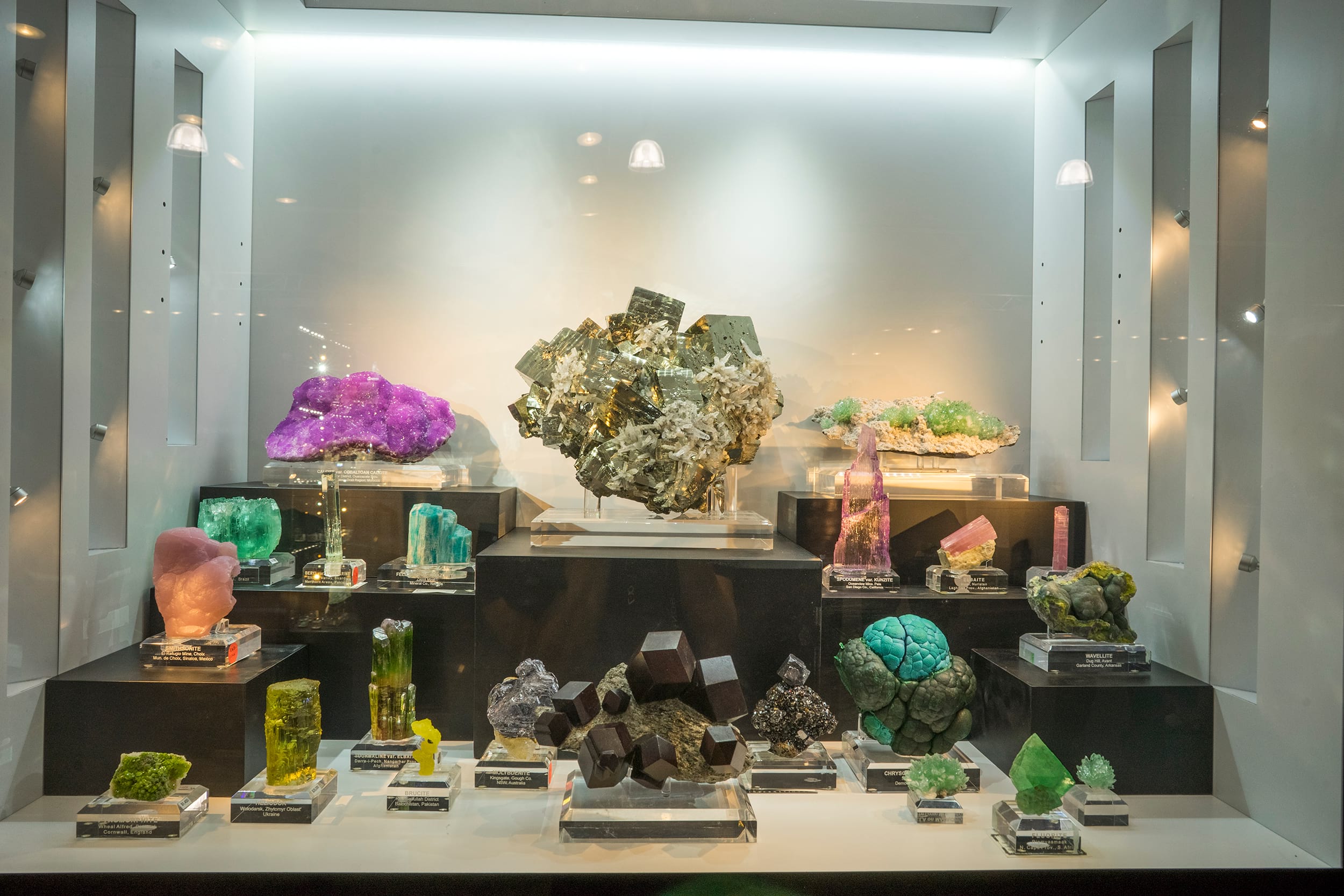
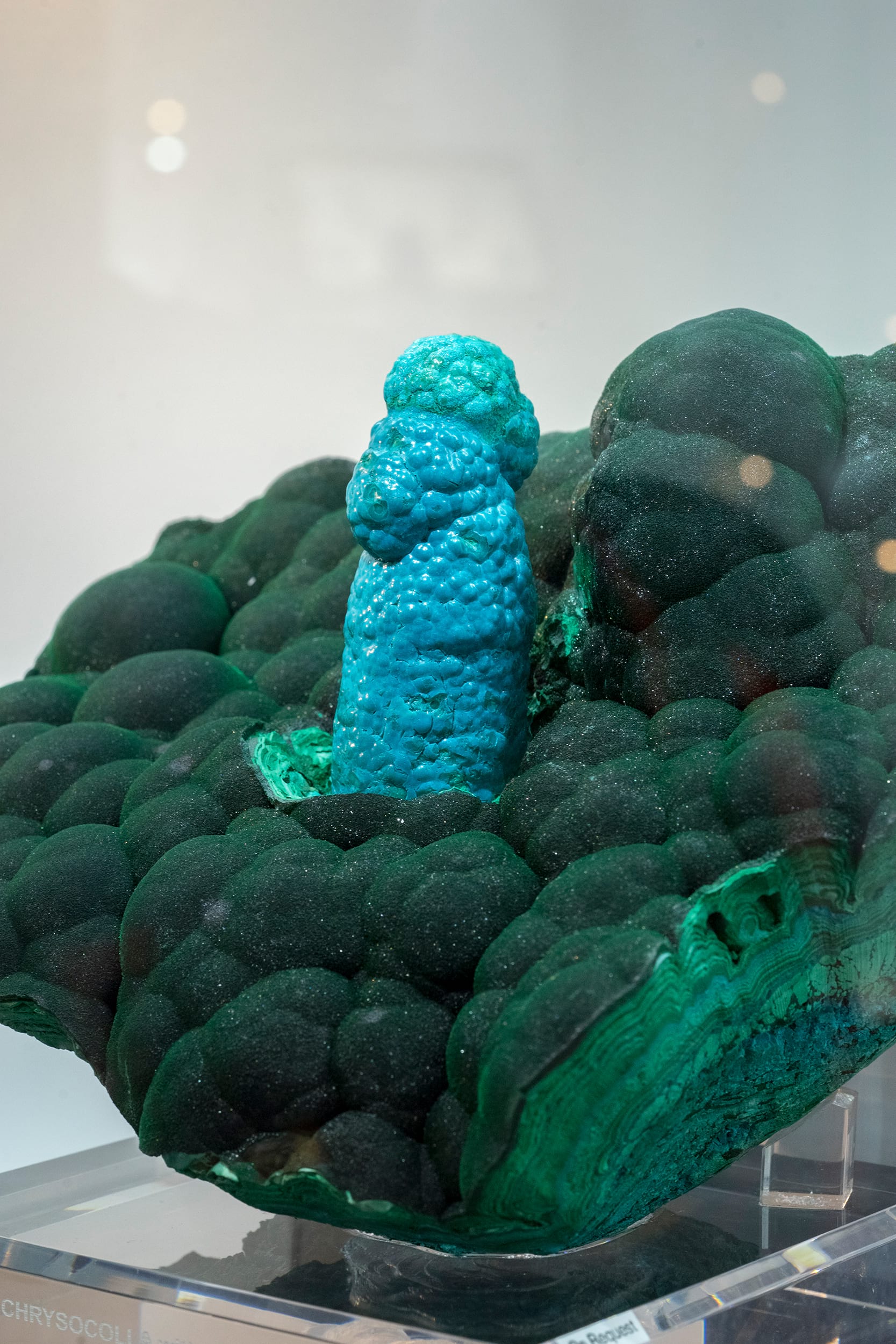
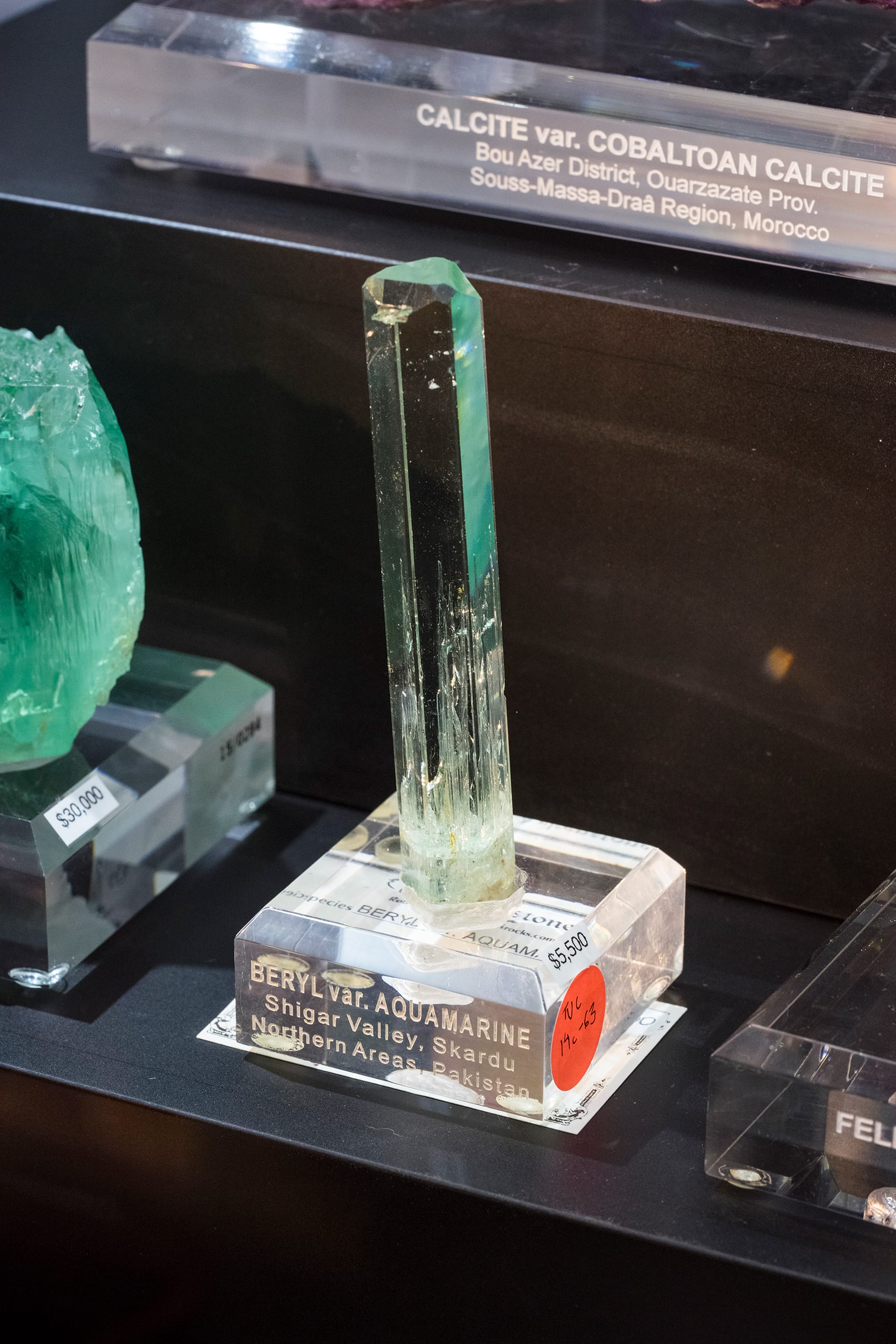
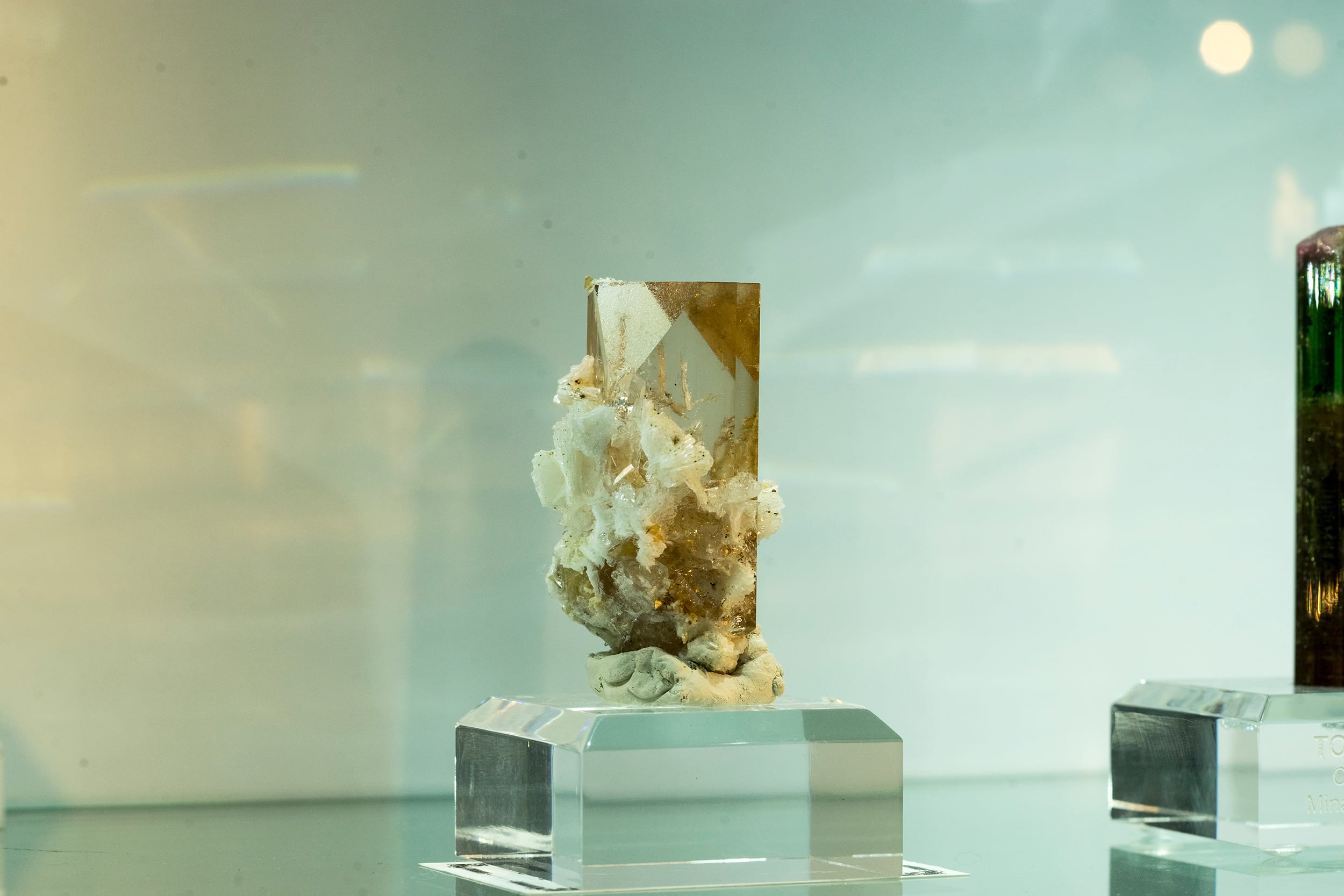
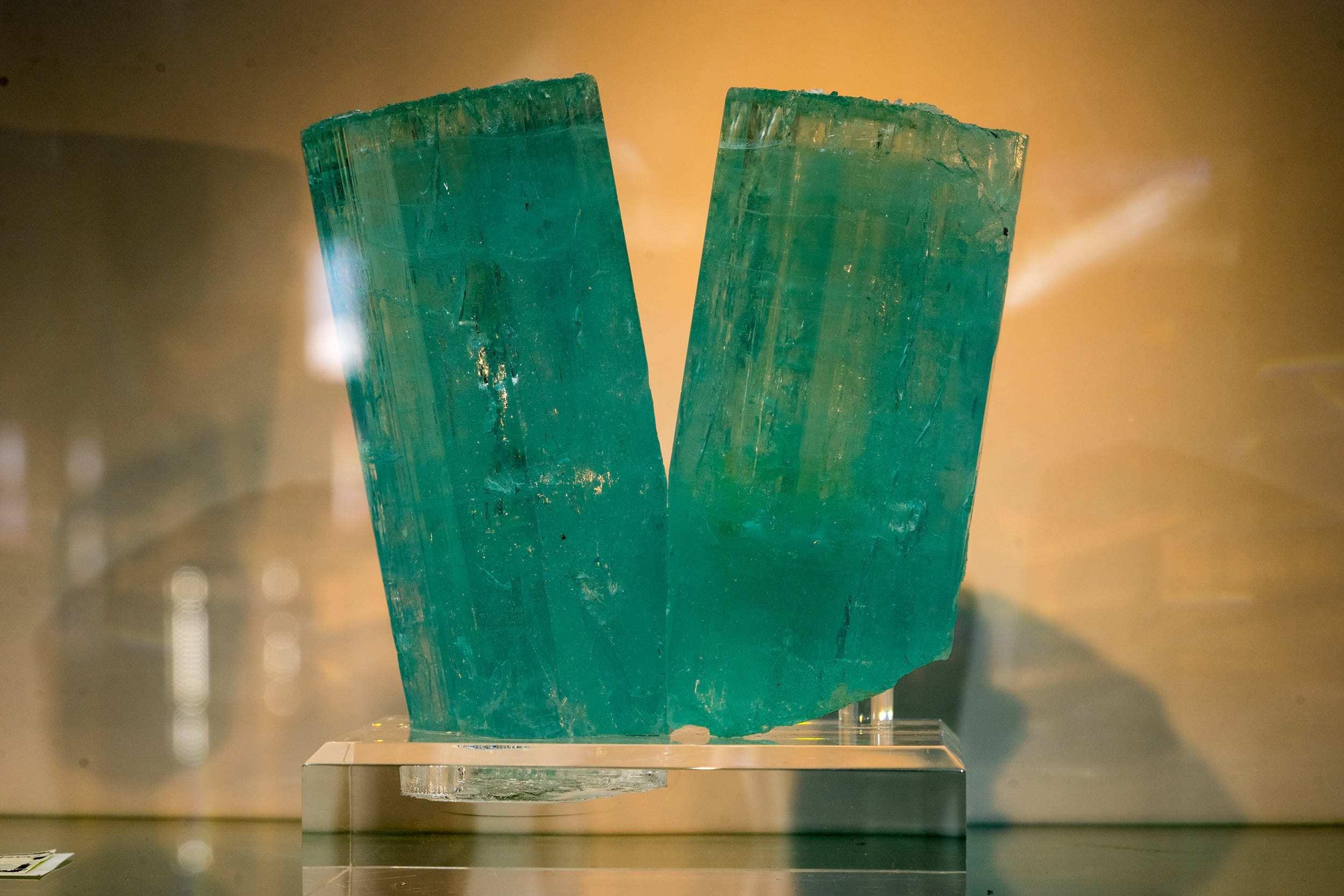
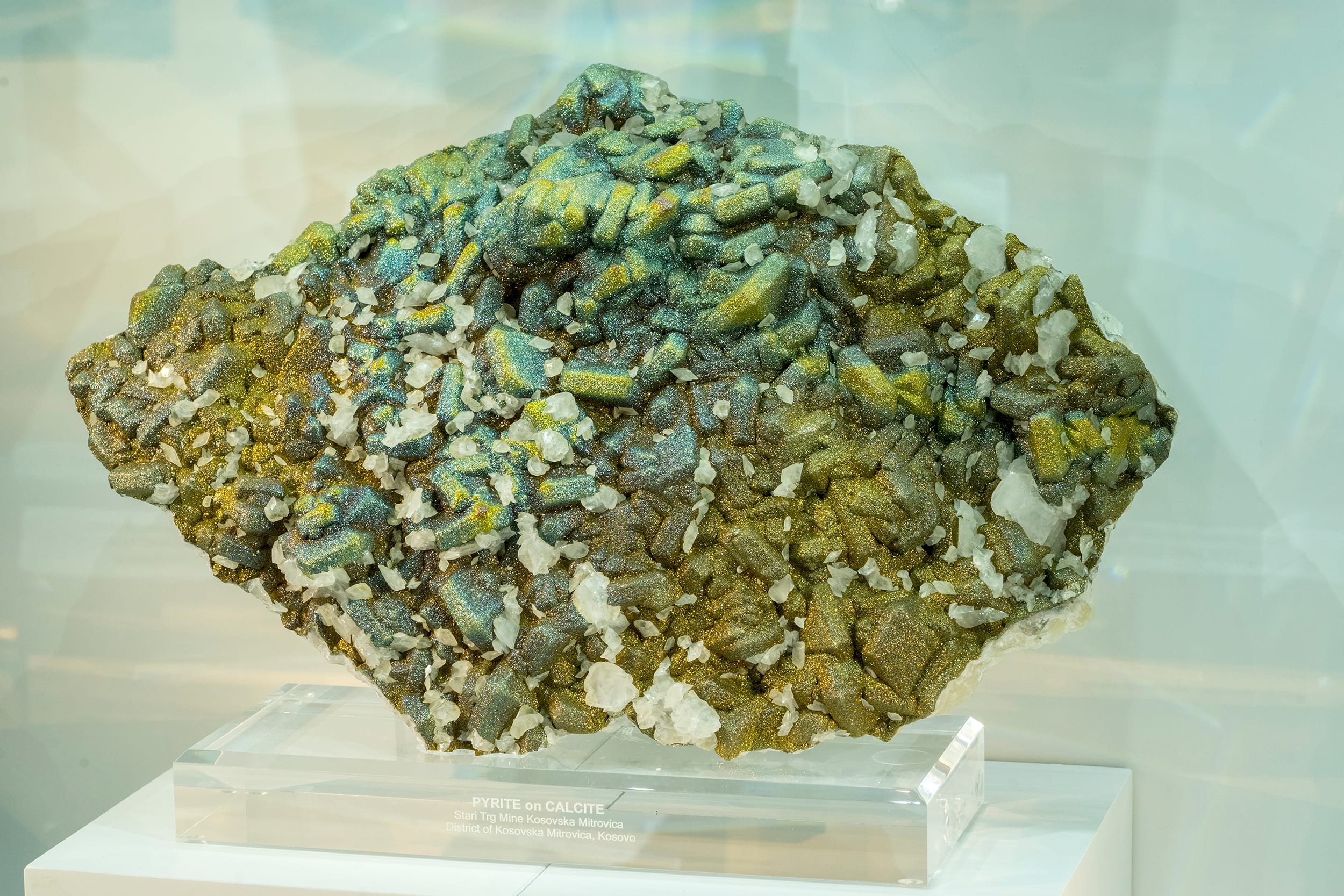
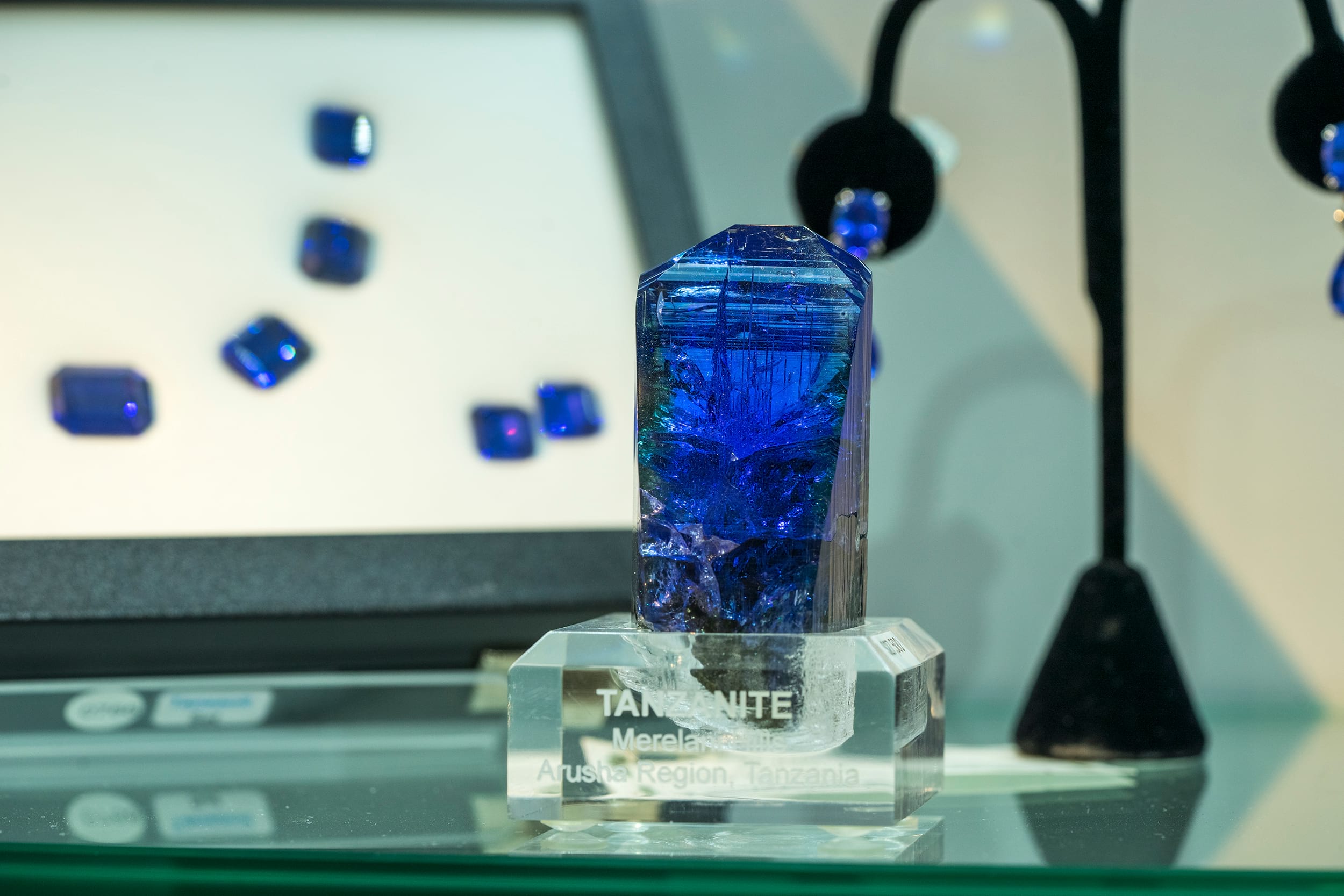
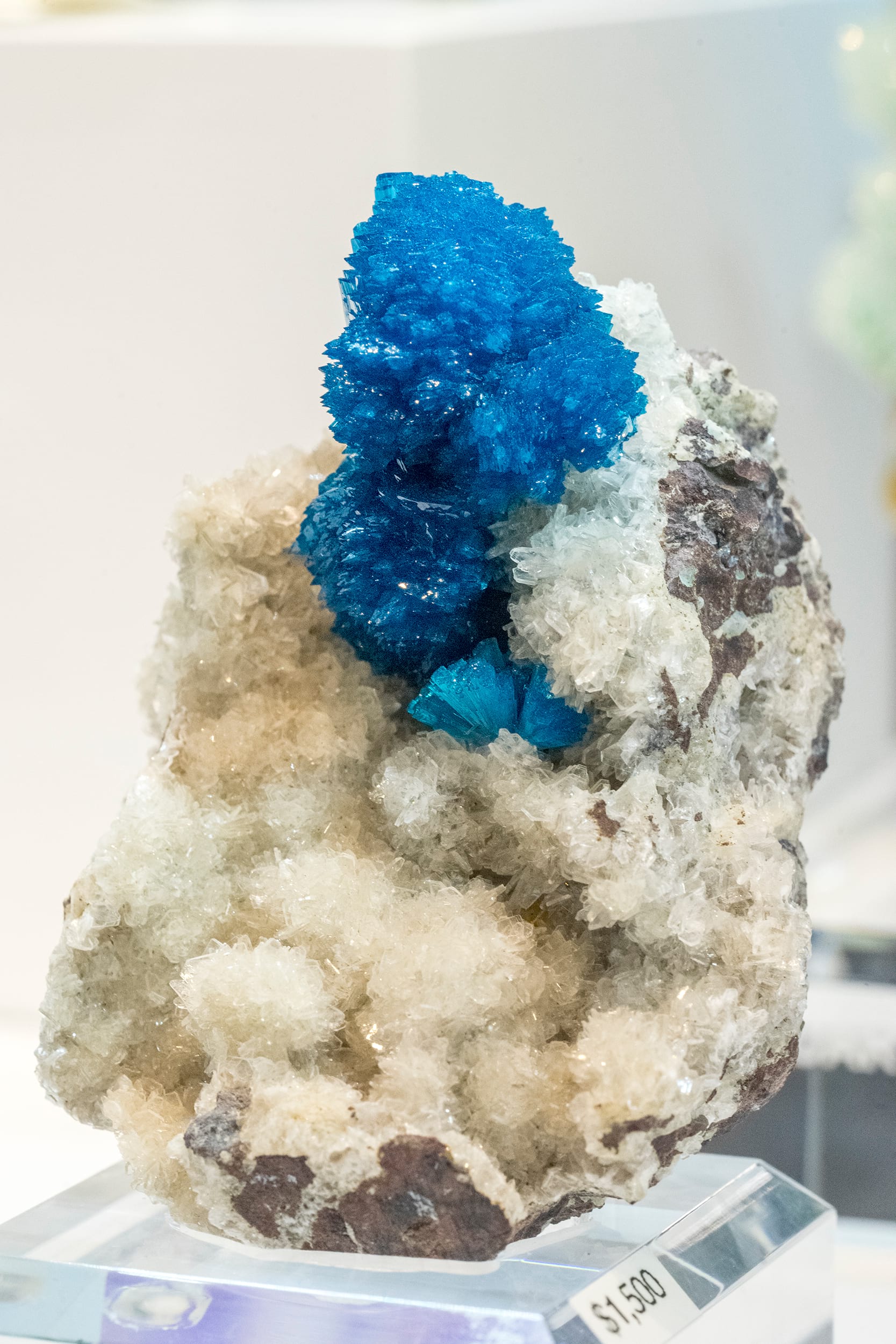
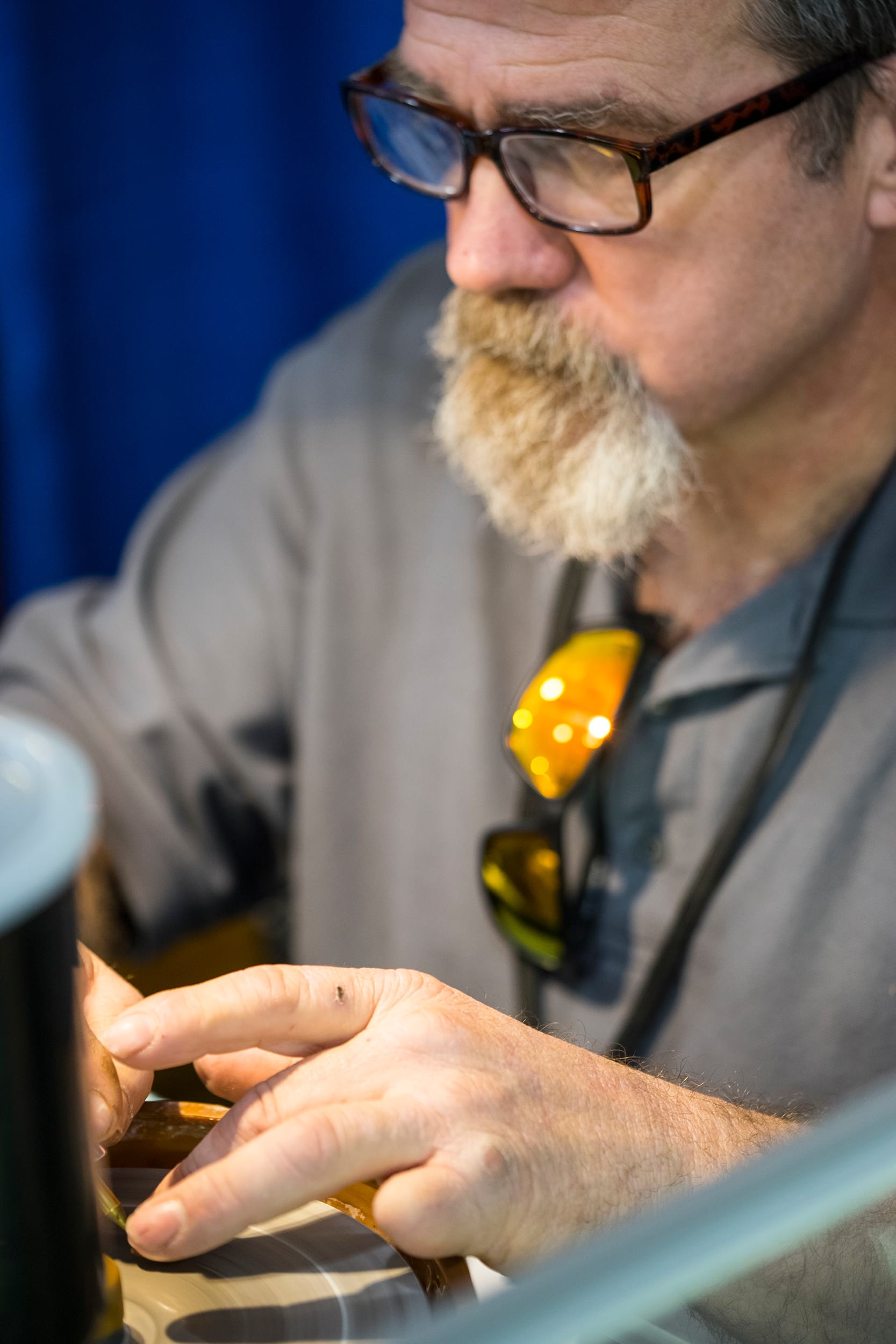
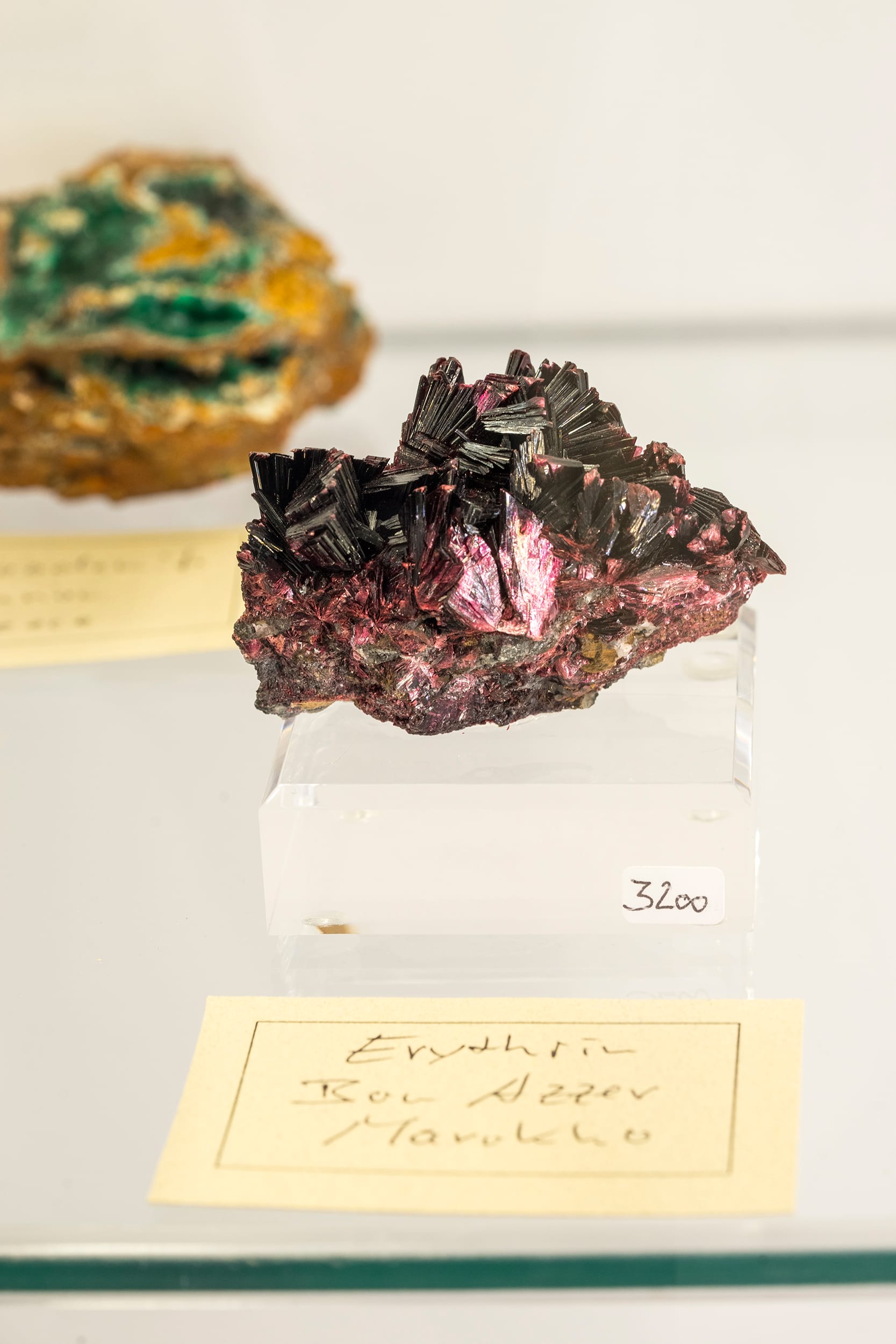
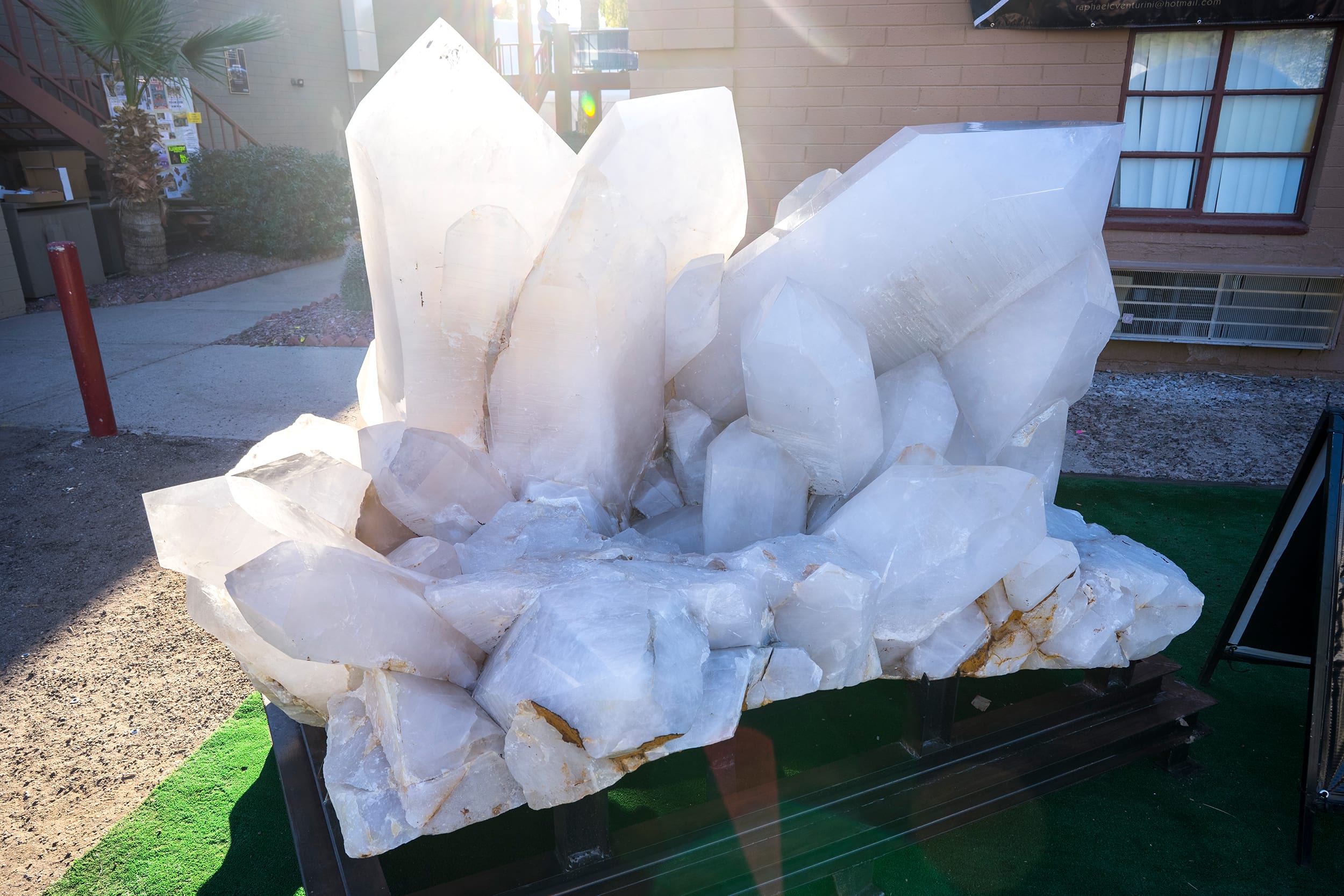
And the same goes for minerals. While most of these aren't fluorescent I can appreciate the effort it took to prepare, transport, and light them to show them off in the best possible light. It was a wonderful show and I'd love to go back again next year!

Sulfohalite
Wonderful cluster of sulfohalites from Searles Lake.
Locale: Searles Lake, CA
Weight: .2oz | 6g
Dimensions: .86 x .72 x .79 in | 22 x 18 x 20 mm
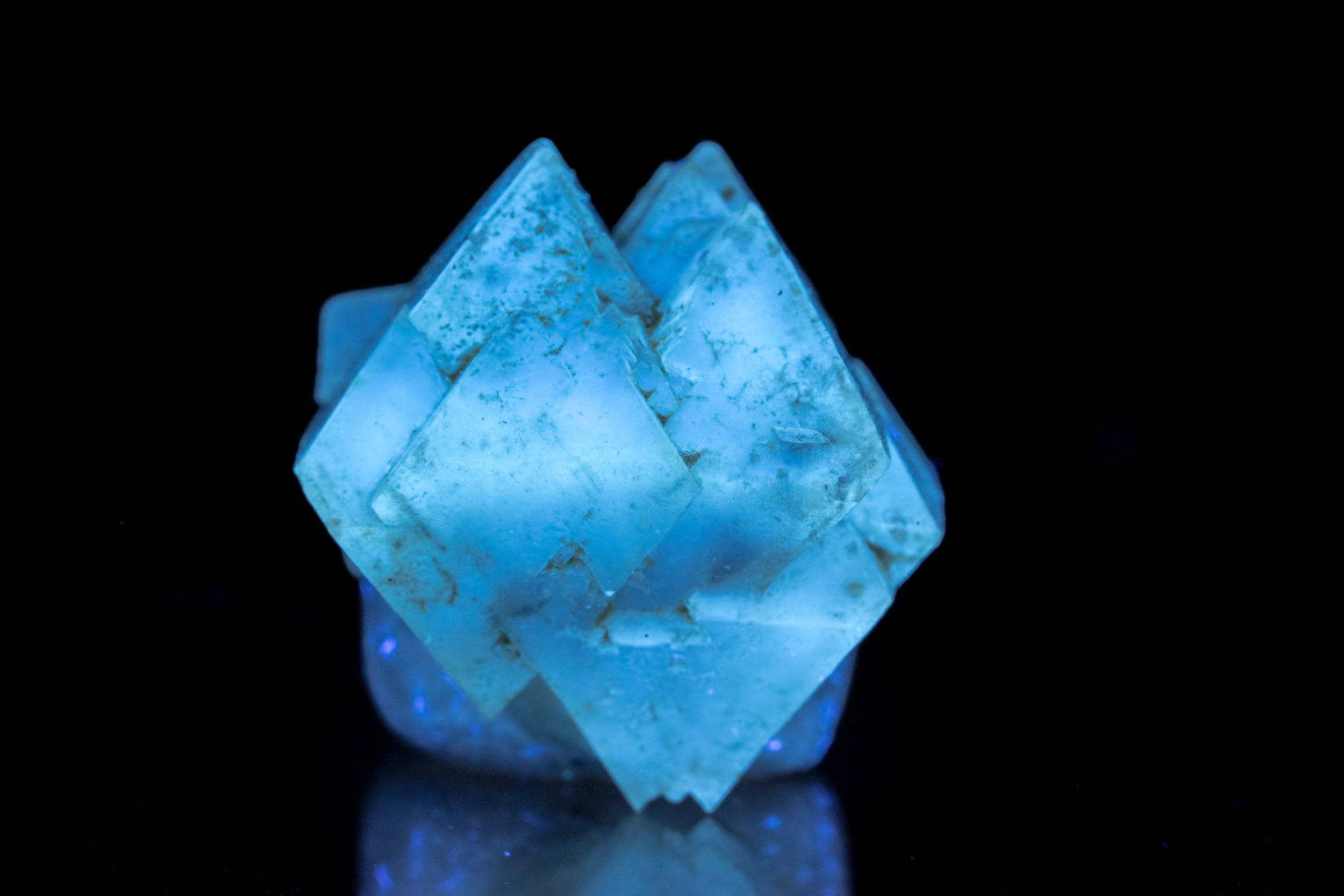
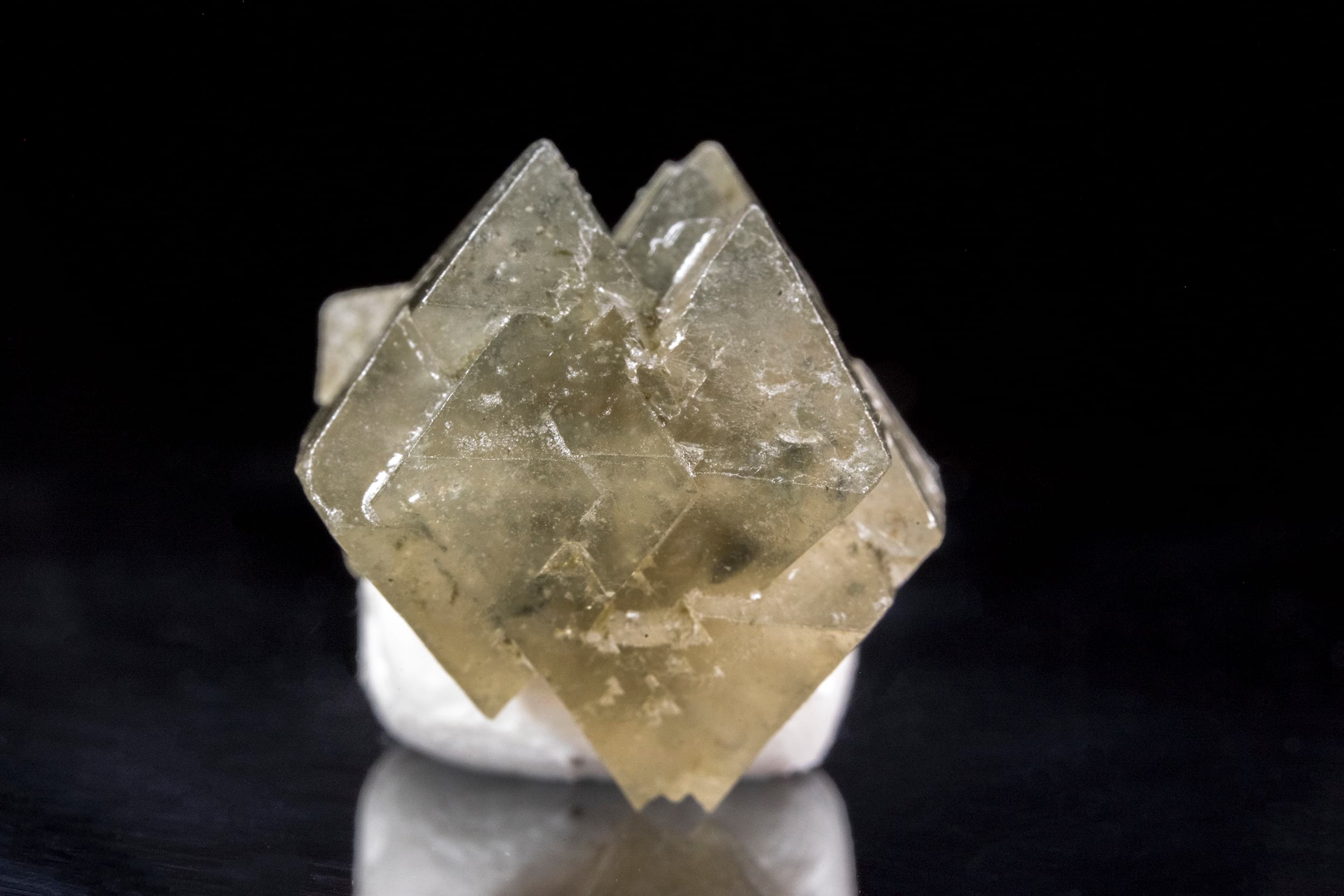

Thénardite
A cluster of thénardite crystals with multiple well terminated crystals in all directions throughout the specimen. The largest of which being on top and measuring .5in or 12mm tall. Collected October 2017
Locale: Searles Lake, CA
Weight: .1oz | 4g
Dimensions: .64 x .70 x 1.0 in| 16 x 18 x 26 mm
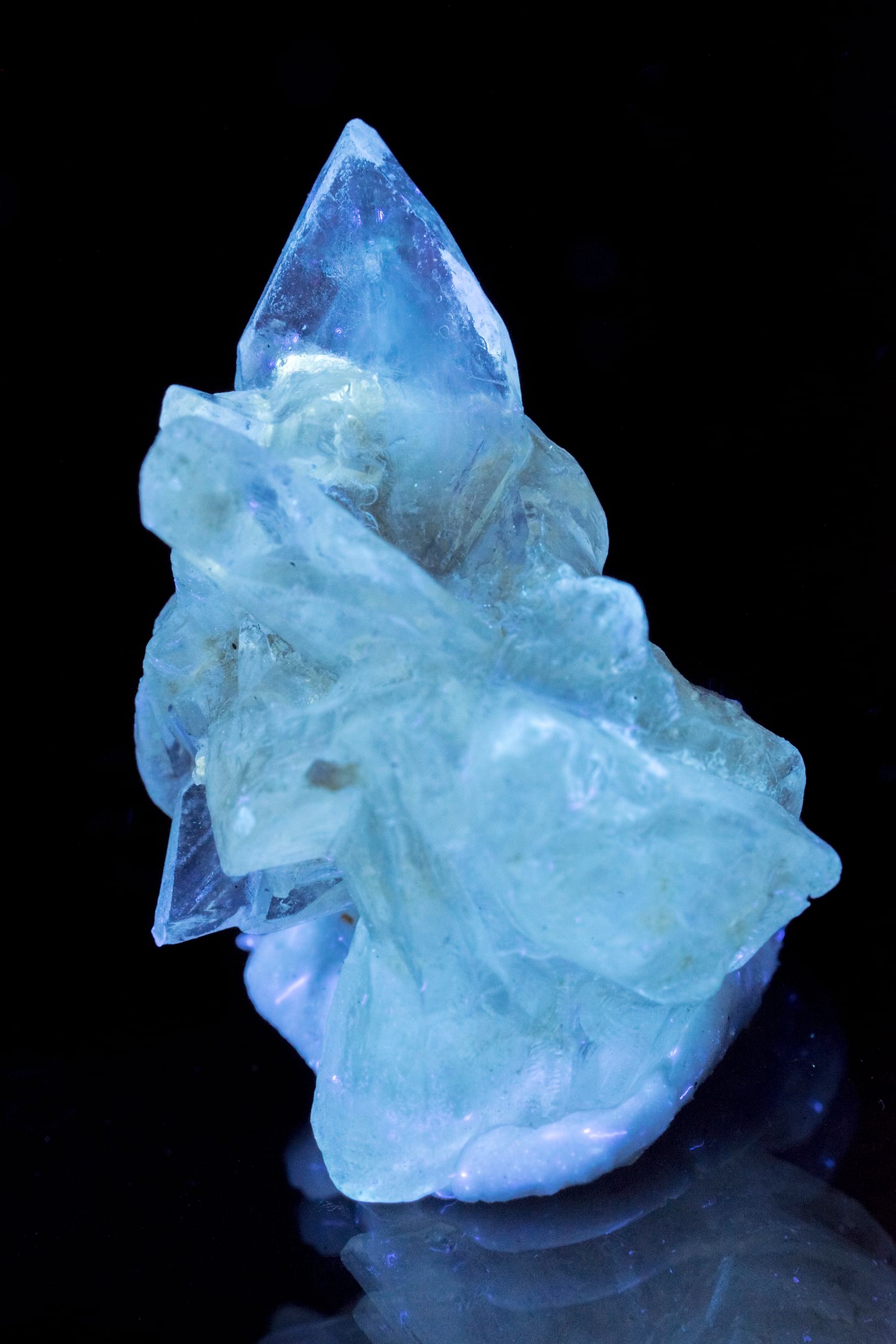


Sulfohalite, Hanksite
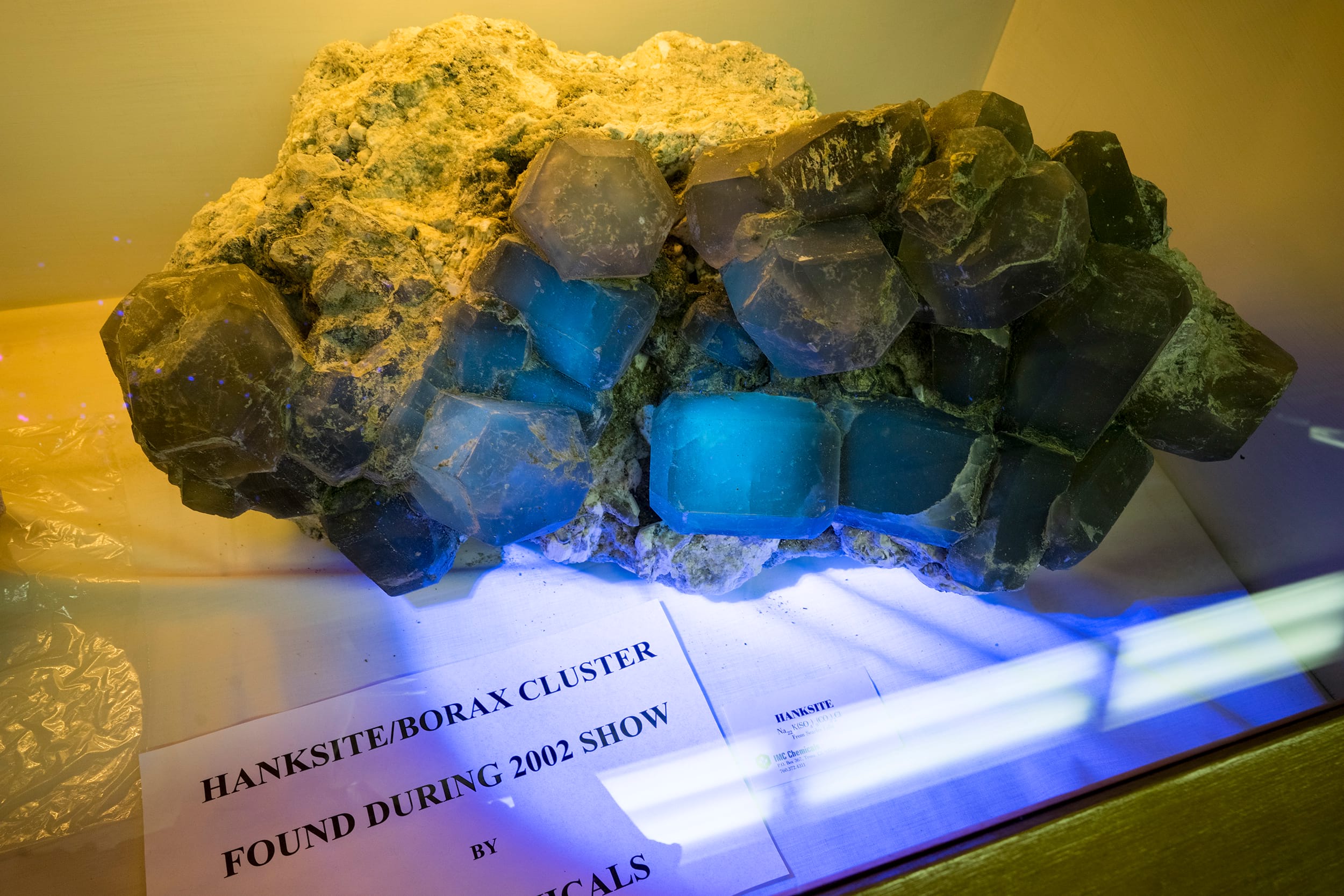
One of the rarer minerals of Searles Lake; this specimen forms a wonderful contrast with a well formed, well terminated sulfohalite with barrel hanksites underneath. Collected October 2017.
Locale: Searles Lake, CA
Weight: .1oz | 4g
Dimensions: .65 x .62 x .91 in | 17 x 16 x 23 mm

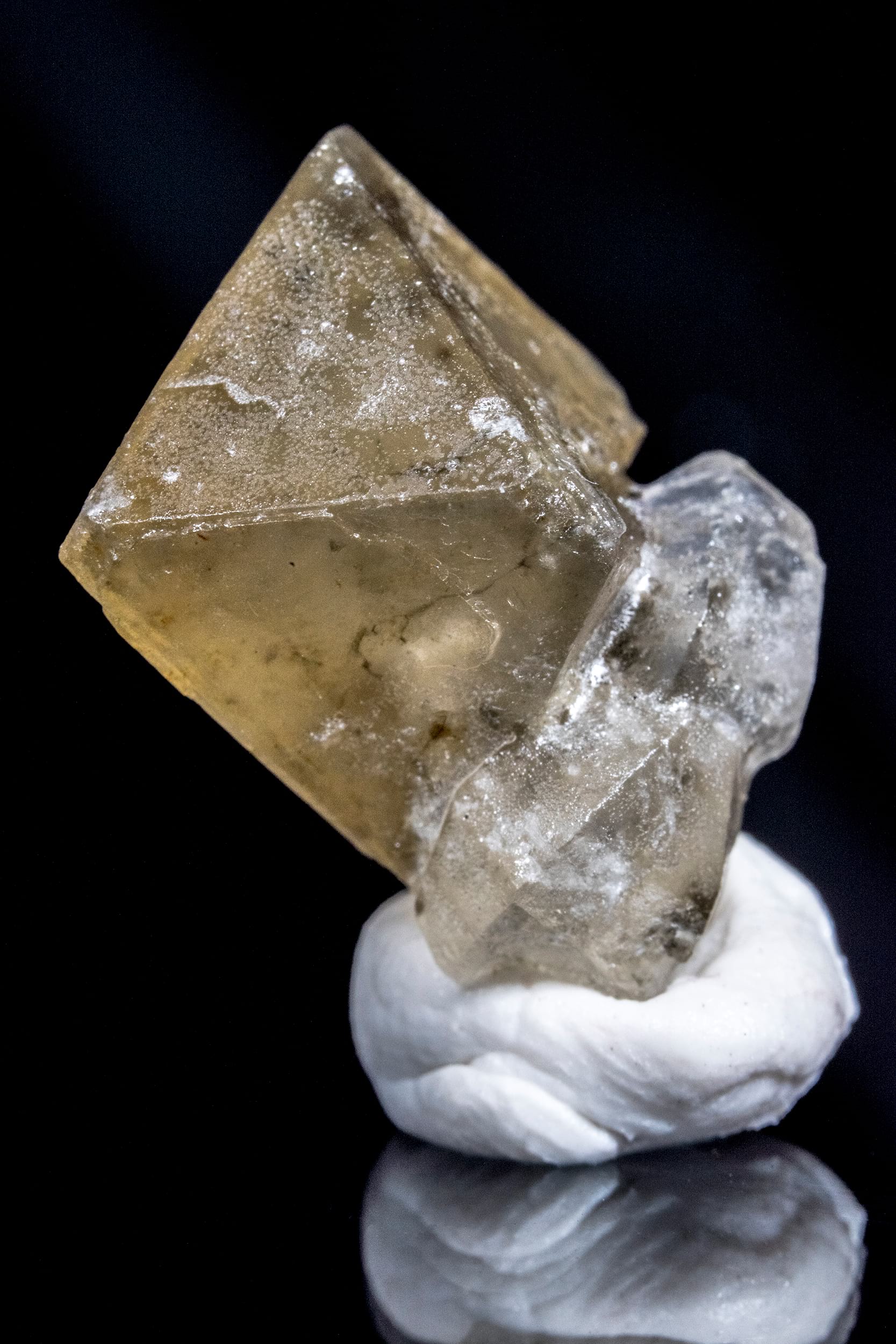

Hanksite on Matrix
My favorite piece from 2017's Searles Lake trip. A classic example of a Searles Lake barrel hanksite on trona with a lot of smaller hanksites surrounding. Surprisingly hard to find pieces on matrix while we were there. Loose crystals aplenty but I love the overall aesthetic of this piece.
Locale: Searles Lake, CA
Weight: 2lb 3.3oz | 1002g
Dimensions (hanksite only): 2.0 x 3.7 x 1.8 in | 52 x 94 x 46 mm
Dimensions (total): 5.7 x 4.3 x 4.2 in | 144 x 109 x 107 mm


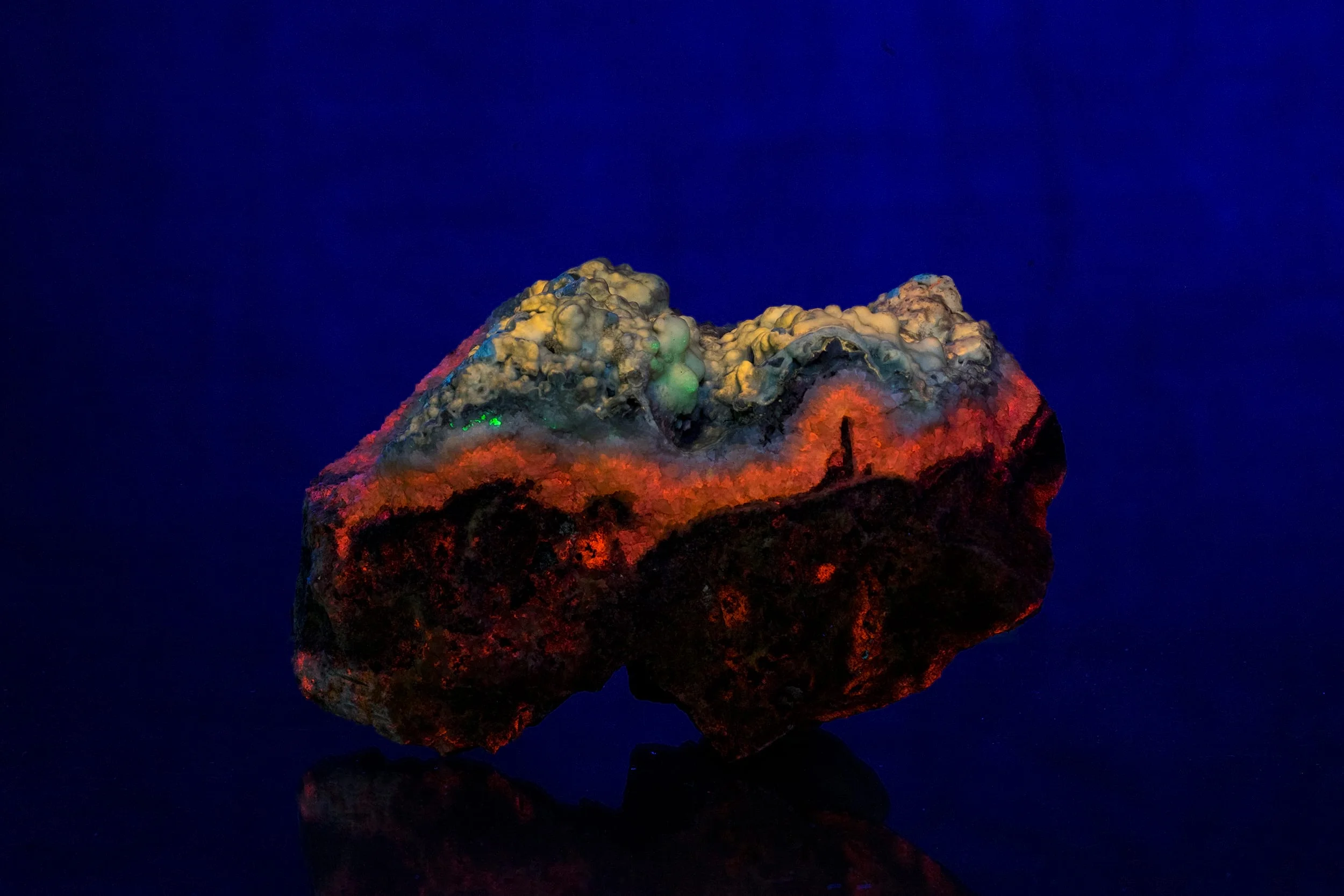
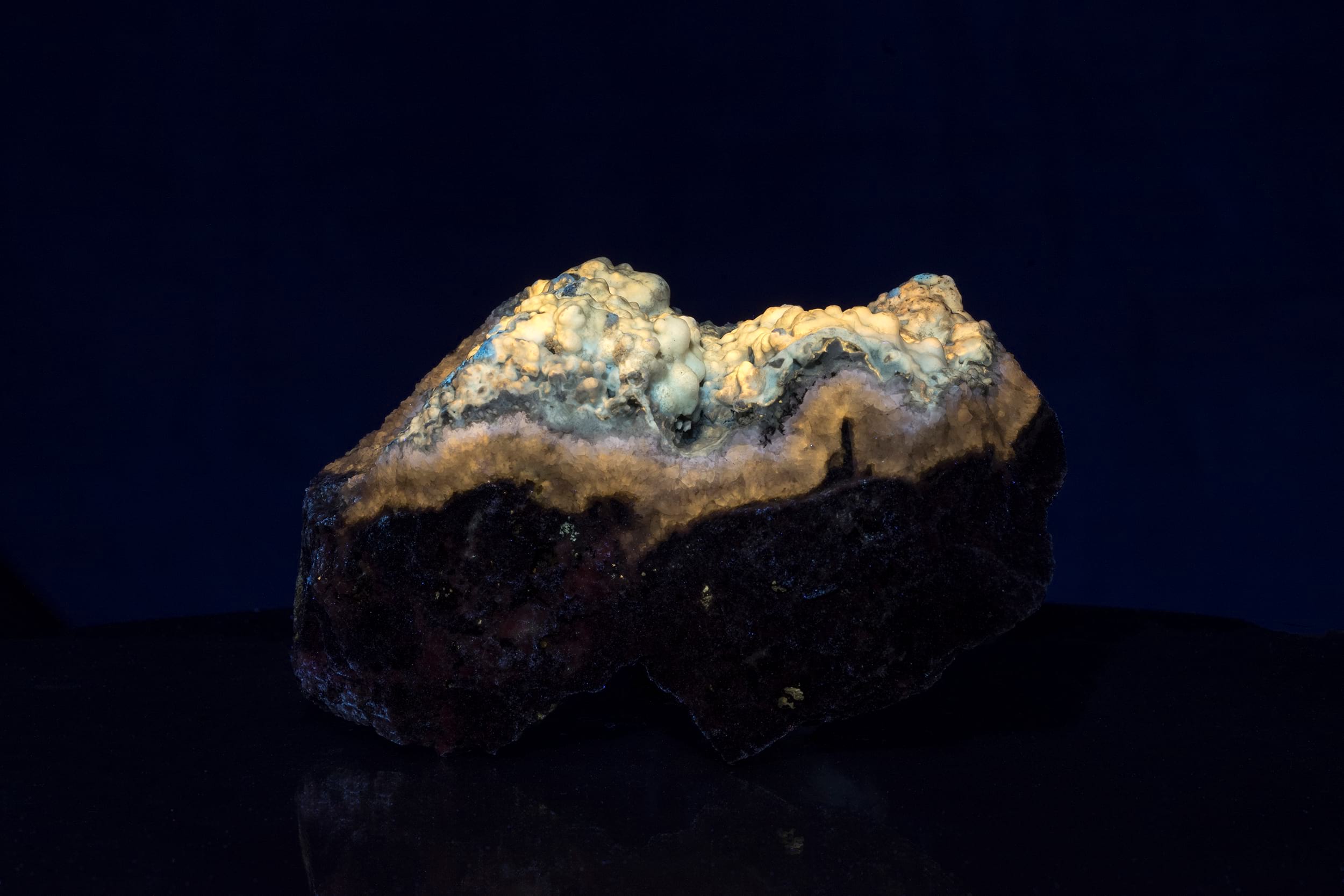
Calcite, Aragonite, Hyalite, Caliche
One of the few pieces of Helvetia that I took home from last year's collecting trip. I absolutely love the multiple generations of calcite that this mine produces. The combination of minerals form a wonderful fluorescent combination.
Calcite - red, orange, white
Aragonite - botryoidal white coated with caliche
Hyalite - Green
Locale: Helvetia, AZ
Weight: 1lb 4.7oz | 586g
Dimensions: 5.1 x 2.1 x 3.0 in | 129 x 52 x 77 mm
Comparing specimens under different UV bands? See the Fullwave UV Light V2’s shortwave, midwave and longwave options.
Calcite, Fluorite
One of the best pieces of calcite, fluorite I had found during 2017's Tucson show. There's always a lot of calcite and fluorites from the area but this one caught my eye. It was the combination of wonderful octahedral fluorites with colorful calcites under my LW light.
Locale: Huanggang Mine, Chifeng City, Inner Mongolia
Weight: 9.3oz | 265g
Dimensions: 3.9 x 3.5 x 1.9 in | 98 x 88 x 47 mm

Color Changing Fluorescence - Fluorite
One of the interesting red fluorescing fluorites that was the subject of last year's Tucson show. Amazing and bright red fluorescing fluorites with a twist! It was something that I had noticed while photographing the specimen. I noticed that it had been going from a bright red to a dimmer shade all the way to purple fluorescence under my 365nm LWOD light. At first I thought it was my imagination but after some further testing it turns out I was right! Luckily this seems to be a repeatable process with the purple eventually going back to the red it originally was. Below is a shot of an in-between transition. Beautiful red fluorescing cubes with purple edges.
Locale: Mapimi, Durango, Mexico
Weight: 3.1oz | 87g
Dimensions: 3.5 x 1.8 x 1.3 in | 90 x 46 x 33 mm

![[ONGOING] Photos from Afghanistan & Pakistan](https://images.squarespace-cdn.com/content/v1/55add304e4b0372eed4367a2/1517514272182-OZ7AZG3IY3RTTZJP2TTL/27048998_363211187475592_1293048903_o.jpg)
[ONGOING] Photos from Afghanistan & Pakistan
2/1/18 More photos/stories from Pitwak mine. Reuploaded broken Vidme
11/16/17 Added video and photos from Skardu, Pakistan
11/14/17 Creation of article with photos of Pitwak Mine, Afghanistan
During my conversations with dealers and miners I usually stumble across videos, pictures, and other miscellaneous things pertaining to the geological, socioeconomical, political, and more. Rather than having them get forgotten about in a long lost chat log I've decided to host them here. All of this information is entirely based off of first hand experiences of the people I speak with.
$42,000 Aquamarine
Weighing 5 kg and standing 1 foot tall. Perfect terminations, shape, and color.
Skardu, Pakistan
According to the person that sent me this video this shows the intersection of three mountain ranges: Hindu Kush, Karakoram, and the Himalayas. It is also en route to the mining that goes on in Skardu.
At about 3:00 into the previous video you can see a truck driver with very elaborate decorations. I almost didn't believe that this was real and sure enough he showed me a National Geographic segment showcasing Lawari Pass and other truck drivers with similar attire. What a cultural difference!
Some other miscellaneous videos showcasing the beauty of the area.
Pitwak Mine
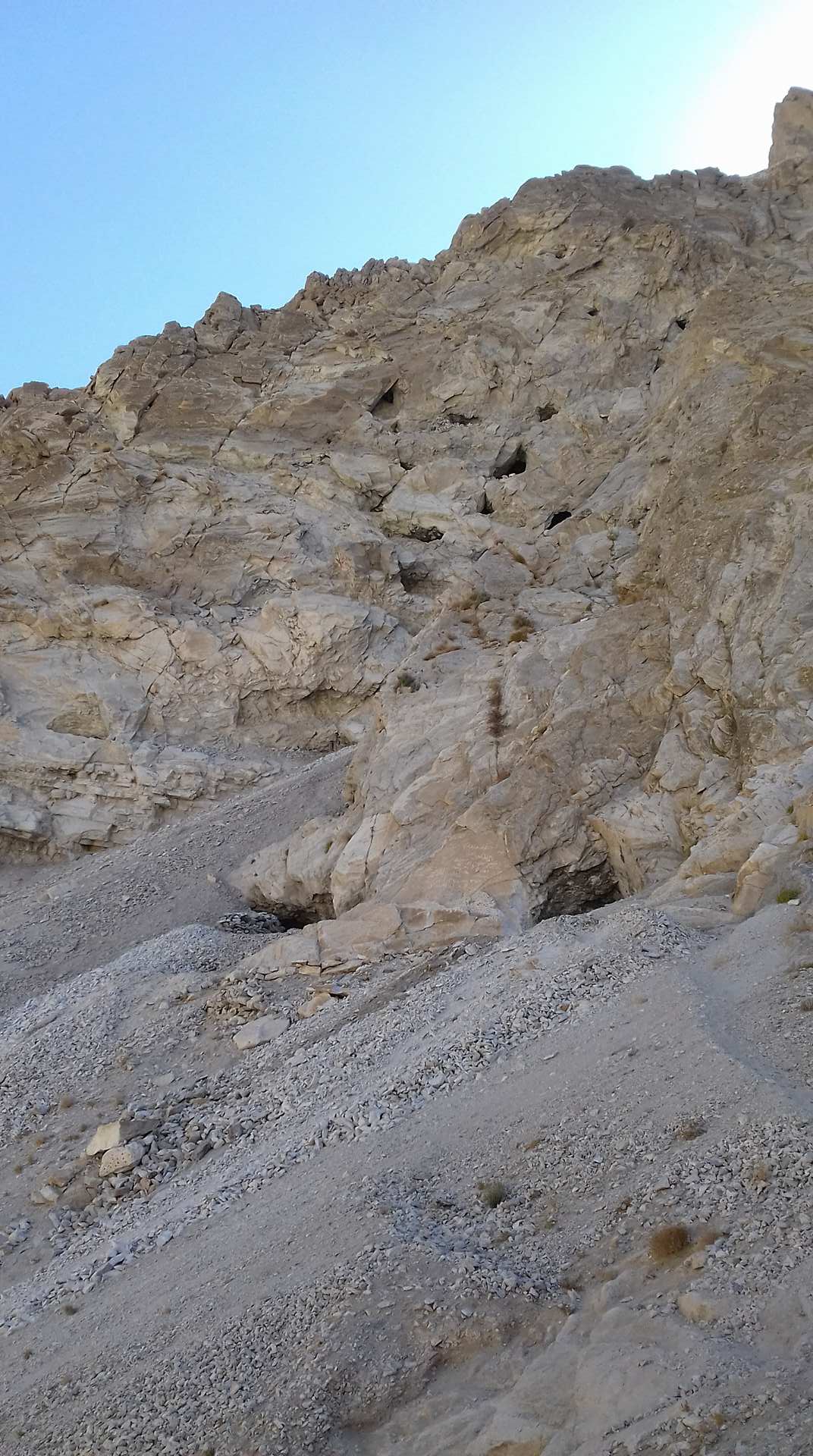
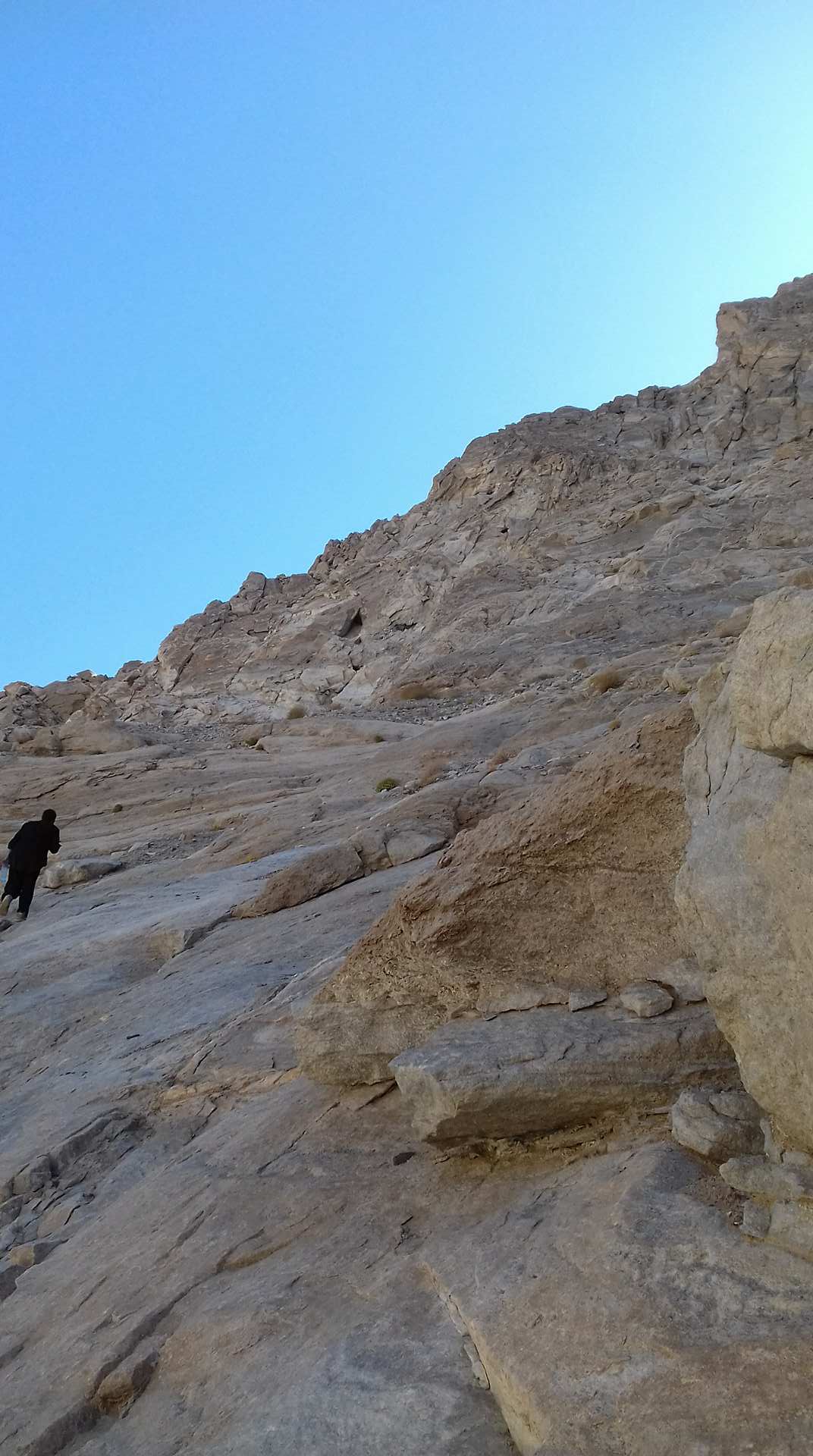
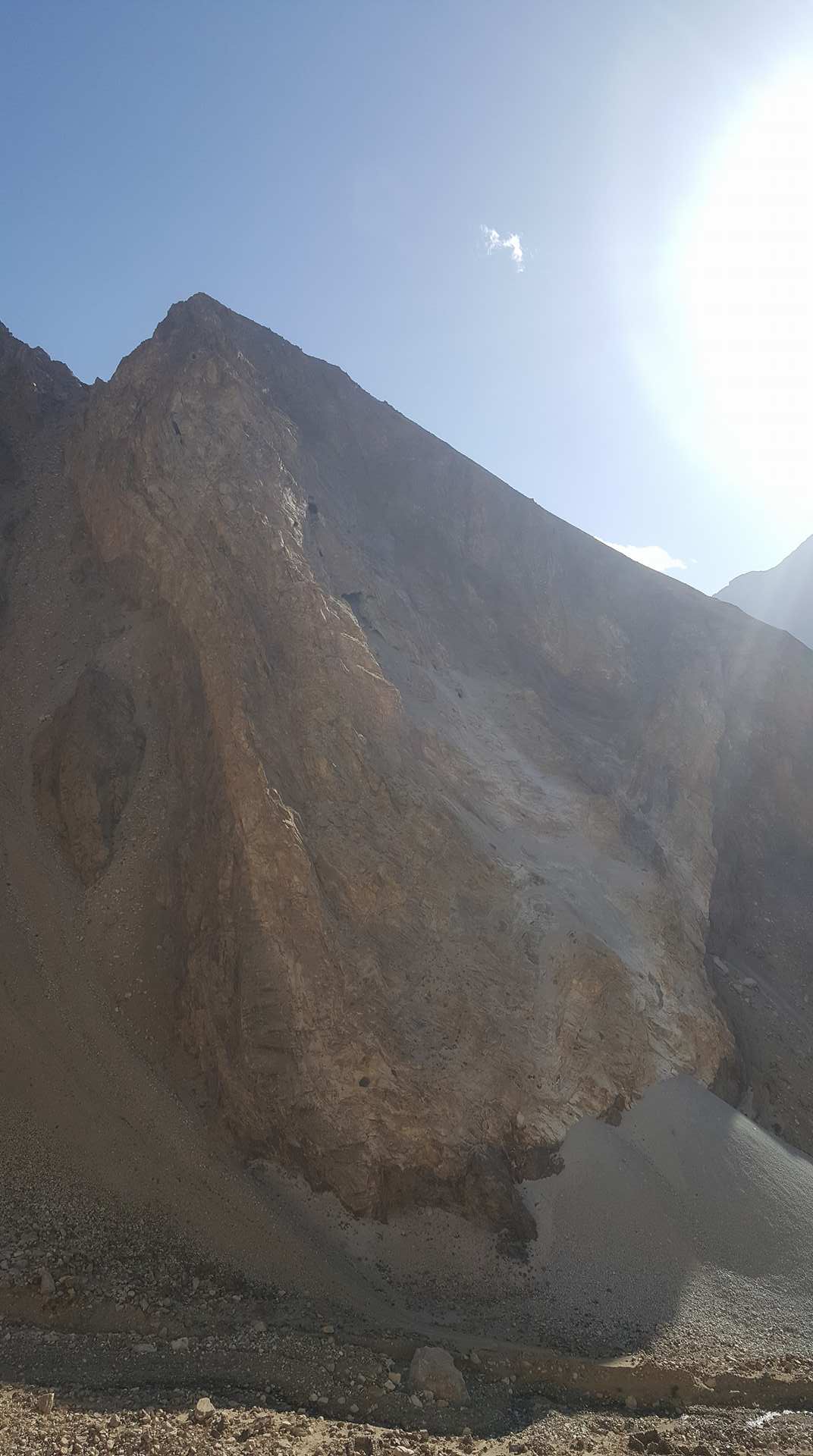
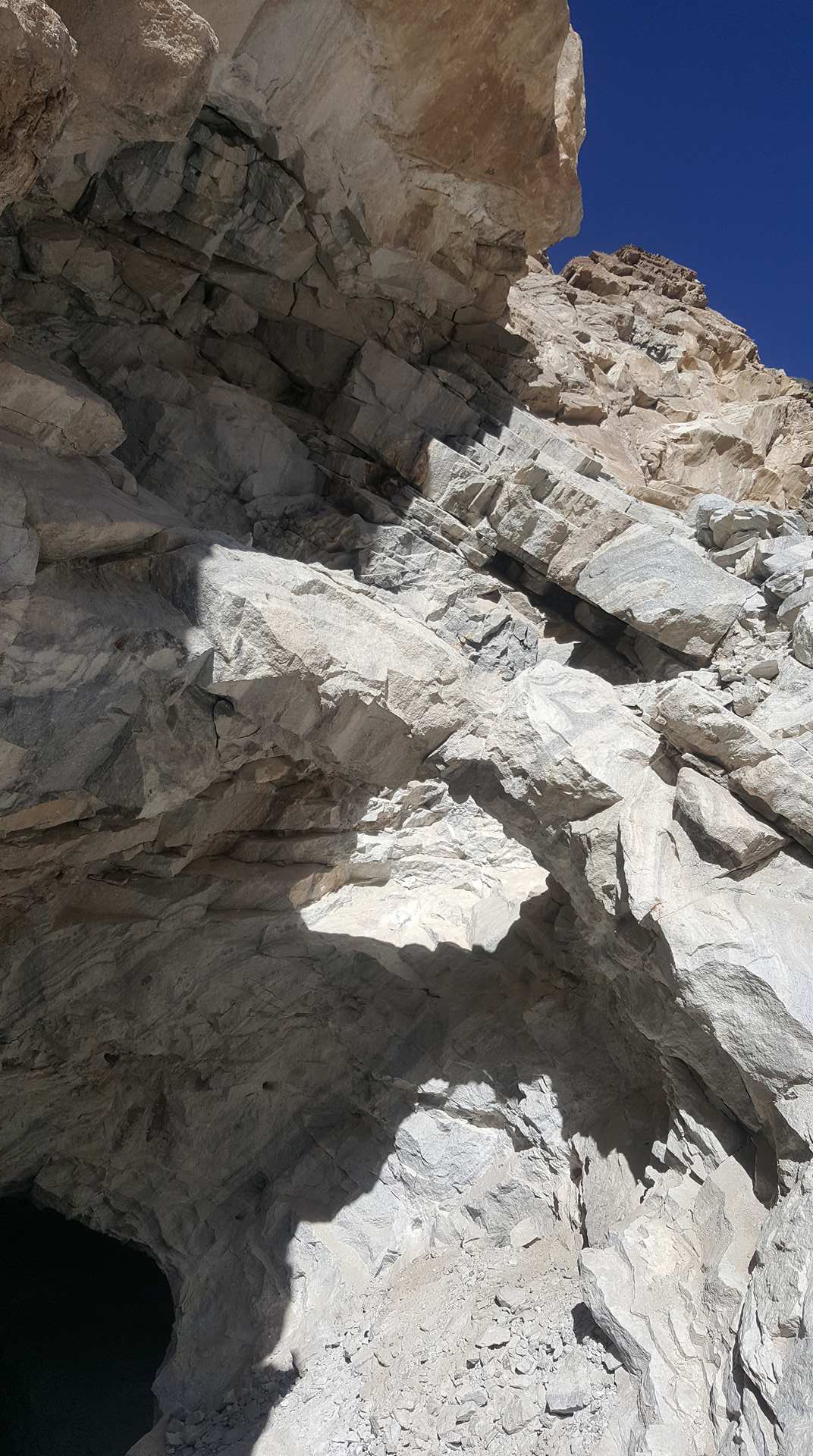
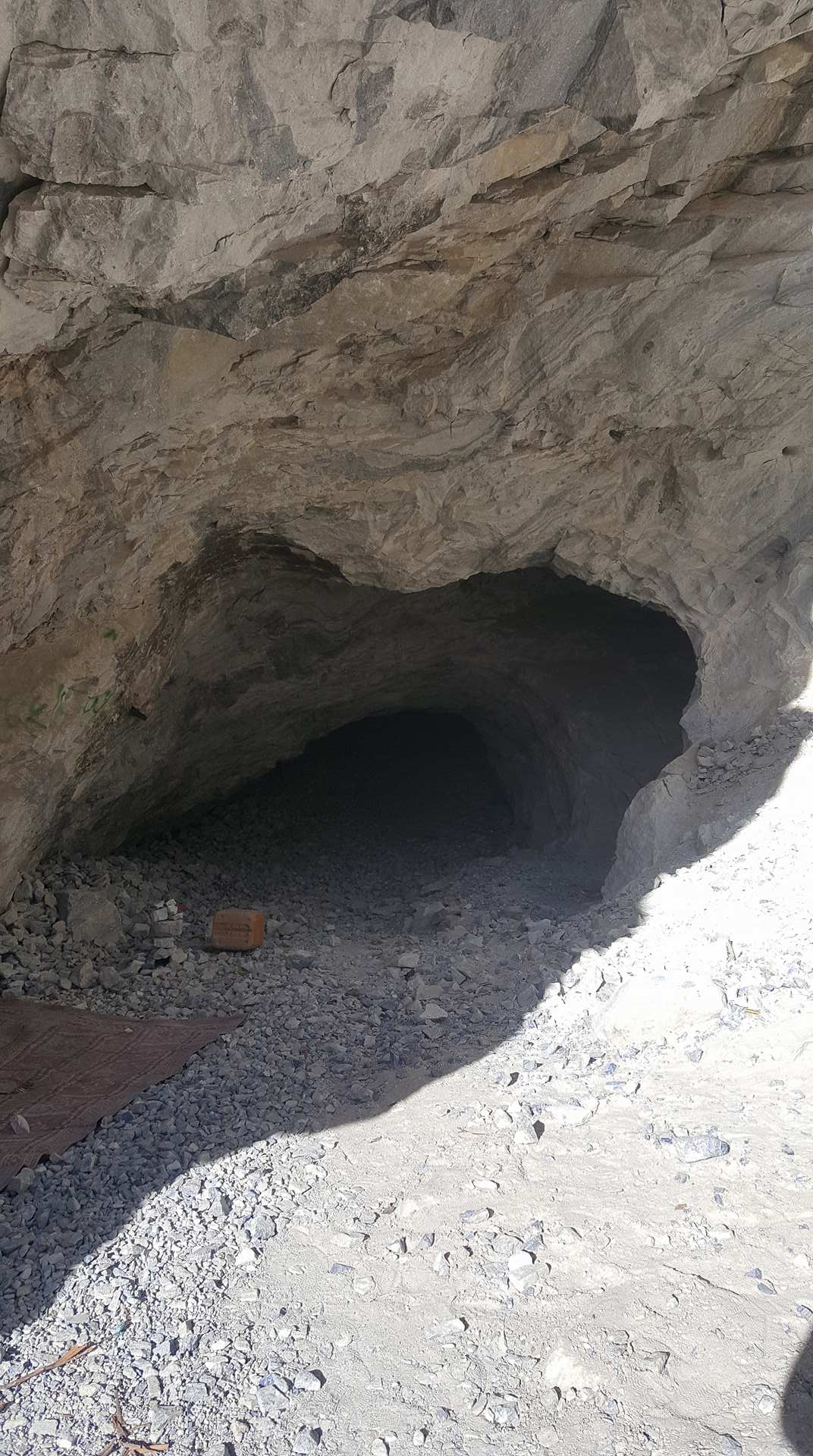
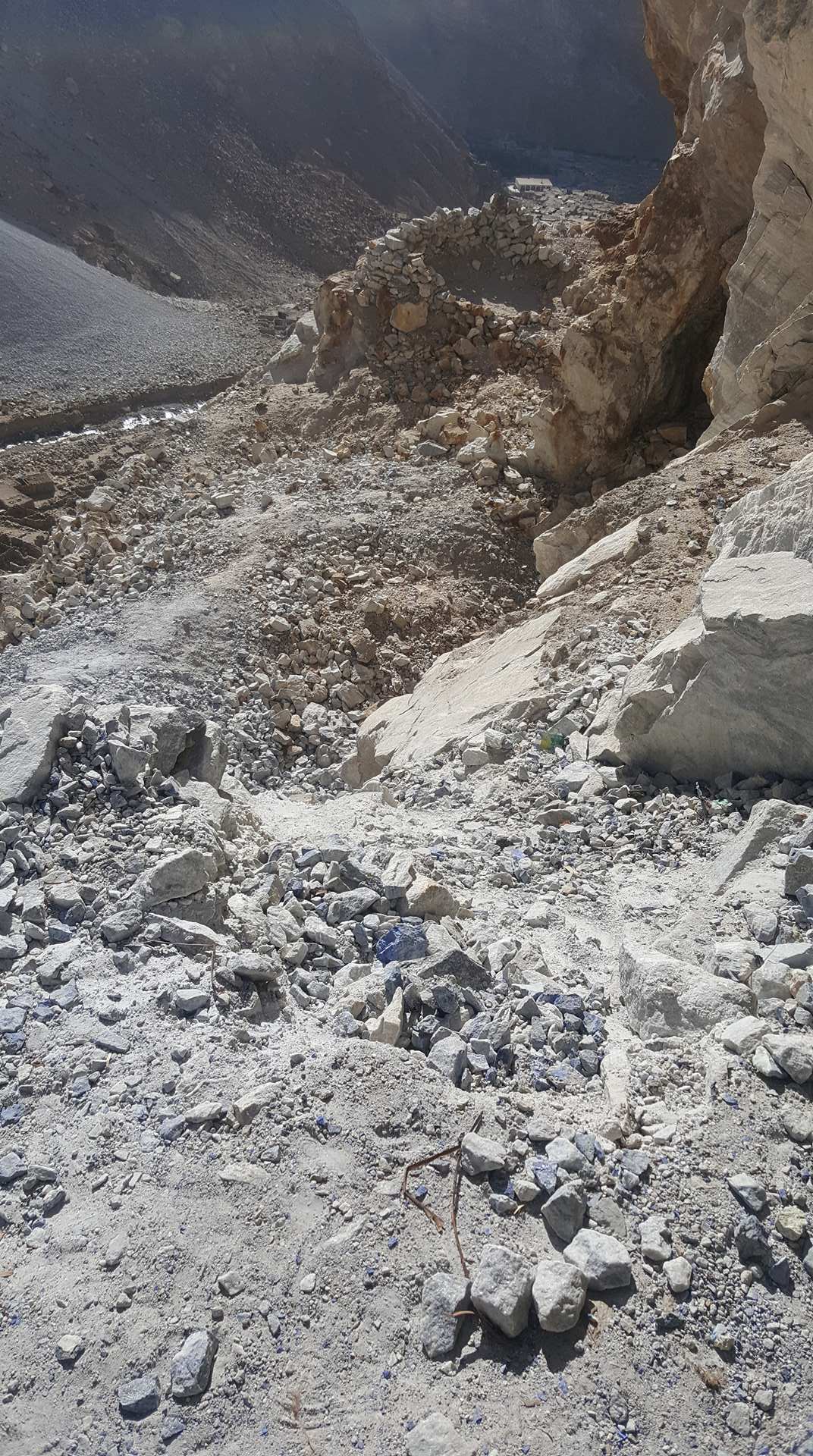
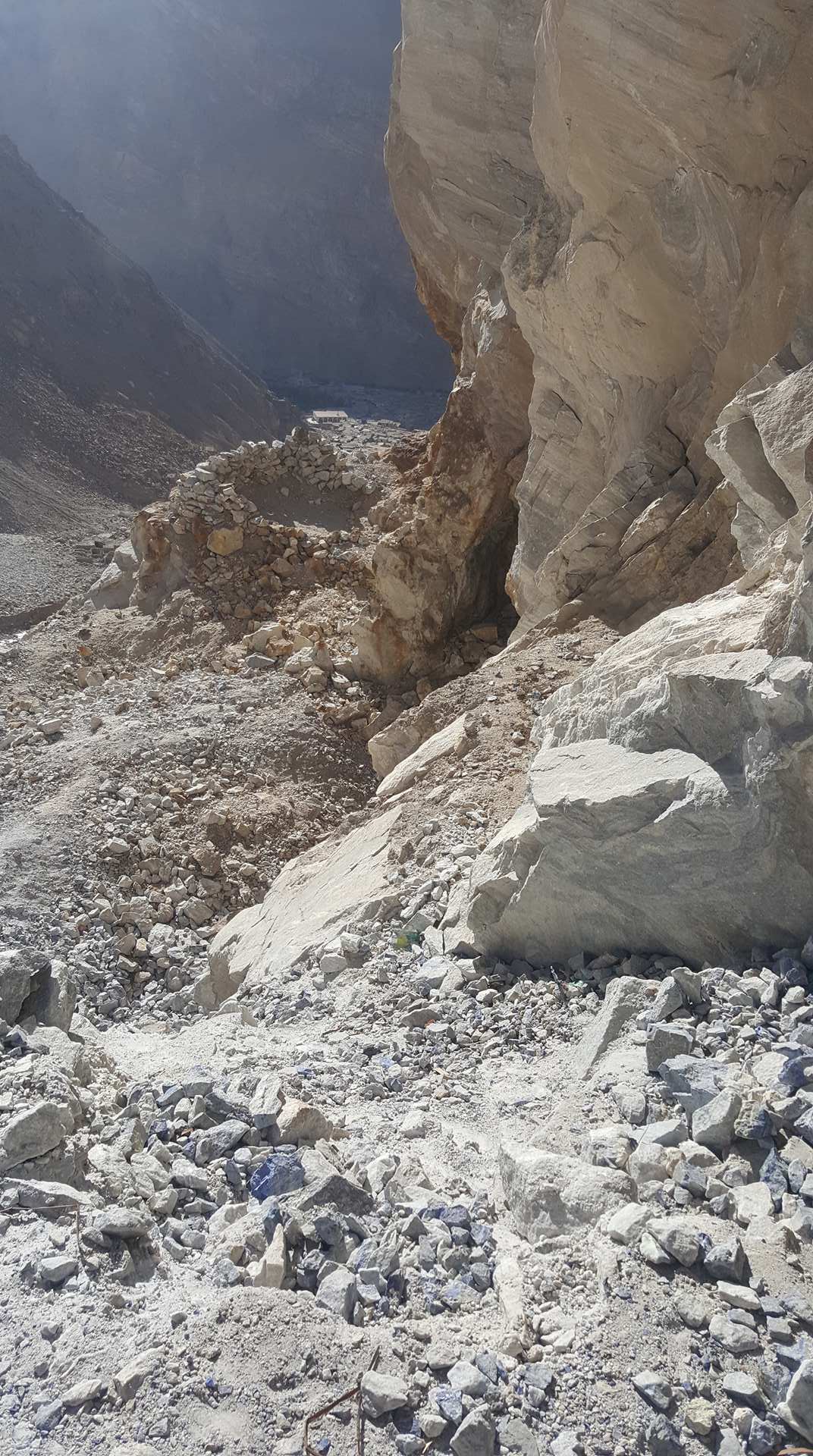
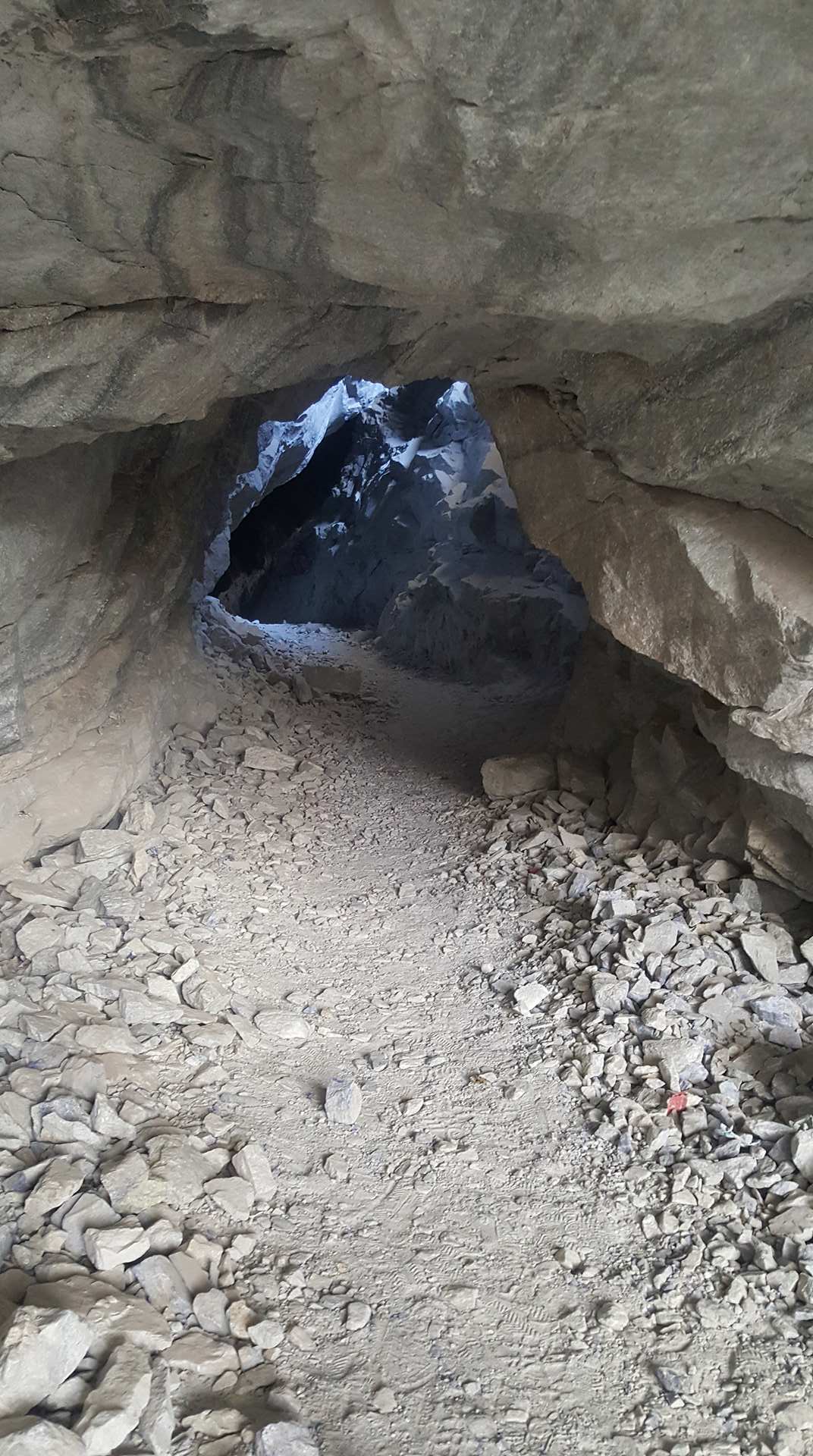

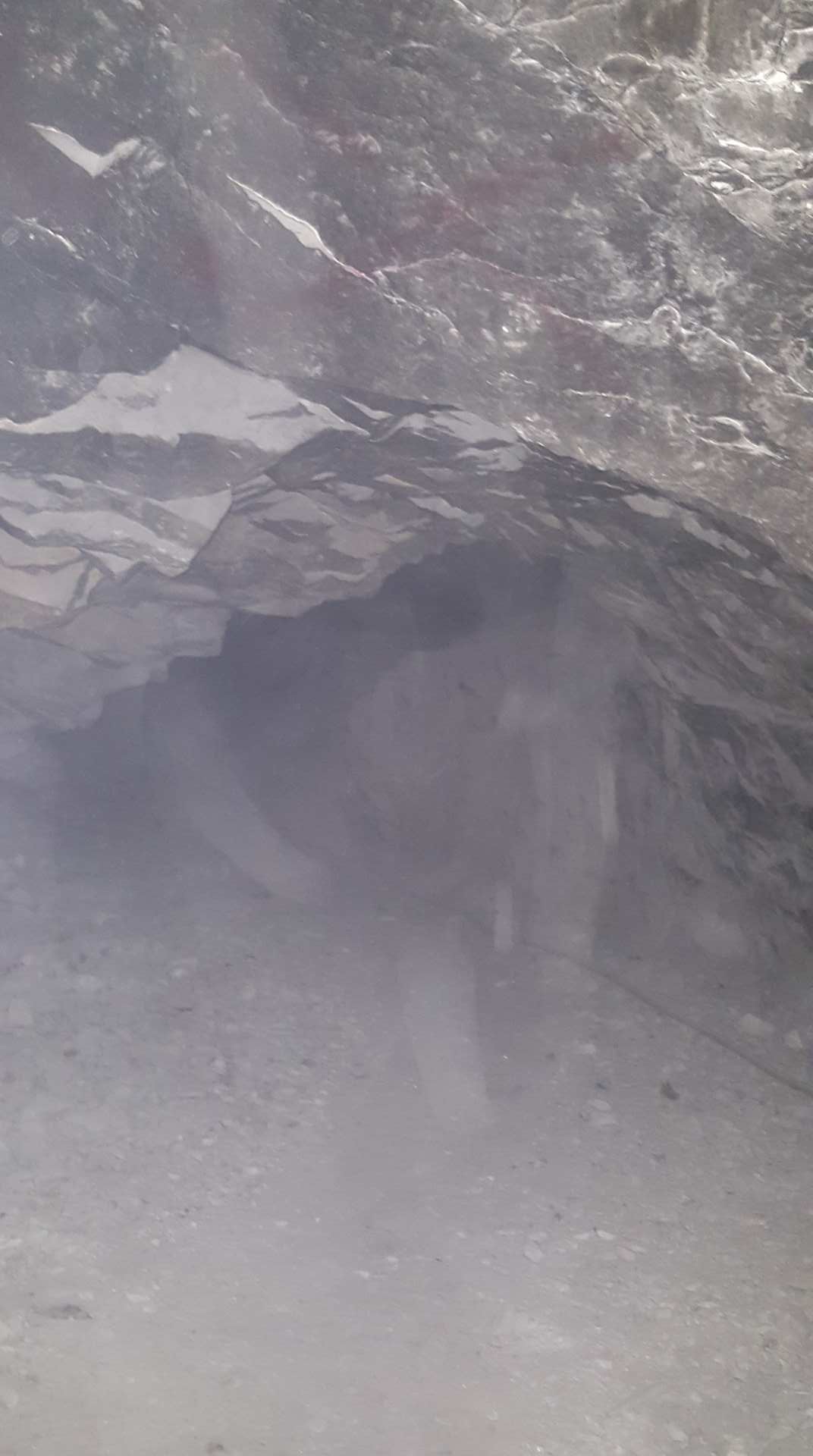
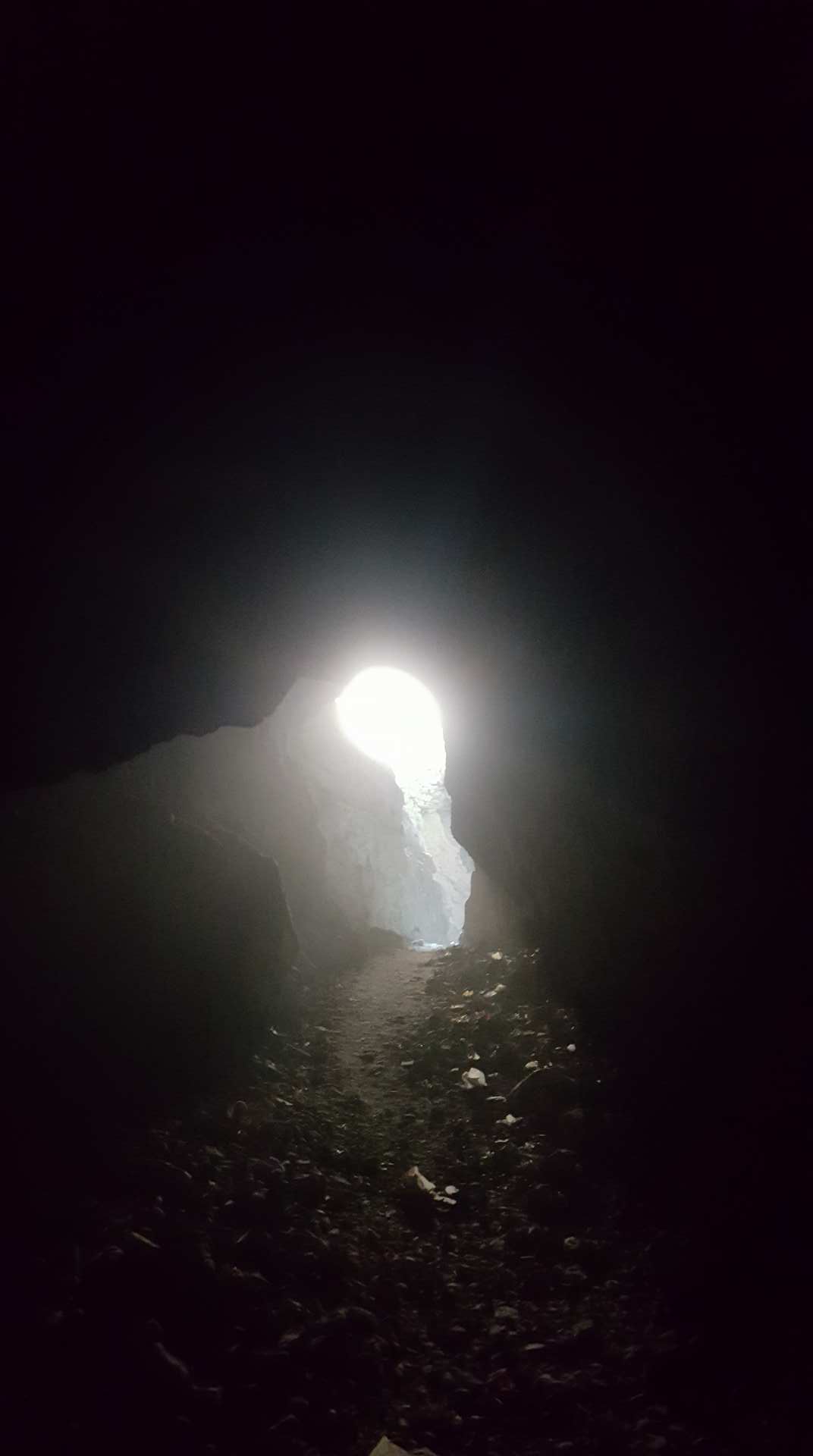
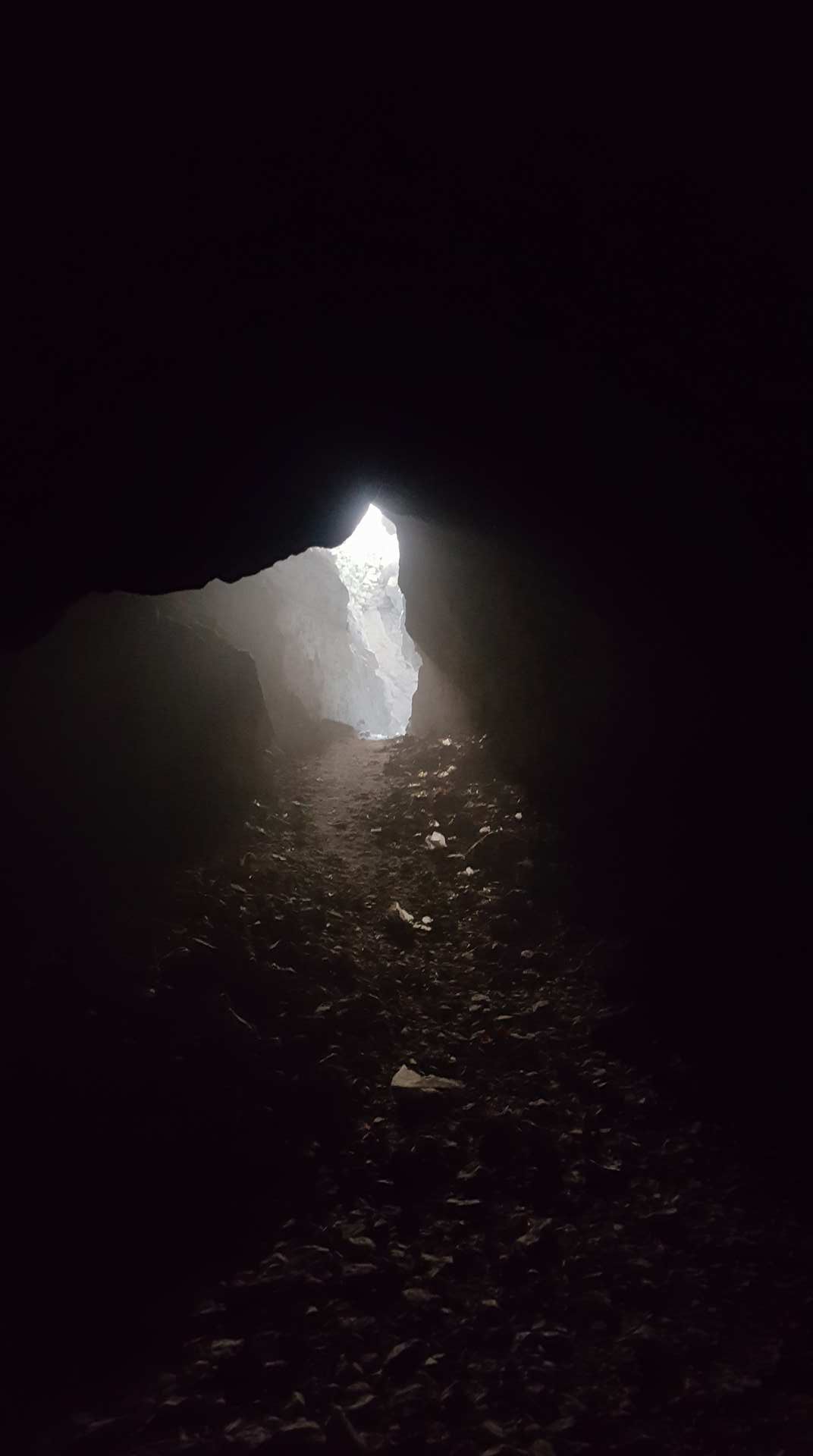
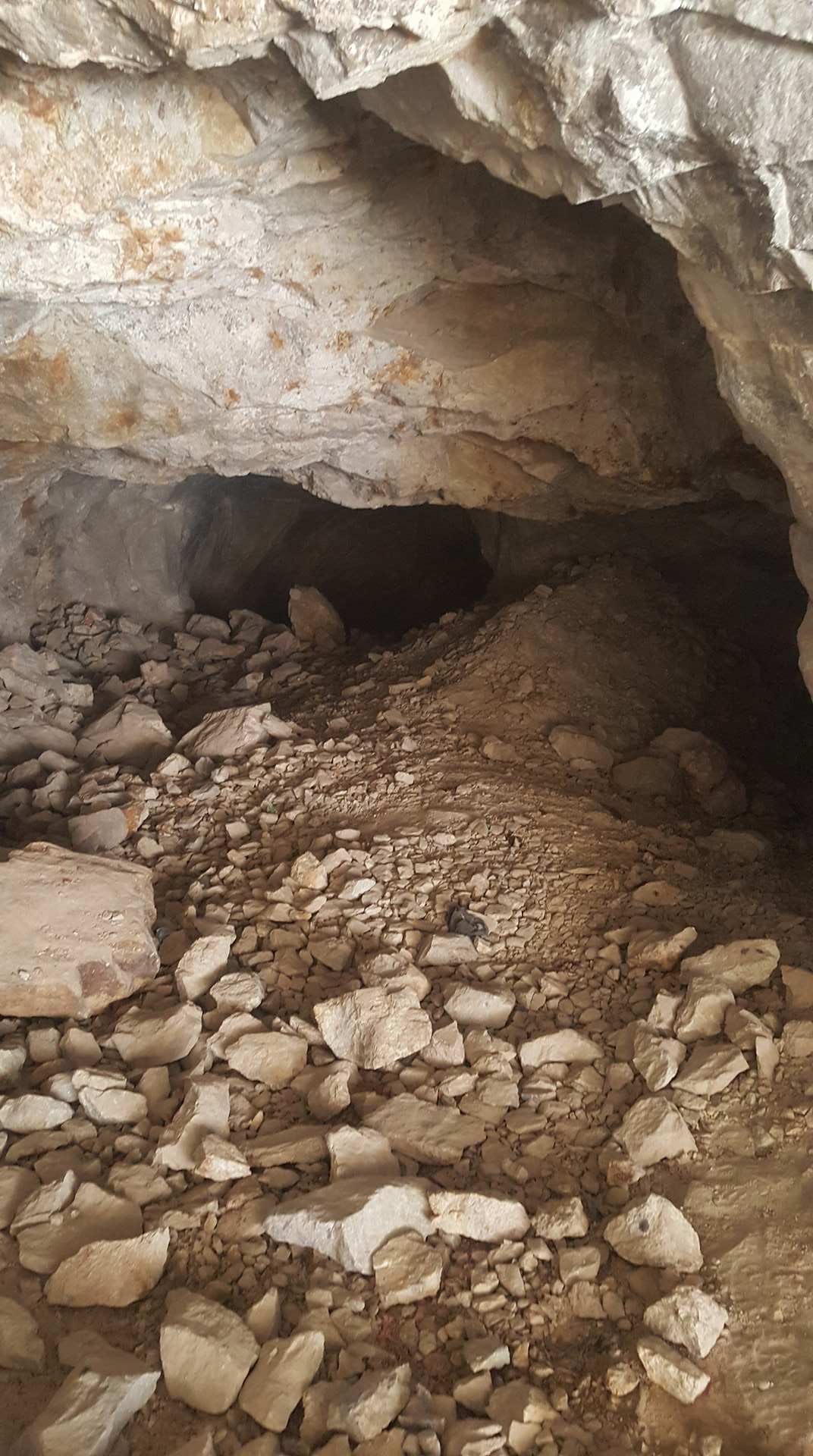
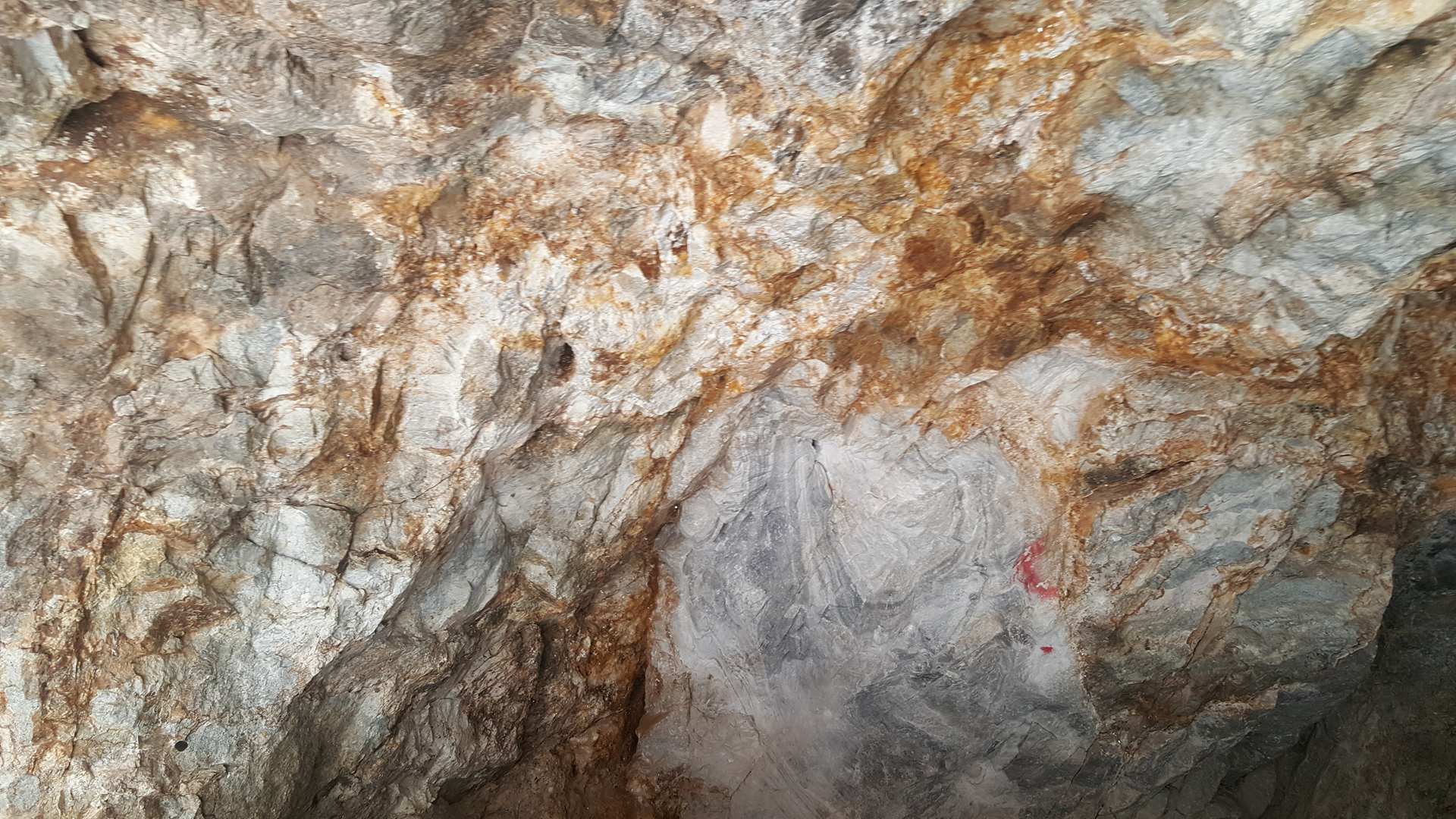
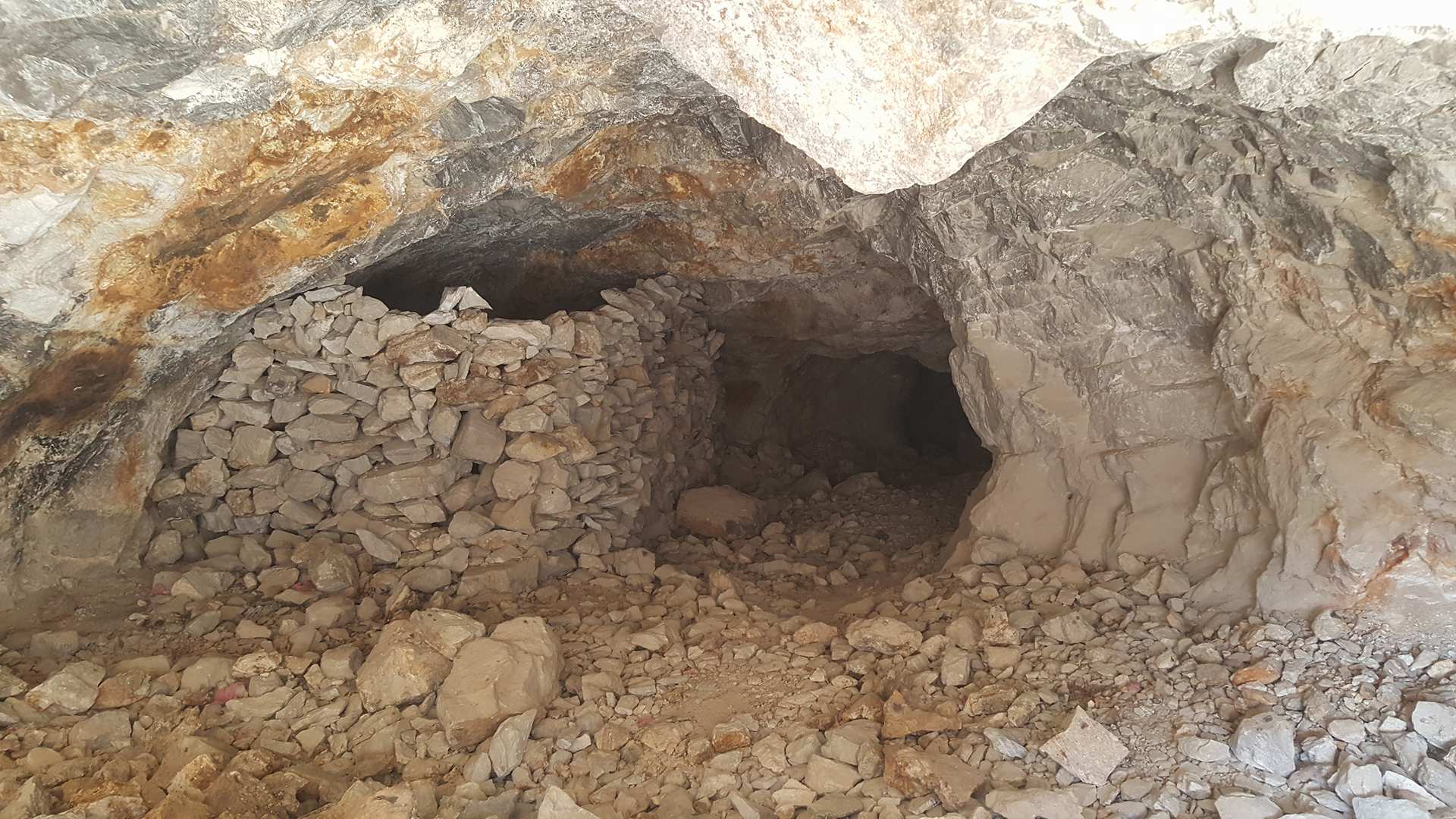
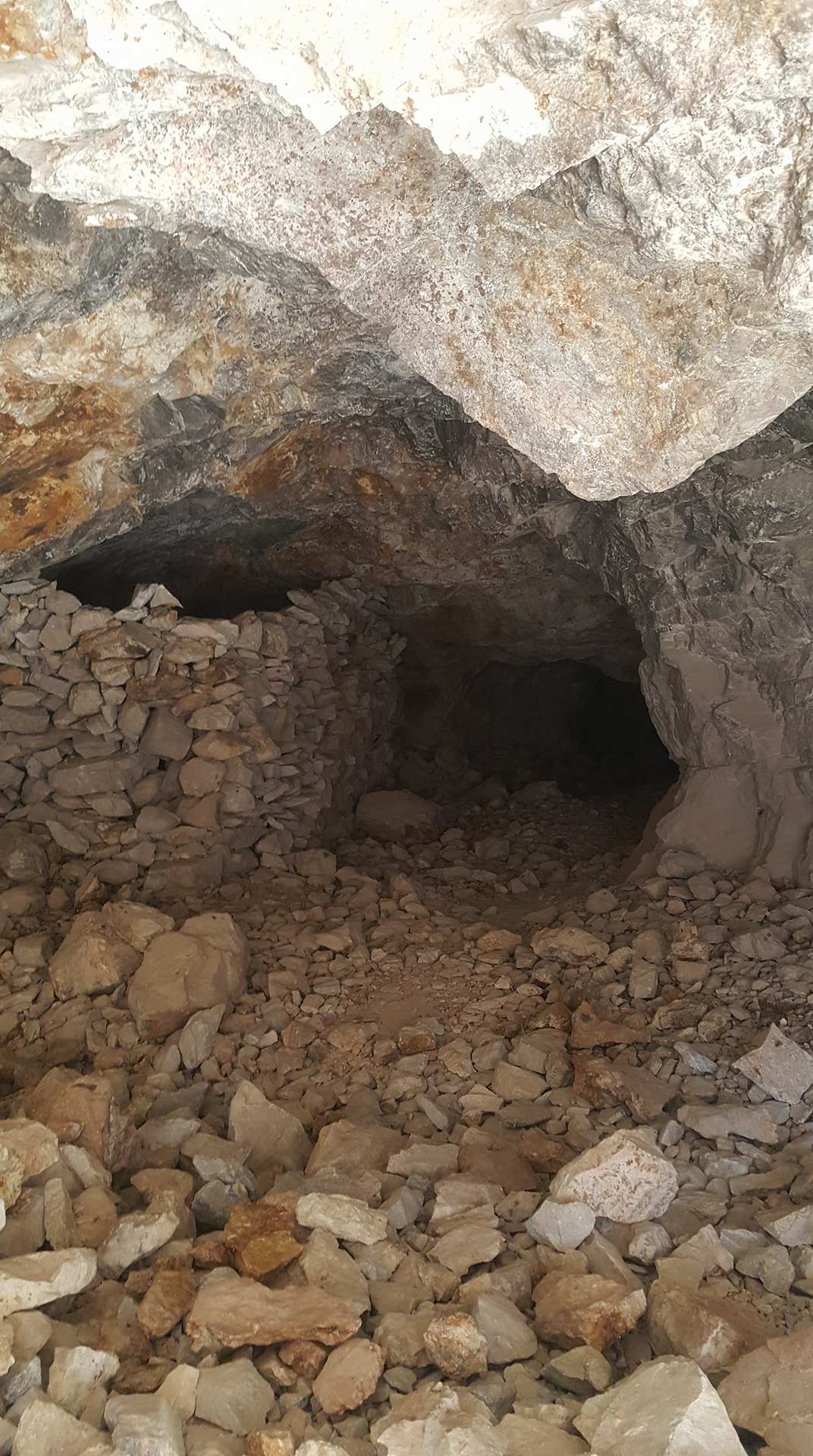
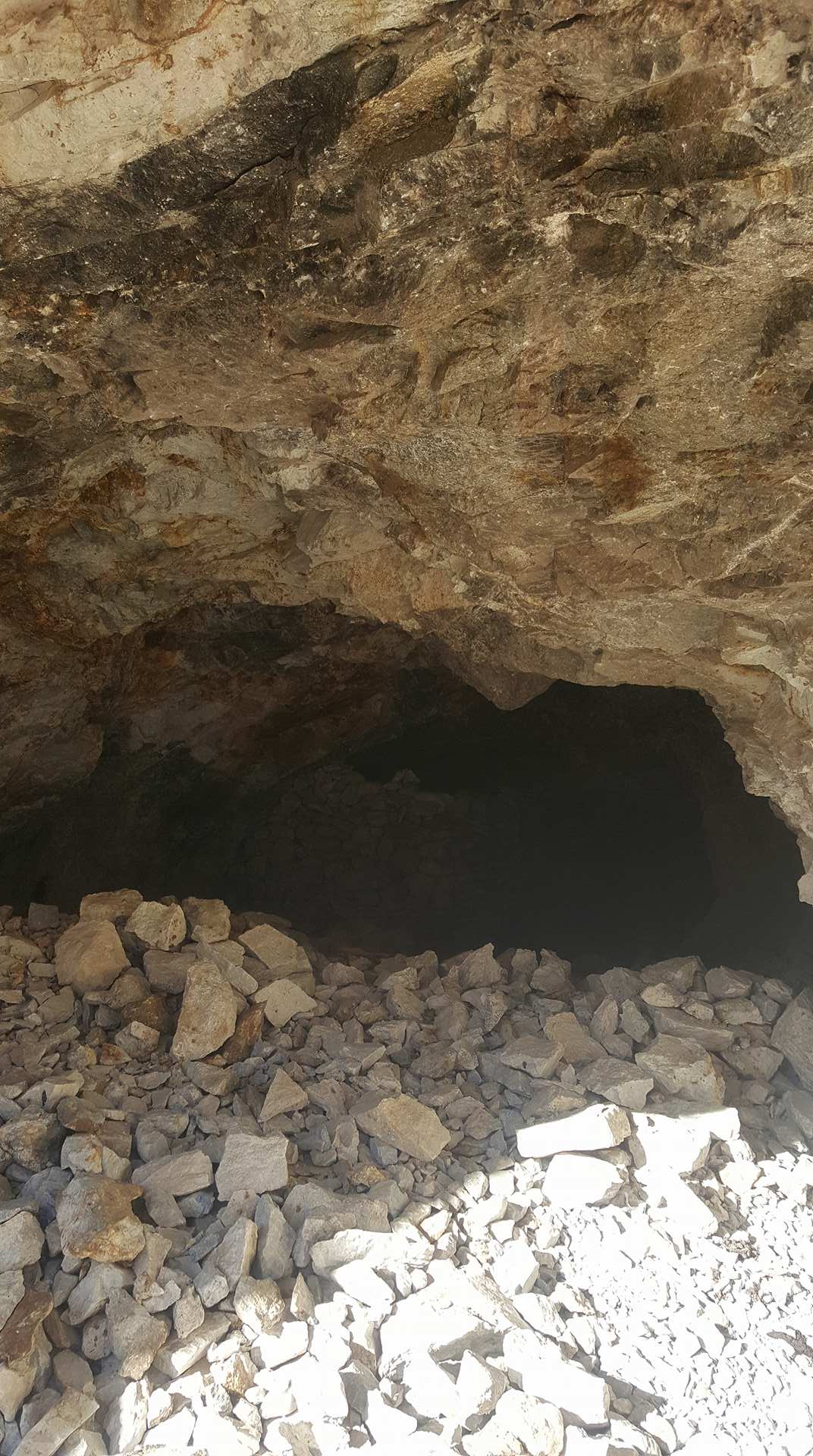
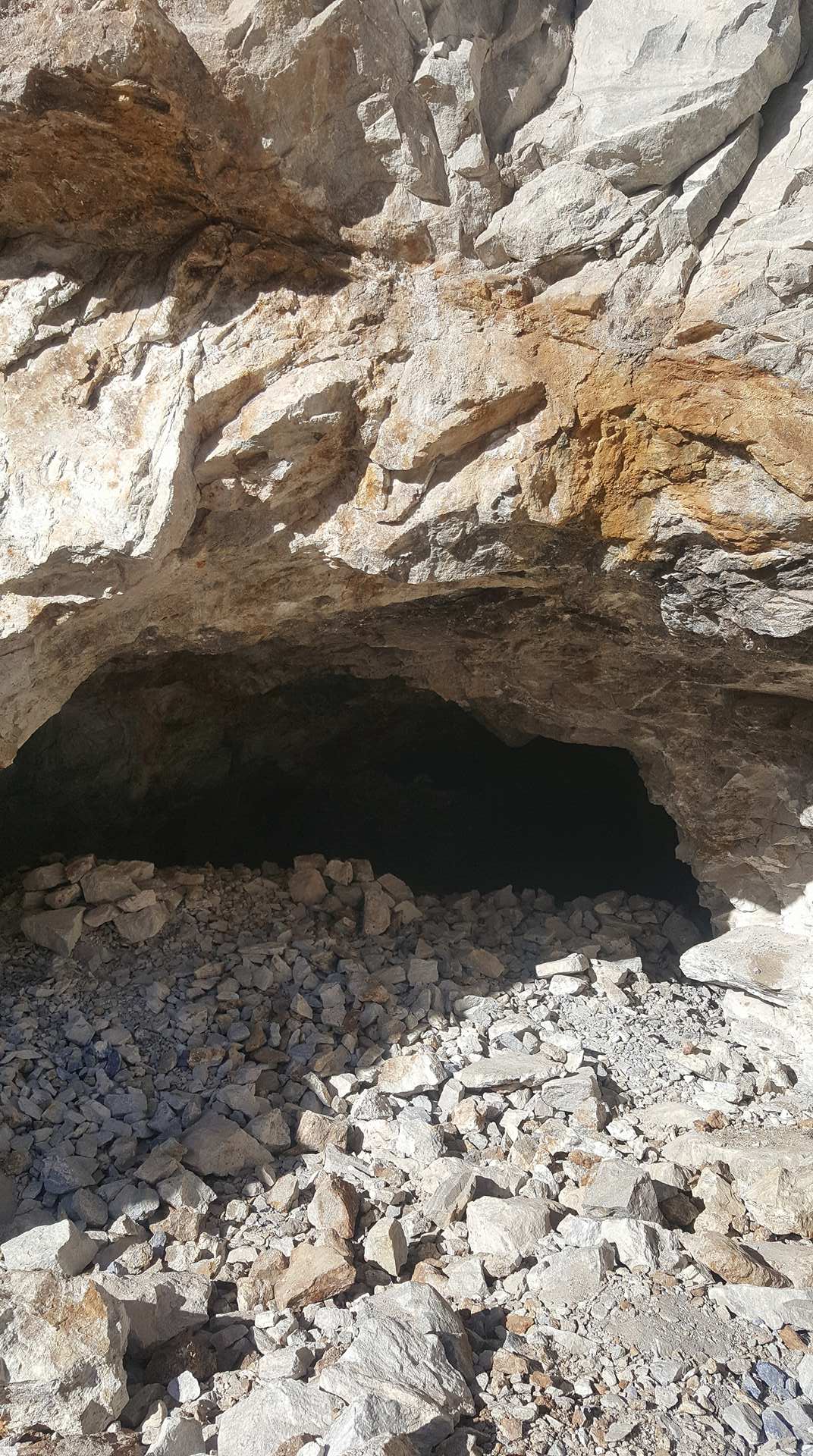
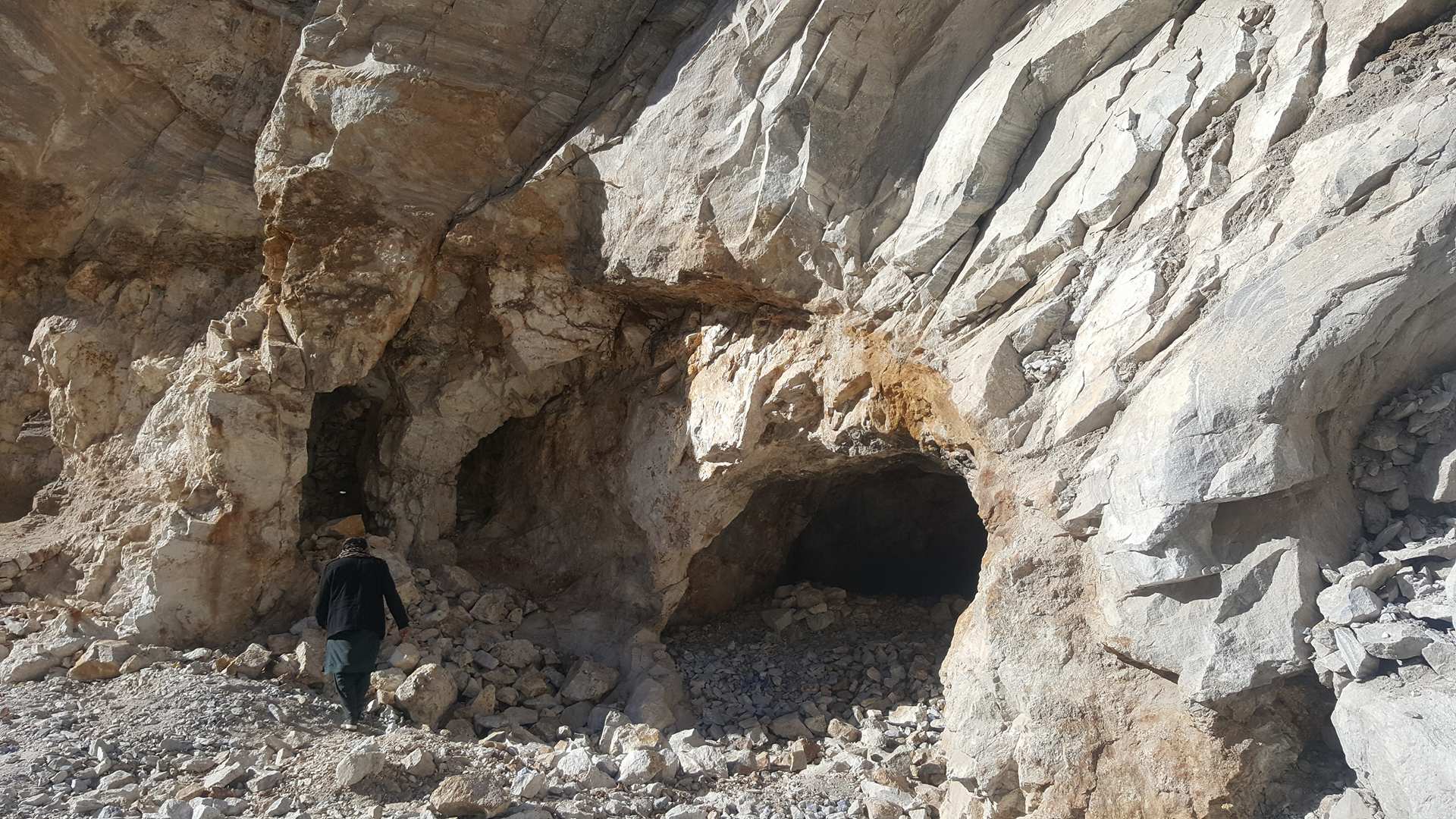
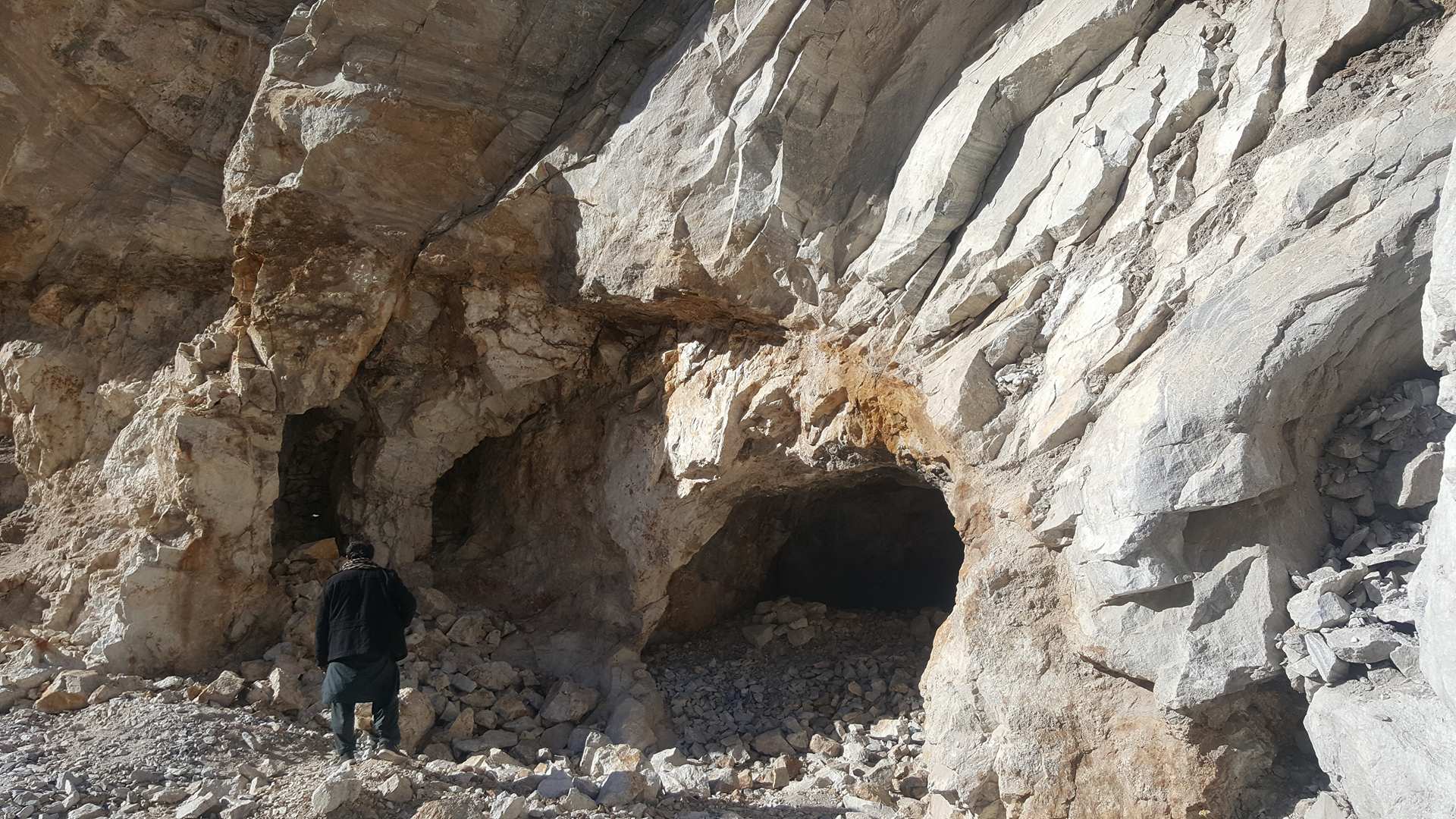
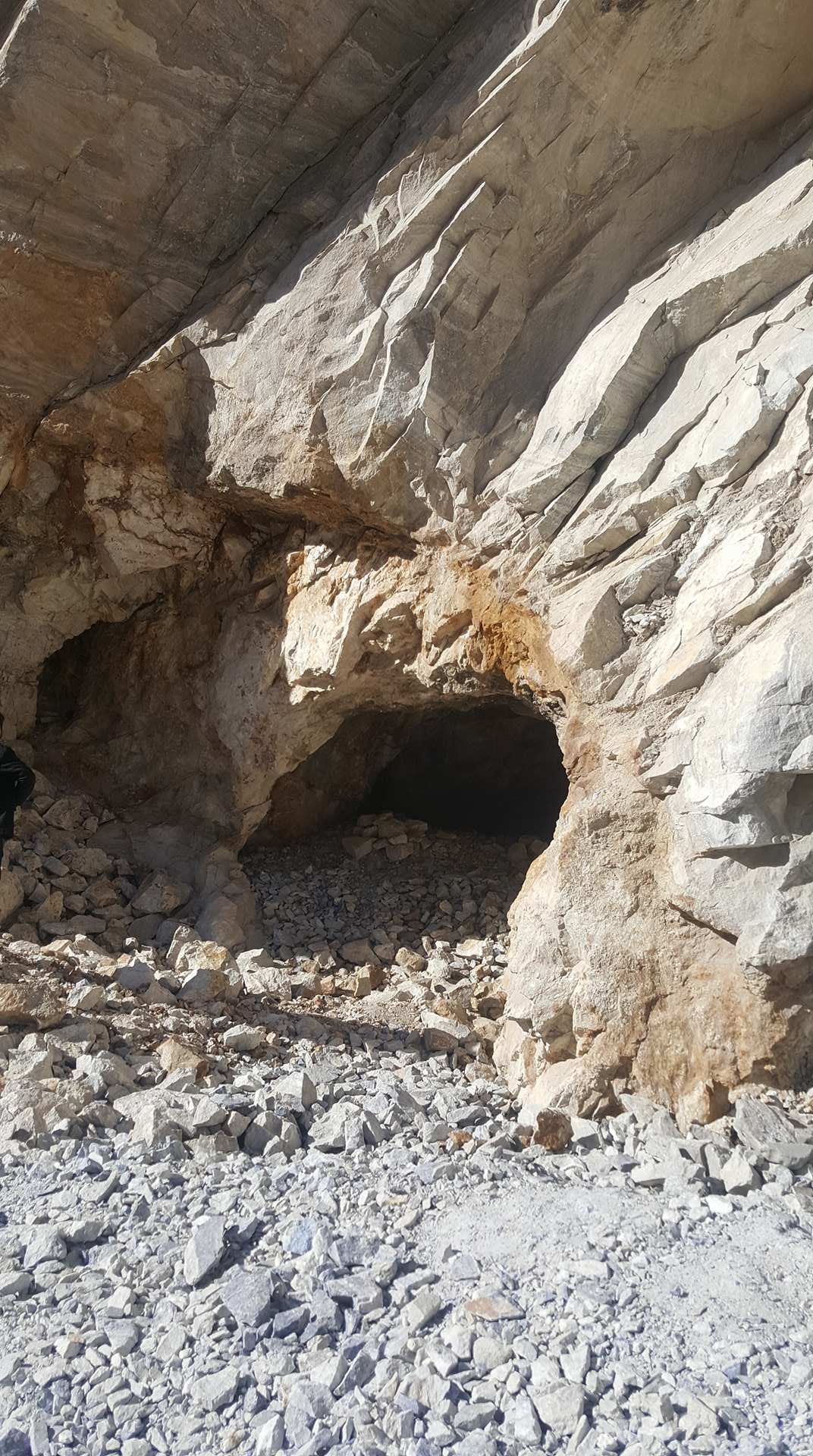
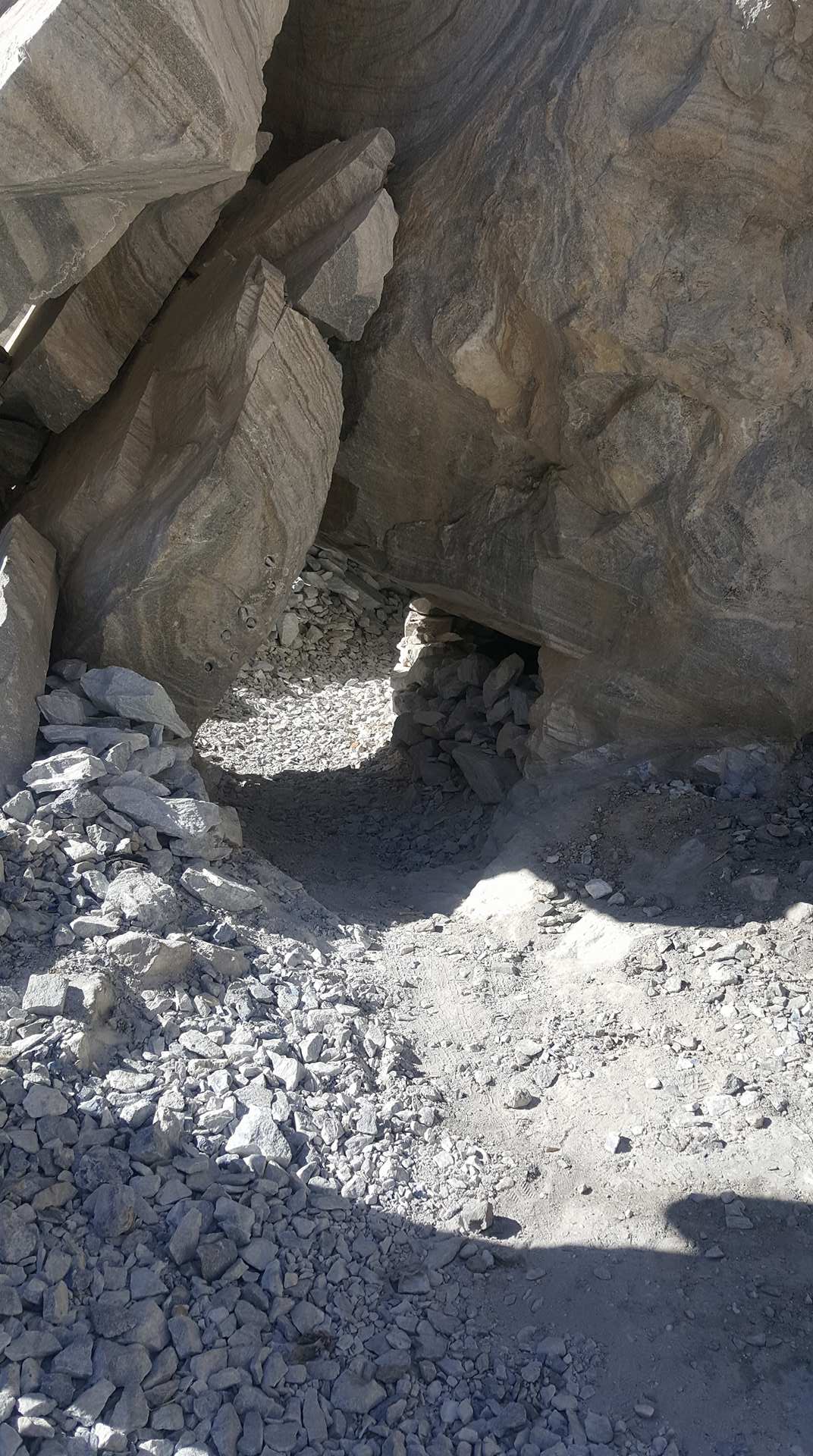
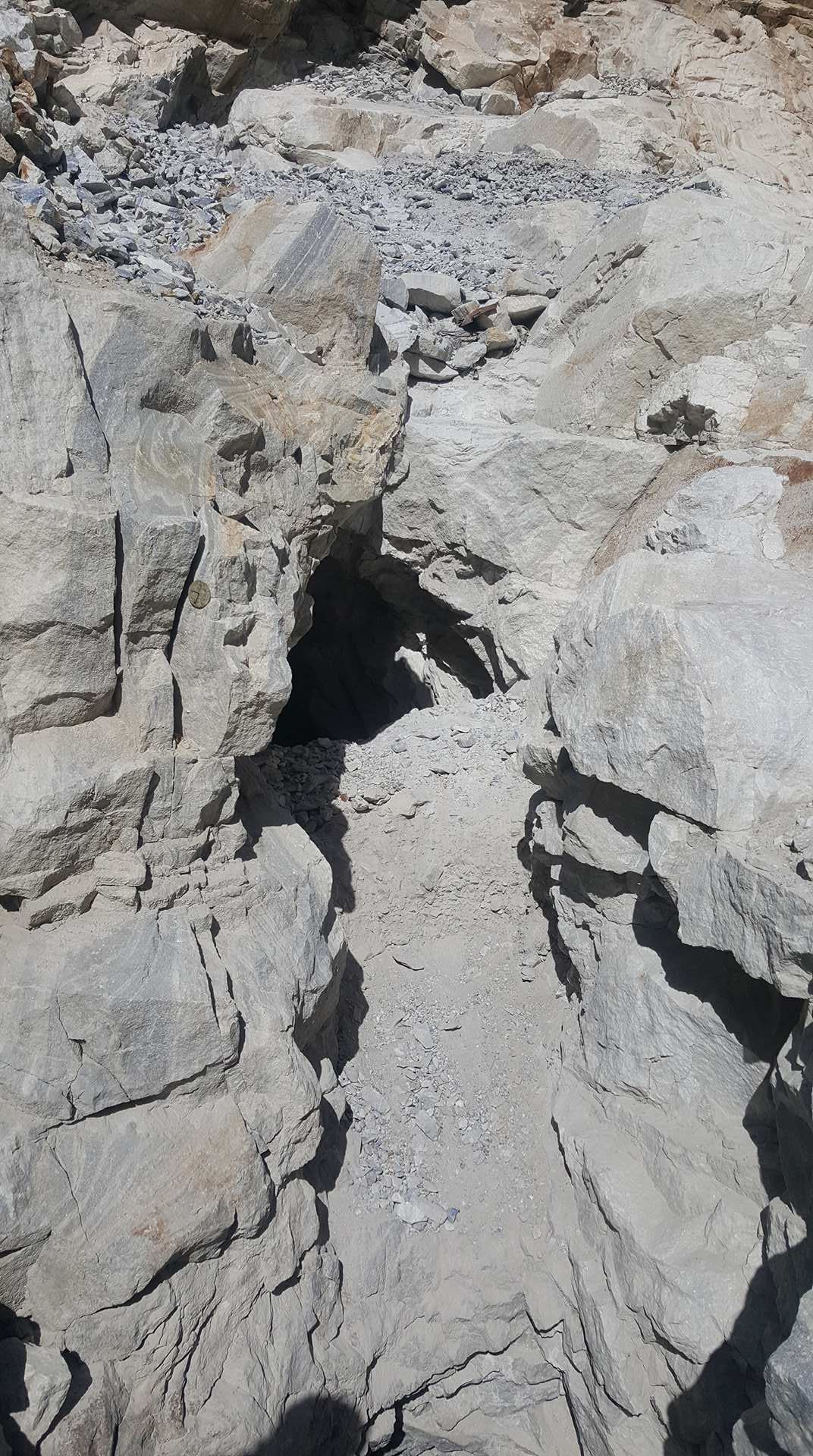
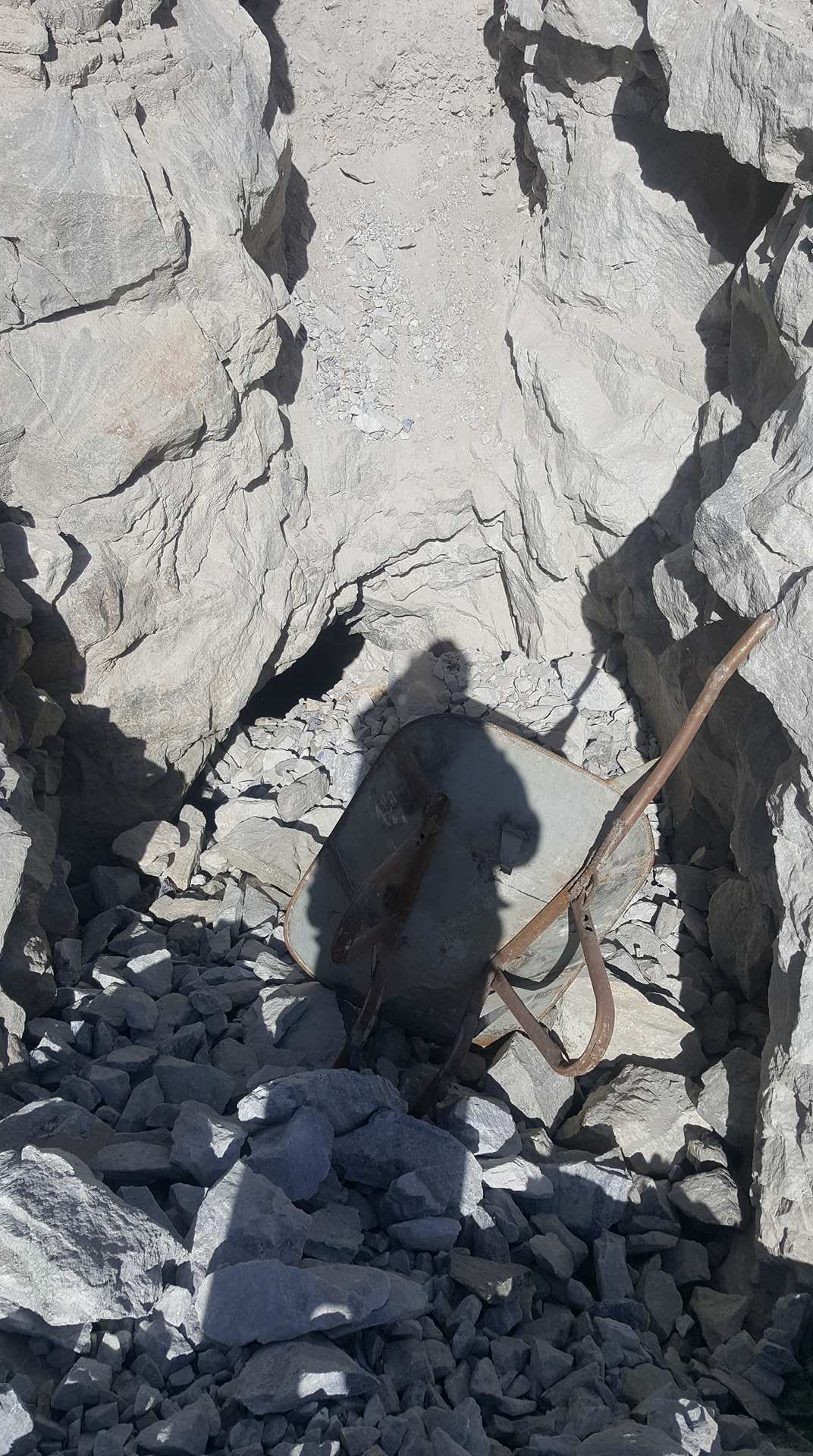
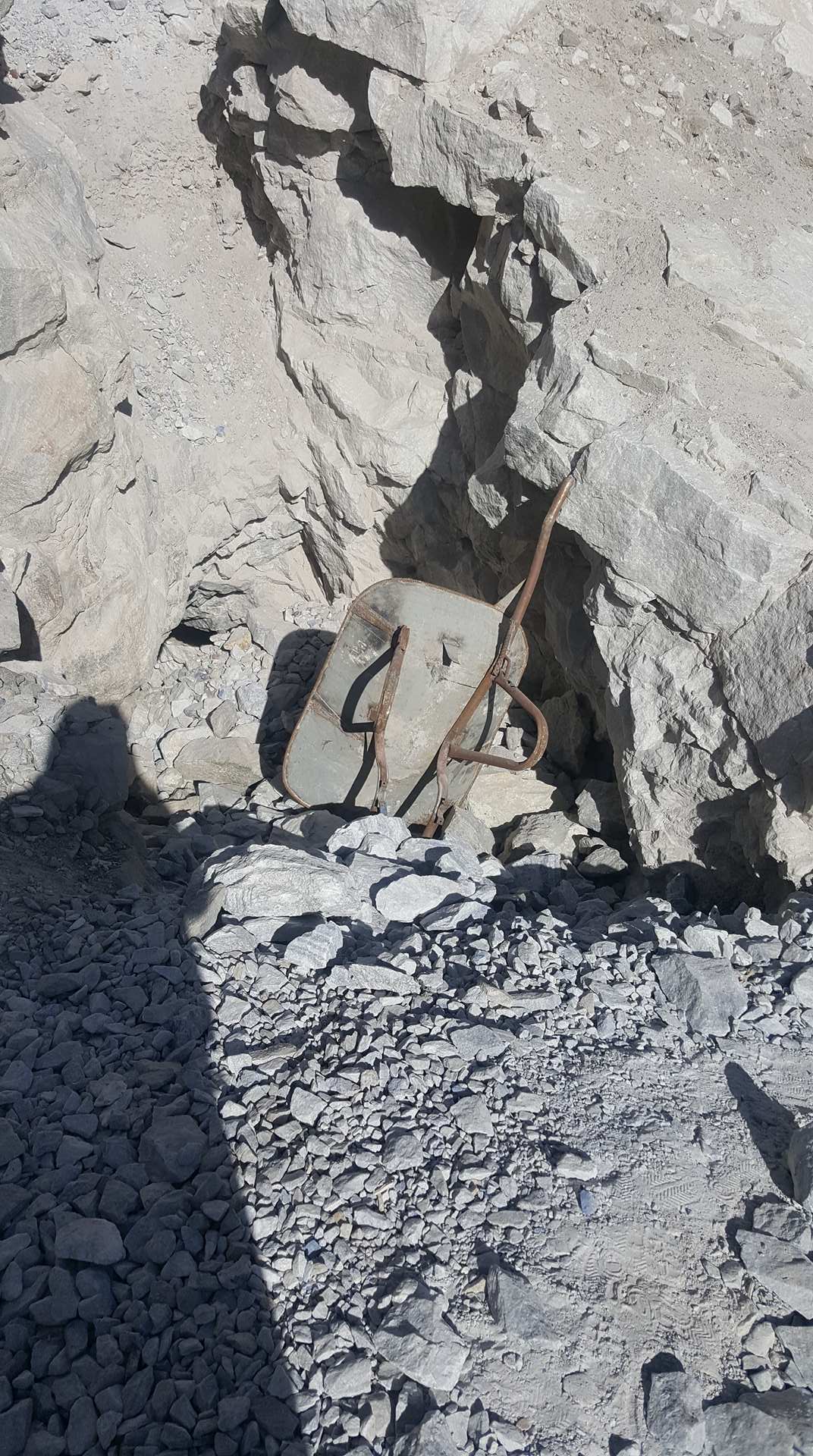
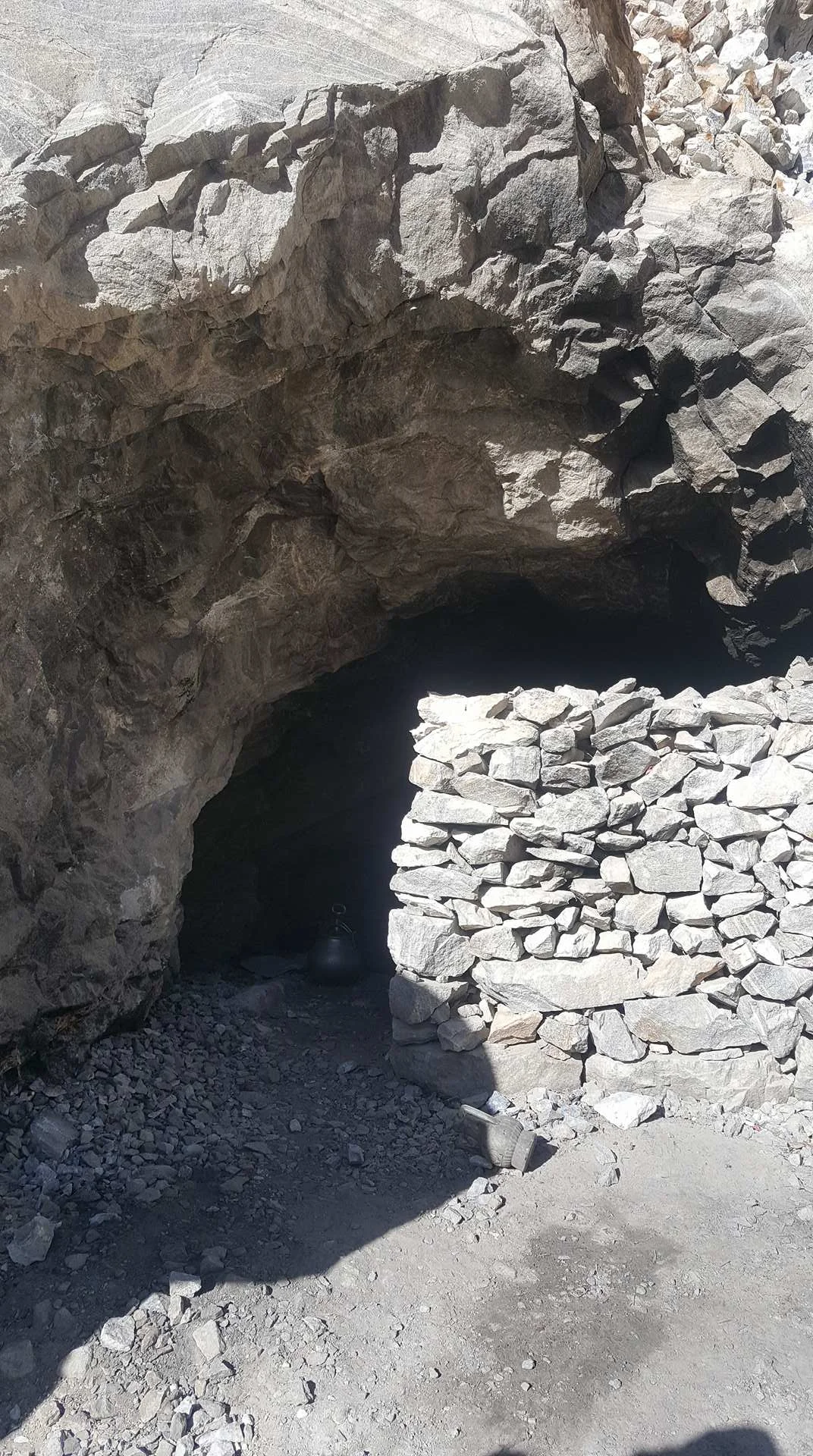
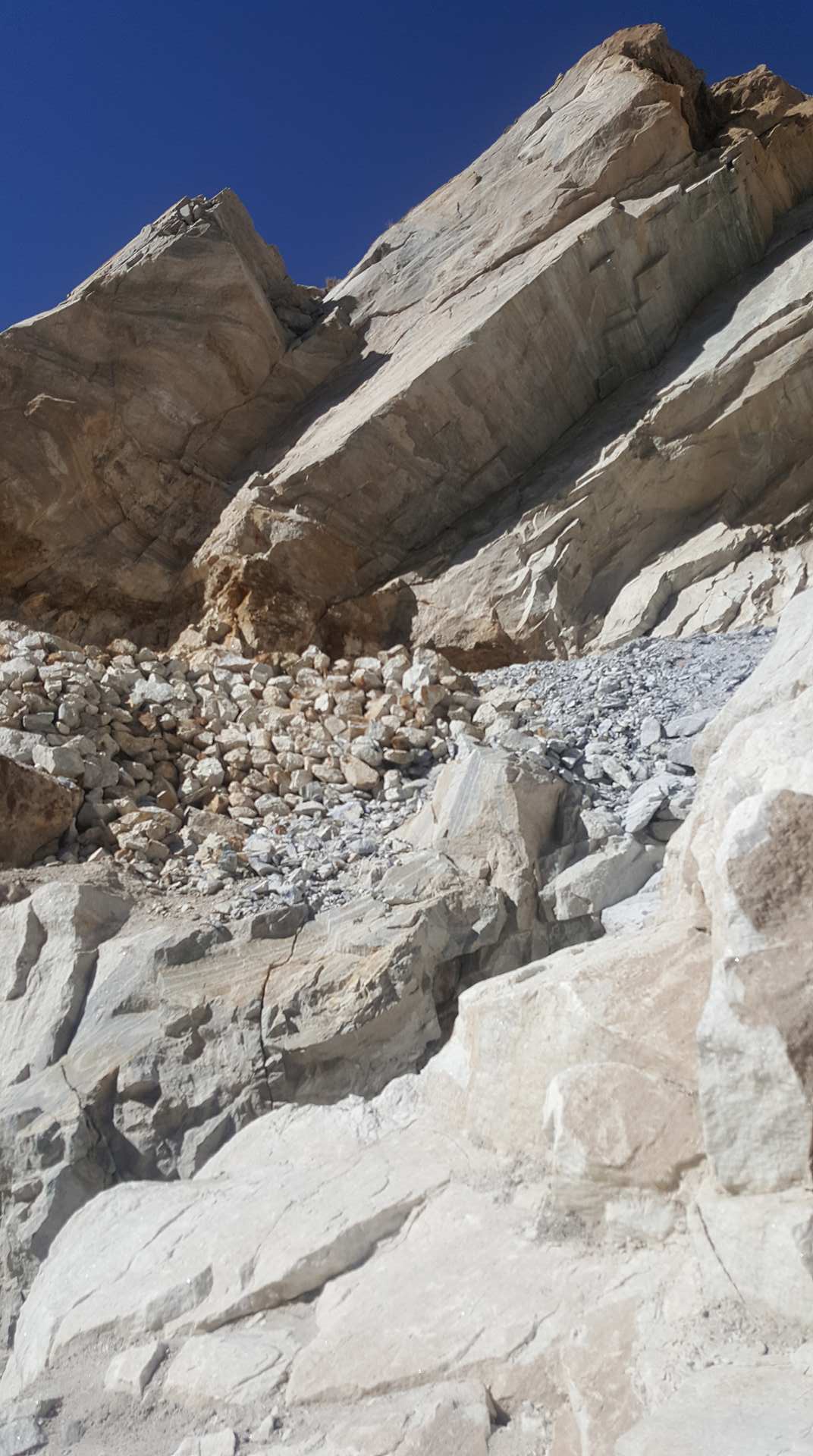
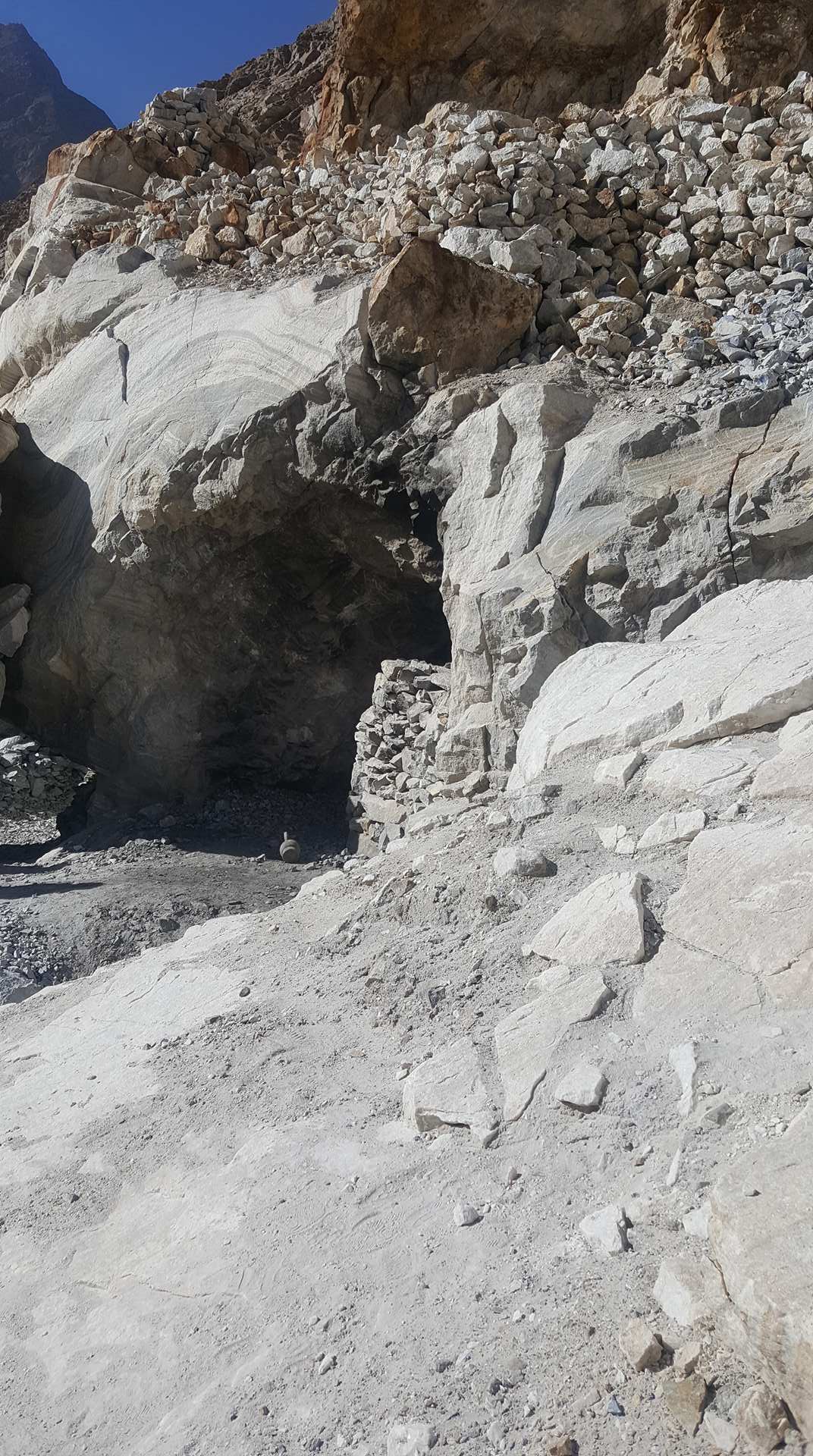
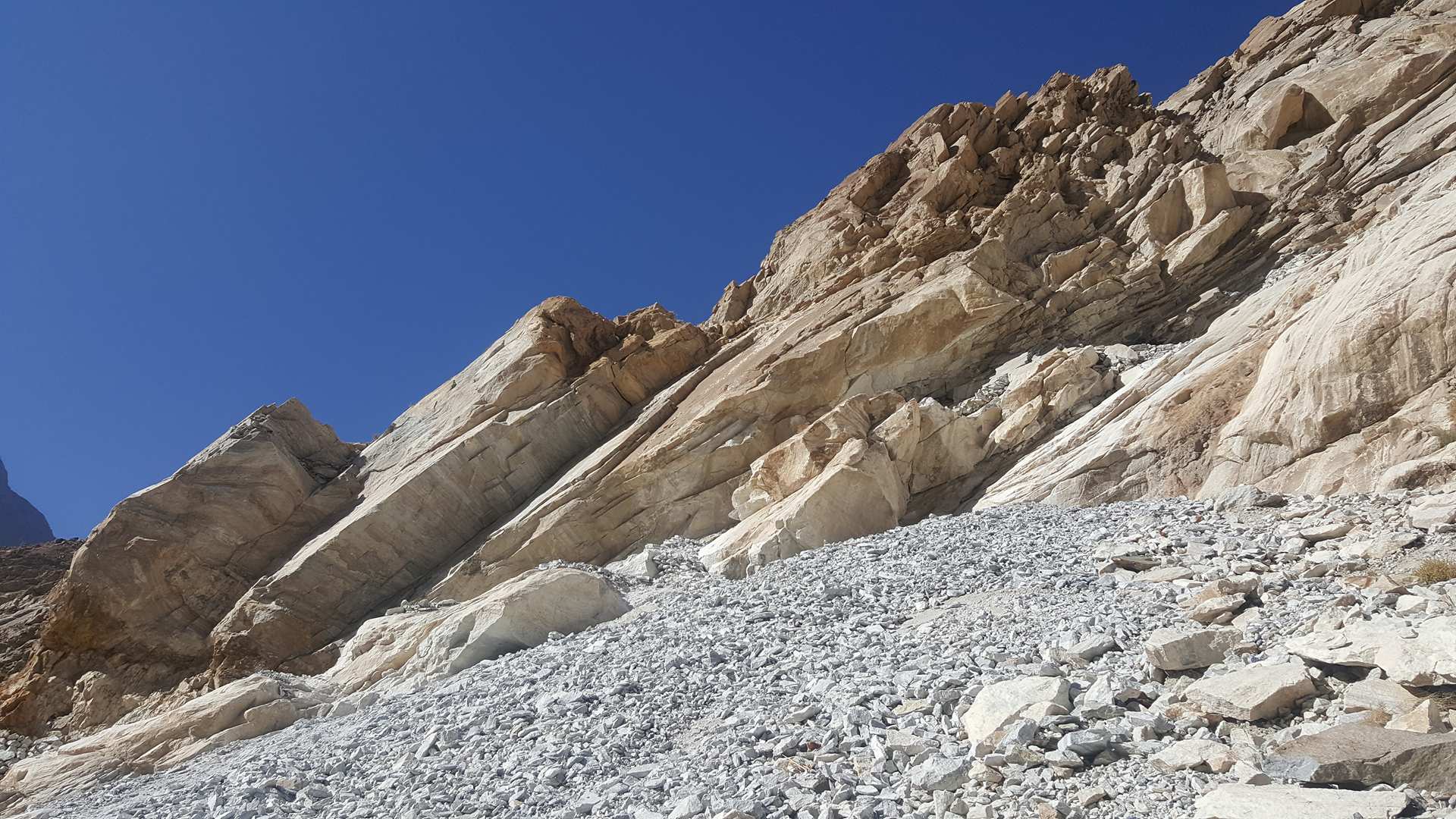
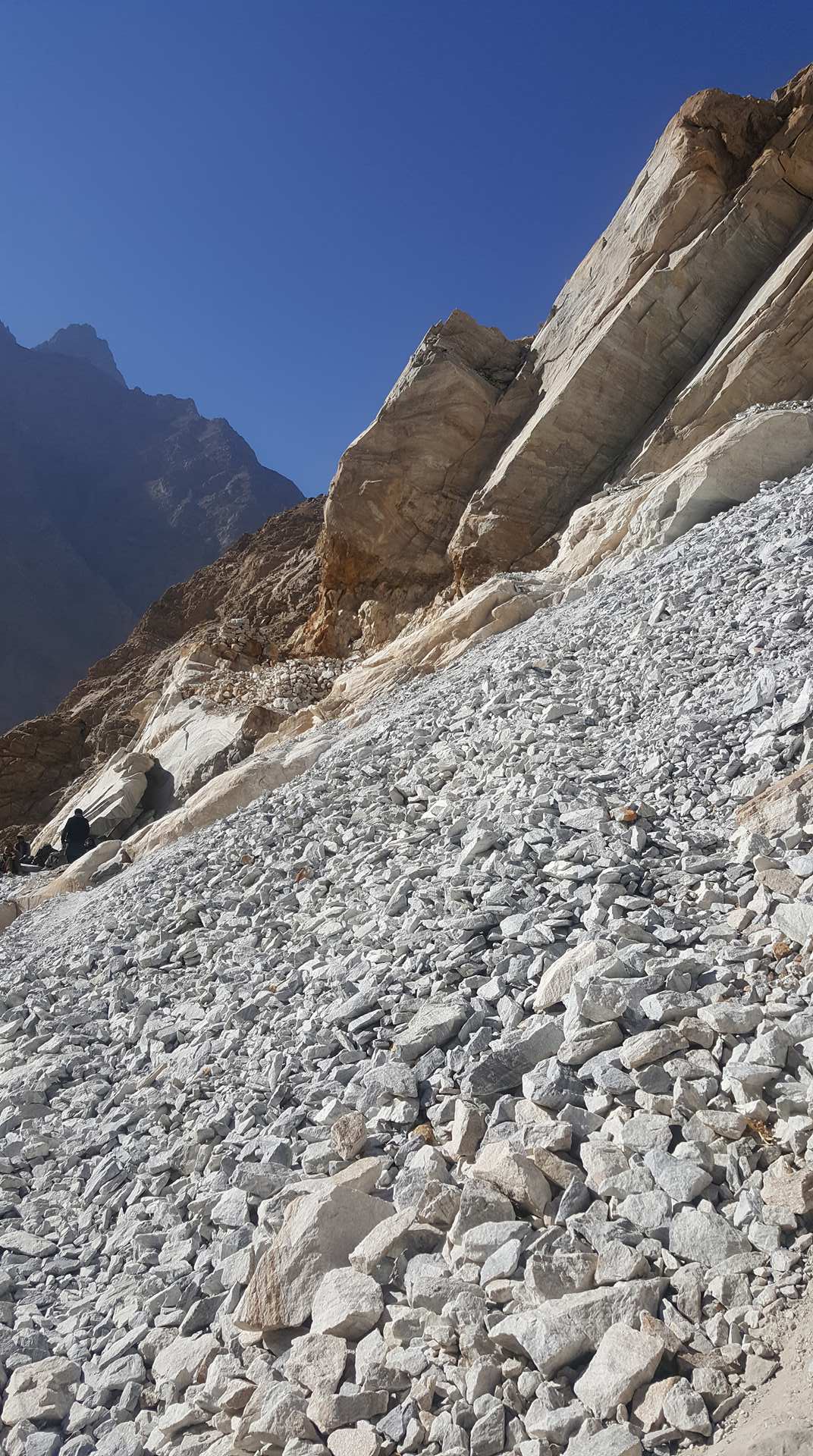
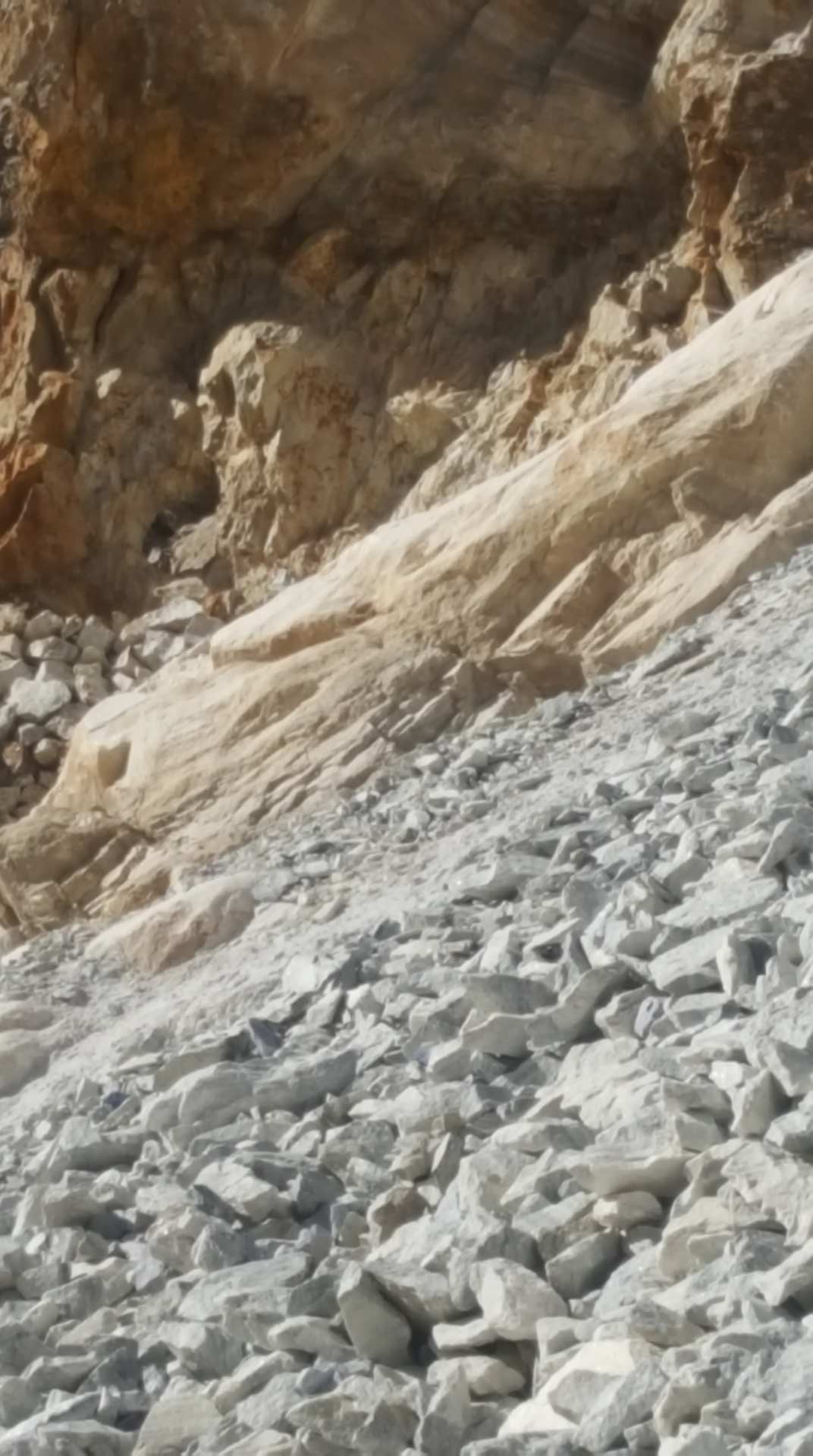
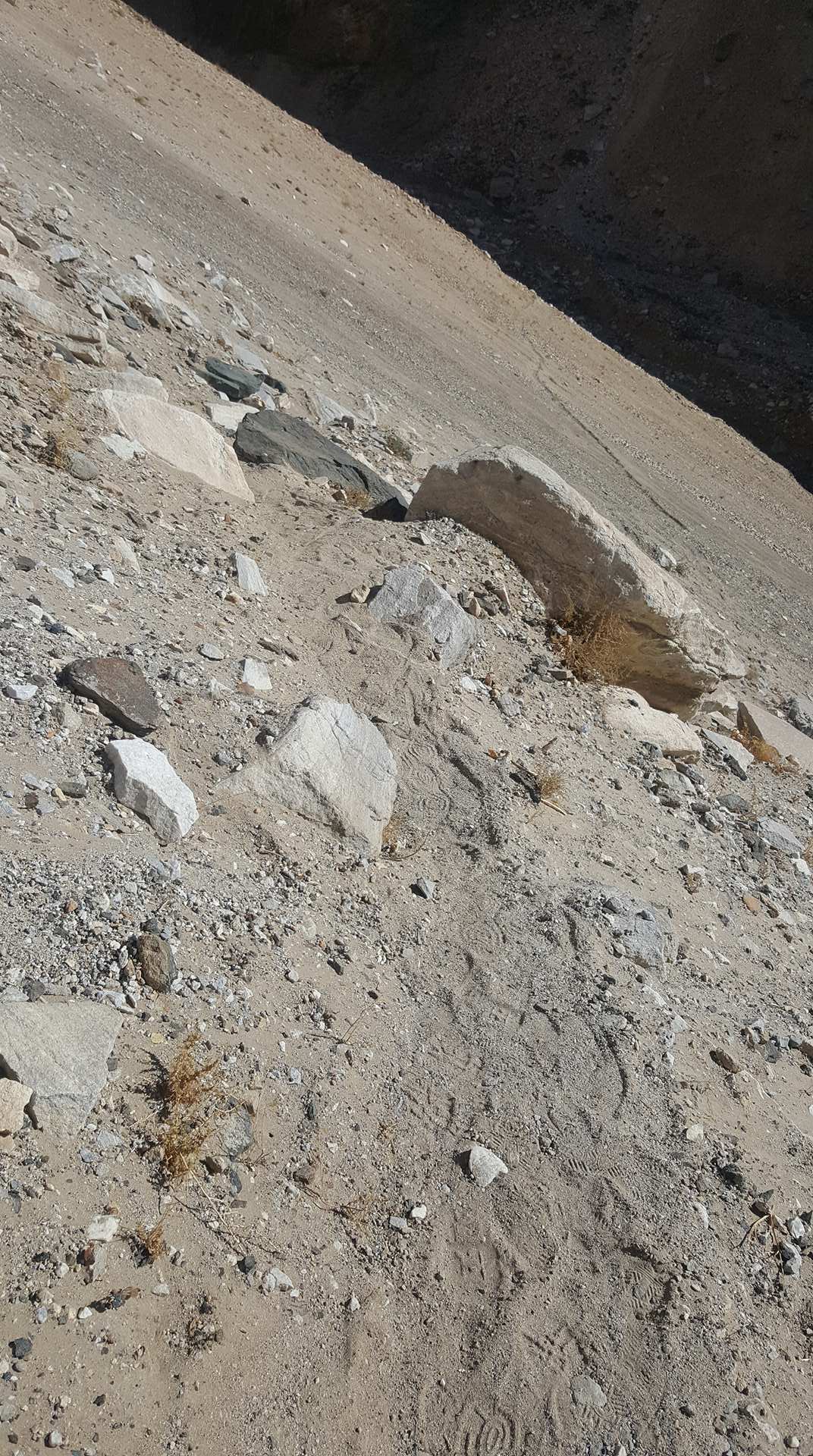
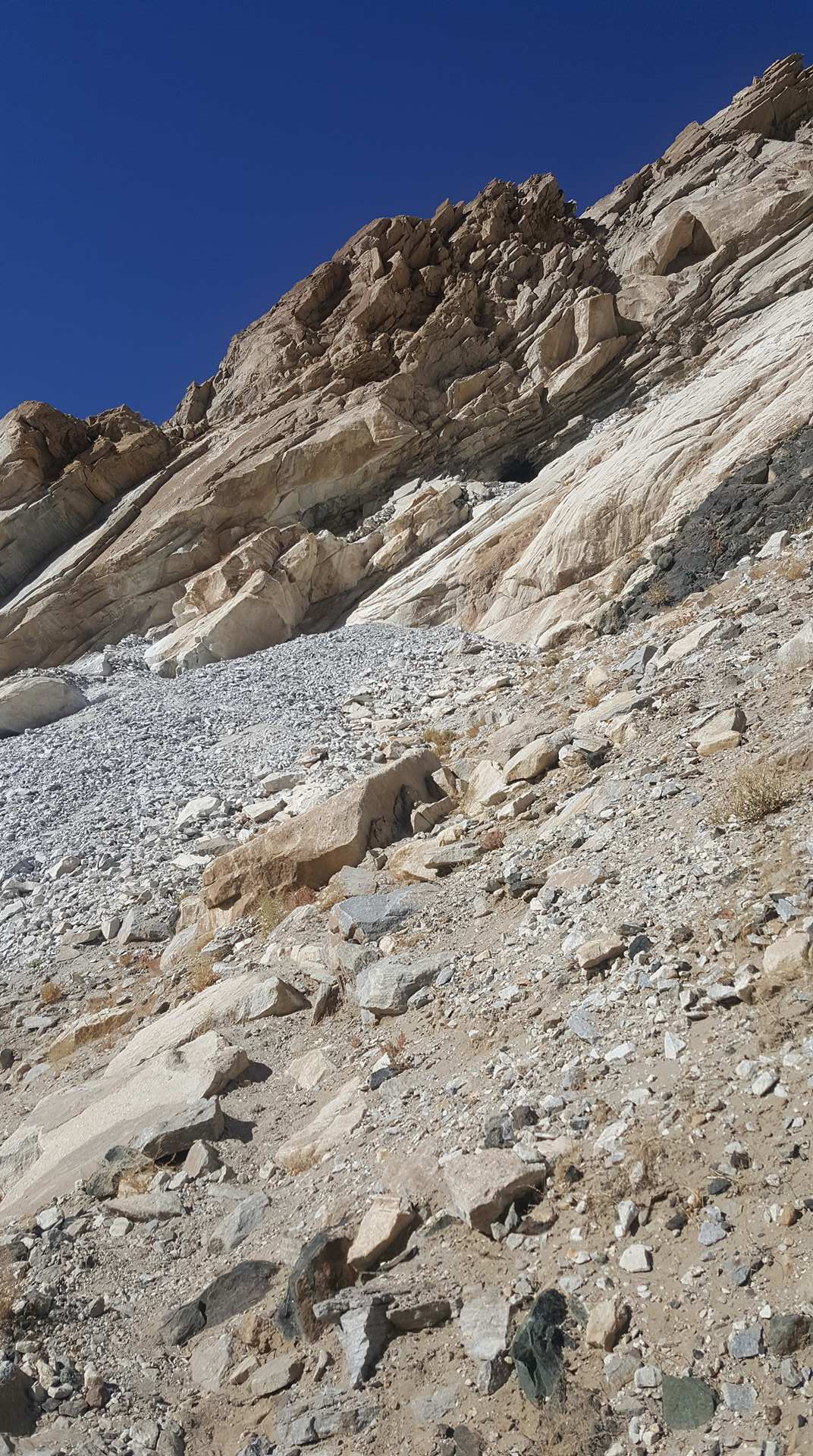
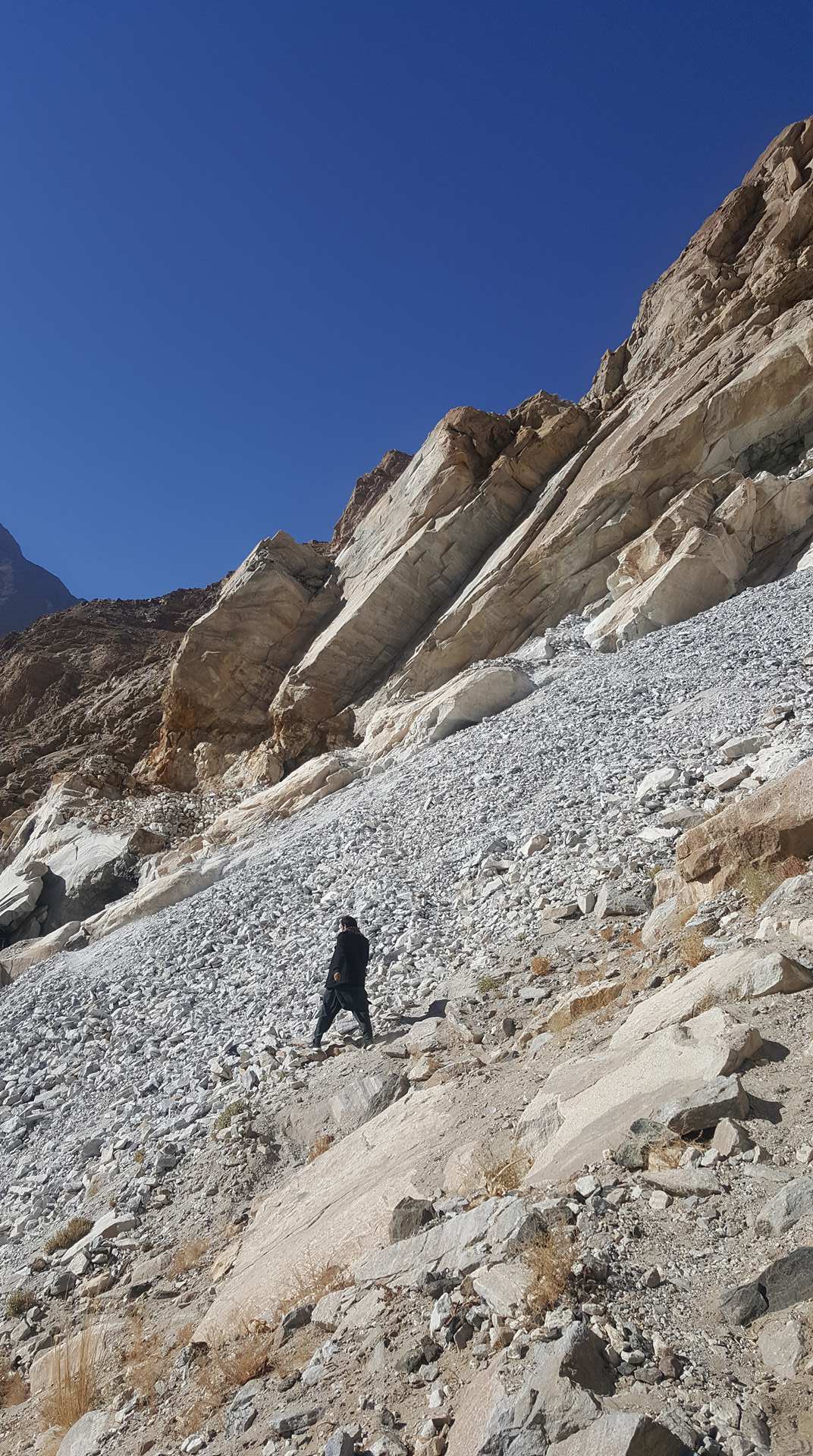
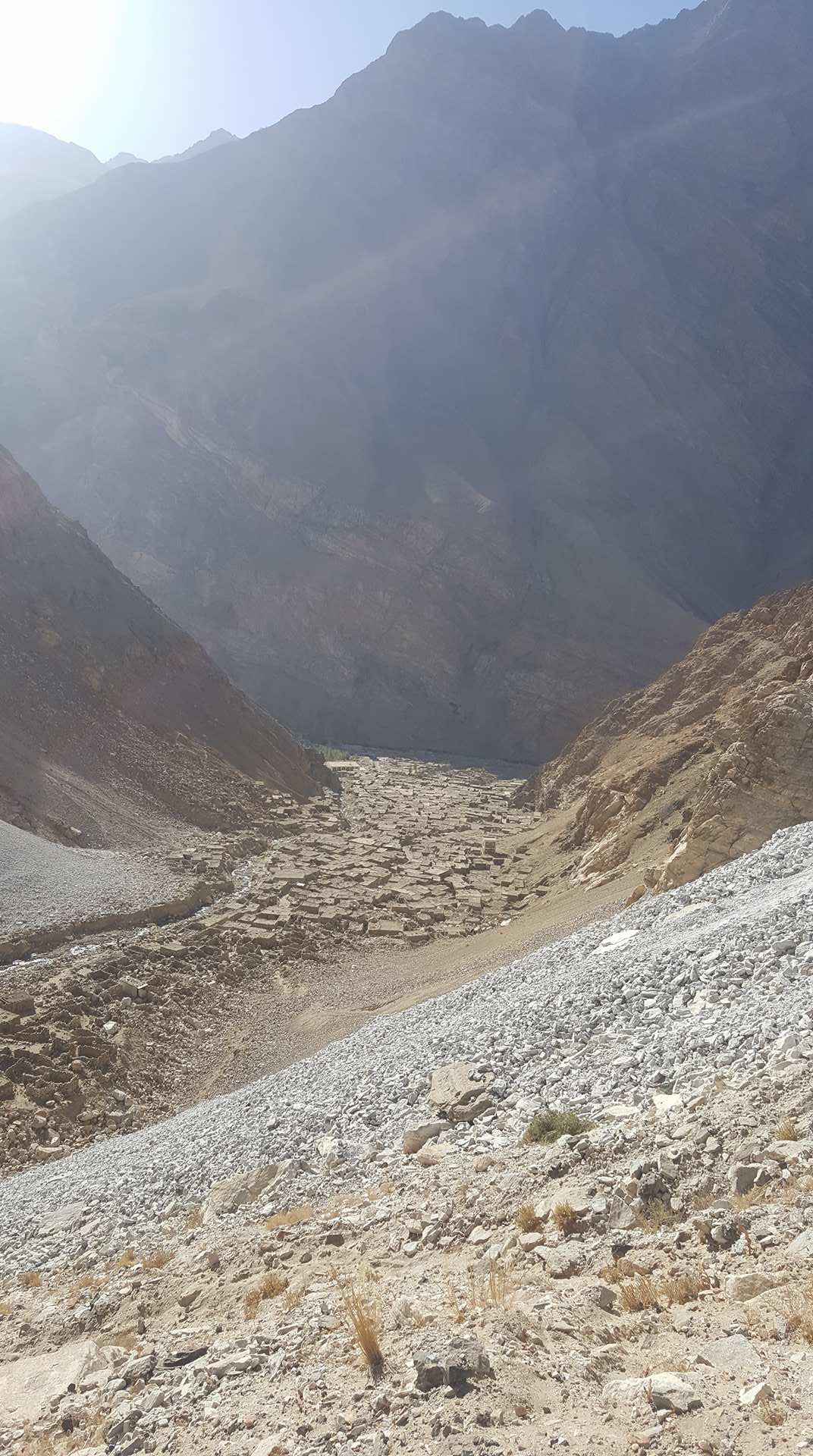
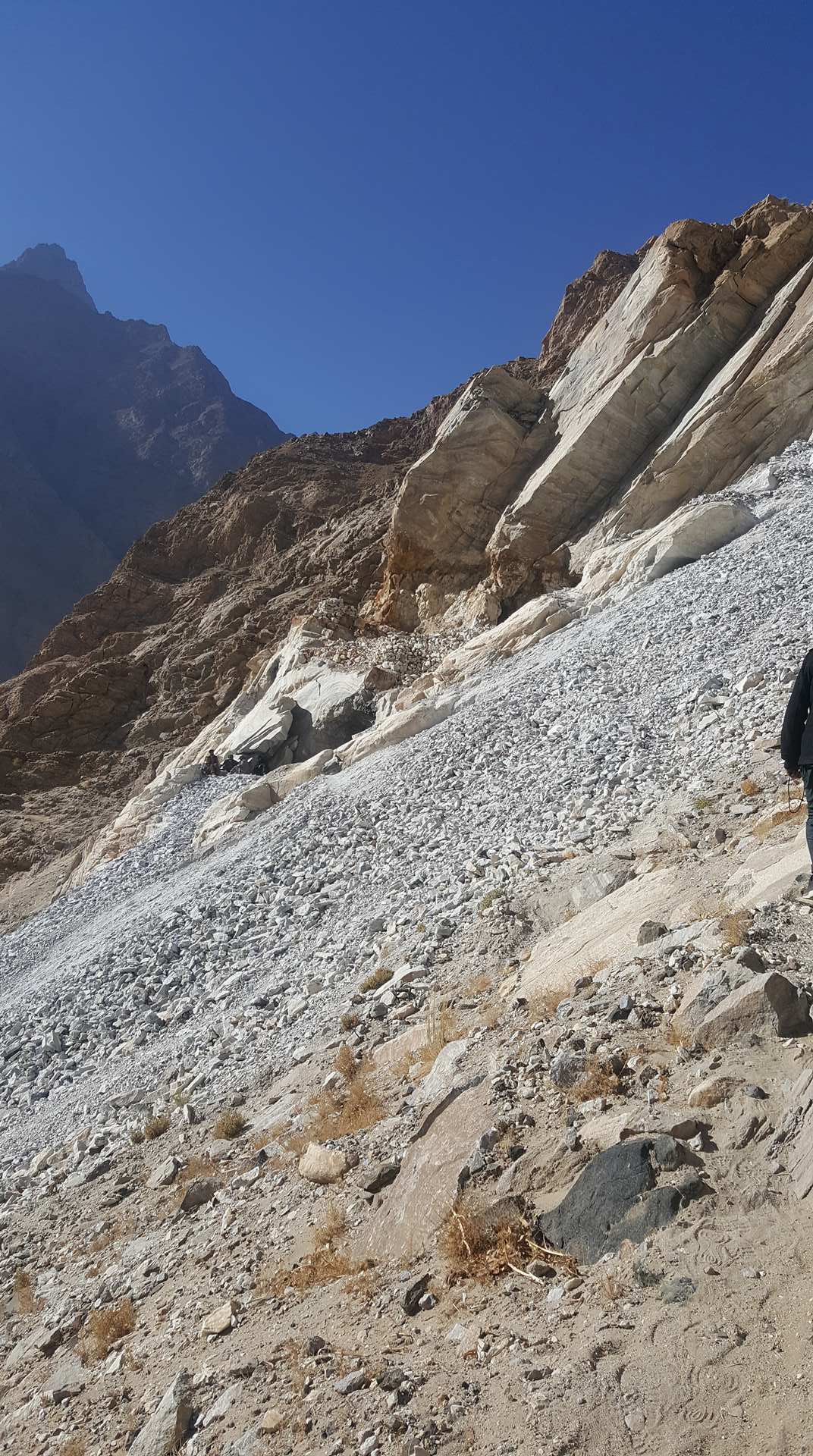
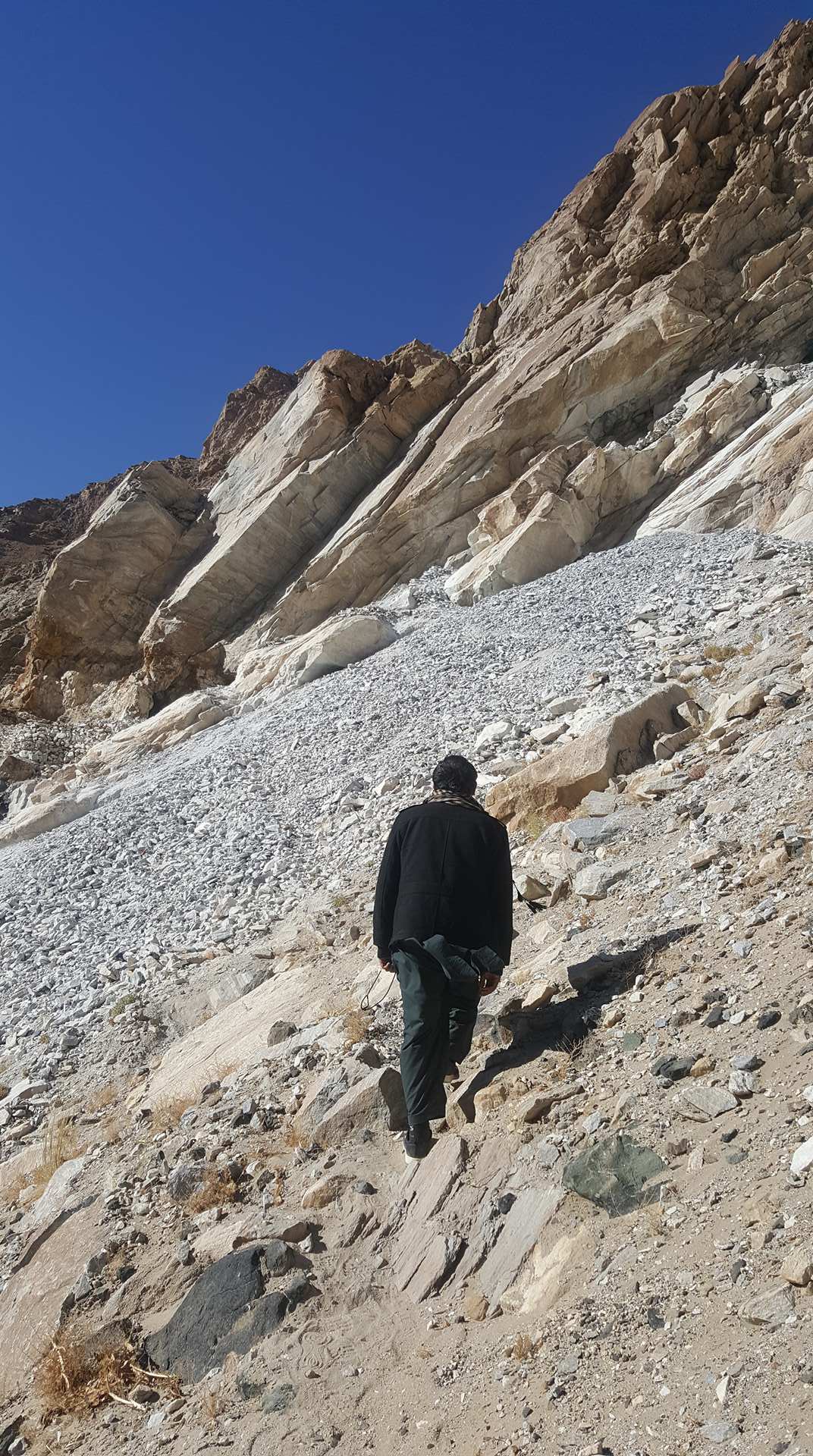
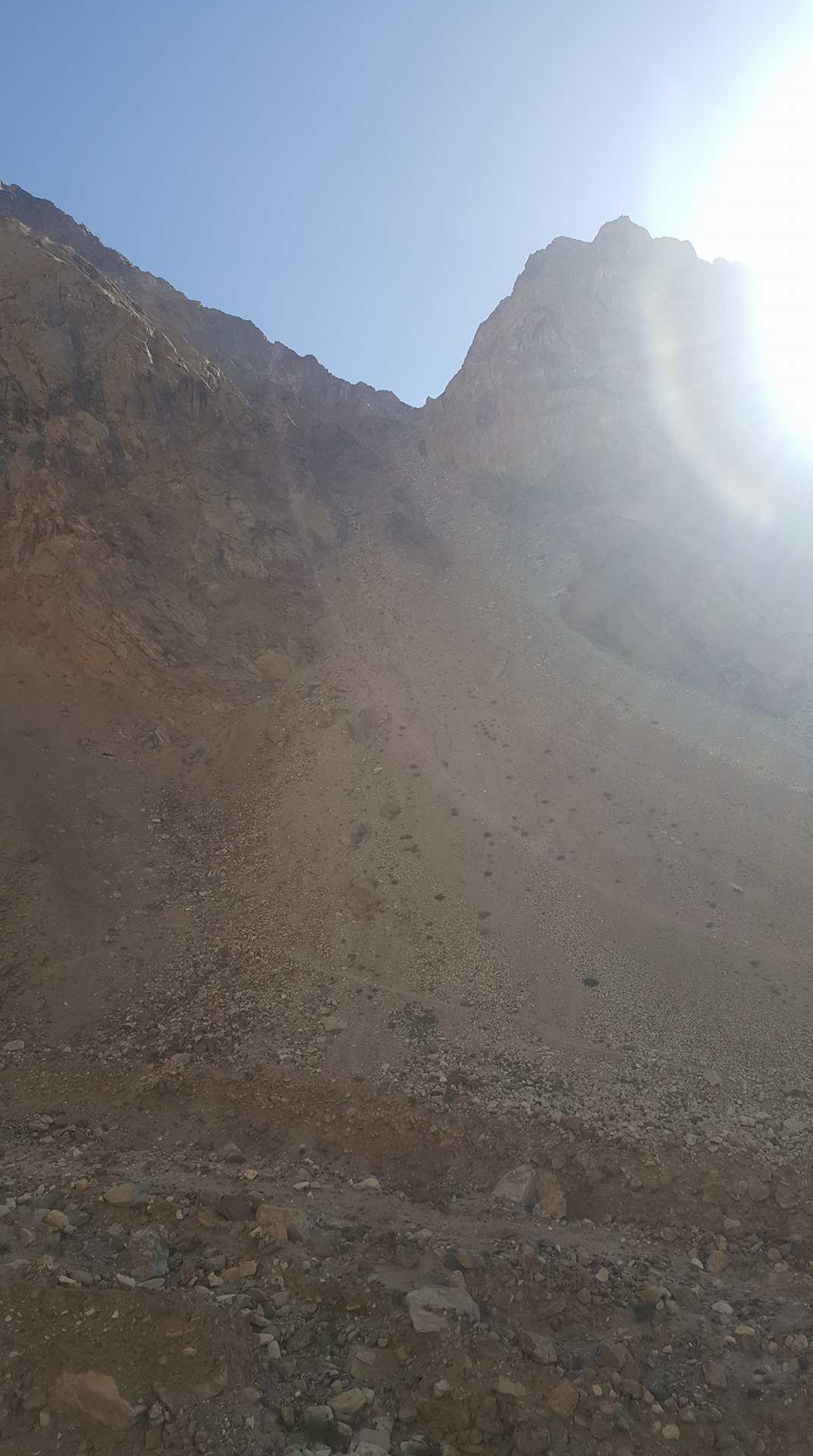
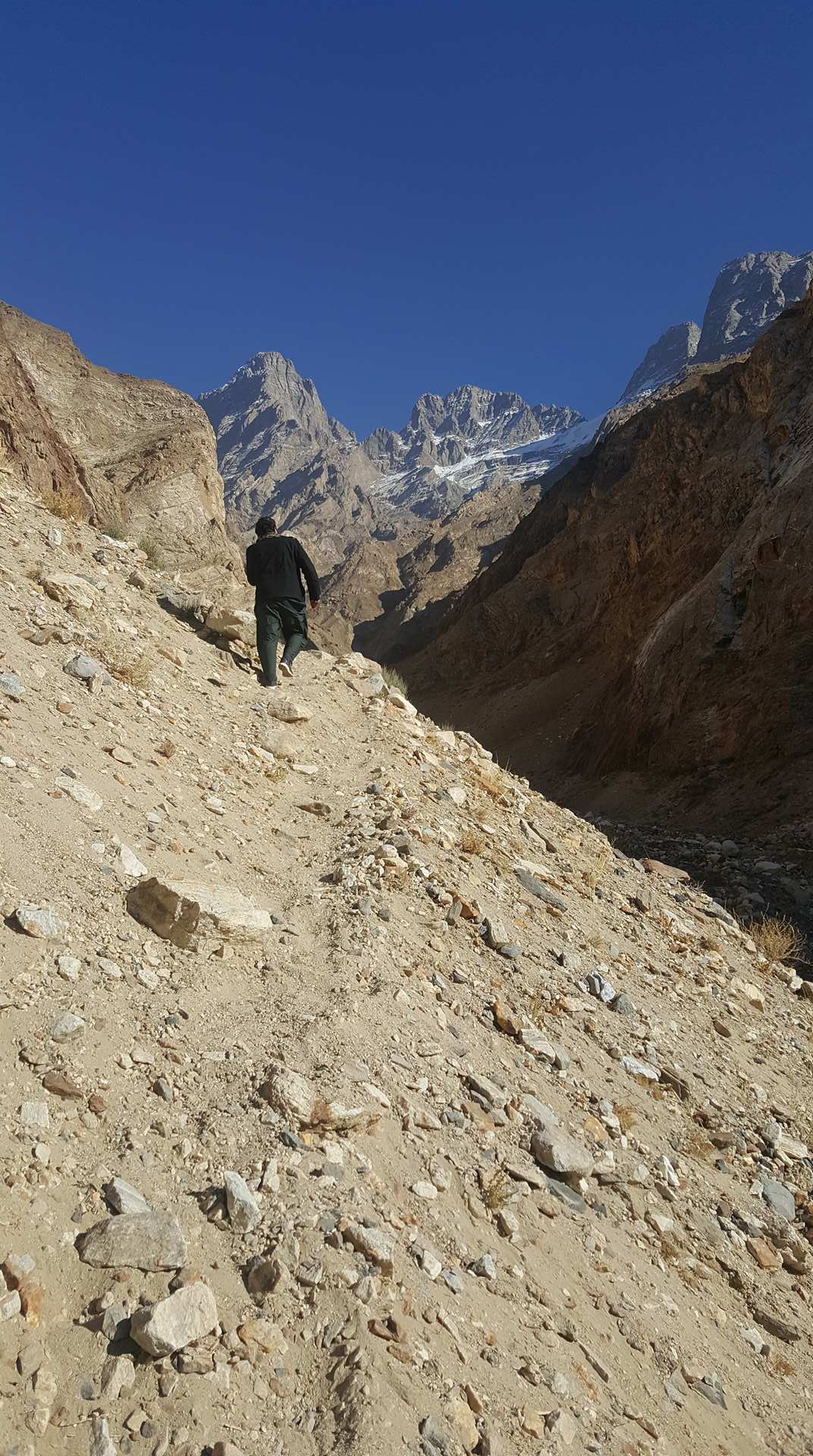
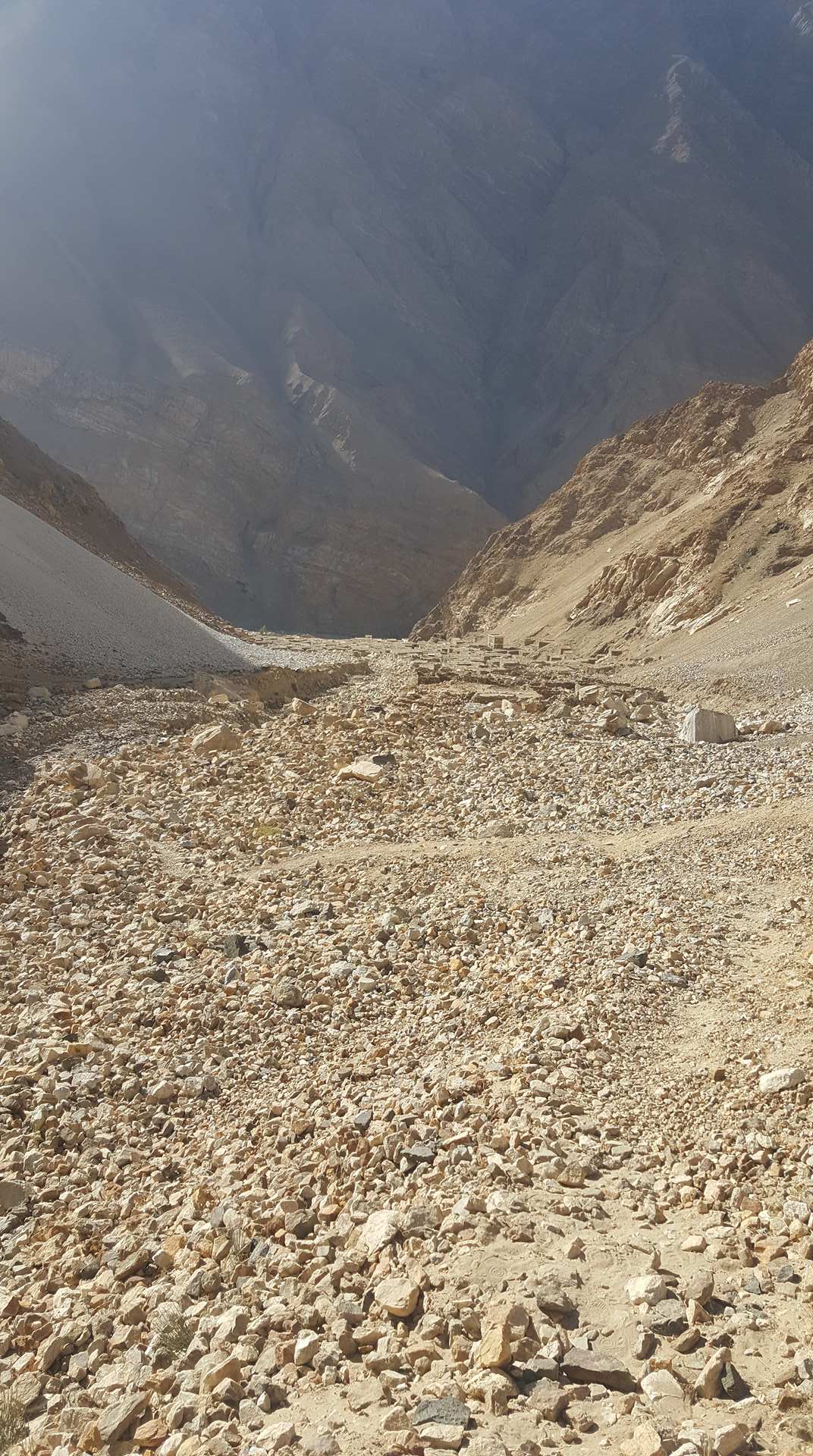
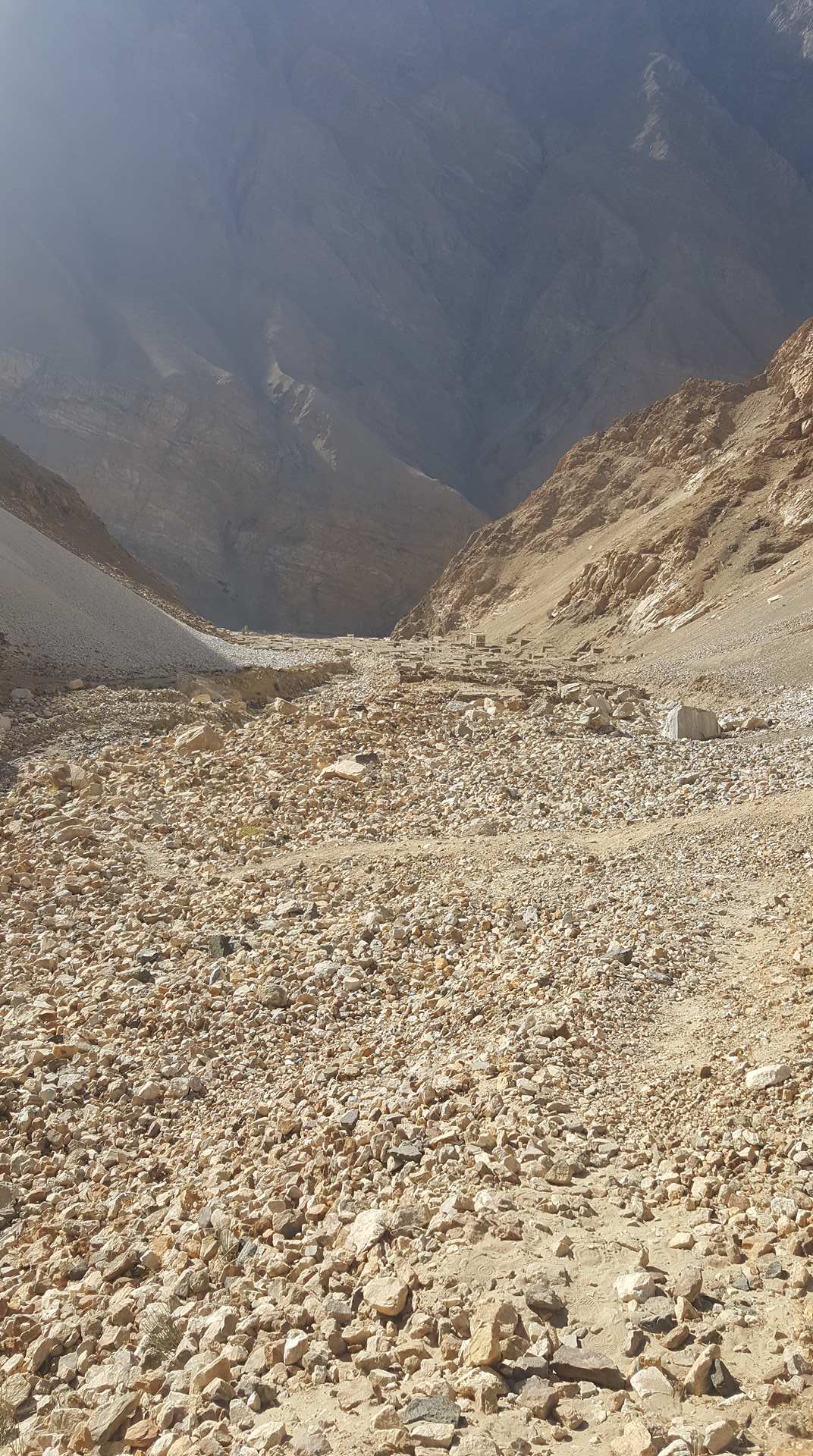
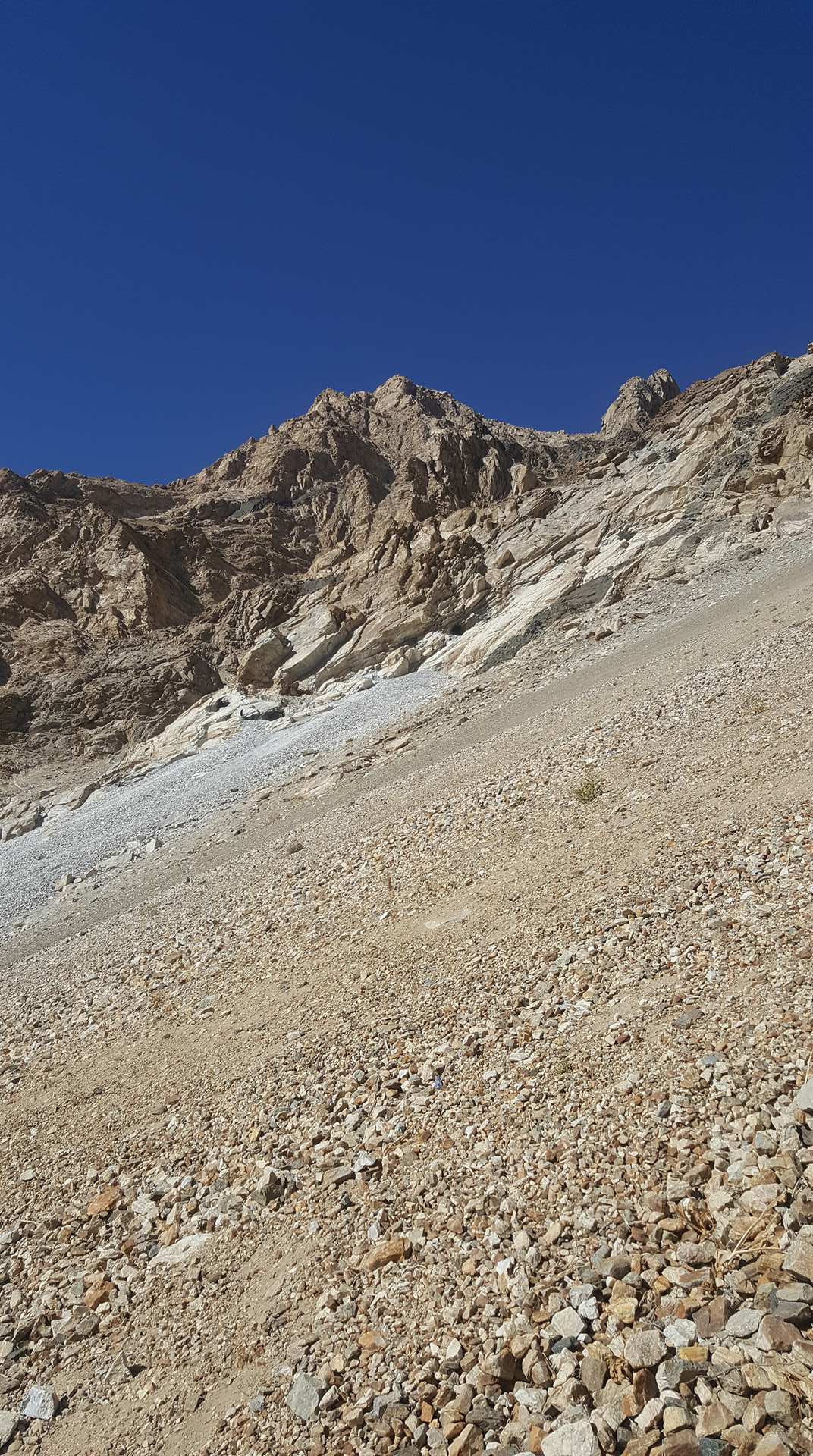
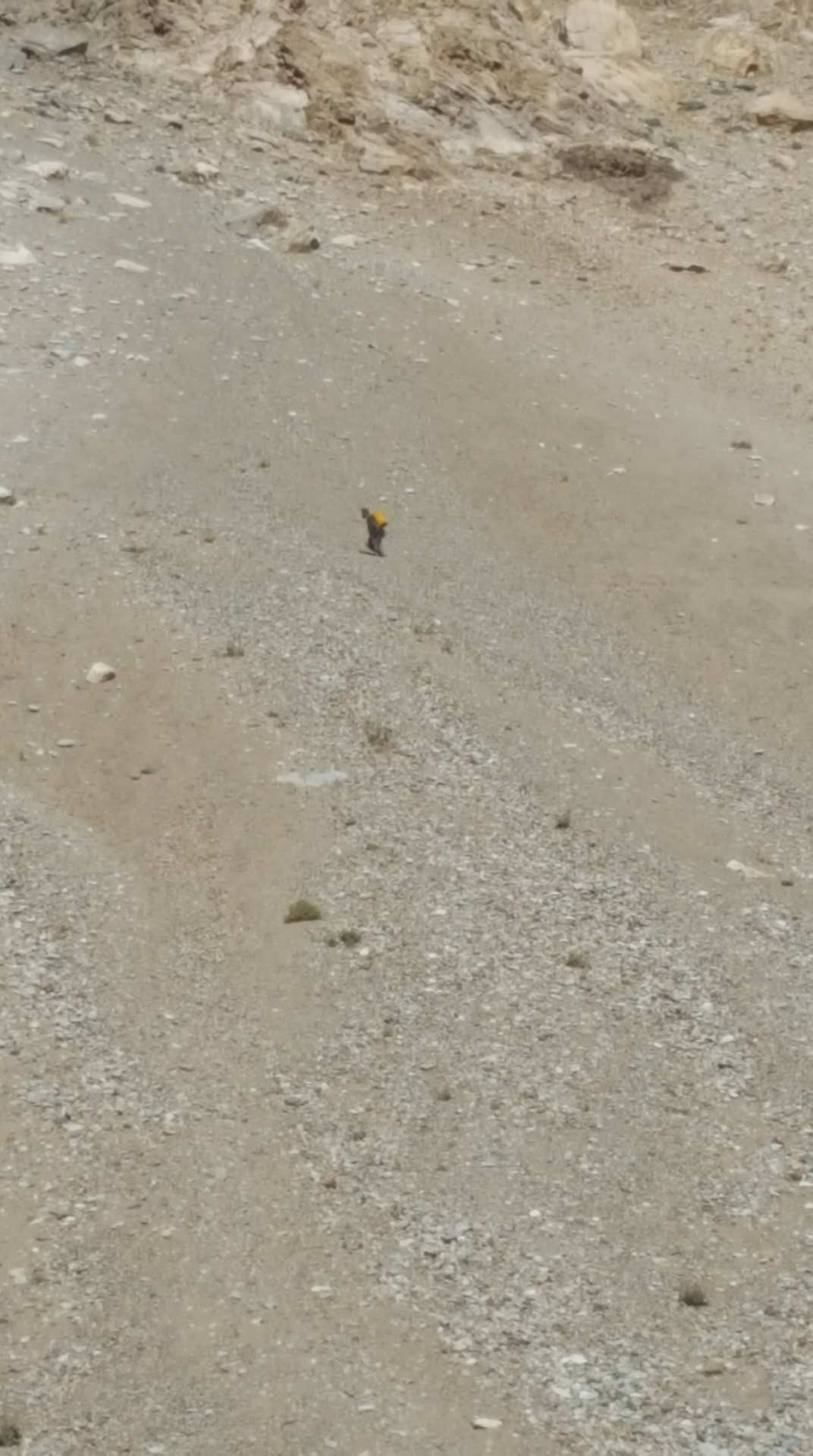
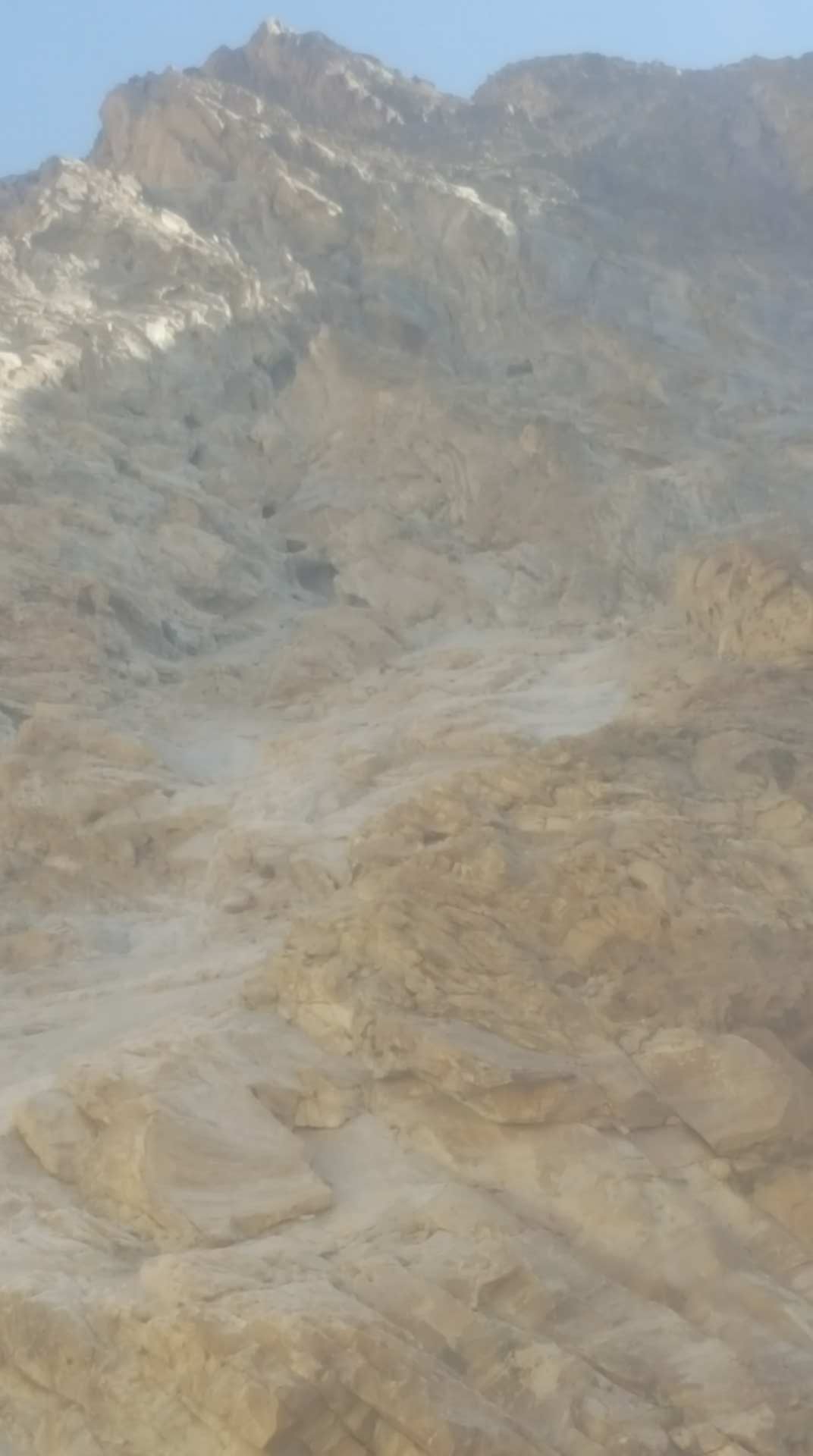
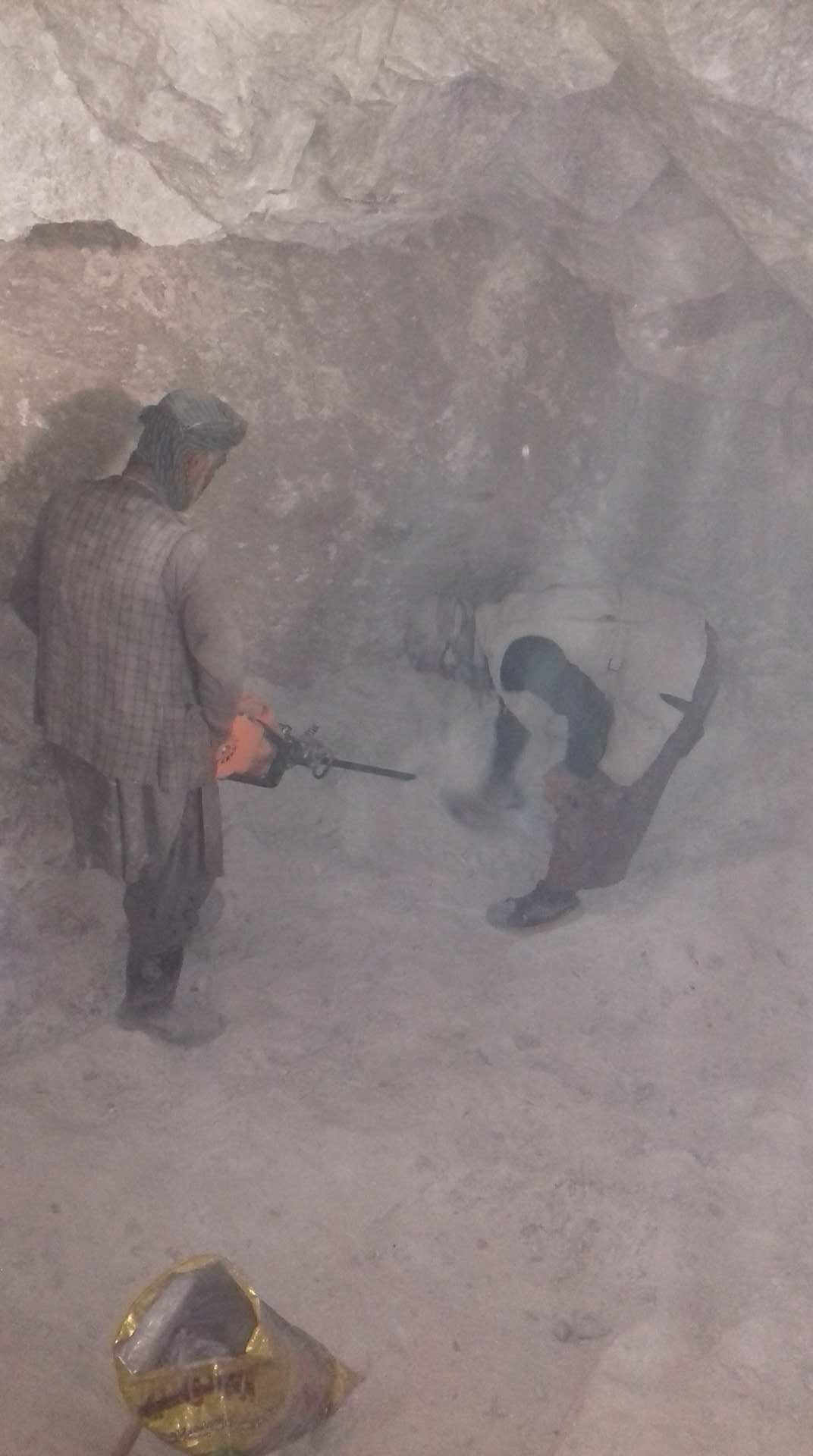
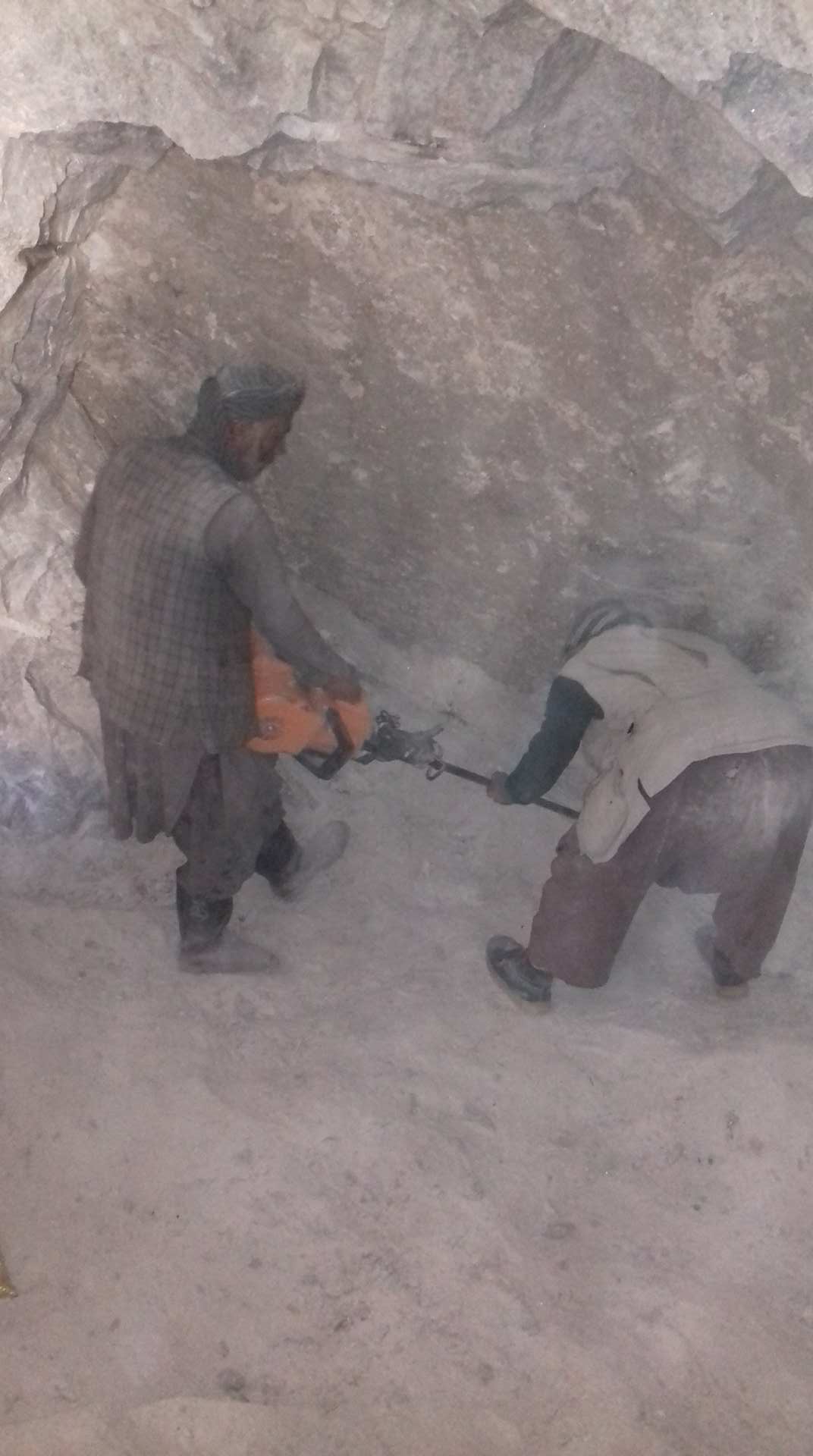
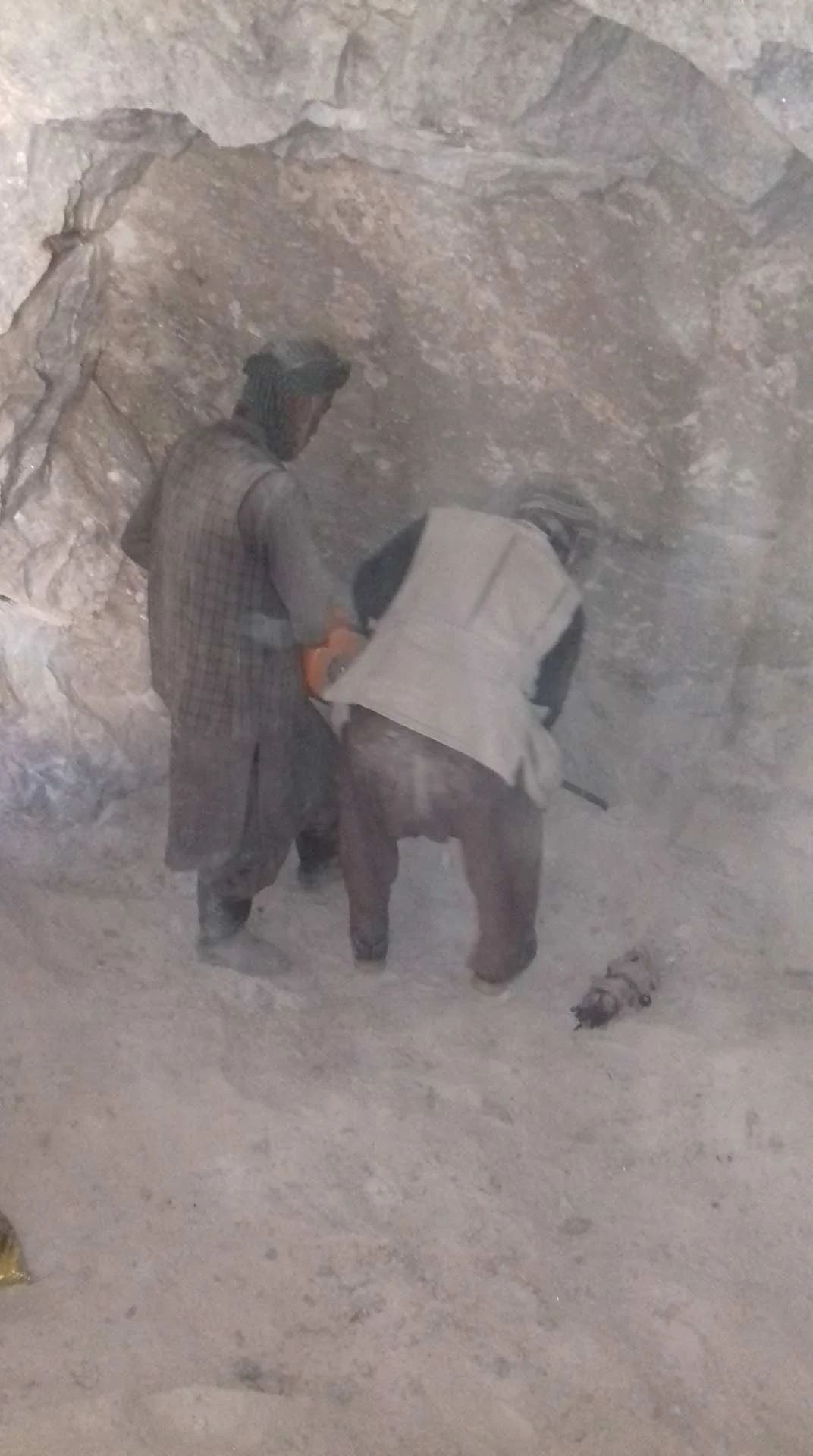
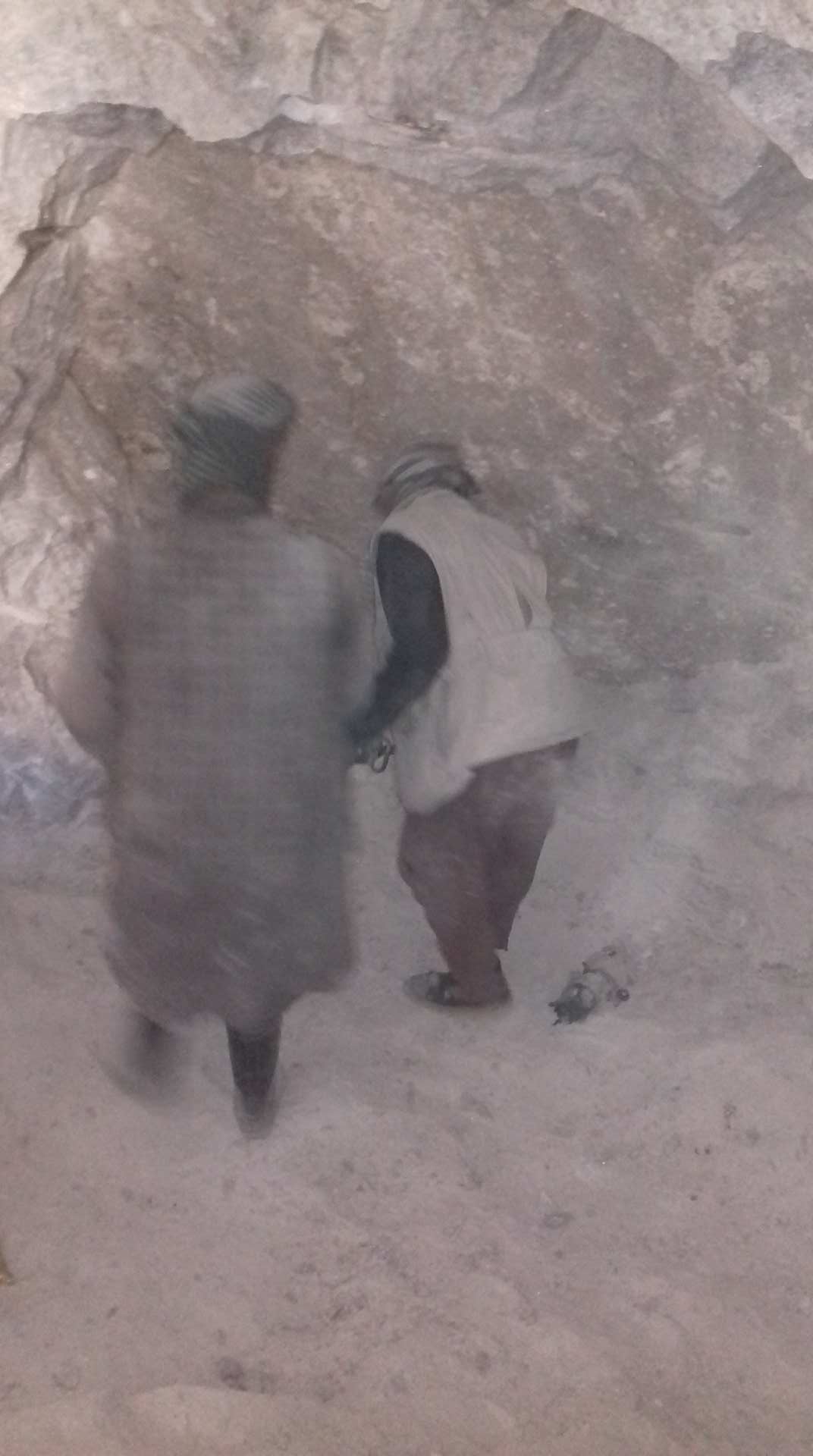
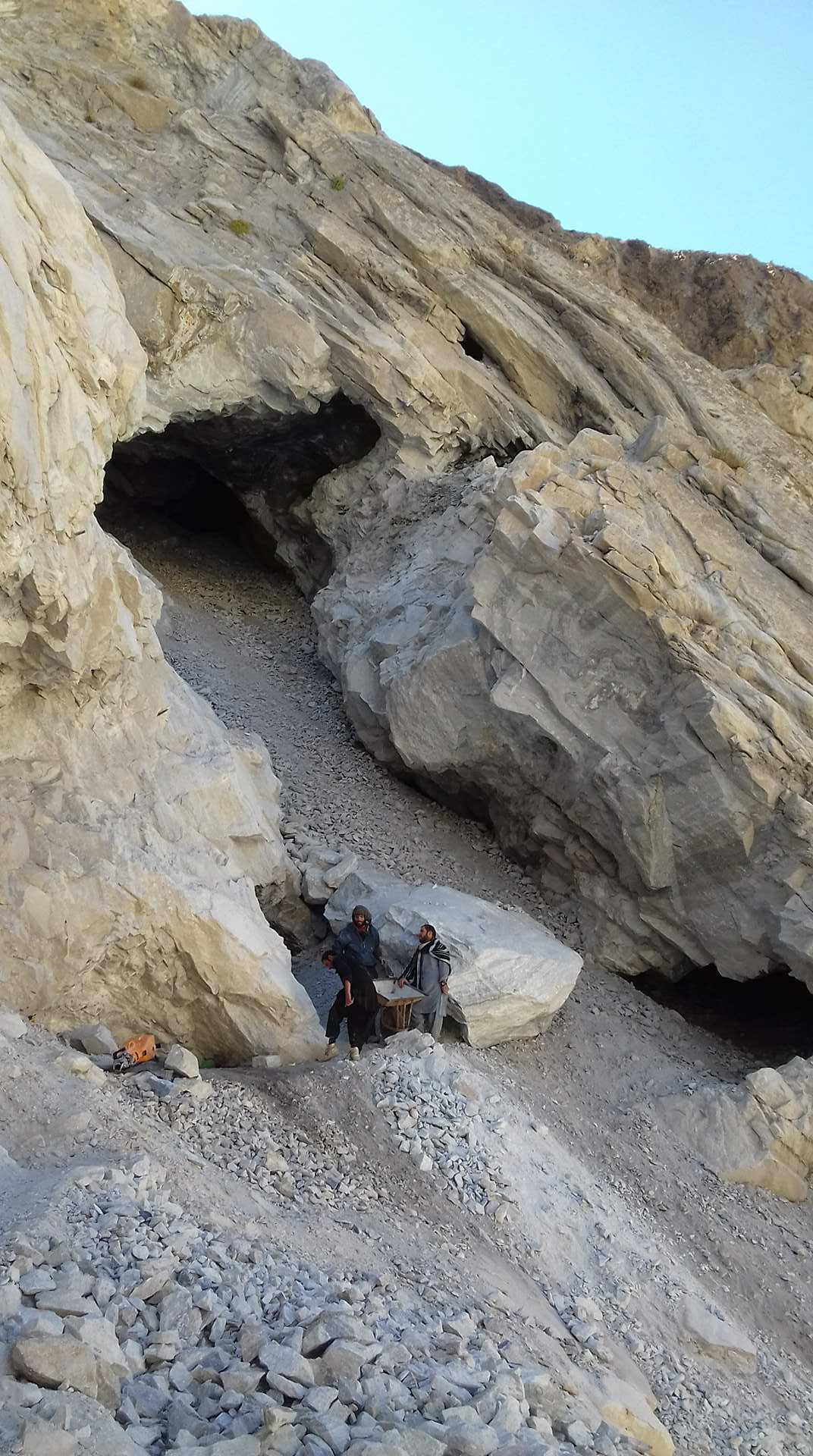
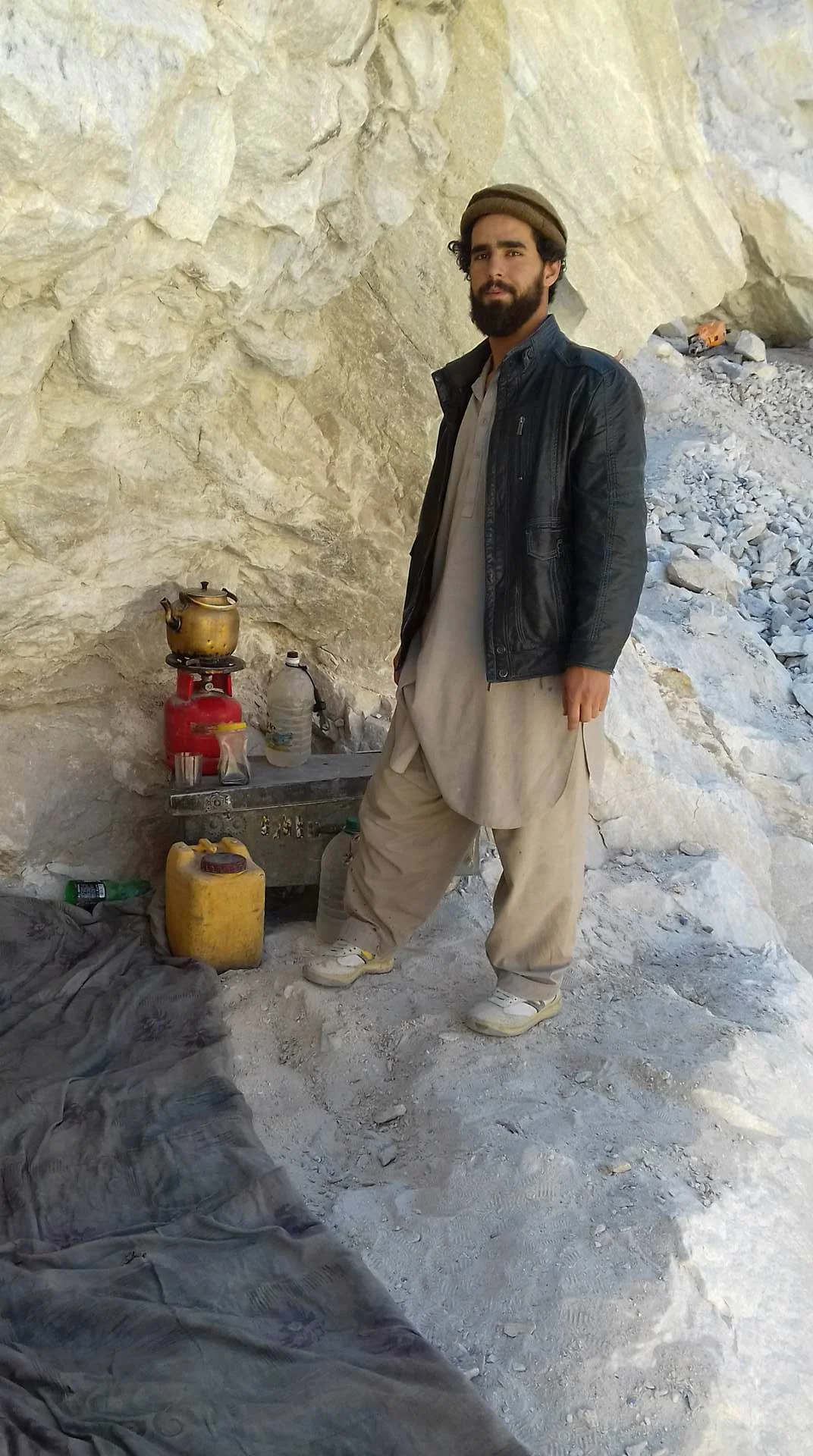
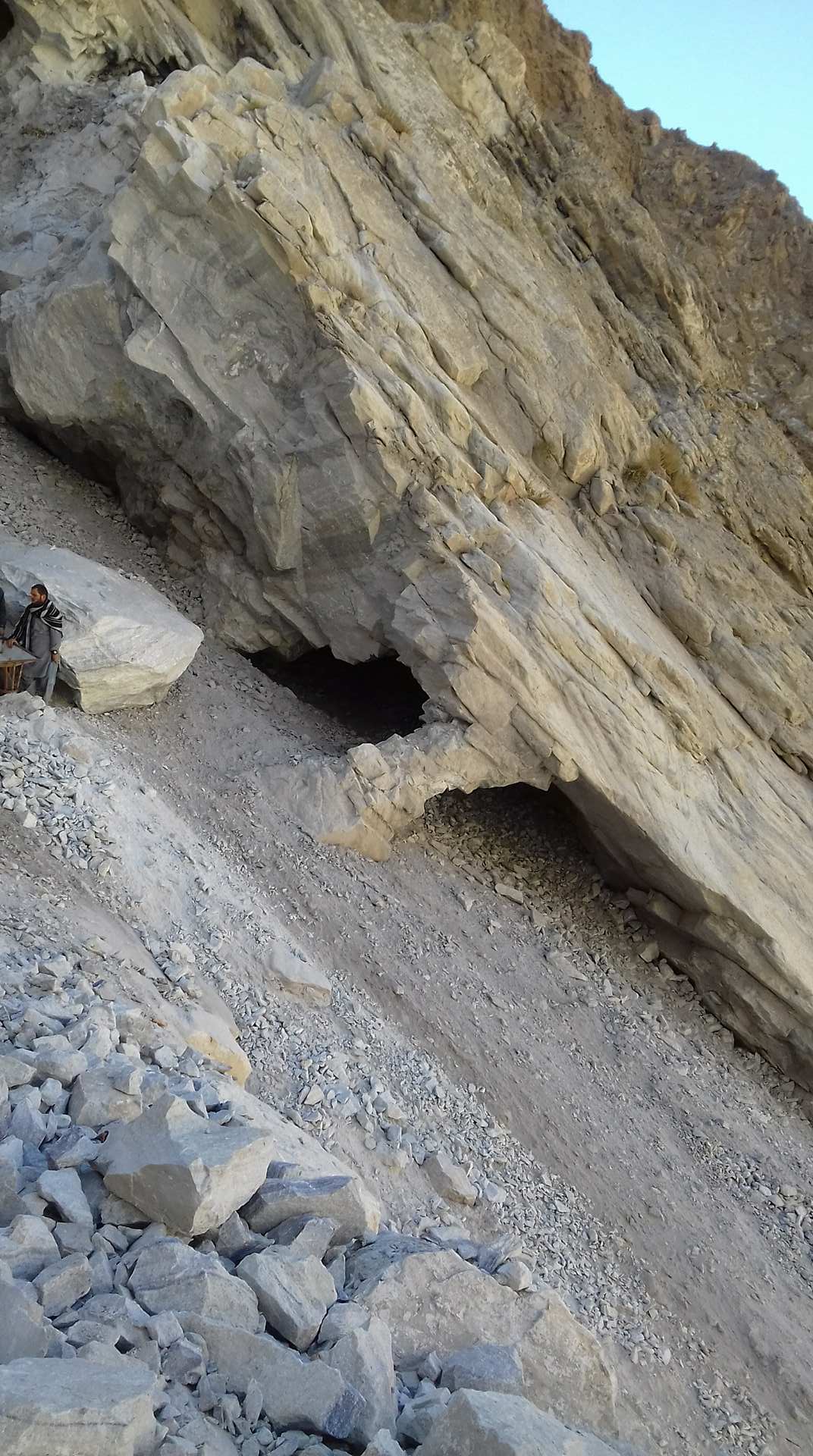
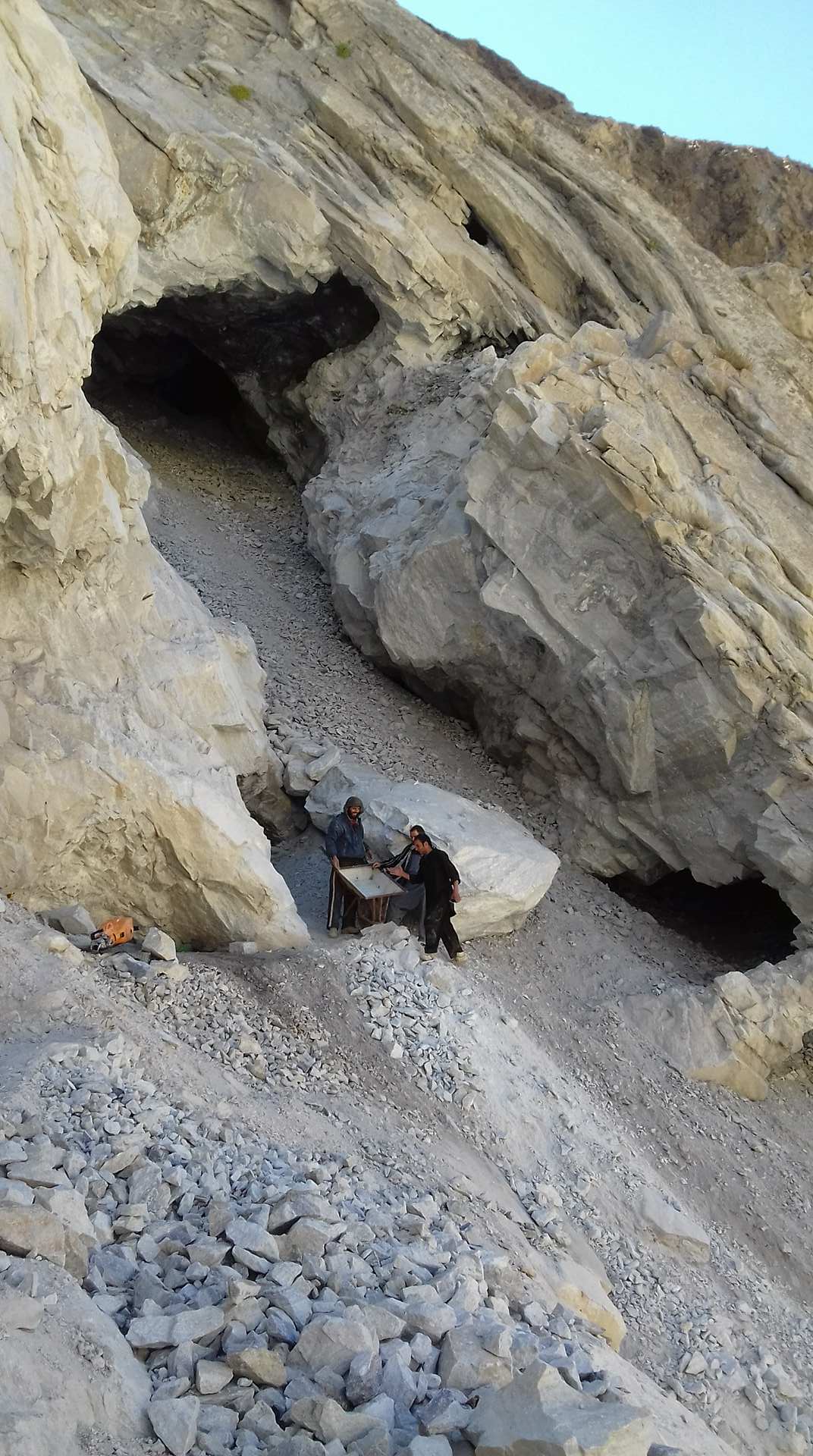
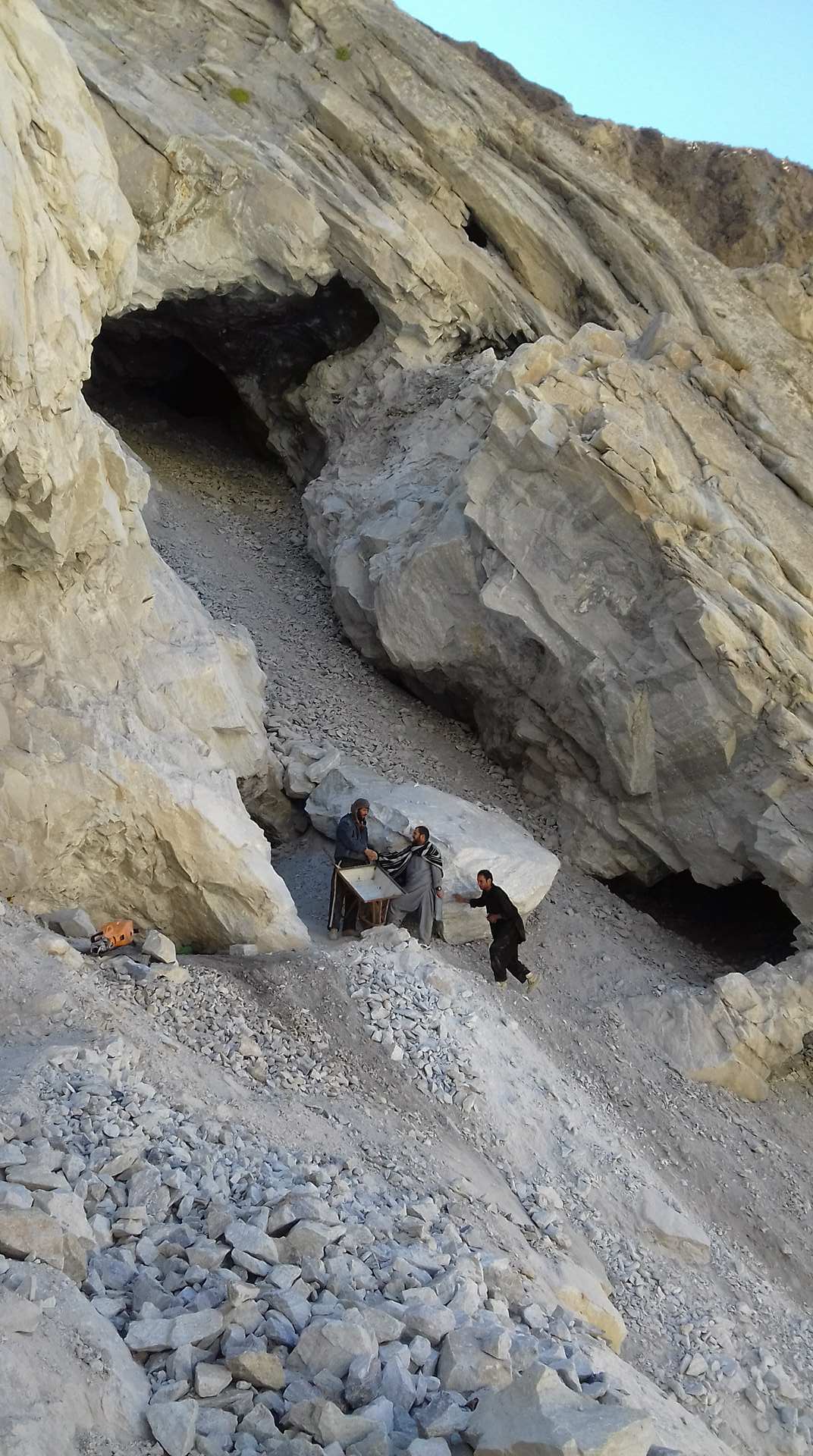
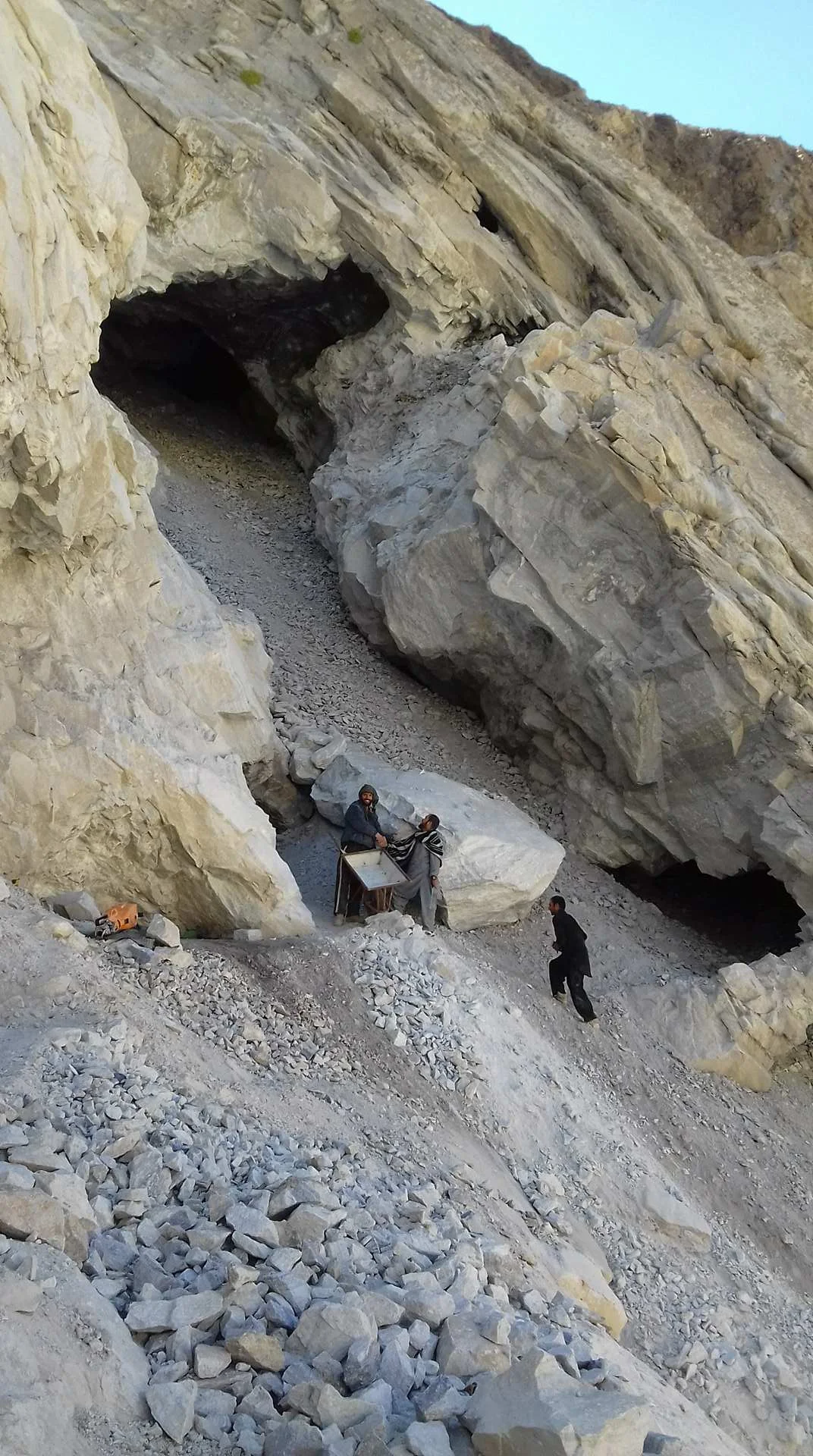
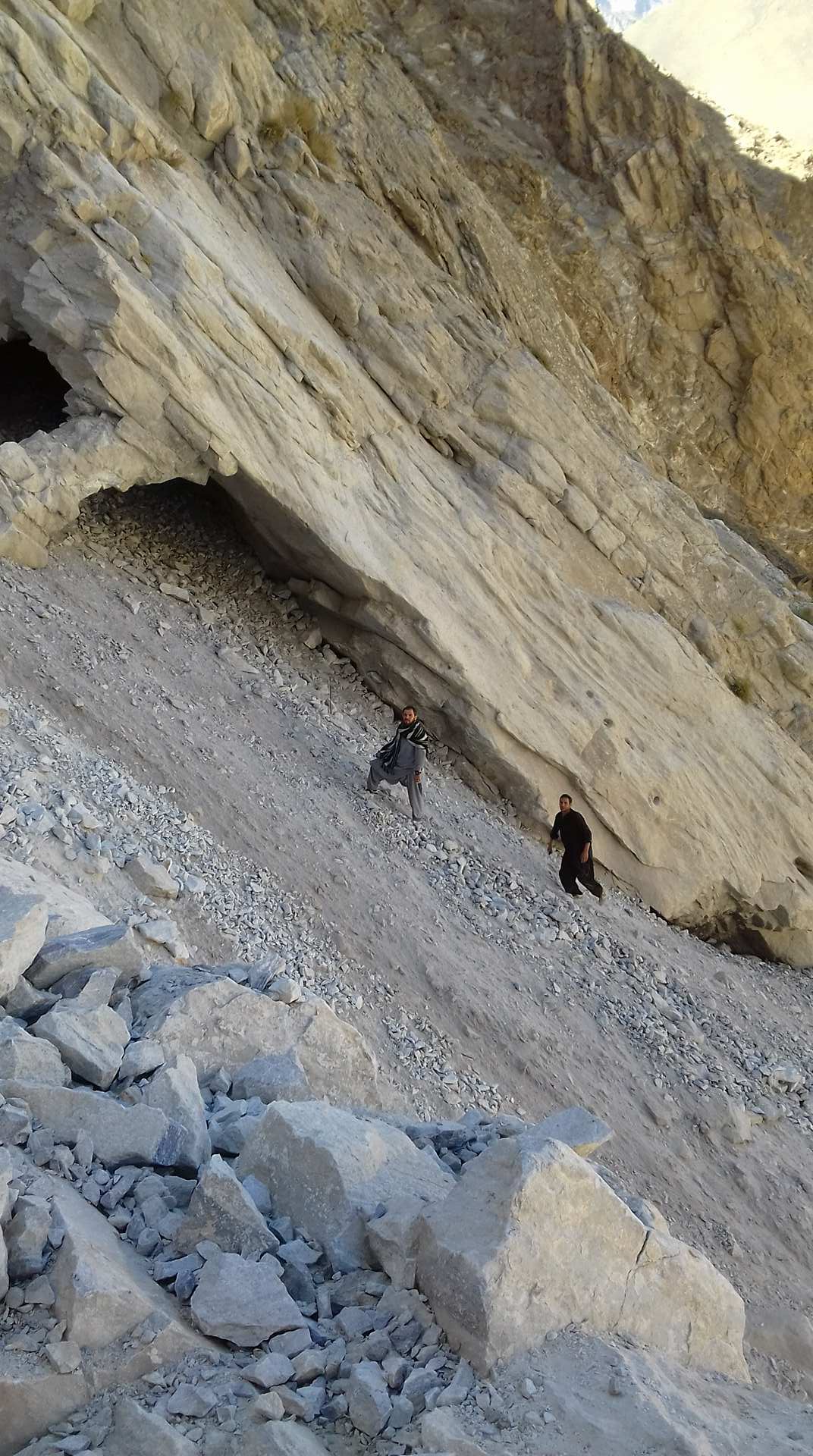
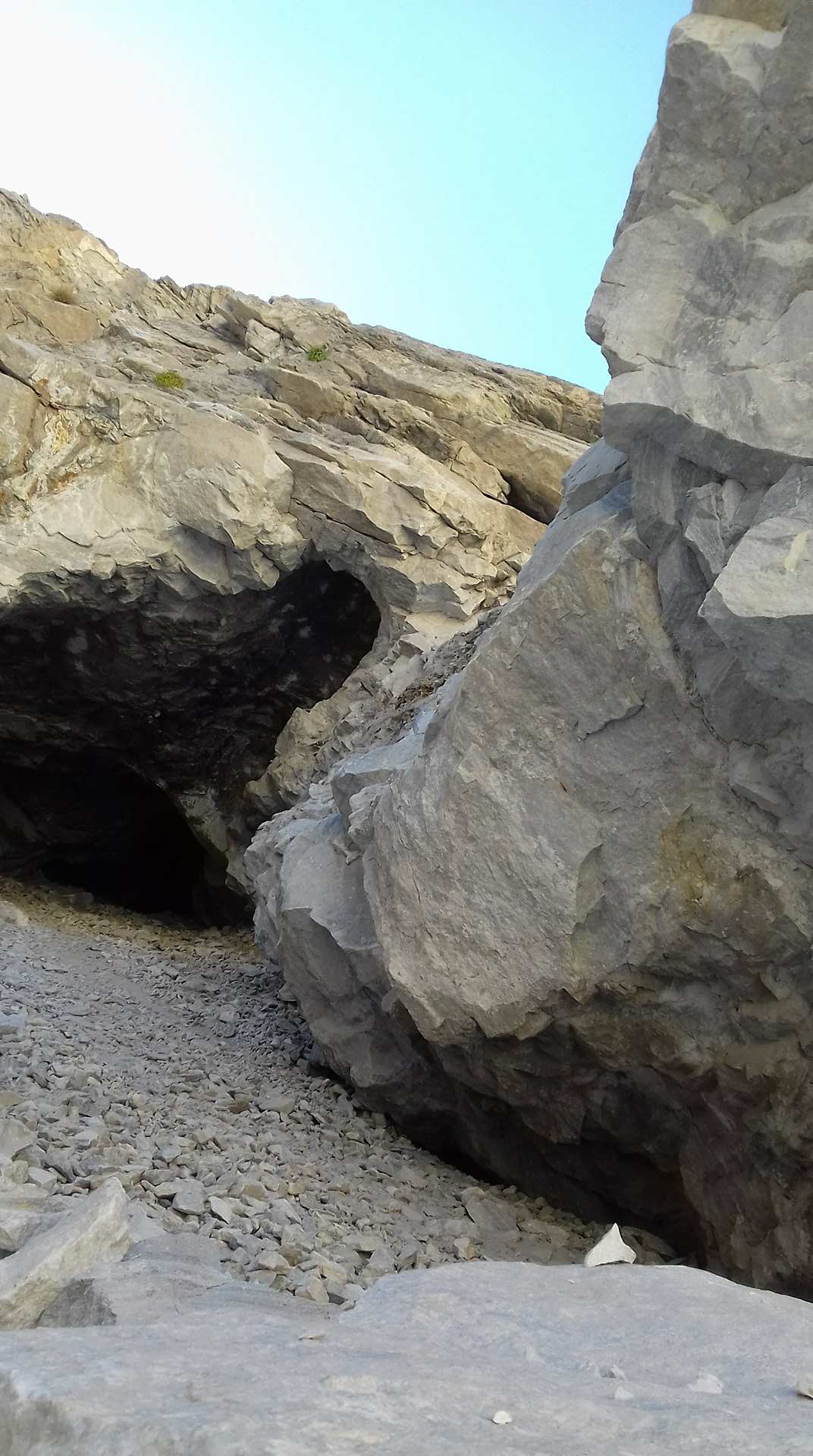
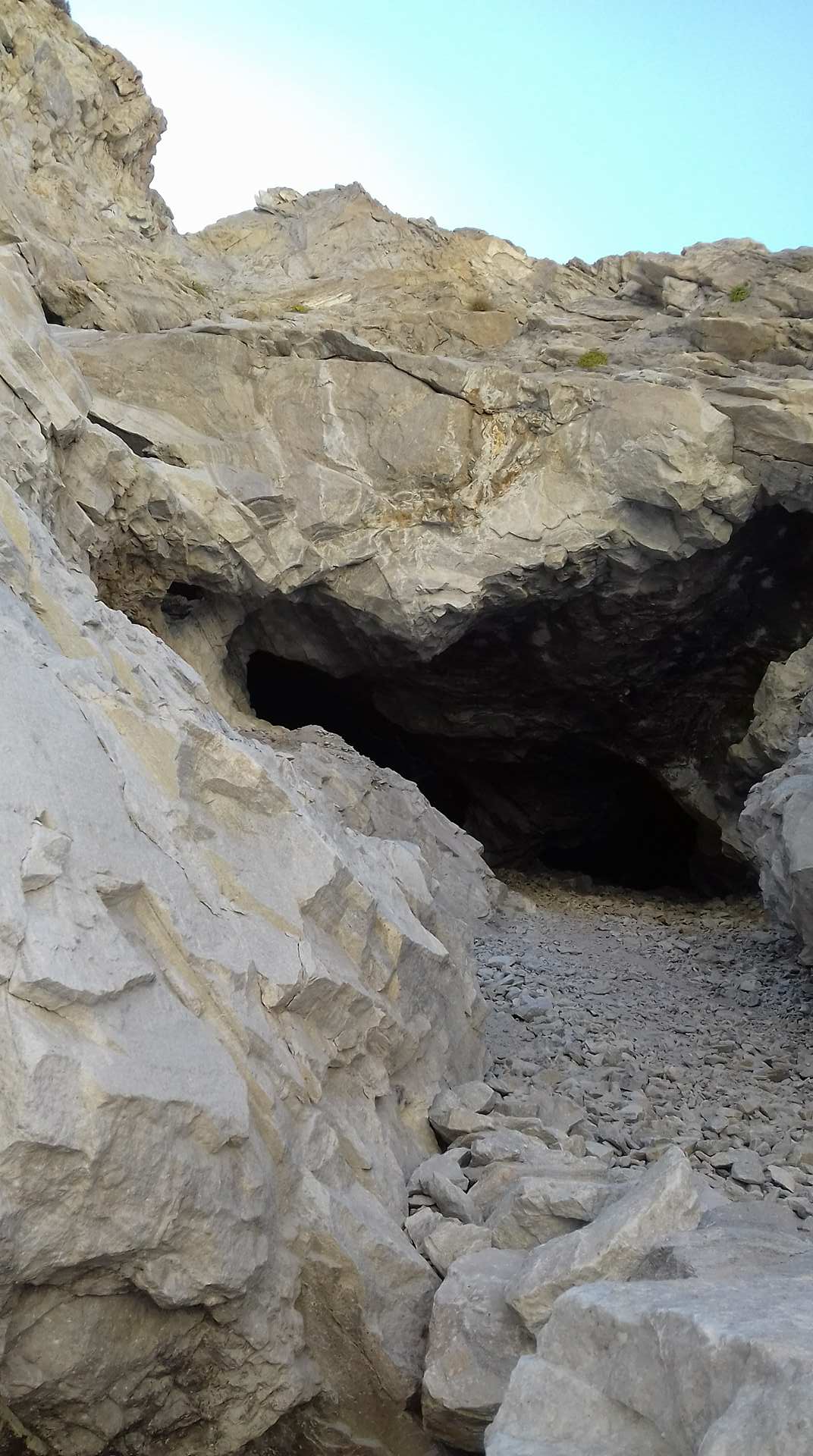
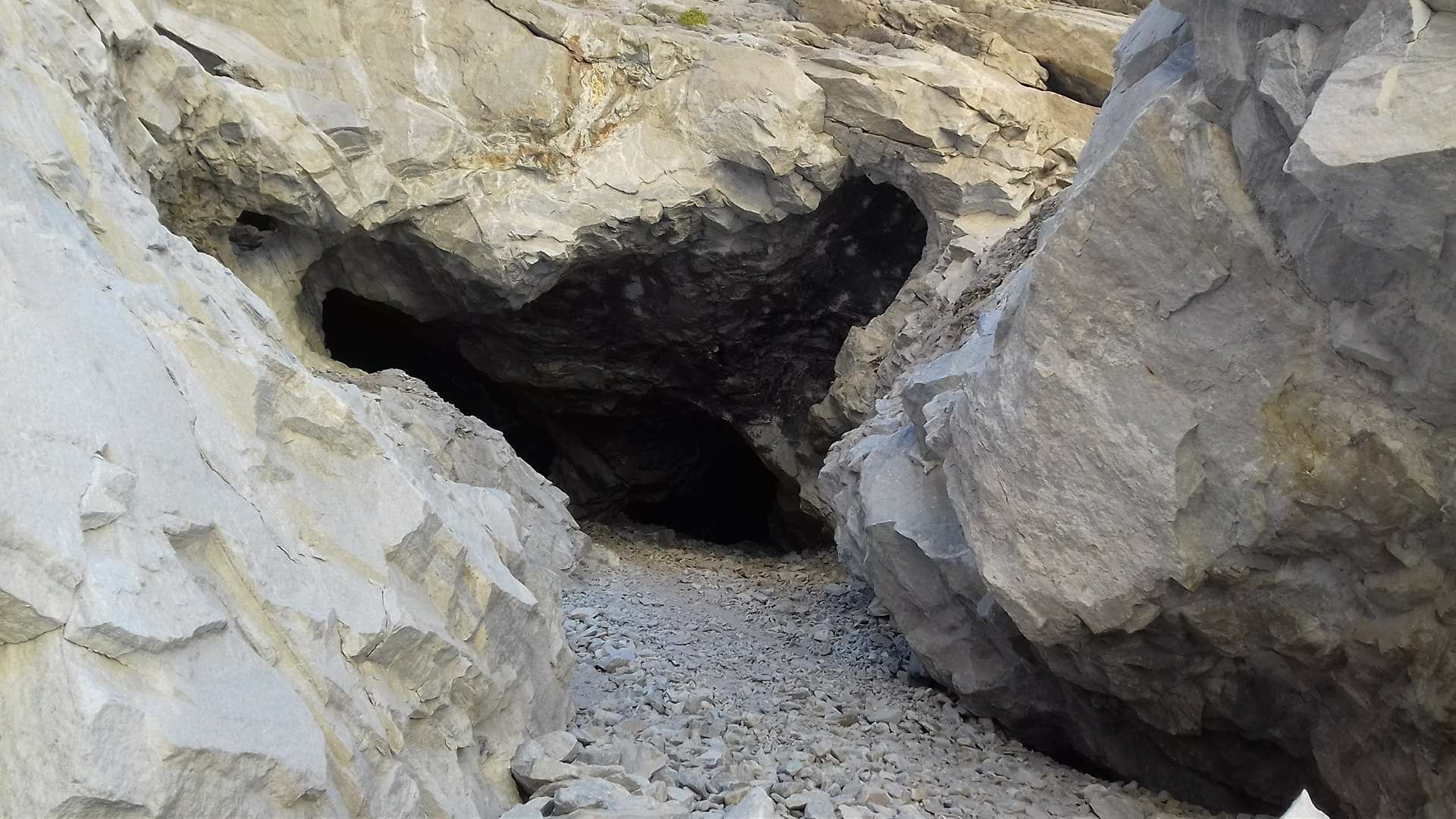
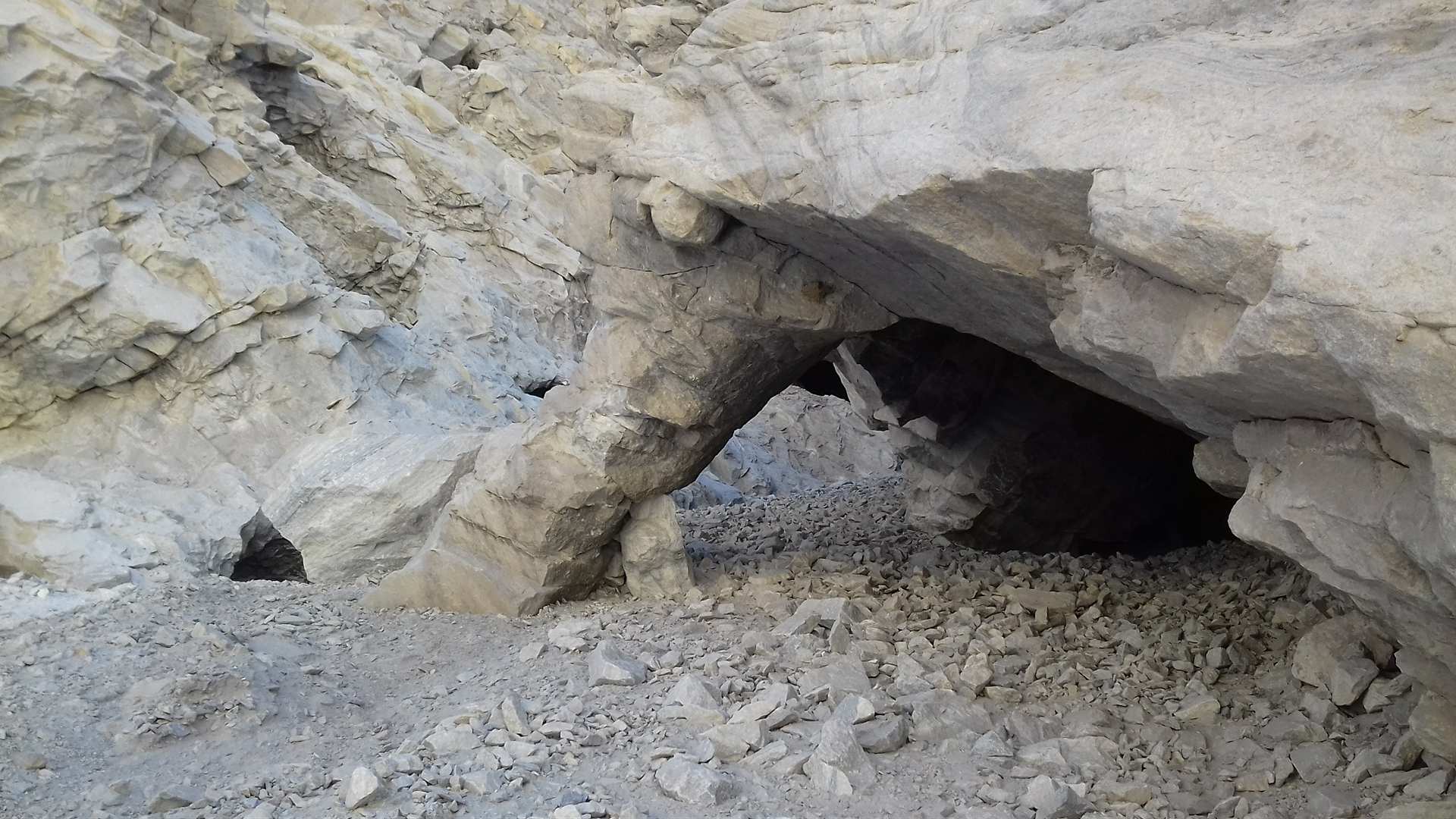
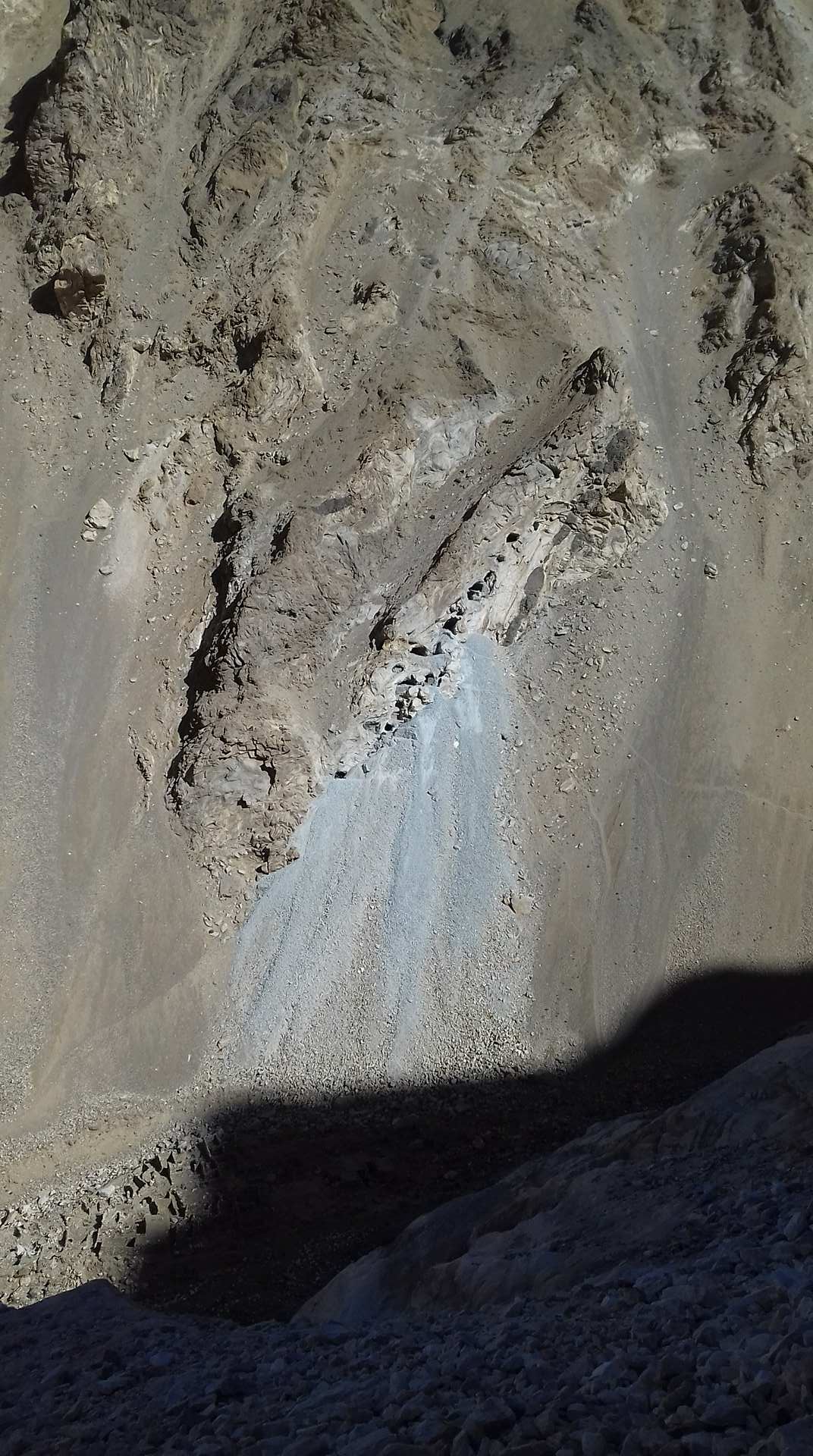
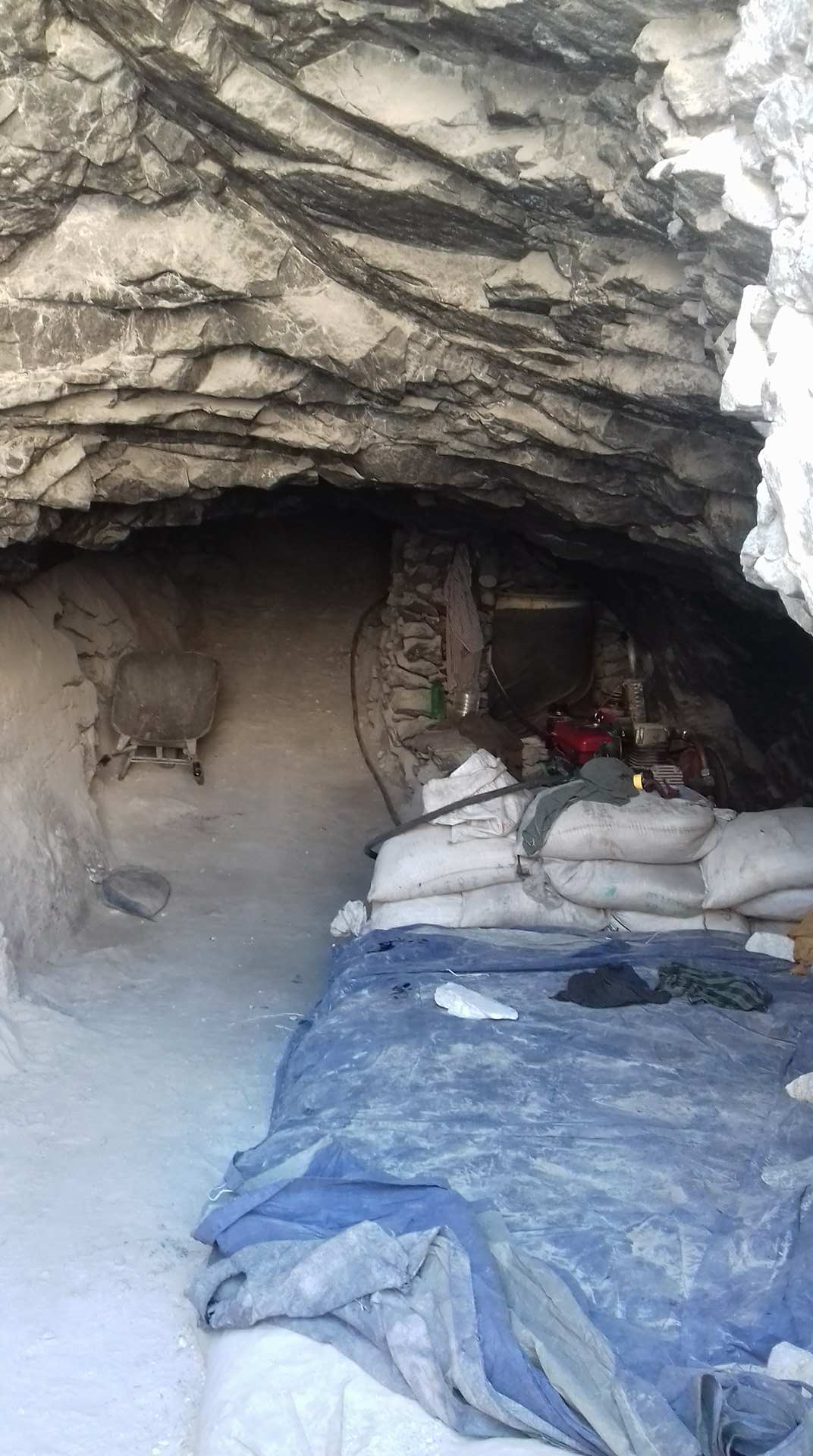
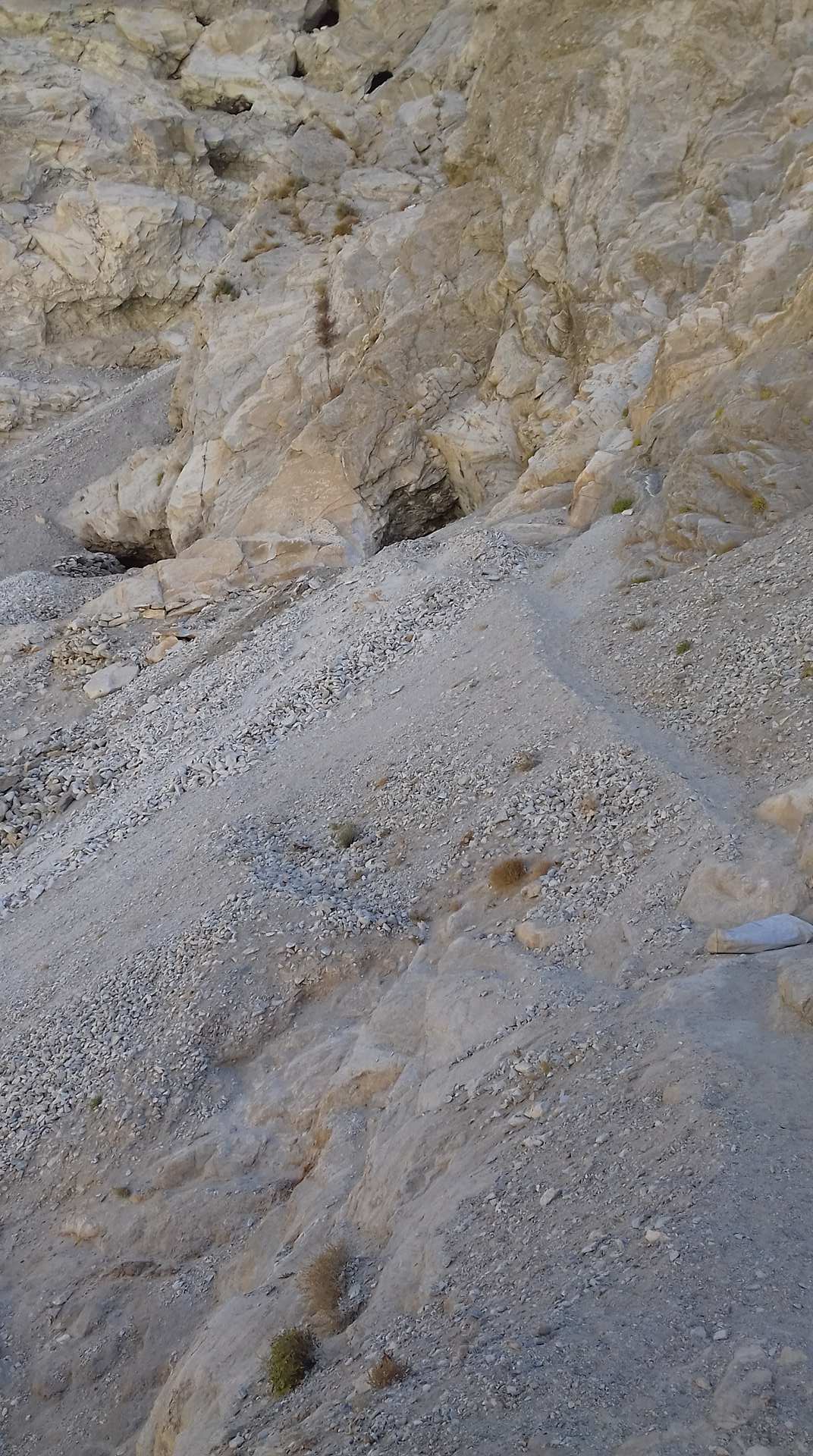
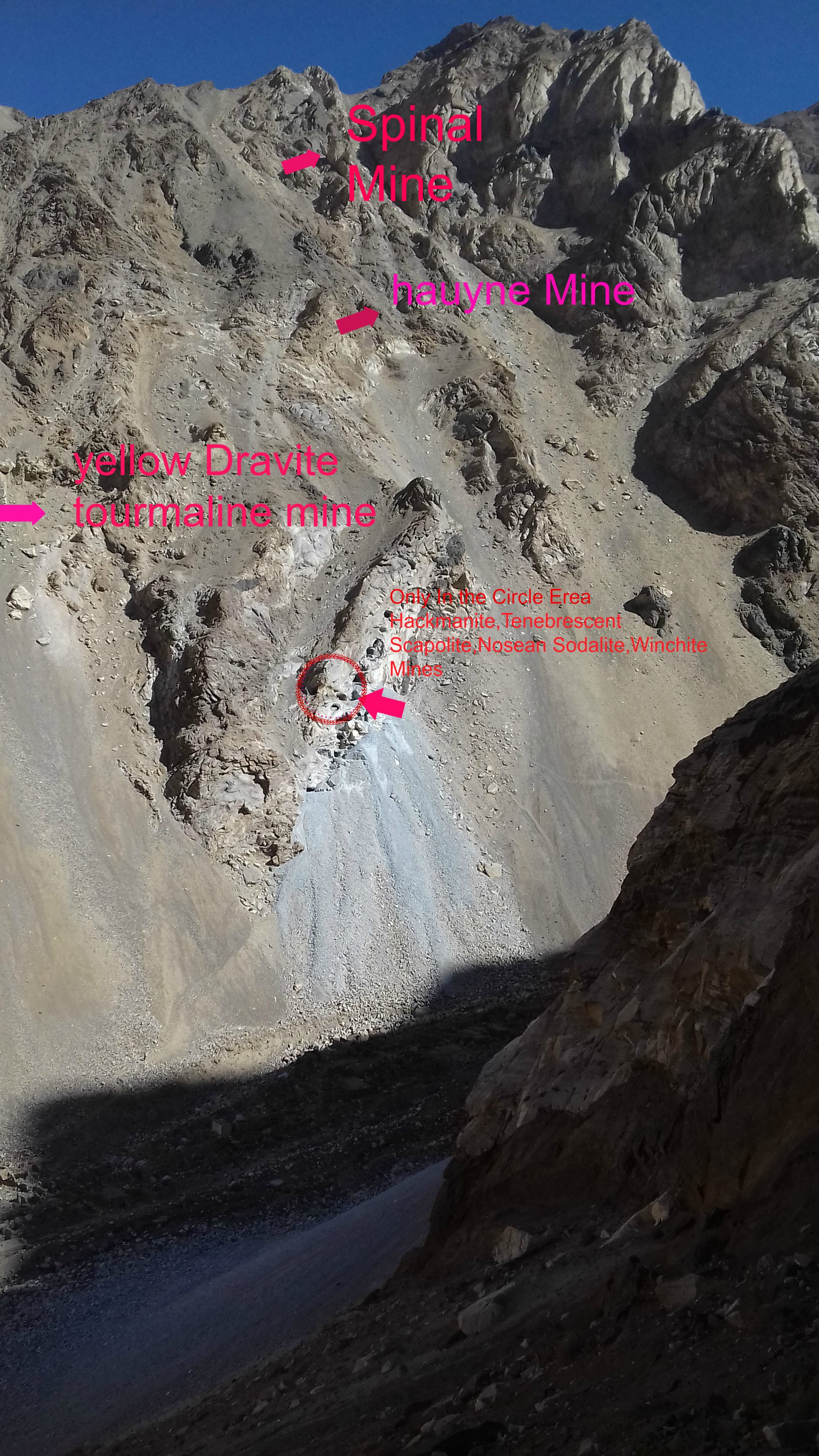
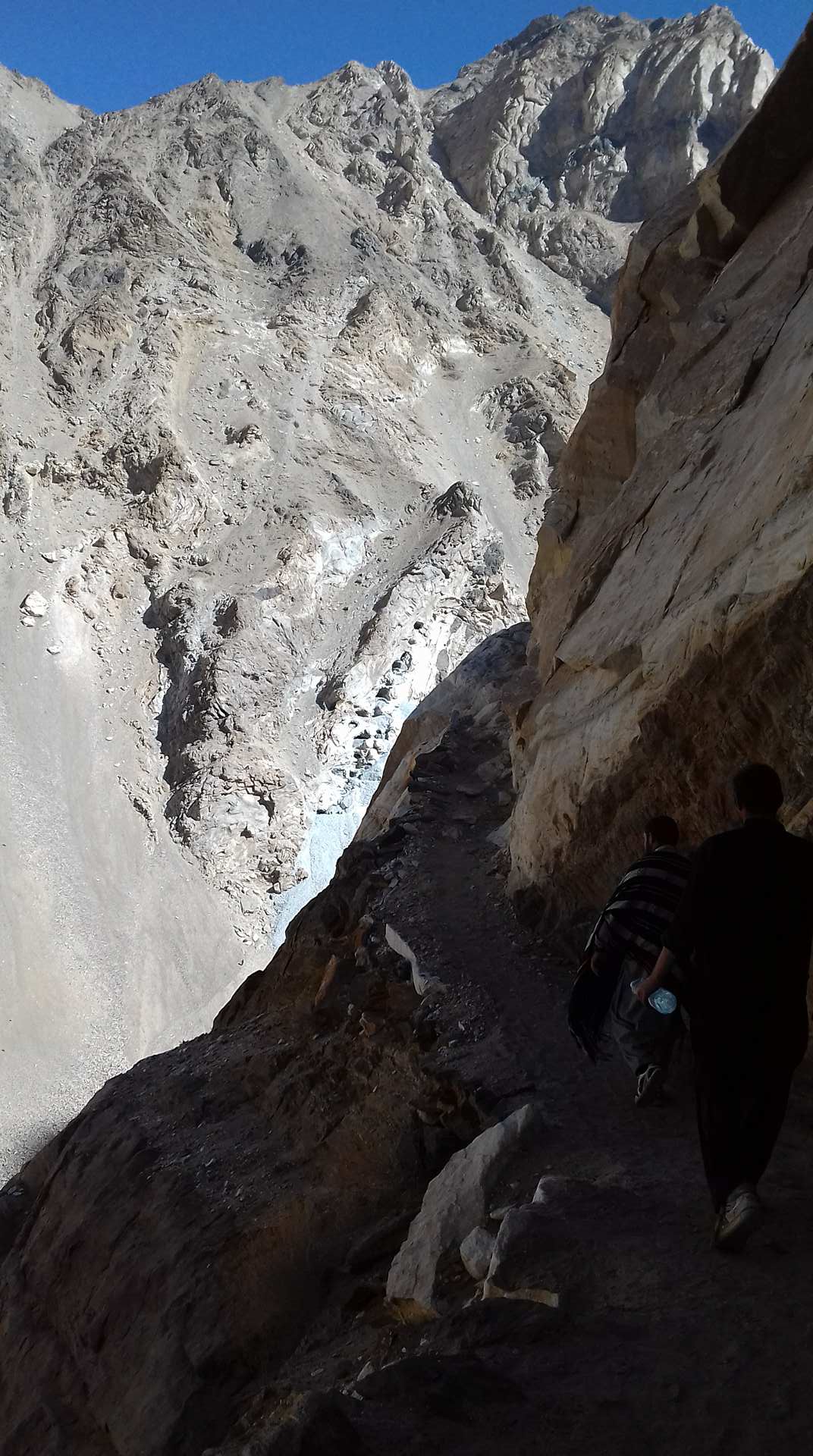
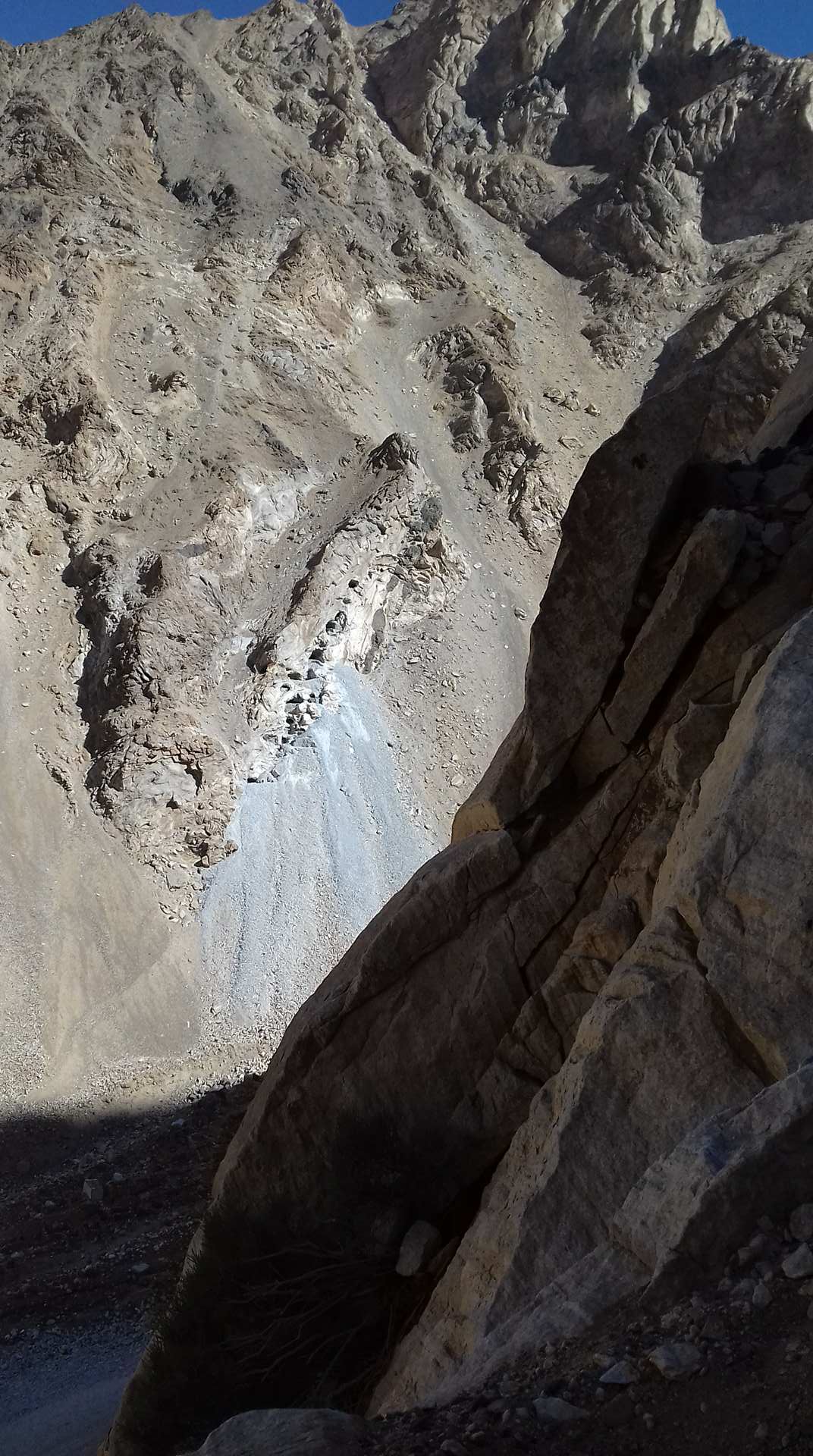
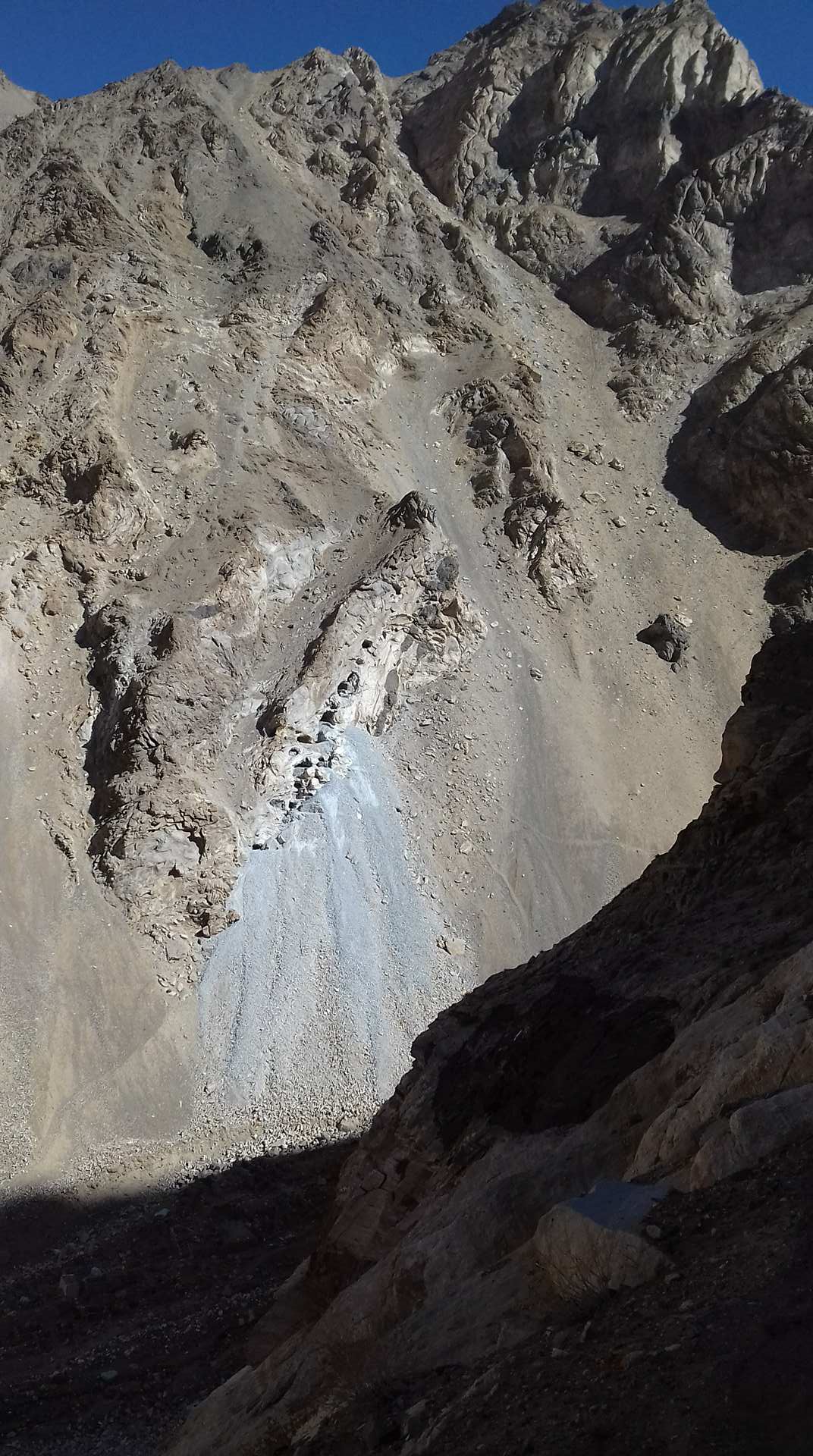
A quick overview of the many parts surrounding the Pitwak mine. The miner I've been in contact was kind enough to give me some insight into what is found where on the mountain. They are named in a combination of Urdu and Persian. From the top down in the first photo the spinel mine is called madan spinel, hauyne - madan sodalite, dravite - madan daane zard, hackmanite - madan pitwak. What wonderfully diverse geology in such a small area. This is only half the mountain as well!
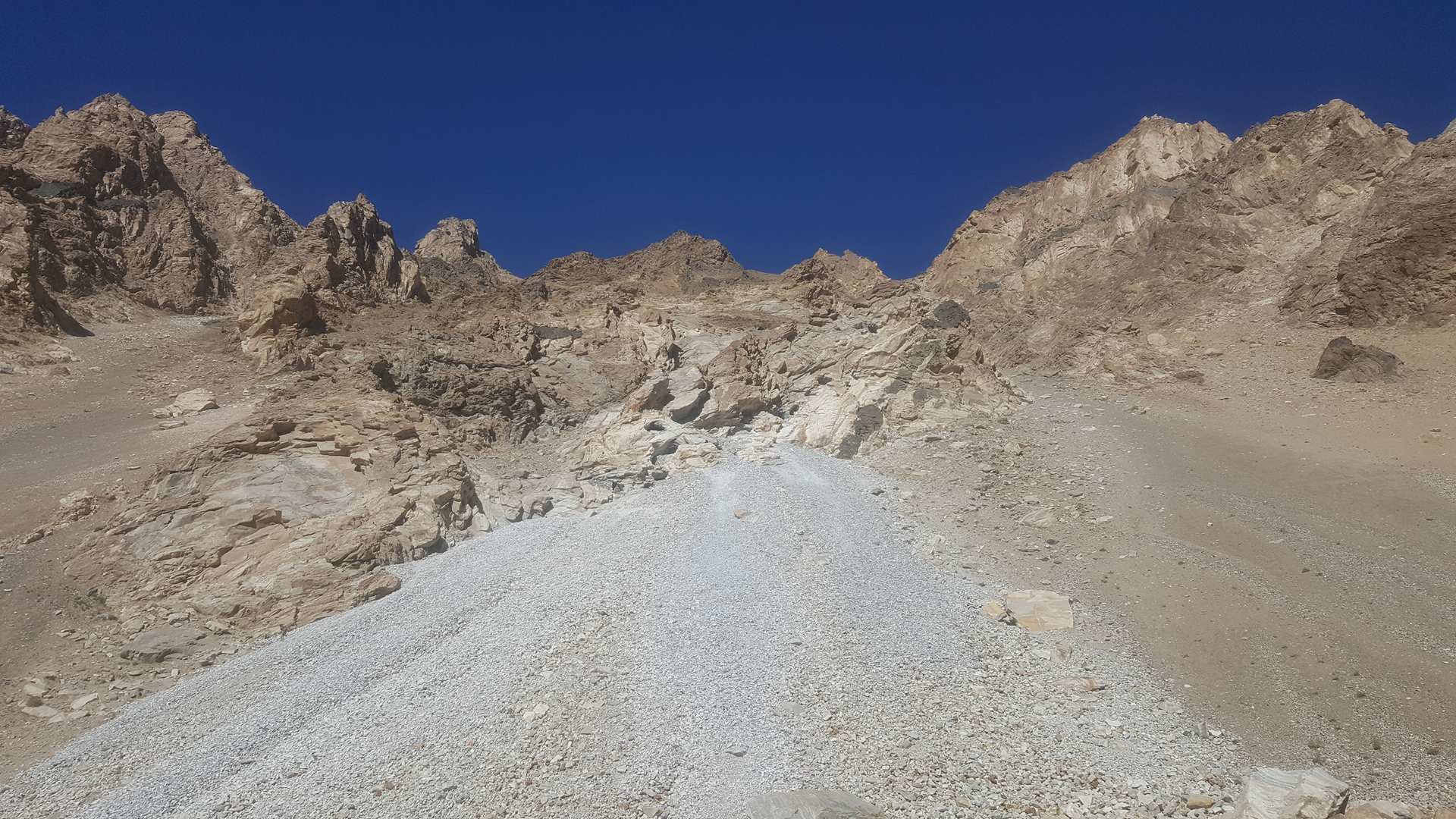
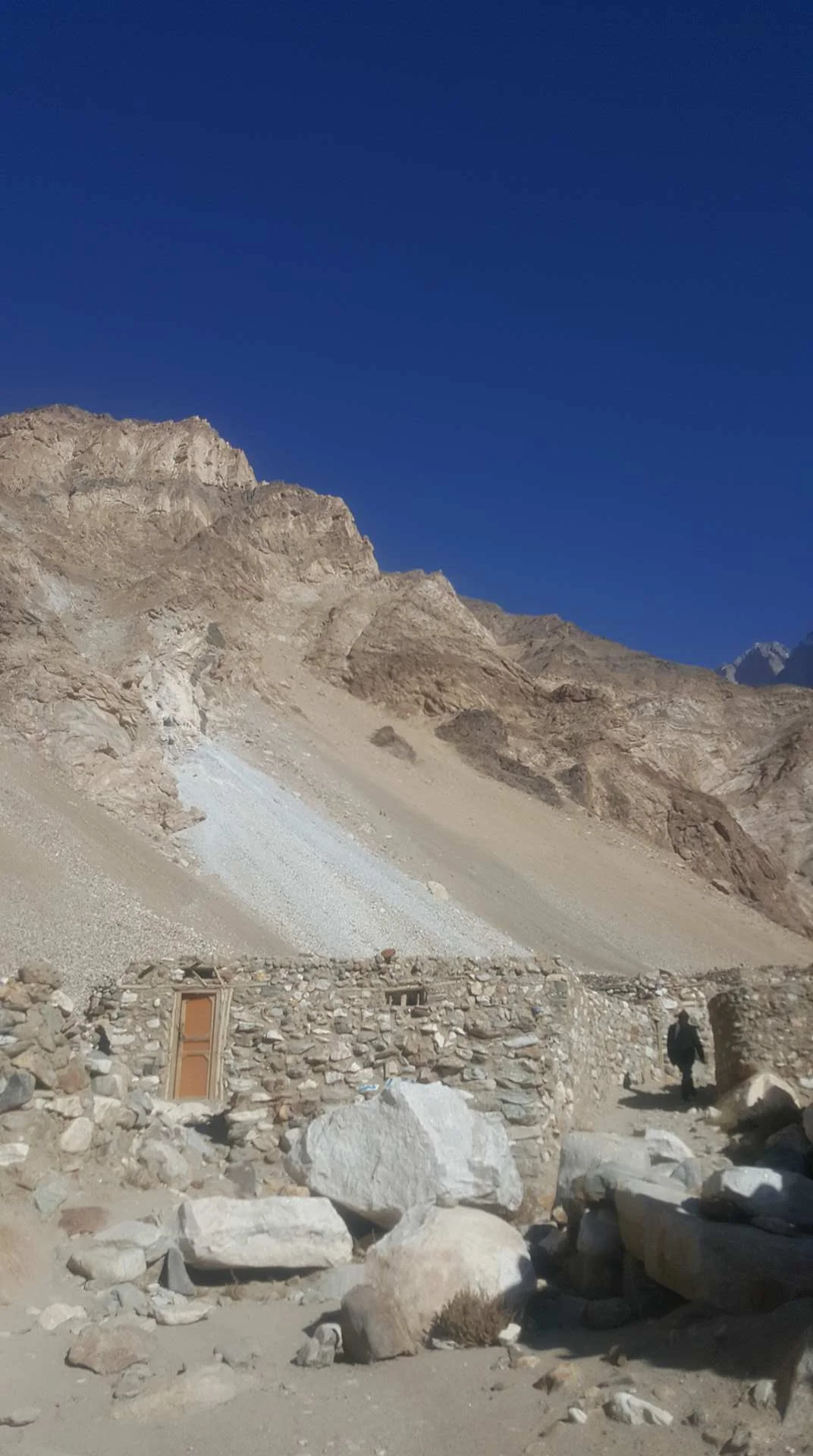
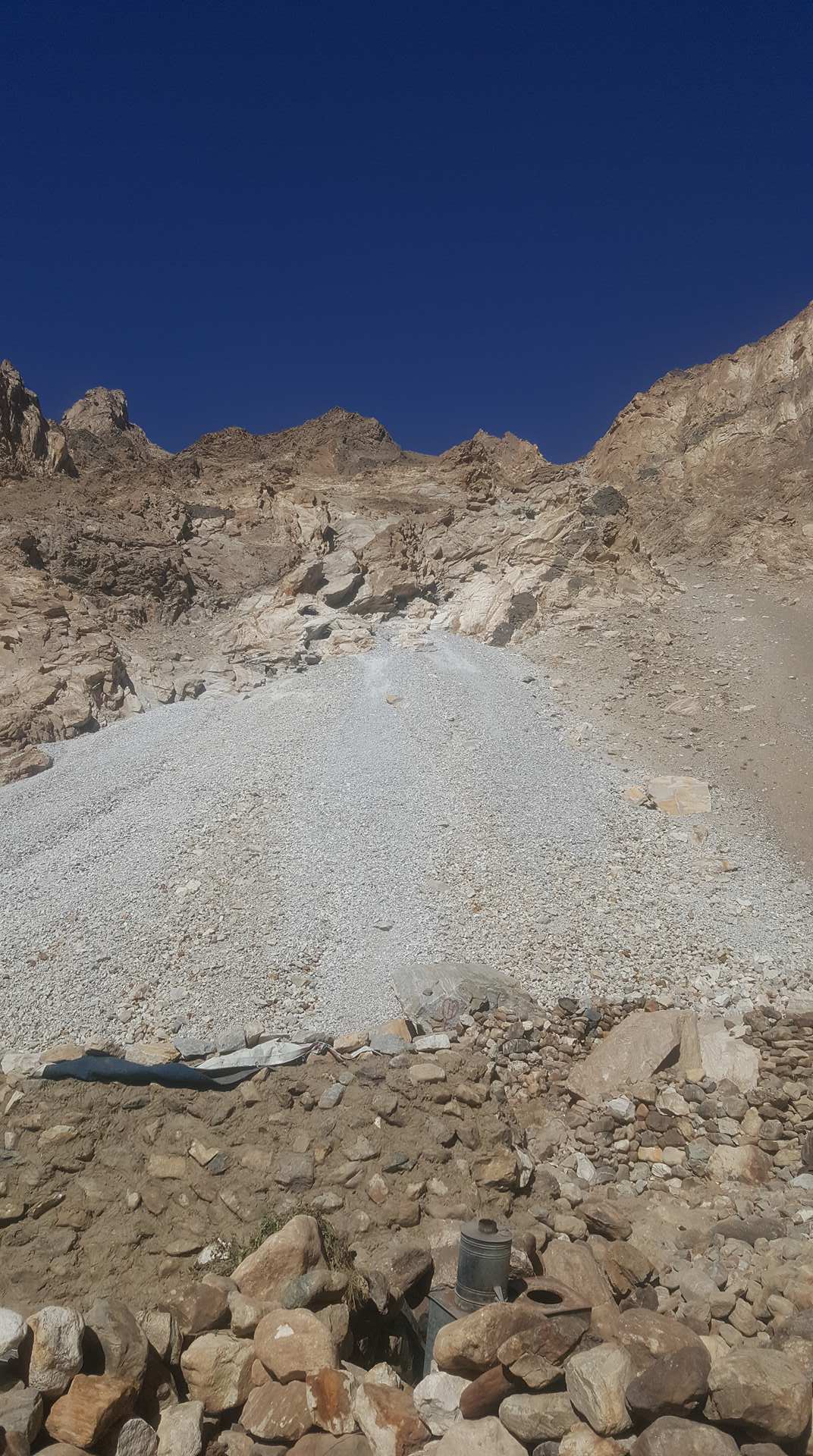
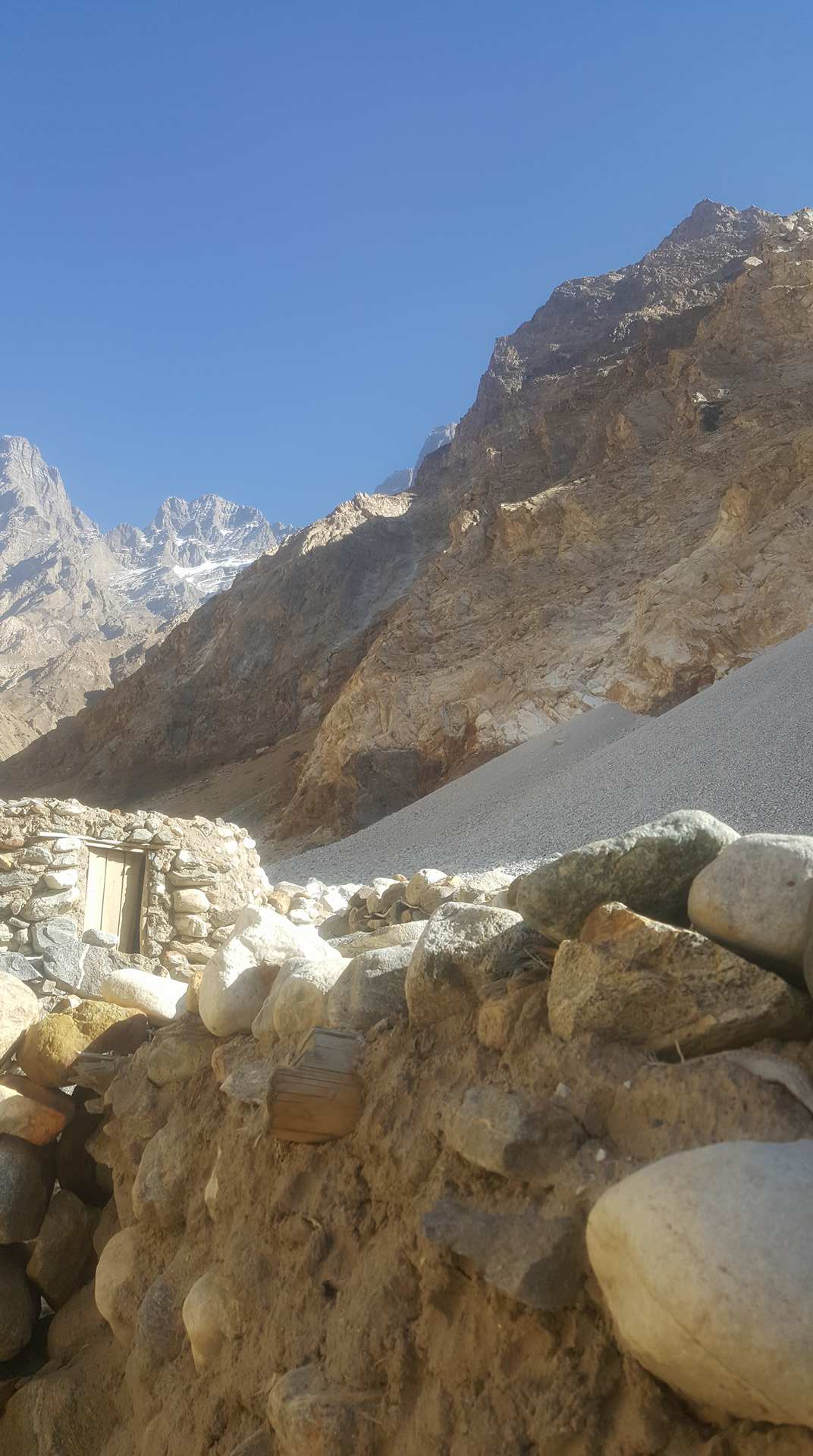
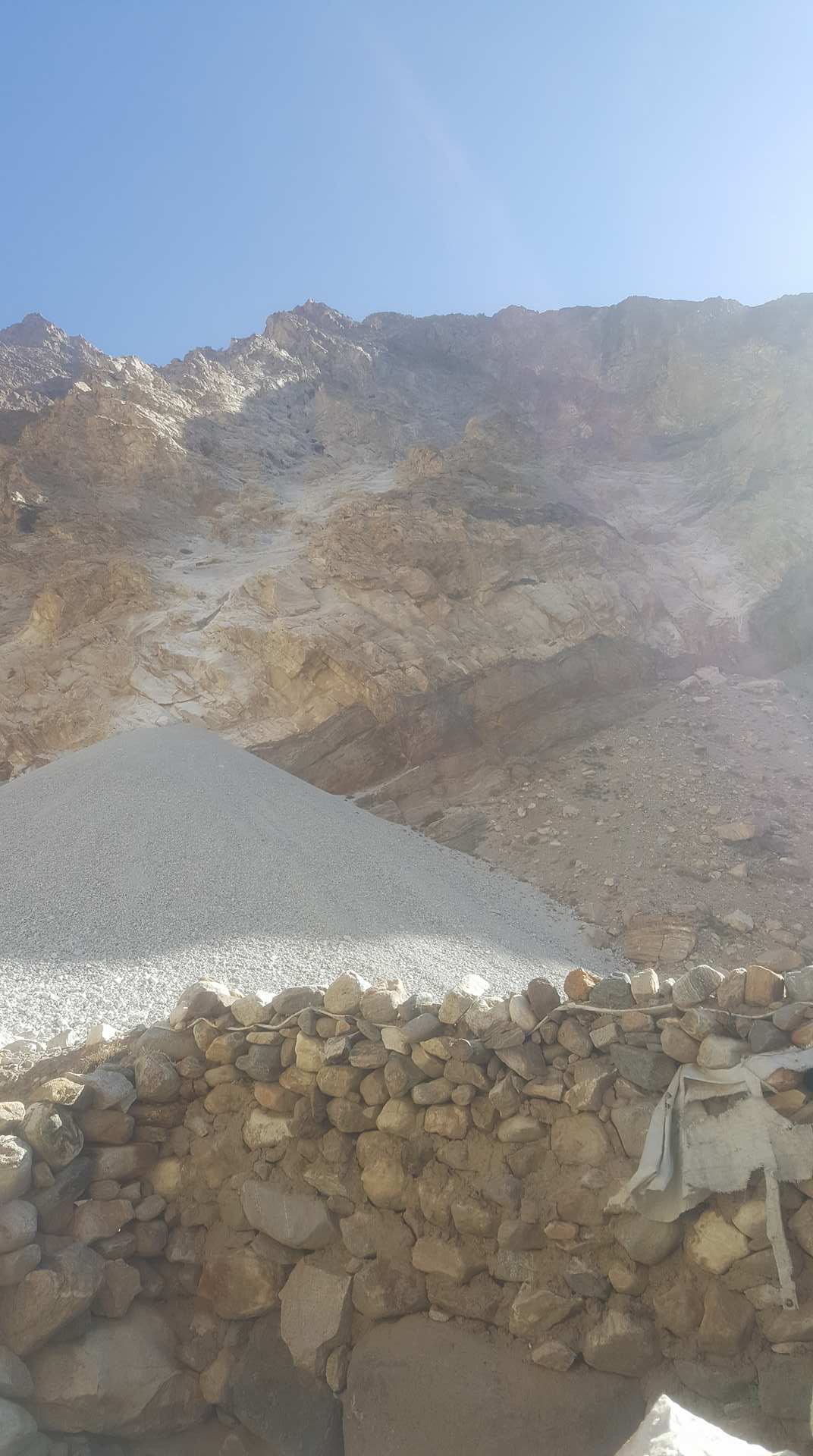
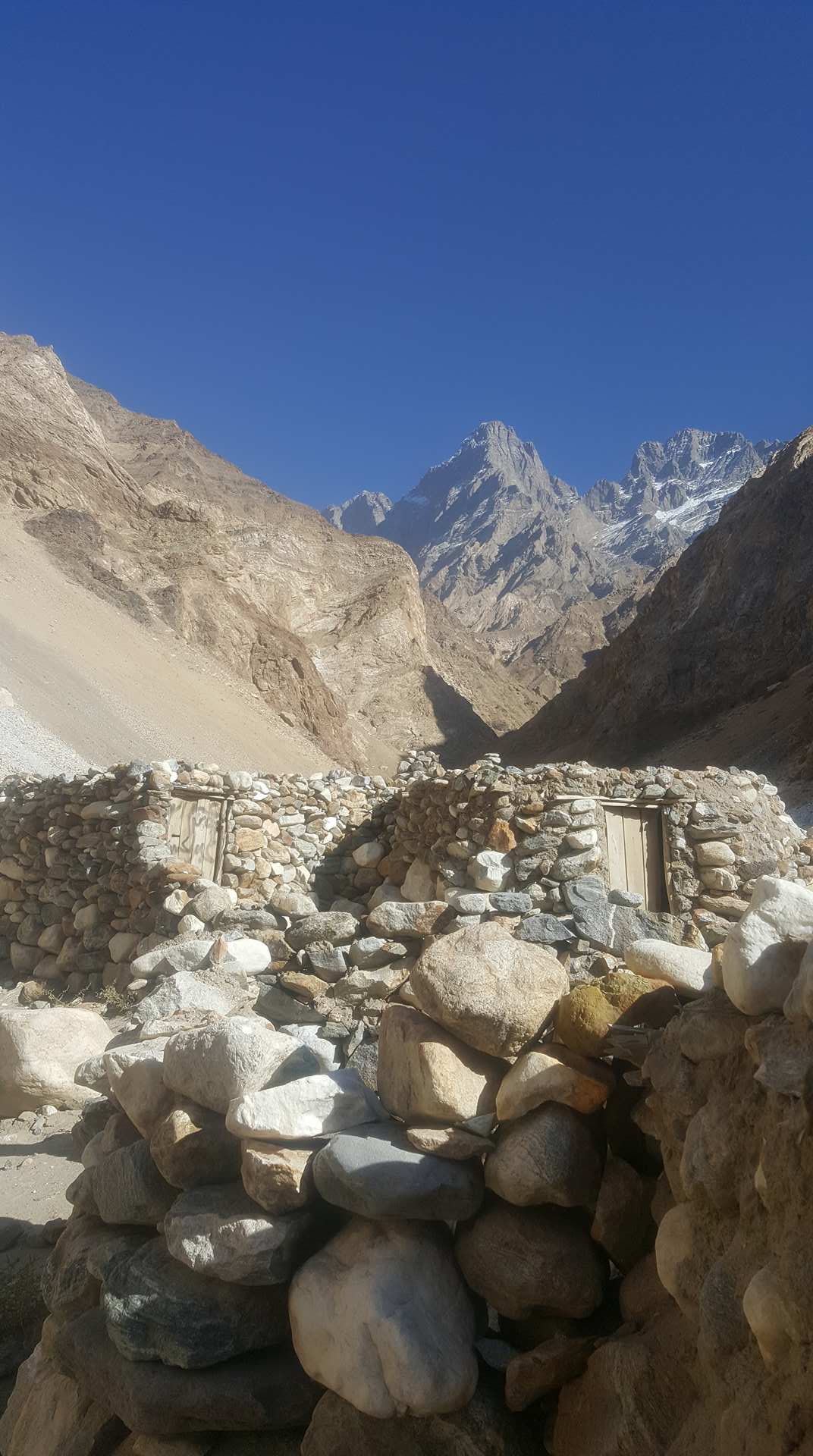
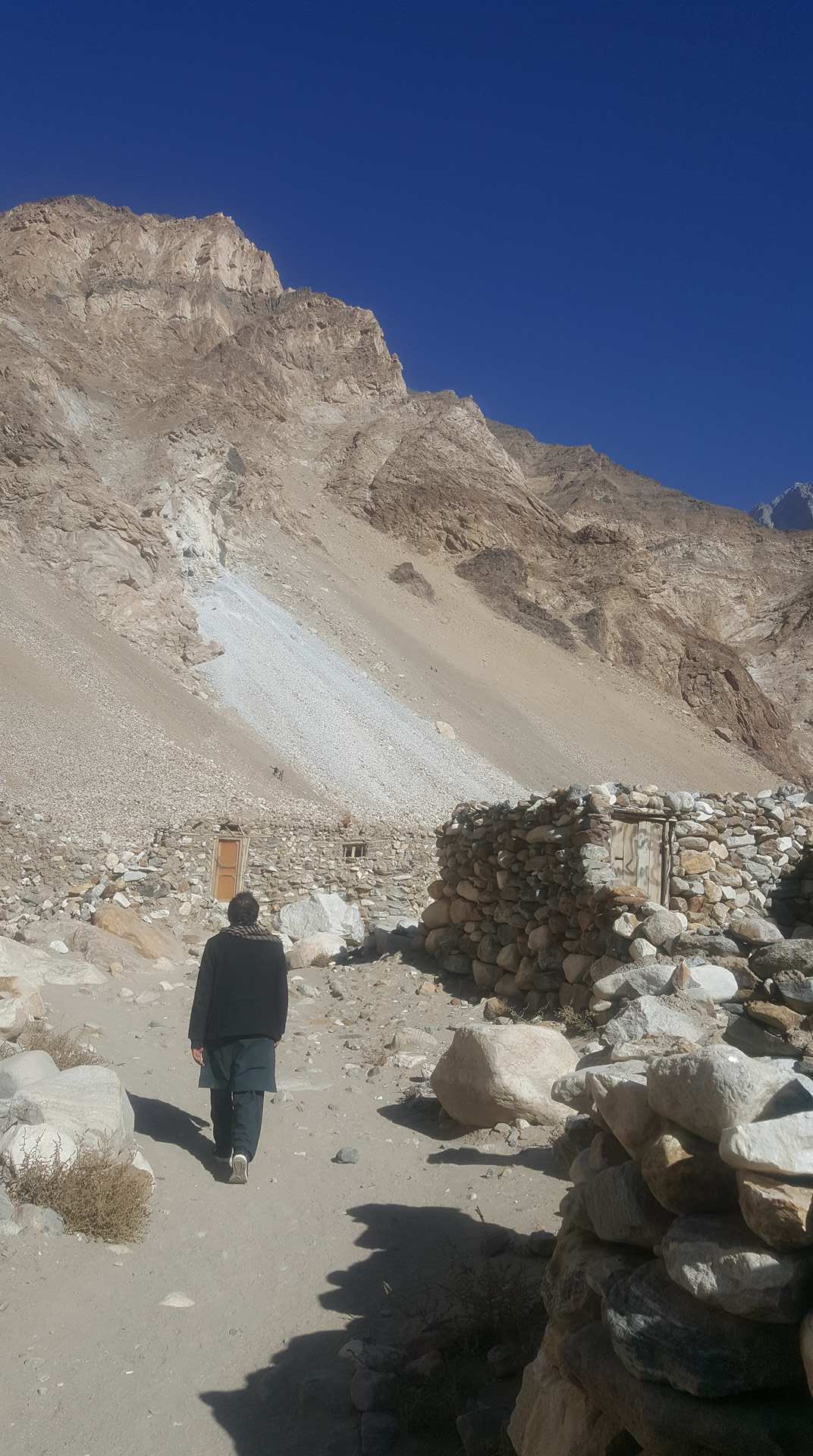
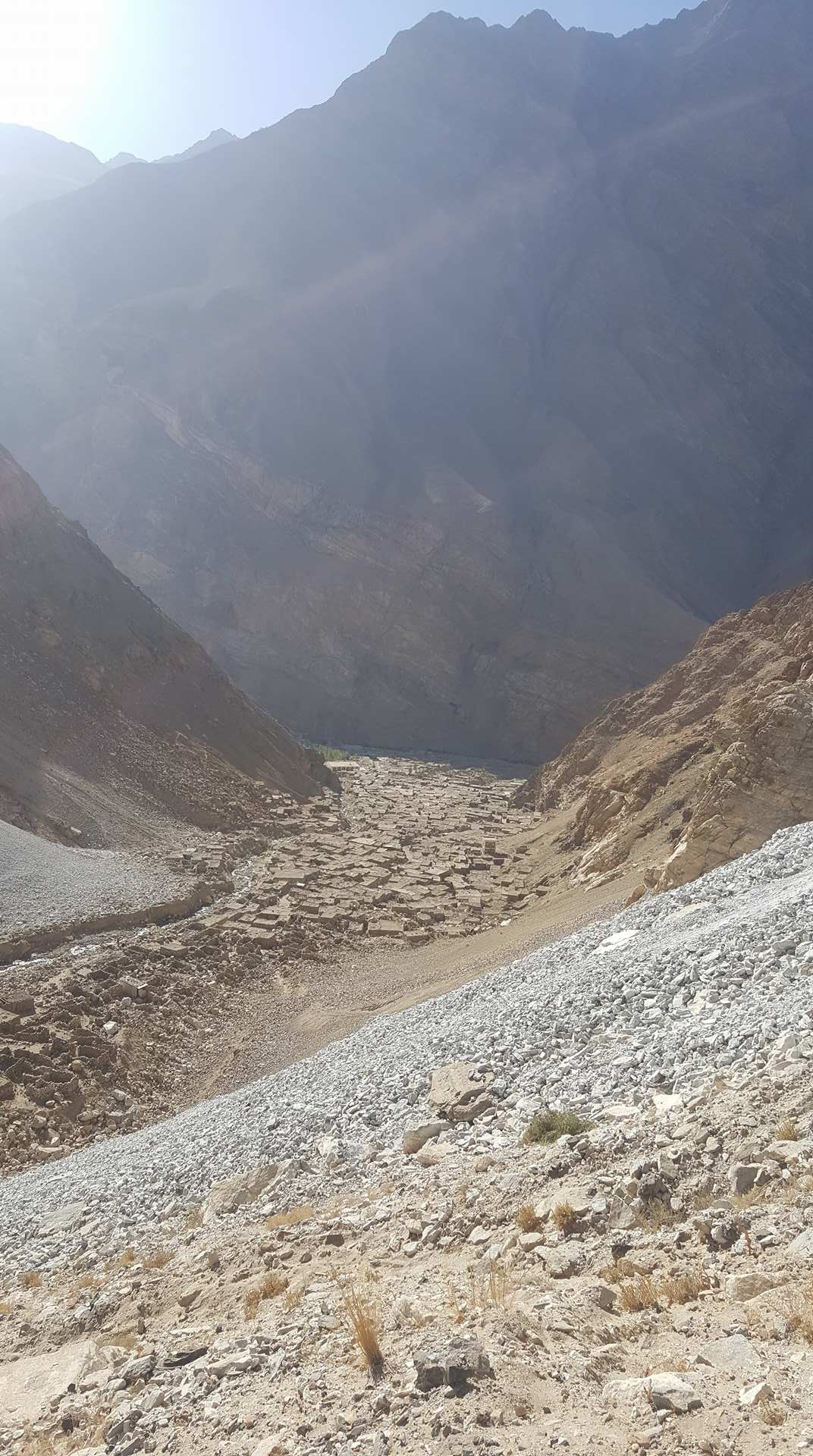
Some photos from base camp. As you can see it's quite close to the mines. However, it's quite difficult to grasp the scale of how large this area is from the few photos I have. You can see a large cluster of the makeshift houses in the last shot. There are roughly 500 homes, 200 shops, and a total of 4000 people living here during mining season. Speaking of which now would be a great time to interject the life of a miner in Badakhshan. First of all every mine has its own boss. At the start of the season miners can choose which mine they work at. They then get permission from the clan of the area (note: his words exactly. Need more info on what part the clan plays). This part is important because miners are able to buy specimens they mine and get the first pick at nice pieces. For example, the tenebrescent scapolite I most recently posted (http://www.raymond-wu.com/all/2017/11/10/tenebrescent-scapolite) was bought by this miner for $200. 5% then goes to the clan (note: reason unknown) and he can then go on to sell it for whatever price he wishes. In this case he sold it for over double that and it eventually made its way into my hands. For this reason alone some businessmen set up camp here to be the first ones to get the newest material being mined! Of note is that no women are allowed here.
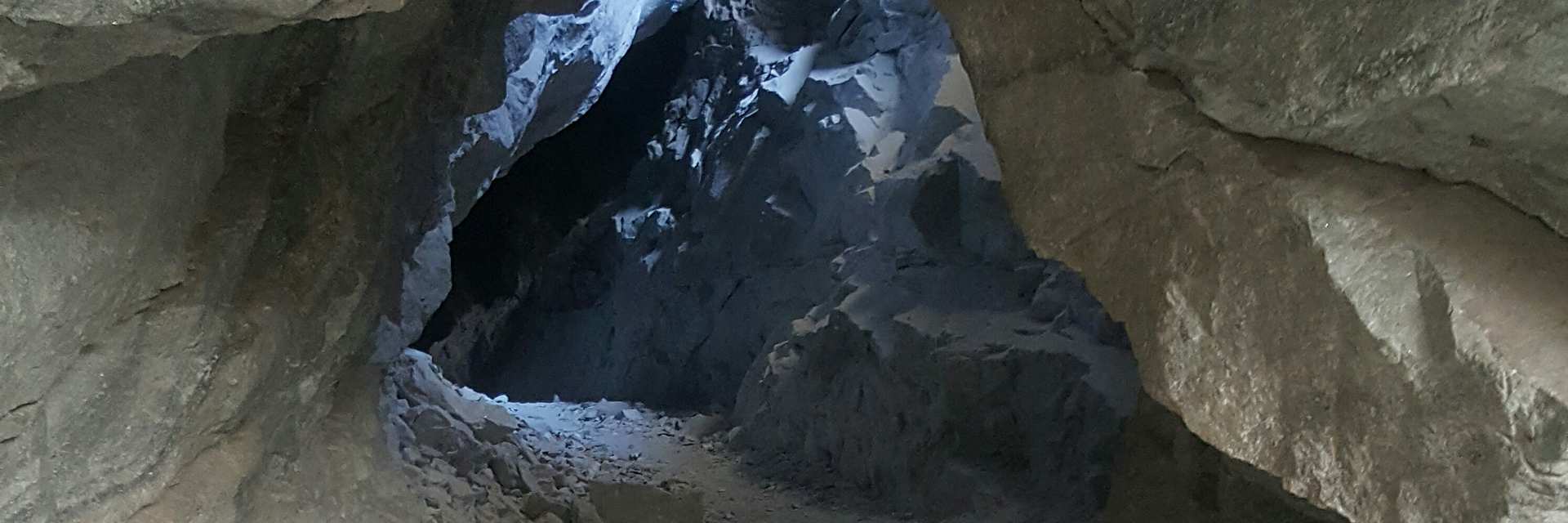
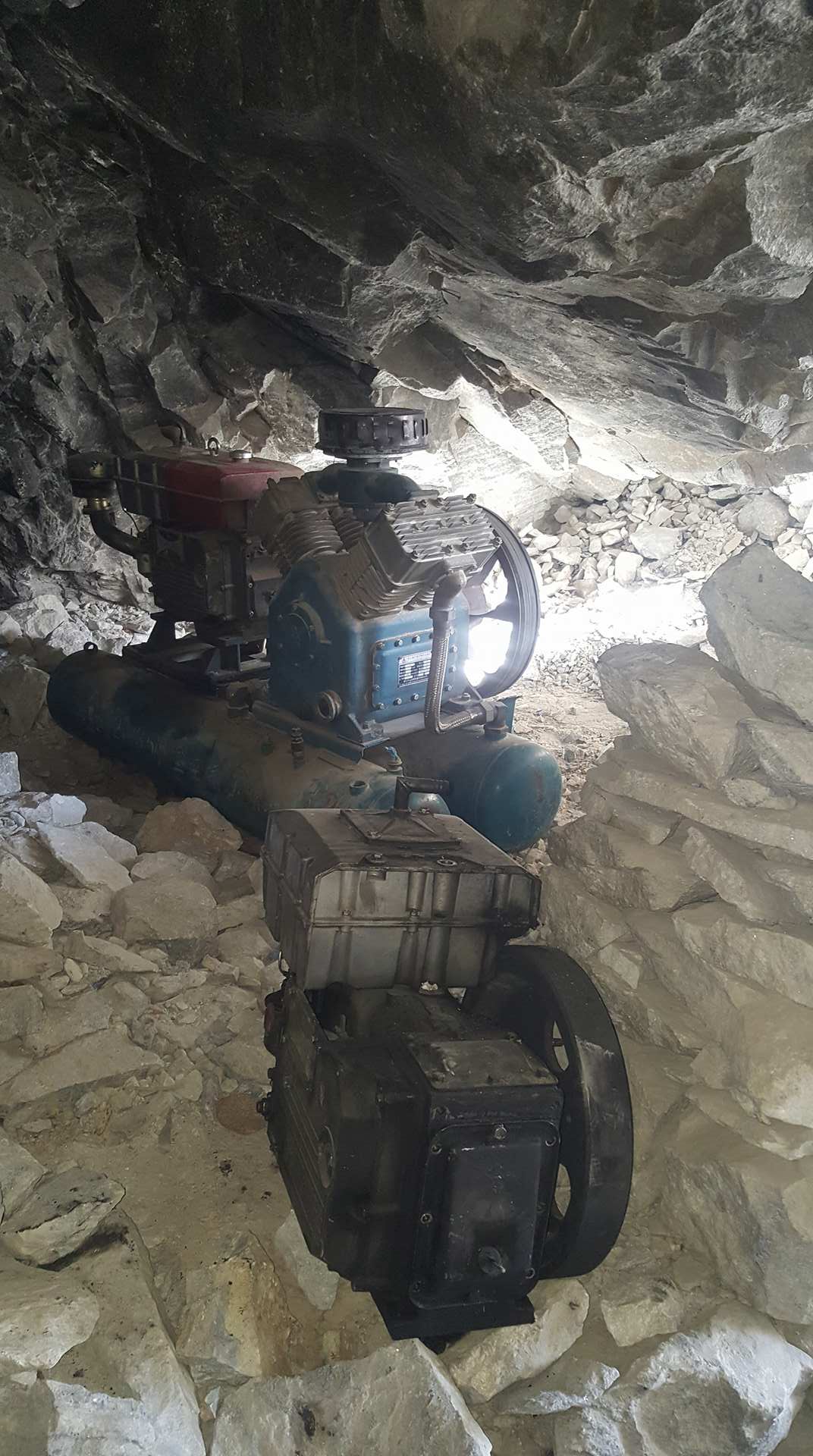
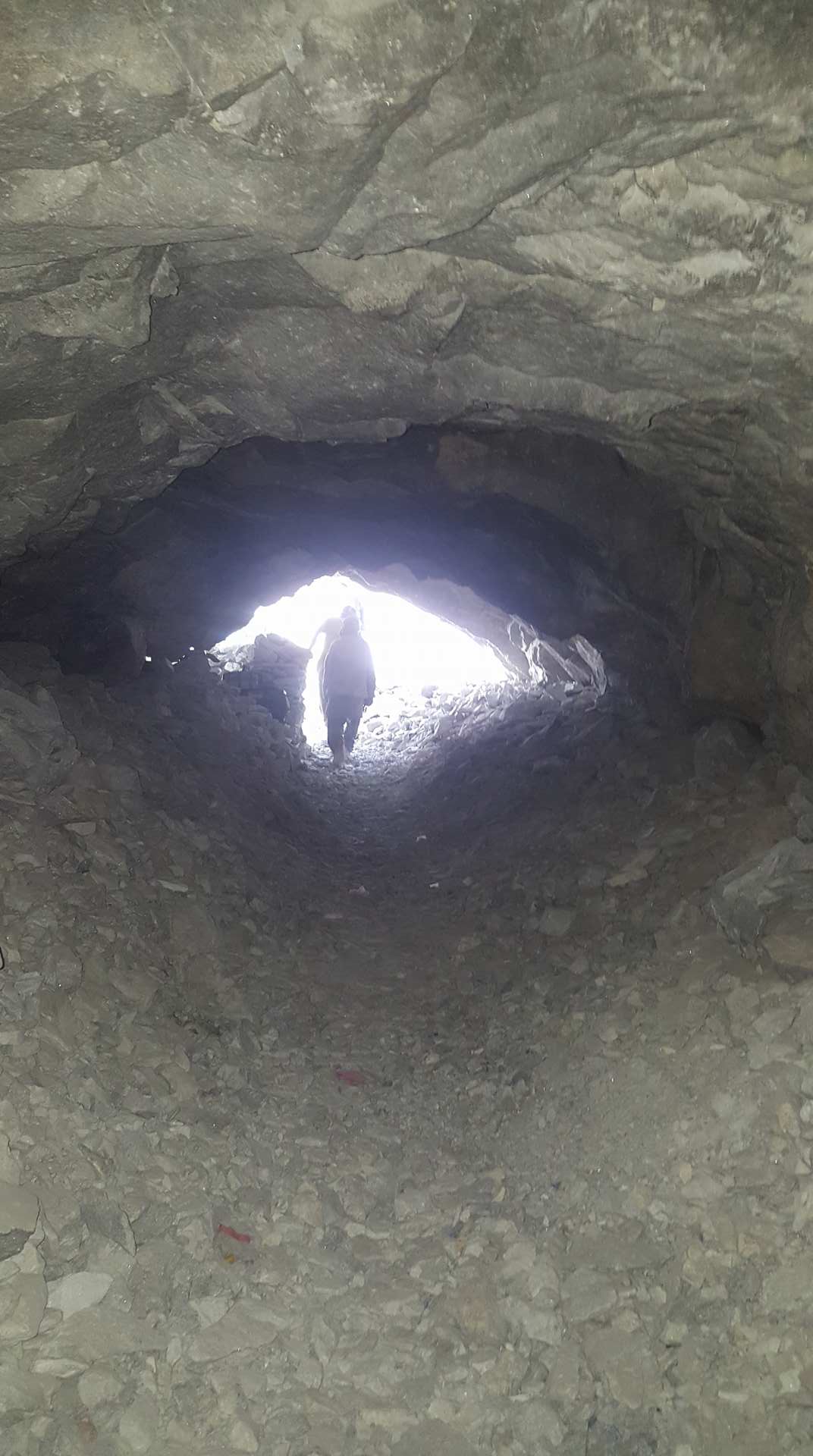
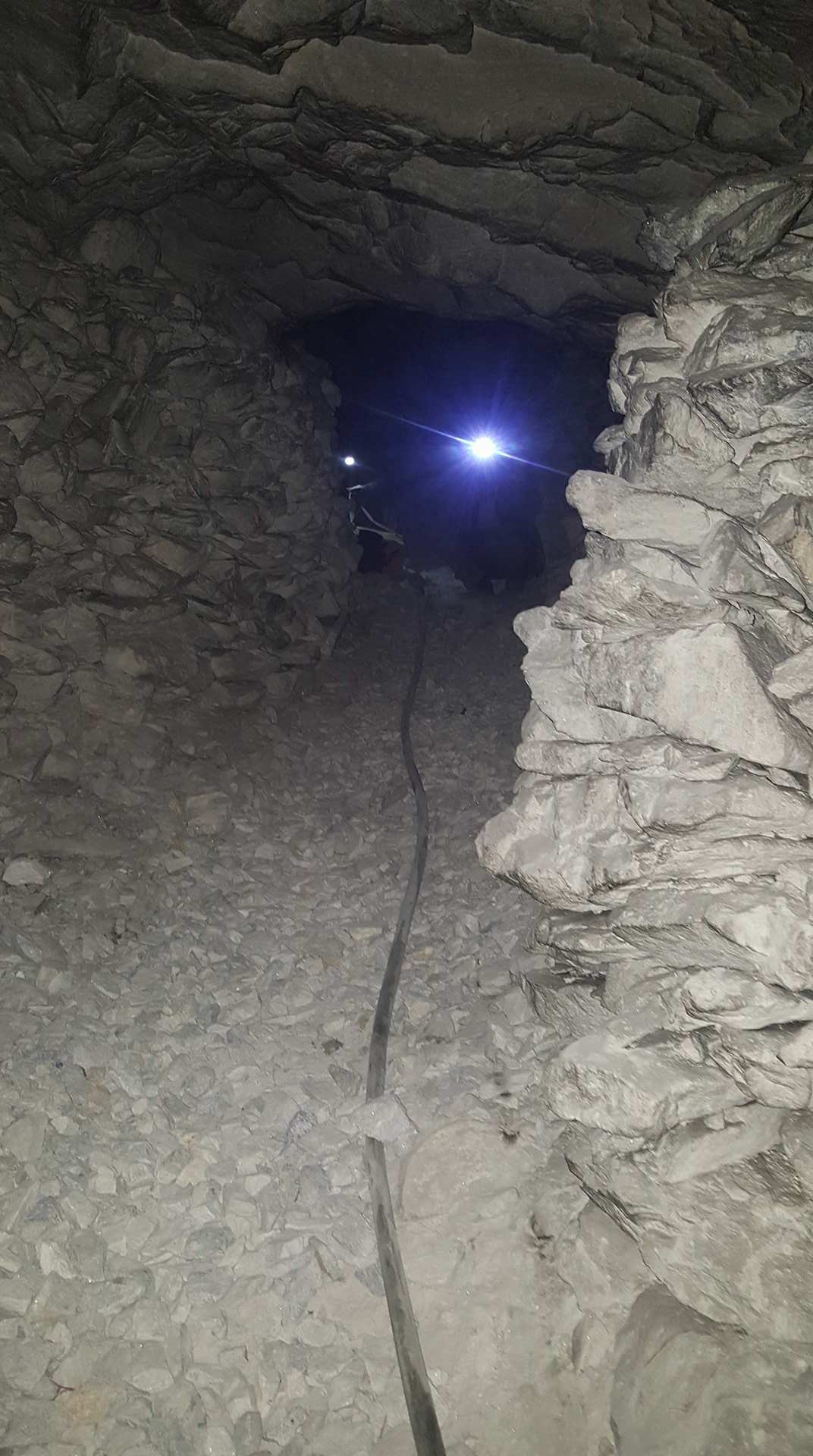
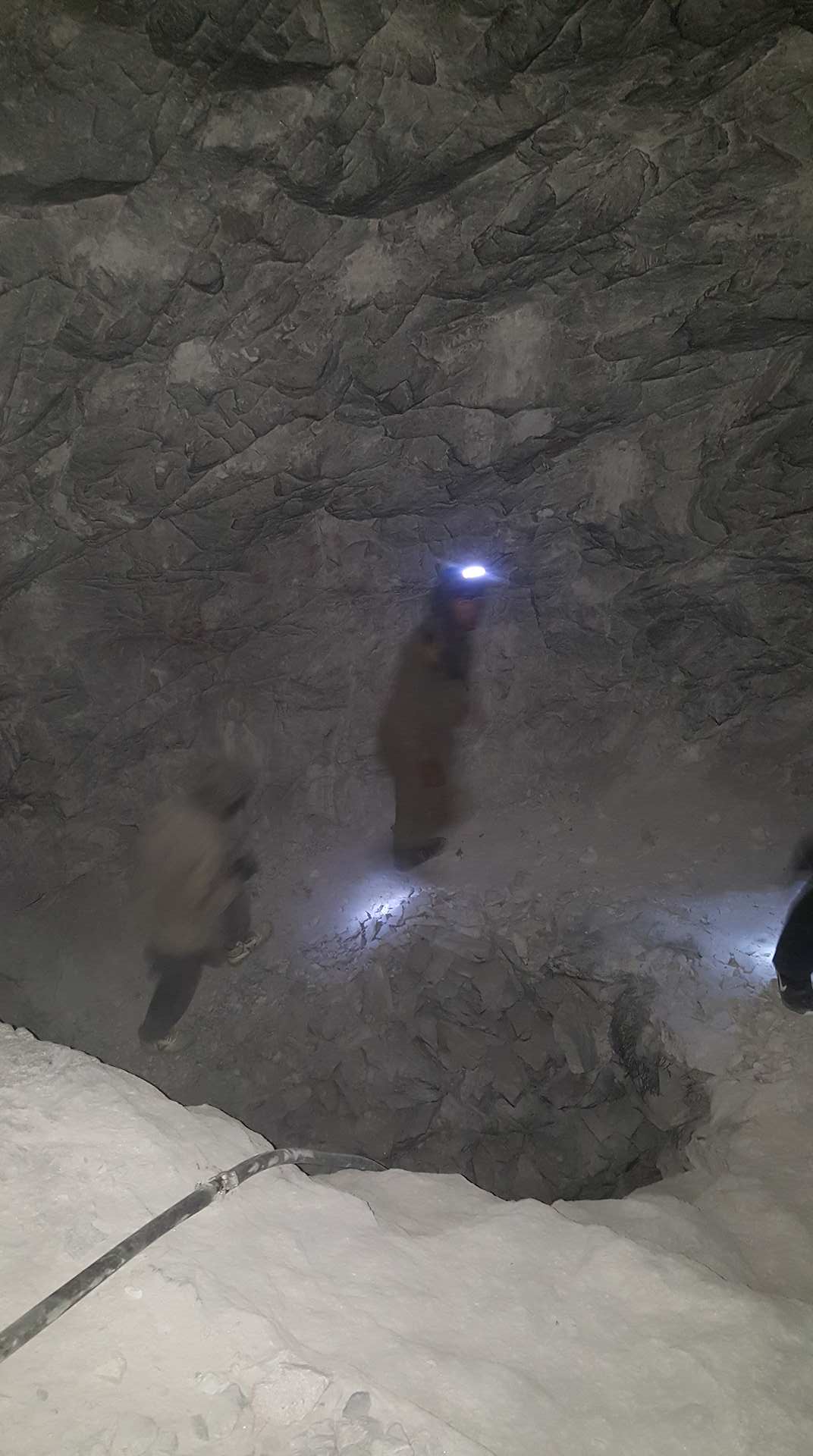
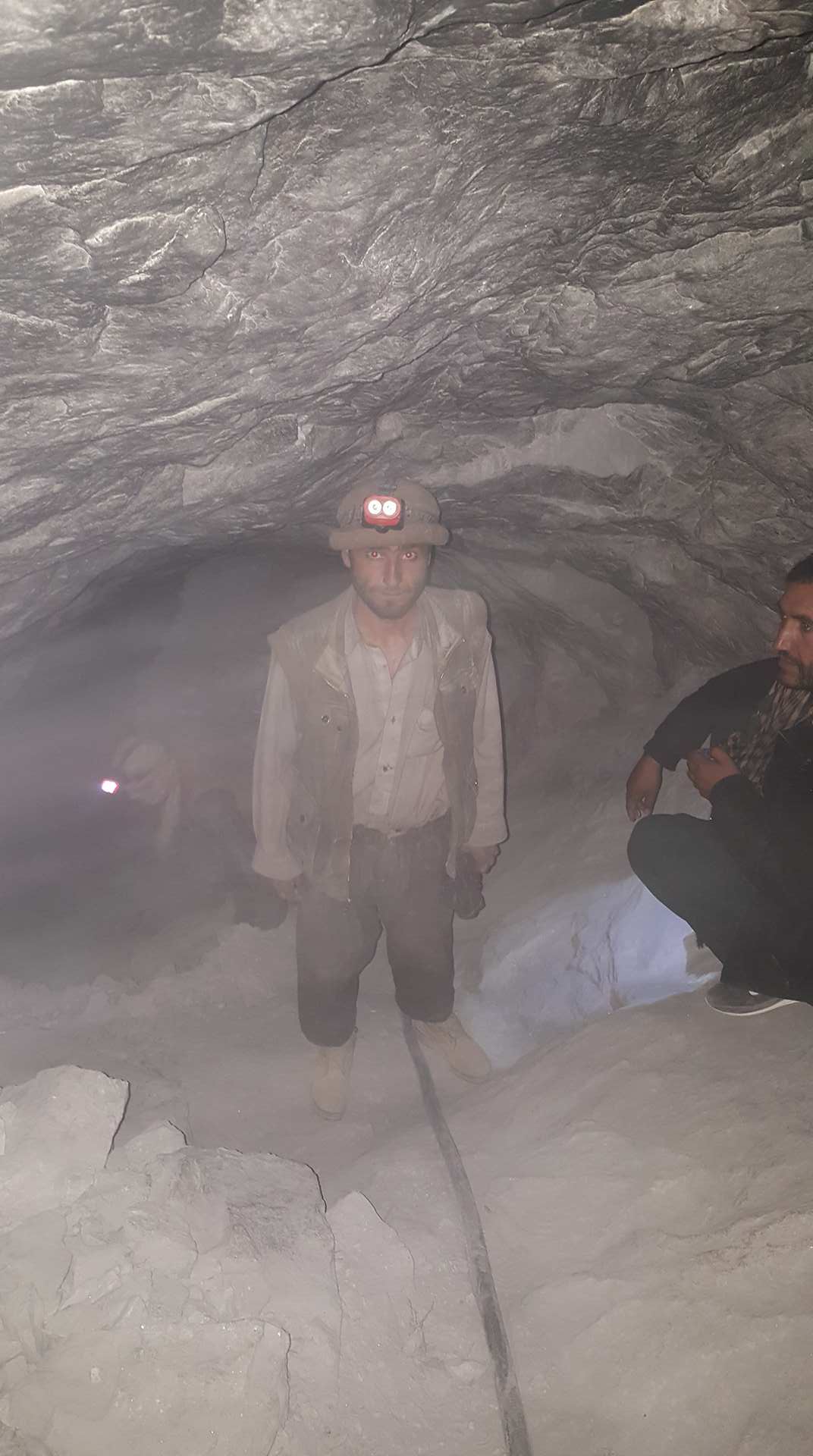
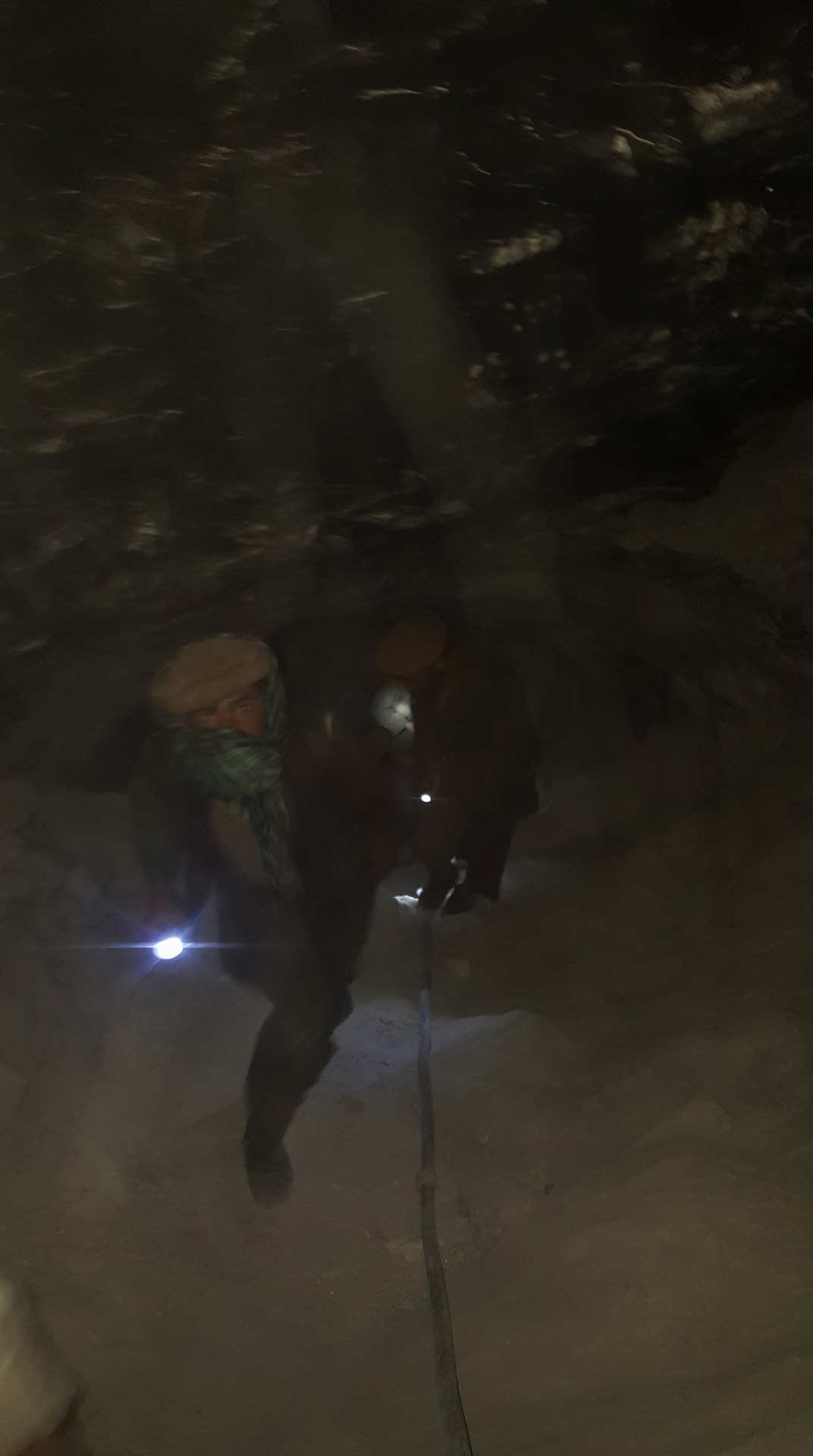
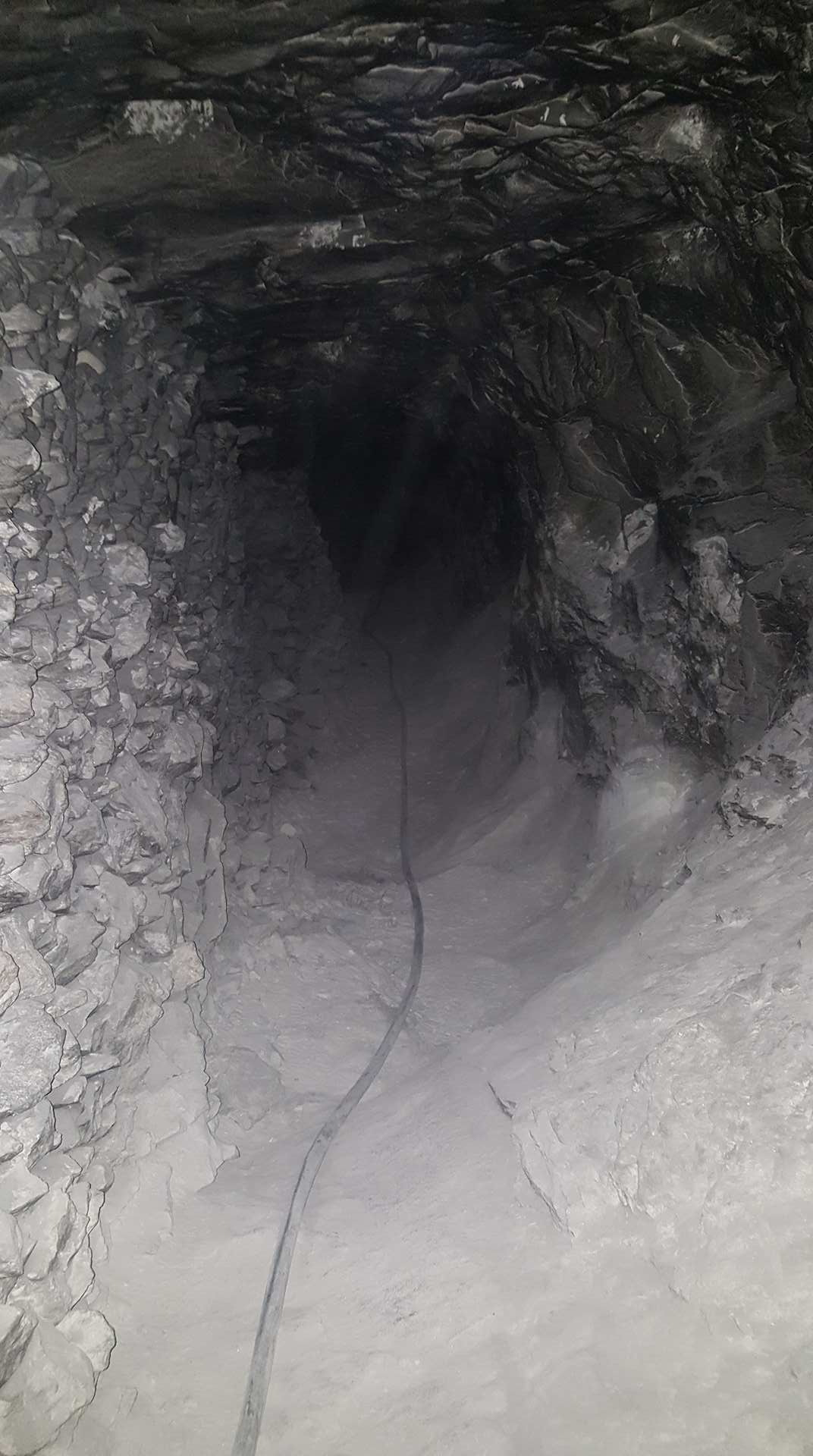
Photo set #1 of Pitwak. Specifically this is within the area where tenebrescent scapolite, hackmanite, winchite, etc. are found. This isn't the most productive mine in terms of money earned per hour, that goes to the lapis mines. That's primarily because good crystals are rare and the material isn't as coveted as the lapis. As a result this part of the mine is seldom worked with at most 6 people working on it at once.
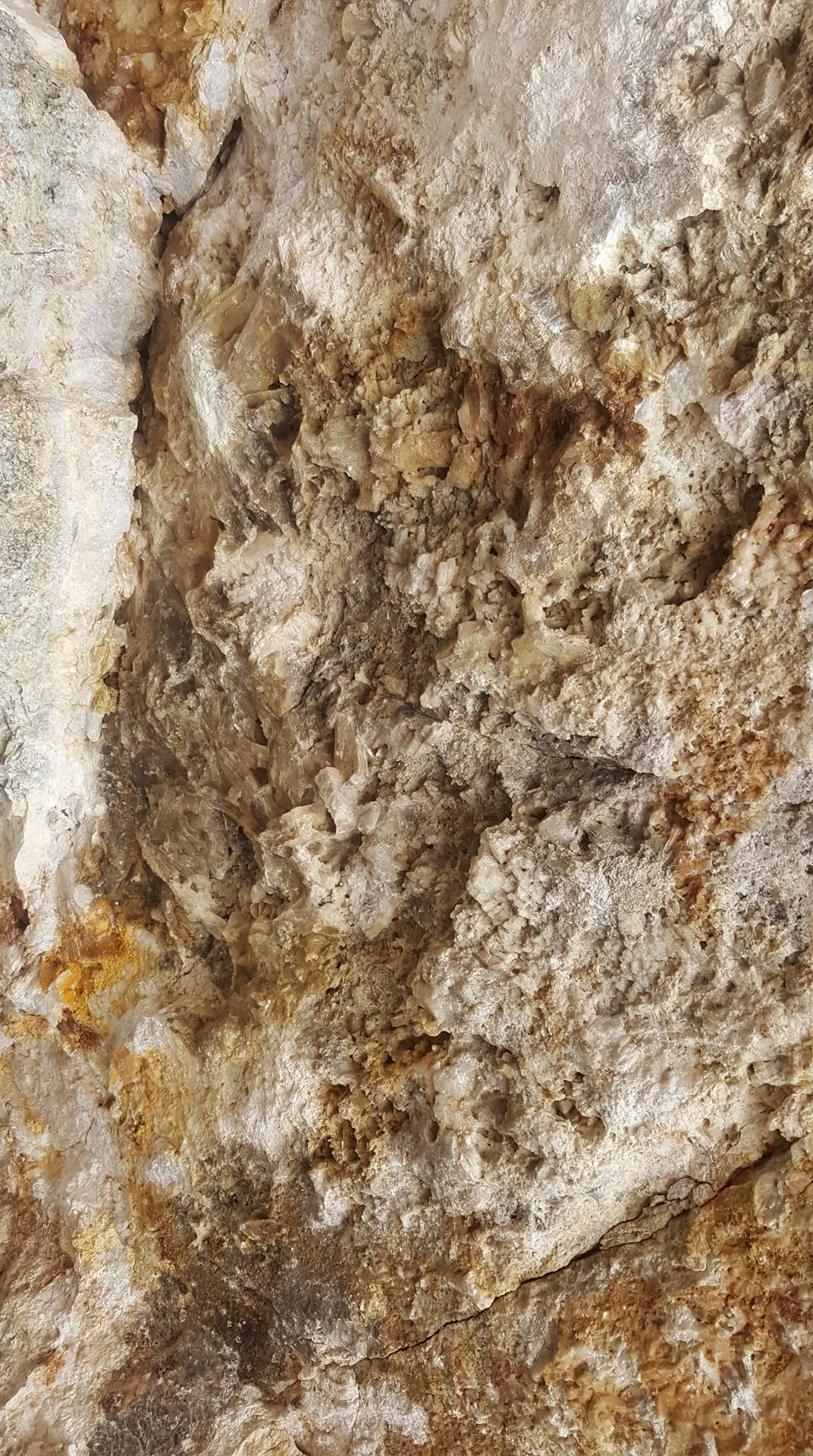
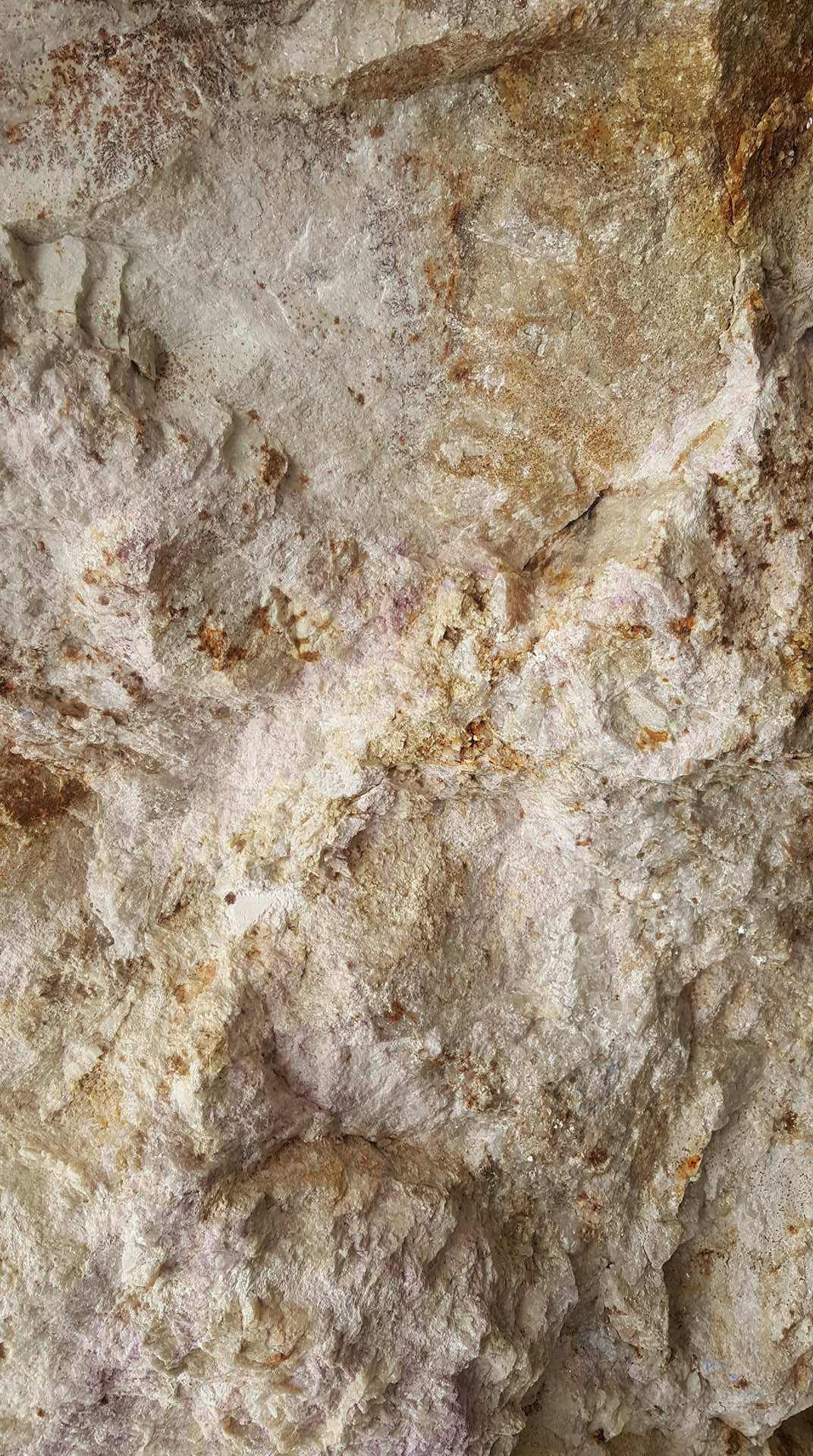
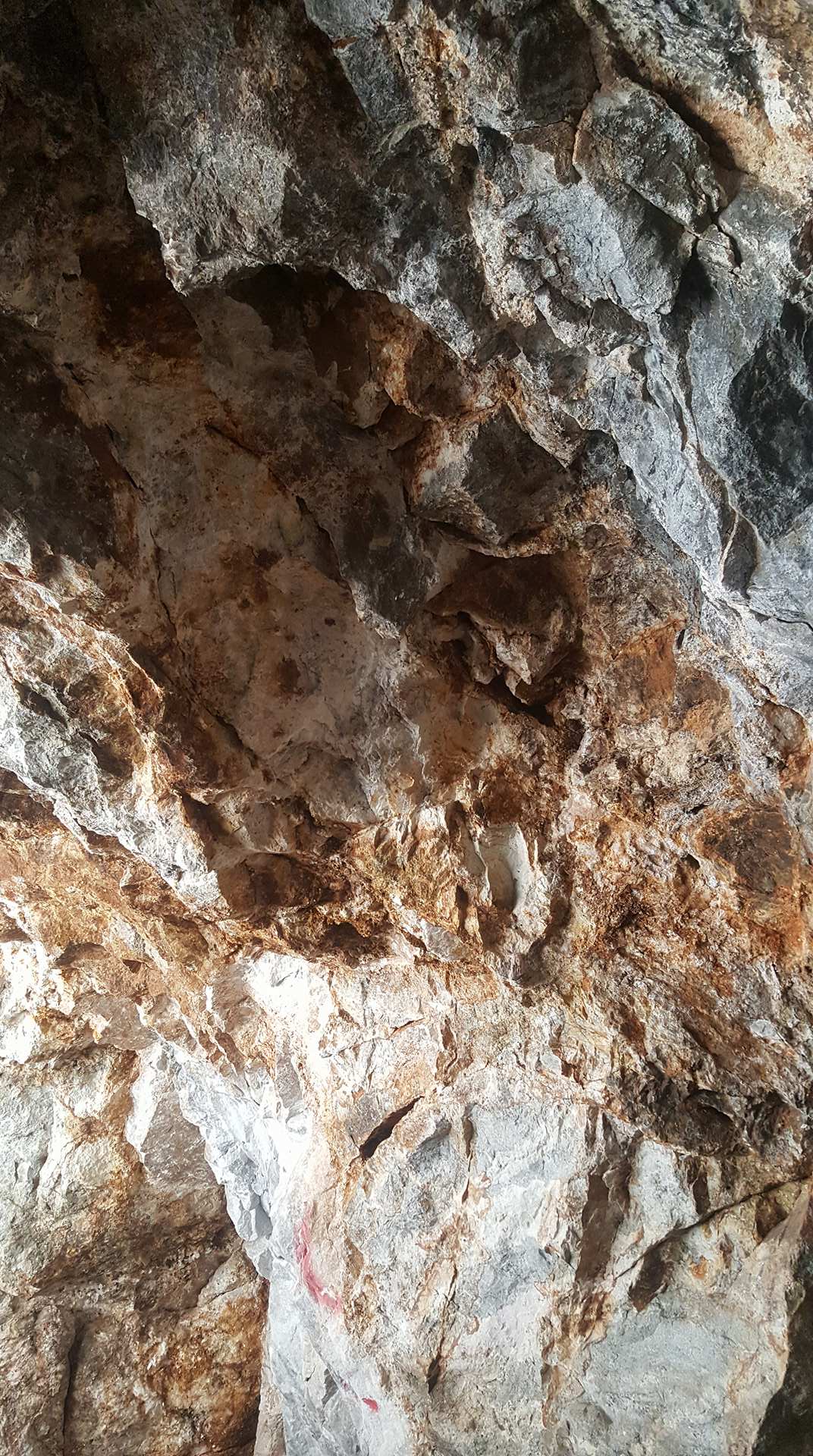
Part of the sodalite var. hackmanite vein. You can see that some areas of the photo are slightly purple. I'm told that the sections of the mine are referred to by what's found there. So for instance in Persian this section would be called shab chragh شب چراغ (?) which means phosphorescent and what the locals refer to when they talk about hackmanite.
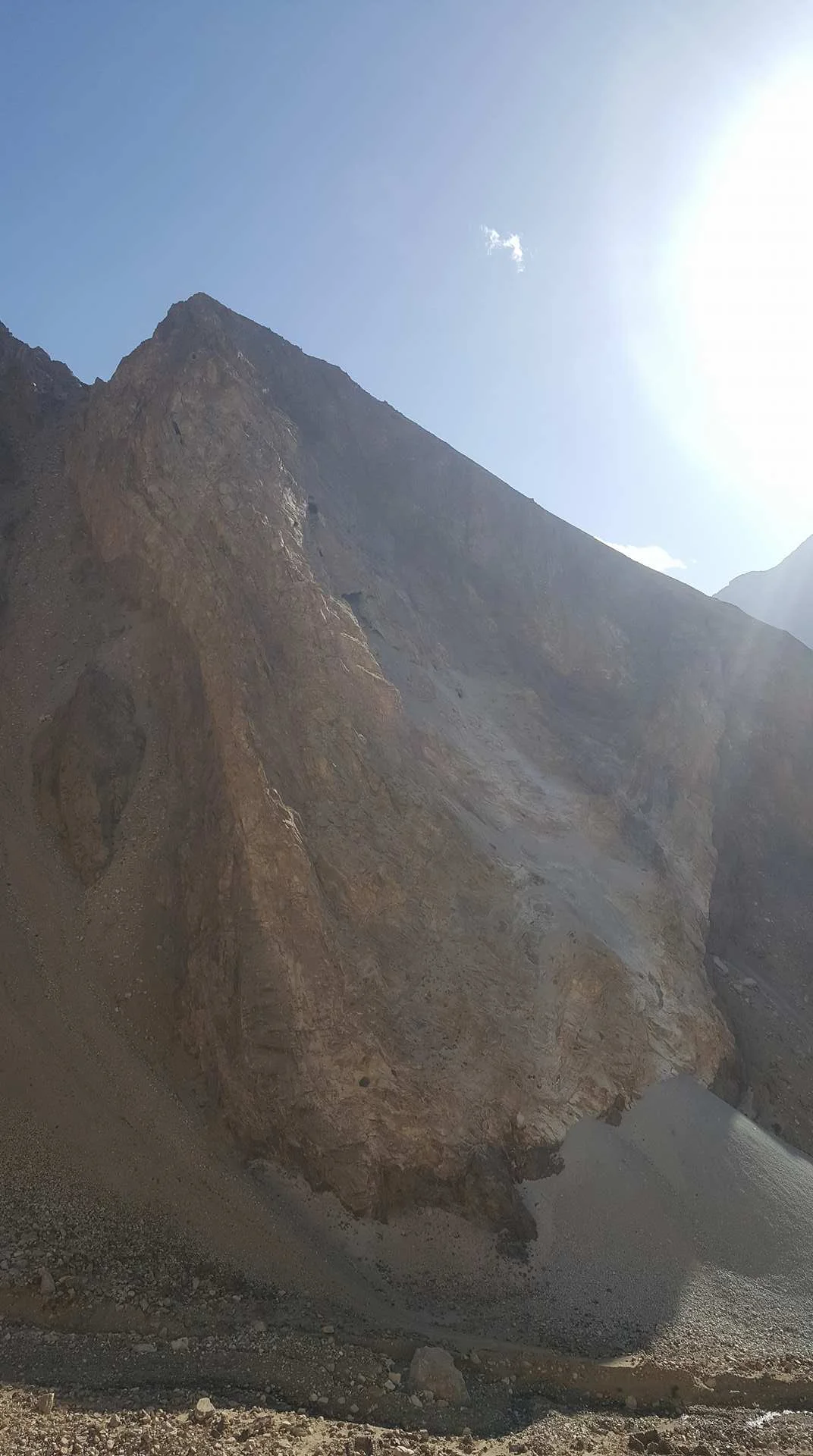
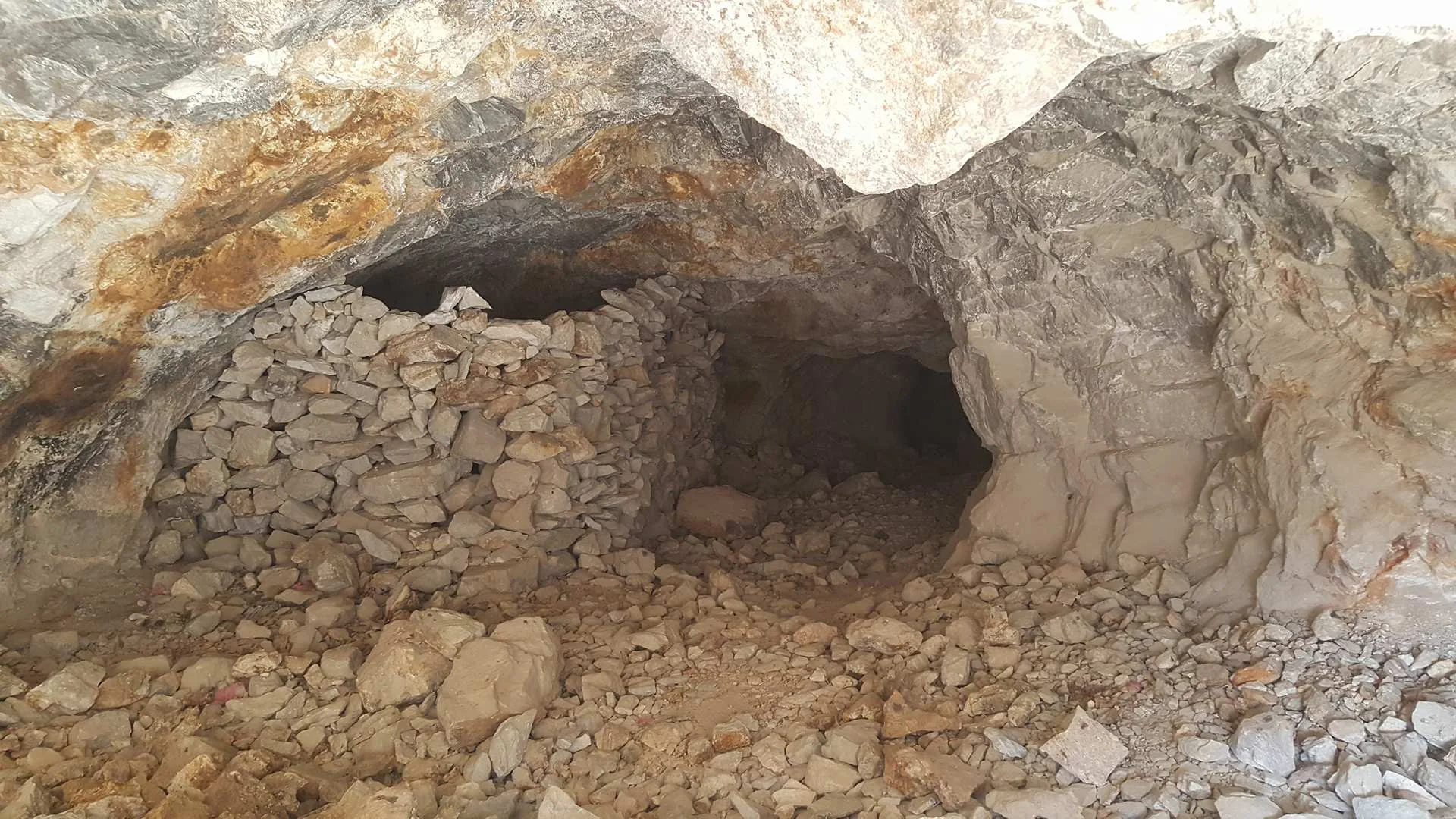
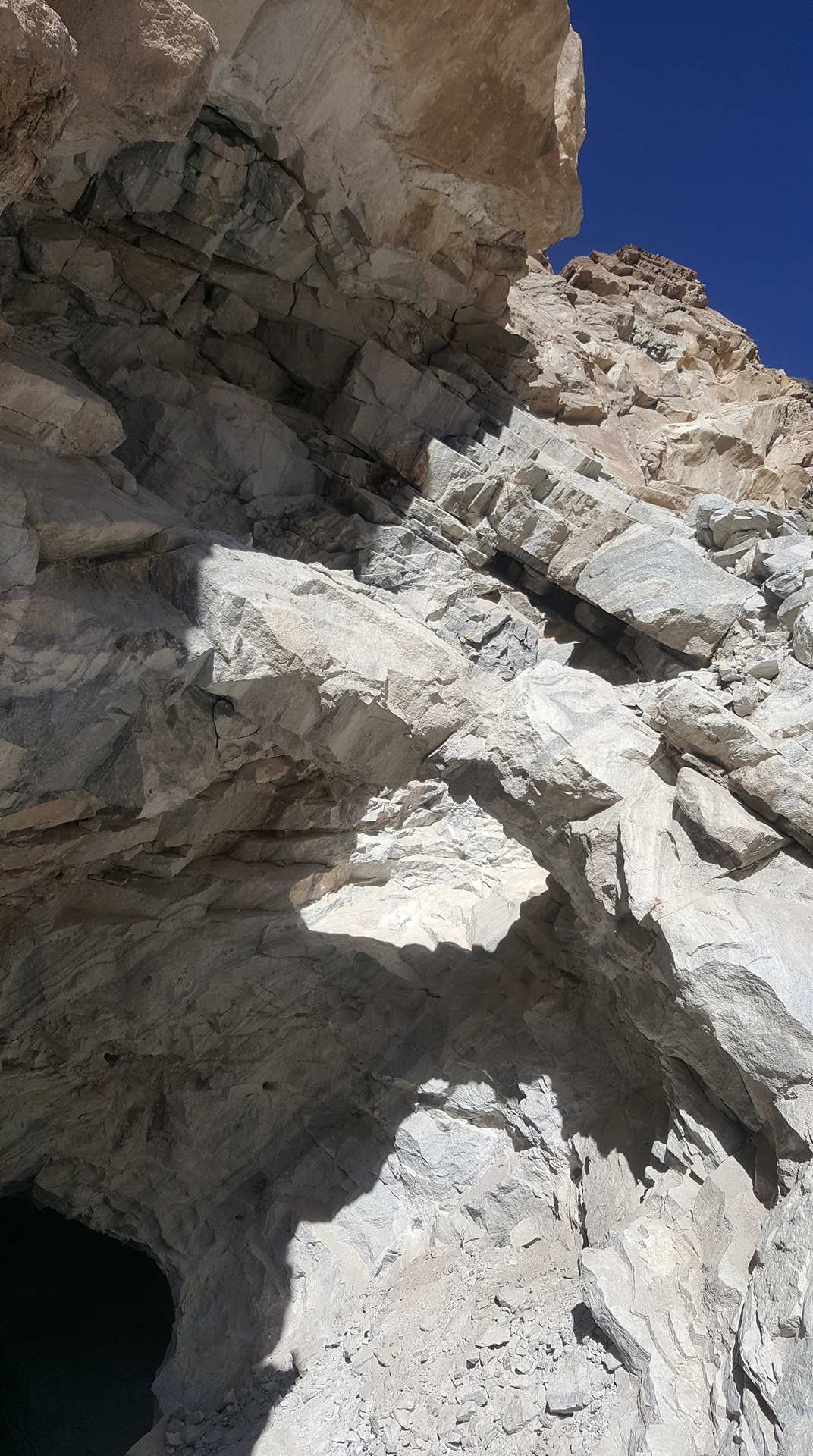
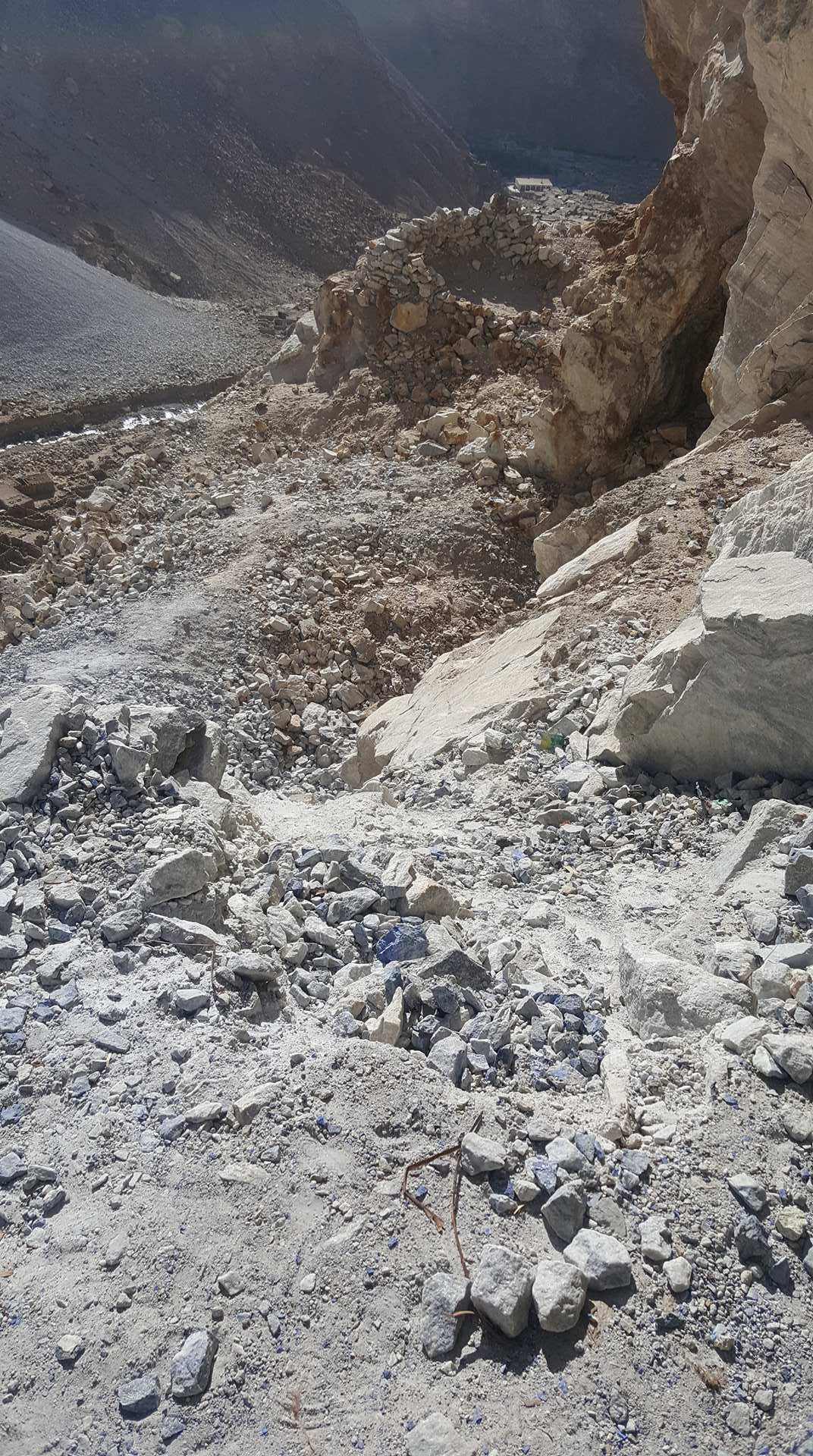
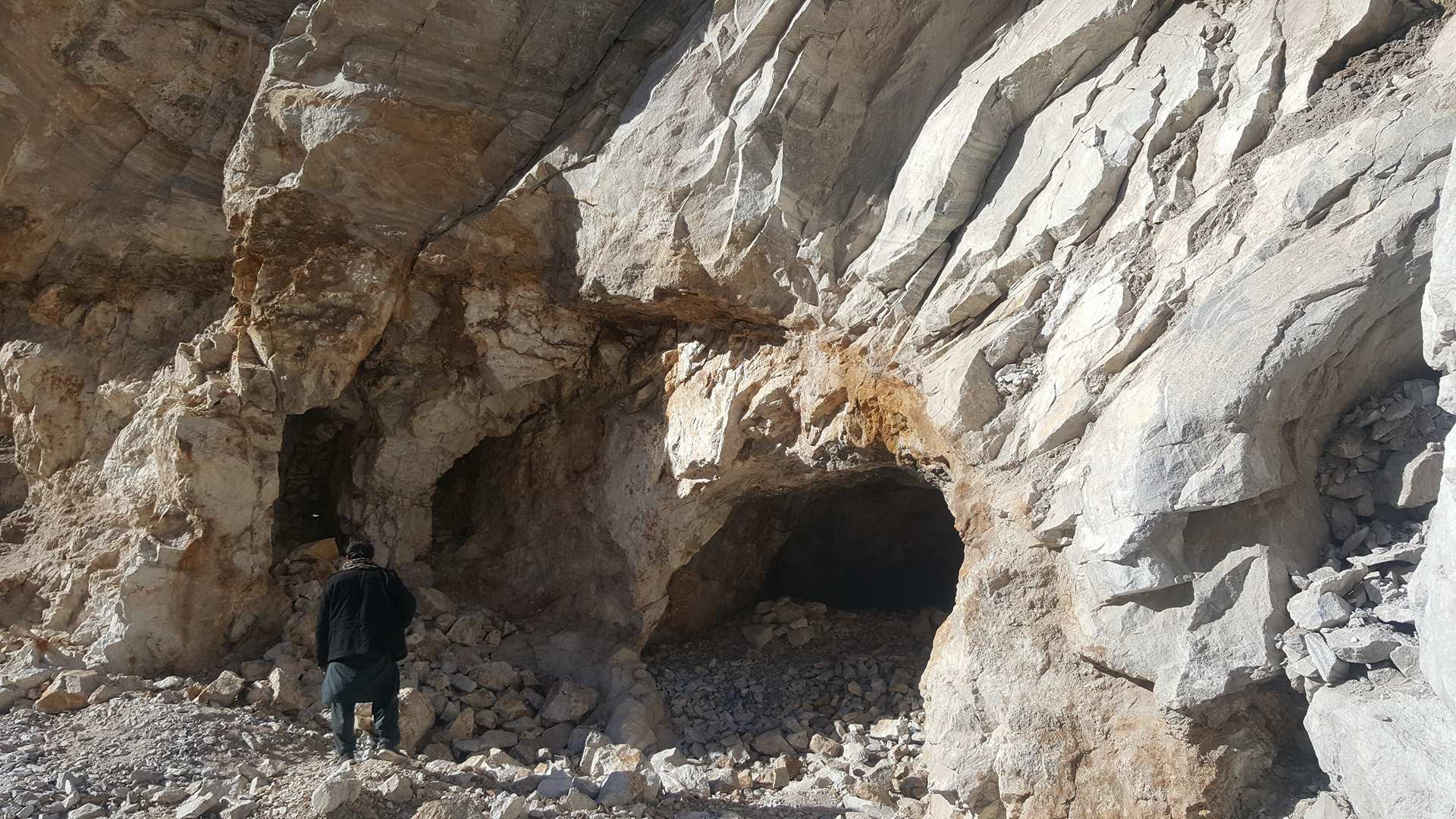
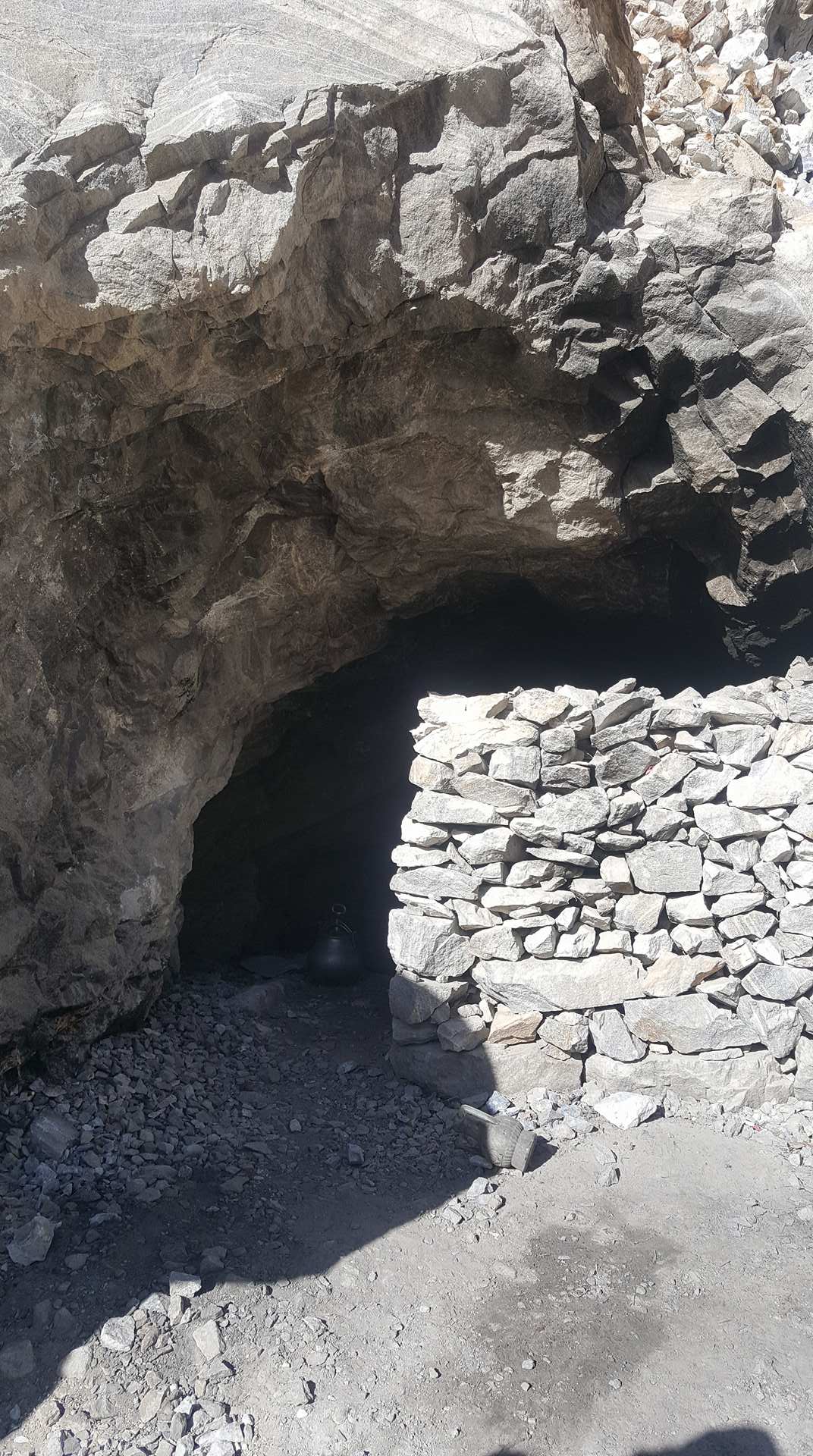
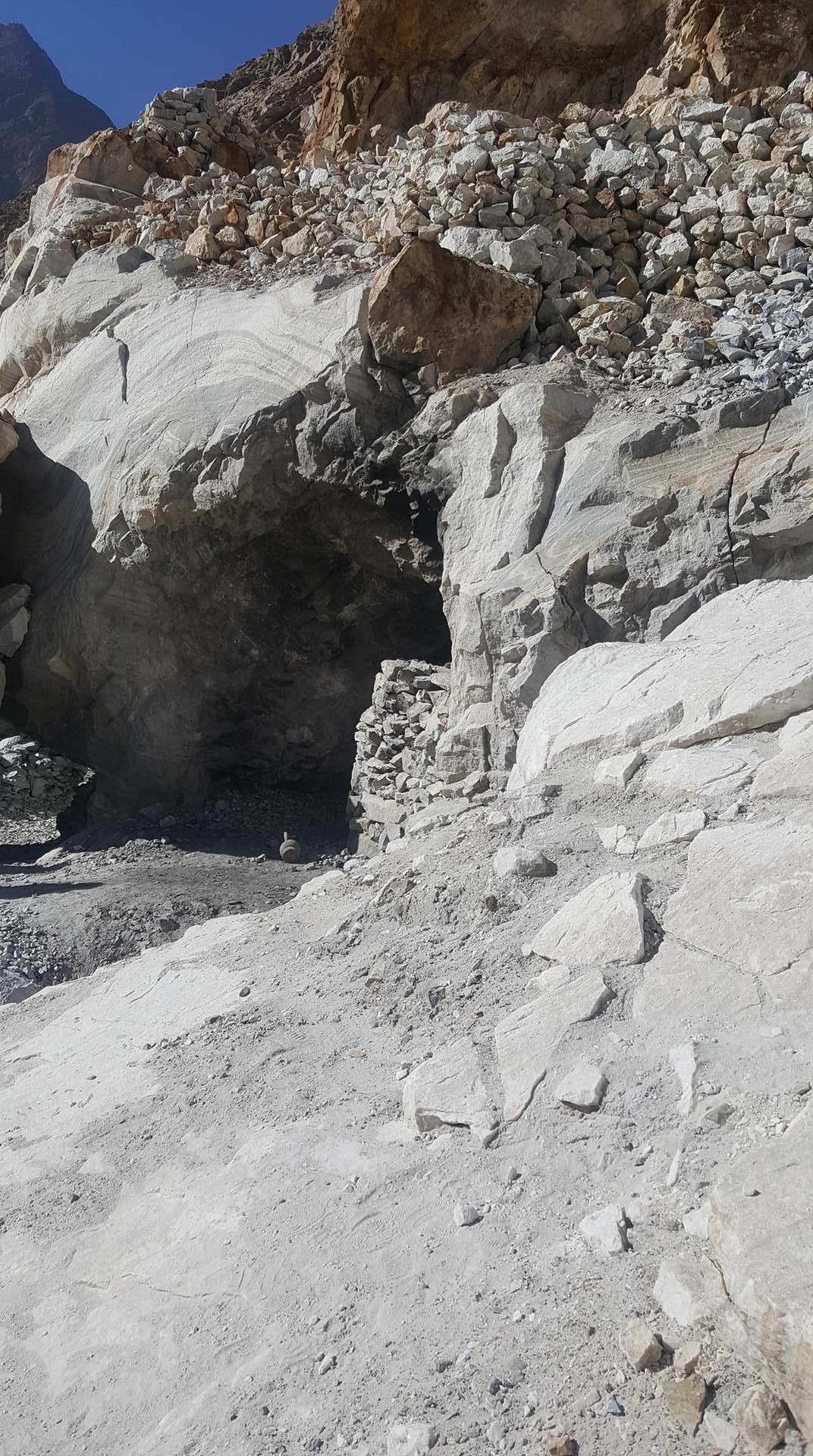
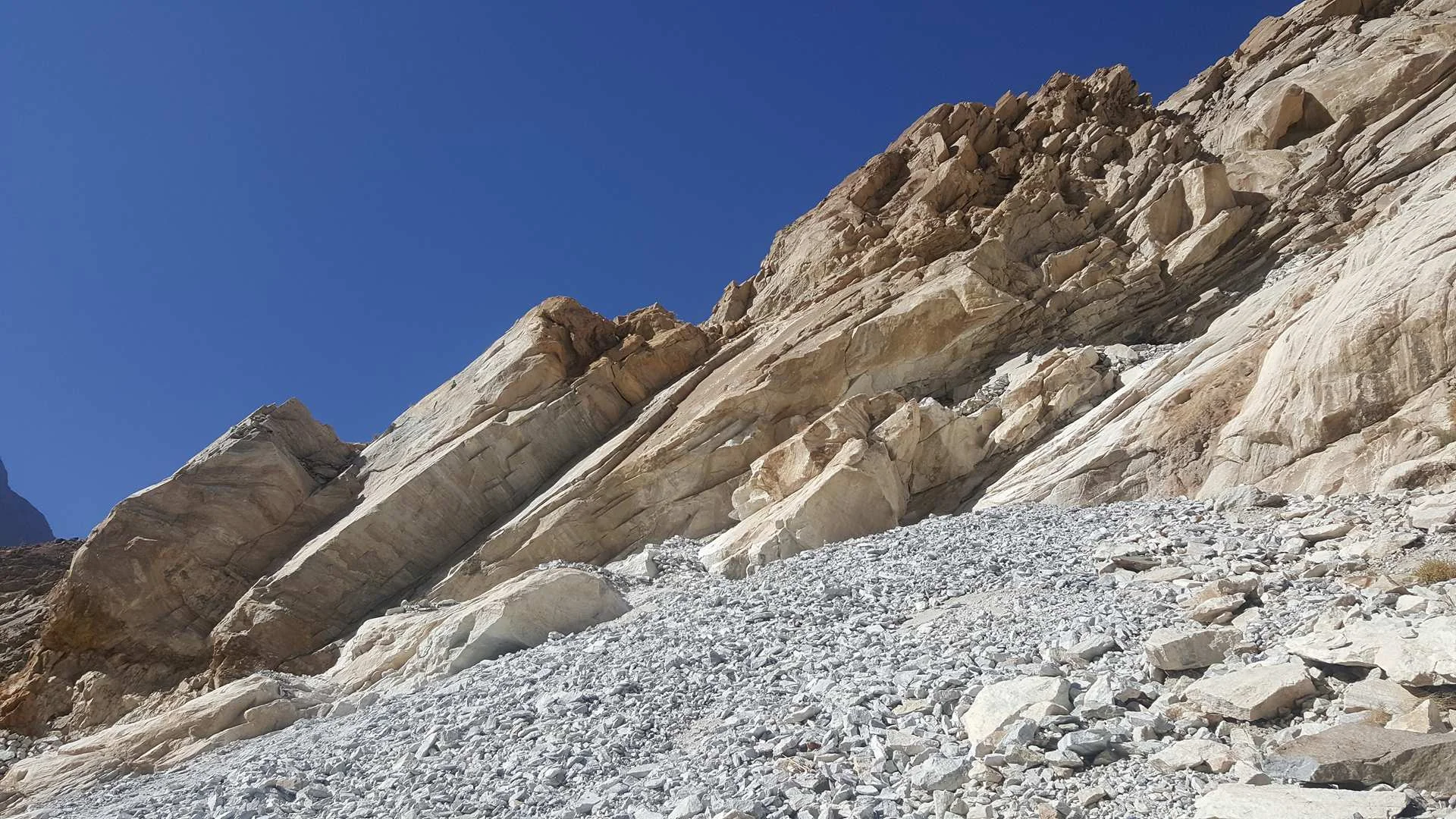
Photo set #2 of Pitwak mine. This is a slightly different entrance to the Pitwak. I'm told that the mine is named after the first person that worked on the mine: Pitwak Haji Baba. Supposedly this happens after in the 1990s (though I can't find any sources that confirm this). The name also comes from pitawo, which refers to the spot where the sun's rays fall (confirmed by 2 speakers). A spot where you sit in the winter morning to get some warmth.
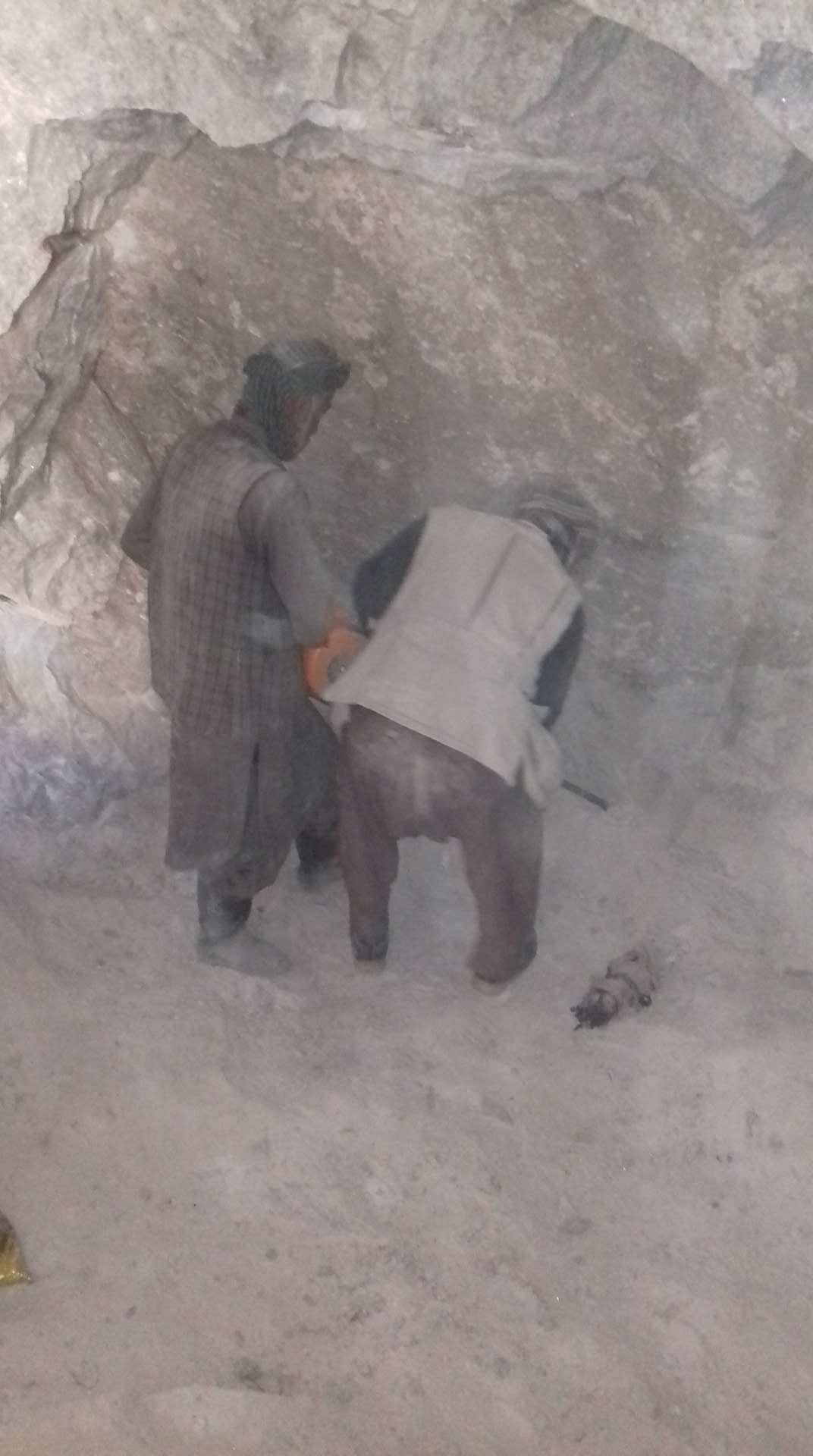
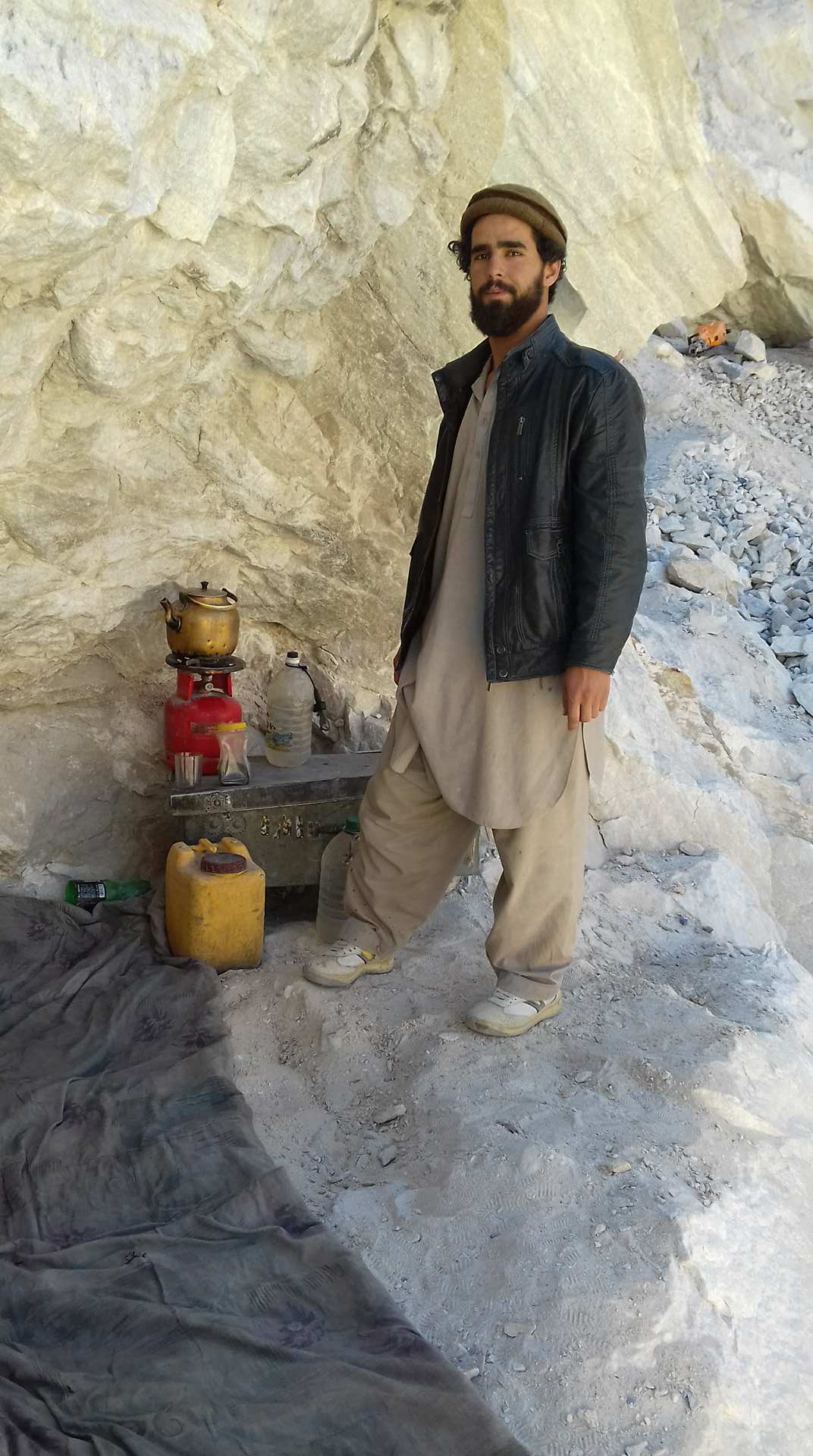
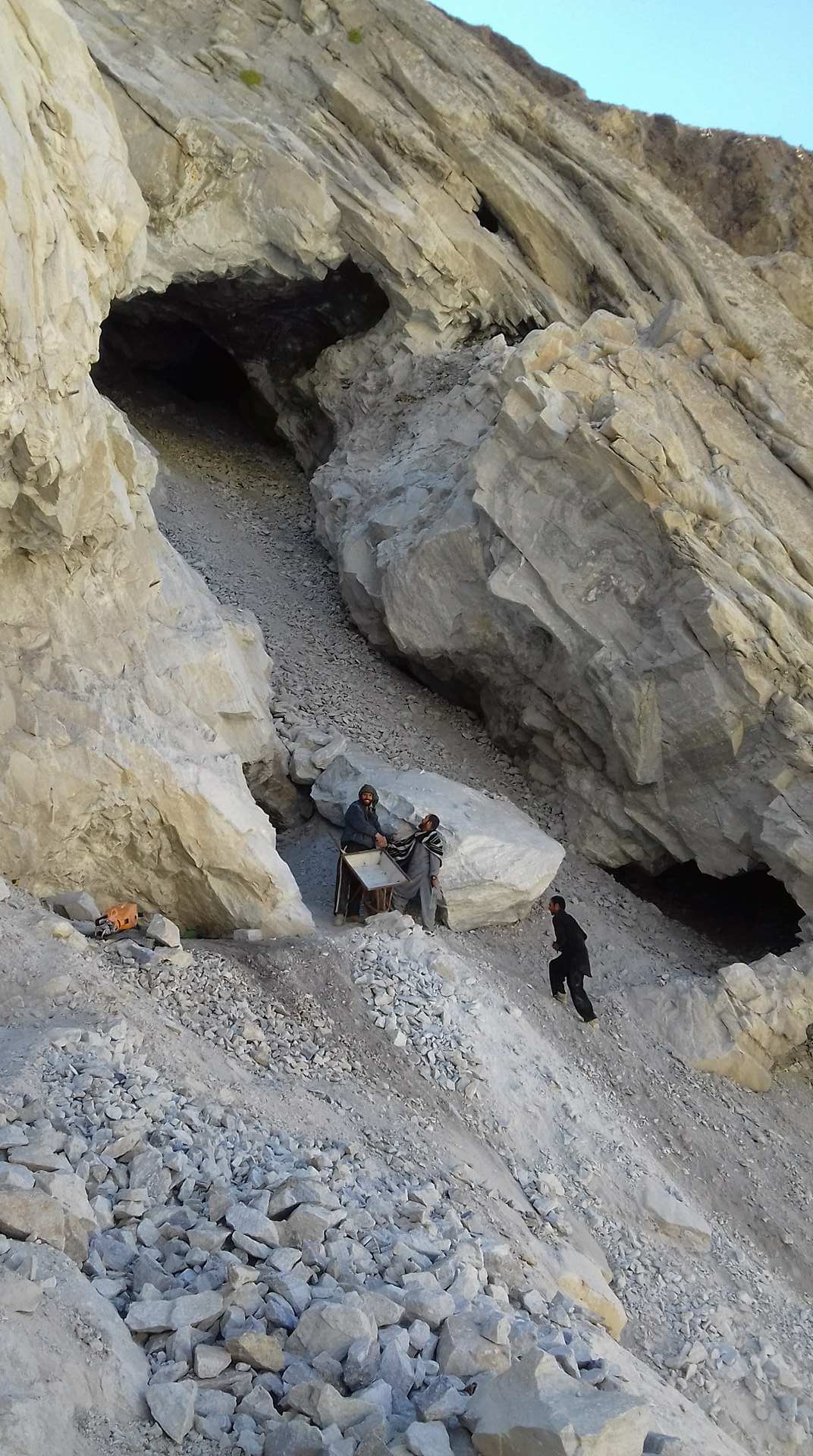
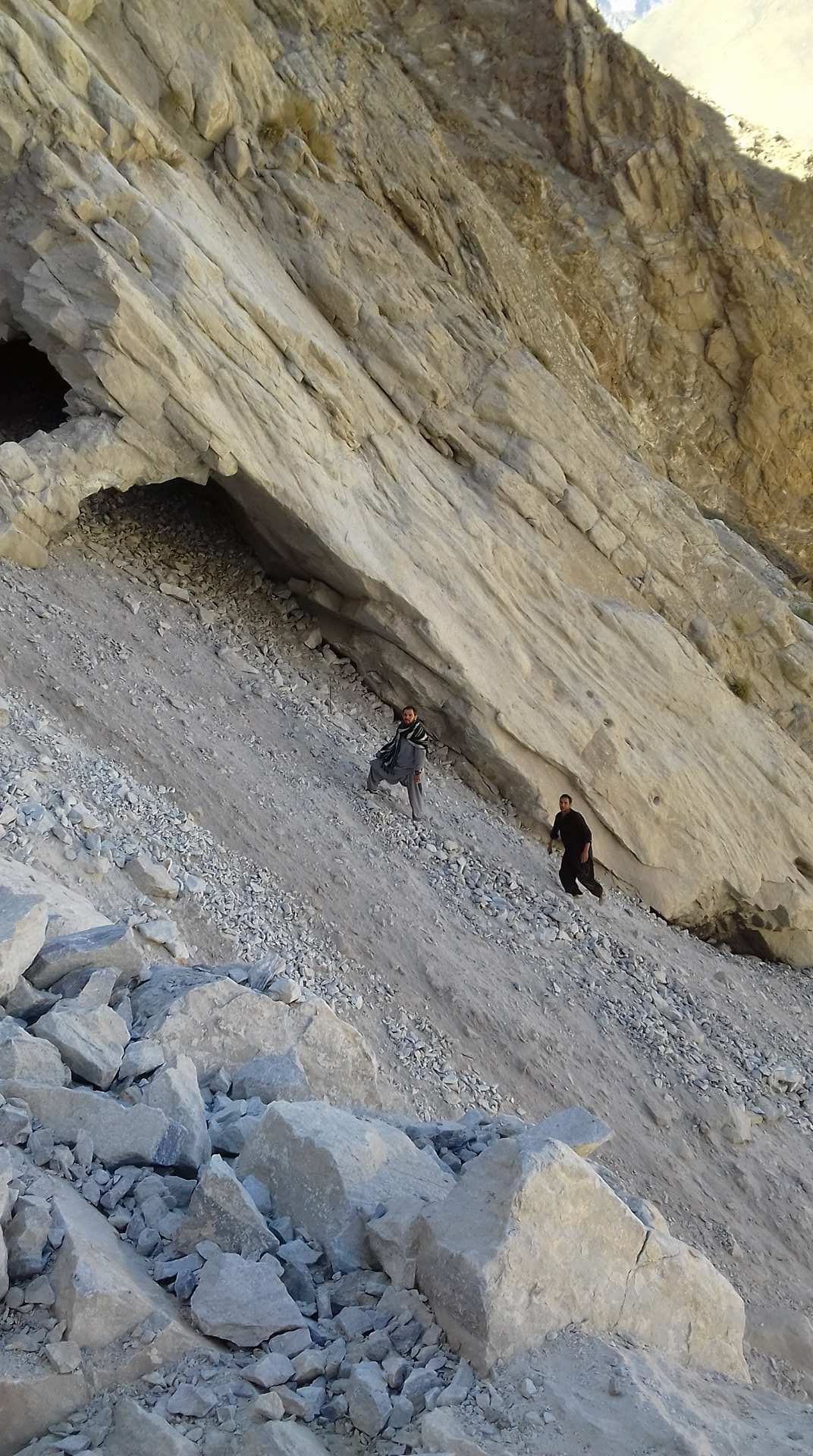
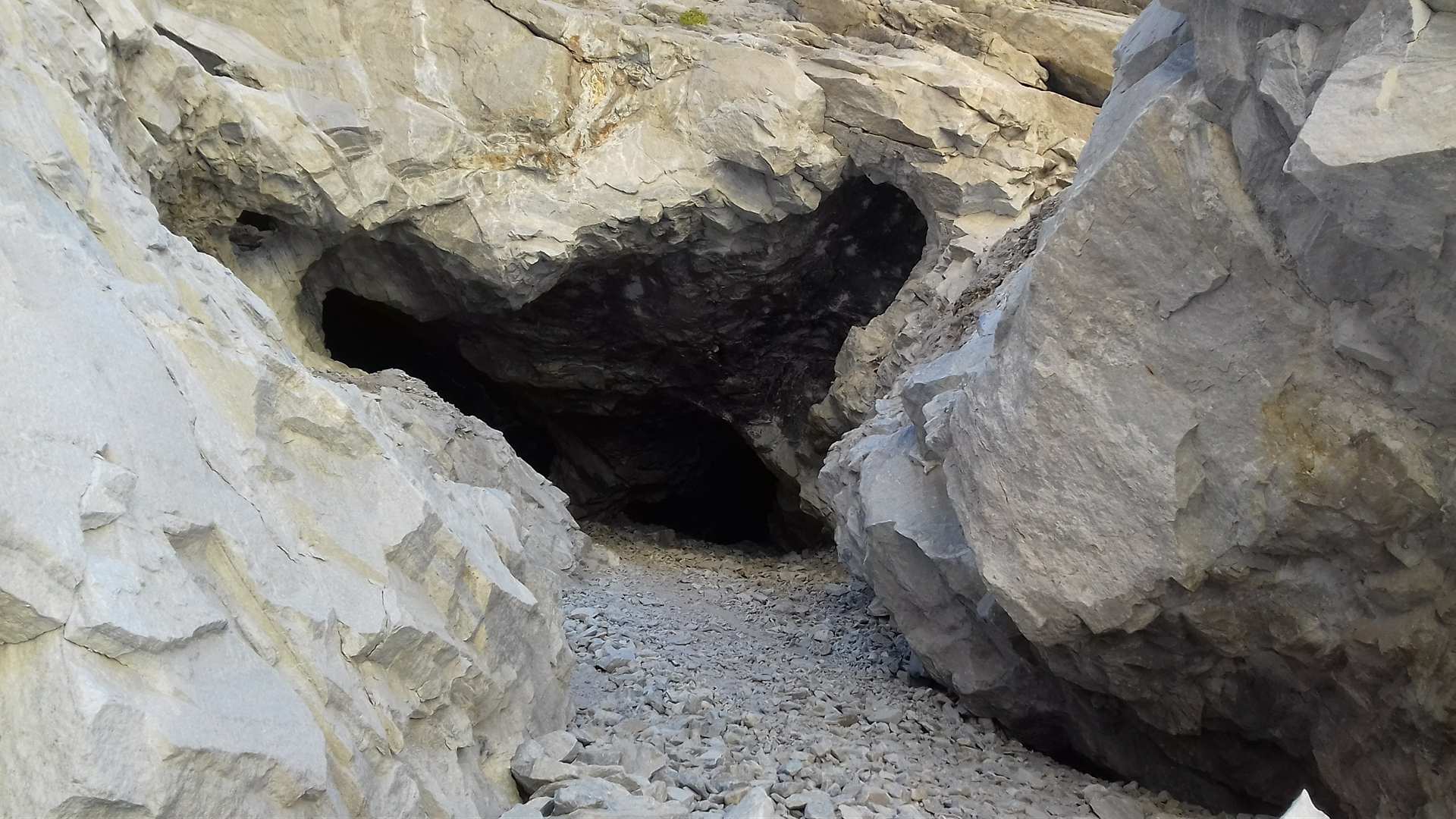
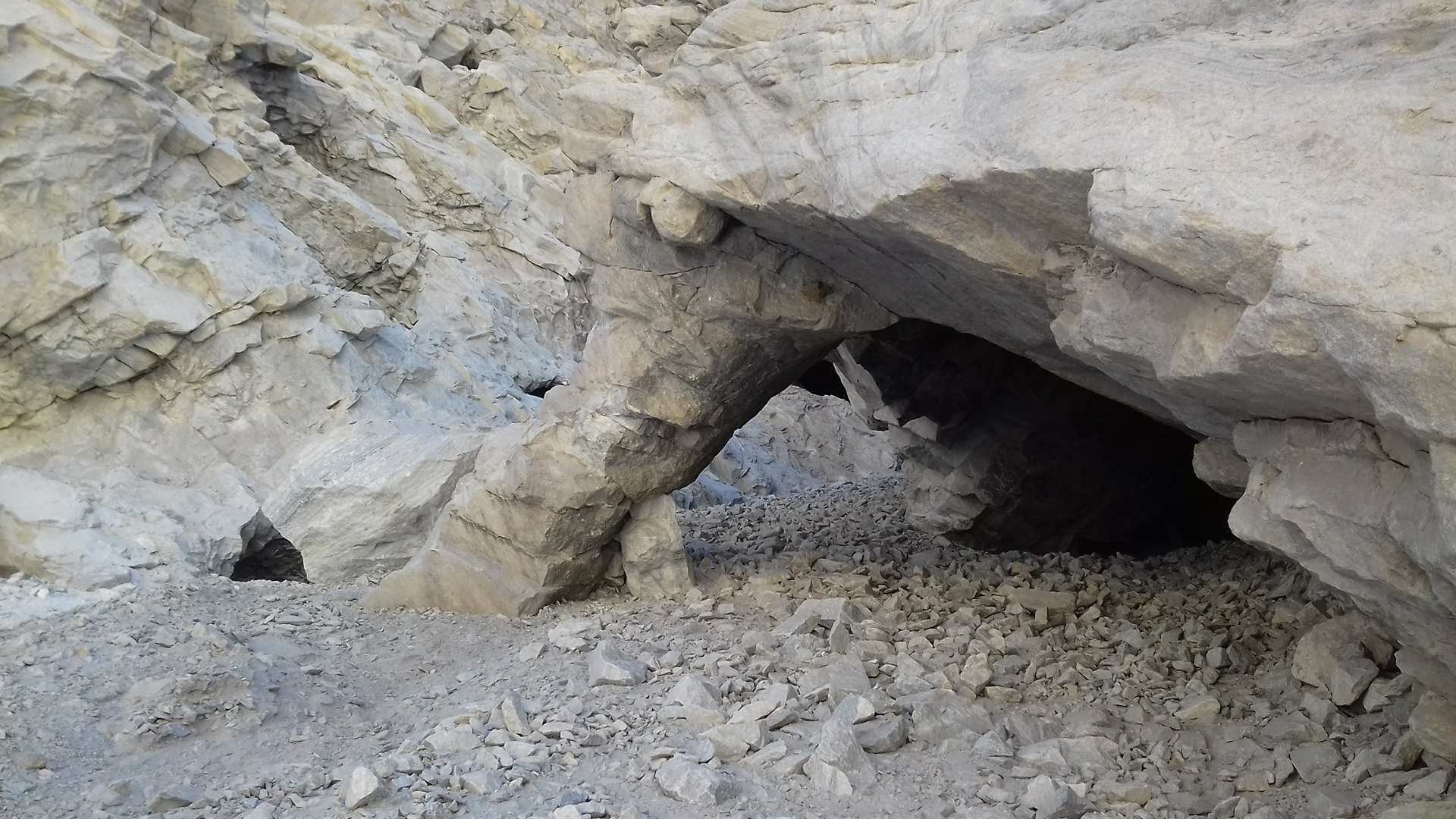
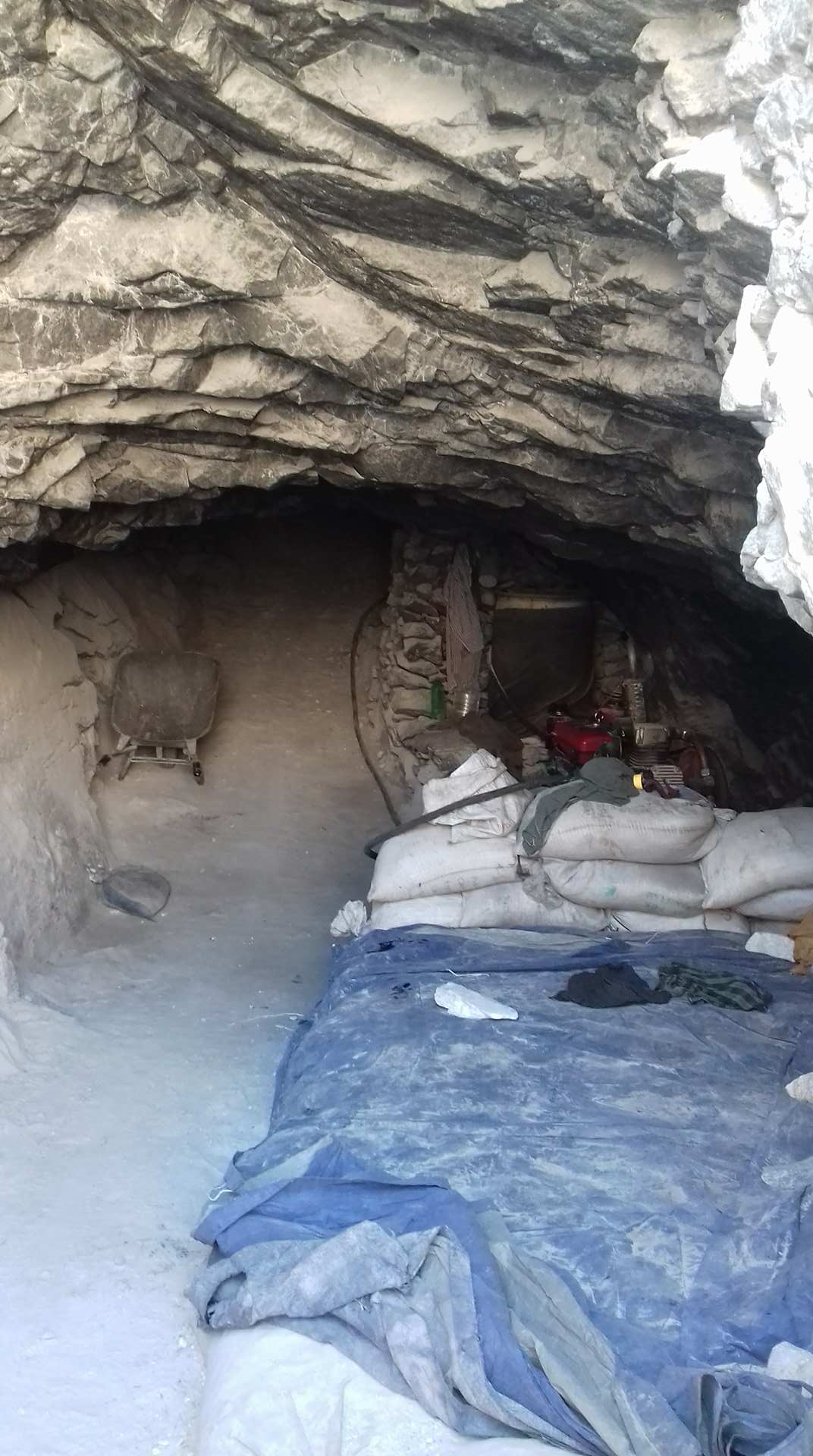
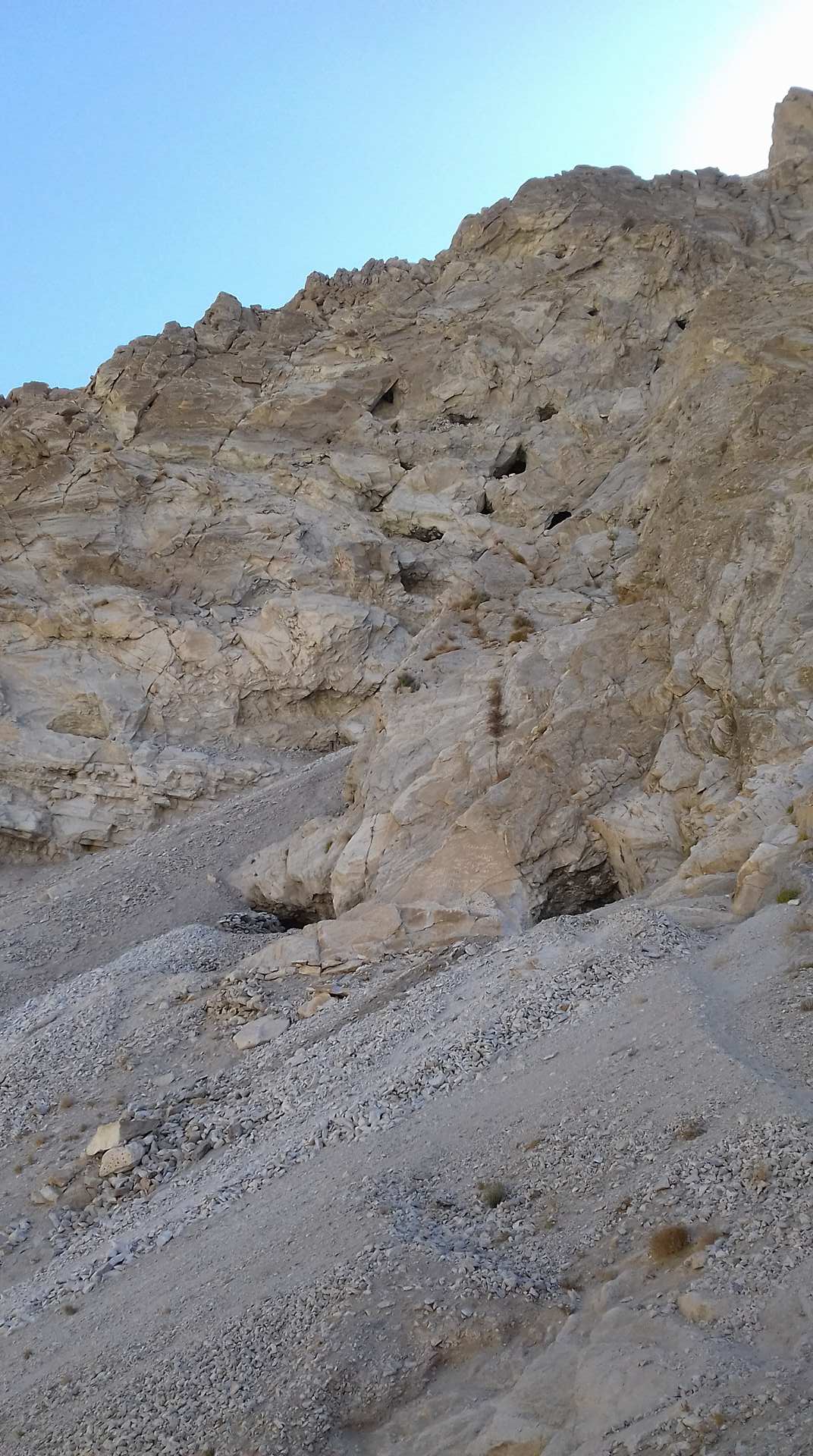
This last photoset is of madan chaar, one of the many lapis mines on this mountain. The area has been mined for lapis for over 4000 years. There are tunnels ranging from the back of the mountain all the way to the front. There are many mines dedicated to solely lapis: madan chaar, madan panj, madan jarok, madan regi. The area is collectively known as madan ladjuar. This is by far the most worked area with mining going around 24/7 at peak.

A list of mines as well as what is found there.

SoCal FMS Meetings - Minerals of Africa November 2017
11/28/17 Changed misidentified shattuckite to scholzite.
It's that time of year again. SoCal FMS meets up at Jim's house to view the minerals he's collected. This time it was a theme rather than a special guest - African minerals. Alas my collection of African fluorescents was practically nonexistant. I don't really collect based on a continent. However, this didn't stop some of our members. Jim had quite an amazing collection of African fluorescents that he had collected over the past year, some of which I had absolutely no idea about.
Here's a 360 of all of the minerals. Some of the highlights are red manganocalcites, purple fluorites, orange sphalerite, green hyalite. Behind the starting point you can see some green fluorescing scholzite with some blue hemimorphite.

And here are the closeups of the minerals. My favorite of the night is definitely the hemimorphite from the Skorpion mine in Namibia. Glenn Waychunas had originally discovered this but the hemimorphite had a very interesting aspect. First of all it was tenebrescent. After UV exposure it would turn to a light grey. Secondly it doesn't make a great fluorescent specimen at first. It's incredibly dim but it gets brighter over time! Video below:
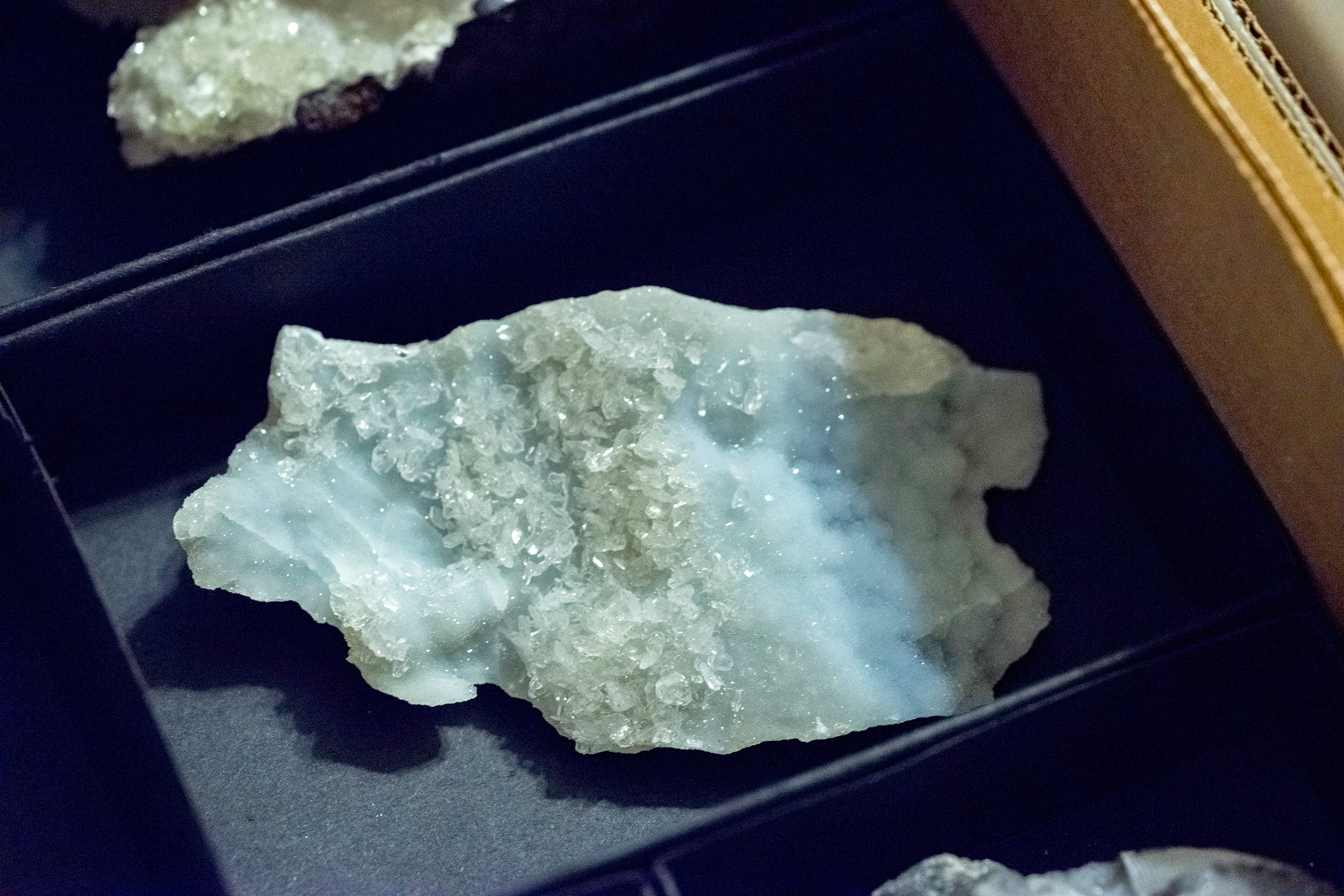
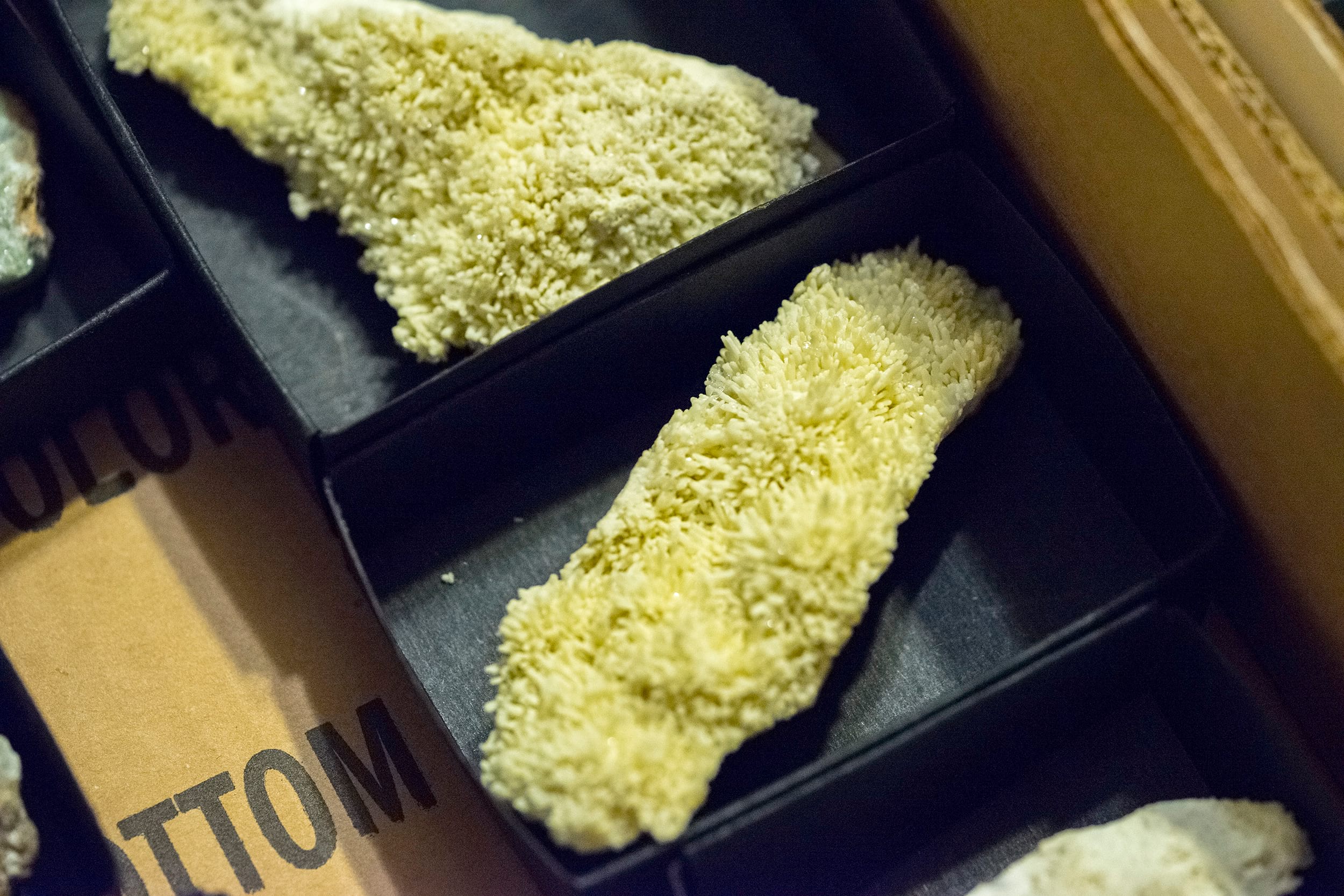
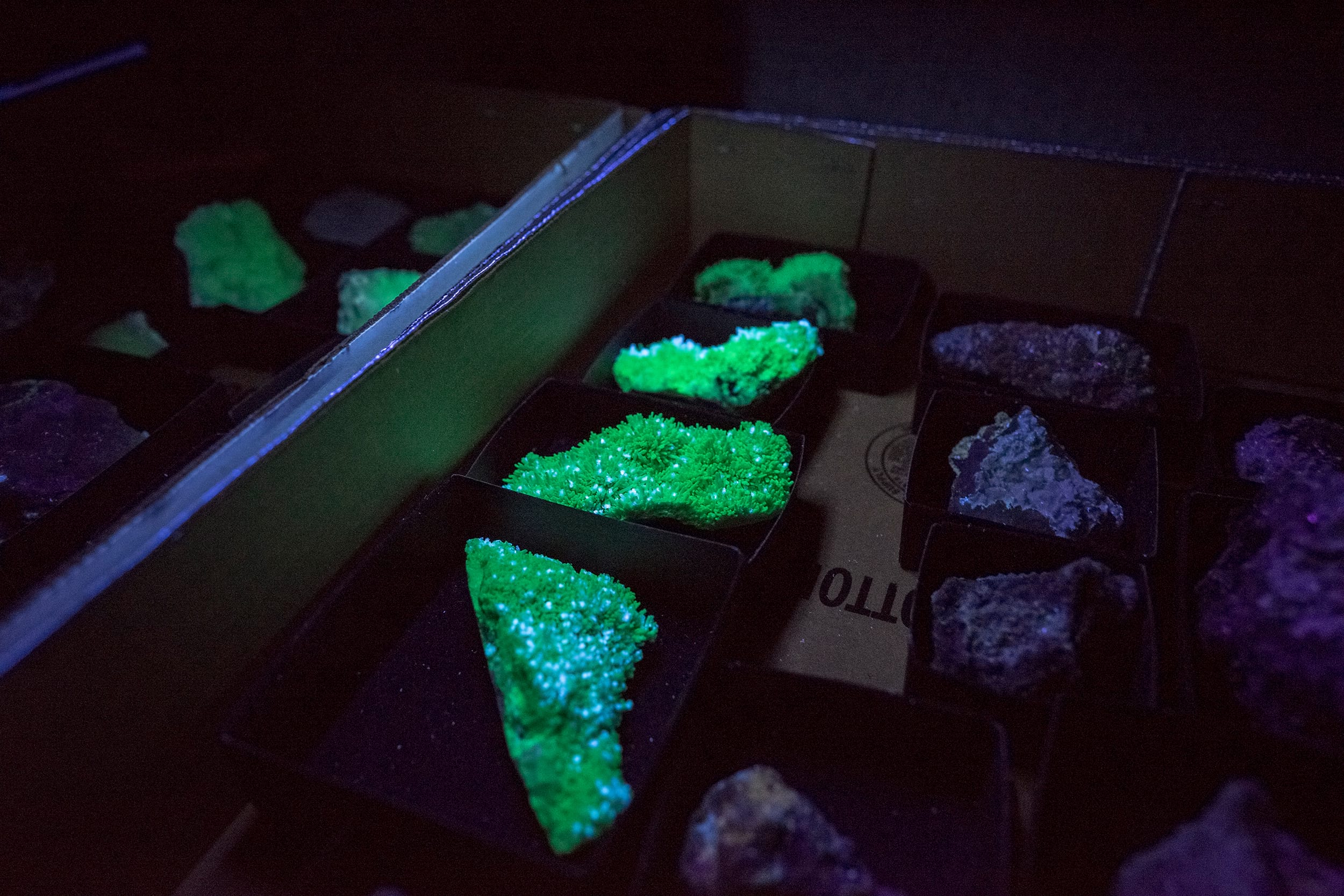
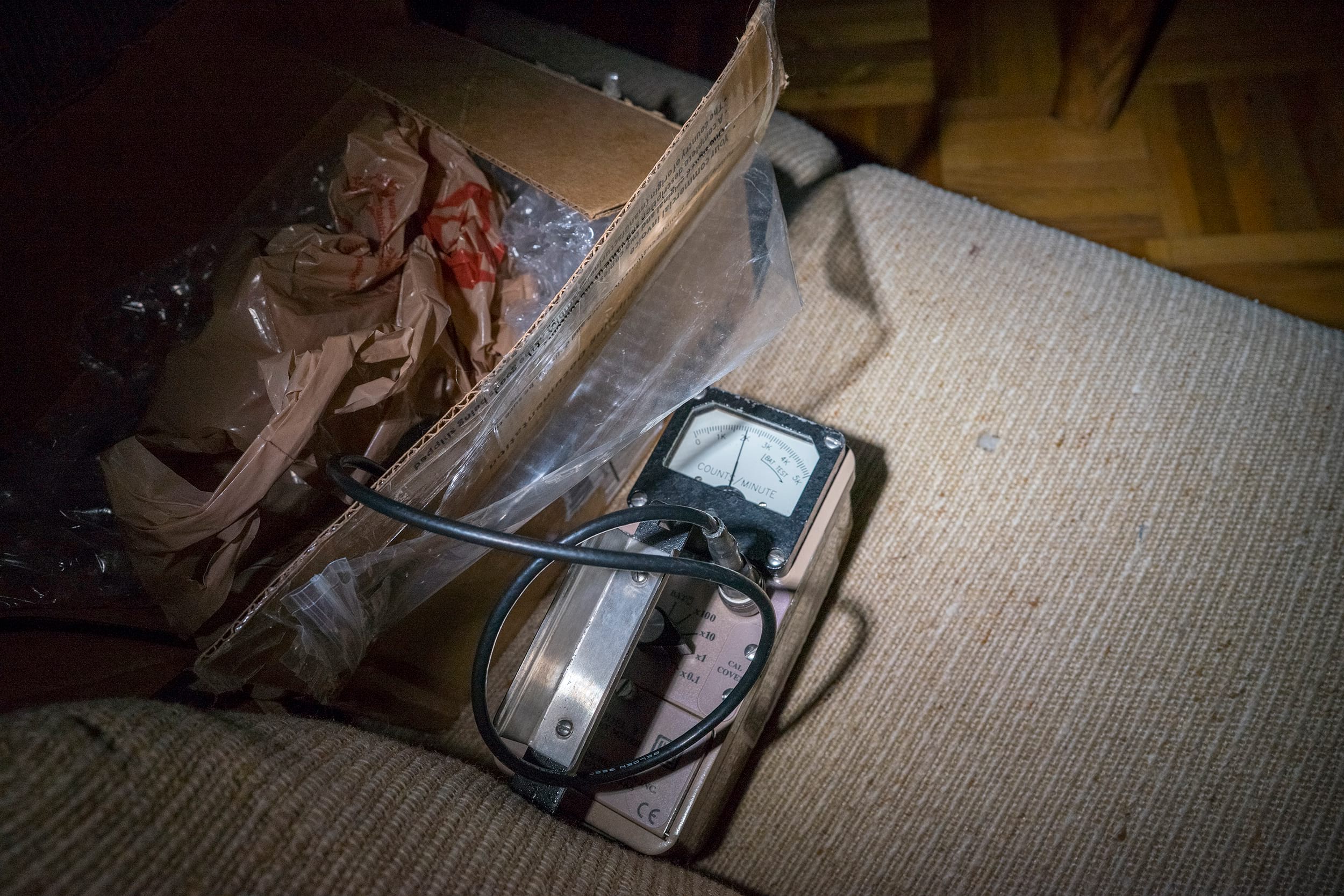
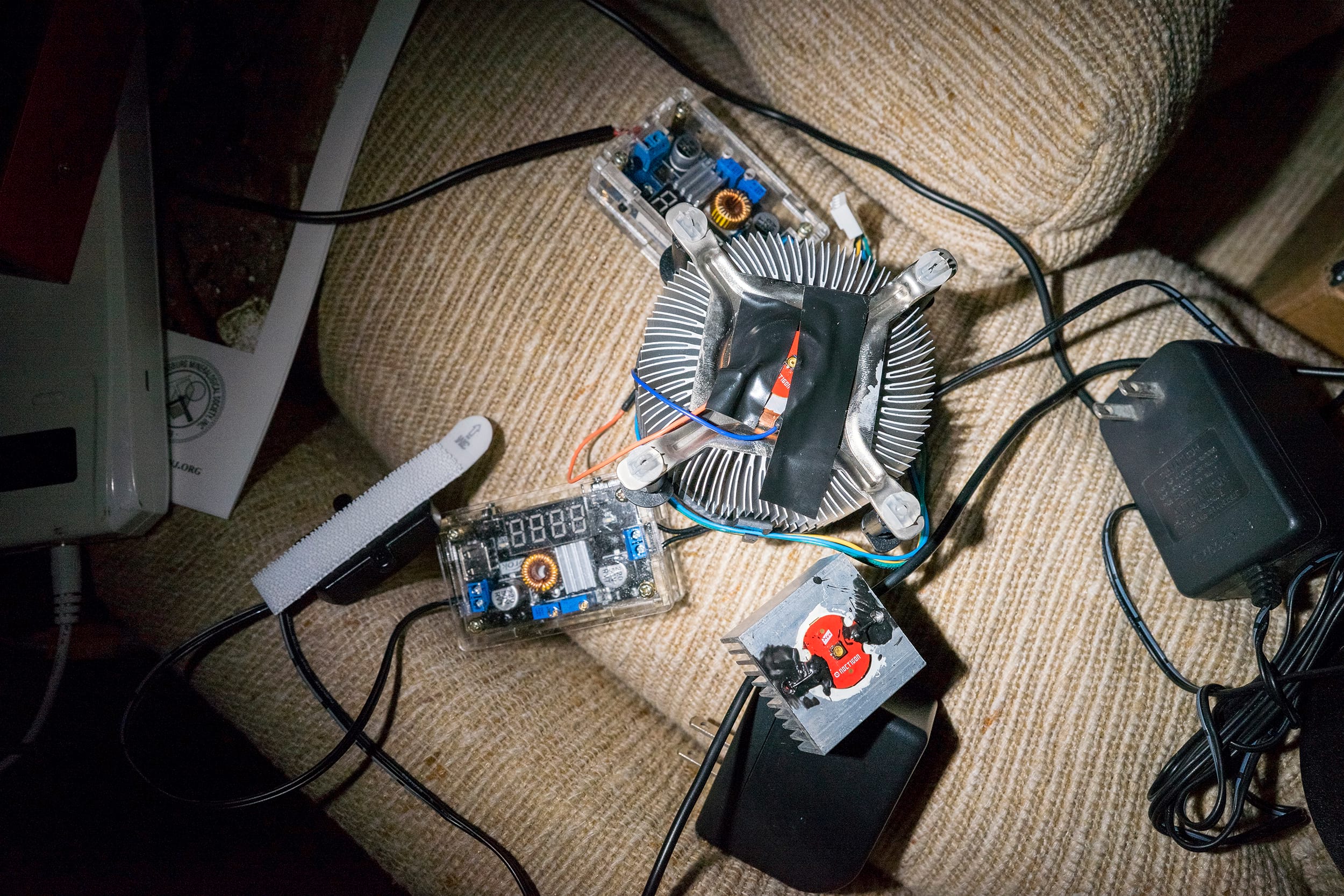
Among some of the technical discussions that occured that night were instituted by a Ludlum geiger counter. Some of the minerals on the table ended up being slightly radioactive but this was before I got to the meeting. On top of that was the latest innovations in the SW LED world. I brought some of the brightest that were available at the time in 265nm and 275nm binnings. We determined that they were about as powerful as a 4W bulbed lamp. Color rendition is still a bit of a struggle with the reference Franklin material that we used. Specifically the calcite. While 265nm rendered the reds they weren't that bright. About the equivalent of what you'd see if you were to use my much brighter LW light. However, 275nm hardly rendered the calcite as all, proving that the peak activation of the Franklin calcite is lower in the UV spectrum.
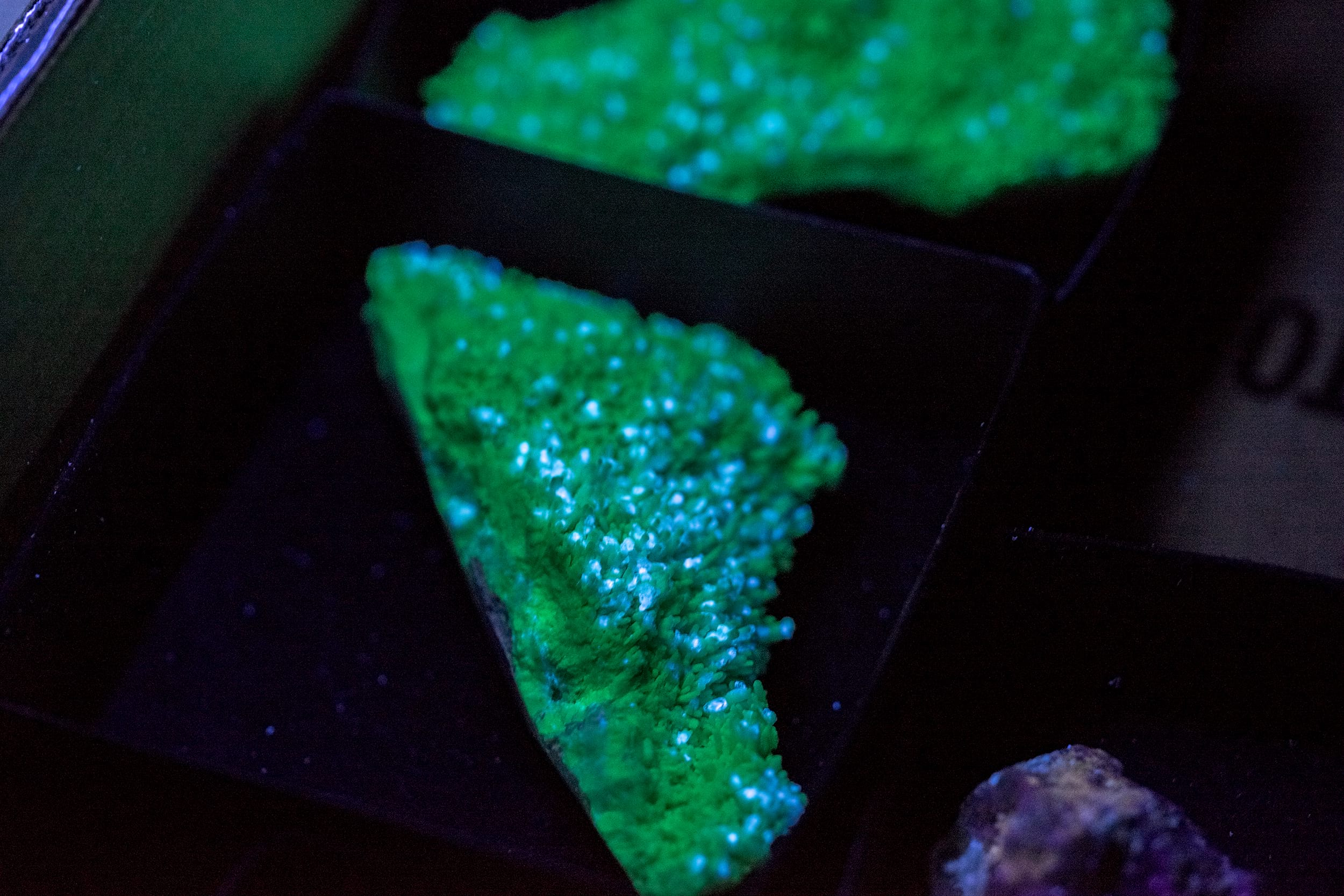
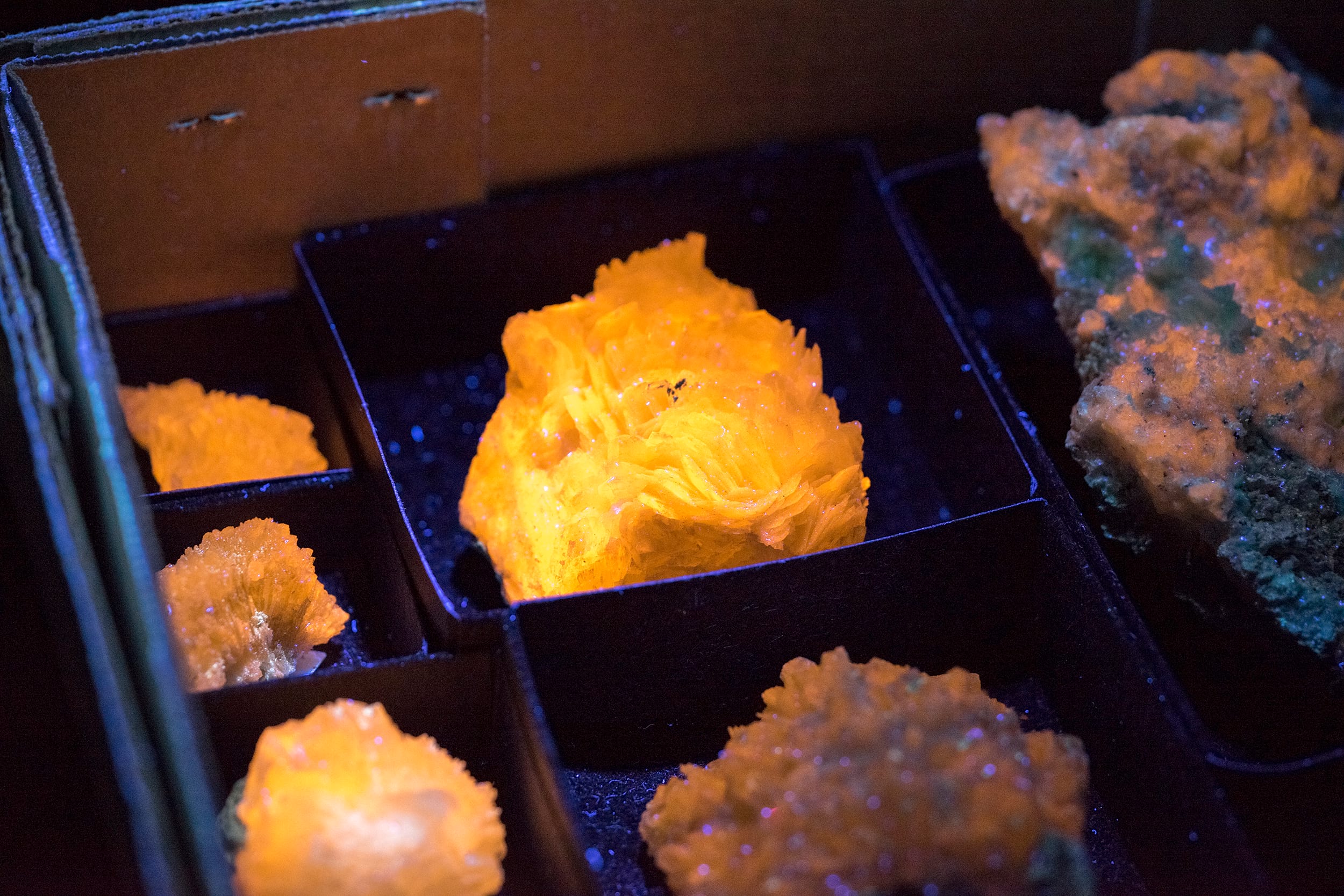
Lastly are the minerals that caught my eye. To start off there's the bright orange tarbuttite. There were also some interesting phantomed and zoned calcites and fluorites. In addition Jim had obtained some of the very rare Skorpionite from the Skorpion mine. In Todd's possession was an interesting ruby specimen. Normally they fluoresce red but that one also had orange!

Fluorapatite, Albite
One of my older photos. I thought I had uploaded it but apparently not. It's one of the nicer apatites I've seen come out of the Skardu area. Sharp terminations all around and several growths of smaller apatites. It's lacking that gem quality that some have but I don't usually see too many of those without being small flat crystals or internally fractured. Note that the albite is non fluorescent. It is simply the reflection of the UV light and dust.
Locale: Skardu, Pakistan
Weight: 1.6oz | 45g
Dimensions (apatite only): 1.1 x .85 x 1.7 in | 27 x 22 x 44 mm
Dimensions (including albite):1.2 x 1.3 x 2 in | 30 x 33 x 51 mm

365nm LW

Daylight

Calcite, Fluorite
A classic fluorescent combo. You typically see the calcite fluorites from China or Morocco and they make wonderful specimens as they're well crystallized and brightly fluorescent. This Schickler mine material is mildly interesting though in that the fluorite is sandwiched between the calcite layers.
Locale: Schickler Mine, Wilberforce, Ontario, Canada
Weight: 1lb 1.4oz | 493g
Dimensions 3.5 x 4.0 x 2.6 in | 90 x 101 x 65 mm
Daylight

365nm LW

253.7nm SW
365nm LW + 253.7nm SW

Daylight

365nm LW + 253.7nm SW

Gem-O-Rama, Atolia, Grimes & Sexton Quarry October 2017
Update 11/13/2017: Fixed 360s not loading on mobile
Update 11/25/2017: Fixed videos not having audio + added missing blow hole video
Day 0
Searles Lake is something that I've been wanting to do for several years. However, the opportunity never quite lined up. Either I had previous commitments or something came up last minute. Luckily the stars aligned and I was able to get time to go to this year's Gem-O-Rama. We originally had 6 people saying they would go to this trip when I planned it out a month in advance. However, my "luck" seemed to have rubbed off on the other people that were coming as they all slowly but surely cancelled until it was just me and SoCal FMS President Dave Stuck left. It worked out for both of our schedules as we got there at roughly the same time - 6 pm. Perfect for fluorescent mineral collectors as there's still some sunlight left to see the road and trails but just before it gets dark. Let the adventures begin!
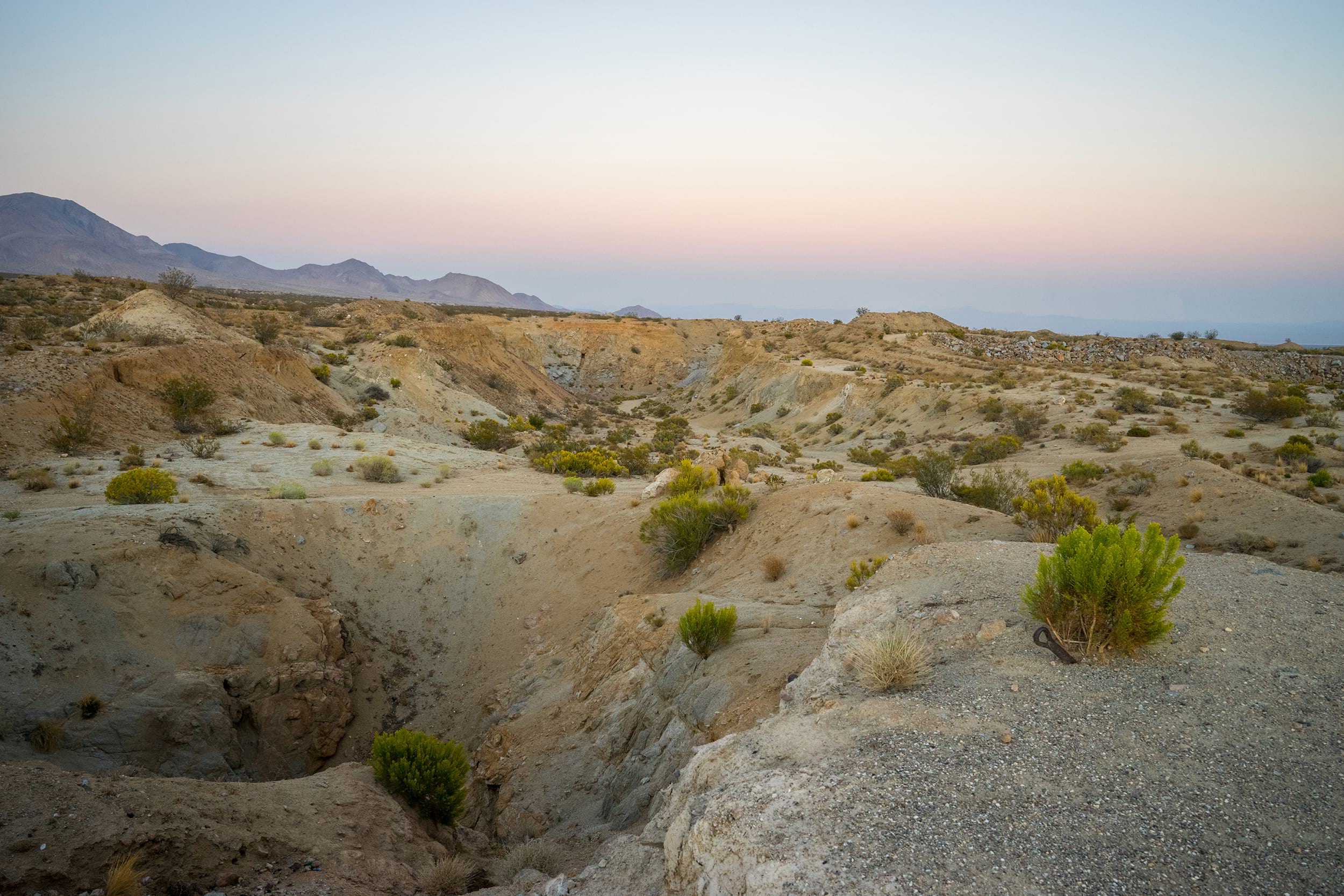
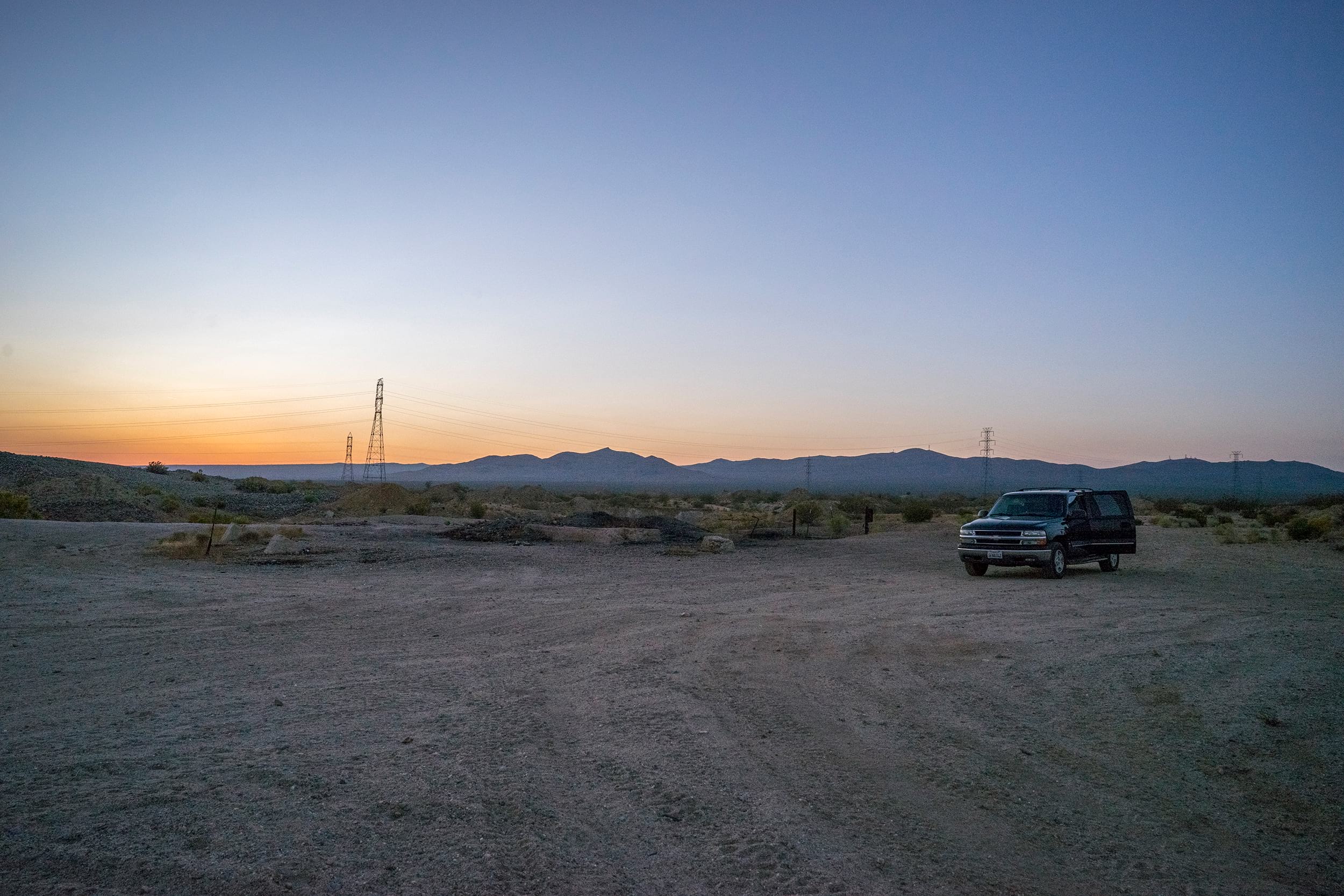
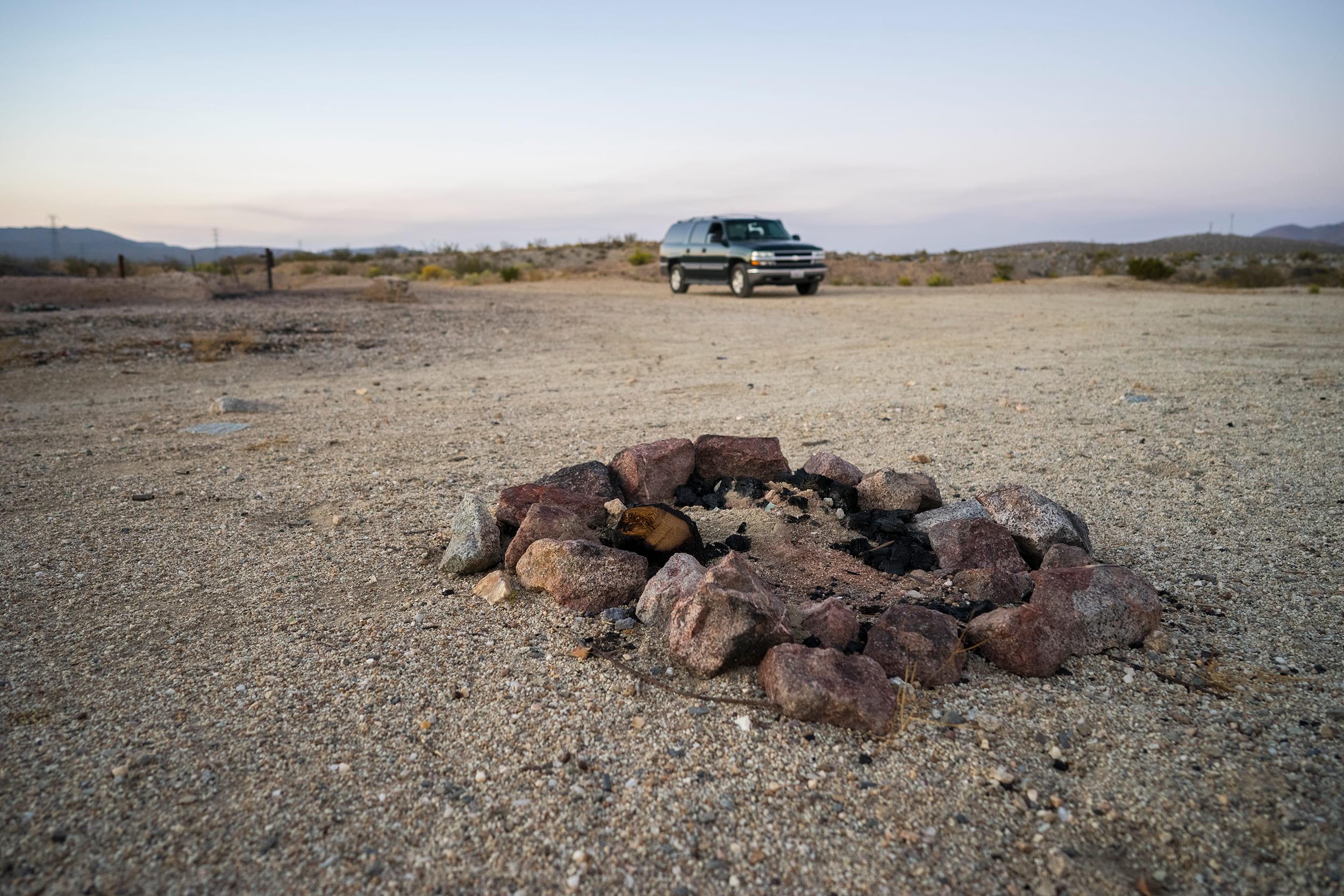
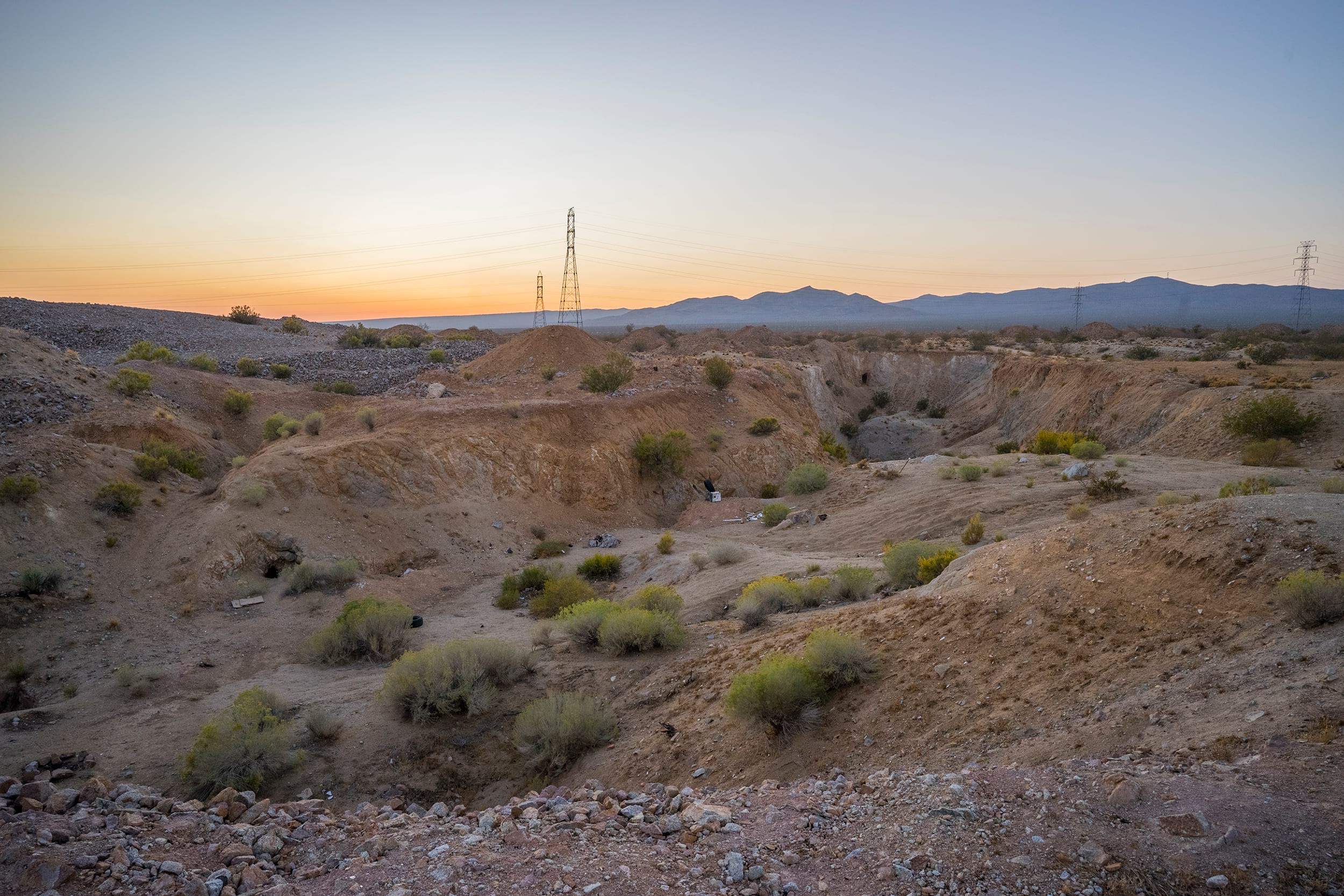
Here's the first site we went to on Friday, before the Gem-O-Rama began. Luckily I had a hotel in Ridgecrest so we were only 30 minutes away from the historic Atolia mining district where there was a massive amount of tungsten being mined. Just look at how wide these veins ran. Some 360s and photos will really put into perspective just how rich of a tungsten area this was.
First stop: Union Mine

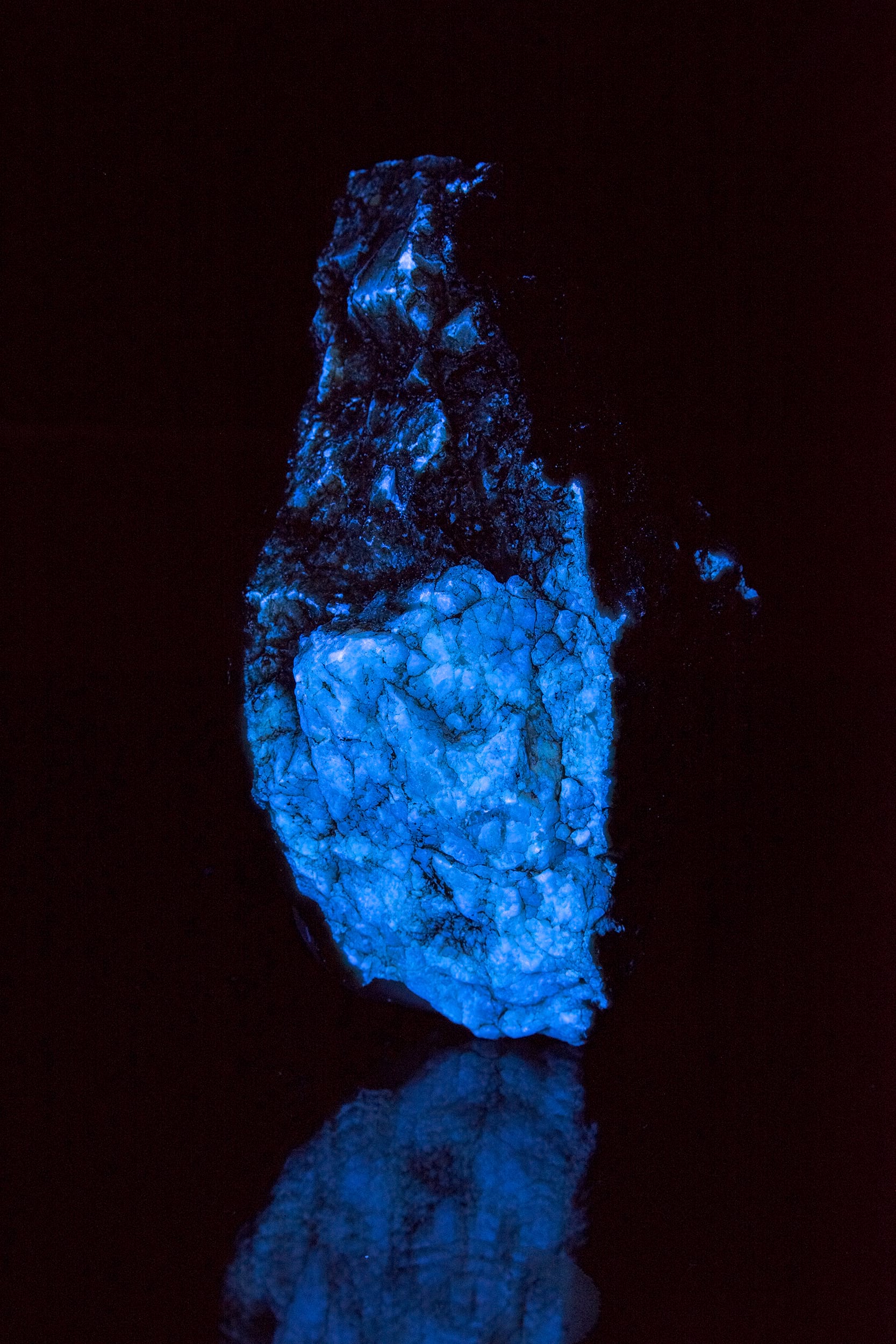
And here's the group shot of our finds for the night. Some massive chunks of bright fluorescent blue scheelite. There's a nice fluorescent red calcite combination with blue scheelite as well as a nice fluorescent green. When I collected it I thought it might have been hyalite or chalcedony but after testing it it's able to be scratched with a 4. I'll leave it as an unknown for now.

My haul for the night

Dave's haul
Followed by some more formal photos I took after I got home.
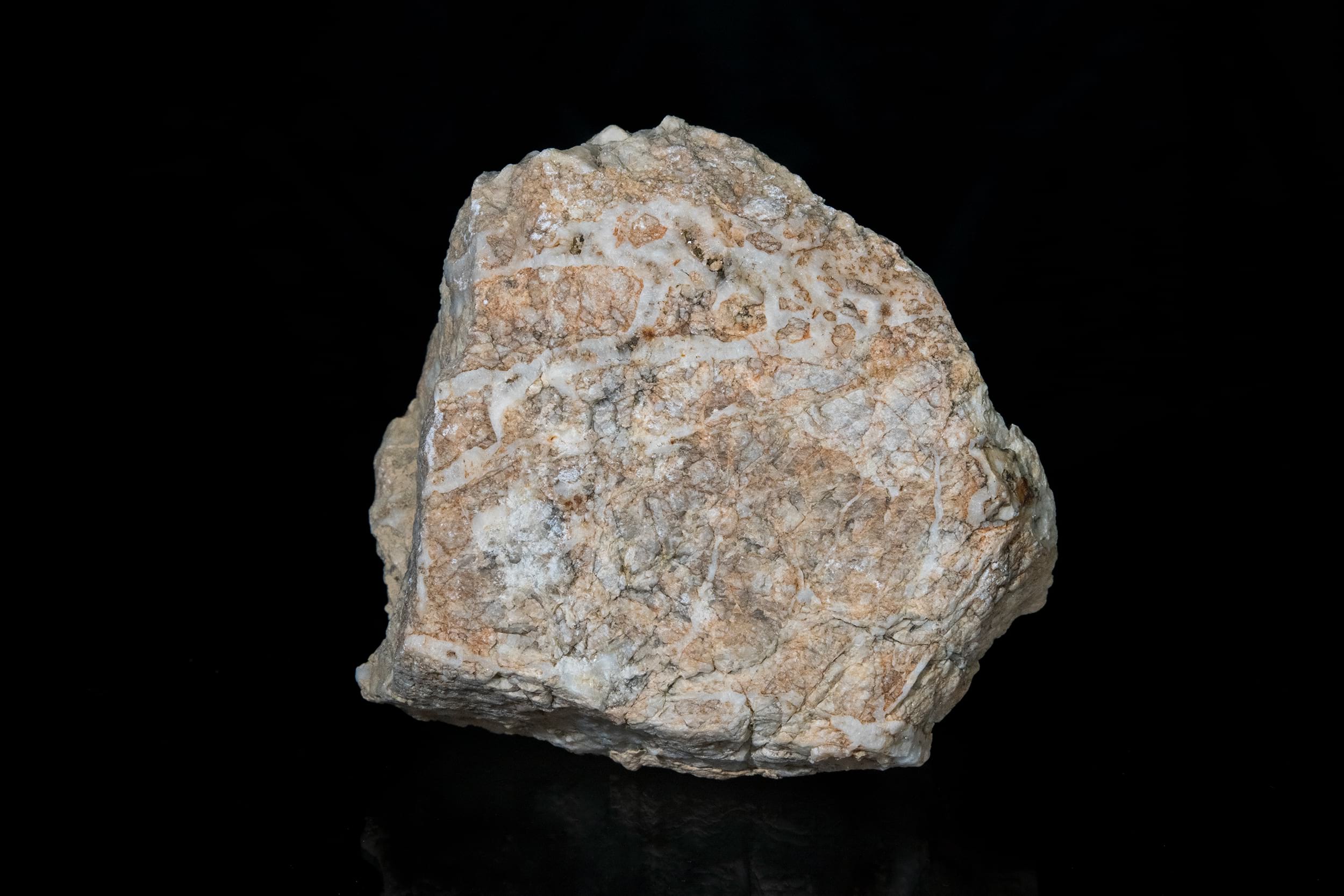
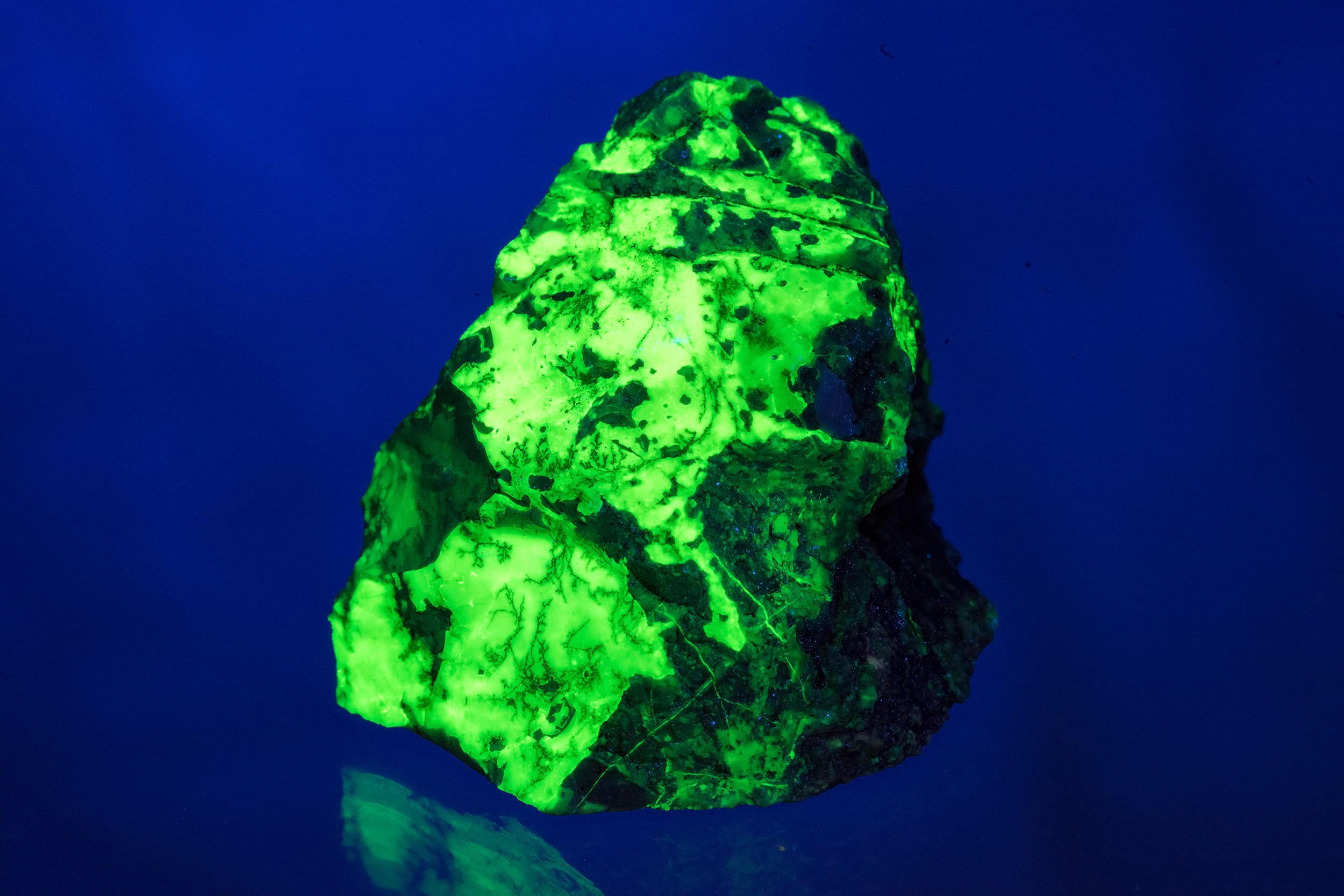
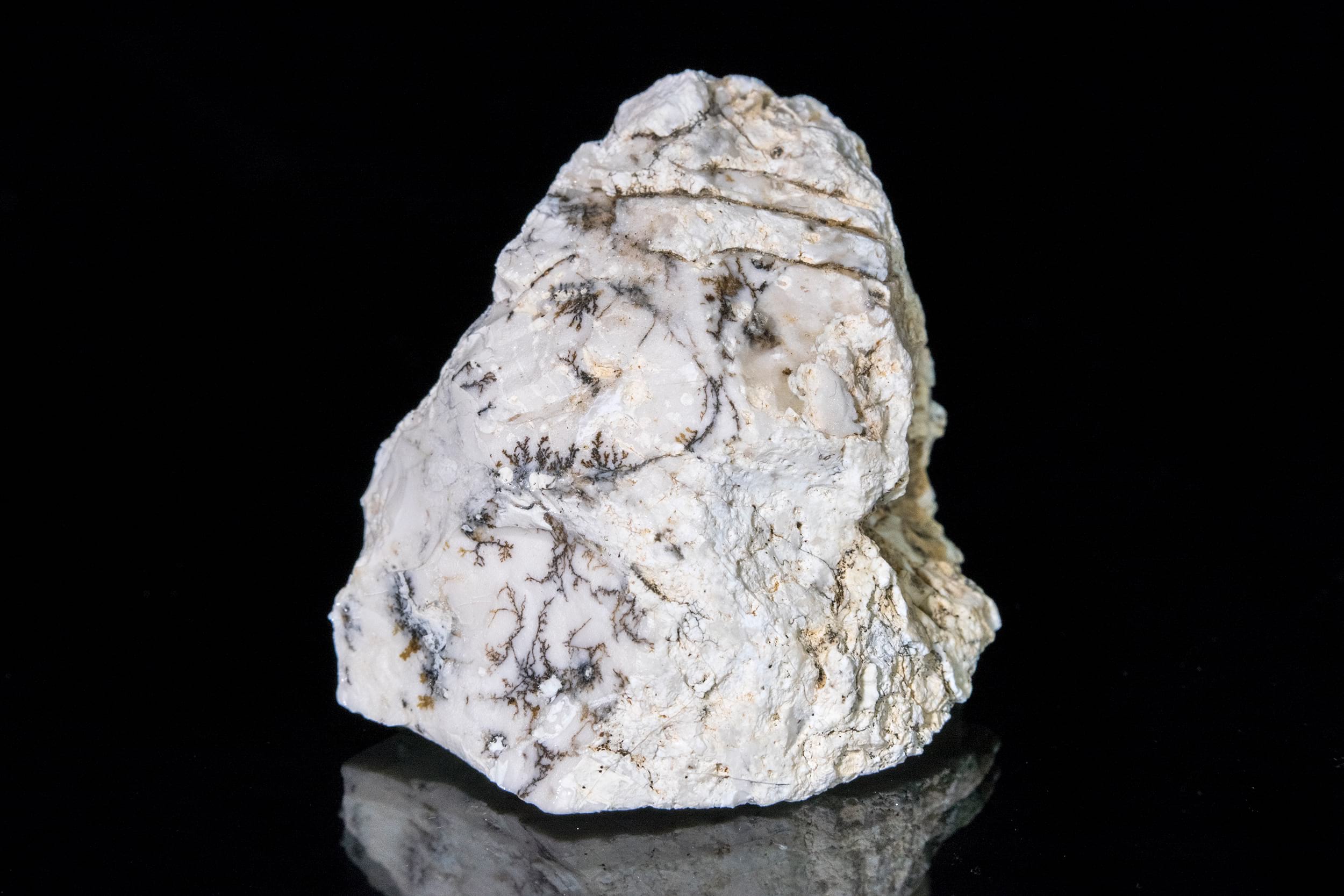
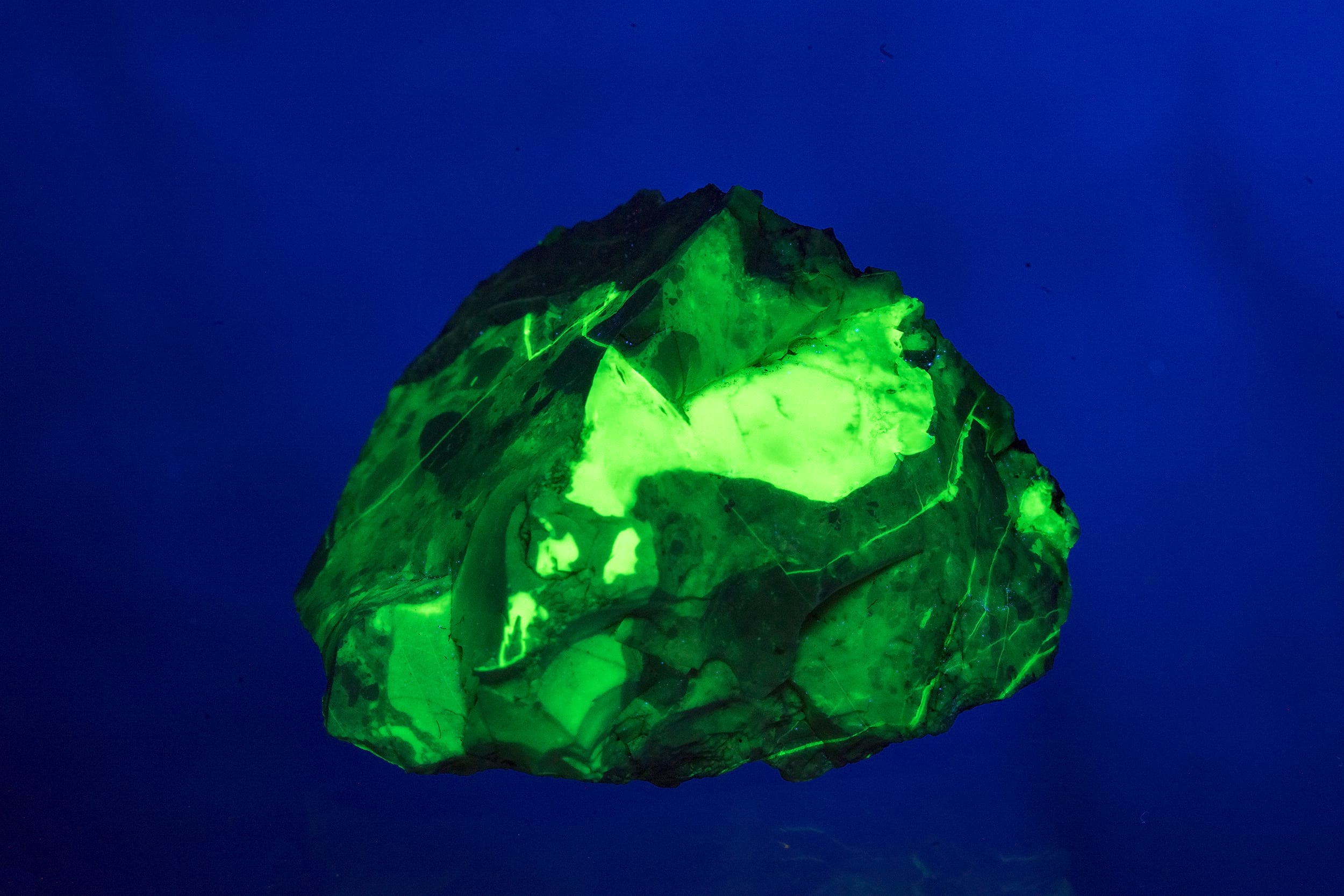
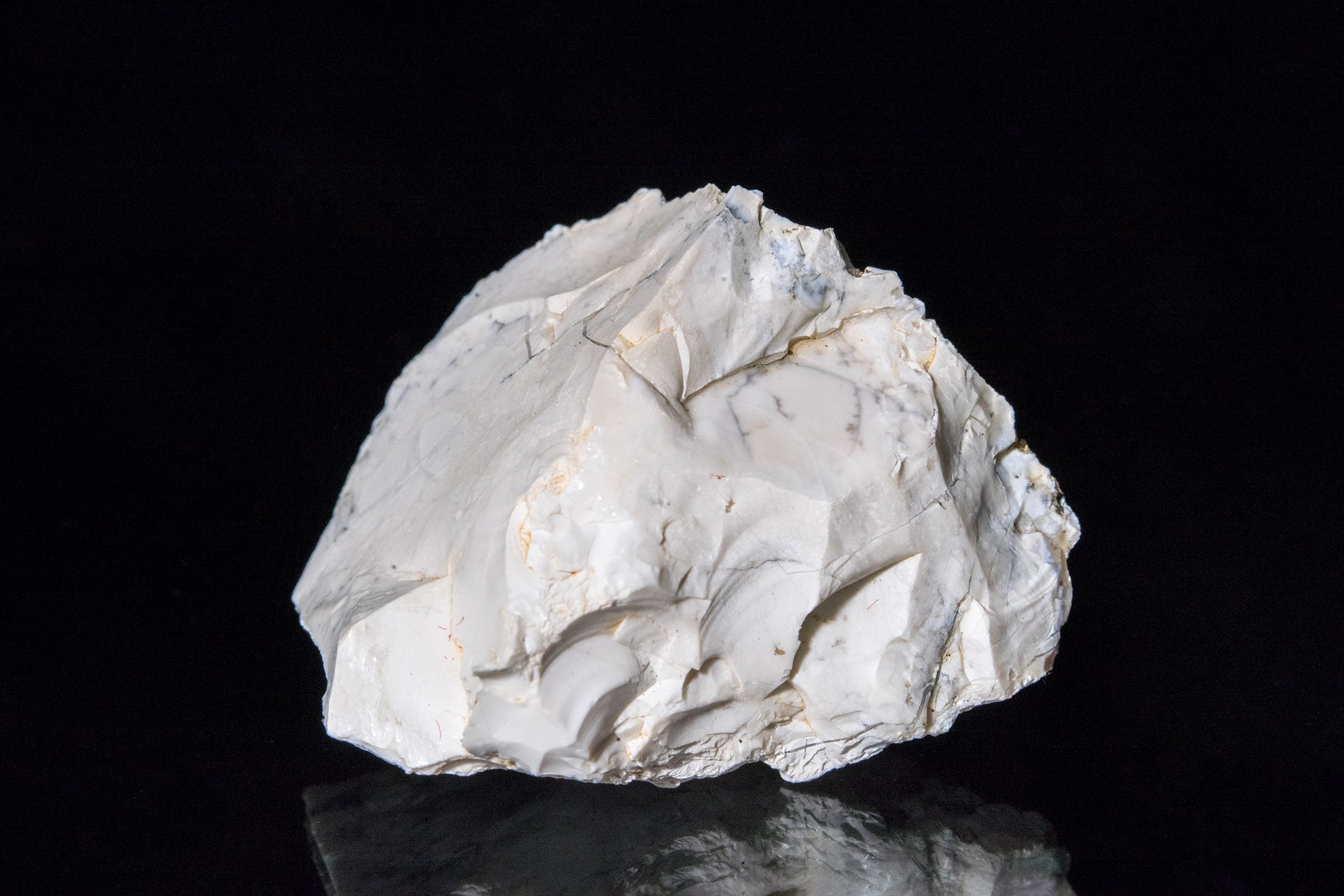
Day 1
So while we were up late last night, coming home around midnight from Atolia, we weren't technically late. As an old friend would describe it, "You were late for being early!" We got there around 30 minutes before they were supposedly starting. However, look at this lineup of cars that got there way before us. Looks like most people got there at least an hour before us. Some possibly stayed overnight! That's quite a long time to wait just to have maybe a 10 or 20 minute head start!

While we were waiting we kept hearing a bird cannon. It made an incredibly loud noise to scare off any curious avian that might enter the brine pools for whatever reason. Someone's job is to look for birds and to make sure the cannons are armed. That's quite ecologically responsible!
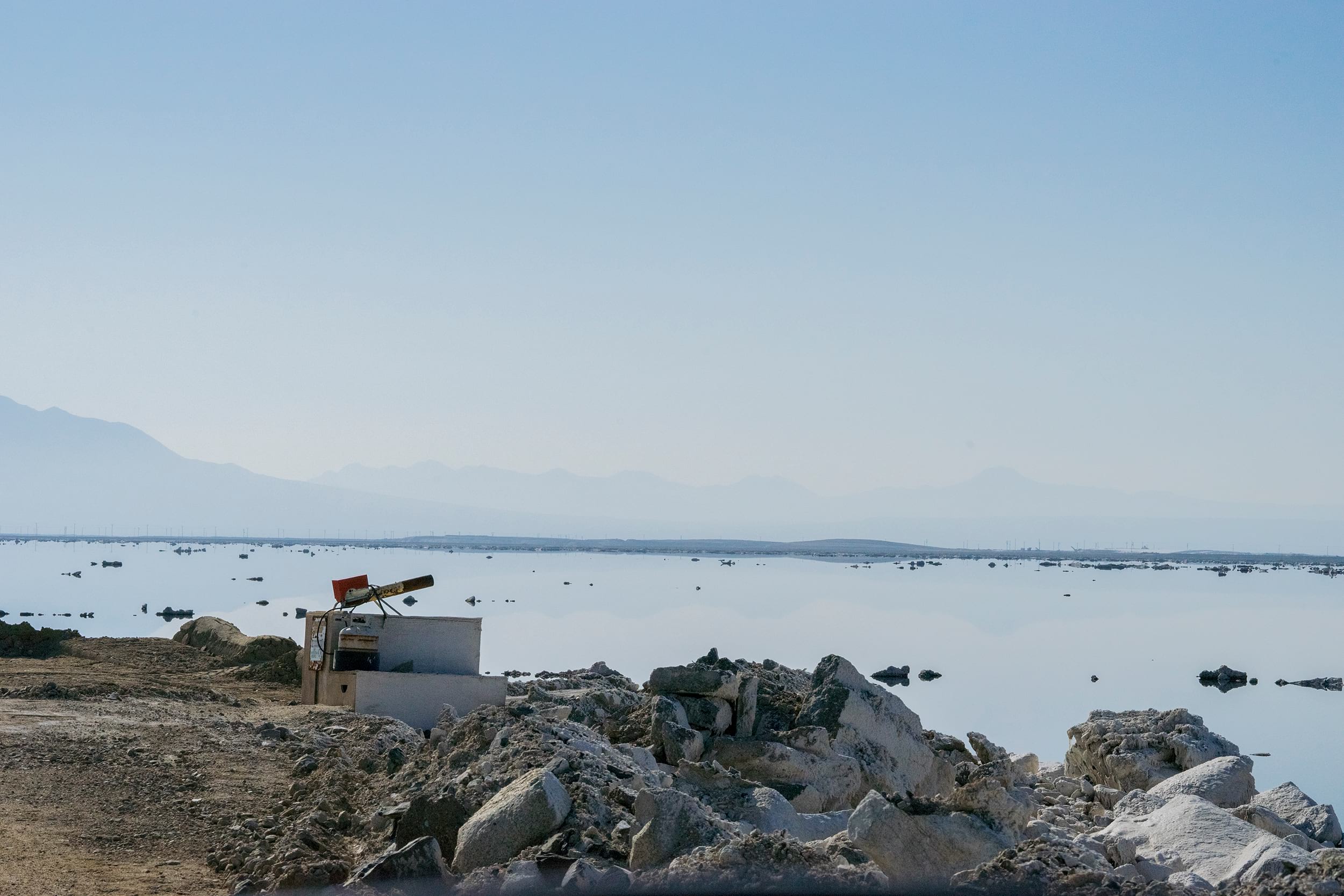
Finally it was our turn to get to the piles and look forward to some beautiful crystals. Boy was it packed though! The only downfall of being "late".
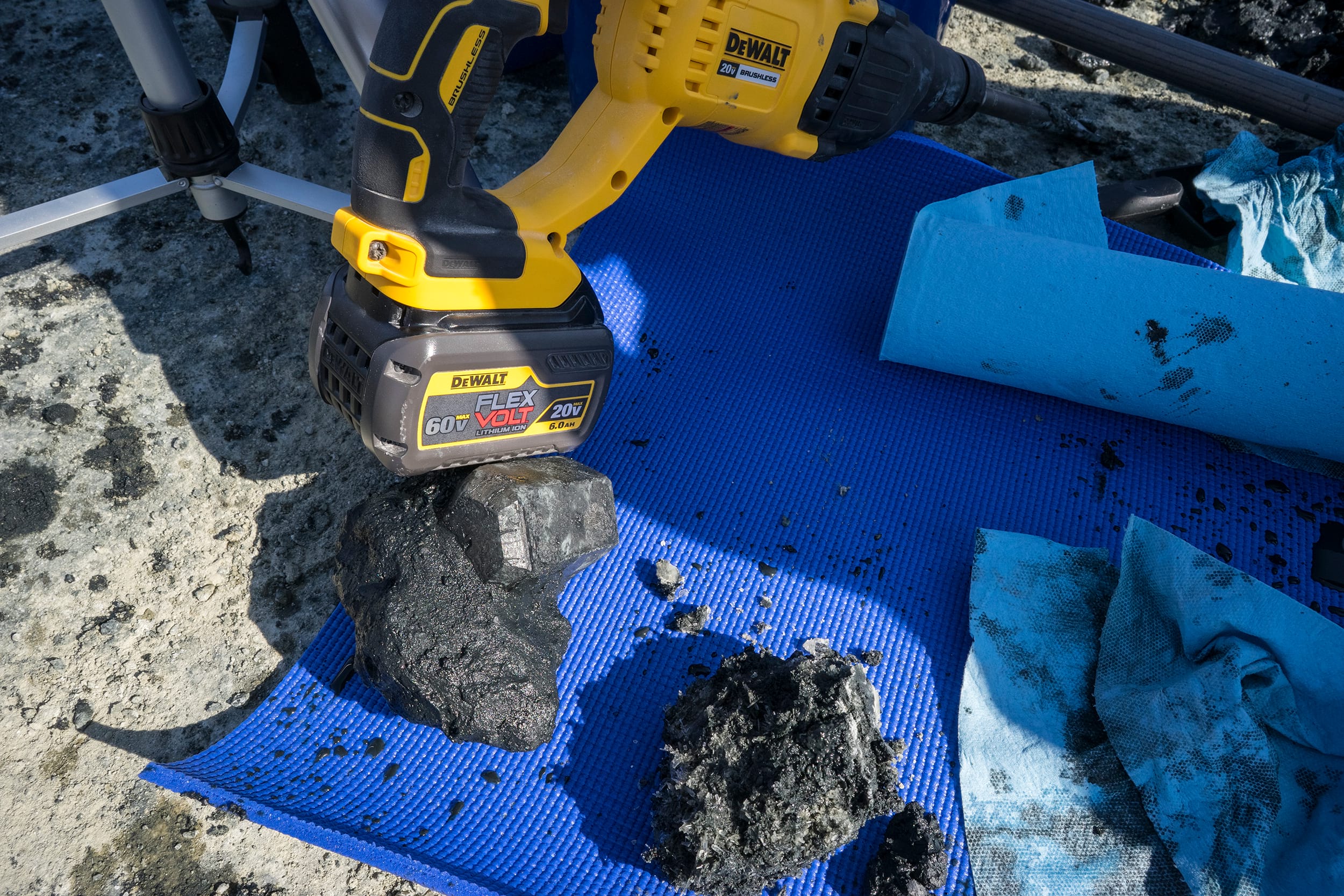
Some ground photos before we get to the 360s. Note to aspiring rockhounds: Tools like the Dewalt rotary hammer I show are not allowed on public land. However, this collecting site is on private property and I checked their rules for anything barring power tools - which there weren't. In addition, there were several officials on the hills watching over everyone. None of them batted an eye with my usage. Be sure to check your local laws!
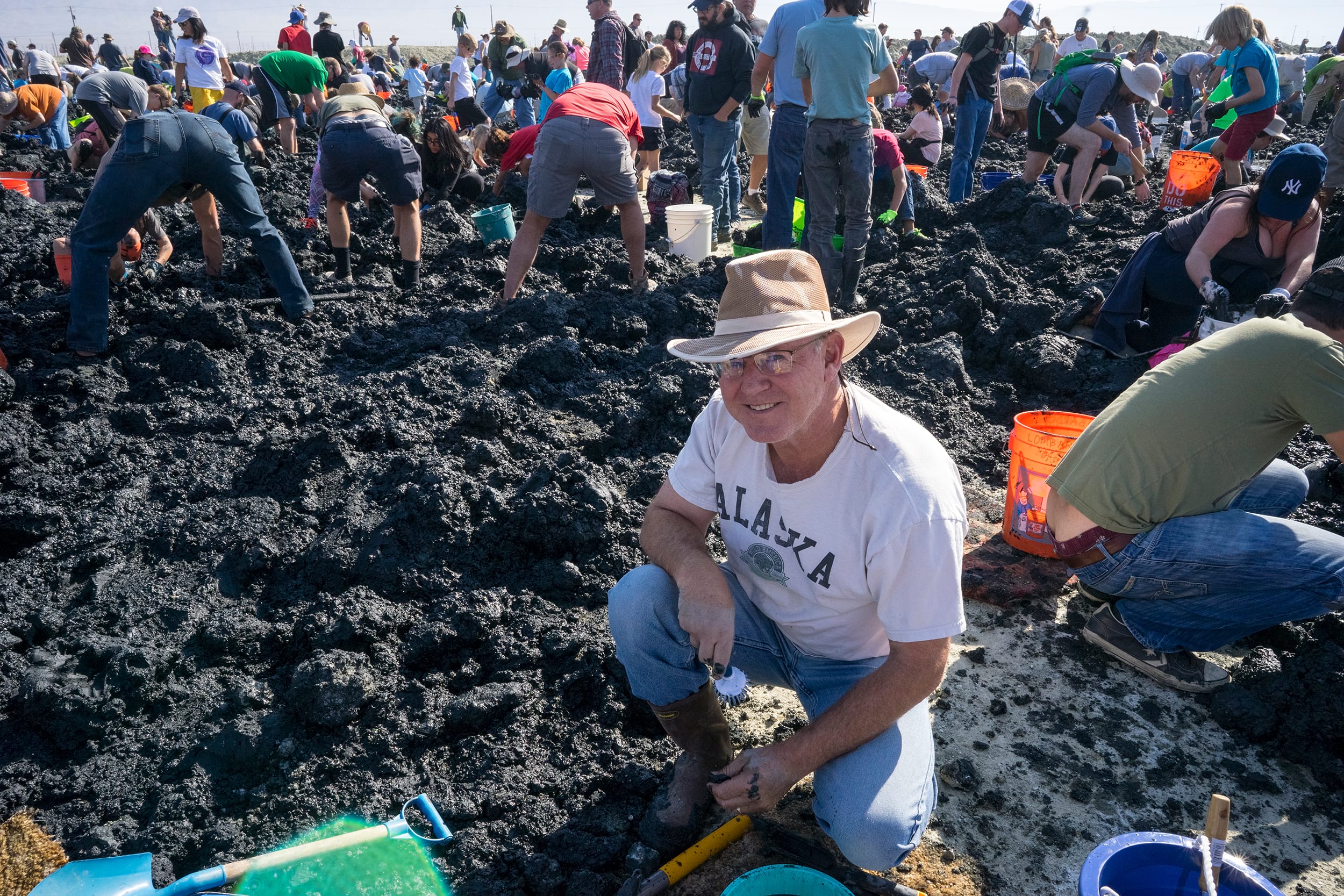
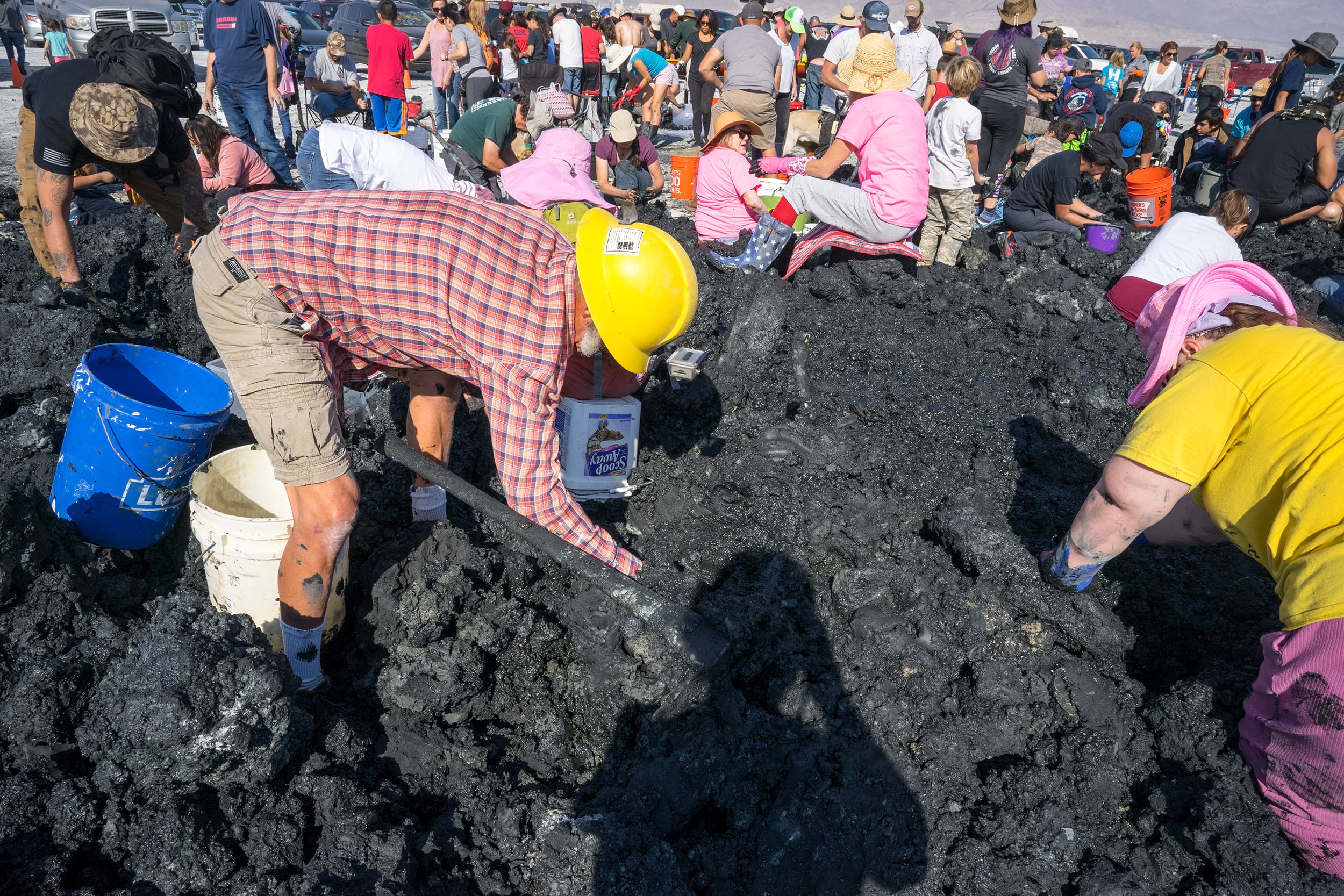
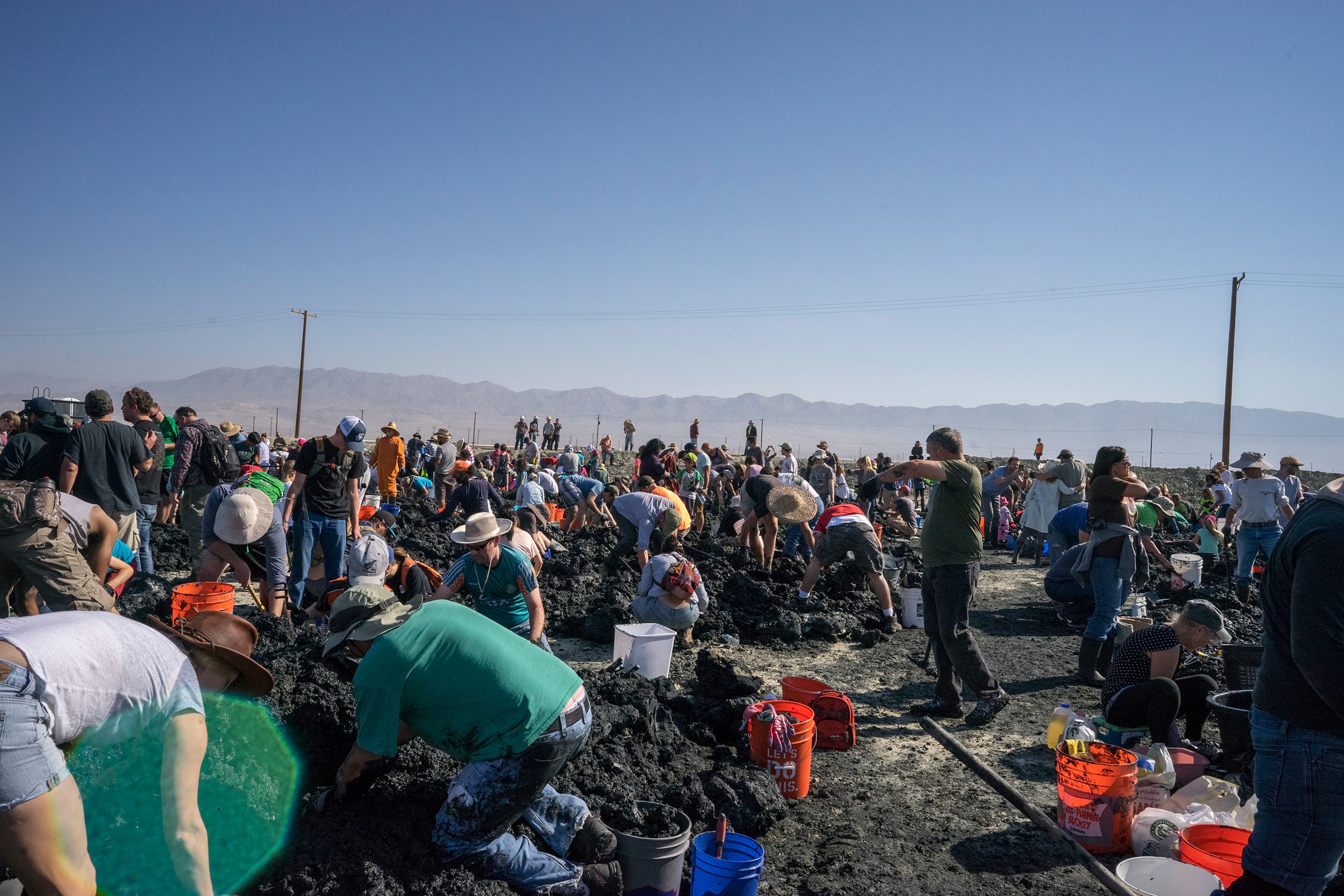
One of the more interesting characters I met here was the person in the orange jumpsuit posing with a beautiful hanksite he had found. He's a boyscout leader named Dave that was taking his troop to the Gem-O-Rama so they could experience something new. That's quite an amazing (and muddy!) experience to have at that age. Hope they had fun!

And here's my haul from the mud piles. The first specimen has a lot of lint on it. Because hanksite is an evaporite and will get damaged over time by humidity I covered it in acrylic. However, I left it inside so all the lint that was flowing around landed on the specimen and is now encased in that acrylic layer. The halite in the fourth photo originally had a pink fluorescence that I found interesting. I'm guessing this was originally the halobacterium because this has now faded likely due to some combination of shining UV wavelengths, some of which were designed to destroy bacteria at the cellular level and direct sunlight exposure while the acrylic I covered it with was drying.
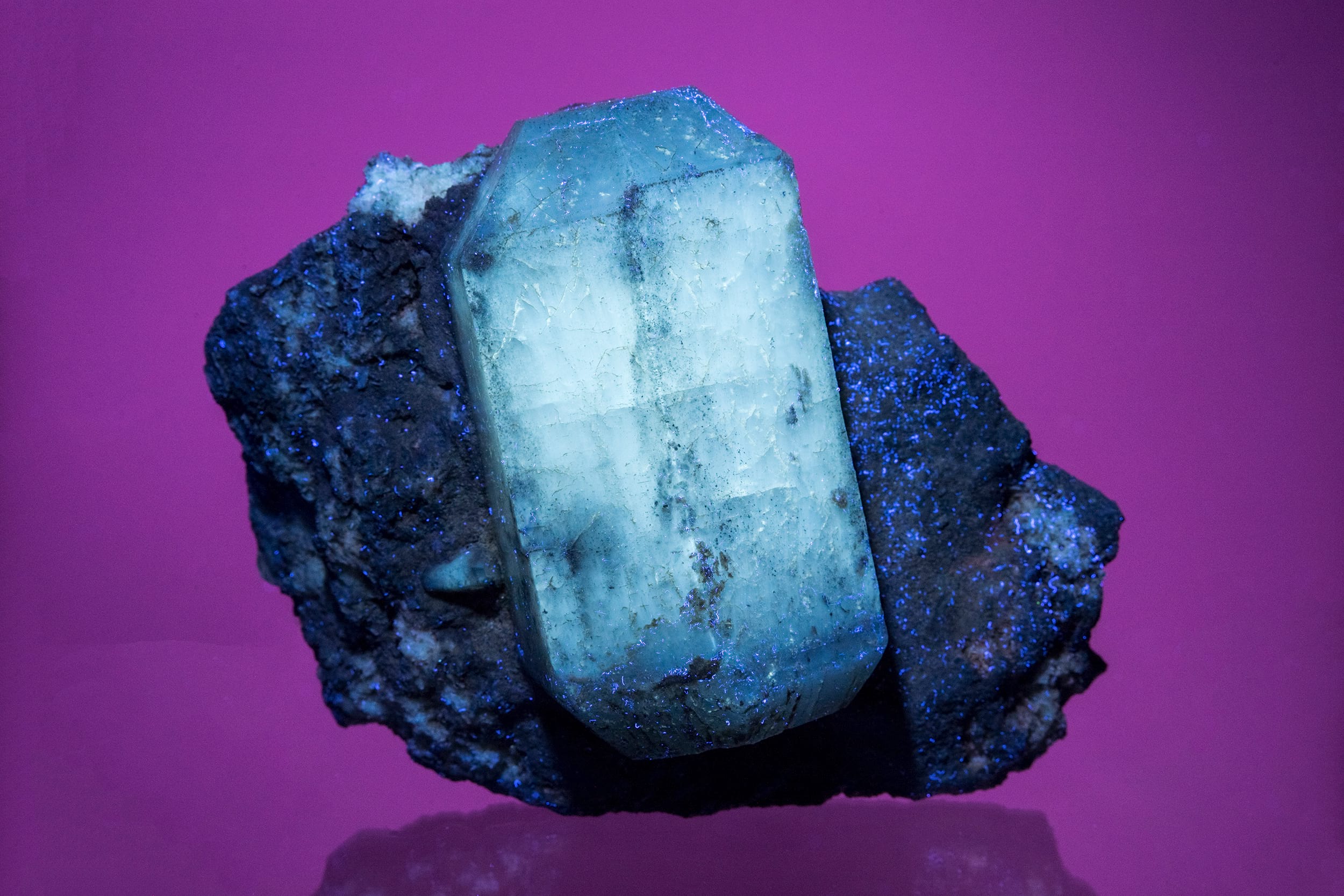
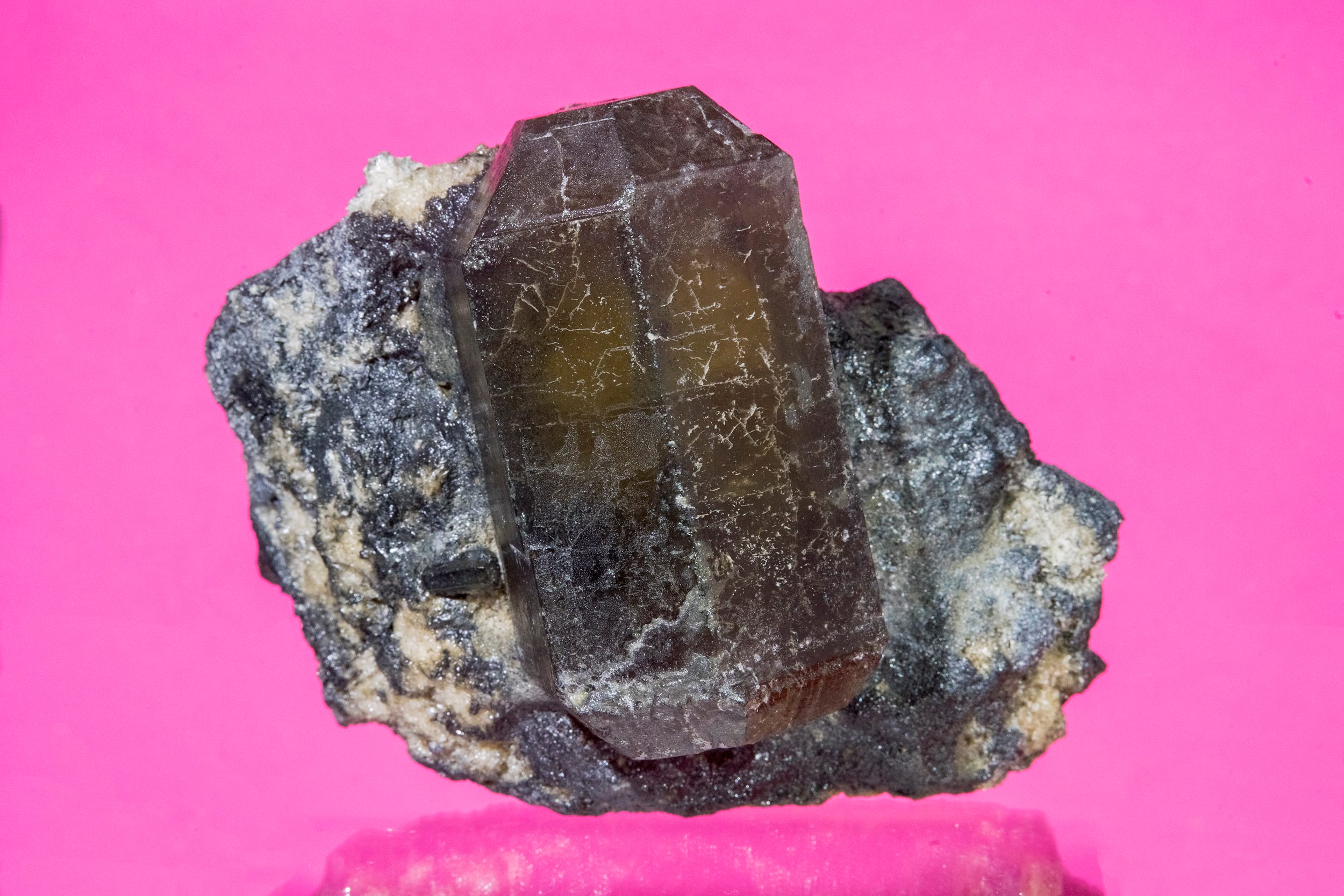
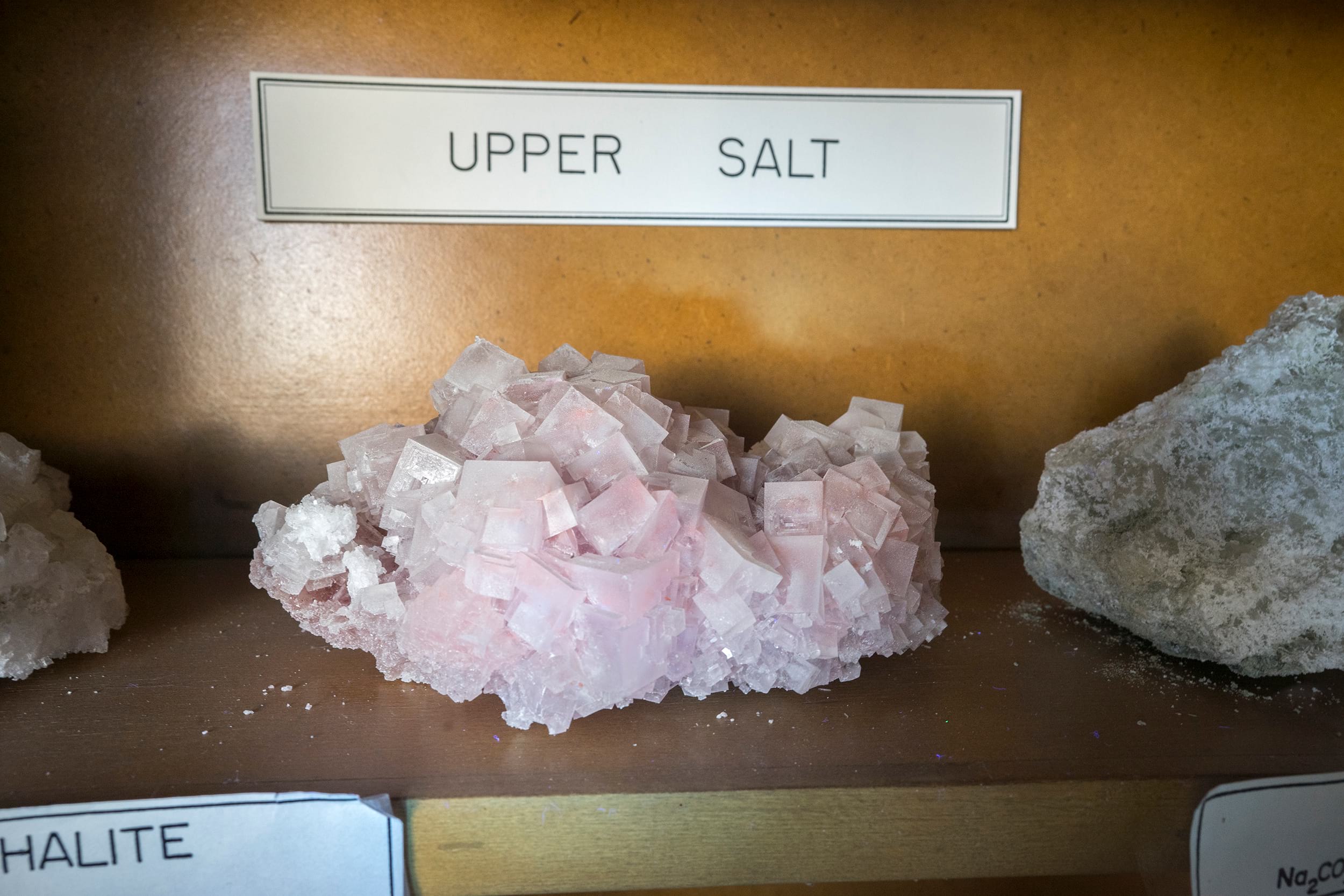
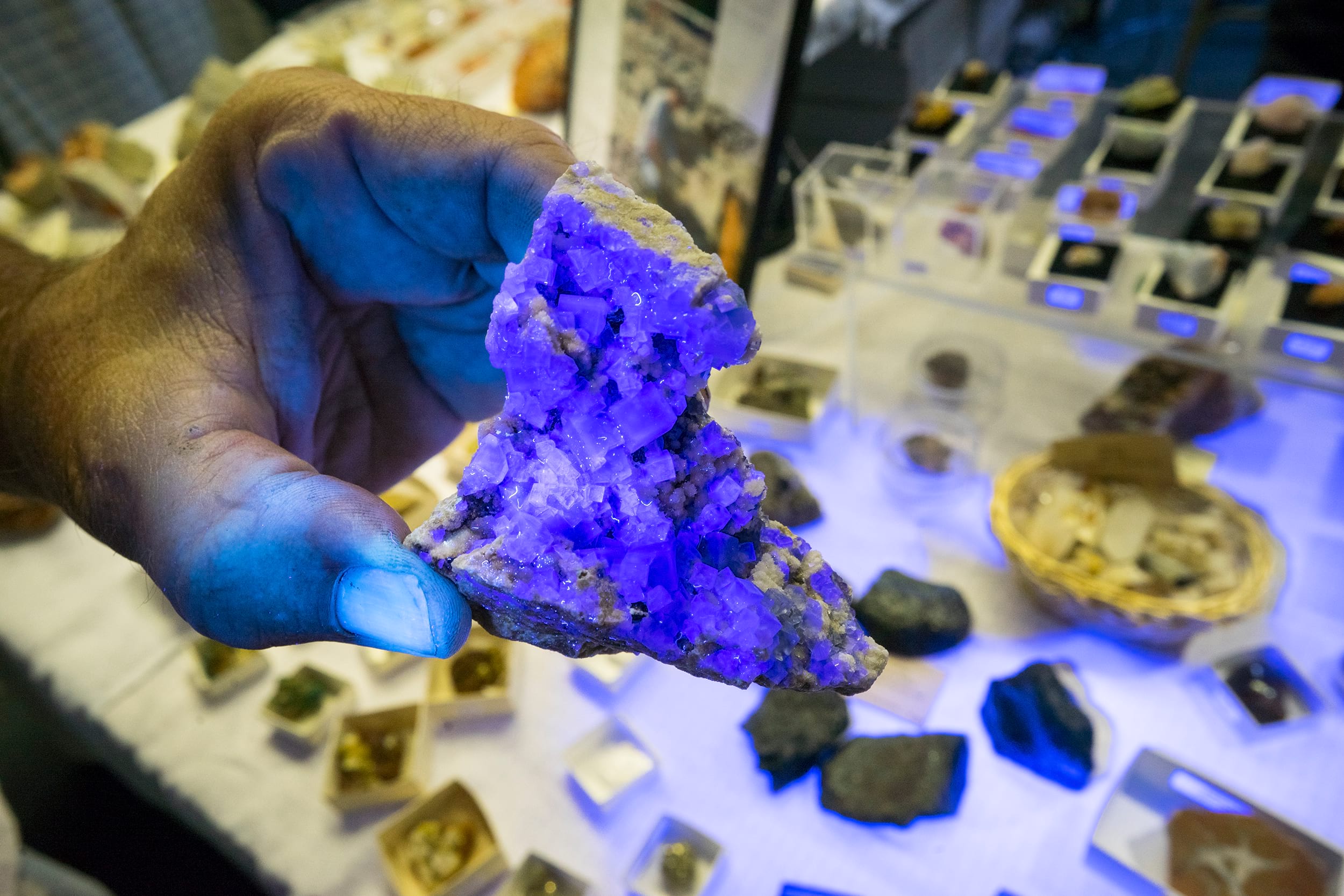
After this there was a bit of a gap before the next event so that people could get lunch and whatever else they needed. While some people took this opportunity to clean the specimens they just found I took the opportunity to explore. They had a miniature museum set up as well as a miniature show with maybe 15 or so dealers. There were wonderful minerals on display with this halite being one of my favorites on display. It had an interesting reddish pink fluorescence akin to Salton Sea or Amboy halite. However, this was mined from a different level to the mud pile minerals so I have no idea if this proves or disproves my guess that it was caused by the halobacterium. Note that this specimen is actually white. Any pink to red spots were from my LW UV source.
Once we had our bellies full (just a quick sandwich from their general store. Those delicious looking breakfast burritos sold out fast!) it was time to go to the blow hole. What a wonderful change of pace. After being incredibly muddy this was a place where you simply picked the minerals up off the floor. My tip is to bring plastic tools to this event. The crystals would get dinged otherwise.
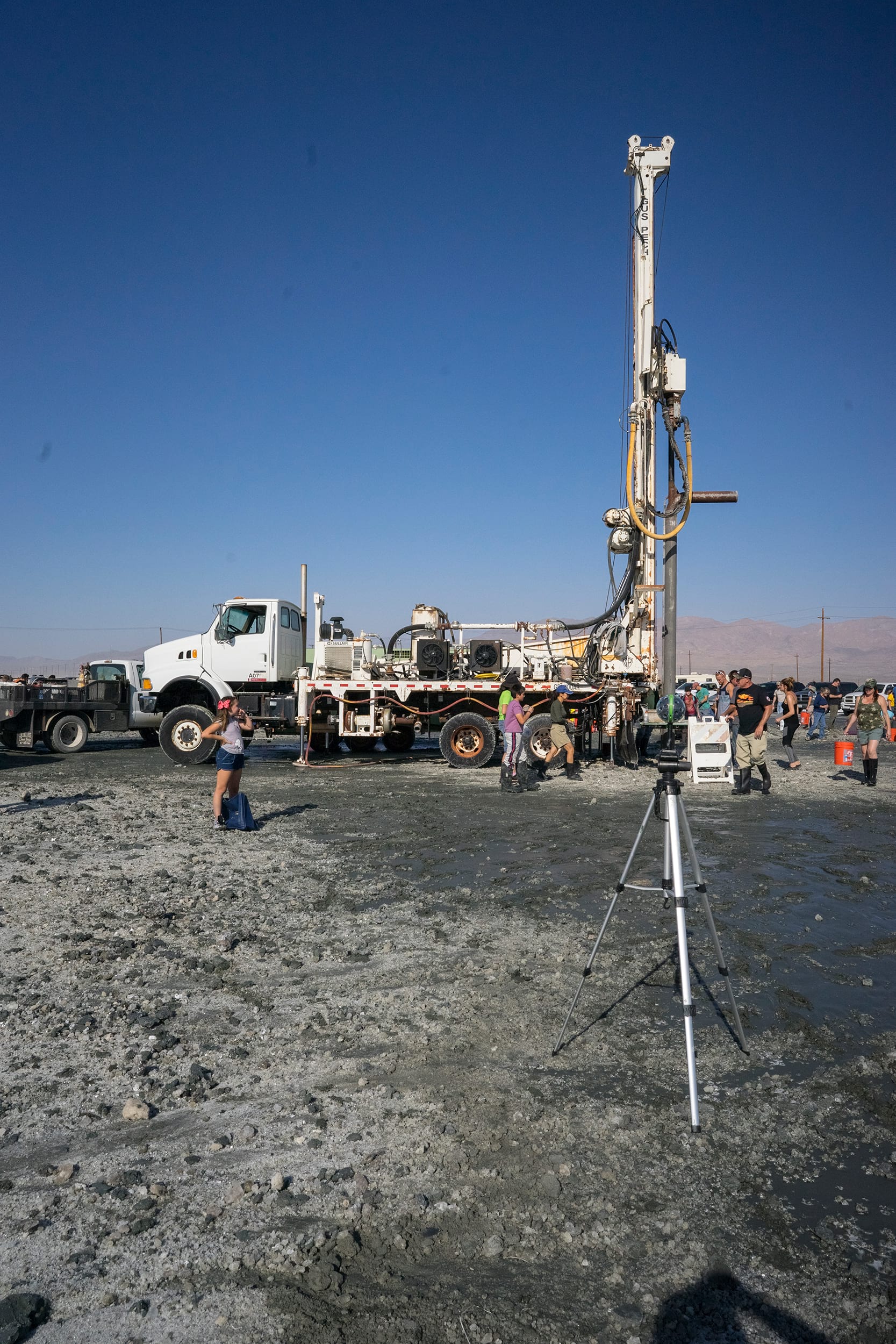
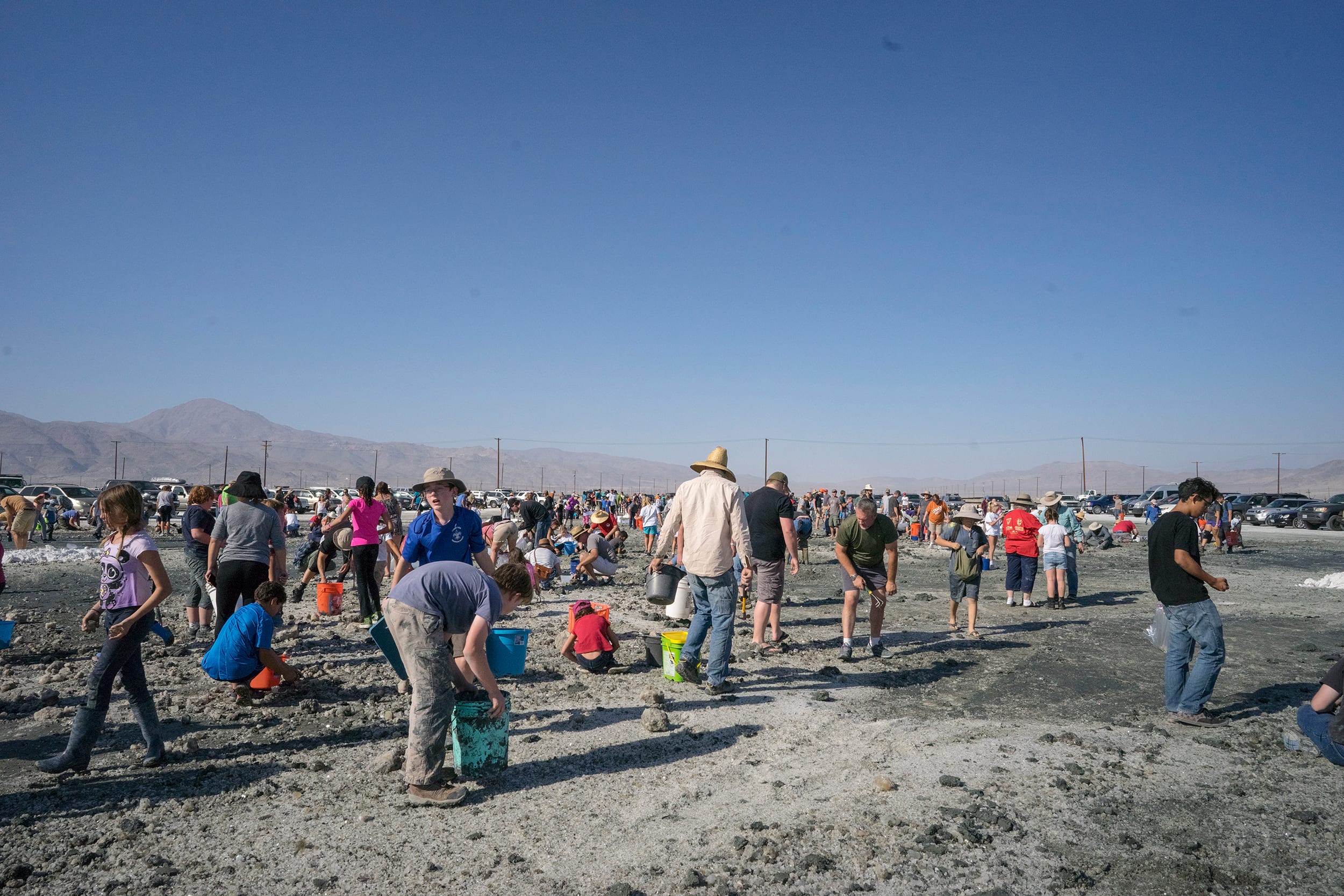
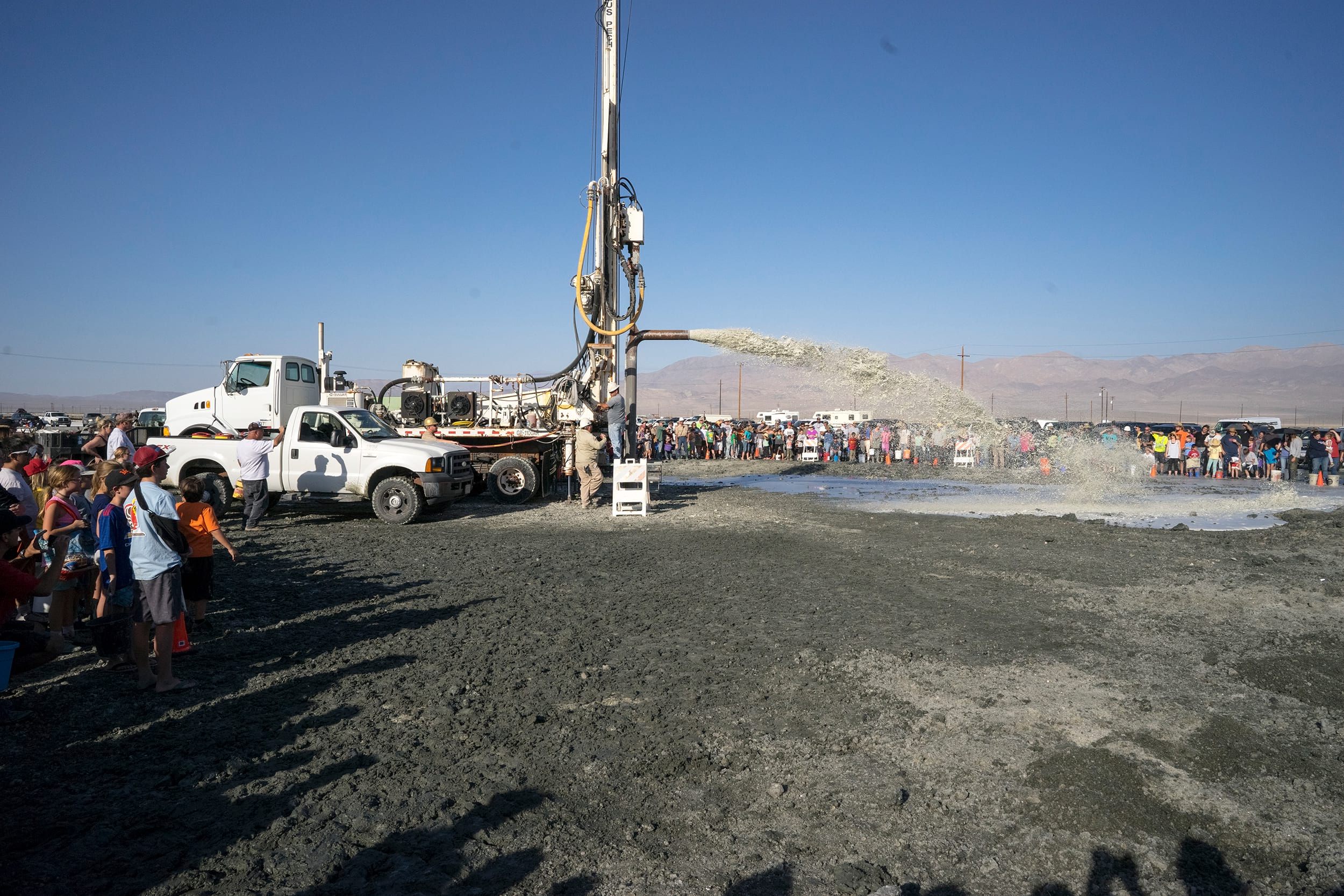
The first 360 is me sitting on the bed of salt that became our collecting area. The scale of the Searles Valley Mineral company is just mindblowing and even my 360s don't do it justice! Add a drone to the list of things I want. The next is me showing off a doubly terminated hanksite crystal while being stared at by the person next to me. Trust me when I say this happened a LOT! Everyone wanted to know what my 360 camera was.

And here are my finds from the blow hole section. My favorite piece is by far the twinned sulfohalite though. The perfect terminations as well as the twinning make it quite aesthetic to me. Plus, it's noticeably the brightest fluorescent mineral out of everything I collected.
Oops! I took vertical video with my camera. It shows the phosphorescence nicely though.
While that was it for the Searles Lake events of the day it certainly wasn't the end of the day for us. After all, we're fluorescent mineral collectors and we thrive at night! The adventure would just be beginning for us. The first stop was the Grimes & Sexton Quarry. https://mrdata.usgs.gov/mrds/show.php?labno=10236095. According to the MRDS it was primarily a lead quarry with some other metals (copper, gold, silver). However, just look at the sheer scale of it! This was the one time I forgot to take a 360. Oops! This picture only depicts about 1/3 of the quarry too! What a lead deposit this must have been.

Not that we cared for the lead minerals. We were there solely for fluorescents! There was plenty to choose from but this was the piece that I took home.
http://www.raymond-wu.com/all/2017/11/4/calcite-chert-travertine
After this is where the night came short though. Dave's other place that he wanted to explore ended up being a bust. It doesn't seem to have been registered with the USGS so I don't know what the name of the mine is. It was just a small tungsten occurrence and I had already been spoiled by Atolia! Of note is that there were still huge piles of tungsten ore that should have been crushed. Nothing spectacular like the solid scheelite chunks of Atolia but large 100+ lb boulders with significant scheelite specks. The crusher stockpile that was left there still had a large amount of scheelite in it as well. It was almost as if the place was abandoned for whatever reason.
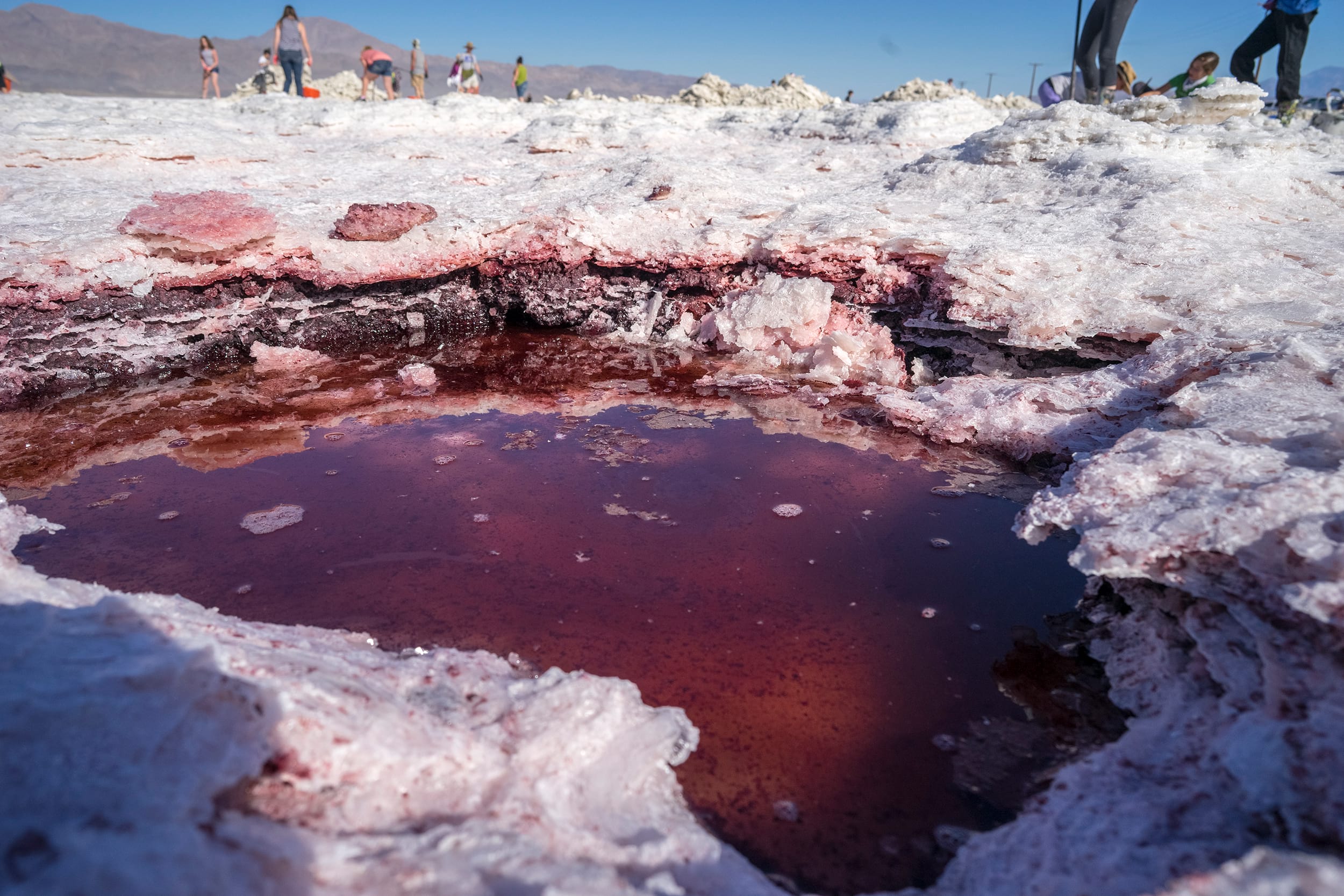
The next day is where Dave and I parted ways. He had to prepare for some job responsiblities on Monday. My thinking was "I'm already here. Might as well go through with the full experience. I knew full well that the pink halite was not a good fluorescent specimen as I had seen plenty at shows and even purchased a piece when I was first starting out. Needless to say I didn't intend on bringing any home. I said to myself that I'd only bring home a piece if I found a small plate with exceptionally large crystals. Another tip is to not use the pry bars that they supply. I tried it out for about 20 minutes before I just moved straight to the rotary hammer I had brought. Much quicker and I could flip over larger amounts of pressure ridges (bumps on the surface of the salt bed where crystals form) in record time.
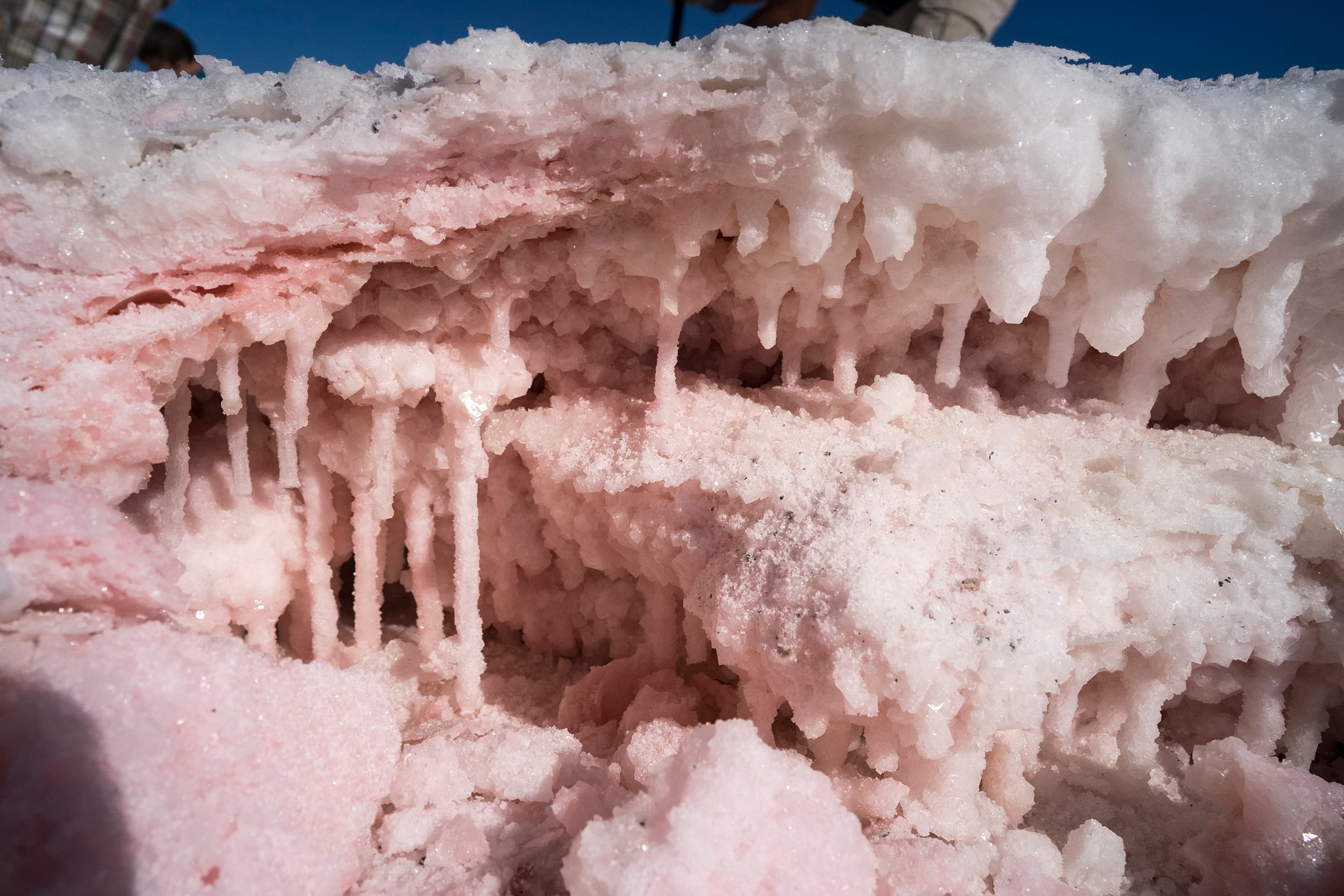
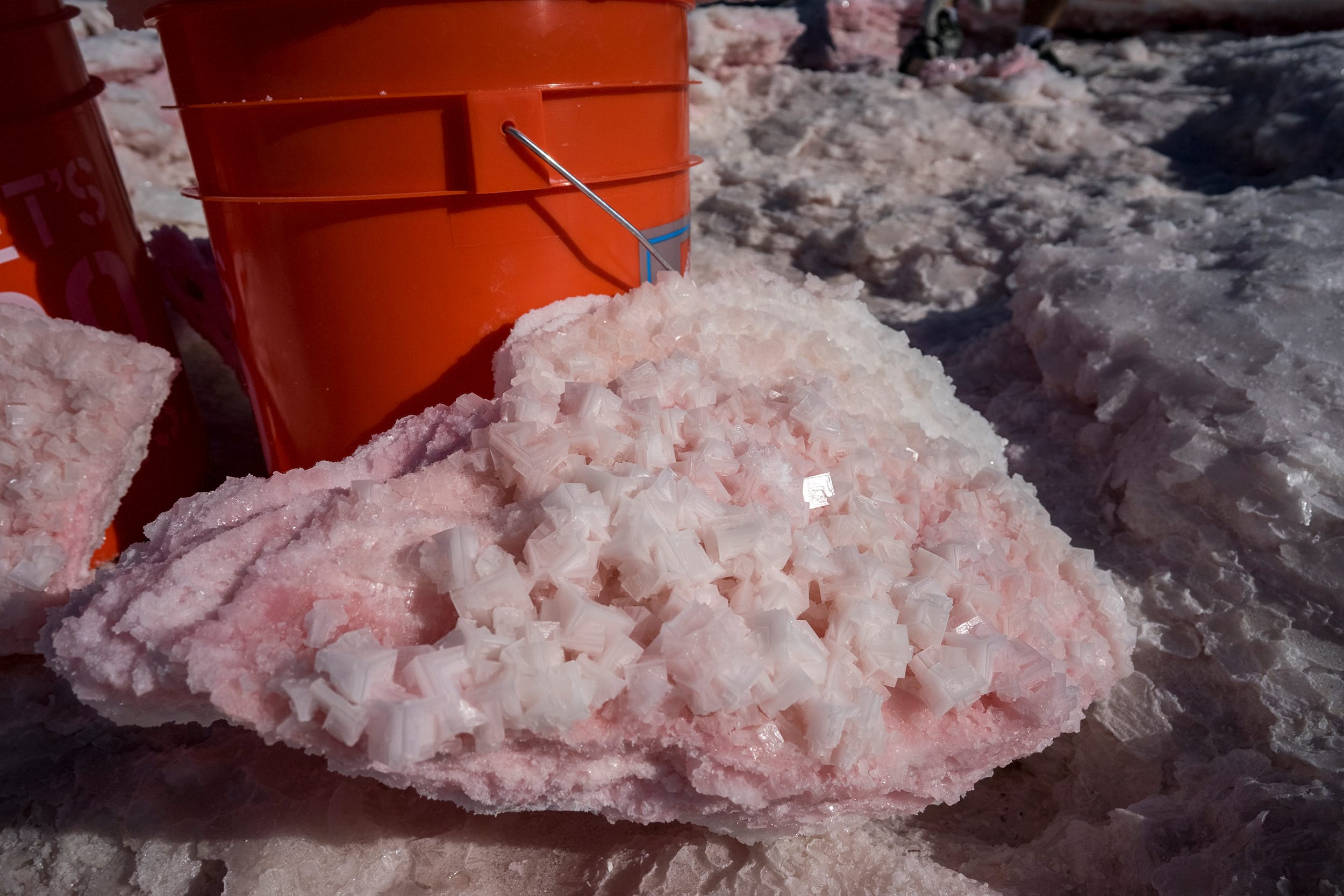
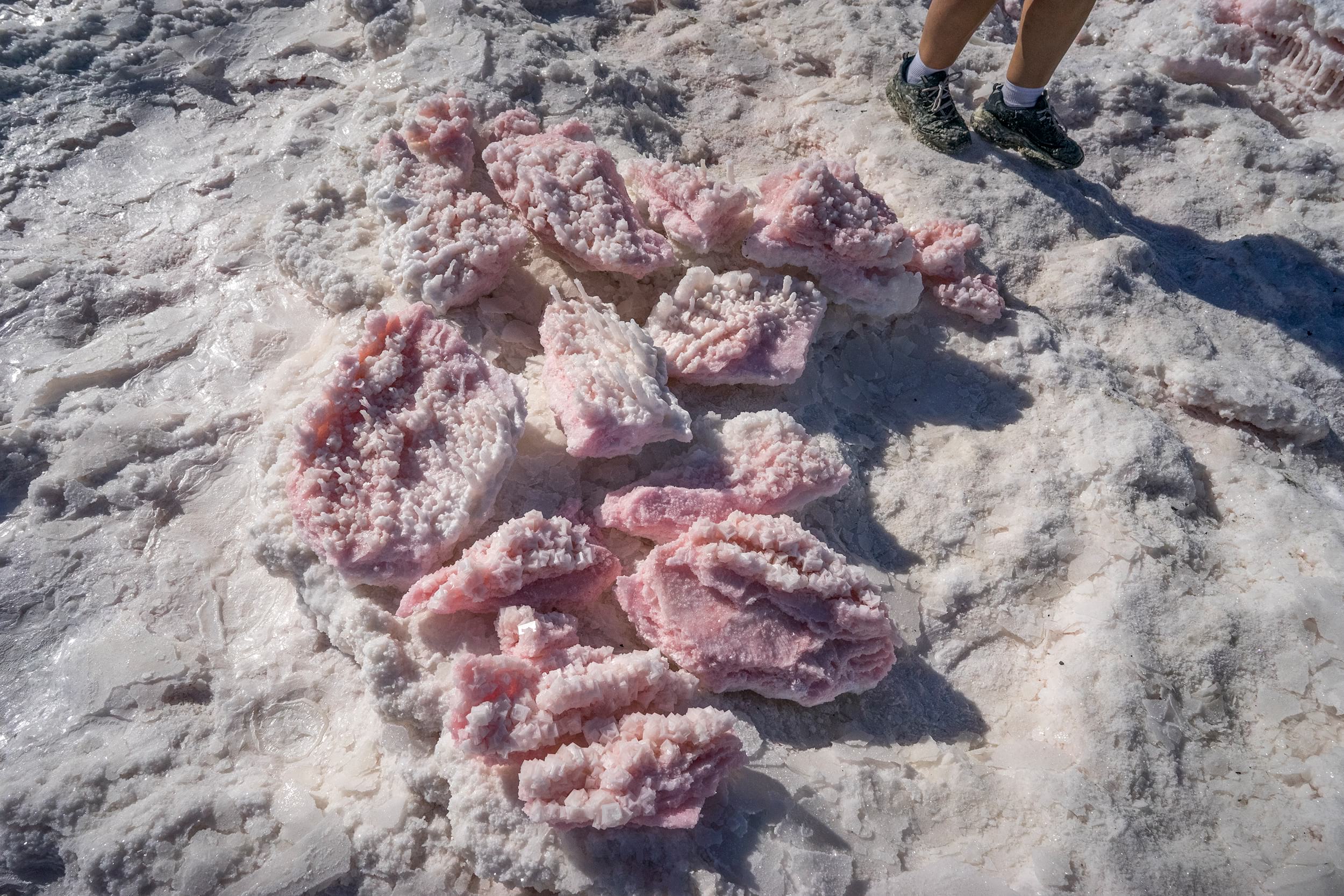
So what did I end up with? Not quite the large 3-4"+ crystals I had hoped for but a halite that was twinned side by side totaling about 2.5". It wasn't even worth my time to set up a proper photoshoot but I wanted to highlight the difference between the two pieces in the photo. The one on the top is a piece that I had bought when I first started out 3 years ago. It has long dried out and is closer to an orange color than the original pink. However, it fluoresces brighter than the fresh piece I had gotten. Quite interesting!


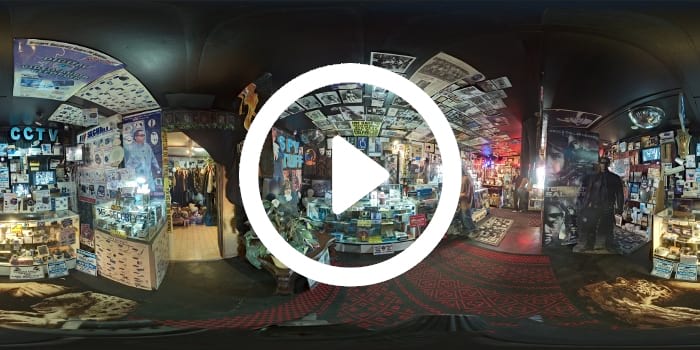
While the events of that year's Gem-O-Rama had concluded I still hadn't had enough. I wanted to explore more since it was still so early in the day. I decided to visit some spots in Randsburg, the first of which was the Historic Owl Cafe. I have to say that places like this are where 360 cameras really shine. There's so much effort and interesting history covering such a small area I don't think anything other than a 360 could do it justice. The owners, a husband and wife duo, had quite an interesting story. Originally their store was situated in Los Angeles as a security store - the remnants of which can be seen in the 3rd 360. However, they wanted to get away from the hustle and bustle of the crowded city and so they moved to Randsburg. The husband already did occasional gold panning so why not settle on a place with so many fee digs and weekend gold mining areas. The amount of artifacts and curiosities they've accumulated is no short of amazing for the size of the place!


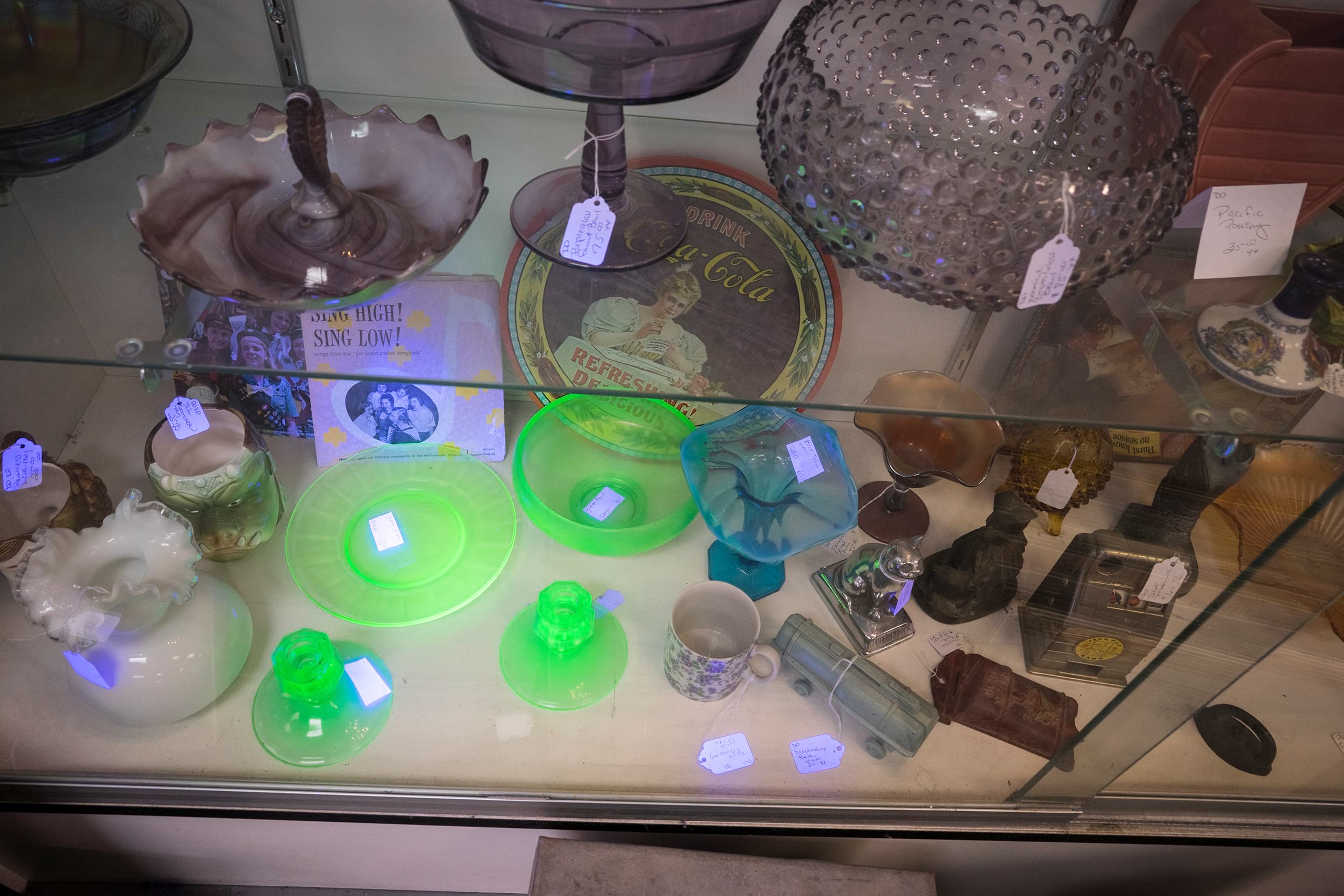
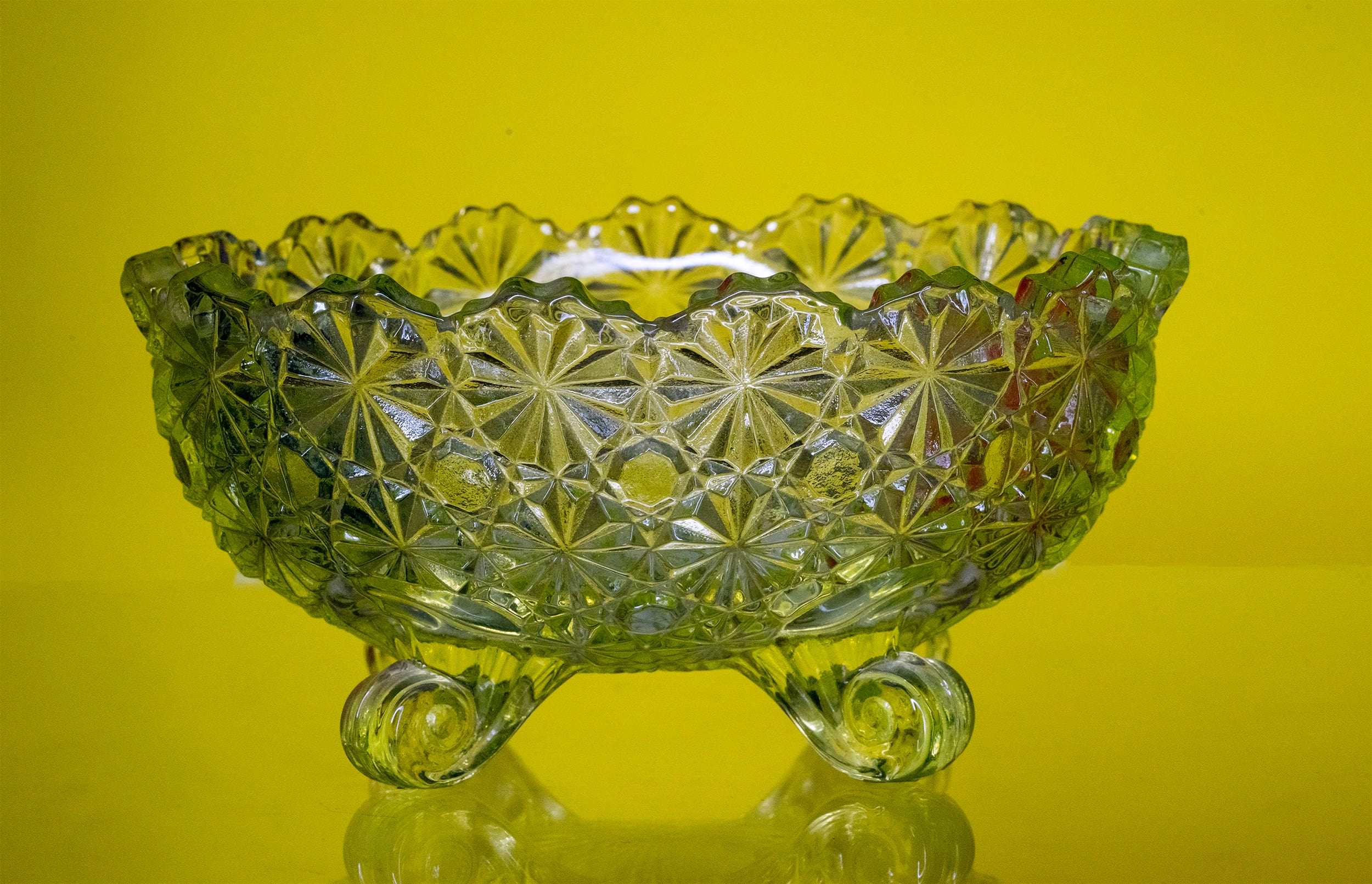
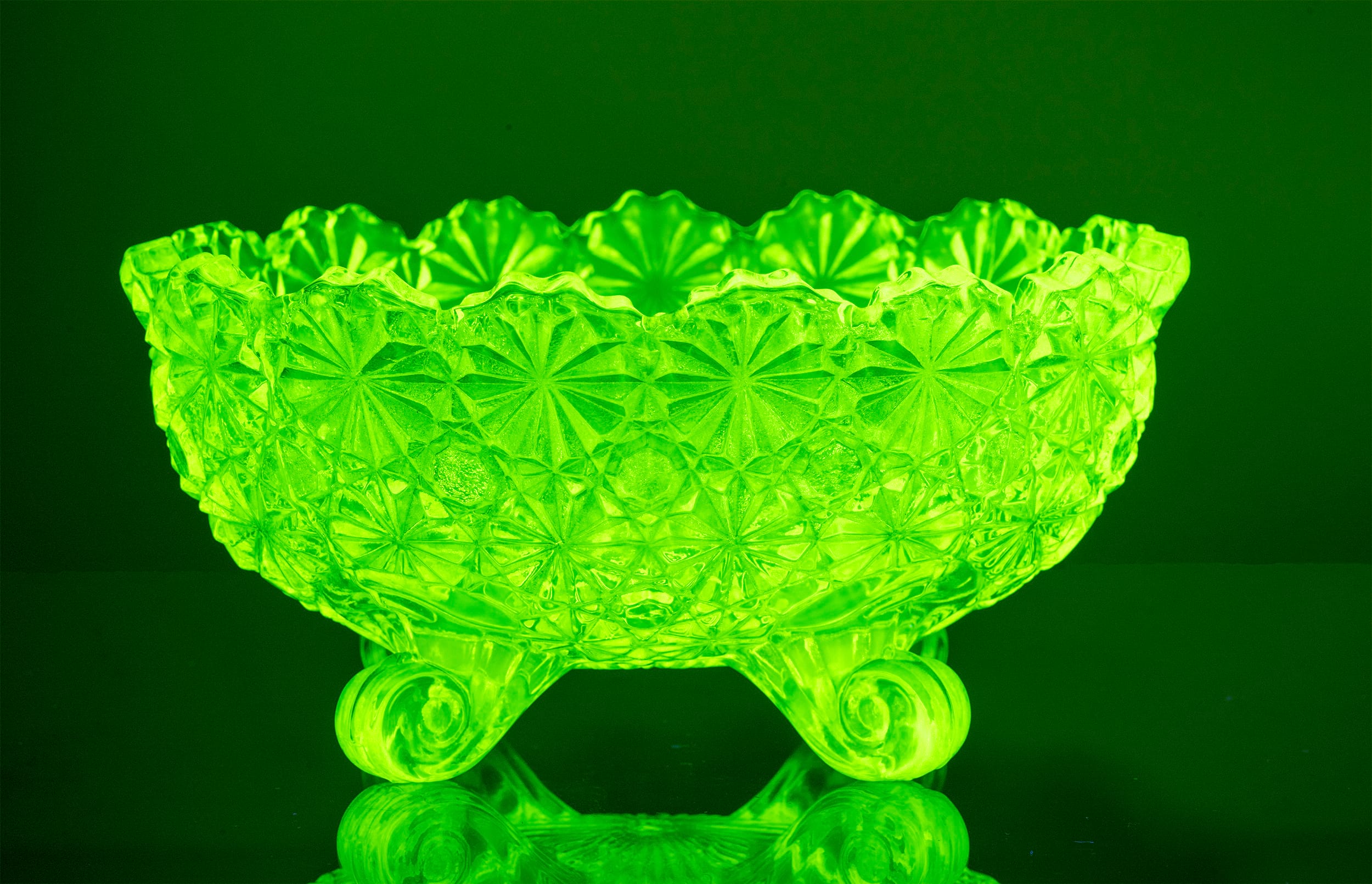
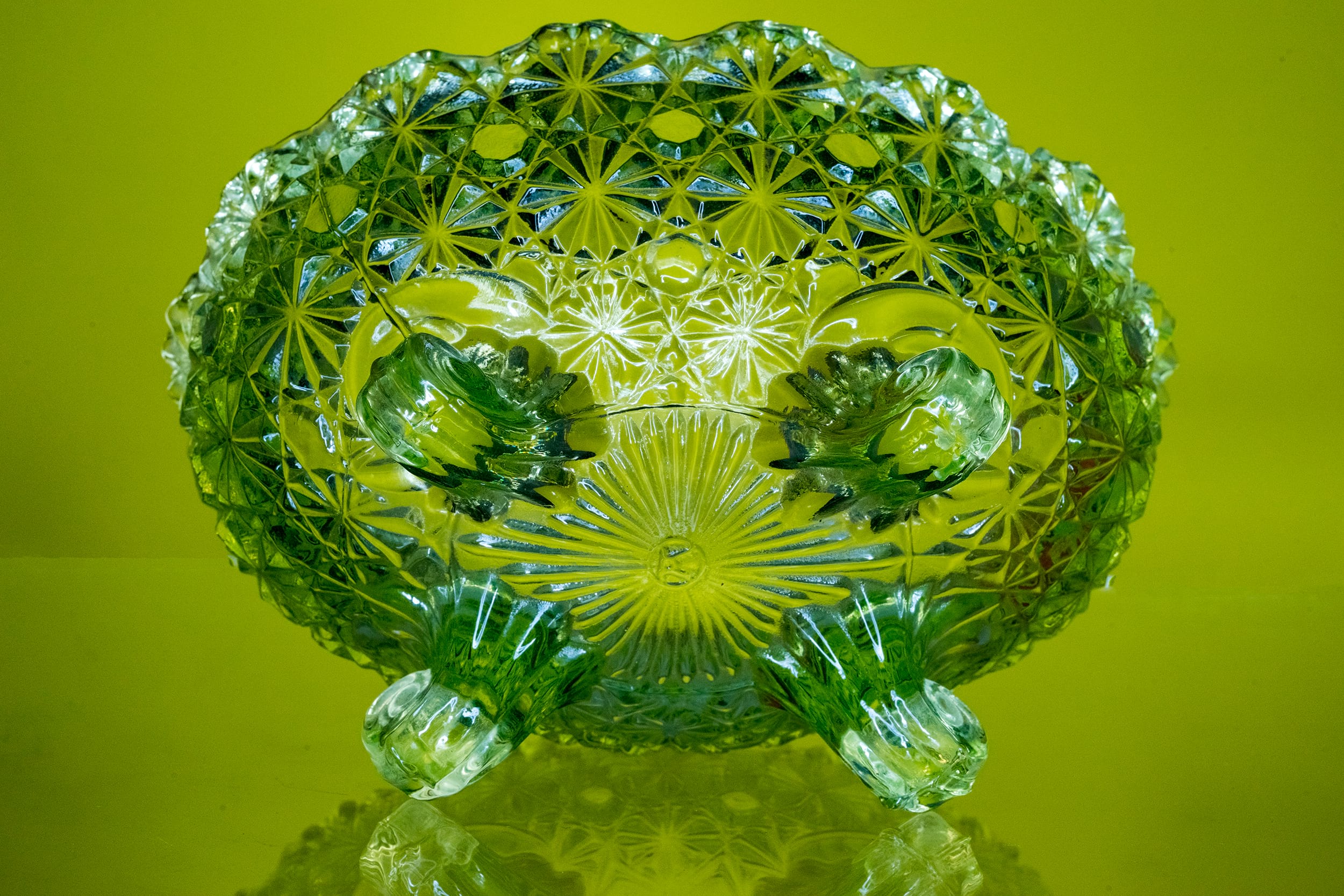
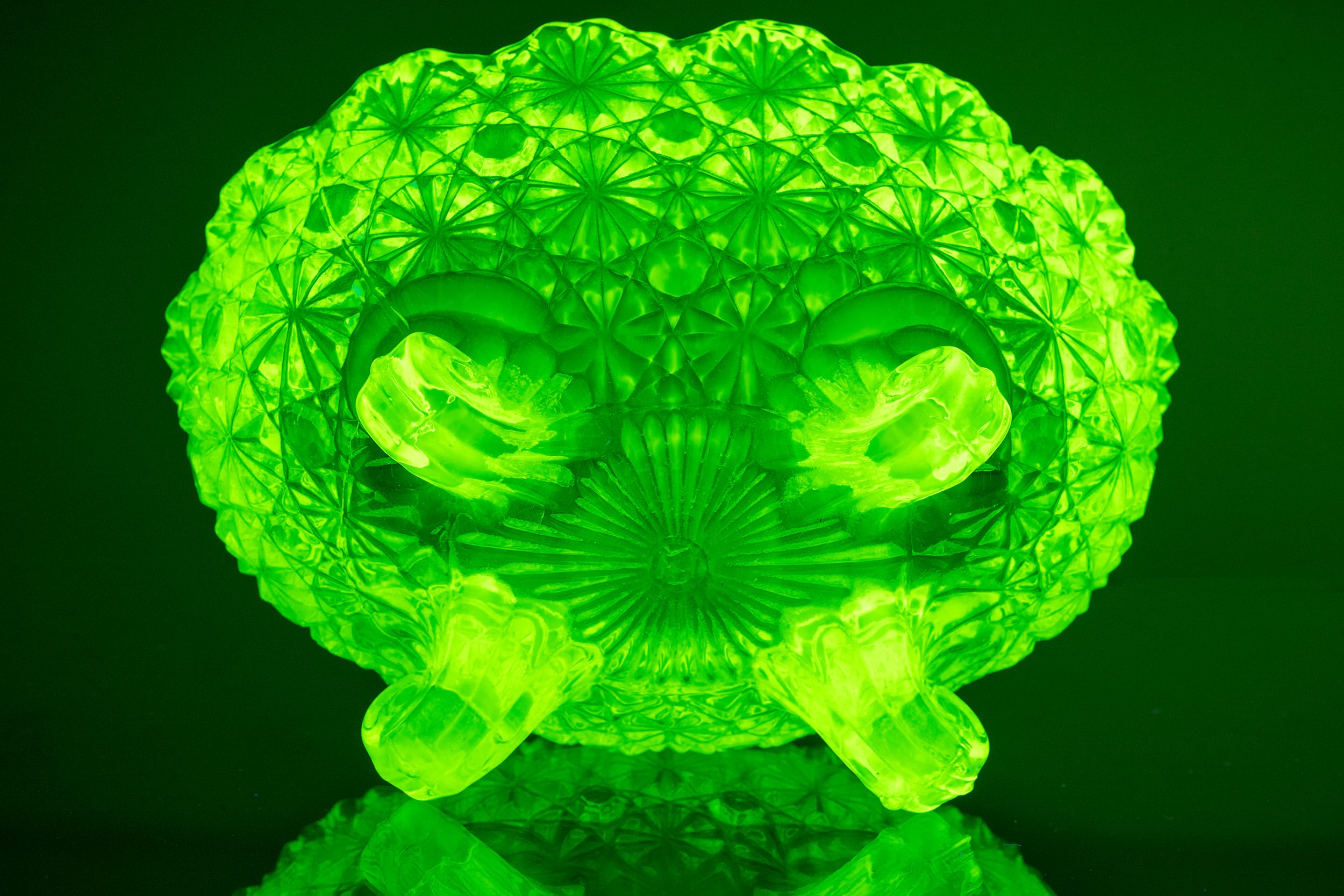
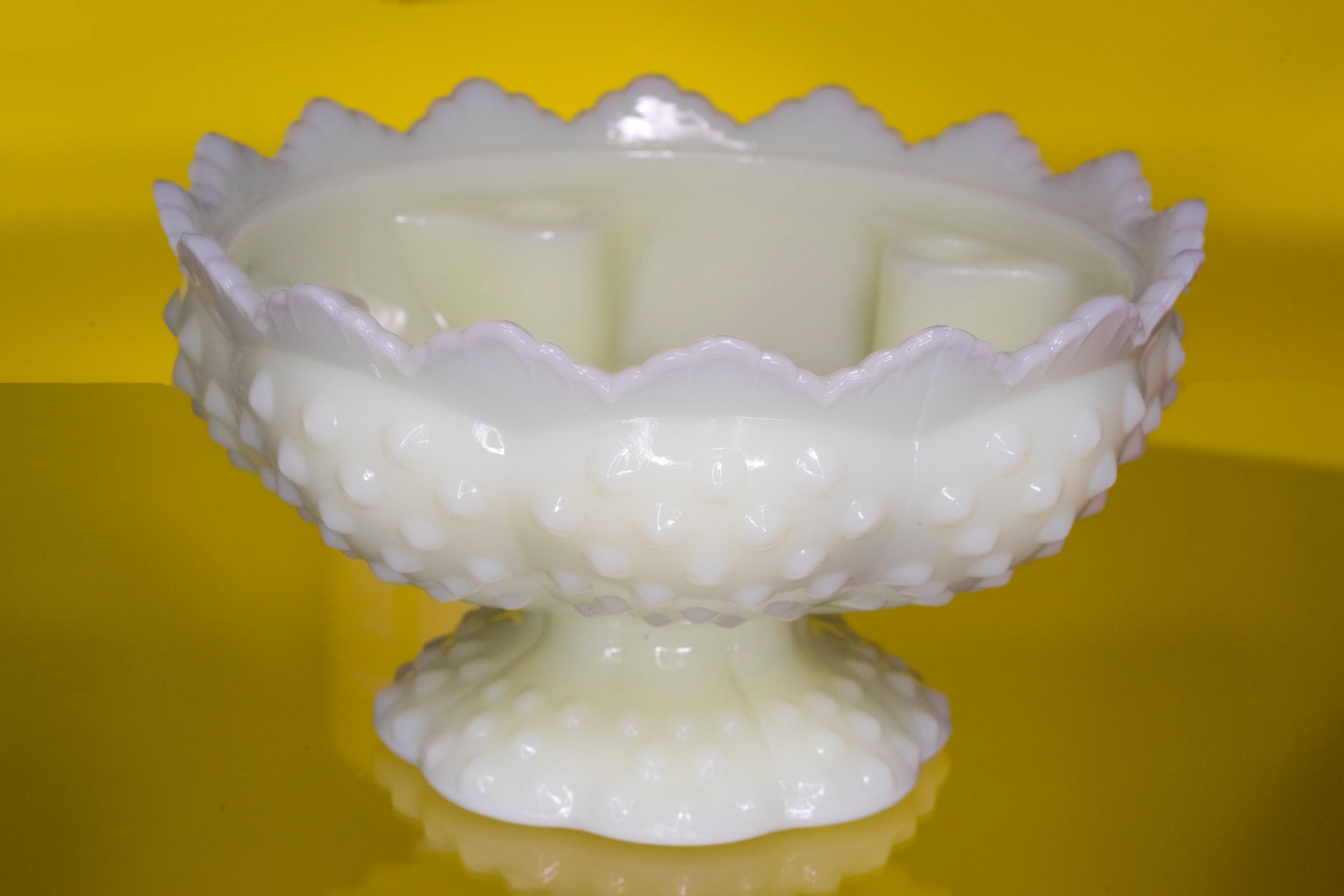
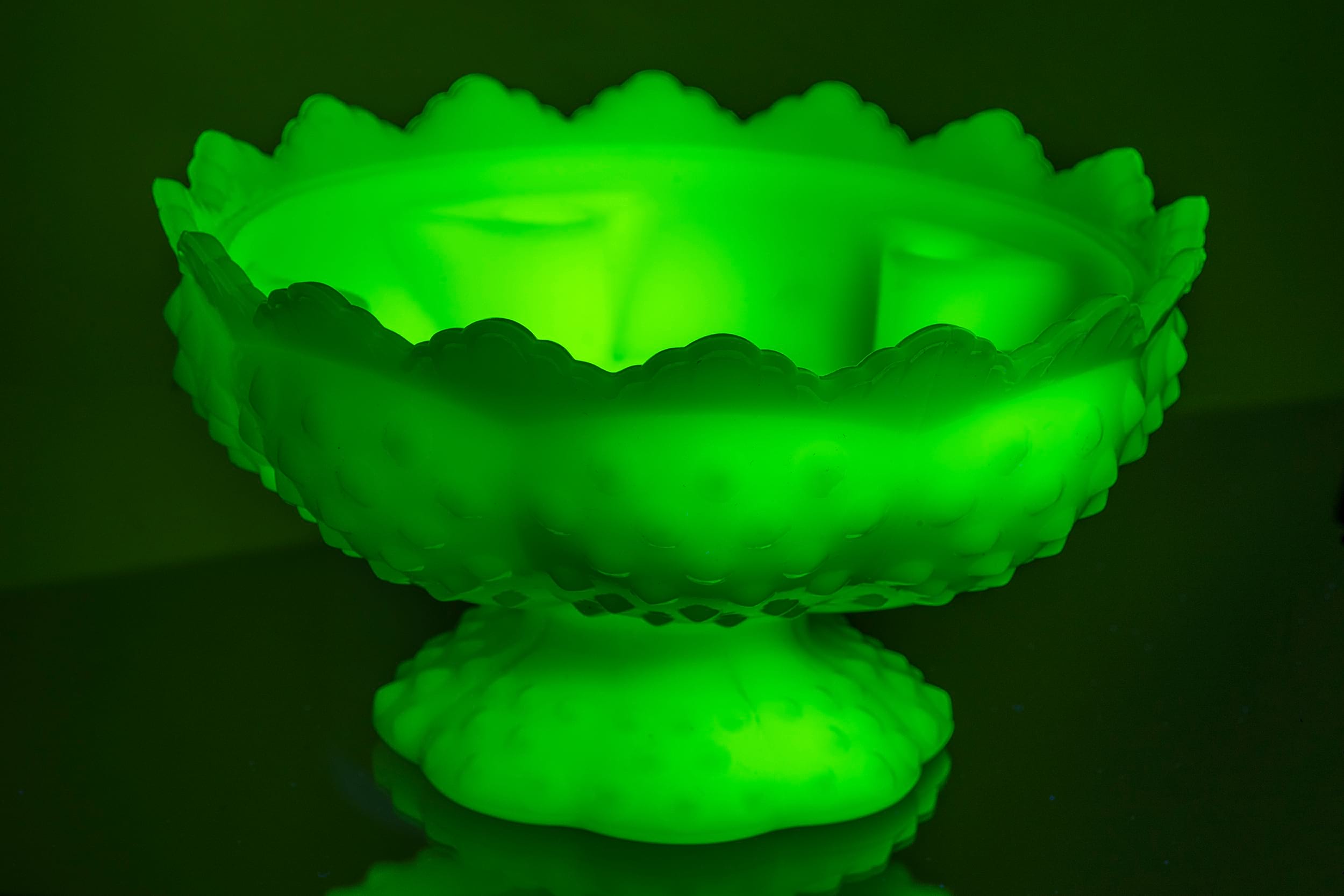
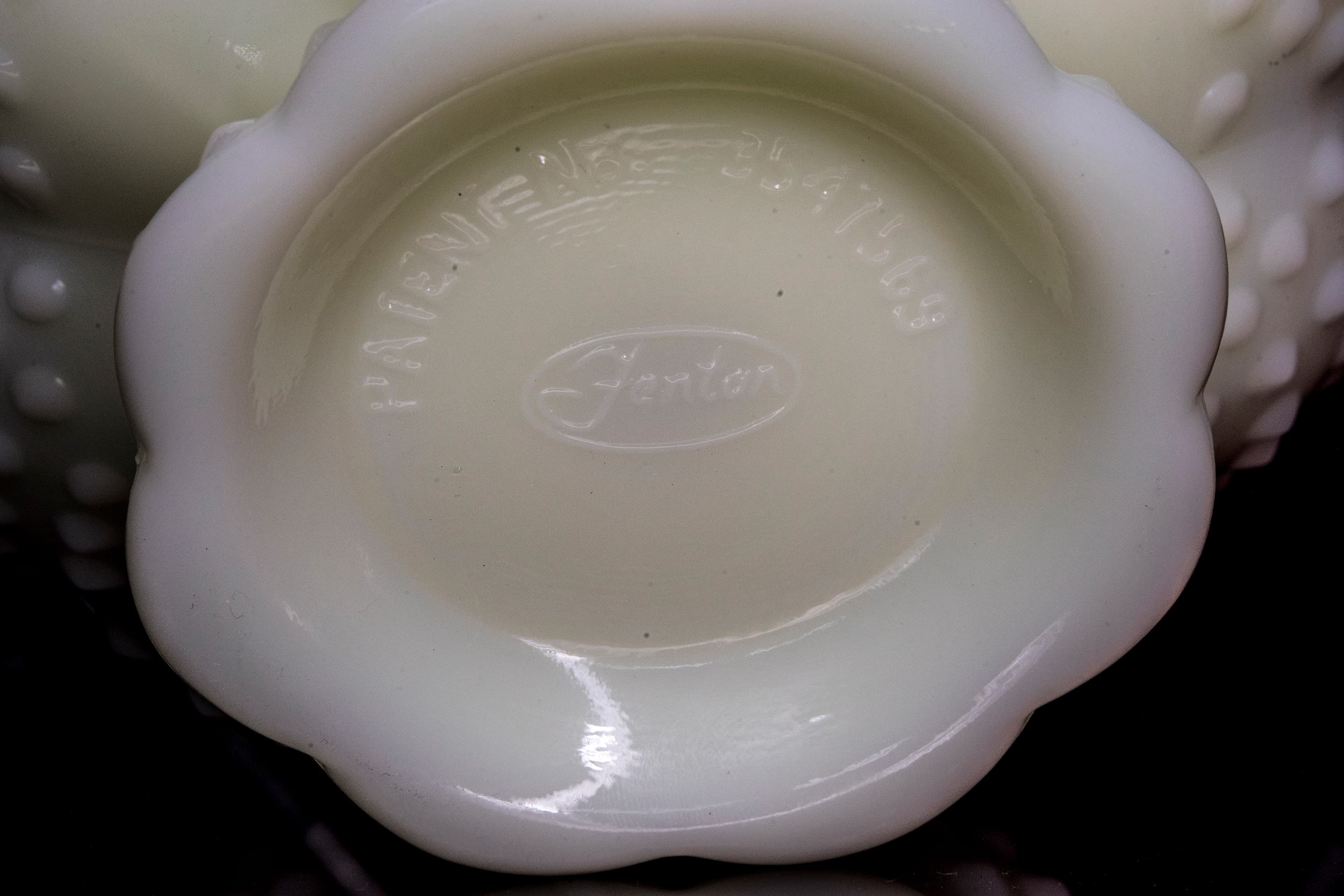
One of the other things that I enjoy doing when I go to remote places like this is look for antique shops. There are always interesting items that had been passed down through the generations. The place I found (and I don't remember the name unfortunately) had a wonderful trough of antiques. However, I decided that since I had found some uranium and depression glass in the remnants of a bonfire I impulse purchased some that was for sale at this antique shop. Unfortunately, while the shop owner didn't know that they had any uranium glass, I didn't get the killer deal I was expecting. Still, it beats having to risk purchases from eBay and the postal service damaging the fragile glass! Interestingly the candelabra is made by Fenton and has the patent no 3547569. Without looking it up I'm going to guess that it's a design patent!

Tenebrescent Scapolite var. Marialite
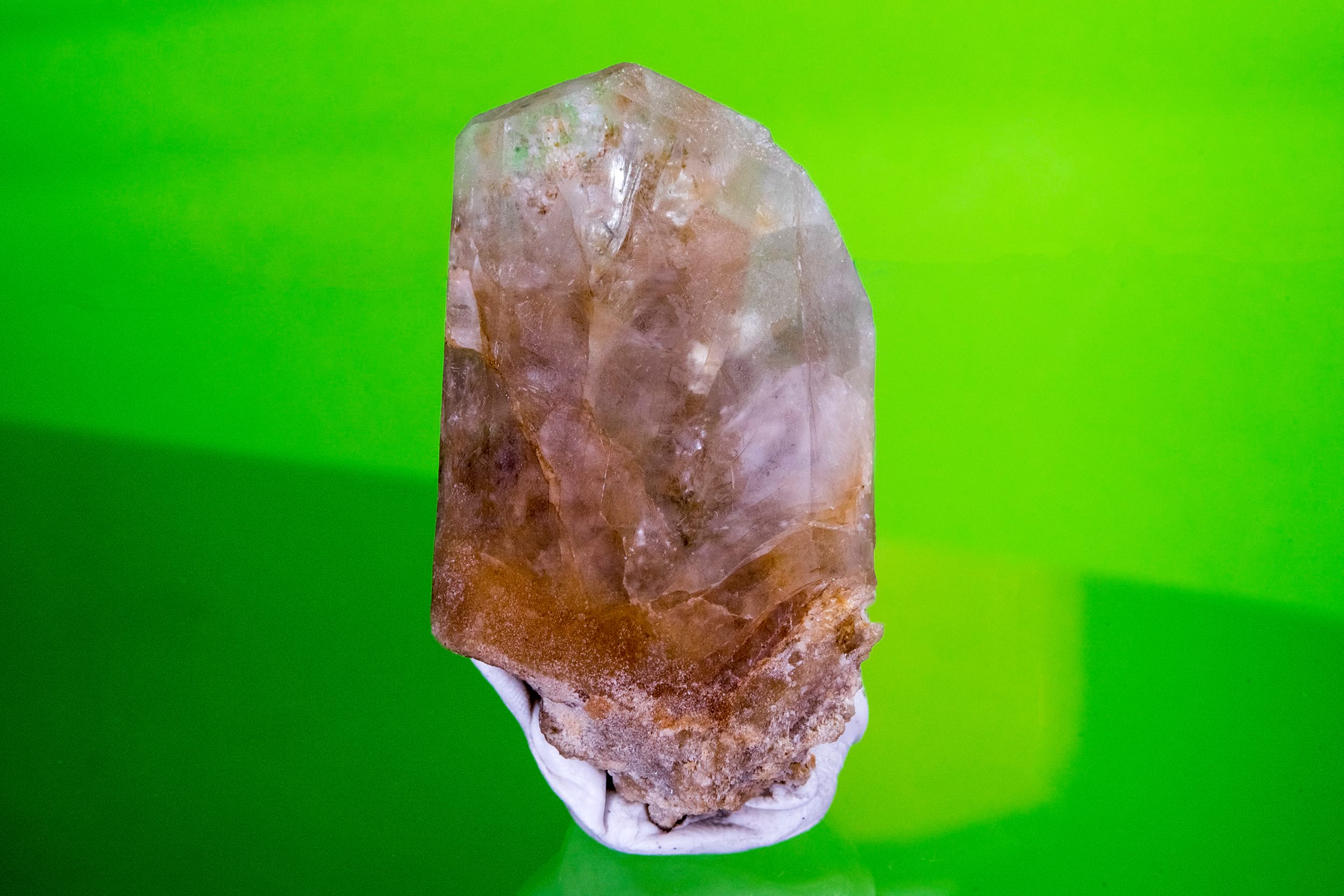
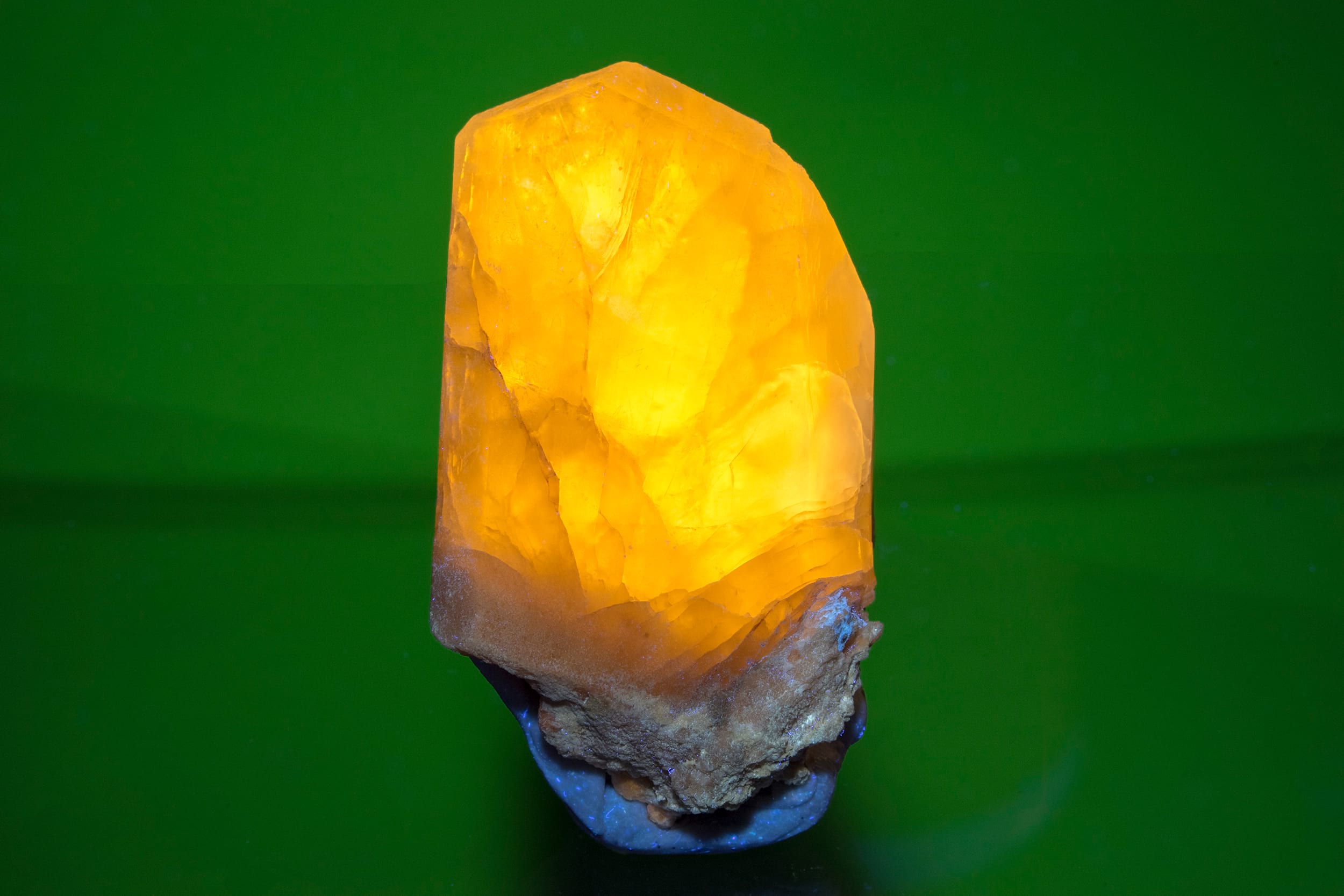
For a while I've been infatuated with tenebrescence or photochromism in minerals. That is to say the ability for that mineral to change color when put under UV light and back. In this case the marialite goes from a clear white in daylight to a dark blue after you put it under LW. This process can then be reversed by exposing it to white light. I've been infatuated with this phenomenon ever since I learned about it in the minerals of Greenland, specifically the hackmanite and tugtupite. However, I was never able to win any eBay listings for a price that I wanted. Not being able to crave this desire I decided to look up other listings for tenebrescent minerals. That's when I came across the marialite (though the dealers there mostly refer to it as scapolite) from Pitwak. It greatly appealed to me as it had the same deep color change that Greenland had while forming beautiful crystals. That was 3 years ago and I've since been searching for great crystals like this. I haven't even had the remote thought of purchasing any Greenland fluorescents for my collection.
Of note on this specimen is that it shows little tenebrescent response under 253.7nm SW. The response is strongest under 365nm LW. This is typically the other way around where the strongest response is achieved under SW. This specimen has also been irradiated. Funnily enough the cousin of the miner that collected this specimen got in contact with me through Facebook. Often times Pakistani mineral dealers will try to sell by sending friend request to people in mineral groups en masse. I usually just show them this specimen and say that I'm looking for at least this or better. That's when it was recognized by the miner's cousin. I'm inclined to believe him as he provided up to date photographs of Pitwak mine that aren't available elsewhere on the web.
Locale: Pitwak Mine, Kokscha Valley, Badakhshan Province, Afghanistan
Weight: 6.1oz | 174g
Dimensions: 3.3 x 1.9 x 1.4 in| 83 x 48 x 37 mm
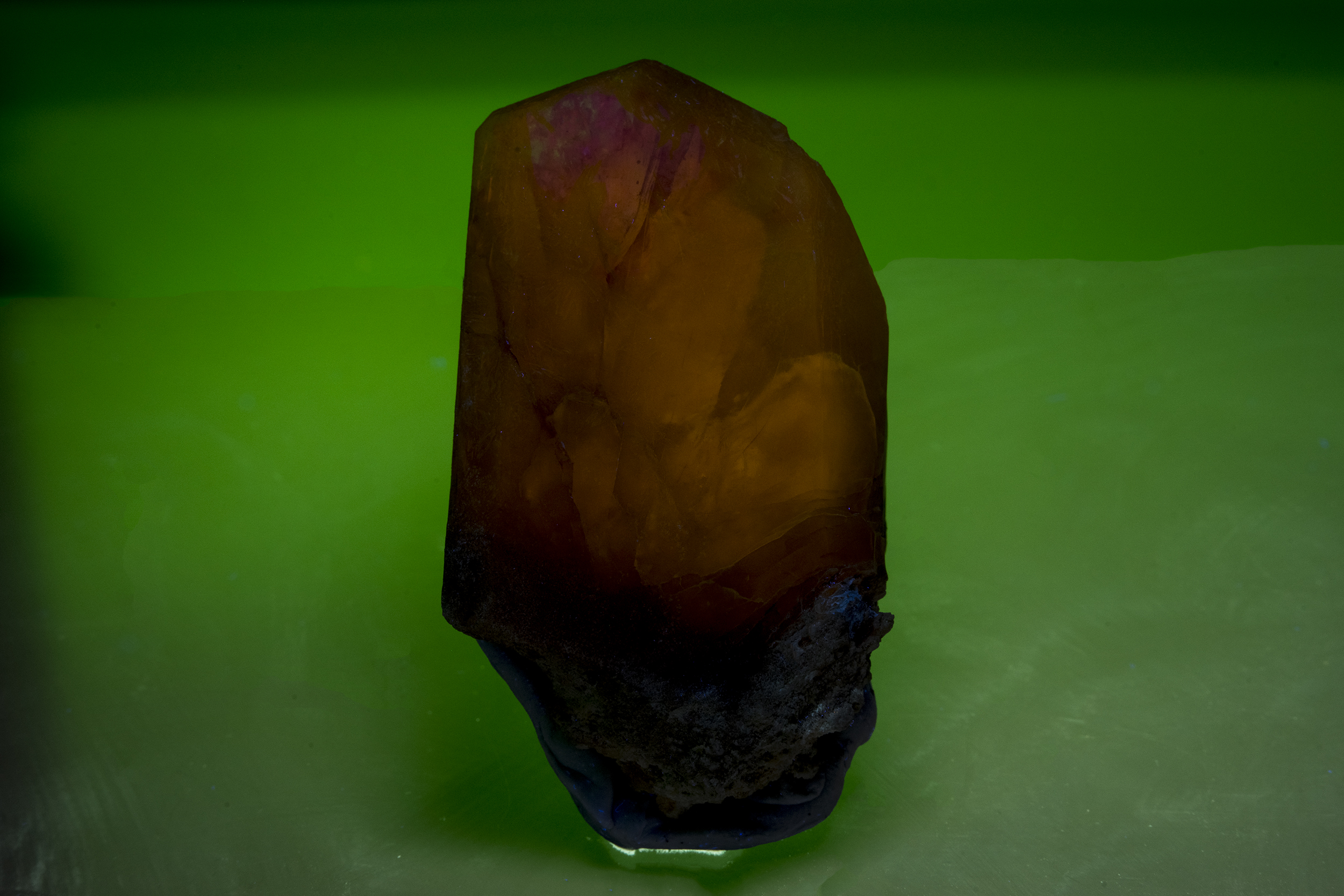
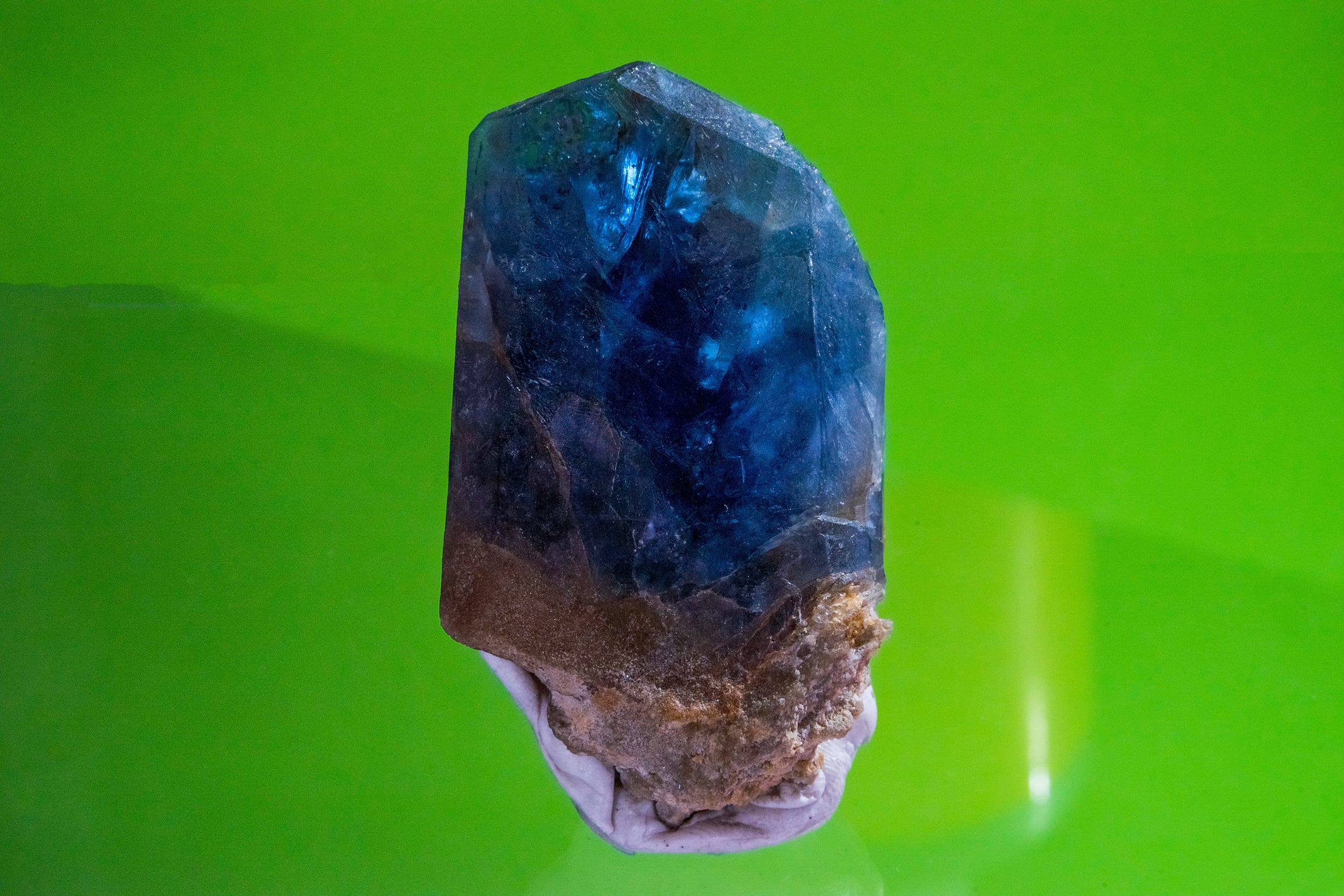

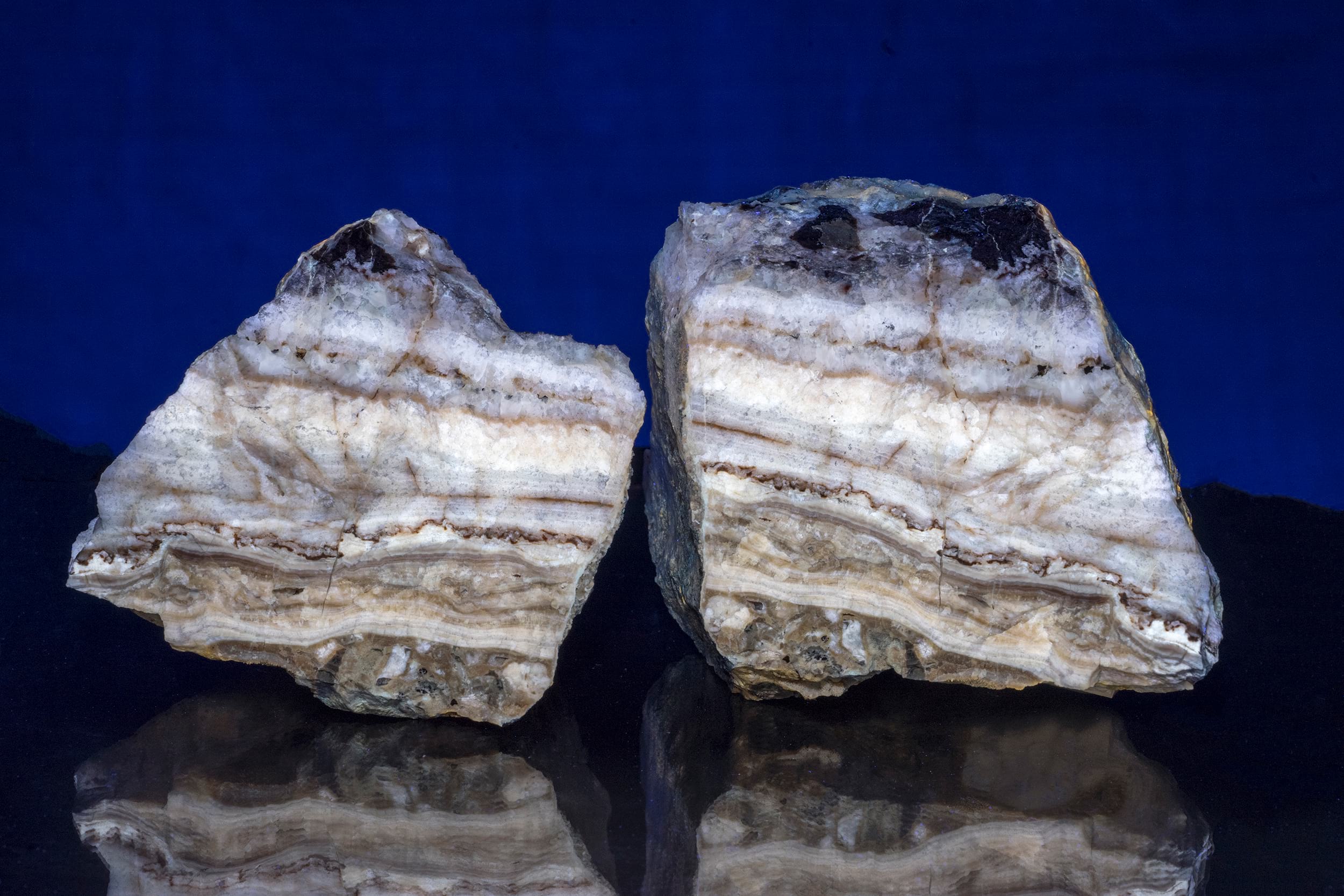
Calcite, Chert, Travertine
Collected on the Gem-O-Rama trip (field report being written!) after the day 1 events had concluded. This is a wonderful example of sedimentary fluorescence with several generations of massive calcite (fl white & cream) on the top and travertine (fl light & darker brown) on the bottom with a thin layer of chert in between. The piece I ultimately ended up keeping was the one on the right of this set. What originally drew me was that color combination of the fluorescent orange caliche on the bottom of the calcite and travertine combination.
Locale: Grimes & Sexton Quarry, Trona, CA
Weight: 2lb 9.5oz | 1174g
Dimensions: 4 x 3.8 x 3.6 in| 101 x 97 x 92 mm
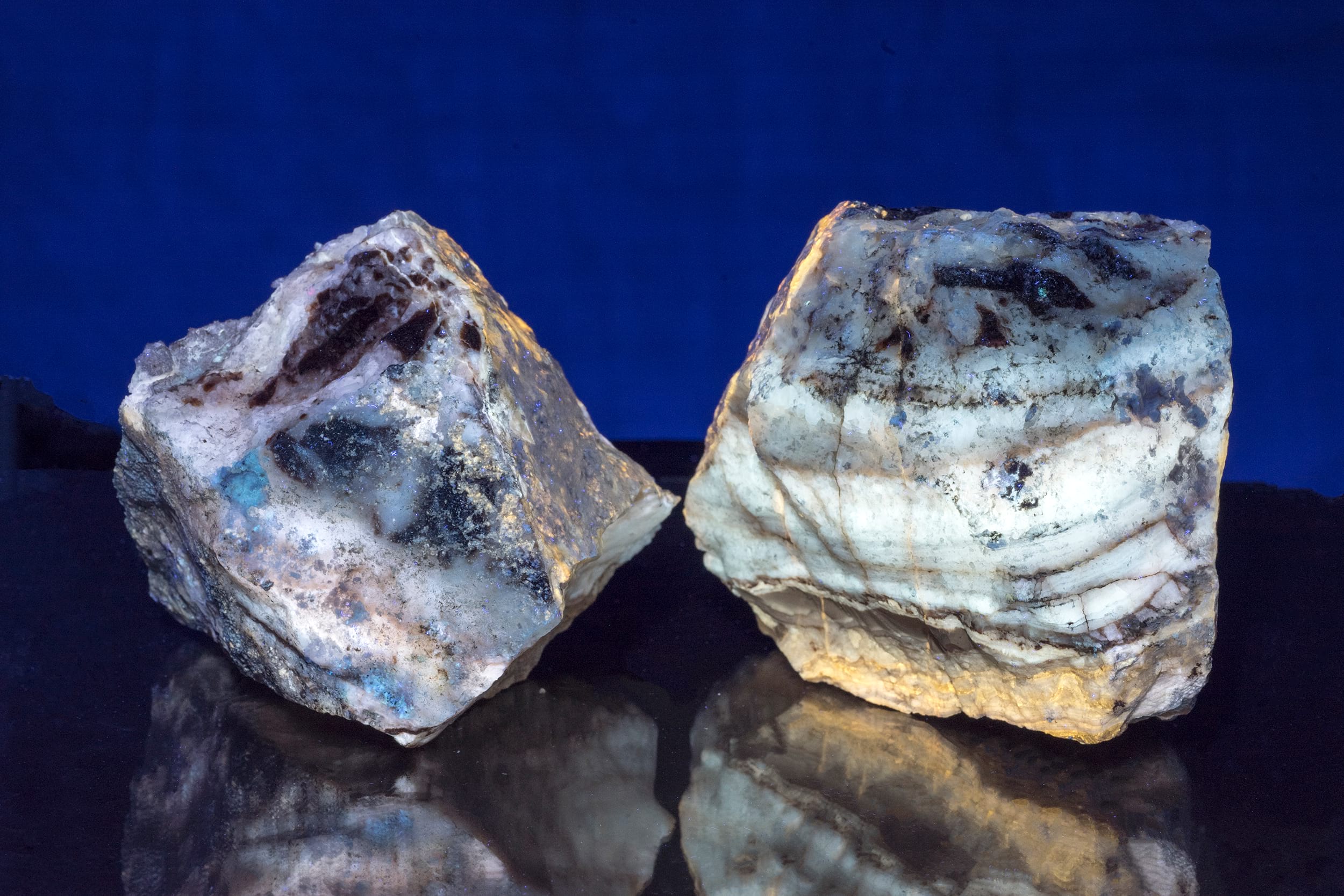
365nm LW
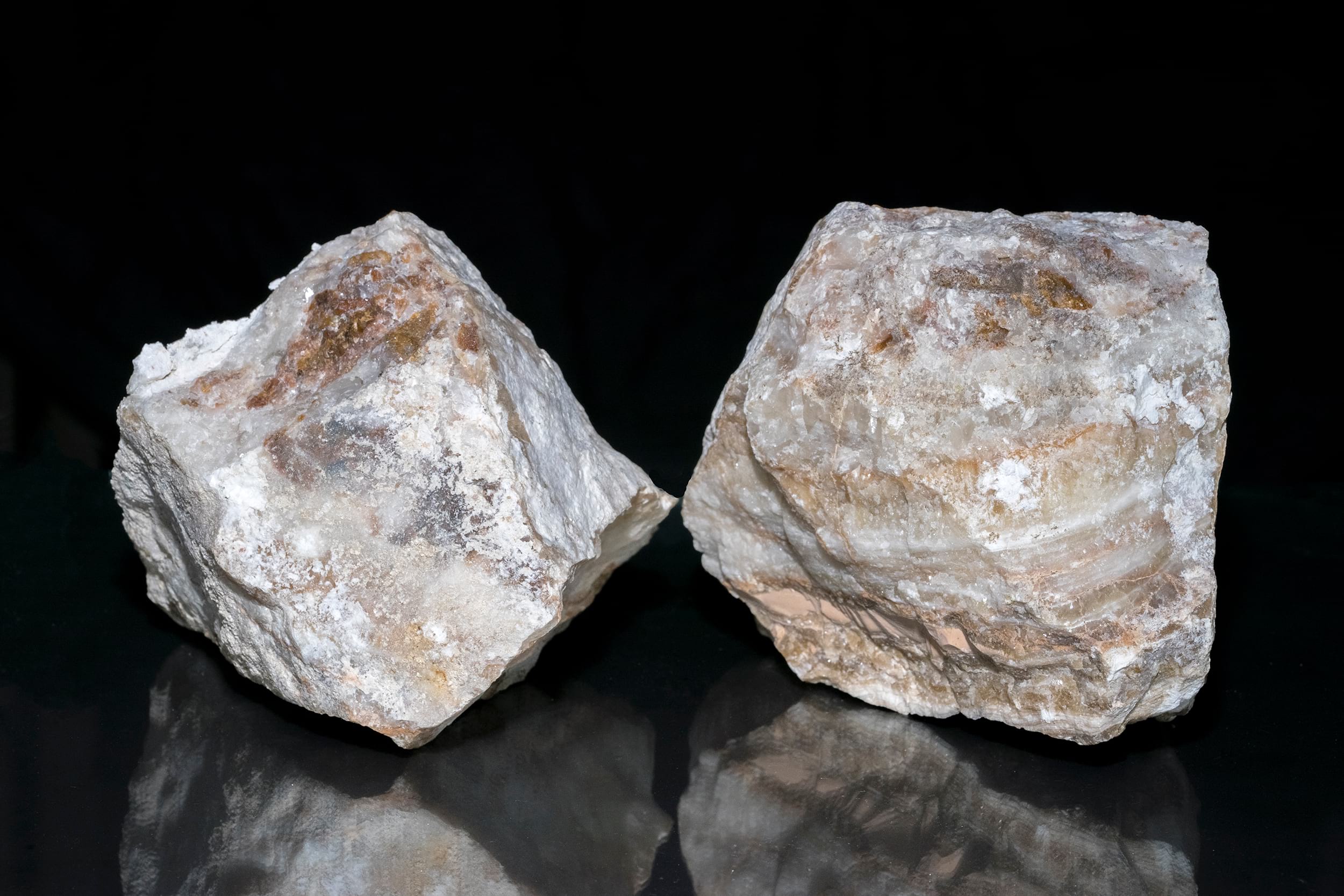
Daylight
However, I knew it wouldn't last as this was destined to be split in half to reveal a fresh face. So, with rotary hammer in hand I started the trimming process and luckily made a perfect split! Surprising considering it already had a massive crack in the opposite direction. Works for me! The piece that'll join my collection is the one on the right as it has the face that originally attracted me as well as a wonderfully bright fresh face while the other will be given away.

365nm LW
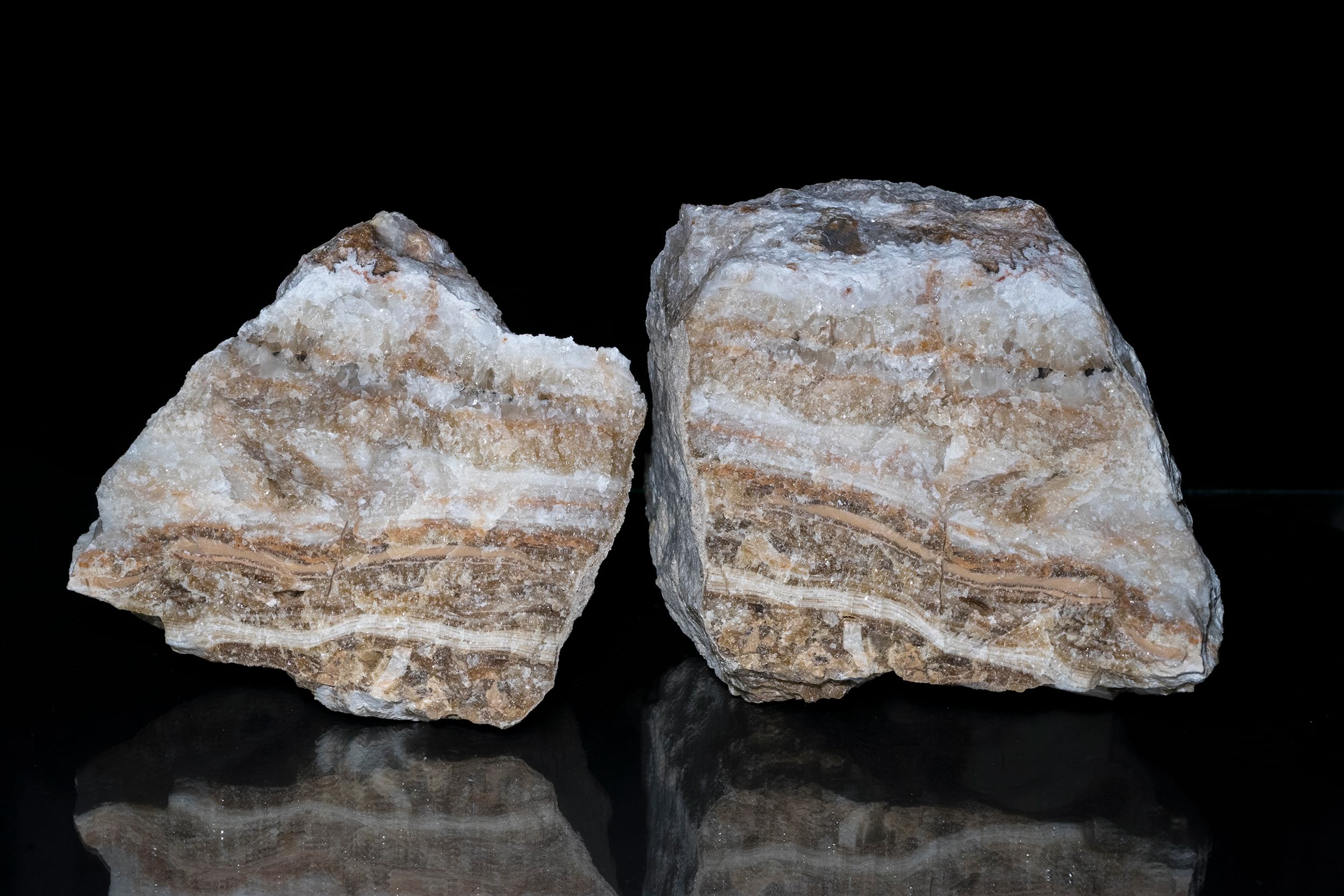
Daylight
It also exhibits brief intense phosphorescence as shown in the video below. Surprisingly the whole face phosphoresces!