SoCal FMS Meetings - Minerals of Africa November 2017
11/28/17 Changed misidentified shattuckite to scholzite.
It's that time of year again. SoCal FMS meets up at Jim's house to view the minerals he's collected. This time it was a theme rather than a special guest - African minerals. Alas my collection of African fluorescents was practically nonexistant. I don't really collect based on a continent. However, this didn't stop some of our members. Jim had quite an amazing collection of African fluorescents that he had collected over the past year, some of which I had absolutely no idea about.
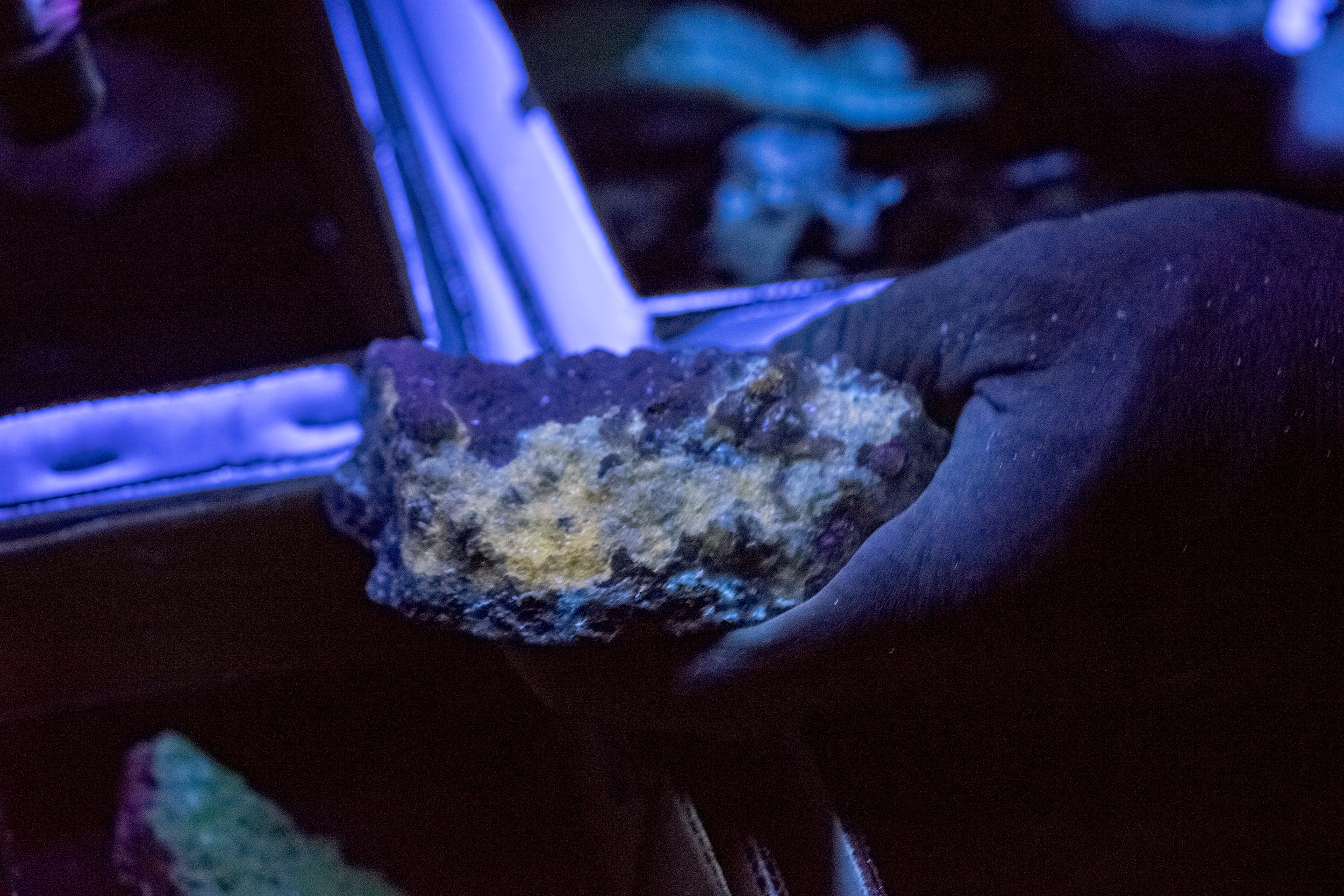
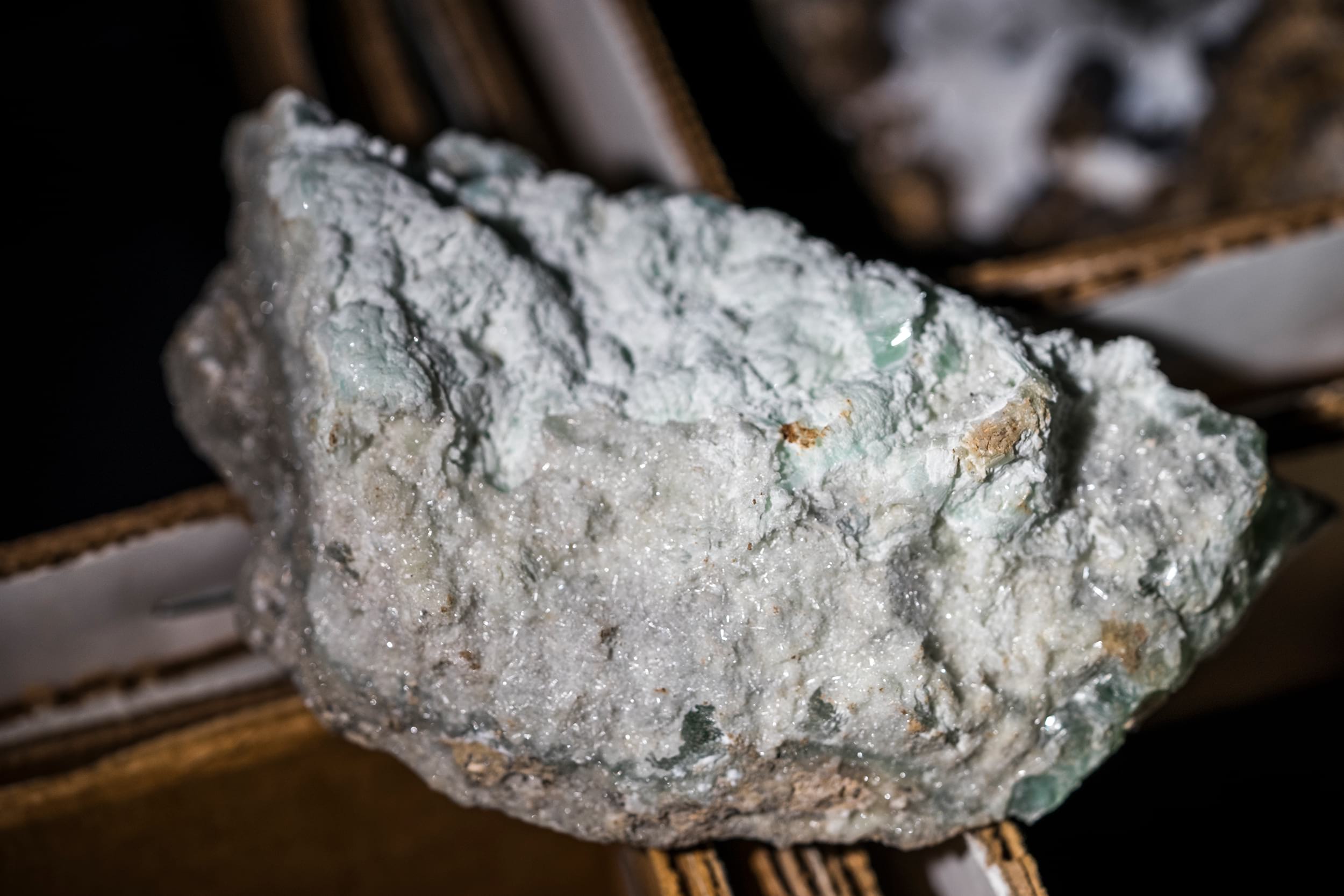
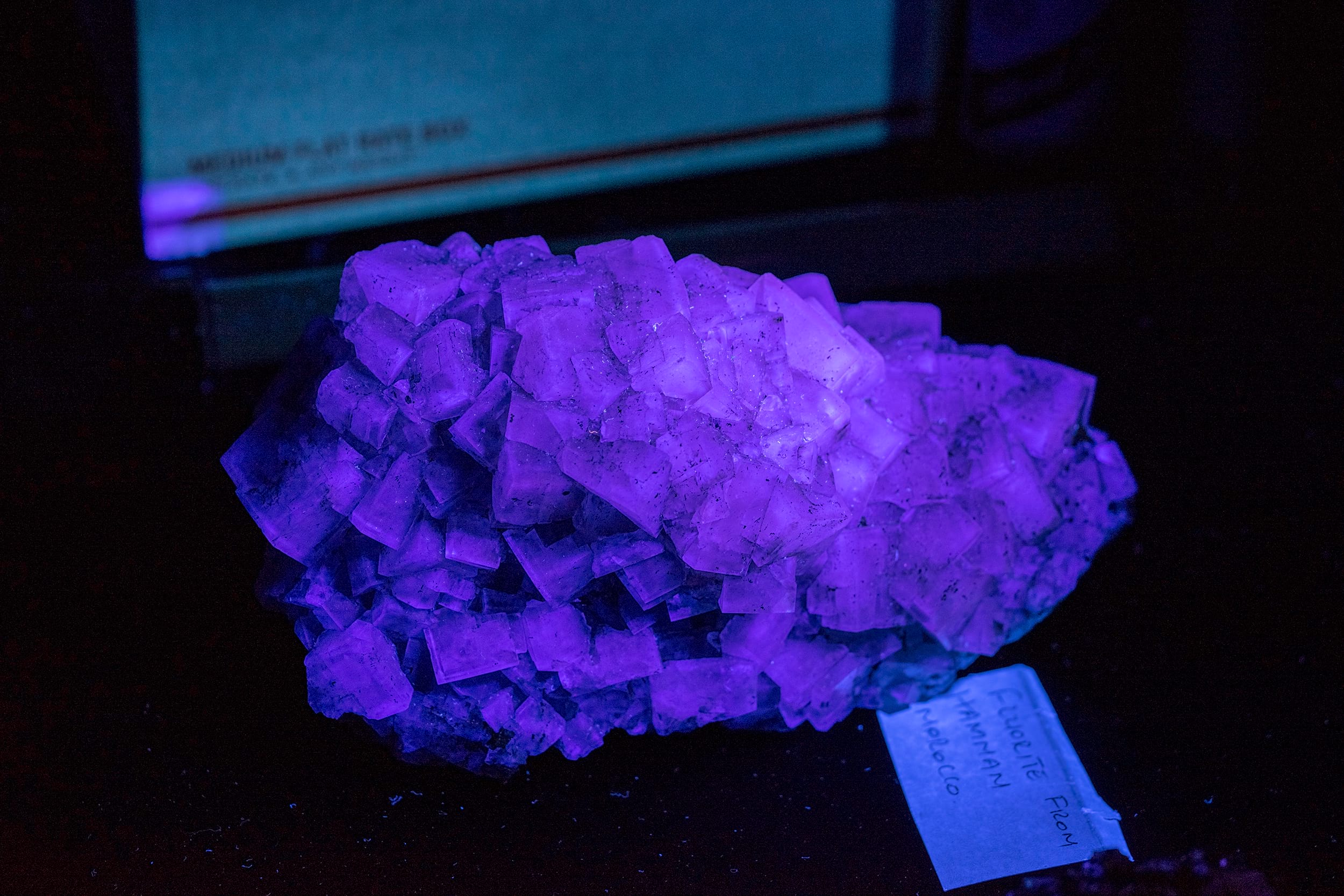
Here's a 360 of all of the minerals. Some of the highlights are red manganocalcites, purple fluorites, orange sphalerite, green hyalite. Behind the starting point you can see some green fluorescing scholzite with some blue hemimorphite.

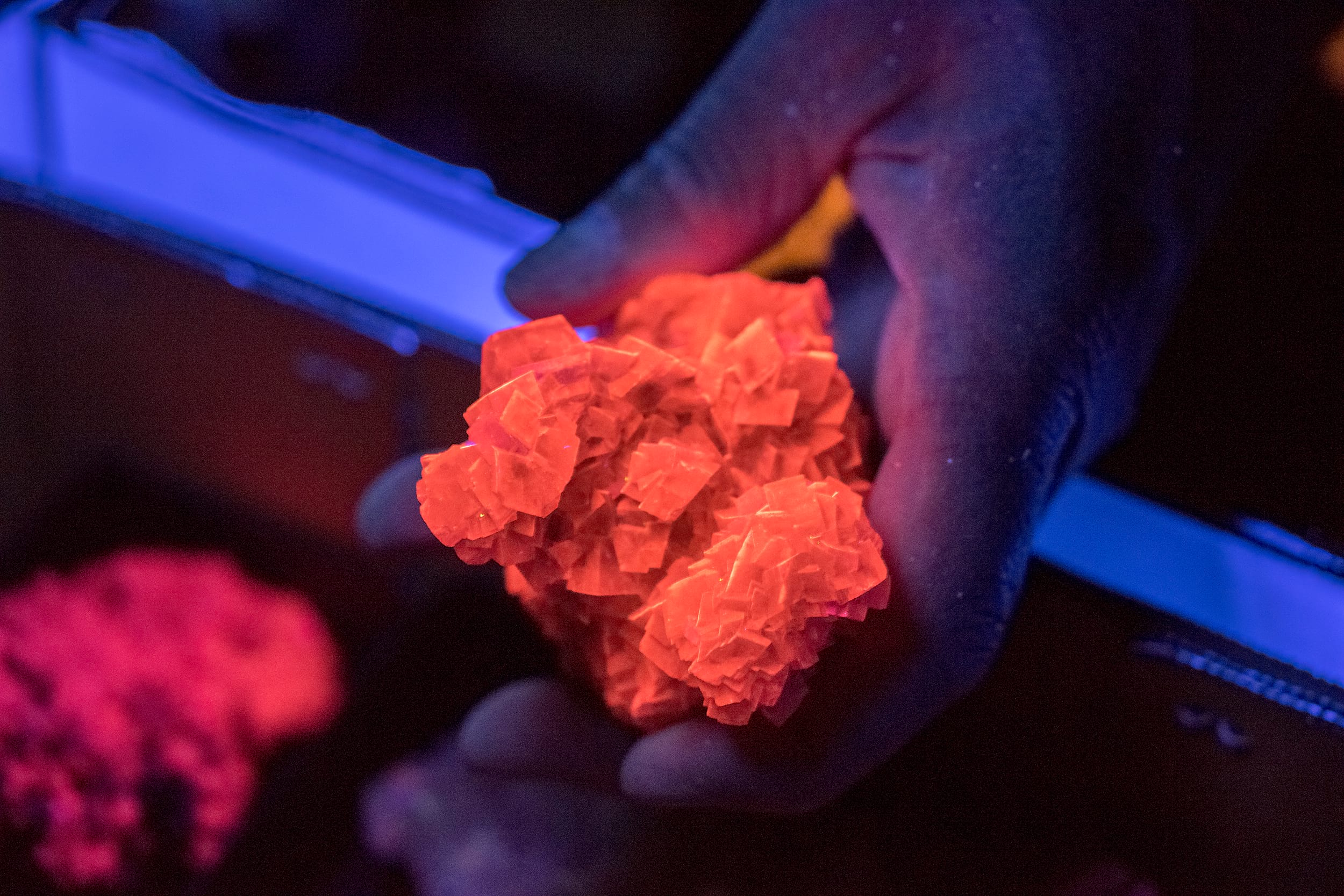
And here are the closeups of the minerals. My favorite of the night is definitely the hemimorphite from the Skorpion mine in Namibia. Glenn Waychunas had originally discovered this but the hemimorphite had a very interesting aspect. First of all it was tenebrescent. After UV exposure it would turn to a light grey. Secondly it doesn't make a great fluorescent specimen at first. It's incredibly dim but it gets brighter over time! Video below:
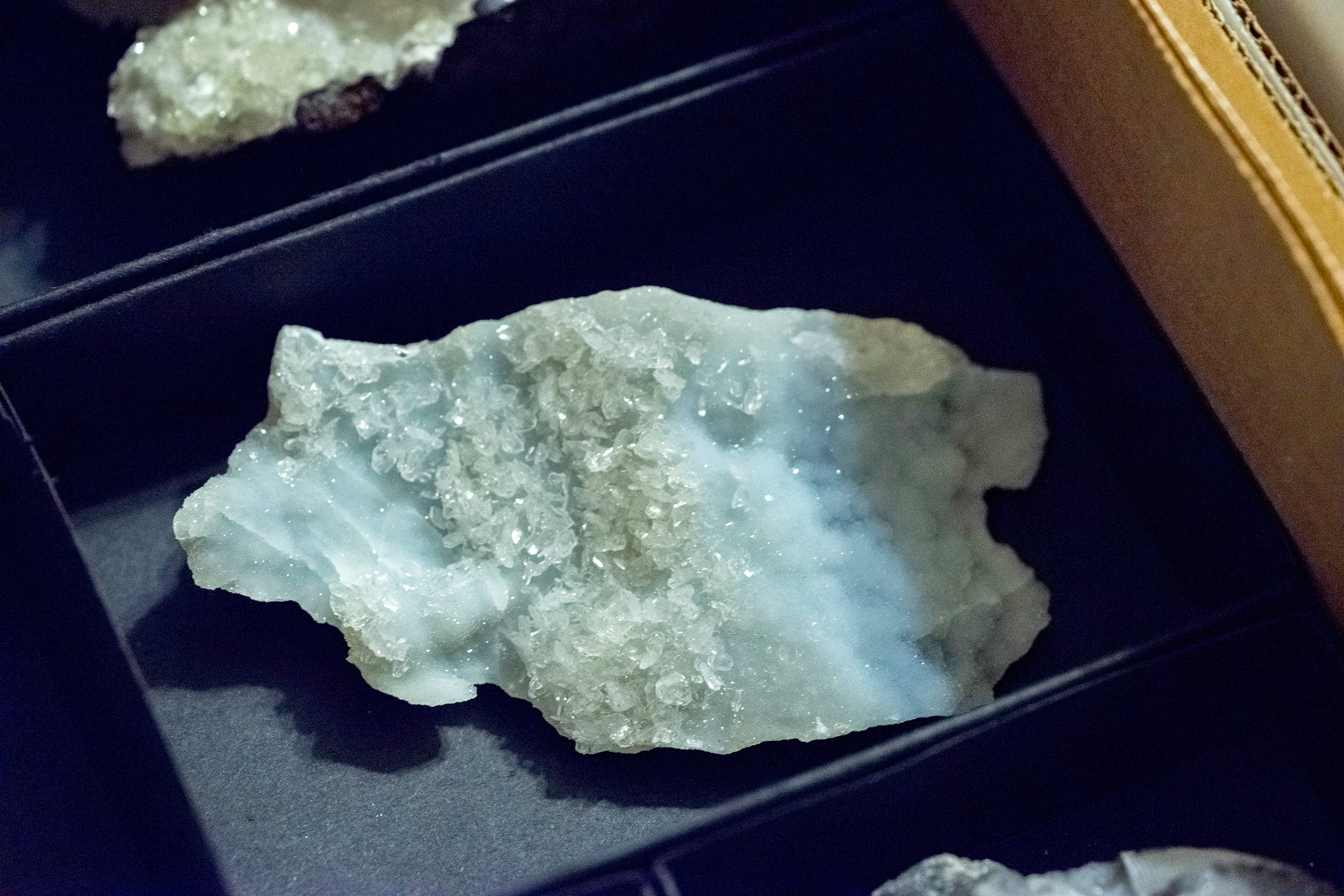
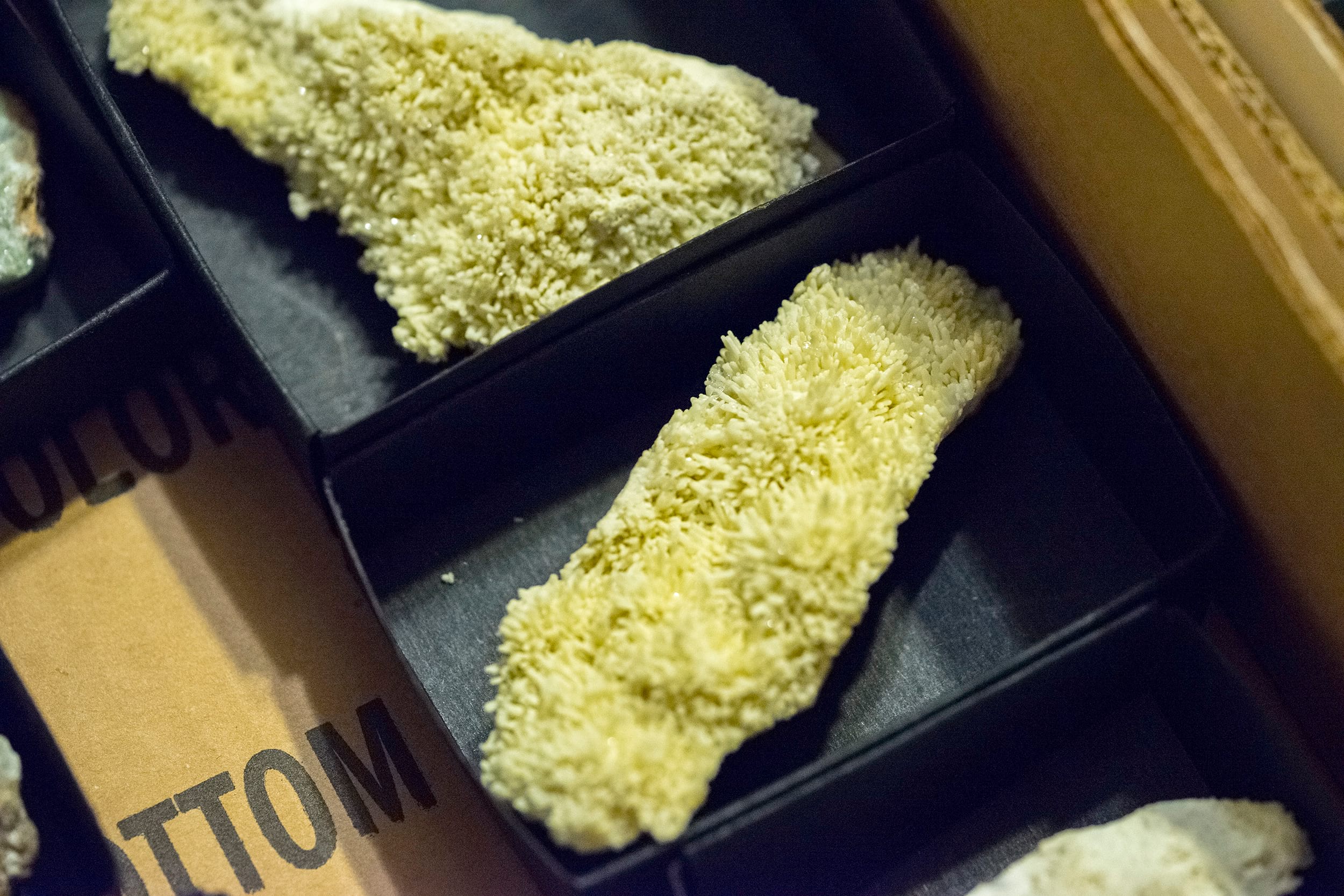
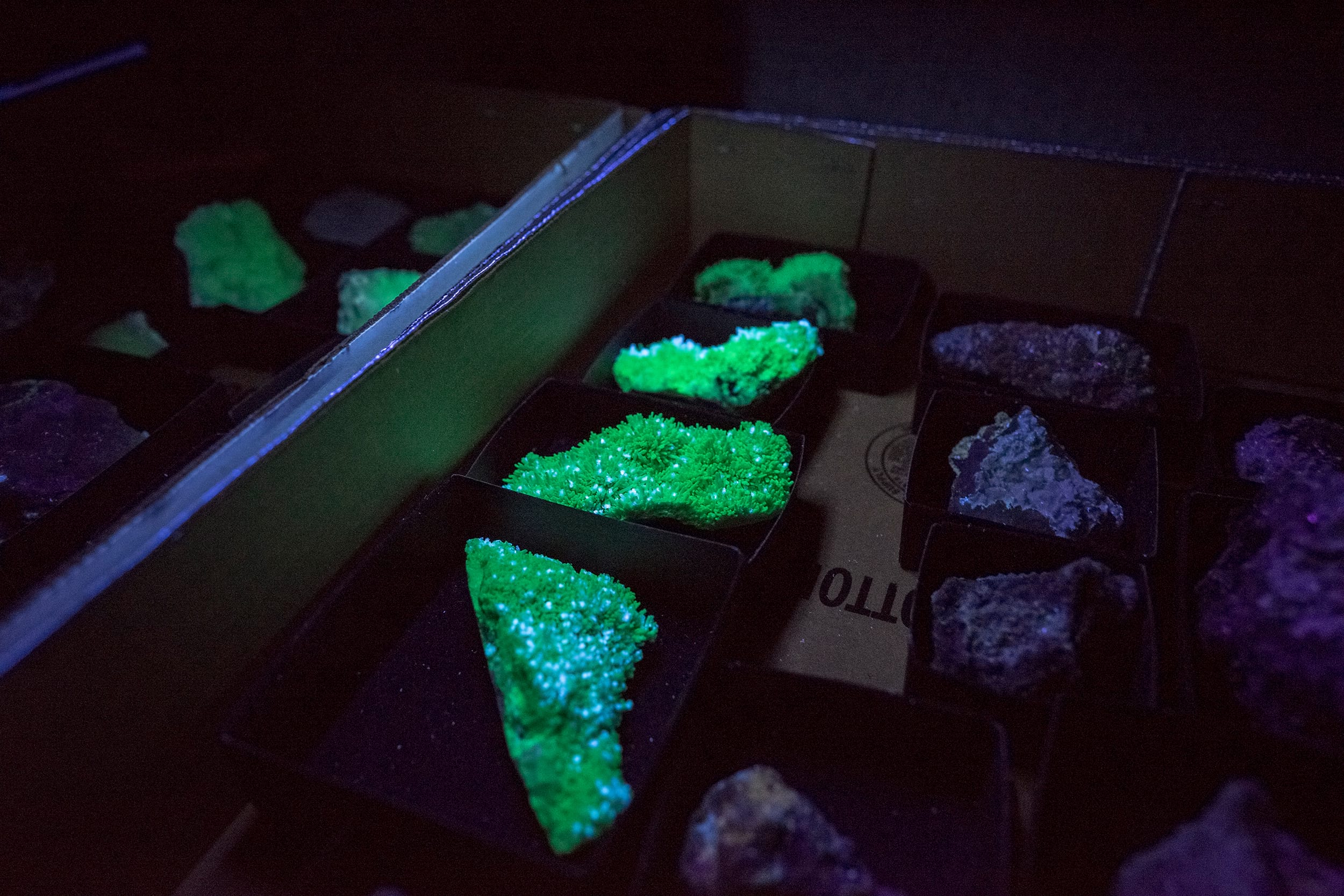
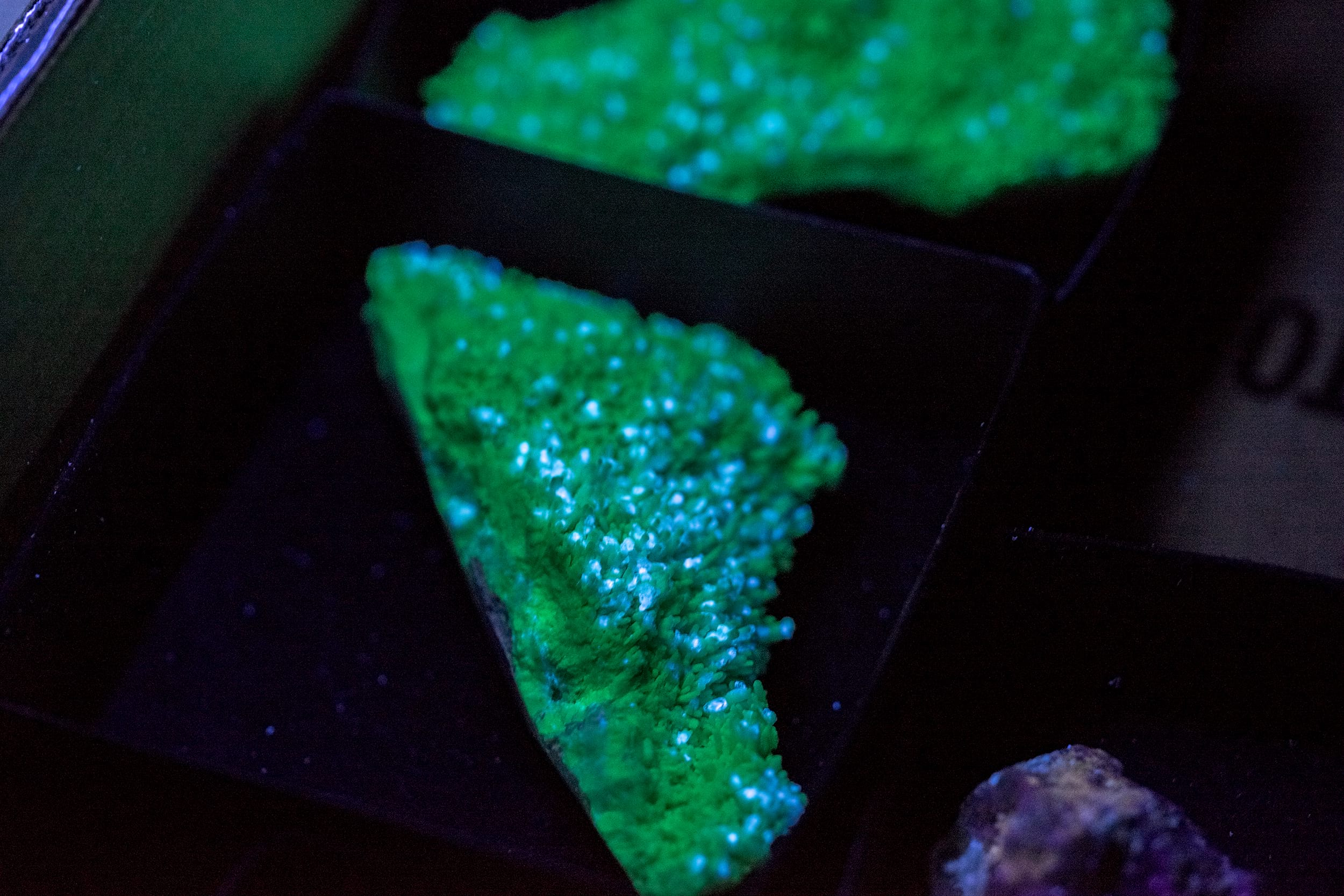
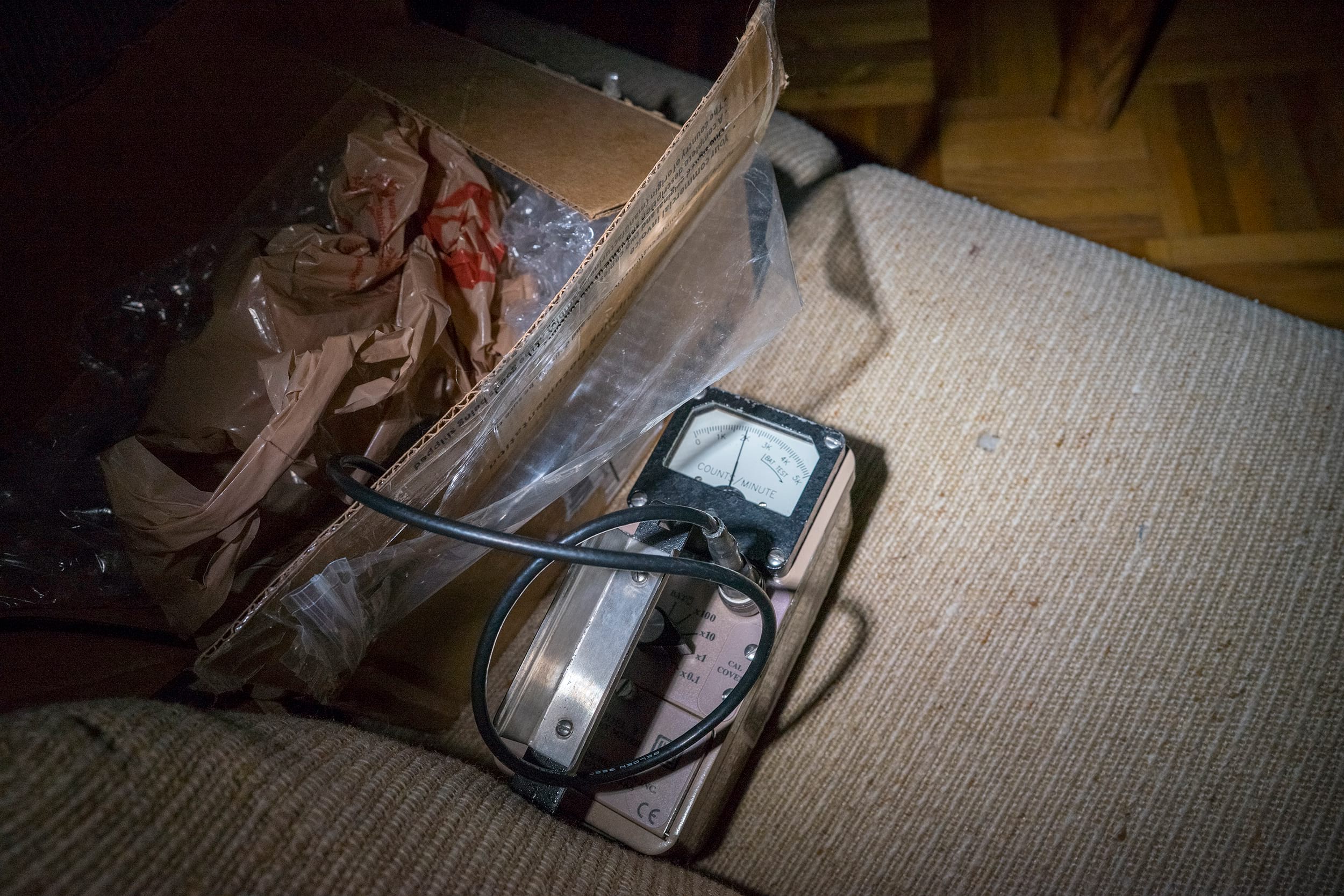
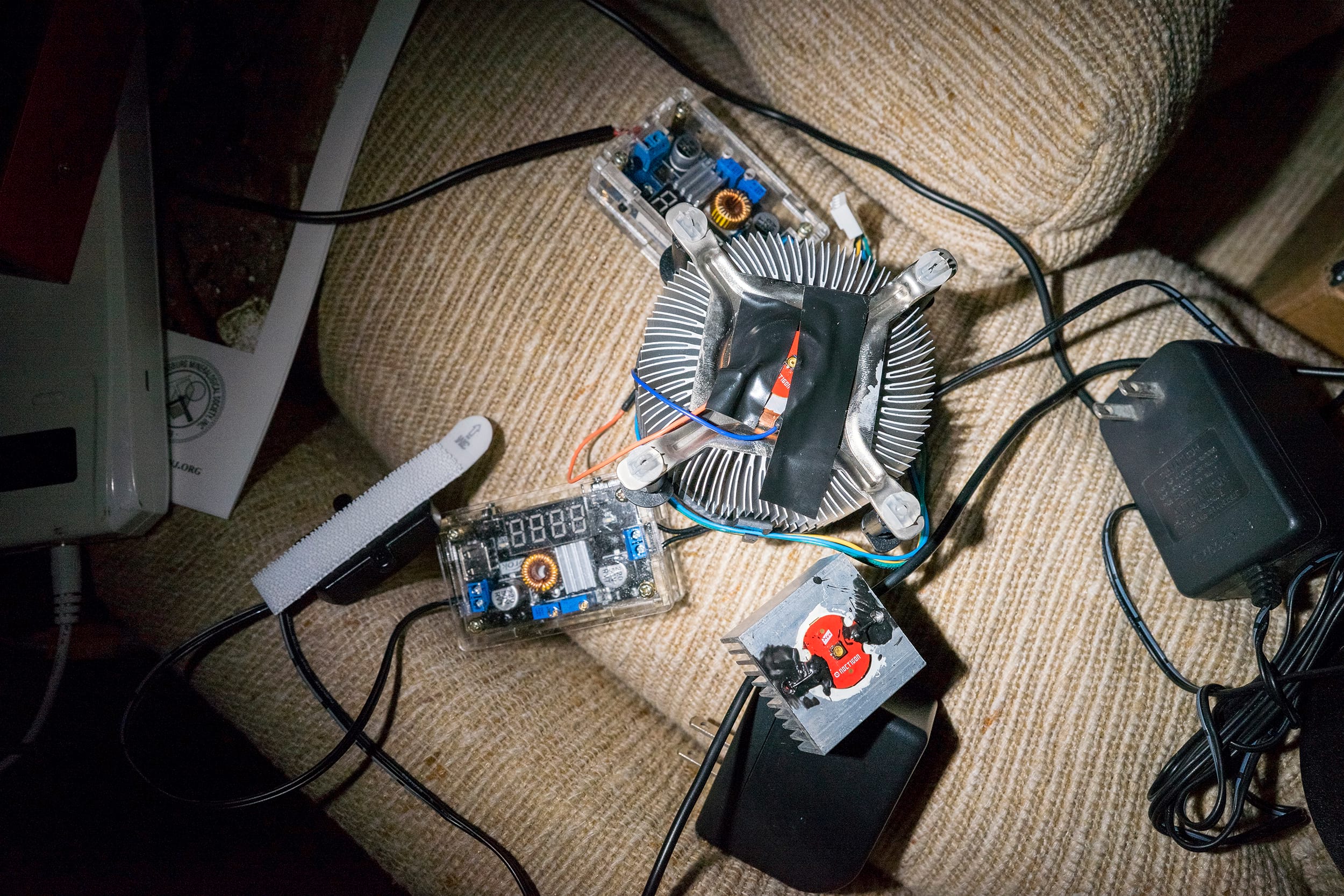
Among some of the technical discussions that occured that night were instituted by a Ludlum geiger counter. Some of the minerals on the table ended up being slightly radioactive but this was before I got to the meeting. On top of that was the latest innovations in the SW LED world. I brought some of the brightest that were available at the time in 265nm and 275nm binnings. We determined that they were about as powerful as a 4W bulbed lamp. Color rendition is still a bit of a struggle with the reference Franklin material that we used. Specifically the calcite. While 265nm rendered the reds they weren't that bright. About the equivalent of what you'd see if you were to use my much brighter LW light. However, 275nm hardly rendered the calcite as all, proving that the peak activation of the Franklin calcite is lower in the UV spectrum.
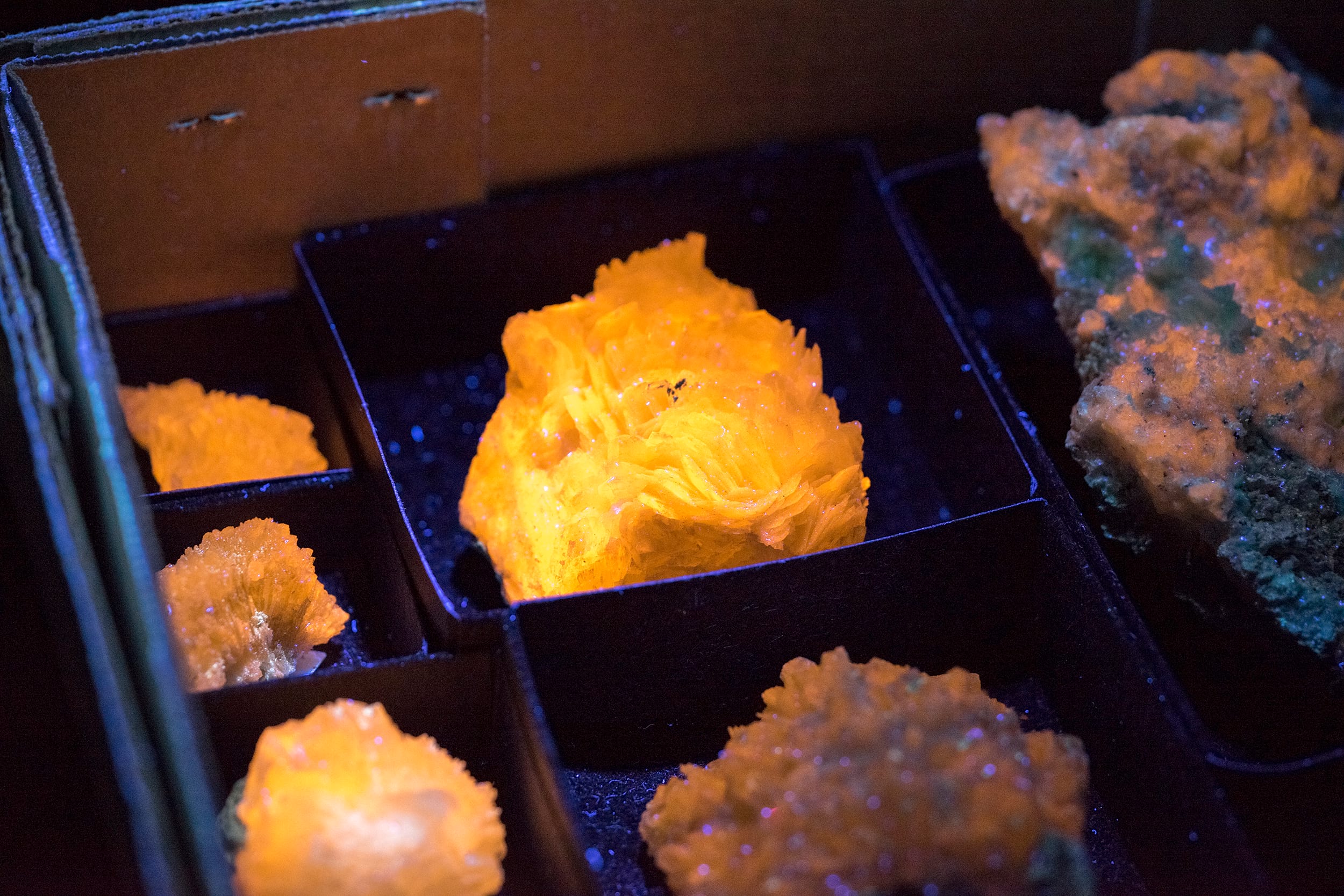
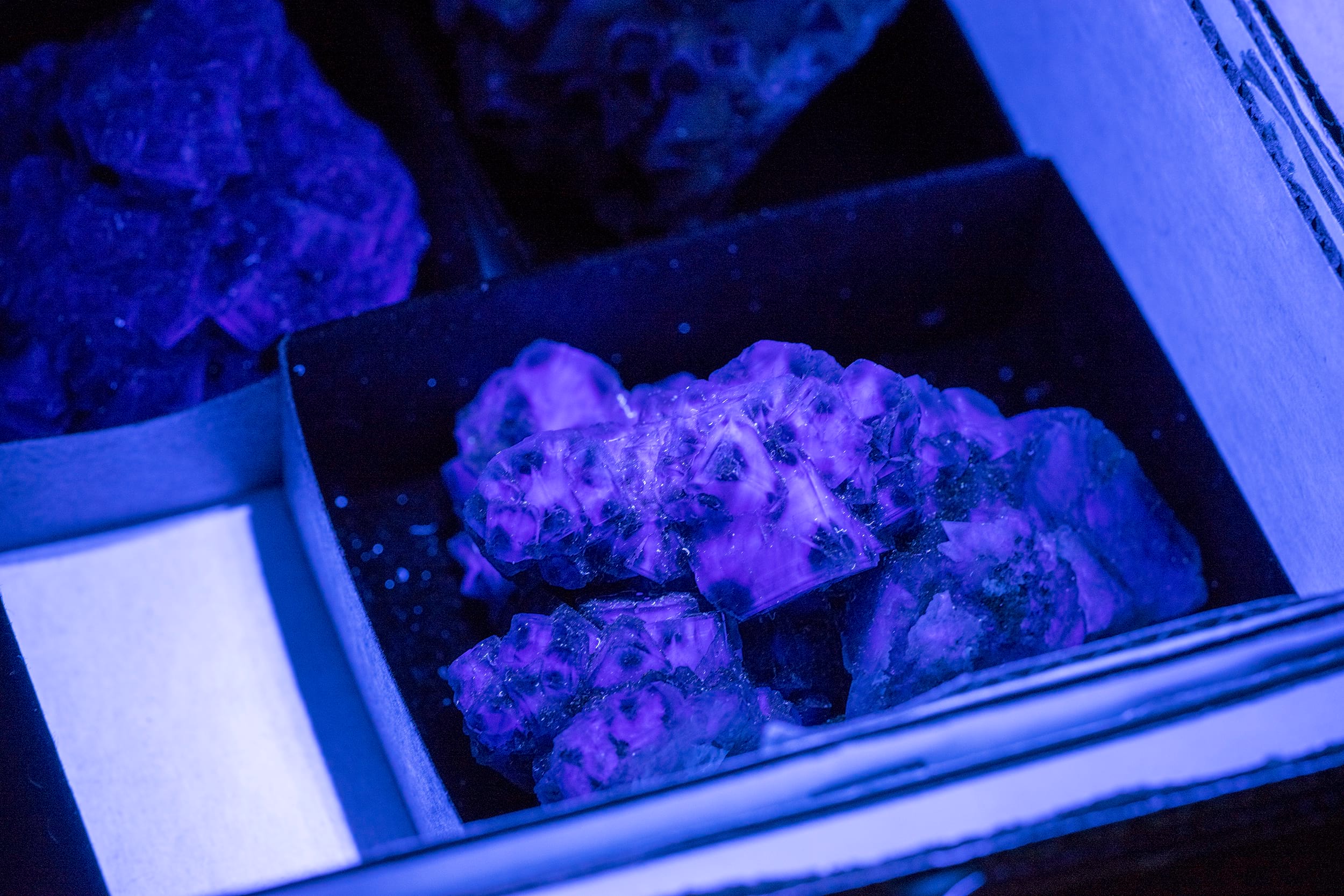
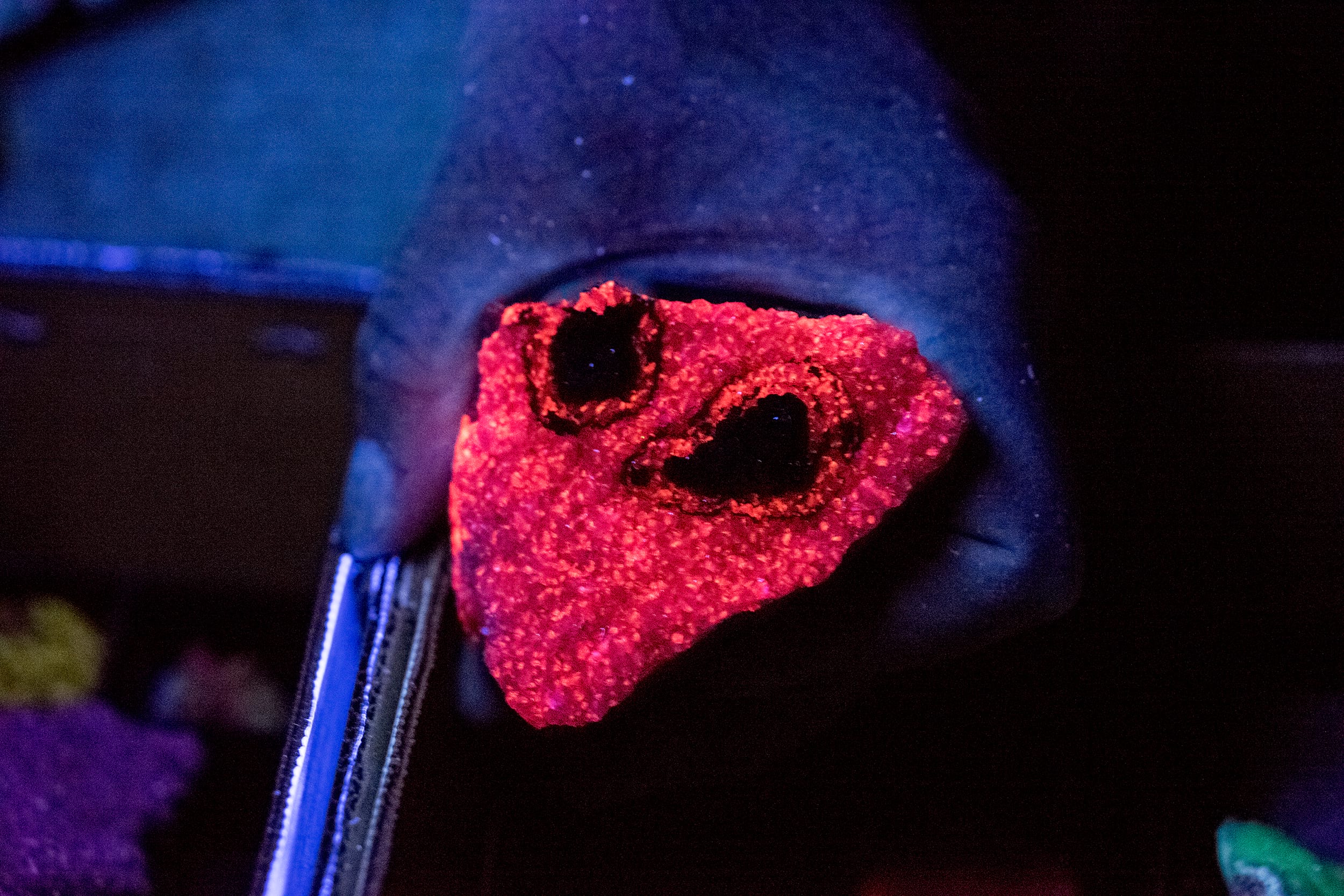
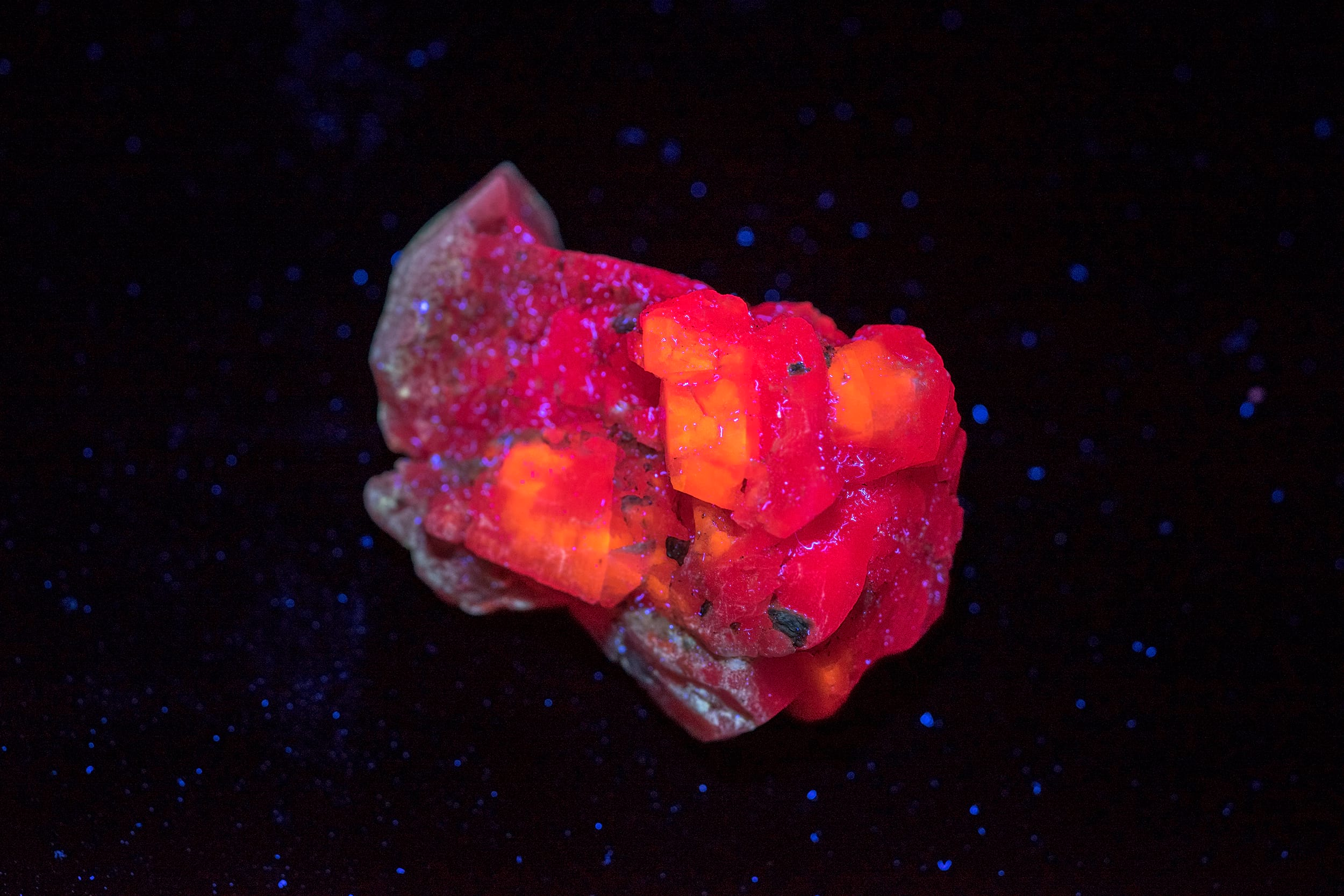
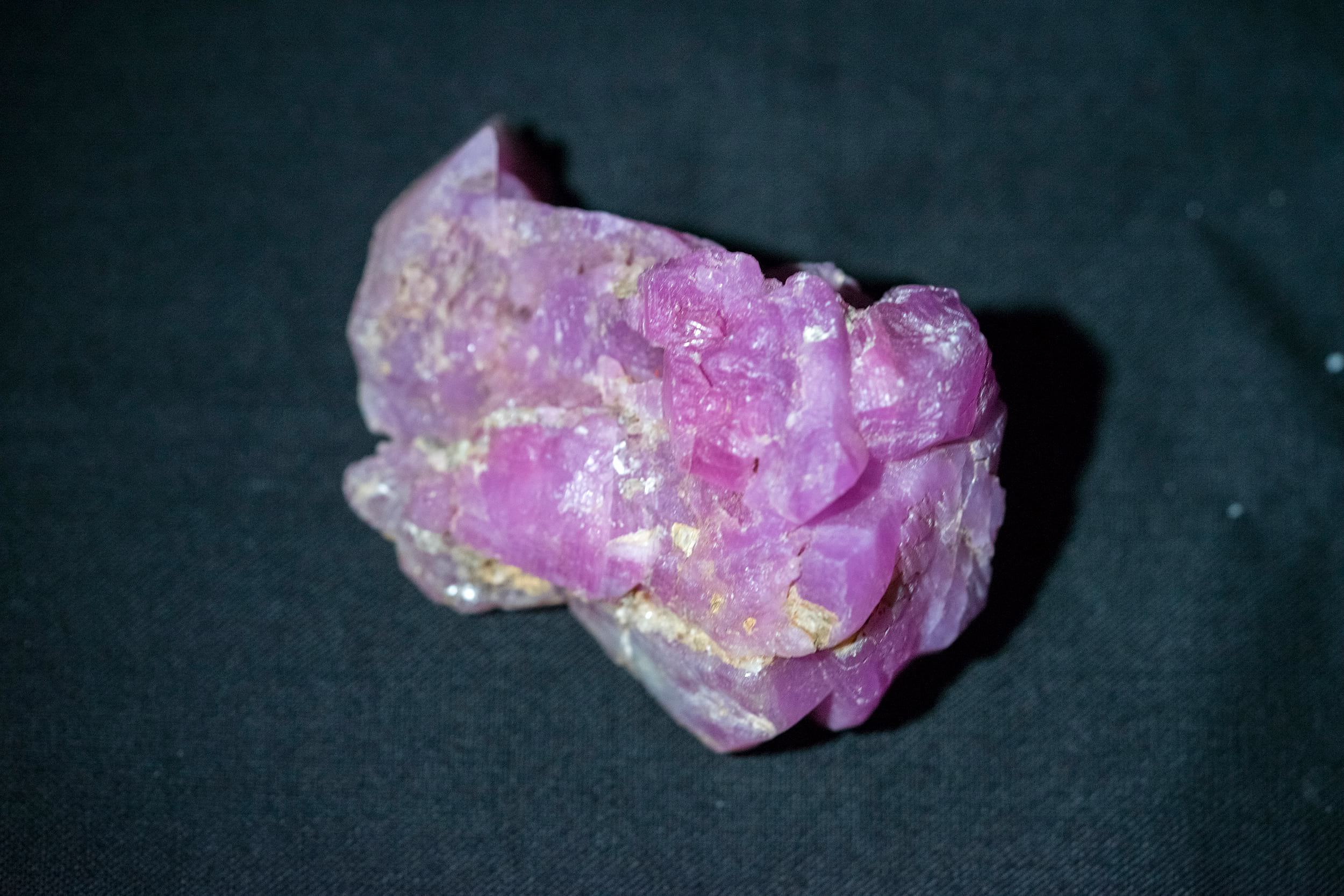
Lastly are the minerals that caught my eye. To start off there's the bright orange tarbuttite. There were also some interesting phantomed and zoned calcites and fluorites. In addition Jim had obtained some of the very rare Skorpionite from the Skorpion mine. In Todd's possession was an interesting ruby specimen. Normally they fluoresce red but that one also had orange!

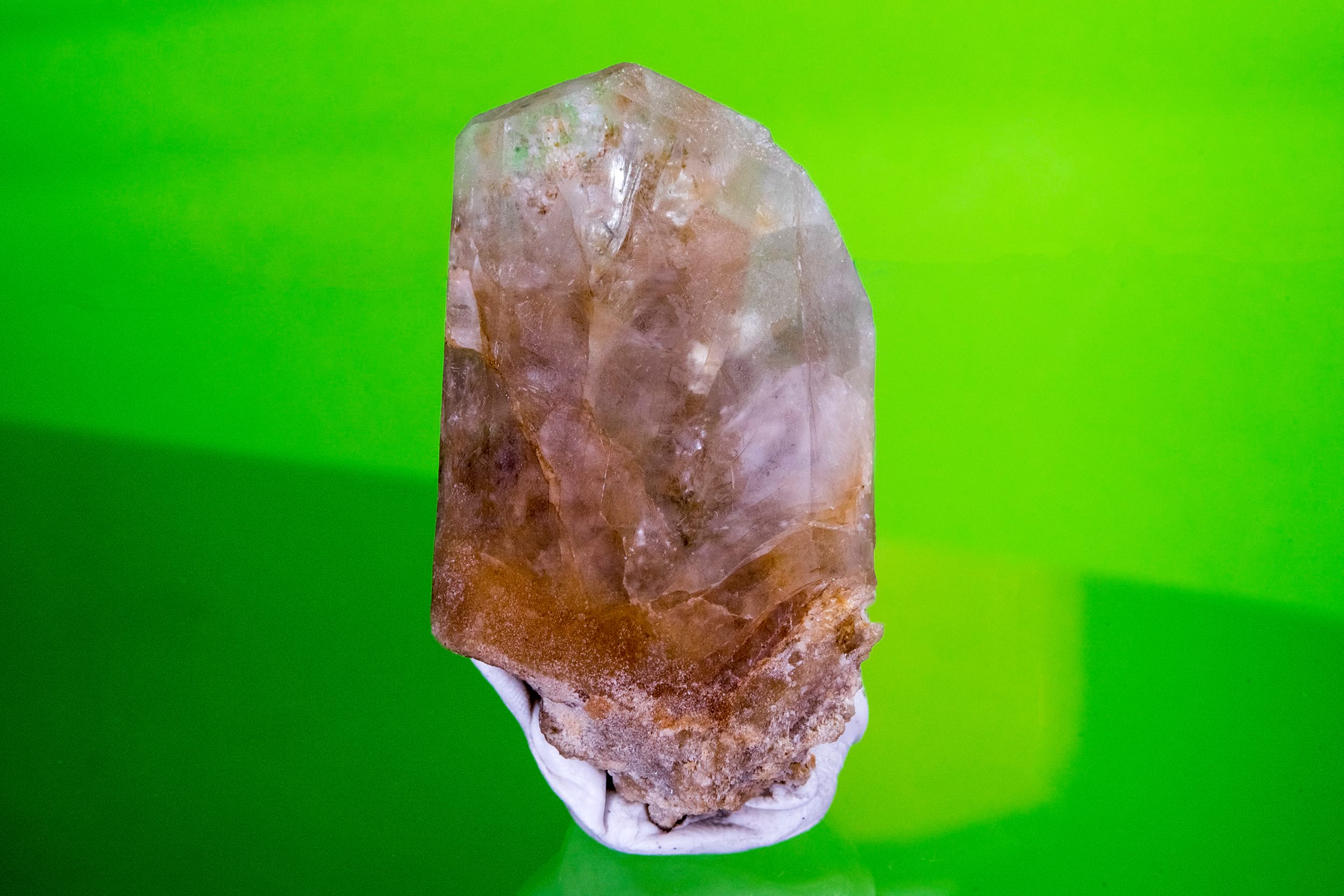
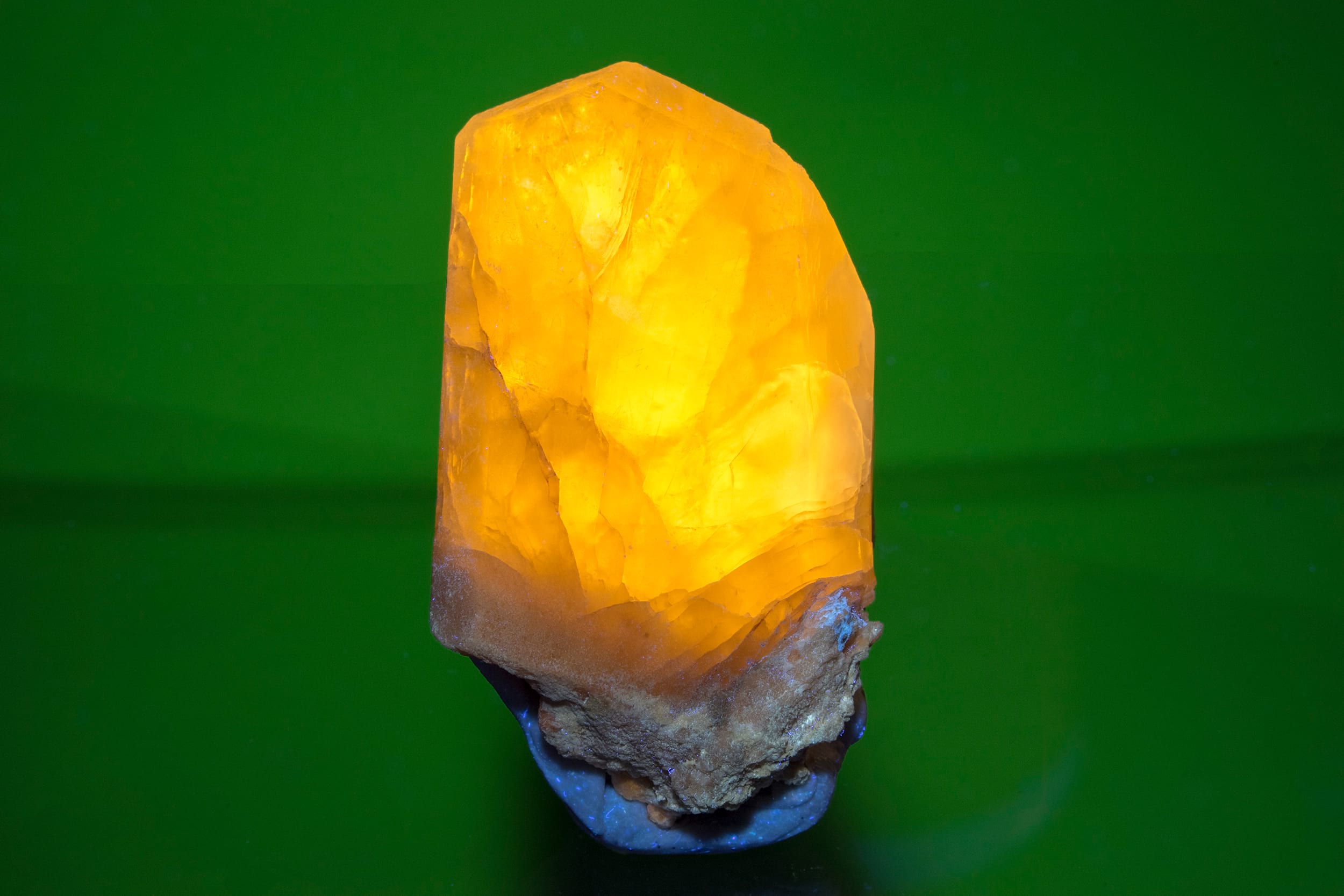
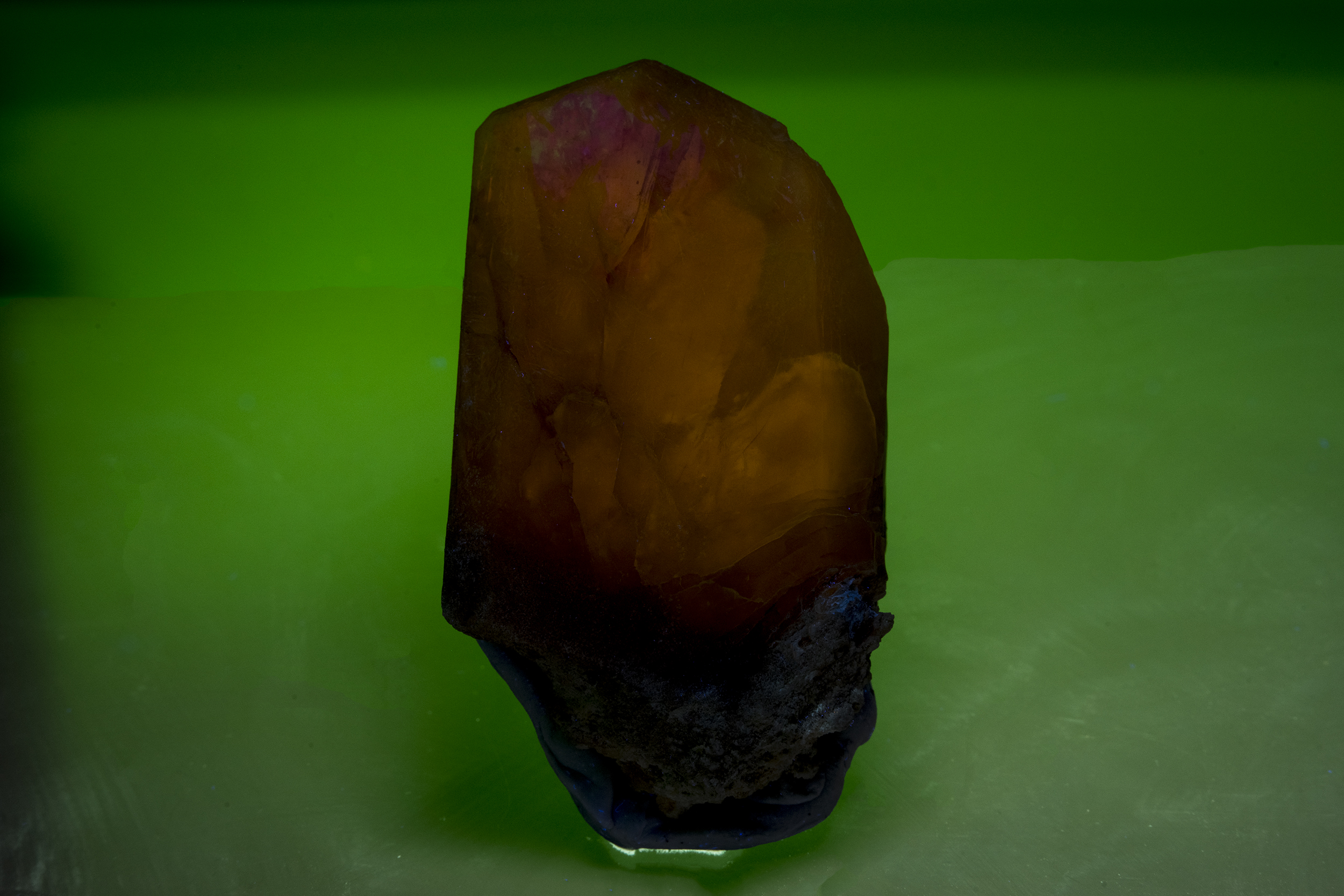
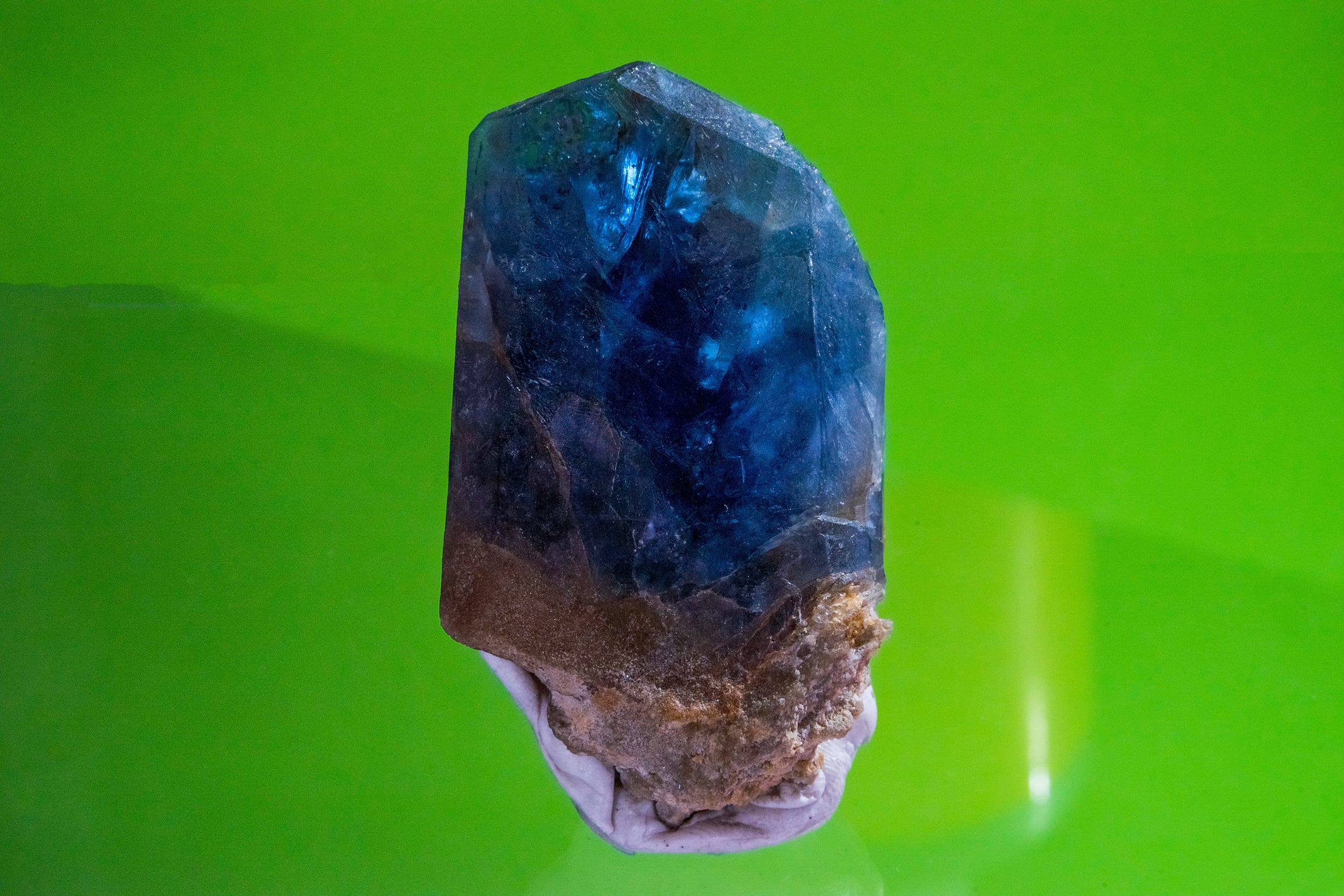
Tenebrescent Scapolite var. Marialite
For a while I've been infatuated with tenebrescence or photochromism in minerals. That is to say the ability for that mineral to change color when put under UV light and back. In this case the marialite goes from a clear white in daylight to a dark blue after you put it under LW. This process can then be reversed by exposing it to white light. I've been infatuated with this phenomenon ever since I learned about it in the minerals of Greenland, specifically the hackmanite and tugtupite. However, I was never able to win any eBay listings for a price that I wanted. Not being able to crave this desire I decided to look up other listings for tenebrescent minerals. That's when I came across the marialite (though the dealers there mostly refer to it as scapolite) from Pitwak. It greatly appealed to me as it had the same deep color change that Greenland had while forming beautiful crystals. That was 3 years ago and I've since been searching for great crystals like this. I haven't even had the remote thought of purchasing any Greenland fluorescents for my collection.
Of note on this specimen is that it shows little tenebrescent response under 253.7nm SW. The response is strongest under 365nm LW. This is typically the other way around where the strongest response is achieved under SW. This specimen has also been irradiated. Funnily enough the cousin of the miner that collected this specimen got in contact with me through Facebook. Often times Pakistani mineral dealers will try to sell by sending friend request to people in mineral groups en masse. I usually just show them this specimen and say that I'm looking for at least this or better. That's when it was recognized by the miner's cousin. I'm inclined to believe him as he provided up to date photographs of Pitwak mine that aren't available elsewhere on the web.
Locale: Pitwak Mine, Kokscha Valley, Badakhshan Province, Afghanistan
Weight: 6.1oz | 174g
Dimensions: 3.3 x 1.9 x 1.4 in| 83 x 48 x 37 mm