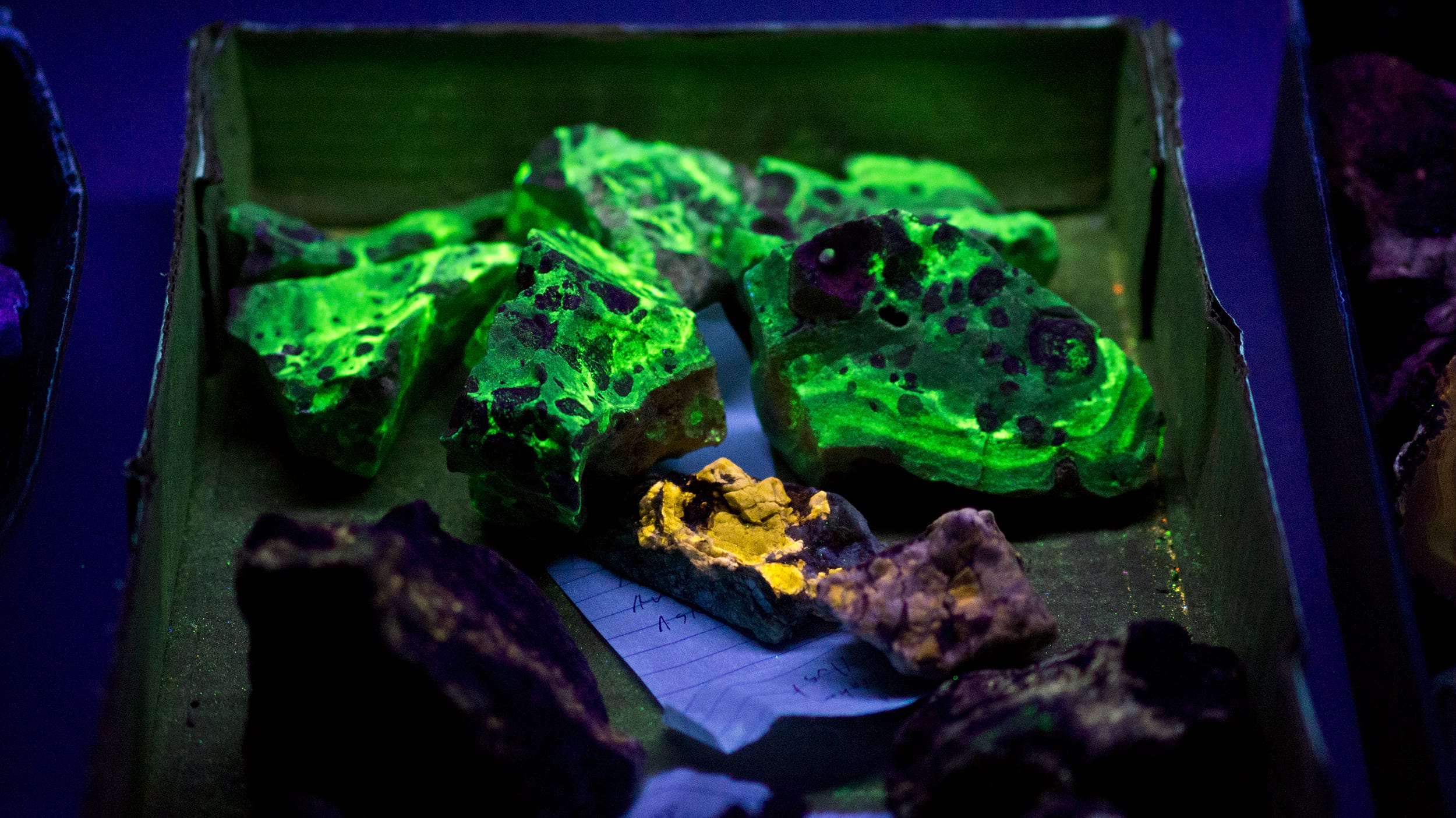
Fluorapatite
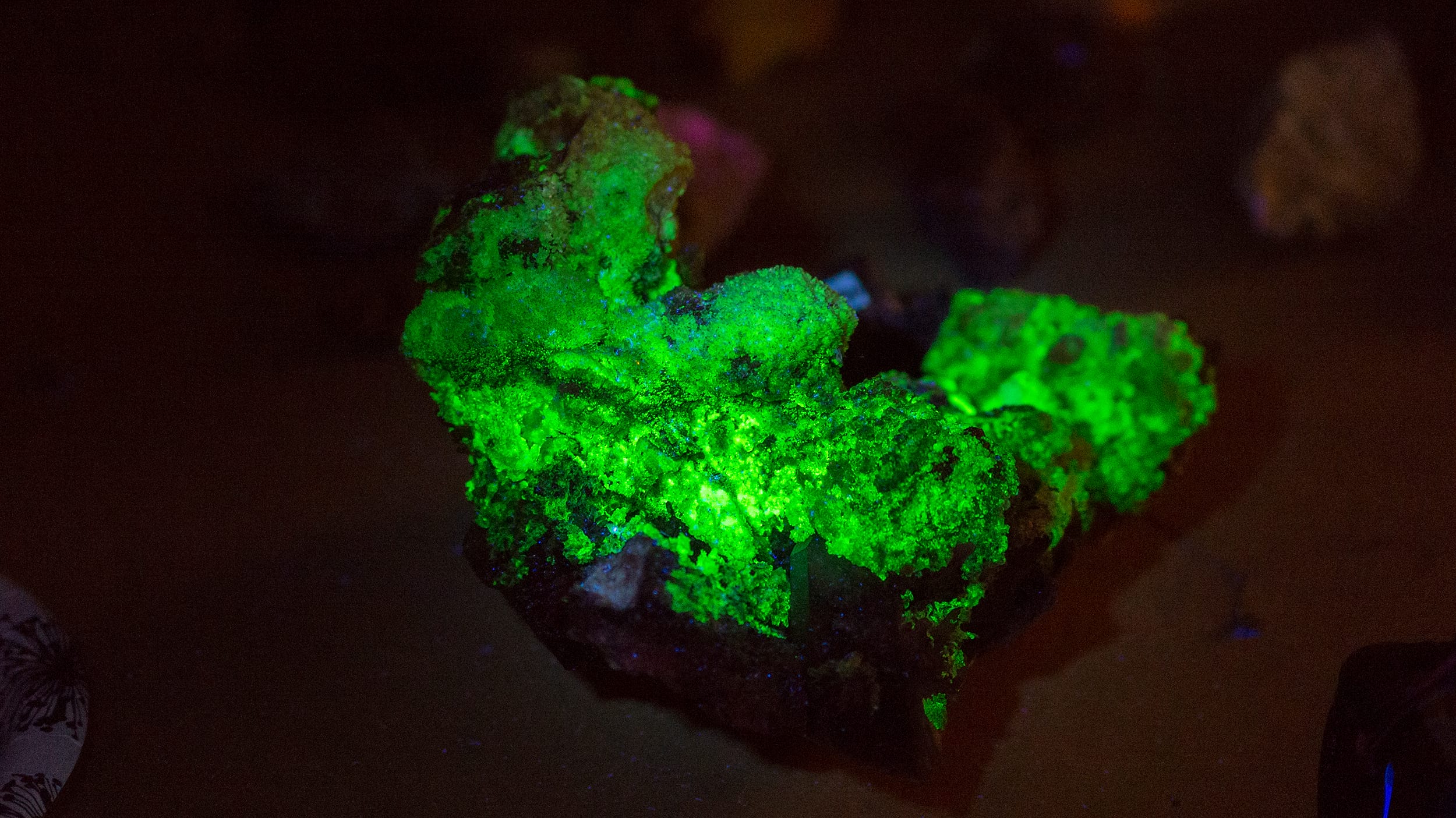
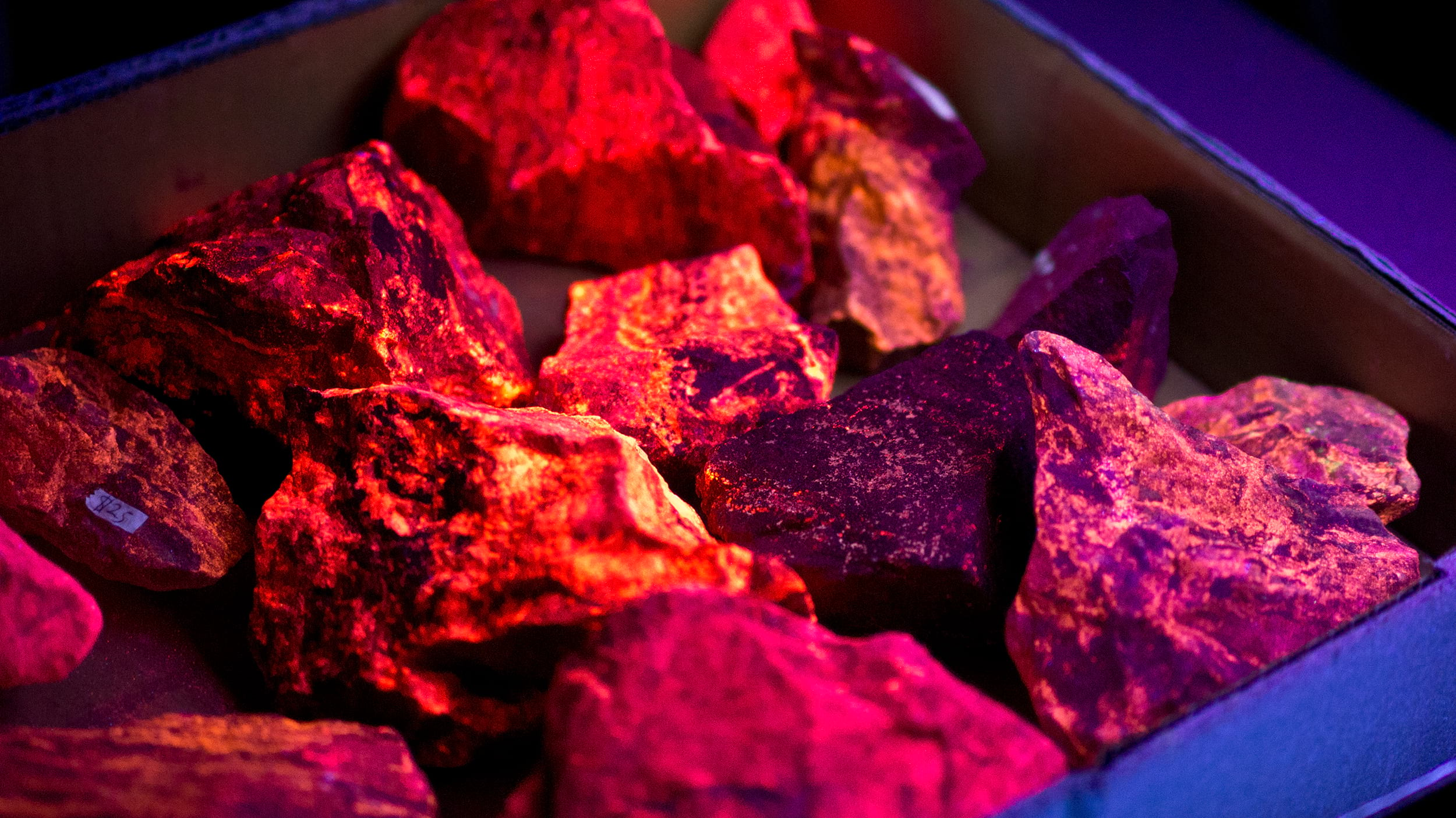
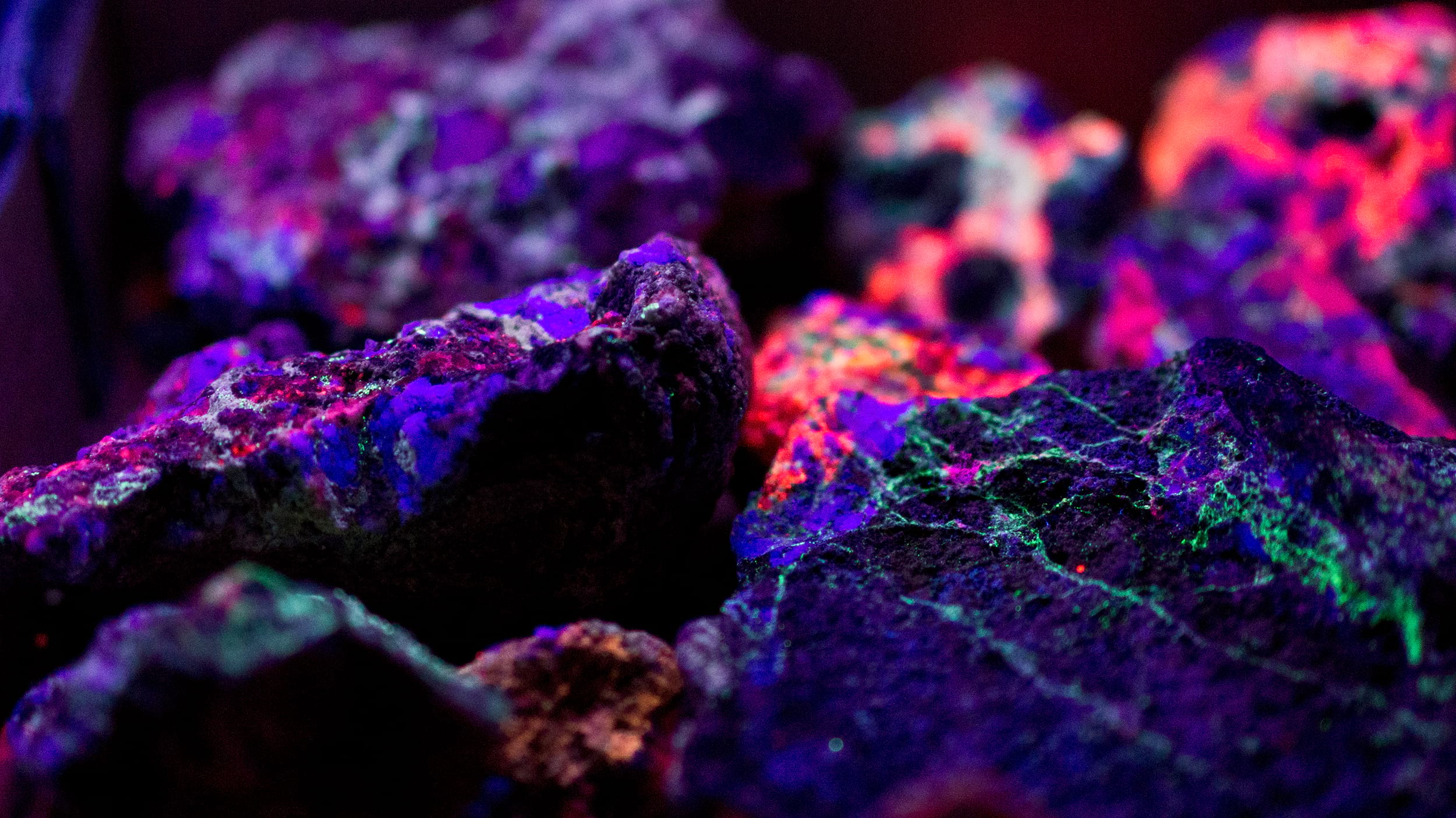
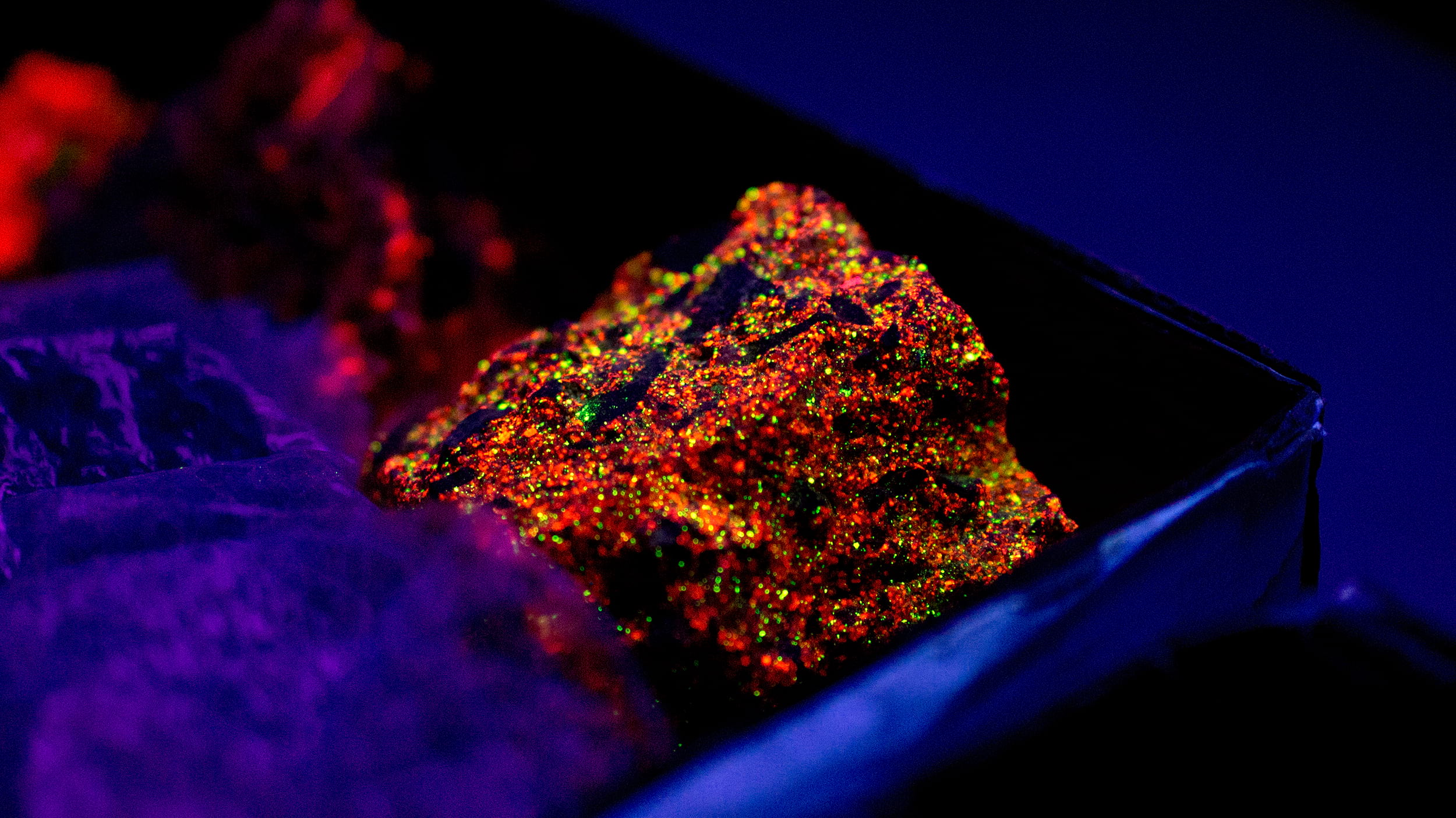
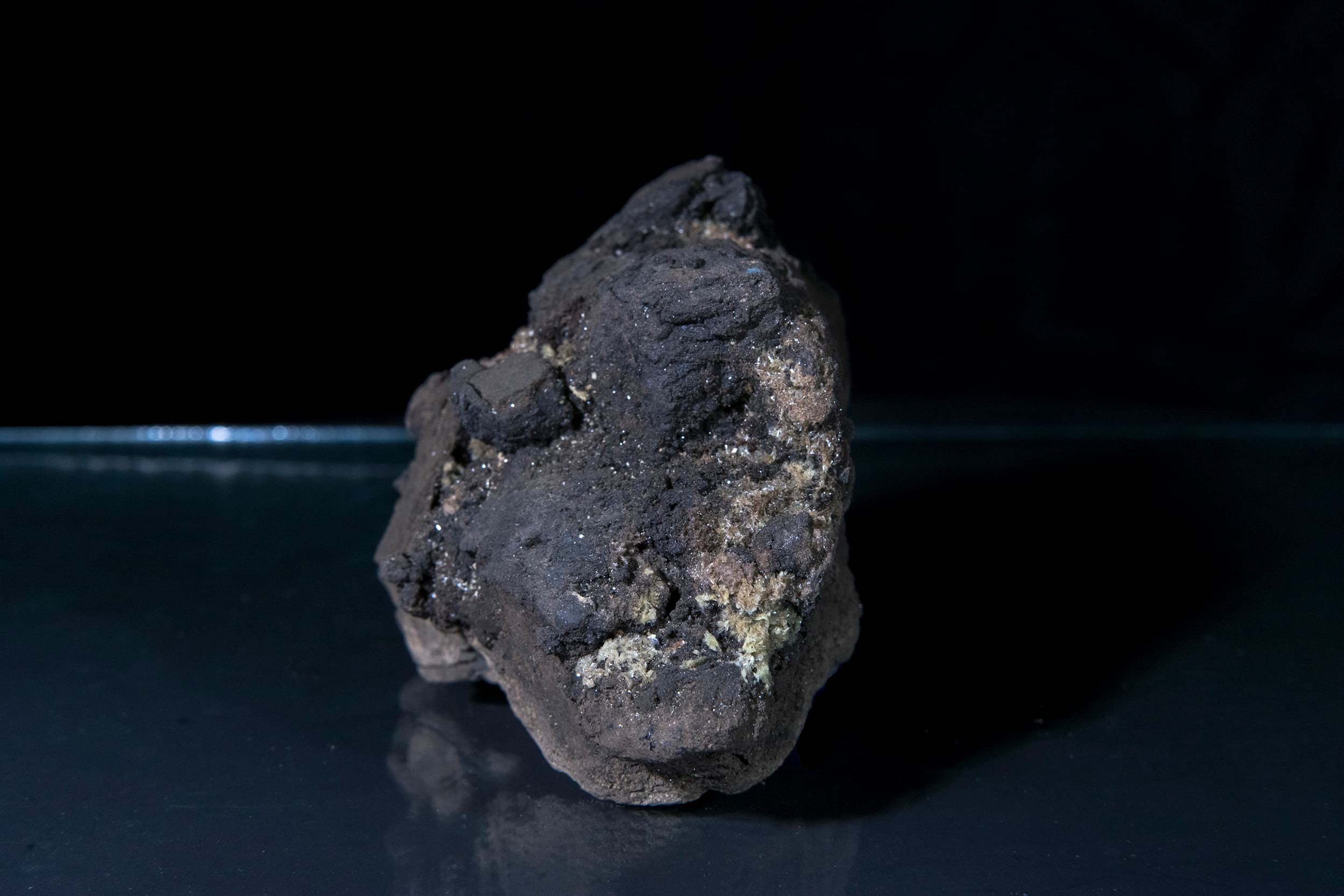
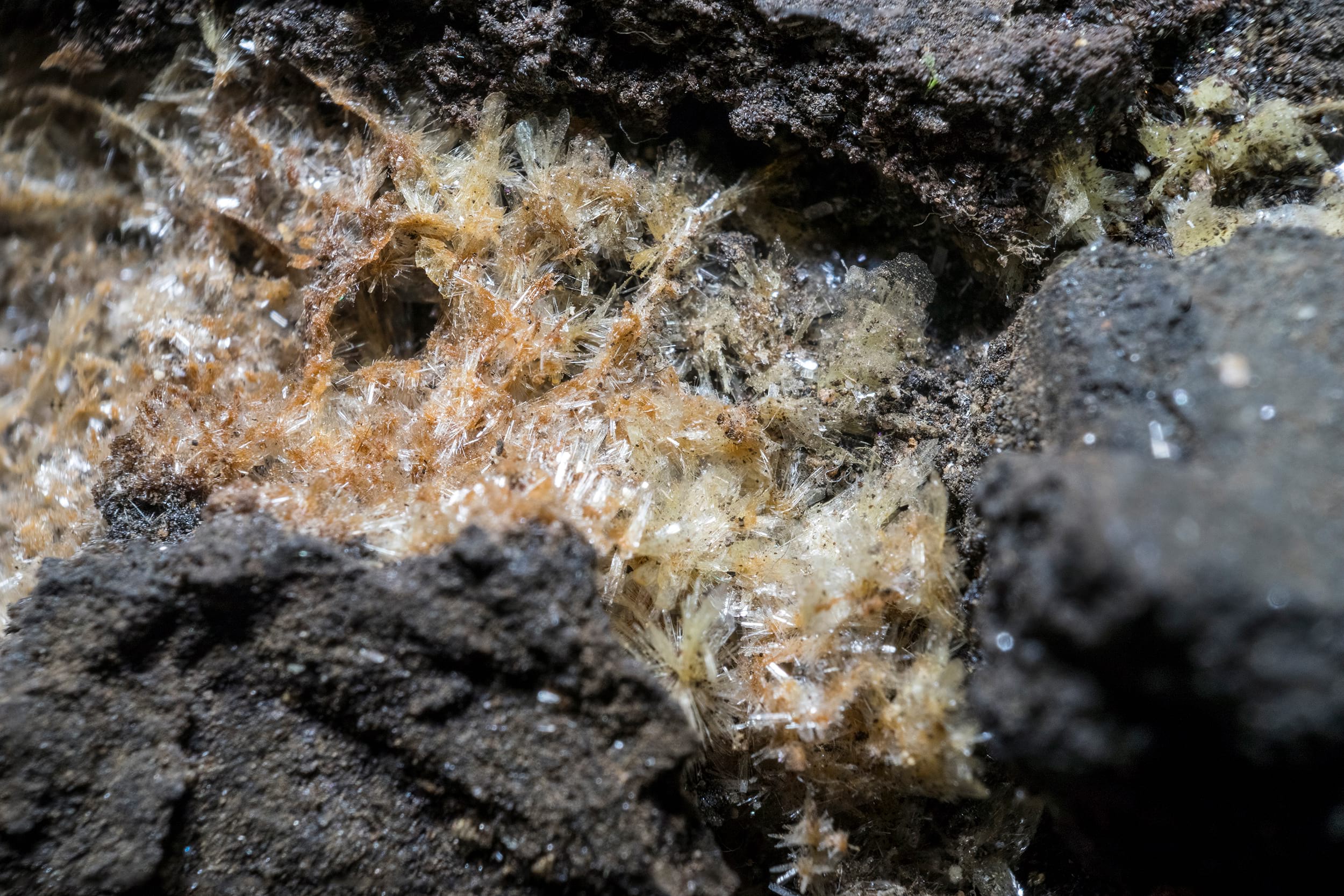
This fluorapatite was purchased in October 2017. However, it was mined in June 2016. This was purchased directly from the Alchuri Mine in Shigar Valley, Skardu through a mutual connection of mine. Why did it sit for so long? Well, a unique set of circumstances allow Skardu mine owners to be picky. Normally it's all about turnaround time and minerals are pushed to various gem and mineral markets throughout Pakistan. That's how we get so many minerals from Afghanistan and Pakistan across all forms of social media and sale platforms. However, Skardu in particular shares a border with China. As such it isn't uncommon for Chinese mineral dealers to travel and do business directly with the Pakistani people there. On top of that Skardu is an important area strategically. I believe it has something to do with Skardu being abundant in uranium but I'm not aware of all the details. As such there is a heavier military presence. With that relative safety provides tourism from around the world. While it is mostly Chinese, many people visit various areas of Skardu (it's not just mining!). All of this combined means that they don't have to send everything to the market. They'll get high rollers that'll spend 5 figures on a specimen or dealers that come to them to purchase in bulk. They can wait until "the right person" comes along to buy a specific specimen if it's especially good. However, as a fluorescent mineral collector, this particular specimen represents something very interesting. It phosphoresces! I've never seen an apatite phosphoresce like this and I've seen quite a lot from locales around the world. While I don't know exactly what causes it to phosphoresce I will note that there are a significant amount of manganese dendrites forming on the specimen itself. A common fluorescent activator of fluorapatite is manganese replacing calcium.
It makes me wonder what else would be found if I had the ability to lamp everything in that mine. What other fluorescent treasures are waiting?
Locale: Alchuri Mine, Skardu, Pakistan
Dimensions: 2.8 x 1.7 x 1.5 in | 71 x 43 x 39 mm
Weight: 3.3oz | 94g
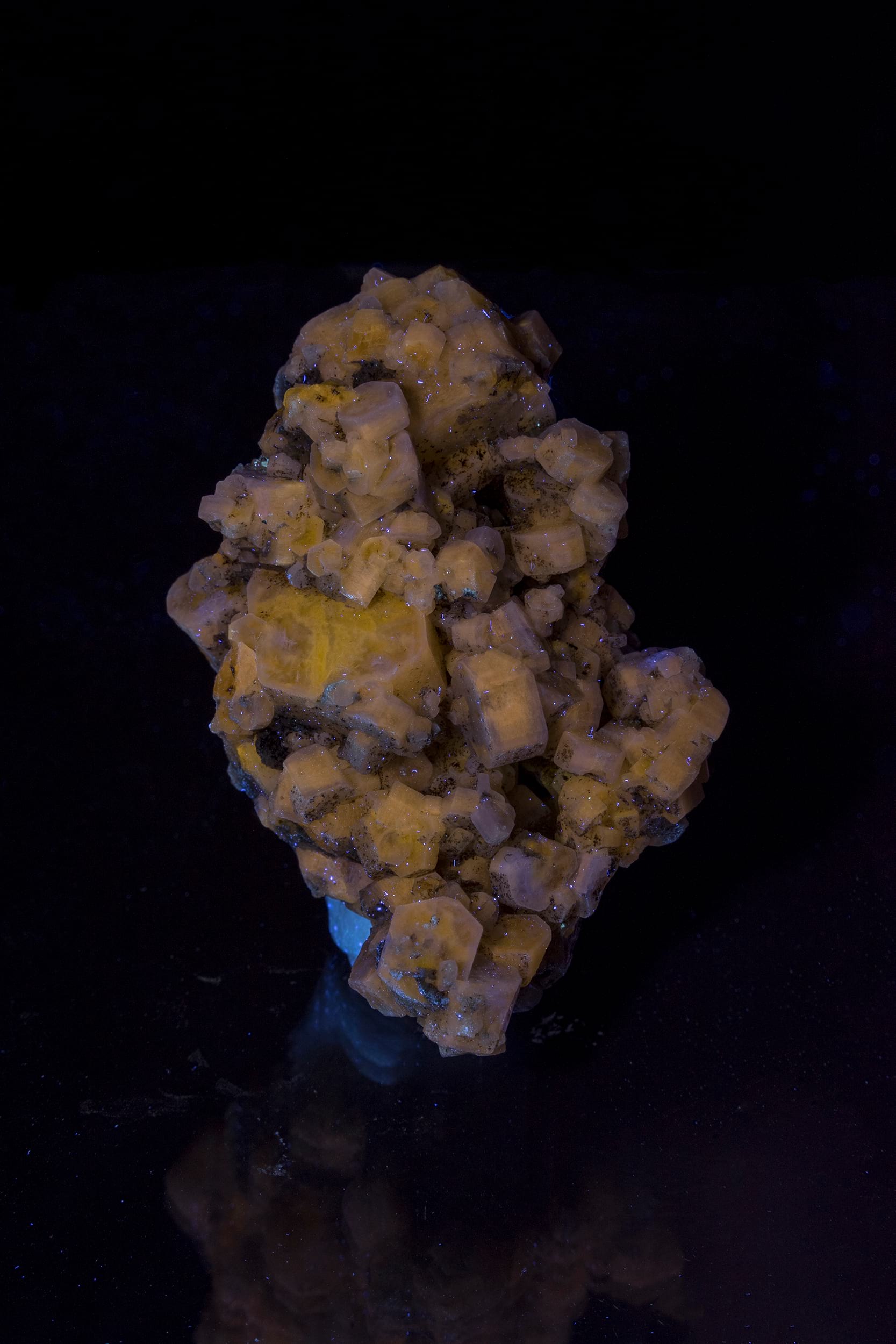


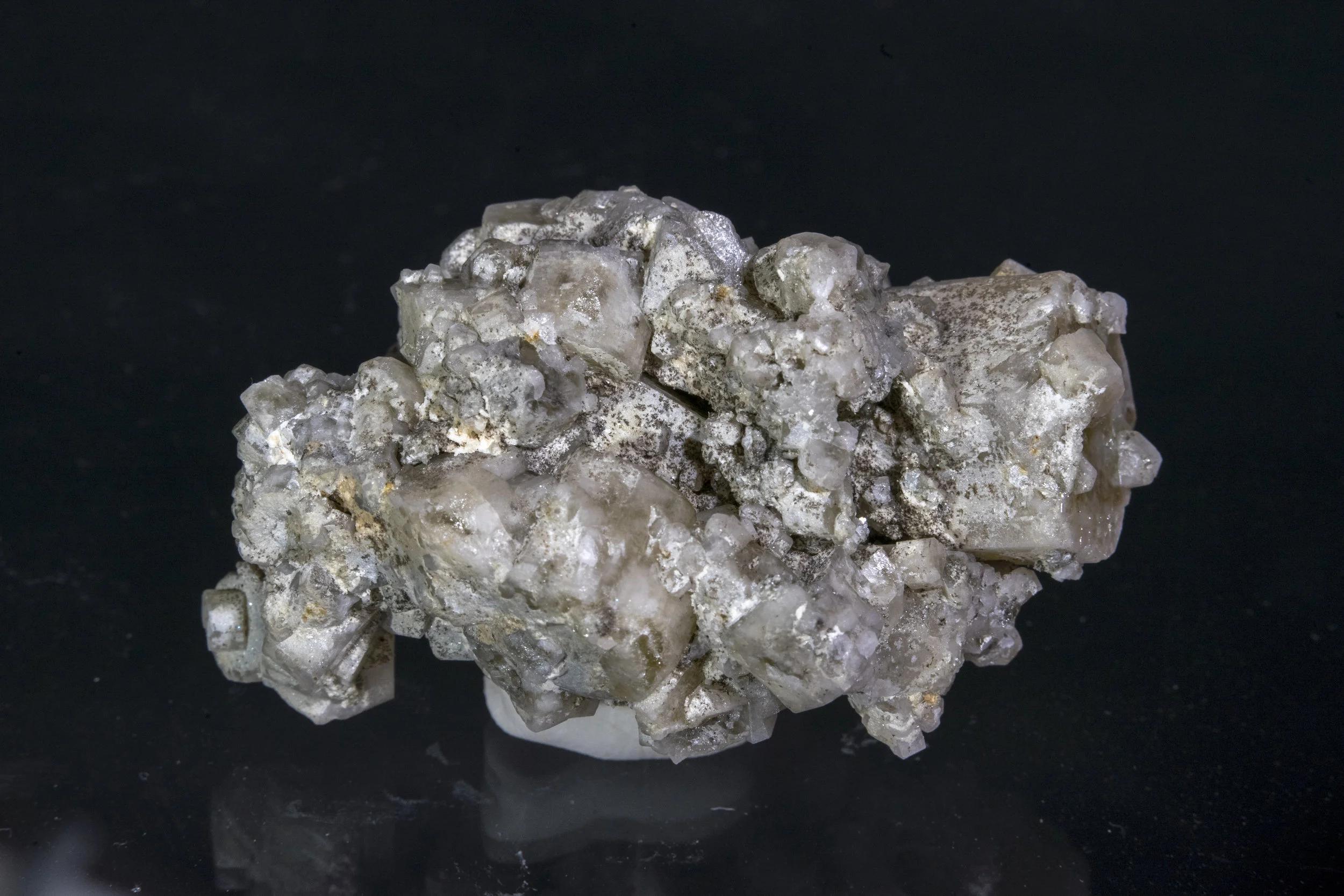
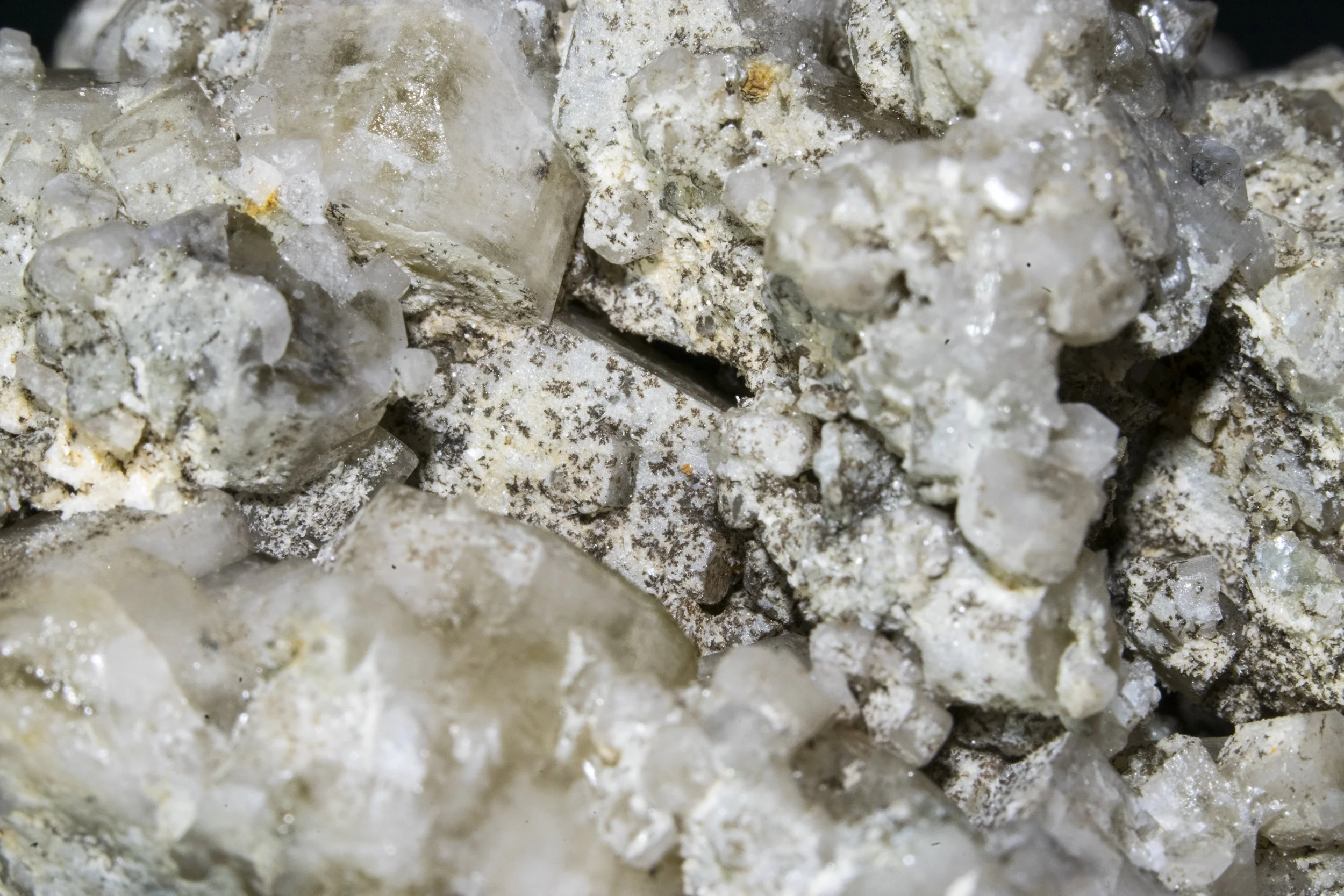

Corundum var. Ruby
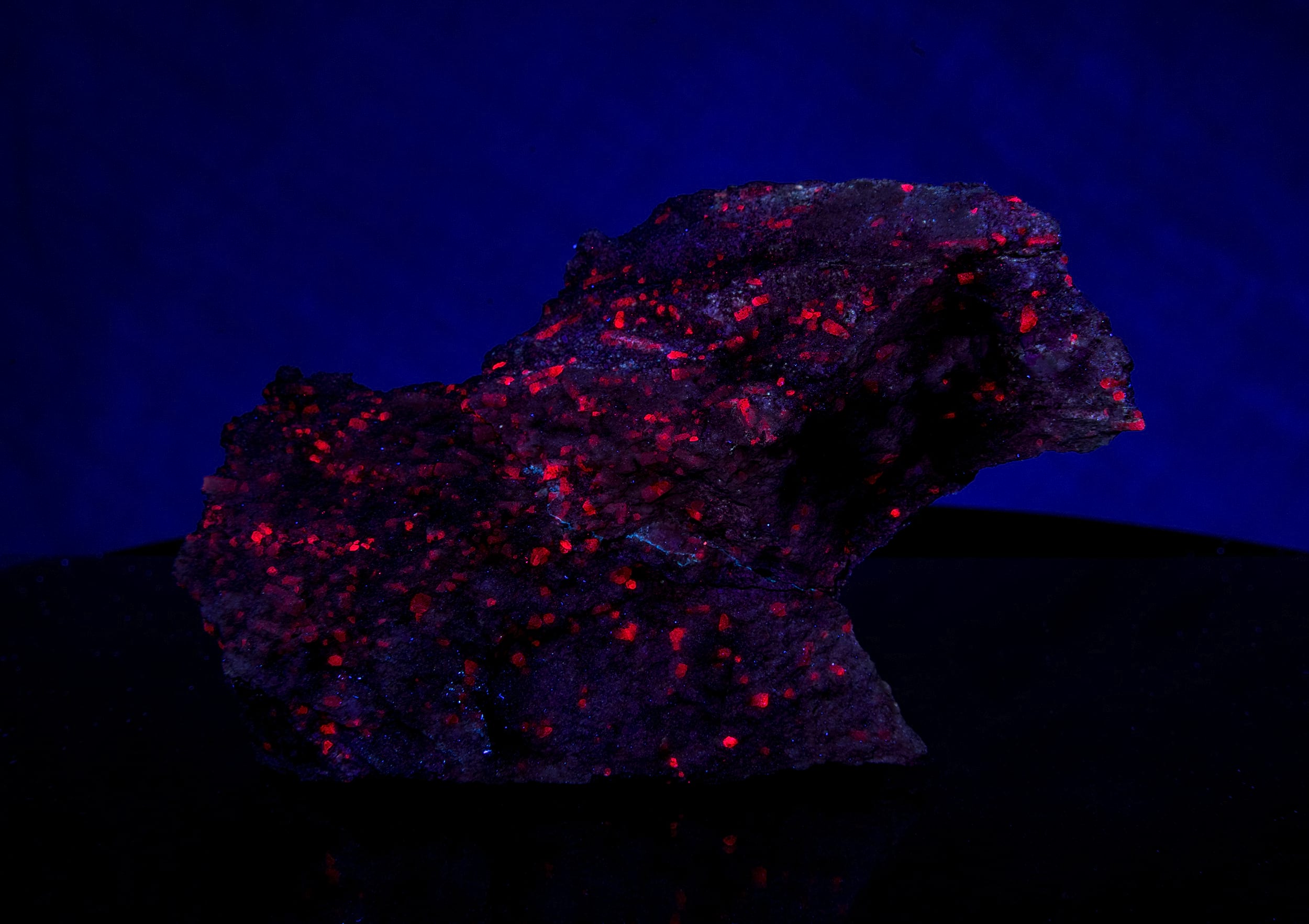
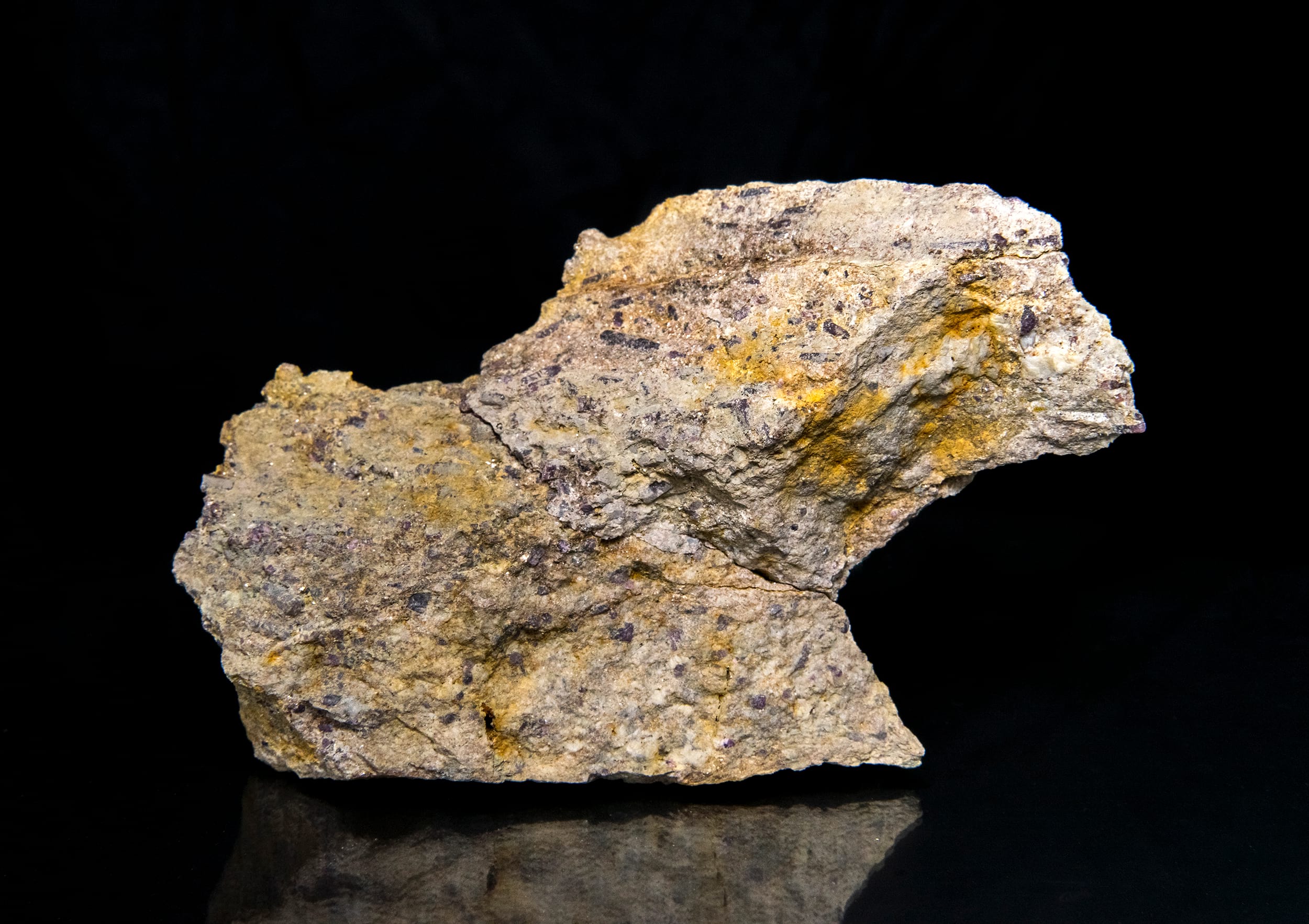
A very rich piece of Cascade Canyon ruby. I collected this the second time I went there. I normally wouldn't photograph a specimen before I felt it was prepared. However, the fluorescent photos are representative enough and show just how much ruby is in this piece. Still on my list of to-dos for this specimen are to media blast it so that the rubies are fully exposed and hence their full fluorescent response can be seen. It's very low on my to-do list though. Specimen has been repaired.
Locale: Cascade Canyon, San Gabriel Mts, San Bernardino Co., California
Dimensions: 5.7 x 2.7 x 3.5 in | 145 x 70 x 90 mm
Weight: 1lb 1.7oz | 503g

Smithsonite
This was one of the pieces that was gifted to me by Mark Cole while I was visiting his house for the total solar eclipse of 2017 and perusing his inventory. He had a wonderful assortment of specimens from all over the world. However, this one caught my eye. It is very aesthetically pleasing in daylight with stalactites and stalagmites being well preserved by the smithsonite. This combined with the wonderful pink fluorescence make this a worthy addition to my collection.
Locale: Mexico (?) Specimen did not come with a label. However, speciemens from Mexico typically have matrix like this.
Weight: 9oz | 254g
Dimensions: 2.9 x 1.9 x 2.8 in| 73 x 49 x 70 mm

253.7nm SW

Daylight

Hyalite
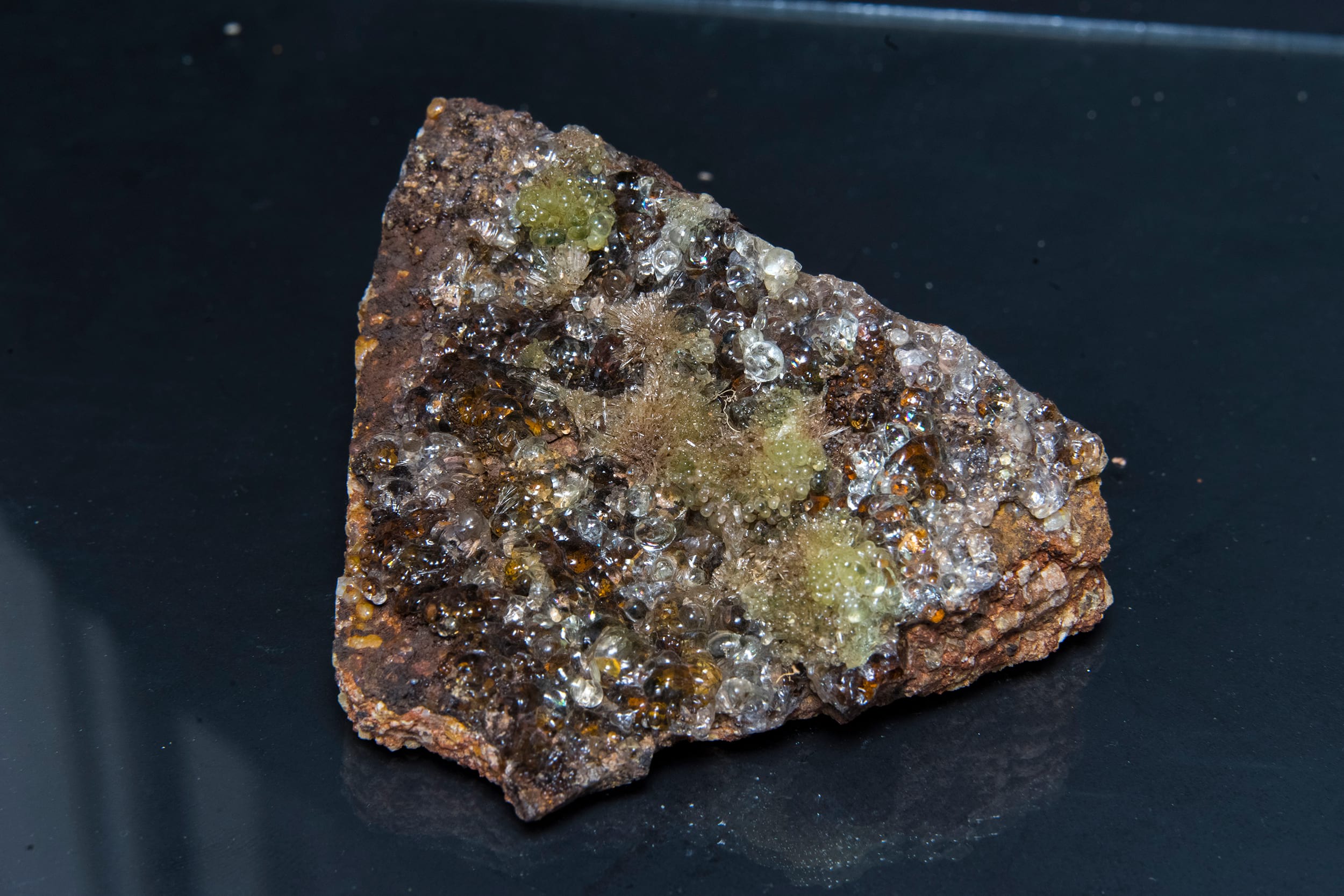
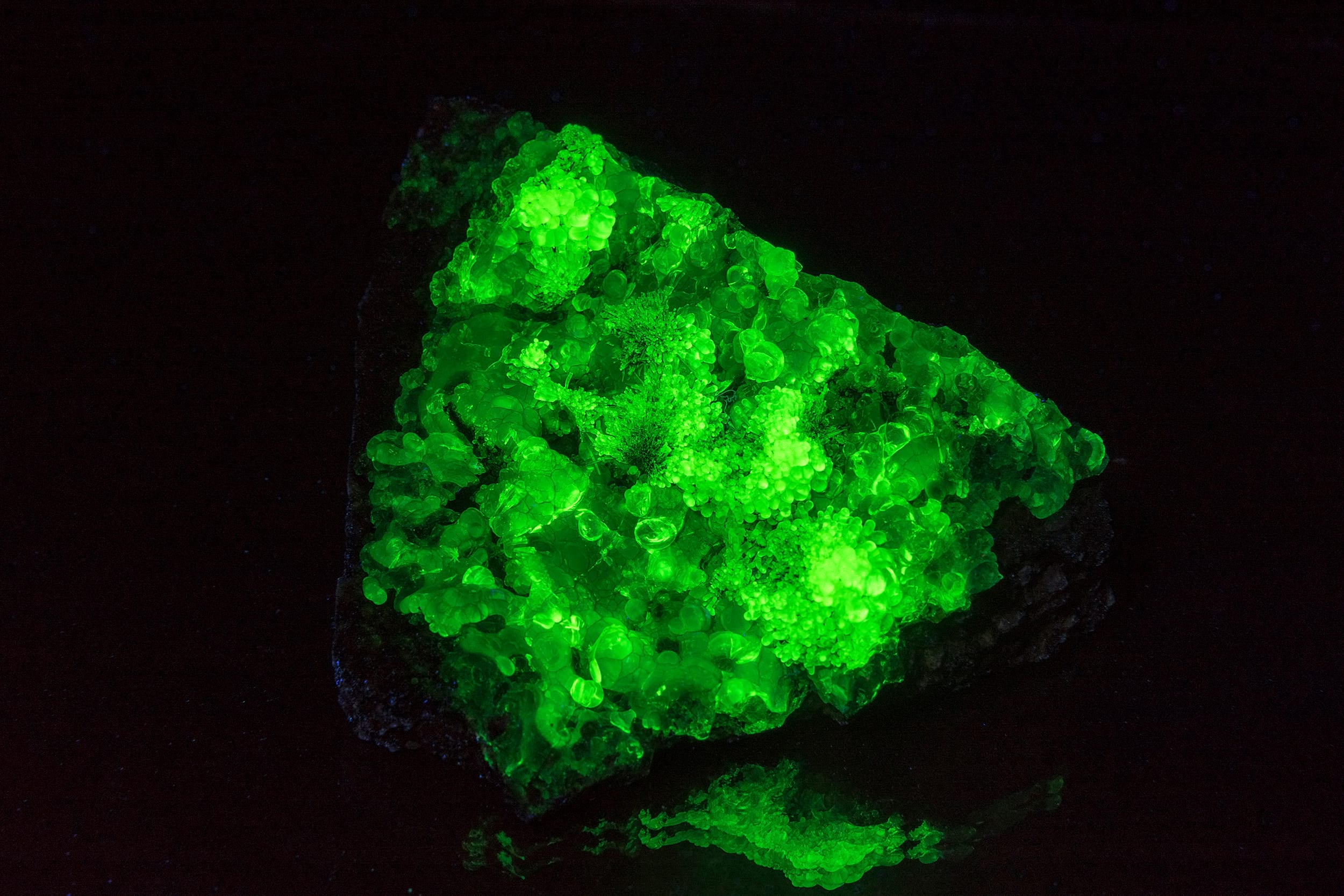
I had been wanting a Zacatecas hyalite ever since I first saw it at Jim's house. He had a wonderful specimen that had quite a large amount of daylight fluorescence. While I still haven't found my perfect specimen containing nothing but daylight fluorescing hyalite, this specimen did catch my interest. It has some unusual columnar hyalite crystals that are daylight fluorescing. It's been well documented that the cause of the fluorescence is a large amount of uranyl ions (though not that large. We're still talking parts per million) and it's fairly radioactive. Nothing too crazy. It only hit a max of 2400 CPM with a background of 140-150 as you'll see in the video following.
Locale: Zacatecas, Mexico
Weight: 5.2oz | 148g
Dimensions: 3.2 x 2.7 x 1.4 in | 80 x 69 x 35 mm
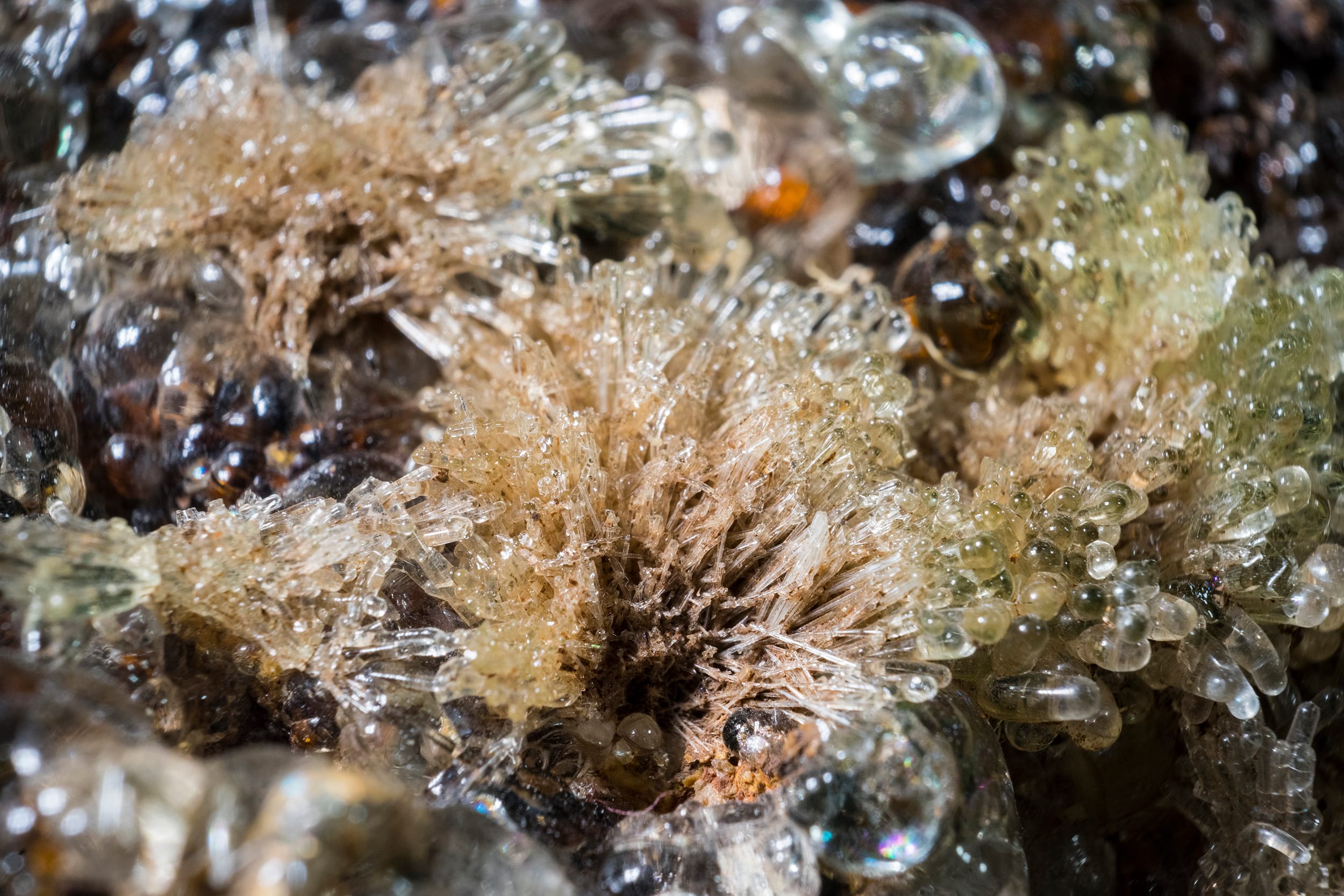
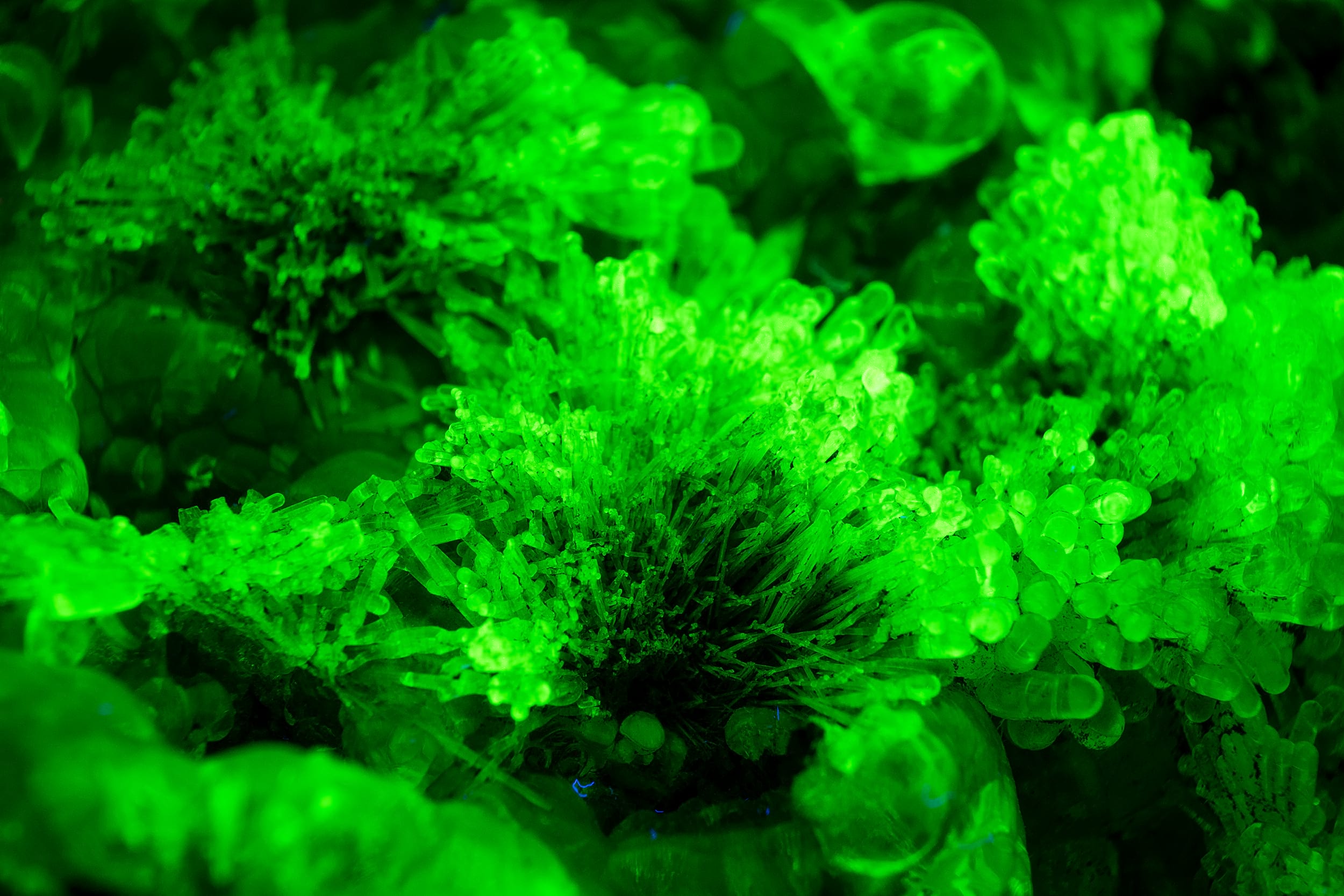
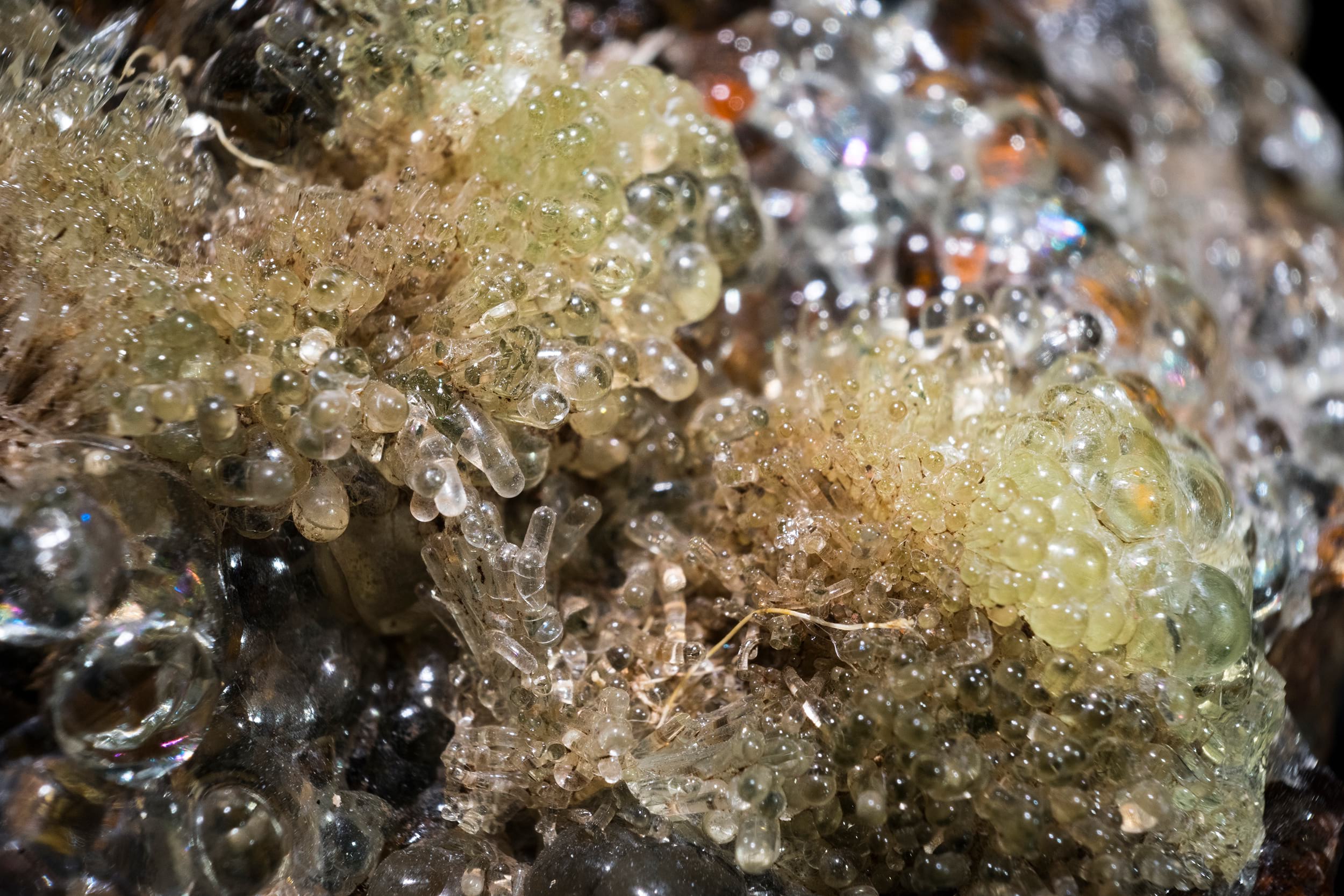
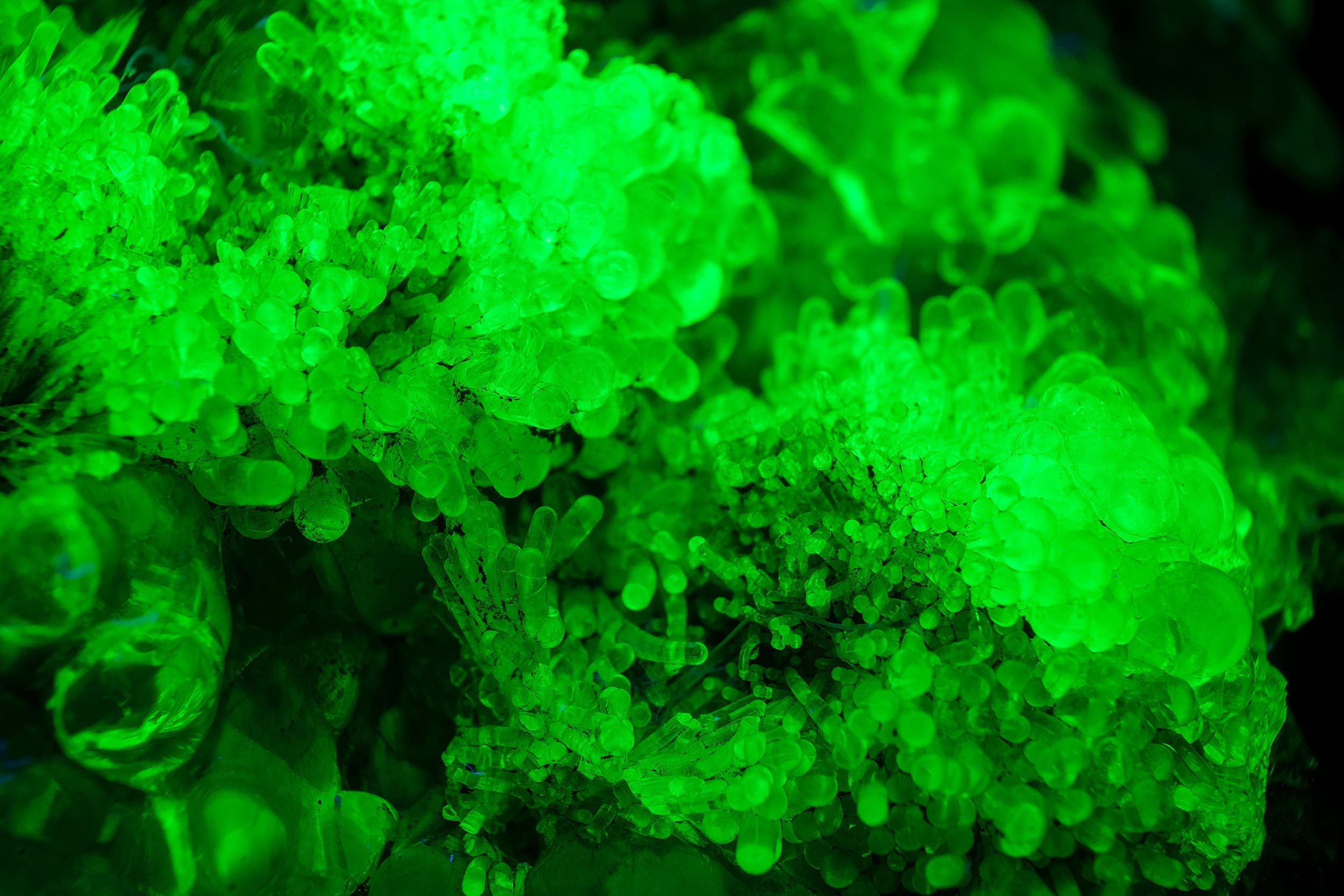

Chalcedony Covering Quartz Geode
Update: 10/23/17 It has been pointed out that this could possibly be chalcedony instead of the original hyalite that was guessed. I've updated the title to reflect that until I've properly tested it.
Update: 10/26/17 Was not able to scratch it with a 7 mohs hardness pick. That would make it chalcedony. Article updated.
This was an interesting specimen that I got while looking for fluorescent quartz. The seller showed me a poor quality UV photo and claimed that the quartz was responding to the UV light. Unfortunately this is one of those times where I took the risk and it failed. While it was fluorescent, it wasn't the quartz itself that was fluorescing. Instead, there is a secondary formation of chalcedony. I can'tfault it as a daylight specimen though. It has many wonderful quartz crystals that are well formed. As a photographer it provides a very interesting contrast that many would not have experienced while collecting geodes. The background is fluorescent providing a light colored background amongst the darker non-fluorescing quartz.
Locale: Nuevo Corral, Ruby District, Arizona
Weight: 15.9oz | 451g
Dimensions: 3.6 x 2.2 x 3.5 in | 91 x 55 x 90 mm
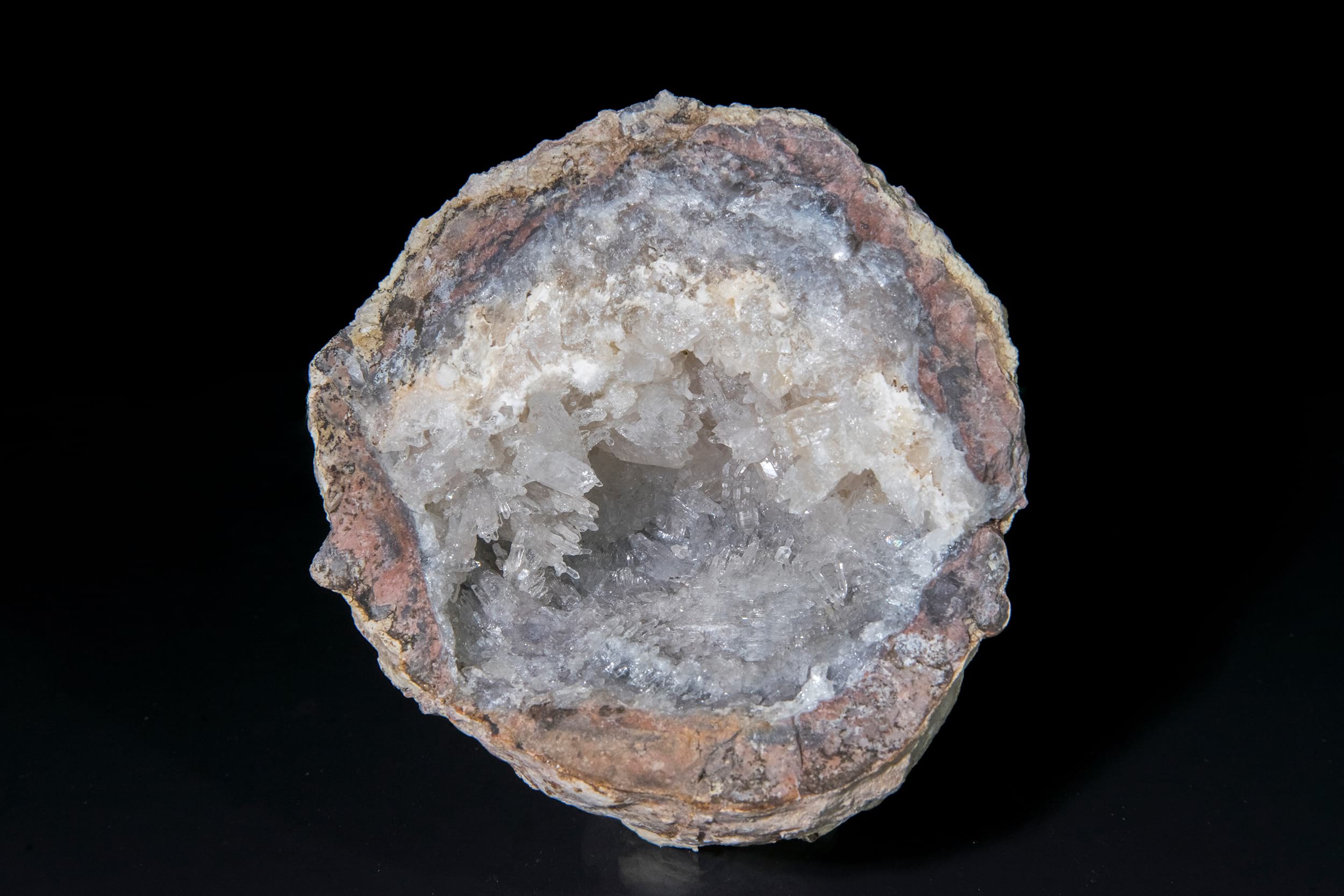
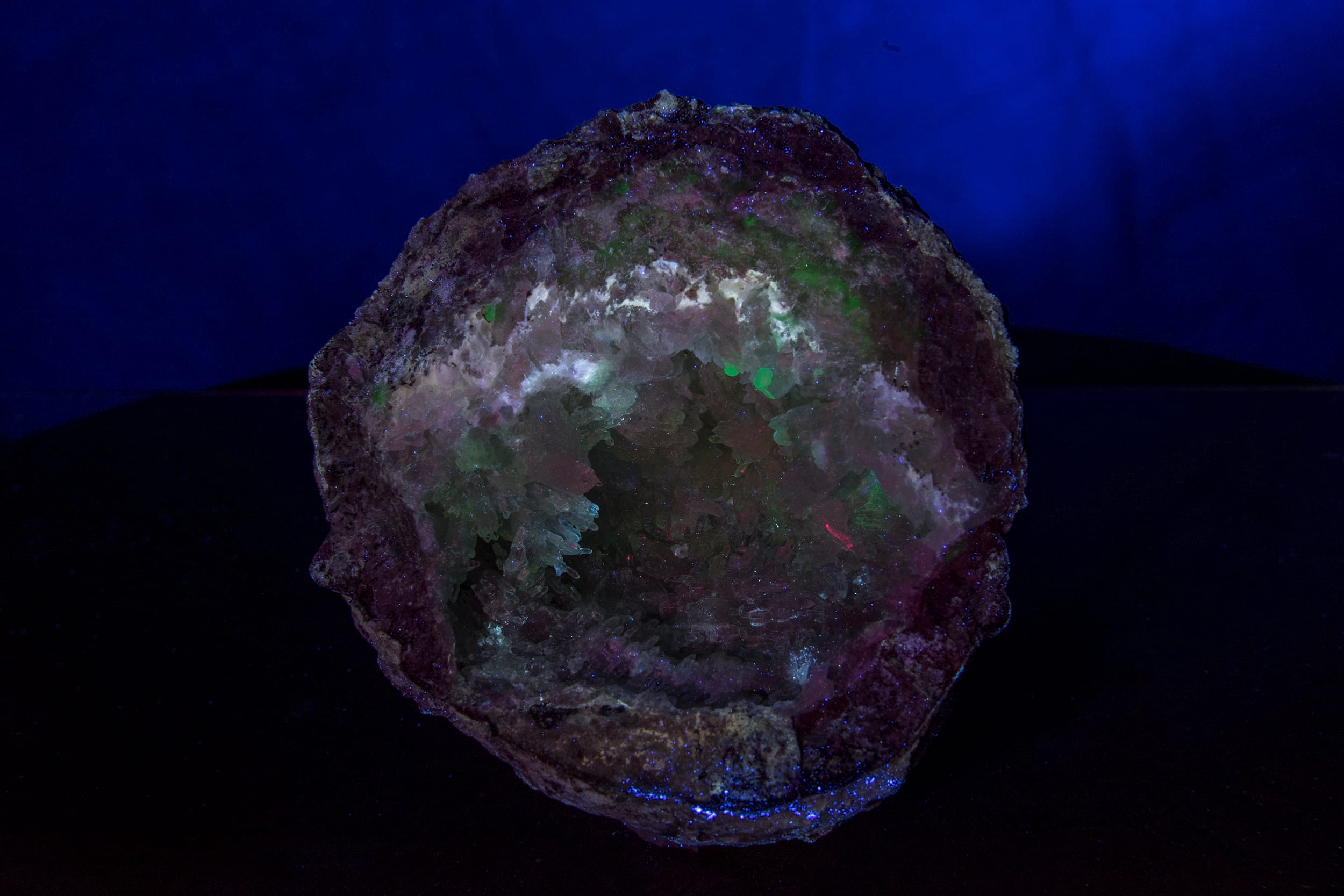
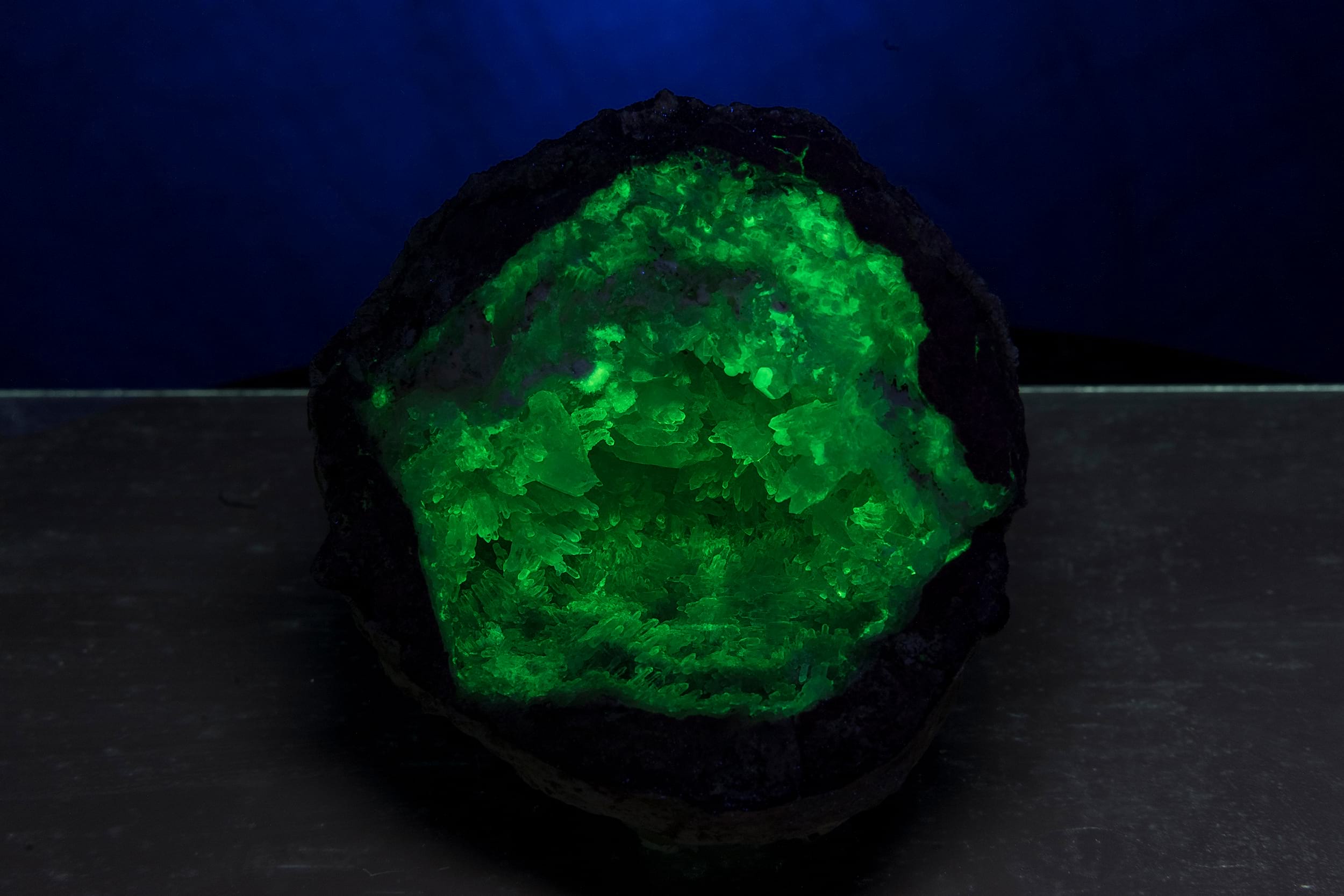
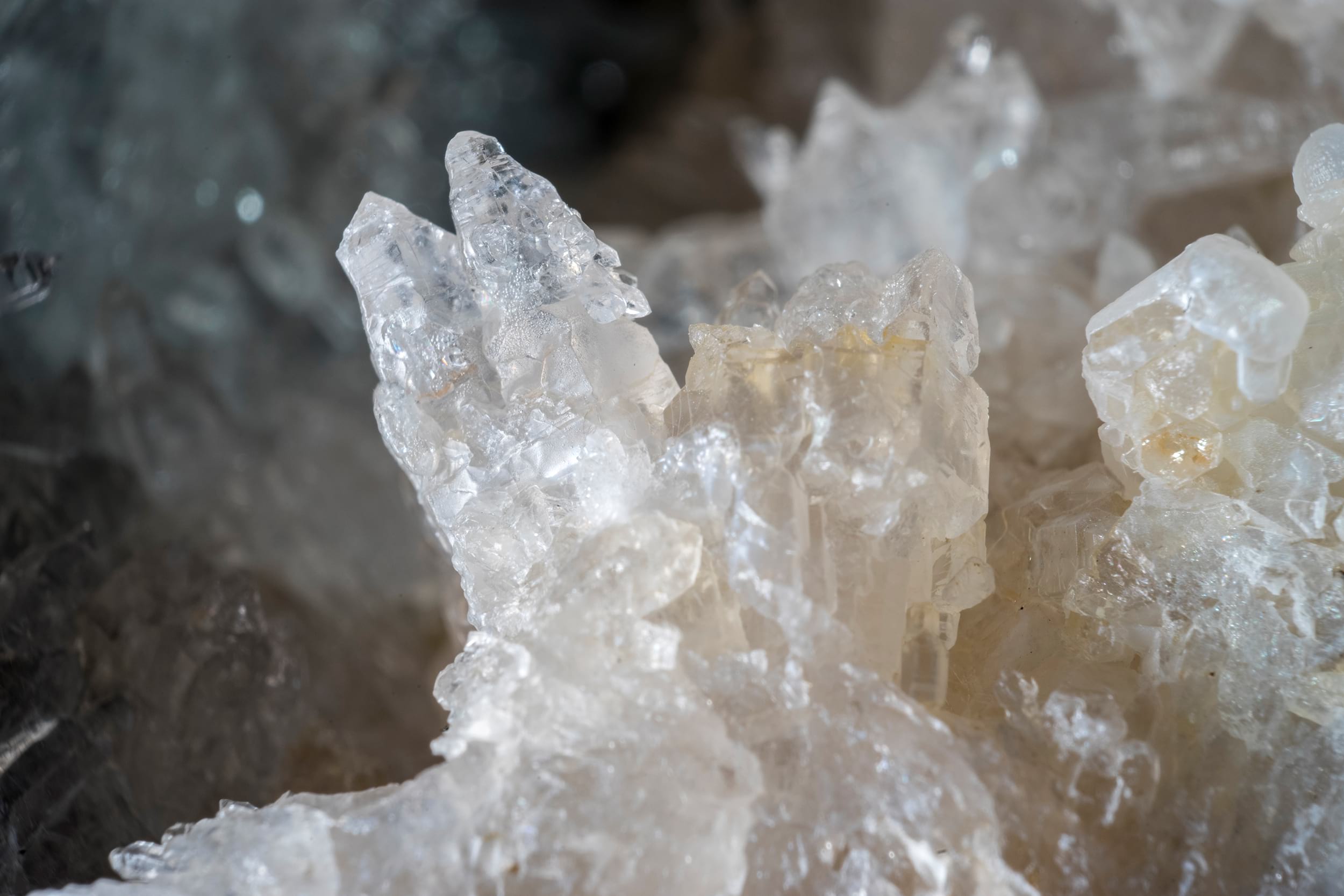
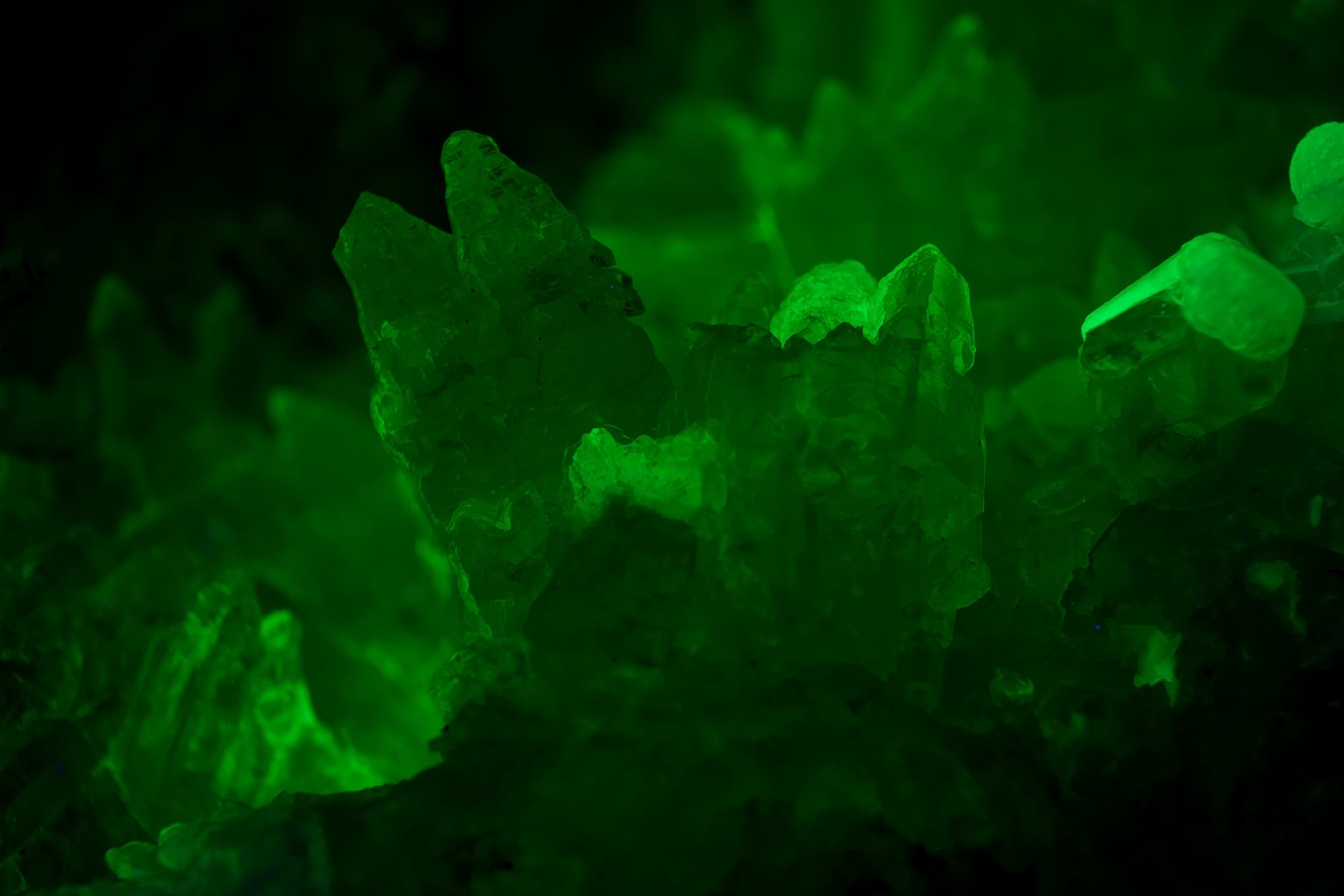
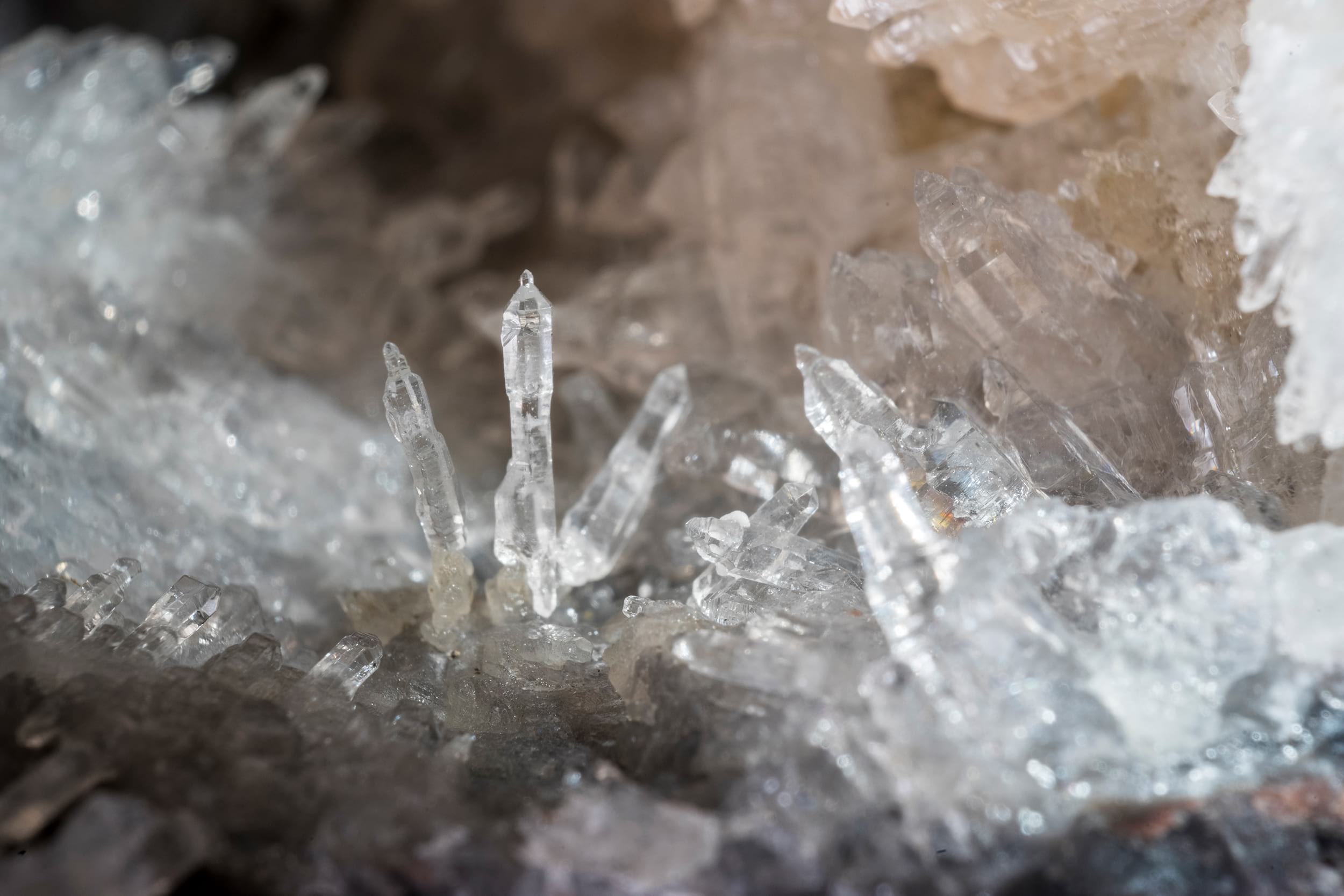
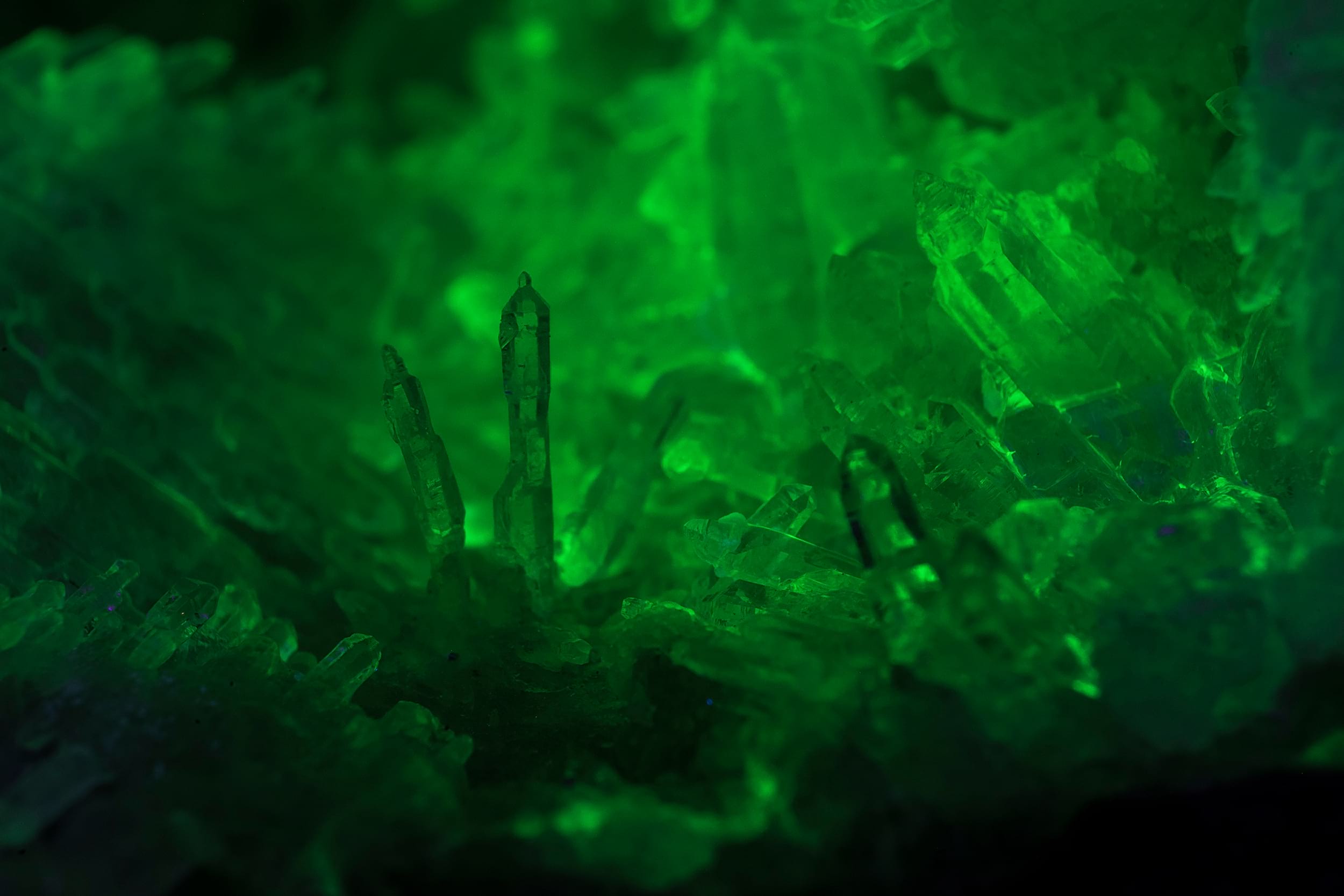
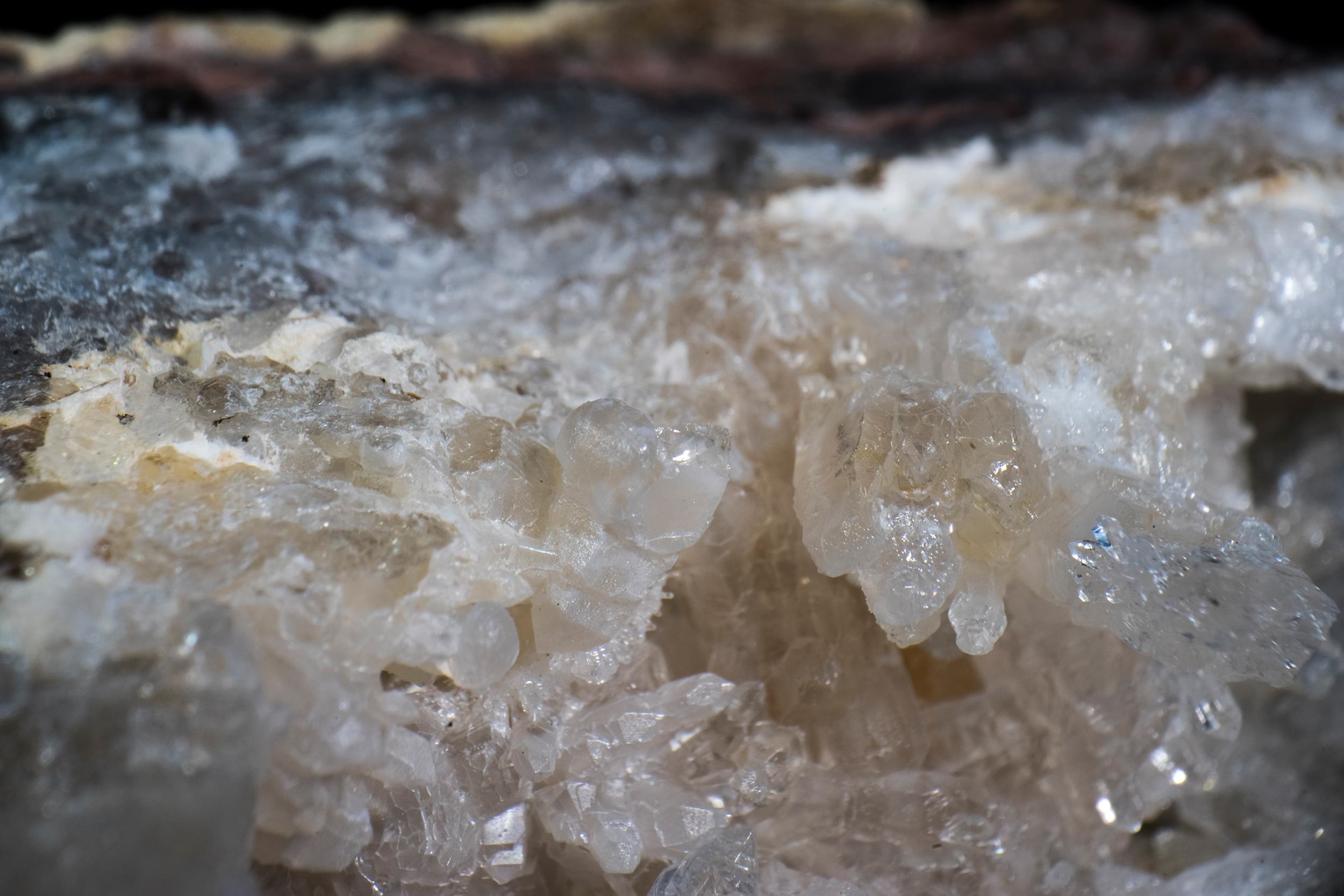
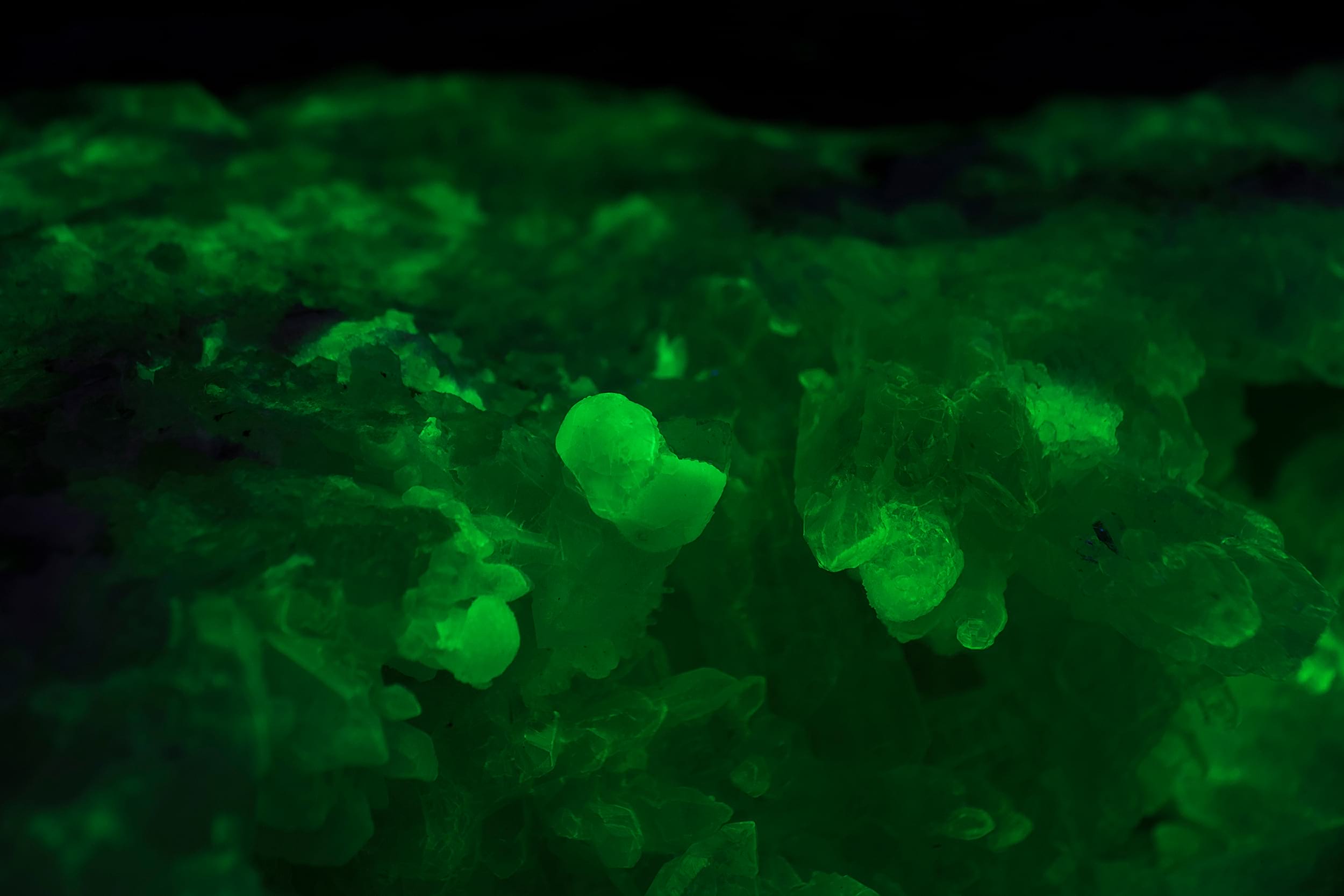

Fluorapatite
This was one of the first specimens that I got in a trade with Graham Fraser. He had just come back from one of his fairly arduous collecting trips throughout Australia and this was one of the pieces that was leftover. Fairly confident he just traded it as a way to get to know me as the trade we made far favored me. I had just given him a small 1-2" piece of Princess Pat willemite that I had collected when I had first found that pile of it.
Locale: Rothsay Beryl Mine, Western Australia. Collected by Graham Fraser Nov 2014
Weight: 11oz | 311g
Dimensions: 2.9 x 1.4 x 3.2 in | 75 x 36 x 81 mm
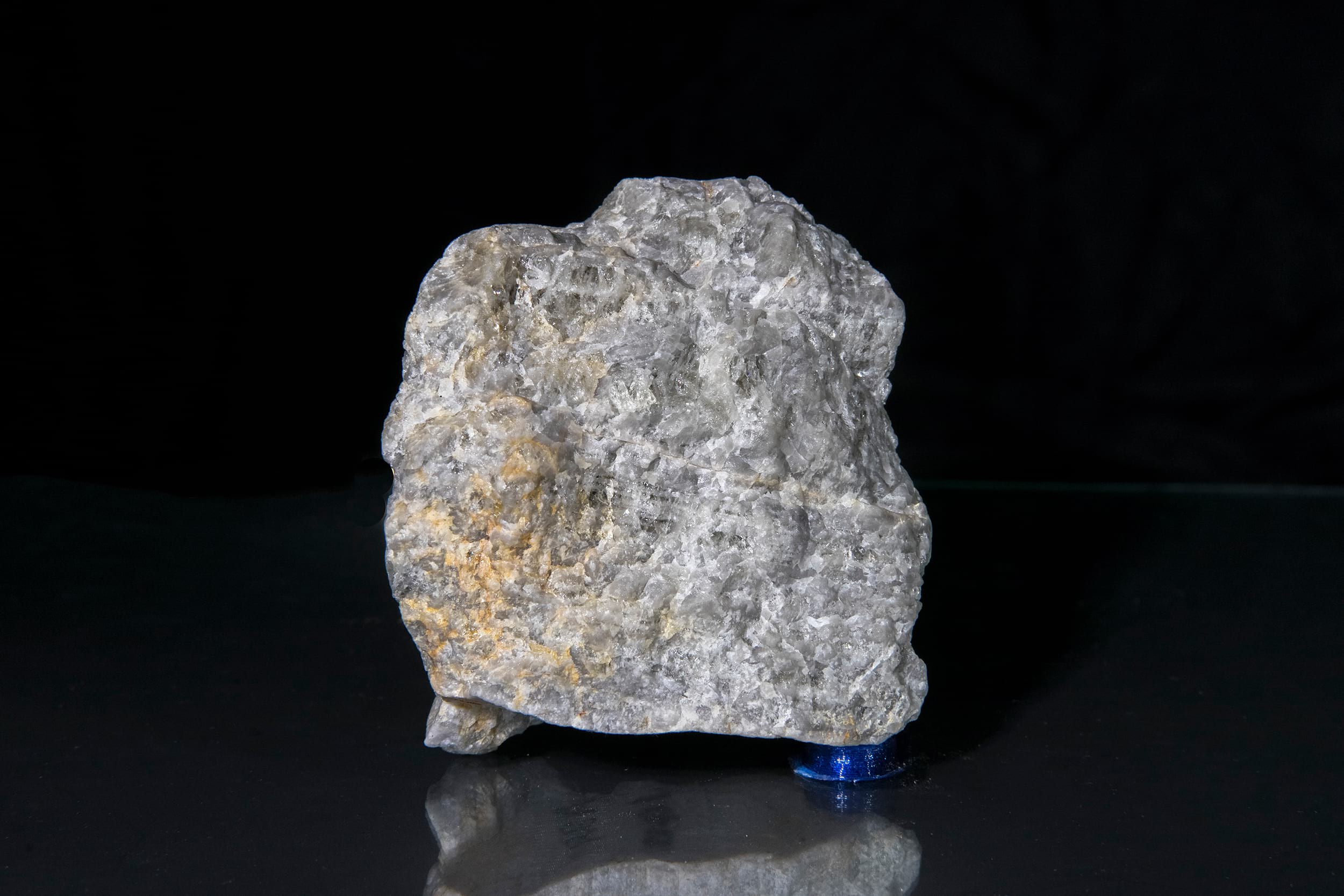
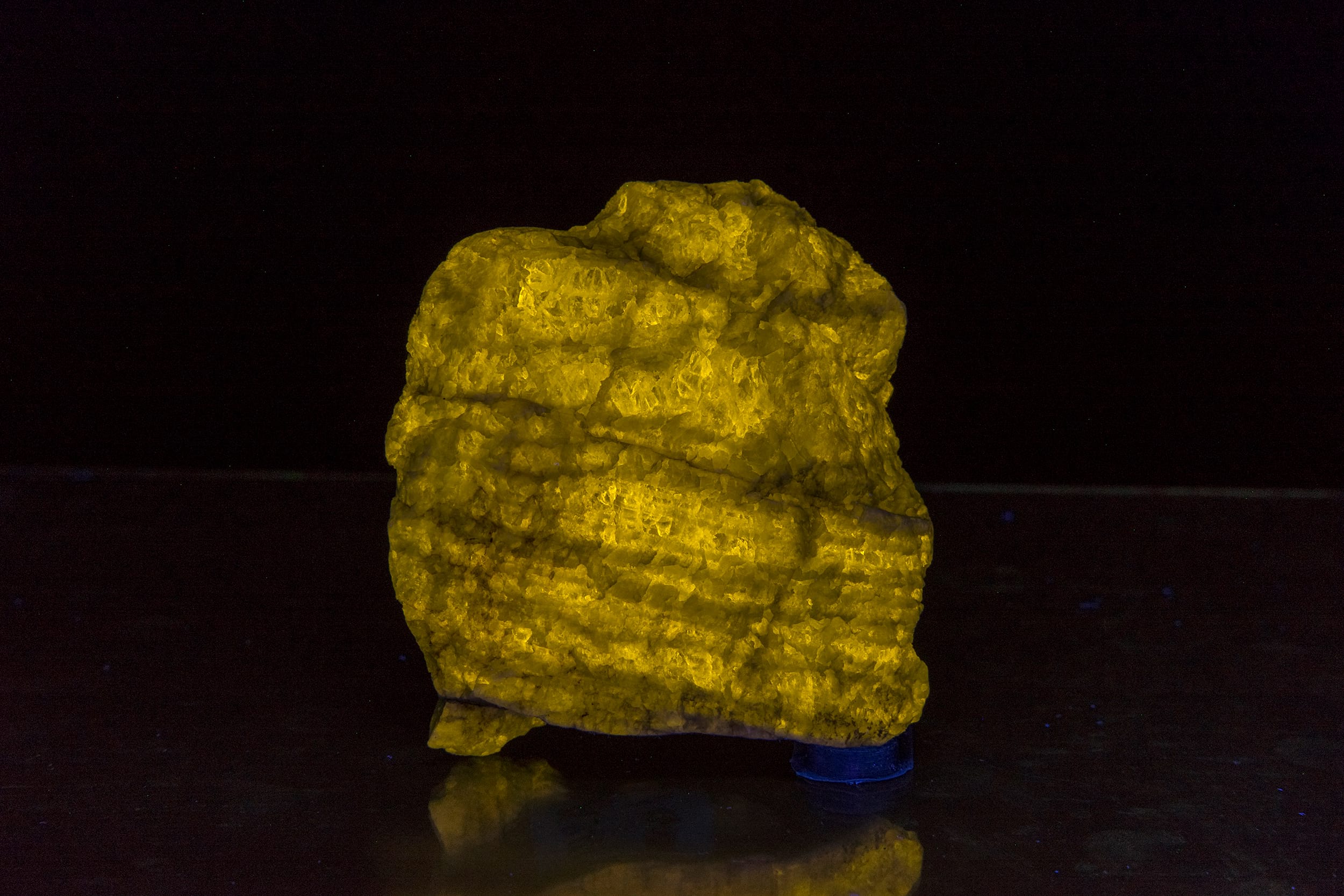
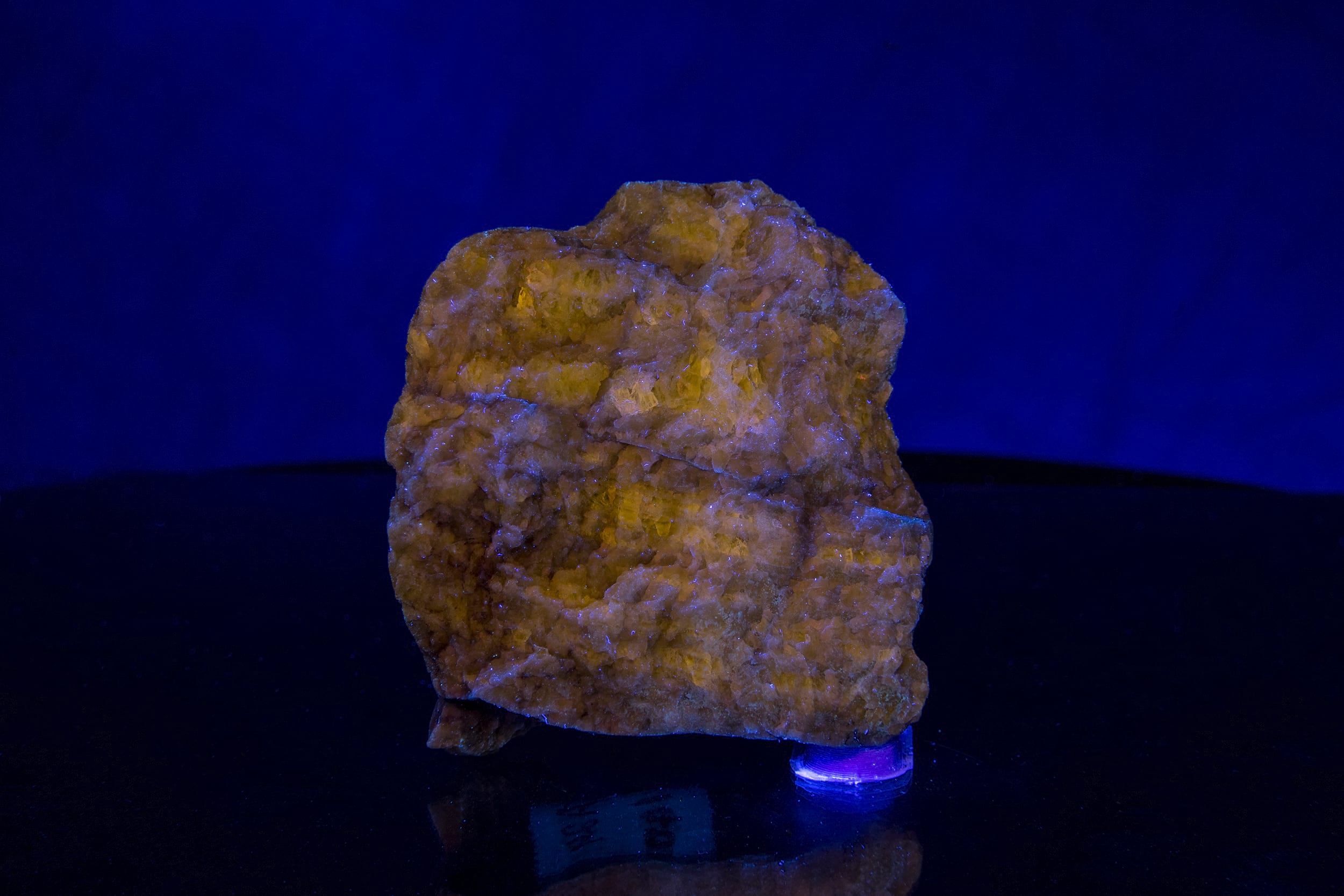
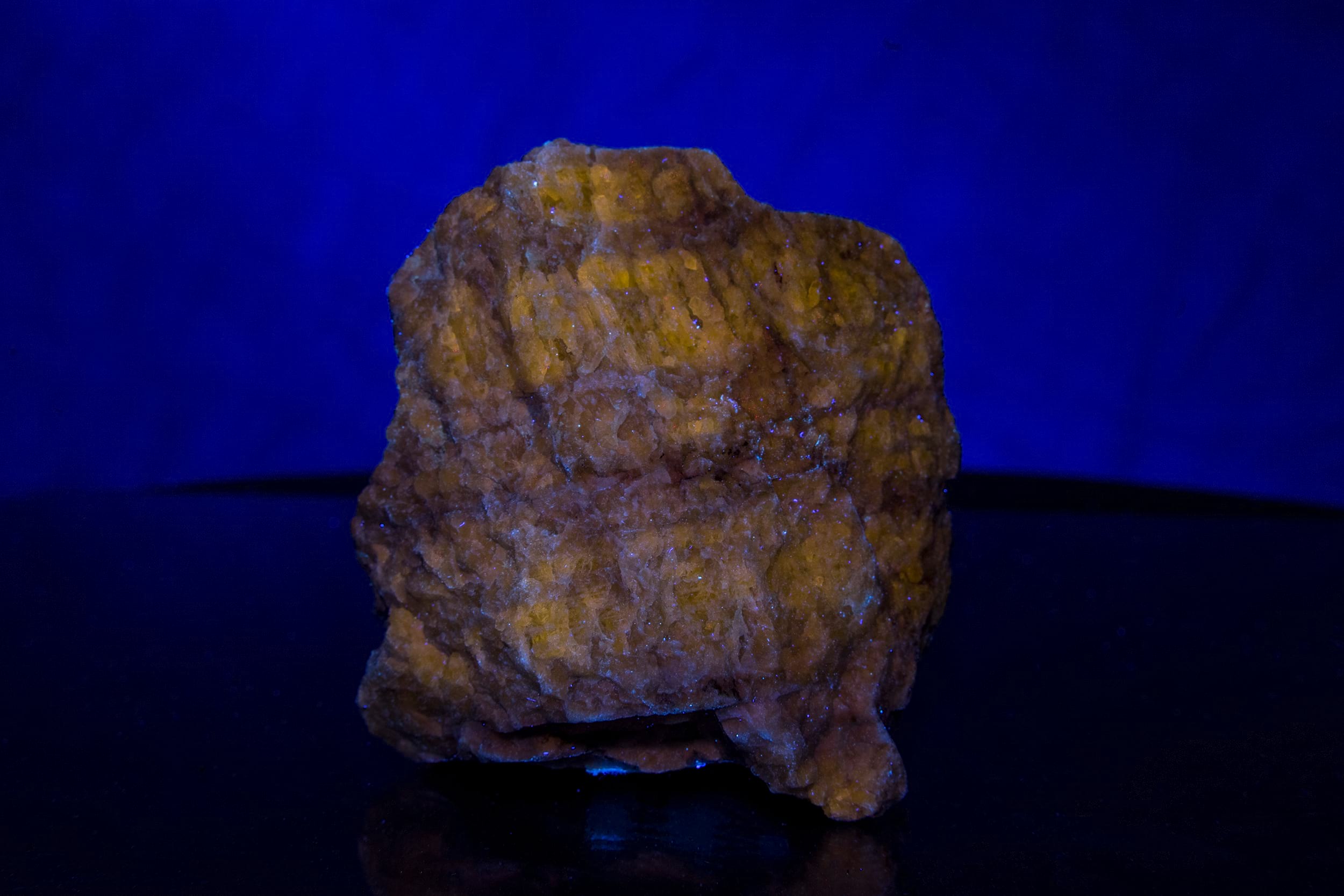
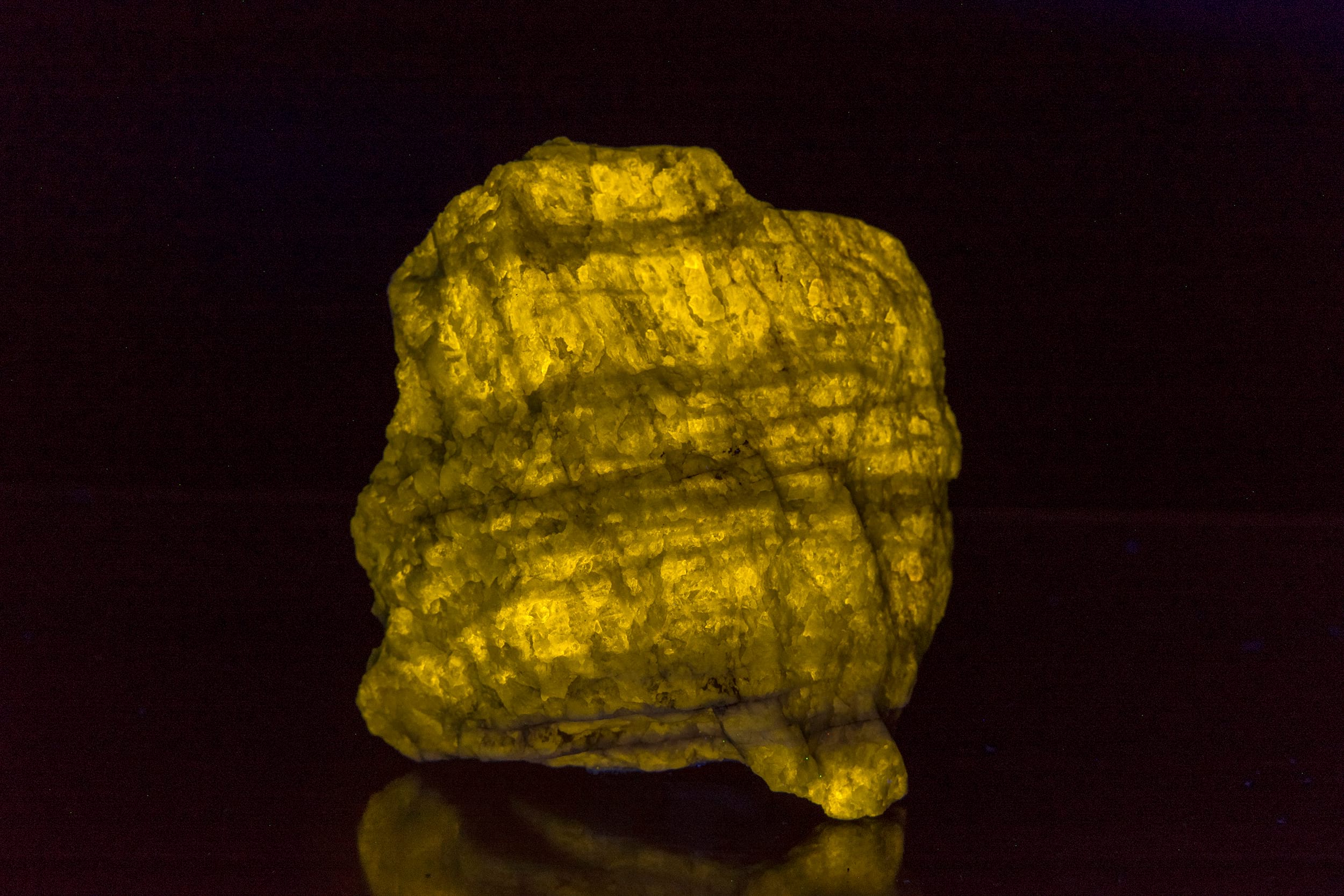

Kratochvílite
This was a rather interesting experience. Purchased by myself in February 2017 after a stint of looking at the International Mineralogist Association's list of fluorescent minerals on fluomin.org . There were quite a lot of minerals that I had never even heard of and unfortunately most weren't being sold on eBay at the time. However, one of the ones that I came across was kratochvílite from a Czech seller. He also was able to take decent UV photos of his specimens. Enough to show me that I wouldn't get skunked on a non or dimly fluorescent variety of the mineral as often happens in the hobby. It was a match made in heaven for me. It's hard to emphasize how hard it is for dealers in a country outside of the US to get good fluorescent photos simply because all of the "name brands" in this hobby are based in the US. With that information in tow I asked him about several minerals that were on the IMA list. His prices were very reasonable so I just asked him to show me the best of the best of those species. This is what he showed me. An absolute best-in-class specimen of kratochvílite that's better than anything I can find documented on the internet. Came from his personal collection. It is both the richest in terms of overall saturation of kratochvílite and has multiple large pockets of pristine crystals.
Locale: Kladno mine, Kladno, Czech Republic
Weight: 325g
Dimensions: 114 x 60 x 56 mm
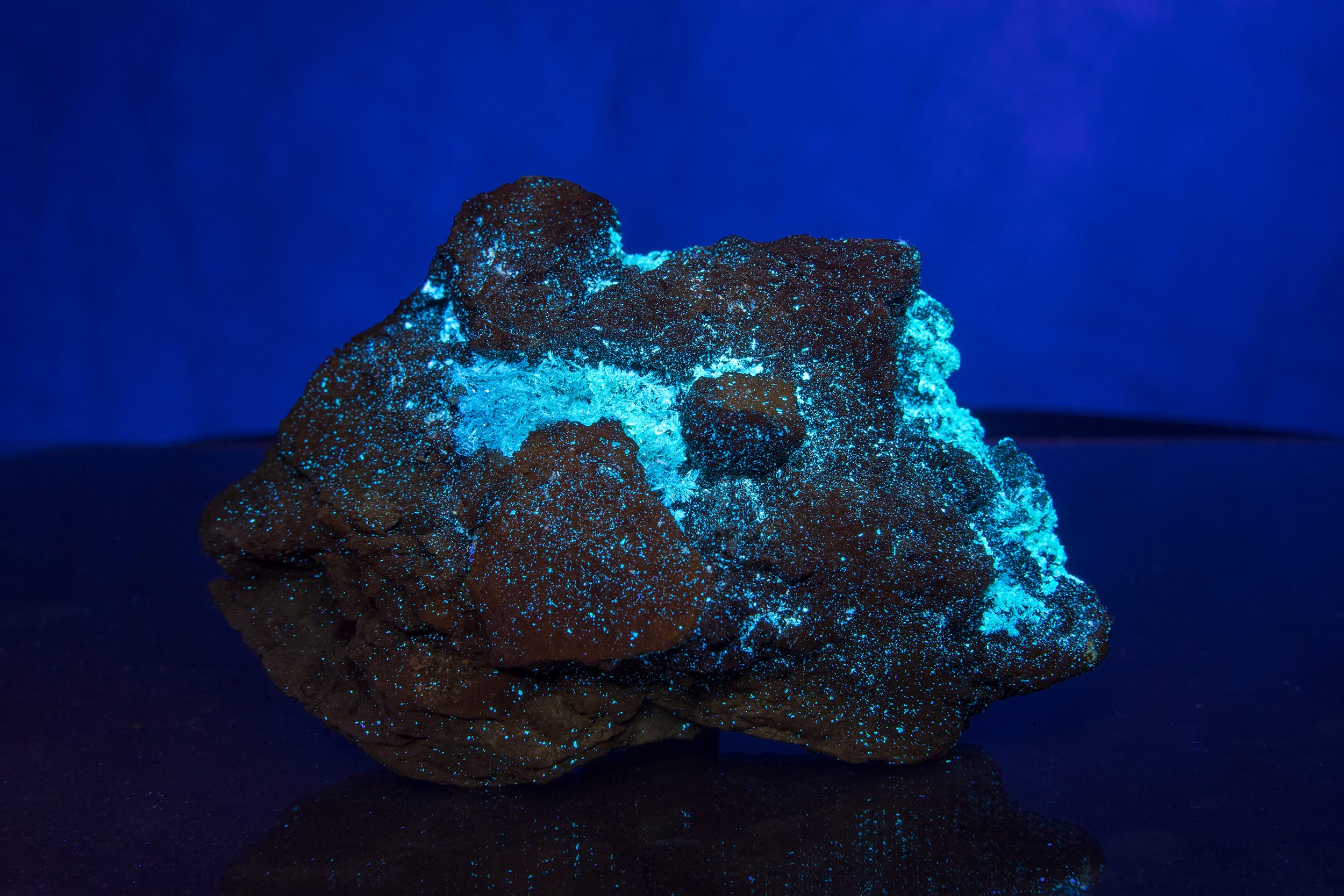
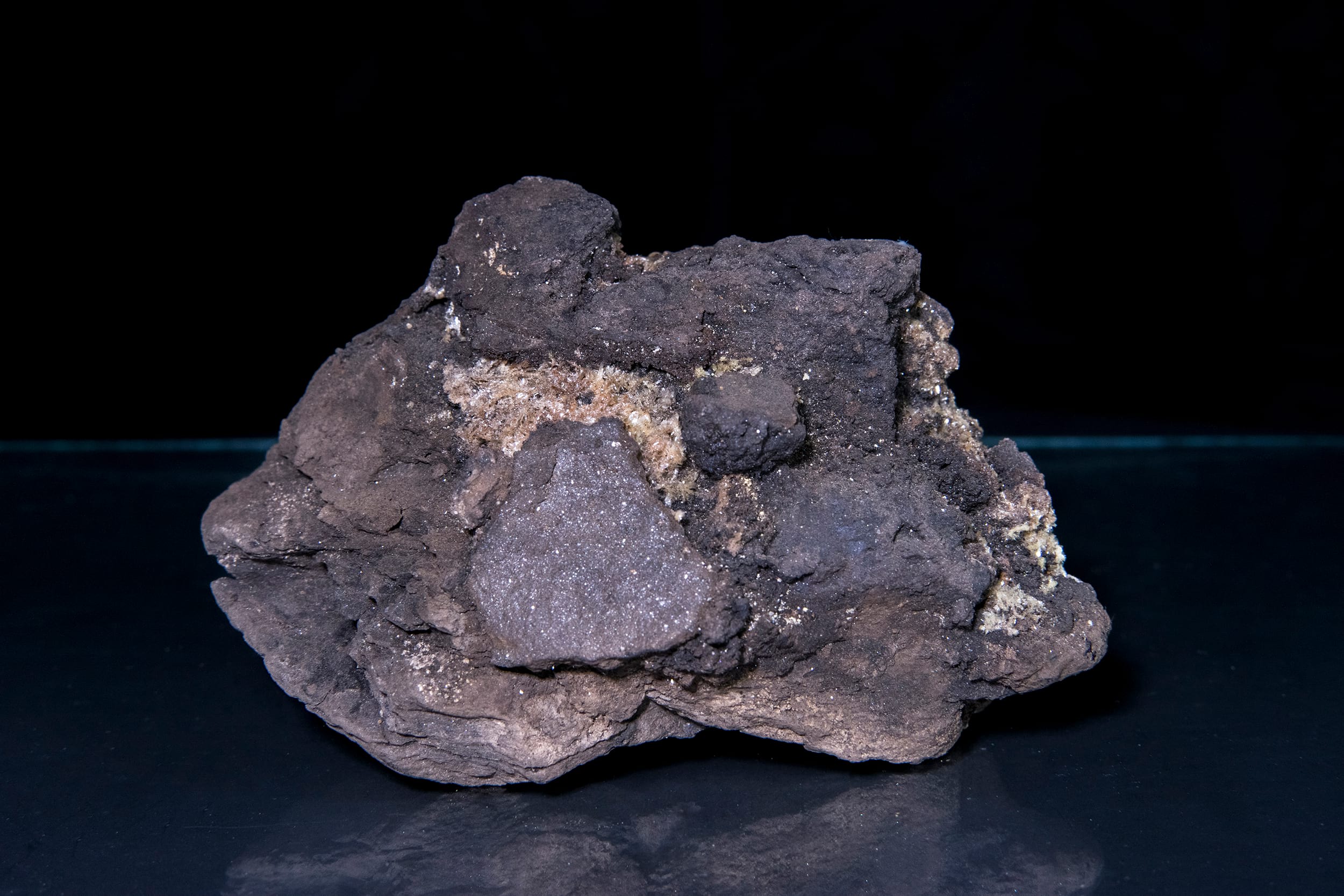



Fluorapatite and Unknown
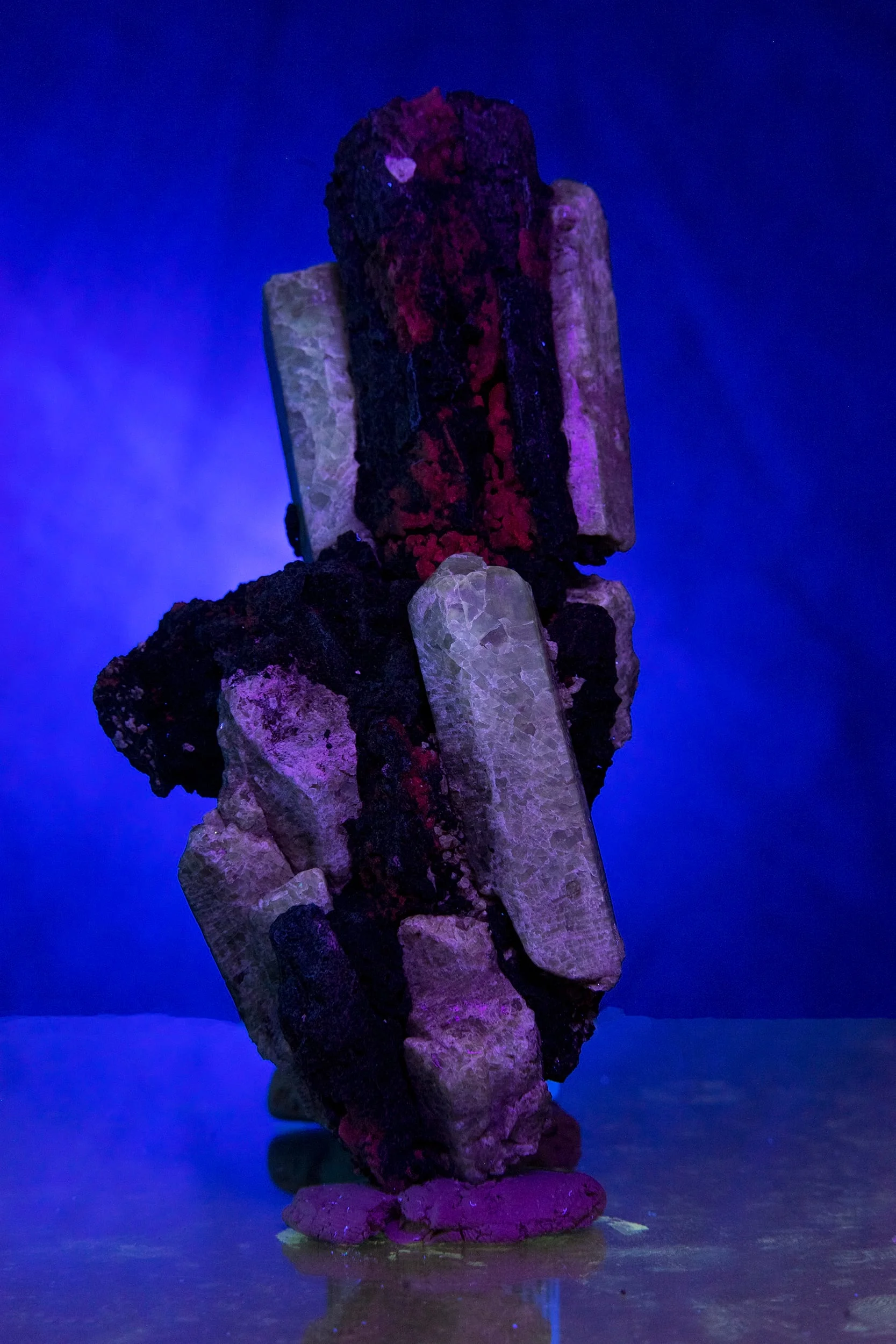
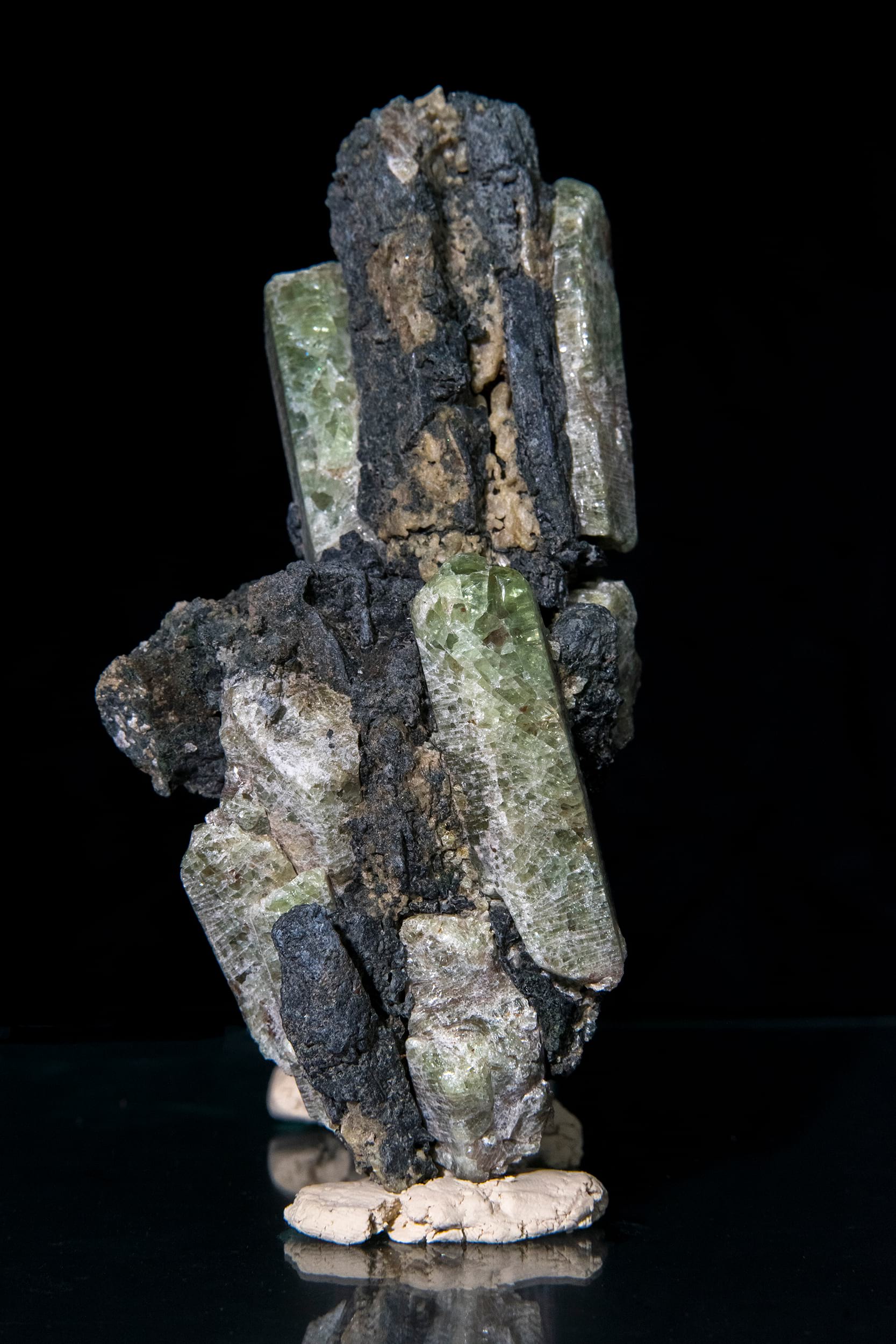
This is a wonderful fluorapatite specimen gifted to me by tess99991 from YouTube. It makes a wonderful daylight specimen as the fluorapatites are aesthetic and fairly well terminated. Unfortunately this isn't the best fluorescent specimen as the fluorapatite is a bit dim with the unknown red in the middle being the brightest fluorescer. Tess99991's channel features wonderful videos of collecting trips from various spots in the Bancroft region where he collects specimens like this one.
His channel can be found at: https://www.youtube.com/user/tess99991
Locale: Schickler Mine, Wilberforce, Ontario, Canada
Weight: 343g
Dimensions: 144 x 71 x 36 mm

Scheelite and Hyalite
Collected by myself in December 2016. This is a wonderfully bright specimen of fluorescent white scheelite and green hyalite. This was somewhat of an exploratory find as I went outside the bounds of where collectors normally find their 3-5 color mineral specimens. Along the road to the mine there are various discard piles of waste rock from the mining process. Interestingly this material is dumped for the more pure scheelite that can be discerned by a fluorescent blue coloring. As there becomes more molybdenum in the scheelite it turns this whitish color eventually becoming yellow by replacing the tungsten and turning into powellite.
Locale: Princess Pat Mine, Adelanto, CA
Weight: 198g
Dimensions: 96 x 46 x 65 mm

Calcite with Quartz
Update 4/8/25 - After talks with Peter Megaw, a subject matter expert on many Mexican locales, I believe this piece to be from the El Carmen Mine in the West Camp. According to Peter, it was mined in the early 90s.
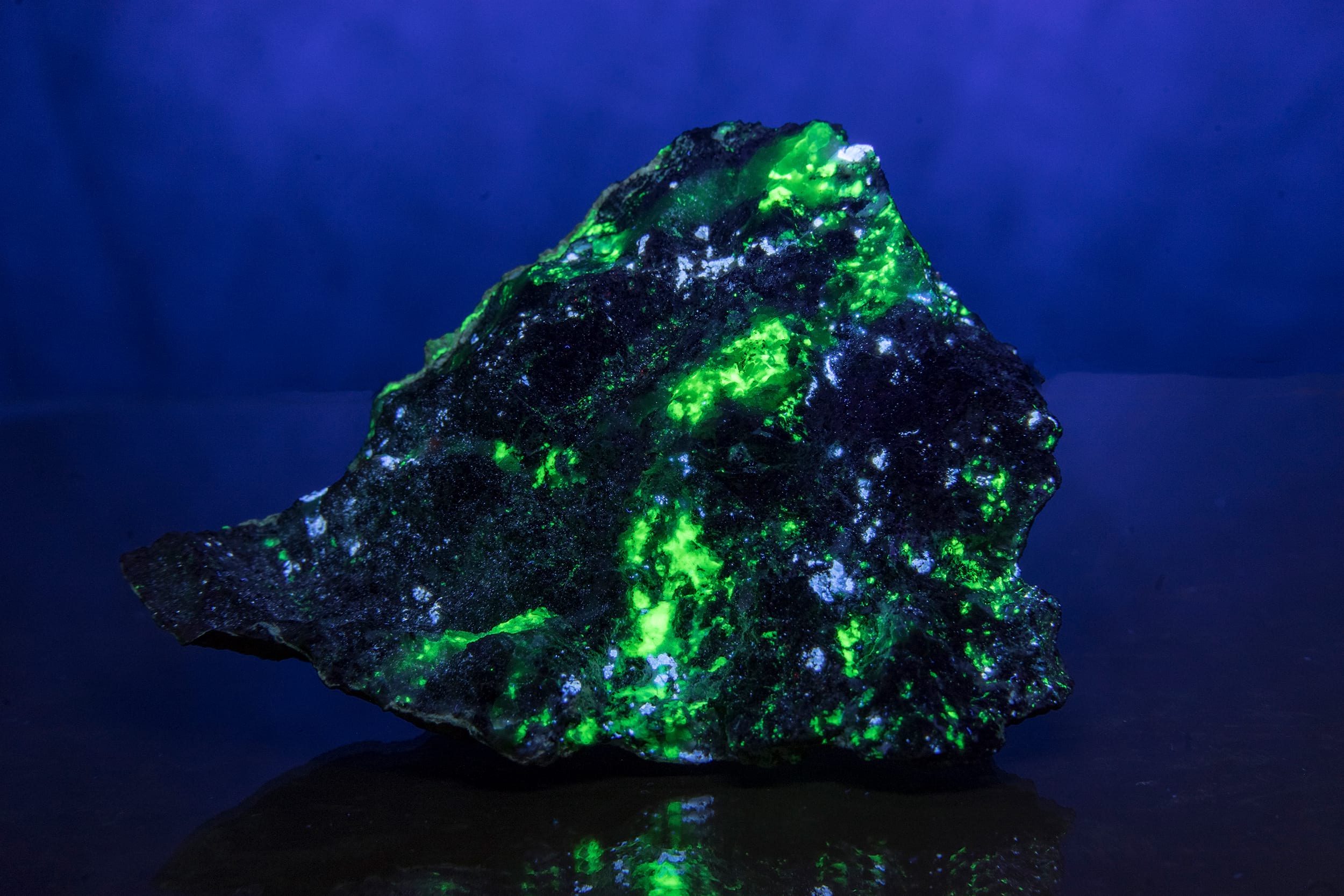
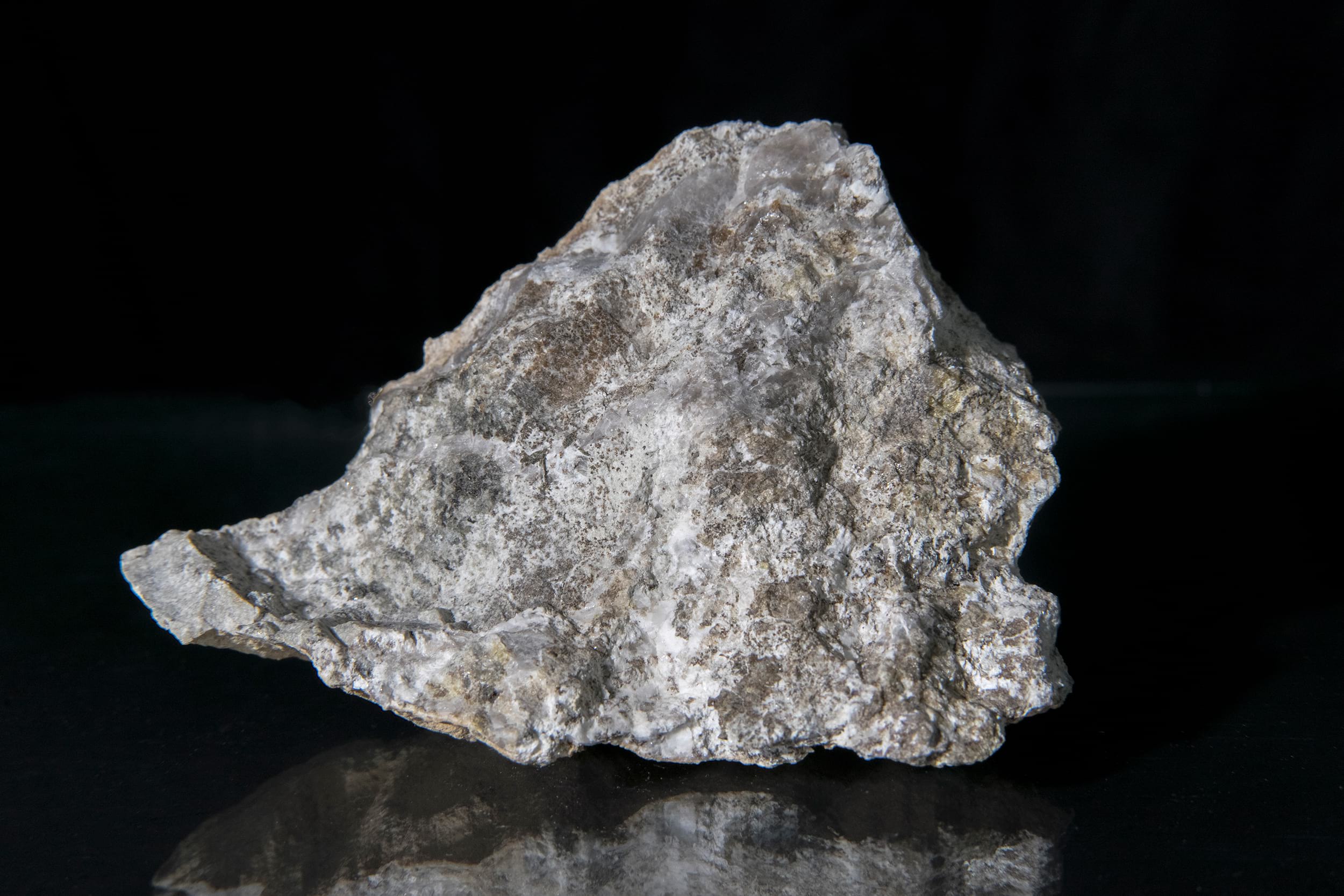
Found at a local rock shop by myself. As usual the owners had no idea that this specimen fluoresced. All to my benefit! This is an absolutely gorgeous Halloween combination of fluorescent orange calcite and green quartz. I actually didn't notice that there was fluorescent orange when I had first bought it. I just knew that the quartz was fluorescing - a rarity in the hobby. Fluorescence is primarily shortwave but some of the quartz crystals fluoresce orange under longwave! Also of note is that there is a small outcrop of micro fluorite crystals (approximately 1mm in size) that fluoresce red, another rarity. The combination of the two makes this an exceptionally special specimen in my books.
Locale: El Carmen Mine, West Camp, Mexico
Weight: 175g
Dimensions: 98 x 69 x 36 mm
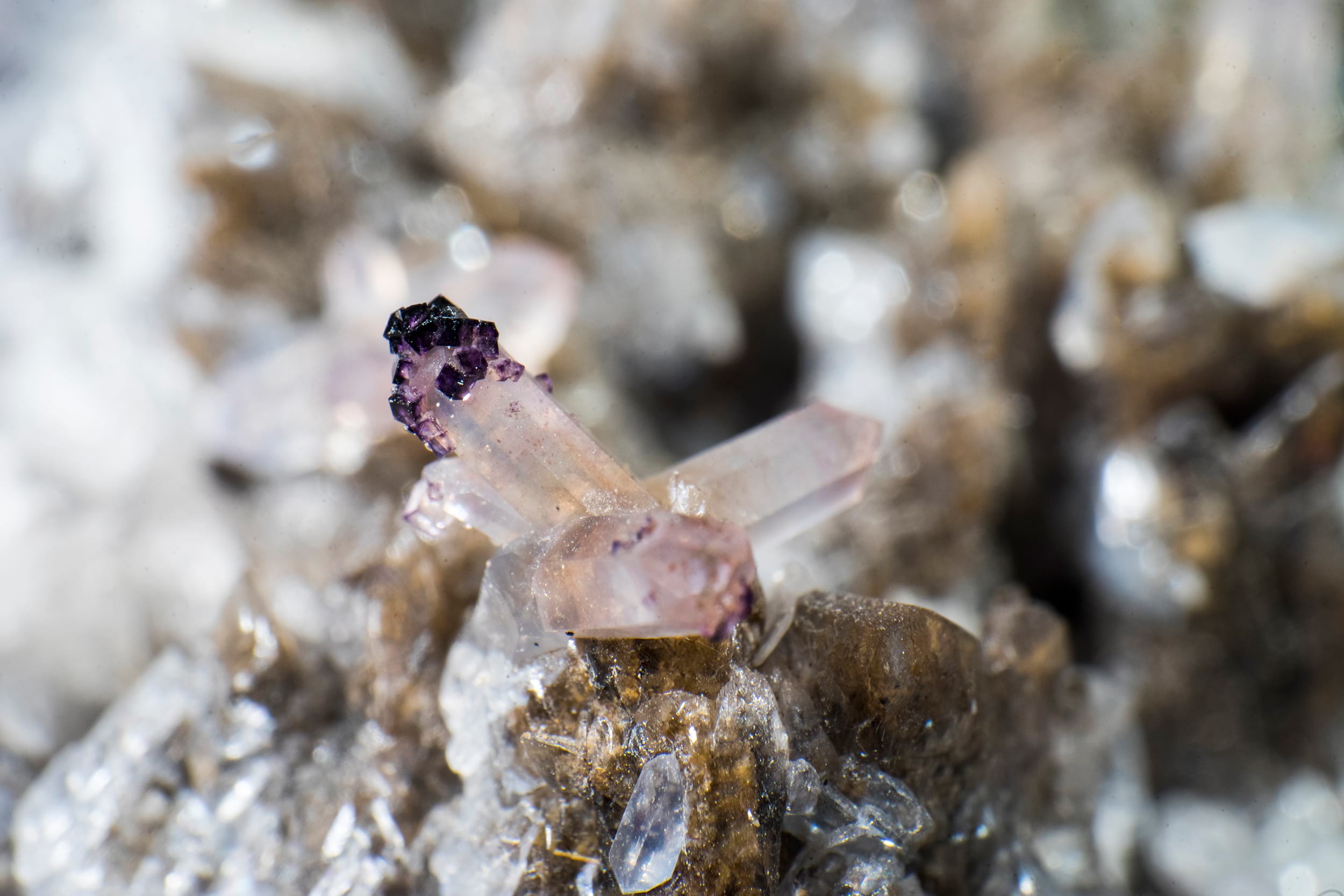
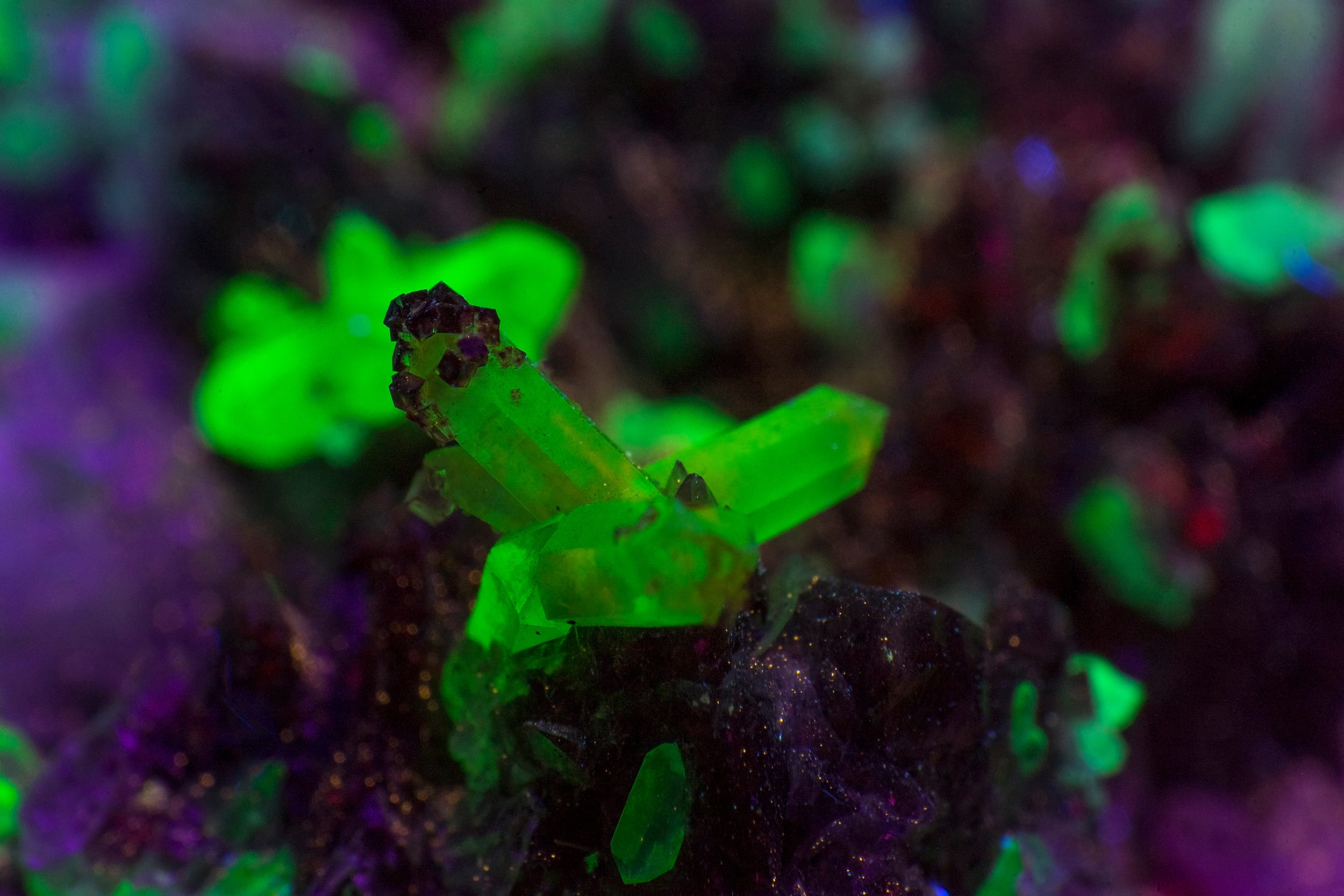
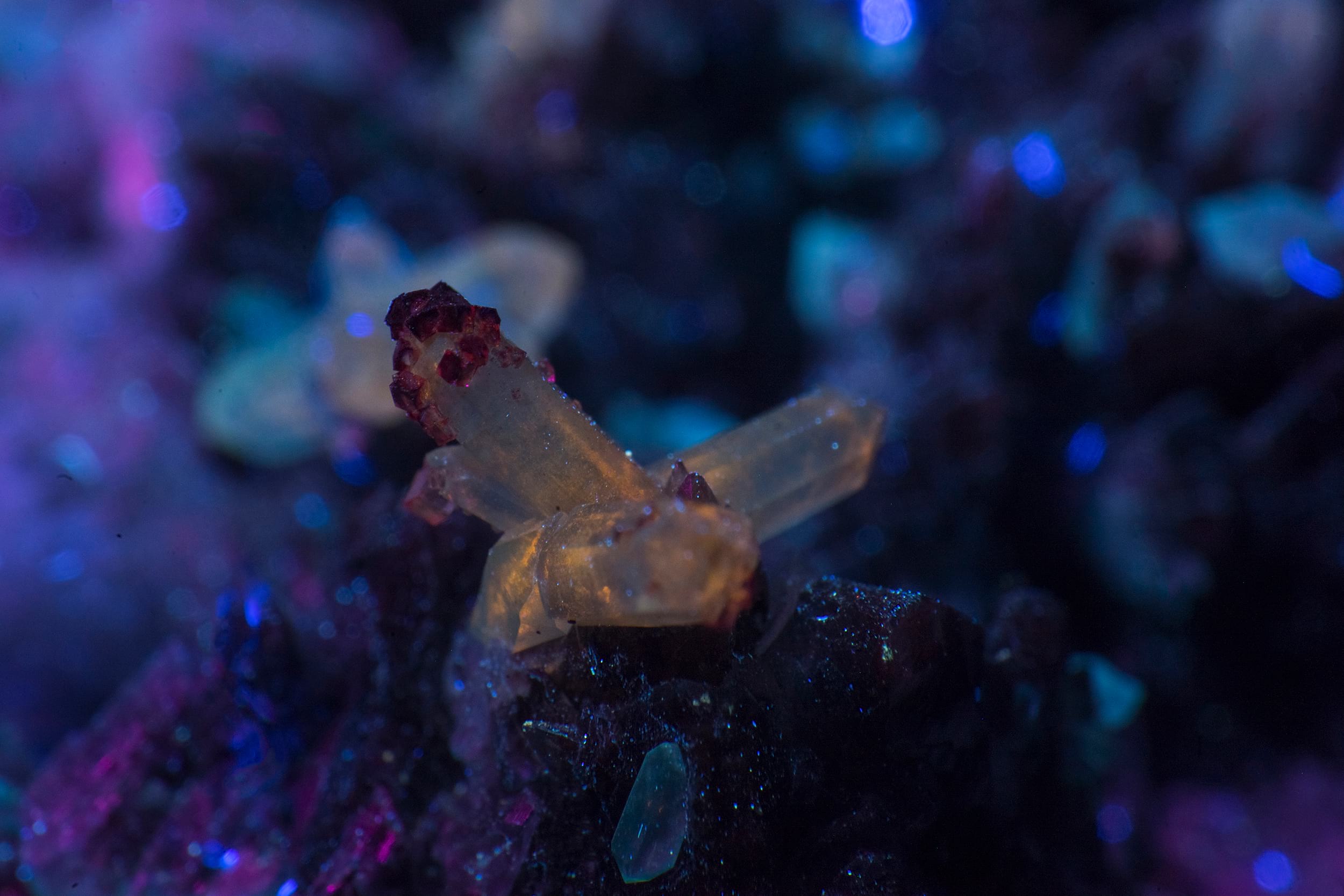
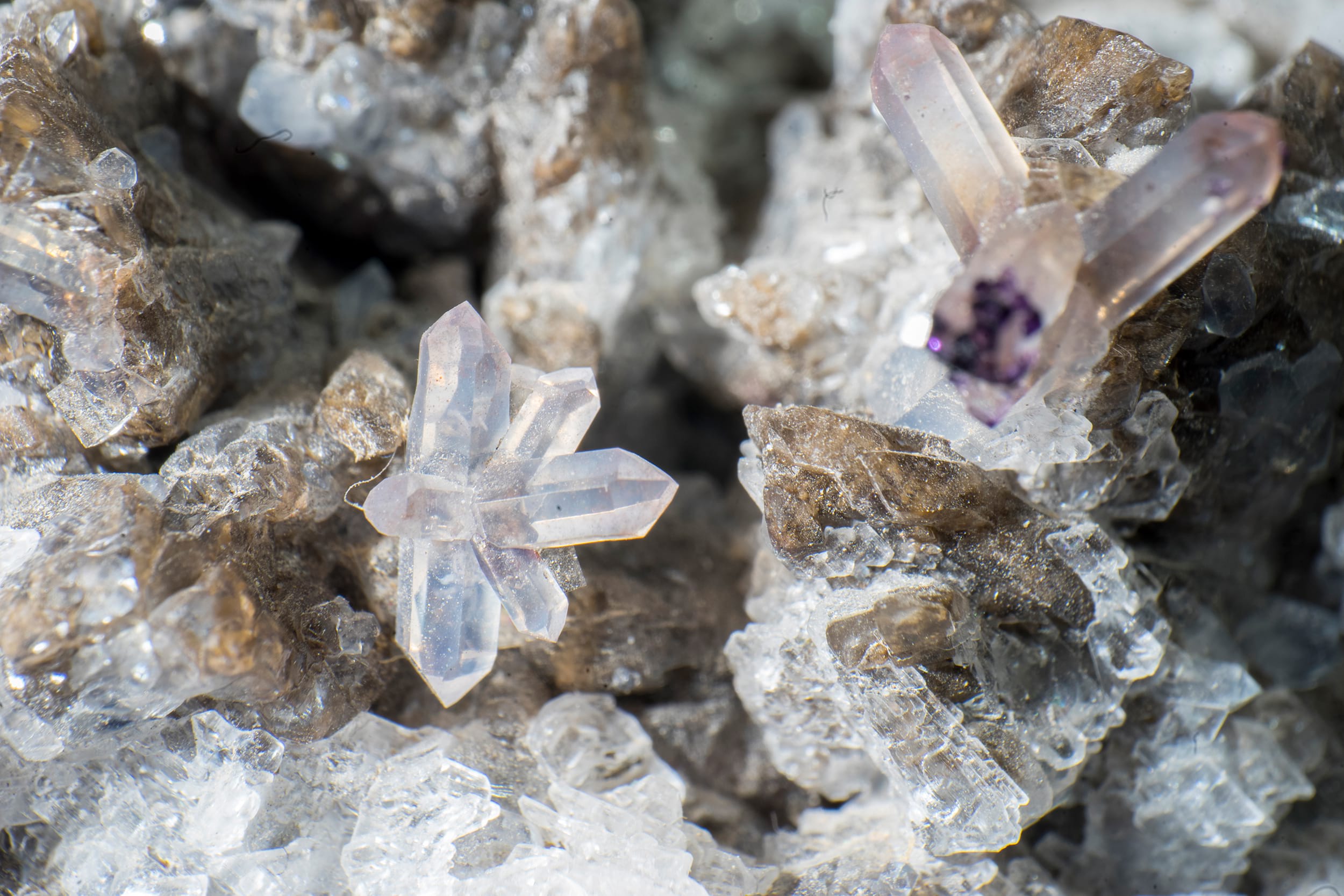
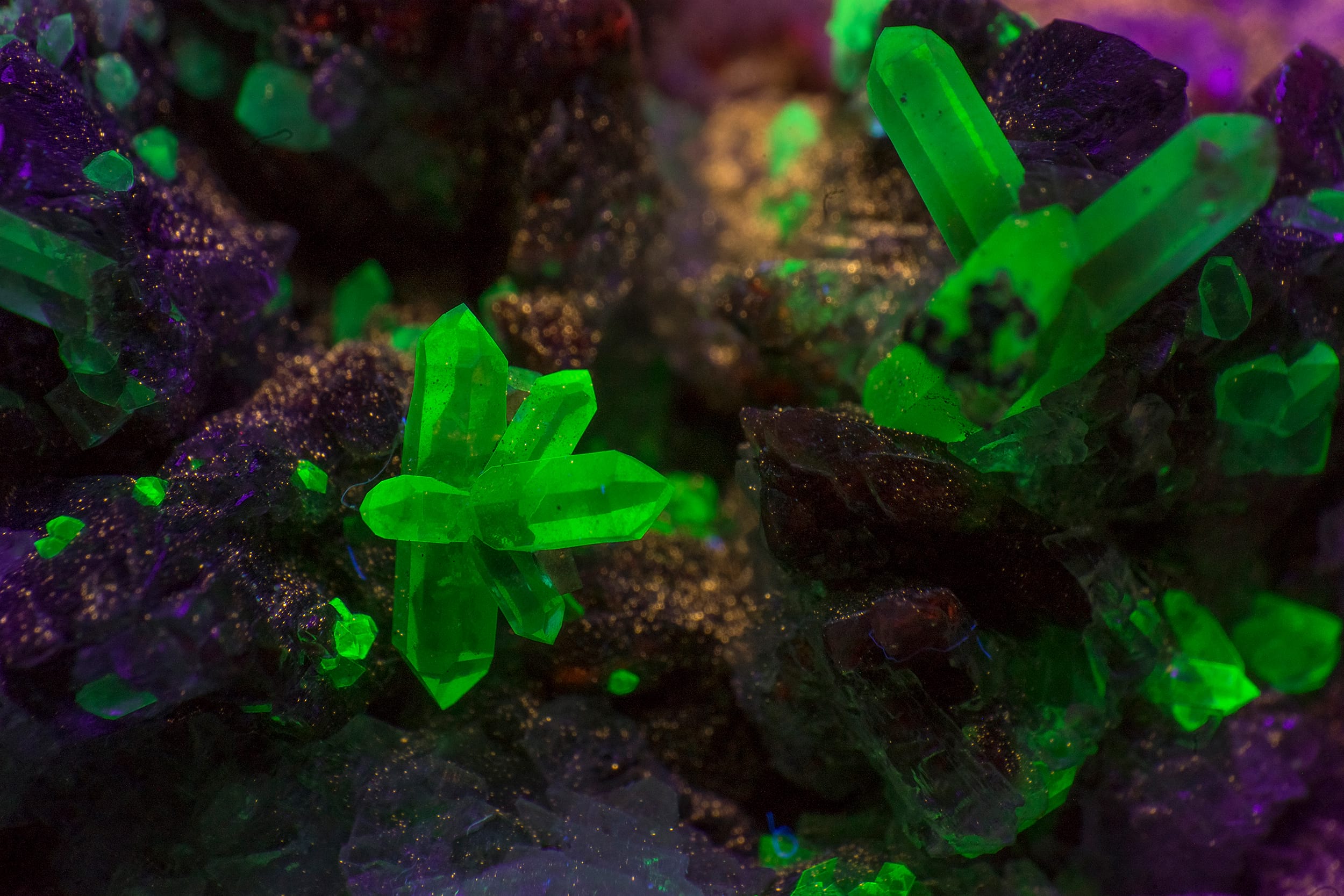

Diopside, Dolomite, and Calcite
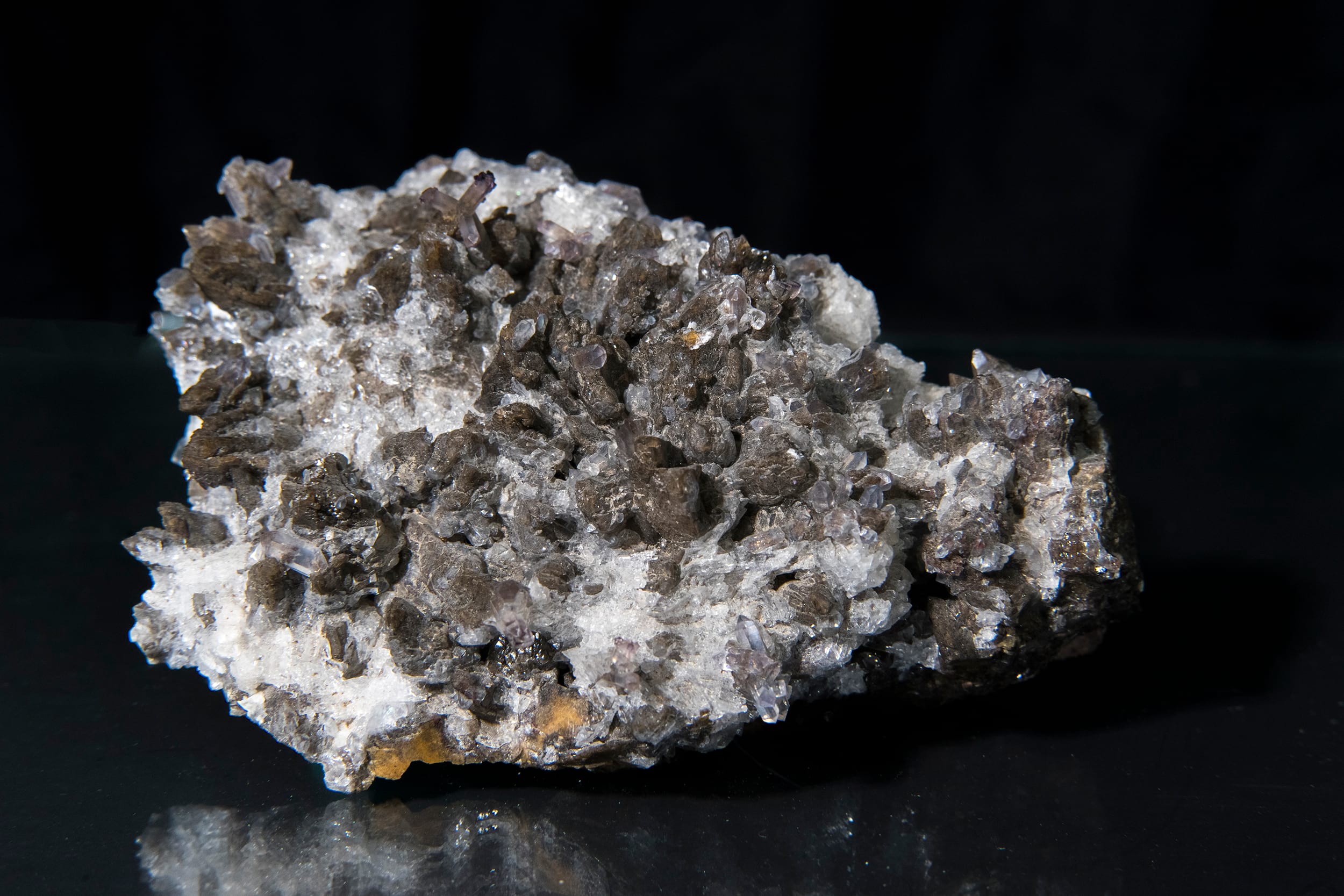
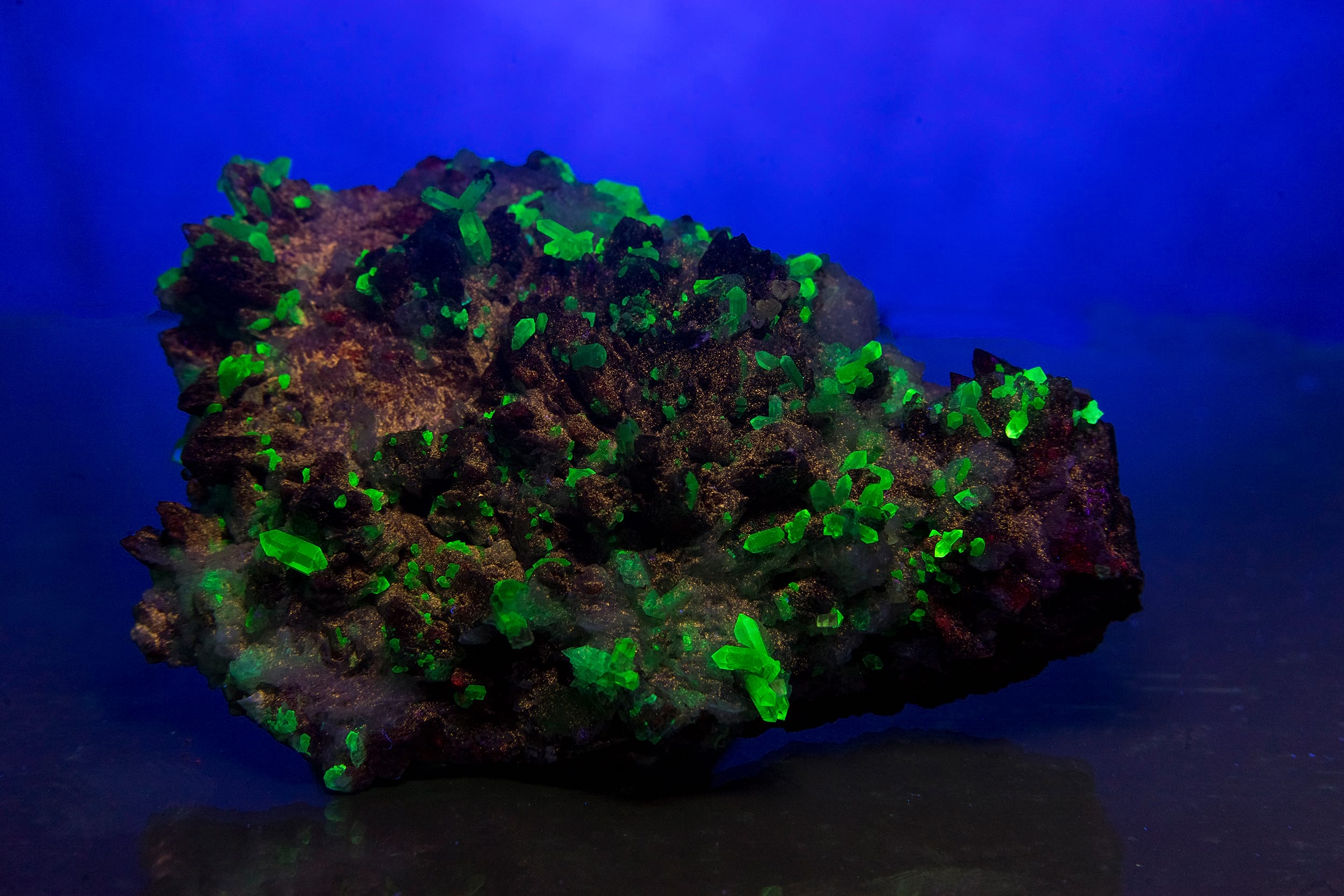
Diopside (fl blue), dolomite (fl yellow), and calcite (fl red) from the Red Raven Mine. This is one of my best pieces from there and was personally collected by myself in December 2016. This was quite an exhilarating trip starting off with some collection of willemite from the Princess Pat Mine with Dave Stuck, myself, and another new SoCal FMS member. Unfortunately FMS President Dave Stuck had gotten a flat tire during his time at the Princess Pat and had to get his car back the next day! As a result he did not join me at the Red Raven for the hour and a half I spent swinging at a boulder in order to get a piece to break off. Then it was a matter of getting as many fresh faces as possible to get this magnificent piece. Absolutely worth the effort and would do again! All of these minerals are best guesses by local FMS club members and have not been properly identified. Fluorescence activated with 253.7nm SW. Little to no response under LW.
Locale: Red Raven Mine, Adelanto, CA
Weight: 269g
Dimensions: 95 x 56 x 52 mm
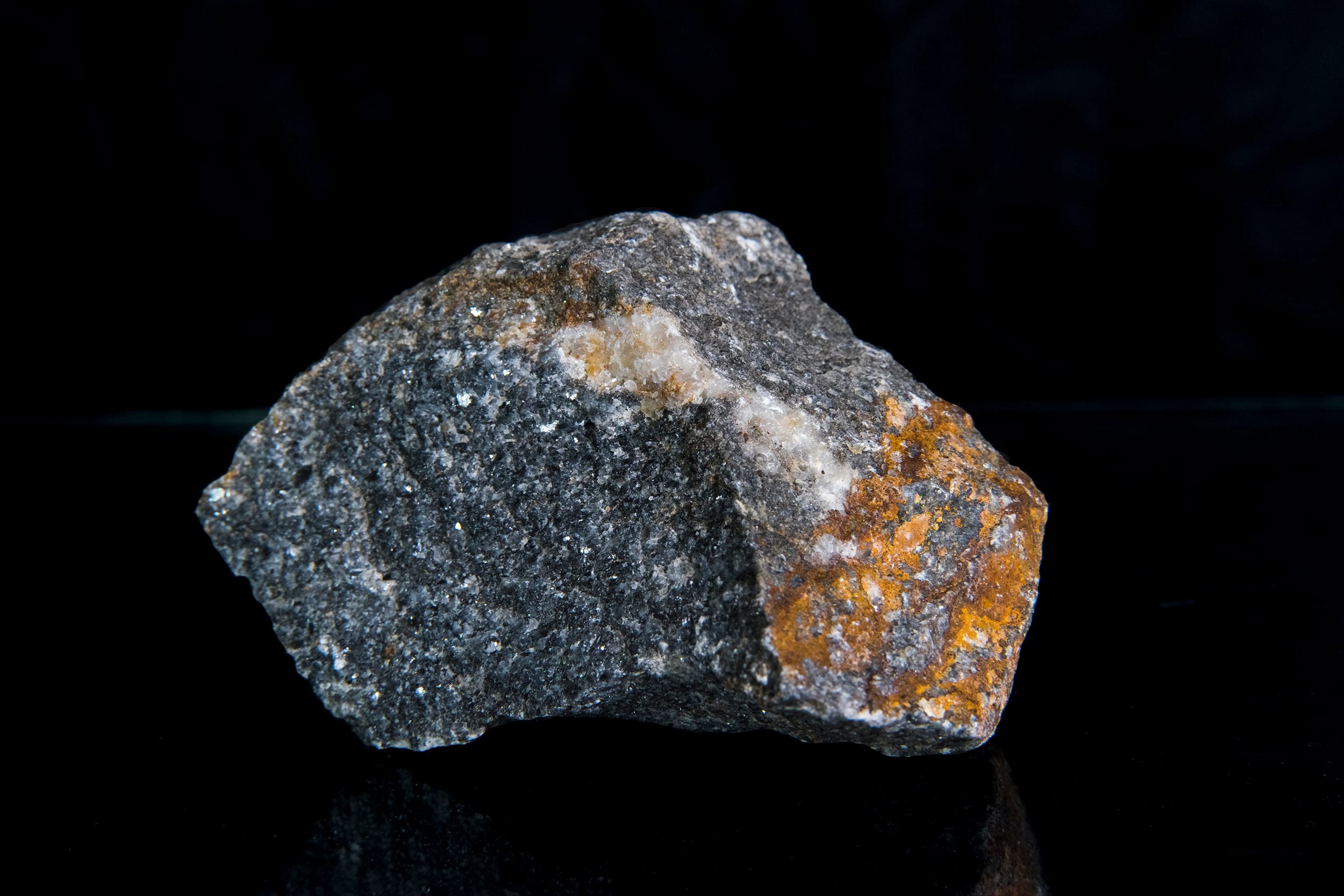
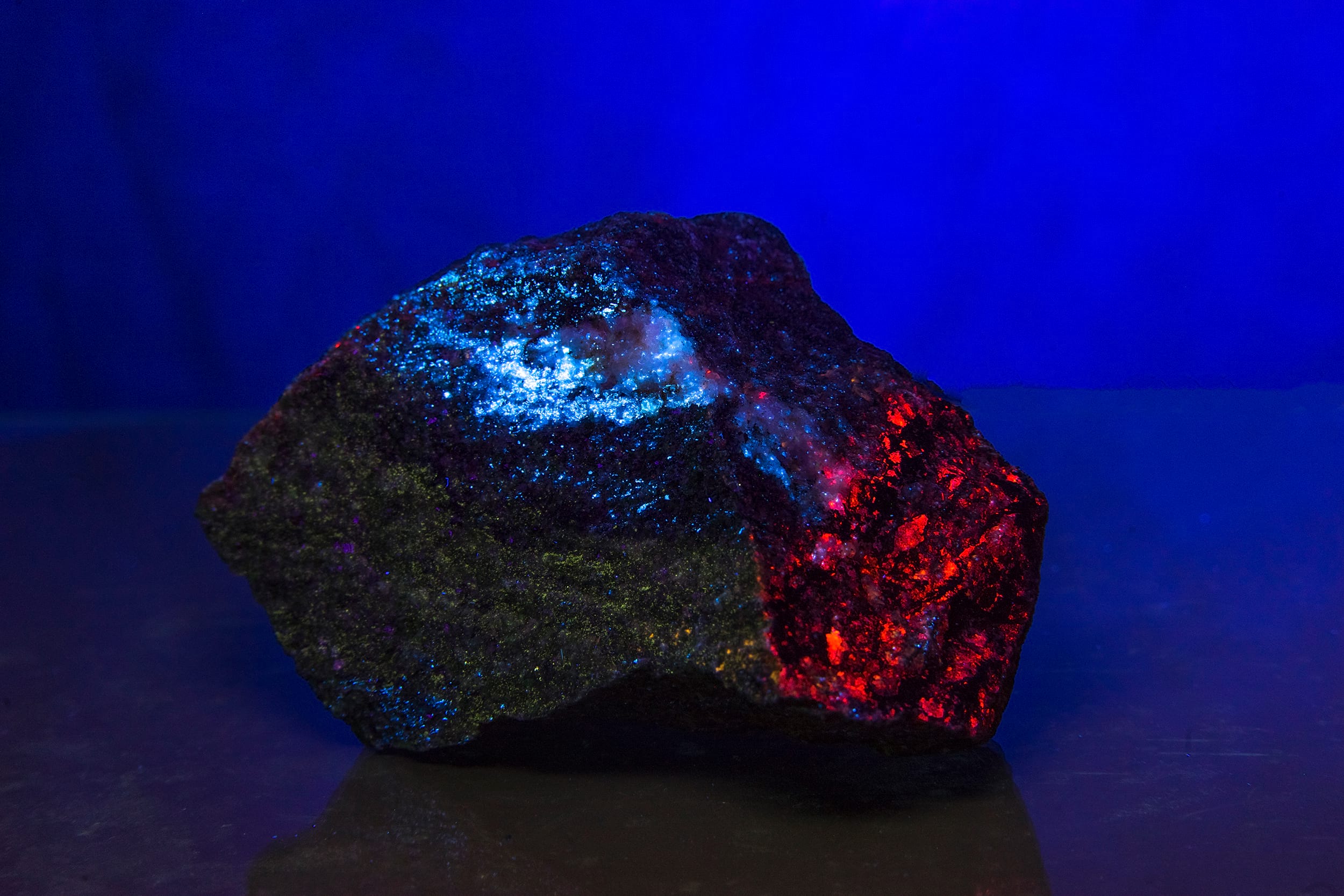
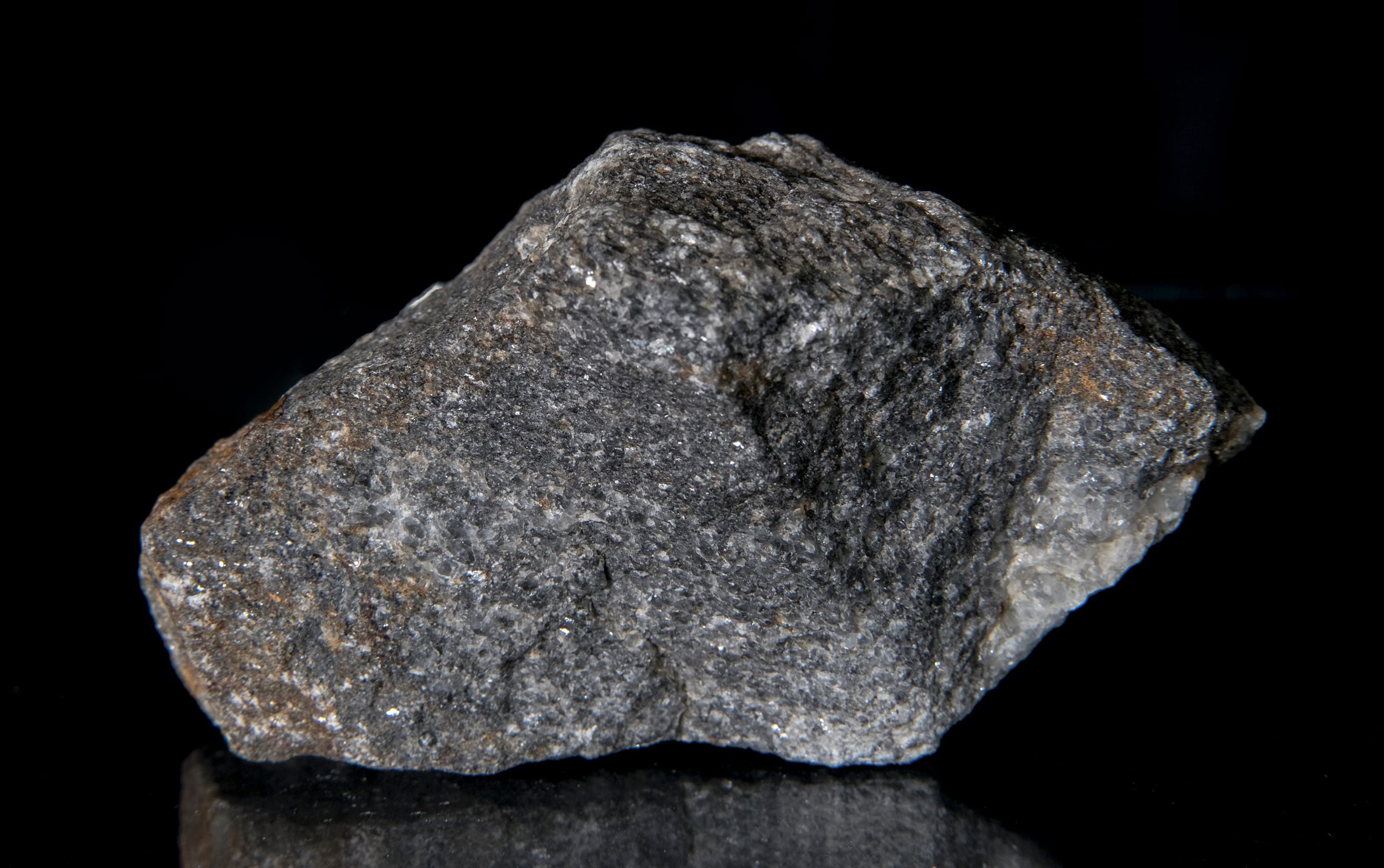
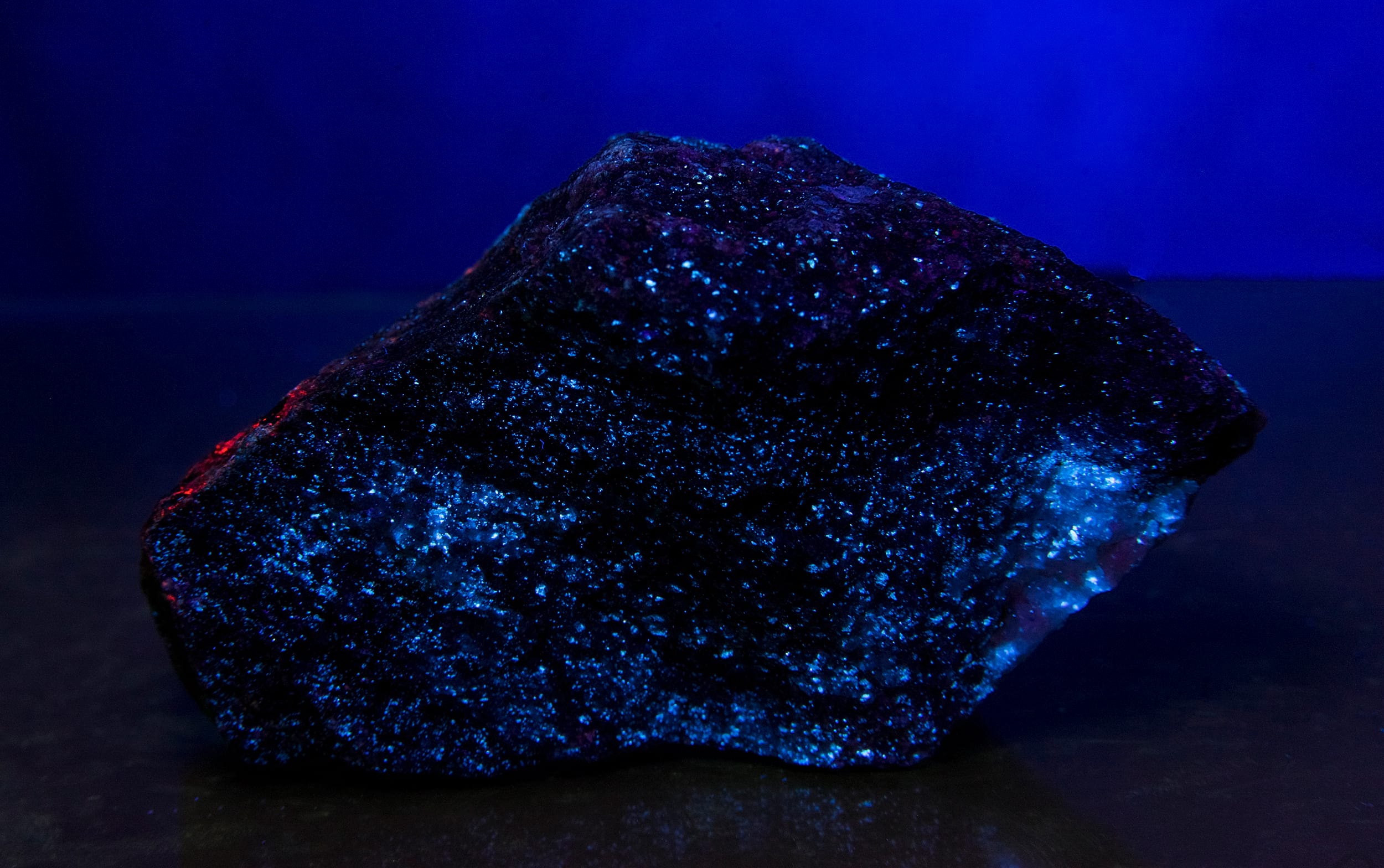

Chalcedony
This was purchased for me by my mom in 2015 on her trip to Taiwan. Specifically this specimen is from Taitung. Pretty good considering she didn't want to bring one of my lights! She just had a feeling it'd fluoresce based on what I showed her before! There aren't any photos of chalcedony even on Mindat. I imagine that's because most of it got turned into jewelry. This was one of the specimens that were being sold along with the jewelry it was made from. Collected by locals that claim that there's not that much of this material left.
Location: Taitung, Taiwan
Weight: 241g
Dimensions: 89 x 49 x 29 mm

Petroleum Quartz
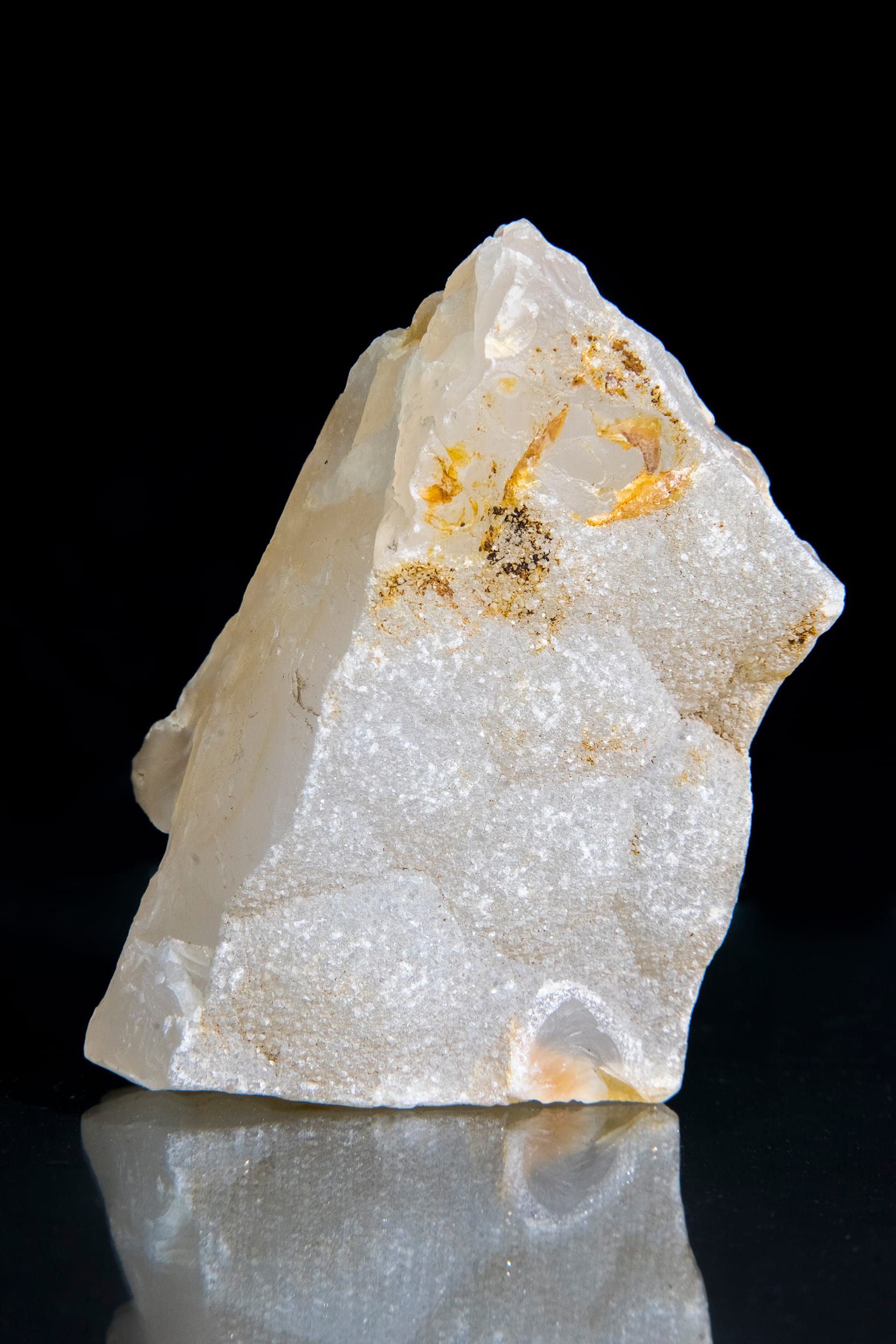
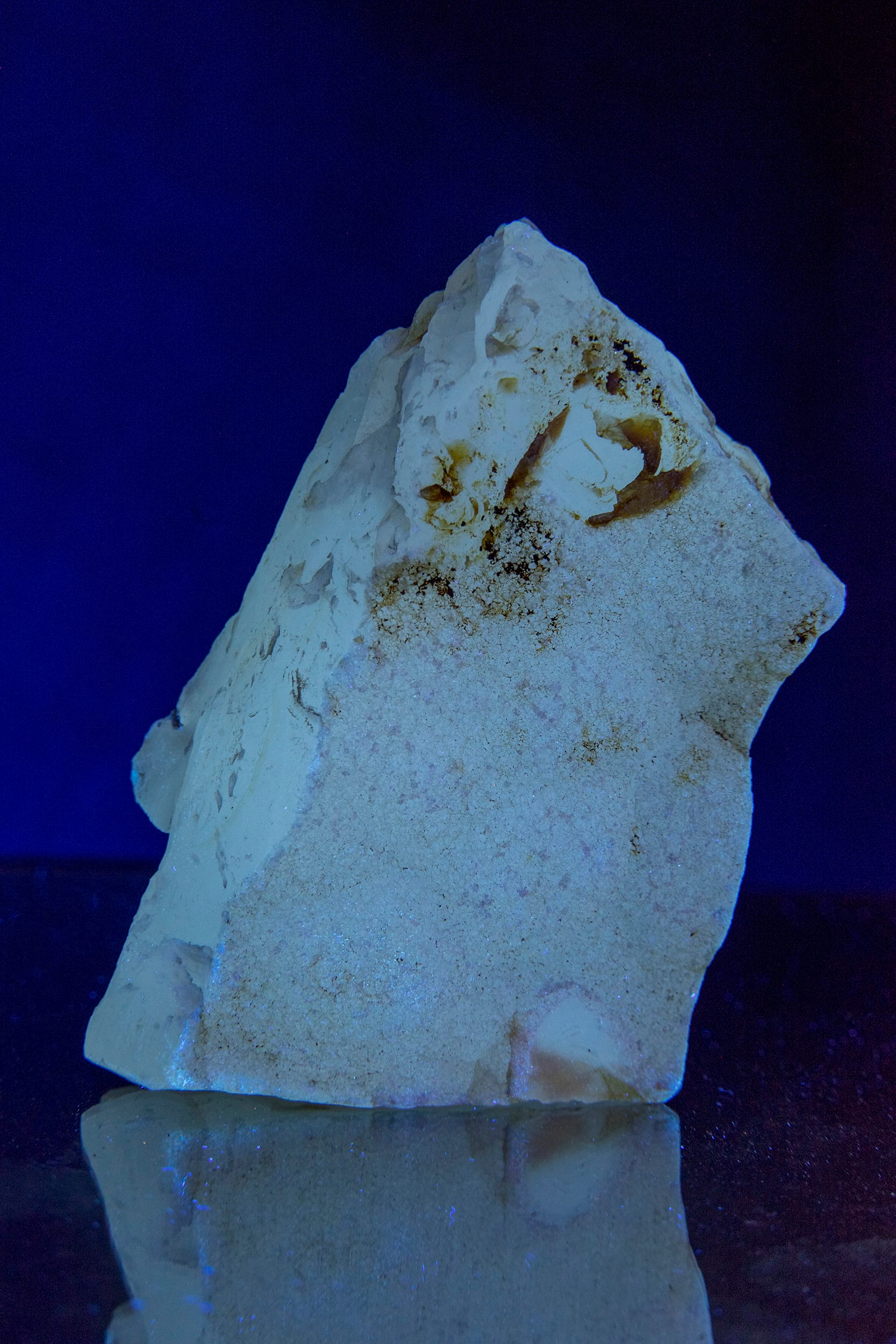
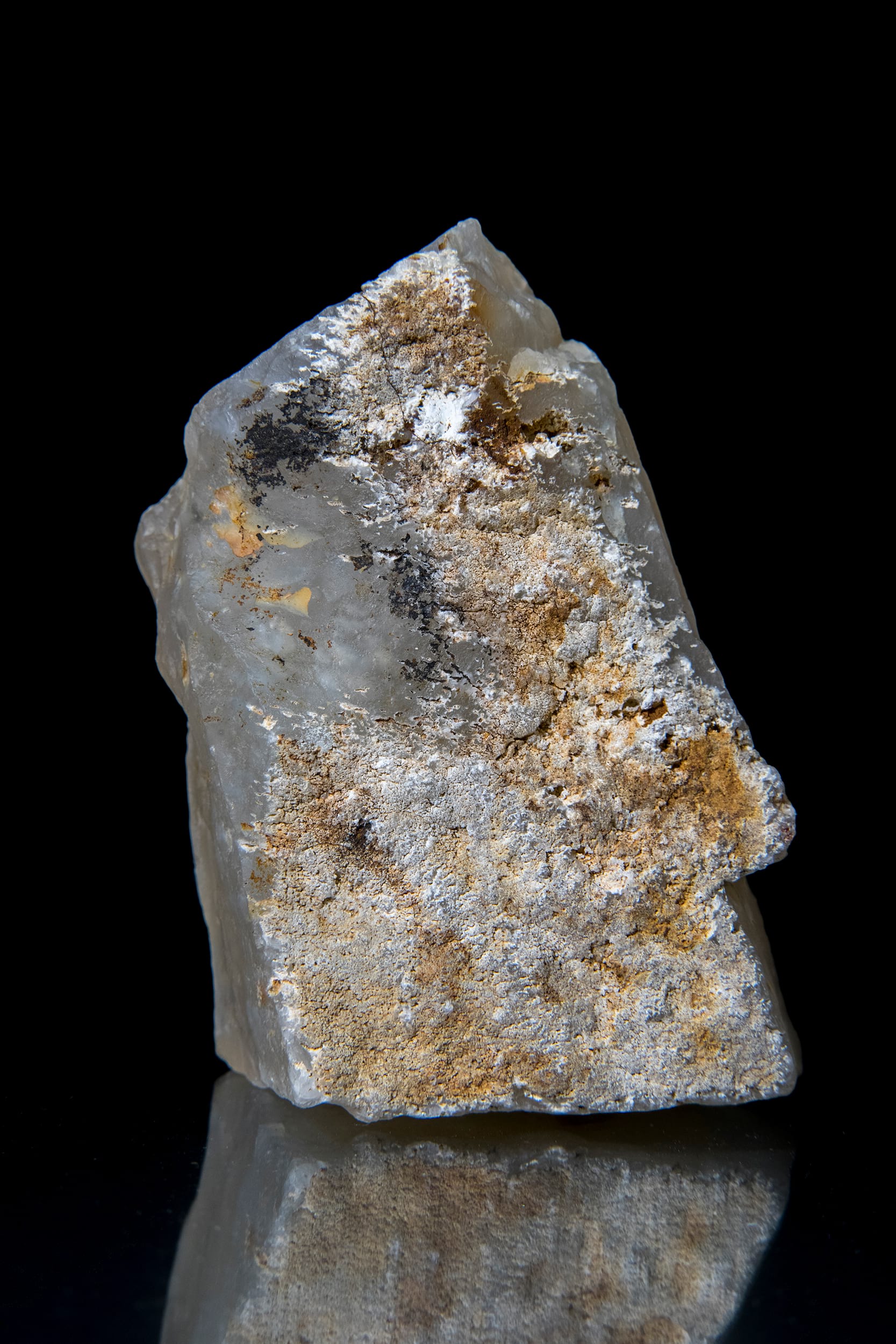
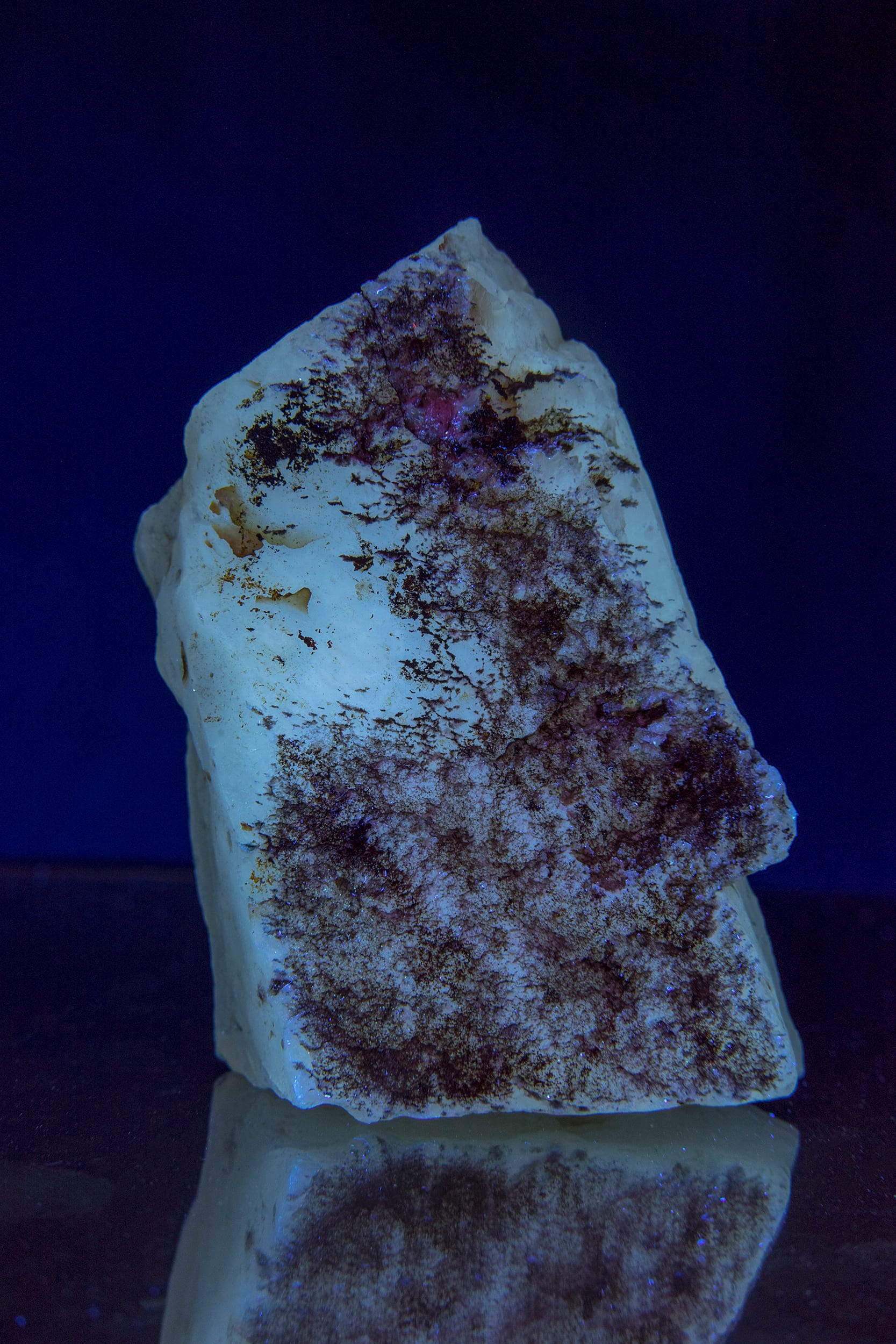
This was purchased by me from a miner named Nasir Munir in April 2017. He and his friends have visited the Balochistan area to collect specimens like this one. At the time of purchase petroleum quartz specimens on matrix were incredibly rare. You would only see them on sale for exuberant prices $1000+. However, thanks to his efforts specimens like this are now available for affordable prices. It was quite interesting getting to know Nasir and seeing a completely different perspective. For example, much like sites over here in the US you pay a fee in order to go collecting for minerals. Unlike here this helps fund an army presence to guard the border from insurgents. Also unlike here there are very strict guidelines. Legal documents proving your citizenship are required, photos are absolutely not allowed, and only the tools provided can be used.
I showed Nasir several photos of the collecting site I found off Mindat and he says that it's changed quite a bit thanks to an army presence and insurgents. Quite a terrifying thought just imagining that someone could potentially be shot at while enjoying the hobby. I also asked Nasir to write the names of the area in his native language out of curiosity. The Urdu writing just looks beautiful to me and to see it handwritten by a local makes this quite an enjoyable purchase for me.
Of interest is that there seems to be two different activators. One blue and the other yellowish green
Location: Balochistan, Pakistan
Dimensions: 71x67x21 mm
Weight: 100g


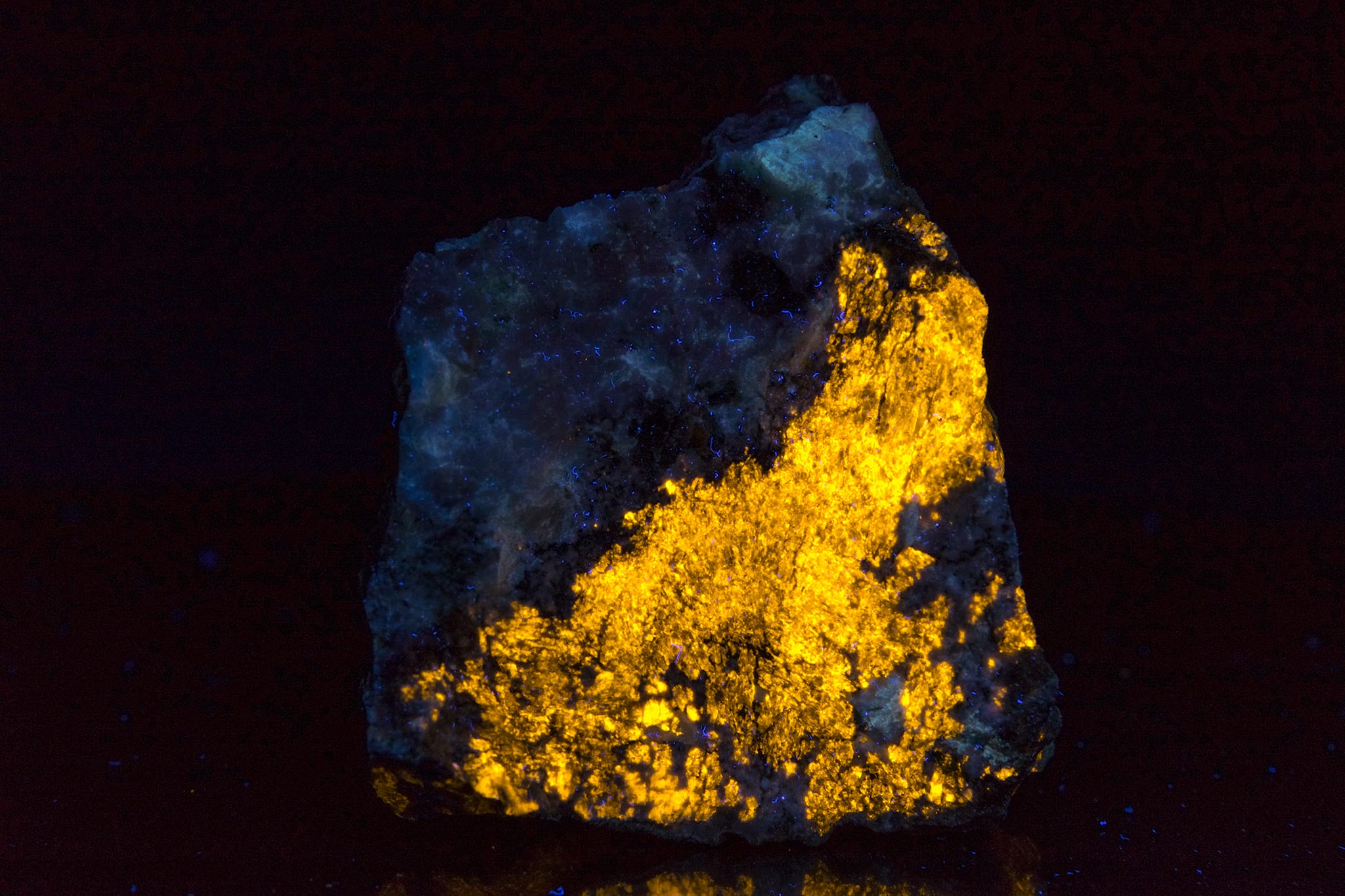
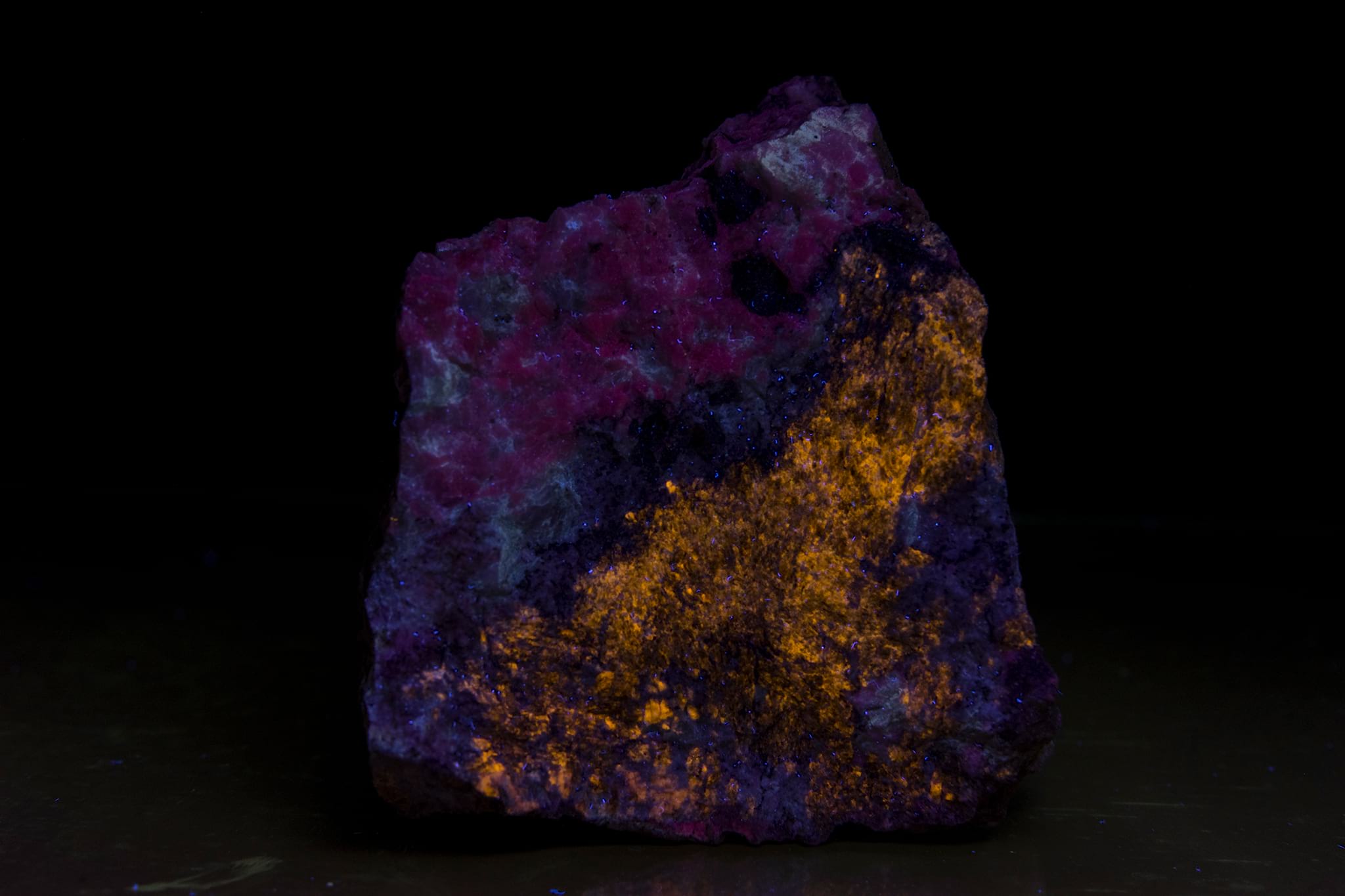

Lepidolite
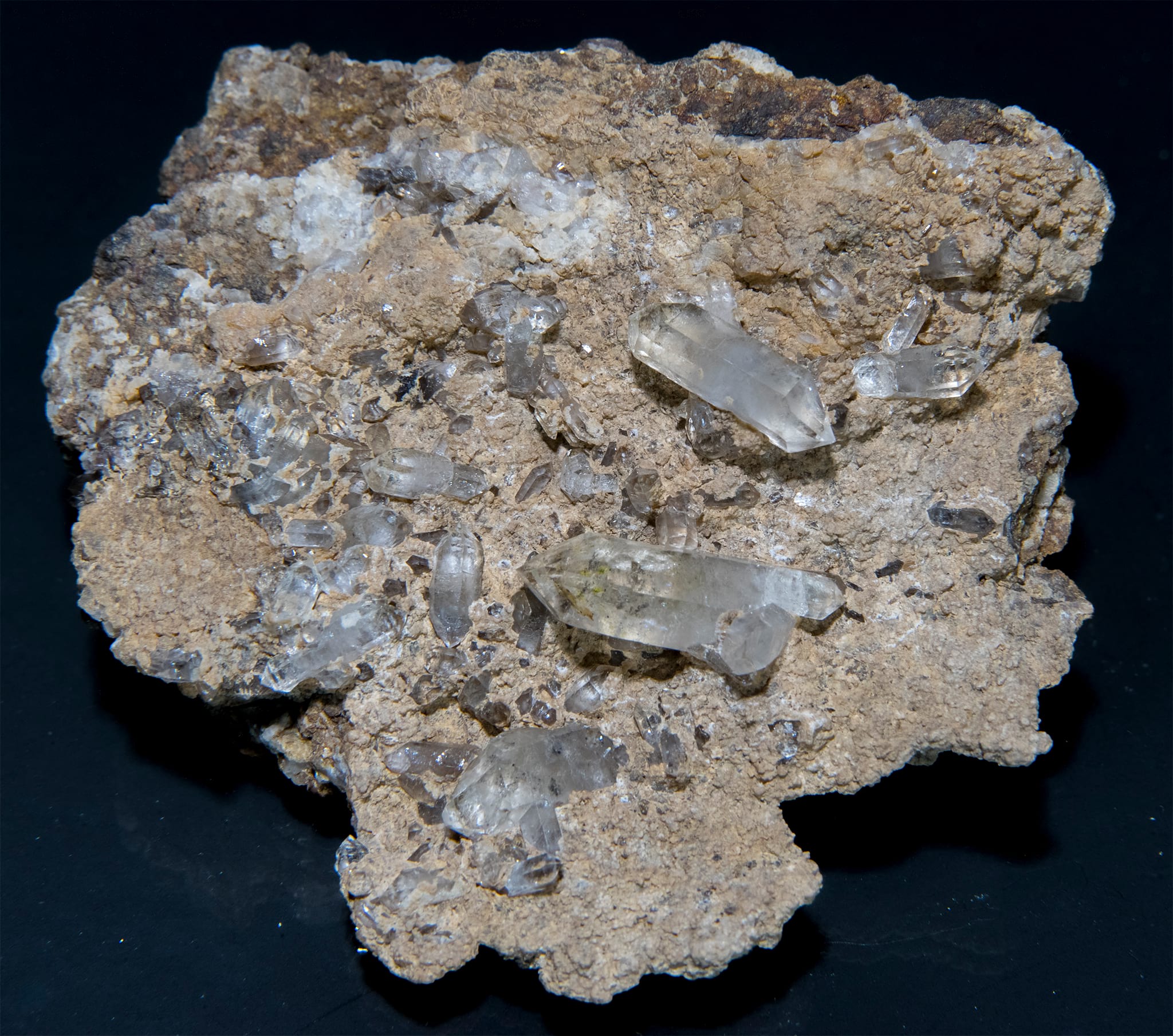
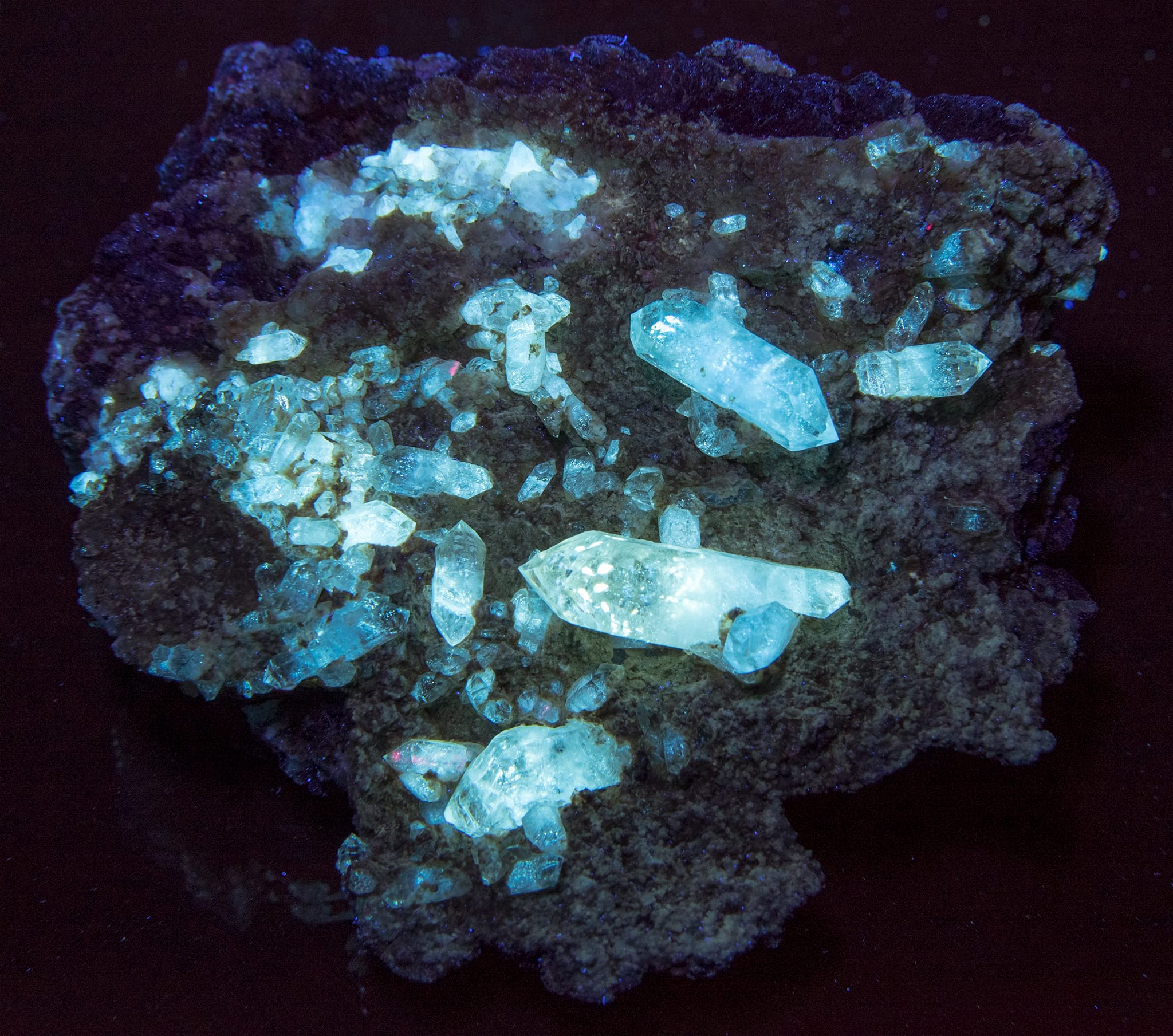
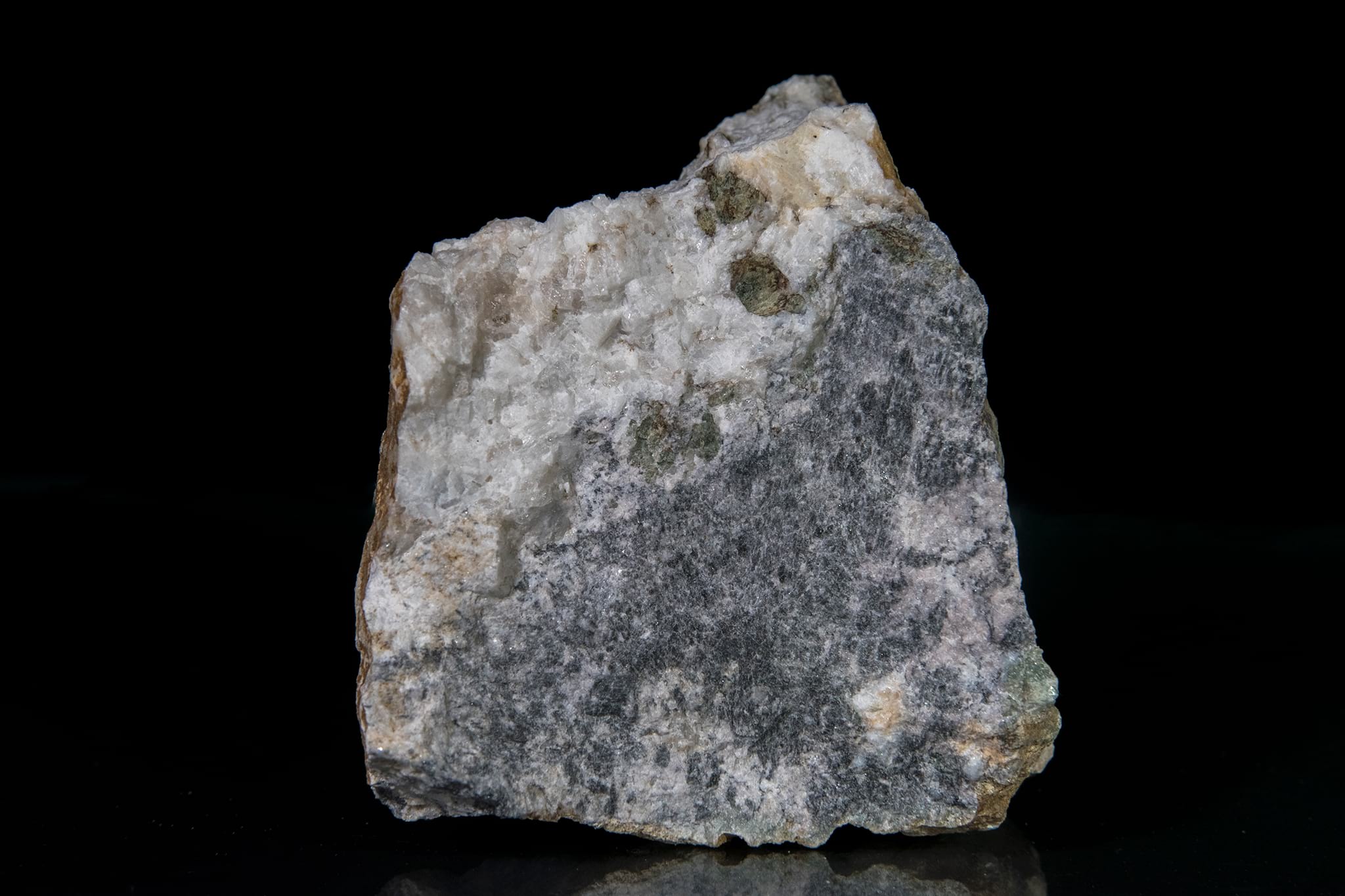
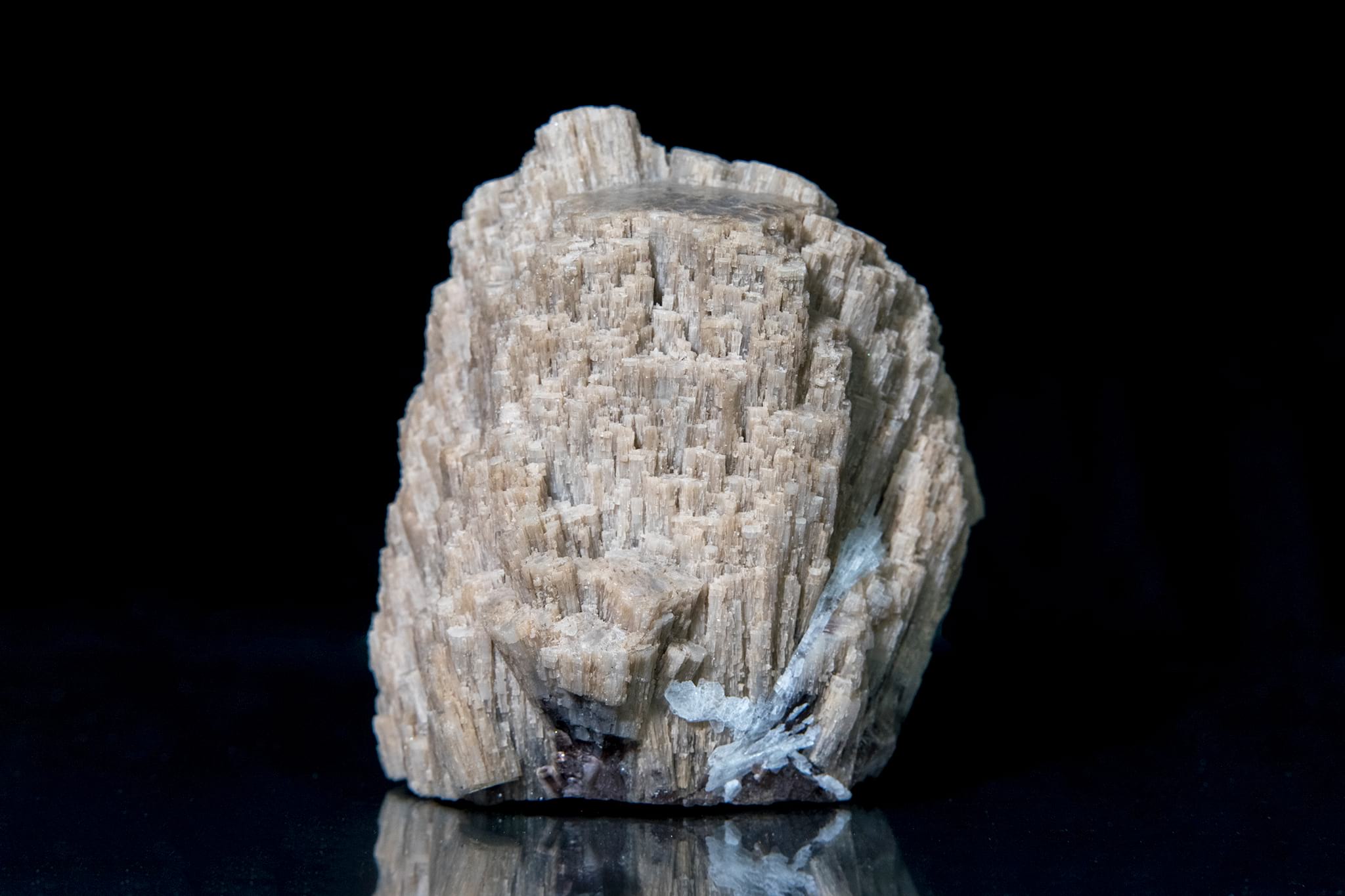
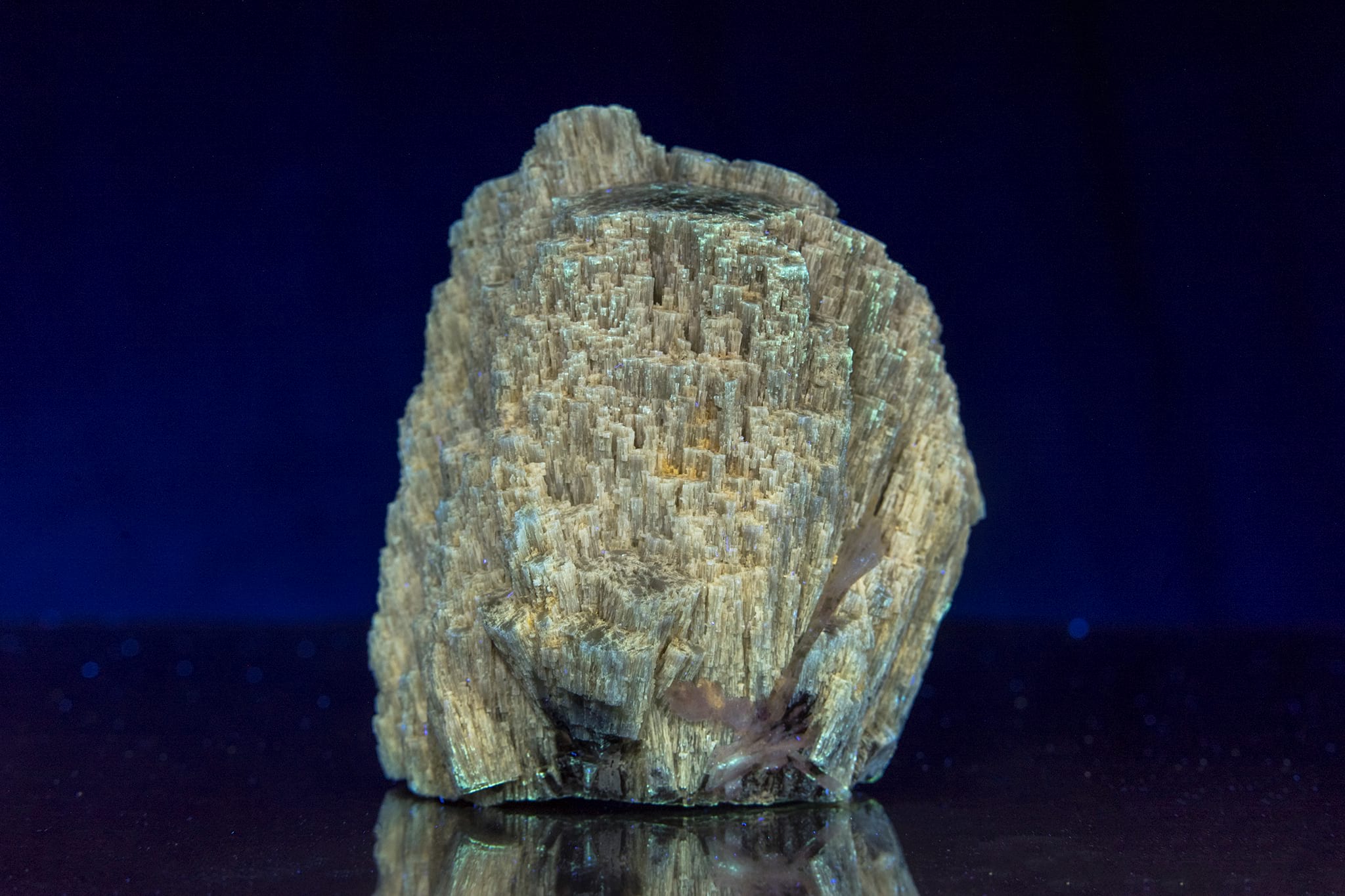
This specimen was purchased February 2017 at a local show. The dealer had several of these specimens from the same locale, all of which fluoresced equally. There were wonderful pieces with topaz embedded in the lepidolite but this piece was by far the best fluorescent specimen. It's quite an interesting piece as the bottom is clearly the mica that one would recognize when thinking of lepidolite. However, as we go up we can see that it started forming columnar stacks and eventually terminating. Photographed under LW as well as daylight. No effect SW
Location: Virgem da Lapa, Minas Gerais, Brazil
Weight: 389g
Dimensions: 77 x 68 x 52 mm
Benitoite Experience: Part 1 of ? April 2017
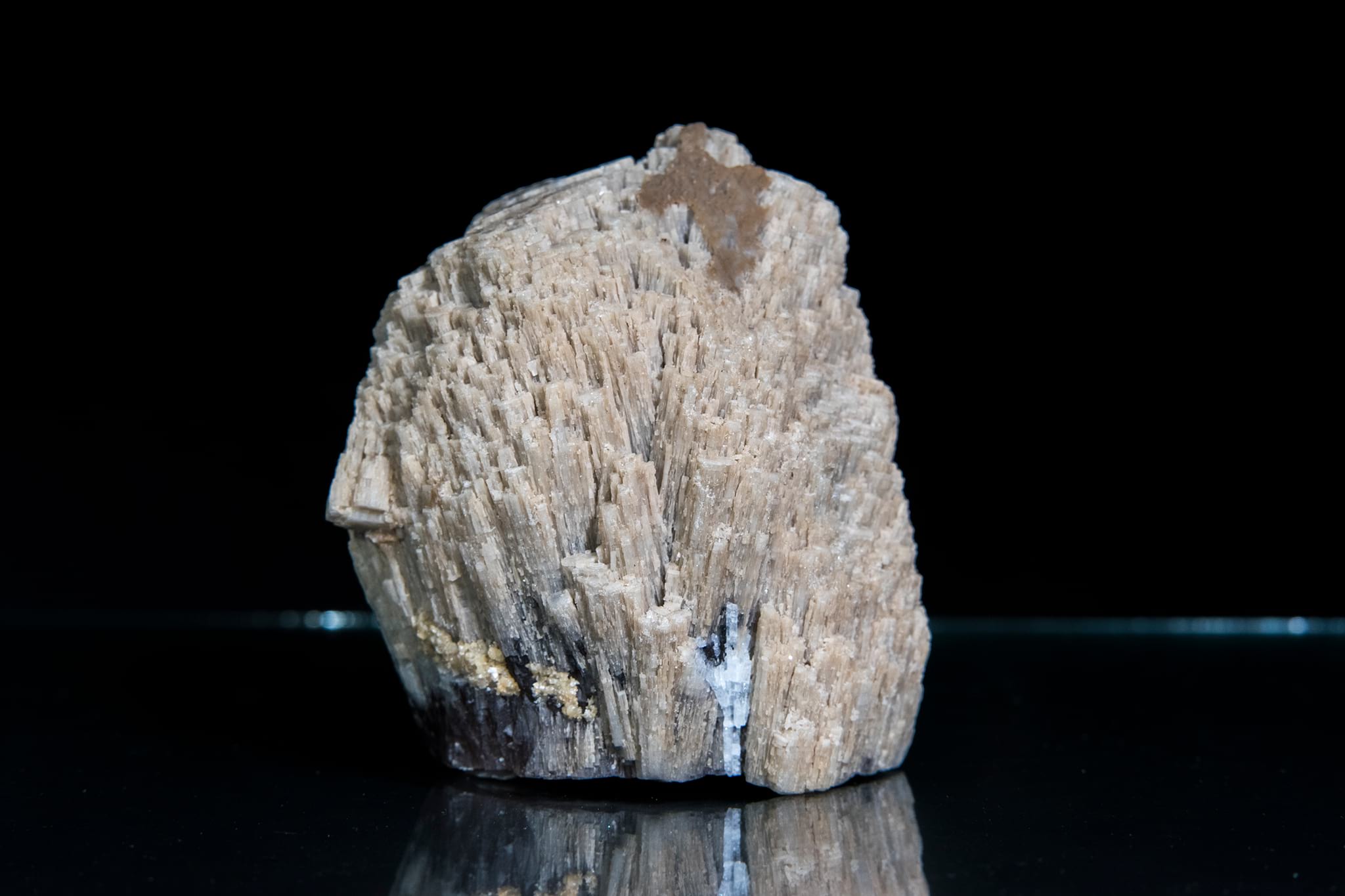
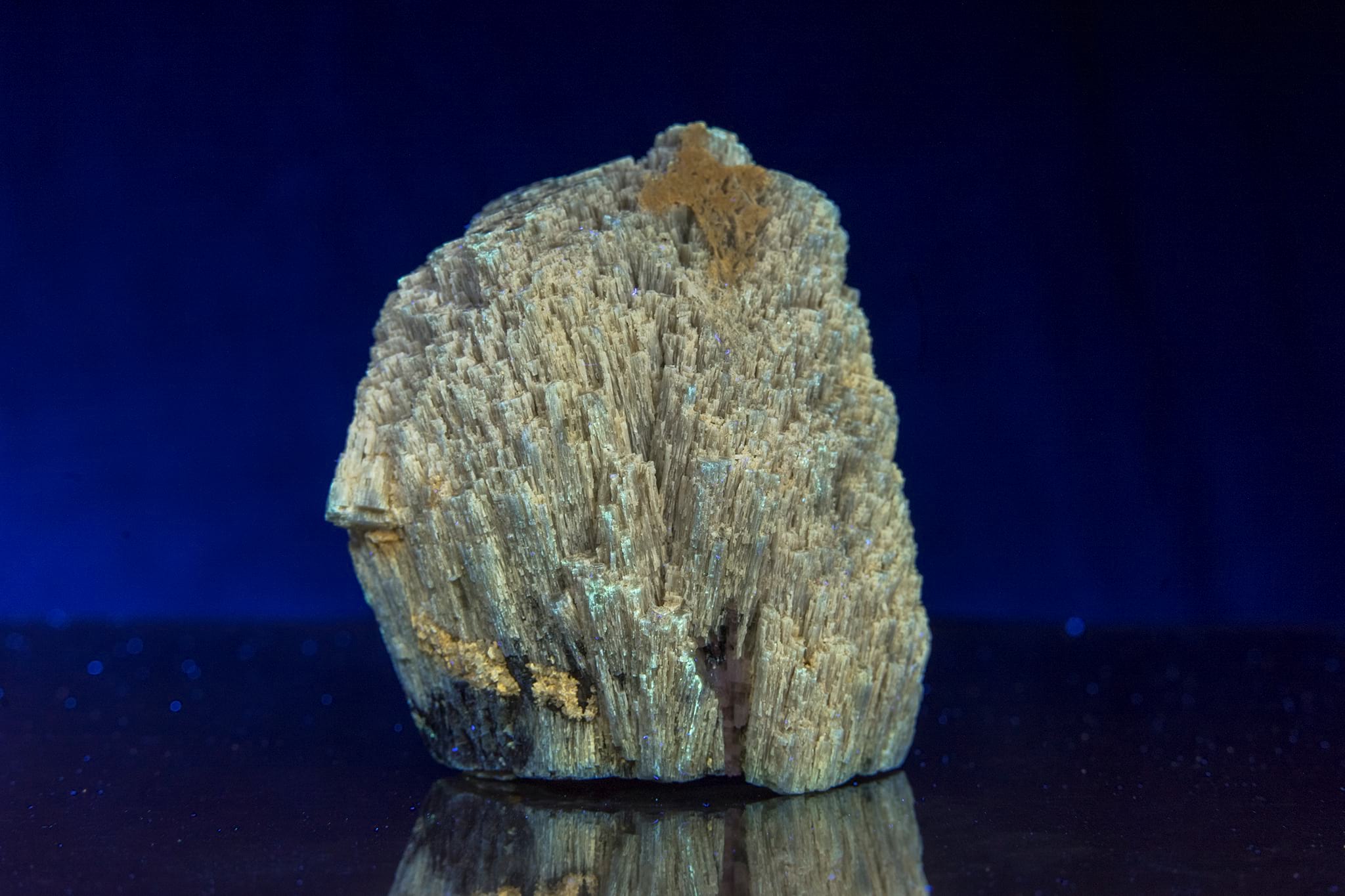
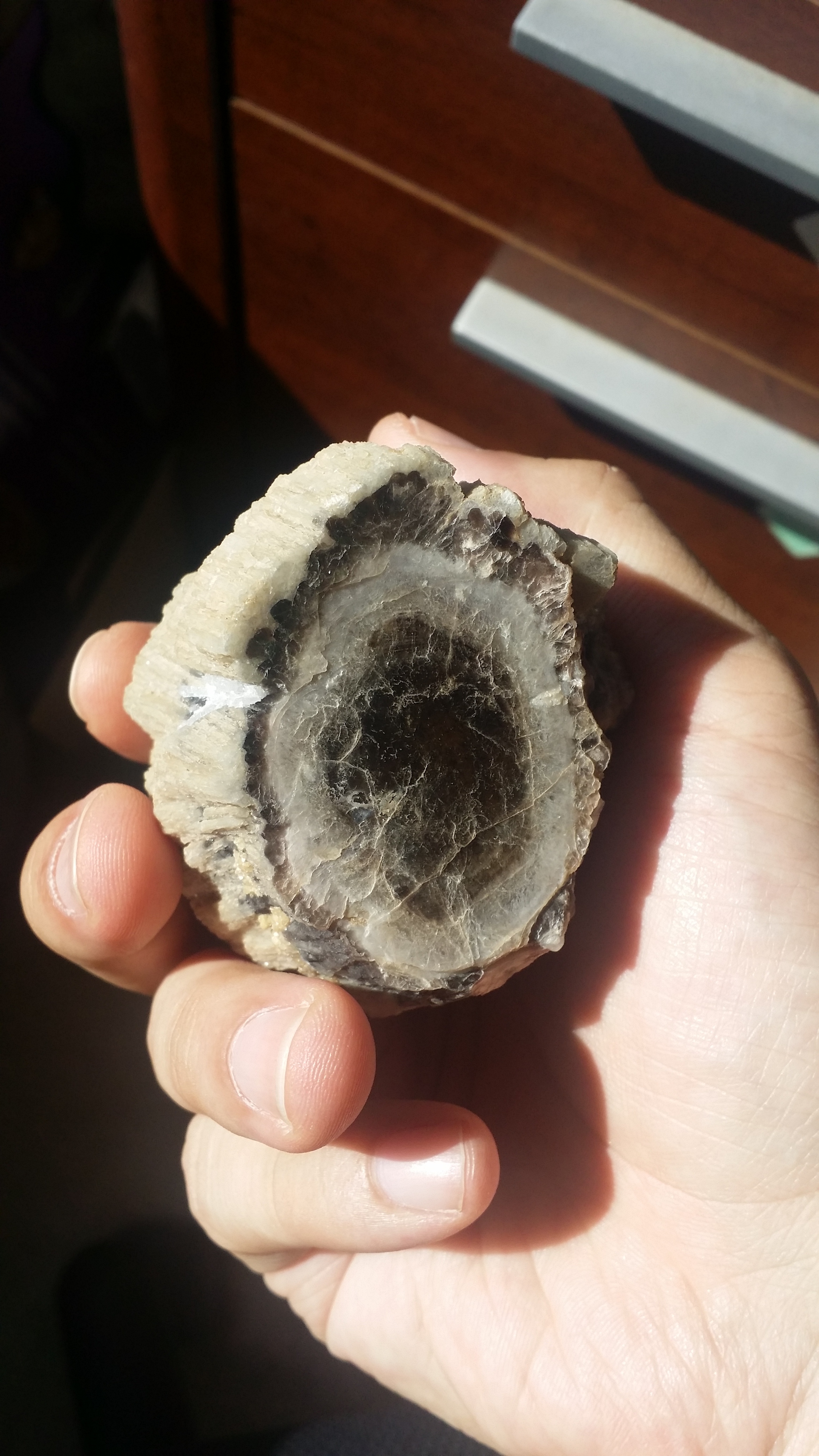
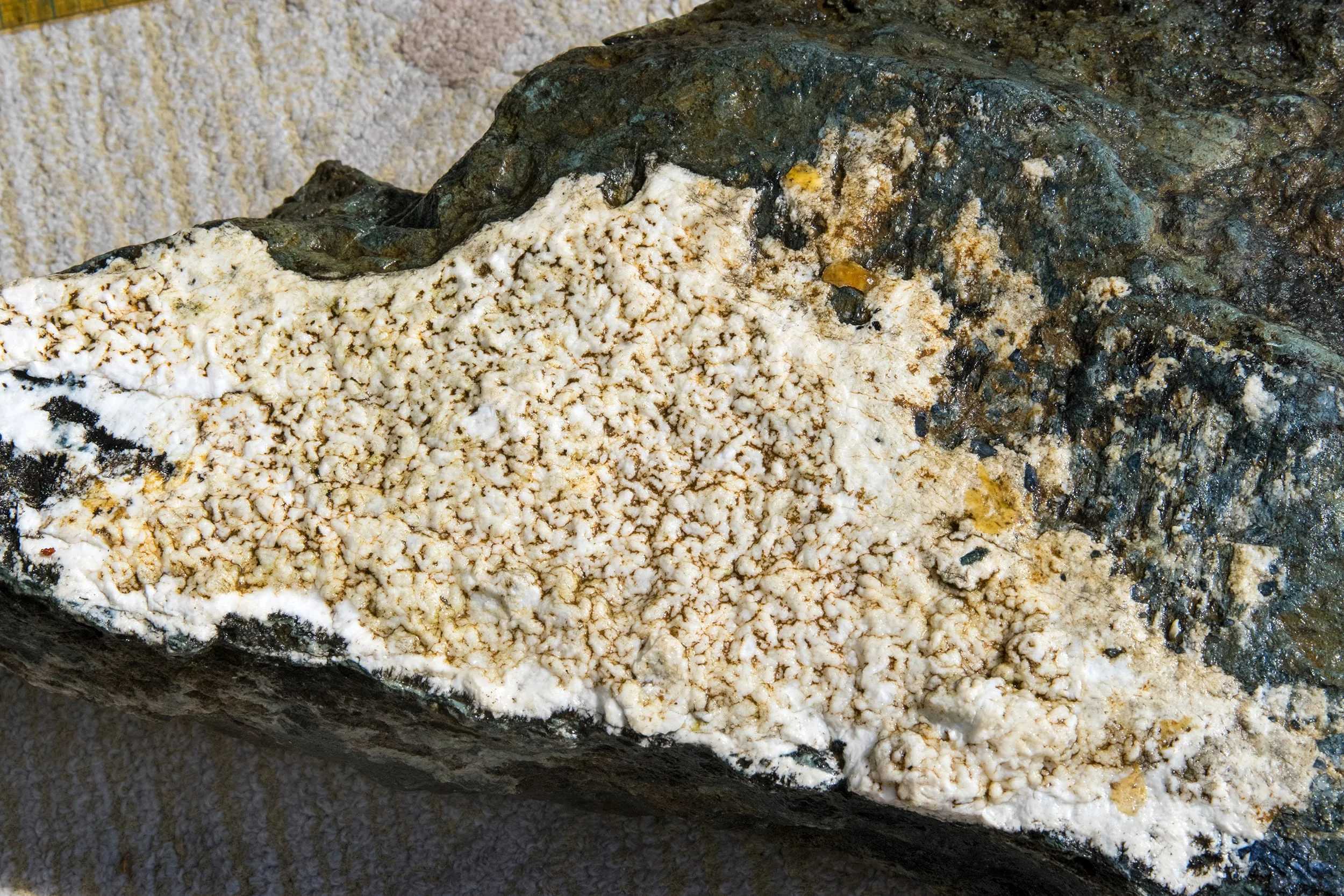
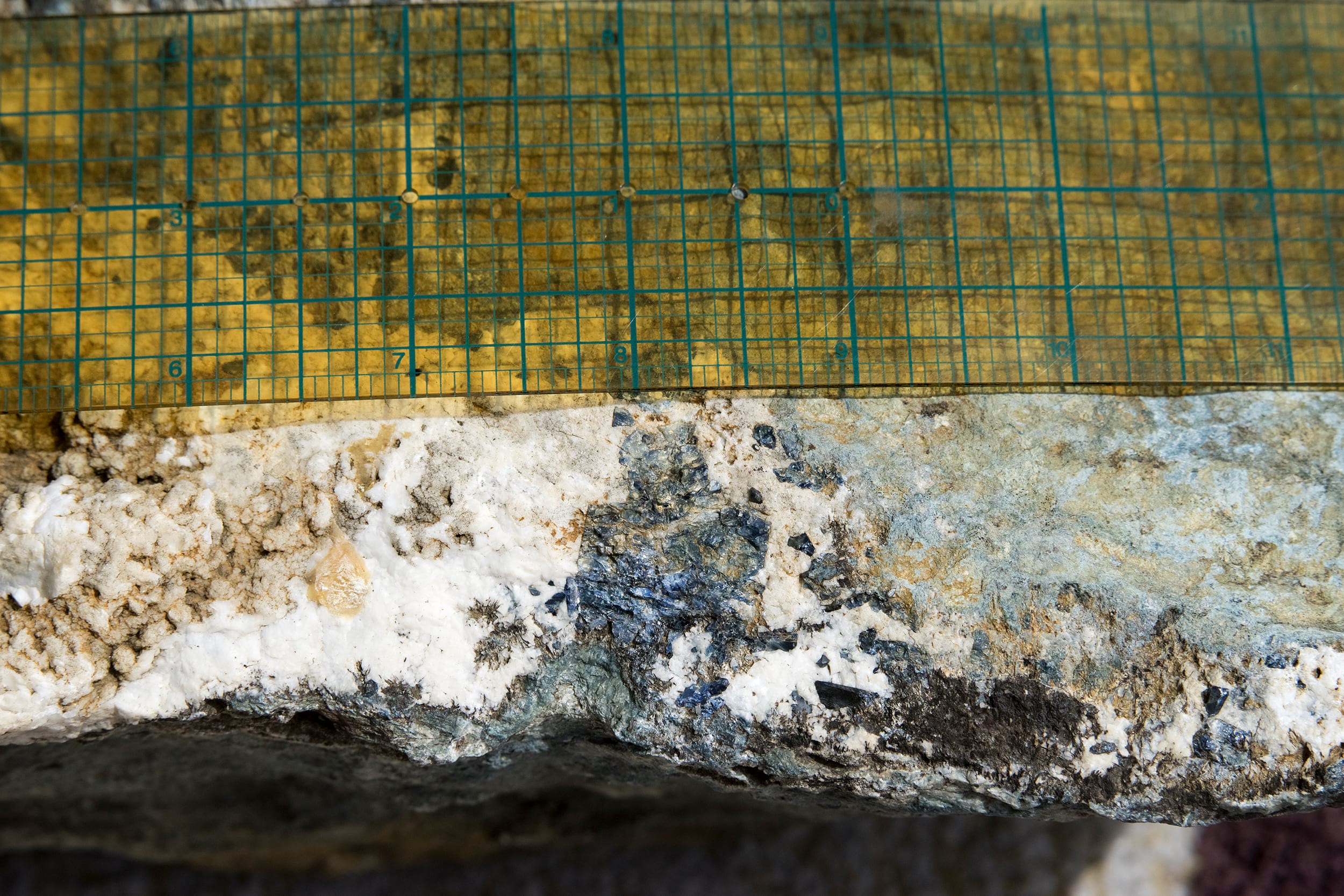
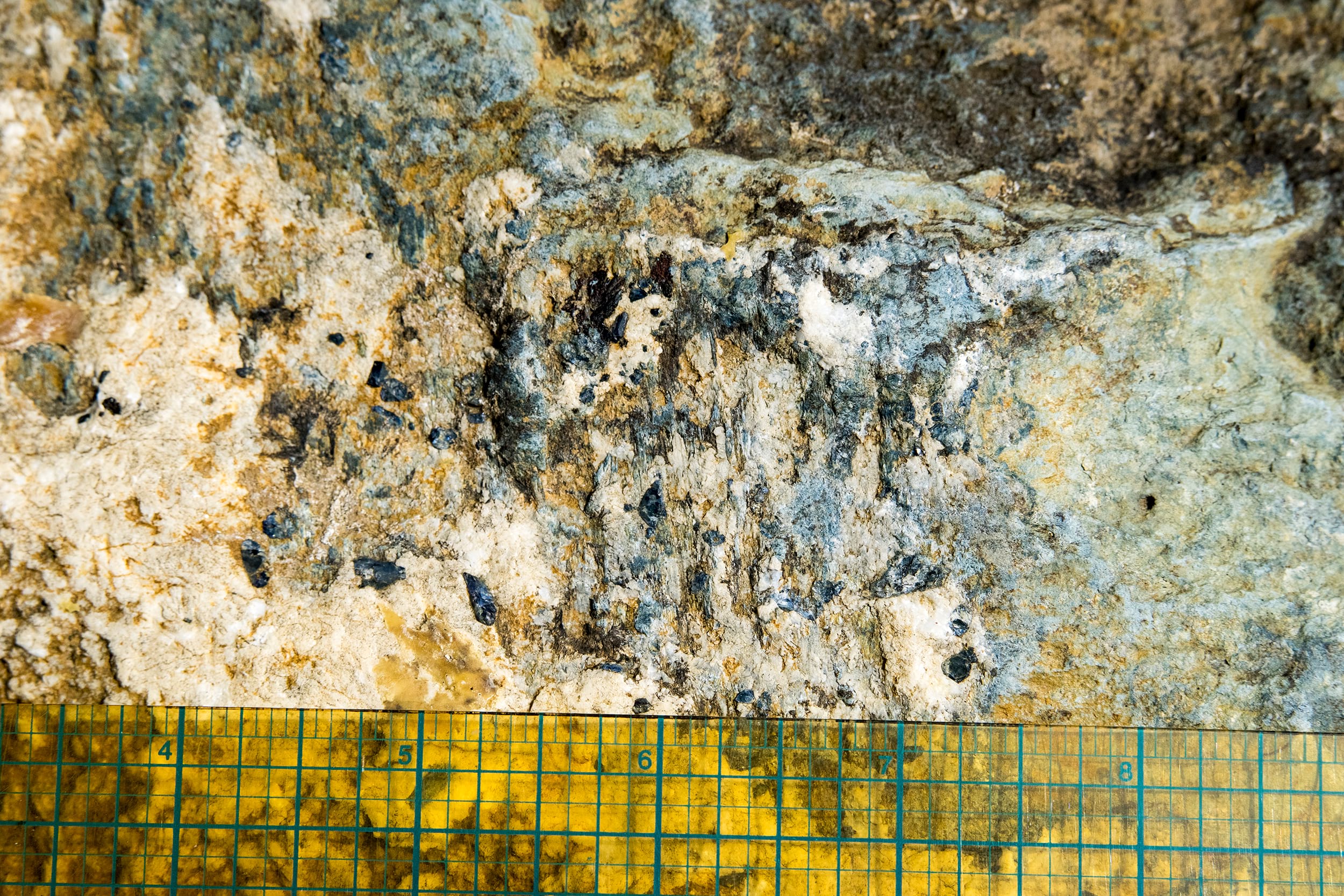
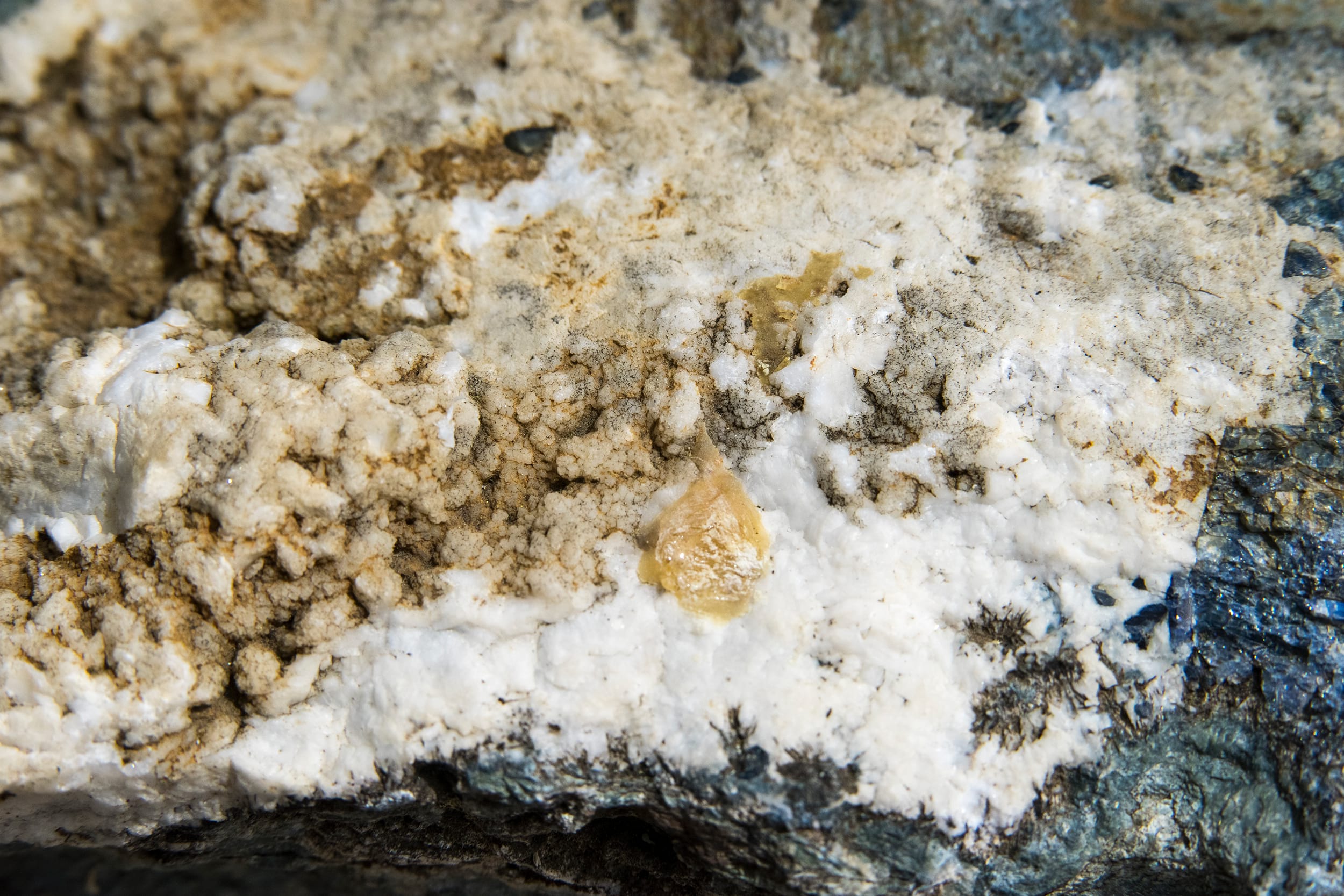
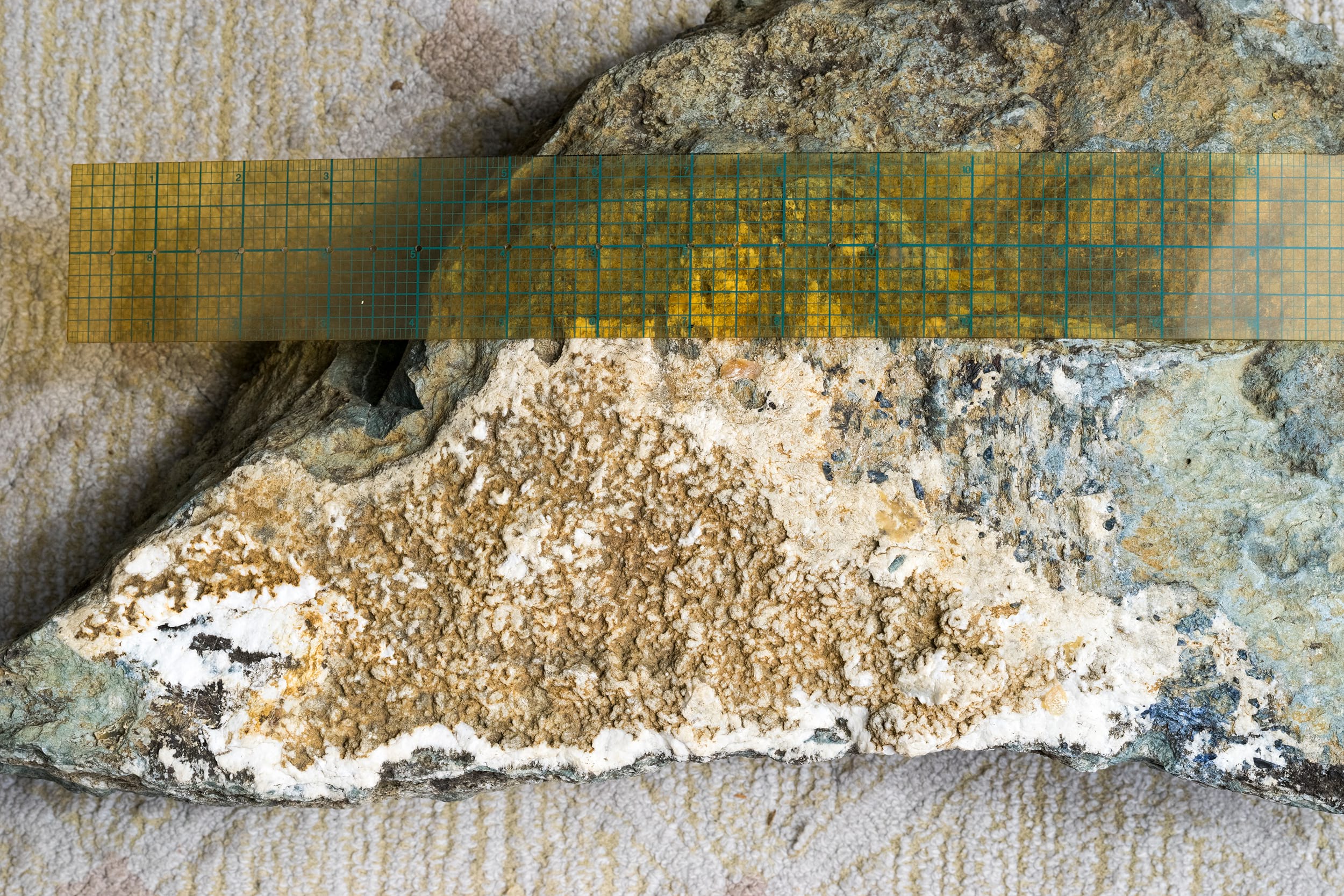
Not feeling satisfied with my benitoite trip last year I decided to see if I could find a piece that had been unetched. As luck would have it I found one on eBay! It had a very large area of unetched natrolite and the price wasn't too bad. I consulted with Rick Kennedy to see if I should give it a go and he said go for it, but try to get it for a lower price. When I got it I noticed the natrolite wasn't that thick. I'm not hopeful that I'll get a 5 figure specimen but I think I'll get at least a specimen worth what I paid for it. Now to cut it down to size and then begin the etching process.
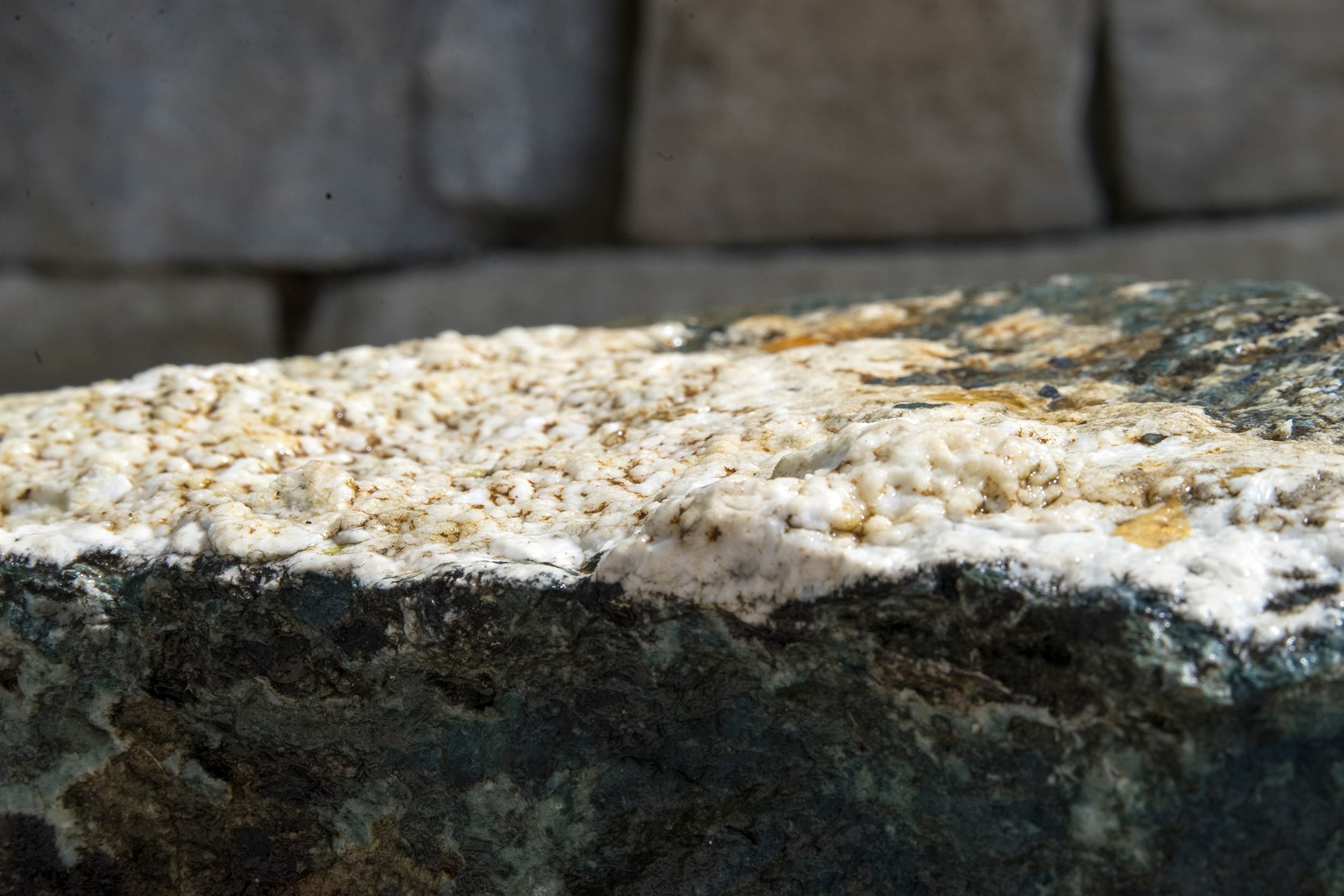
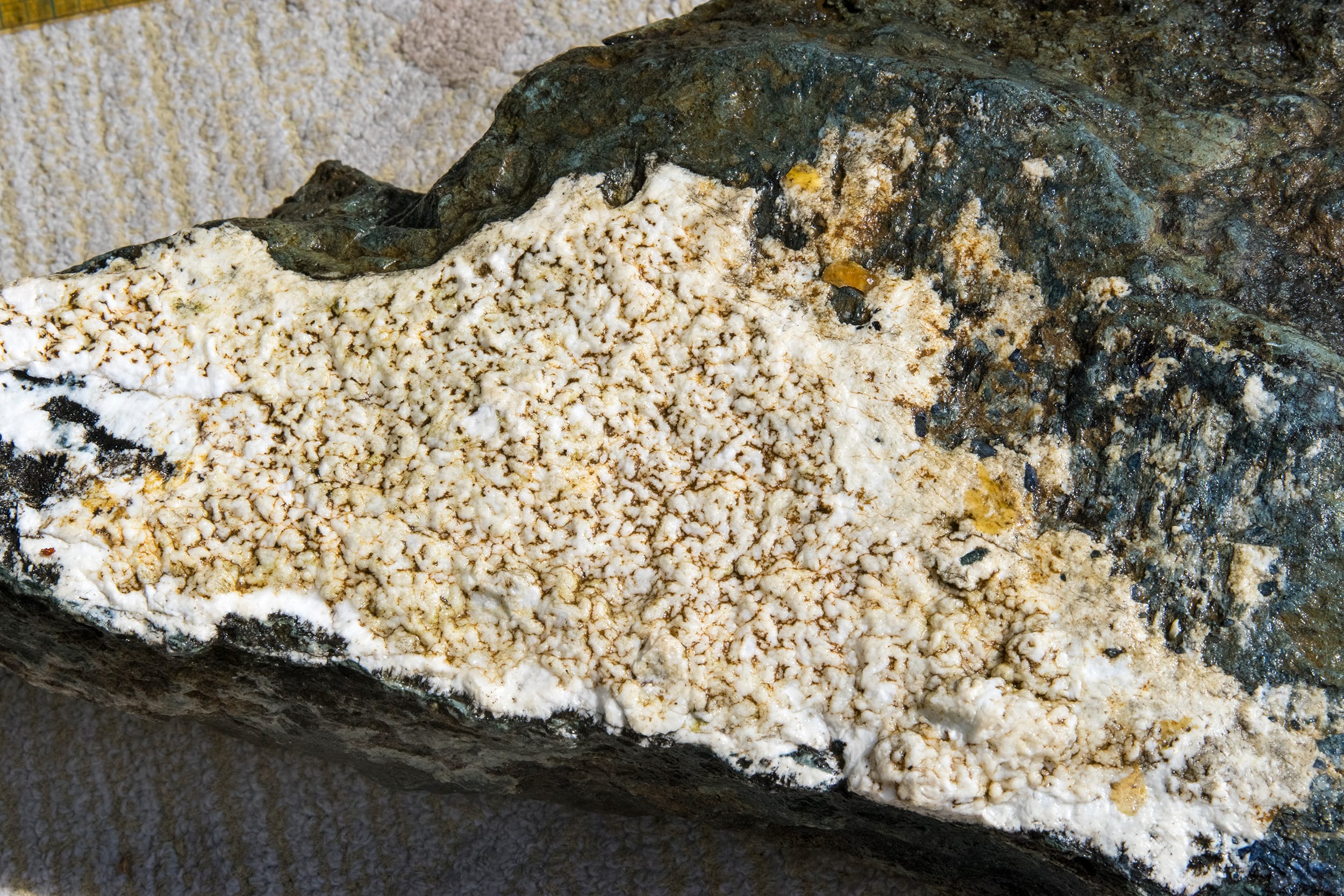

Helvetia & Tucson Gem & Mineral Show January 2017
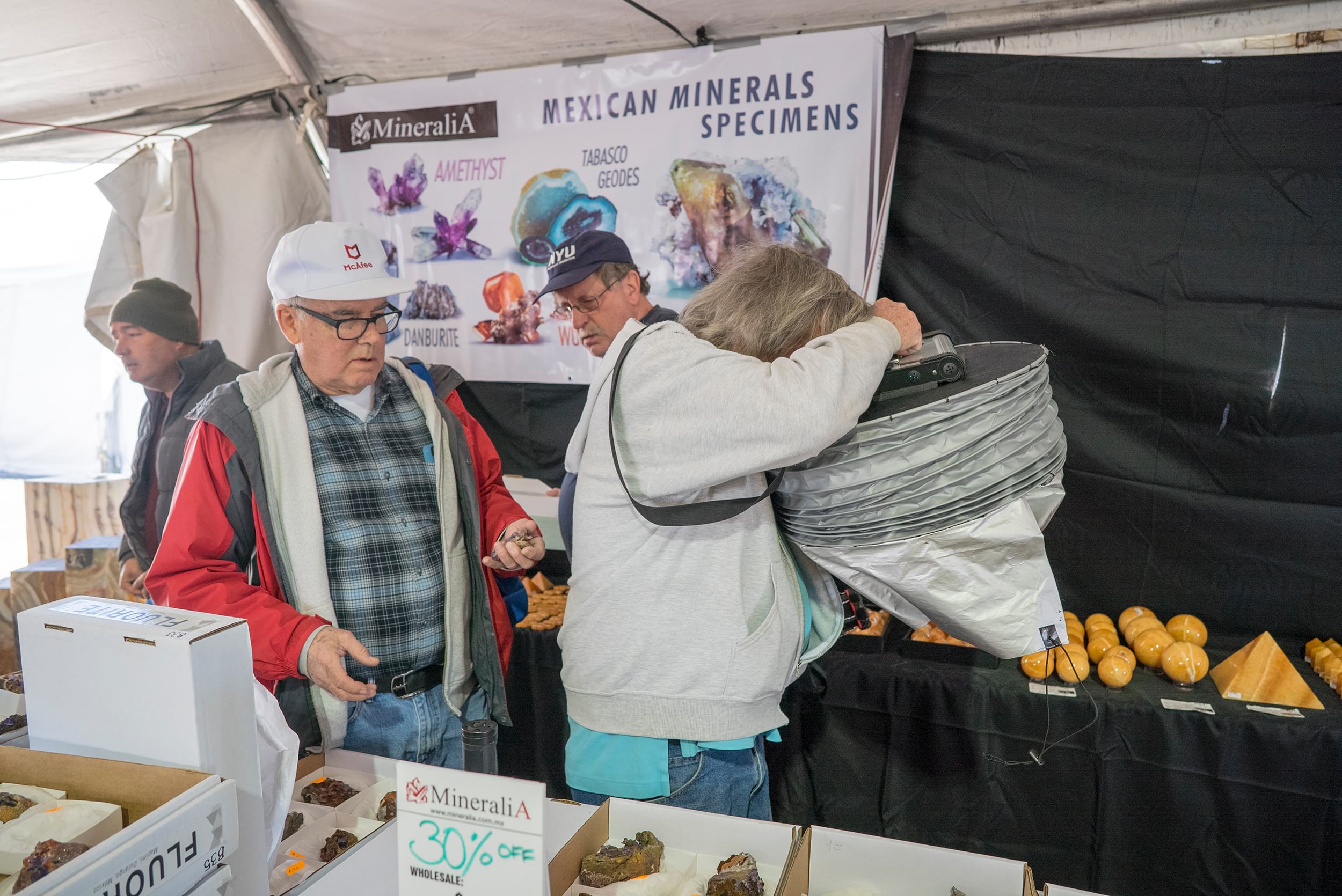
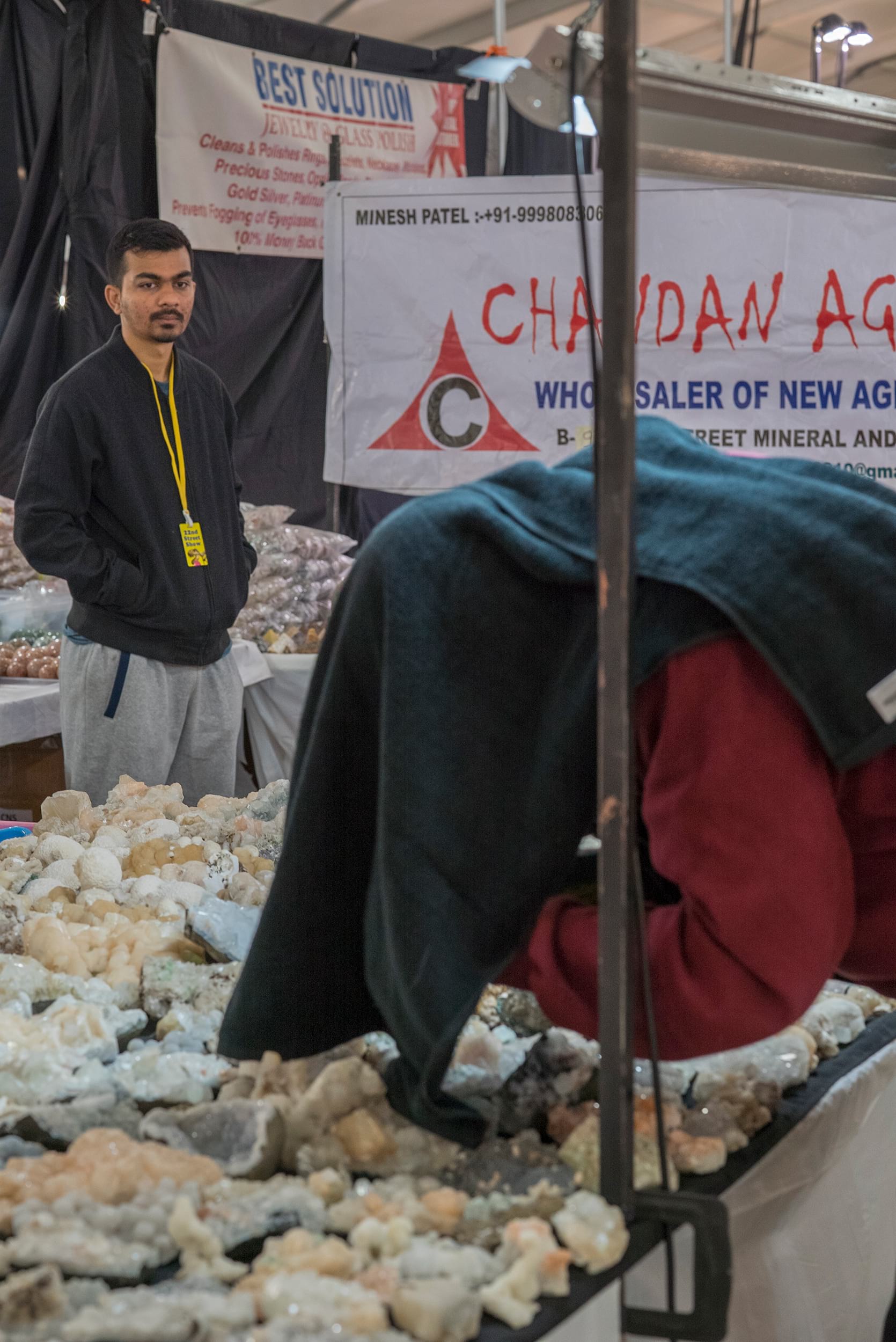
What an exciting time this was. It was my first Tucson experience and I was pumped! I knew that it was one of the biggest gem and mineral shows in the world but I wasn't prepared for the sheer scale of it. The whole town is encompassed and becomes one big show! Dealers from all around the world come over and show their wares. This was also the first time I had done any purchasing with other fluorescent mineral collectors. Boy did we stand out as a group lamping dealer's rocks and covering them with a towel, bbq cover, or otherwise.
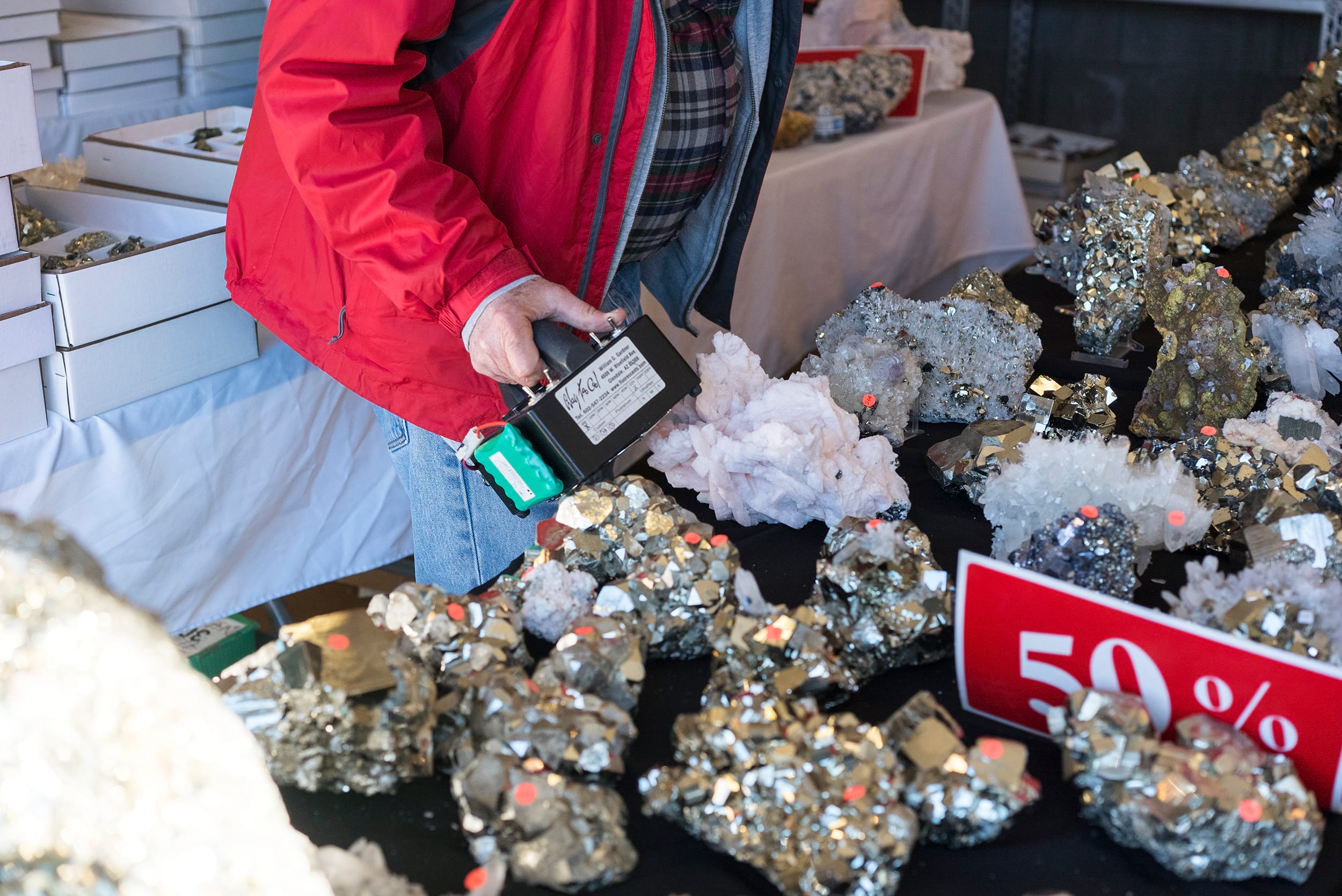
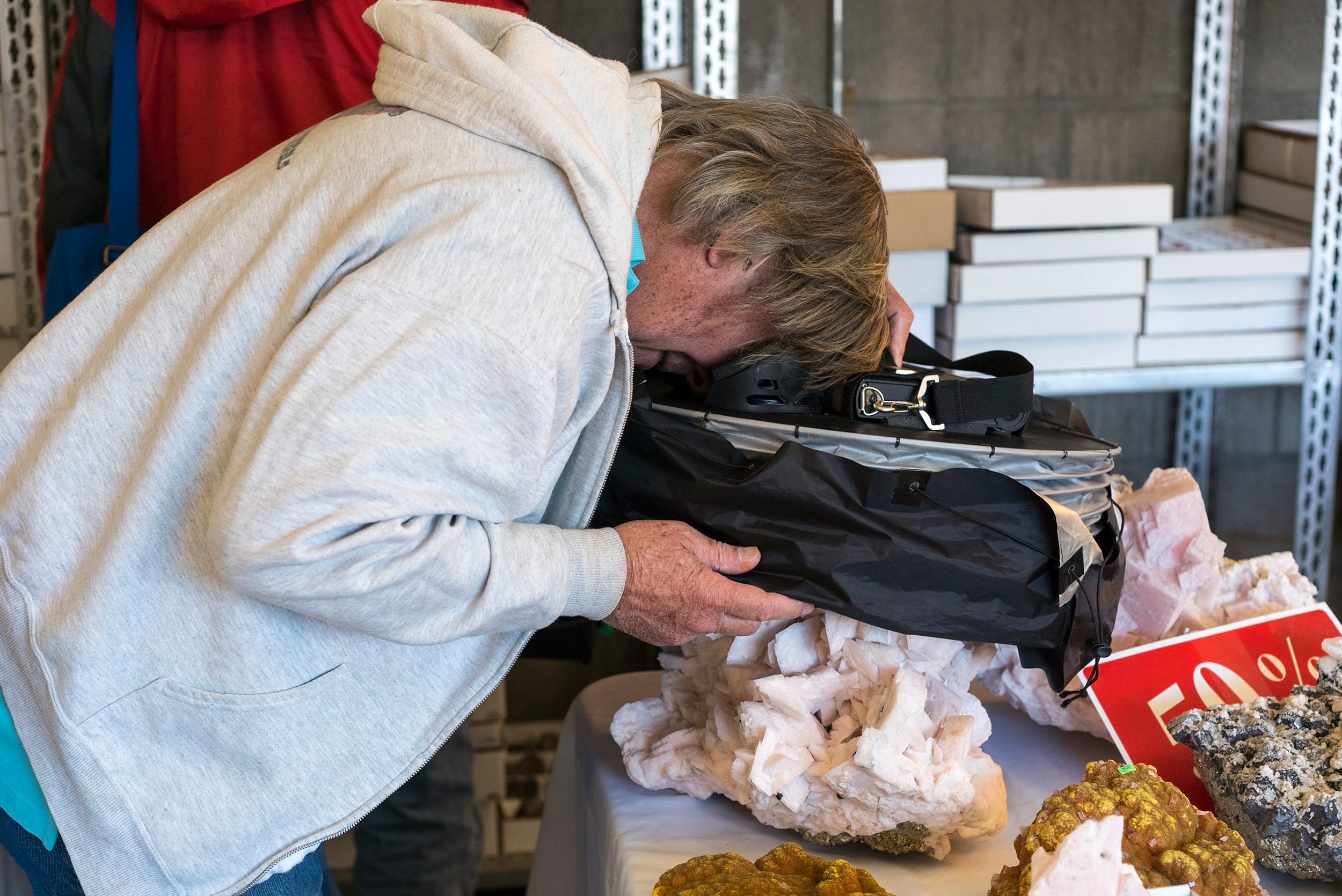
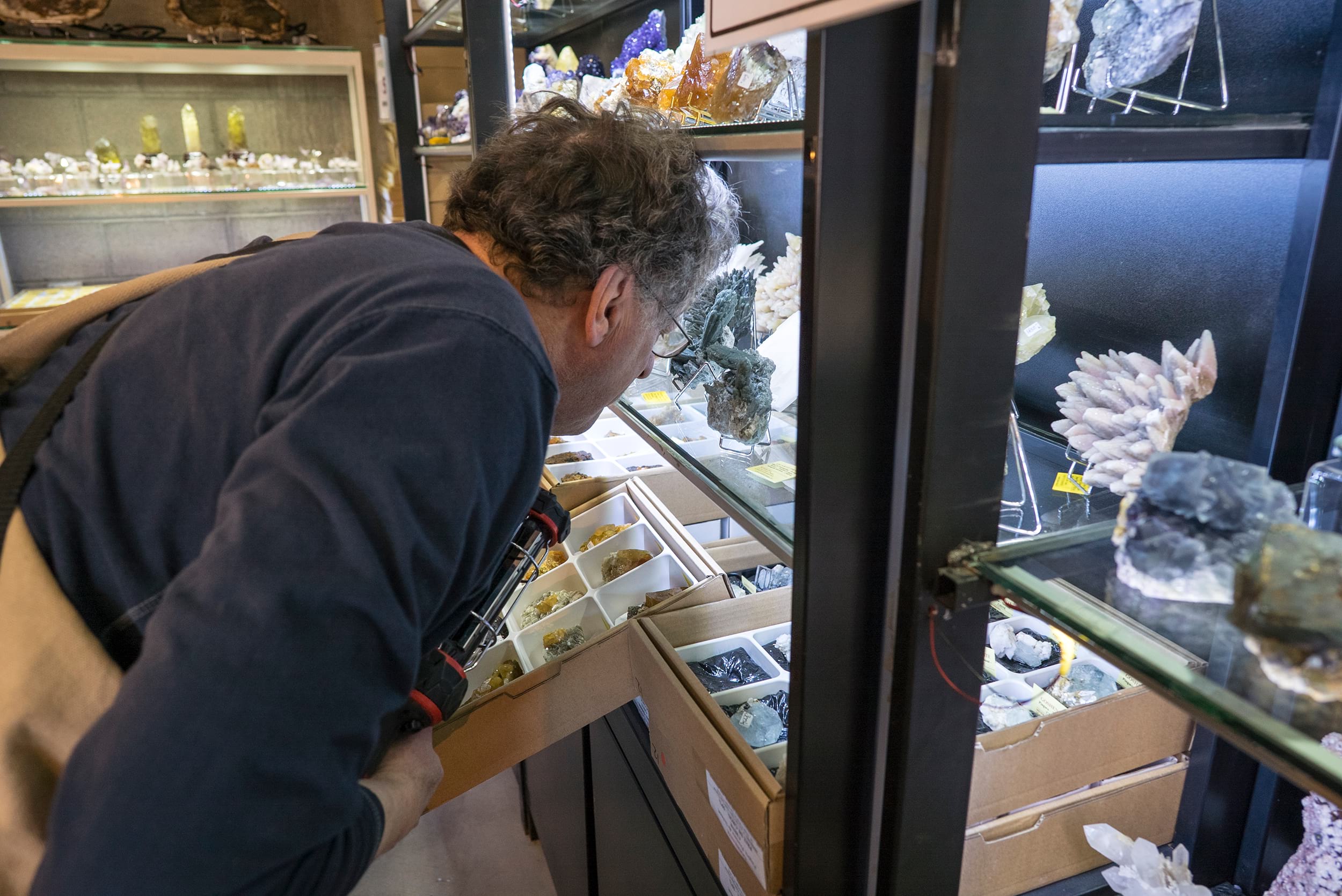
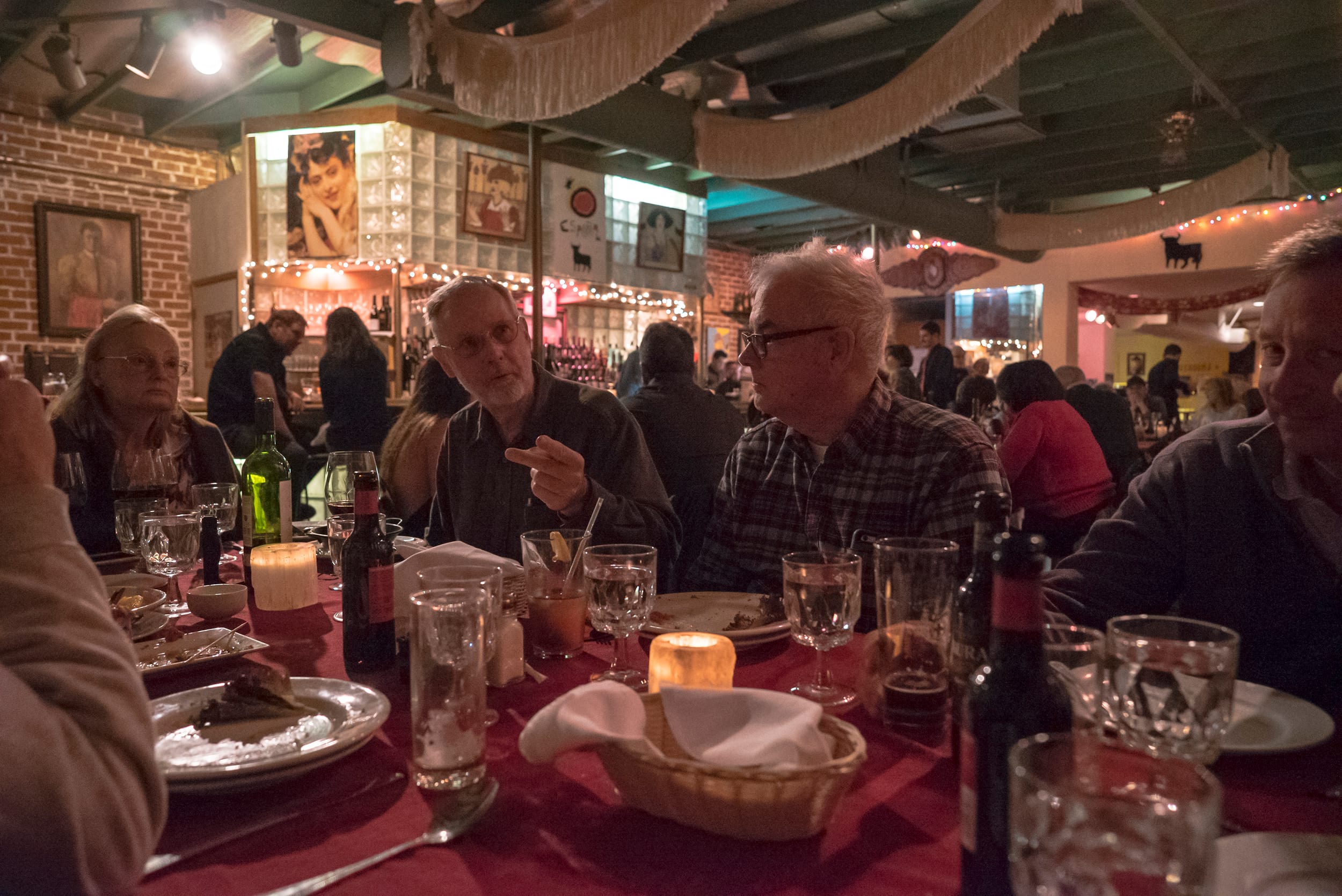
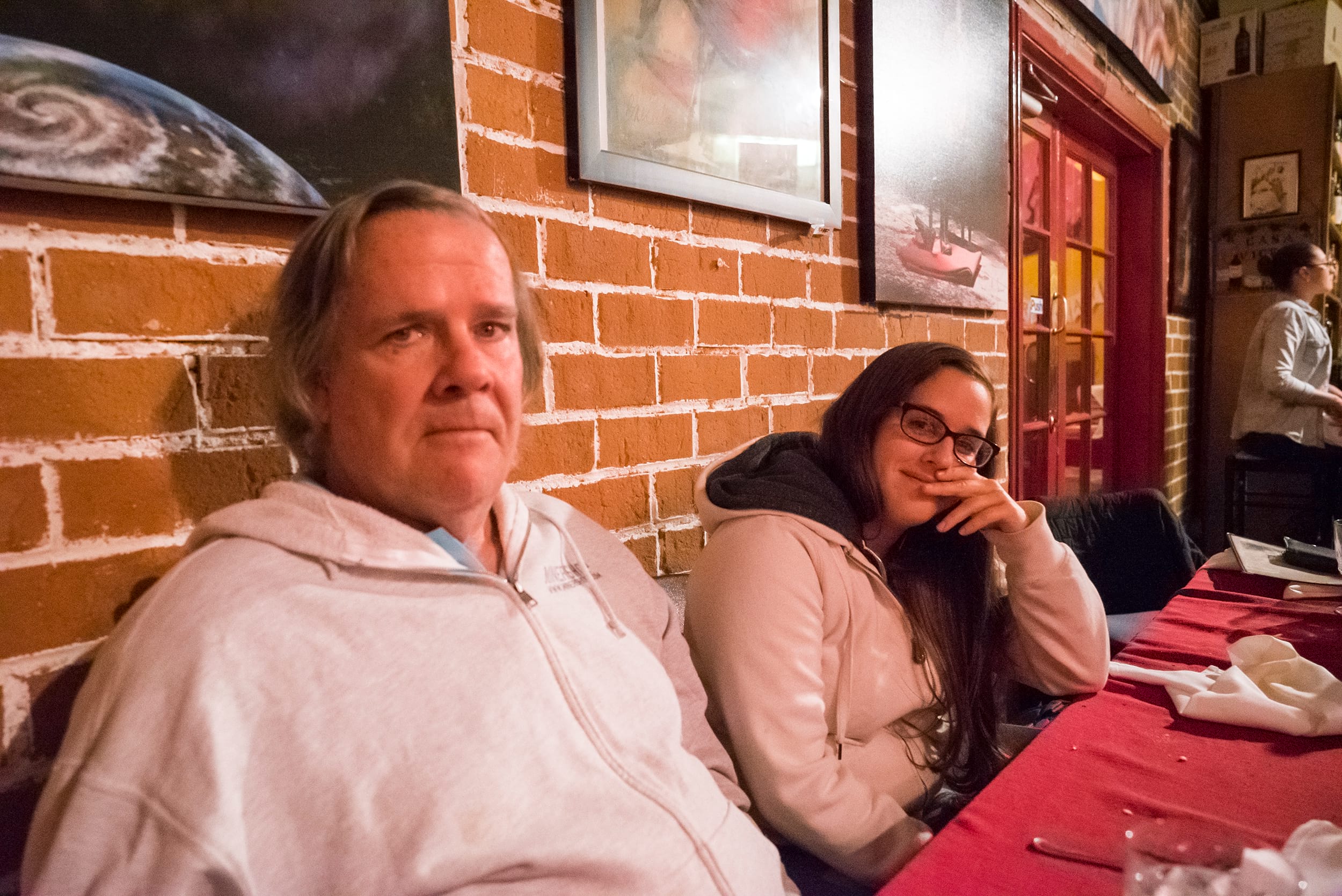
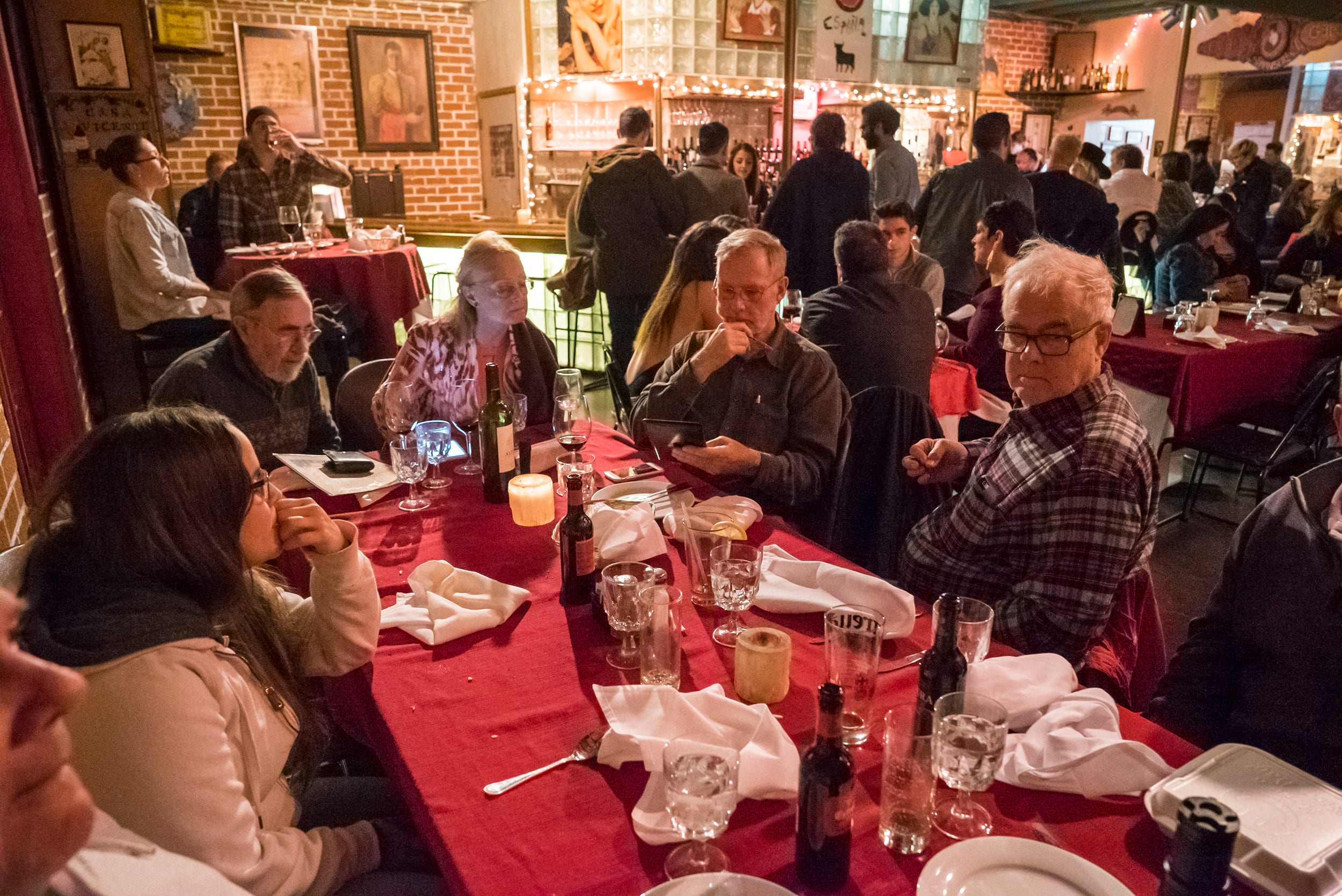
The first night's dinner. Here I got to meet Glenn and Linda Waychunas. Wonderful company and wonderful talks about various fluorescent minerals - some on the cusp on science, others we had found recently or purchased that day, and more. This is where Mark and I first learned of that Convoy S2+, the light that Mark claims brought a new revolution to this hobby. I'll admit I can't come close to the price they're offering for that light. That's Chinese labor for you!
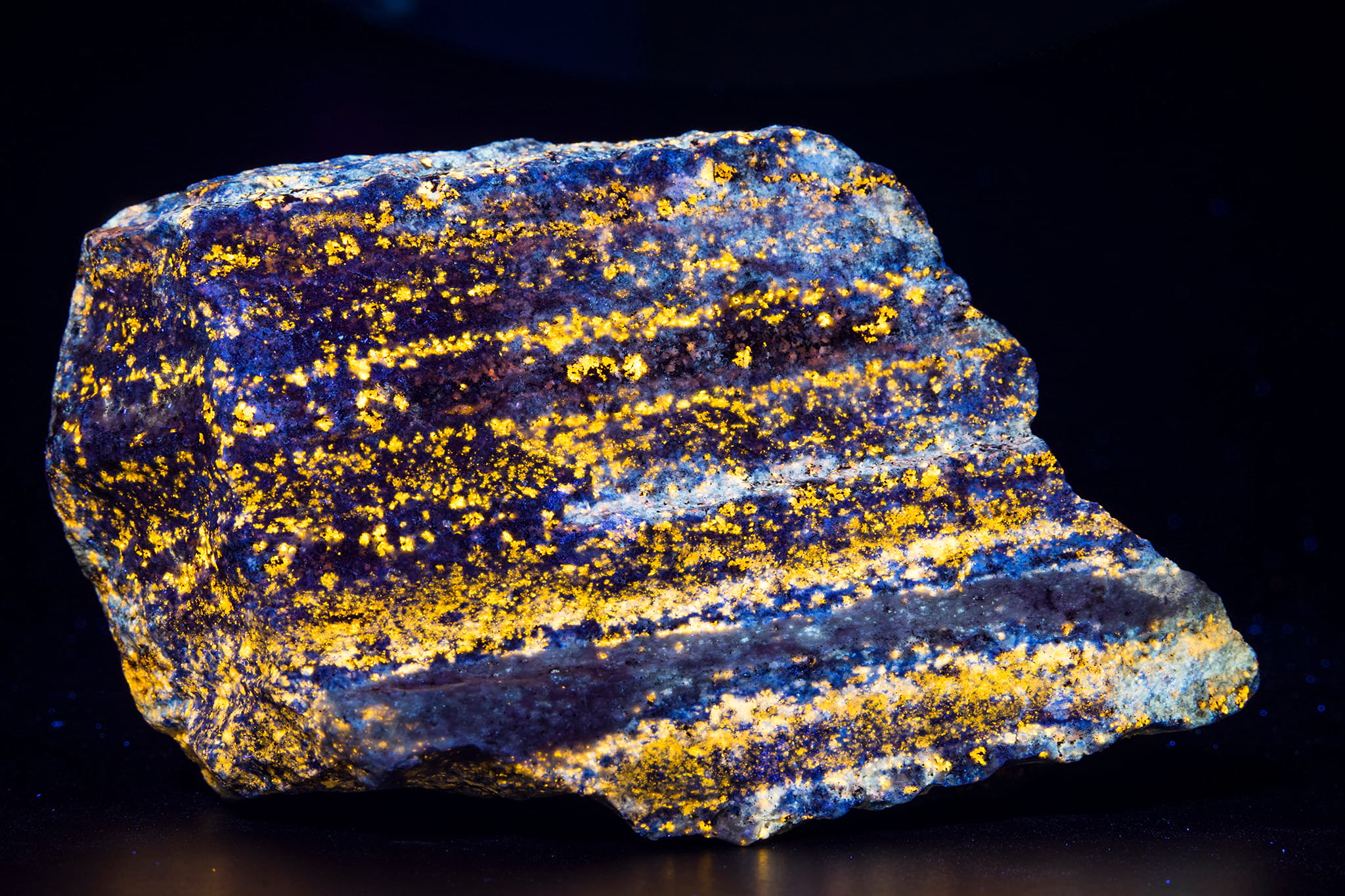
The next day we started at Electric Park (aka Kino Sports Complex). Mark & Co were running late so Steve and I got to look through a couple stalls first. That's where I purchased this beautiful lapis - handpicked from a huge container of lapidary rough for its fluorescence.

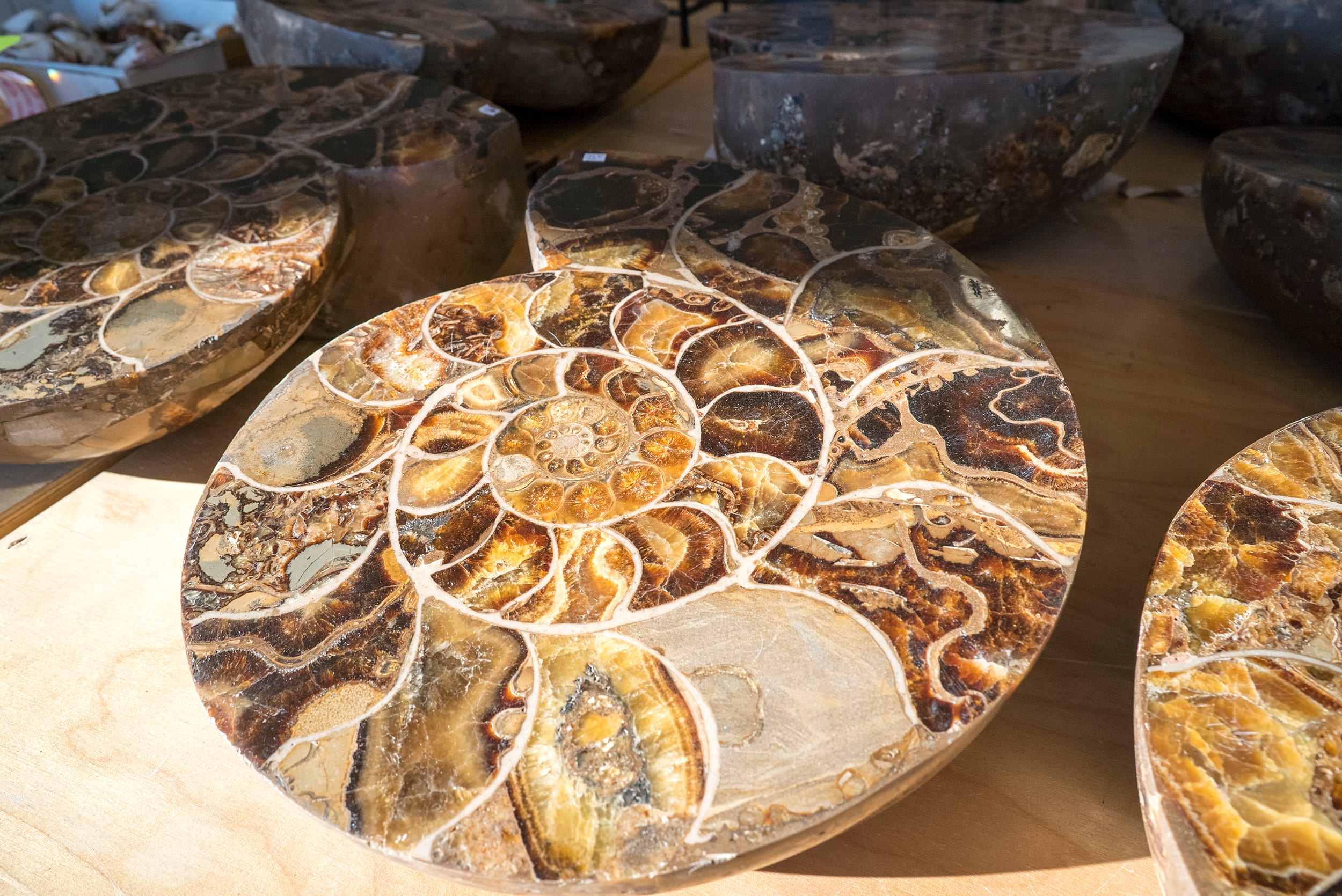
When they finally arrived we started exploring. On display were some wonderful works of art made with actual minerals! For example, the purple on the right photo contains actual tourmaline. The artist is a Tucson local named Zee's (https://www.zeesminerals.org/)


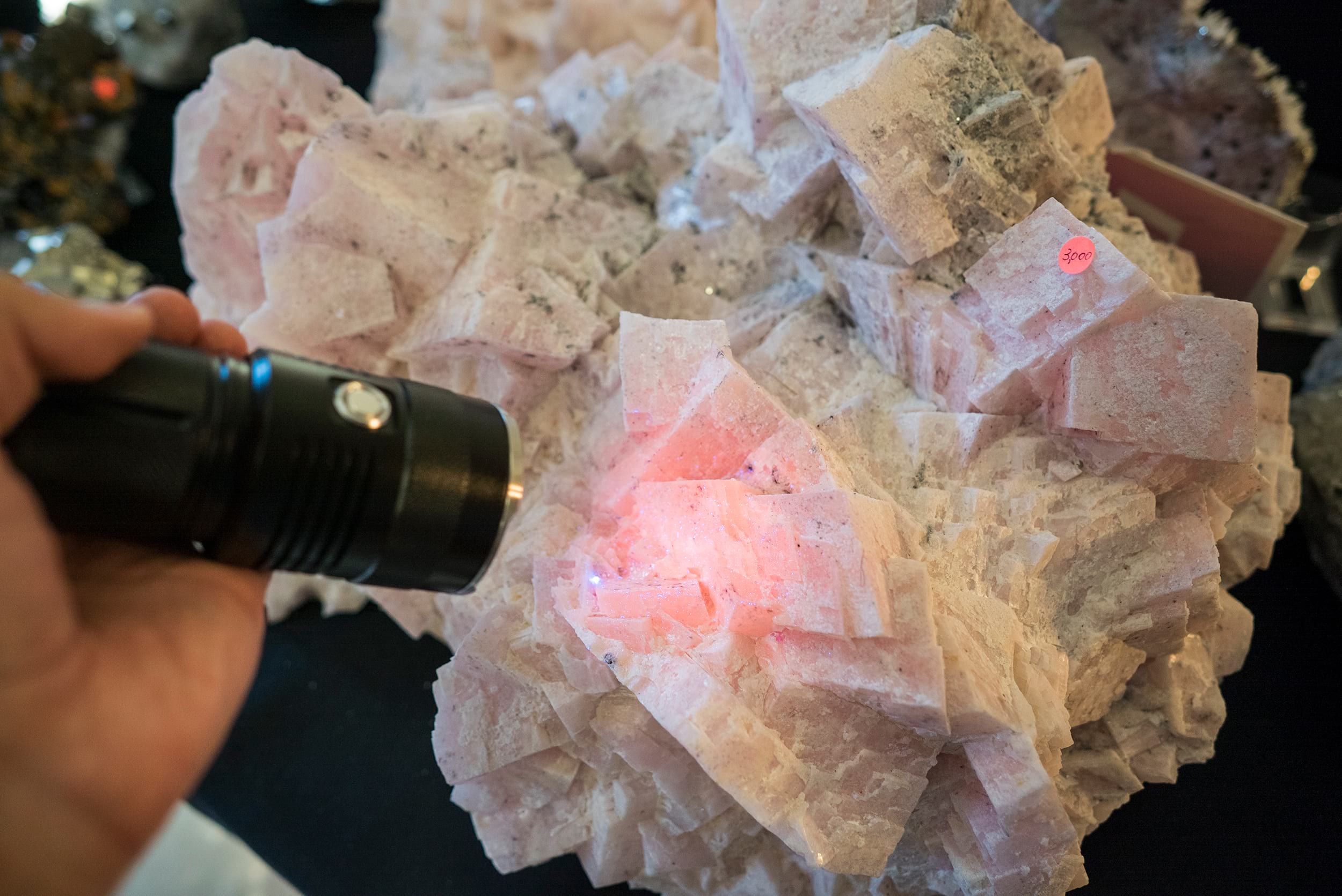
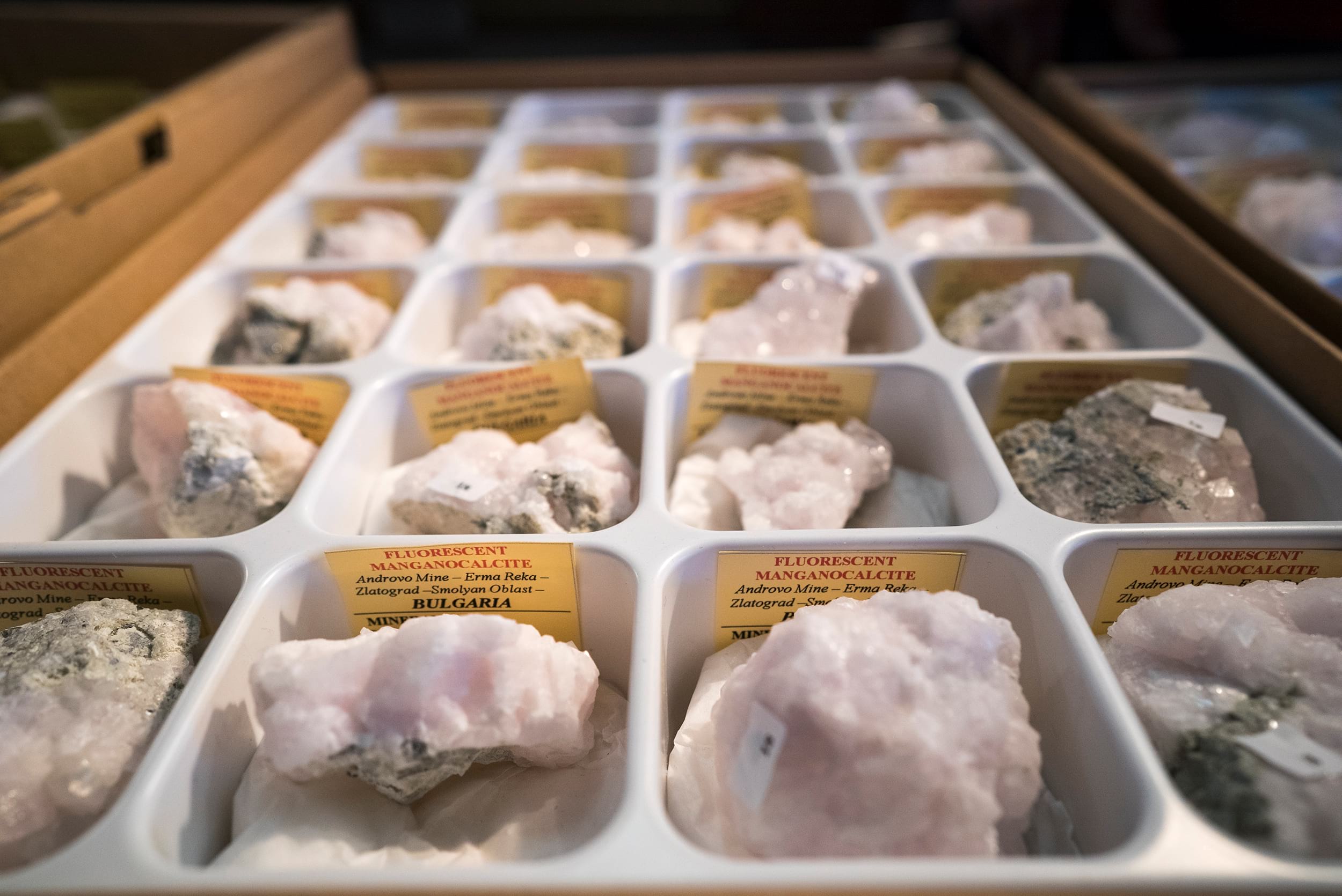
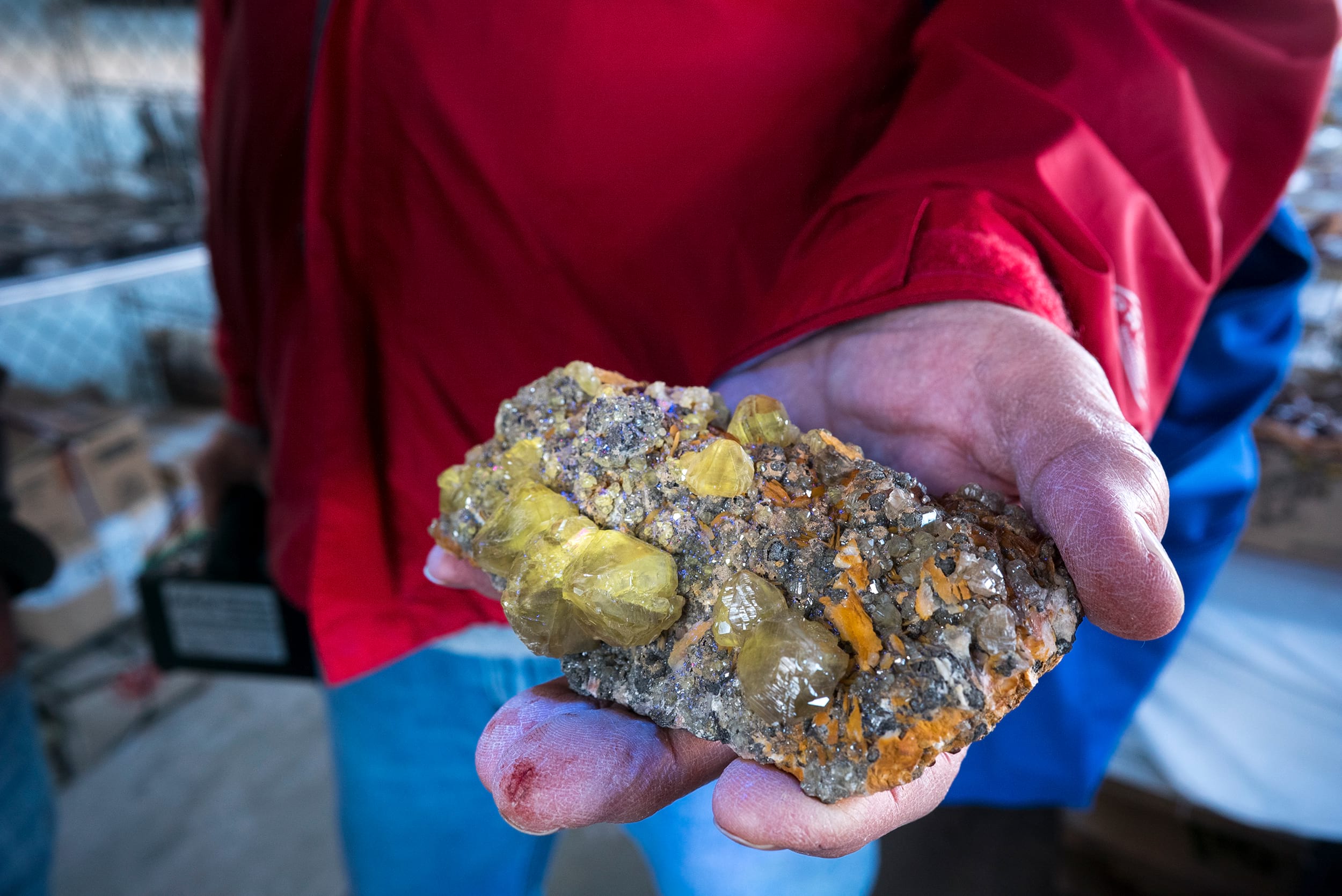
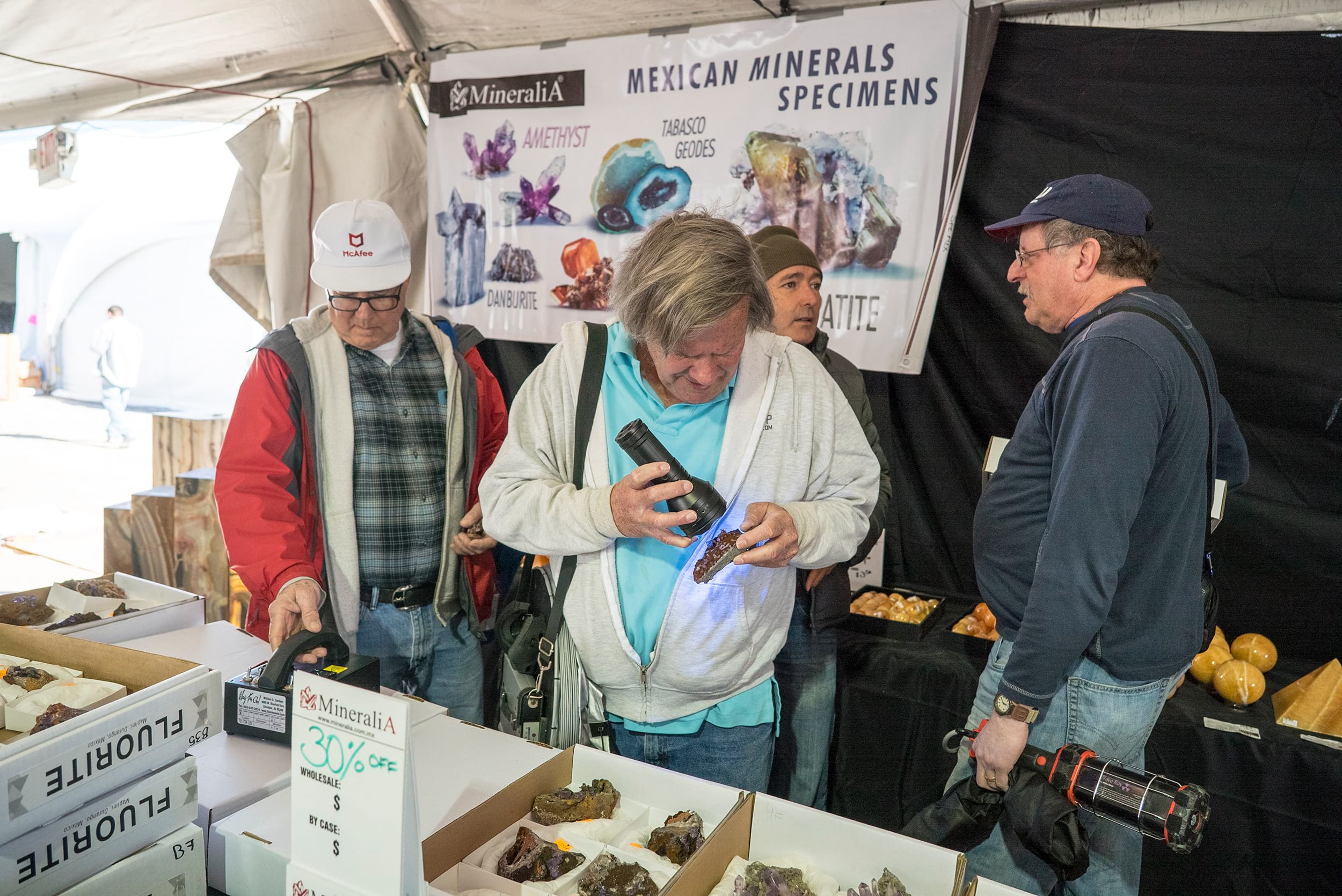
This was my discovery that sparked a lot of sales (I imagine) for this seller specifically. Not having any expectations I tested random minerals for fluorescence, even if I knew they wouldn't be fluorescent or knew their reactions. That's when I stumbled upon this gem. I was with Howie at the moment and had told him "Hey, this fluorite is fluorescing red. Is that rare?" He deadstops and immediately demands that I show him where. That's when I knew I found something good. For the next 30-45 minutes we look through every single box the dealer has of this material picking out the best of the best. Of course, after we pick the ones we want we call Mark & co so that they can pick the rest of the spoils. Because we go to Tucson as soon as it opens (end of January) and most fluorescent collectors go for the Fluorescent Mineral Society meeting or Mindat.org meeting (first week of February) we have a head start. Mark had posted about this and multiple others reported on buying a fluorescent red fluorite from him as well. Hope they put in a good word for us! Maybe we'll get a bigger discount next time!
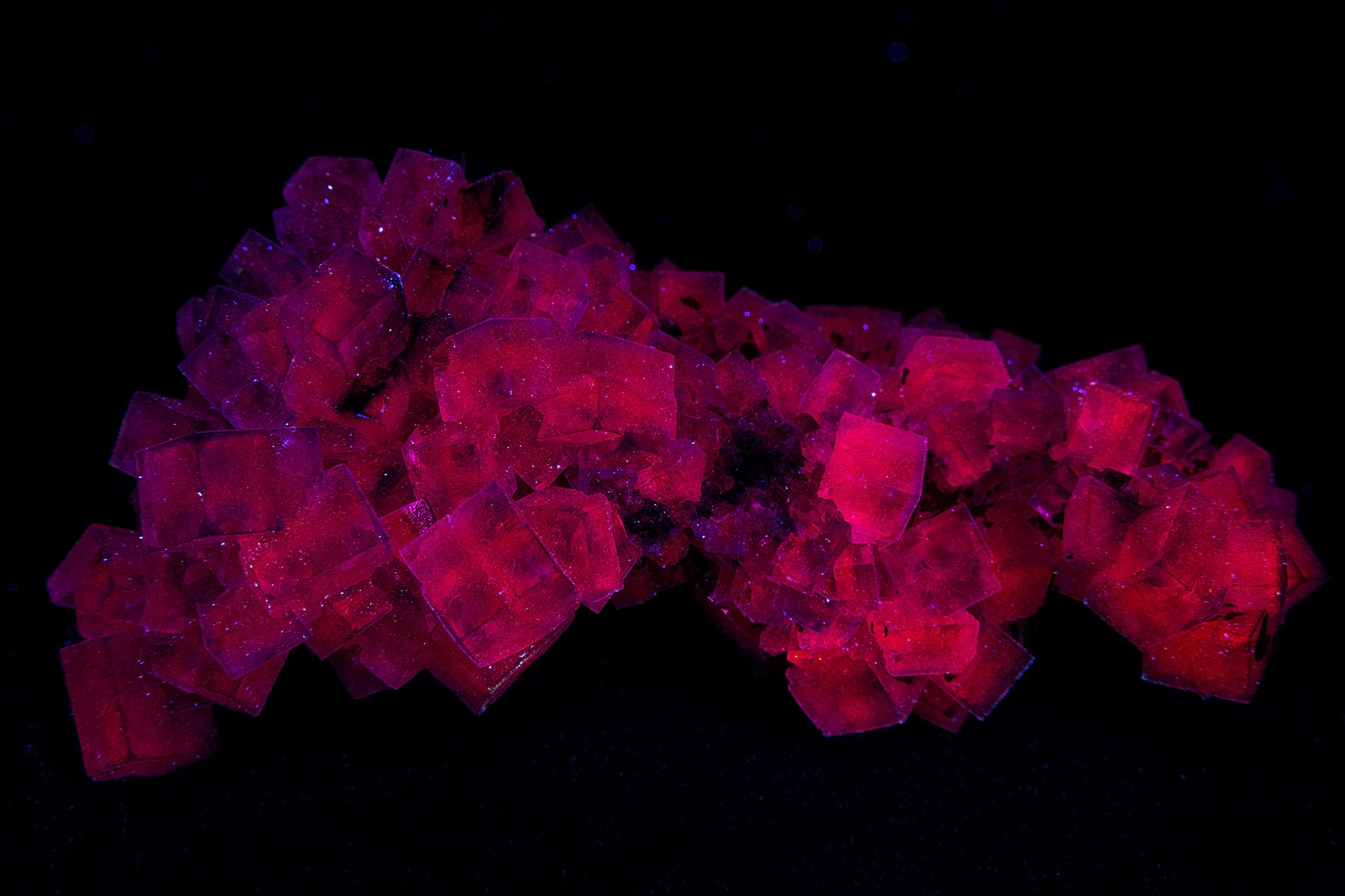
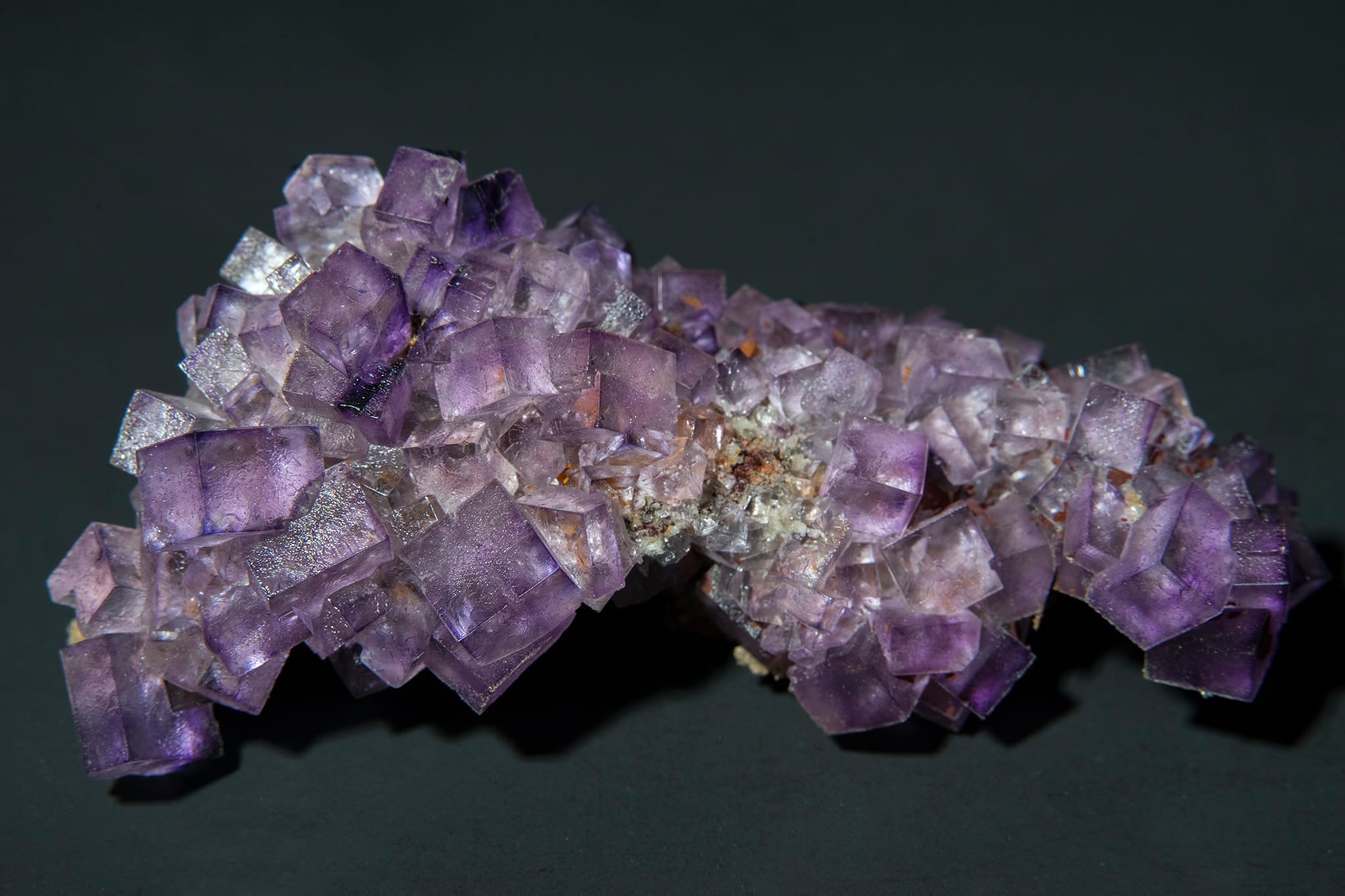
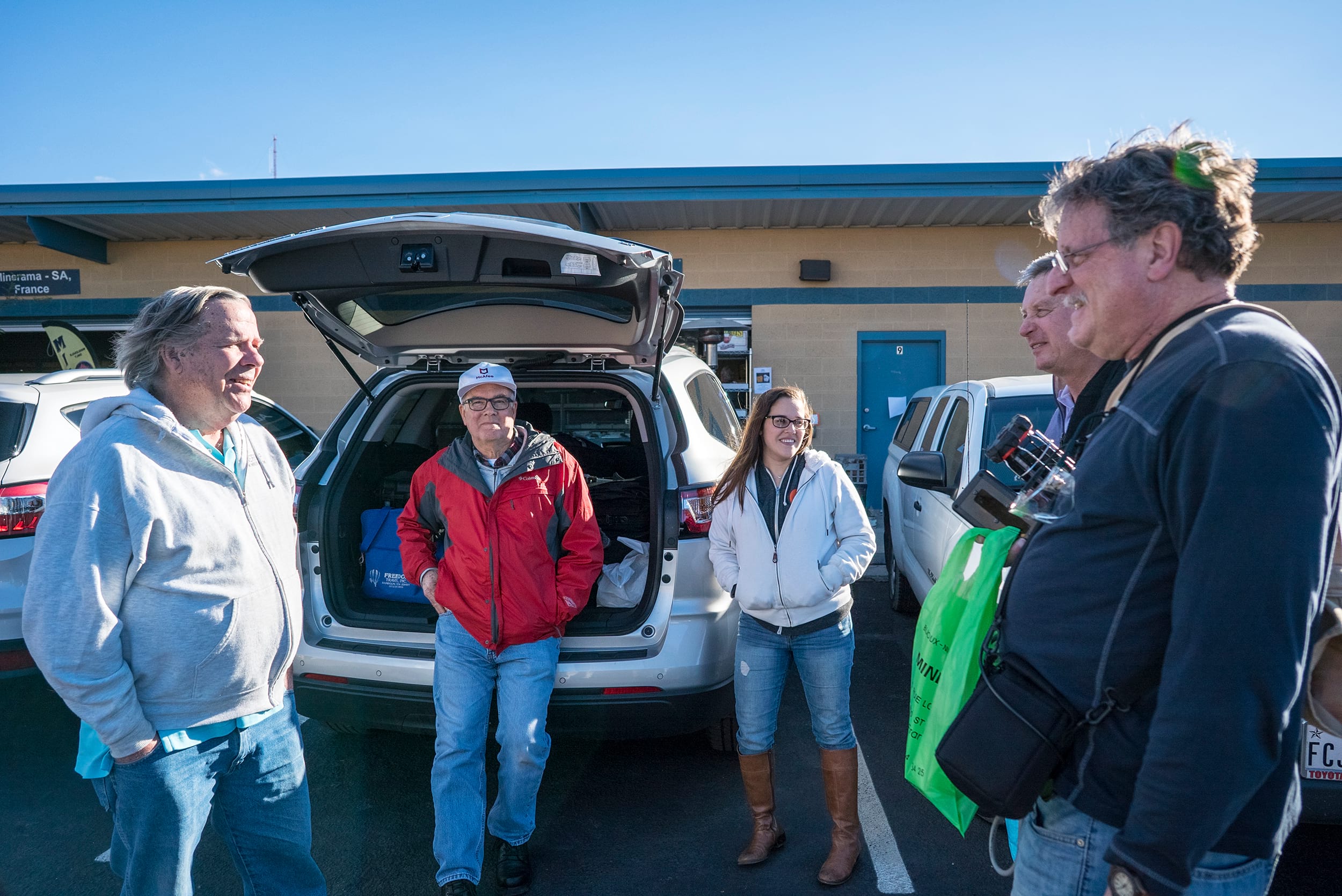
After we had finished shopping for the morning it was time to go collecting! Dan Moore of mineralarts (http://www.mineralarts.com/) took us on a tour to Helvetia. It was a beautiful hike and the weather was great. We did quite a fair bit of bushwhacking though as this trail clearly wasn't used very often. Good! Because that meant not many collectors go there!
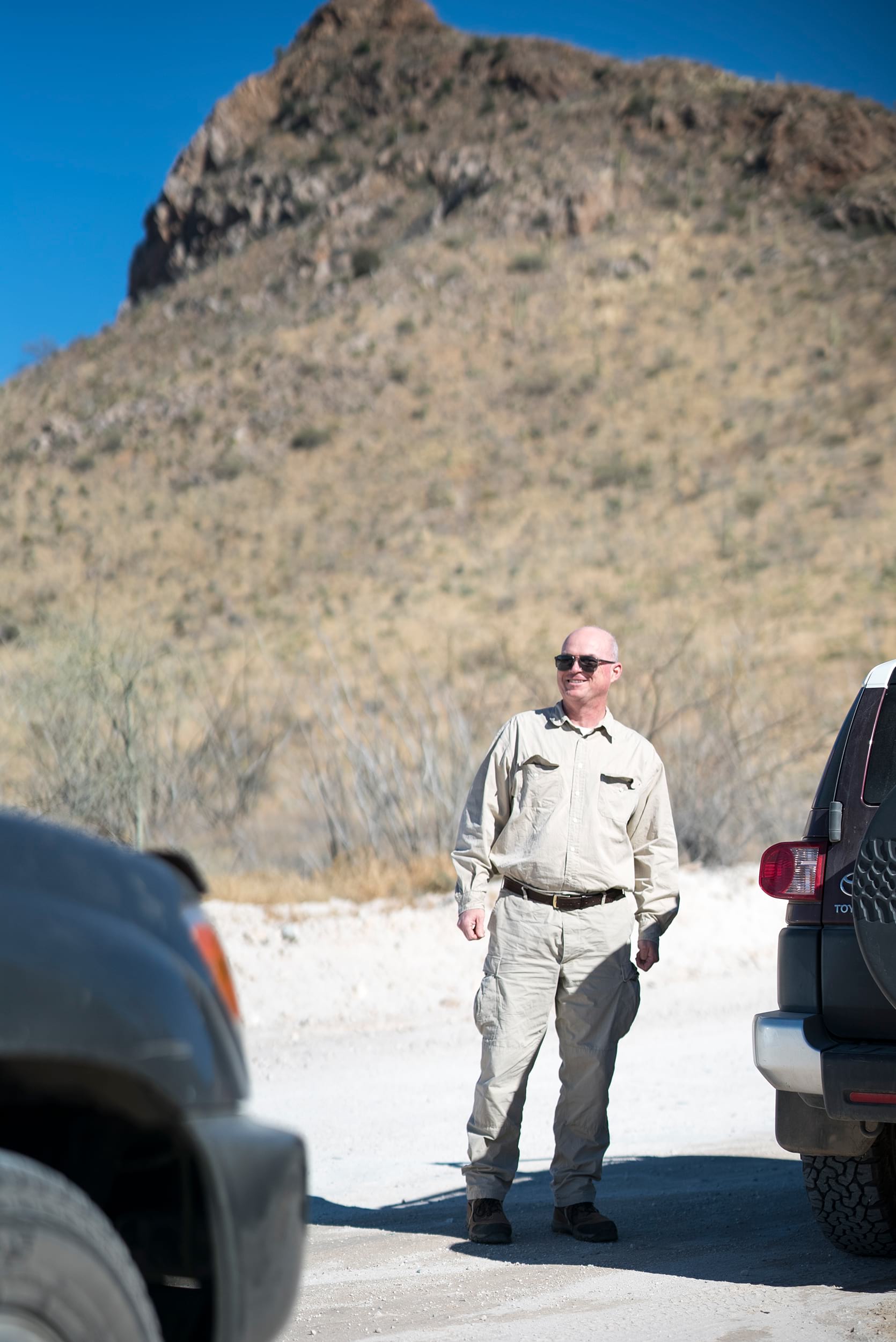
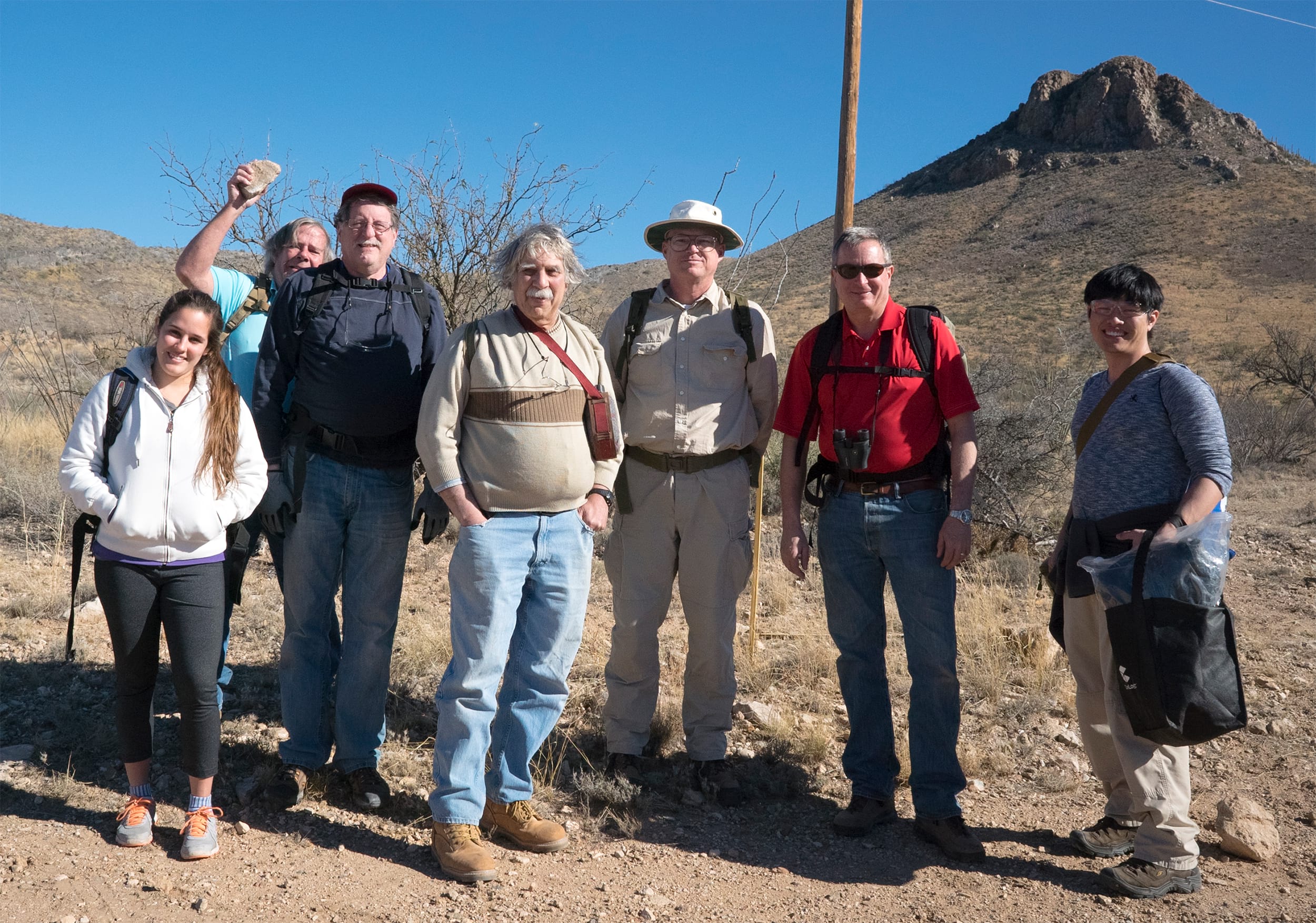
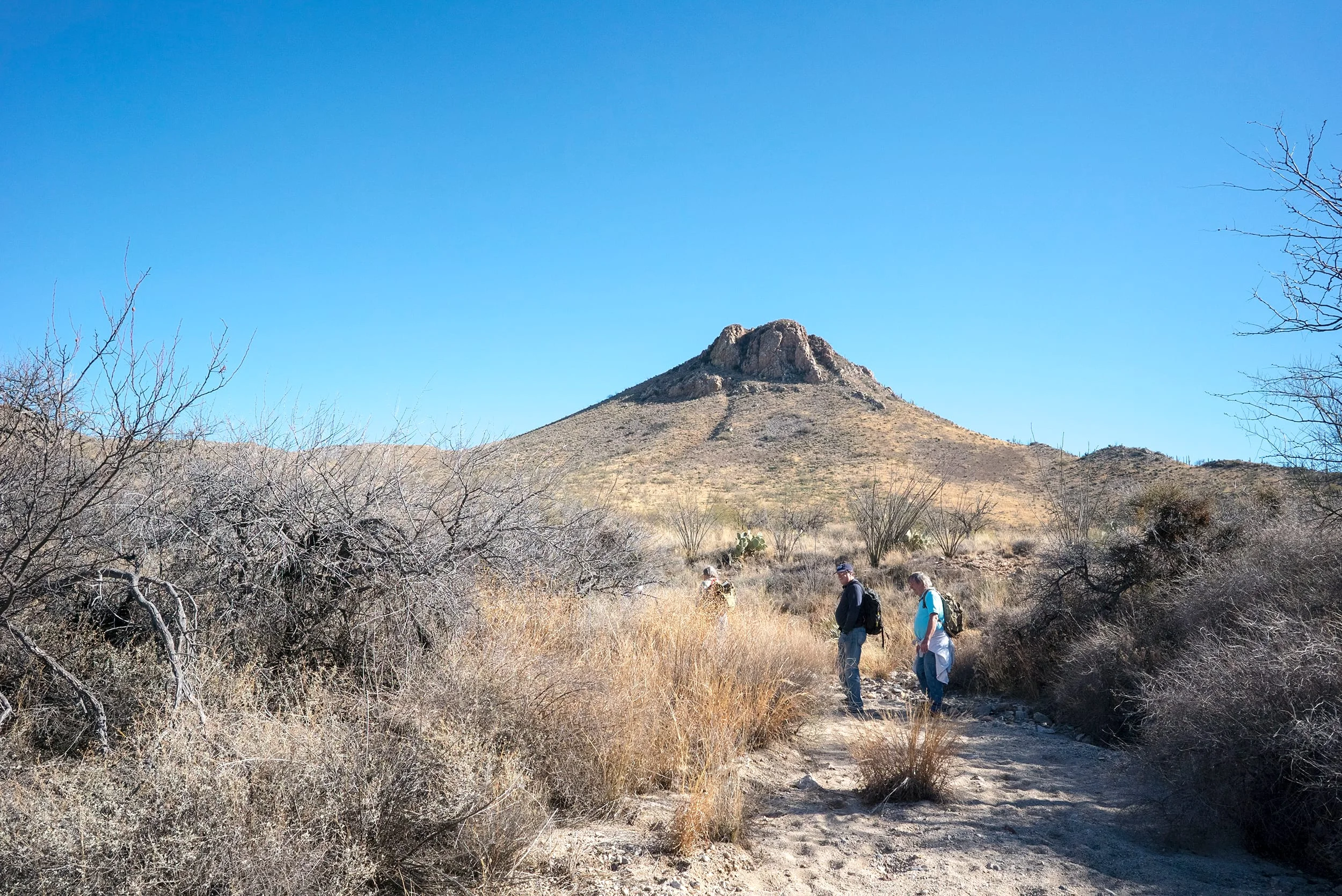
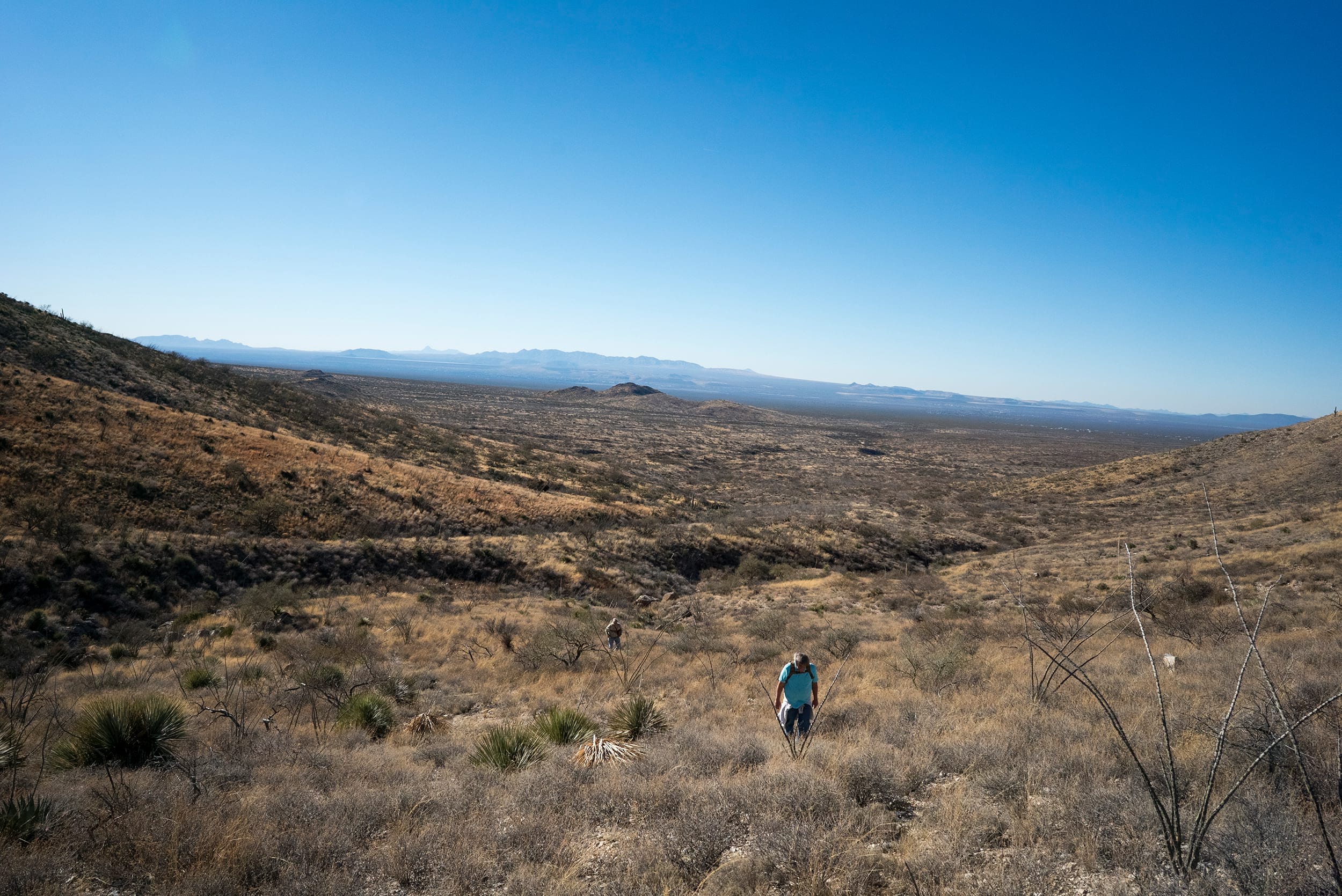
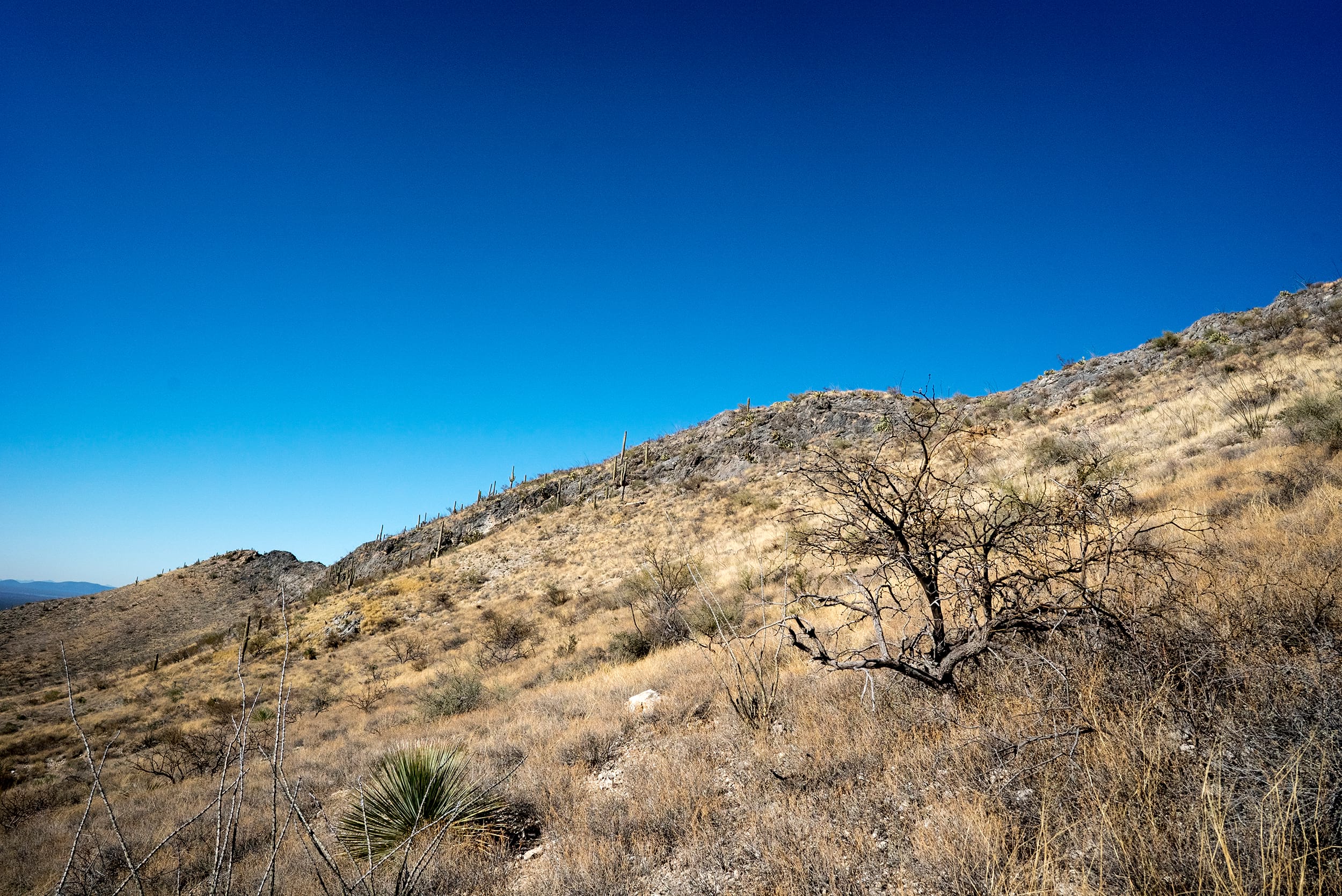
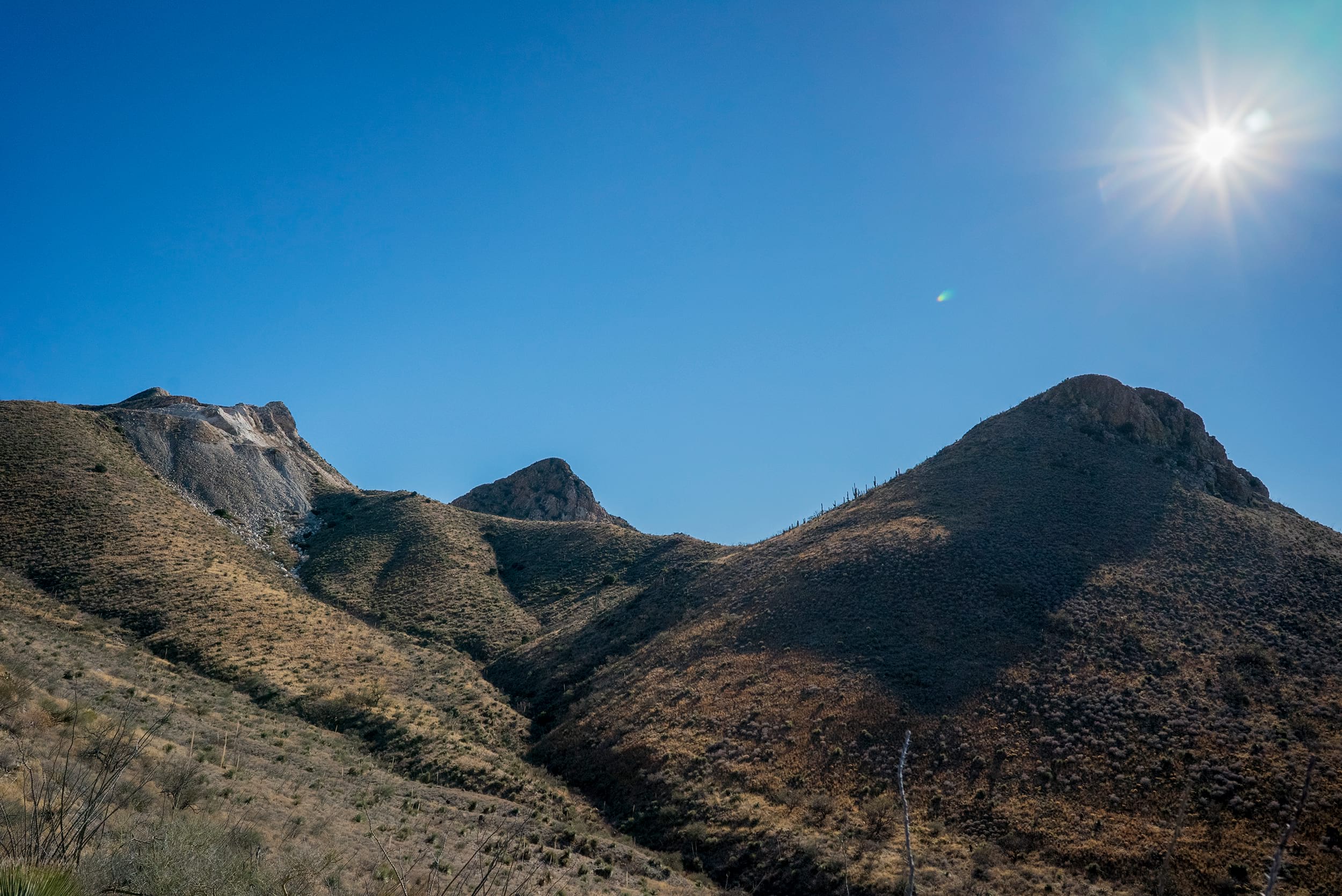
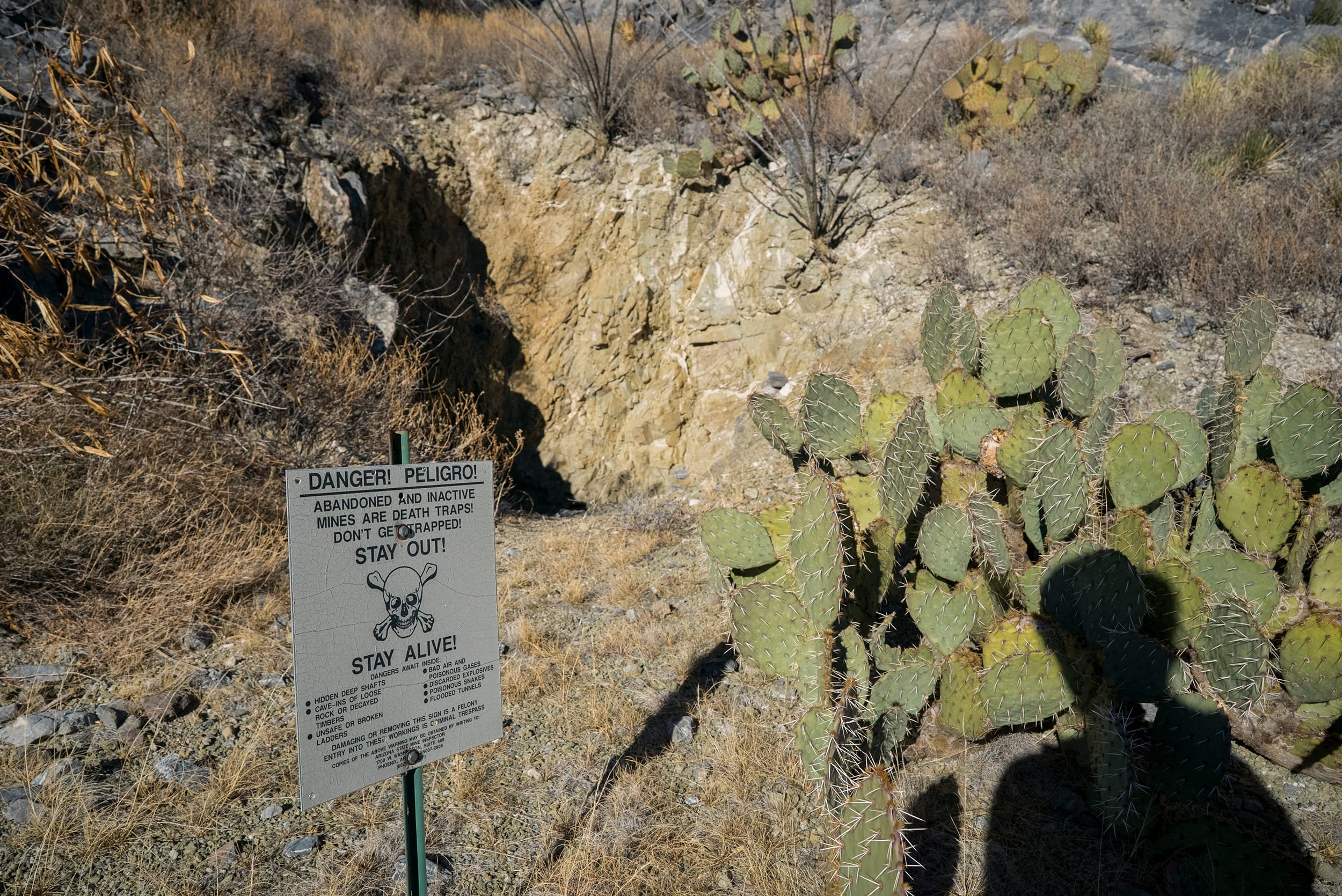
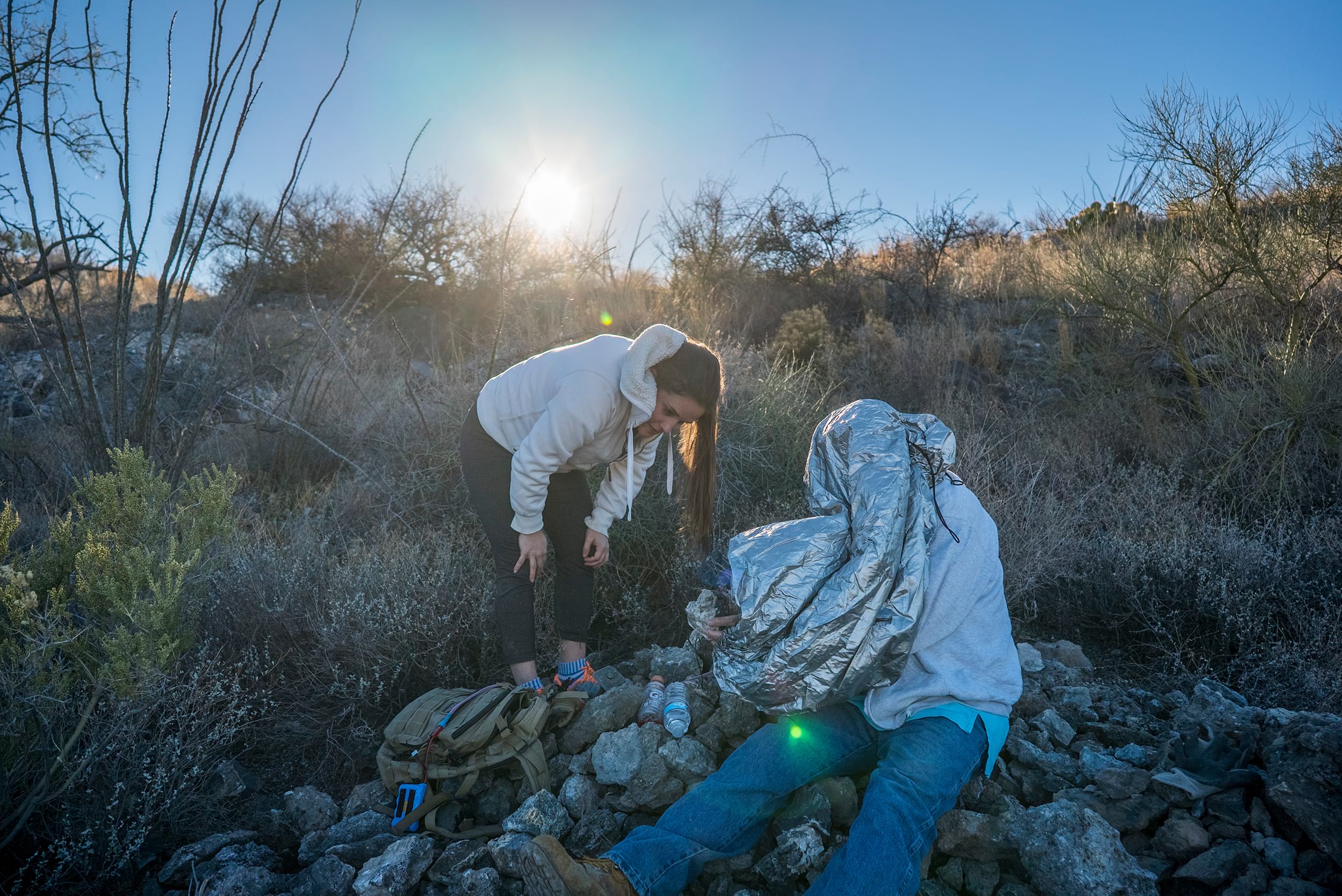
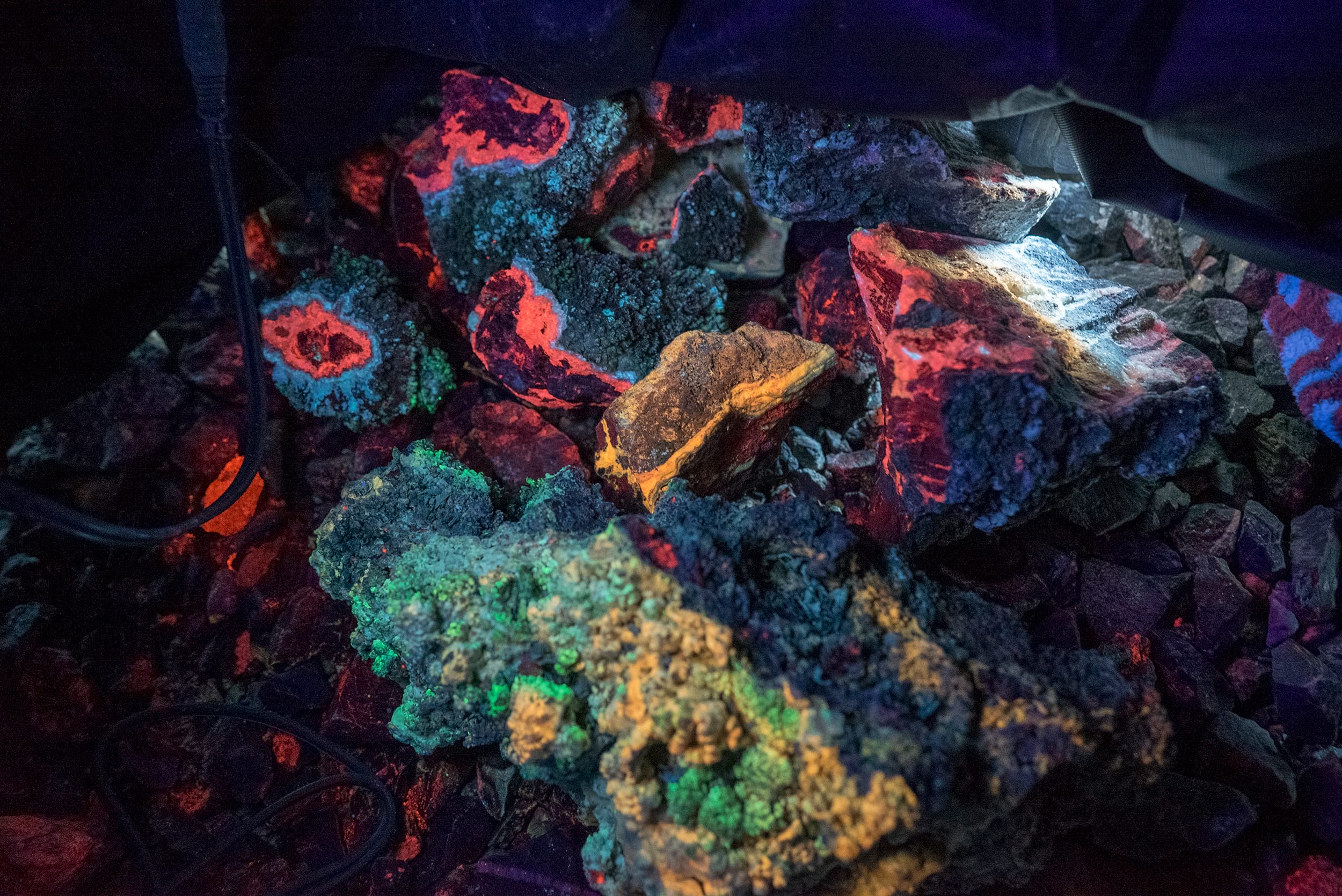
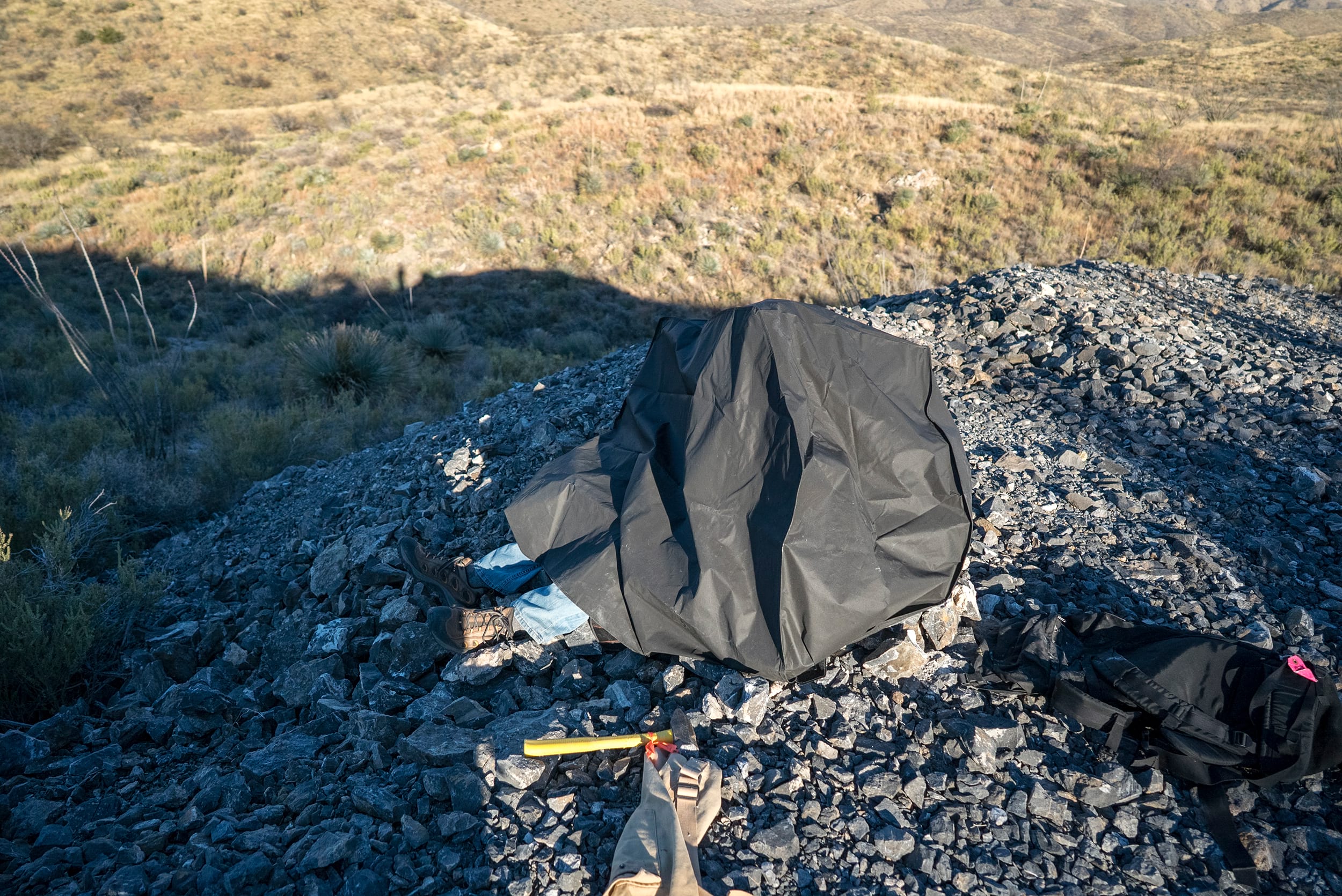
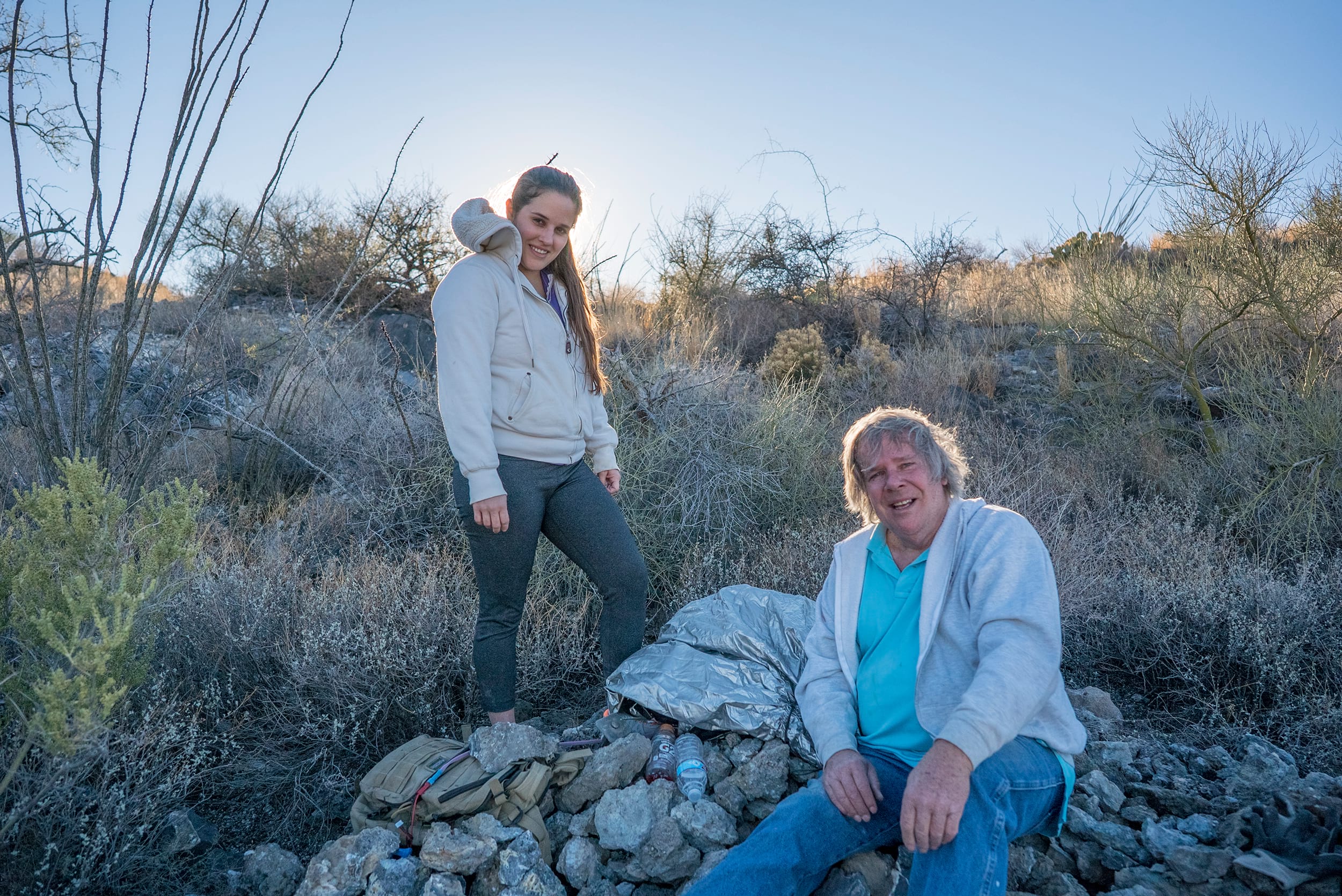
We were now at the spot where Dan had collected his wonderful Helvetia fluorescents. The amazing thing was that we were the first group of fluorescent collectors he had taken up there. Good to know that Dan didn't completely pick over the site! There were wonderful fluorescents to be had there with everyone getting some wonderful specimens to take home.
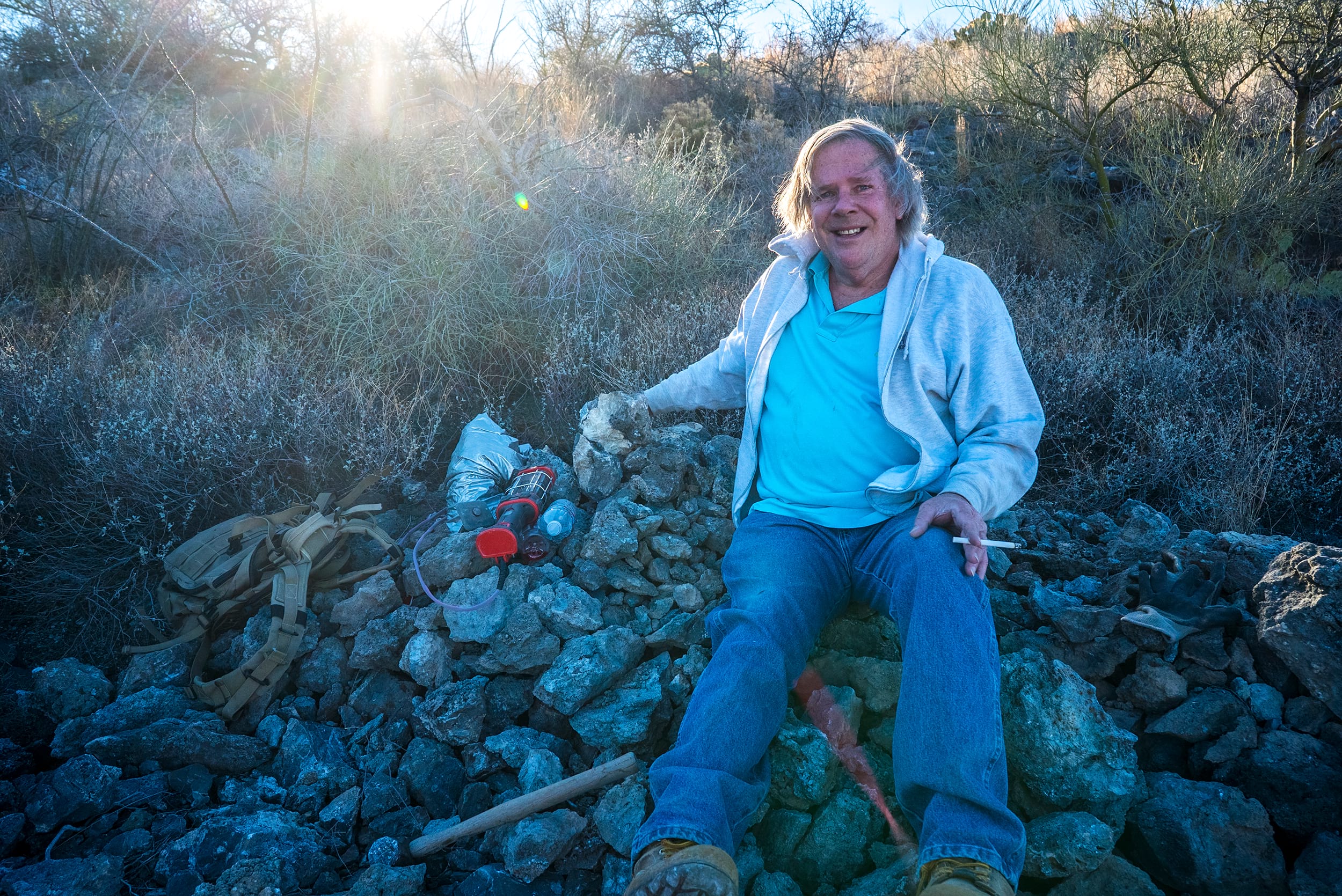
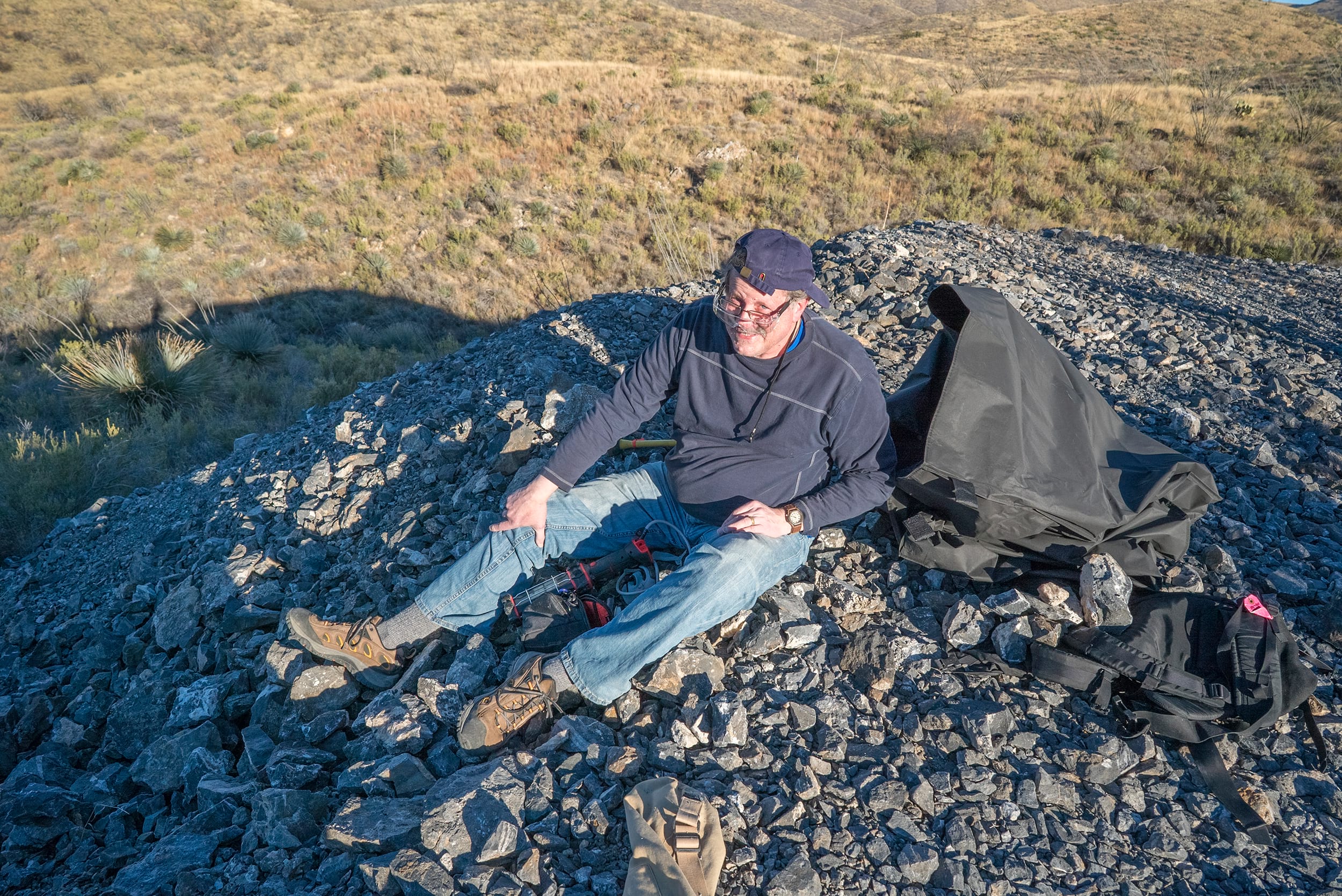
After every night the group would get together and show off their purchases for the day. In this case it was after the Helvetia trip so we got to show off what we found as well. It made for a wonderful group shot with a wide mix of materials.
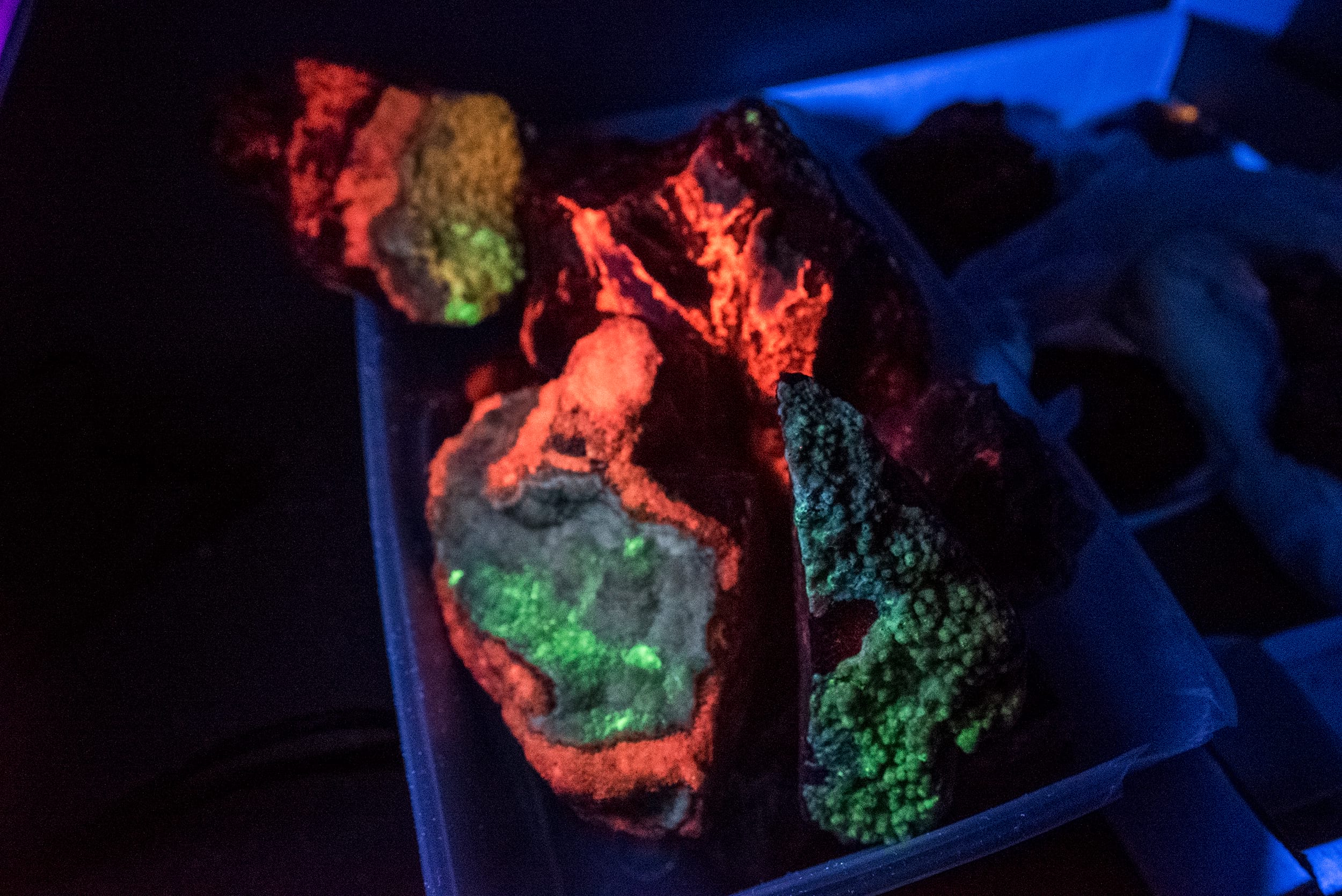
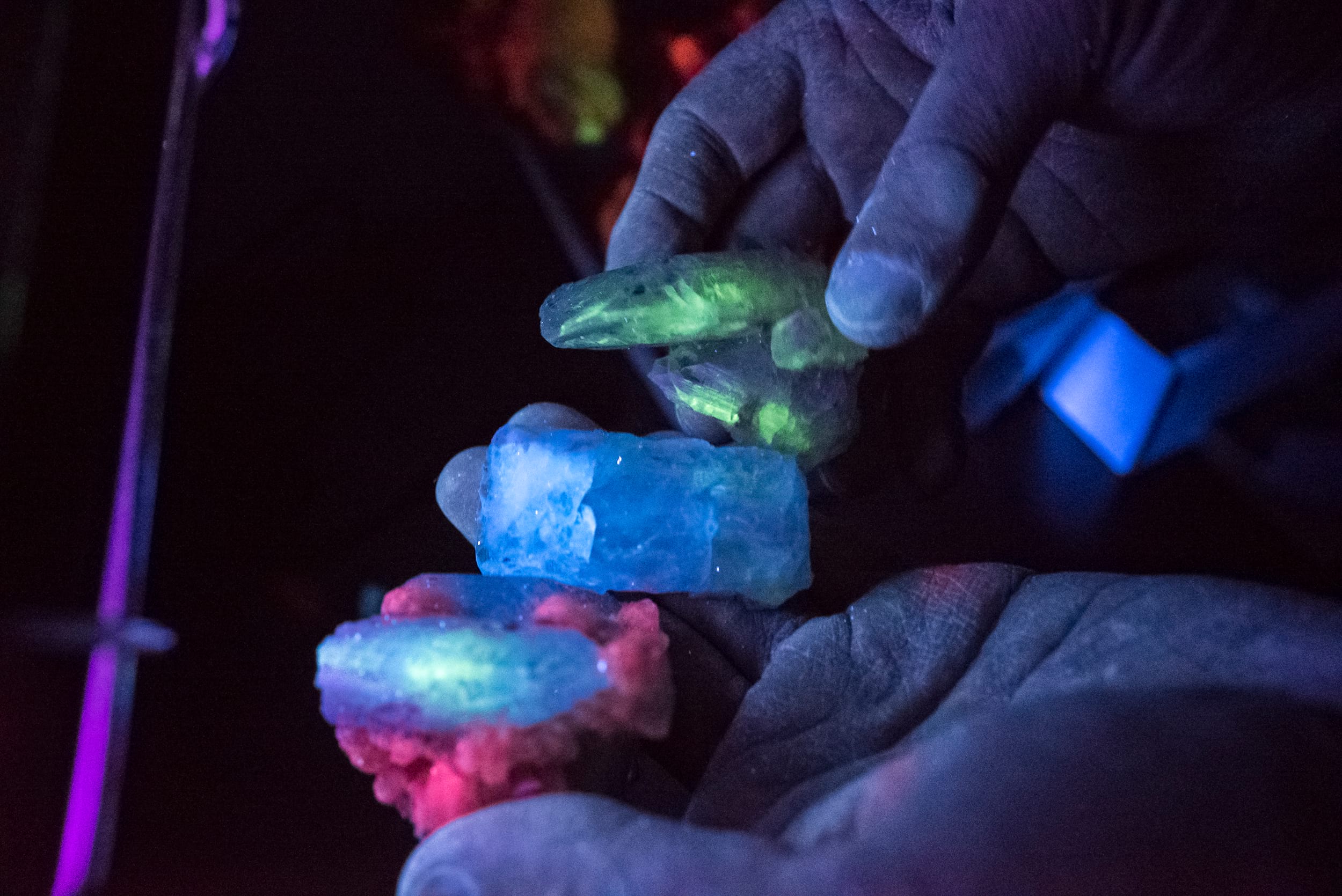
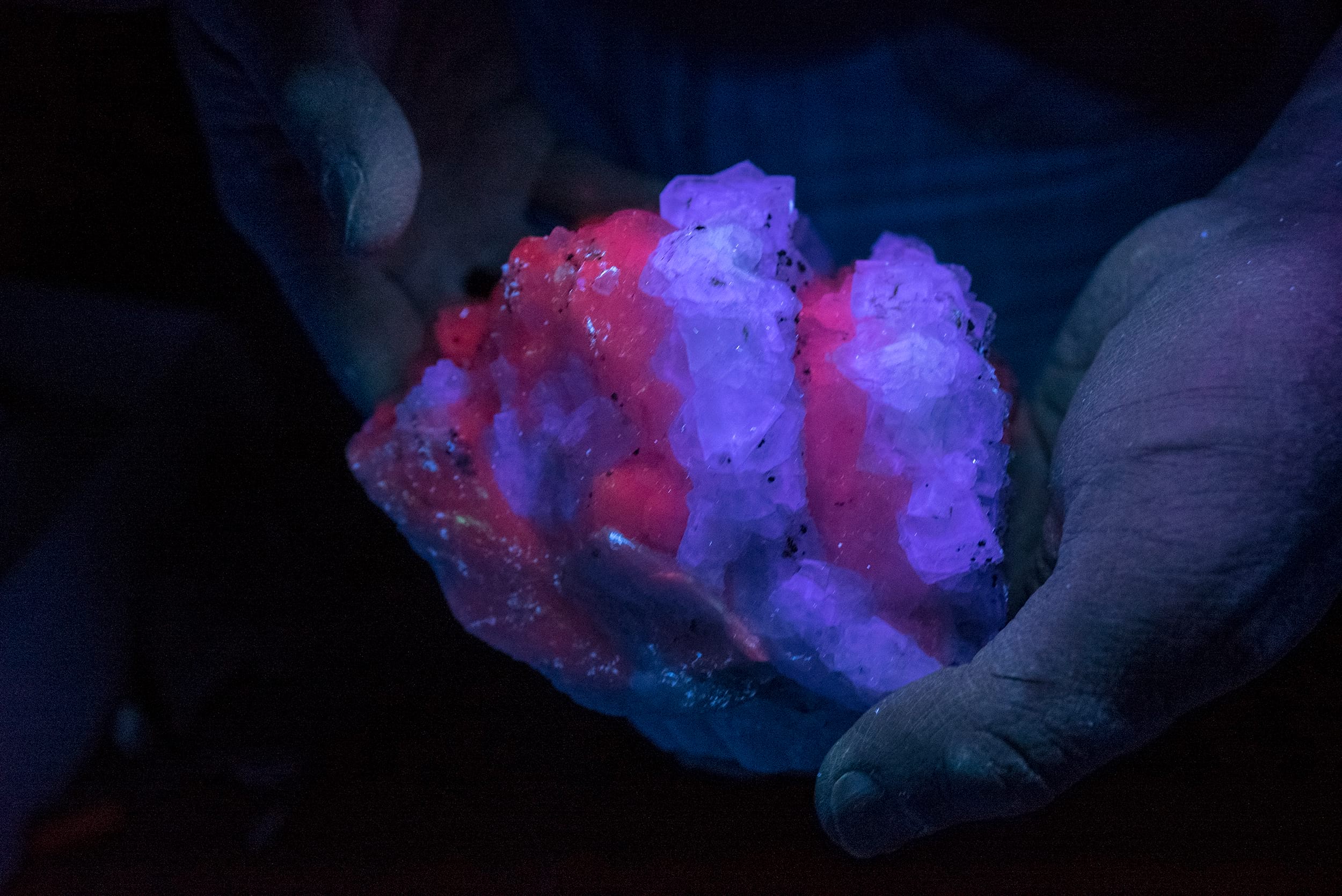
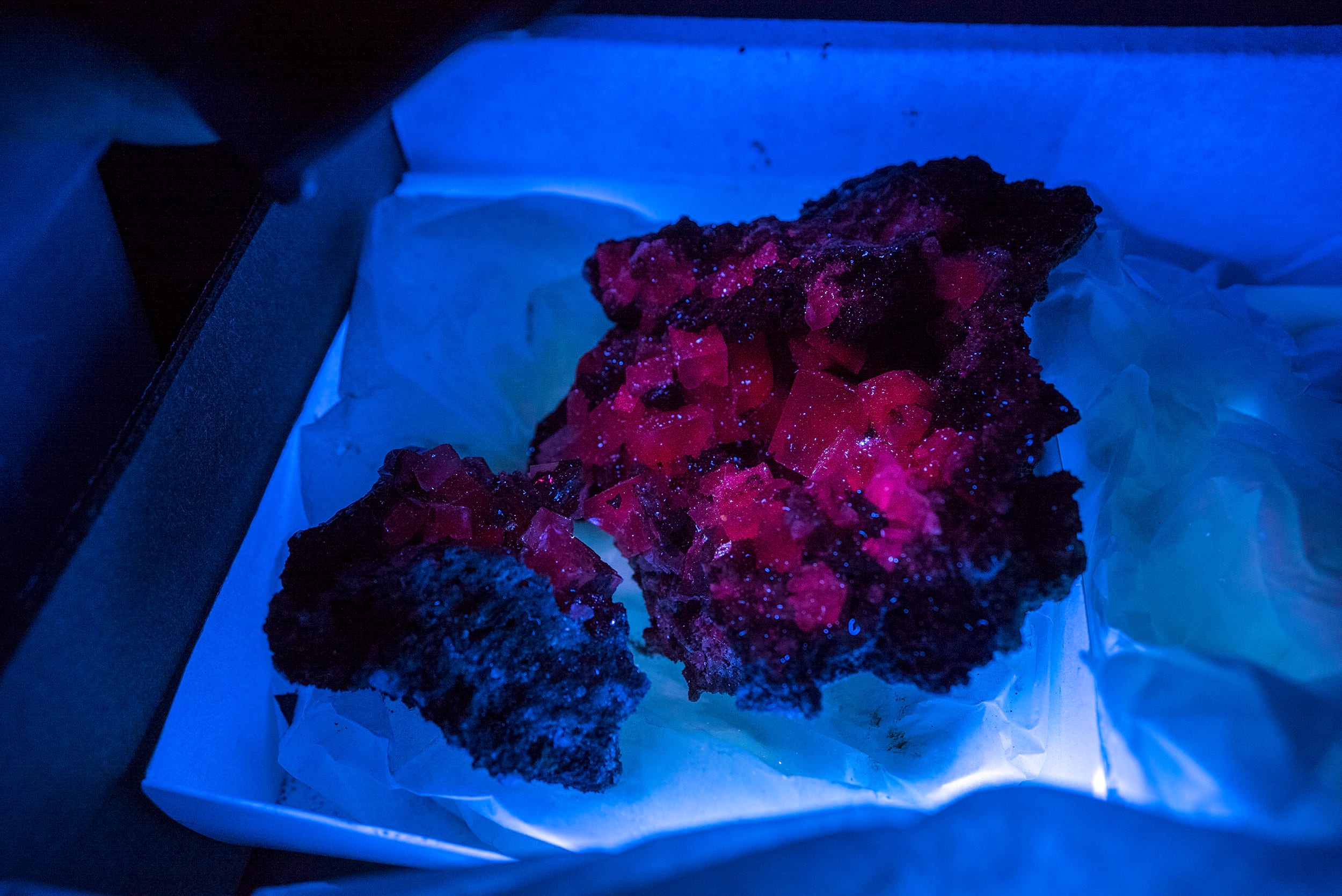
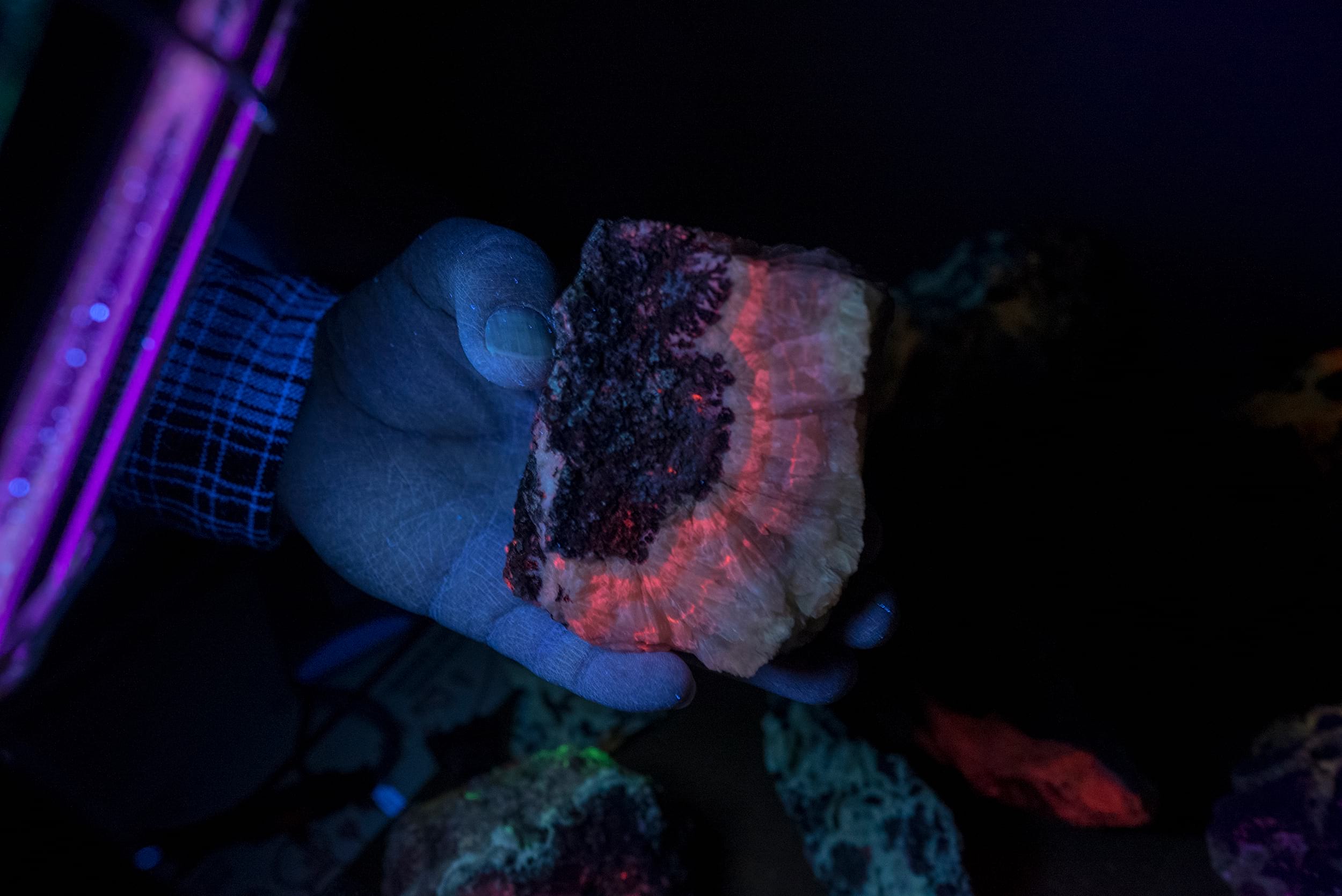
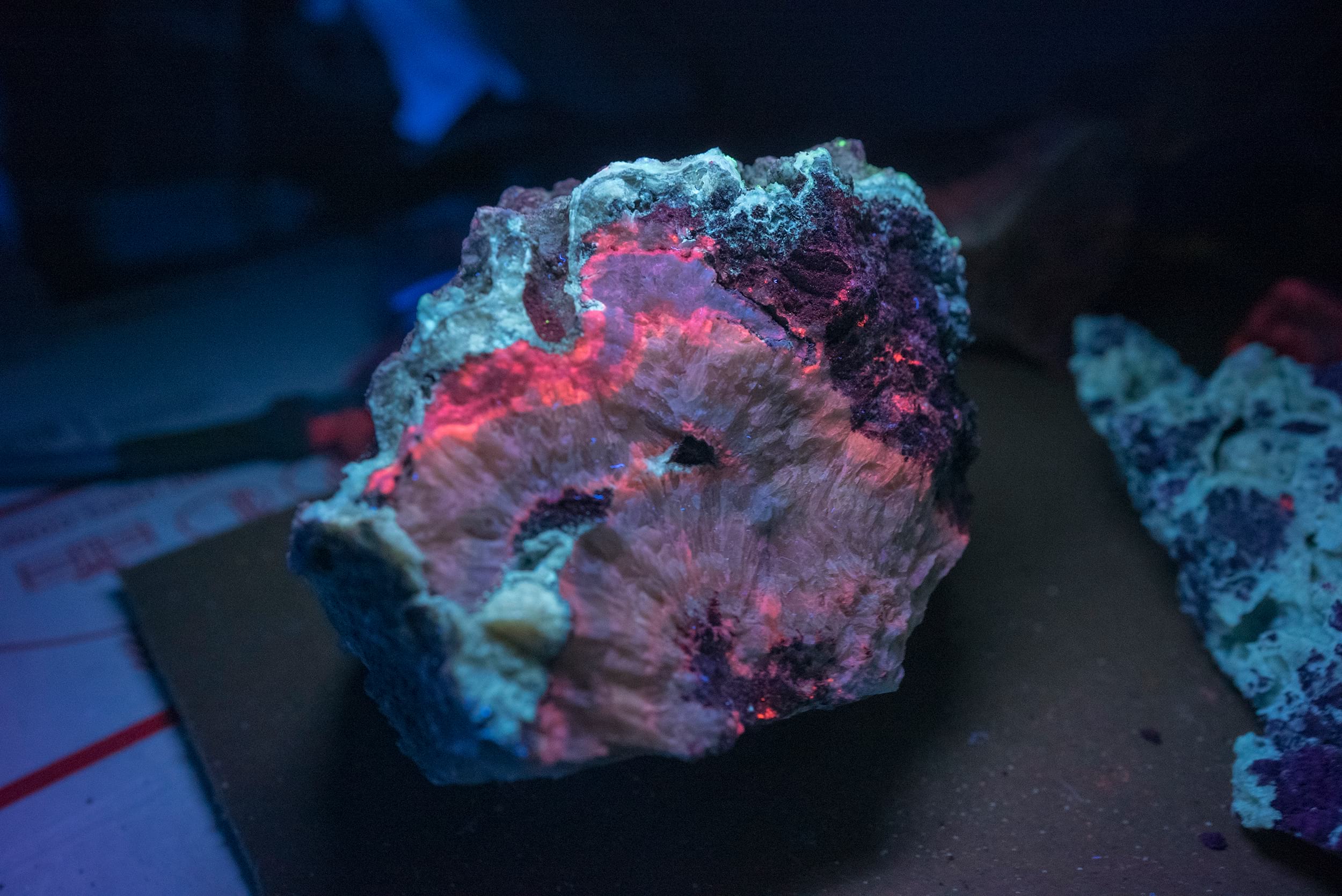
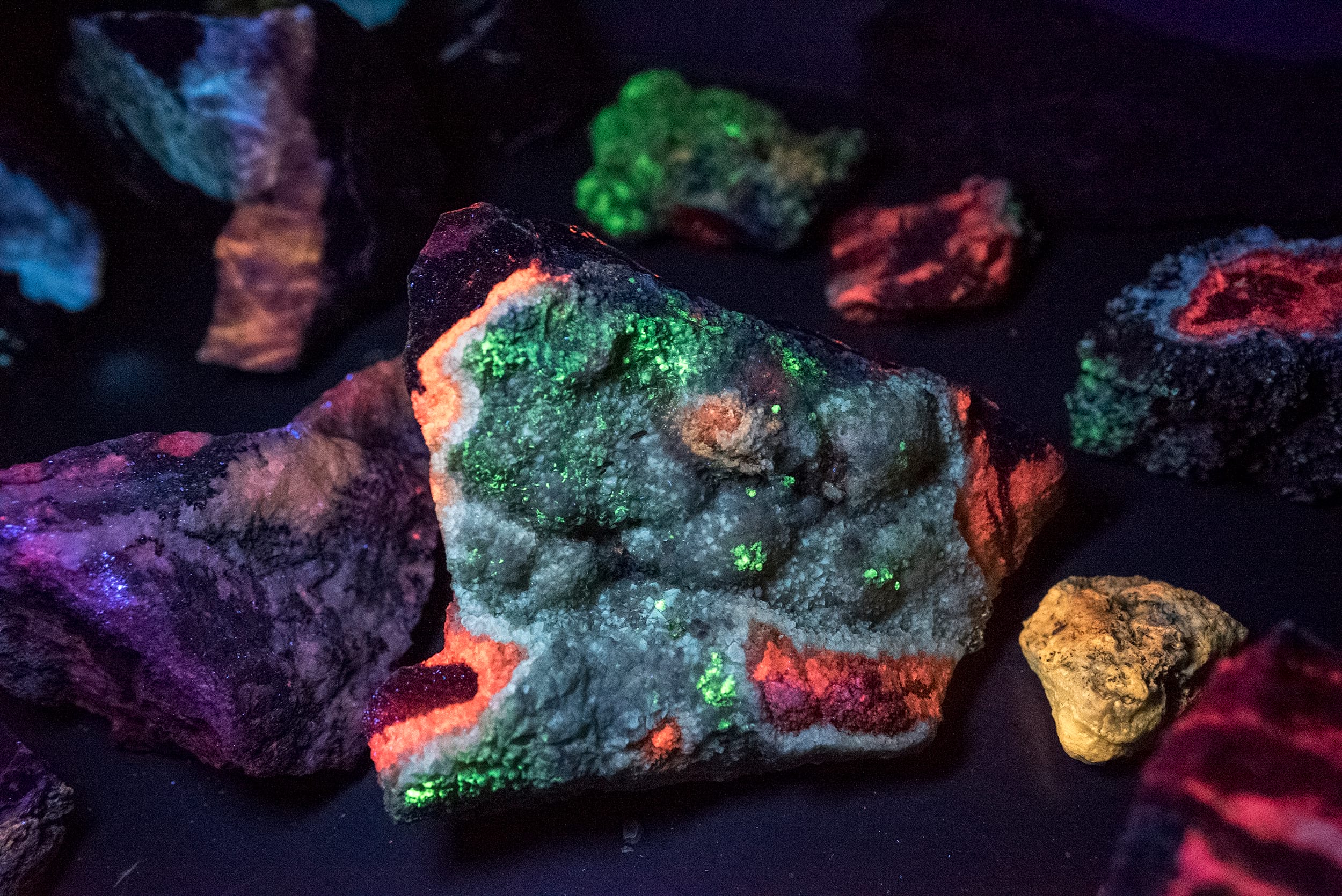
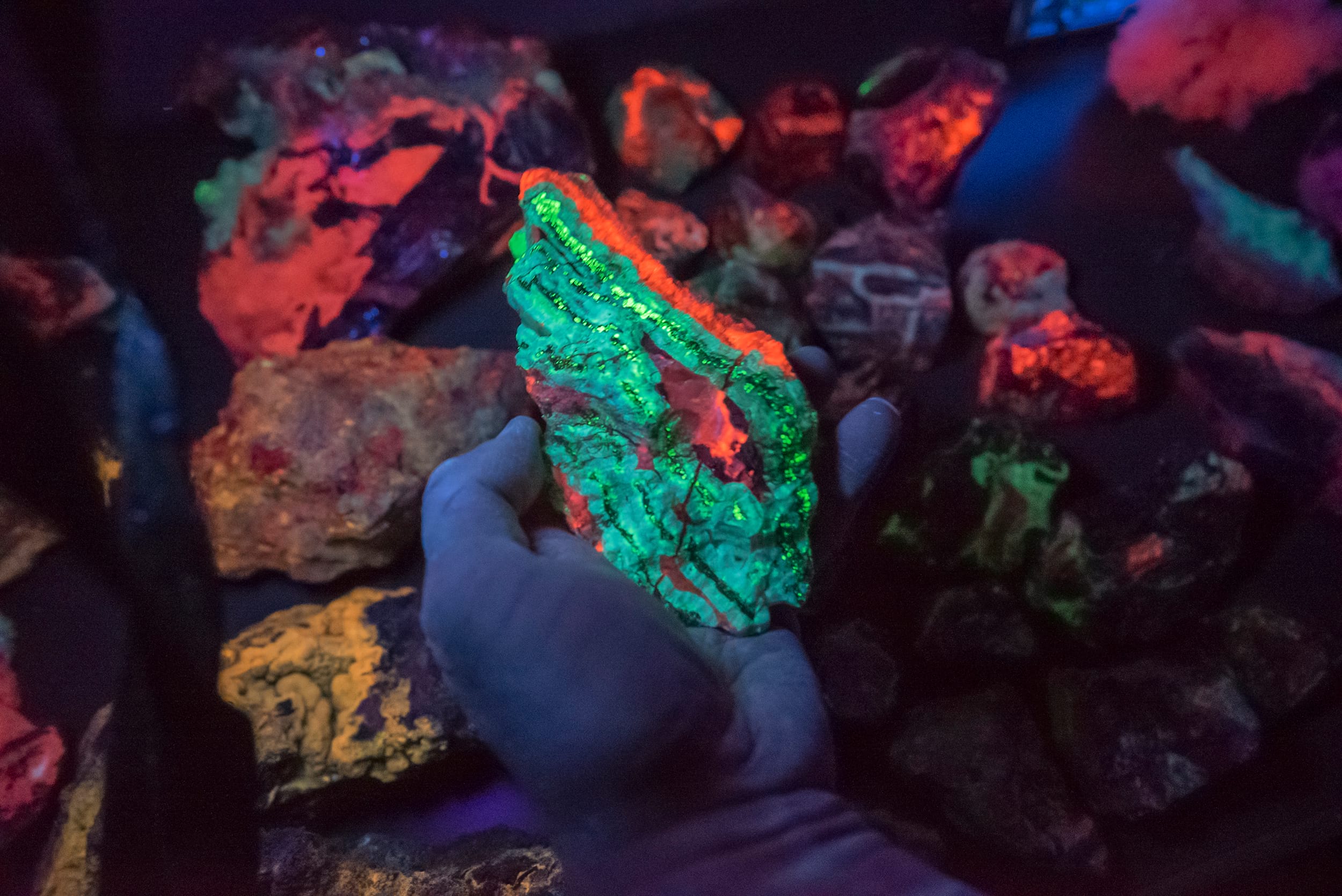
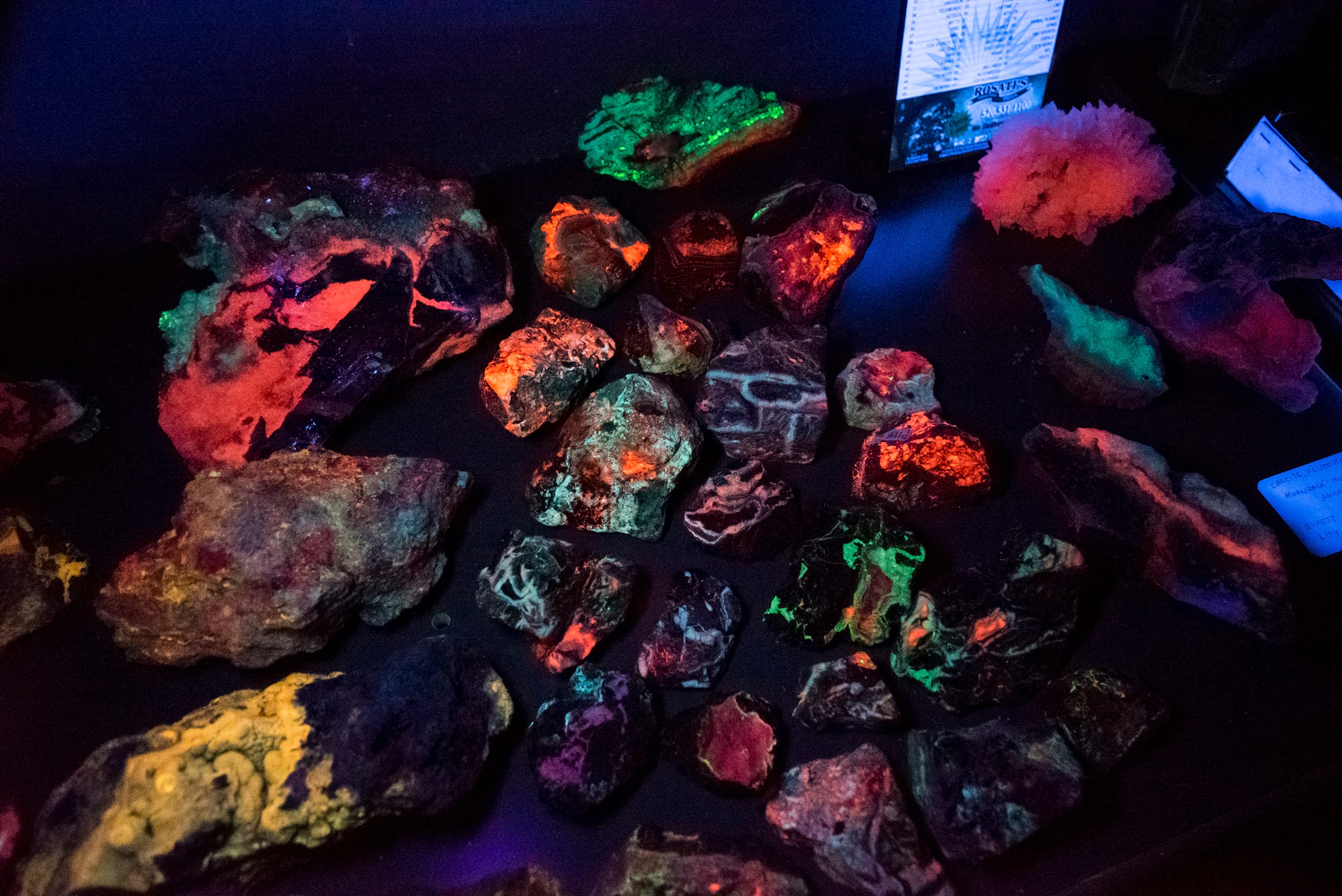
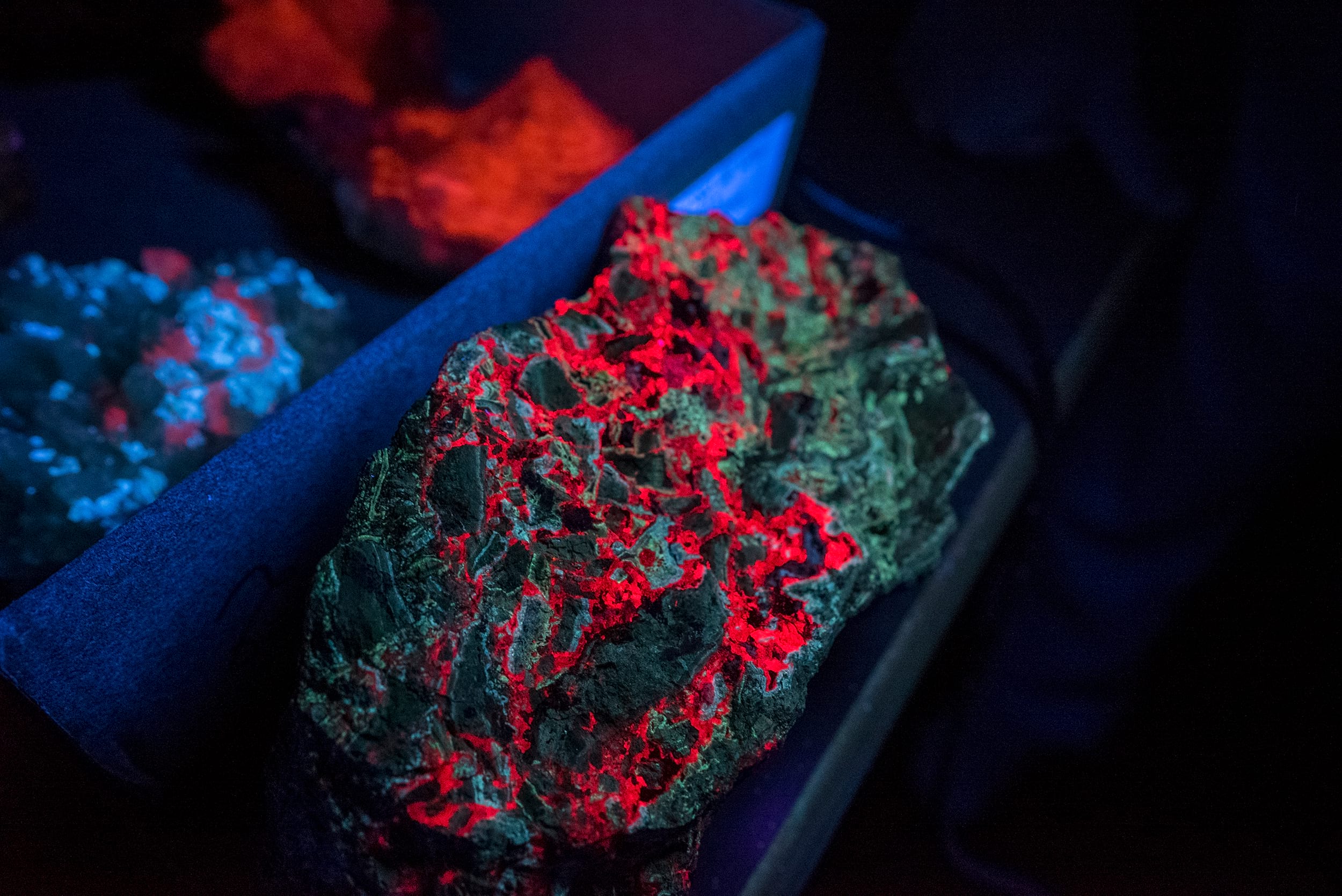
Here are my finds. Wonderful generations of calcite and some nice brief intense phosphorescence in the videos next to them. Pictures in NL, LW, SW
Specimen 1: Caliche (fl orange) coating aragonite with spots of hyalite (fl green). Also has multiple generations of calcite (fl white & red)
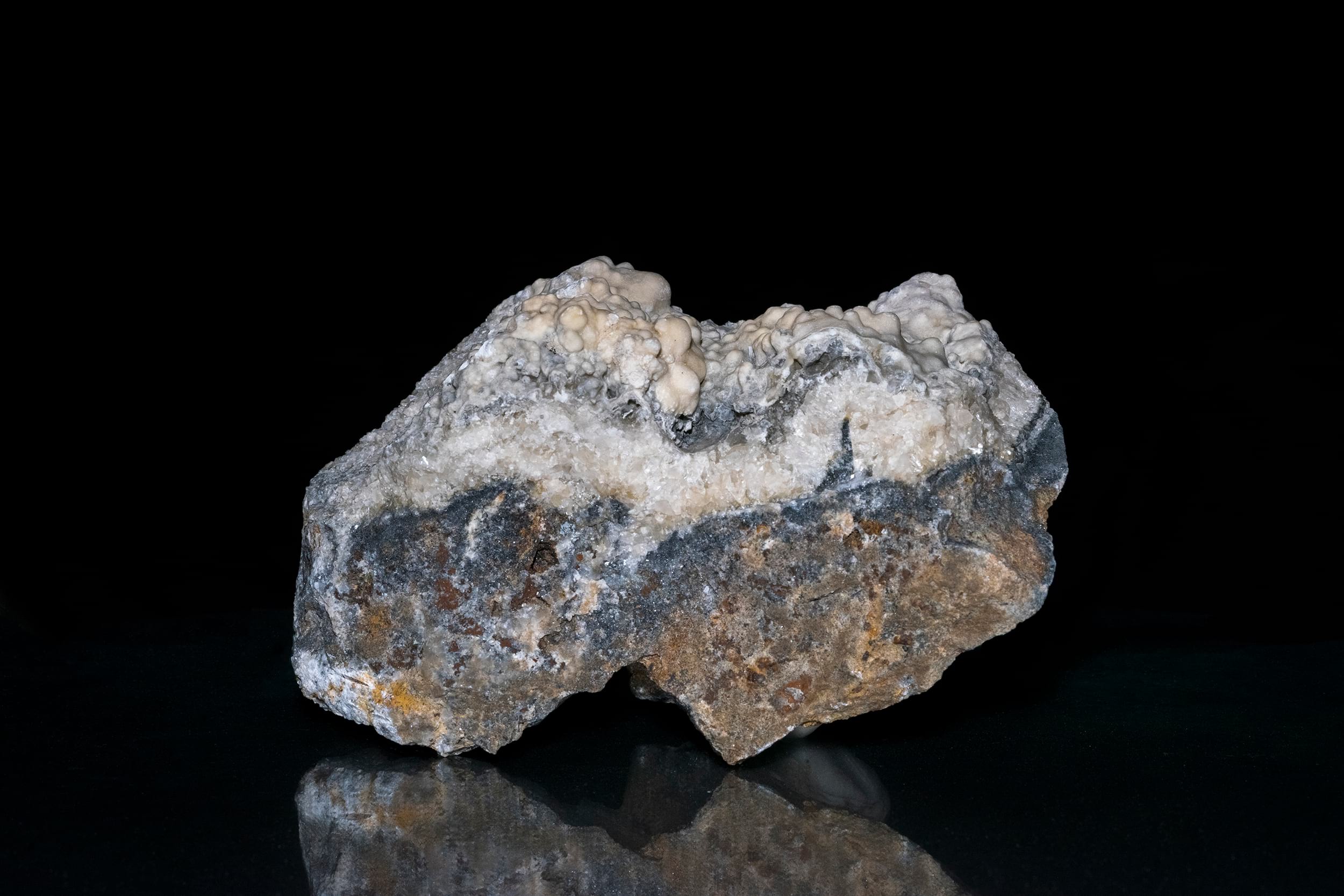
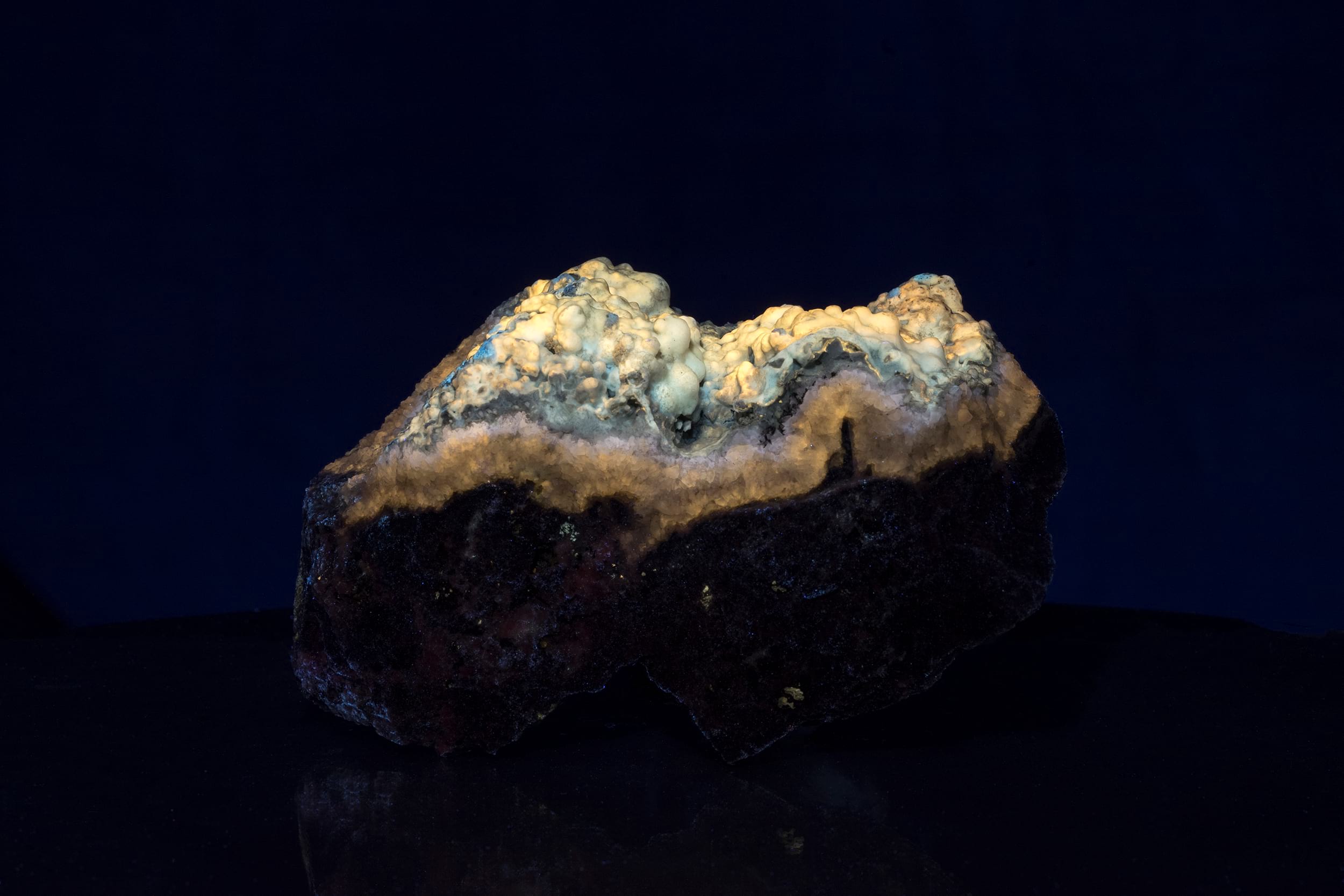
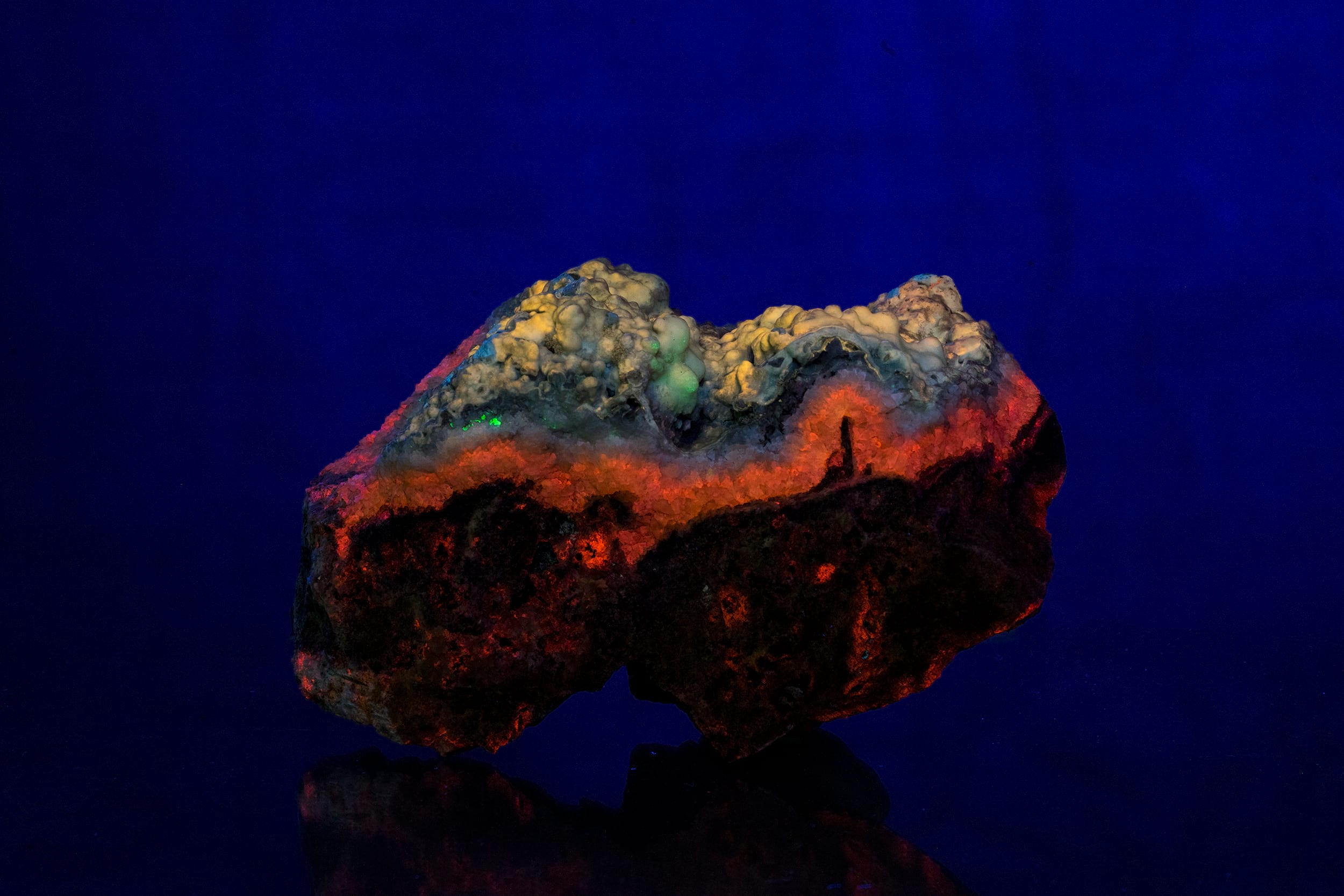
Specimen 2: Multiple generations of fluorescent calcite banding (fl orange, red, yellow-orange)
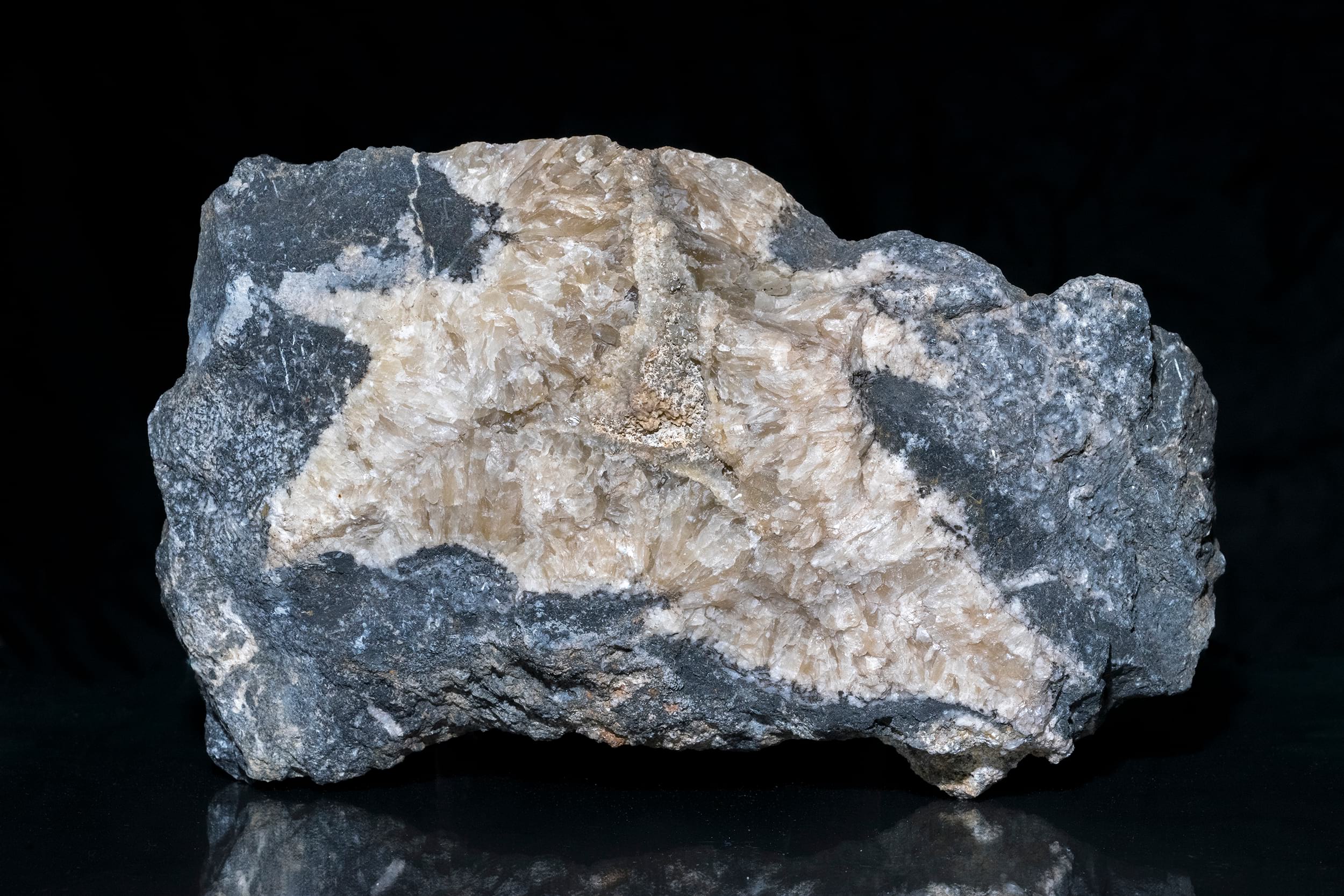
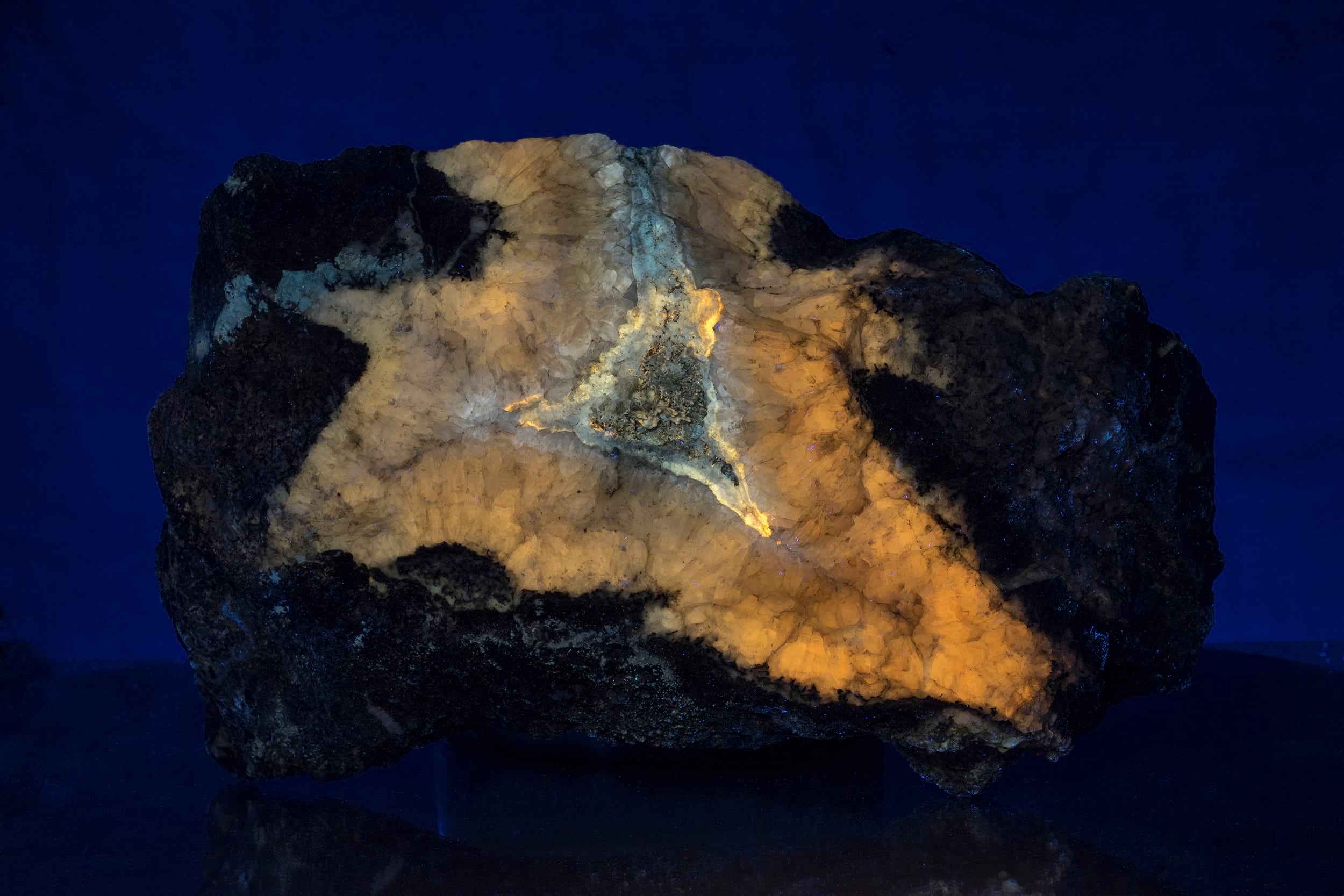
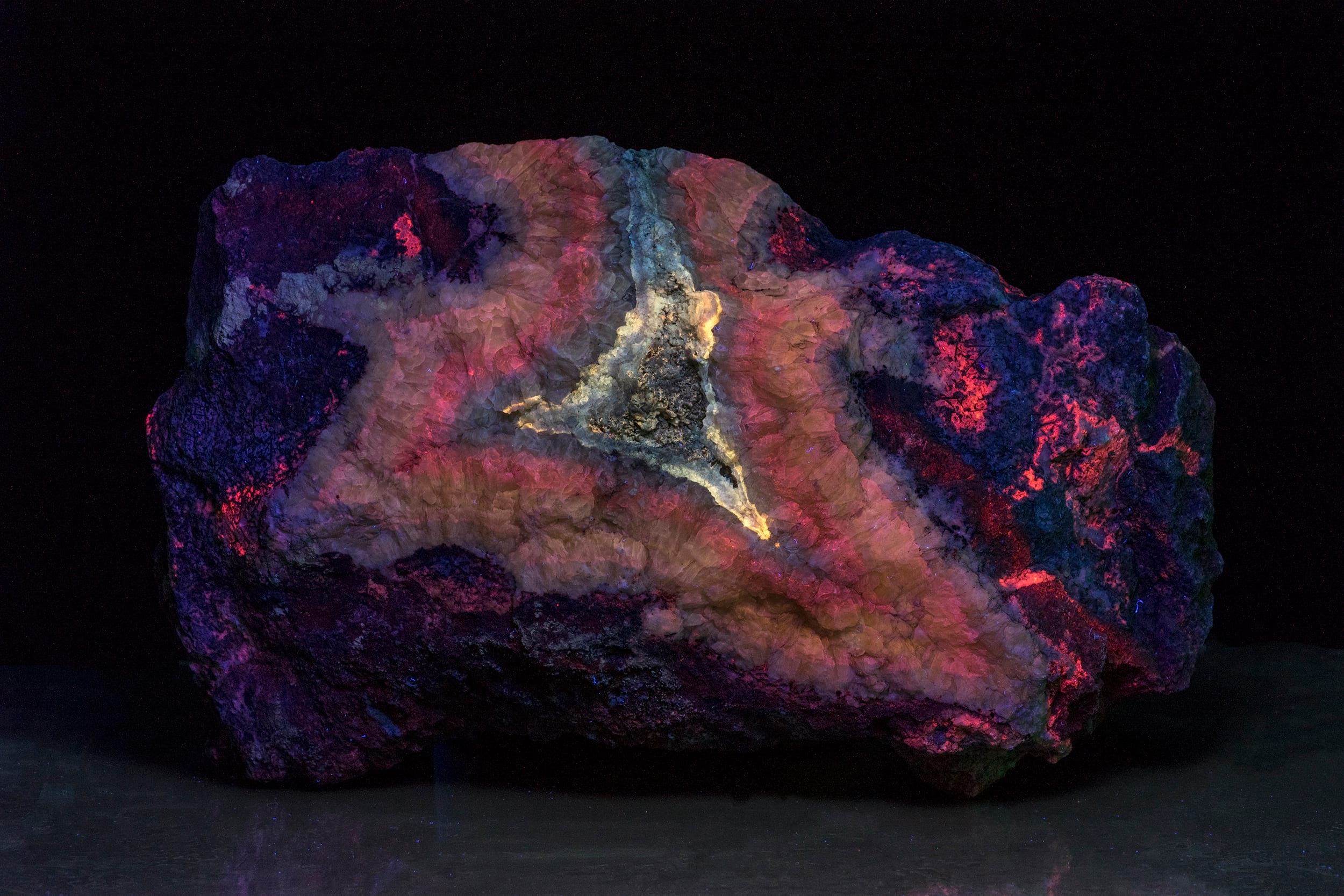
Specimen 3: Caliche (fl orange) coating aragonite with spots of hyalite (fl green). Also has multiple generations of calcite (fl white & red)
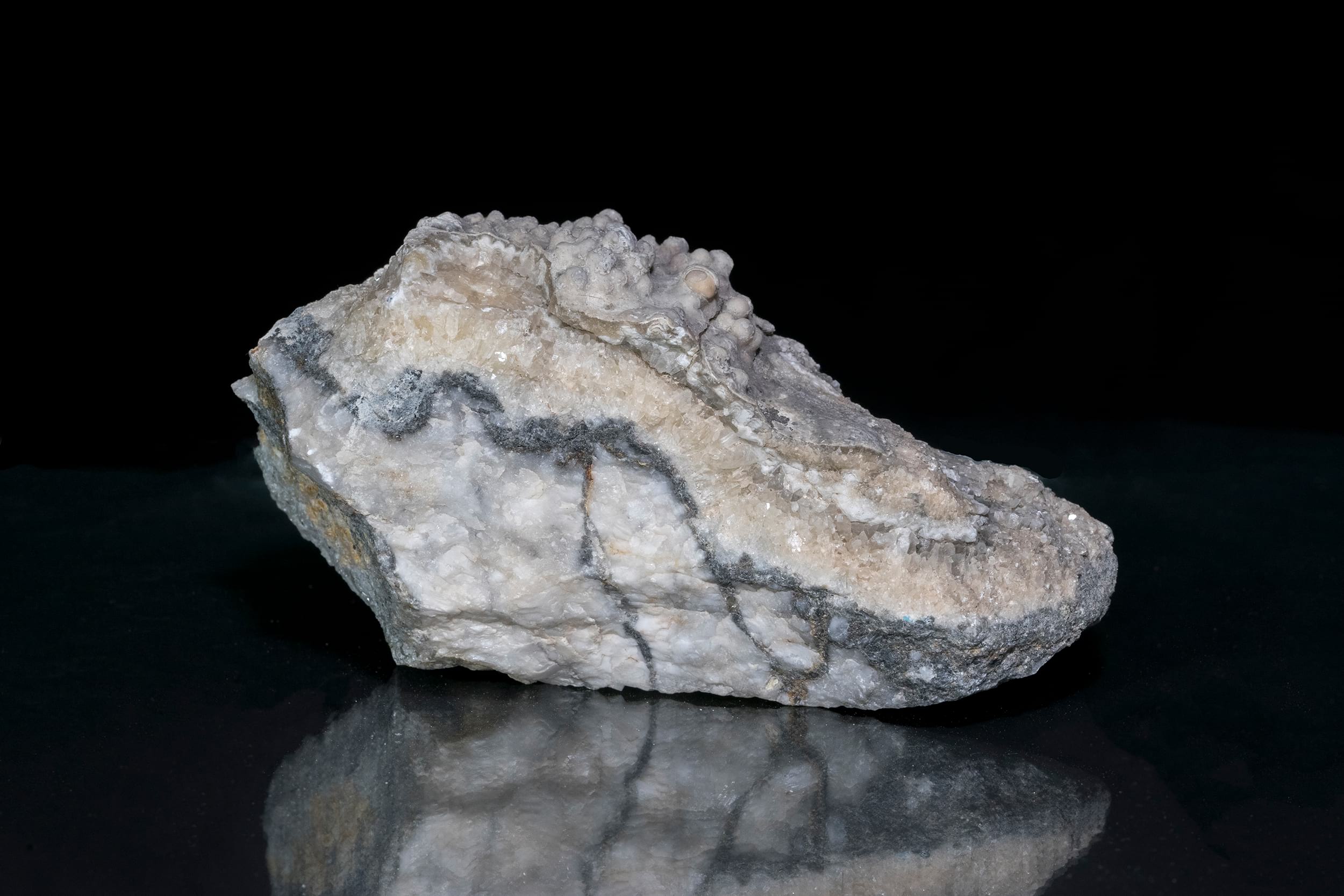
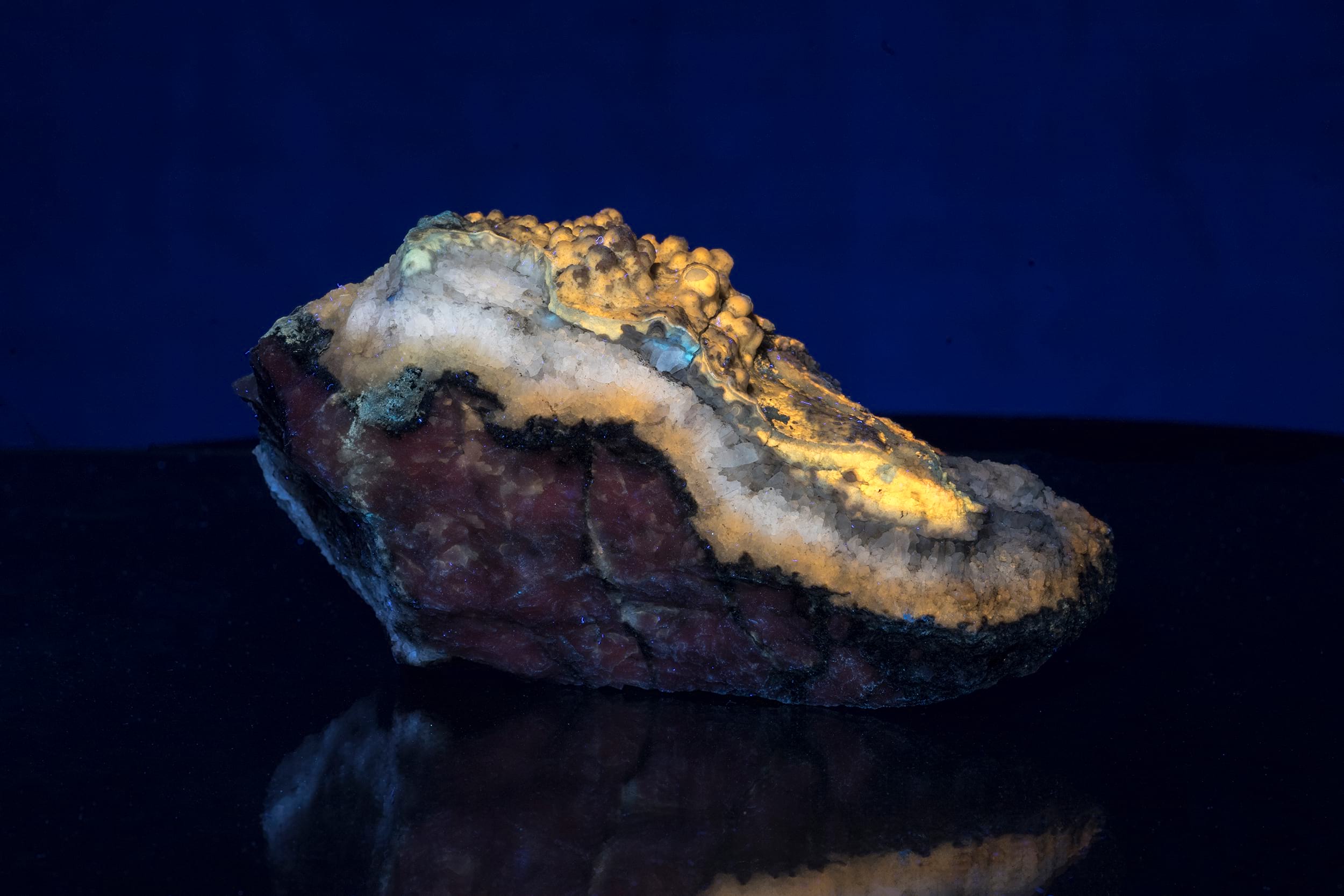
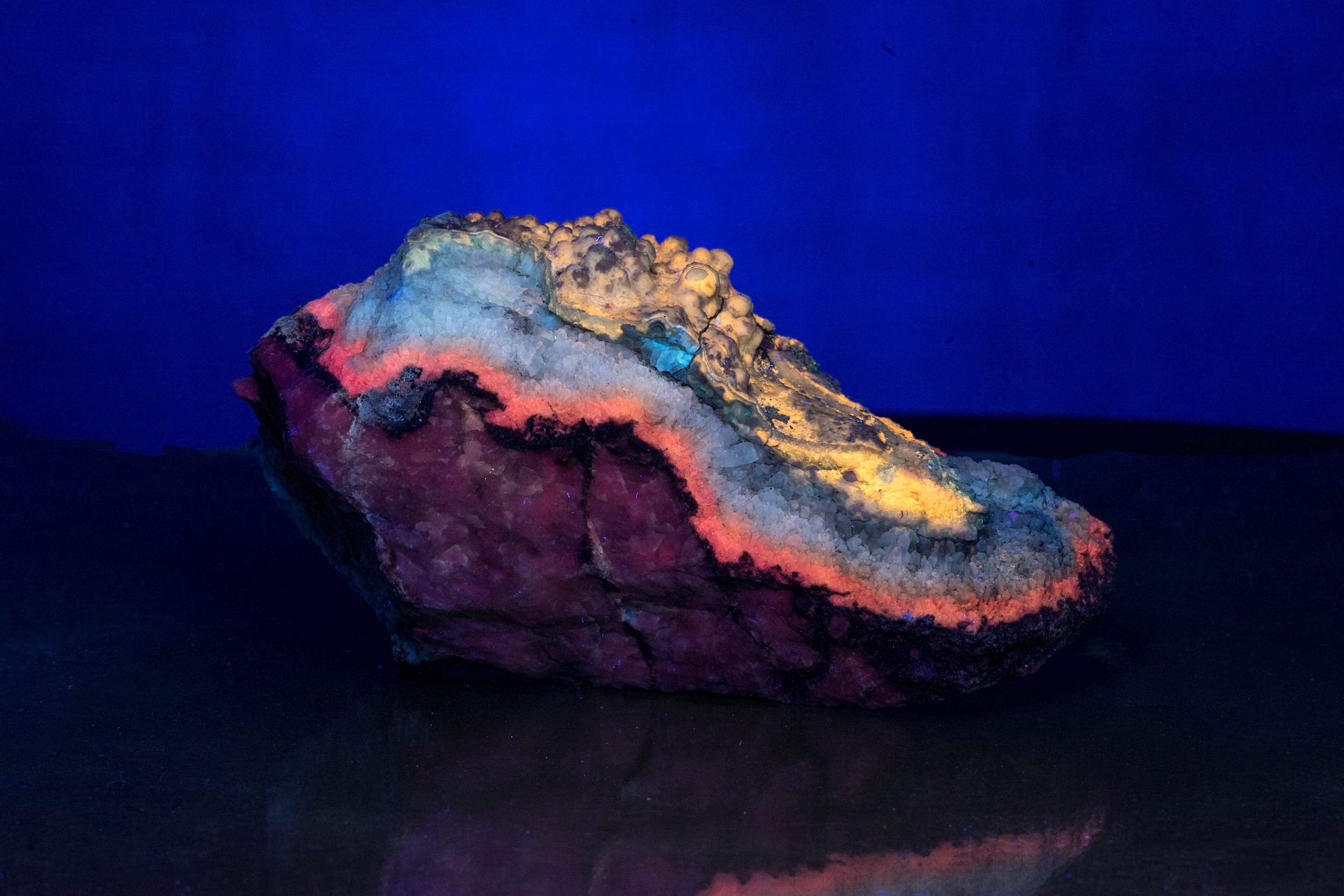
Interestingly the oldest generation of calcite has the strongest phosphorescence under longwave. LW on the left, SW on the right.
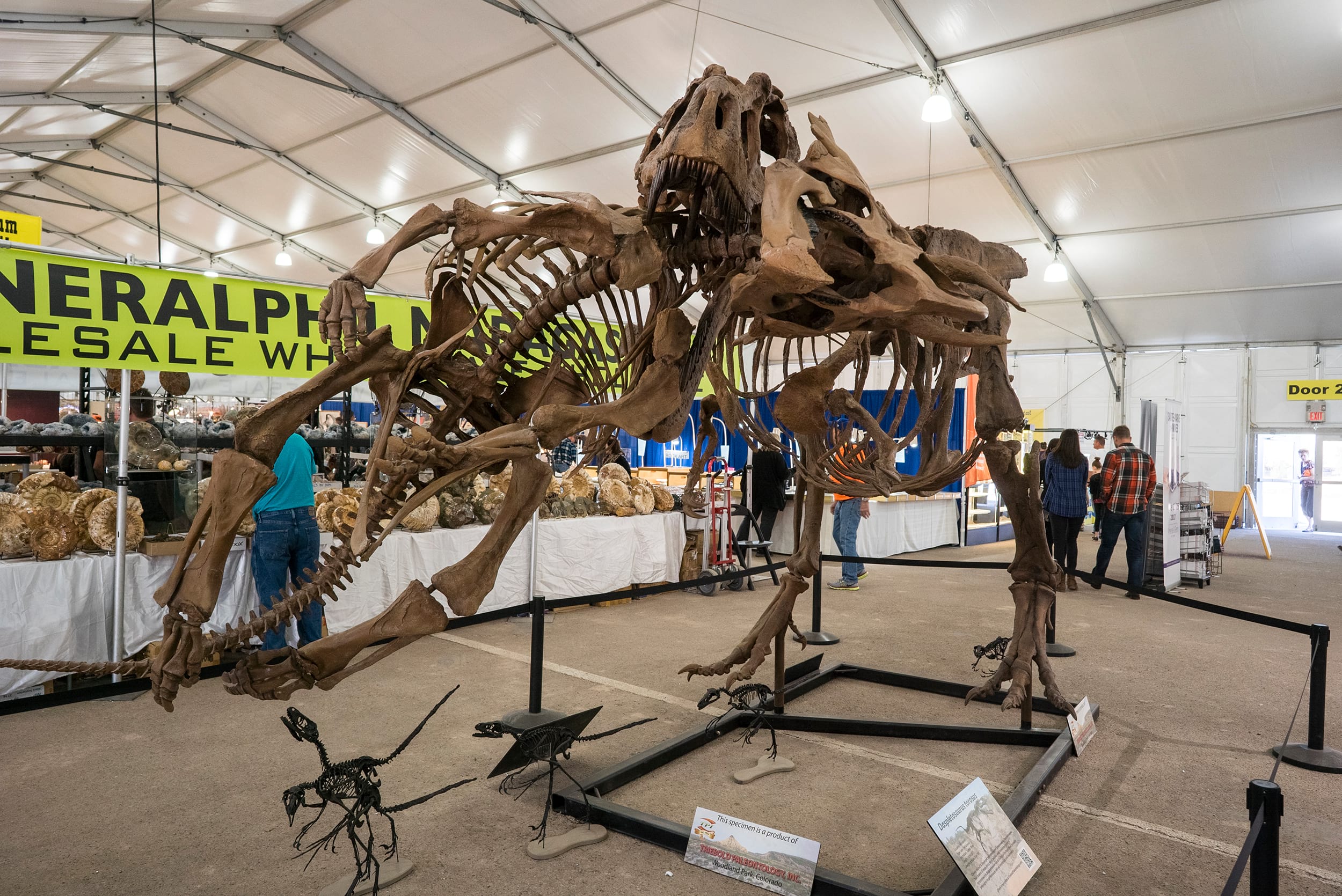
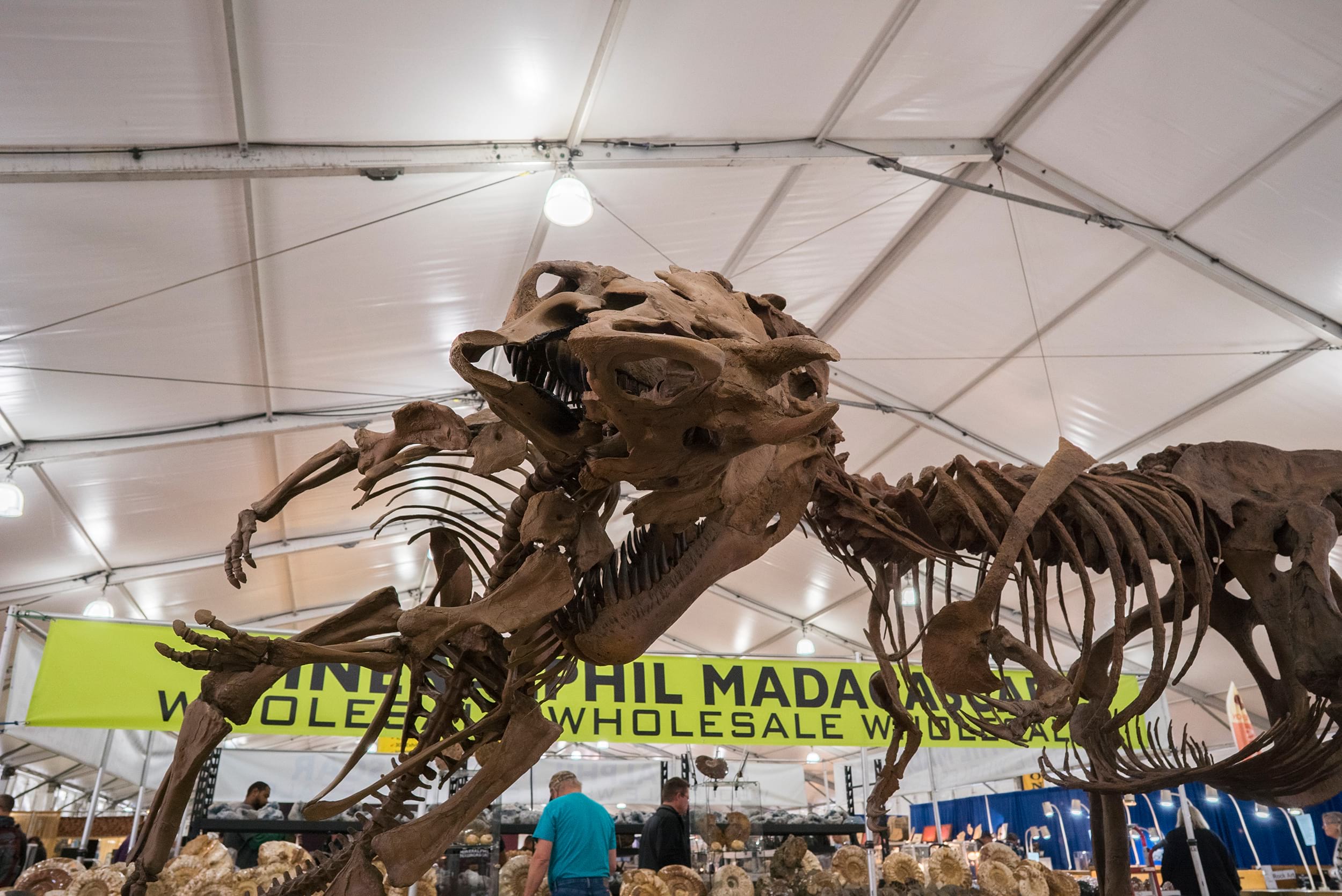
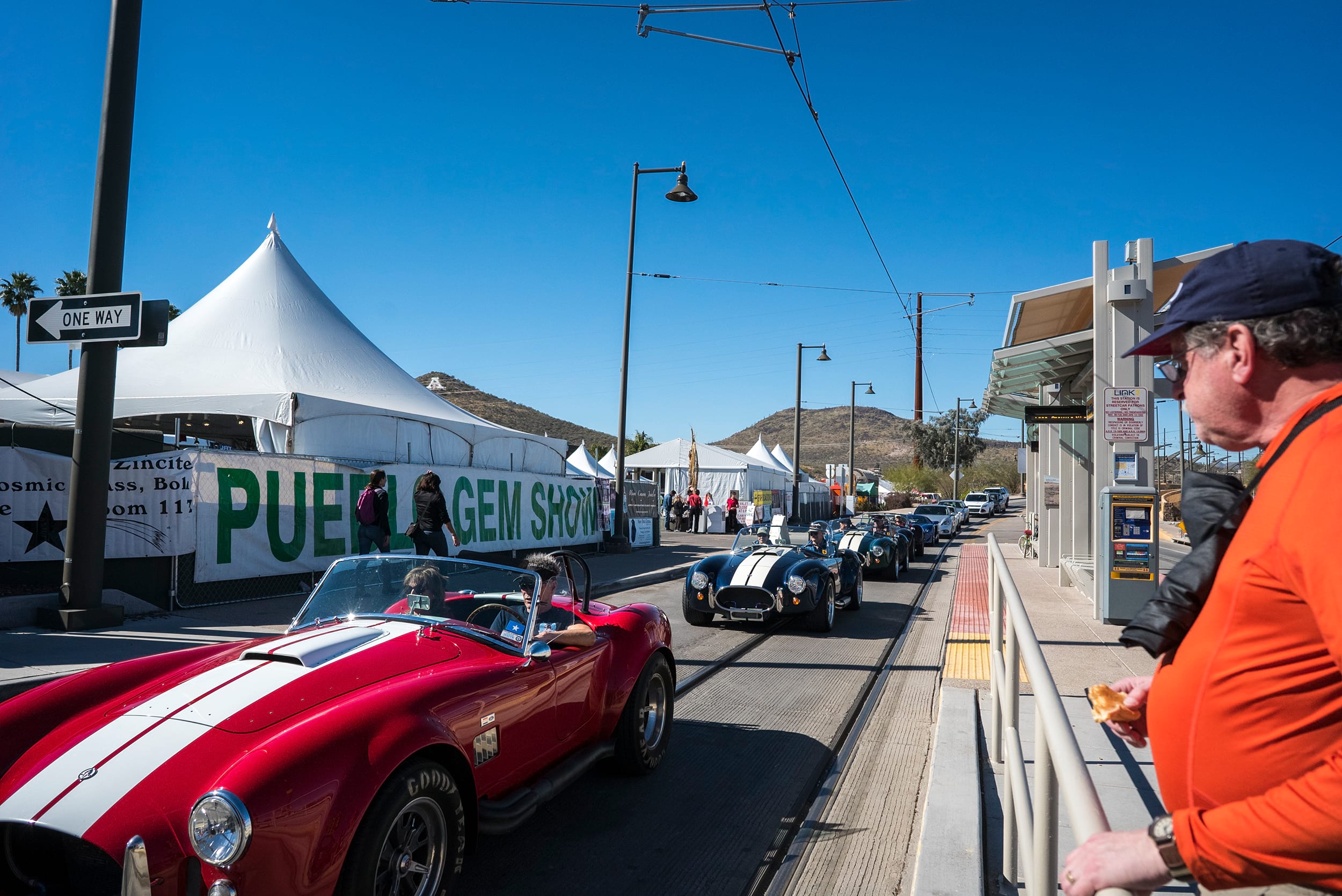
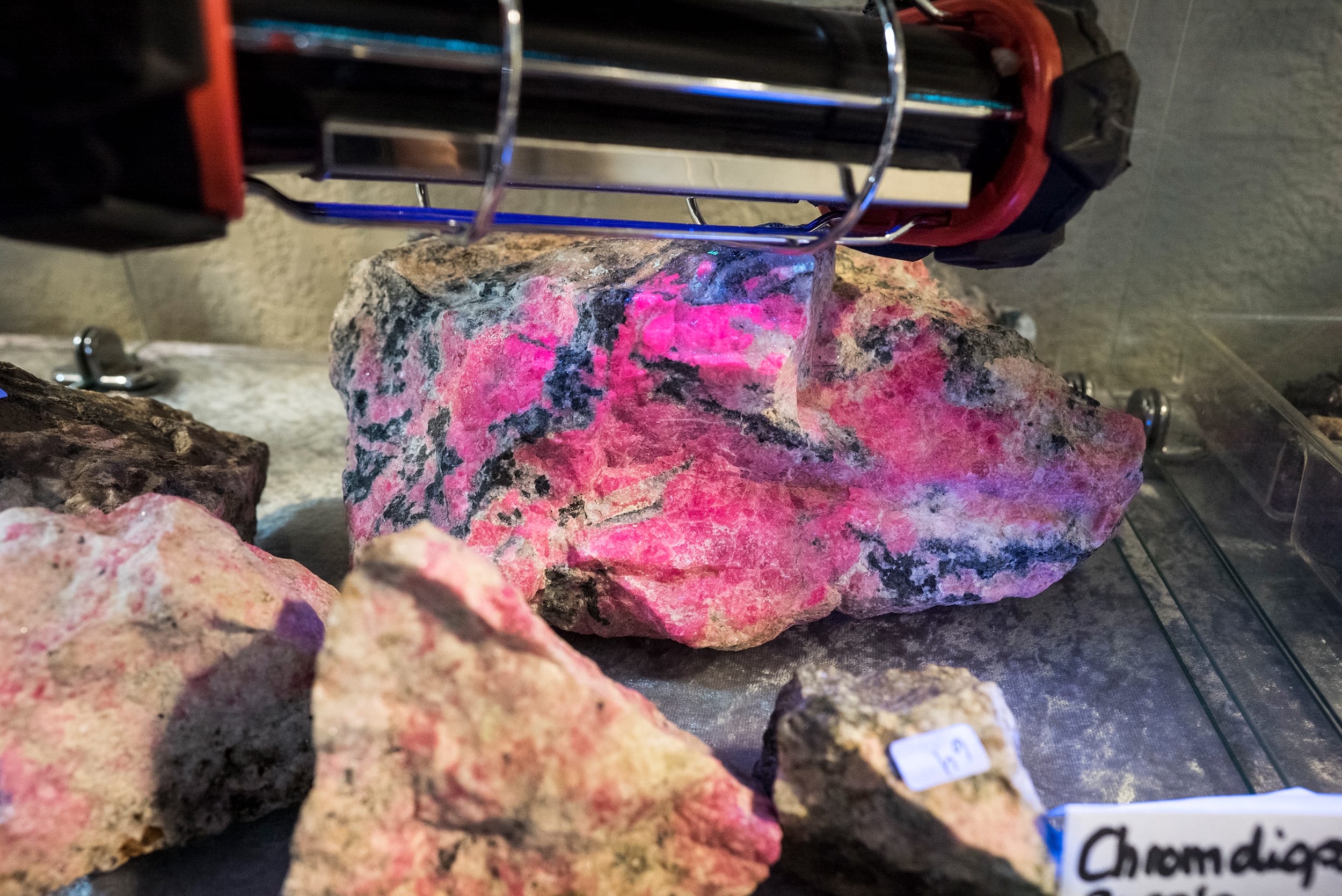
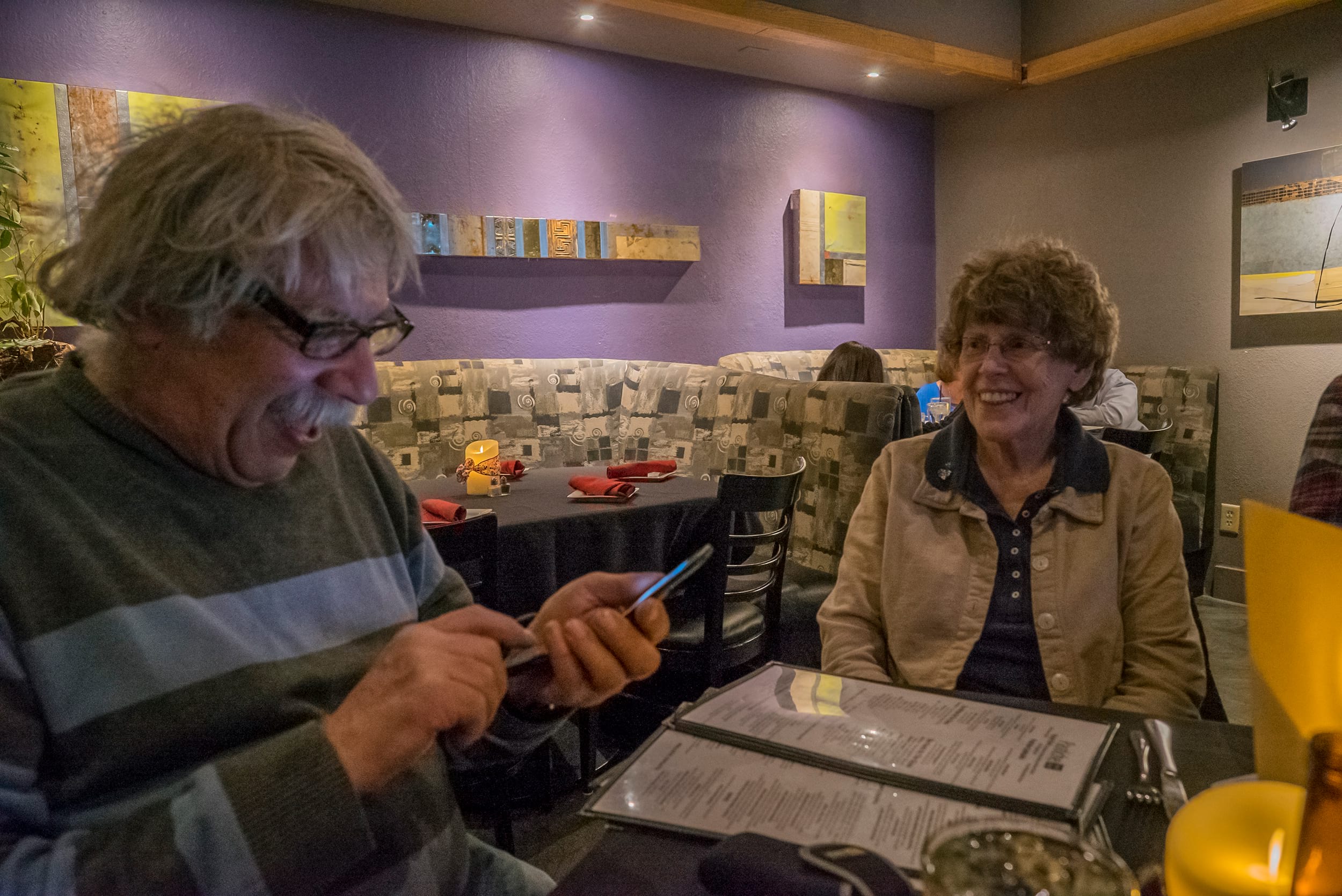
The last day! The highlight for me was definitely that Daspletosaurus in the middle of one of the show tents. What a fantastic sight and well put together. Having volunteered at the Natural History Museum I have a huge appreciation of the logistics it takes to even get specimens in that position. I can only imagine the amount of wiring and balancing that must have been done to set up a display like that!

SoCal FMS Meeting July 2016
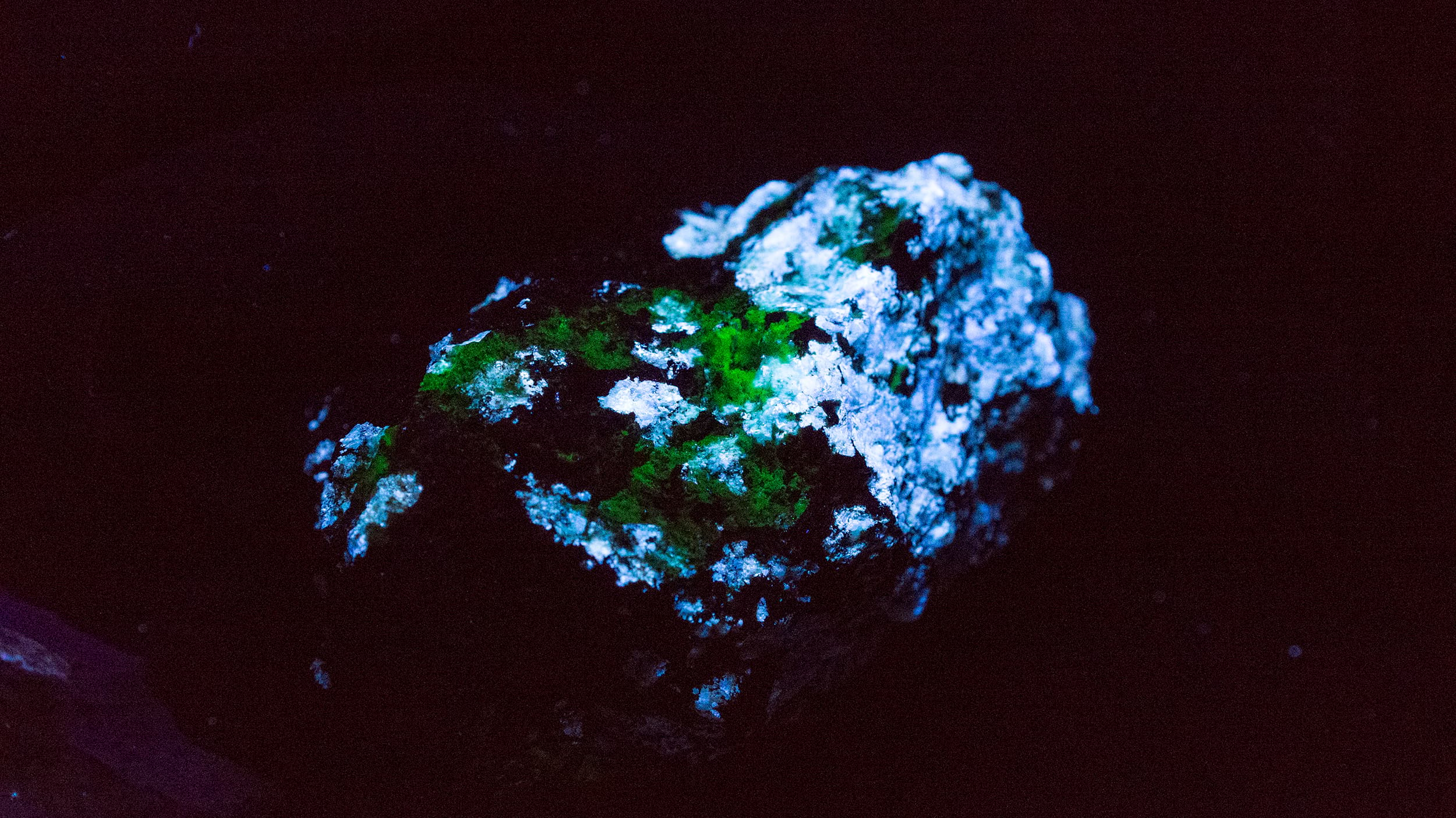
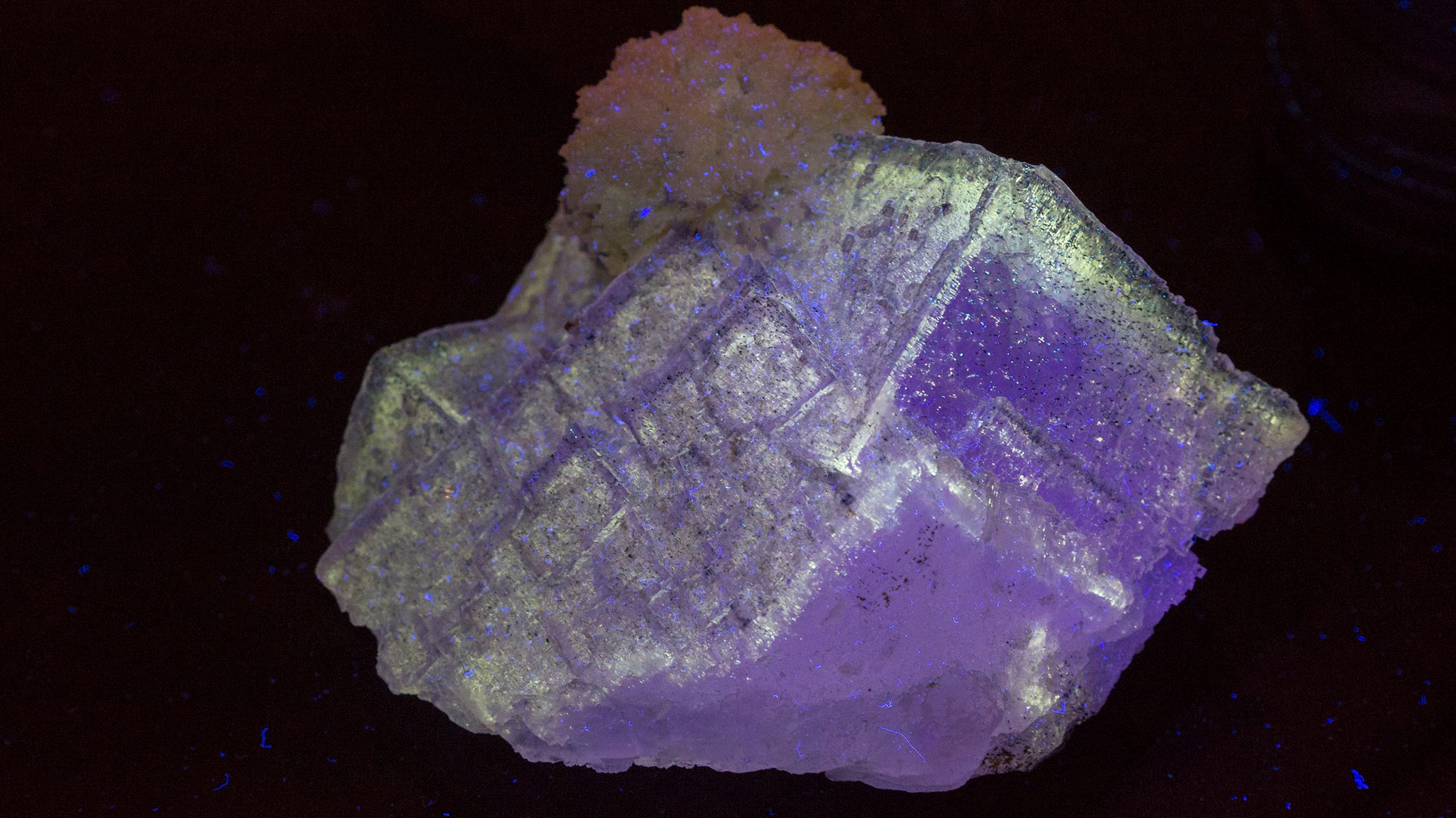
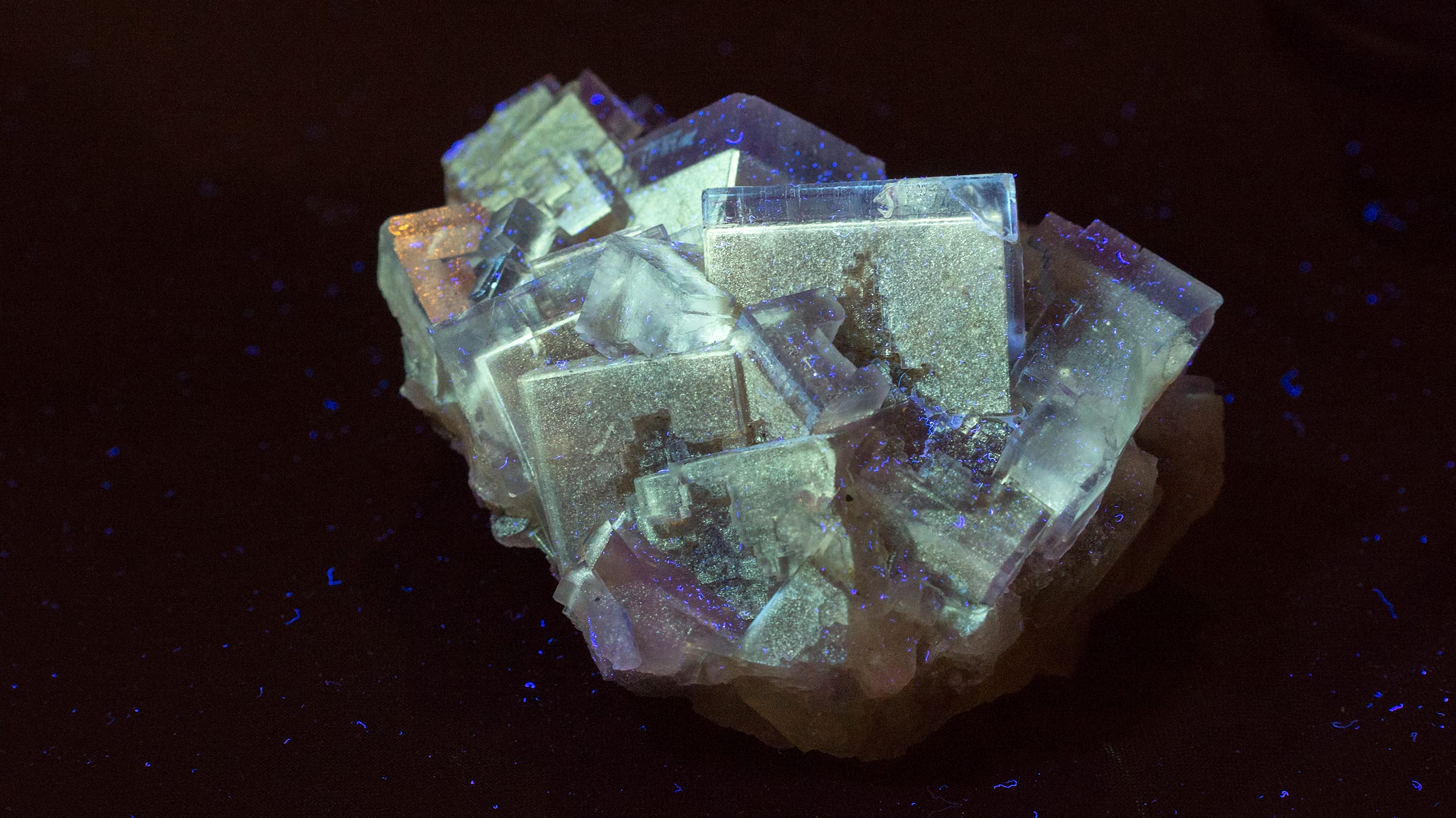
On display during this meeting were some of Jim's best Chinese fluorescents. I have to say that I have nothing in my collection anywhere near as nice as some of the material he had. The reason for this? Our special guest was a dealer from China named Tracy Ling. She and her husband buy and sell minerals from China and if the specimens Jim has is any indication, it's very good material. I'm quite jealous and want to add a Chinese scheelite to my collection someday!

California State Gem Mine Trip May 2016
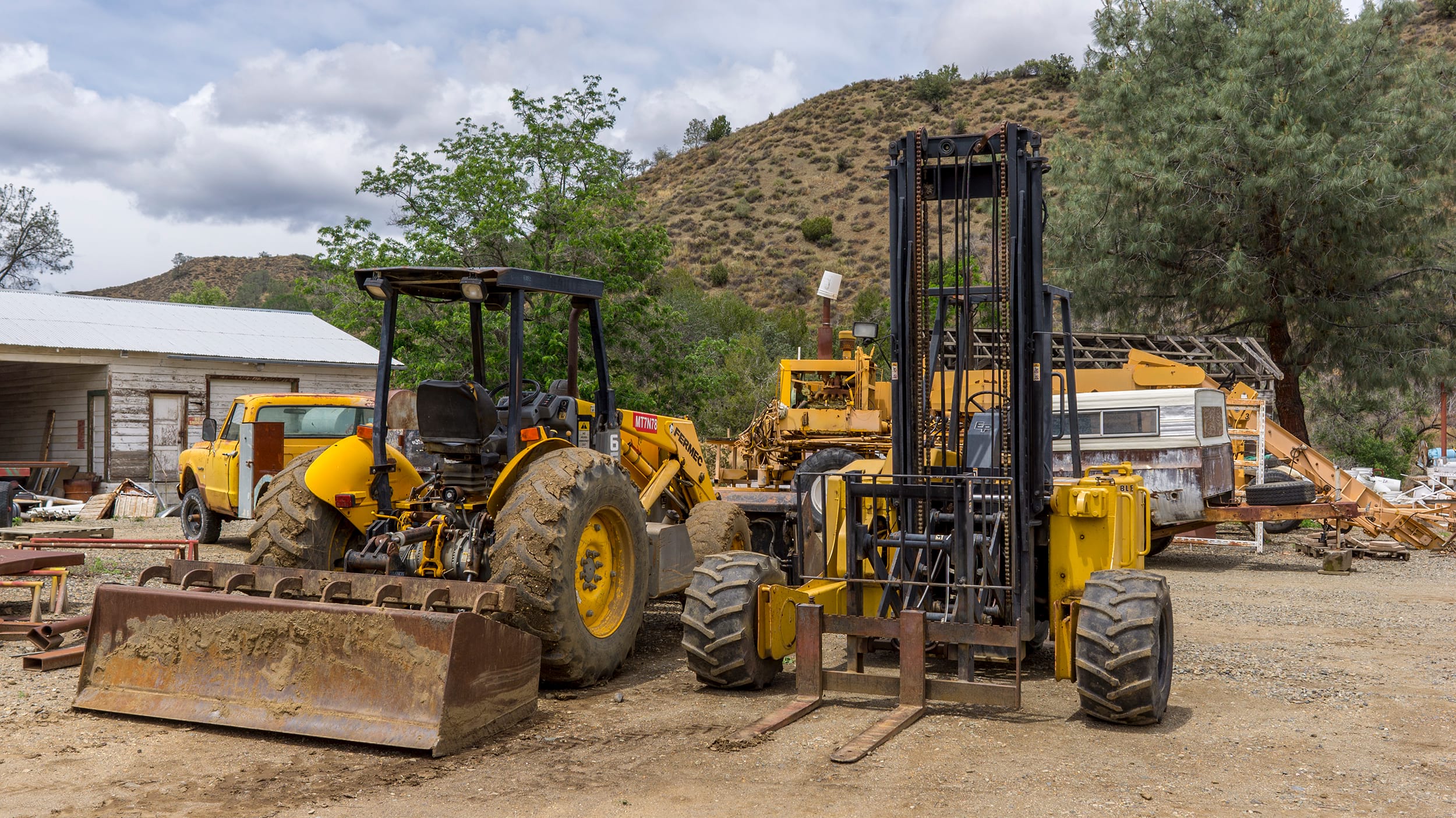
What an experience this trip was. I left straight after work with all the gear I'd need packed into the car. Driving up to this mine in itself was 287 miles taking 5 hours 42 minutes to get there. While it was a long drive, it was beautiful. I still enjoy looking at the landscapes on long drives, tasting the local flavor, and meeting new people. Unfortunately this only lasted a couple hours. About midway through the weather turned for the worse. There was heavy rain blocking visibility and a landslide had collapsed one of the paths on the way up. Thankfully modern GPS got me around that before I even knew it was a thing! I only found out about the landslide the next day when talking with some of the other hotel guests.
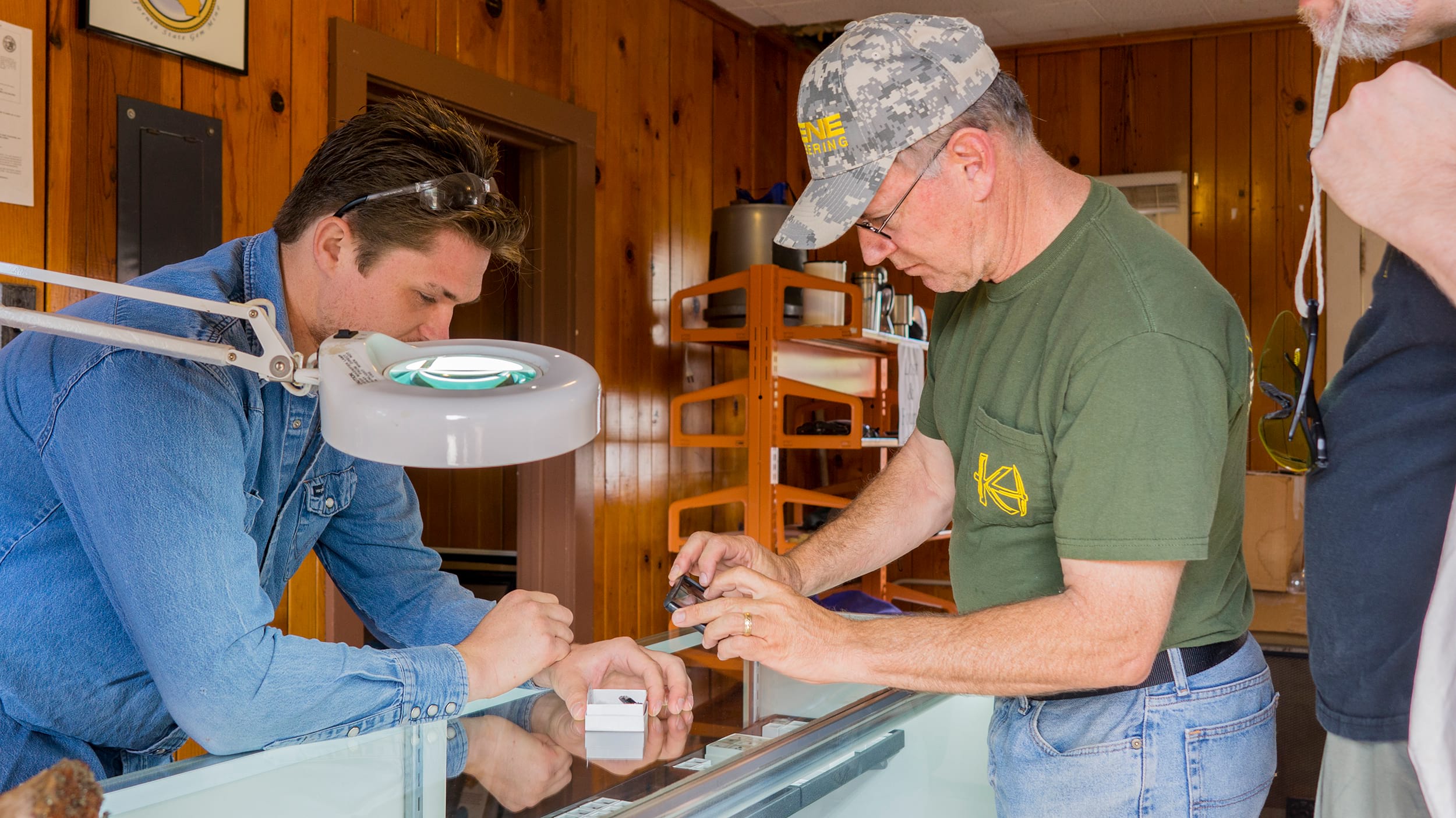
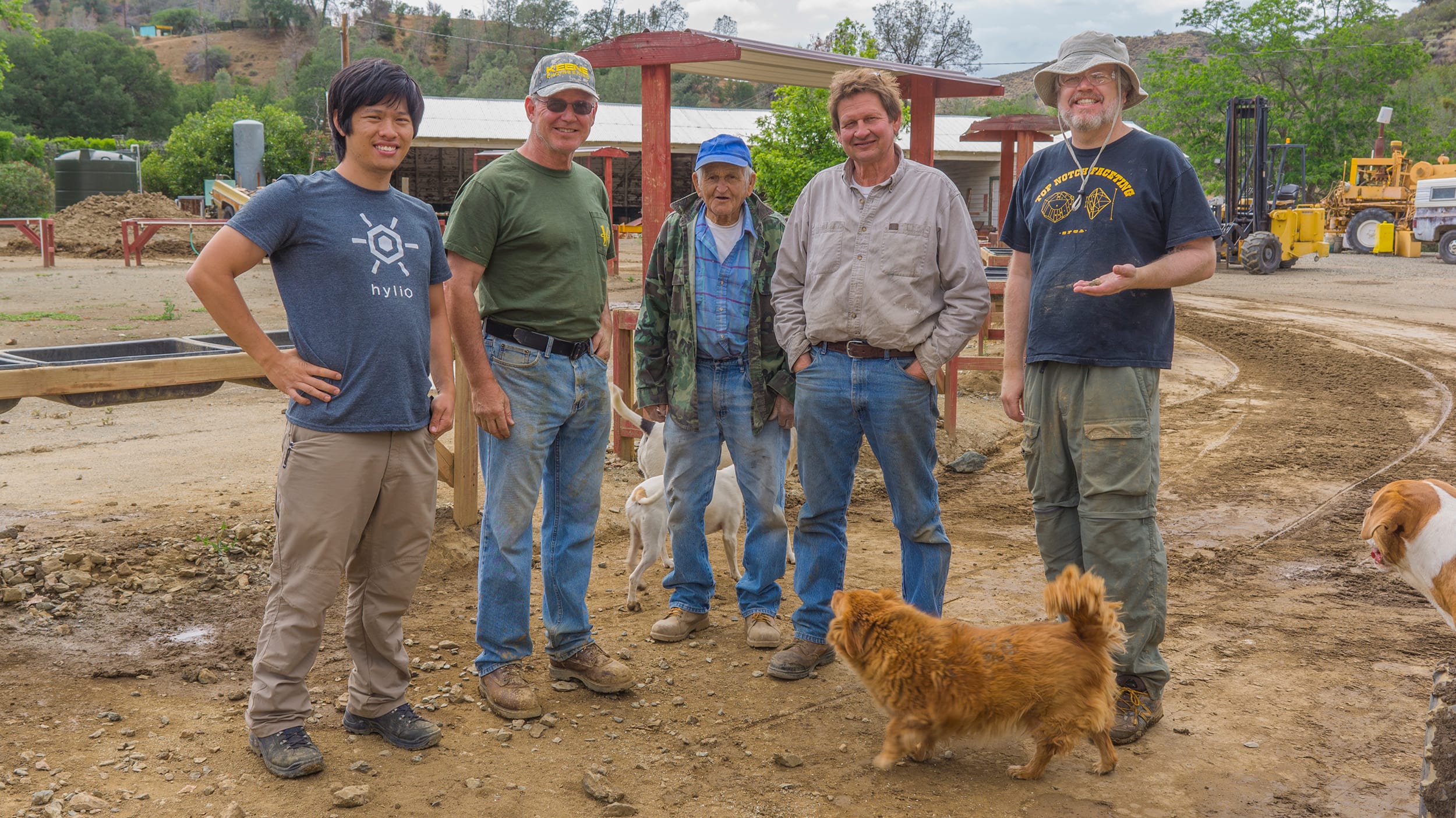
The next morning is when Dave Stuck, Marc Brown, and I met up at the California State Gem Mine. We were first taken to the shop where there were plenty of wonderful benitoites on display and for sale. They were WAY too pricy in my opinion and were well out of my price range. Compound this with the fact that I've seen better specimens sell for less on eBay and I left with nothing but pictures. I think Rick Kennedy still has some of the best benitoites I've seen ever. One picture that I forgot to take was of me fluorescing a large benitoite they had on display. It was beautifully red under my LW light.
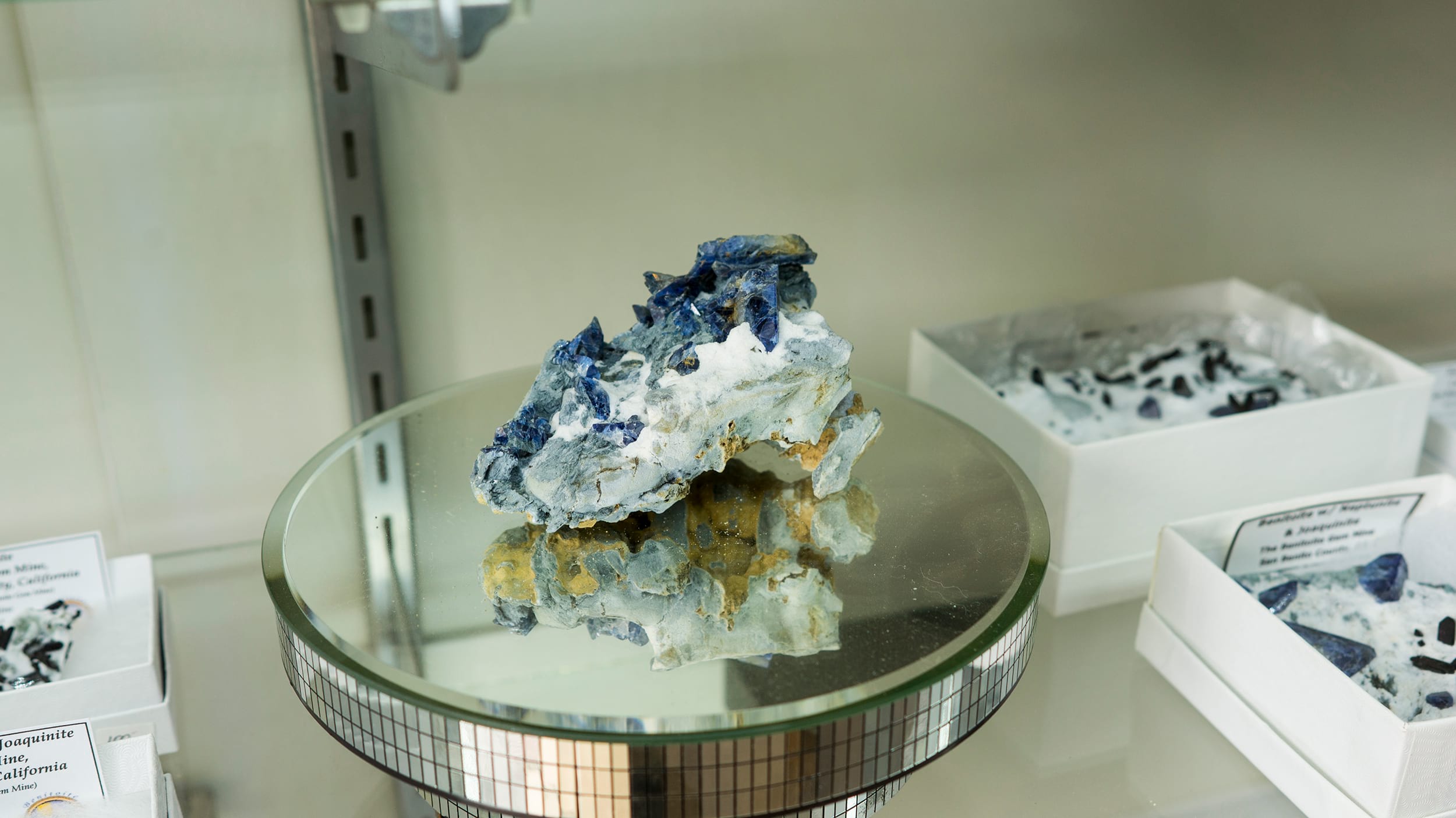
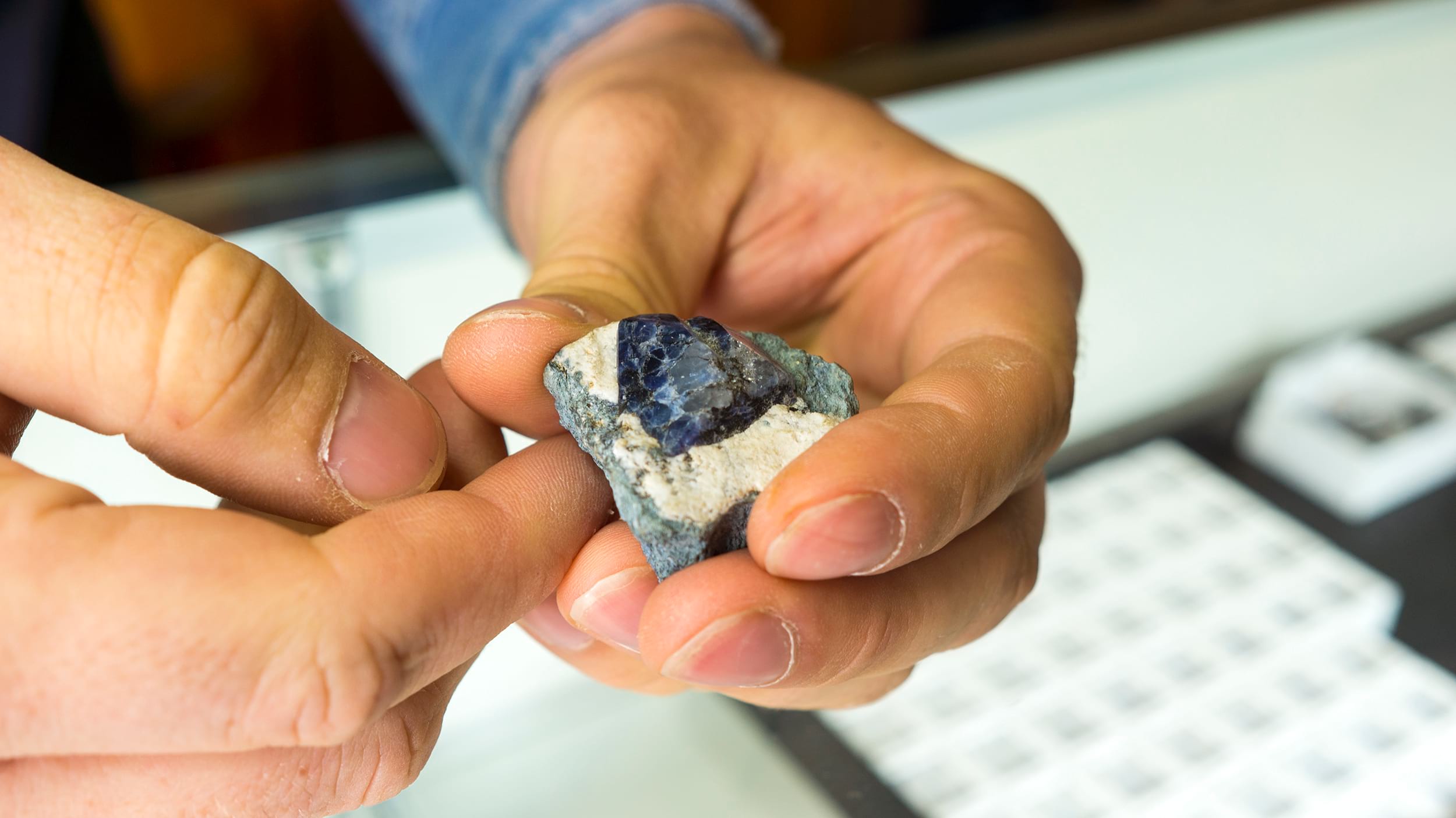
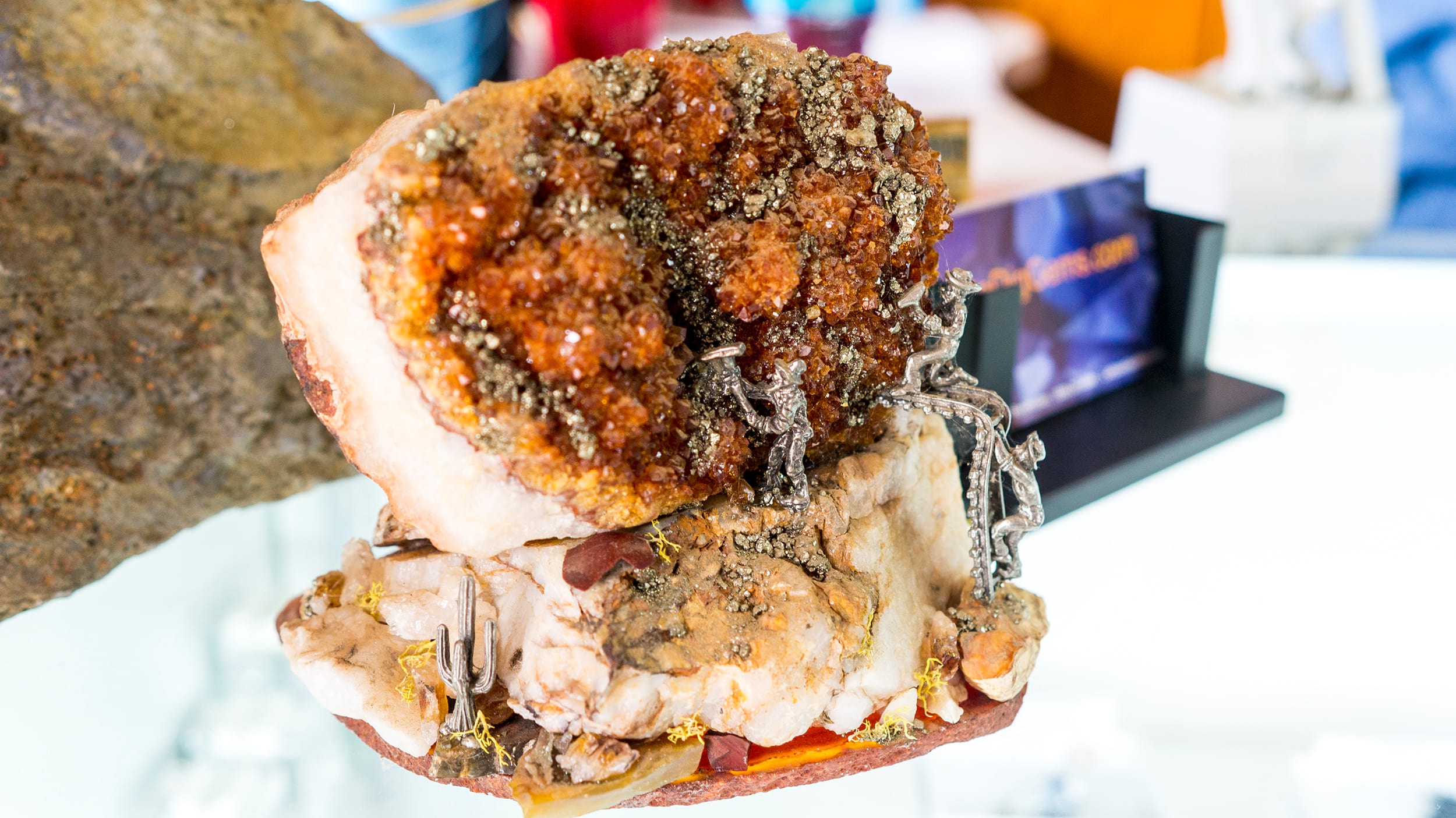
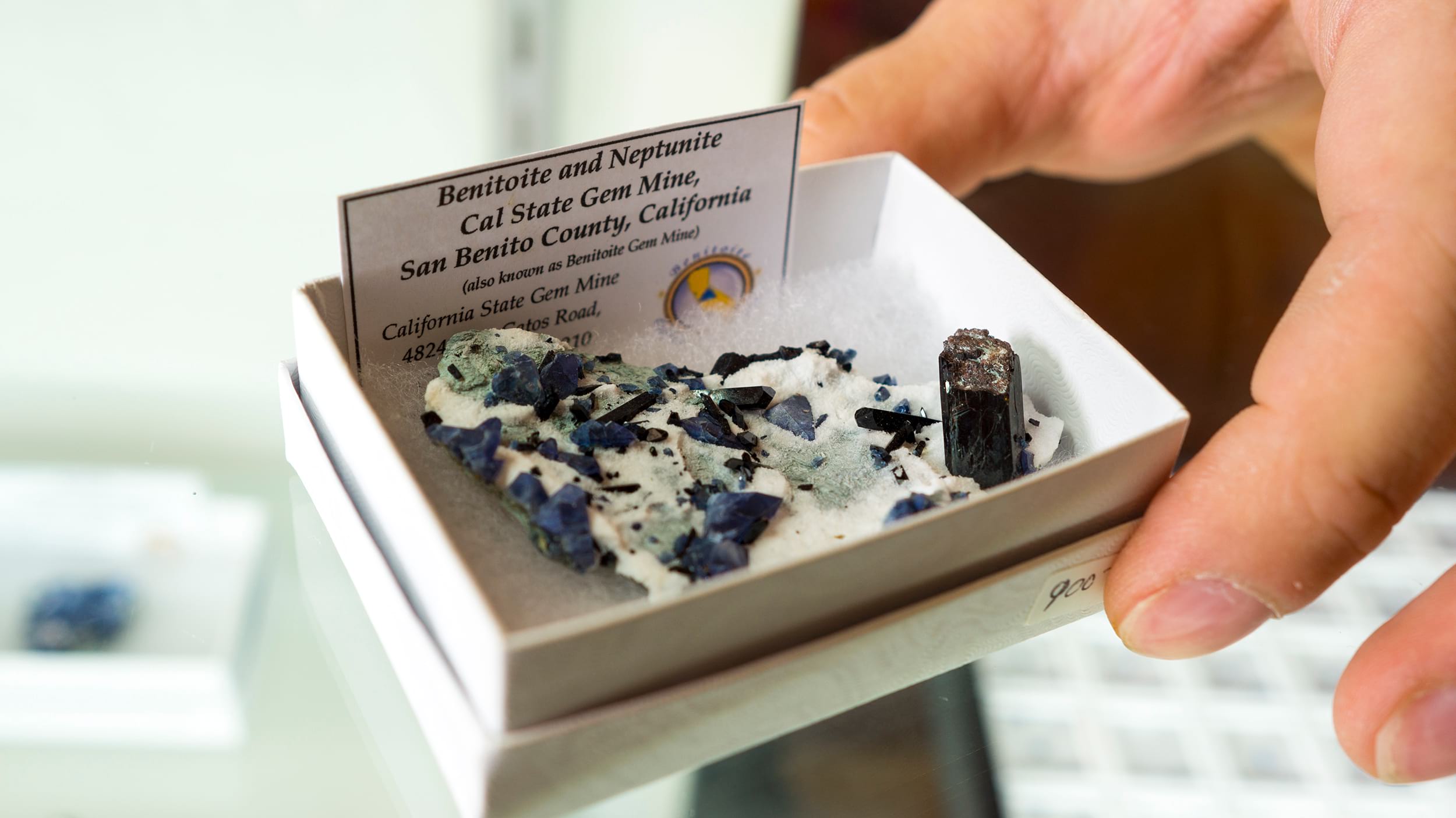
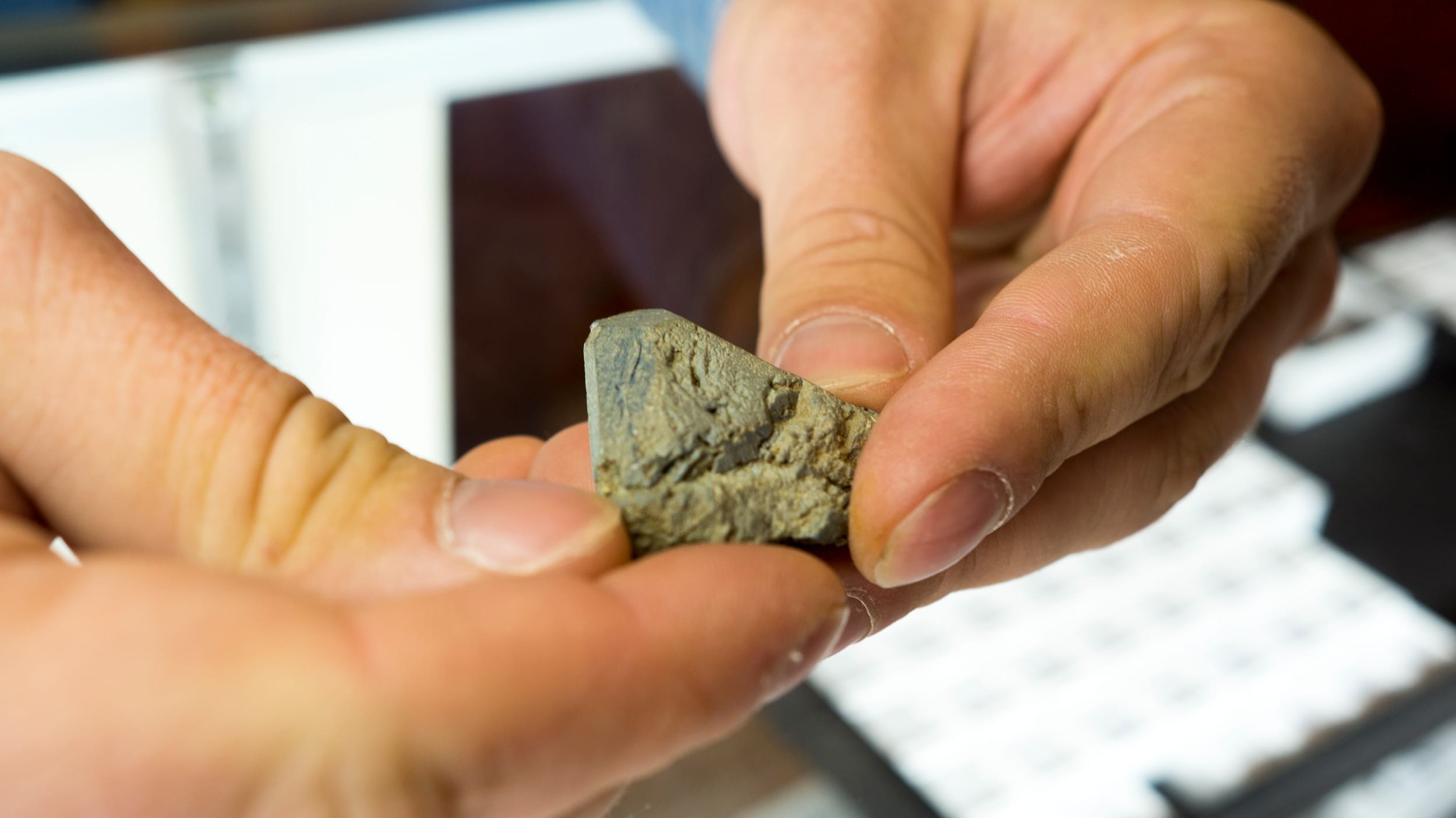
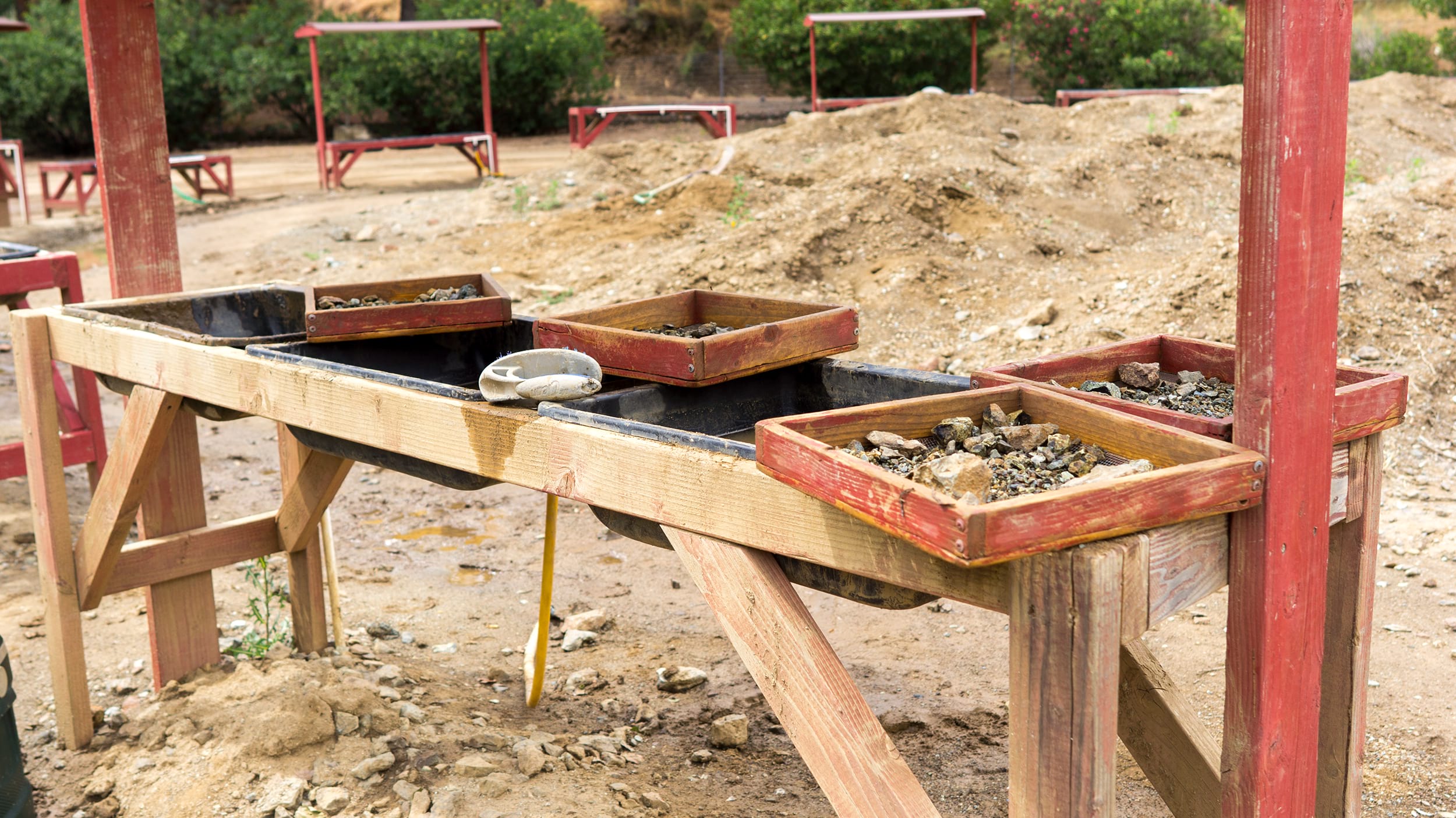
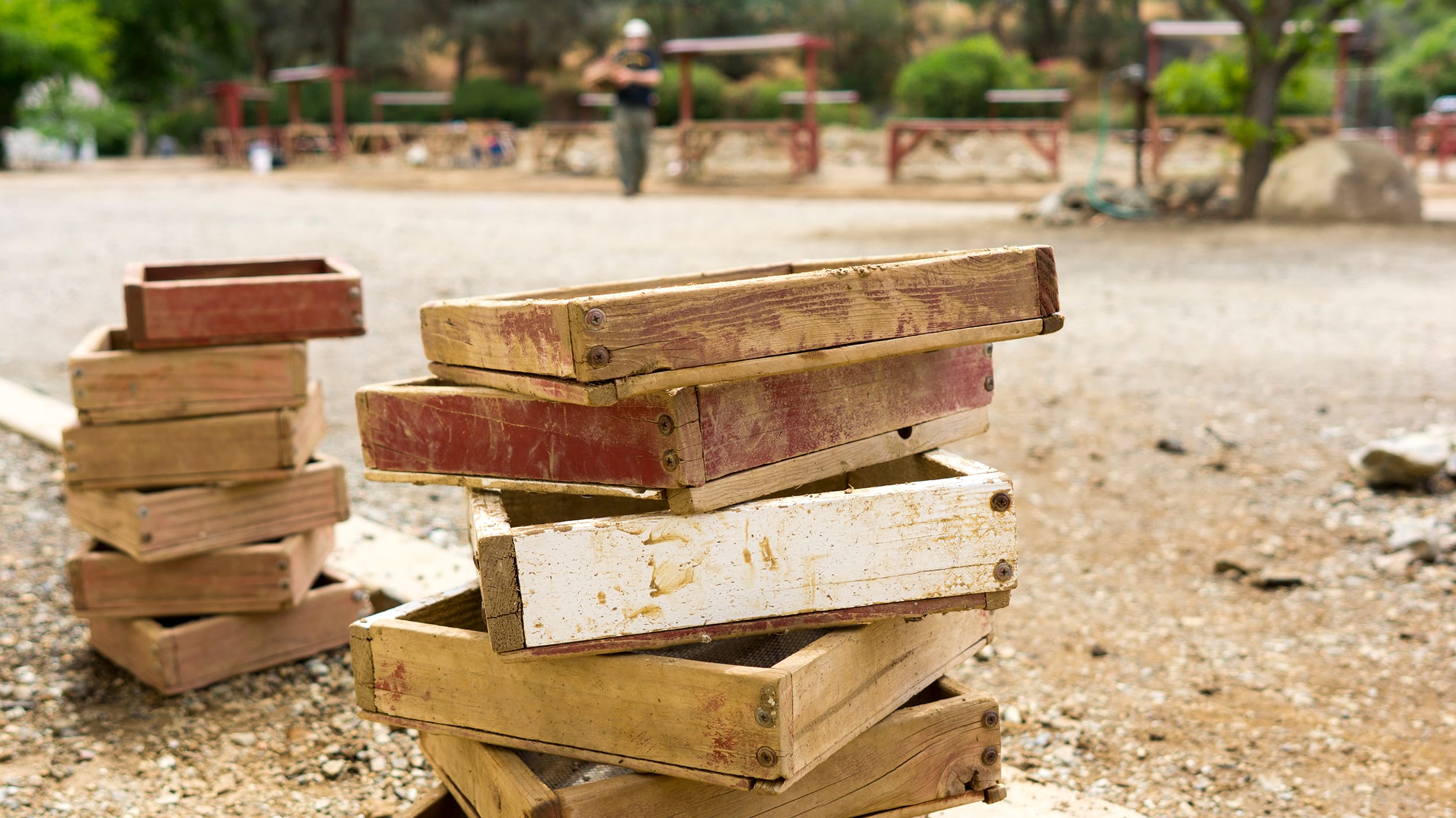
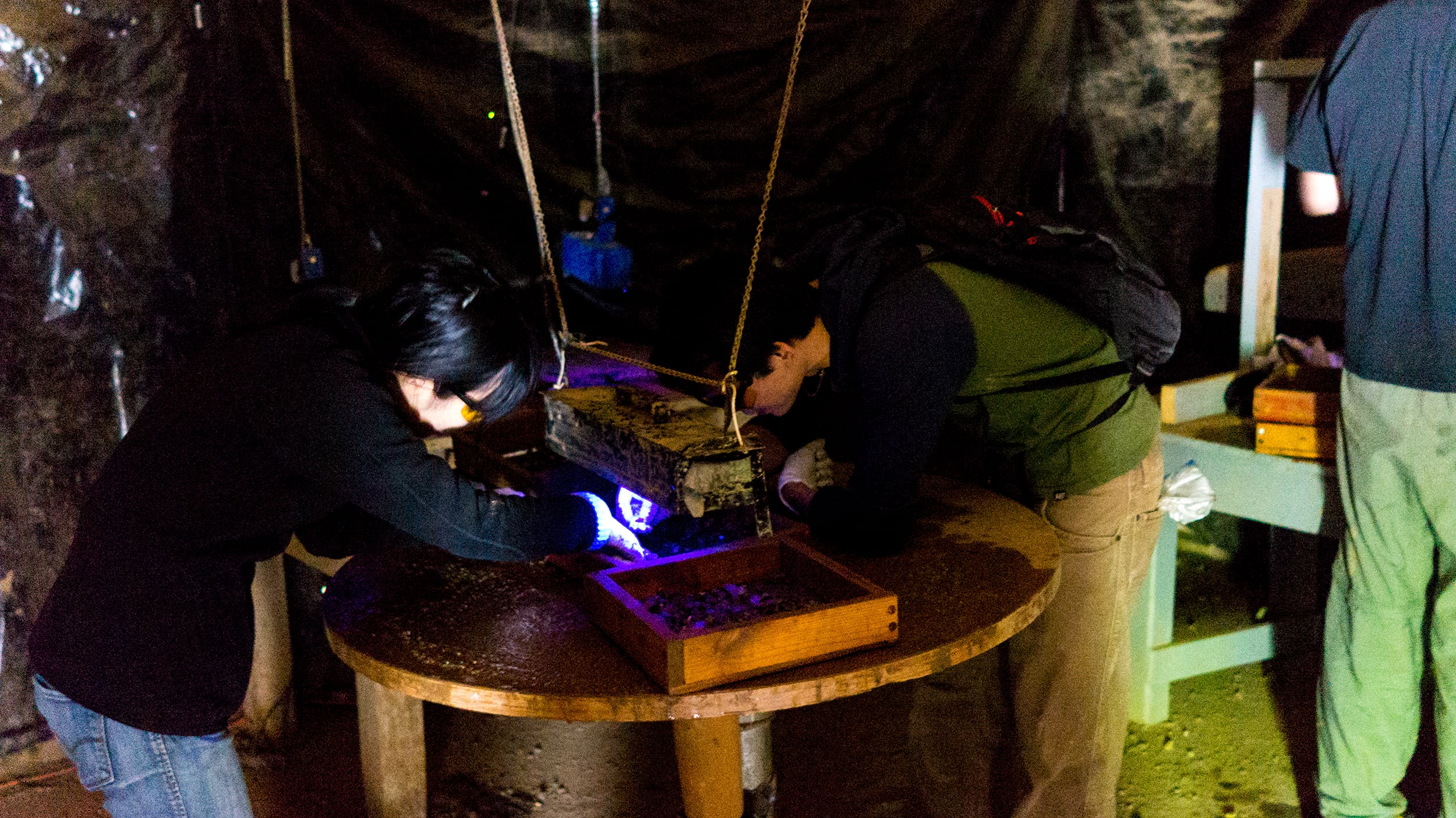
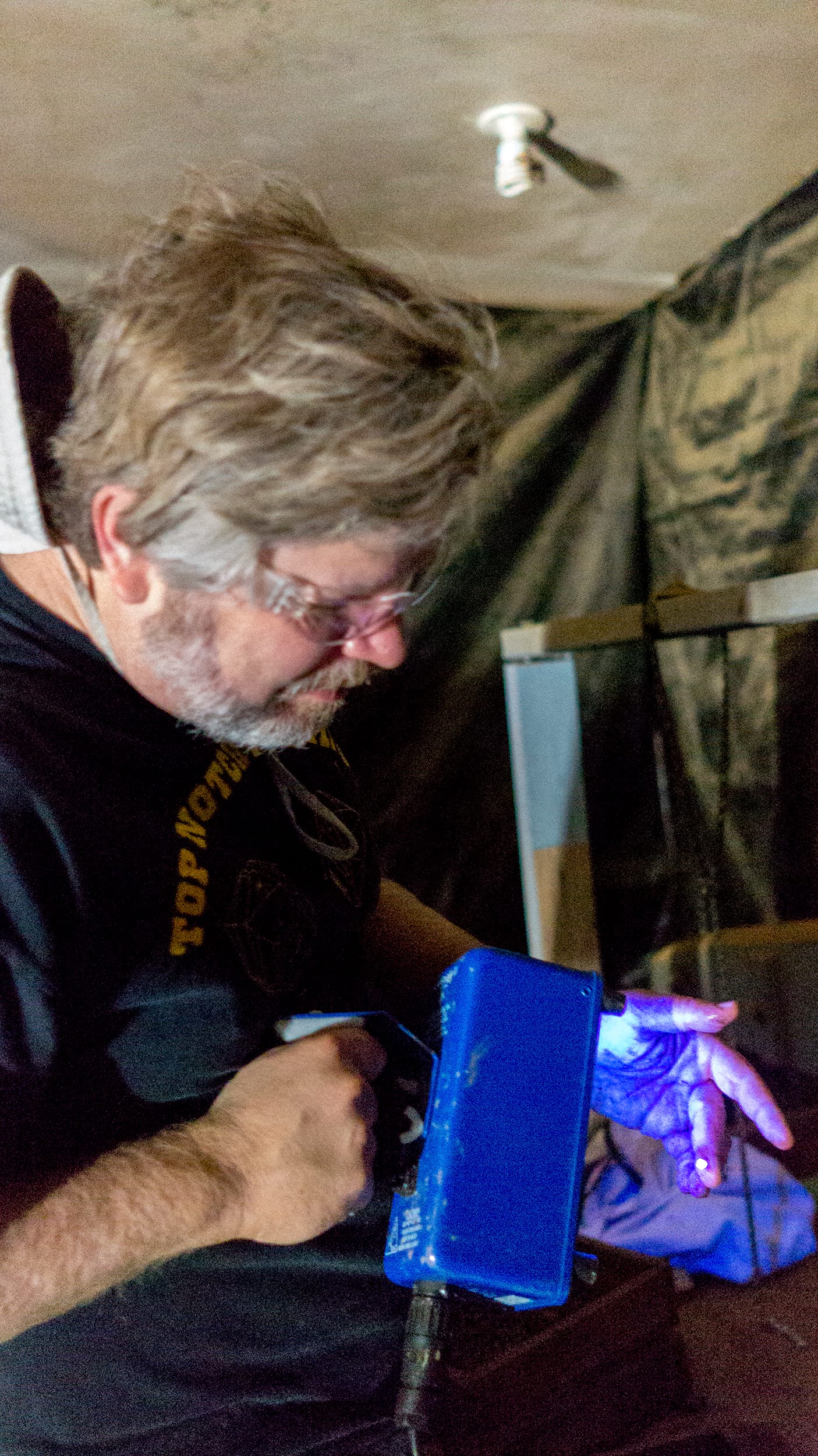
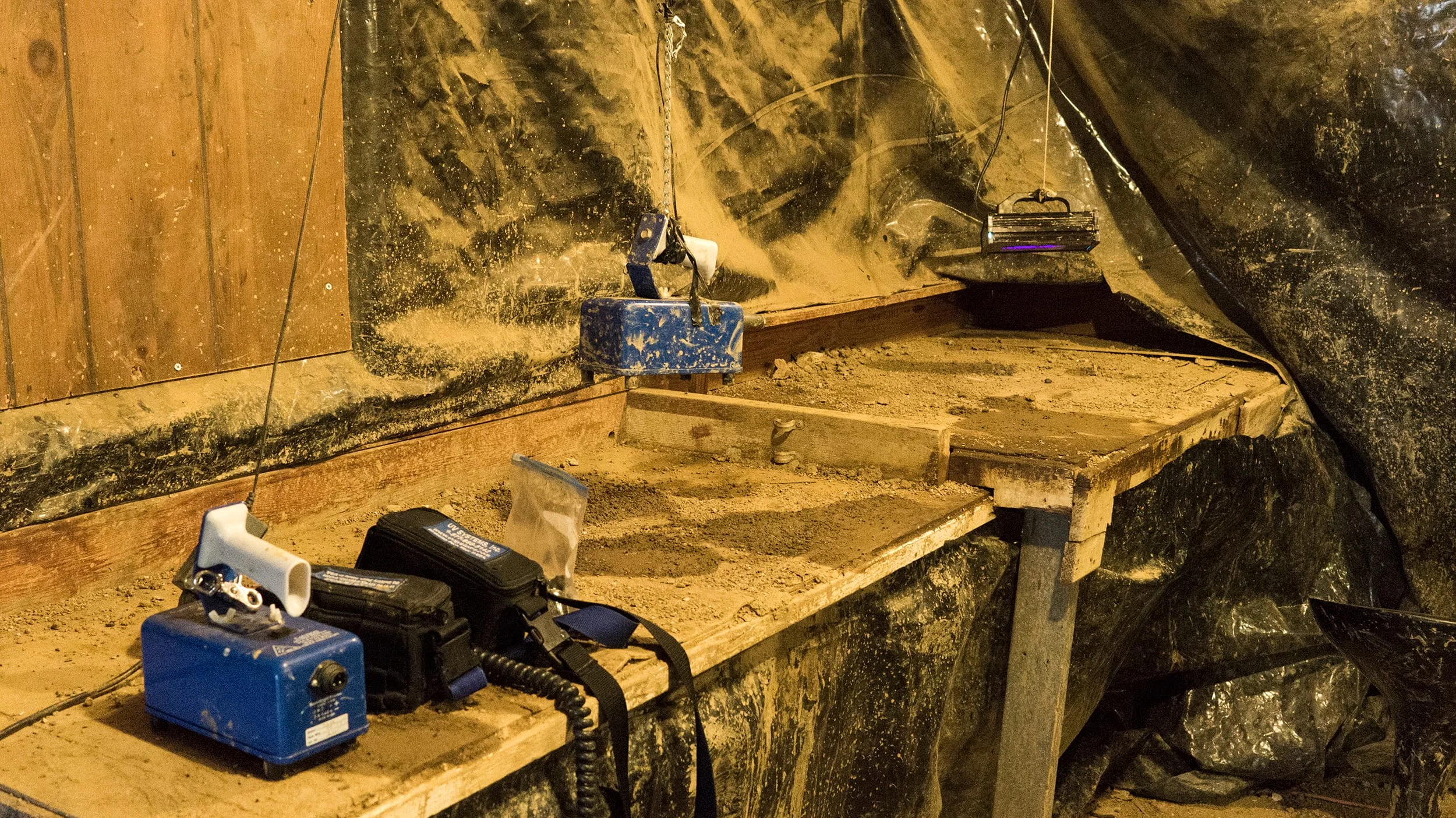
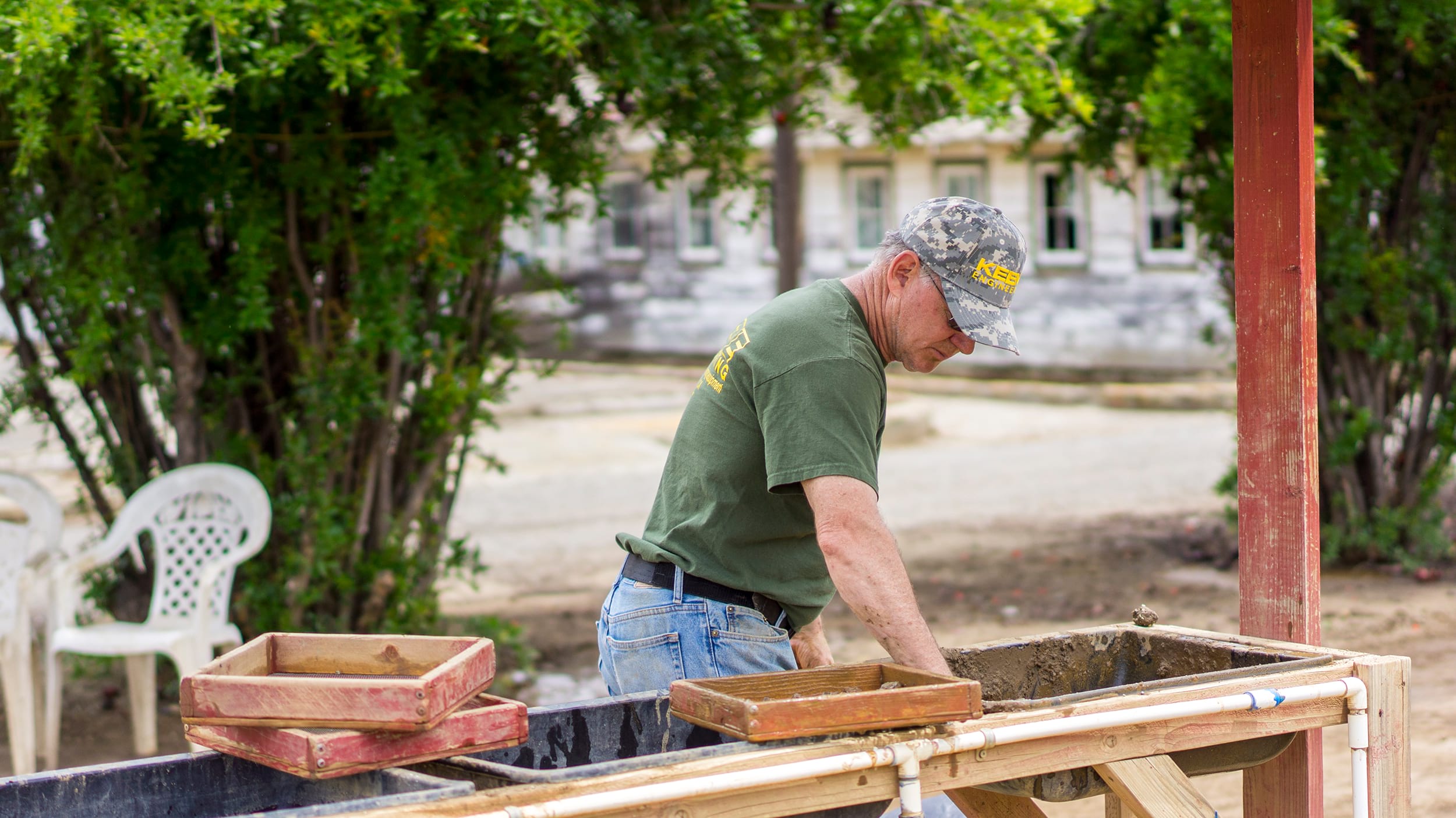
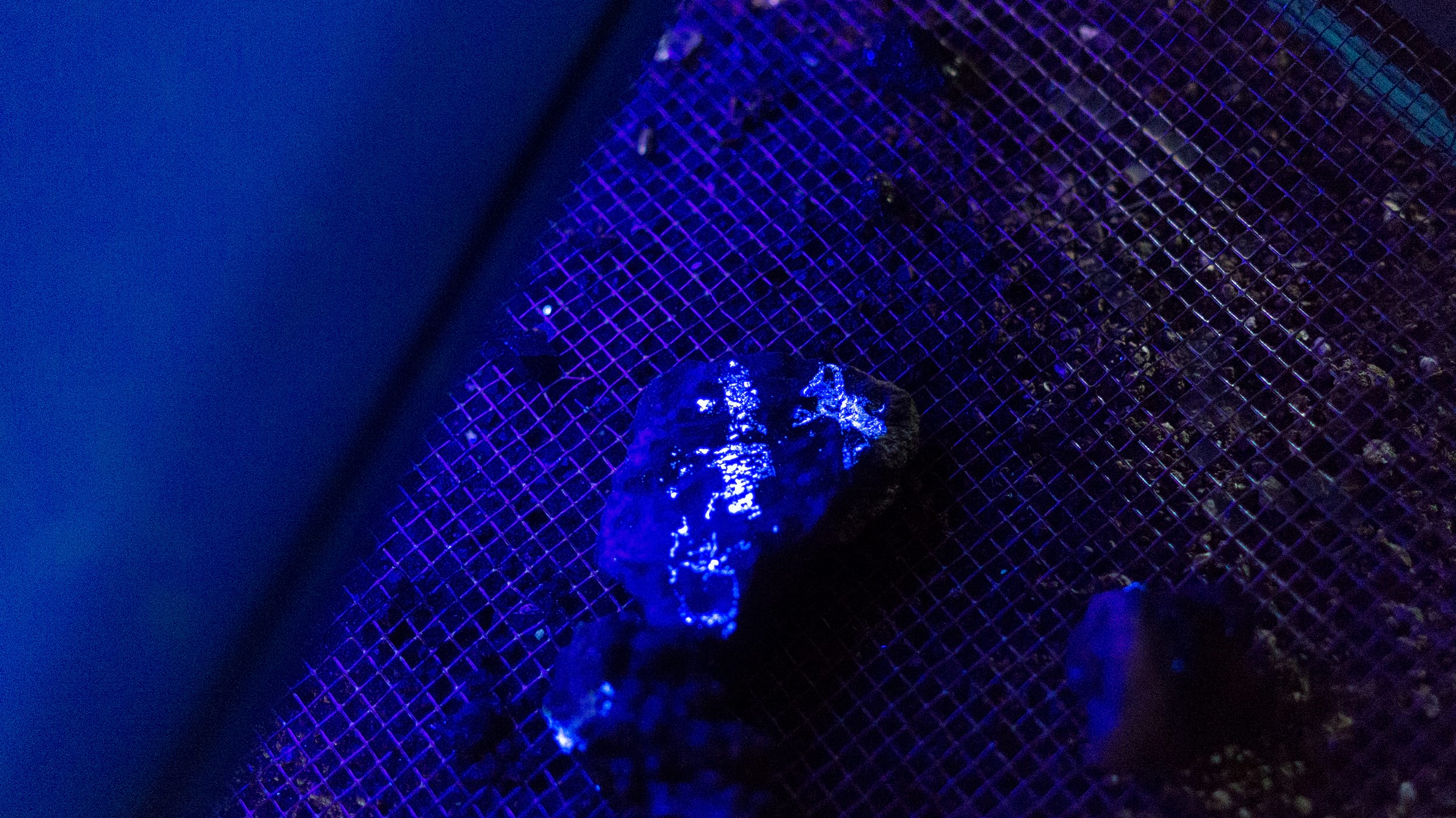
Afterwards we were shown how to collect the benitoites. It consisted of us scooping a pile of dirt from a large pile, sifting through it in troughs, and looking for reflections or checking for fluorescence in the dark room. We were shown how to find them in the daylight but by the end we were all just checking them under UV. Much quicker and didn't require a trained eye. Luckily there was only one other couple there so we got plenty of hands on time and plenty of material to ourselves. If I remember correctly their names were Yvonne and Raymond. They had a cute story as Yvonne wanted a benitoite ring but had a huge sticker shock when she priced out a single carat. Therefore she and Raymond decided to mine their own!

UV room shown in the back. White building

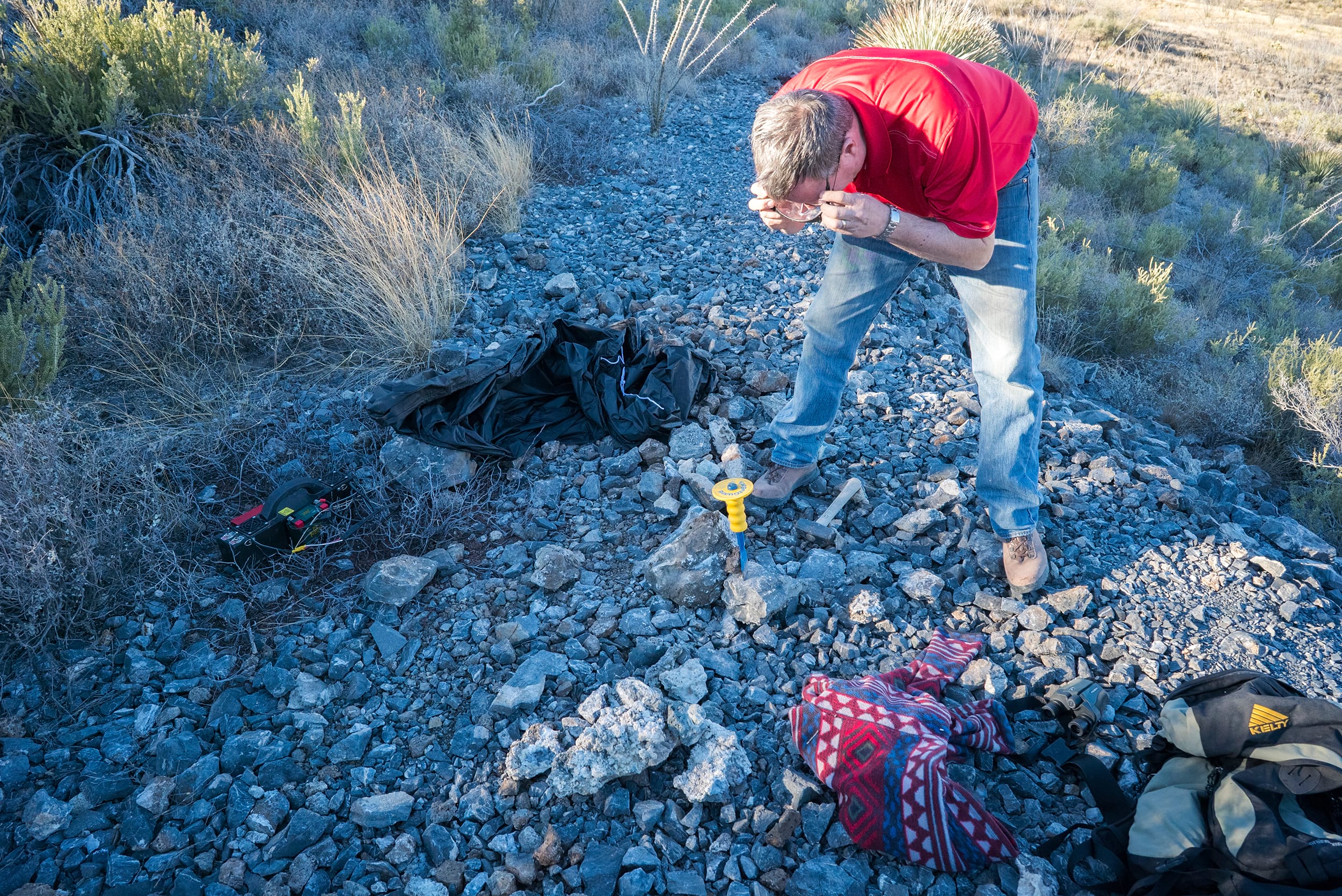
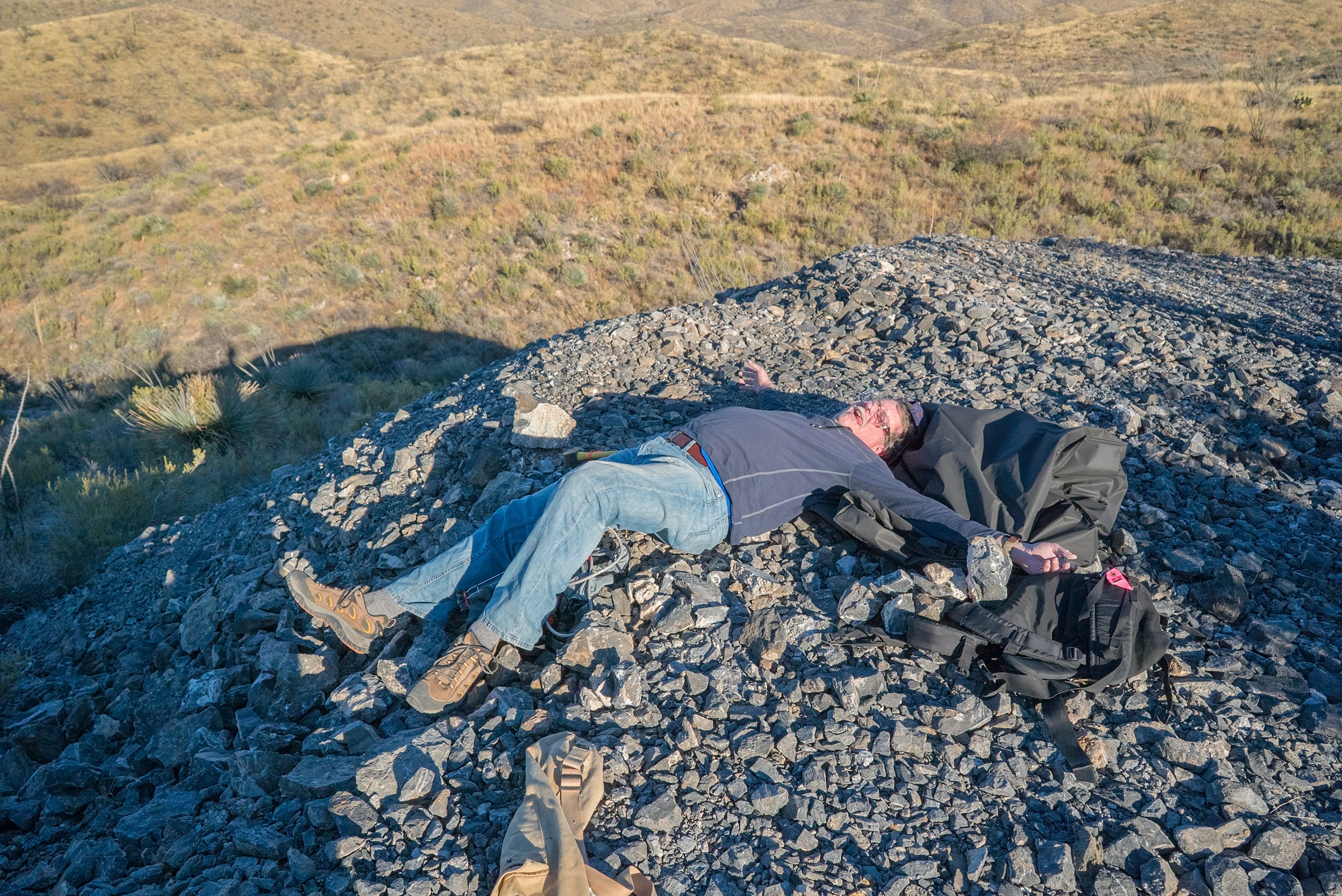
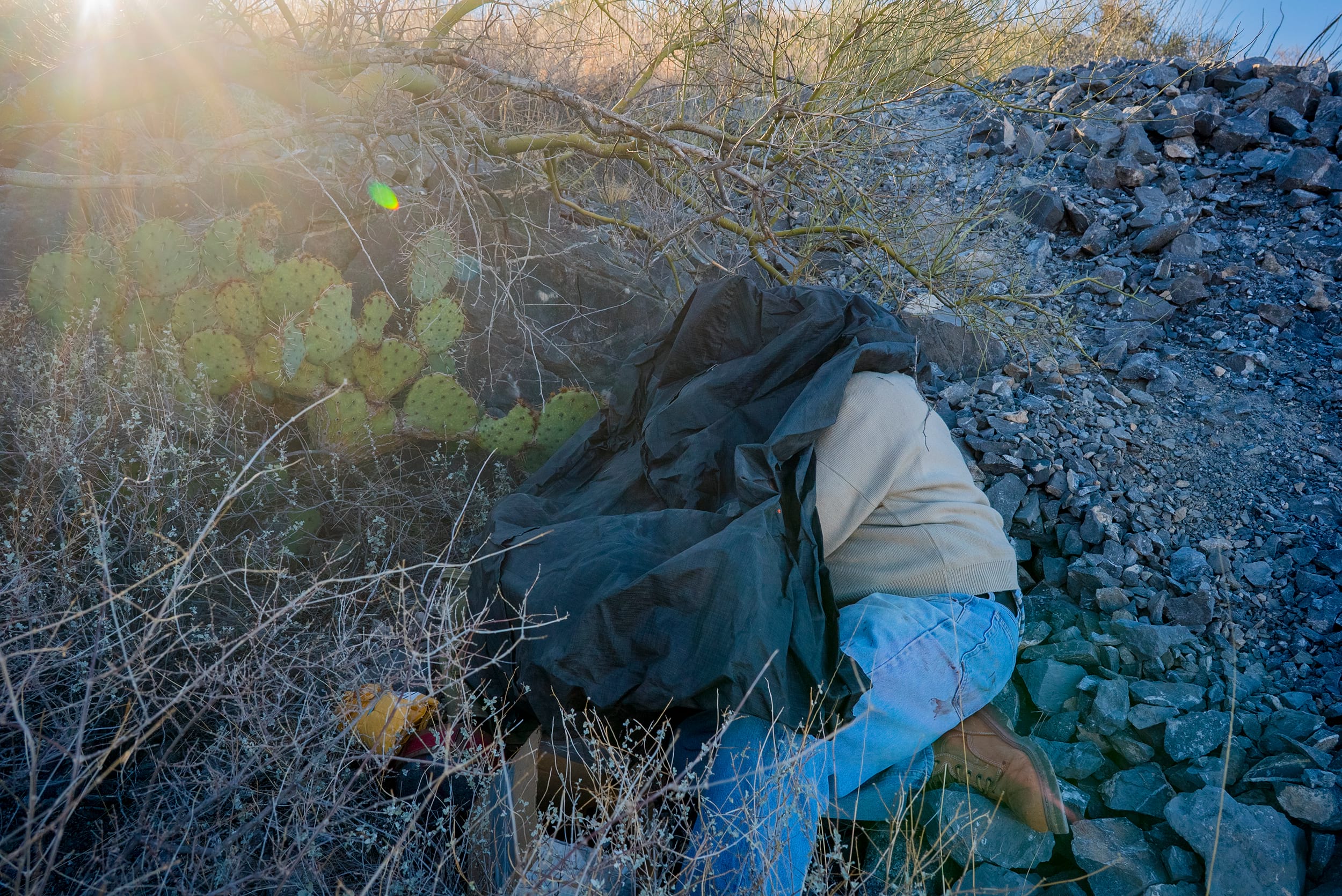
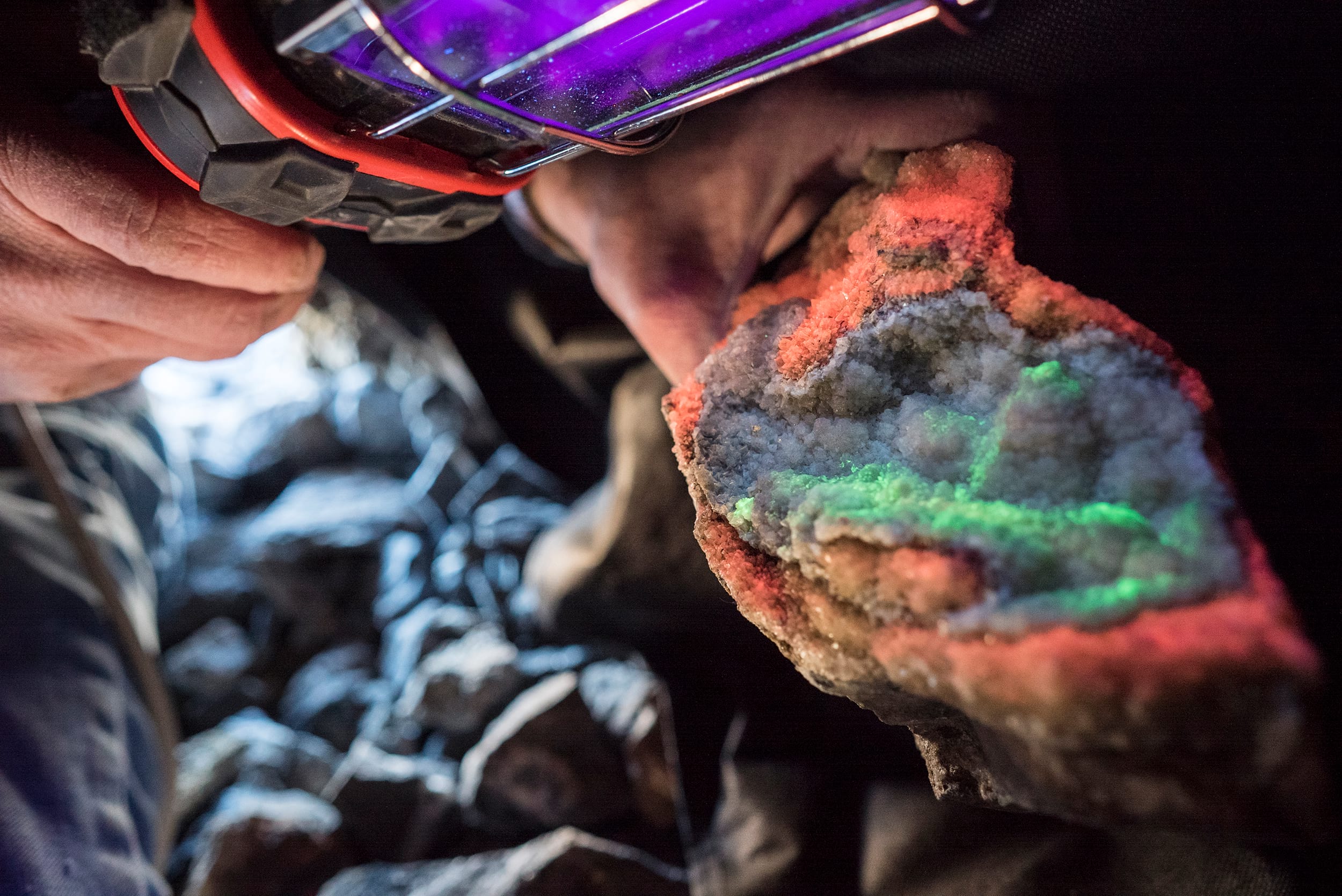
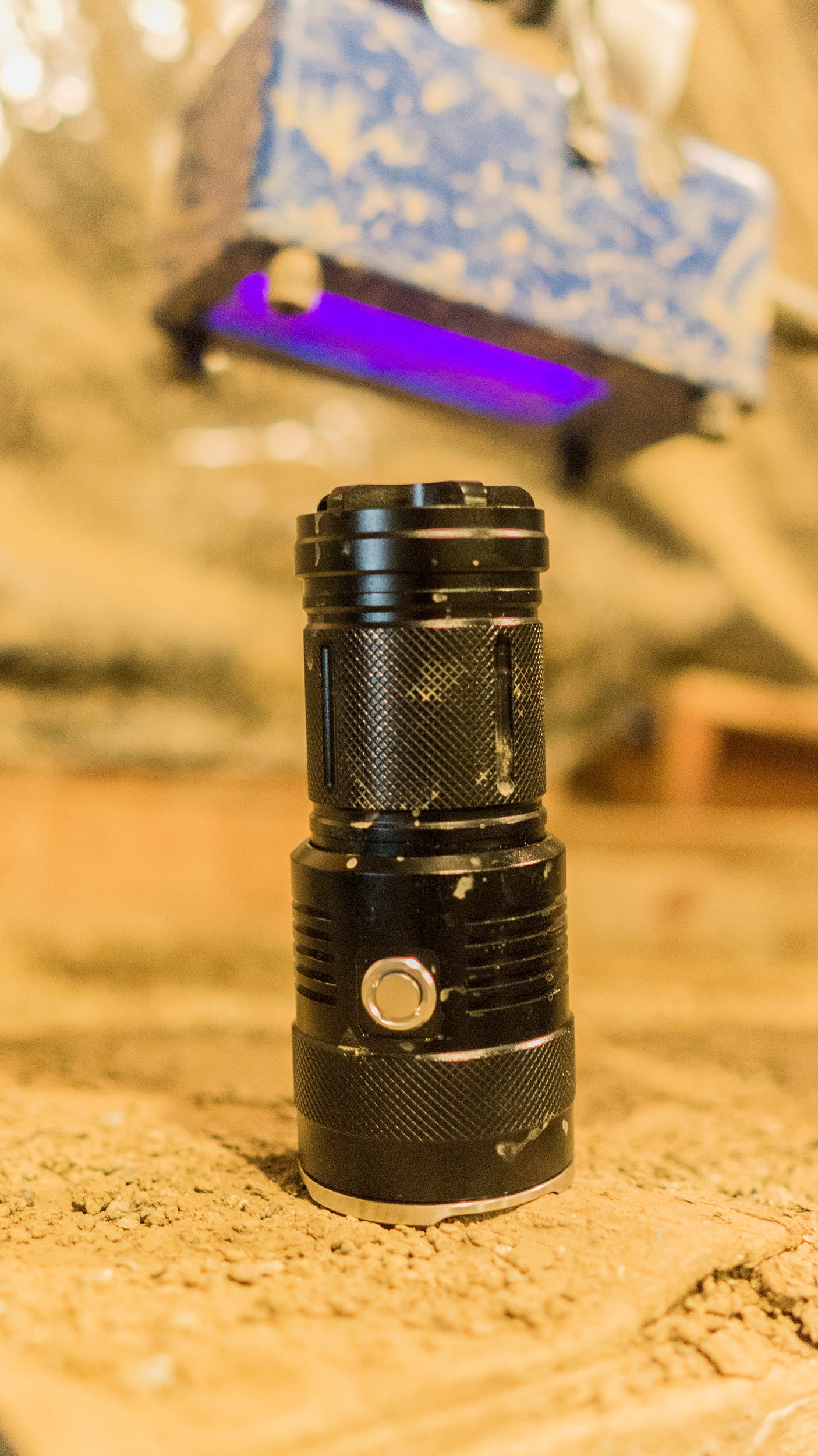
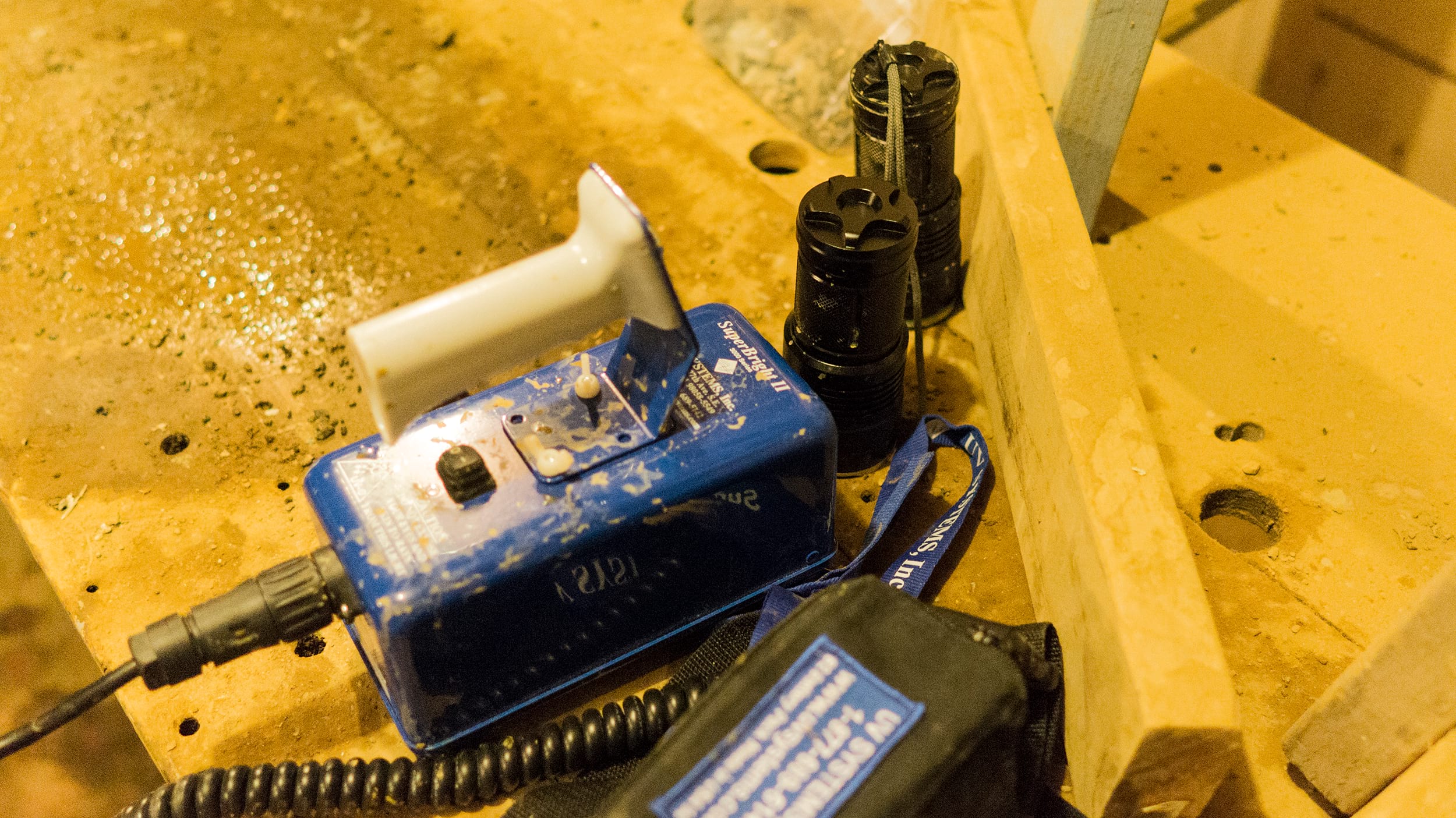
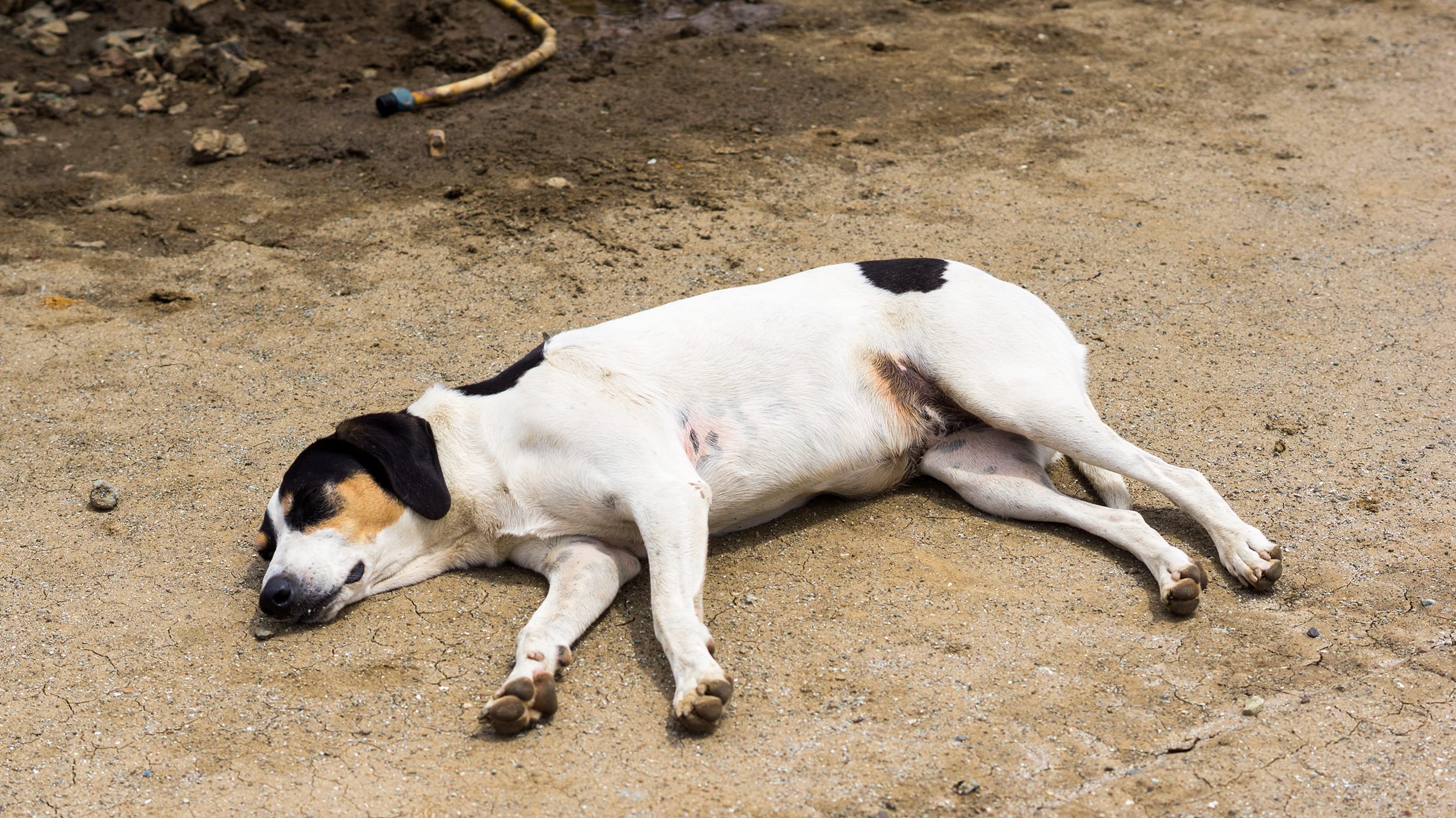
The benefit of being a fluorescent collector in this trip? We all had our own UV lights. It was much easier and quicker to use my own light to check for fluorescence underneath the tarp I brought than to walk all the way back to the room and use their dim lights. Side note: the owner's dogs had a ball sniffing and touching all the supplies I brought. For the first couple 30 minutes or so they were either looking at me, sniffing my things, or doing some combination of those when I wasn't looking.


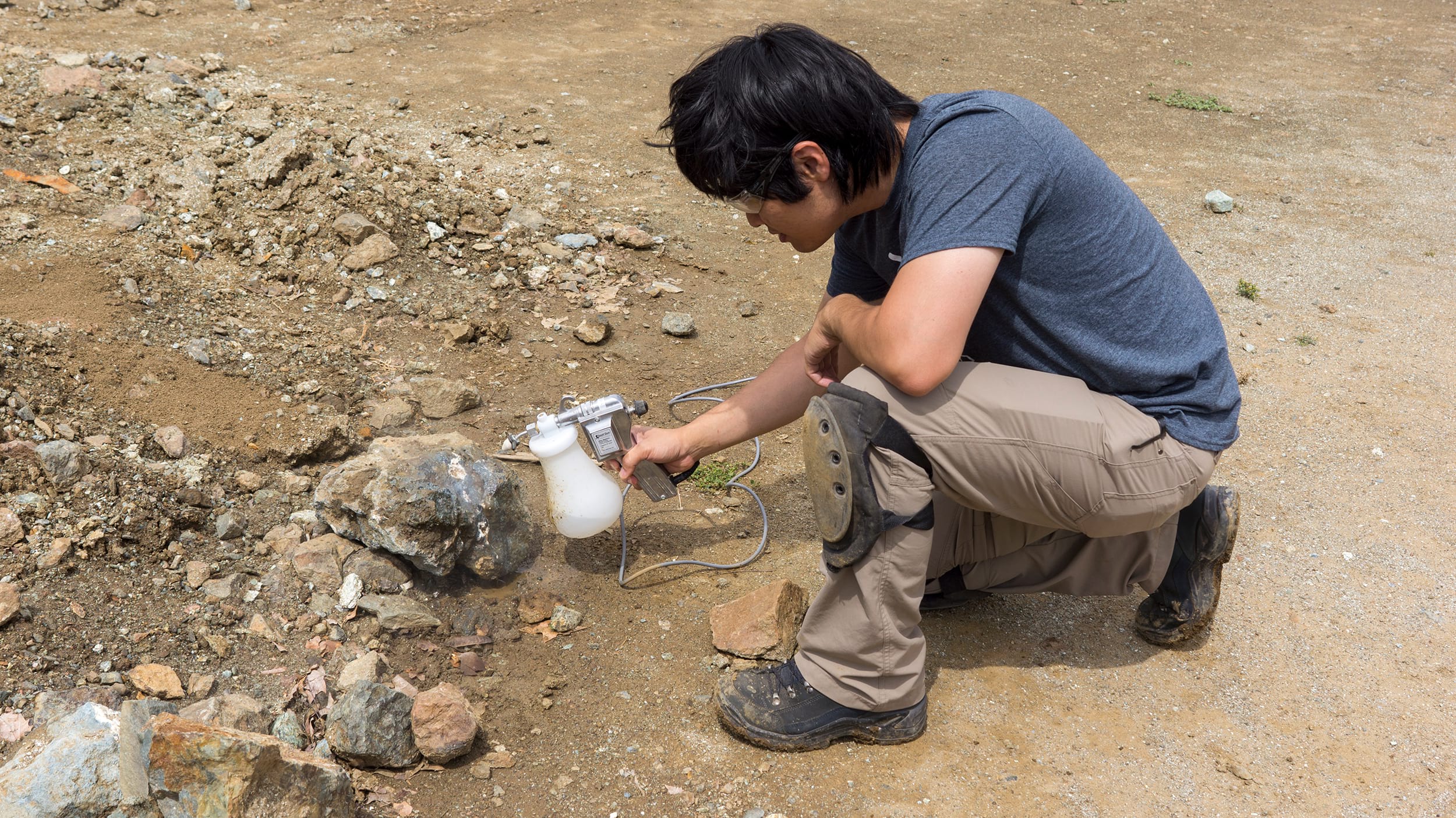
About an hour before our time was up I had the idea of just lamping the piles rather than sifting through everything. I found some of my best benitoites this way. It was much more efficient presumably because it had just rained revealing fresh material. Also I didn't have to waste time sifting.

After all of this the mine owners came by and checked out what we had found for the day. Unfortunately the only other couple that showed up beat seasoned collectors like us! Oh well. It went to a great cause because last I checked they were engaged with a benitoite ring.
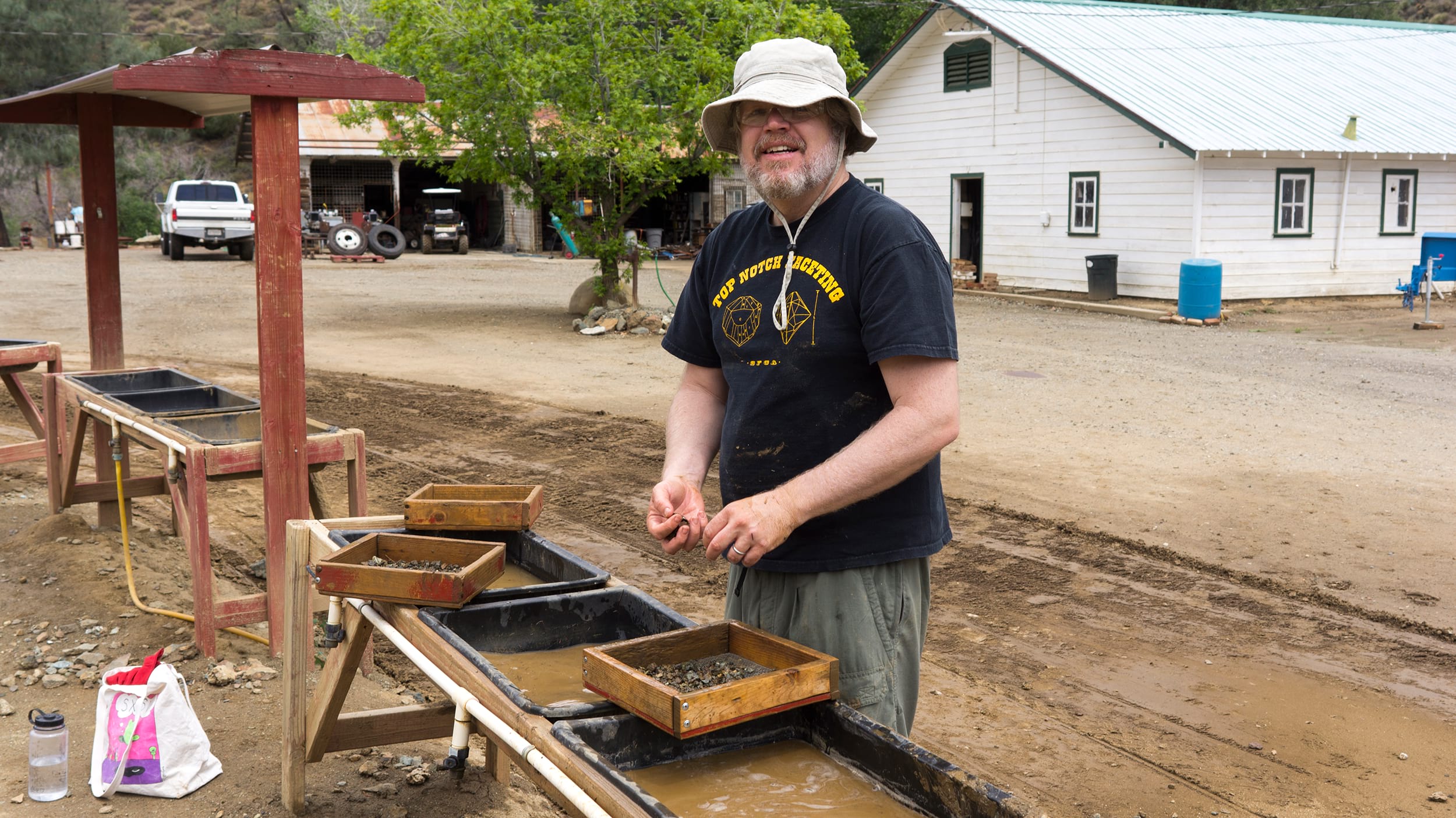
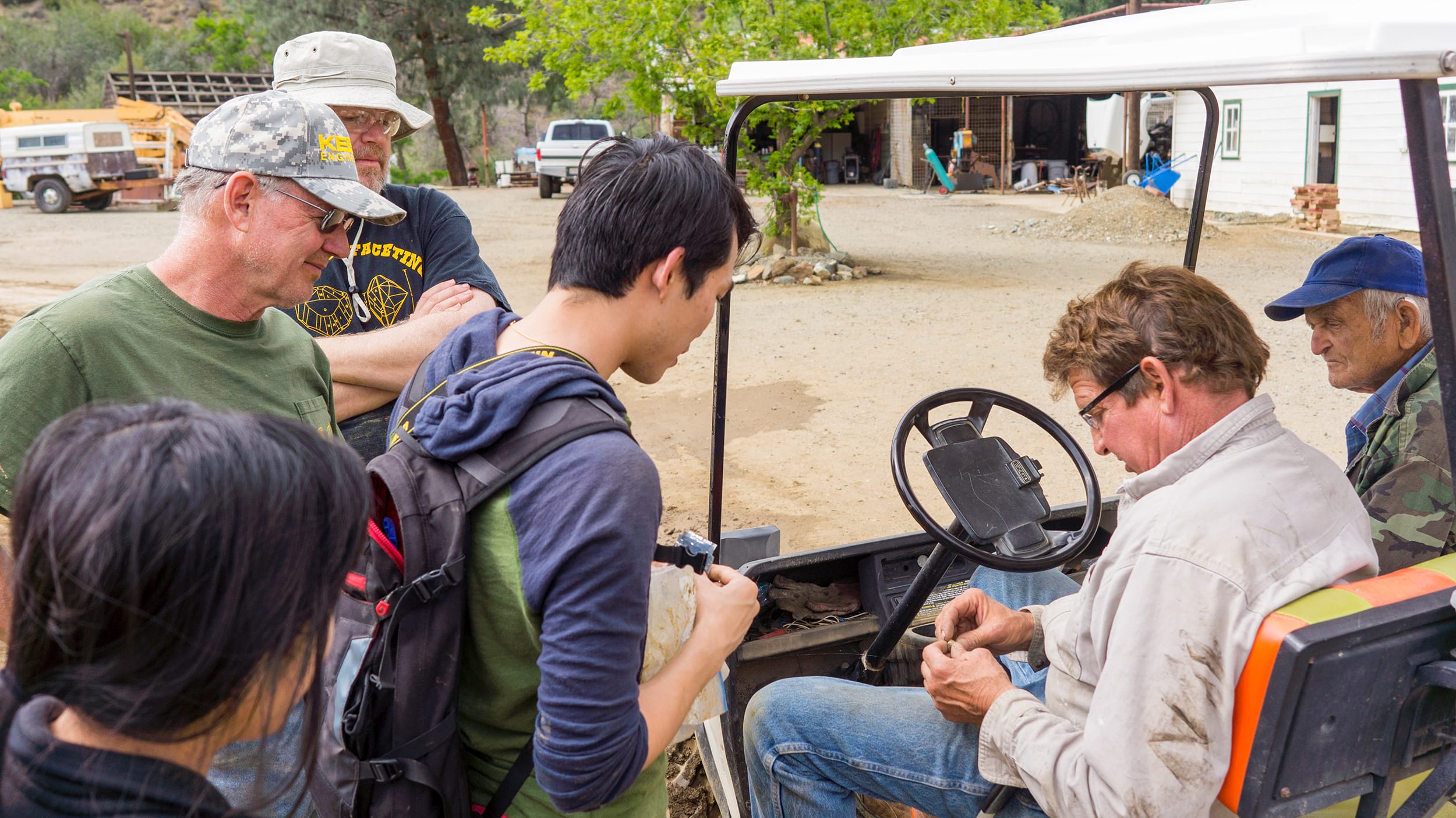
And here are the fruits of my labor. Not quite worth the cost of admission but I now have more respect for the specimens that are being sold. There doesn't seem to be much of the material left - at least not here!

Daylight

253.7nm SW

365nm LW

SoCal FMS Meeting September 2015
This was an exciting SoCal FMS meetup for me because it marked the first time I had my 365nm LW lights put into production. It was quickly given the nickname LongWave of Doom by Jim as it was (and still is!) the most powerful longwave light by a country mile. The special guest of the evening was Kerry Cooper, a high end collector that had several of his specimens published. It was quite interesting and probably lost on me at the time. Afterwards we saw Jim's ever growing collection and inventory. My favorite of the night was the Swedish combination of oranges and reds (calcite/svabite). Incredibly bright material!
Paul Tauger, who also attended this meeting, posted his perspective and his photos.
https://www.facebook.com/paul.tauger/media_set?set=a.1164699430212497.1073741866.100000173523772&type=3