
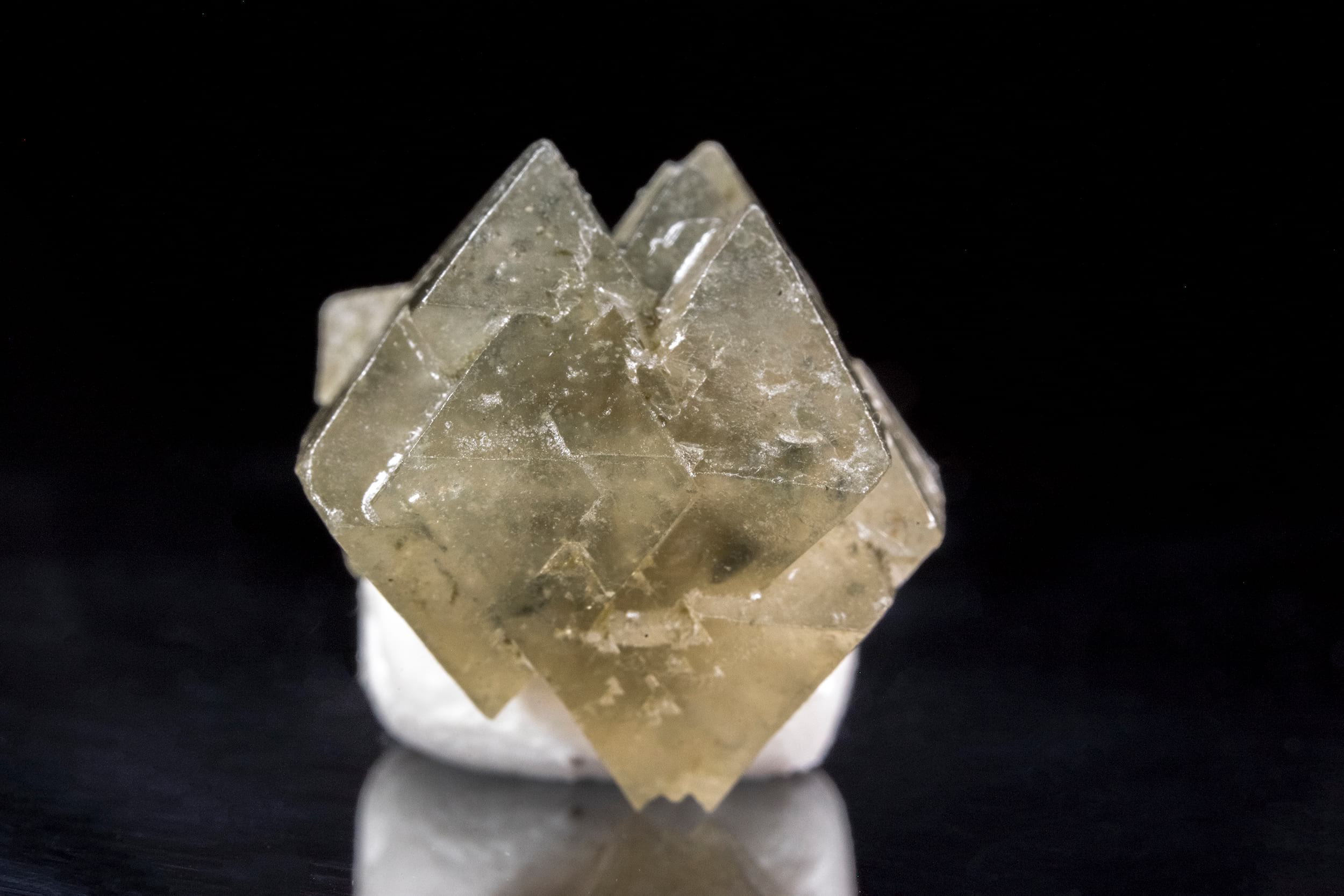
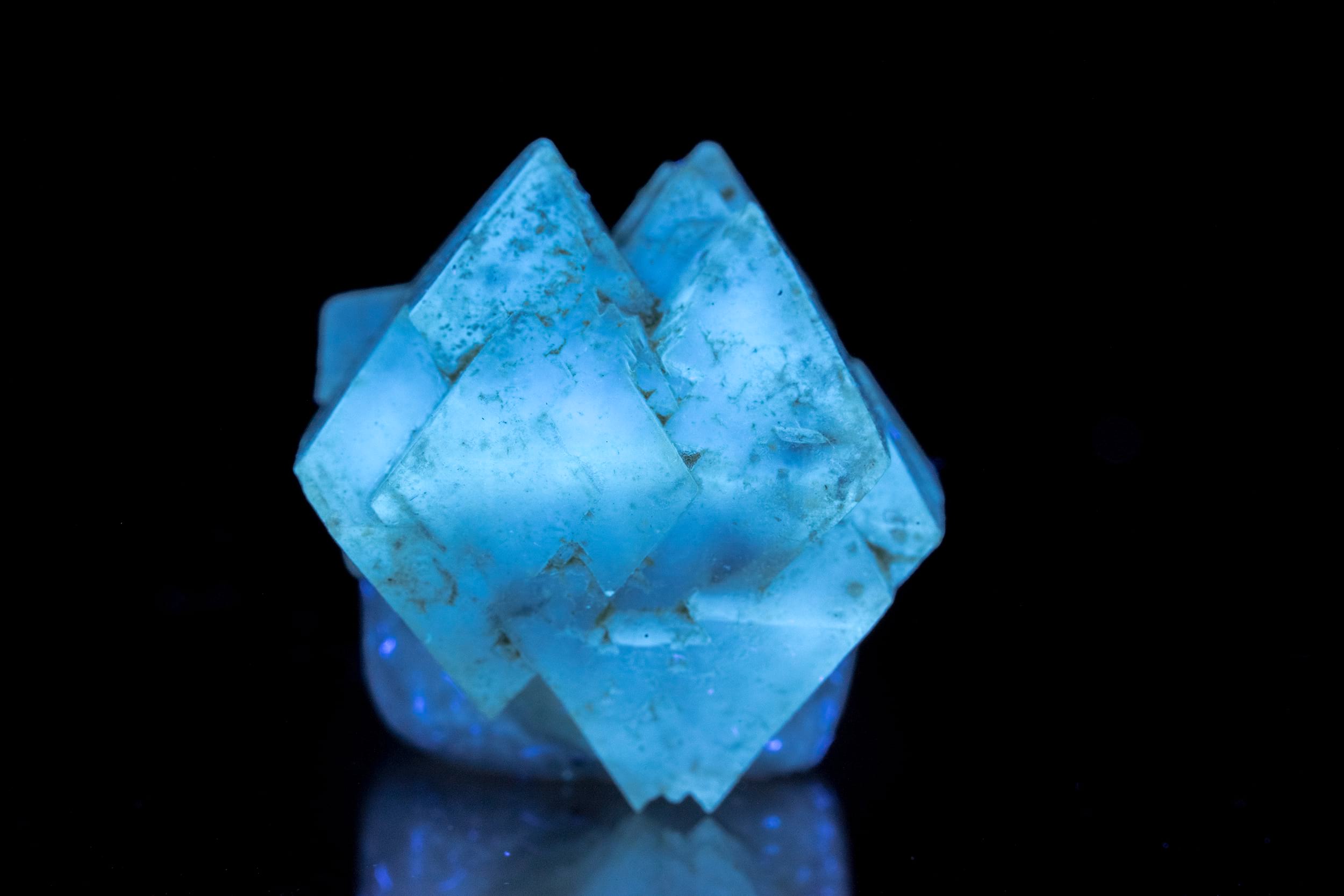
Sulfohalite
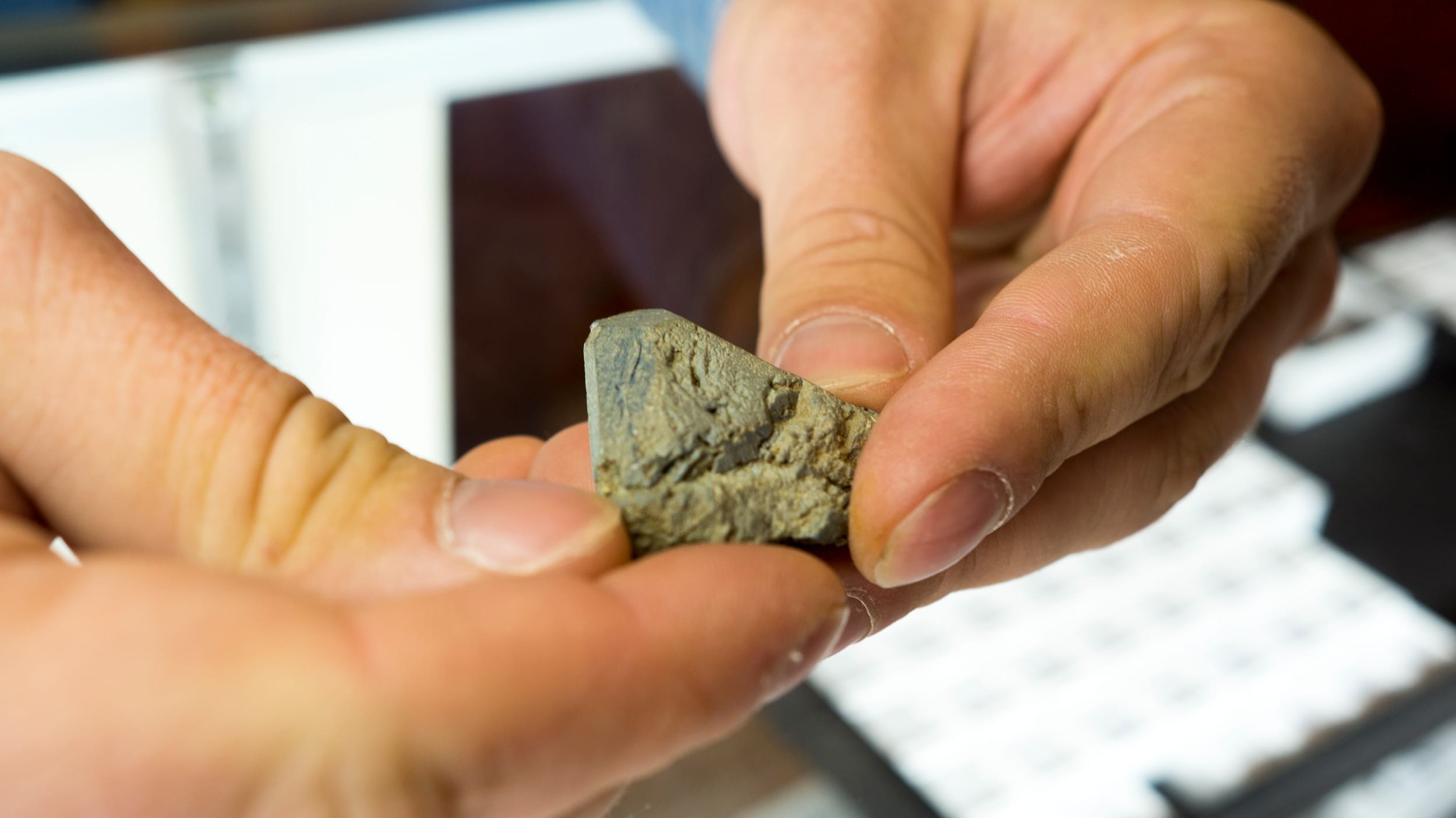
Wonderful cluster of sulfohalites from Searles Lake.
Locale: Searles Lake, CA
Weight: .2oz | 6g
Dimensions: .86 x .72 x .79 in | 22 x 18 x 20 mm
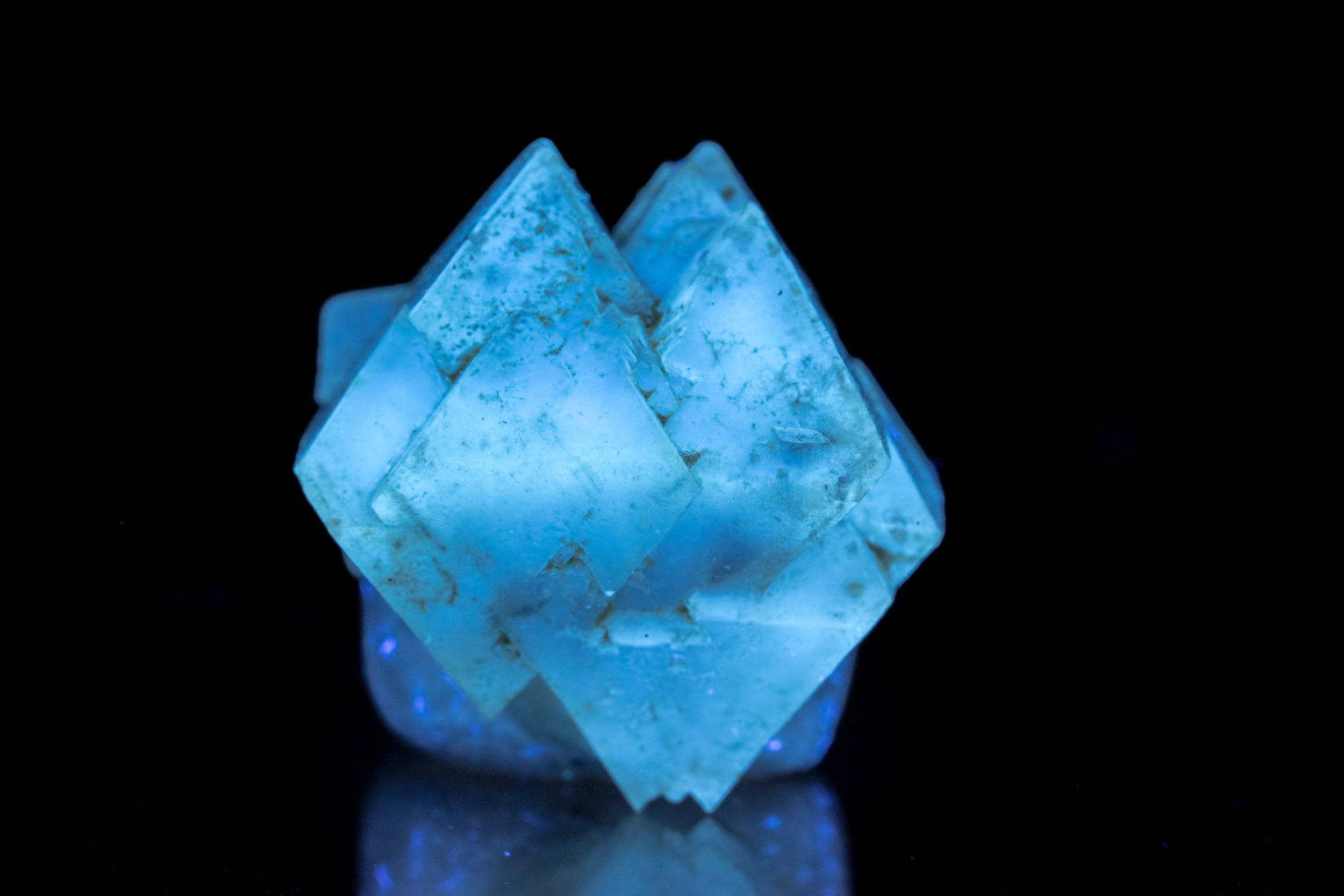
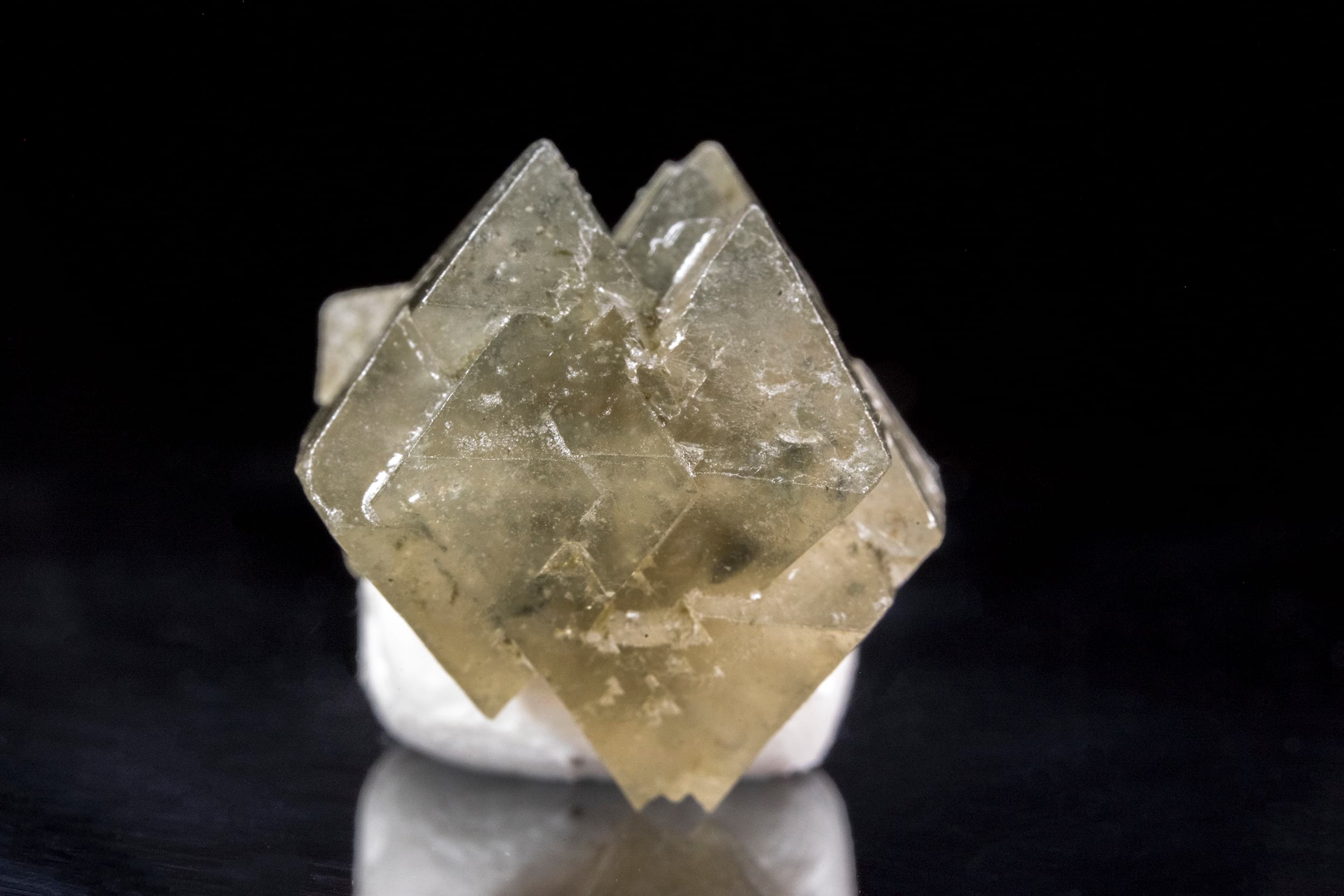

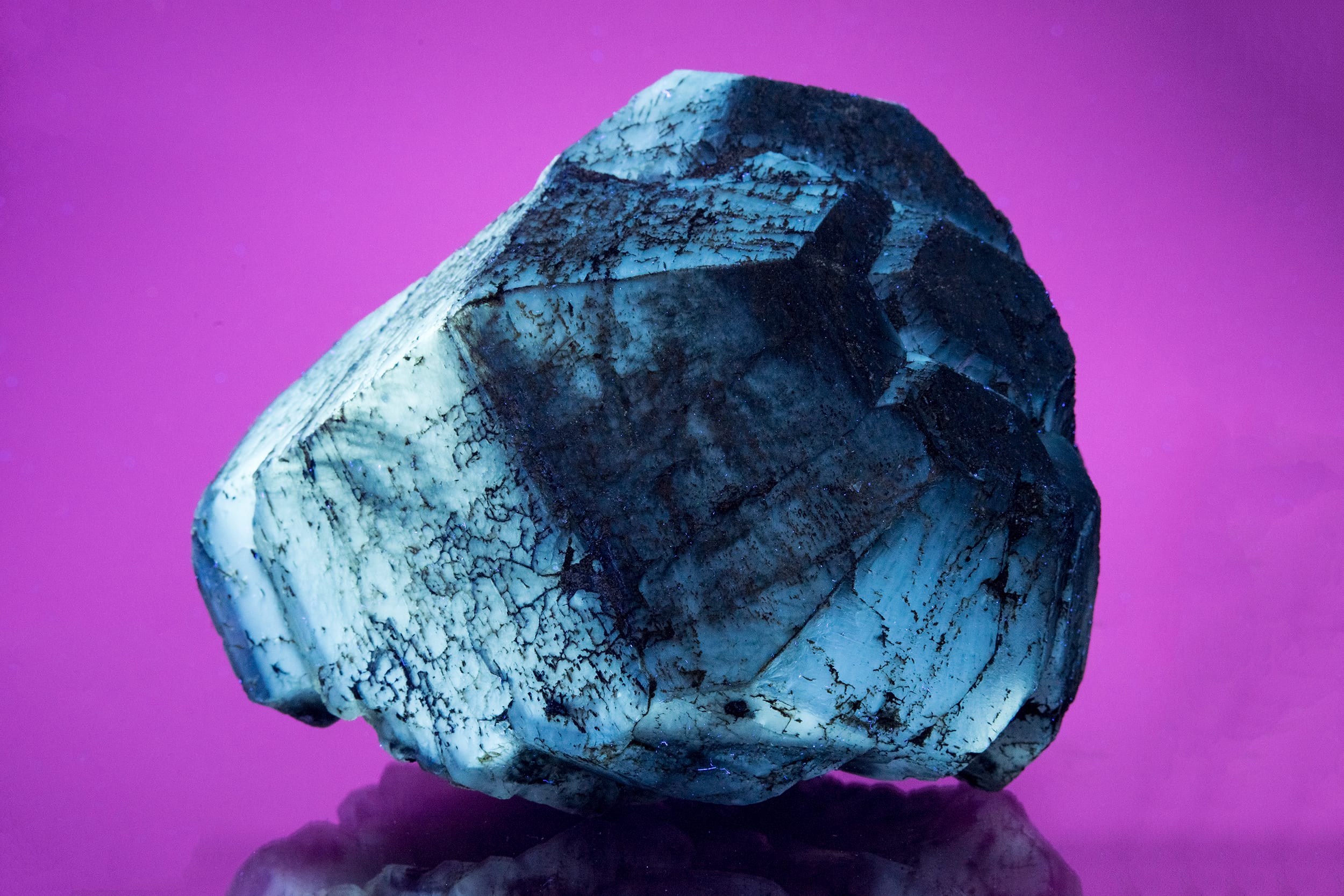
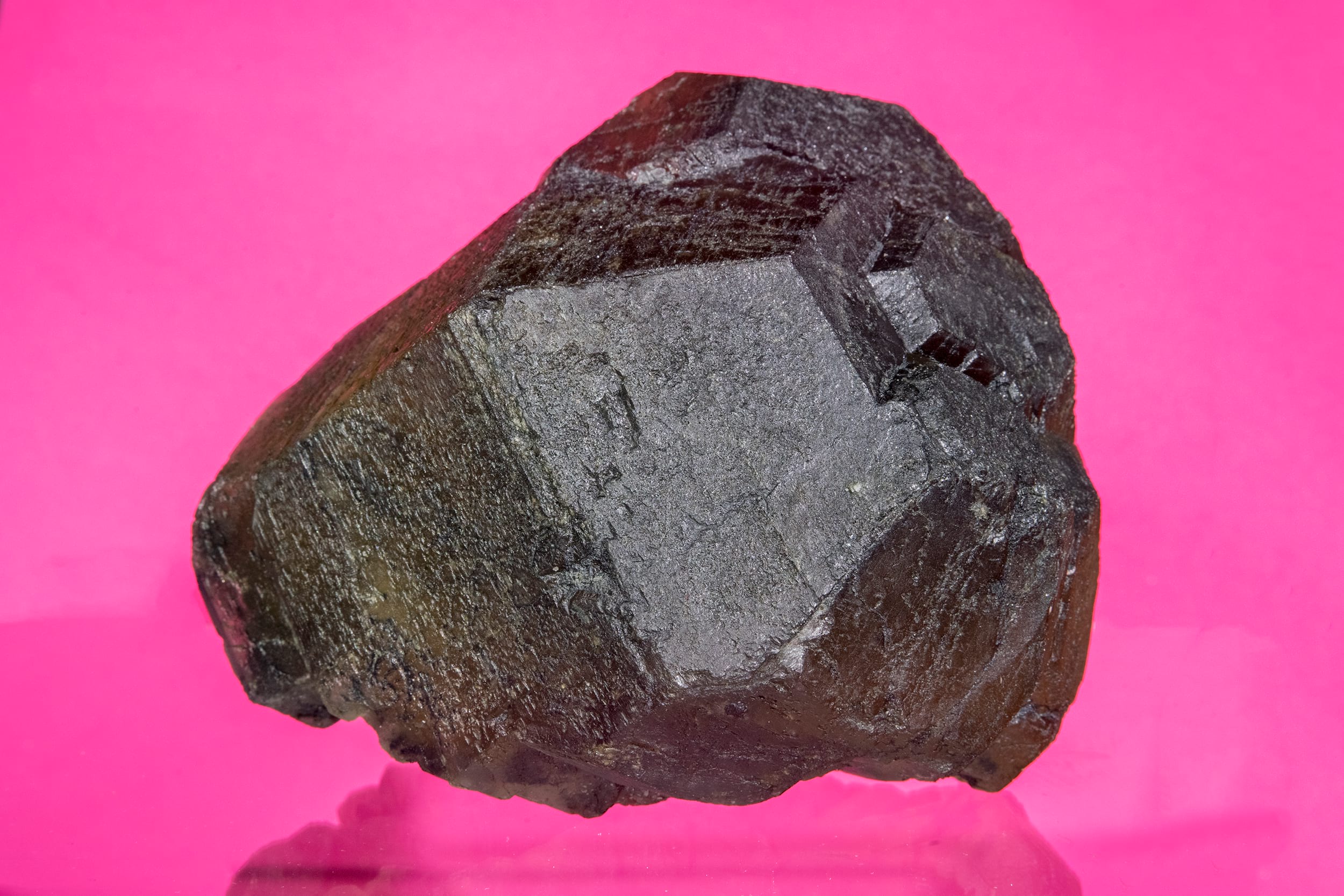
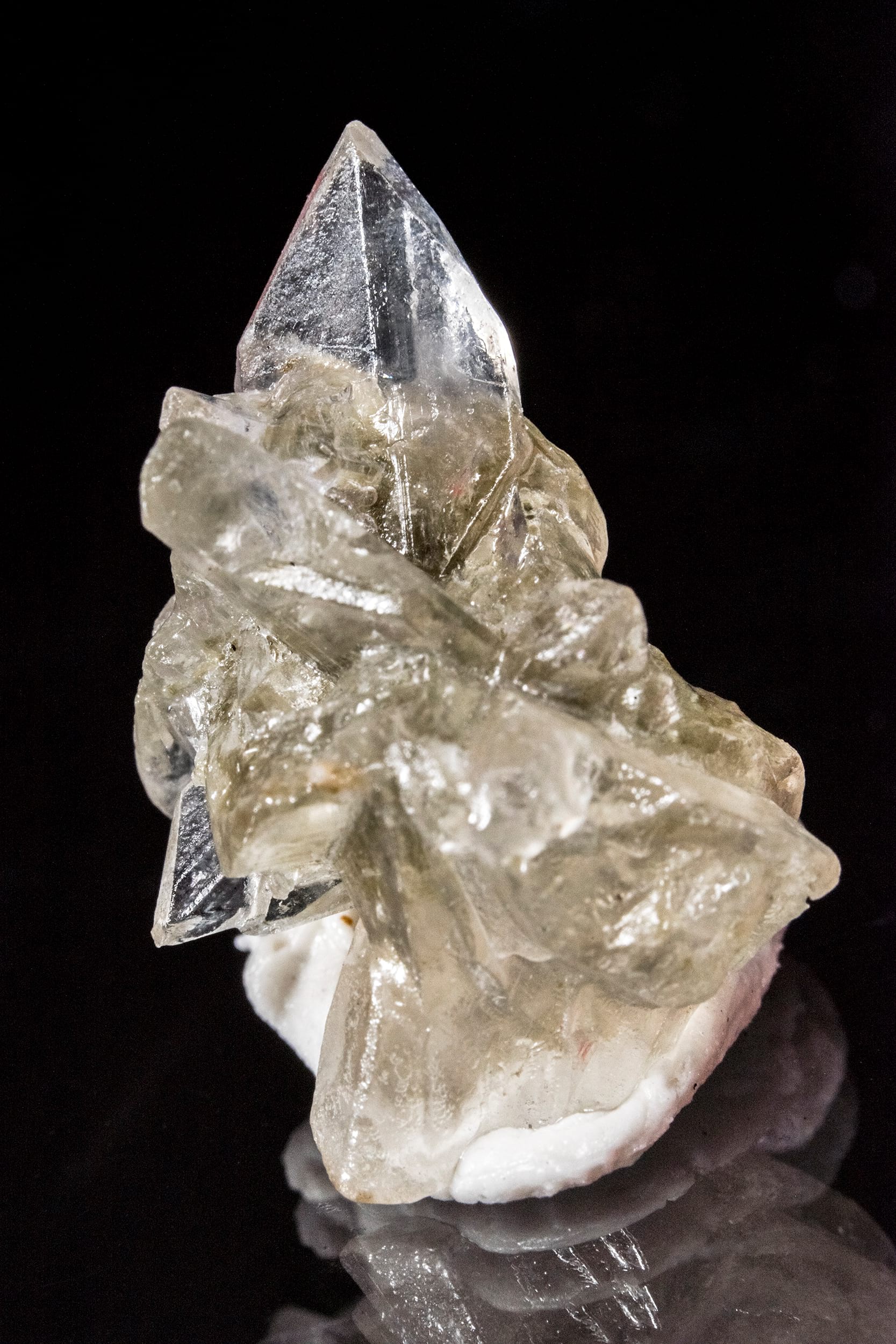
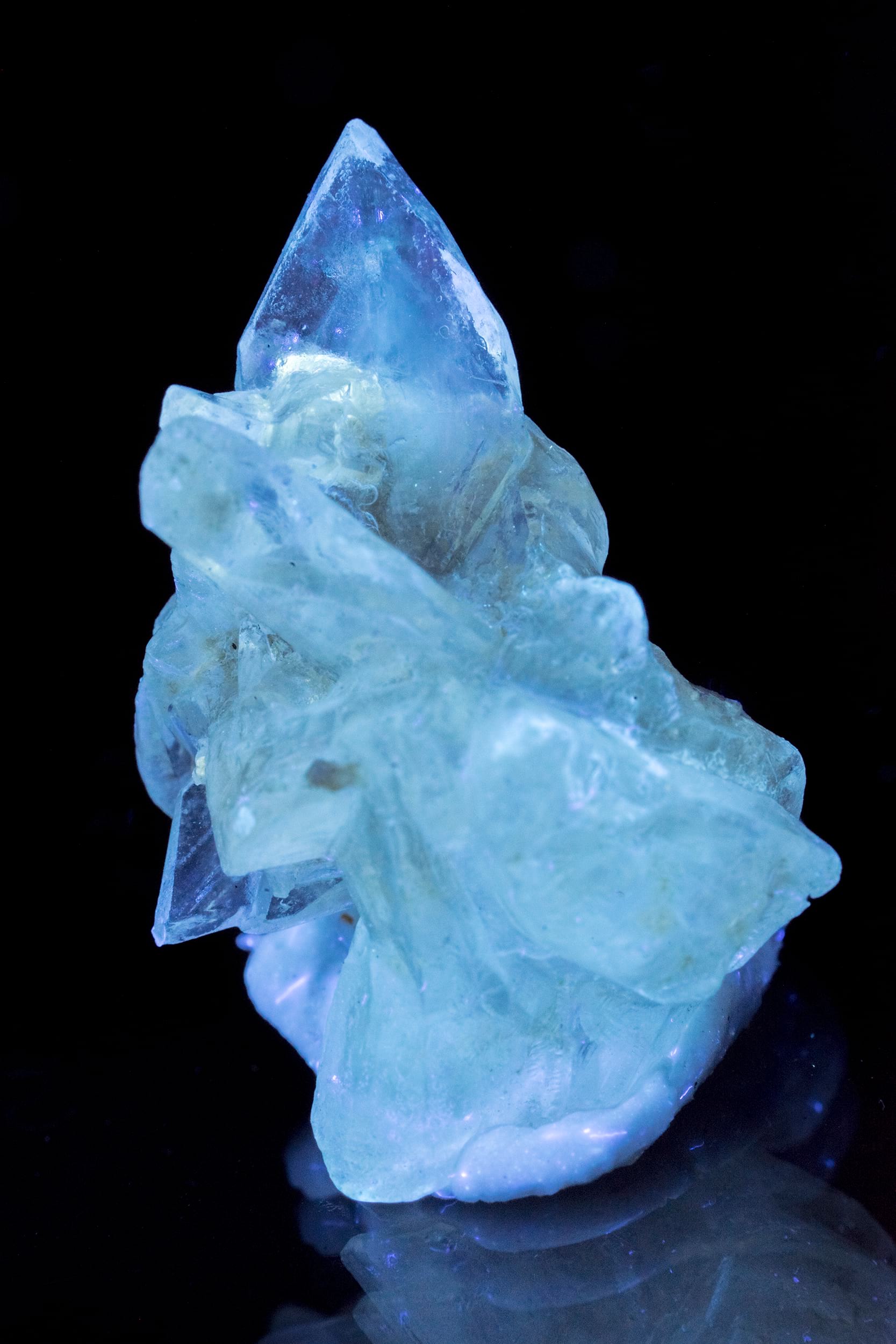
Thénardite
A cluster of thénardite crystals with multiple well terminated crystals in all directions throughout the specimen. The largest of which being on top and measuring .5in or 12mm tall. Collected October 2017
Locale: Searles Lake, CA
Weight: .1oz | 4g
Dimensions: .64 x .70 x 1.0 in| 16 x 18 x 26 mm
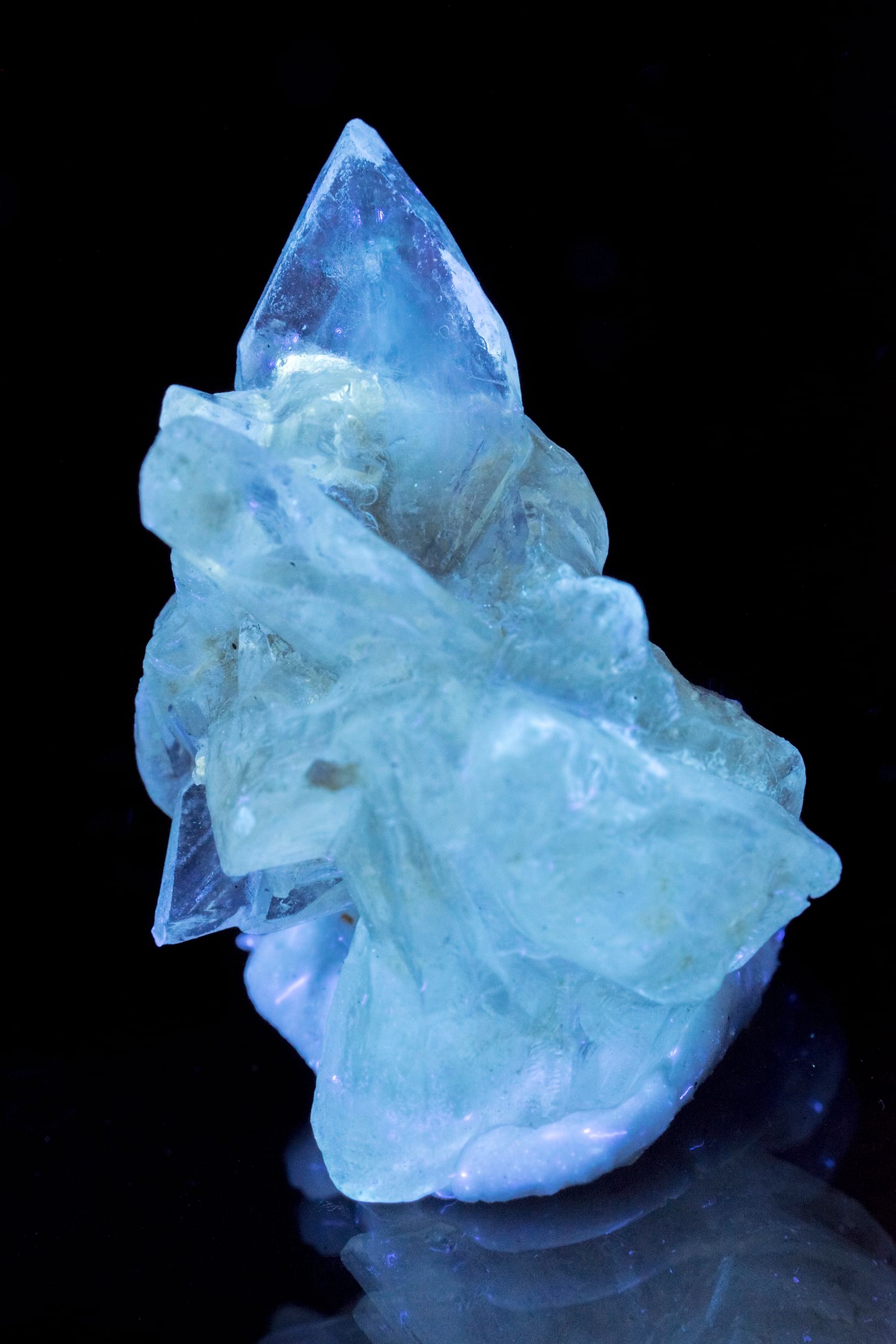


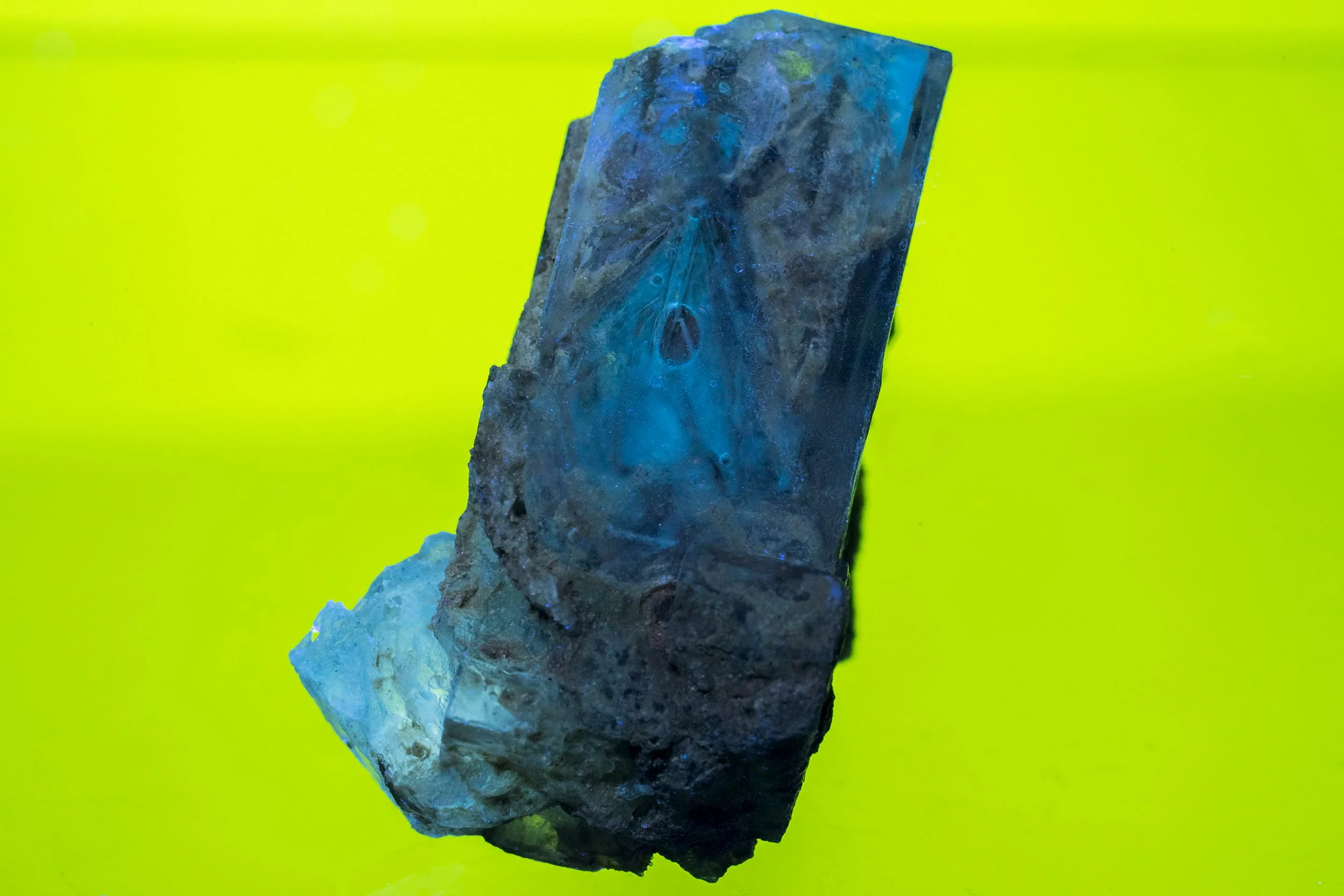
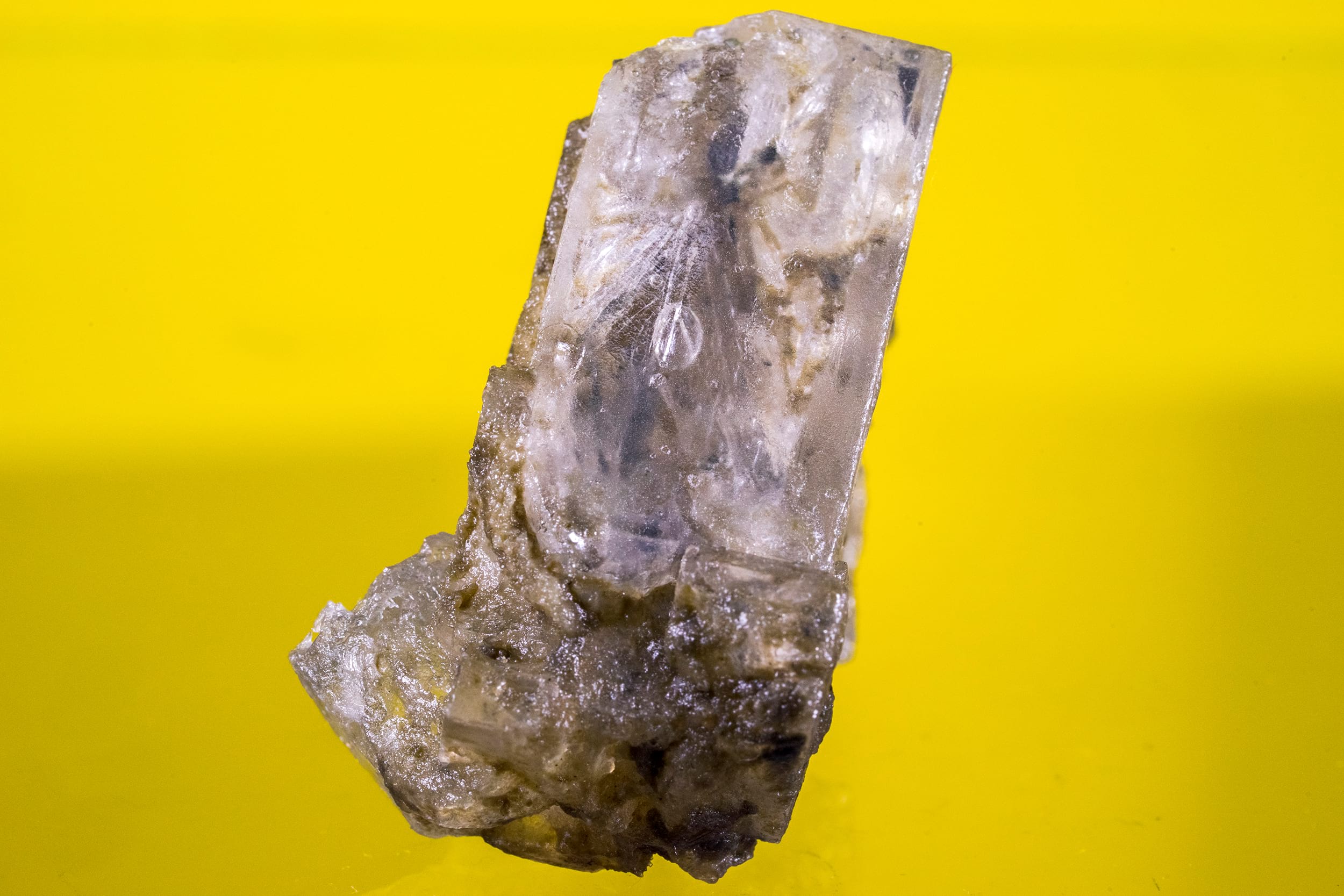
Sulfohalite, Hanksite
One of the rarer minerals of Searles Lake; this specimen forms a wonderful contrast with a well formed, well terminated sulfohalite with barrel hanksites underneath. Collected October 2017.
Locale: Searles Lake, CA
Weight: .1oz | 4g
Dimensions: .65 x .62 x .91 in | 17 x 16 x 23 mm

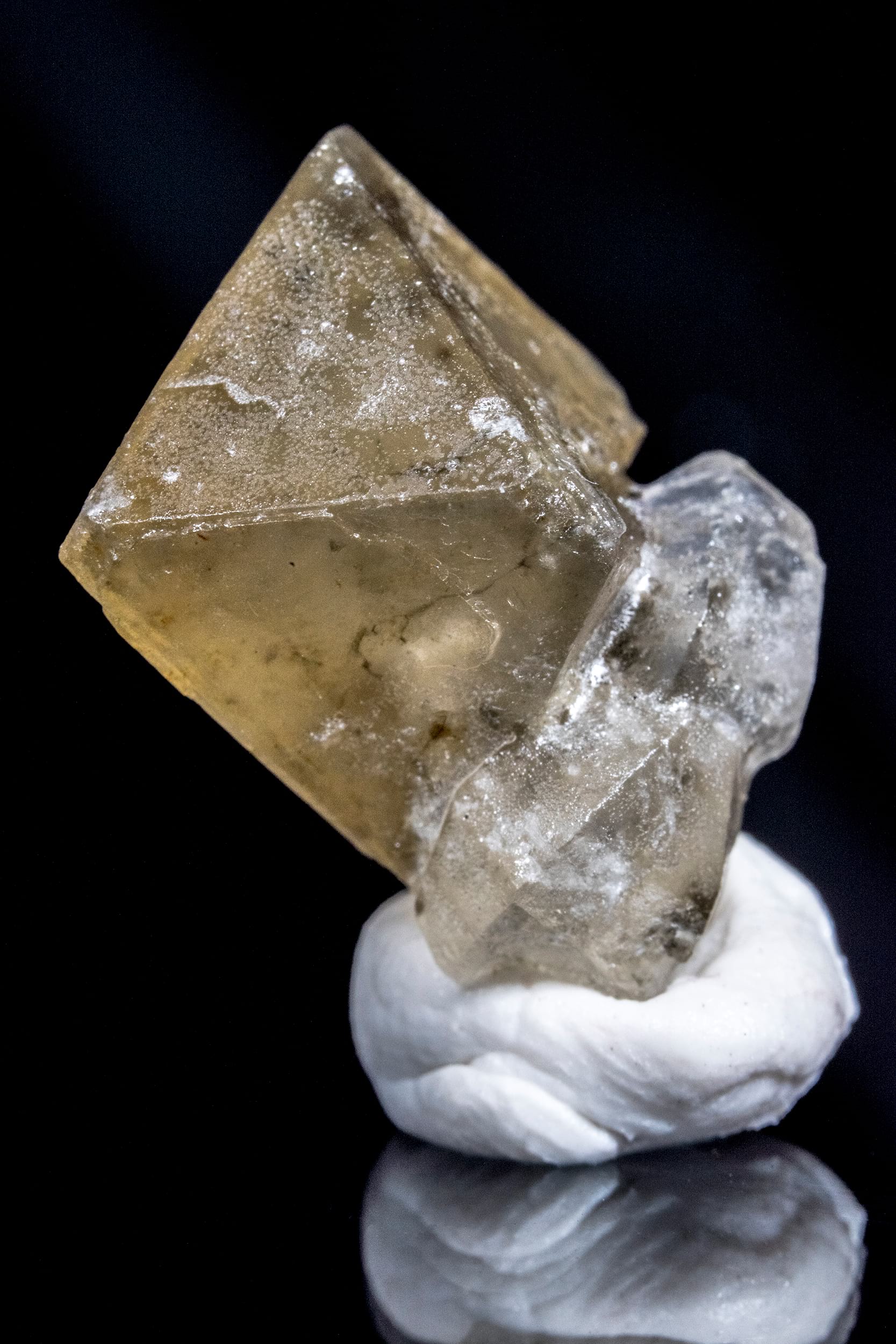

Hanksite on Matrix
My favorite piece from 2017's Searles Lake trip. A classic example of a Searles Lake barrel hanksite on trona with a lot of smaller hanksites surrounding. Surprisingly hard to find pieces on matrix while we were there. Loose crystals aplenty but I love the overall aesthetic of this piece.
Locale: Searles Lake, CA
Weight: 2lb 3.3oz | 1002g
Dimensions (hanksite only): 2.0 x 3.7 x 1.8 in | 52 x 94 x 46 mm
Dimensions (total): 5.7 x 4.3 x 4.2 in | 144 x 109 x 107 mm


Gem-O-Rama, Atolia, Grimes & Sexton Quarry October 2017
Update 11/13/2017: Fixed 360s not loading on mobile
Update 11/25/2017: Fixed videos not having audio + added missing blow hole video
Day 0
Searles Lake is something that I've been wanting to do for several years. However, the opportunity never quite lined up. Either I had previous commitments or something came up last minute. Luckily the stars aligned and I was able to get time to go to this year's Gem-O-Rama. We originally had 6 people saying they would go to this trip when I planned it out a month in advance. However, my "luck" seemed to have rubbed off on the other people that were coming as they all slowly but surely cancelled until it was just me and SoCal FMS President Dave Stuck left. It worked out for both of our schedules as we got there at roughly the same time - 6 pm. Perfect for fluorescent mineral collectors as there's still some sunlight left to see the road and trails but just before it gets dark. Let the adventures begin!
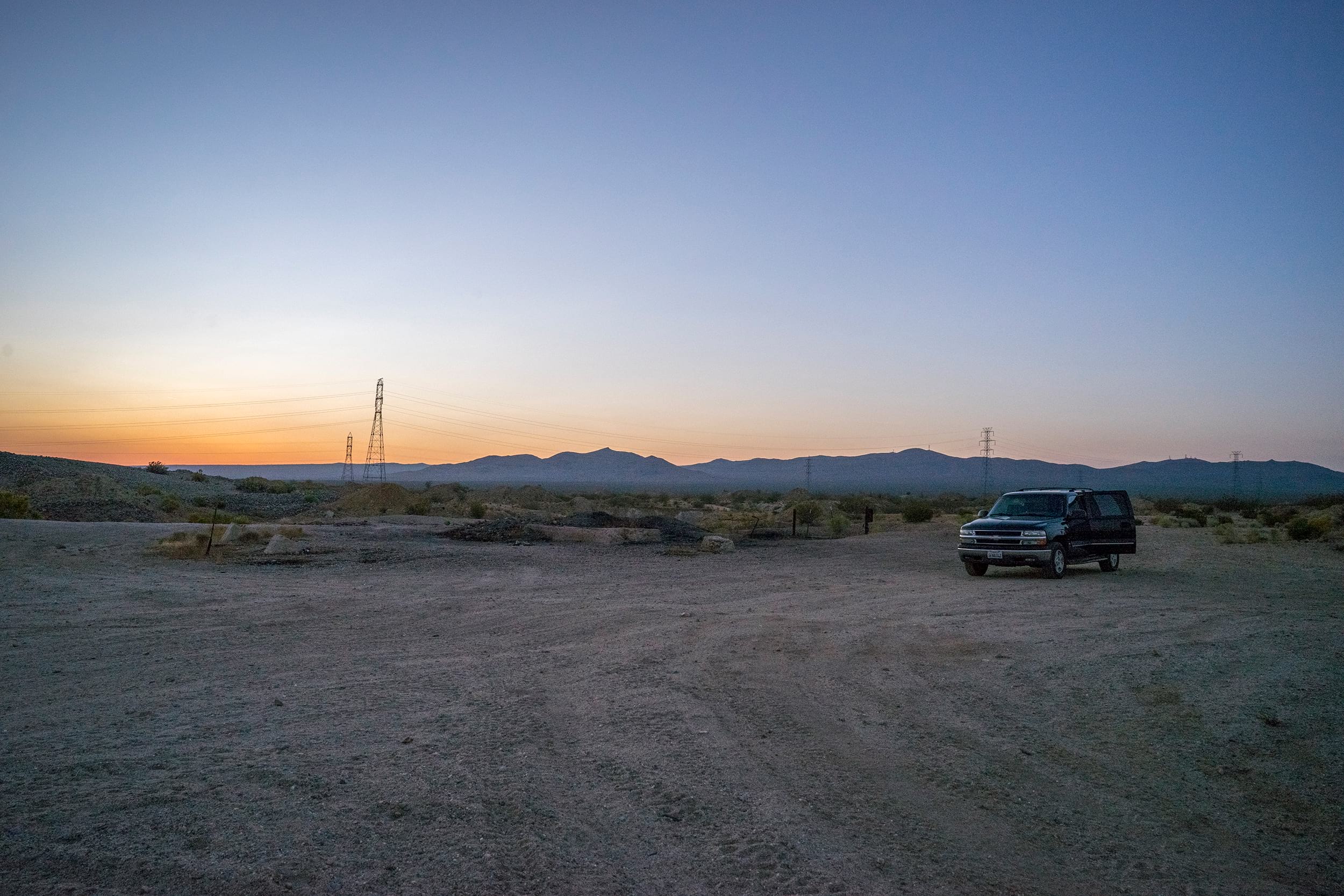
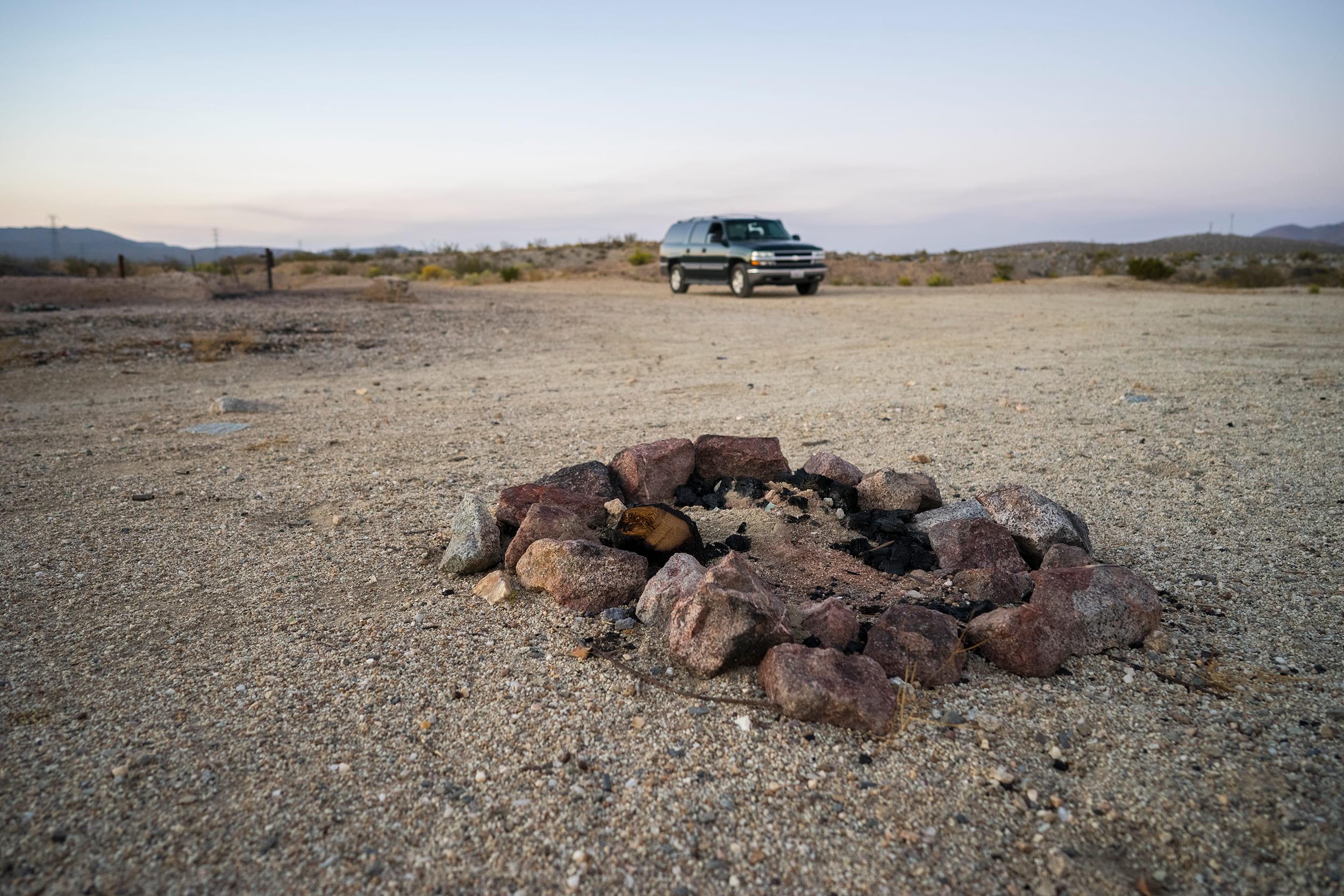
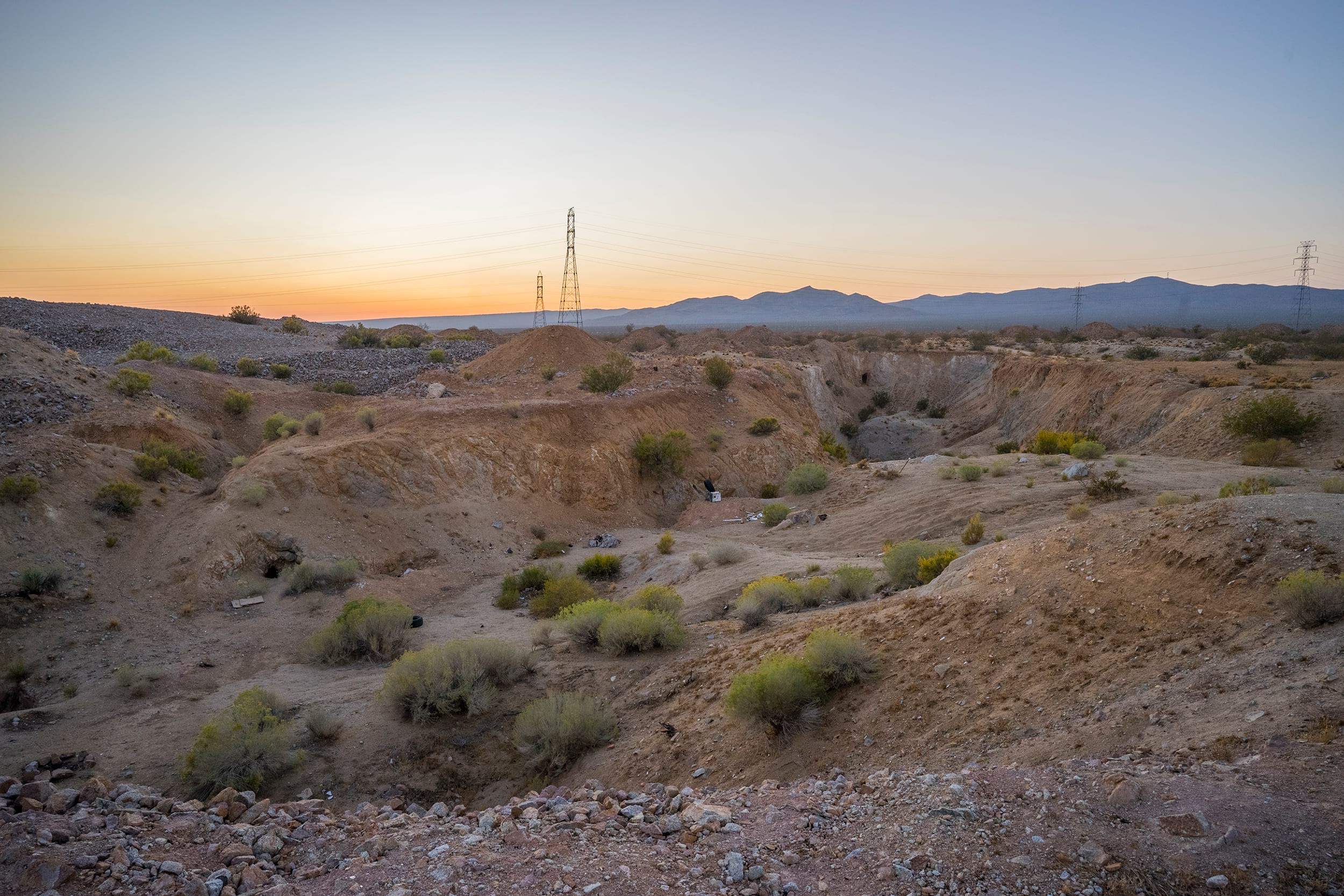
Here's the first site we went to on Friday, before the Gem-O-Rama began. Luckily I had a hotel in Ridgecrest so we were only 30 minutes away from the historic Atolia mining district where there was a massive amount of tungsten being mined. Just look at how wide these veins ran. Some 360s and photos will really put into perspective just how rich of a tungsten area this was.
First stop: Union Mine

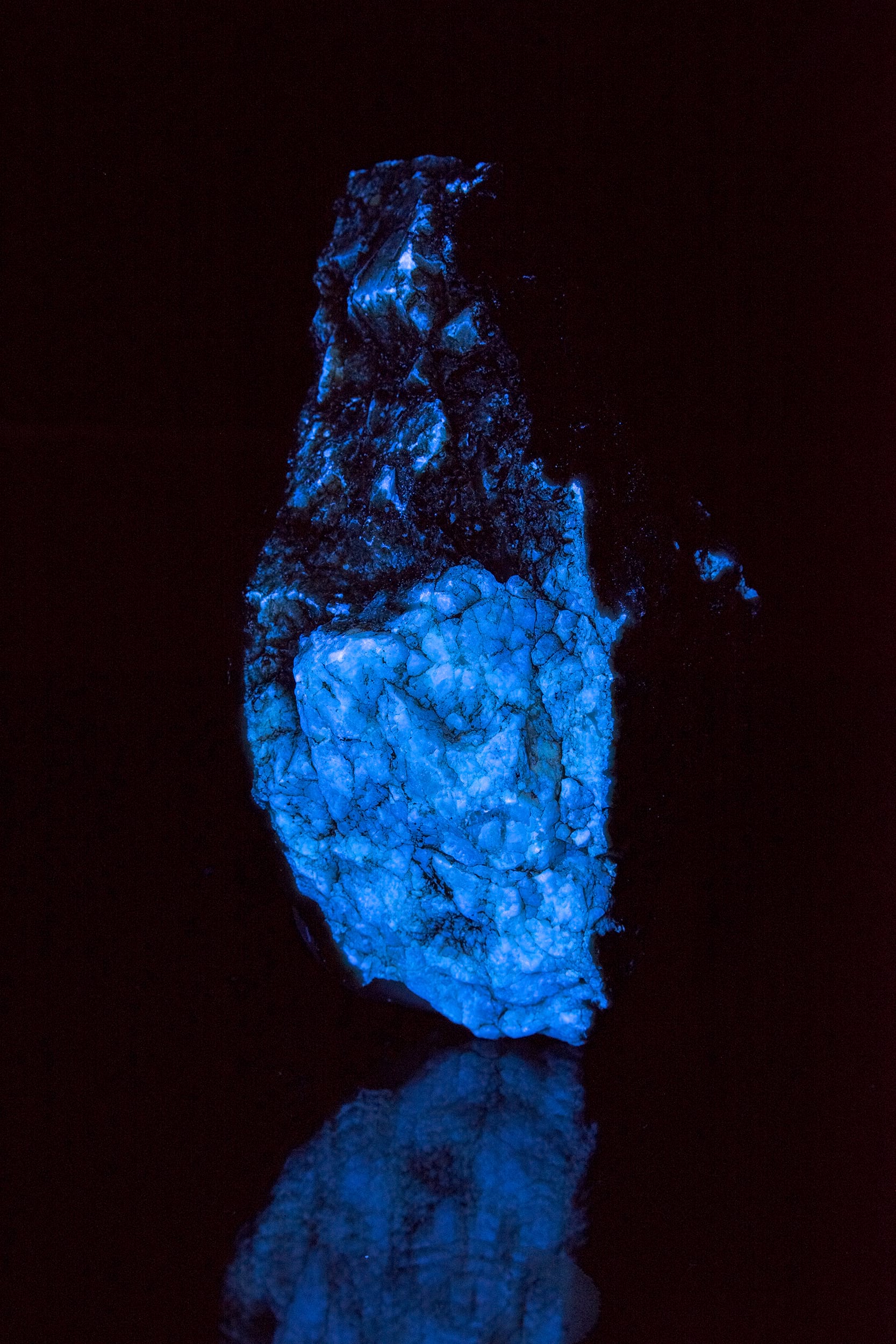
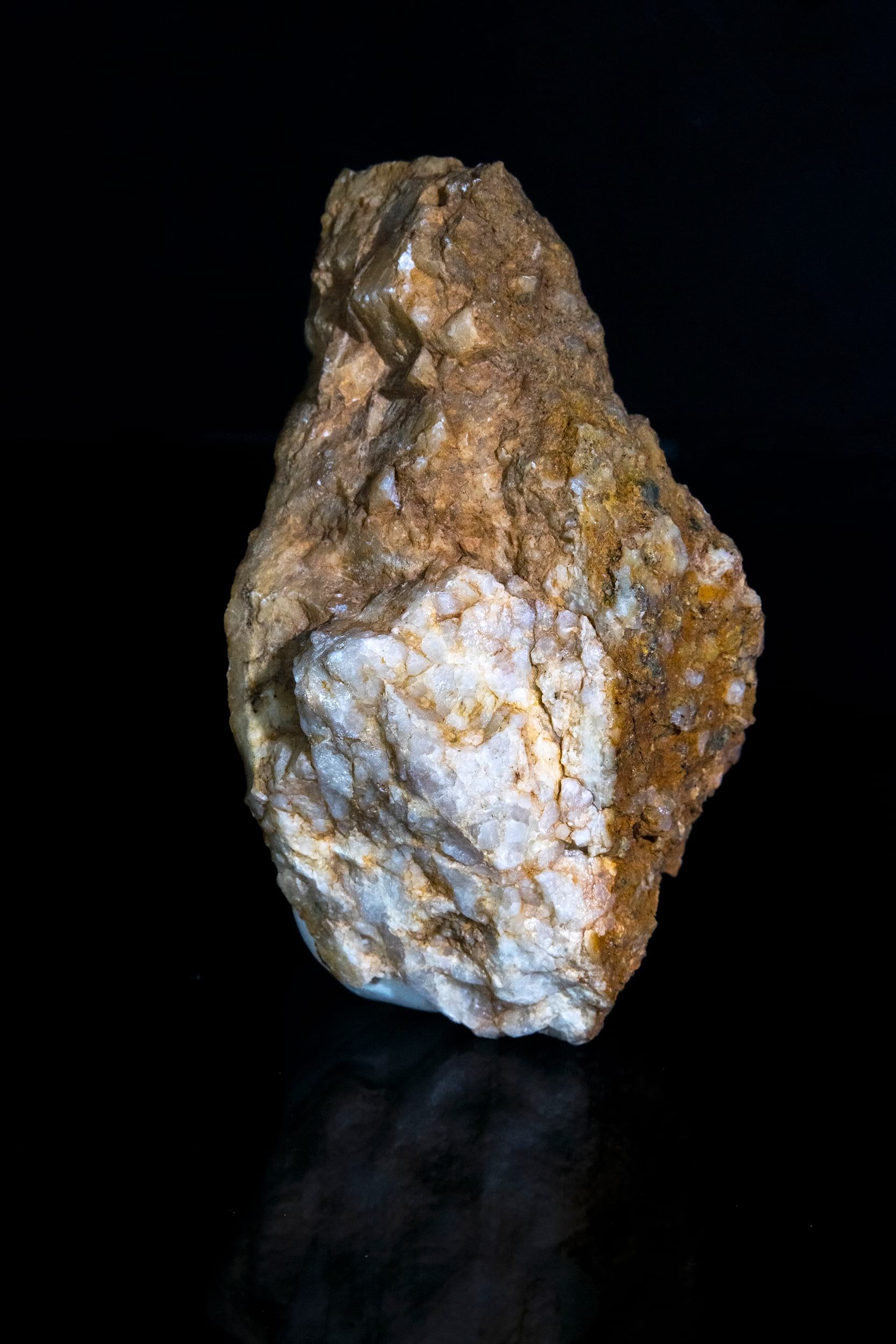
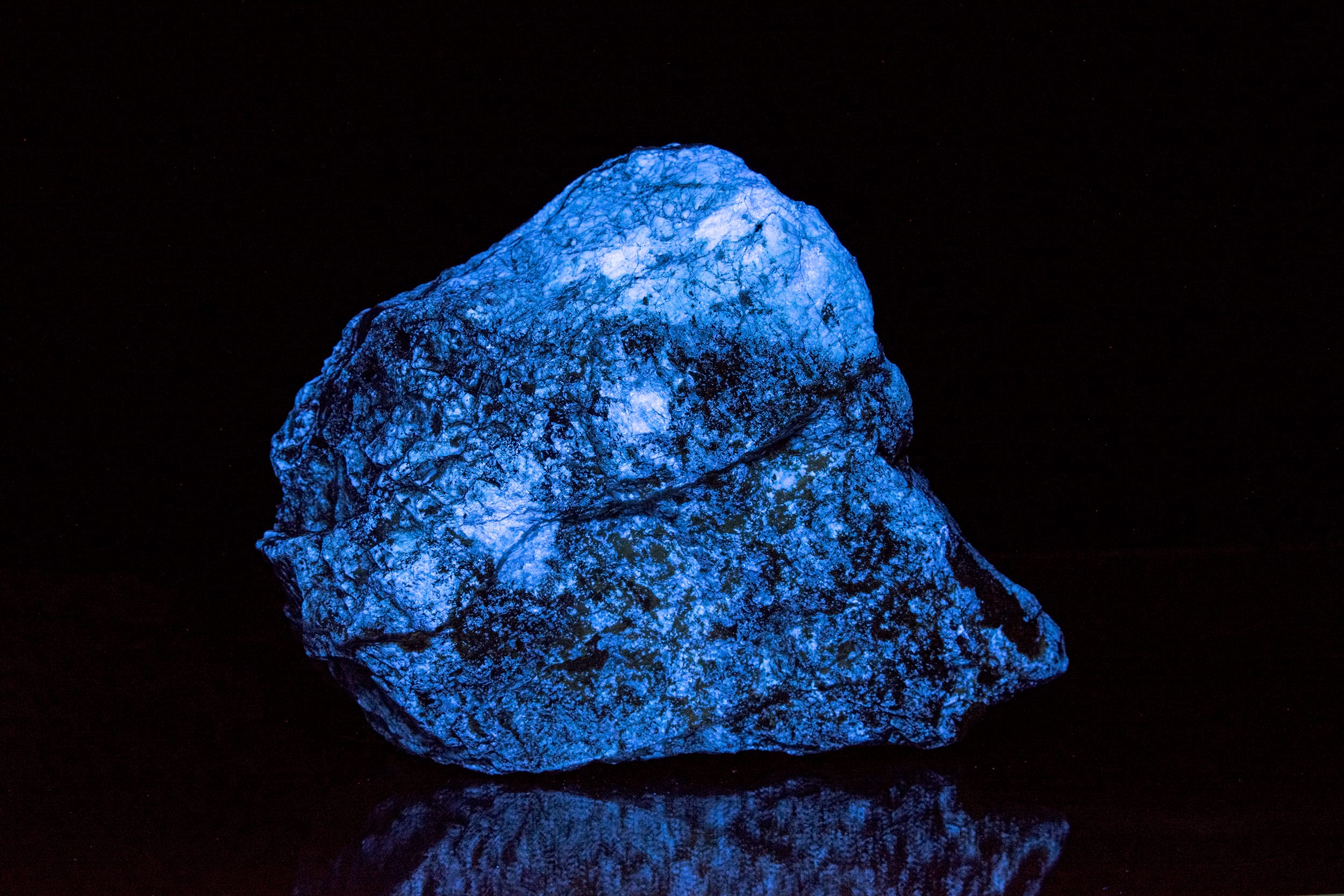
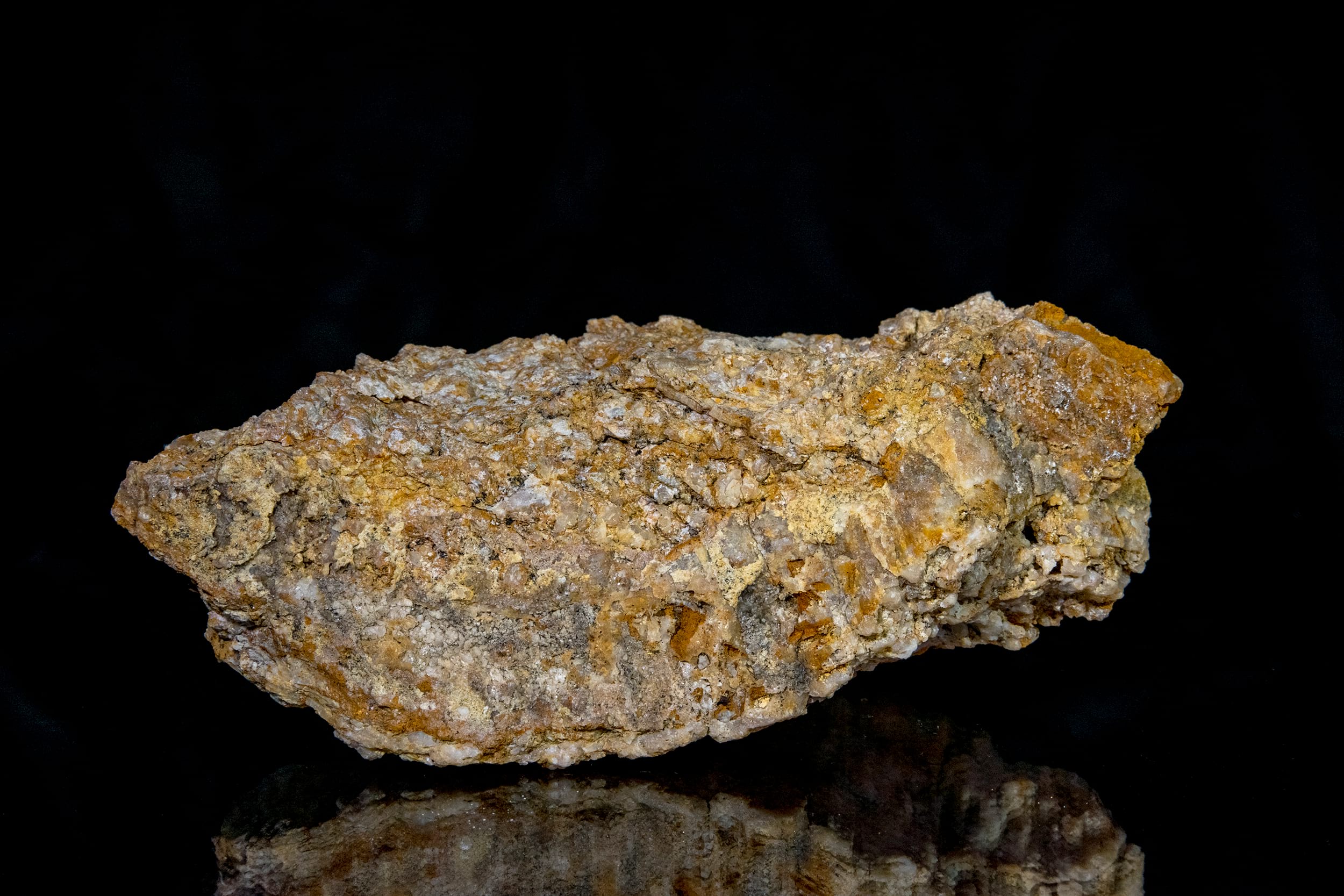
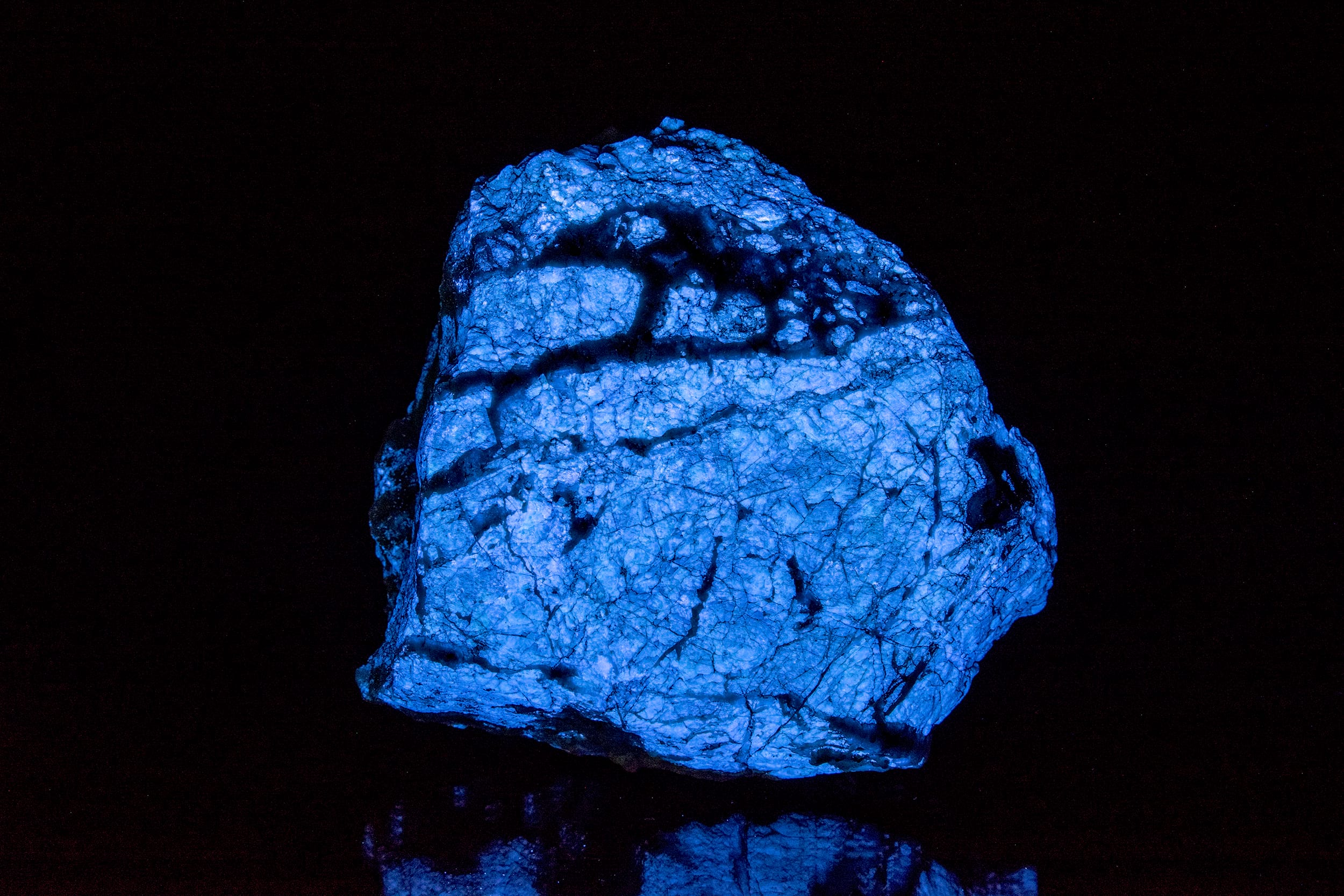
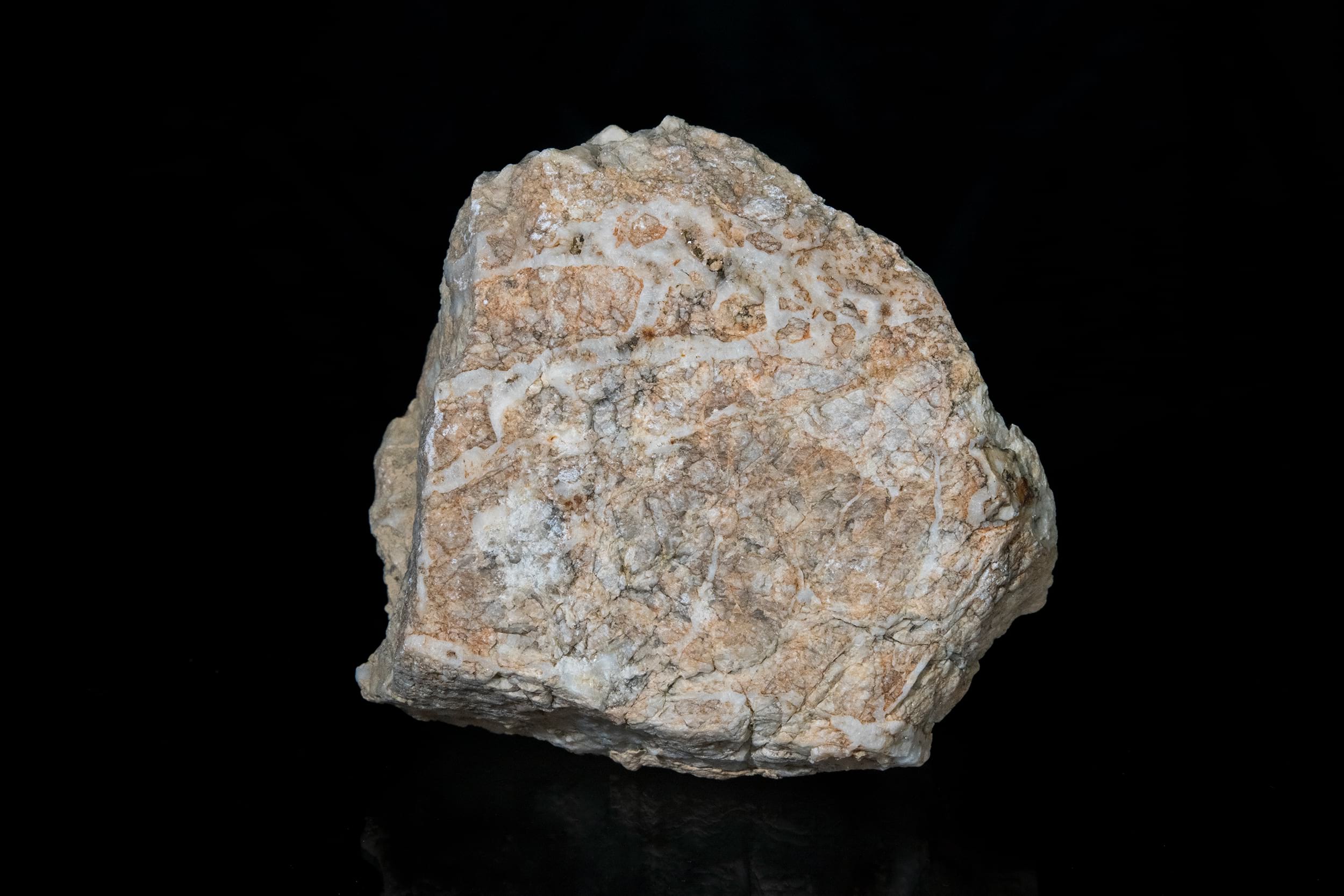
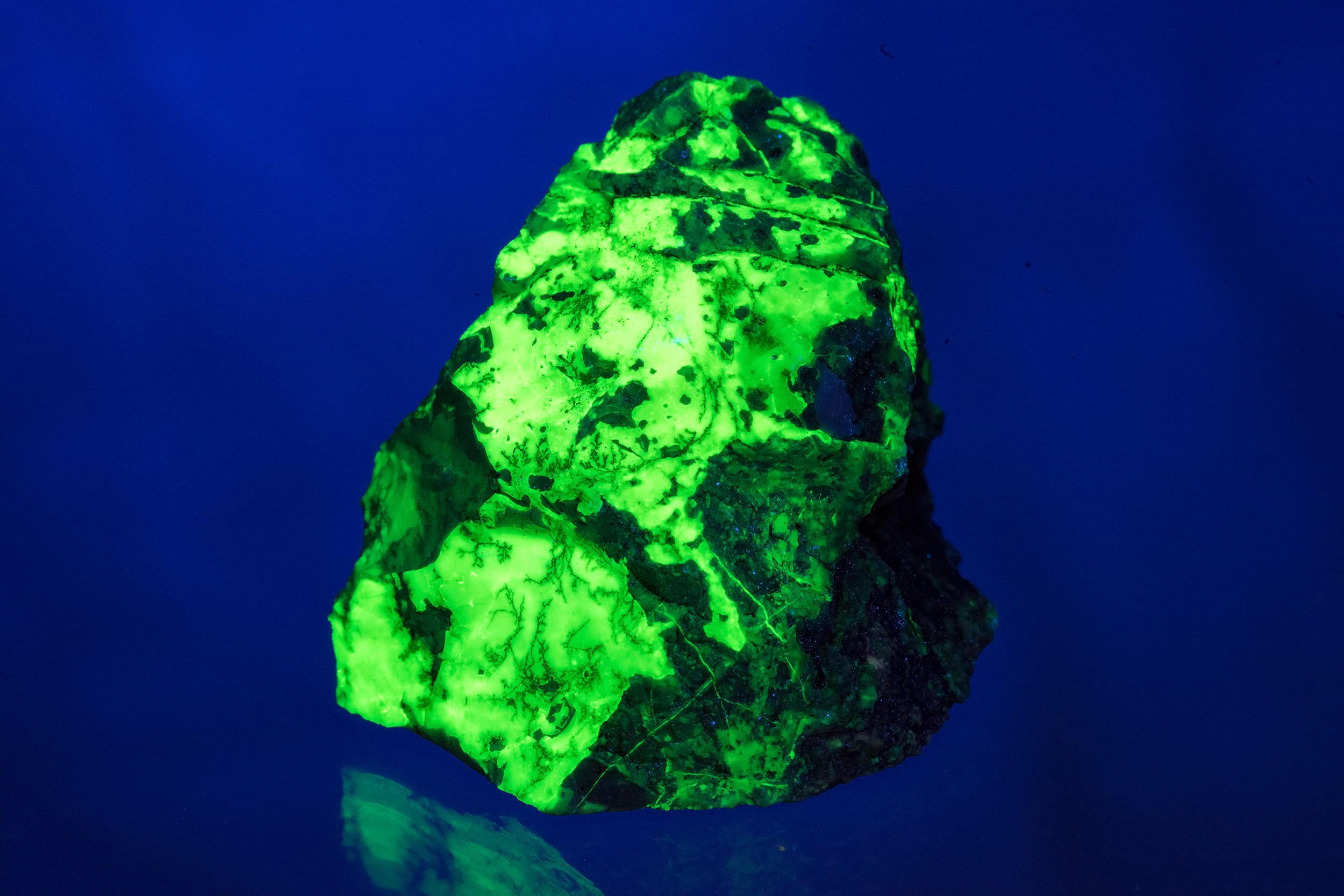
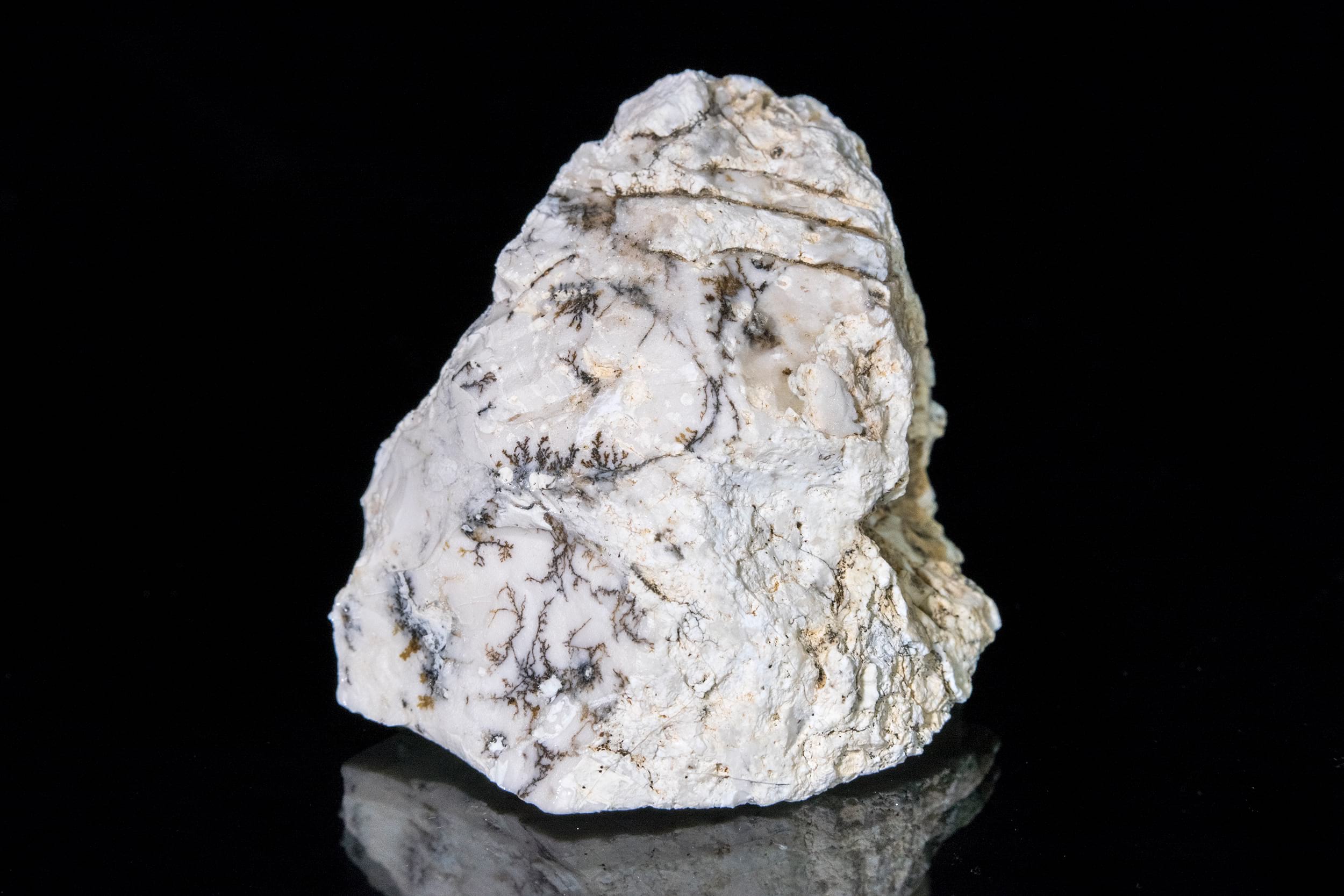
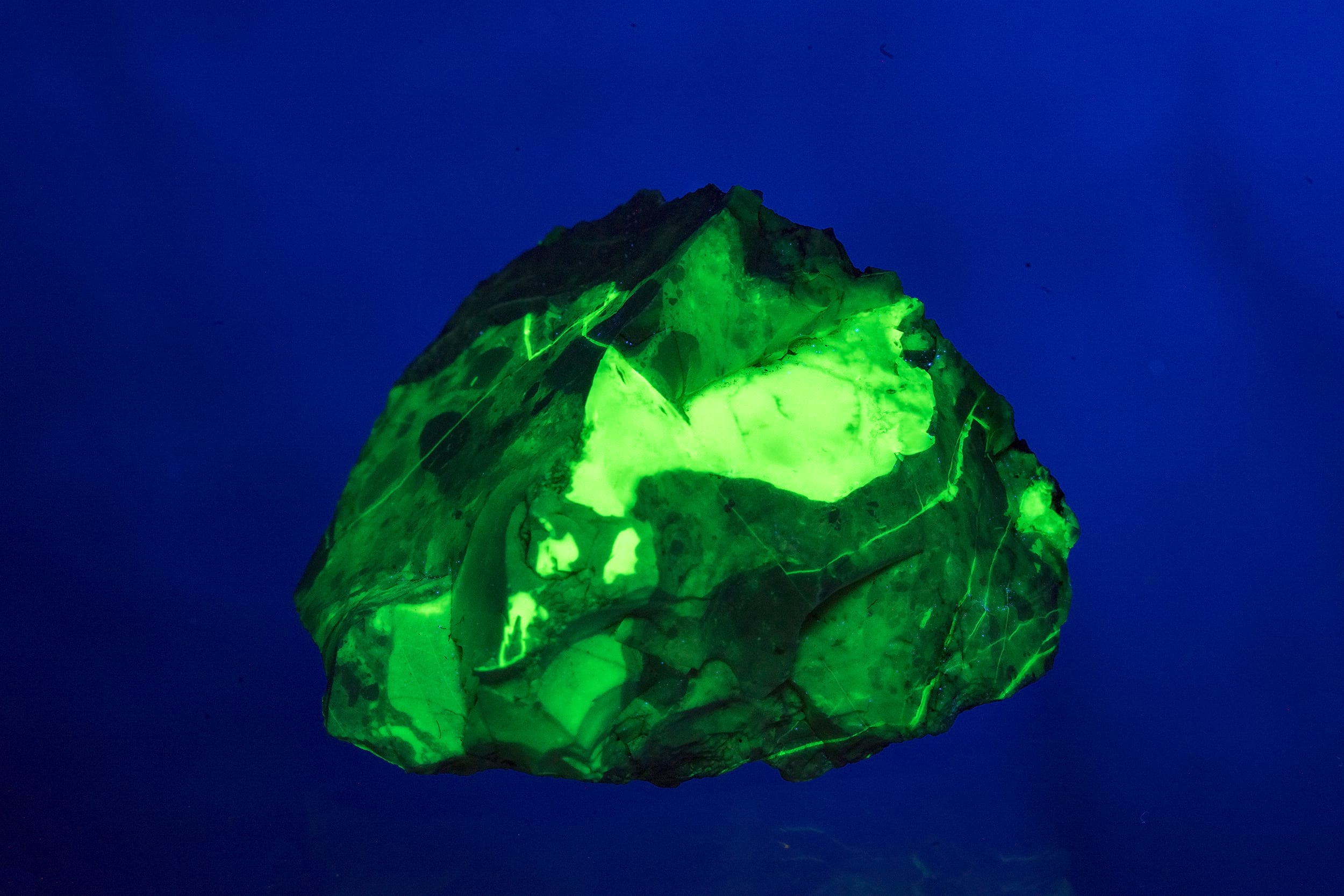
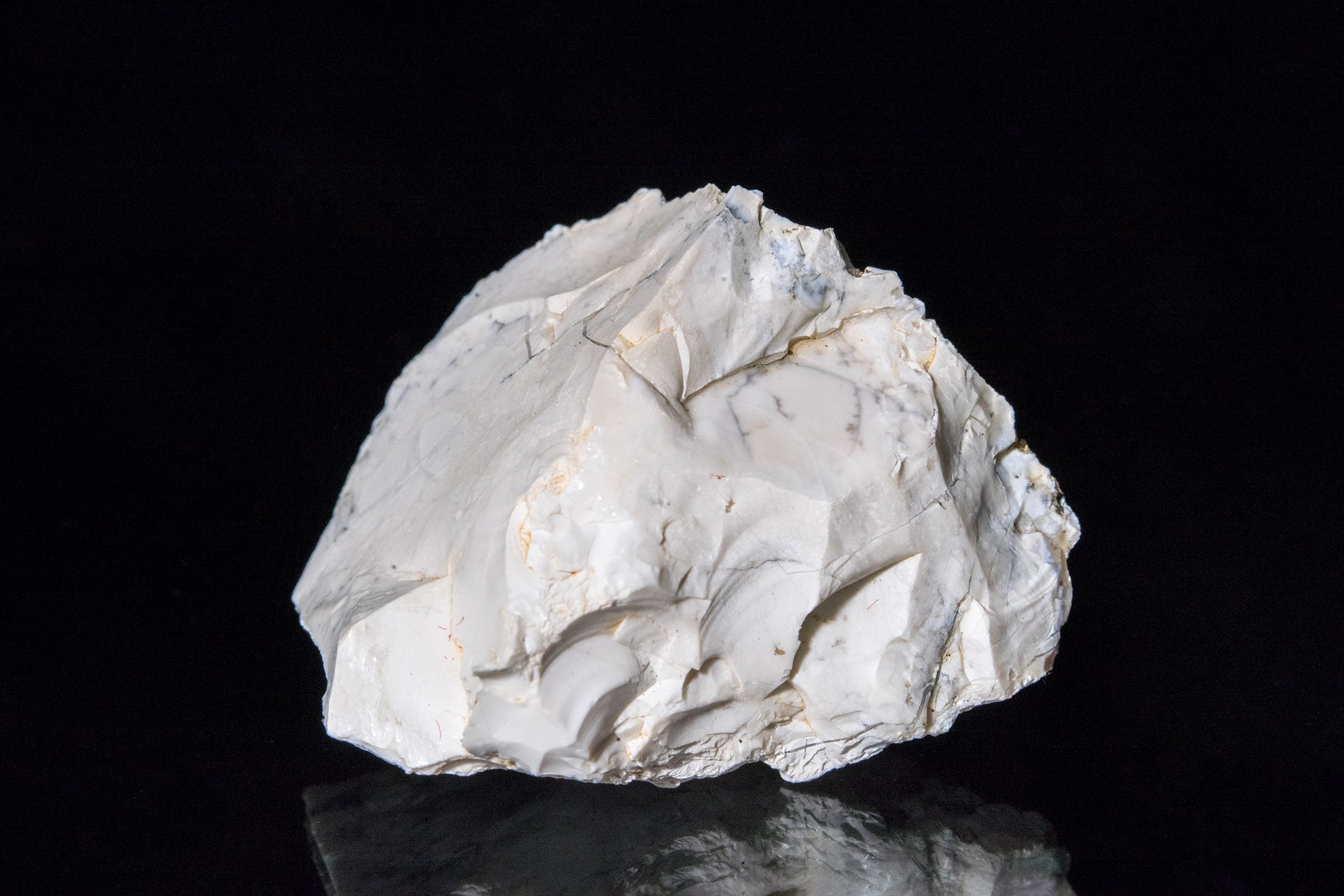
And here's the group shot of our finds for the night. Some massive chunks of bright fluorescent blue scheelite. There's a nice fluorescent red calcite combination with blue scheelite as well as a nice fluorescent green. When I collected it I thought it might have been hyalite or chalcedony but after testing it it's able to be scratched with a 4. I'll leave it as an unknown for now.

My haul for the night

Dave's haul
Followed by some more formal photos I took after I got home.
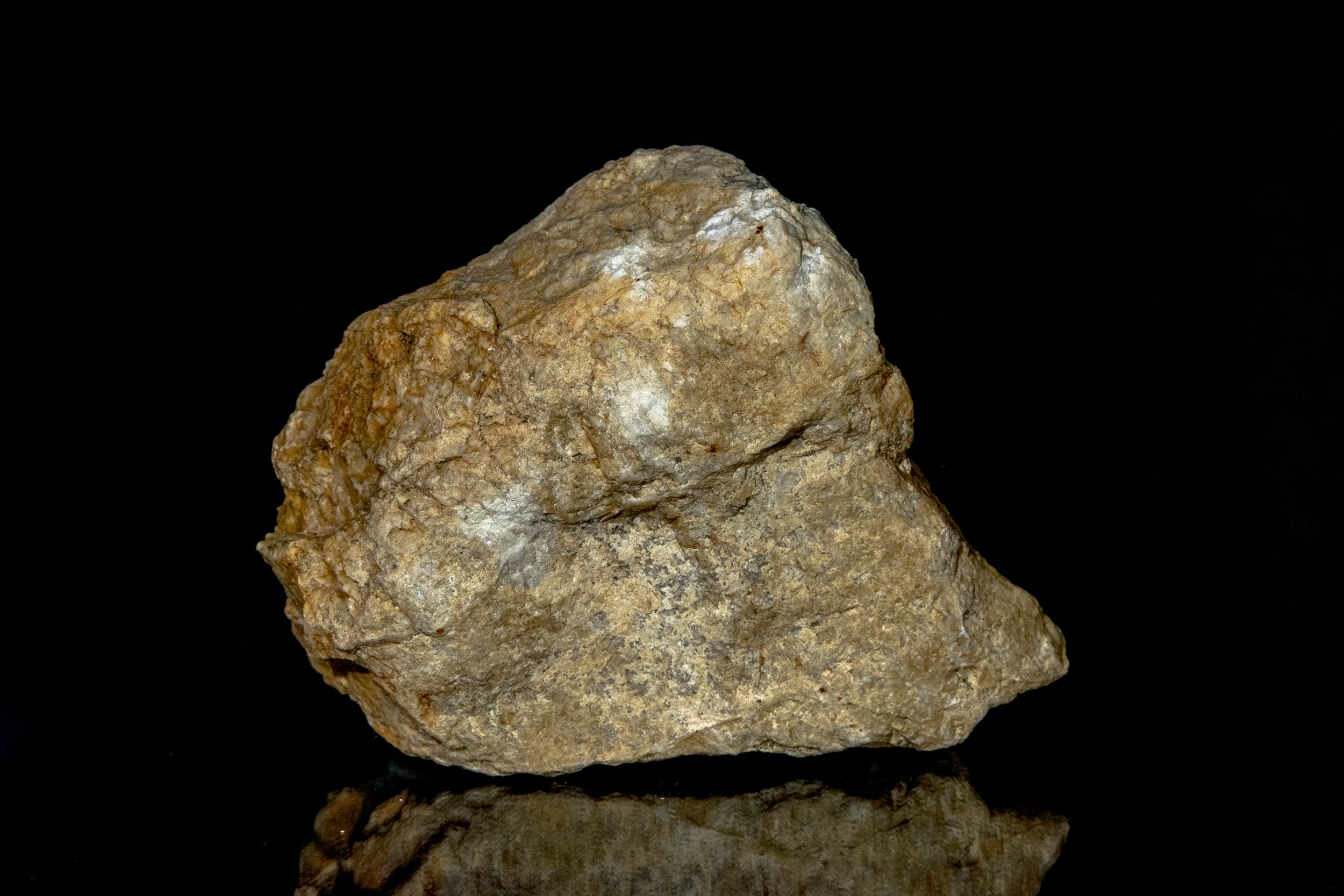
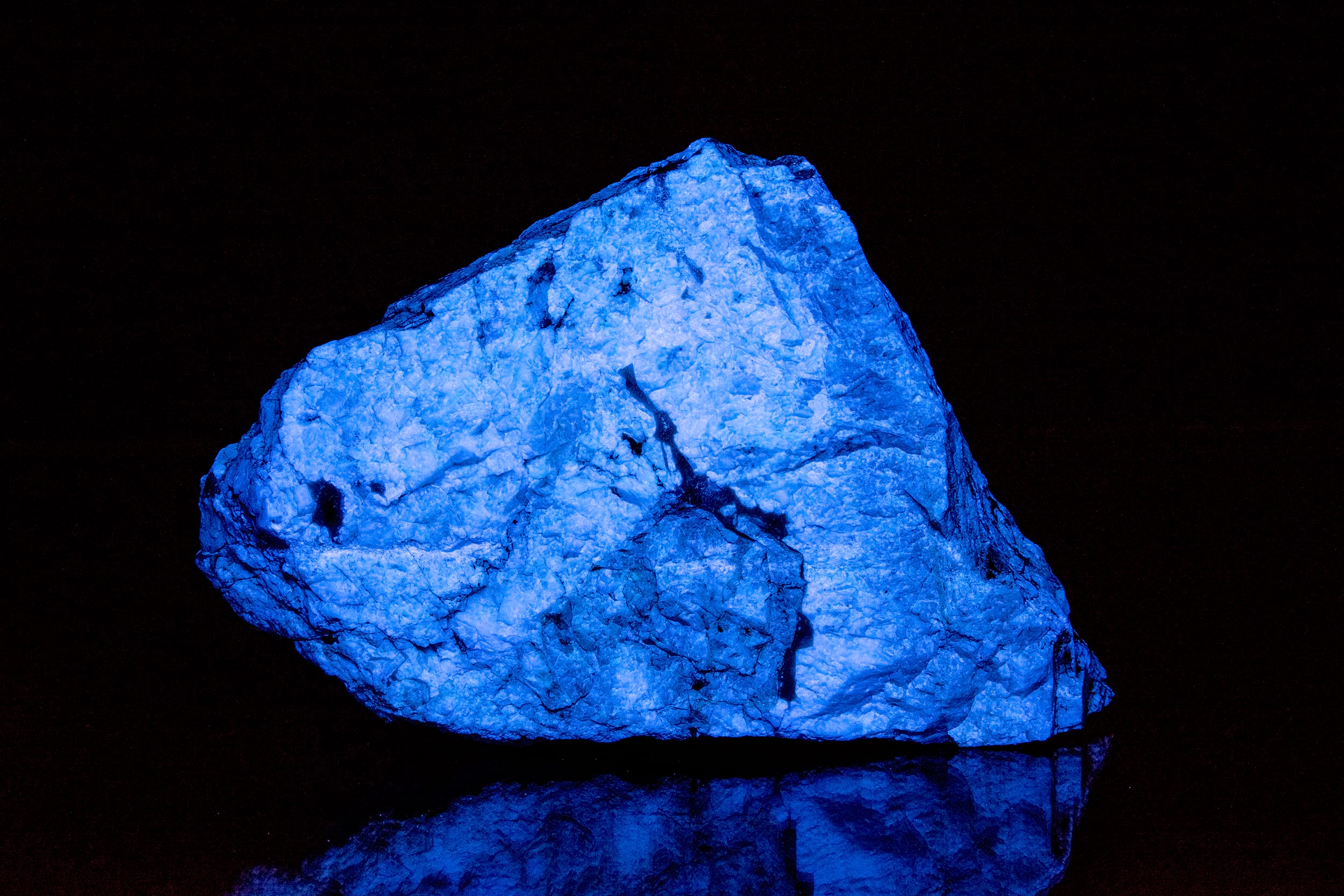
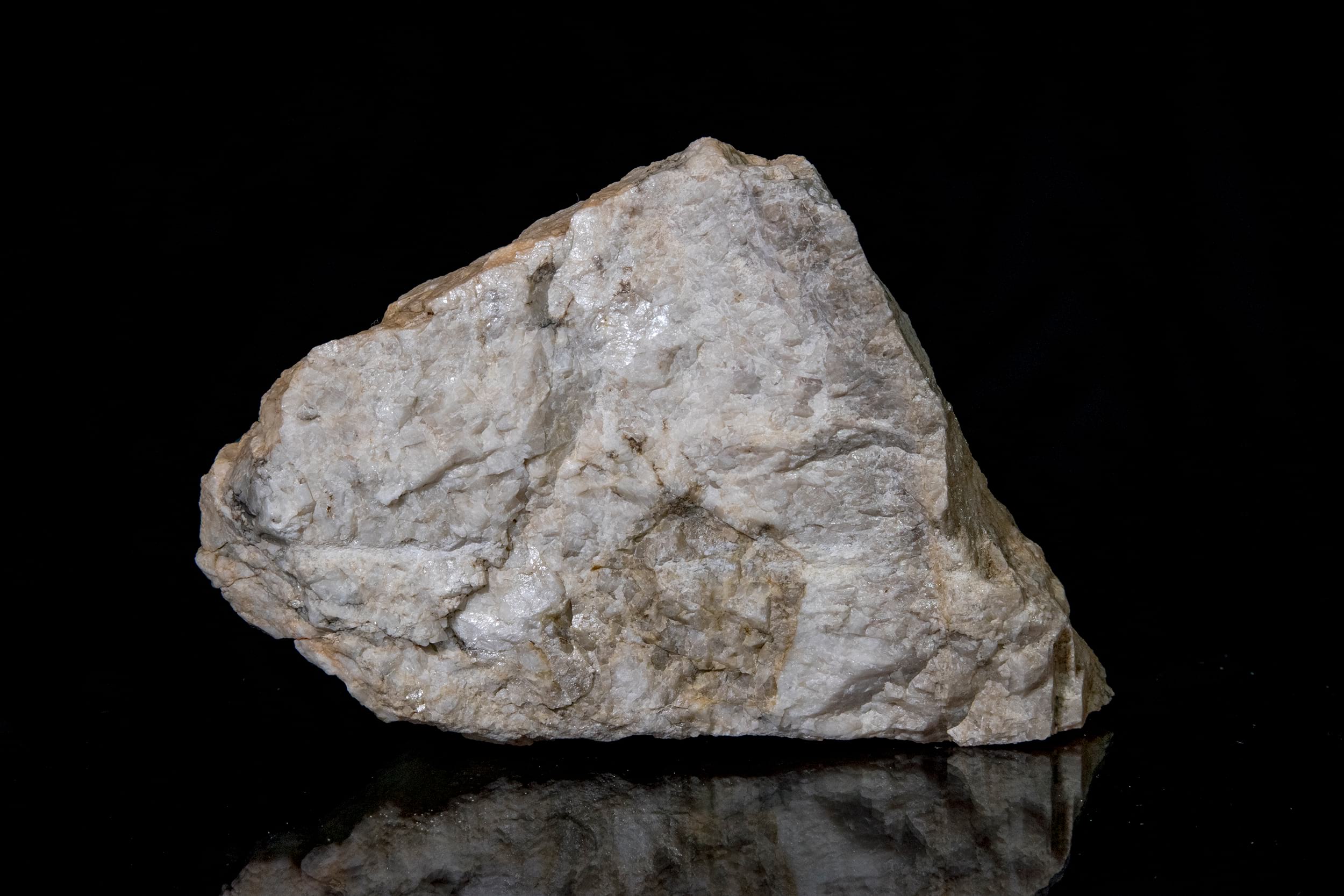
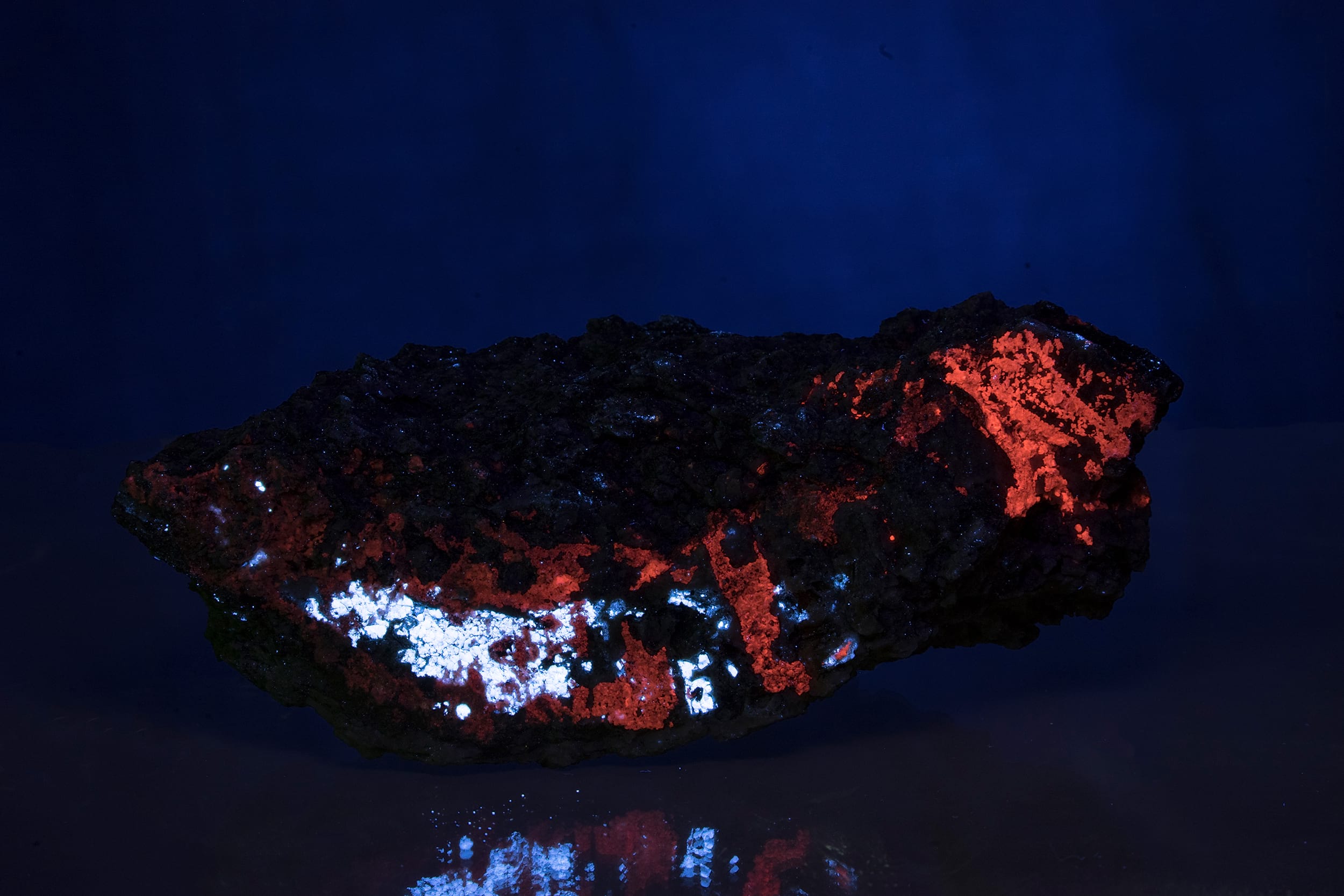
Day 1
So while we were up late last night, coming home around midnight from Atolia, we weren't technically late. As an old friend would describe it, "You were late for being early!" We got there around 30 minutes before they were supposedly starting. However, look at this lineup of cars that got there way before us. Looks like most people got there at least an hour before us. Some possibly stayed overnight! That's quite a long time to wait just to have maybe a 10 or 20 minute head start!

While we were waiting we kept hearing a bird cannon. It made an incredibly loud noise to scare off any curious avian that might enter the brine pools for whatever reason. Someone's job is to look for birds and to make sure the cannons are armed. That's quite ecologically responsible!
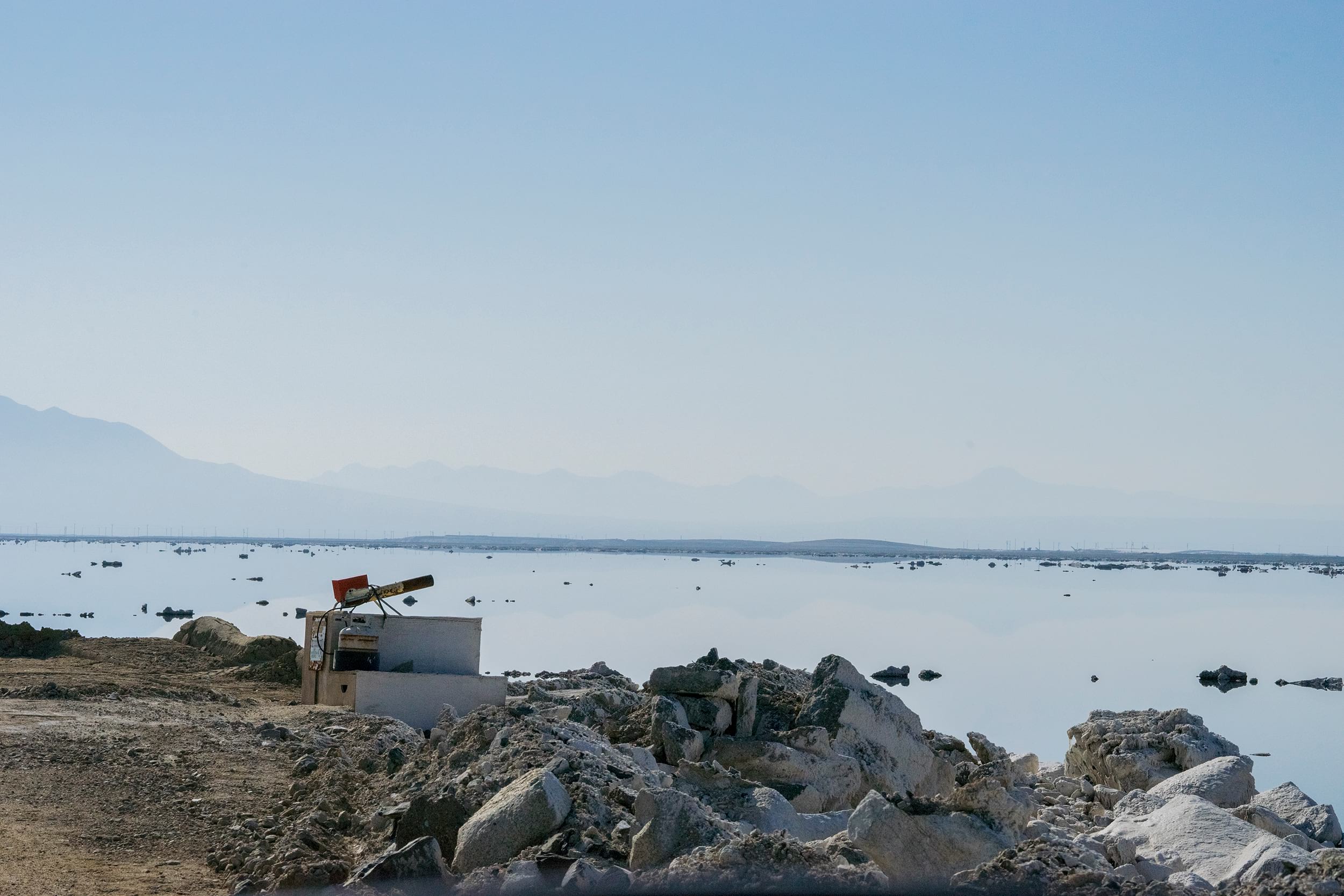
Finally it was our turn to get to the piles and look forward to some beautiful crystals. Boy was it packed though! The only downfall of being "late".
Some ground photos before we get to the 360s. Note to aspiring rockhounds: Tools like the Dewalt rotary hammer I show are not allowed on public land. However, this collecting site is on private property and I checked their rules for anything barring power tools - which there weren't. In addition, there were several officials on the hills watching over everyone. None of them batted an eye with my usage. Be sure to check your local laws!
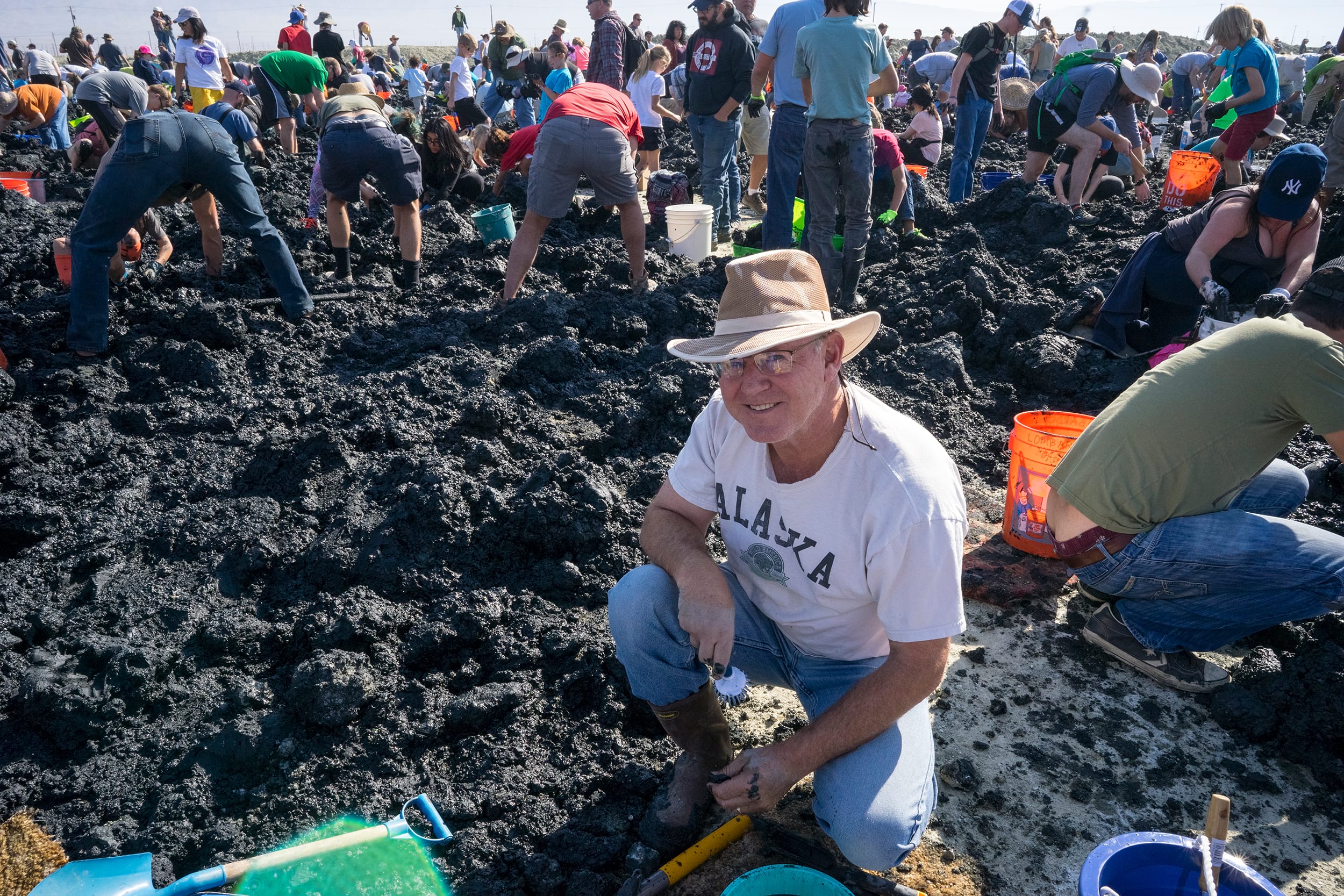
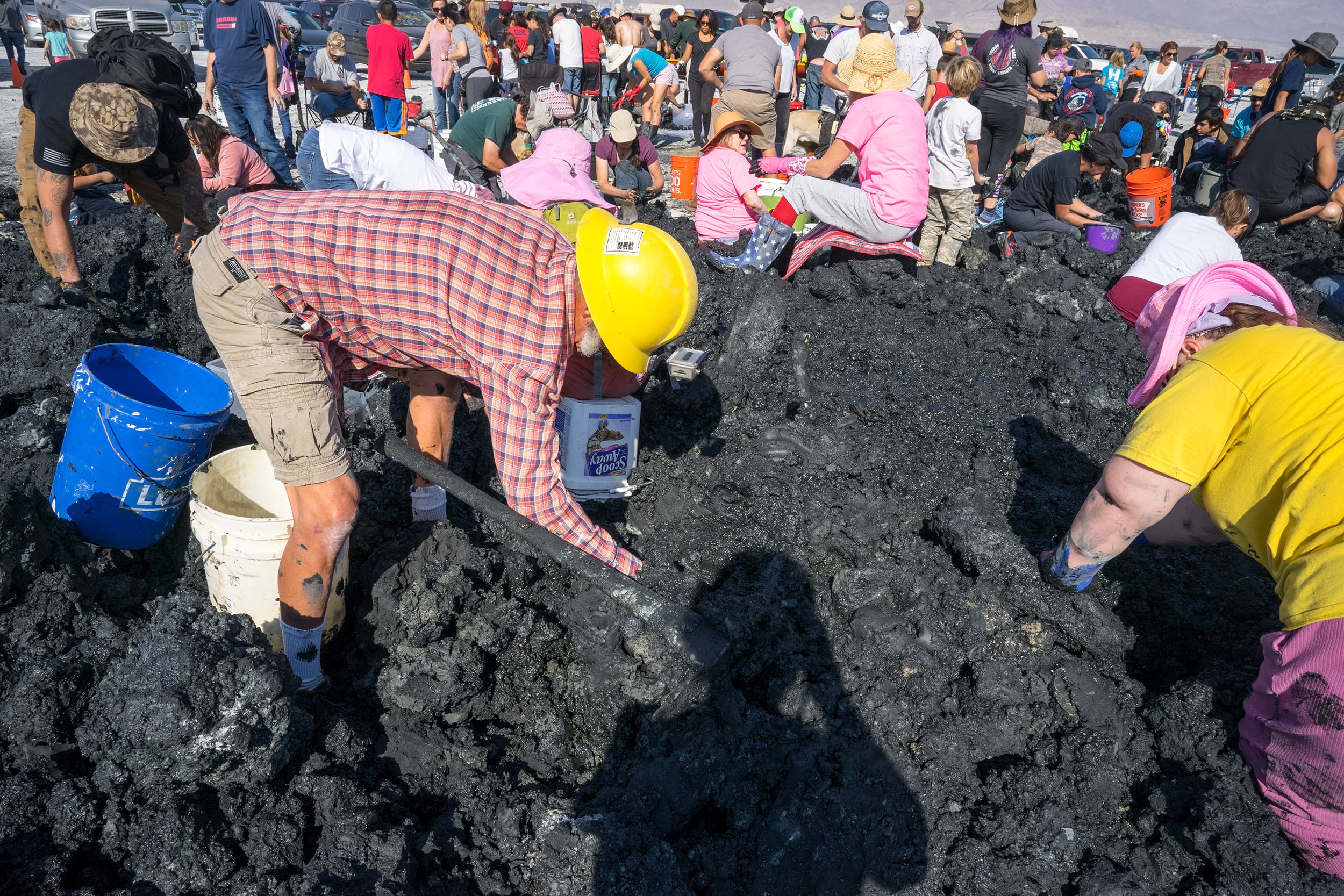
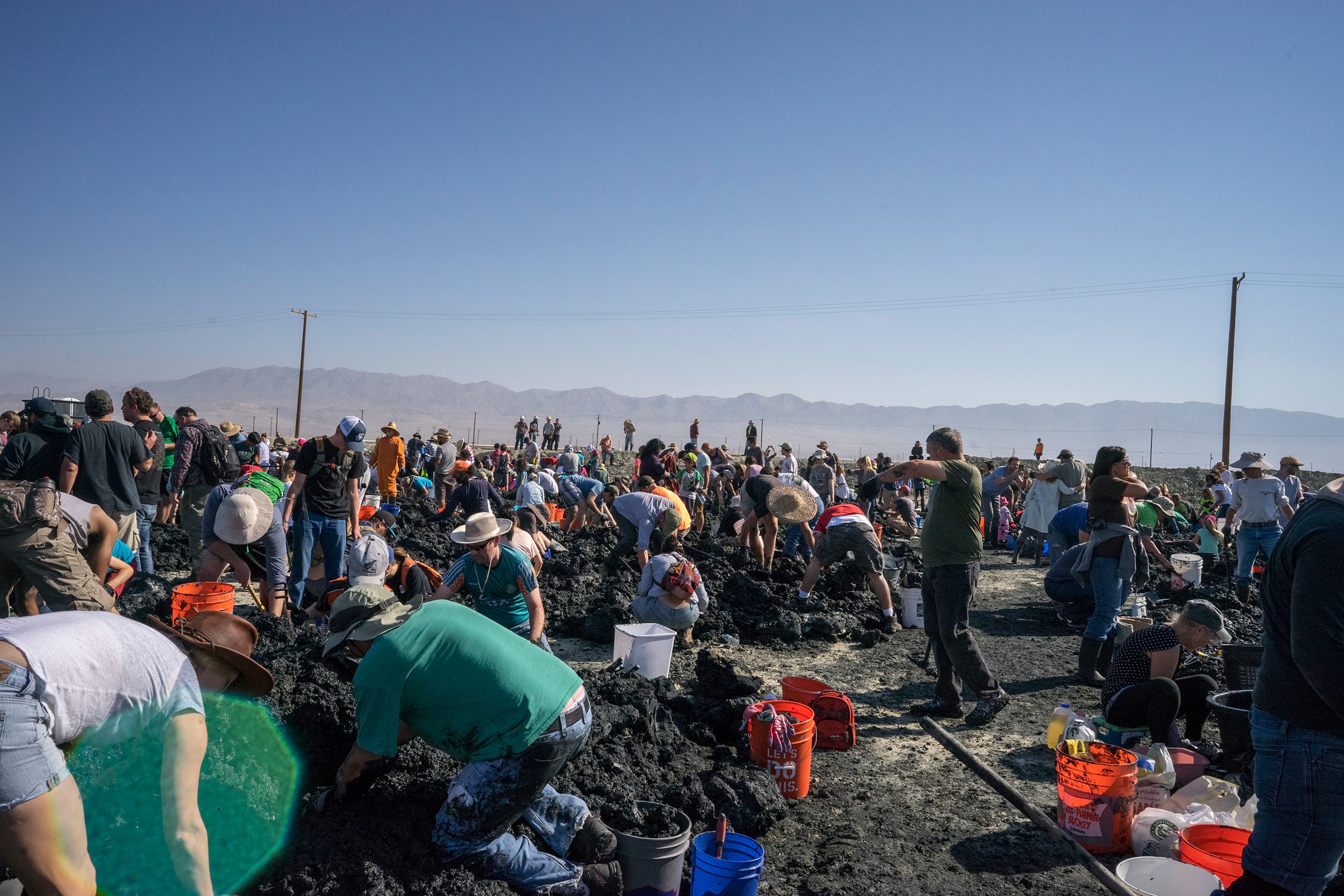
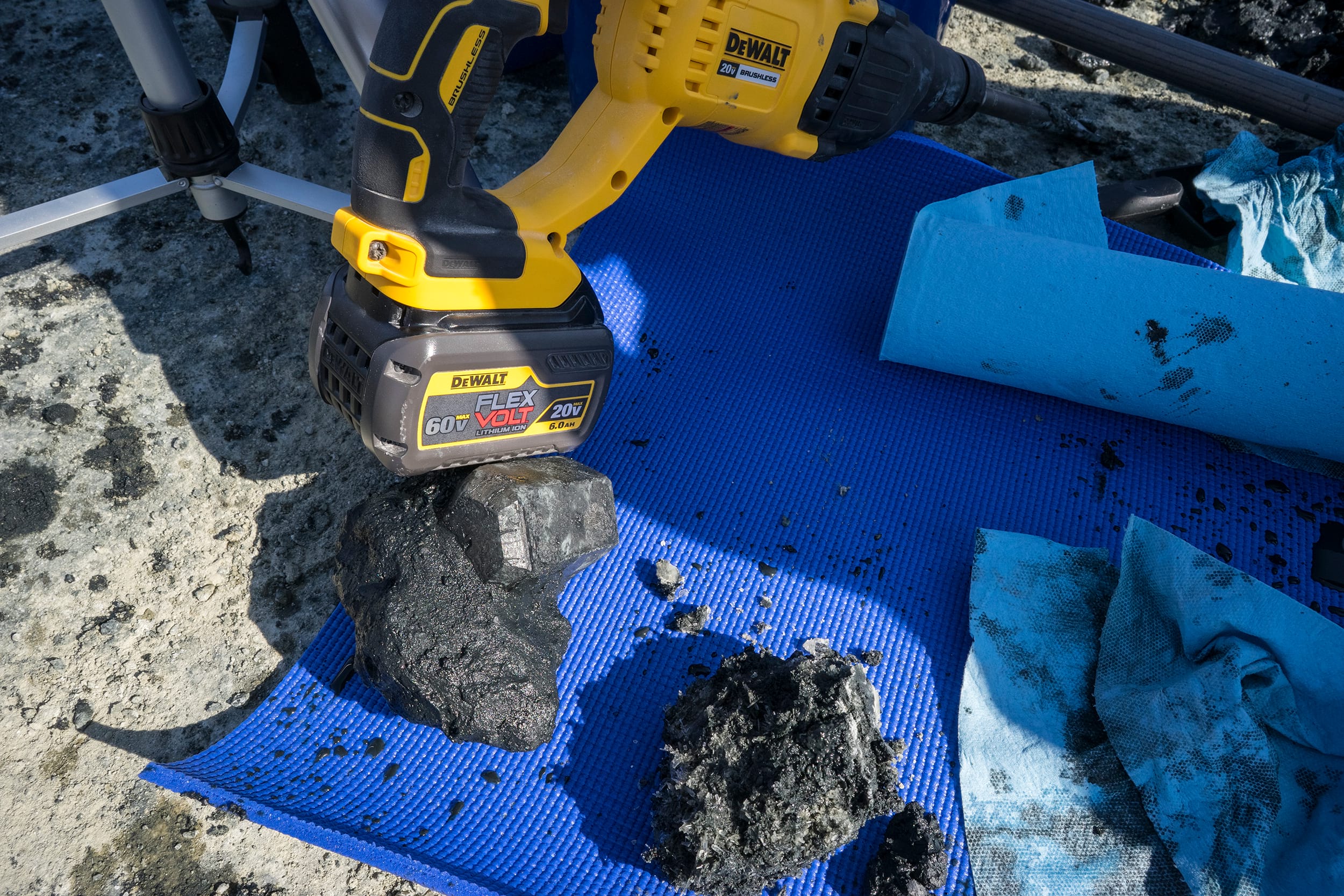
One of the more interesting characters I met here was the person in the orange jumpsuit posing with a beautiful hanksite he had found. He's a boyscout leader named Dave that was taking his troop to the Gem-O-Rama so they could experience something new. That's quite an amazing (and muddy!) experience to have at that age. Hope they had fun!

And here's my haul from the mud piles. The first specimen has a lot of lint on it. Because hanksite is an evaporite and will get damaged over time by humidity I covered it in acrylic. However, I left it inside so all the lint that was flowing around landed on the specimen and is now encased in that acrylic layer. The halite in the fourth photo originally had a pink fluorescence that I found interesting. I'm guessing this was originally the halobacterium because this has now faded likely due to some combination of shining UV wavelengths, some of which were designed to destroy bacteria at the cellular level and direct sunlight exposure while the acrylic I covered it with was drying.
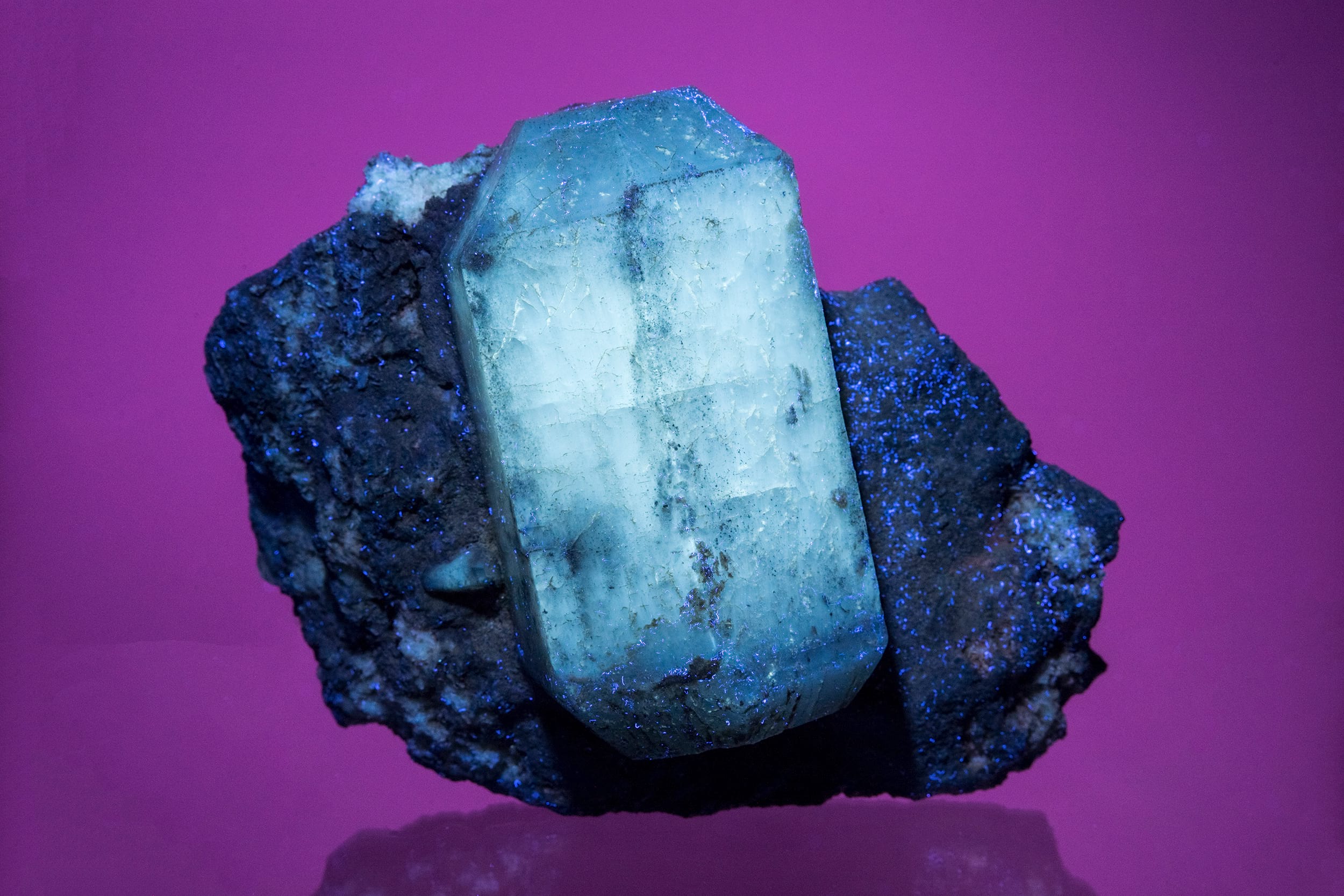
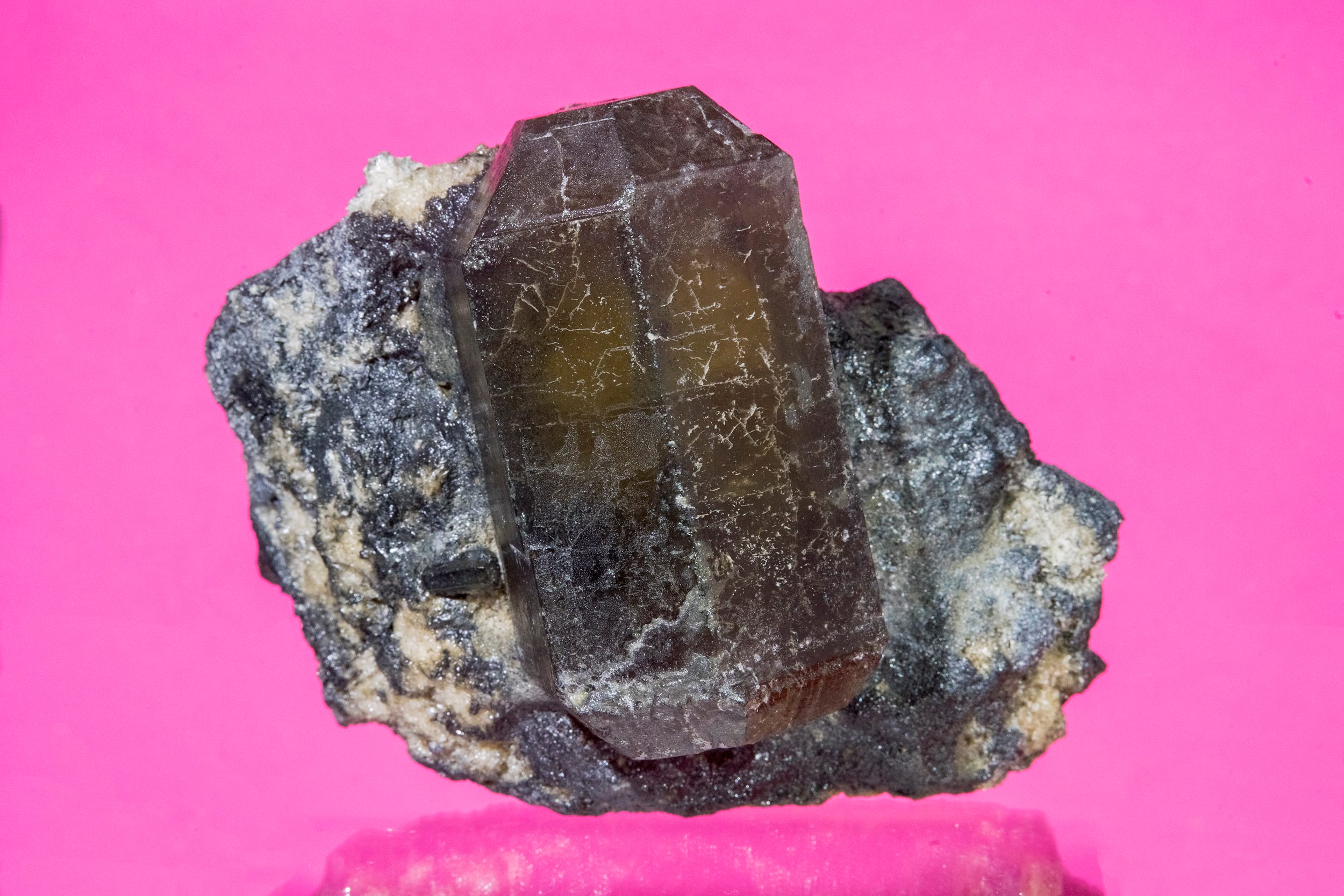
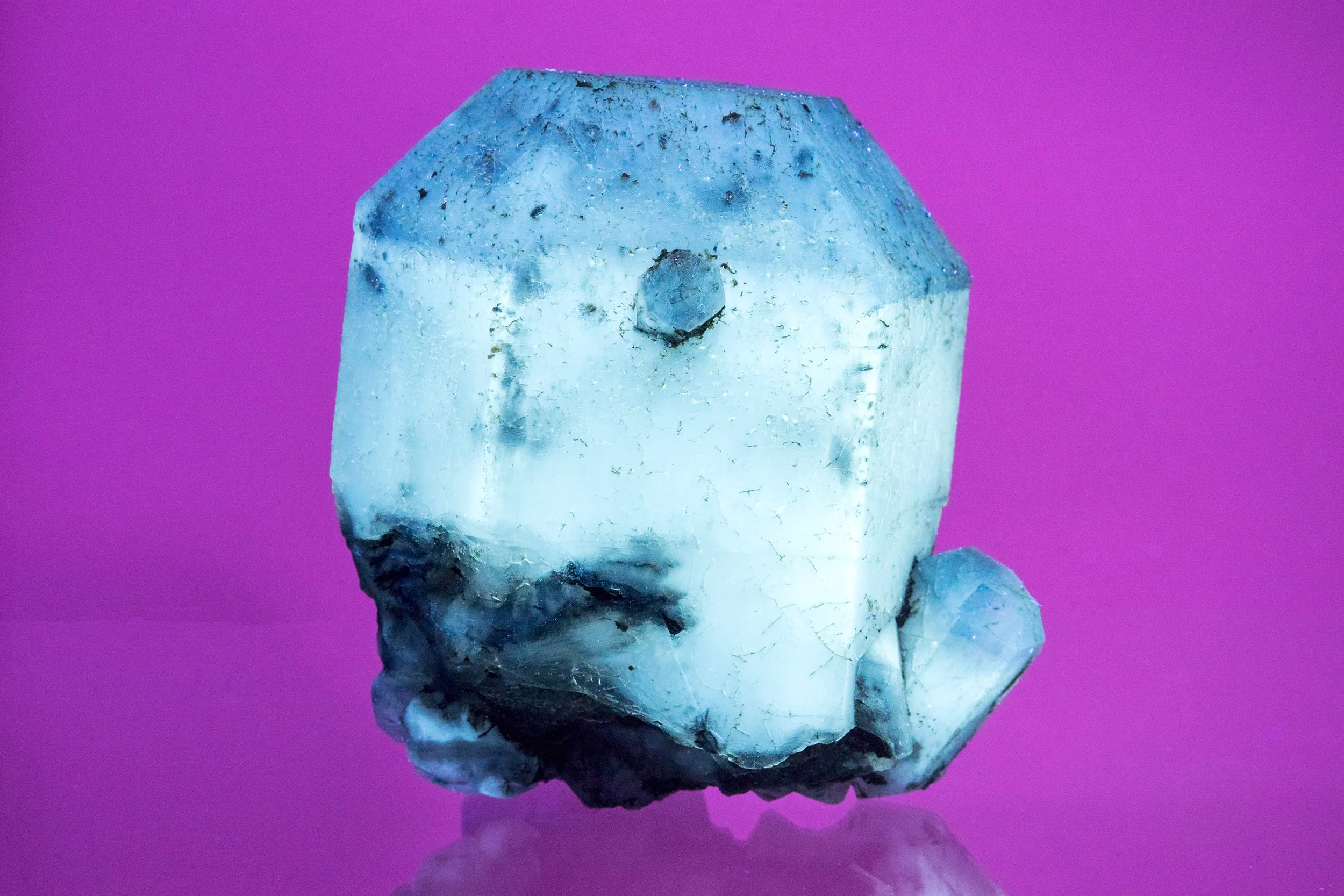
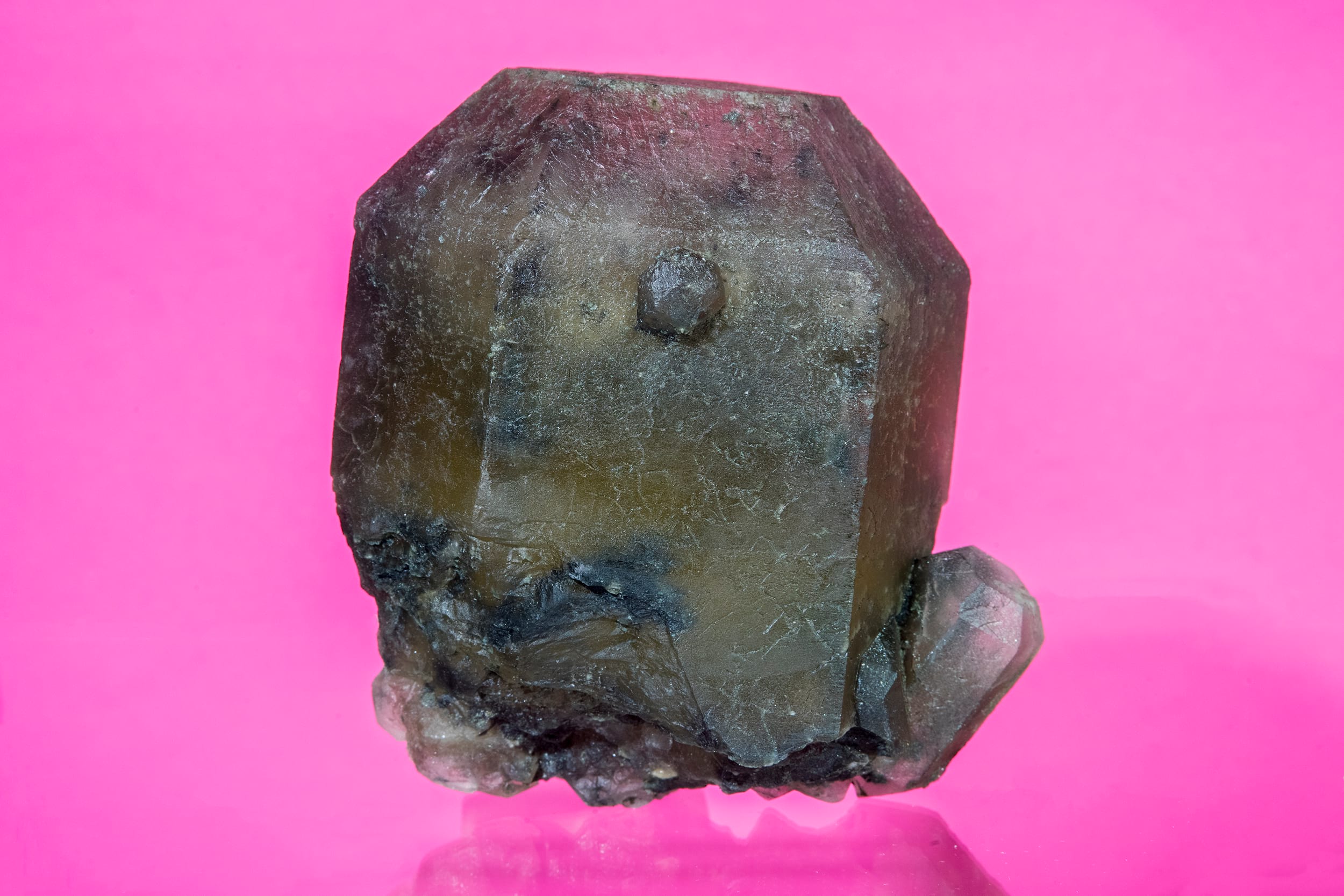
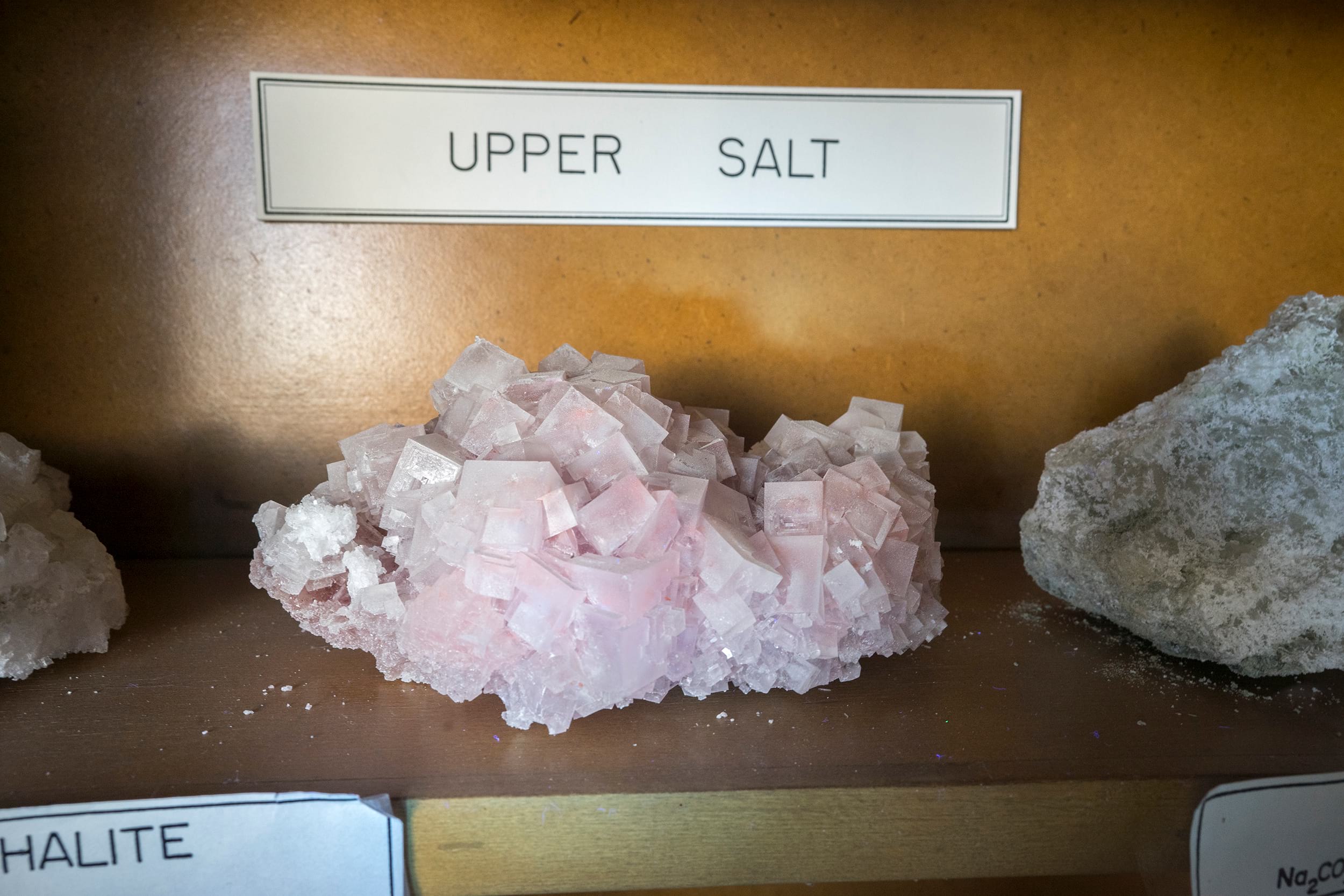
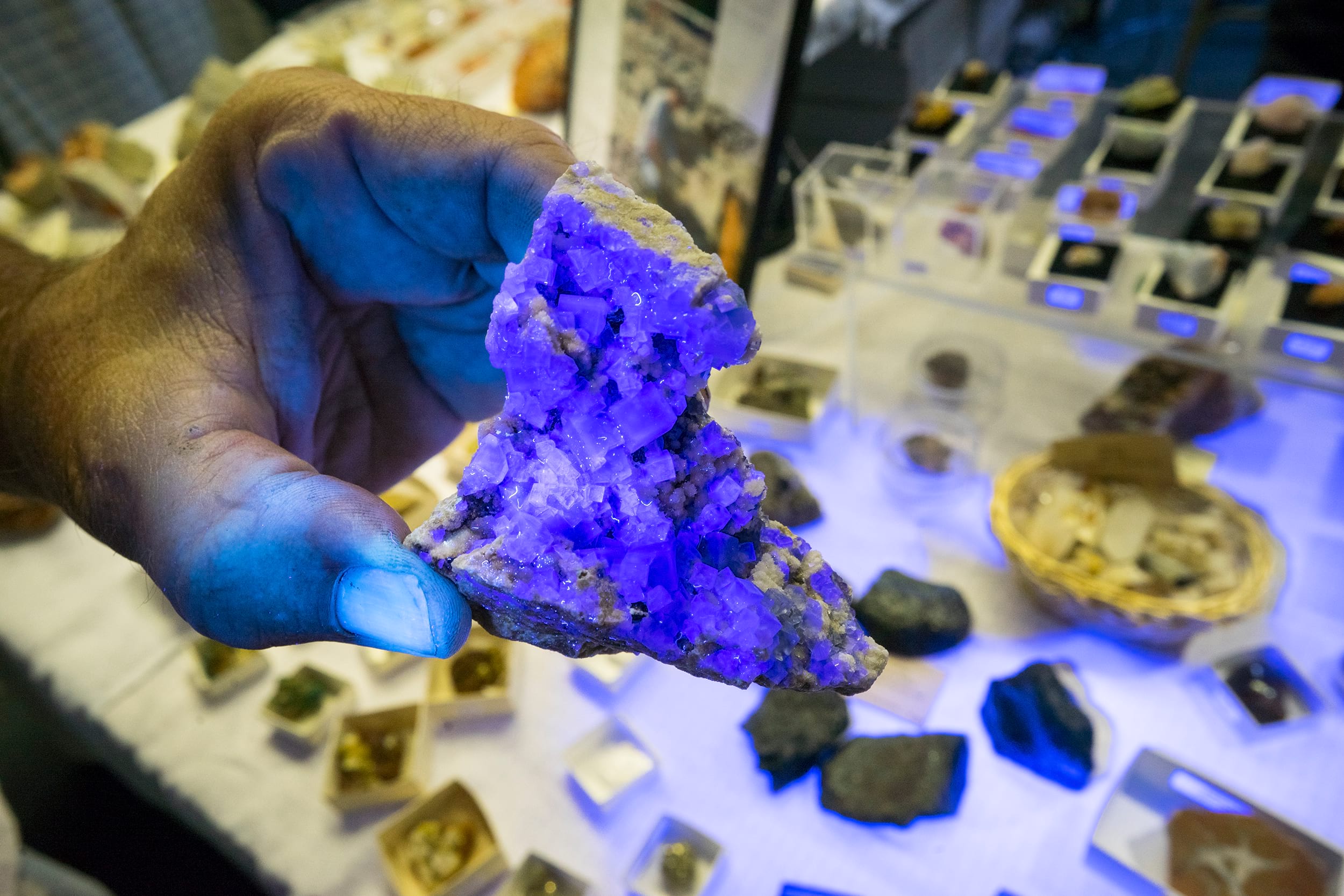
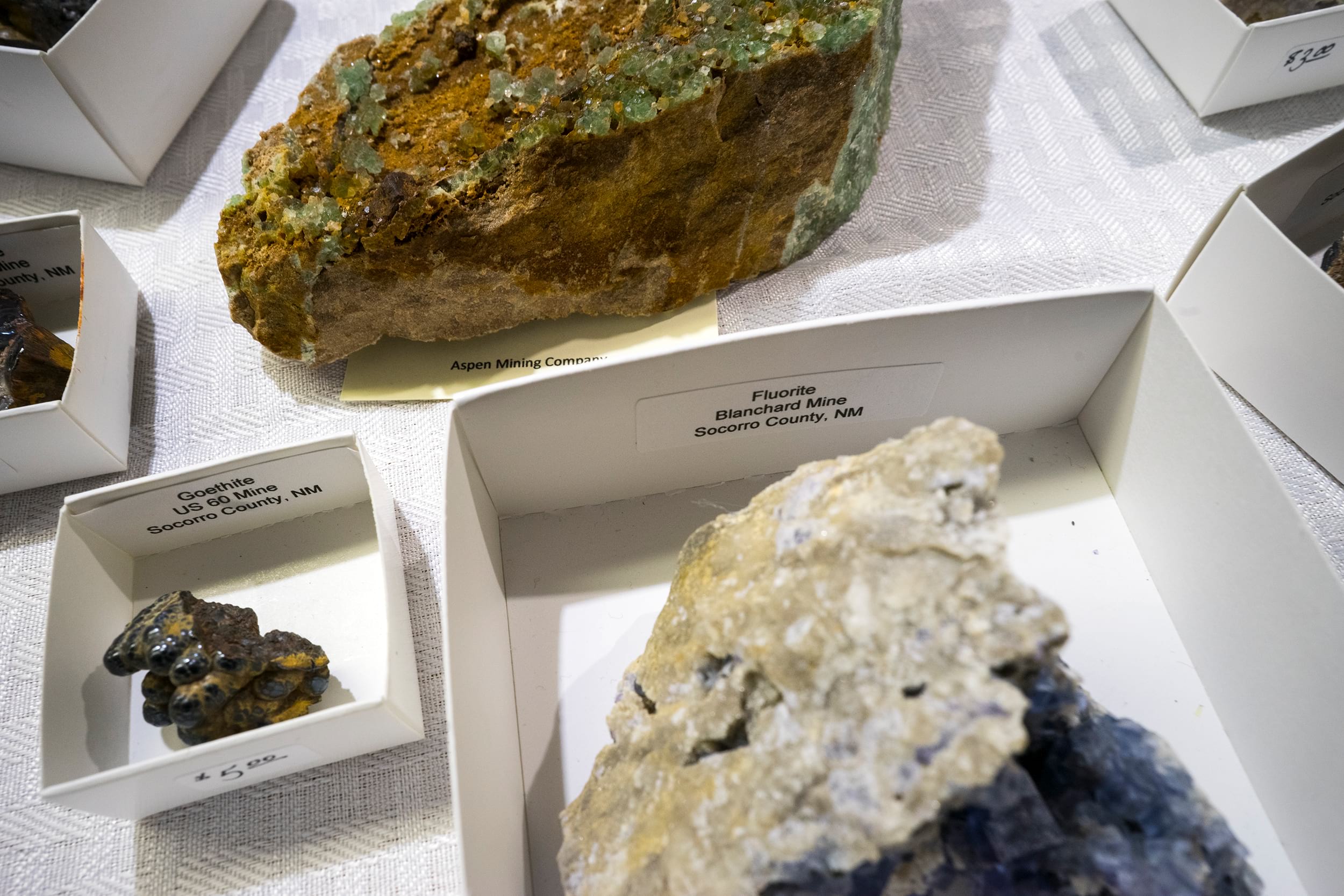
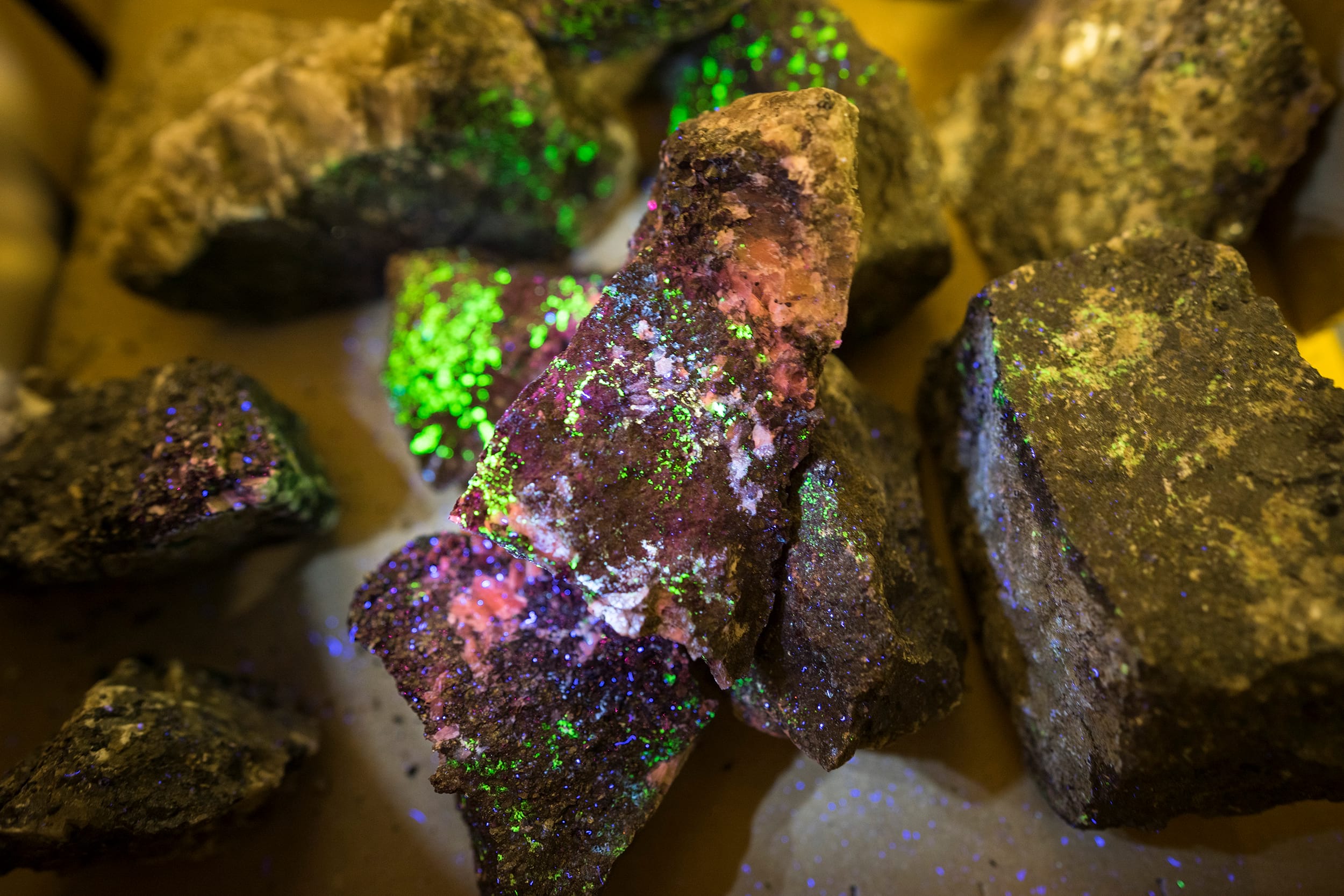
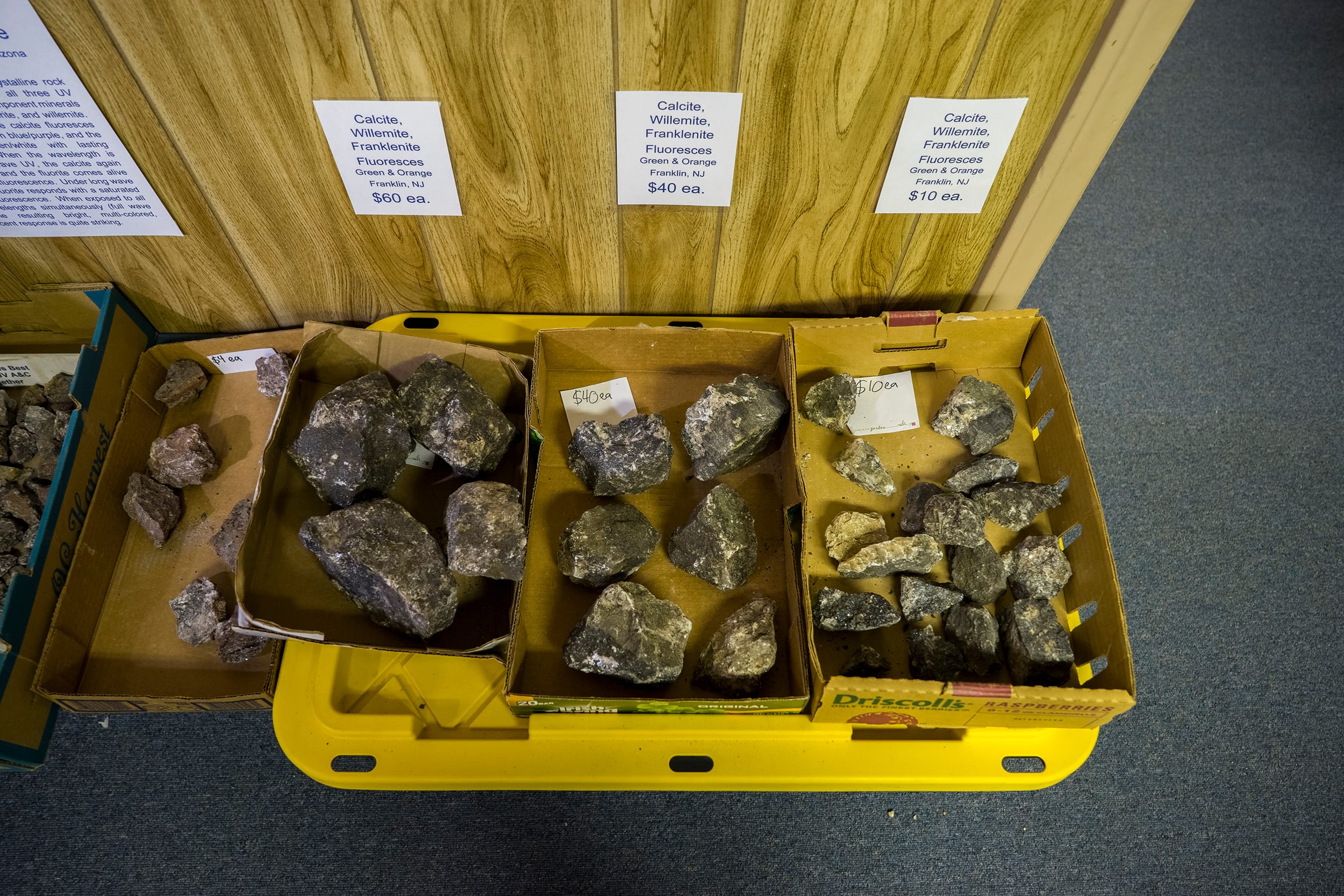
After this there was a bit of a gap before the next event so that people could get lunch and whatever else they needed. While some people took this opportunity to clean the specimens they just found I took the opportunity to explore. They had a miniature museum set up as well as a miniature show with maybe 15 or so dealers. There were wonderful minerals on display with this halite being one of my favorites on display. It had an interesting reddish pink fluorescence akin to Salton Sea or Amboy halite. However, this was mined from a different level to the mud pile minerals so I have no idea if this proves or disproves my guess that it was caused by the halobacterium. Note that this specimen is actually white. Any pink to red spots were from my LW UV source.
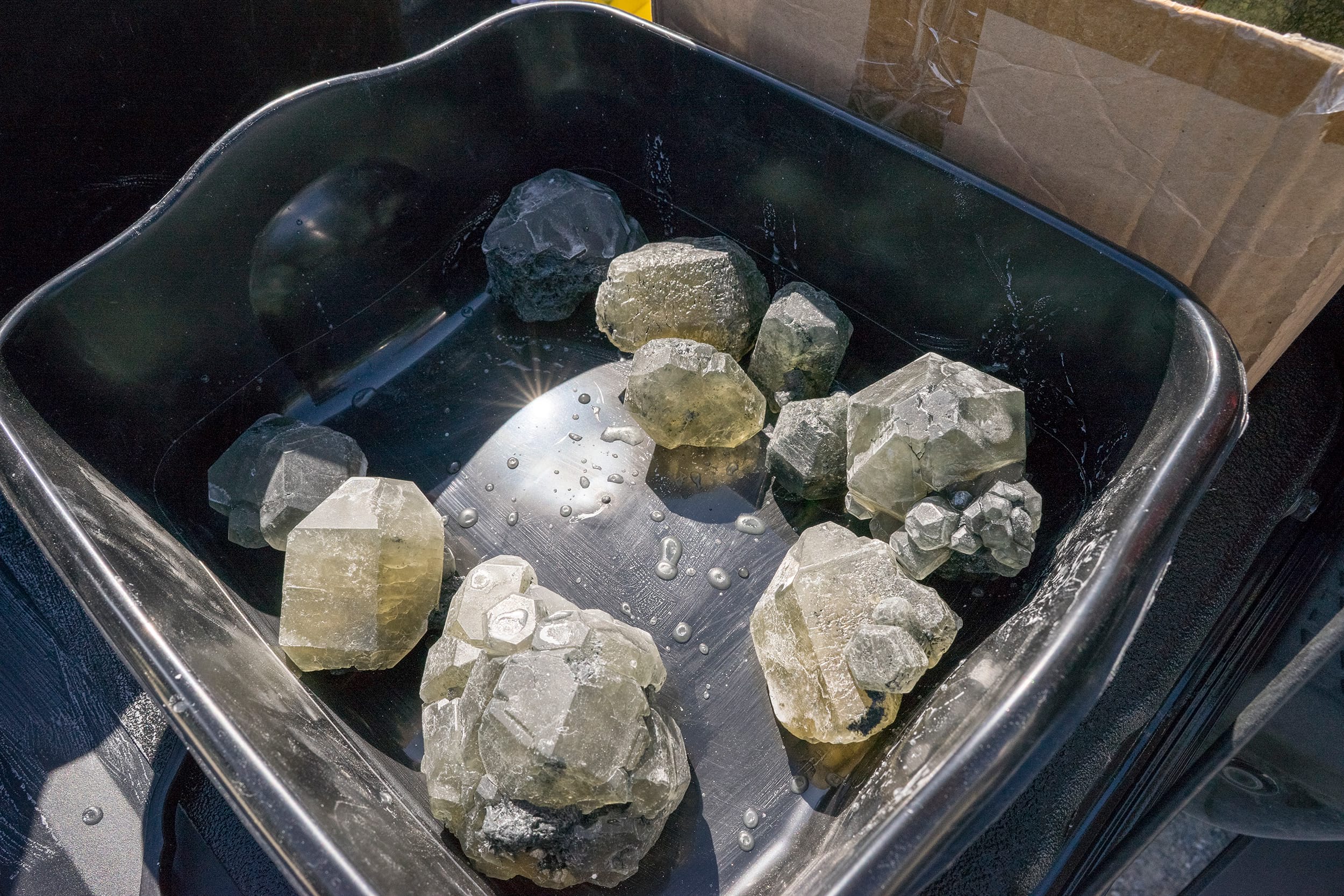
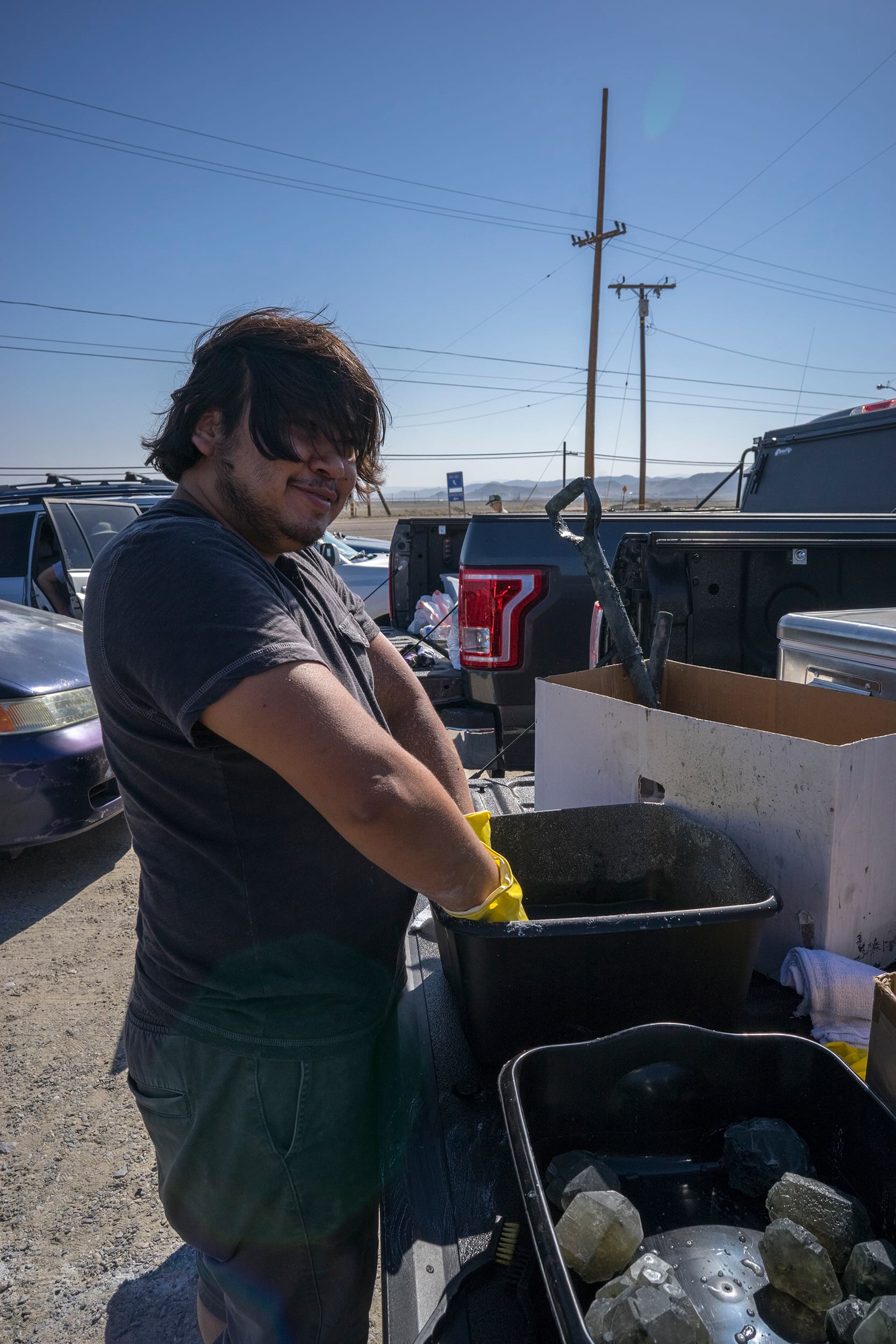
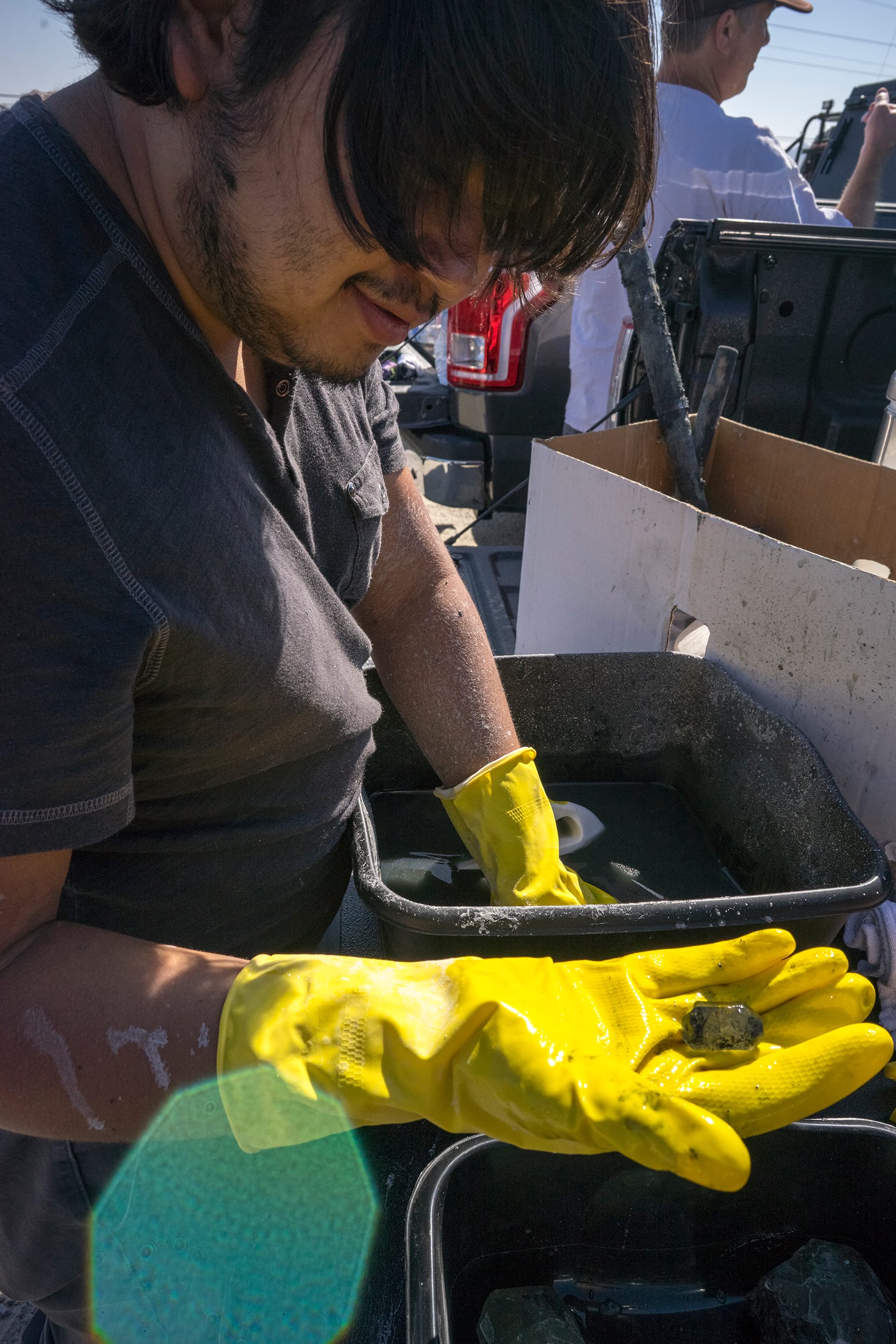
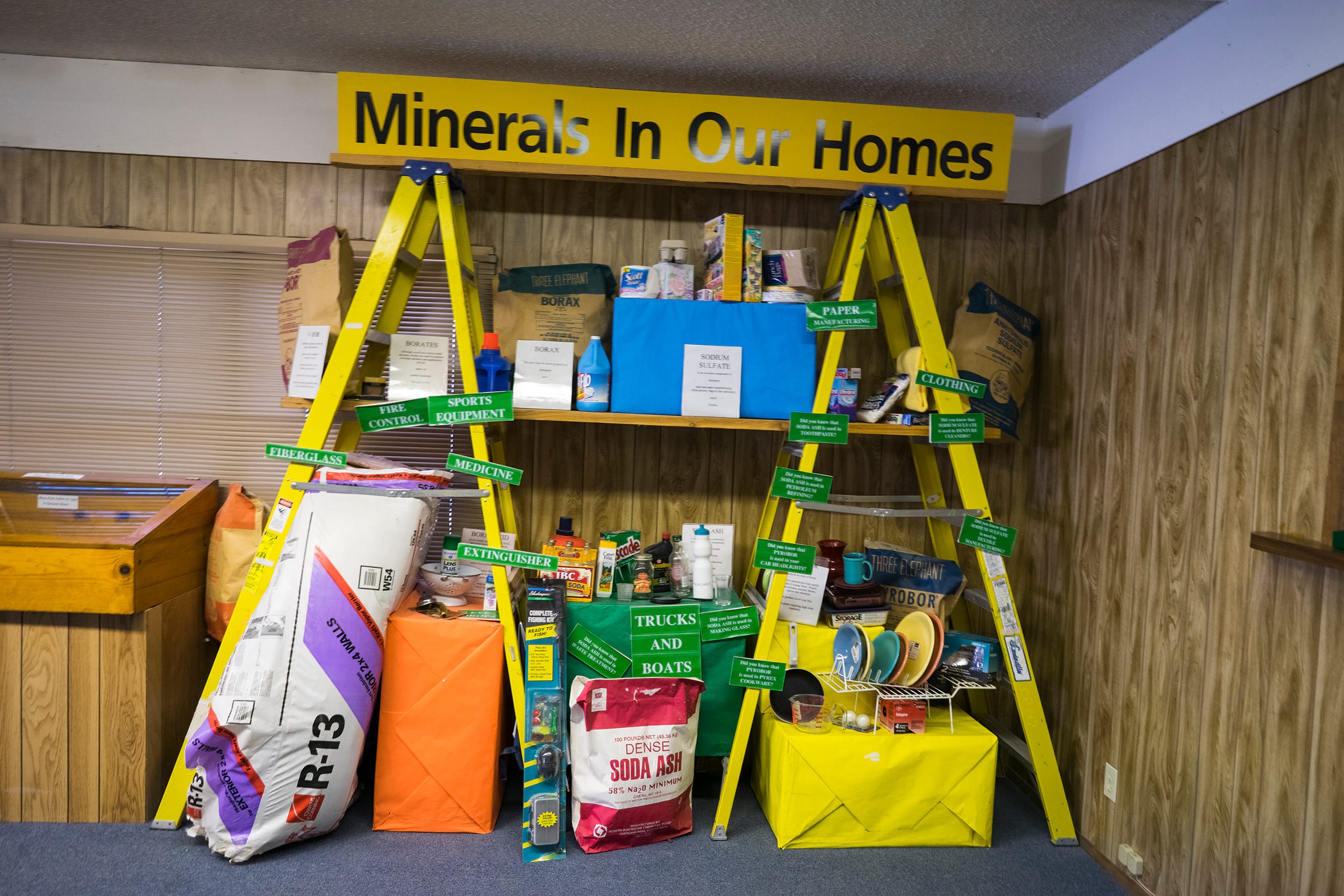
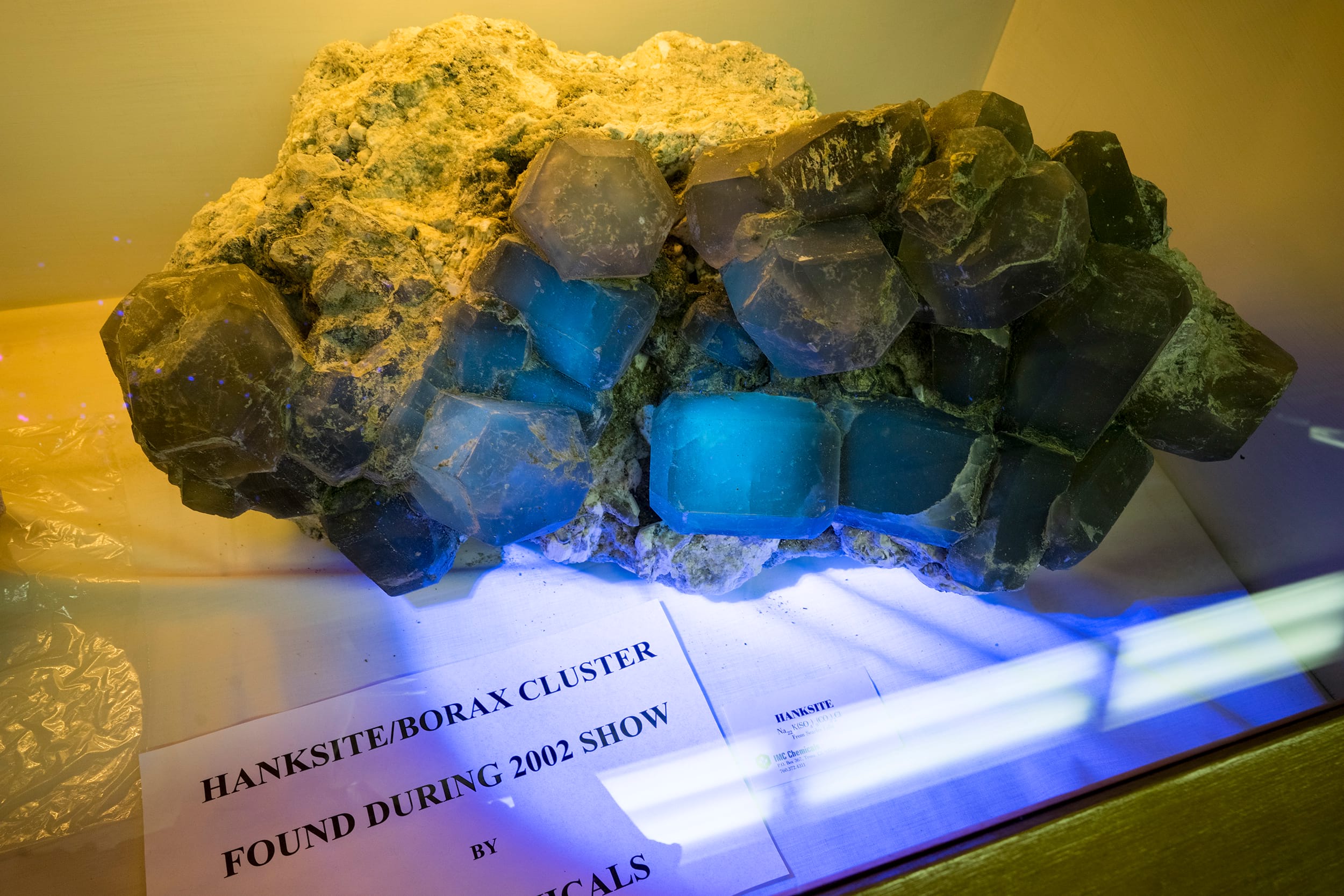
Once we had our bellies full (just a quick sandwich from their general store. Those delicious looking breakfast burritos sold out fast!) it was time to go to the blow hole. What a wonderful change of pace. After being incredibly muddy this was a place where you simply picked the minerals up off the floor. My tip is to bring plastic tools to this event. The crystals would get dinged otherwise.
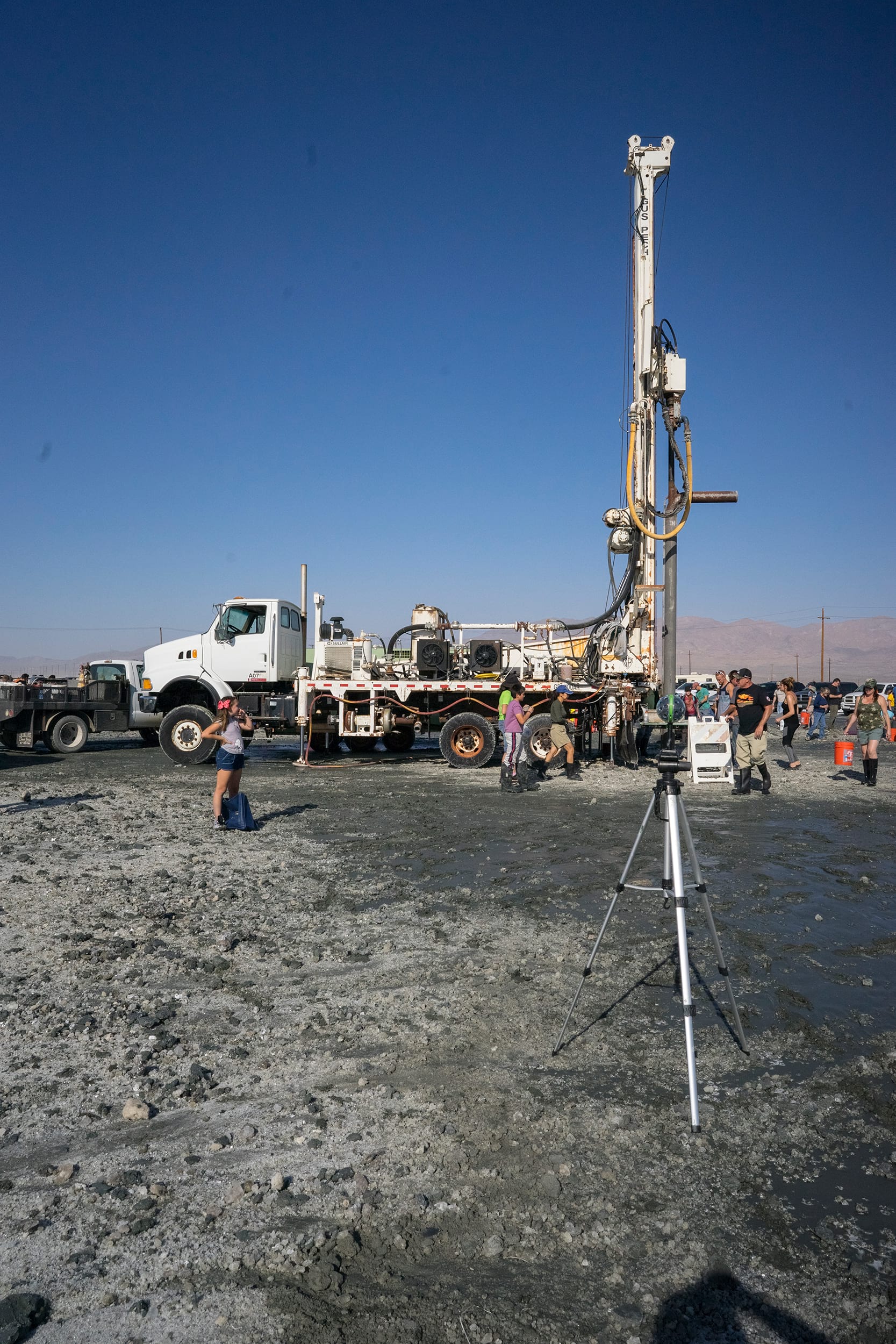
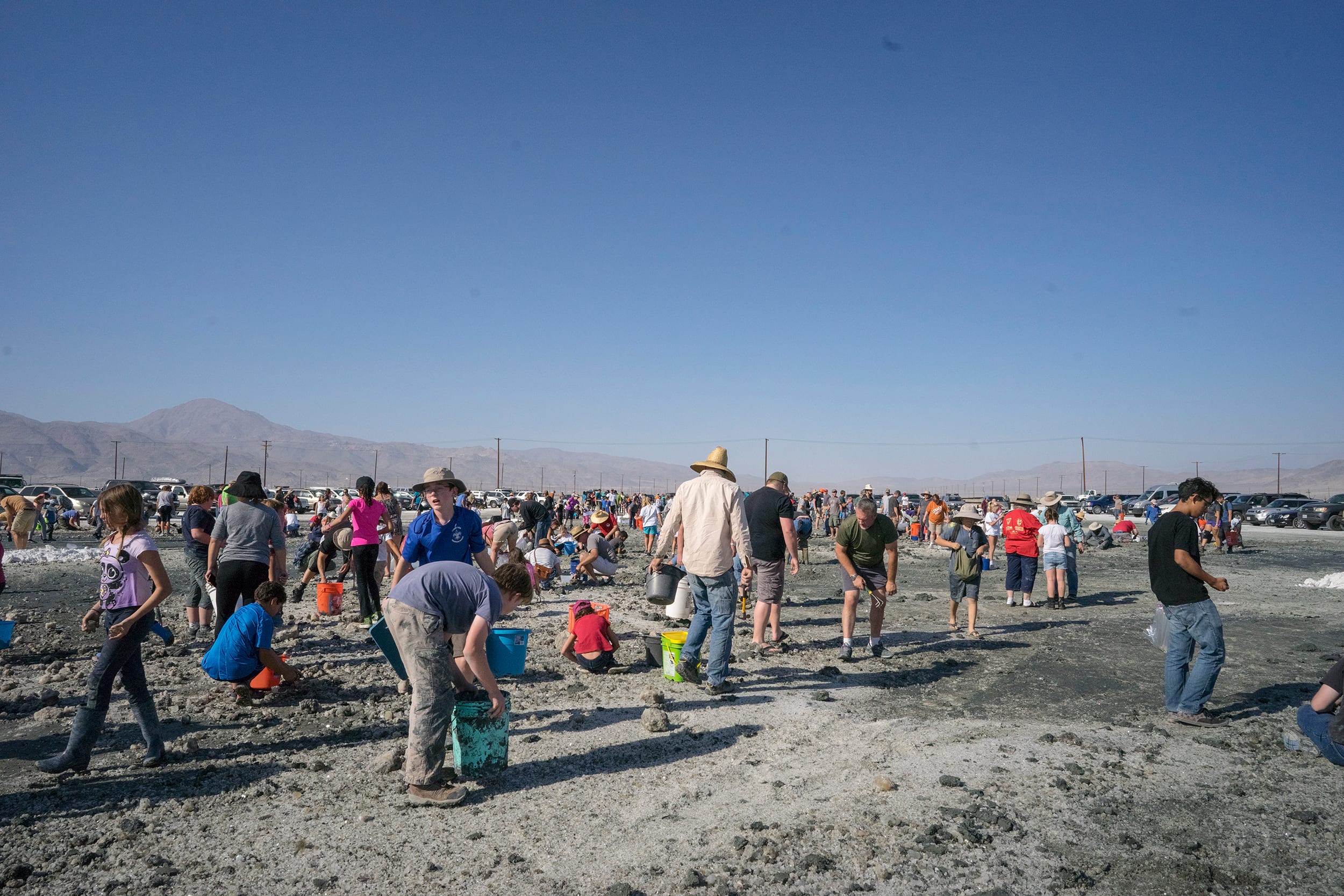
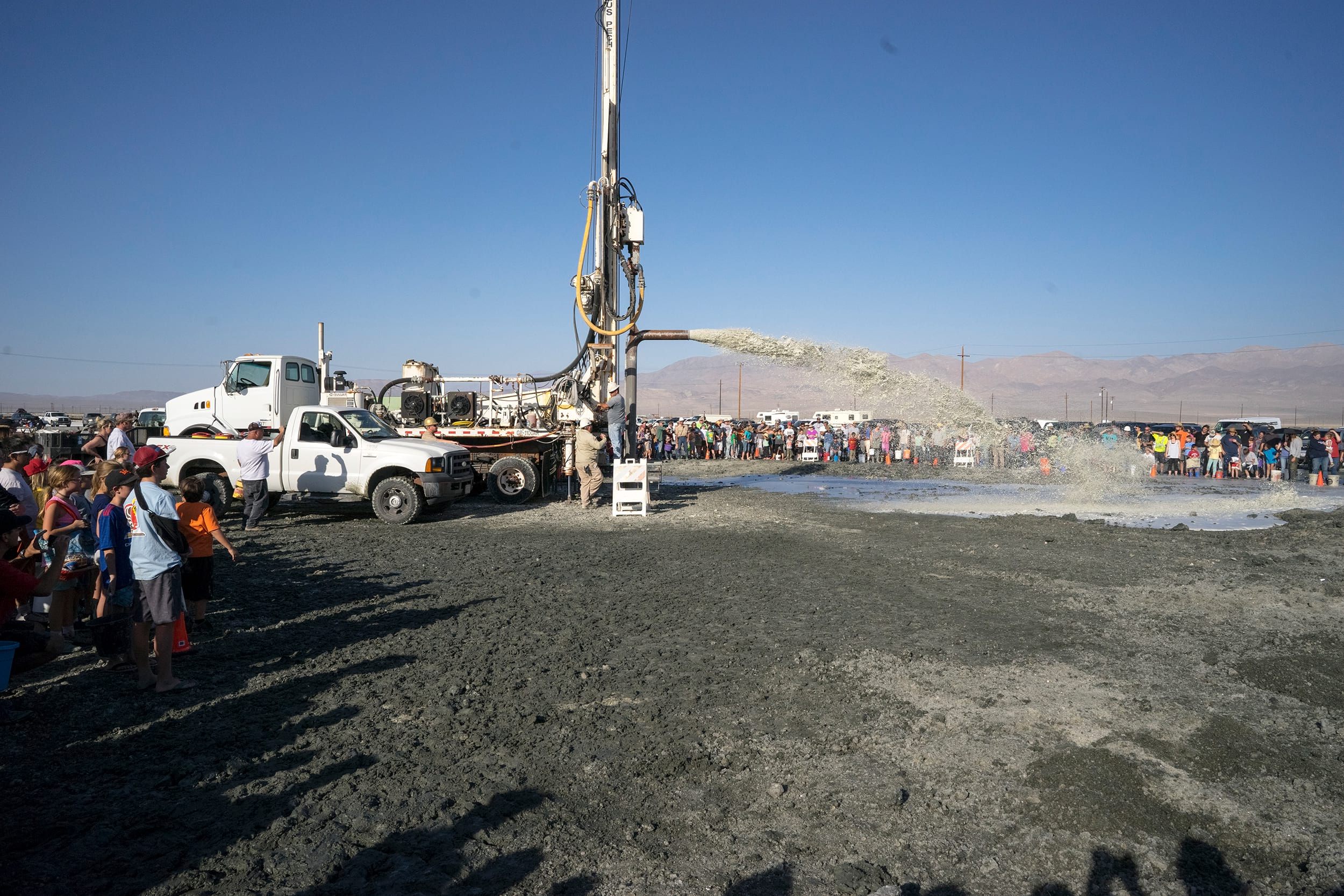
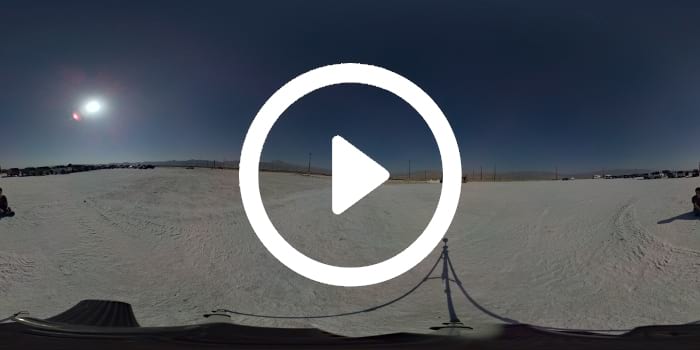
The first 360 is me sitting on the bed of salt that became our collecting area. The scale of the Searles Valley Mineral company is just mindblowing and even my 360s don't do it justice! Add a drone to the list of things I want. The next is me showing off a doubly terminated hanksite crystal while being stared at by the person next to me. Trust me when I say this happened a LOT! Everyone wanted to know what my 360 camera was.

And here are my finds from the blow hole section. My favorite piece is by far the twinned sulfohalite though. The perfect terminations as well as the twinning make it quite aesthetic to me. Plus, it's noticeably the brightest fluorescent mineral out of everything I collected.
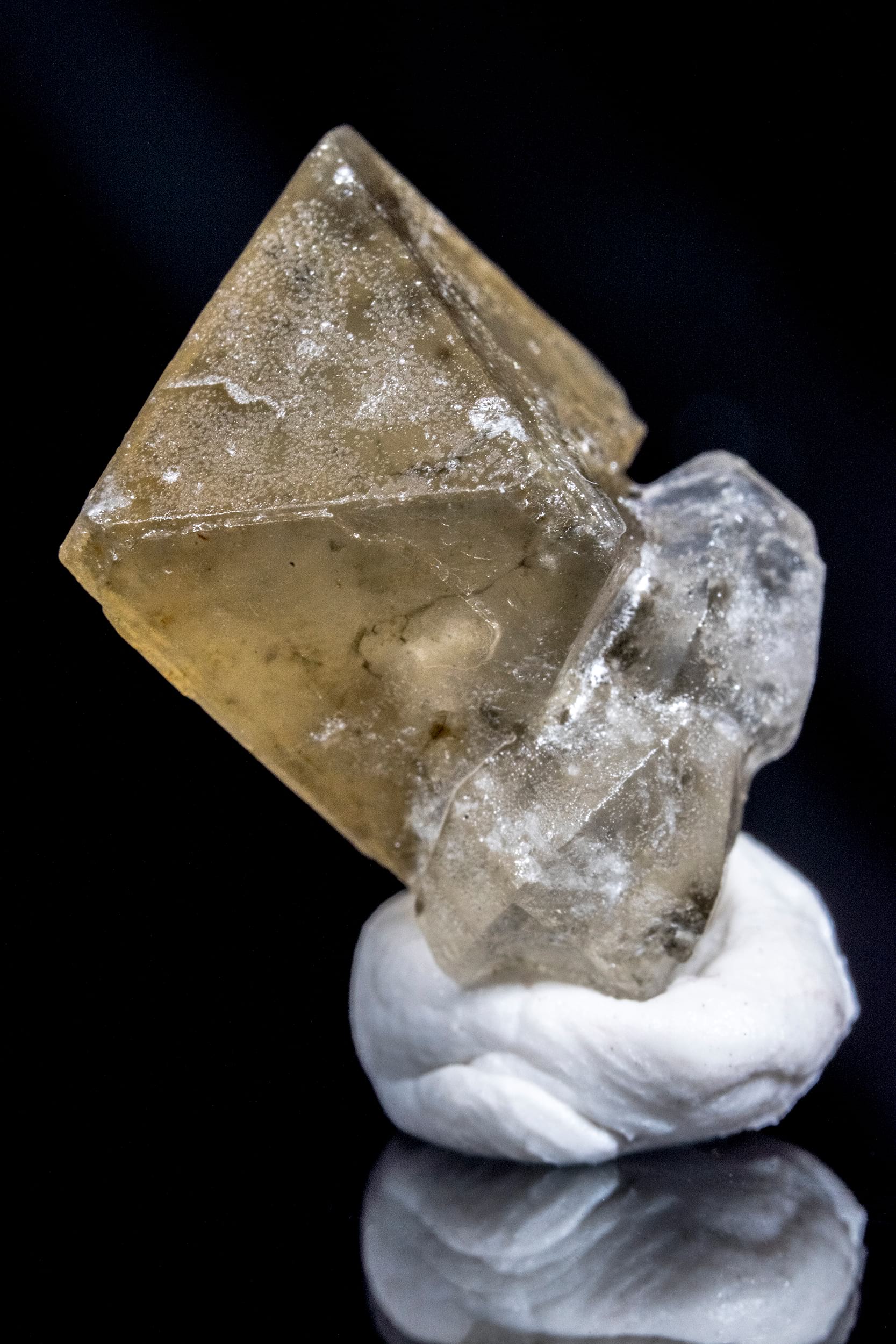
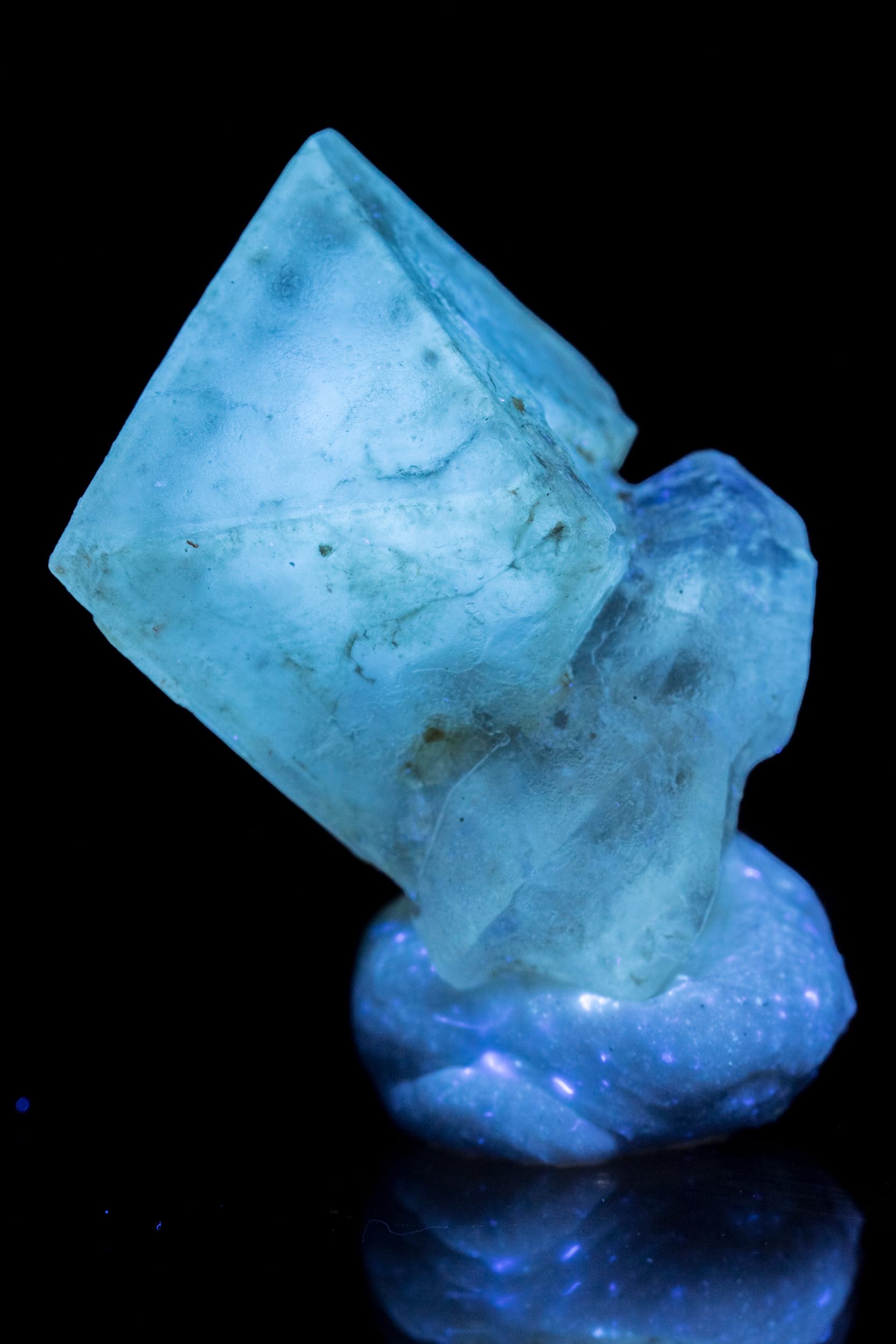
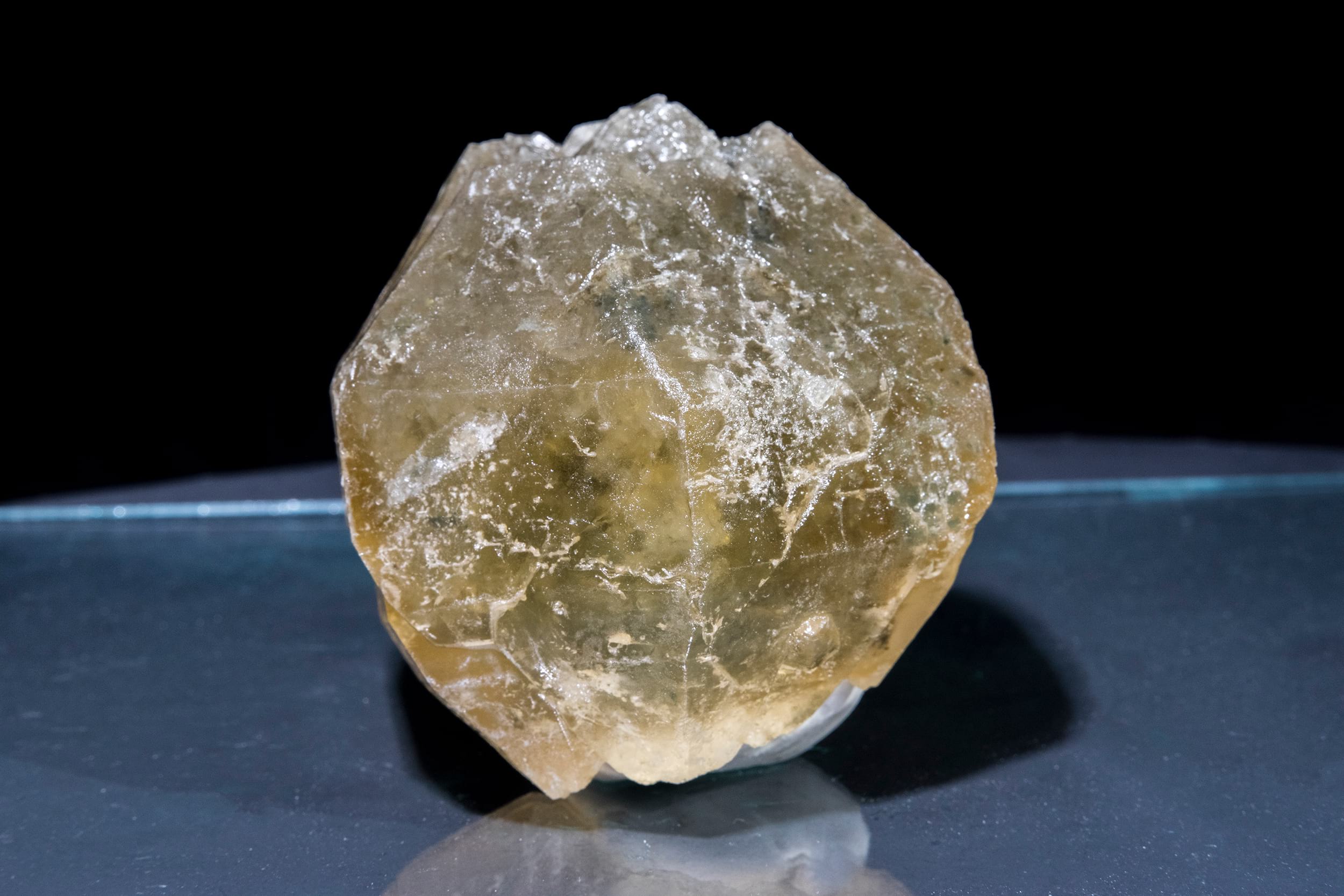
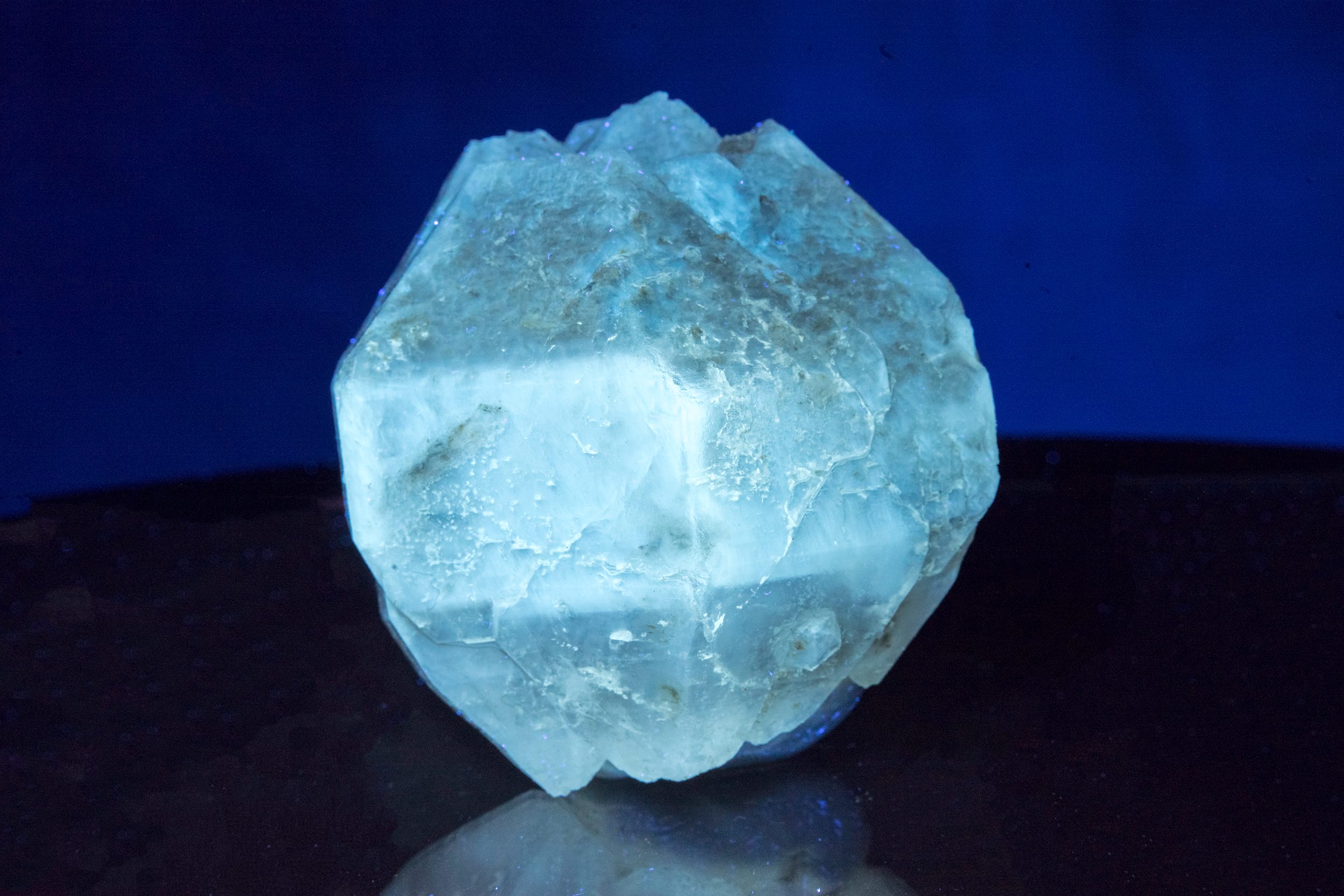
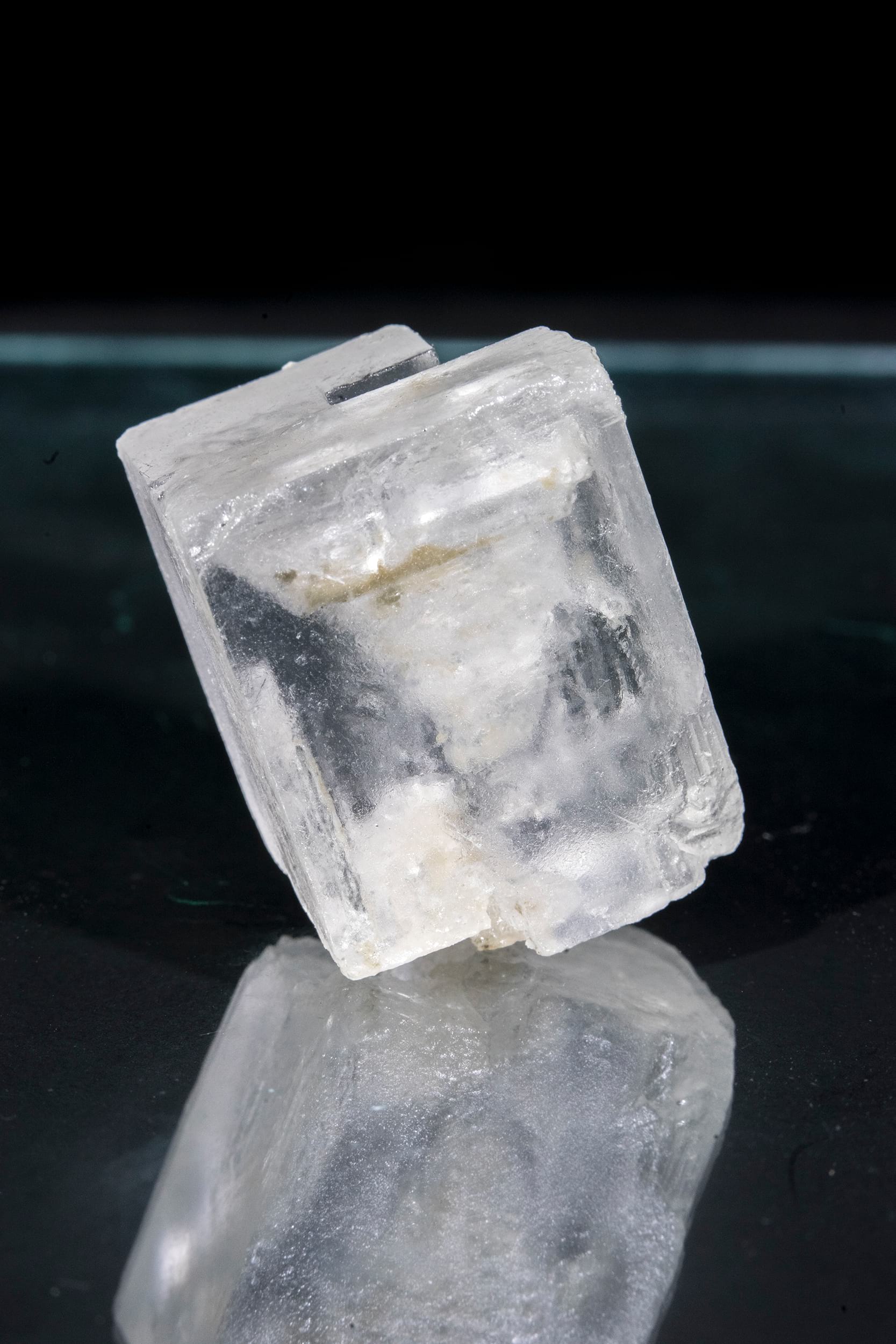
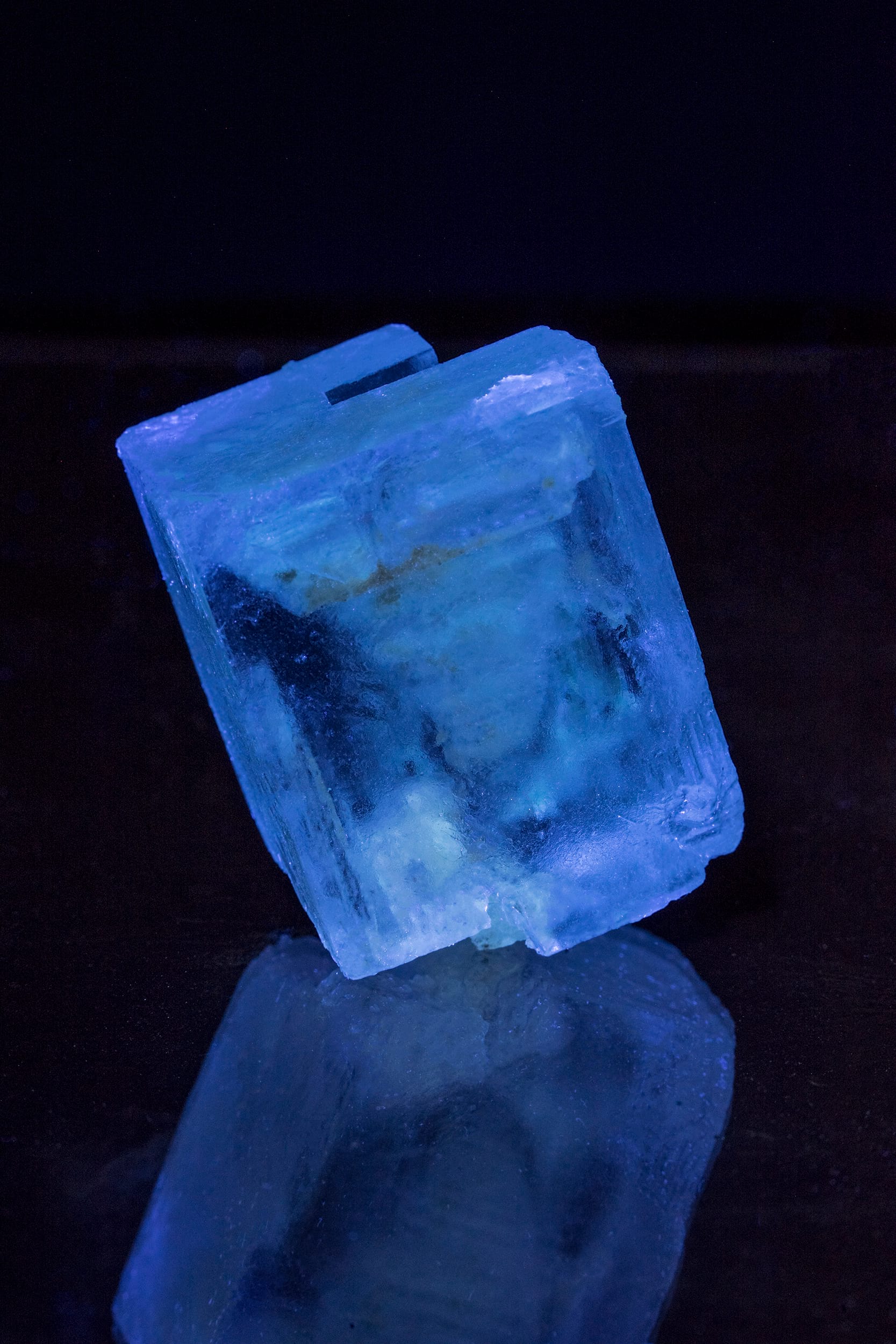
Oops! I took vertical video with my camera. It shows the phosphorescence nicely though.
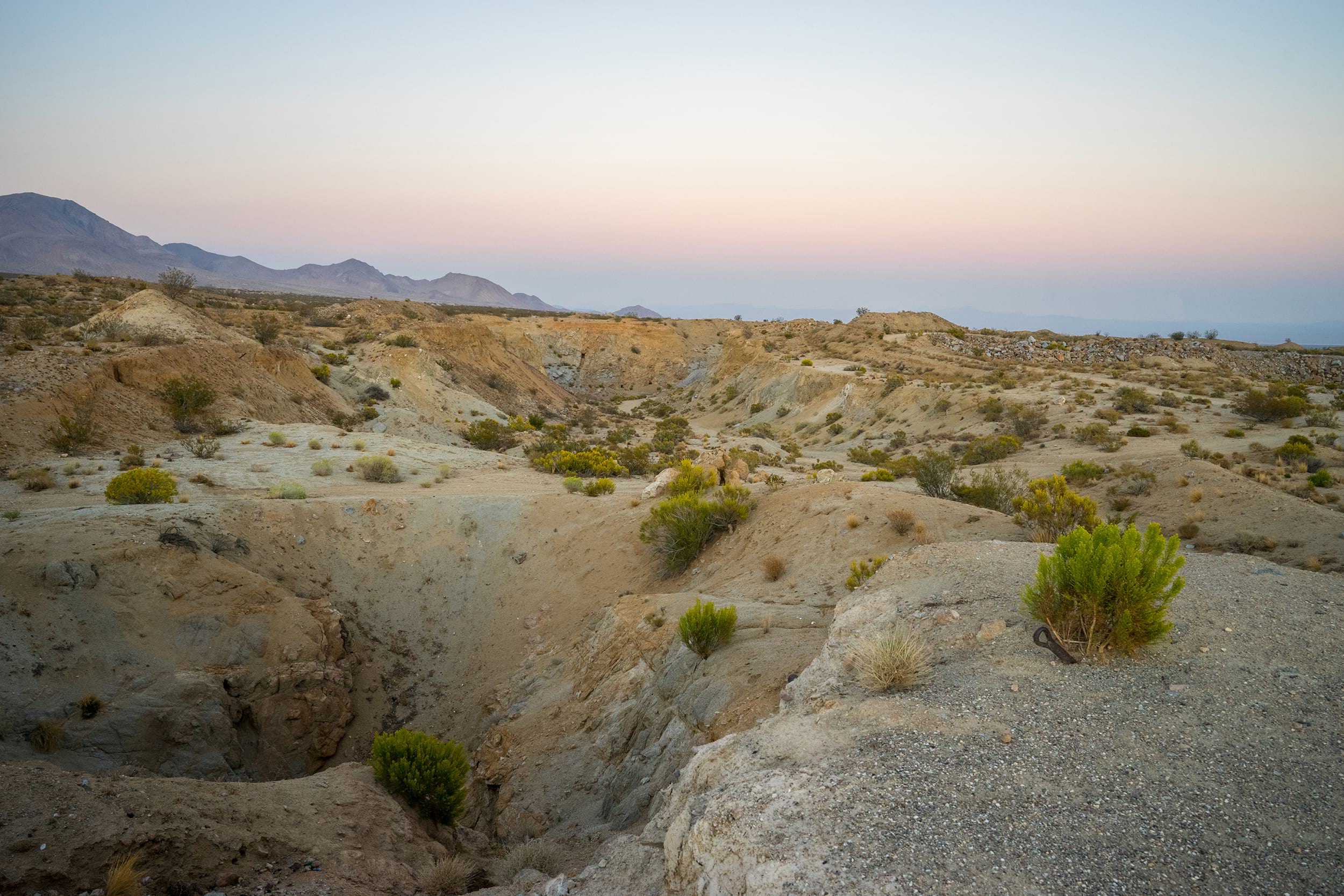
While that was it for the Searles Lake events of the day it certainly wasn't the end of the day for us. After all, we're fluorescent mineral collectors and we thrive at night! The adventure would just be beginning for us. The first stop was the Grimes & Sexton Quarry. https://mrdata.usgs.gov/mrds/show.php?labno=10236095. According to the MRDS it was primarily a lead quarry with some other metals (copper, gold, silver). However, just look at the sheer scale of it! This was the one time I forgot to take a 360. Oops! This picture only depicts about 1/3 of the quarry too! What a lead deposit this must have been.

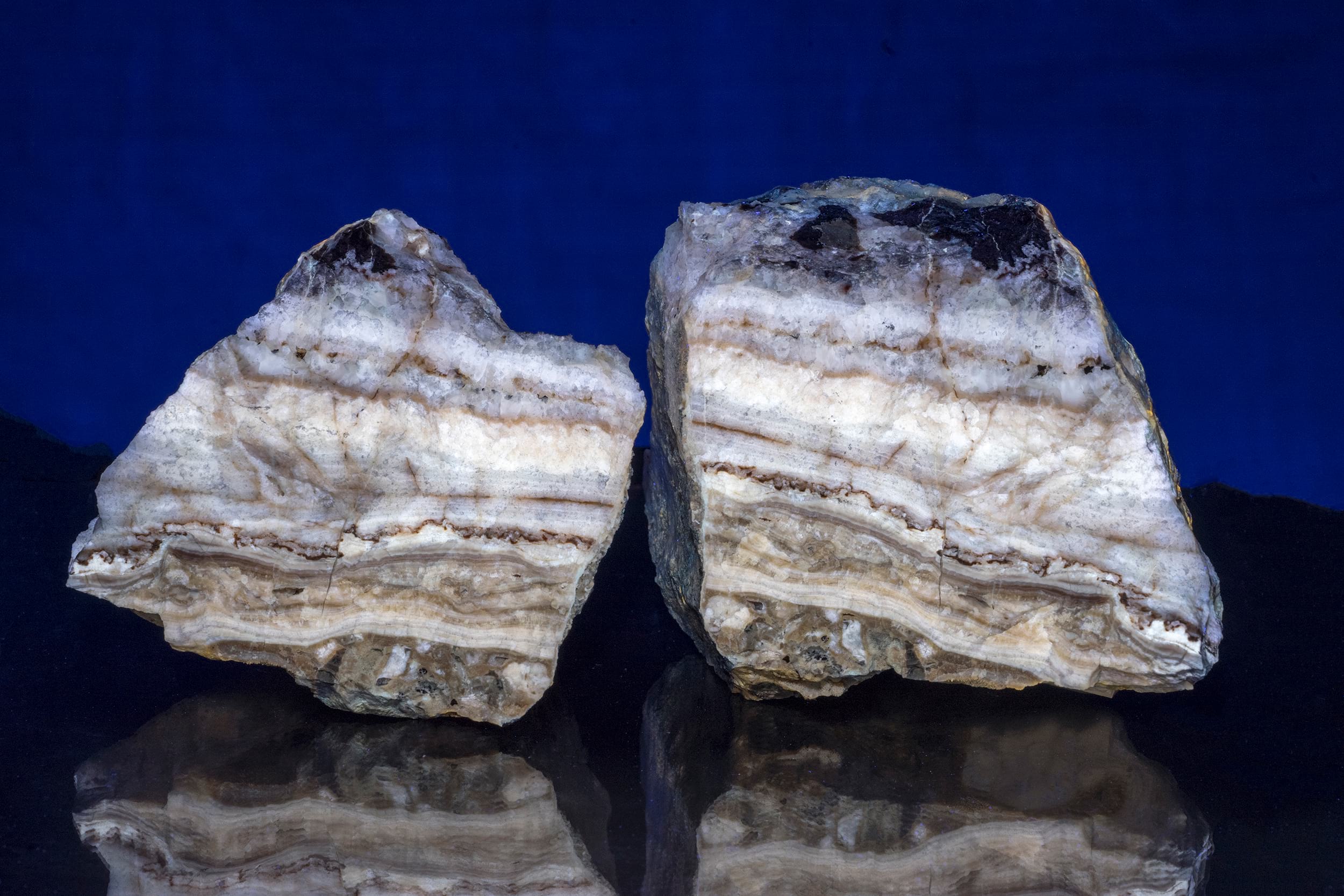
Not that we cared for the lead minerals. We were there solely for fluorescents! There was plenty to choose from but this was the piece that I took home.
http://www.raymond-wu.com/all/2017/11/4/calcite-chert-travertine
After this is where the night came short though. Dave's other place that he wanted to explore ended up being a bust. It doesn't seem to have been registered with the USGS so I don't know what the name of the mine is. It was just a small tungsten occurrence and I had already been spoiled by Atolia! Of note is that there were still huge piles of tungsten ore that should have been crushed. Nothing spectacular like the solid scheelite chunks of Atolia but large 100+ lb boulders with significant scheelite specks. The crusher stockpile that was left there still had a large amount of scheelite in it as well. It was almost as if the place was abandoned for whatever reason.
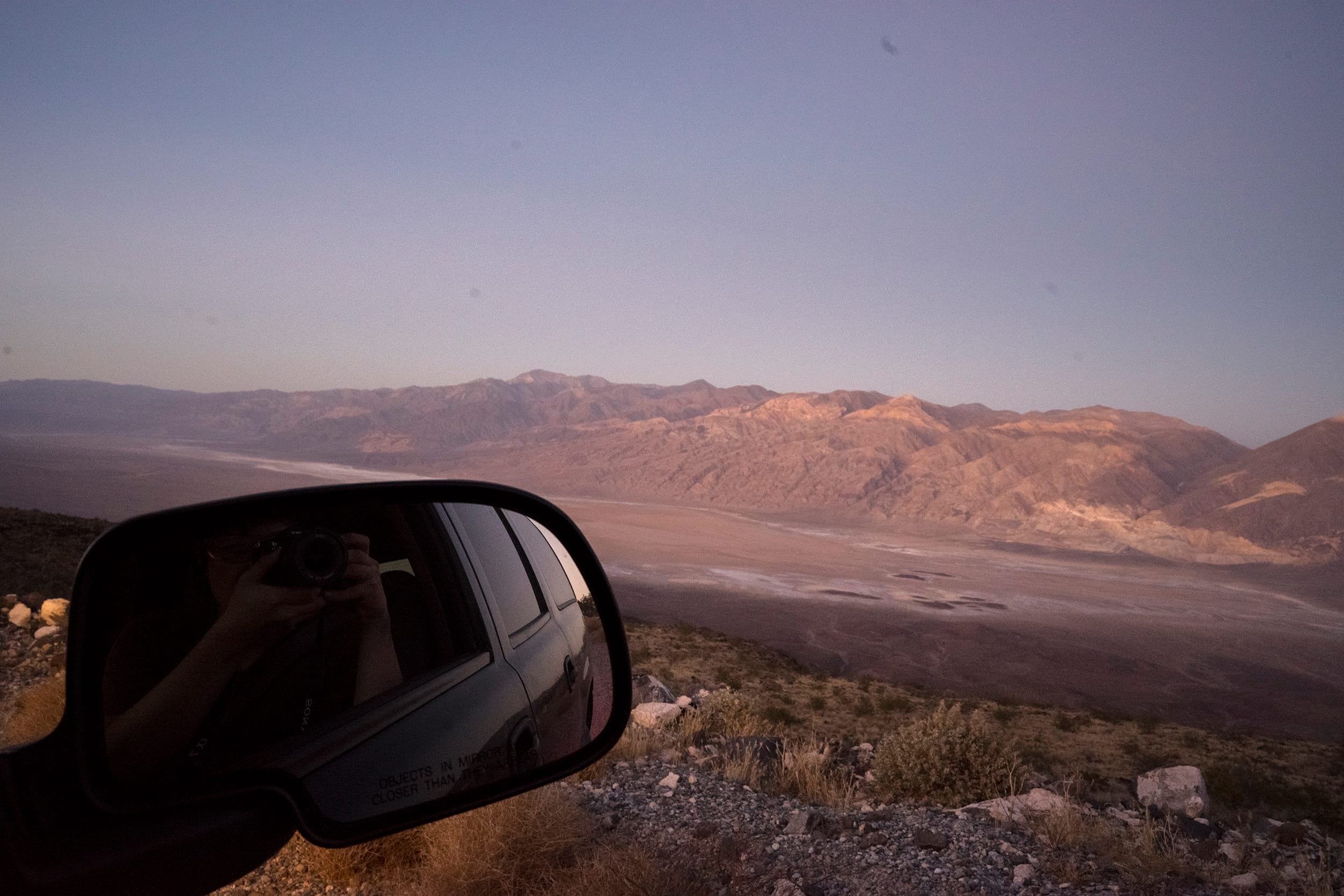
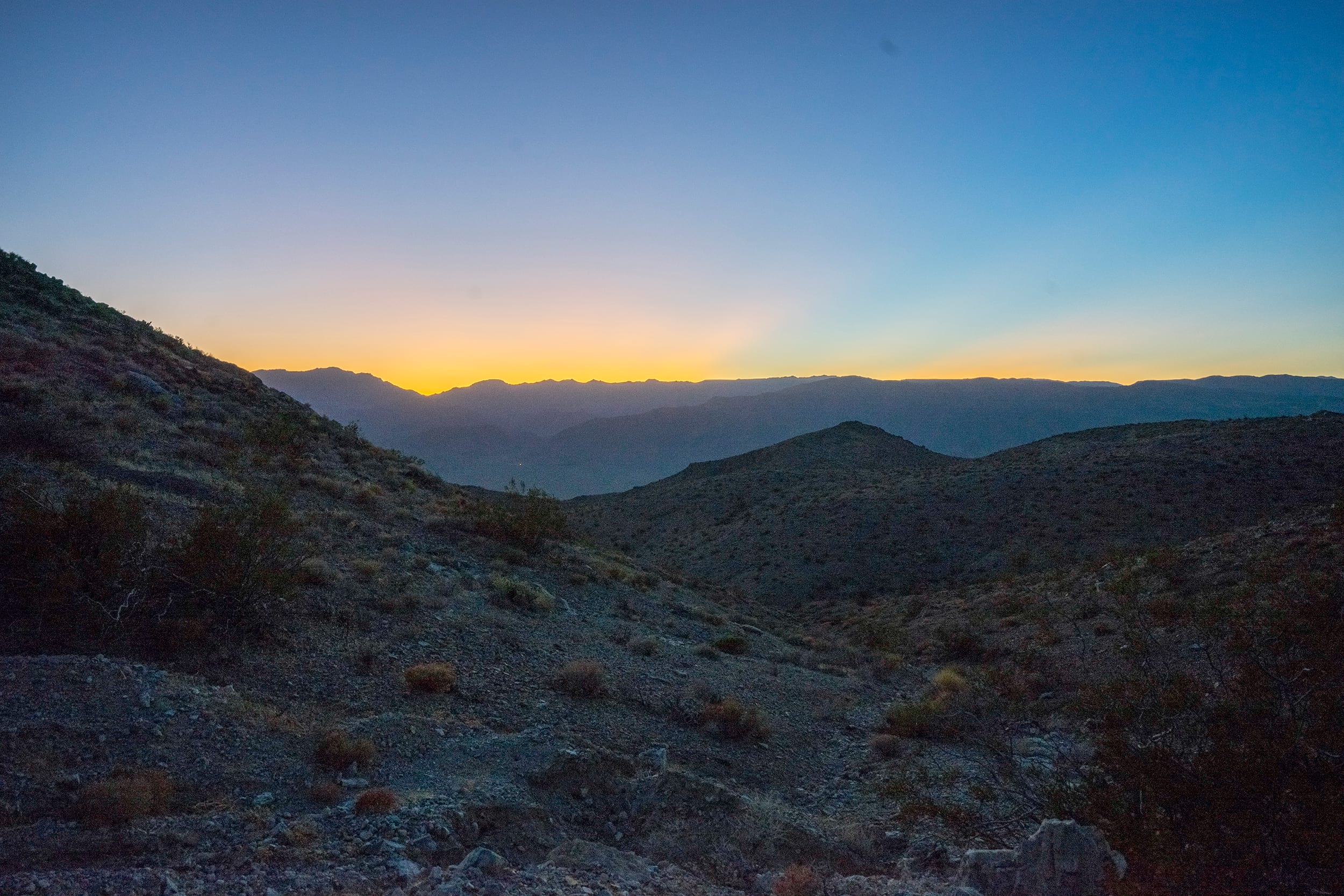
The next day is where Dave and I parted ways. He had to prepare for some job responsiblities on Monday. My thinking was "I'm already here. Might as well go through with the full experience. I knew full well that the pink halite was not a good fluorescent specimen as I had seen plenty at shows and even purchased a piece when I was first starting out. Needless to say I didn't intend on bringing any home. I said to myself that I'd only bring home a piece if I found a small plate with exceptionally large crystals. Another tip is to not use the pry bars that they supply. I tried it out for about 20 minutes before I just moved straight to the rotary hammer I had brought. Much quicker and I could flip over larger amounts of pressure ridges (bumps on the surface of the salt bed where crystals form) in record time.
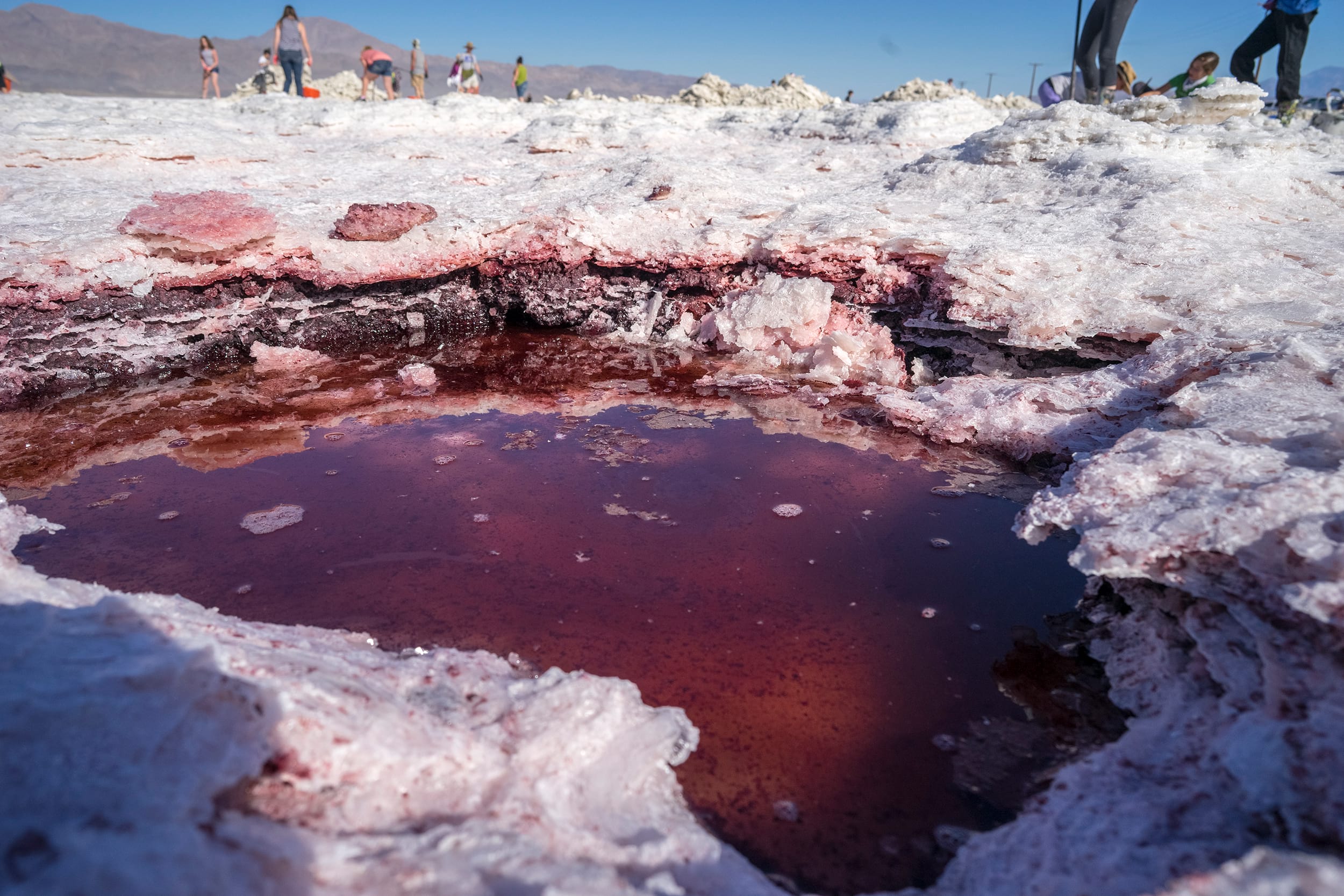
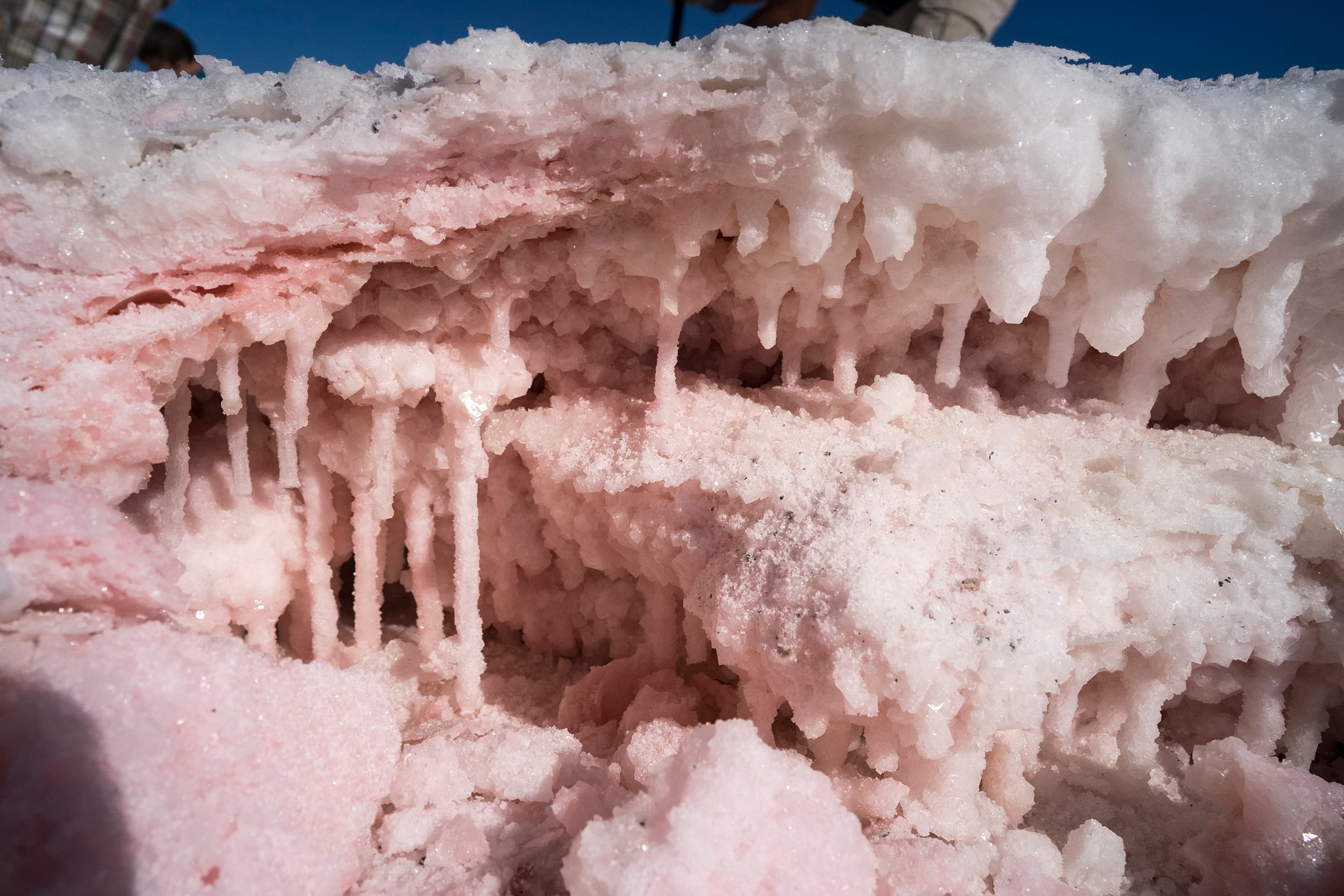
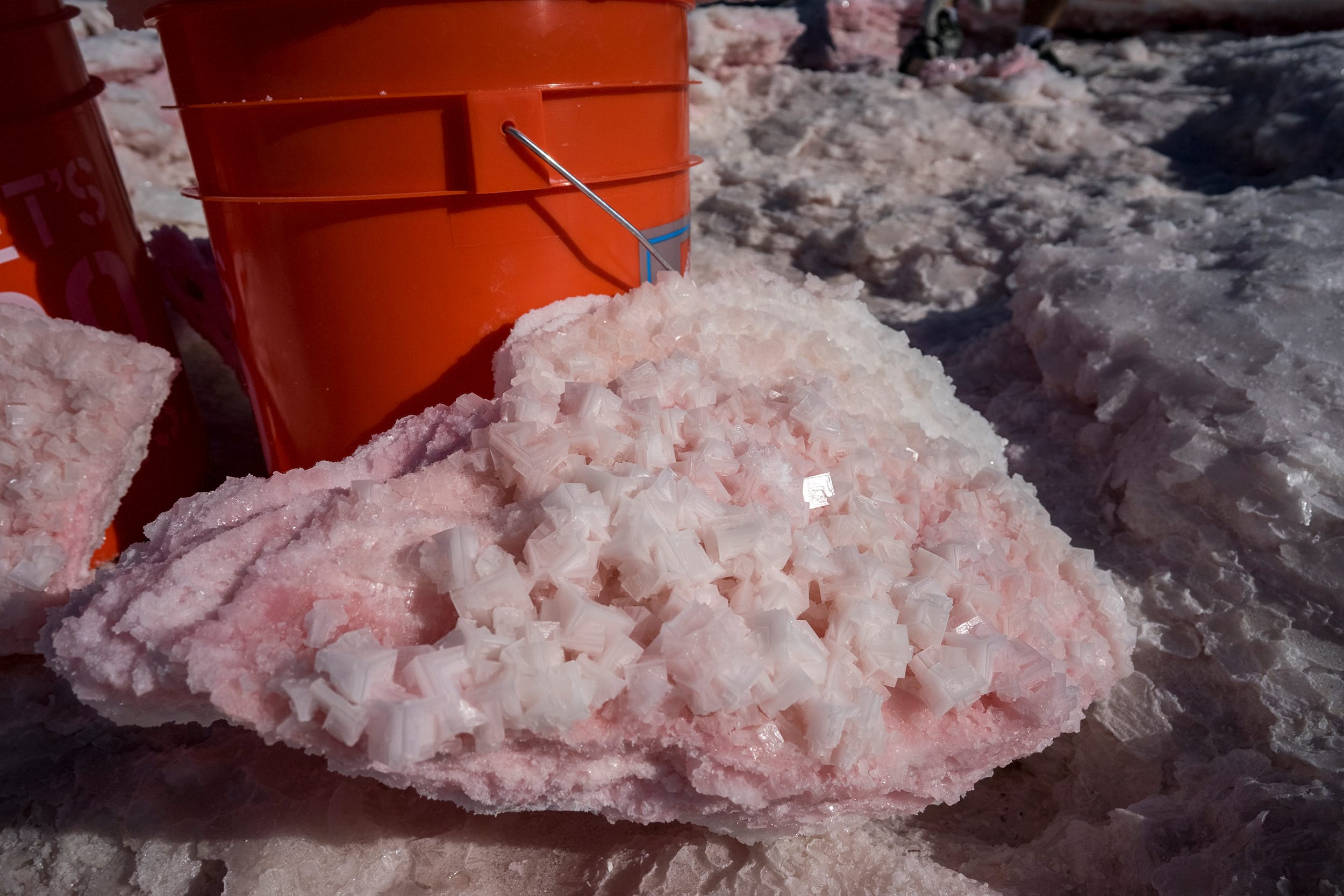
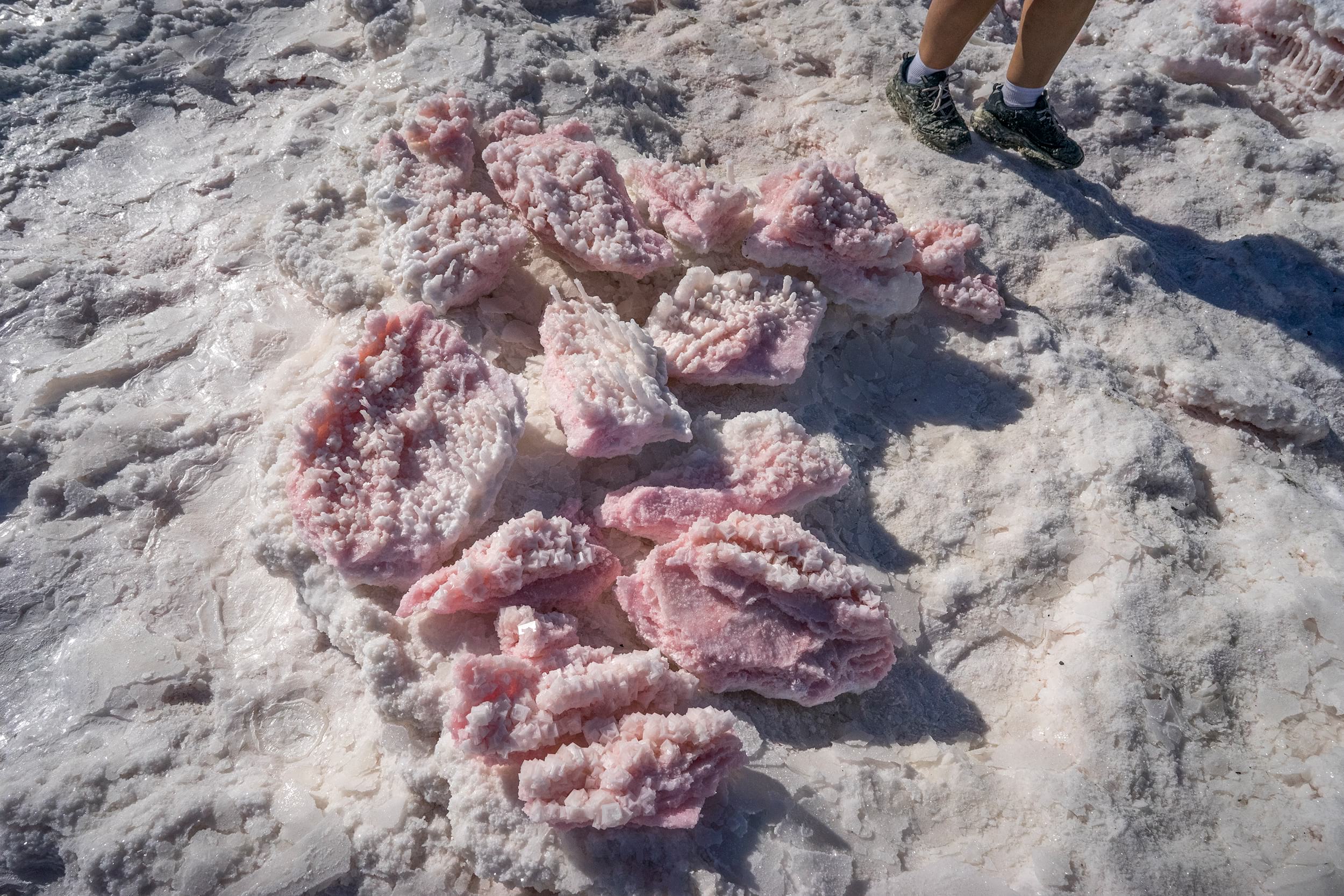
So what did I end up with? Not quite the large 3-4"+ crystals I had hoped for but a halite that was twinned side by side totaling about 2.5". It wasn't even worth my time to set up a proper photoshoot but I wanted to highlight the difference between the two pieces in the photo. The one on the top is a piece that I had bought when I first started out 3 years ago. It has long dried out and is closer to an orange color than the original pink. However, it fluoresces brighter than the fresh piece I had gotten. Quite interesting!


While the events of that year's Gem-O-Rama had concluded I still hadn't had enough. I wanted to explore more since it was still so early in the day. I decided to visit some spots in Randsburg, the first of which was the Historic Owl Cafe. I have to say that places like this are where 360 cameras really shine. There's so much effort and interesting history covering such a small area I don't think anything other than a 360 could do it justice. The owners, a husband and wife duo, had quite an interesting story. Originally their store was situated in Los Angeles as a security store - the remnants of which can be seen in the 3rd 360. However, they wanted to get away from the hustle and bustle of the crowded city and so they moved to Randsburg. The husband already did occasional gold panning so why not settle on a place with so many fee digs and weekend gold mining areas. The amount of artifacts and curiosities they've accumulated is no short of amazing for the size of the place!


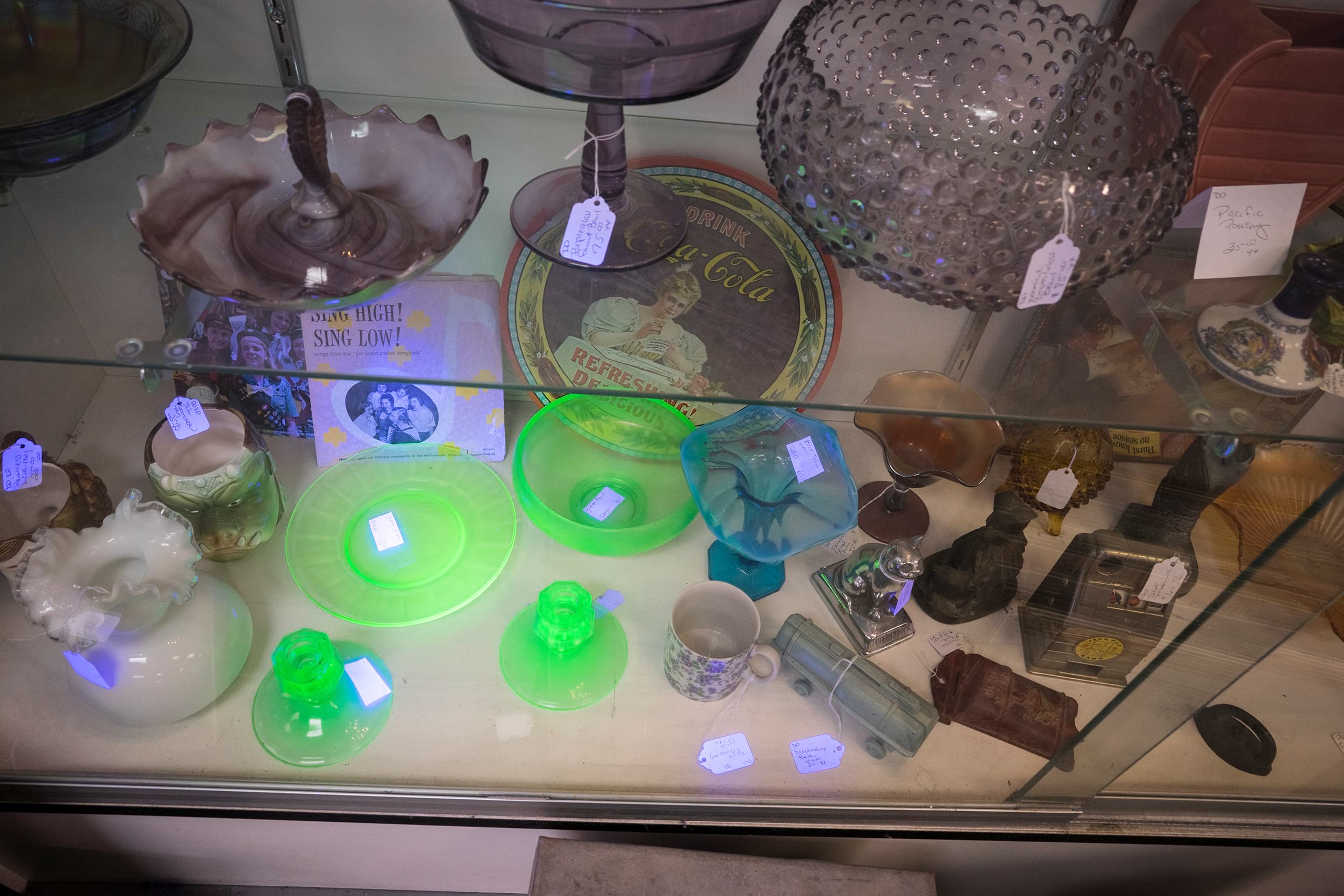
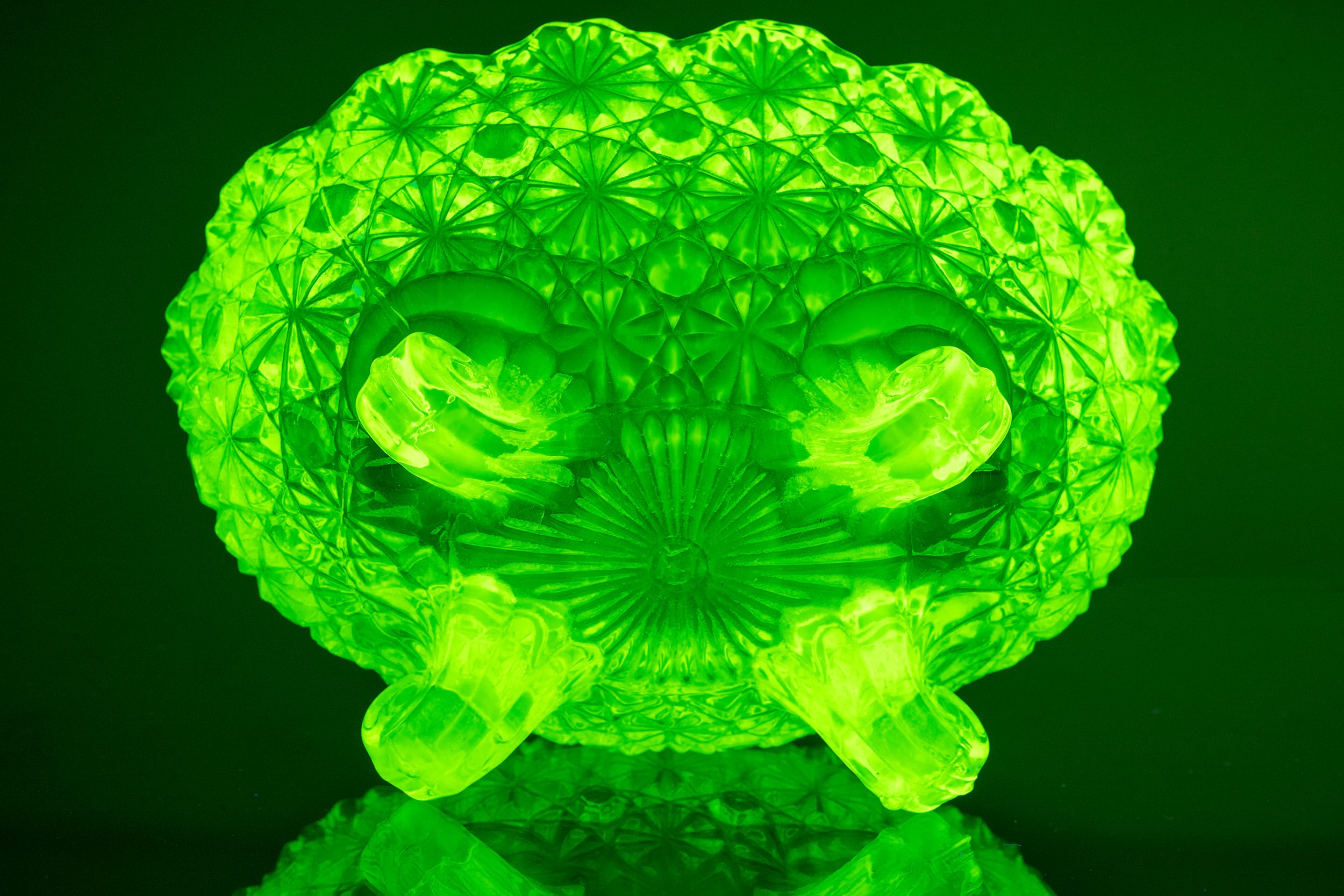
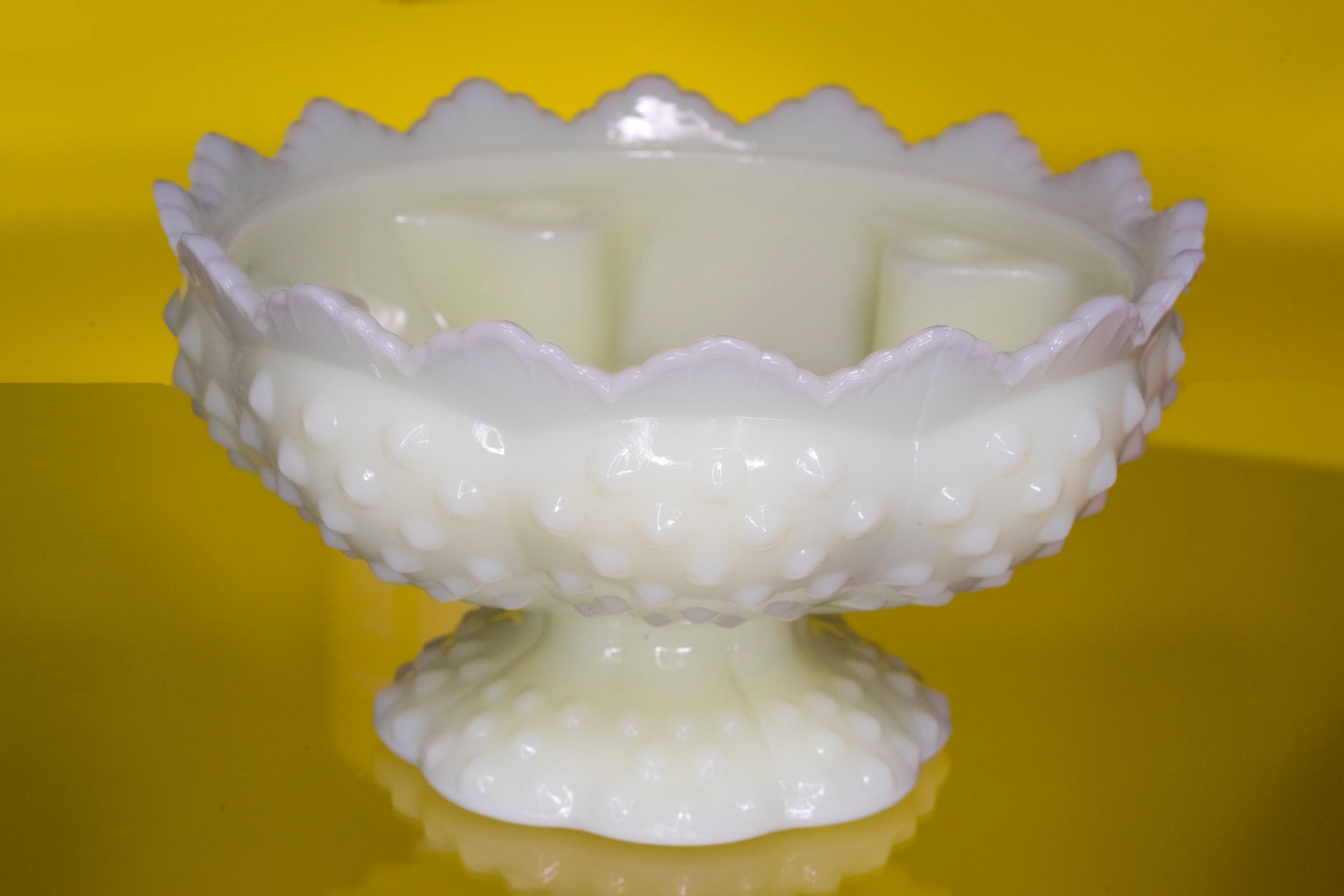
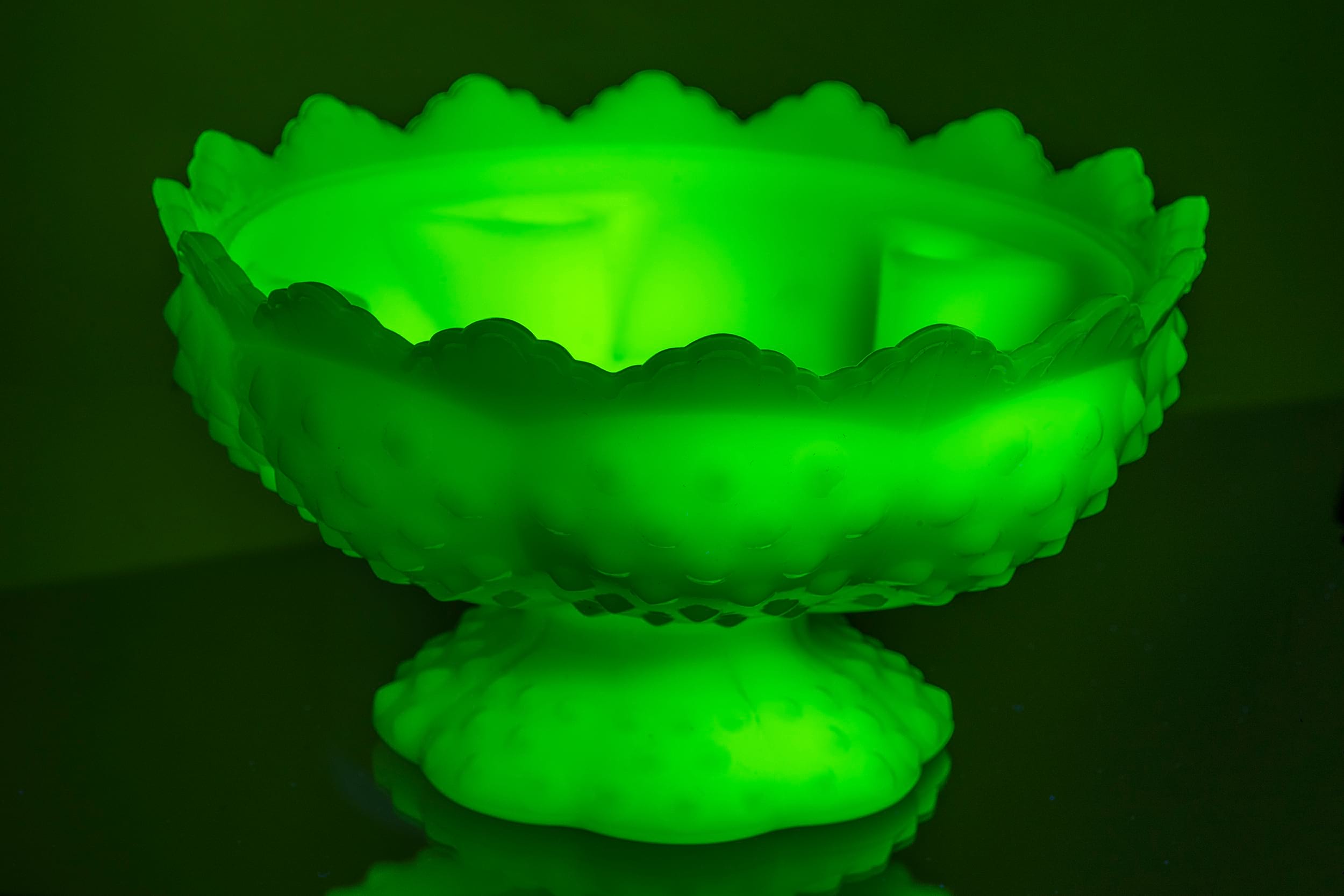
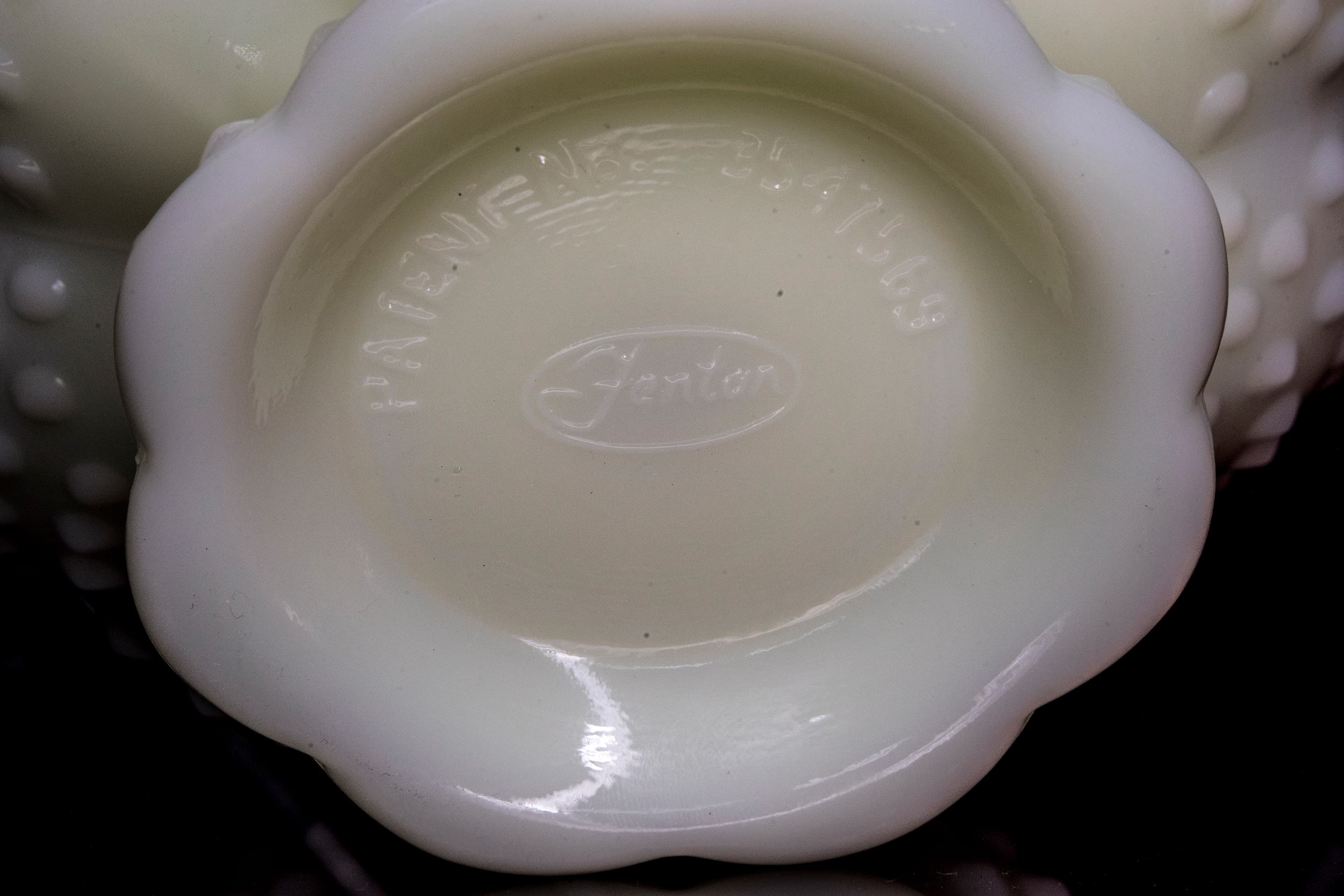
One of the other things that I enjoy doing when I go to remote places like this is look for antique shops. There are always interesting items that had been passed down through the generations. The place I found (and I don't remember the name unfortunately) had a wonderful trough of antiques. However, I decided that since I had found some uranium and depression glass in the remnants of a bonfire I impulse purchased some that was for sale at this antique shop. Unfortunately, while the shop owner didn't know that they had any uranium glass, I didn't get the killer deal I was expecting. Still, it beats having to risk purchases from eBay and the postal service damaging the fragile glass! Interestingly the candelabra is made by Fenton and has the patent no 3547569. Without looking it up I'm going to guess that it's a design patent!

Corundum var. Ruby
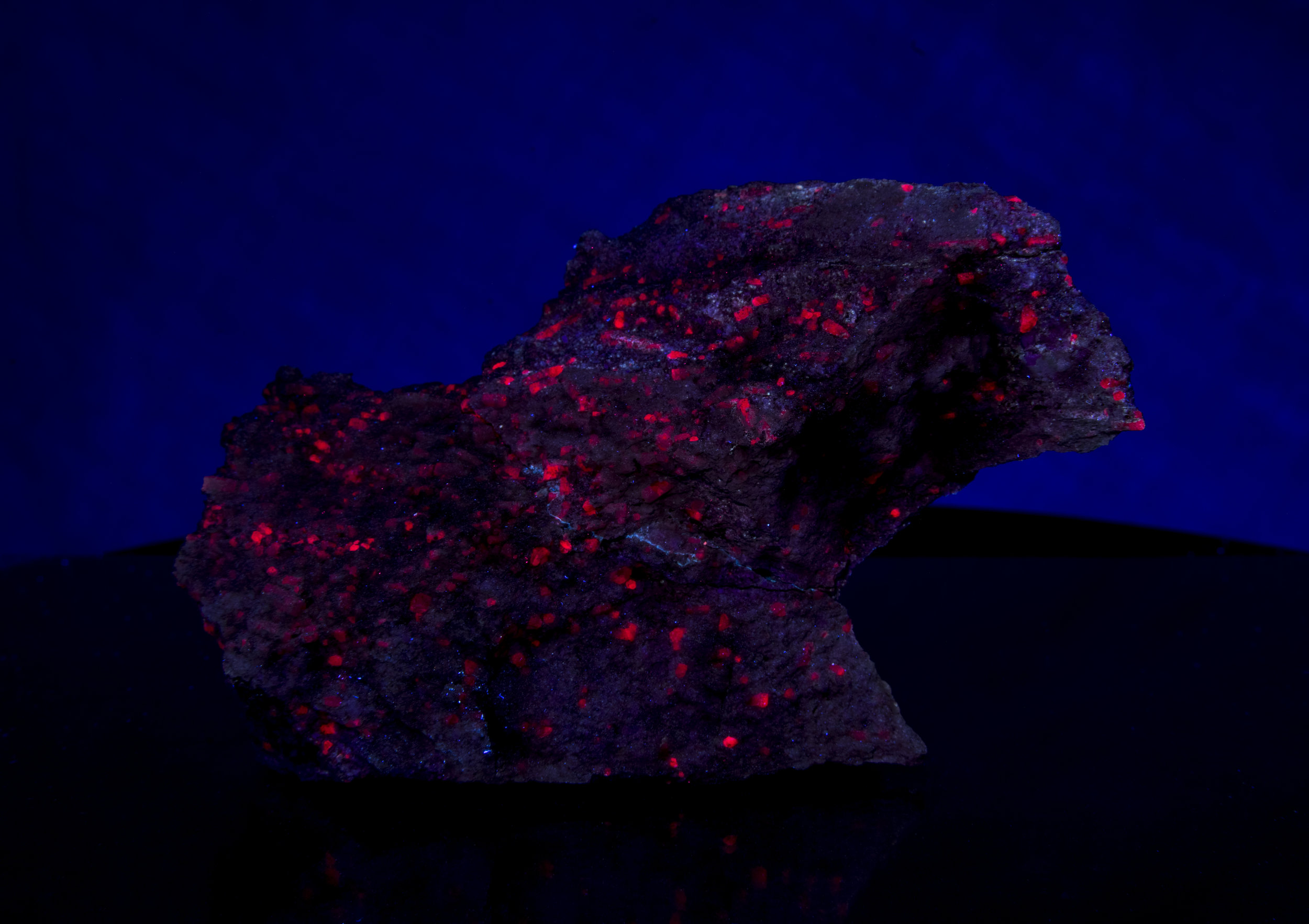
A very rich piece of Cascade Canyon ruby. I collected this the second time I went there. I normally wouldn't photograph a specimen before I felt it was prepared. However, the fluorescent photos are representative enough and show just how much ruby is in this piece. Still on my list of to-dos for this specimen are to media blast it so that the rubies are fully exposed and hence their full fluorescent response can be seen. It's very low on my to-do list though. Specimen has been repaired.
Locale: Cascade Canyon, San Gabriel Mts, San Bernardino Co., California
Dimensions: 5.7 x 2.7 x 3.5 in | 145 x 70 x 90 mm
Weight: 1lb 1.7oz | 503g
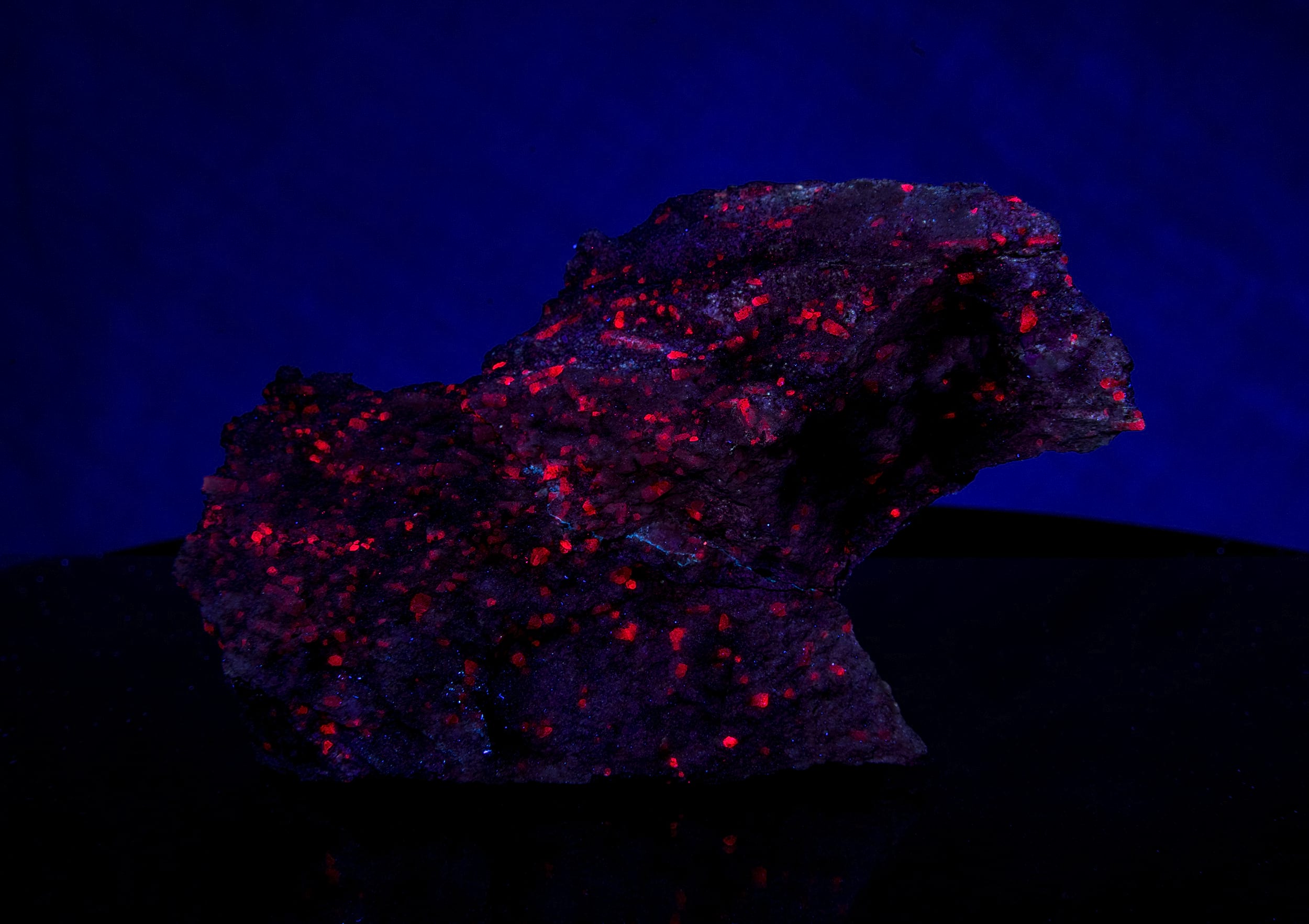
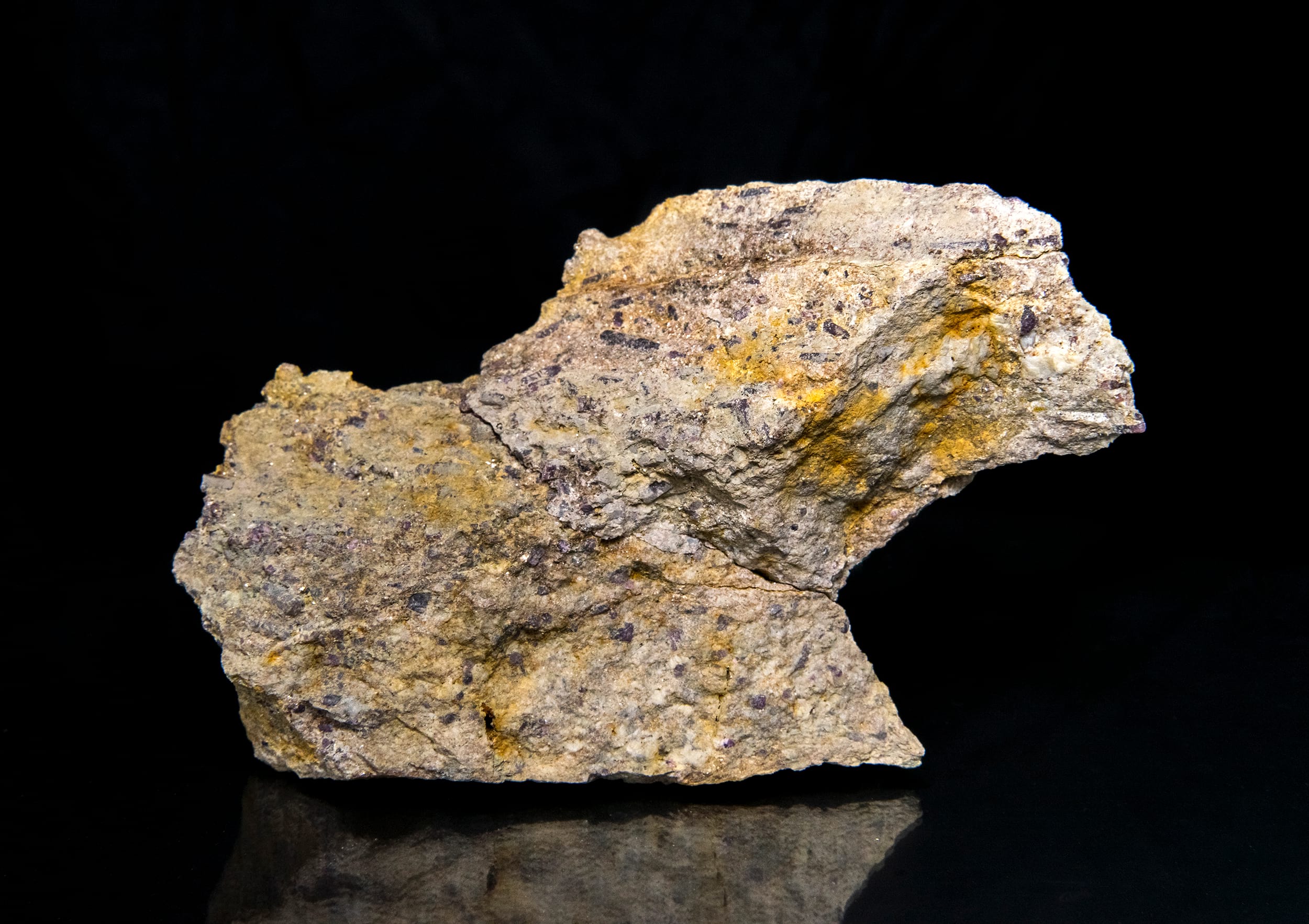

Scheelite and Hyalite
Collected by myself in December 2016. This is a wonderfully bright specimen of fluorescent white scheelite and green hyalite. This was somewhat of an exploratory find as I went outside the bounds of where collectors normally find their 3-5 color mineral specimens. Along the road to the mine there are various discard piles of waste rock from the mining process. Interestingly this material is dumped for the more pure scheelite that can be discerned by a fluorescent blue coloring. As there becomes more molybdenum in the scheelite it turns this whitish color eventually becoming yellow by replacing the tungsten and turning into powellite.
Locale: Princess Pat Mine, Adelanto, CA
Weight: 198g
Dimensions: 96 x 46 x 65 mm
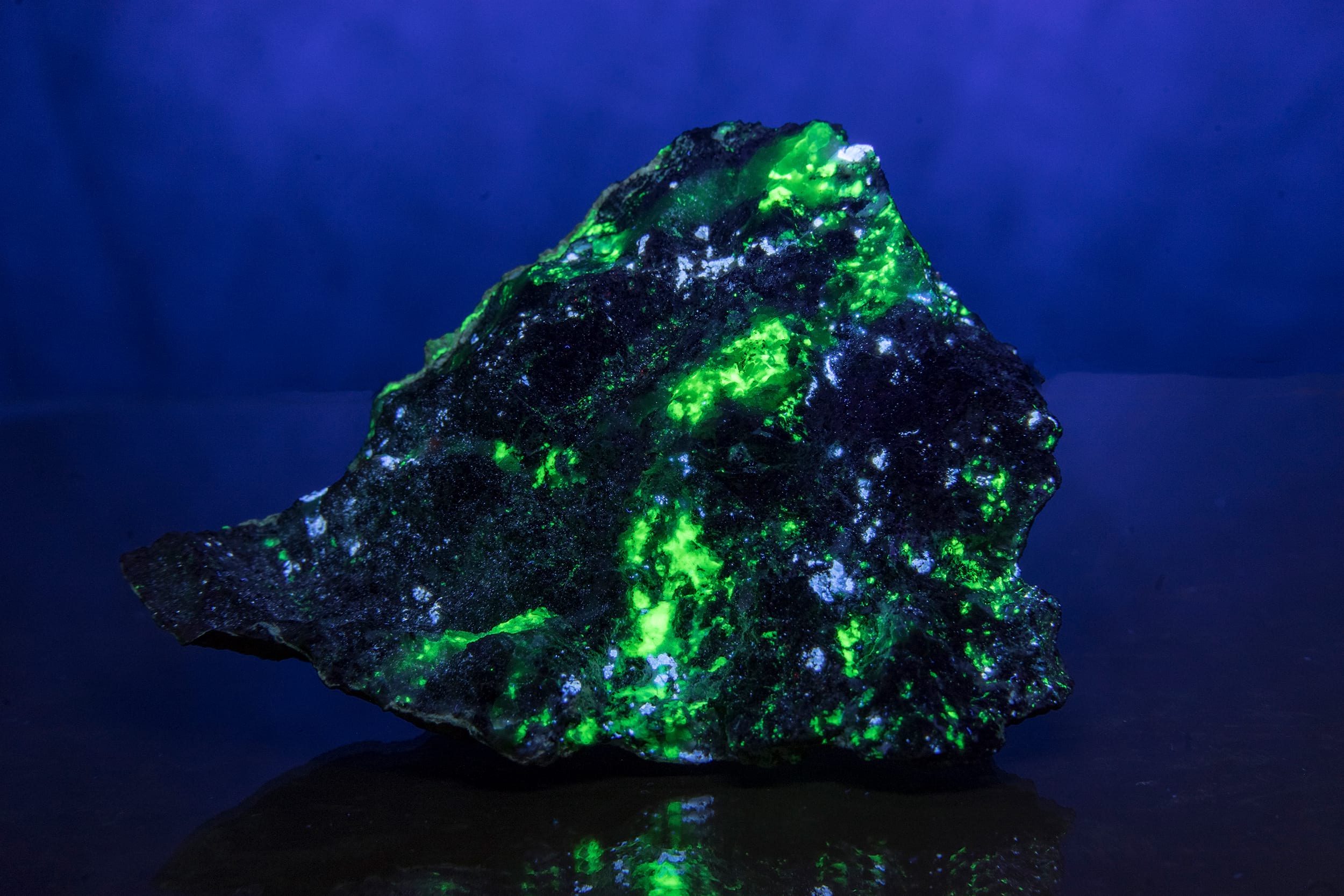
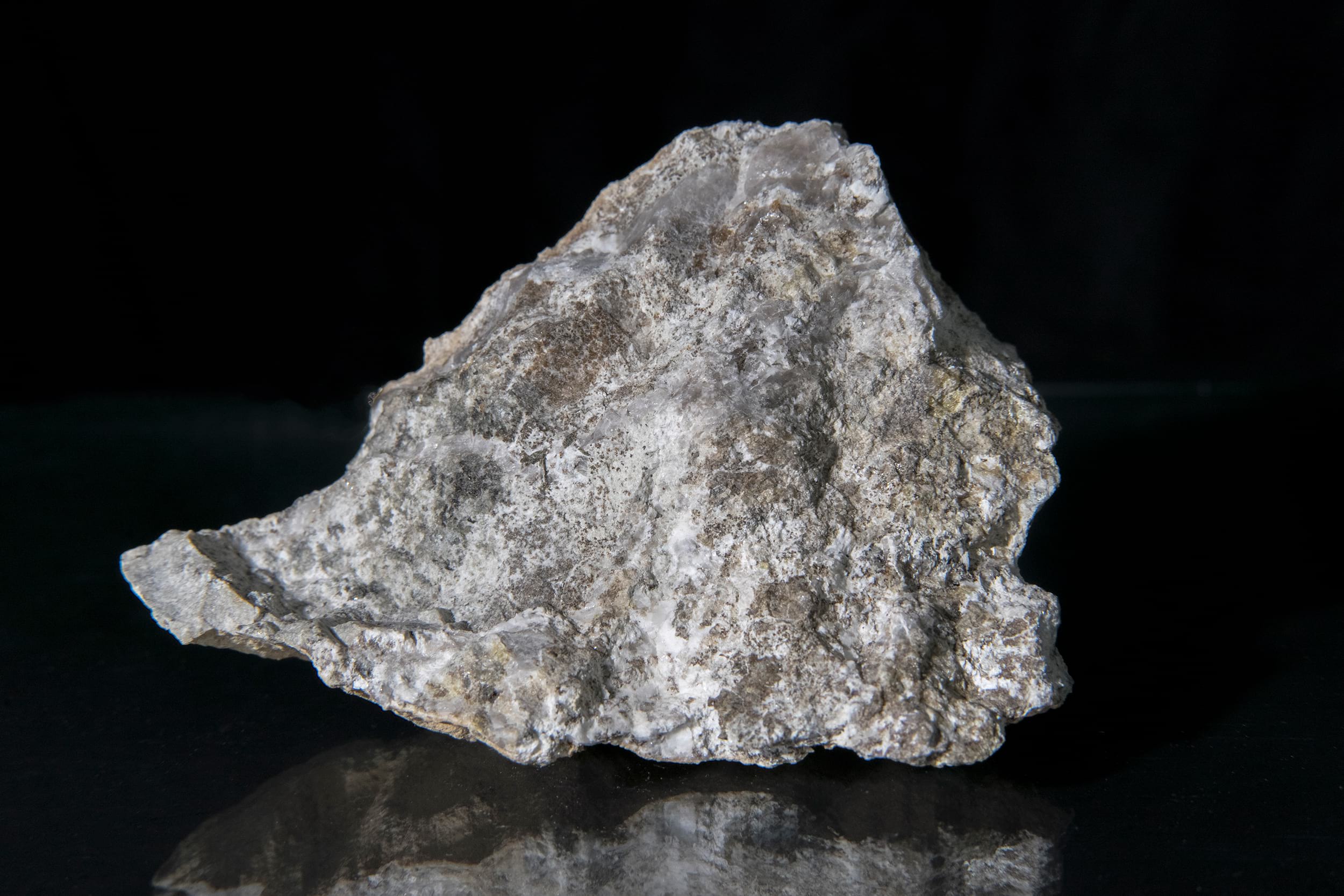

Diopside, Dolomite, and Calcite
Diopside (fl blue), dolomite (fl yellow), and calcite (fl red) from the Red Raven Mine. This is one of my best pieces from there and was personally collected by myself in December 2016. This was quite an exhilarating trip starting off with some collection of willemite from the Princess Pat Mine with Dave Stuck, myself, and another new SoCal FMS member. Unfortunately FMS President Dave Stuck had gotten a flat tire during his time at the Princess Pat and had to get his car back the next day! As a result he did not join me at the Red Raven for the hour and a half I spent swinging at a boulder in order to get a piece to break off. Then it was a matter of getting as many fresh faces as possible to get this magnificent piece. Absolutely worth the effort and would do again! All of these minerals are best guesses by local FMS club members and have not been properly identified. Fluorescence activated with 253.7nm SW. Little to no response under LW.
Locale: Red Raven Mine, Adelanto, CA
Weight: 269g
Dimensions: 95 x 56 x 52 mm
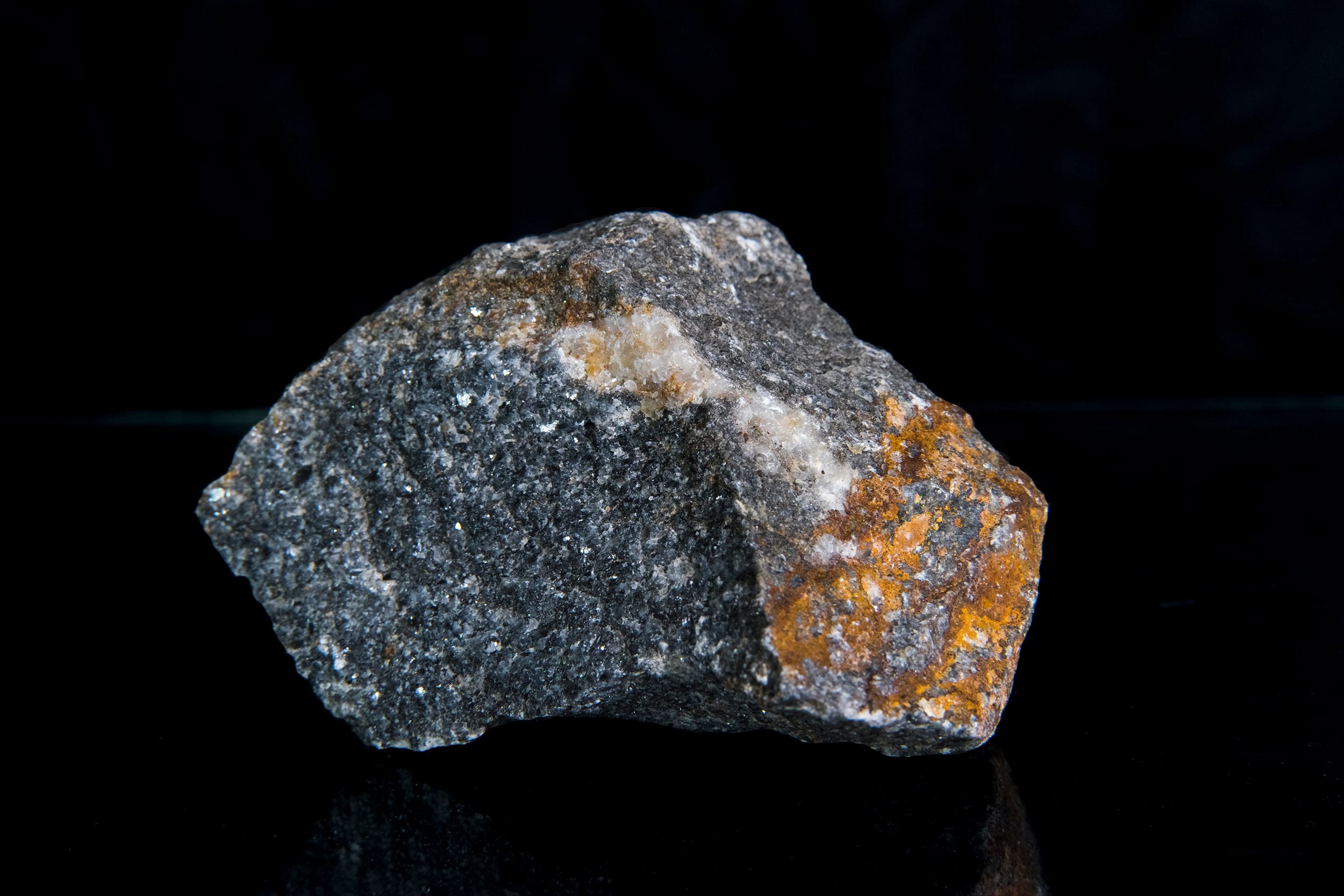
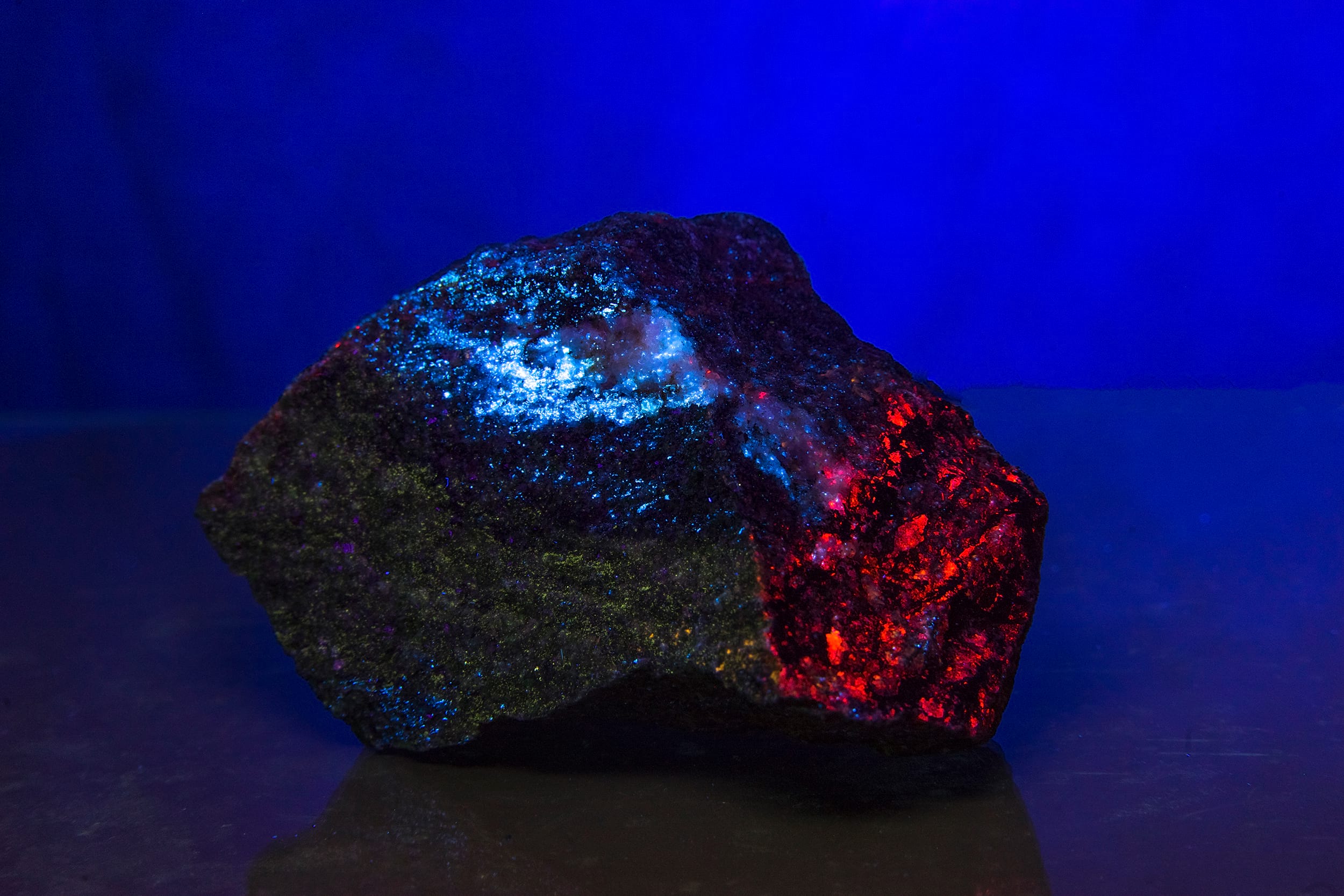
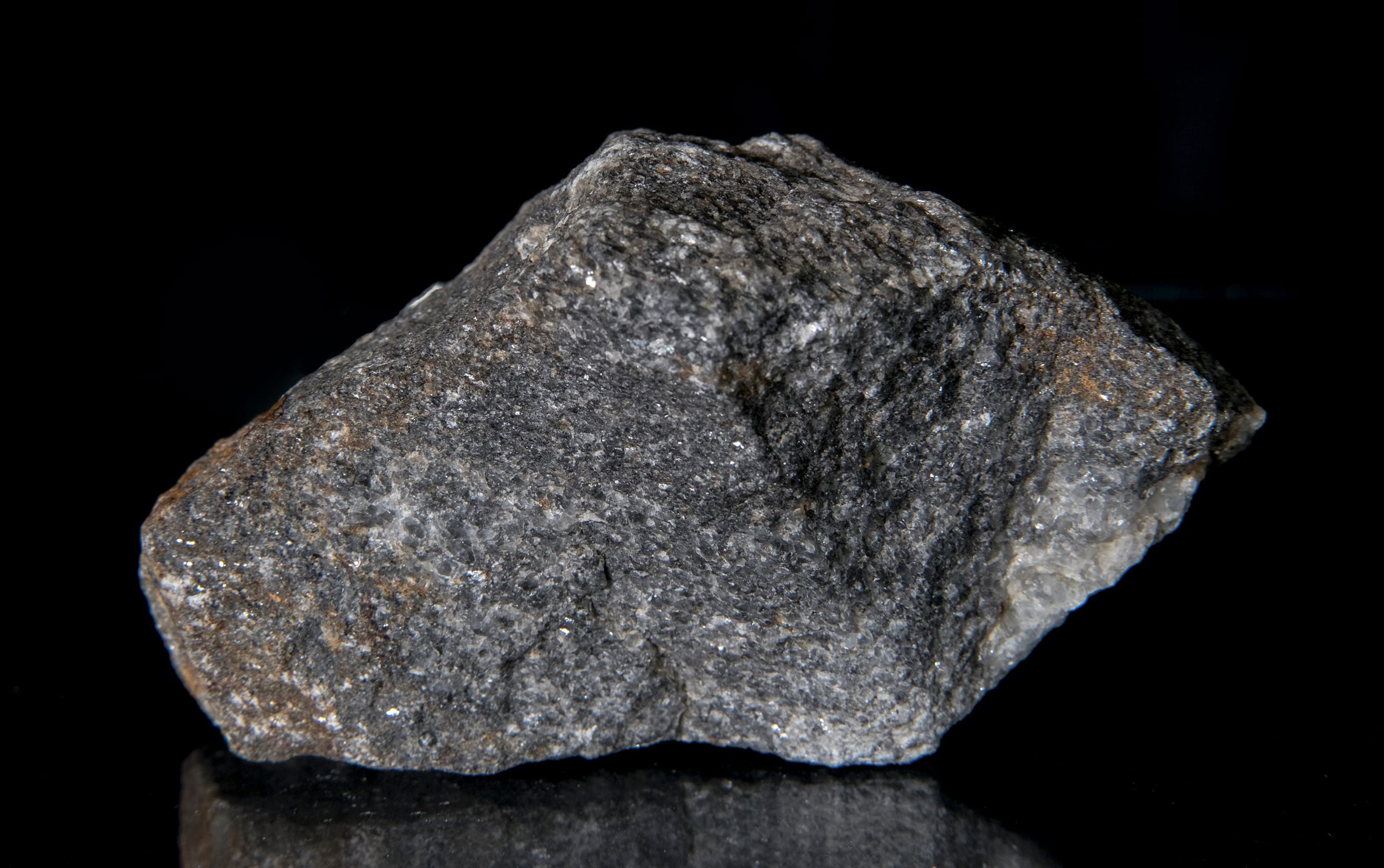
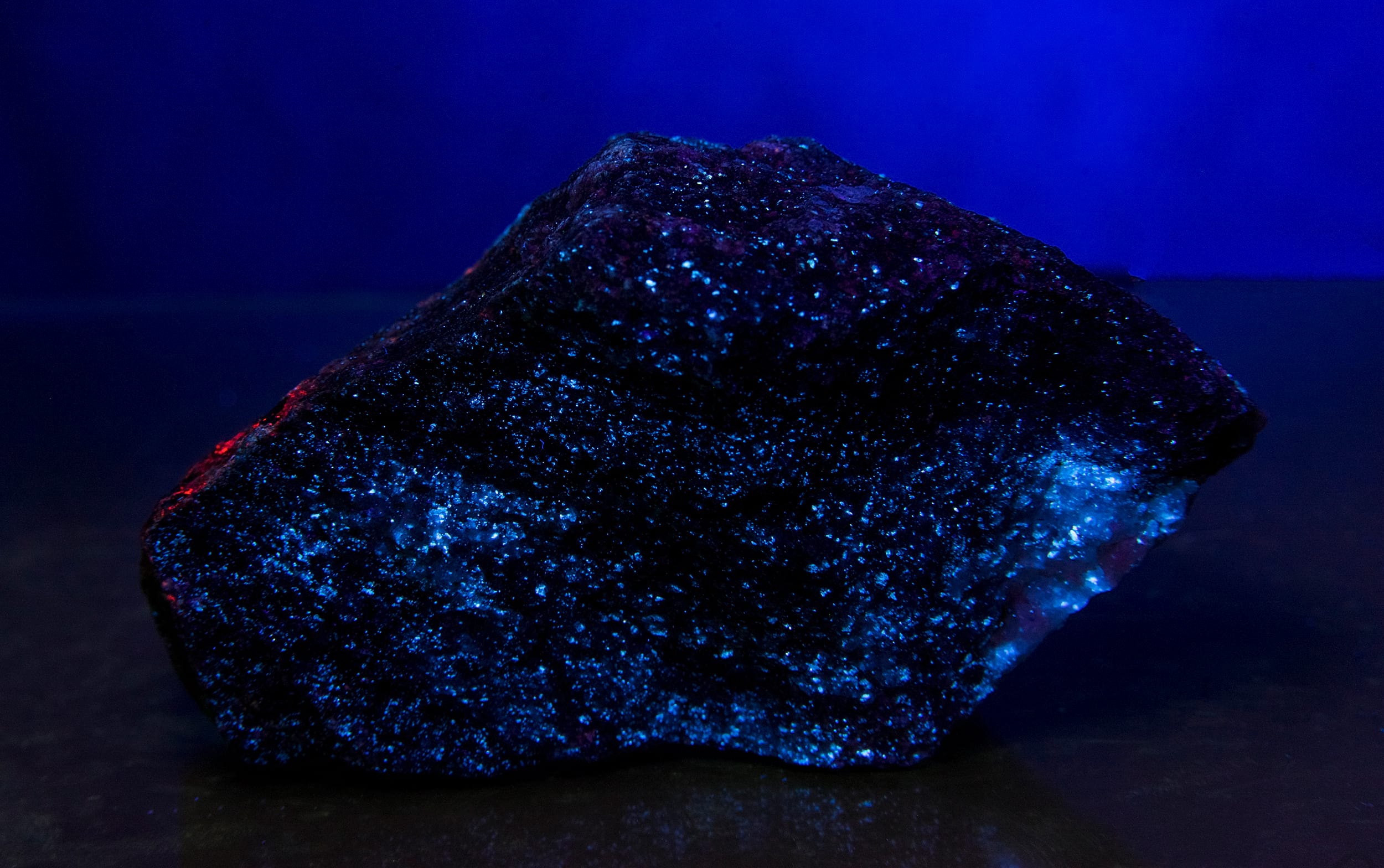


California State Gem Mine Trip May 2016
What an experience this trip was. I left straight after work with all the gear I'd need packed into the car. Driving up to this mine in itself was 287 miles taking 5 hours 42 minutes to get there. While it was a long drive, it was beautiful. I still enjoy looking at the landscapes on long drives, tasting the local flavor, and meeting new people. Unfortunately this only lasted a couple hours. About midway through the weather turned for the worse. There was heavy rain blocking visibility and a landslide had collapsed one of the paths on the way up. Thankfully modern GPS got me around that before I even knew it was a thing! I only found out about the landslide the next day when talking with some of the other hotel guests.
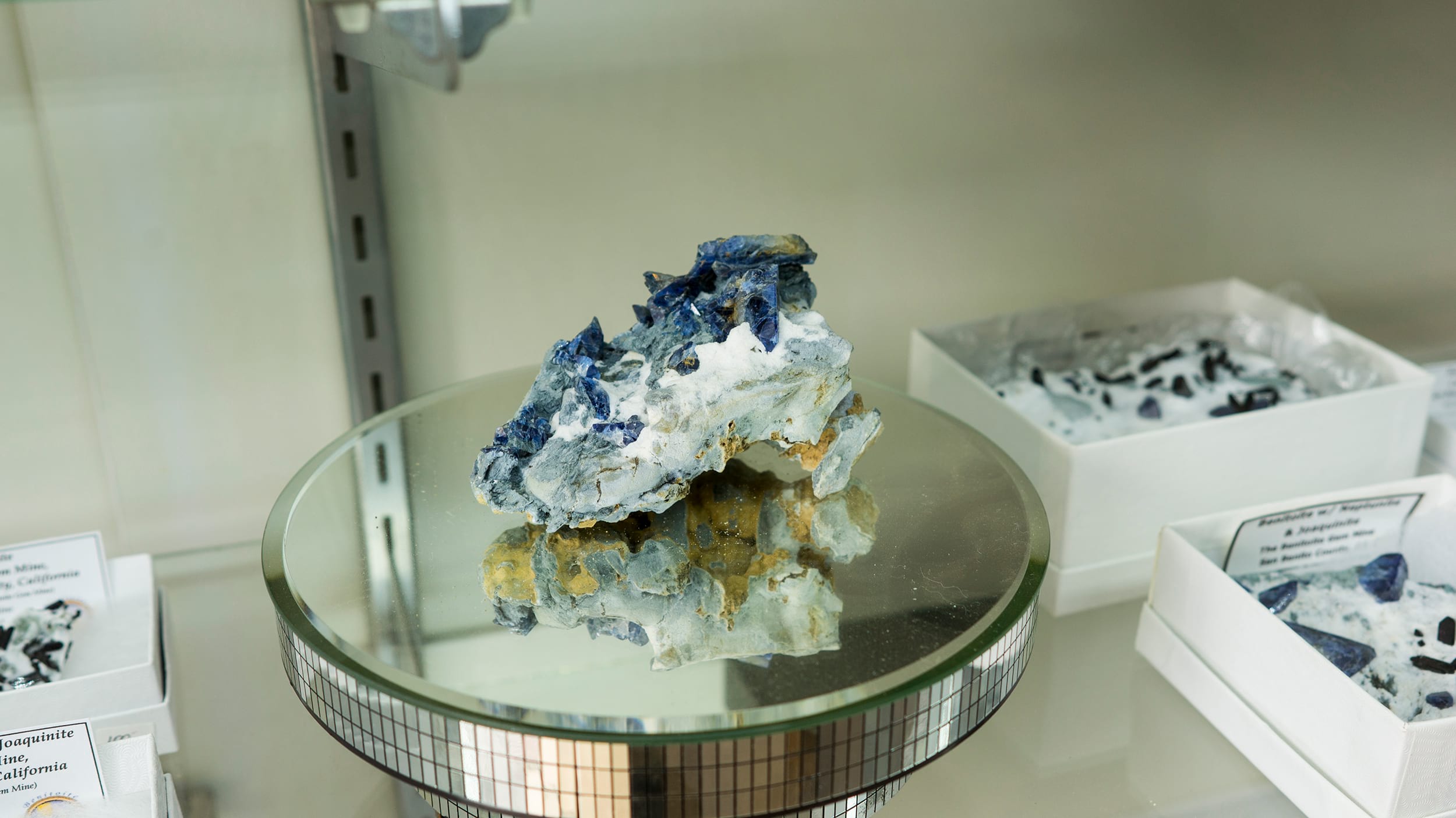
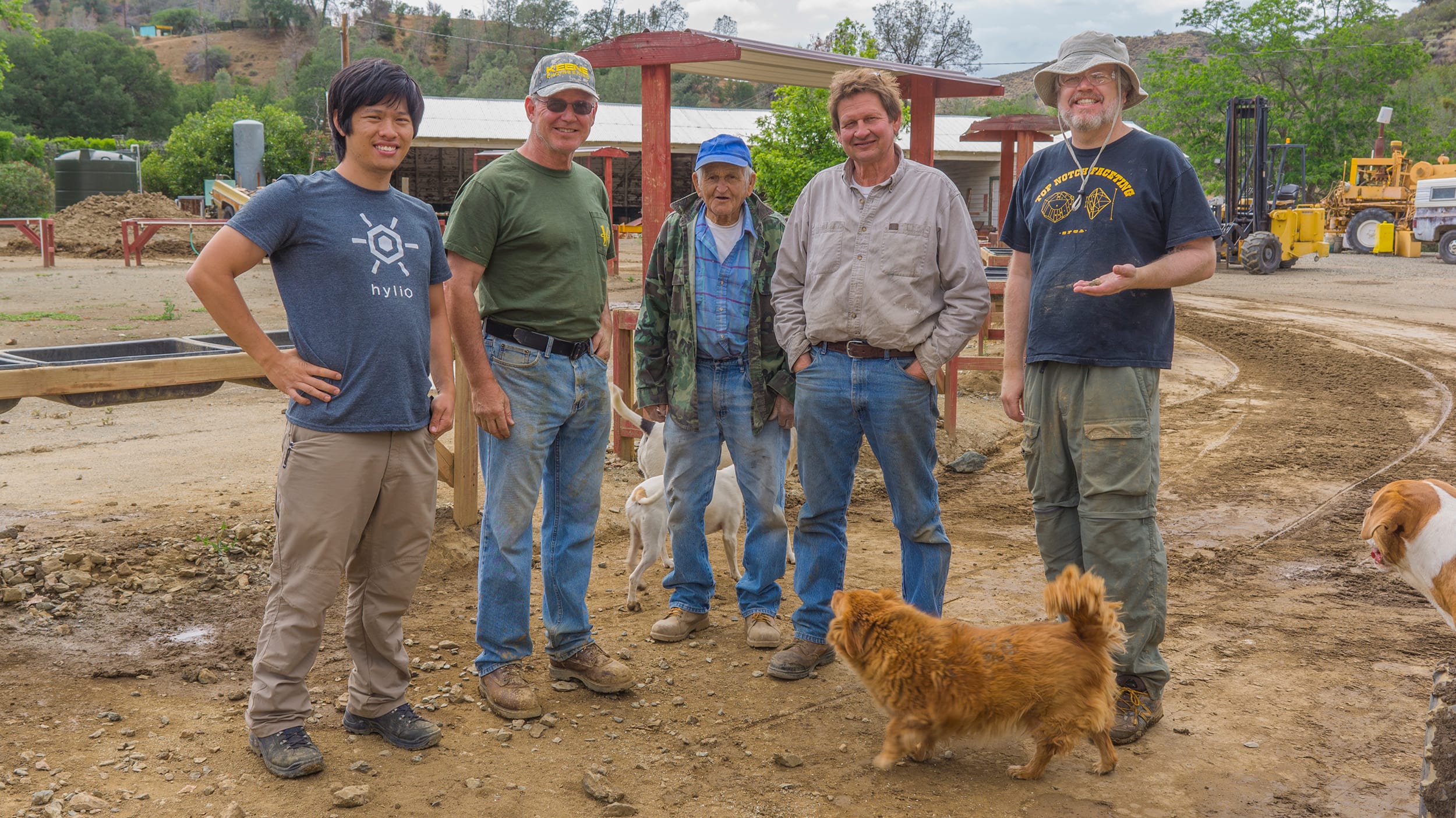
The next morning is when Dave Stuck, Marc Brown, and I met up at the California State Gem Mine. We were first taken to the shop where there were plenty of wonderful benitoites on display and for sale. They were WAY too pricy in my opinion and were well out of my price range. Compound this with the fact that I've seen better specimens sell for less on eBay and I left with nothing but pictures. I think Rick Kennedy still has some of the best benitoites I've seen ever. One picture that I forgot to take was of me fluorescing a large benitoite they had on display. It was beautifully red under my LW light.
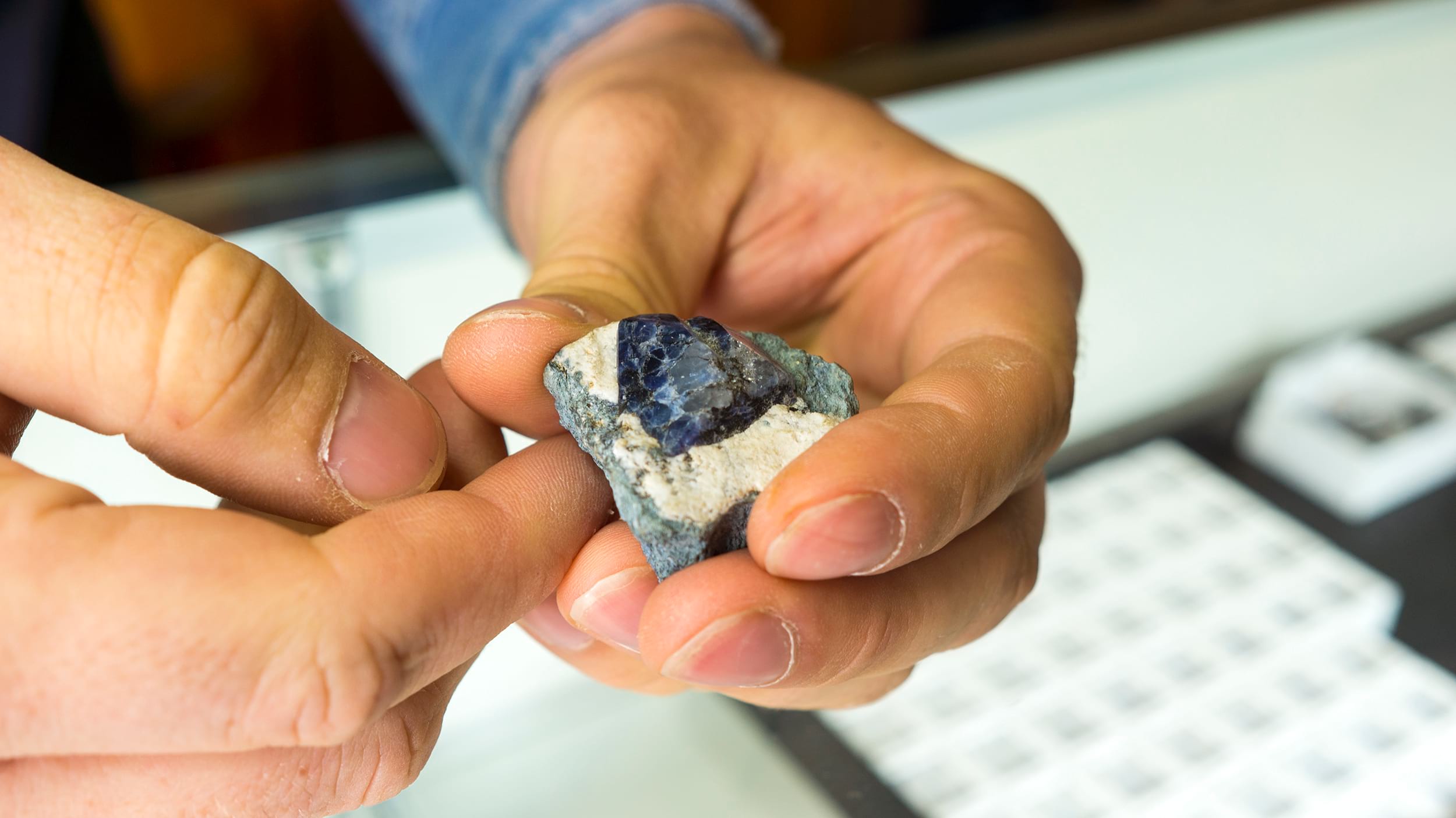
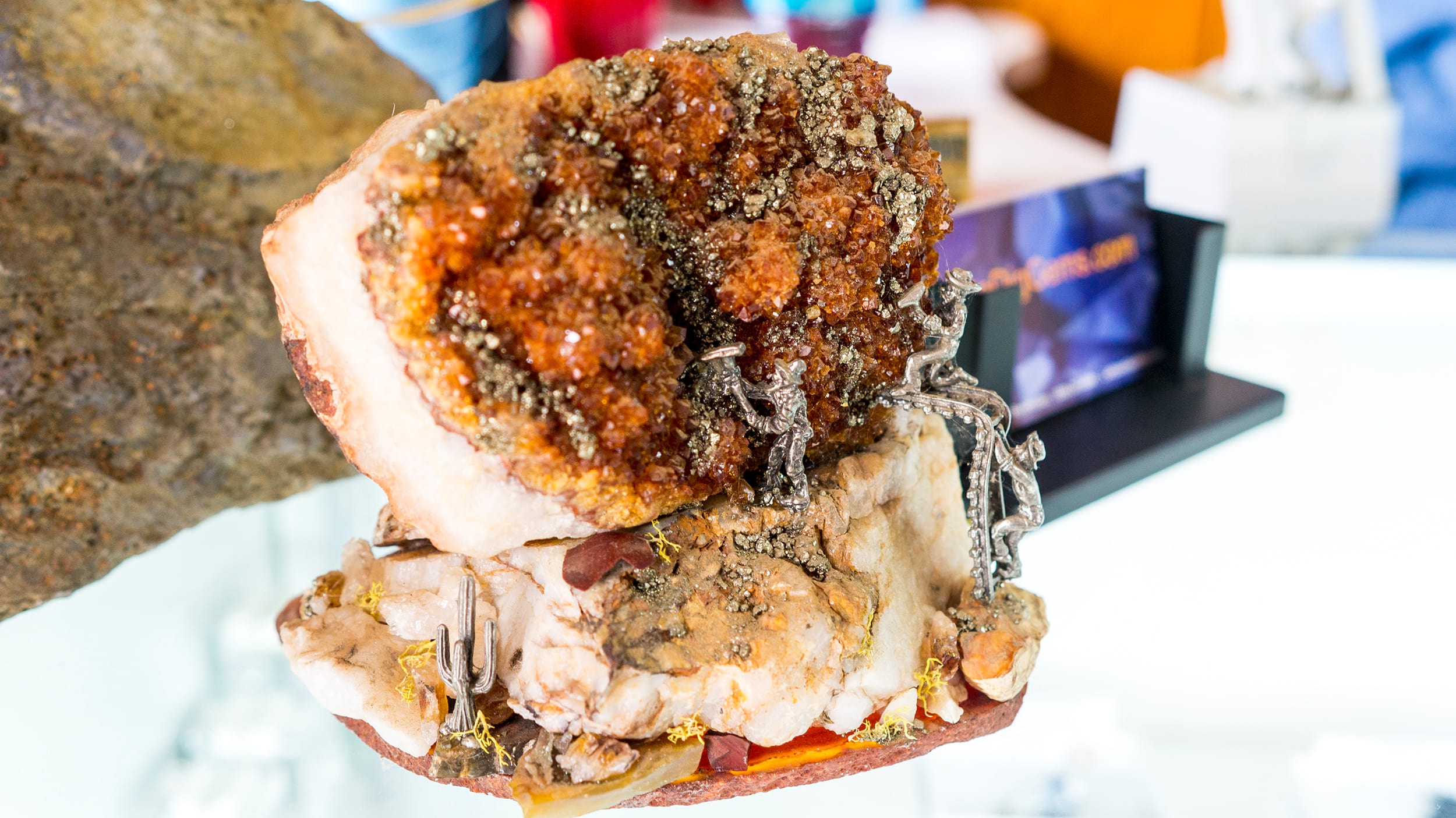
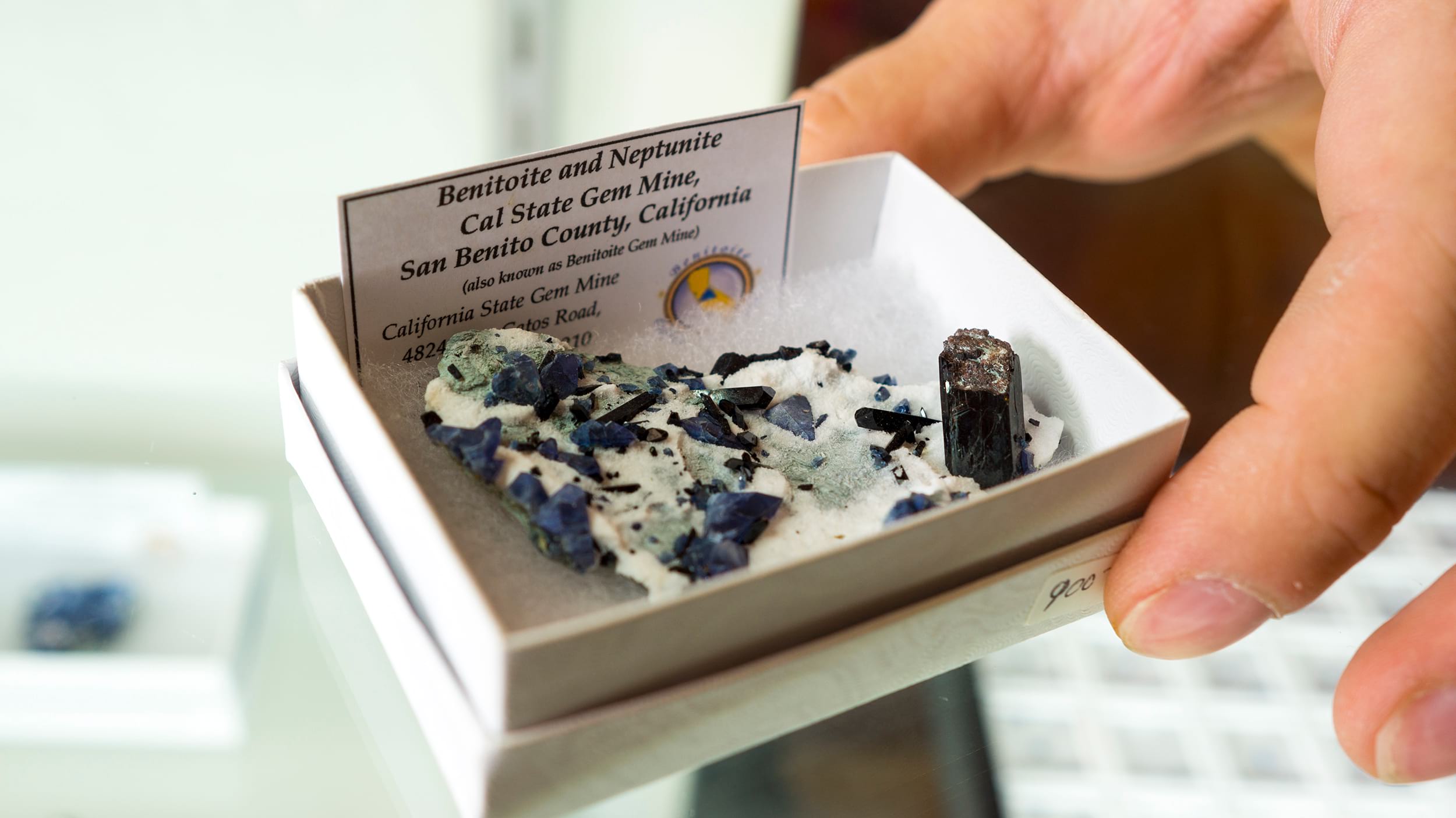
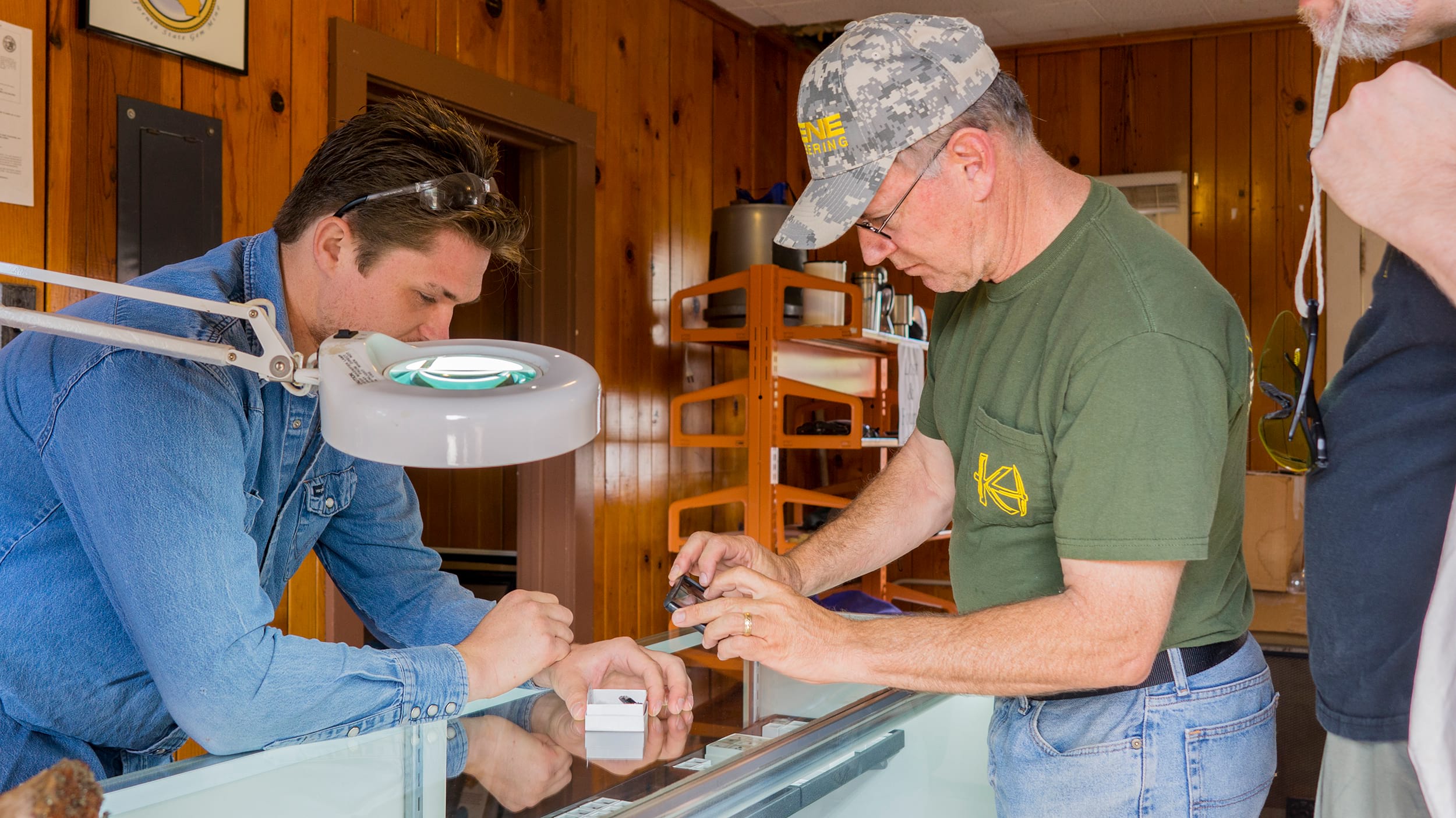
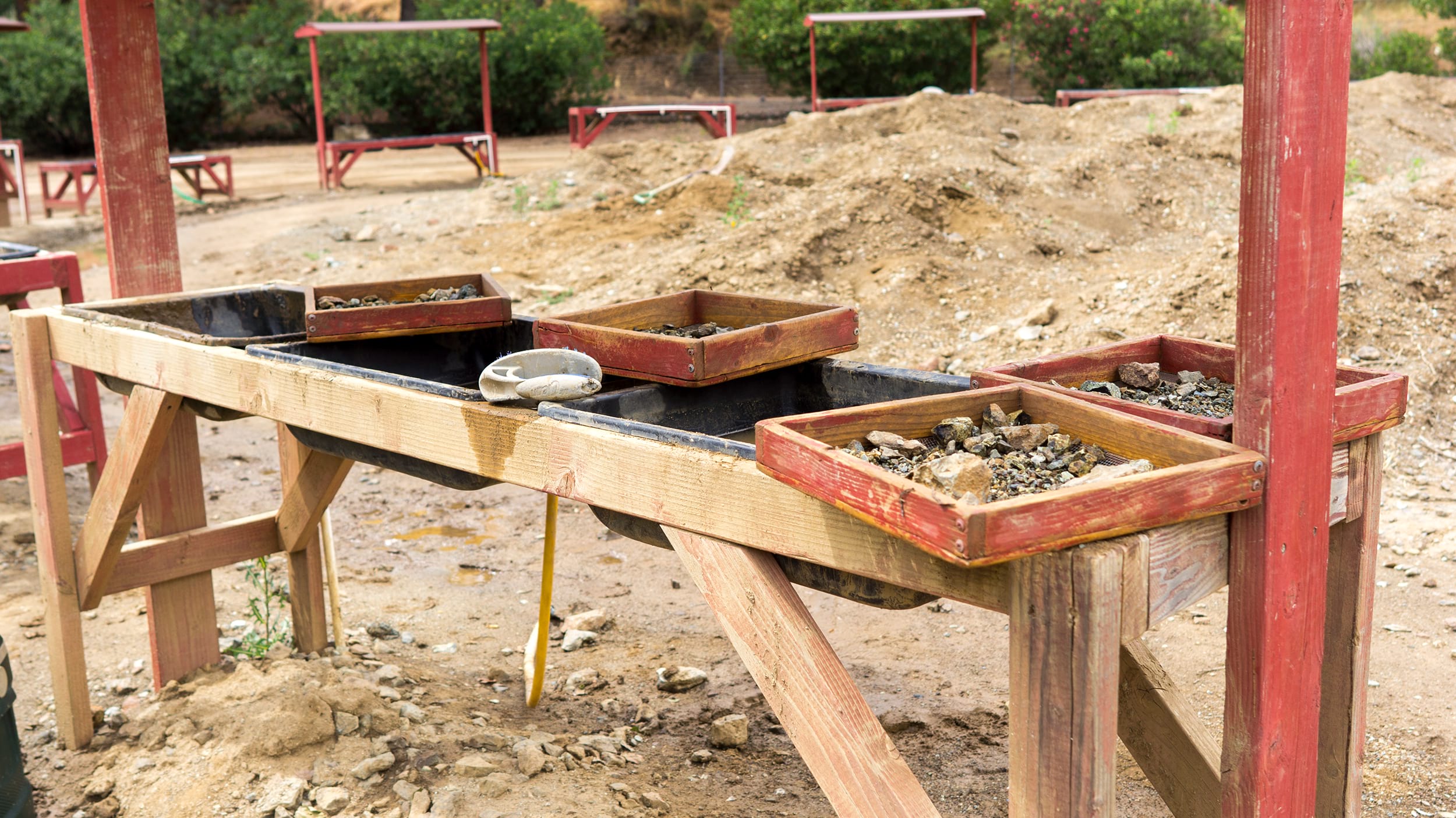
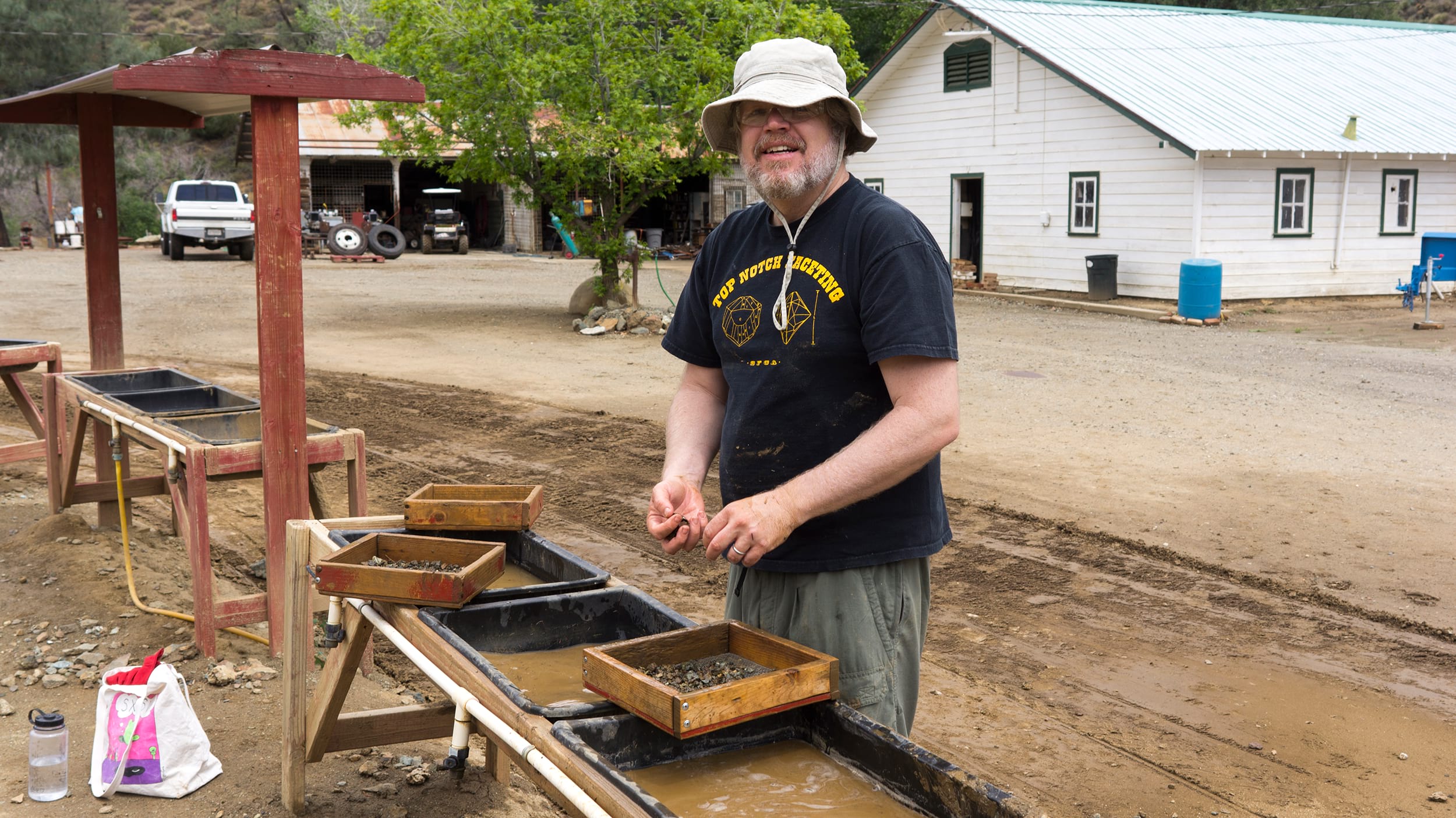
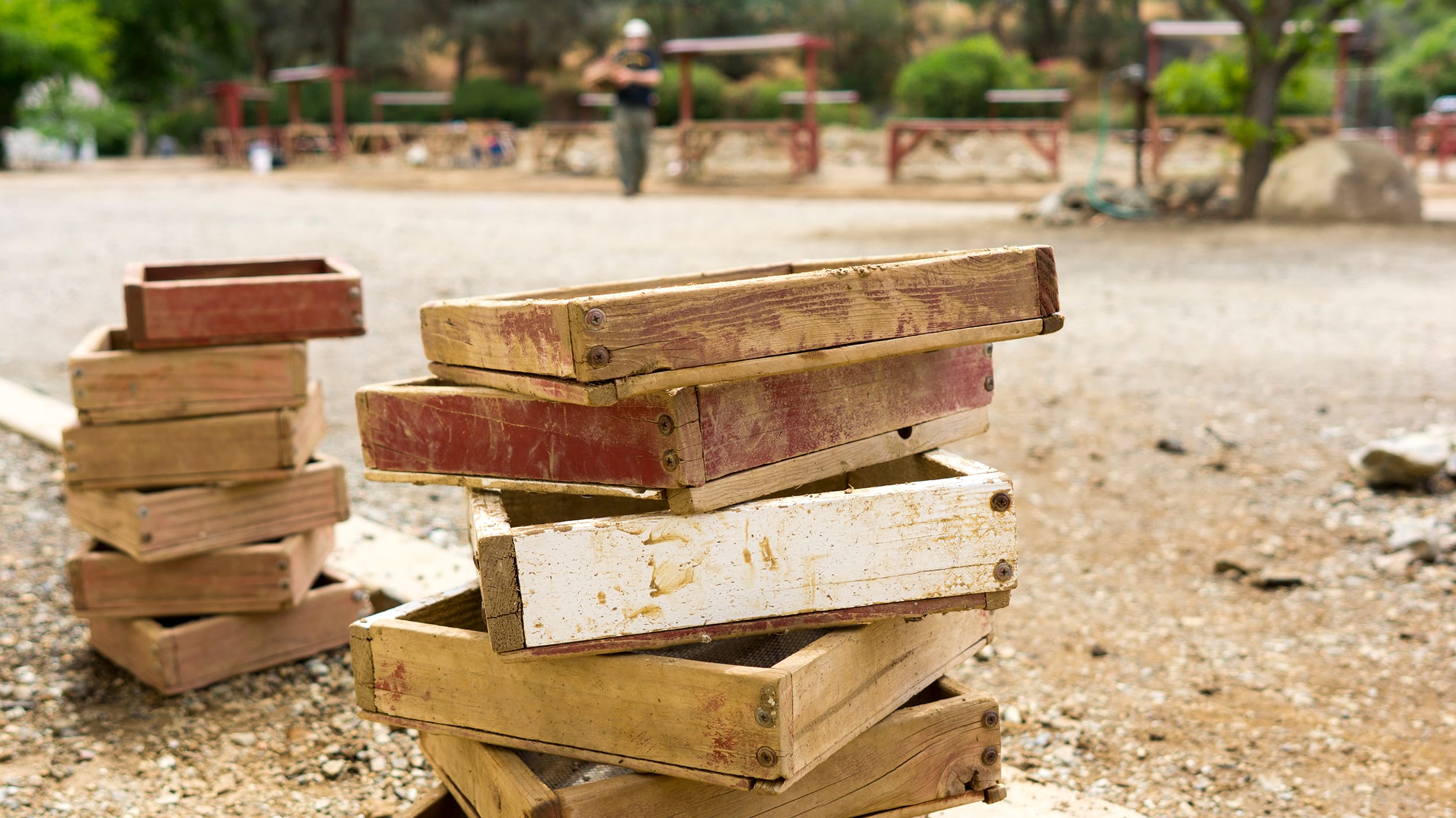
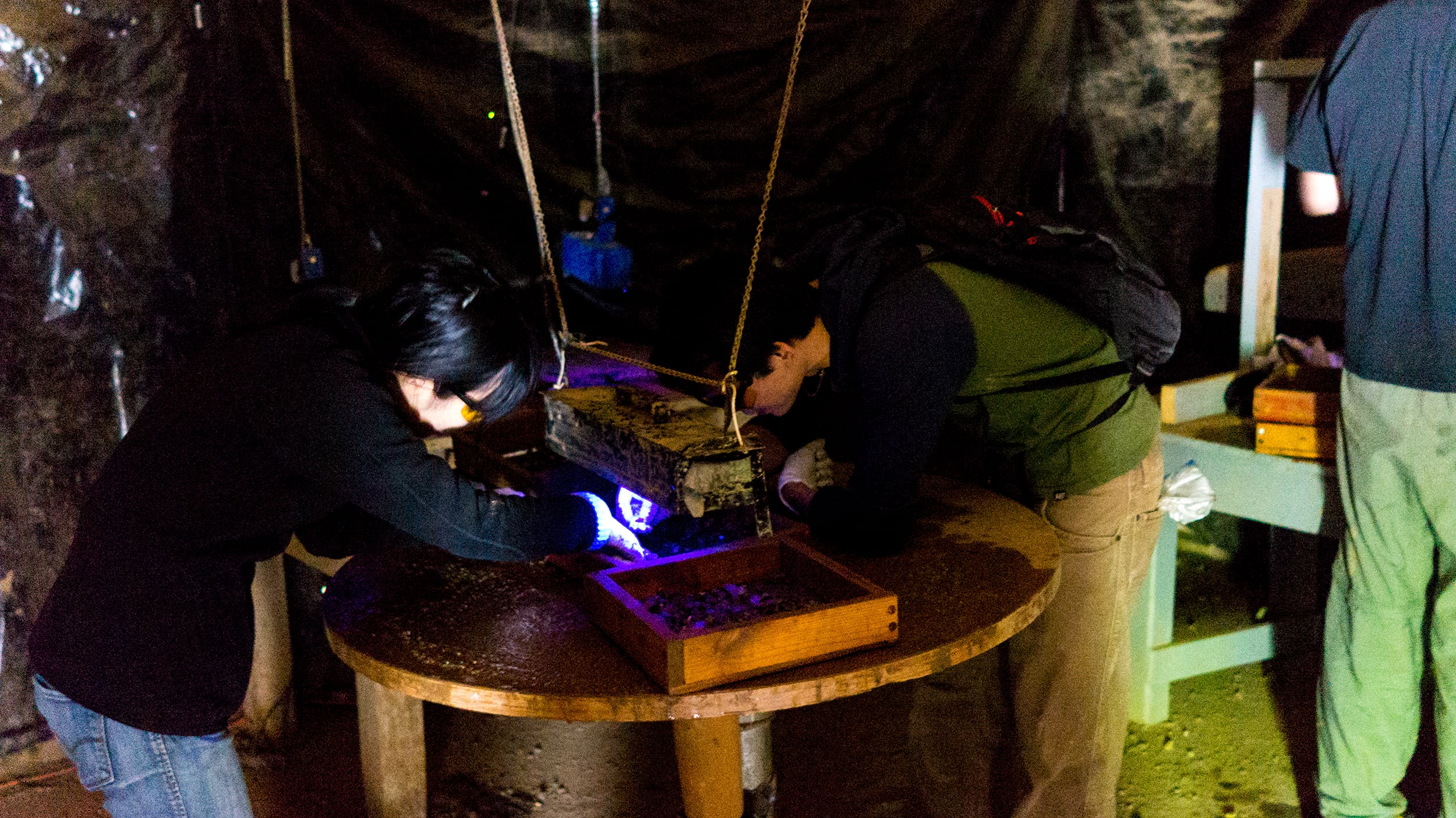
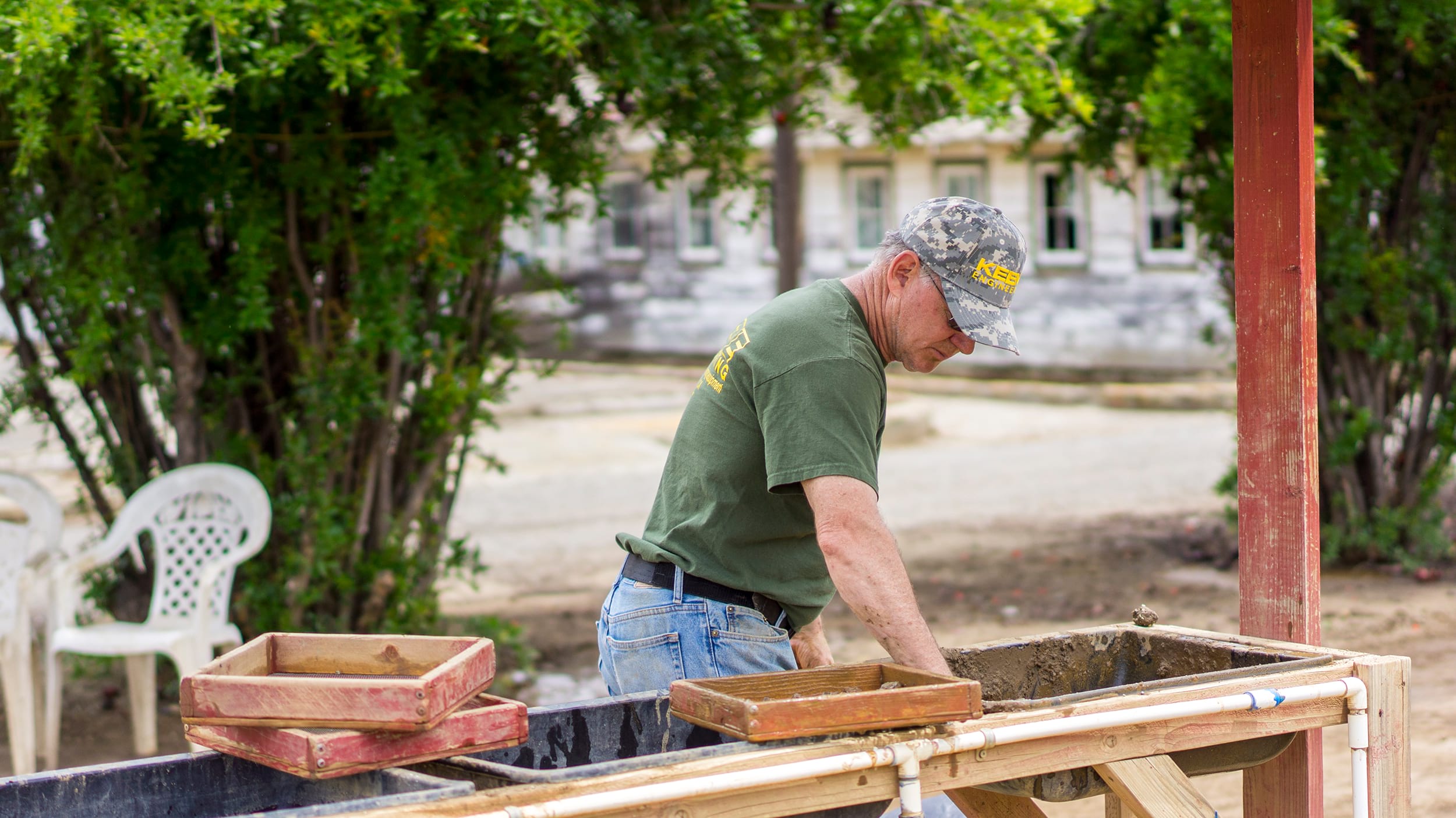
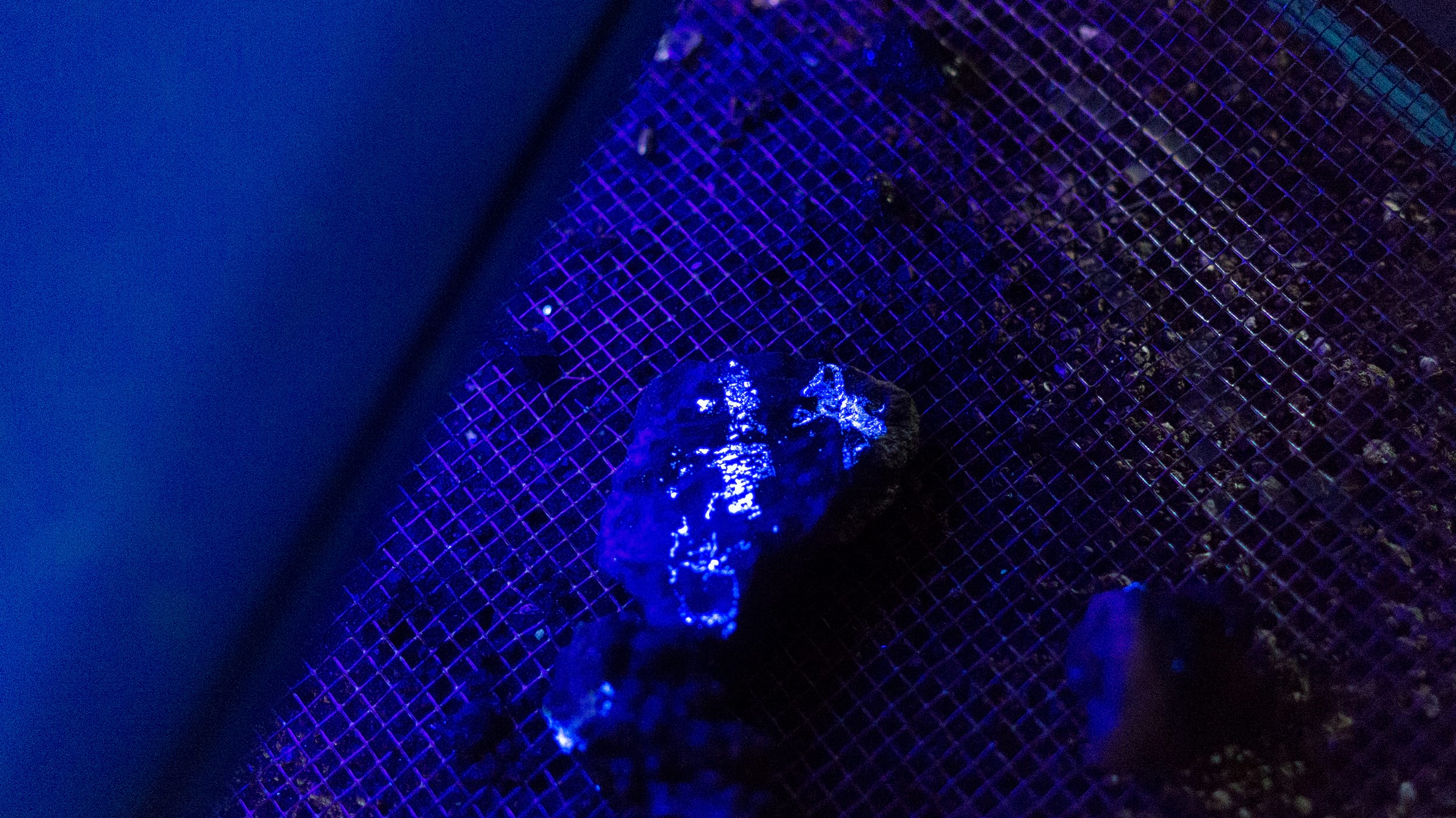
Afterwards we were shown how to collect the benitoites. It consisted of us scooping a pile of dirt from a large pile, sifting through it in troughs, and looking for reflections or checking for fluorescence in the dark room. We were shown how to find them in the daylight but by the end we were all just checking them under UV. Much quicker and didn't require a trained eye. Luckily there was only one other couple there so we got plenty of hands on time and plenty of material to ourselves. If I remember correctly their names were Yvonne and Raymond. They had a cute story as Yvonne wanted a benitoite ring but had a huge sticker shock when she priced out a single carat. Therefore she and Raymond decided to mine their own!

UV room shown in the back. White building

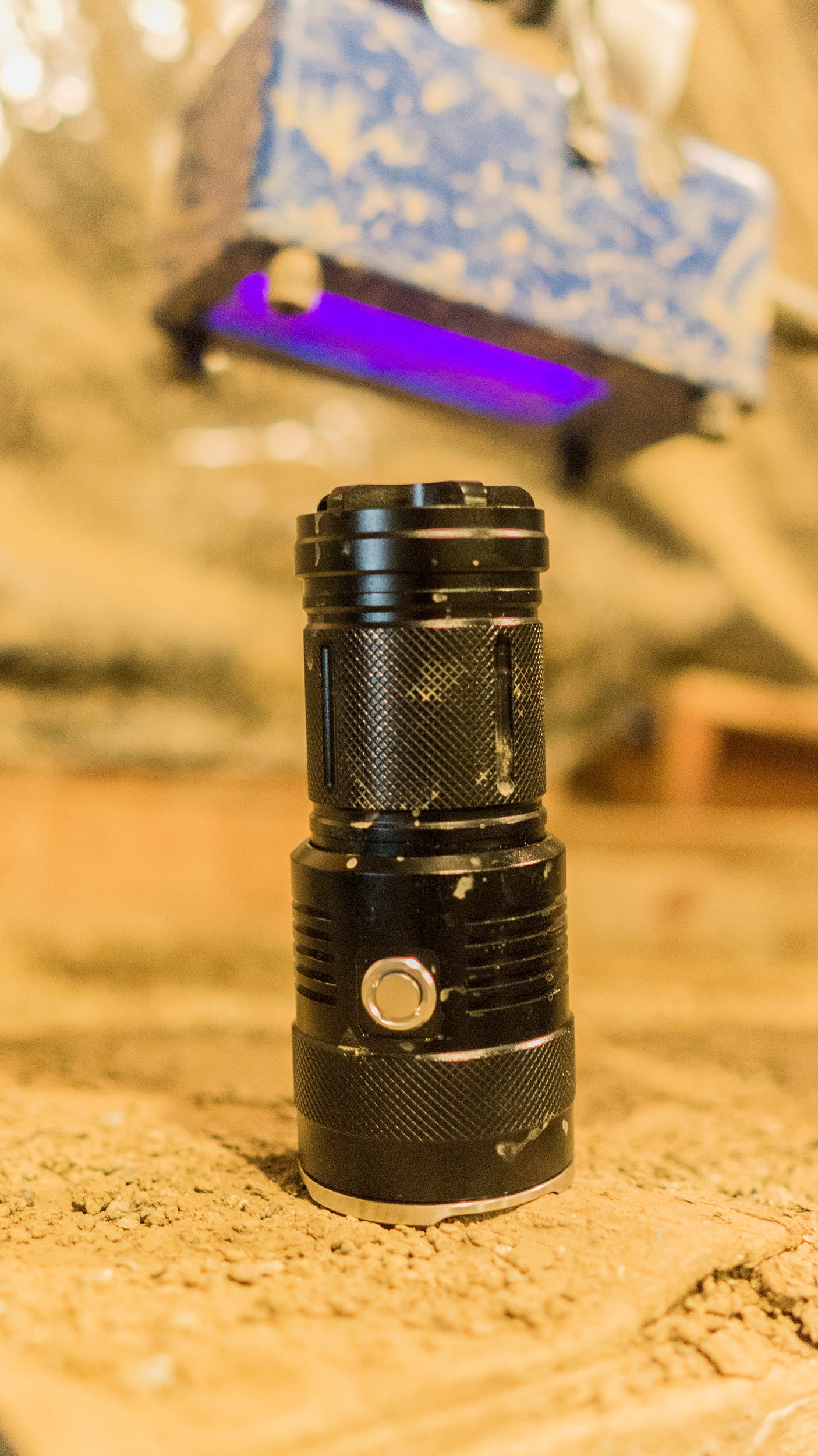
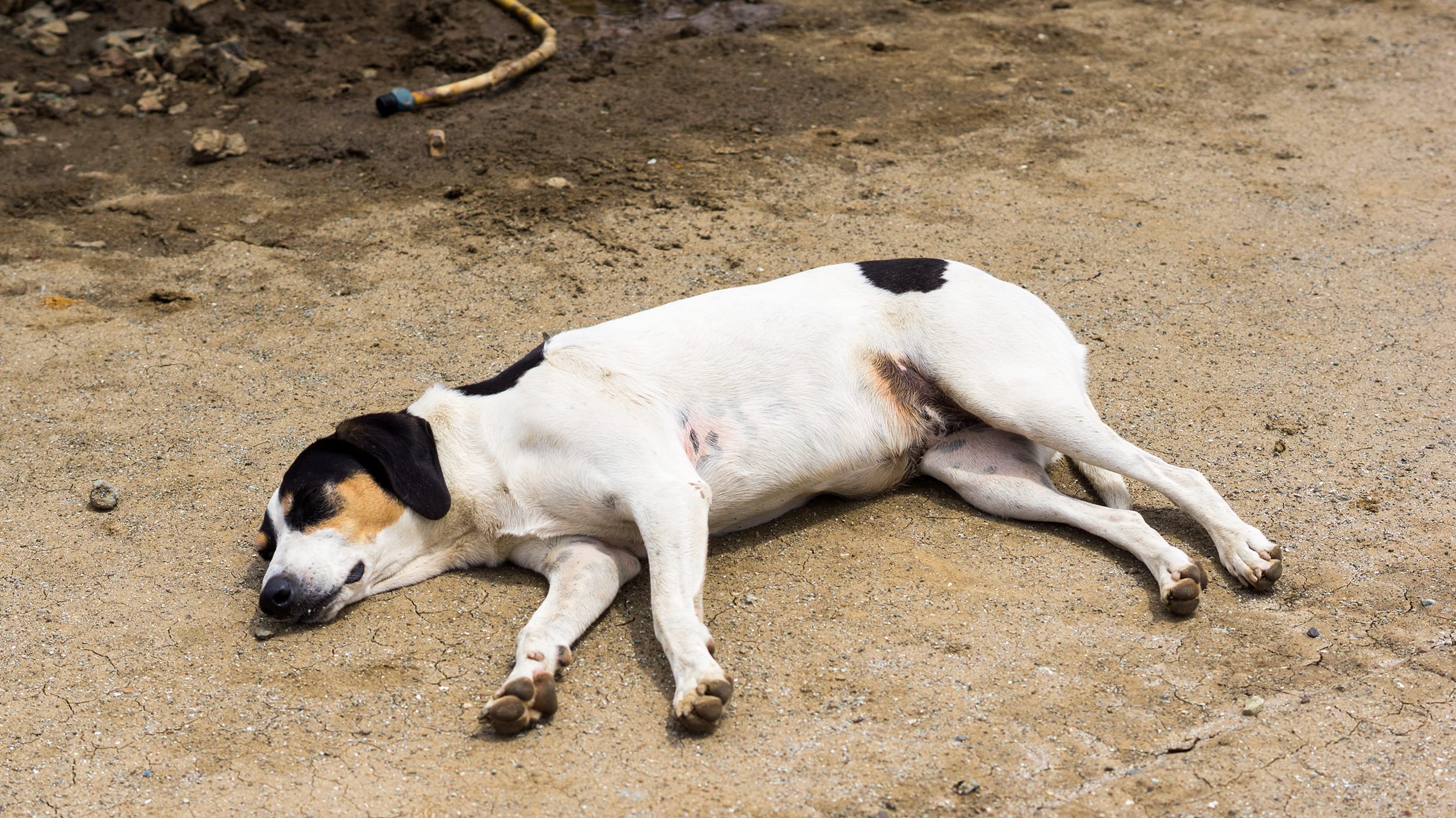
The benefit of being a fluorescent collector in this trip? We all had our own UV lights. It was much easier and quicker to use my own light to check for fluorescence underneath the tarp I brought than to walk all the way back to the room and use their dim lights. Side note: the owner's dogs had a ball sniffing and touching all the supplies I brought. For the first couple 30 minutes or so they were either looking at me, sniffing my things, or doing some combination of those when I wasn't looking.


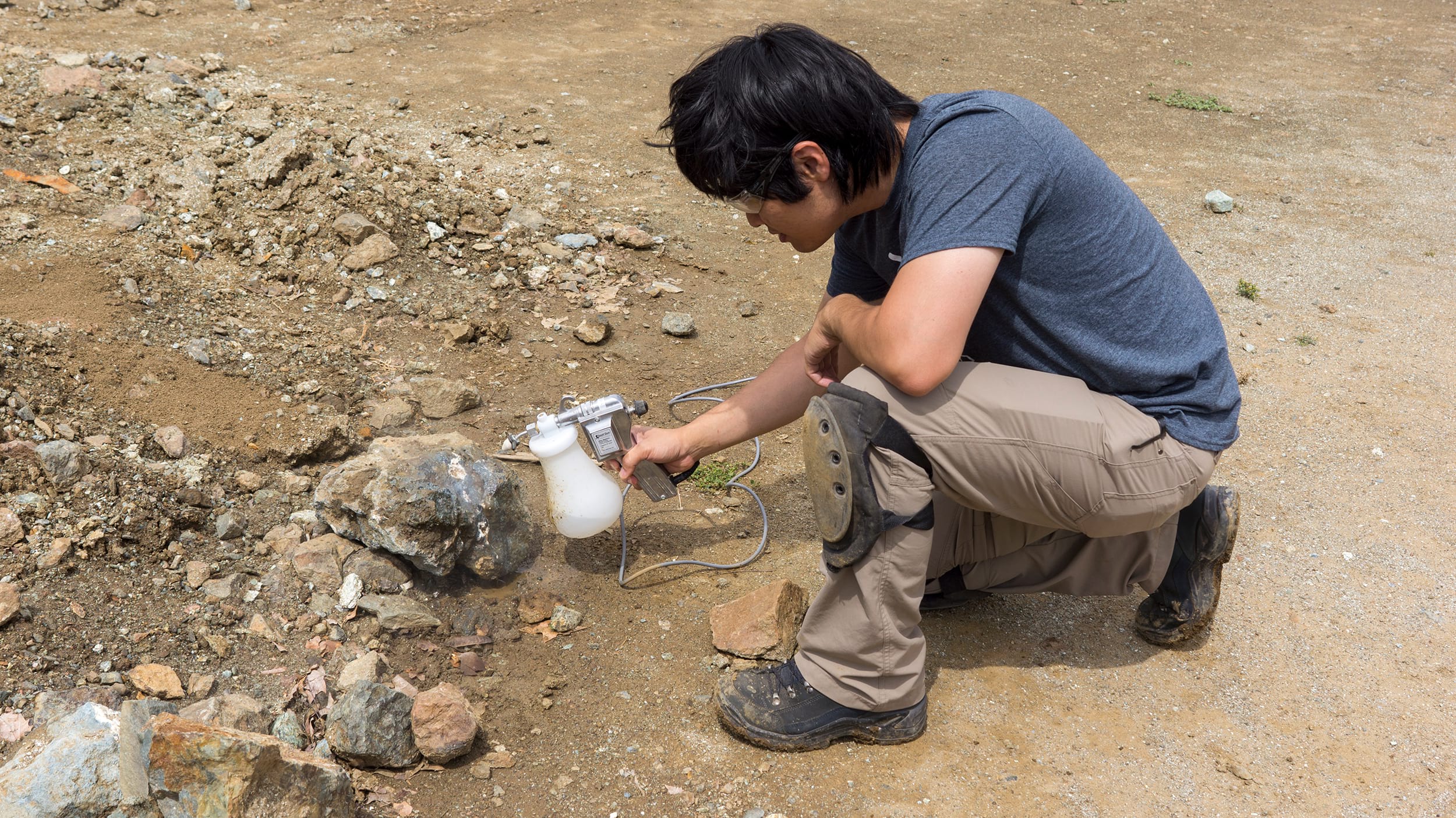
About an hour before our time was up I had the idea of just lamping the piles rather than sifting through everything. I found some of my best benitoites this way. It was much more efficient presumably because it had just rained revealing fresh material. Also I didn't have to waste time sifting.

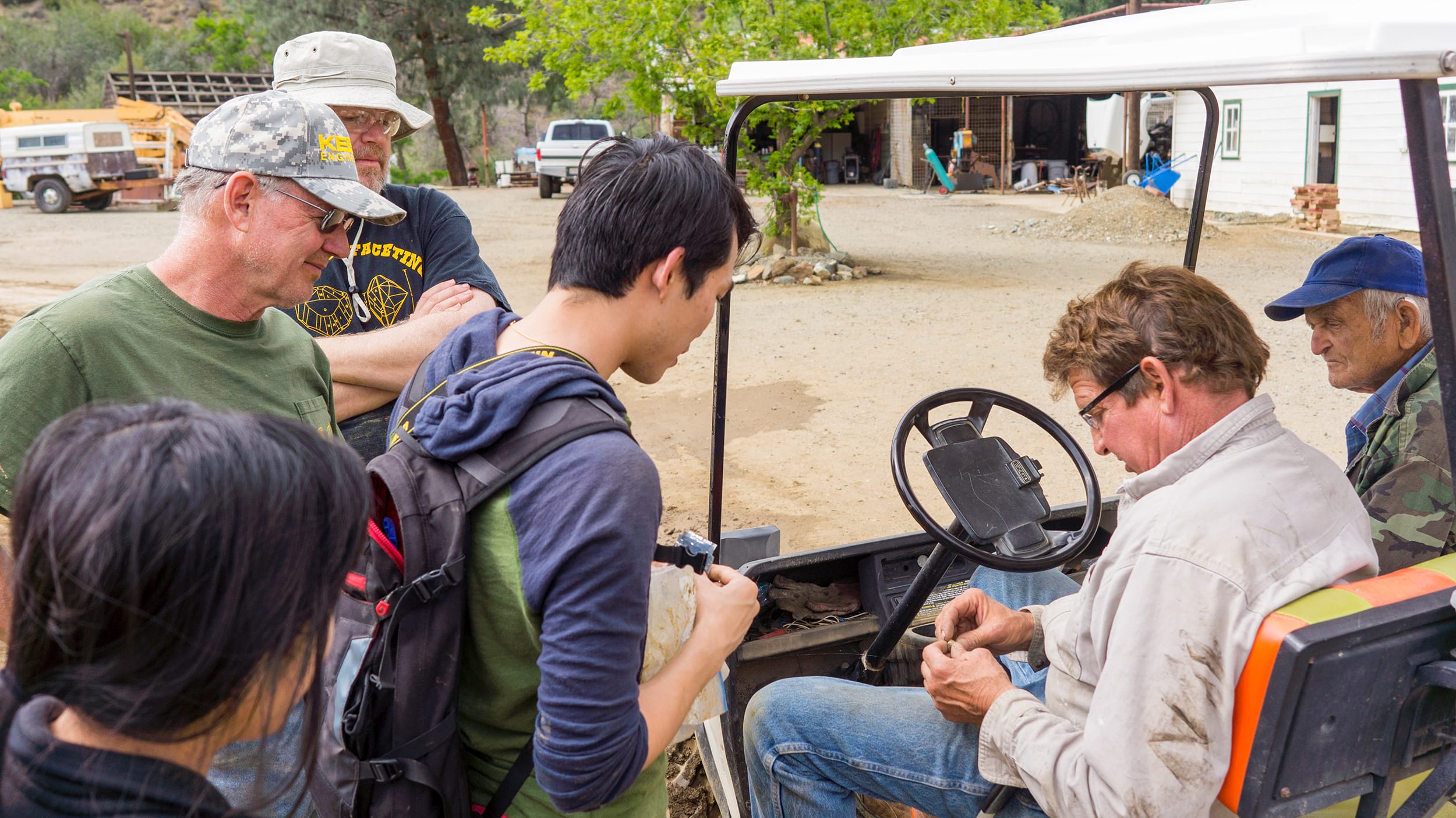
After all of this the mine owners came by and checked out what we had found for the day. Unfortunately the only other couple that showed up beat seasoned collectors like us! Oh well. It went to a great cause because last I checked they were engaged with a benitoite ring.
And here are the fruits of my labor. Not quite worth the cost of admission but I now have more respect for the specimens that are being sold. There doesn't seem to be much of the material left - at least not here!

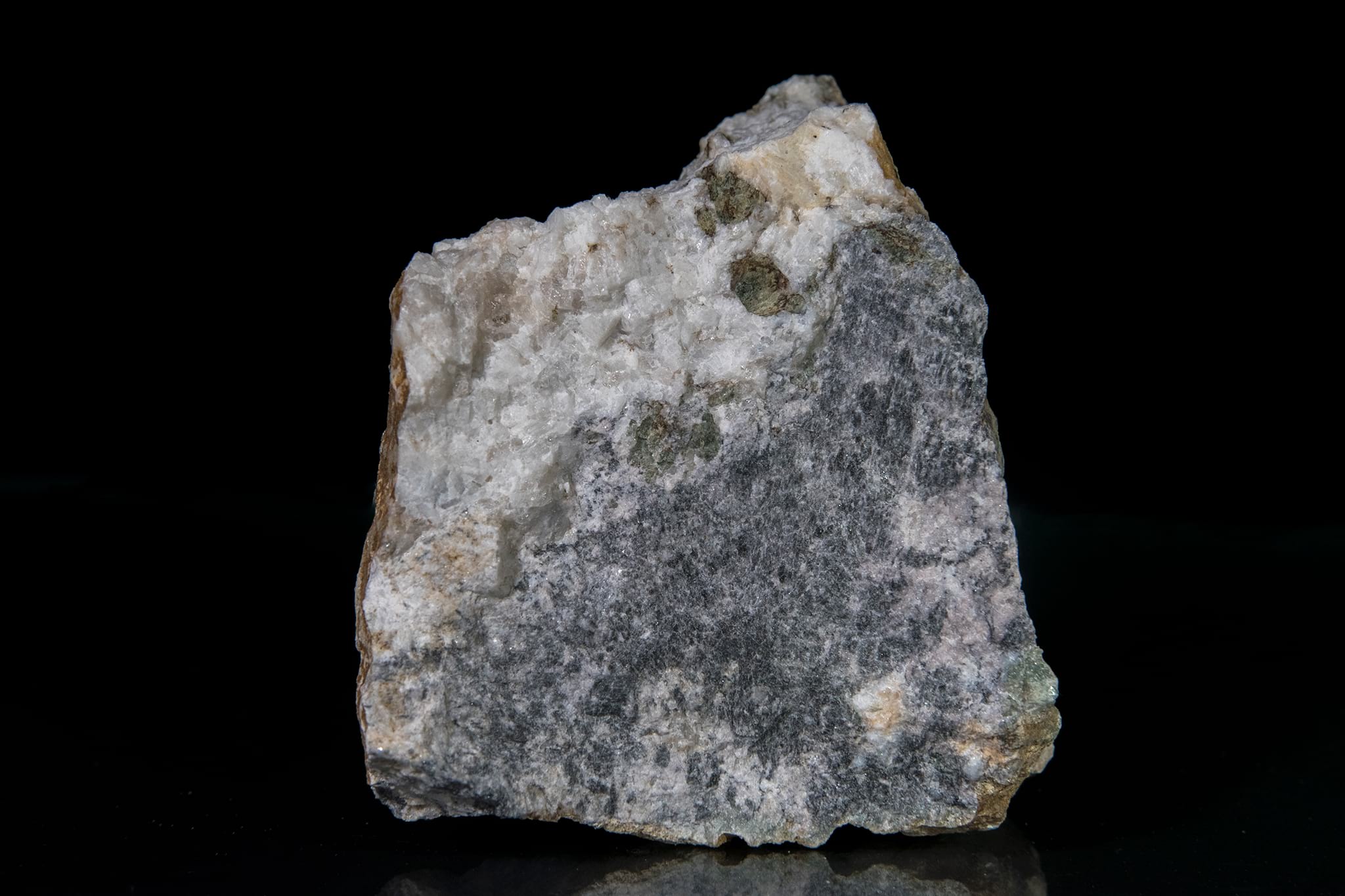
Daylight

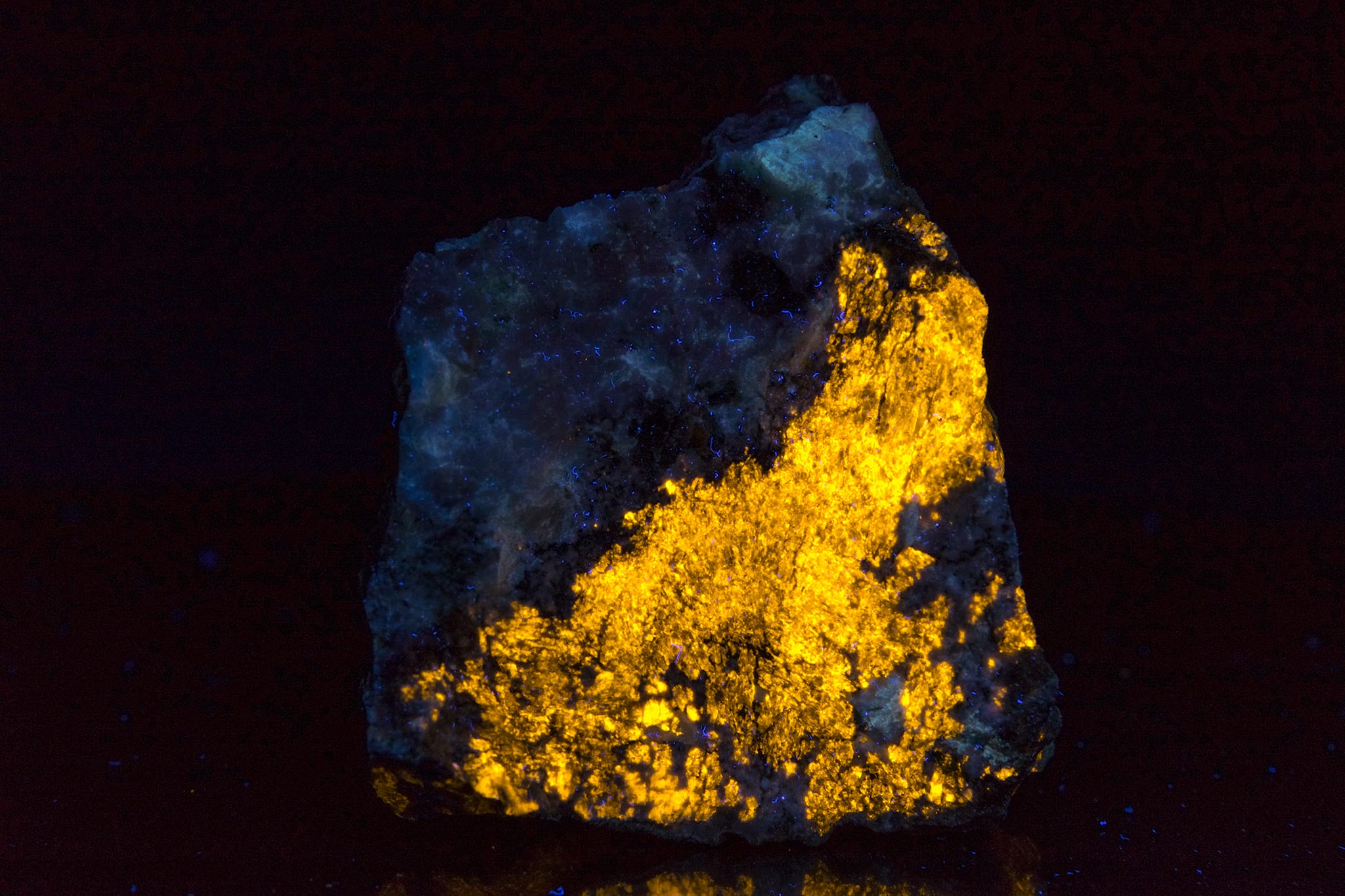
253.7nm SW

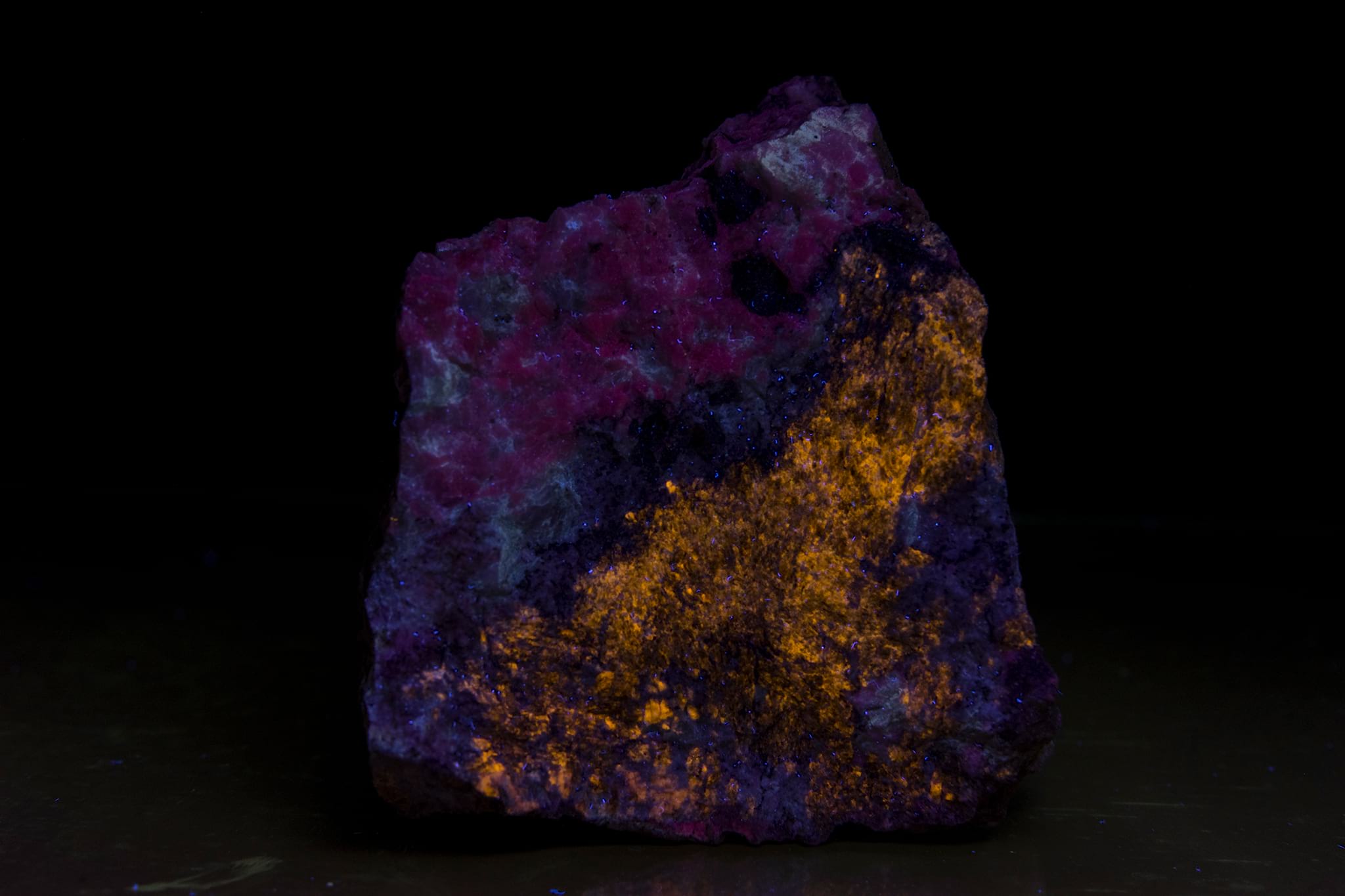
365nm LW
Hope Mine & Amboy Salt Flats February 2015
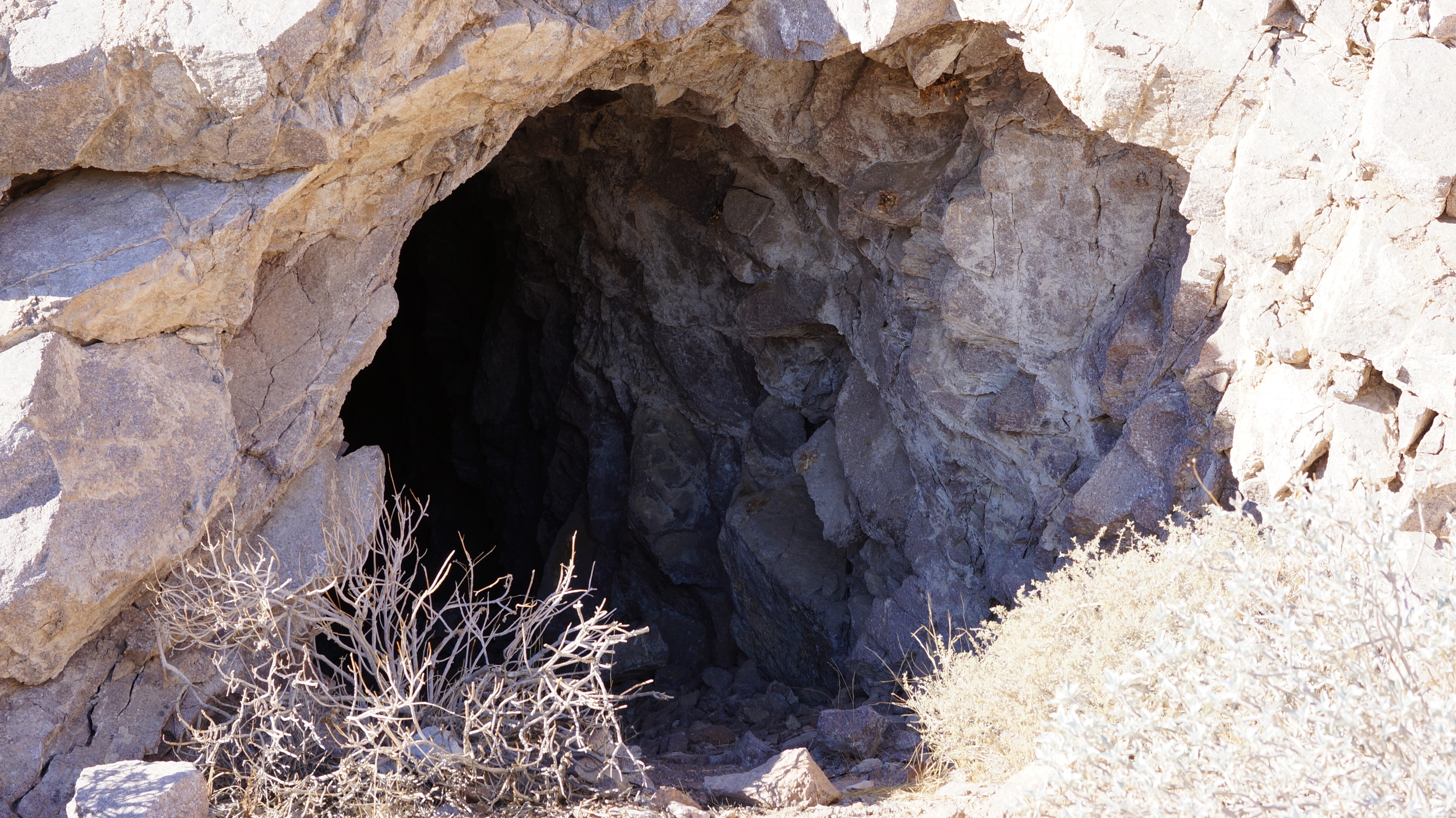
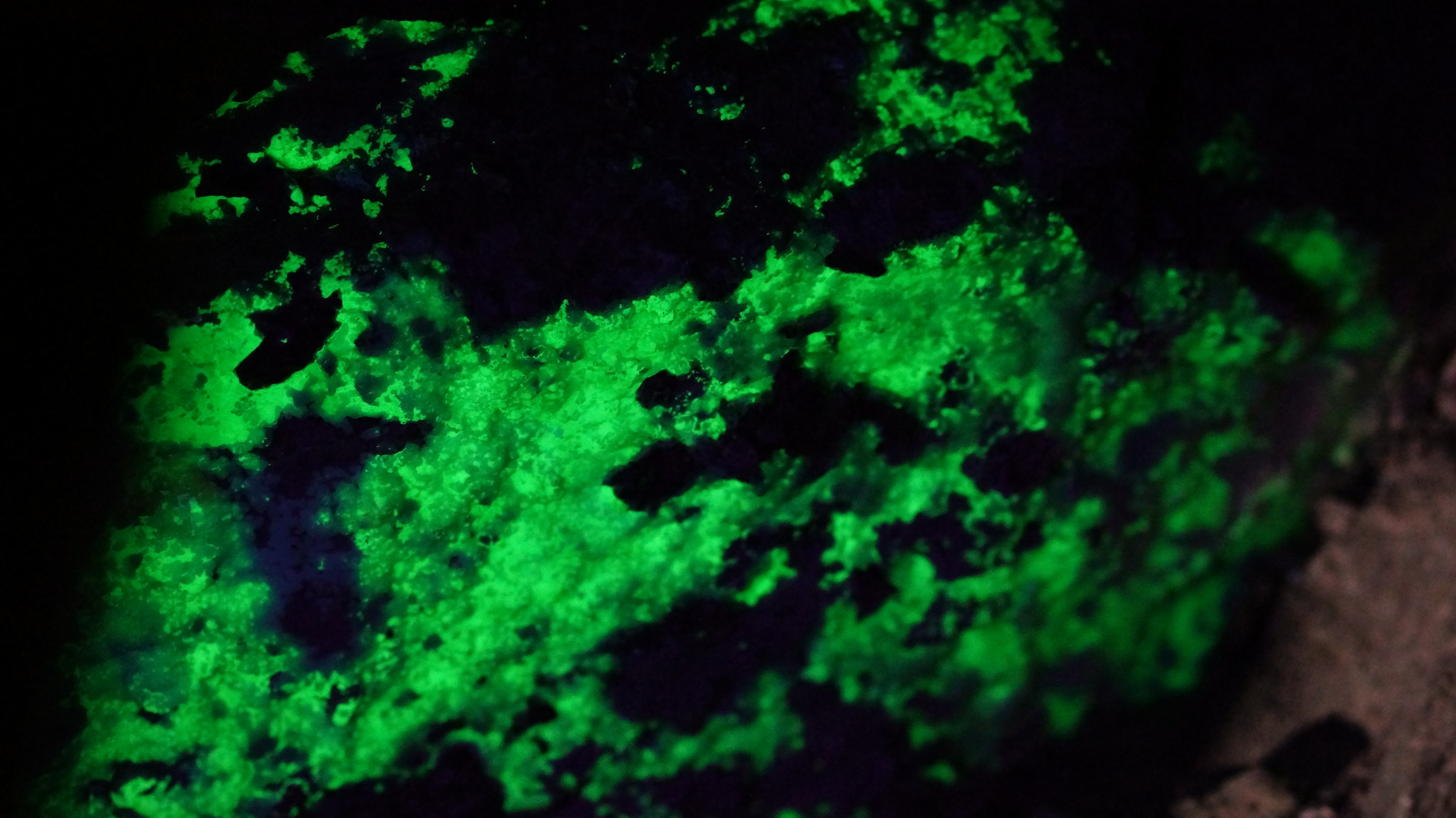
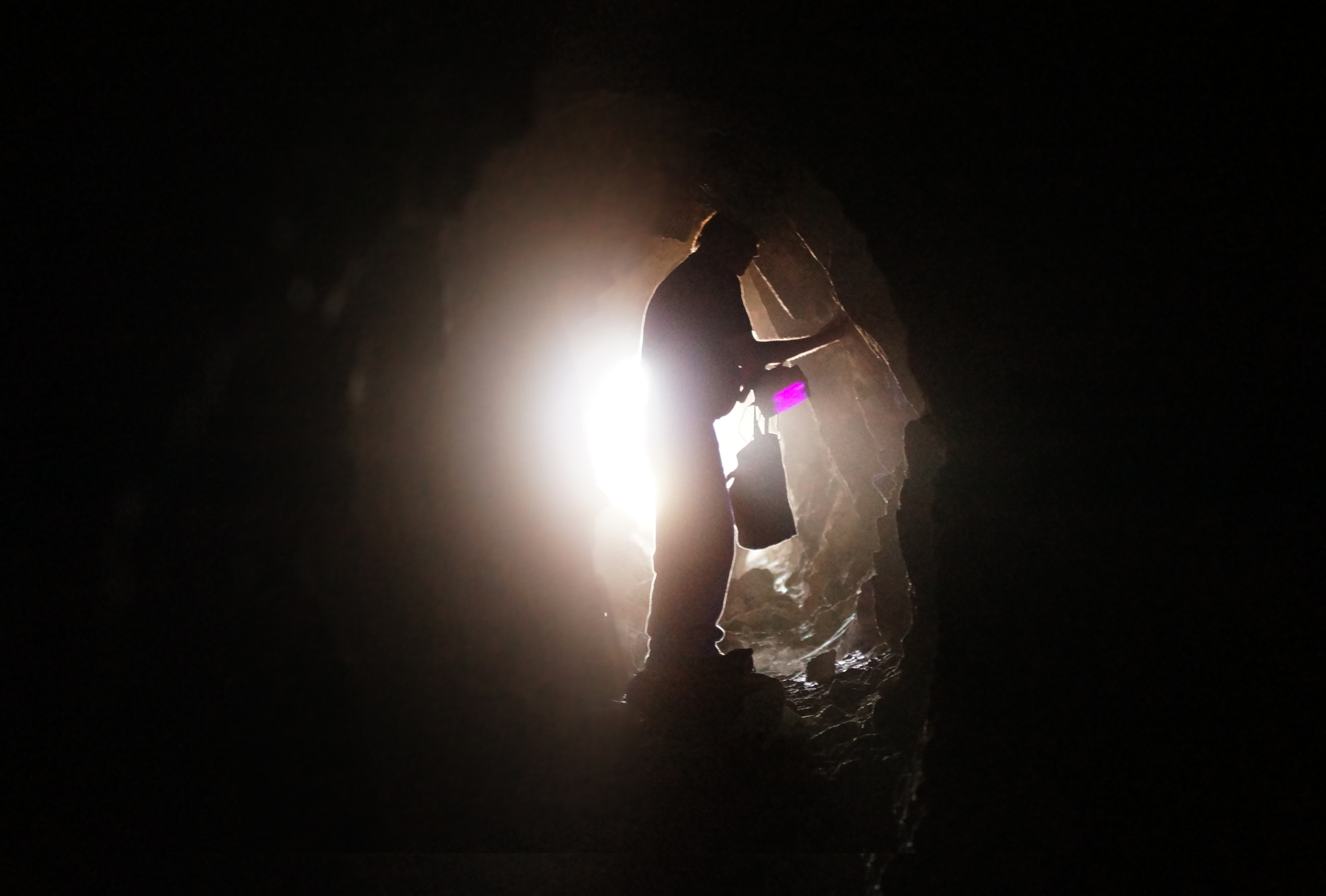
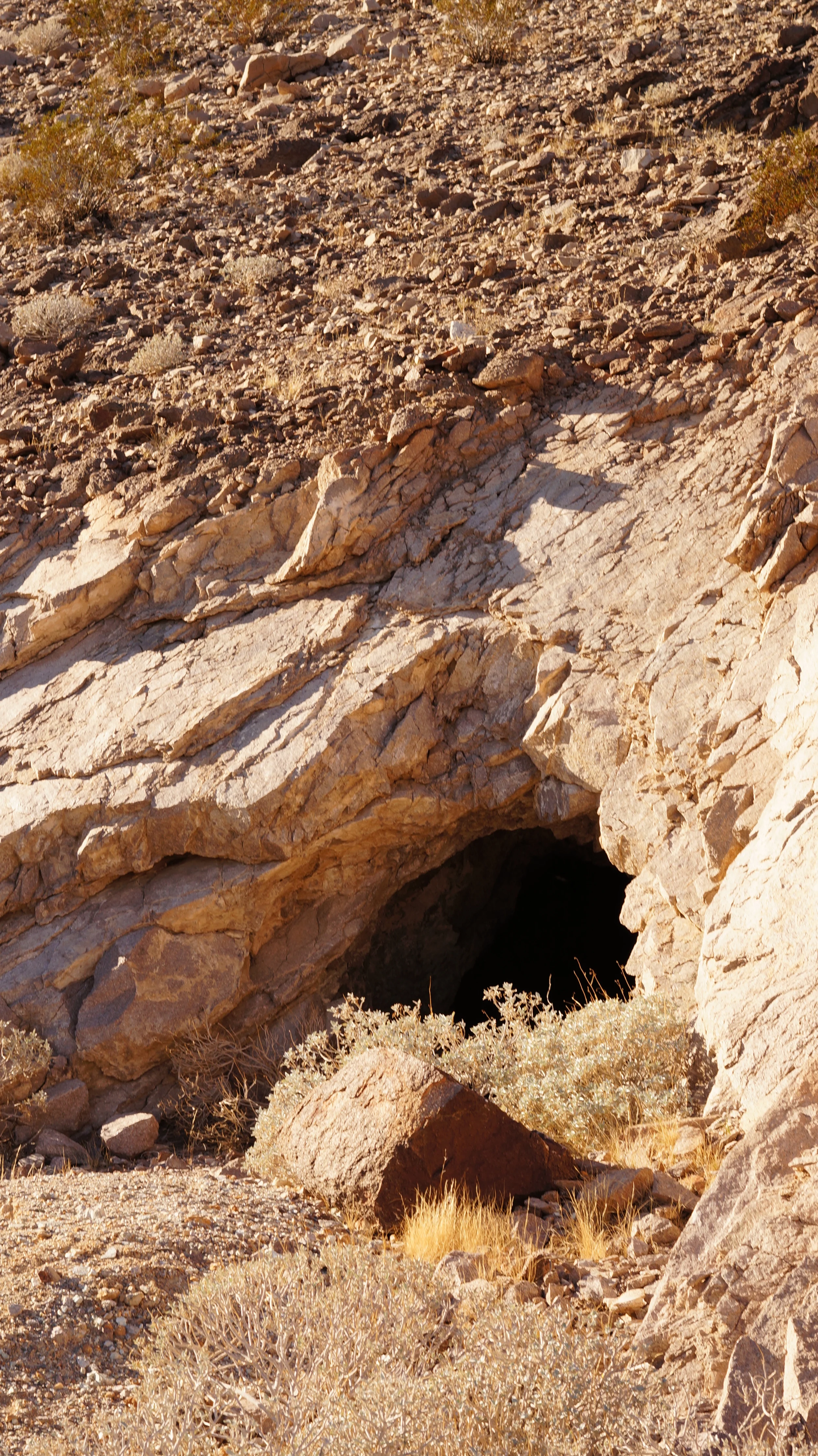
Shortly after Cliff and I had met at the Princess Pat Mines trip I organized he organized one. He had seen some pieces of fluorescent halite from the Amboy salt flats on eBay that he wanted to collect. Quite crazy considering he lives in Nevada! That was about a 4 hour drive just to go prospecting for halite. I think that's what turned off all the people that I had emailed: the possibility that the trip would end with nothing being found. There were only two of us during this trip. The day started out with us going to Hope Mine, an abandoned uranium mine. Nothing too spectacular here so I focused a good amount on photographing.
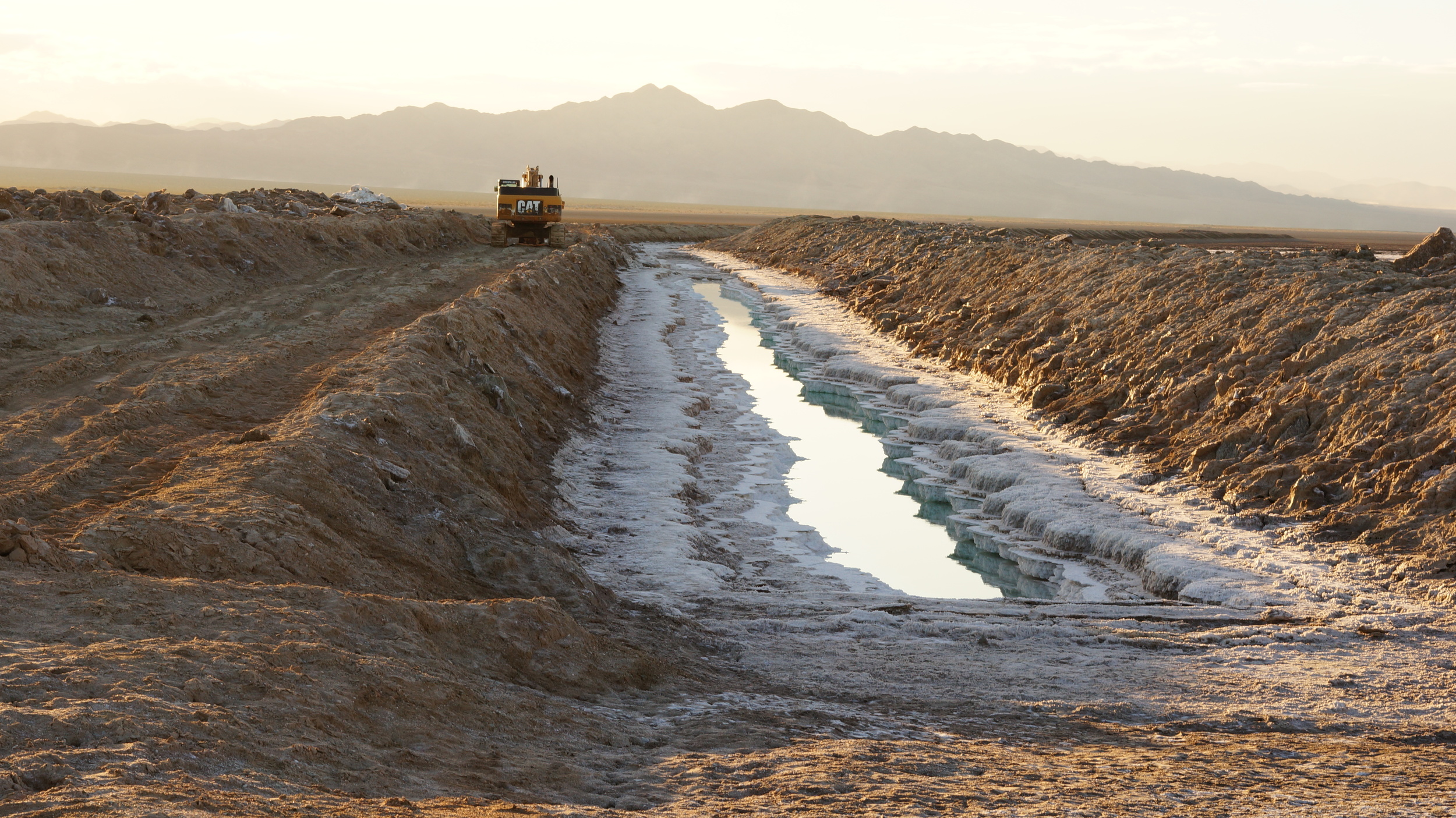
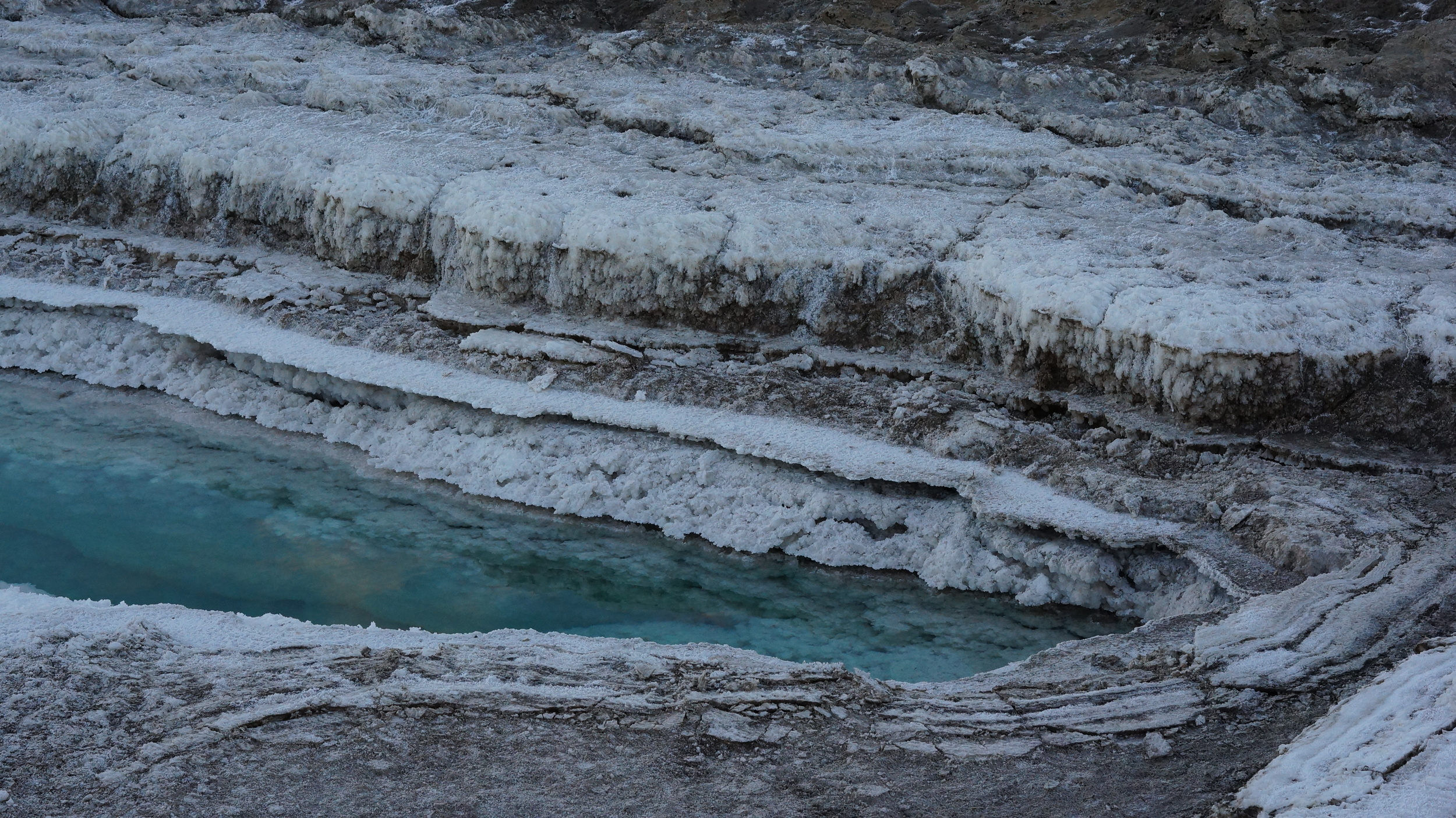
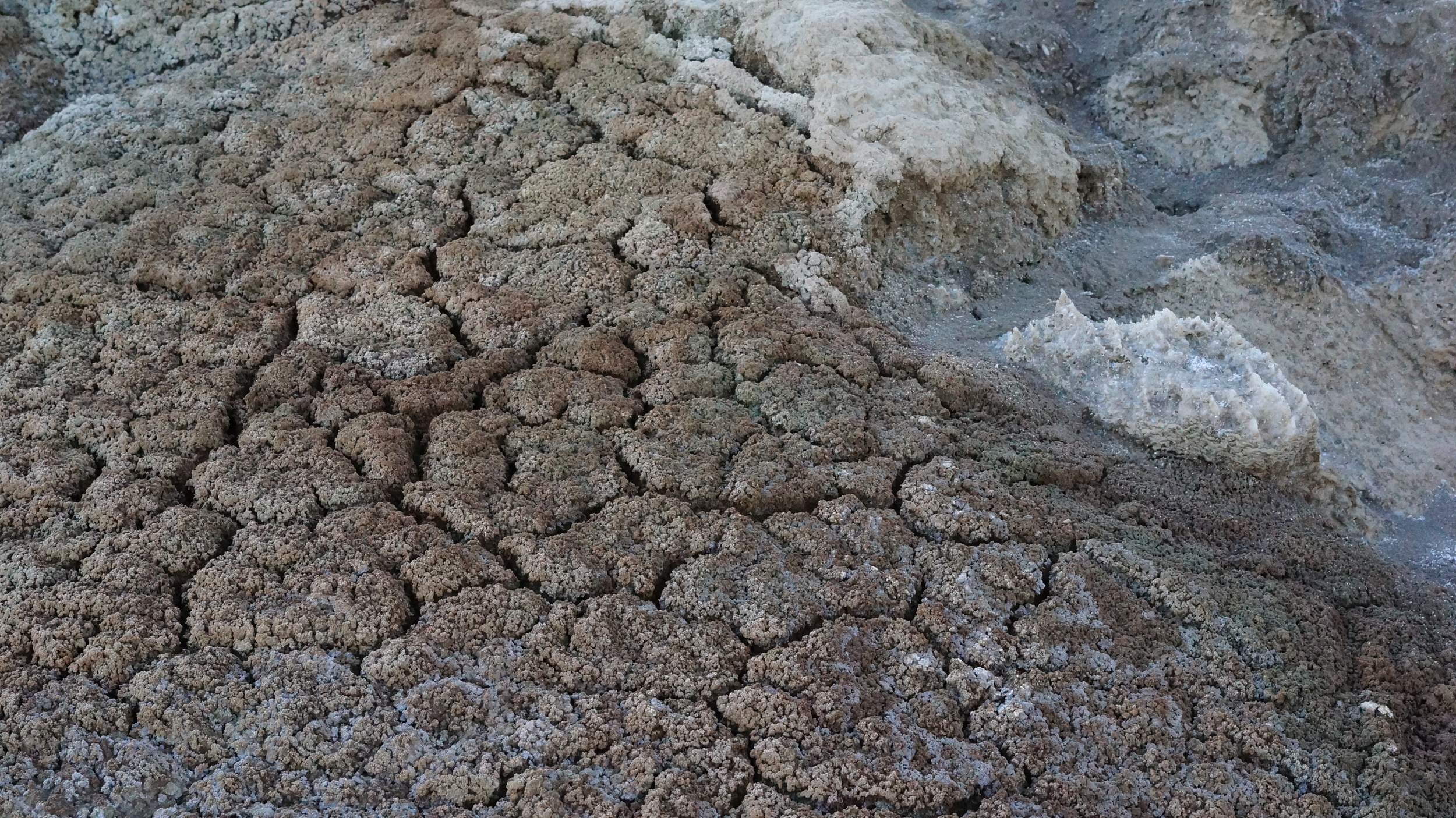
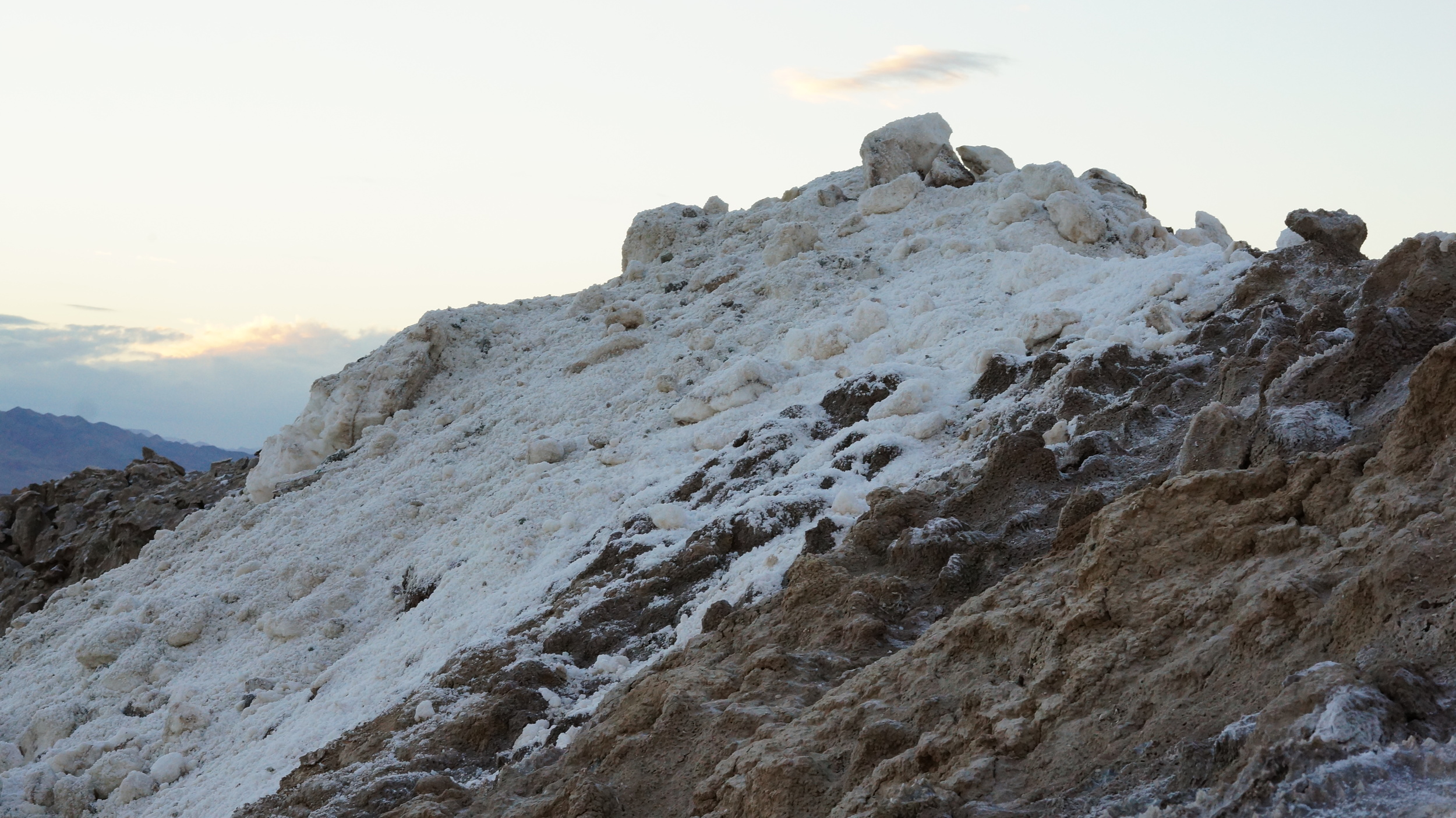
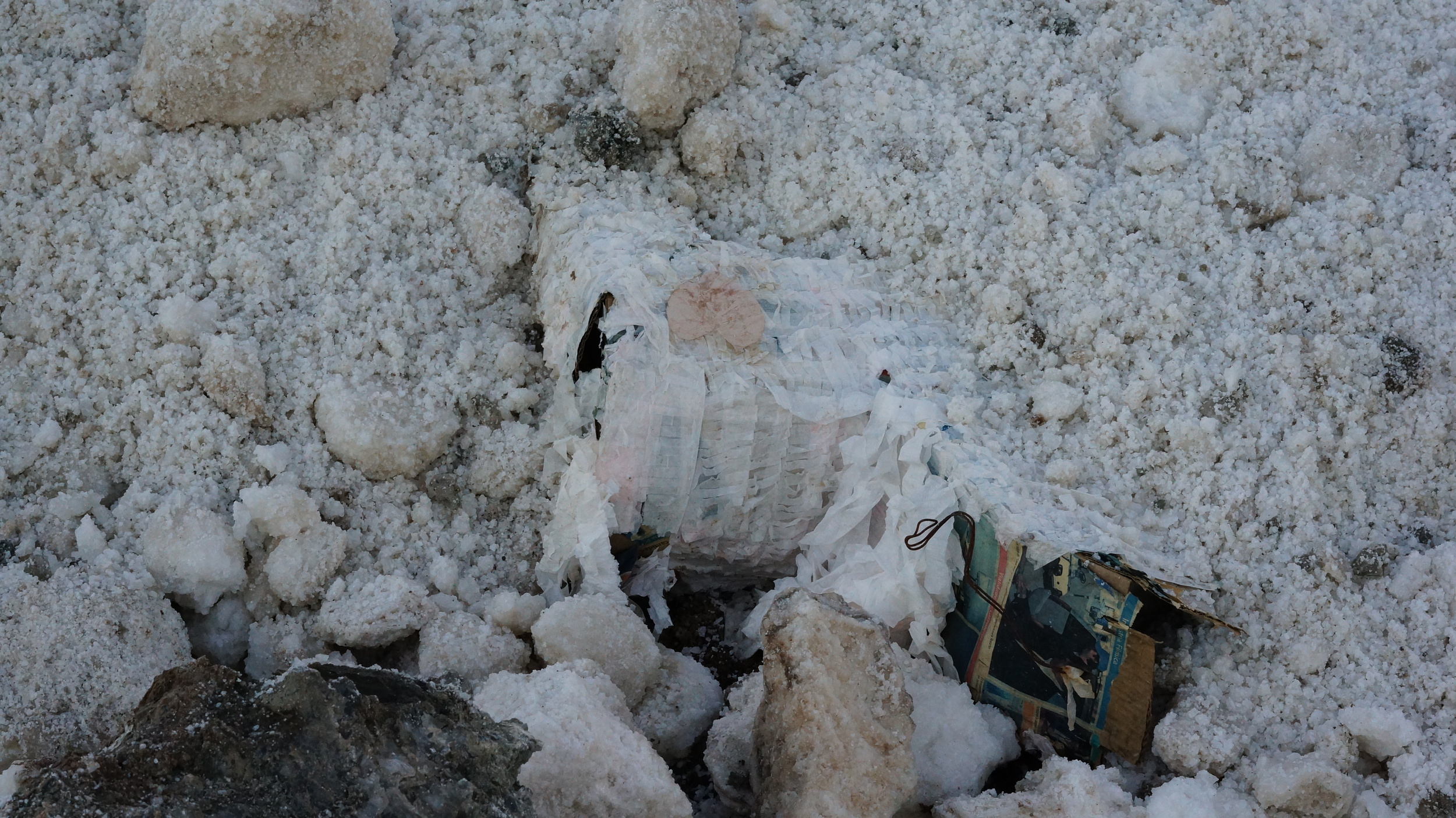
After that we went to the Amboy salt flats along route 66. Talk about a different landscape. Talk about a desolate area. The area had way too much salinity for anything to be able to grow or thrive off the land. I took several shots of the brine fields that were being cultivated. We eventually we found a discard pile that looked very different. This salt (NaCl/sodium chloride/halite) was noticeably different. It was white so we immediately thought to lamp it. Boom. A bright red fluorescence with plenty to pick from. The trash (presumably the reason all this halite was in the discard pile) was also fluorescent but we didn't take those haha. Mission accomplished!

Princess Pat Mine Socal Fluorescent Mineral Society Trip December 2014
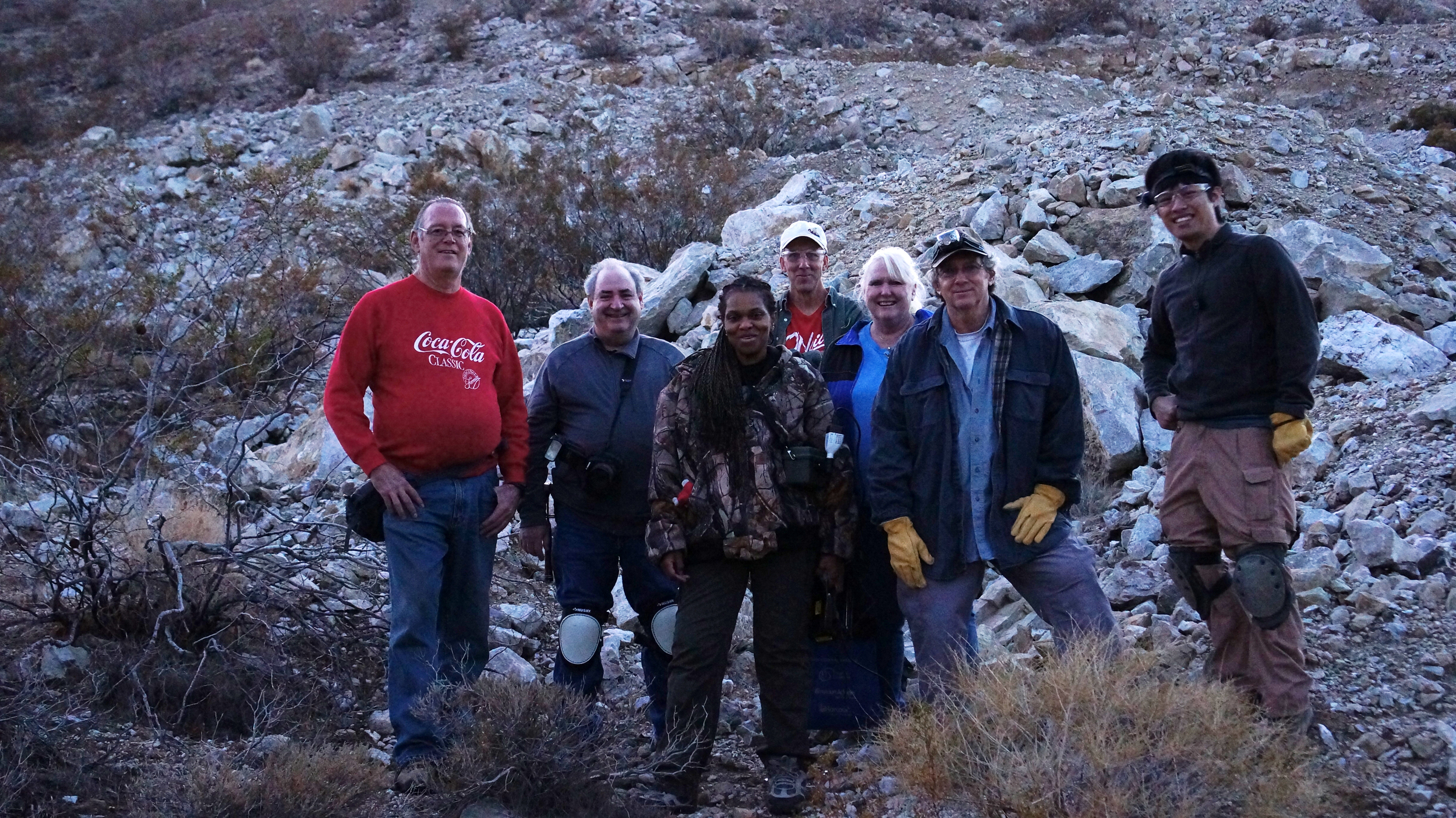
After that high of discovering the vein of the then-unknown green phosphorescing mineral (it was willemite. A new mineral for the location!) I decided to host another trip. Unfortunately Jan & Jeff wouldn't be able to come this time around. This automatically made it much more difficult. How confident was I in driving to a remote place I'd only been to once? I had only been there once but I had the GPS coordinates. I decided to continue with the trip anyways. It really came down to the wire this time around. Combine this with the fact that it was raining heavily (flash flood warnings) up until the days before we were going to go collecting. The crew was mostly different this time. Many fresh new faces. I had reached out to people on Facebook and friends of friends. That friend of a friend was Kevin Brady. I had seen him through one of his eBay auctions when I was curious and tried to find out how much the material I was collecting was worth (spoilers: not much!). I saw that the listing mentioned that he was an active FMS member and still takes part. That's when I decided to reach out to him and, to my surprise, he joined this excursion. He was the one that led us to the Princess Pat mine dumps when we all met up. He had been to the mine dozens of times and all of this was a cakewalk for him.
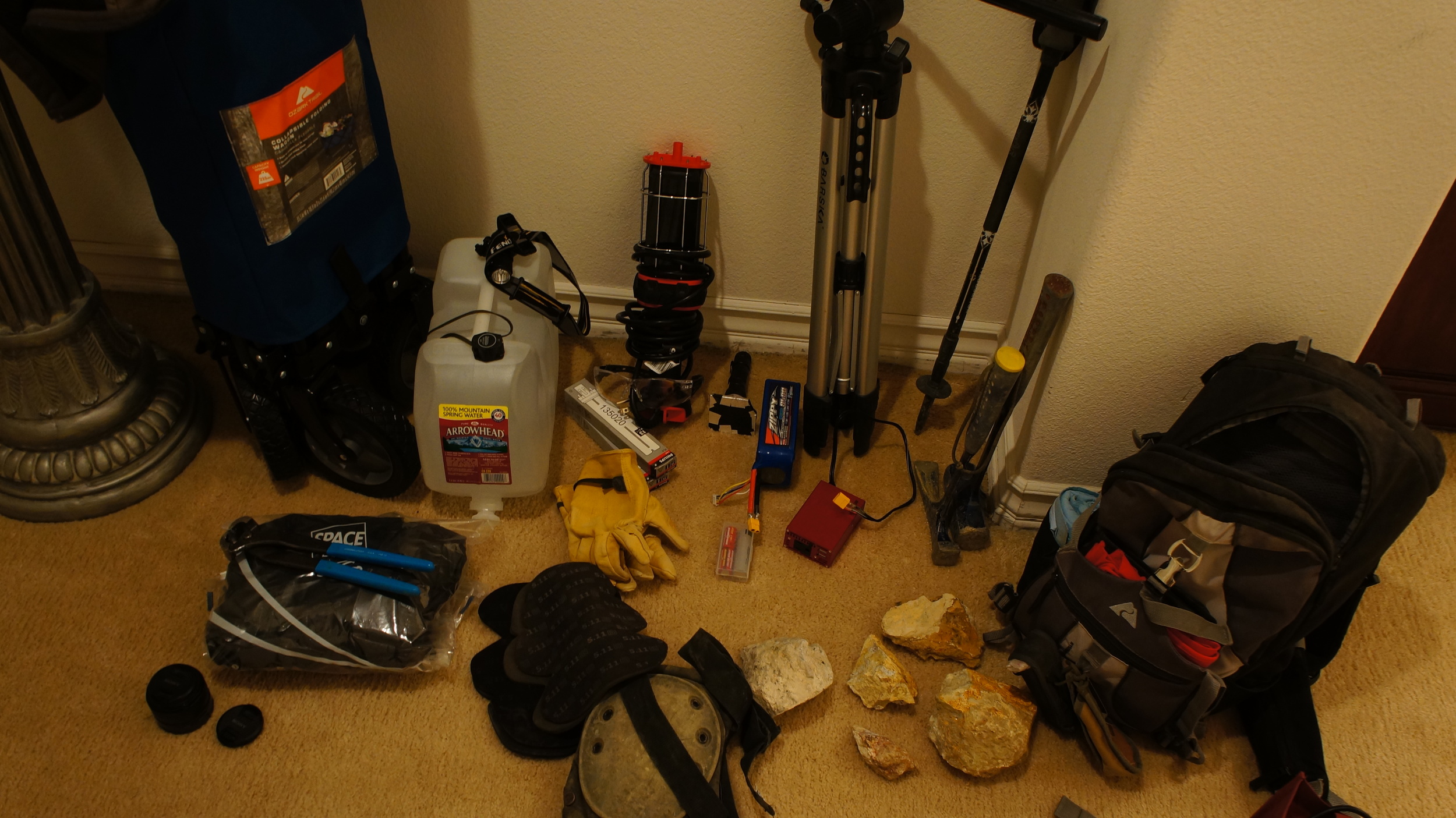
We arrived at around 3:30PM. I decided to organize the trip an hour before sunset because California was experiencing a record two weeks of rain (a drop of water compared to other places I'm sure) and I wanted to make sure everyone had plenty of daylight to see road conditions. We shared stories of past trips, finds, crazy deals we got, upcoming shows - just about every aspect of the hobby as we waited for it to become dark enough. Cliff Jackson even had a portable viewing cabinet with him so that we could easily see fluorescence in the daylight with his Way Too Cool lamp! I definitely need one of those for when I do smaller presentations!
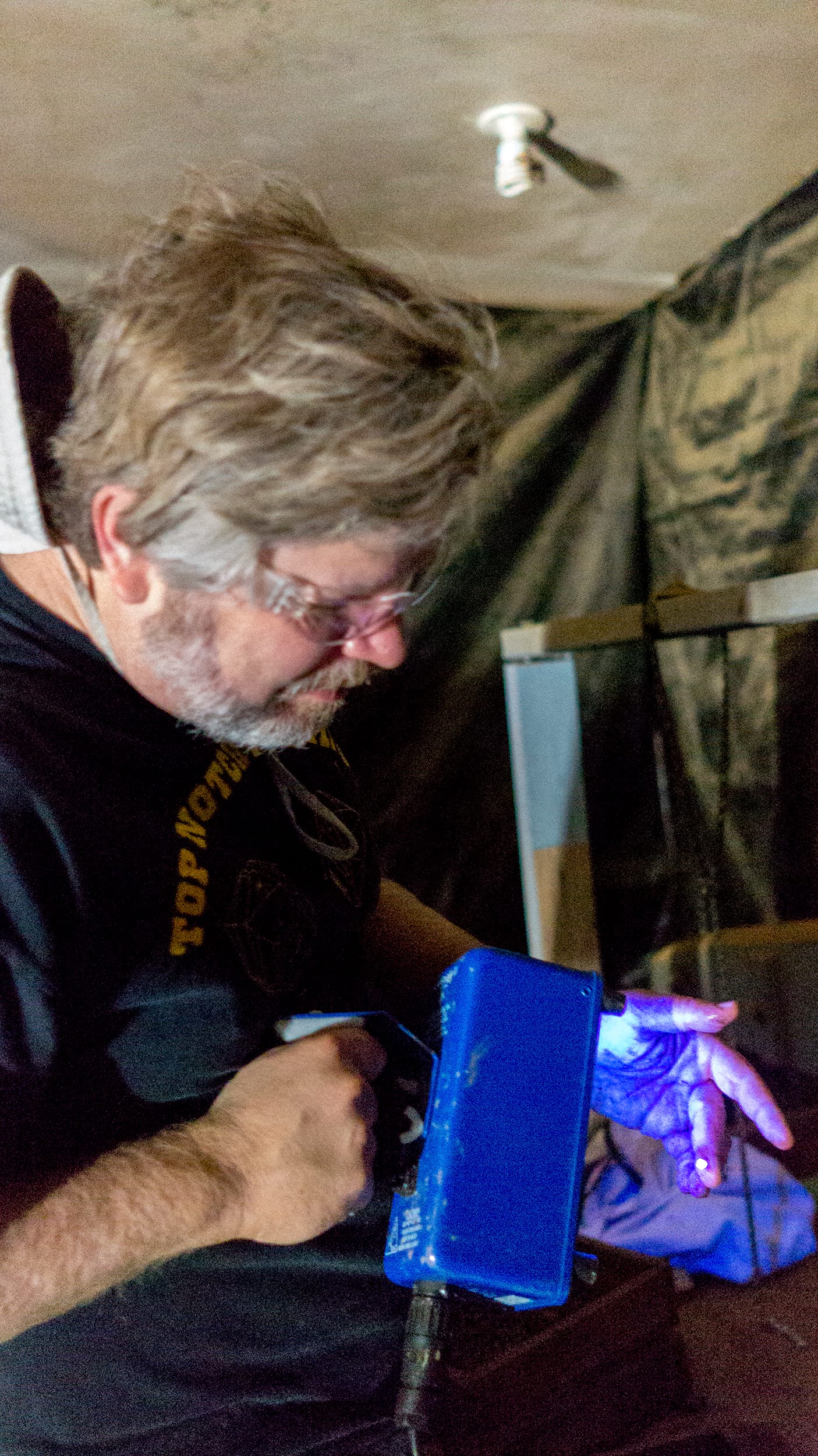
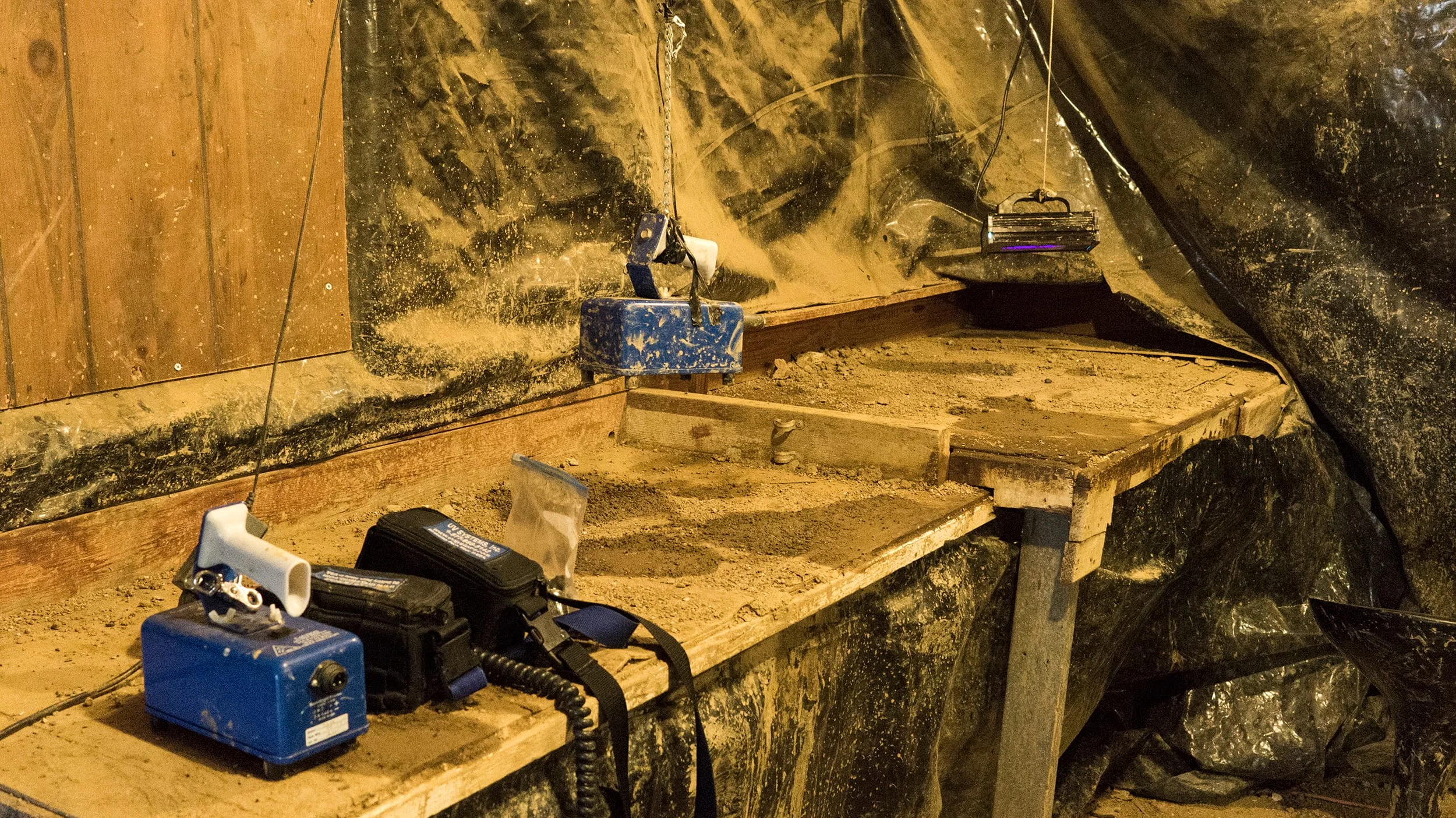
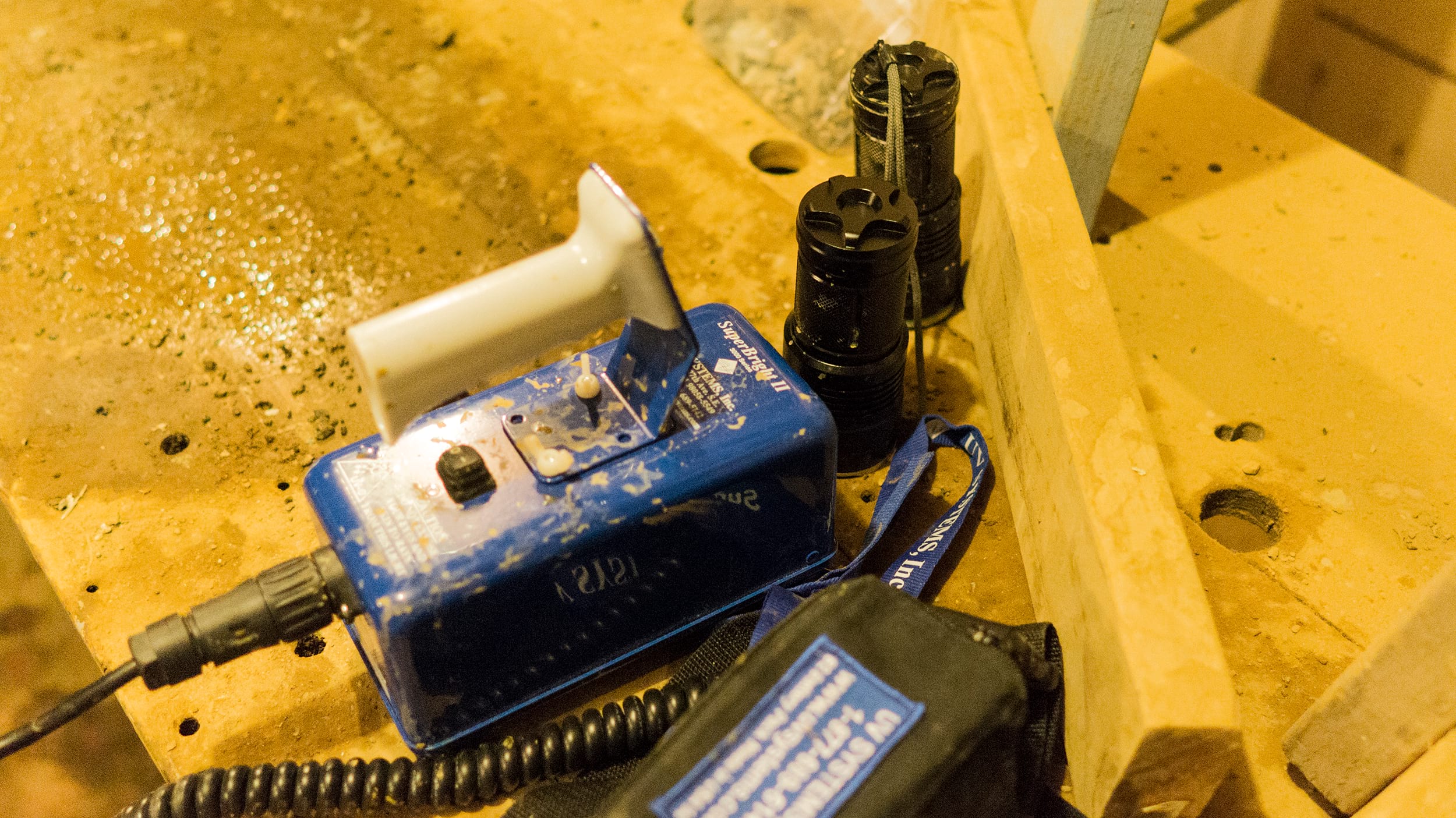
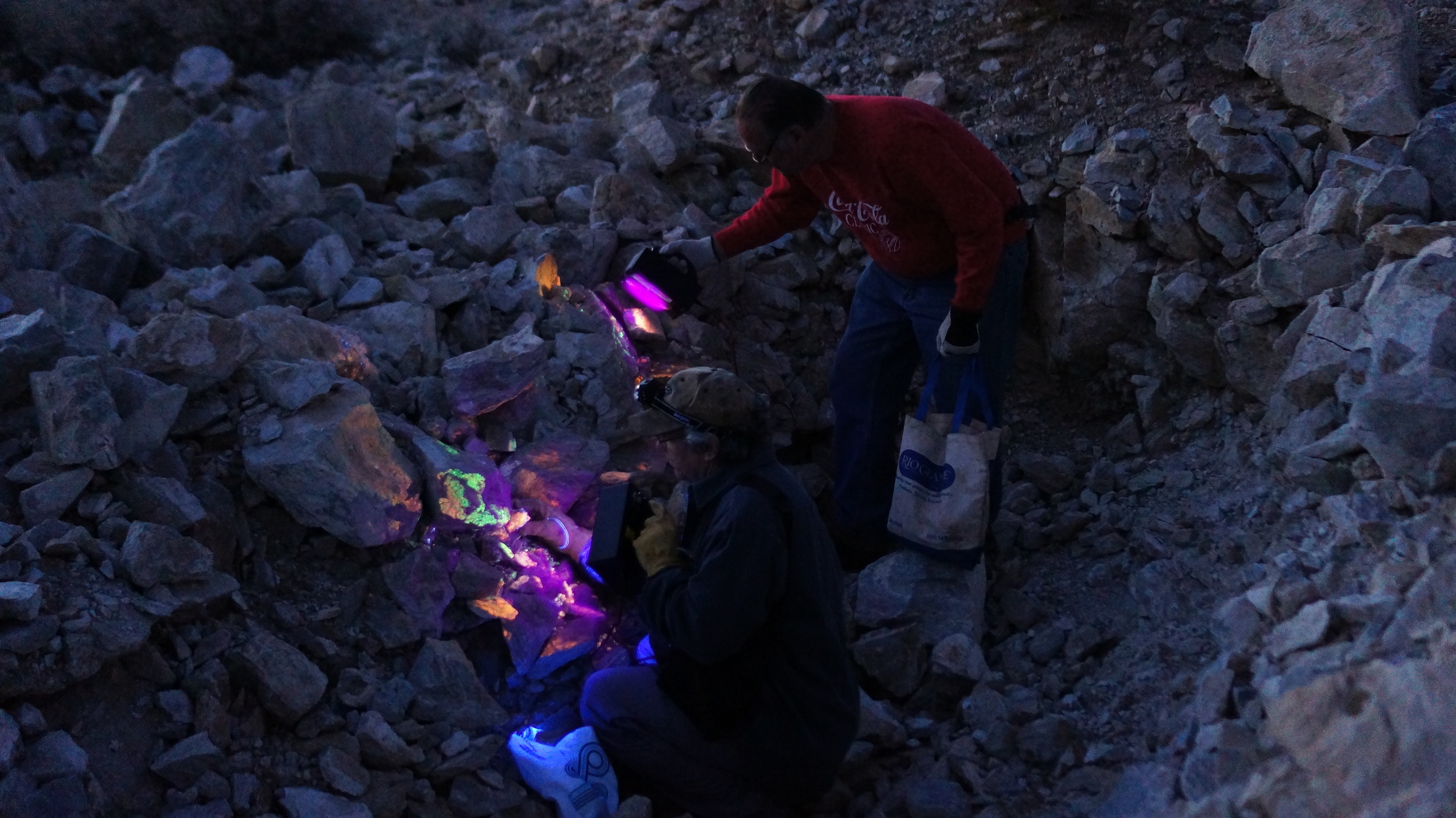
Energy was high once it became dark enough for us to go collecting. I even showed them some of the unknown phosphorescing mineral and everyone including Kevin was amazed. He had never seen anything like it before in his many trips to the Princess Pat Mine. He almost didn't believe me when we were looking at the specimens under Cliff's cabinet. Thought it was hyalite. That was my goal for the night: finding more of that unknown mineral! Possibly sharing some if I found enough to hand out like last time. Unfortunately this is where a comedy of errors begin. I learned one of the biggest lessons as the trip organizer. Don't plan your trip on a full moon! OOPS! Now the moonlight would be competing with our fluorescence. I would comfortably say it beat most of us. All of us were much closer to the ground than we probably should have been considering how we were in rattlesnake and scorpion territory. This coming from the person that brought a 26W homemade lamp. I wasn't quite on the ground but I was in backbreaking low territory. Tammie had a 36W UVTools lamp and even she was constantly on her knees. Kudos to Mr. Don Newsome of UVSystems though on such a focused reflector design. His Superbright II allowed Kevin to comfortably see the fluorescence at normal heights throughout the night. I secretly look forward to the day when shortwave UV LEDs are viable as I hate working with bulbs.
Next goof: my inverter failed. It got cold enough to the point where I wasn't supplying enough voltage to start both of my bulbs. Probably doesn't help that I got a cheap modified sine wave inverter as well. Combine these factors together and I was left empty handed. I left with none of that new phosphorescent material and nothing else interesting because I spent most of my time looking for it. The rest of the group had a great time and left with some very nice specimens so my goal as the organizer was complete. Just not the collector in me...

Cascade Canyon November 2014
One of the people I had met during my paleontology days was a geologist named Russell. He was an adamant field collector but also a dealer. While he had collected fossils in the past, there was no money to be made with our material. Years later I realized he was right! Haha. However, once I turned more towards the geology side he took me to some very cool places. One of them was Cascade Canyon near Mt. Baldy. It was a beautiful hike with some interesting scenery - one of which was the house pictured below. When I was talking to Russell about Cascade Canyon on the phone one of the things he told me about was a Hansel & Gretel house that was along the way. This certainly matches that description!


One of my best Cascade Canyon specimens. A very rich ruby-filled piece.

From a later trip in June 2015. I only took 1 picture that day so there was no better place to put it. Featuring Marc Brown (foreground & Todd Richmond (background)


Princess Pat SoCal Fluorescent Mineral Society Trip October 2014
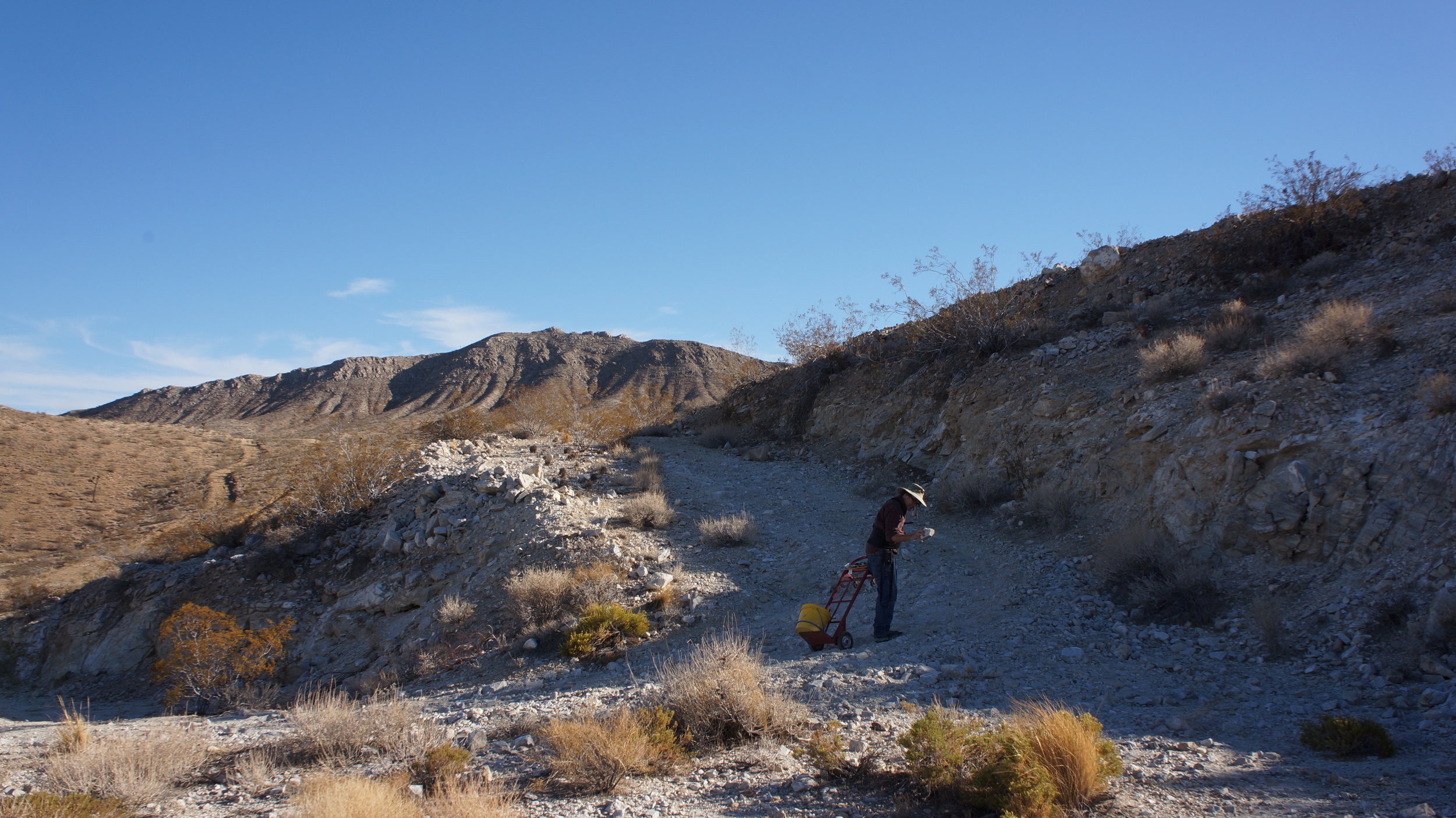
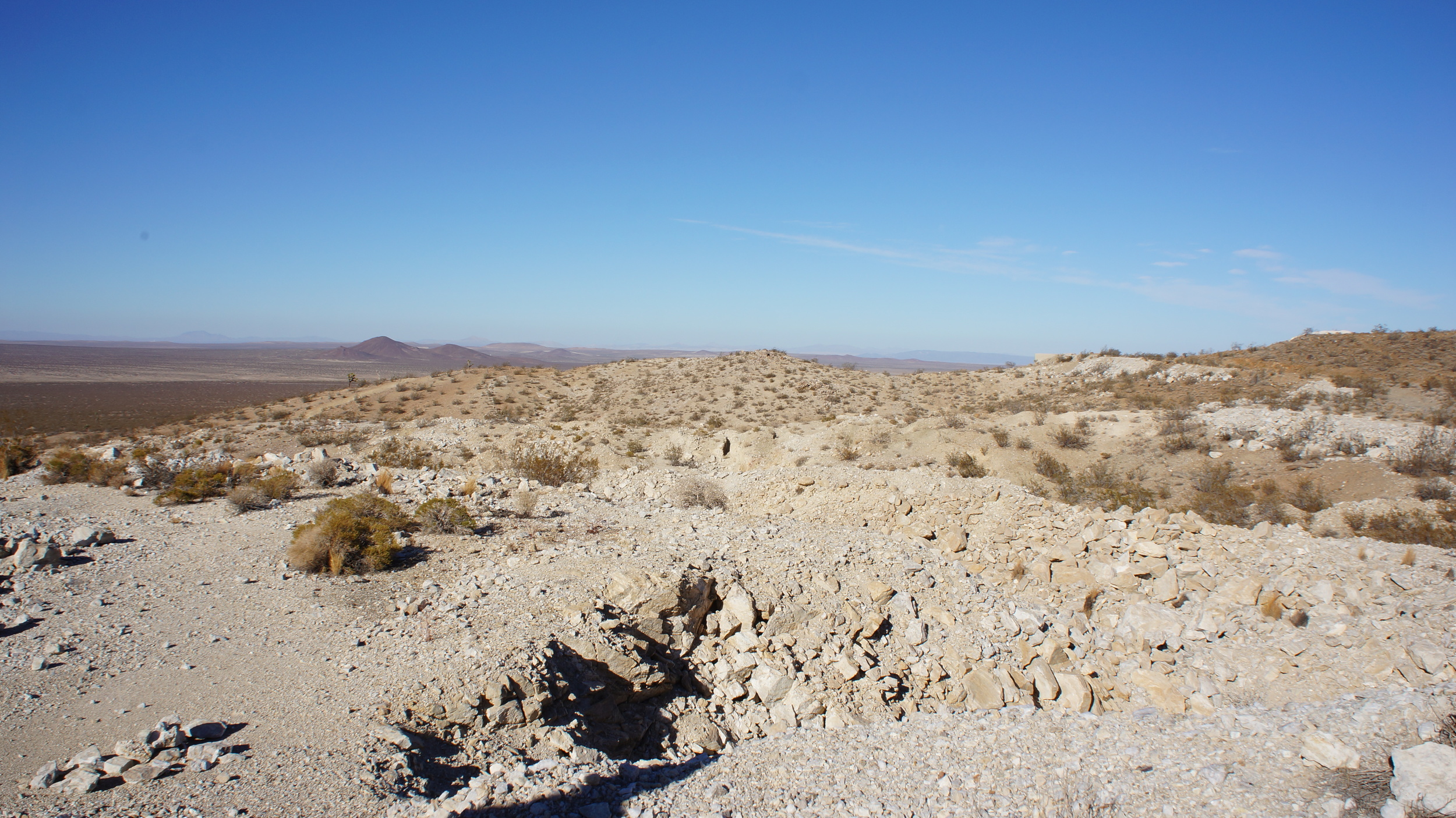
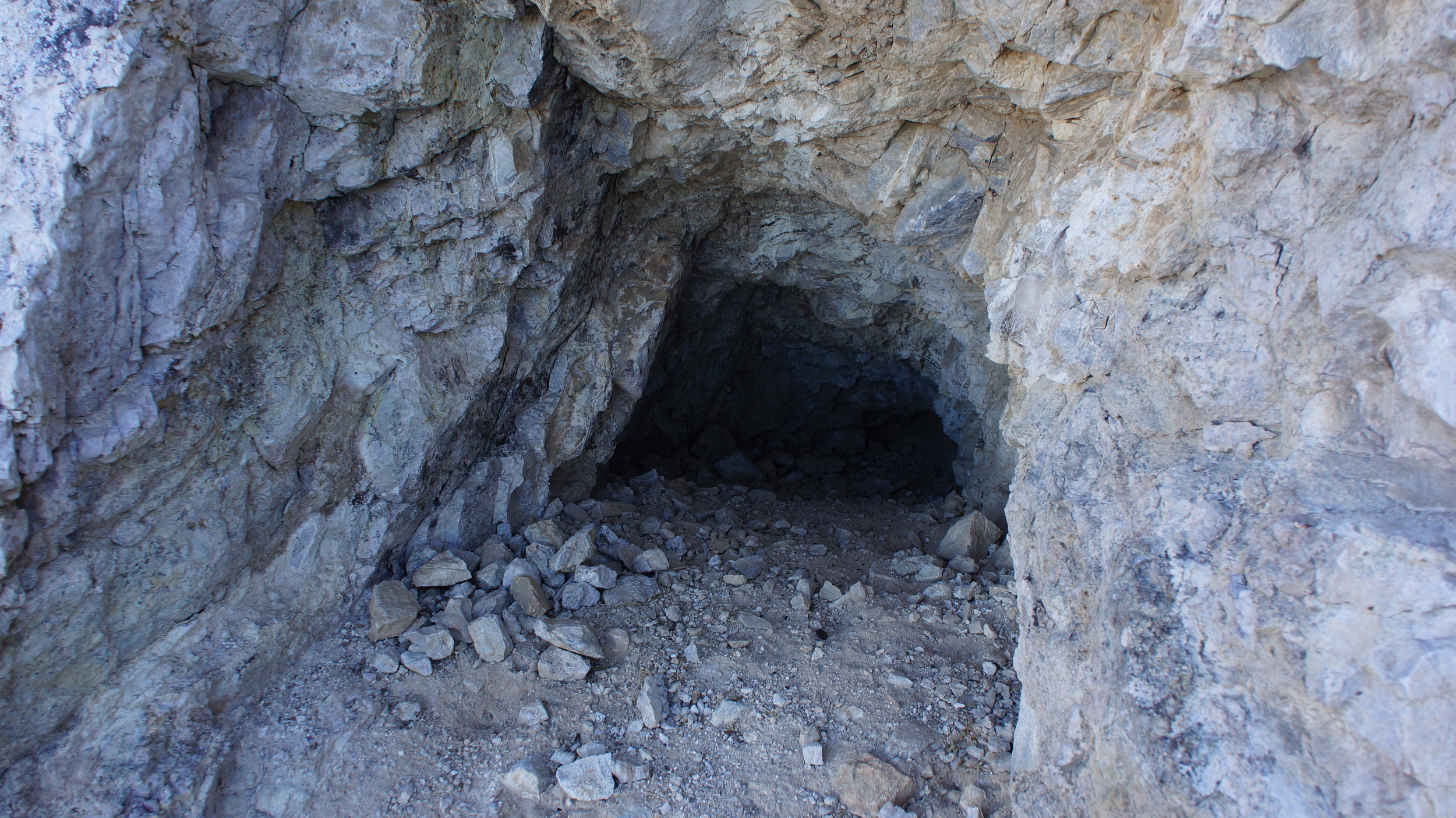
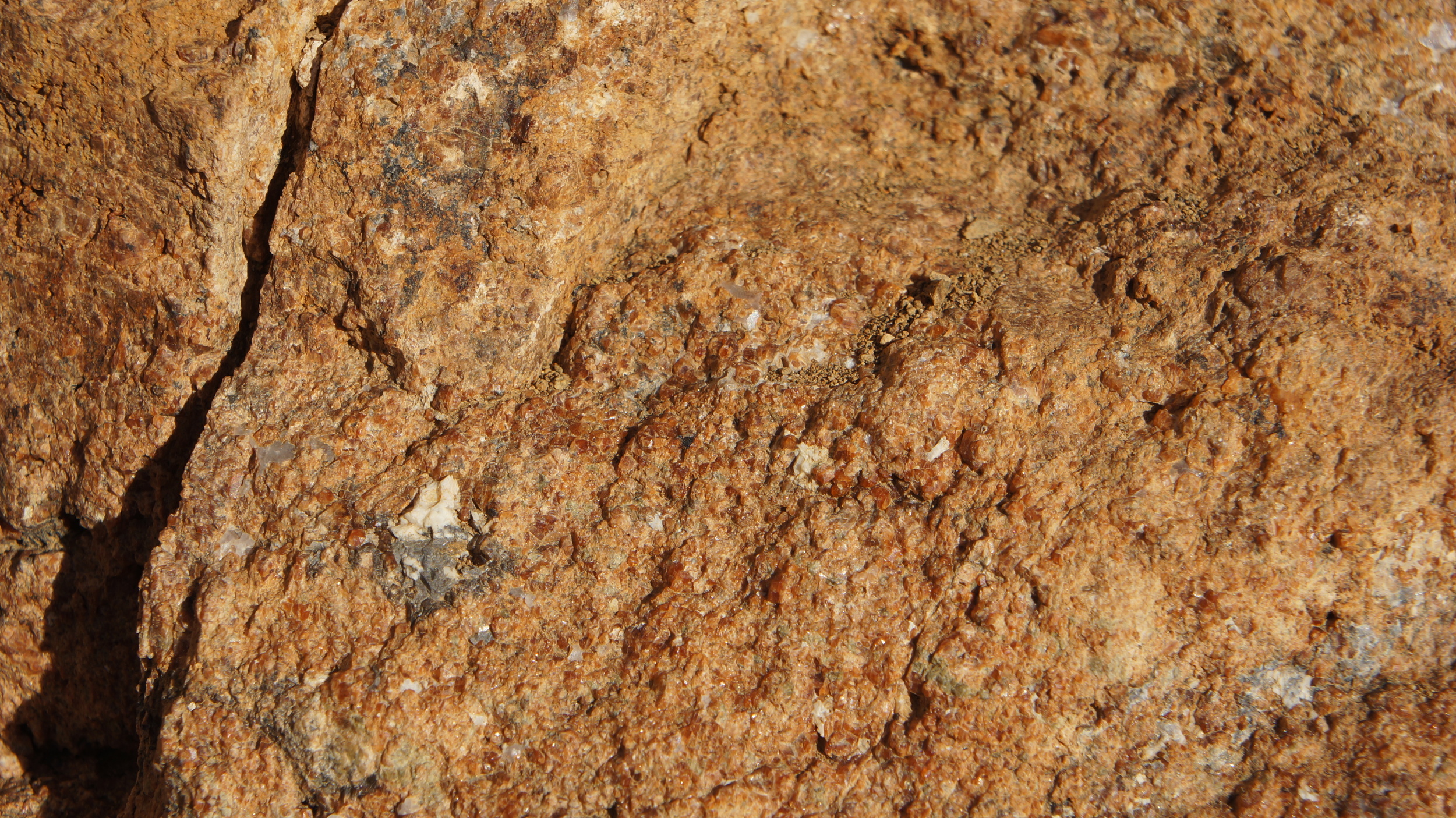
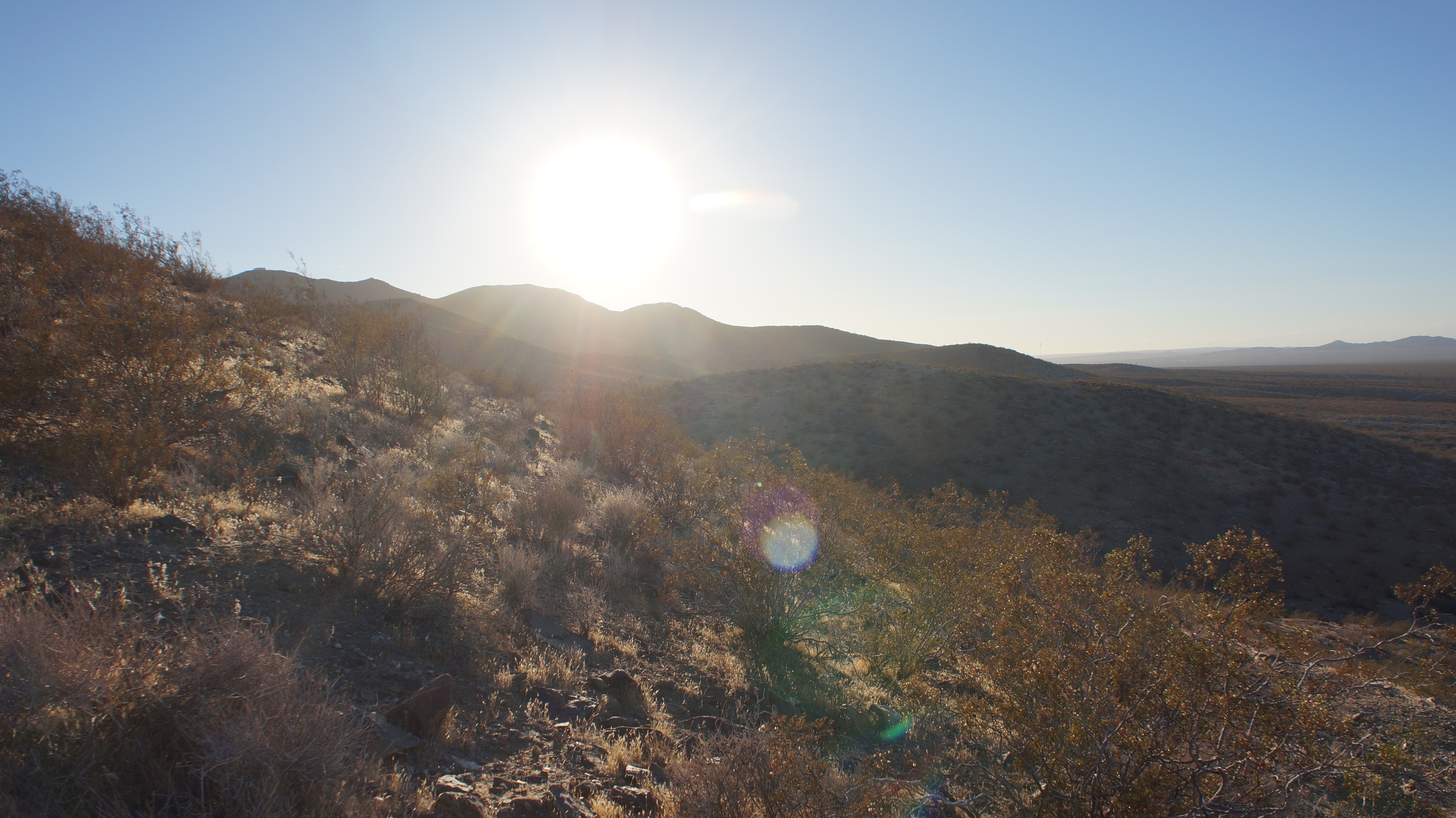
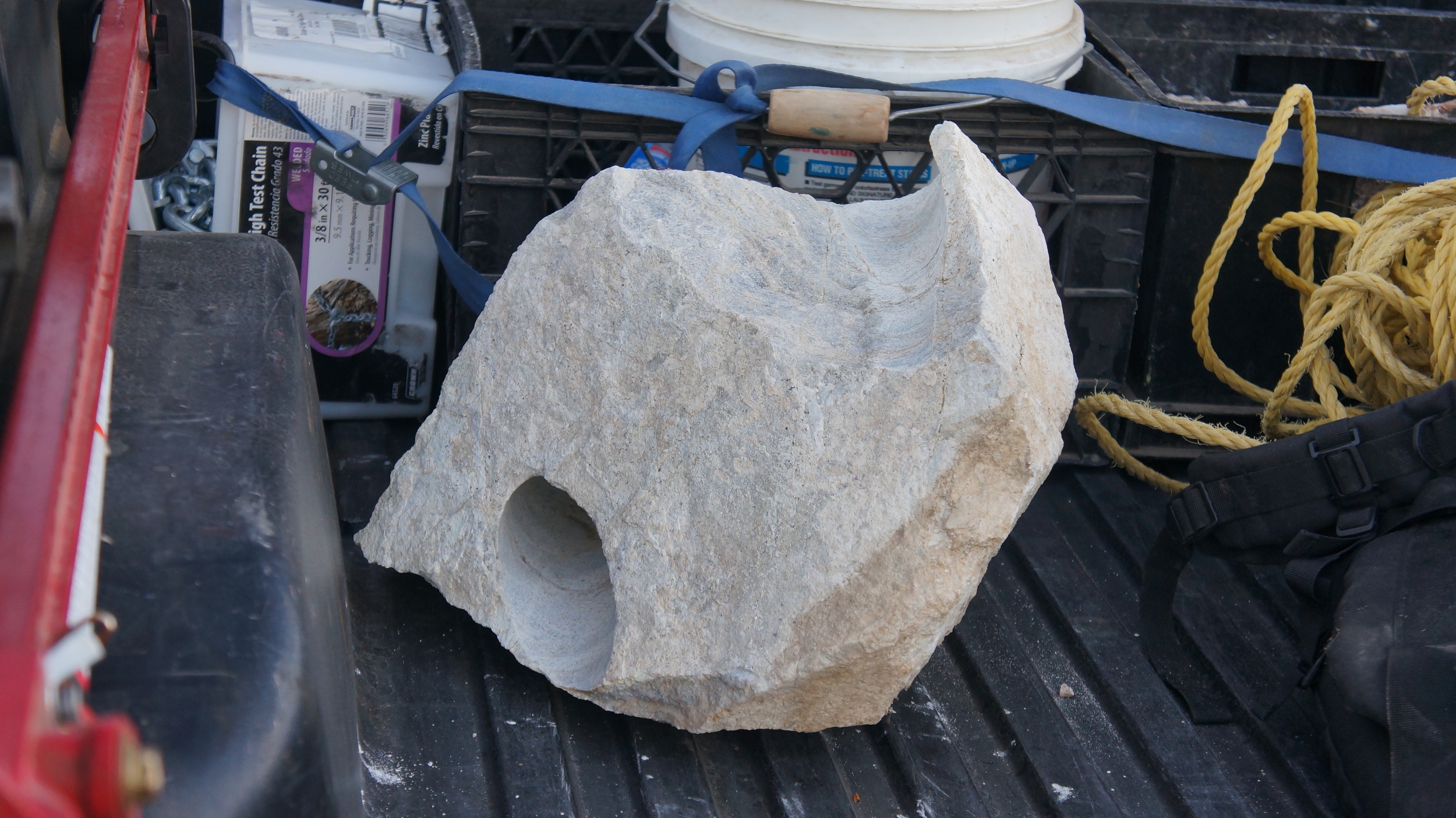
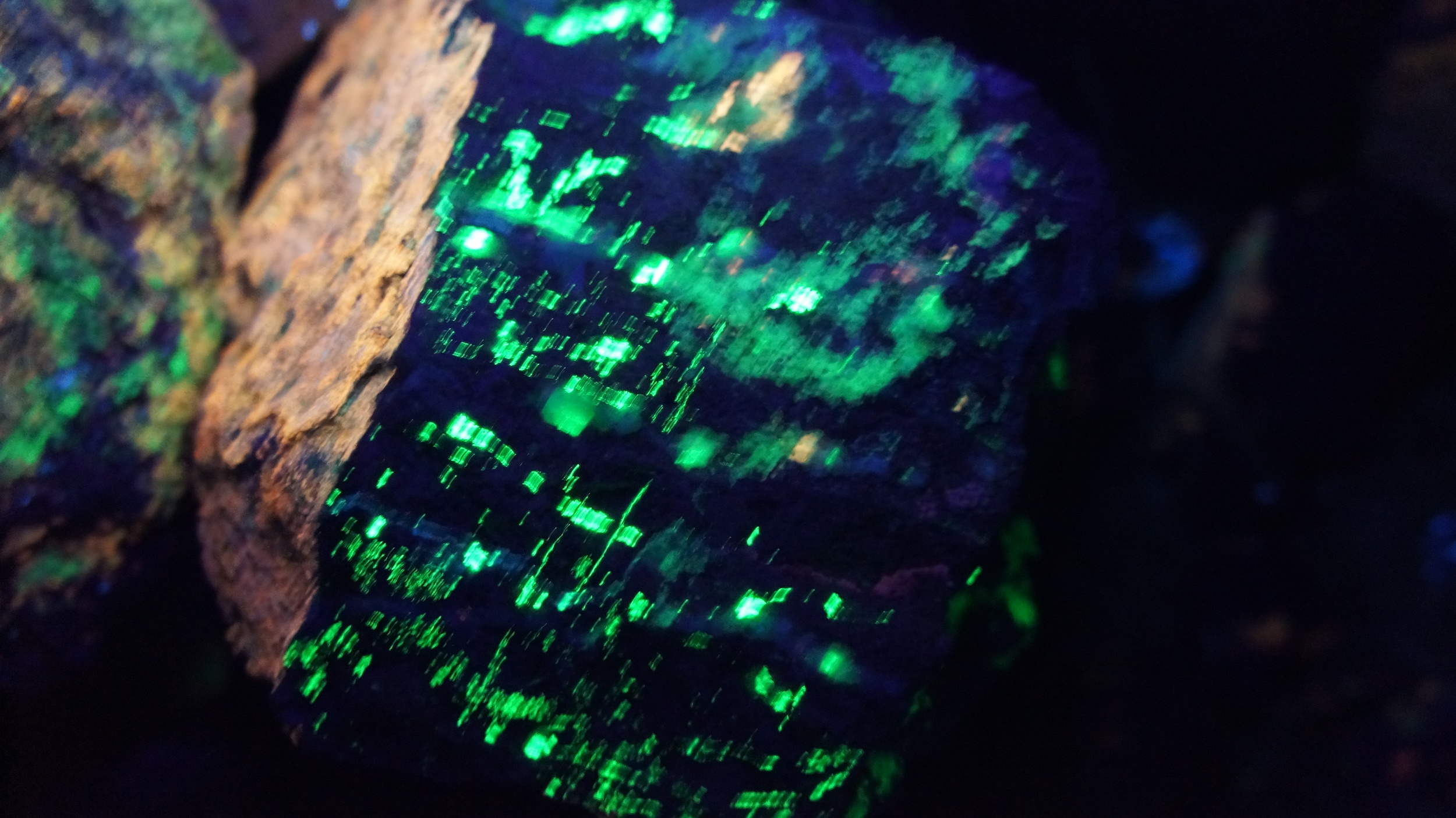
Ah my first foray into the hobby. After about 20 emails and multiple attempts to get things going I finally managed to organize a trip for new members of the Fluorescent Mineral Society (myself included). It was quite an exciting time for all of us as hosts Jan Wittenberg and Jeff Wilmot showed us around the Princess Pat Mine. We started out collecting some nice small root beer colored garnets and poorly terminated quartz. Quite boring looking back on it haha.
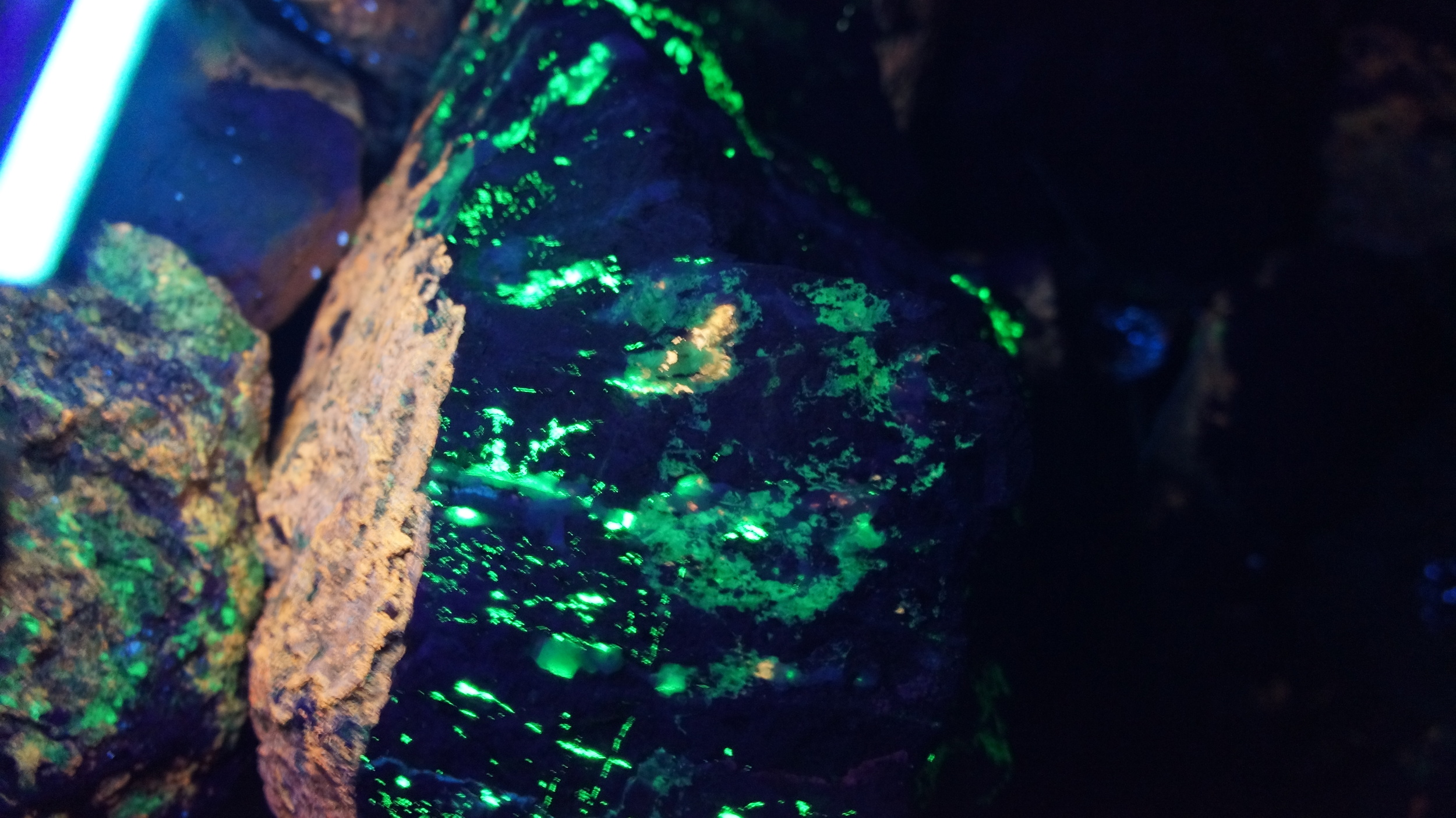
However, as the sun set that's when our group's calling came into play. Fluorescent minerals. Everyone starts plugging their shortwave UV lights into their batteries, dawns appropriate clothing, and began the hunt. As someone who had never done this it was incredibly hard to contain my excitement. Never before had I seen a boring landscape of browns, whites, and grey become so alive. The UV lights absolutely transformed the area I was walking just minutes before into a garden of color. There were oranges (caliche), greens (hyalite), whites (aragonite), blues (scheelite), and reds (calcite). I still wish to the time of the writing of this article that I had an incredibly light sensitive camera such as Sony's a7s or Nikon's D4S to capture these moment. It was incredible for all the new members and I'm sure that Jan and Jeff got a kick out of our excitement as we traversed the landscapes in attempt to find the coveted 5 color specimen to bring home.
Several hours into my exciting adventure something catches my eye. Normally the minerals would stop fluorescing after you turned off the UV lights - a ground state if you will. The one instance we were shown was with the aragonite which fluoresced white and then retained that energy state for a short time afterwards. I was told it was called phosphorescence. Back to my story, I noticed that there was this green colored mineral that was phosphorescing very brightly and for long durations. In my excited state I immediately call over Jan to ask him what it is. Now, it was close to pitch black with the only thing that illuminating his face being faint moonlight and the fluorescence of the minerals when we had our UV lights turned on, but despite that I could almost sense that his mouth was agape with jaw dropped. He immediately asked where I had gotten it from and explained that I had found the largest instance of an unknown new mineral. Jeff had only found it 6 months prior and even that was literally a speck. This showed rich veins found in a small 2 or 3 inch specimen. Jan almost didn't give it back after I had asked him several times to see it again. The tension and excitement was palpable. The two of us were like sharks after we had smelled blood in the water. Our goal for the night was now to look for the rare new green phosphorescing mineral and collect as much of it as possible. Luckily that didn't take long. Several steps from where I had found the original piece I found another couple small pieces of it, then another, then another! I had to give Jan one of my bags so that he could carry all of this out as he had already filled up his pockets. It's worth mentioning that I had told him that I was going to let him keep most of it. I was taught this rule from my previous 5ish years experience fossil collecting. They'd have a much better chance than I did of getting it identified and making a contribution to this field of science. I was just surprised that they let me keep any of it at all. If it was me on one of my fossil collecting trips I wouldn't let the finders keep any of it in case a quantitative analysis needed to be done. This rule that I had arbitrarily forced myself to follow had me kicking myself soon afterwards. The motherload of all the pieces we had found that night appeared. I had found giant 20+ lb boulder of it while Jan was busy collecting every last scrap. Definitely a photographic moment (albeit very poorly looking back on it). True to my word and science, I called over Jan to come get the biggest and richest piece found. It was quite a way to end the night. He had so much of the unknown mineral that he couldn't carry all of it and the piece that I just found in one trip!
At the end of the night we all went back to our cars and talked about this new find. To have gone from a speck to buckets full was quite an improvement. They now had enough to get it identified through a (then-unknown to me) process called x-ray diffraction. We all stood around and watched the mineral phosphoresce for 5+ minutes since our eyes had long adjusted for the night. Throughout our conversations at least one of us would check up and say "Still going!" in reference to how long it phosphoresced. Jan stated that they needed to bring me to other trips by taping me to their truck as their good luck charm. It seemed that the beginners always had the best luck. Boy could I relate to that having taken others fossil collecting! Beginner's luck indeed. I'd like to think that my experience fossil collecting helped me find the area and pace myself to search an area in a limited time frame though. We even joked about what would happen if it was a mineral new to science. One of the members jokingly stated that it should be called "Raymondite" but I declined that thought without hesitation. I remembered how hard some areas of science were to learn considering some of the terms were in Latin. If I could name the mineral it would be something literal like greenphosphorite. Something that wouldn't have students hate me for having to memorize for generations to come haha.
We all left happy from the experience but I had a taste of a rare new mineral and absolutely had to come back and find more!
Paul Tauger, who also went on the trip, has his perspective here: